
Sandalwood Spiritual Meaning: History, Symbolism and Traditional Uses
Quick Summary
Sandalwood is one of the world’s most recognizable sacred fragrances. Its warm, persistent scent appears in worship, incense, carved images, perfumery and traditional medicine, esp...
Sandalwood is one of the world’s most recognizable sacred fragrances. Its warm, persistent scent appears in worship, incense, carved images, perfumery and traditional medicine, especially across South Asia and parts of East Asia. In modern spiritual language it is often linked with purity, calm, devotion, protection and meditation.
Those meanings are not a single universal code. They come from different materials and practices: sandalwood paste applied to a Hindu deity, fragrant wood carved into a Buddhist image, powdered wood blended into incense, oil used as a perfume base, or a personal aroma associated with prayer and reflection. A culturally careful explanation must keep these settings distinct.
This article traces the history and symbolism of true sandalwood, explains traditional forms of use, distinguishes white sandalwood from red sanders and other similarly named trees, and addresses conservation and safety.
Quick Answer
Spiritually, sandalwood commonly represents purity, devotion, sacred presence, calm attention and the offering of something precious. These meanings arise from specific Hindu, Buddhist and incense traditions rather than one universal doctrine. Sandalwood may be used as paste, incense, carving wood or fragrance, but modern users should identify the species, respect the source tradition and avoid unsupported medical or supernatural claims.
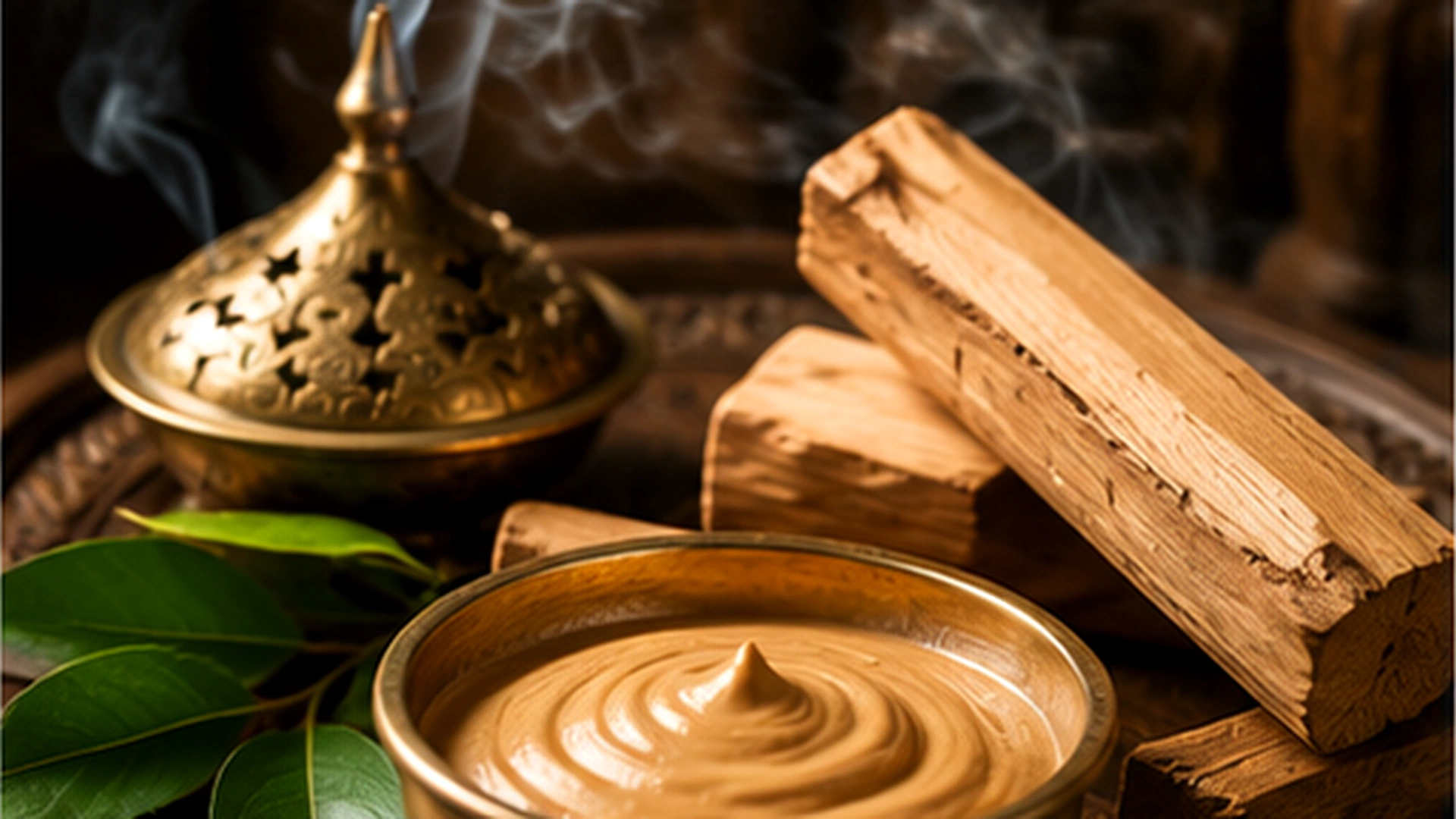
| Image number | Image 1 - Featured image |
|---|---|
| Purpose | Introduce sandalwood as a sacred and cultural material in several documented forms without staging a blended universal ritual. |
| Detailed scene | A refined museum-style editorial still life with four physically separate zones: pale golden sandalwood heartwood chips and powder, a small bowl of sandalwood paste with a clean applicator, a traditional incense burner emitting a thin line of smoke, and a small historical-style devotional carving displayed under glass. |
| Specific culture or historical context | Contemporary educational presentation of sandalwood forms; objects are separated so Hindu paste, incense use and carved imagery are not presented as one invented ceremony. |
| People shown | None. |
| Location | Dark neutral museum or conservation studio surface. |
| Clothing | Not applicable. |
| Architecture | Minimal backdrop with separate display risers and no readable labels. |
| Objects | Heartwood chips, powder, paste bowl, applicator, incense burner and one carved devotional object. |
| Lighting | Warm controlled museum lighting that emphasizes wood grain and smoke without mystical beams. |
| Composition | Standalone 16:9 editorial image with generous negative space; no collage panels or embedded text. |
| SEO-friendly filename | sandalwood-spiritual-meaning-sacred-material.webp |
| Image title | Sandalwood as Sacred Material |
| Alt text | Sandalwood heartwood, paste, incense and a carved devotional object arranged in separate museum-style displays |
| Caption | Sandalwood has served as fragrant wood, paste, incense, carving material and perfume ingredient in different cultural settings. |
| Recommended placement | After the introduction and Quick Answer. |
| Article section supported | Introduction and overview of meanings and uses. |
| Important elements to avoid | Mixed invented altar, crystals, tarot cards, fantasy aura, readable labels, product branding, excessive smoke, collage layout or text. |
What Is Sandalwood?
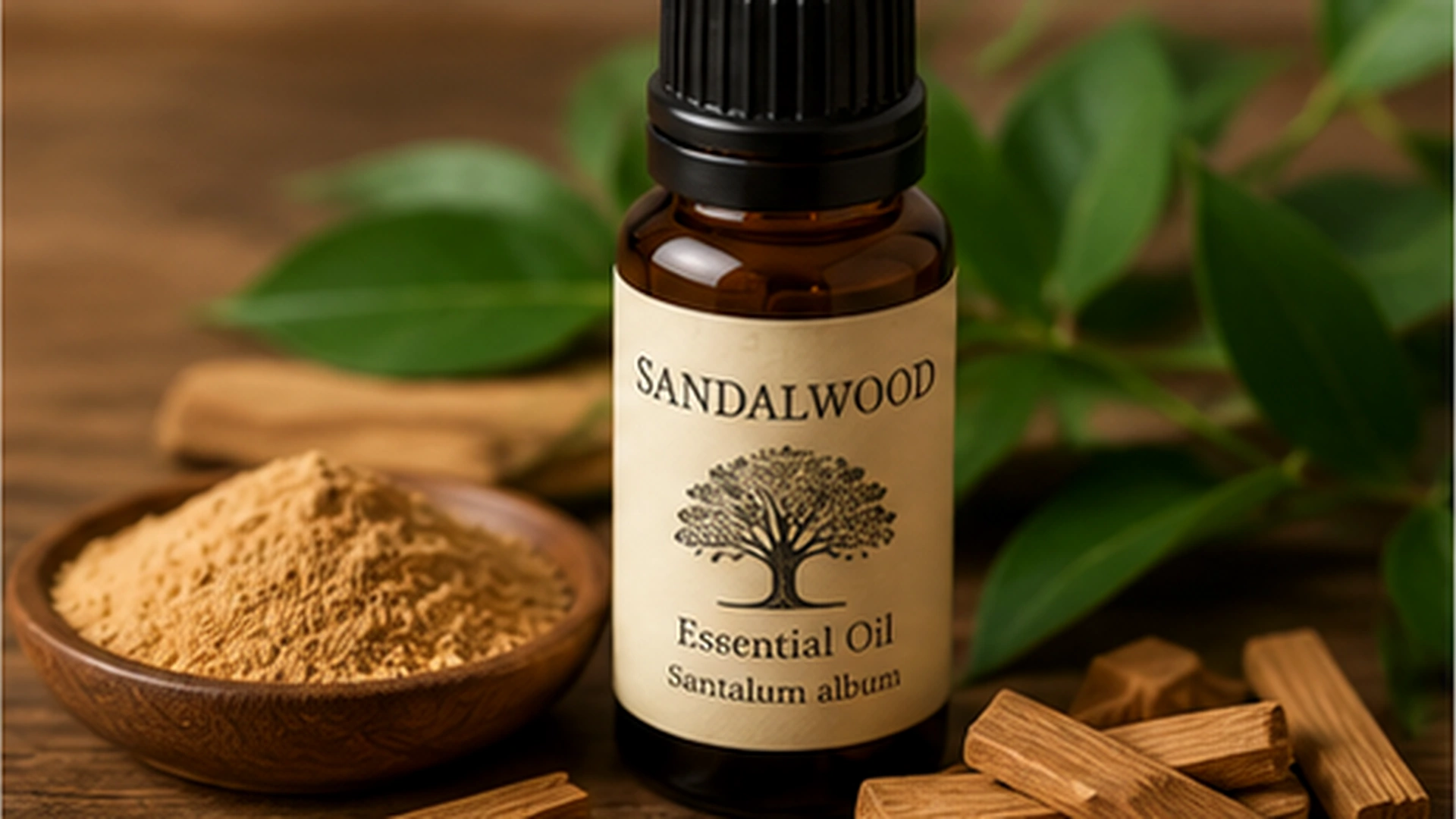
“Sandalwood” is a common name applied to several aromatic woods, but the classic material called Indian or white sandalwood is Santalum album. It belongs to the sandalwood family, Santalaceae. The valued scent is concentrated mainly in mature heartwood and roots, from which oil can be distilled.[1][3]
Santalum species are unusual trees and shrubs because they are root hemiparasites. They photosynthesize for themselves but connect to the roots of compatible host plants to obtain water and nutrients.[2] This ecology matters for cultivation: planting a sandalwood seedling without suitable hosts and long-term care does not reliably produce high-quality heartwood.
The aroma is not primarily a flower scent. Sandalwood’s importance lies in the dense, fine-grained wood and its slowly developing fragrant compounds. Indian forestry sources describe pale sapwood surrounding yellowish-brown aromatic heartwood that can be carved finely or powdered for distillation.[3]
Kew’s current botanical database accepts Santalum album and records a native range from Java through parts of northern Australia, while listing India among areas where it has been introduced.[1] Whatever the deeper biogeographic history, sandalwood has been cultivated, traded and culturally embedded in India for many centuries, and “Indian sandalwood” remains the standard commercial name.
The genus Santalum includes numerous species across Asia, Australia and the Pacific. Their oils and cultural histories are not identical. A label that says only “sandalwood” may hide a different species, a synthetic fragrance or an unrelated tree sold under a regional common name.
White Sandalwood, Australian Sandalwood and Red Sandalwood
| Material | Common name | Typical use | Important distinction |
|---|---|---|---|
| Santalum album | Indian or white sandalwood | Aromatic heartwood, oil, paste, carving and incense | The main species discussed in this article; Kew records it as Vulnerable in the cited IUCN assessment. |
| Santalum spicatum | Australian sandalwood | Aromatic wood and oil | A different true sandalwood species native to western and southern Australia. |
| Pterocarpus santalinus | Red sanders or red sandalwood | Dense red timber, dye and traditional uses | Not a Santalum species and not a substitute for the classic fragrance of S. album; listed in CITES Appendix II. |
| Osyris lanceolata and other regional “sandalwoods” | East African sandalwood and related trade names | Aromatic wood or oil in regional commerce | Botanically distinct from Santalum; common names alone cannot confirm species or sustainability. |
Why Species Identification Matters
Species identification affects fragrance, cultural context, conservation and legality. Santalum album typically supplies the soft, creamy scent associated with classical Indian sandalwood. Santalum spicatum is a true Australian sandalwood with its own ecology and industry.[10]
Red sanders, Pterocarpus santalinus, belongs to the pea family rather than the sandalwood genus. Its deep red timber is valued for color, carving and traditional uses, but it does not provide the same aromatic profile. It is classified as Endangered in the IUCN information summarized by Kew and is listed in CITES Appendix II.[11]
This distinction is especially important online, where “red sandalwood spiritual meaning” pages may blend two botanically different materials. A cultural use of rakta candana, red sanders, should not automatically be transferred to white sandalwood, and vice versa.
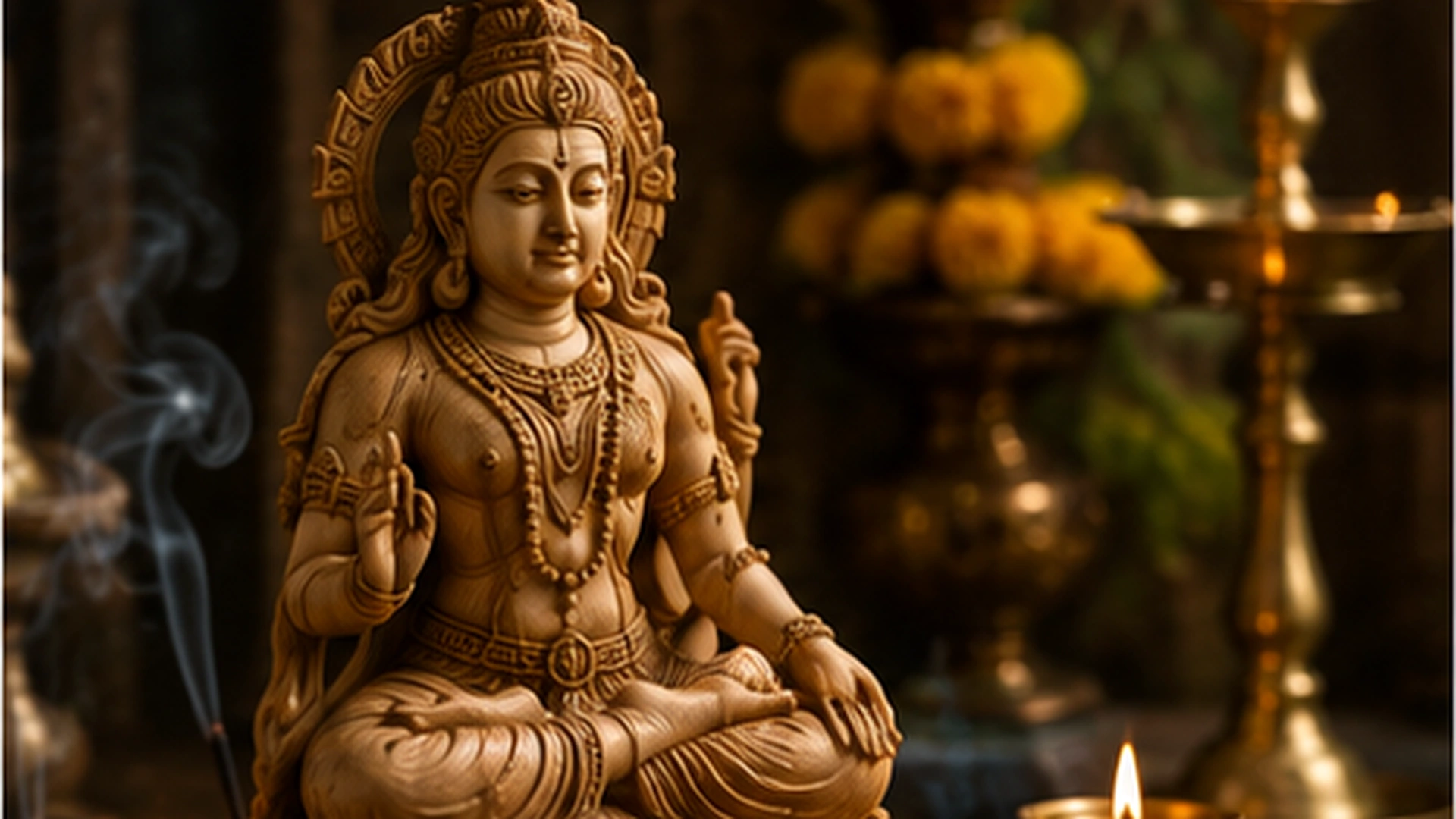
| Image number | Image 2 |
|---|---|
| Purpose | Show the botanical source of true sandalwood and explain that fragrance comes primarily from mature heartwood and roots. |
| Detailed scene | A scientifically informed Santalum album tree in a dry tropical research plot, with a carefully placed cut section of trunk showing pale sapwood and yellow-brown heartwood in the foreground. A neighboring host plant subtly suggests the tree’s root-hemiparasitic ecology. |
| Specific culture or historical context | Modern botanical and forestry education in southern India or Southeast Asia. |
| People shown | One botanist or forestry researcher may appear at a respectful distance examining leaves, optional. |
| Location | Managed research plot with realistic dry tropical soil and vegetation. |
| Clothing | Contemporary field clothing if a researcher is shown. |
| Architecture | None, except a distant simple nursery shade structure if necessary. |
| Objects | Santalum album tree, heartwood cross-section, botanical notebook or calipers. |
| Lighting | Natural early morning light with accurate plant color. |
| Composition | Standalone 16:9 documentary botanical photograph, tree occupying one third and heartwood detail clearly visible. |
| SEO-friendly filename | santalum-album-tree-heartwood.webp |
| Image title | The Botanical Source of Sandalwood |
| Alt text | Santalum album tree beside a cut trunk section showing pale sapwood and aromatic heartwood |
| Caption | The valued fragrance is concentrated in the heartwood and roots of mature sandalwood trees. |
| Recommended placement | After the species and botany section. |
| Article section supported | What sandalwood is and species identification. |
| Important elements to avoid | Oversized flowers, tropical rainforest fantasy, piles of freshly felled trees, illegal logging, labels, diagrams with text or impossible root anatomy. |
What Does Sandalwood Symbolize Spiritually?
The most common sandalwood meanings can be understood as interpretations of its physical properties and ritual roles. The scent is long-lasting, the heartwood is costly, the paste can be cooling to the touch, and the material has been used to honor deities and make sacred images. These qualities support several recurring symbolic themes.
Purity and Auspiciousness
The Metropolitan Museum of Art describes sandalwood in a Nepalese Buddhist sculpture as an inherently pure, uncorrupted and auspicious material.[5] In Hindu worship, sandalwood belongs to a larger sensory environment in which the deity is bathed, adorned, anointed, illuminated and offered fragrance, flowers, food and water.[4]
“Purity” here should not be reduced to a generic claim that smoke cleans invisible energy. It may refer to ritual fitness, preciousness, pleasing fragrance and the disciplined preparation of worship.
Devotion and Offering
Sandalwood can symbolize devotion because it is given, applied or burned as an offering. Its value matters: an offering communicates care partly through the time, labor and resources invested in it. The material is not merely consumed for private relaxation; in many religious contexts it is directed toward a deity, Buddha, bodhisattva, sacred image or ritual community.
Sacred Presence
Fragrance changes a space even when its source is small. Incense can mark a transition from ordinary activity to worship, while scented paste placed on an image can make the act of care visible and tangible. Sandalwood therefore becomes associated with a place prepared for sacred presence.
This does not mean every tradition teaches that sandalwood itself contains a spirit or supernatural force. The meaning may lie in the relationship created through correct use.
Calm Attention and Meditation
Modern spiritual writing often describes sandalwood as grounding, centering or calming. These words fit the way a stable woody scent can accompany meditation or prayer, but they should be framed as experiential associations rather than guaranteed effects.
Laboratory studies of scent and sandalwood components have reported mixed physiological and self-reported responses. Perceived odor quality, setting and expectation can shape experience.[12][15] A person may find the aroma calming, while another may find it strong, unfamiliar or irritating.
Cooling, Restraint and Clarity
Sandalwood paste is often described as cooling. Physically, a moist paste applied to the skin or an image can feel cool as water evaporates. Within modern symbolic interpretation, that sensation becomes a metaphor for restrained emotion, mental clarity or the cooling of agitation.
It is safer to say that sandalwood has acquired cooling symbolism in some South Asian religious and medicinal contexts than to claim it universally “cools spiritual energy.”
Continuity and Memory
The fragrance of sandalwood persists in wood, objects and enclosed spaces. Its slow-growing source and durable heartwood can evoke continuity, inheritance and memory. Carved devotional images intensify this symbolism because the material can remain in ritual life for generations.
Sandalwood in Hindu Worship
The Sanskrit and regional term candana or chandan commonly refers to sandalwood and sandalwood paste. In Hindu puja, sandalwood participates in a multisensory form of hospitality toward a deity. The Smithsonian’s explanation of Hindu worship notes that a divine image may be bathed, dressed, adorned, anointed with sandalwood and offered flowers, food, water, incense, music and lamps.[4]
This context is important. Sandalwood paste is not an isolated “manifestation ingredient.” It is one part of caring for and honoring a deity. The action may occur in a temple under priestly guidance or in a household shrine, with practices varying by region, lineage, deity and occasion.
Anointing Divine Images
A small amount of paste may be placed on a divine image after bathing or during daily worship. The fragrance, color and tactile care help prepare the image for darshan, the reciprocal act of seeing and being seen by the deity. The exact placement and accompanying prayers depend on the tradition.
Forehead Marks and Blessed Paste
Sandalwood paste may also be used in forehead marks, sometimes alone and sometimes combined with other substances. A mark can identify devotion, convey blessing, cool the skin or indicate participation in worship. There is no single sandalwood tilaka design shared by all Hindus.
Visitors should not imitate a sectarian mark without understanding its meaning. When paste is offered at a temple, follow local guidance rather than inventing a placement based on social media.
Fragrance, Cleanliness and Royal Hospitality
Hindu ritual often treats the deity as an honored royal guest. Fragrant substances, fresh flowers, clean textiles and prepared food express hospitality. Sandalwood’s spiritual meaning therefore includes refinement and respectful service, not only inward meditation.
Cremation and Memorial Contexts
Sandalwood is also associated with death rites and cremation in parts of South Asia, especially as a valued fragrant wood or powder. Because practices differ by region and economic means, it is inaccurate to suggest that every Hindu cremation uses large quantities of sandalwood. The broader symbolism may include dignity, purification, fragrance and the return of the body through fire, but these meanings should be attributed to particular communities rather than treated as universal.
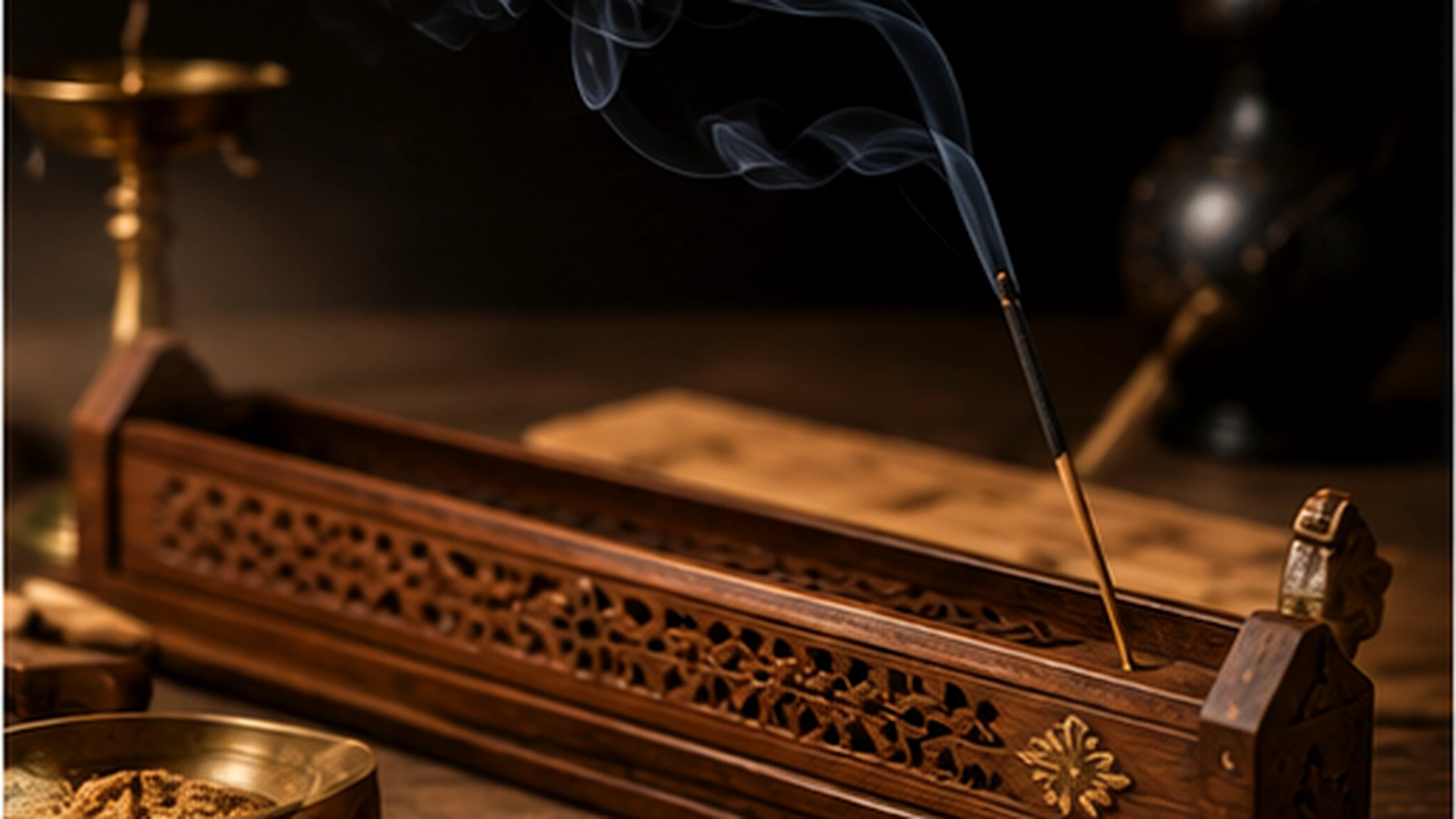
| Image number | Image 3 |
|---|---|
| Purpose | Document sandalwood paste as a living material within Hindu puja rather than as a generic wellness product. |
| Detailed scene | A South Indian temple priest or knowledgeable household practitioner carefully applying a small amount of sandalwood paste to a bronze deity during puja. Flowers, water vessels and a lamp are arranged with regional coherence, while the action remains focused and respectful. |
| Specific culture or historical context | Contemporary Hindu puja in South India, drawing on the documented practice of anointing divine images with sandalwood. |
| People shown | One Hindu priest or adult practitioner; optional second family member observing. |
| Location | Realistic temple interior or well-maintained household puja space in Tamil Nadu or Karnataka. |
| Clothing | Regionally appropriate clean ritual clothing without costume exaggeration. |
| Architecture | South Indian temple or household shrine details shown accurately and unobtrusively. |
| Objects | Bronze deity, sandalwood paste bowl, flowers, water vessel and oil lamp. |
| Lighting | Warm lamp and ambient daylight; natural skin tones. |
| Composition | Standalone 16:9 documentary image with the hand, paste and deity as the visual focus. |
| SEO-friendly filename | sandalwood-paste-hindu-puja.webp |
| Image title | Sandalwood Paste in Hindu Worship |
| Alt text | A Hindu practitioner applying sandalwood paste to a bronze deity during puja |
| Caption | In Hindu worship, sandalwood may be used to anoint a deity and form part of a wider sensory offering of scent, light, water, flowers and food. |
| Recommended placement | After the Hindu worship subsection. |
| Article section supported | Hindu traditions and chandan symbolism. |
| Important elements to avoid | Invented gestures, excessive paste, mixing unrelated deities, tourist spectacle, supernatural glow, readable text or disrespectful camera angle. |
Sandalwood in Buddhist Traditions
Buddhist uses of sandalwood include incense, carved images and stories about the earliest representations of the Buddha. The material’s pleasant fragrance and fine grain made it both ritually valued and technically suitable for detailed sculpture.
The Sandalwood Buddha Tradition
The Metropolitan Museum of Art’s sixteenth-century Nepalese Avalokiteshvara is carved from sandalwood with traces of gold and color. The museum connects the choice of material with early textual traditions in which the first image of the Buddha was said to have been made from sandalwood while the Buddha taught his mother in the Tushita heaven.[5]
Whether treated as sacred history, legend or image-making genealogy, this tradition gave sandalwood special prestige. A later image carved from the same material could be understood as participating in an exemplary lineage of Buddhist representation.
Sacred Image-Making
The Met’s conservation study describes the Nepalese figure as a rare surviving example of a long sandalwood carving tradition linked to India.[6] Fine grain allowed artists to create delicate jewelry, garments and lotus details in a small block. Material, craftsmanship and iconography worked together.
The spiritual meaning of the wood was therefore not separate from technique. A precious, fragrant and workable material helped produce an image worthy of devotion.
Incense as Offering
Across Buddhist communities, incense may be offered before images, relics and altars. Smoke and fragrance can mark respect, recollection and the temporary nature of material experience. Sandalwood is one possible ingredient among many; not every Buddhist incense is sandalwood, and not every community uses the same formula.
The Tokyo National Museum describes handled incense burners used to offer fragrance to Buddhist deities in the Nara period, while comparable forms are known from Tang China.[9] The burner and ritual action are historically documented, but the exact aromatic material must be established case by case.
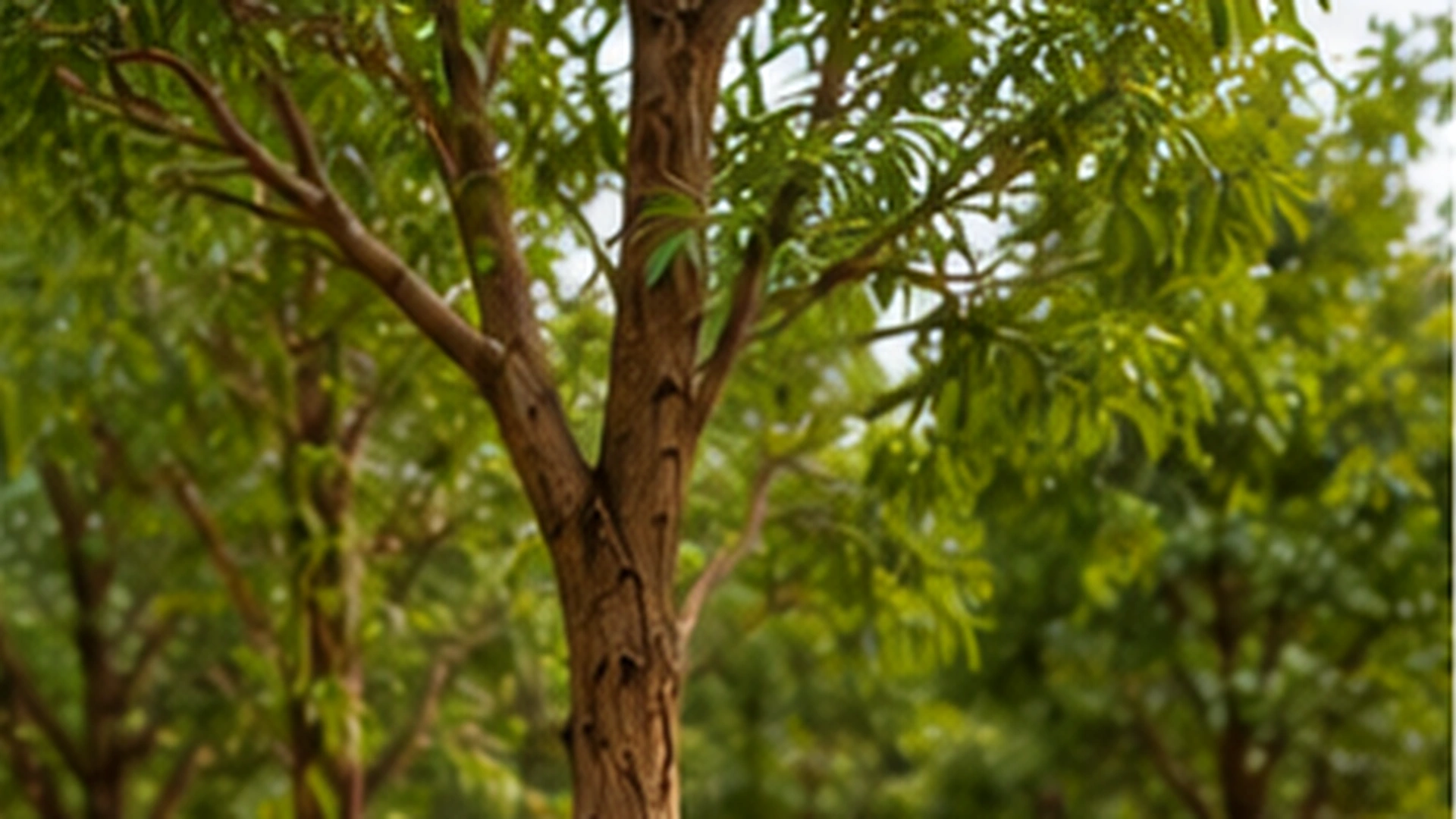
| Image number | Image 4 |
|---|---|
| Purpose | Represent sandalwood as an auspicious carving material in Buddhist art using a documented Nepalese example. |
| Detailed scene | A museum-quality close editorial view of a small sixteenth-century Nepalese sandalwood Avalokiteshvara figure with traces of gilding and polychrome, displayed in a conservation case. Fine carving and wood grain are visible, with a conservator’s neutral support mount. |
| Specific culture or historical context | Nepal, Kathmandu Valley, sixteenth-century Buddhist devotional sculpture; inspired by a documented Metropolitan Museum of Art object. |
| People shown | None, or a conservator’s gloved hands outside the case without touching the sculpture. |
| Location | Museum conservation gallery or study room. |
| Clothing | Not applicable unless a conservator is shown. |
| Architecture | Neutral museum environment. |
| Objects | Single sandalwood Avalokiteshvara sculpture and conservation mount. |
| Lighting | Soft raking museum light revealing carving and remaining gilding. |
| Composition | Standalone 16:9 macro editorial photograph; object centered with respectful space. |
| SEO-friendly filename | nepal-sandalwood-avalokiteshvara.webp |
| Image title | A Sandalwood Avalokiteshvara |
| Alt text | A small Nepalese sandalwood Avalokiteshvara sculpture displayed in a museum conservation case |
| Caption | Buddhist traditions valued sandalwood as a pure and auspicious material for sacred images. |
| Recommended placement | After the Buddhist image-making subsection. |
| Article section supported | Buddhist history and sacred carving. |
| Important elements to avoid | Changing the deity’s iconography, adding ritual smoke inside the case, fantasy temple background, oversized figure, readable labels, text or collage. |
Sandalwood in Chinese and Japanese Incense Culture
Sandalwood also traveled through trade and incense culture in East Asia. It appeared alongside agarwood, clove, musk, amber, cinnamon and other aromatic substances. In these settings, spiritual meaning cannot be separated from connoisseurship, literature, court culture and Buddhist ritual.
The Metropolitan Museum of Art records incense wood in Japan by 595, soon after Buddhism arrived from the continent. Temple incense influenced courtly domestic practice, where blended fragrances perfumed rooms, clothing and hair. Later, warriors and aristocrats developed gatherings for comparing incense woods, and the “way of incense” matured alongside tea culture.[7]
The British Museum’s description of an Edo-period incense-game box lists sandalwood among the raw materials used in complex mixtures and games of fragrance recognition.[8] Participants did not simply burn incense to “clear negativity.” They learned names, qualities, literary associations and etiquette.
This history suggests several meanings for sandalwood in Japanese contexts: cultivated sensory attention, refinement, hospitality, Buddhist offering and the disciplined appreciation of rare aromatic materials. Yet agarwood often held the highest prestige in kodo, so it would be misleading to present sandalwood as the sole or supreme Japanese incense wood.
In China, sandalwood appears in Buddhist sculpture, incense and luxury carving. A seventeenth-century Chinese Guanyin figure in the Met’s collection, for example, is carved from sandalwood and gilded.[5] As elsewhere, the material could connect fragrance, fine craftsmanship, patronage and devotion.
Traditional Uses of Sandalwood
Sandalwood’s spiritual meaning developed through practical forms of use. Each form changes how the material is experienced.
Paste
Heartwood powder can be ground with water into a paste. In Hindu settings it may be applied to images or the forehead. In traditional cosmetic and medicinal contexts, paste has also been used on the skin. These uses are related historically but should not be confused: a temple offering is not the same as a dermatological treatment.
Powder and Incense
Powdered sandalwood may be burned alone, pressed into incense or blended with resins, spices and other woods. The fragrance is usually softer and steadier than highly resinous incense. Formulas vary widely, and commercial sticks may contain little true sandalwood.
Carved Wood
Fine, dense heartwood has been used for images, small shrines, boxes, beads, fans and decorative objects. In sacred art, the material can be part of the object’s religious value. In commercial carving, fragrance and craftsmanship may be primary.
Distilled Oil and Perfumery
Steam distillation of heartwood and roots yields sandalwood oil. Alpha-santalol and beta-santalol are major aroma constituents of Santalum album oil.[3][14] The oil has long been valued as a perfume material because it is persistent and blends well with other fragrances.
A perfume use is not automatically spiritual, but fragrance can carry personal, ceremonial and cultural associations. Modern essential-oil marketing often imports religious vocabulary into a retail setting, so readers should distinguish documented ritual use from brand claims.
Traditional Medicine
Santalum album and related sandalwoods appear in Ayurveda and other traditional systems. Government of India resources list white chandan as a medicinal raw material, specifically the wood.[16] Historical uses have included topical preparations and aromatic formulas.
Traditional use is evidence of cultural history, not proof that every claimed treatment is safe or effective. Modern reviews report laboratory and early clinical research on sandalwood oil and its components, but evidence quality varies, many studies are preclinical, and a spiritual article should not prescribe remedies.[12][15]
Modern Spiritual Uses: What Is Respectful?
A person does not need to reproduce a Hindu or Buddhist ritual to appreciate sandalwood. The most respectful contemporary approach is to be clear about what one is doing and where the inspiration comes from.
A simple personal use might involve smelling a legally sourced piece of wood or diluted fragrance during journaling, prayer or quiet reflection. The meaning can be stated honestly: “I use this scent as a reminder to slow down and act with care.” That is different from claiming to perform an ancient temple rite.
Use Specific Language
Say “sandalwood reminds me of calm attention” rather than “sandalwood universally raises vibration.” Say “in this Hindu puja tradition, sandalwood paste is offered to the deity” rather than “all ancient people used sandalwood to manifest abundance.”
Do Not Recreate Restricted or Unfamiliar Rites
Temple procedures, mantras, consecration and sectarian marks belong to communities with their own teachers and rules. Public information about a material does not grant authority to reproduce every ritual.
Avoid Medical and Magical Guarantees
Sandalwood cannot guarantee wealth, love, protection, sleep or healing. A fragrance can support a personally meaningful routine, but outcomes depend on many factors.
Choose Modest Quantities
A small amount of real, traceable material is more respectful than wasteful consumption. Powder and oil require mature heartwood, so careless burning or luxury display can contradict the conservation values readers may associate with sacred plants.
Conservation and Ethical Sourcing
Sandalwood’s sacred status has not protected it from overharvesting. High value, slow heartwood development, theft and long trade histories have placed pressure on several species.
Kew’s current page for Santalum album reports a Vulnerable IUCN assessment, although a newer predictive model cited on the same page estimates it may not be threatened.[1] These are different forms of evidence, not a reason to ignore risk. The species has experienced intense exploitation and requires active cultivation, protection and monitoring.
Other sandalwoods face their own pressures. Kew notes that Santalum macgregorii in New Guinea is Endangered because of historical exploitation, while red sanders is Endangered and regulated in international trade.[2][11]
What to Ask a Seller
Ask for the scientific species name, country of origin, whether the material is cultivated or wild harvested, and whether legal harvest and export documentation are available. “Temple grade,” “sacred,” “Mysore style” or “premium spiritual oil” are marketing descriptions, not proof of origin.
Wood, Powder and Oil Require Different Evidence
A seller of carved wood should be able to identify the timber. Oil should have botanical identification and, ideally, analytical documentation showing its composition. Incense may use synthetic sandalwood aroma, other species or a small amount of natural material in a larger blend.
Respect Regional Laws
Harvest, ownership, transport and export rules vary. India has changed some state-level ownership and cultivation rules over time, but sandalwood remains a controlled high-value resource. Never assume that an old carving, loose chips or inexpensive marketplace powder can be moved across borders without documentation.
Conservation Is Part of Spiritual Responsibility
If sandalwood symbolizes devotion and care, sourcing should reflect those values. Traceability, reduced waste, cultivation with host plants and support for legitimate forestry are more meaningful than purchasing anonymous material because it is labeled “high vibration.”
| Image number | Image 5 |
|---|---|
| Purpose | Connect spiritual and cultural appreciation with conservation, cultivation and traceable sourcing. |
| Detailed scene | A sandalwood nursery and young agroforestry planting in southern India, with forestry workers checking tagged Santalum album seedlings growing beside compatible host plants. A small locked storage and inventory station suggests traceability without showing commercial branding. |
| Specific culture or historical context | Contemporary conservation-oriented sandalwood cultivation and forestry research. |
| People shown | Three Indian nursery or forestry professionals of mixed genders, represented as skilled workers and researchers. |
| Location | Southern Indian nursery and adjacent managed field. |
| Clothing | Practical contemporary field clothing, gloves where appropriate and sun protection. |
| Architecture | Simple shade house and secure inventory shed. |
| Objects | Tagged seedlings, host plants, notebooks, calipers and reusable watering equipment. |
| Lighting | Natural morning light, realistic and hopeful rather than promotional. |
| Composition | Standalone 16:9 documentary scene, people on one side and rows of seedlings extending through the frame. |
| SEO-friendly filename | ethical-sandalwood-nursery-india.webp |
| Image title | Cultivating Sandalwood Responsibly |
| Alt text | Forestry workers inspecting tagged sandalwood seedlings and host plants in a southern Indian nursery |
| Caption | Responsible use depends on accurate species identification, legal trade and long-term cultivation rather than anonymous wood or oil. |
| Recommended placement | After the conservation and ethical sourcing section. |
| Article section supported | Conservation, legal trade and responsible contemporary use. |
| Important elements to avoid | Clear-cut forest, luxury product advertising, piles of timber, invented certification logos, child labor, exoticized workers, text or collage layout. |
What Science Can and Cannot Say
Science can identify sandalwood species, analyze oil chemistry, test toxicity, study fragrance perception and investigate possible biological activity. It cannot verify that sandalwood purifies karma, attracts money, opens a chakra or guarantees divine protection.
Santalum album oil contains many compounds, with alpha-santalol and beta-santalol among the principal constituents.[3][14] Laboratory and clinical research has explored anti-inflammatory, antimicrobial and dermatological applications, but the evidence is not uniform and should not be converted into do-it-yourself treatment advice.[12][15]
Research on odor and human response shows why simple claims such as “sandalwood is always sedating” are unreliable. One small study reported different physiological and subjective responses to the whole oil and isolated alpha-santalol, with perceived odor quality influencing outcomes. Context and individual preference matter.
A spiritual interpretation can still be meaningful. It should be described as religious belief, inherited cultural practice or personal symbolism rather than a scientifically demonstrated force.
Sandalwood Oil Safety
Natural does not mean risk-free. Sandalwood oil and fragrance materials can irritate skin or trigger allergic contact dermatitis in some people. Reviews document occasional sensitization, and PubChem hazard summaries for santalol include the possibility of an allergic skin reaction.[12][13][14]
Do not apply undiluted essential oil to the skin. Use a properly formulated product, follow the manufacturer’s directions and perform a cautious patch test when appropriate. Stop use if irritation occurs.
Do not ingest sandalwood oil as a spiritual practice. Keep oils away from children and pets, avoid the eyes and mucous membranes, and seek qualified medical advice during pregnancy, breastfeeding, chronic illness or medication use.
Smoke also deserves caution. Incense produces particulate matter and combustion products. Burn only small amounts in a ventilated space, avoid smoke around people with asthma or respiratory sensitivity, and never leave burning material unattended.
Common Misunderstandings
Treating every wood sold as sandalwood as Santalum album.
Assuming red sandalwood has the same fragrance, symbolism or legal status as white sandalwood.
Calling one modern intention-setting routine an unchanged ancient practice.
Describing sandalwood as universally sacred across all cultures.
Presenting Hindu anointing, Buddhist incense and Japanese fragrance games as one blended ritual.
Claiming sandalwood smoke scientifically removes negative energy.
Assuming a natural essential oil cannot cause allergy or irritation.
Buying anonymous wood or oil without considering conservation and trade rules.
Using a sectarian forehead mark as decoration without understanding its community meaning.
Treating traditional medical use as proof of a cure.
Key Takeaways
Sandalwood commonly symbolizes purity, devotion, sacred presence, calm attention and precious offering.
Those meanings come from specific traditions and material practices rather than one universal spiritual doctrine.
Santalum album is the classic fragrant white sandalwood, while Australian sandalwood, red sanders and East African sandalwood are different resources.
Hindu puja may use sandalwood paste to anoint deities and mark participants, while Buddhist traditions include incense and sacred image-making.
Japanese incense culture used sandalwood among several aromatic materials within ritual, courtly and connoisseurial settings.
Traditional medical use does not prove every health claim, and essential oil can cause irritation or allergy.
Ethical use requires species identification, legal sourcing, modest consumption and respect for living religious communities.
People Also Ask
What does sandalwood symbolize spiritually?
It commonly symbolizes purity, devotion, sacred presence, calm attention and the offering of something precious. The exact meaning depends on whether it is used as Hindu paste, Buddhist incense, sacred carving material, perfume or modern personal fragrance.
Why is sandalwood used in Hindu worship?
Sandalwood can be used to anoint a deity, prepare forehead marks and contribute fragrance to puja. It belongs to a wider practice of treating the deity with hospitality through bathing, clothing, flowers, food, water, light, music and scent.
What is chandan paste?
Chandan paste is usually made by grinding sandalwood with water or preparing sandalwood powder into a paste. In Hindu settings it may be applied to a divine image or the forehead. Composition and ritual use vary by region and tradition.
How is sandalwood used in Buddhism?
Documented uses include incense offerings and carved sacred images. A sixteenth-century Nepalese Avalokiteshvara in the Metropolitan Museum of Art is carved from sandalwood, a material associated with purity and the legendary first Buddha image.
Is sandalwood endangered?
Santalum album is reported as Vulnerable in the IUCN assessment summarized by Kew, and several other sandalwood species have suffered from historical overexploitation. Conservation status, legal controls and supply conditions differ by species and country.
Frequently Asked Questions
Is red sandalwood the same as white sandalwood?
No. White or Indian sandalwood is Santalum album. Red sandalwood or red sanders is Pterocarpus santalinus, a different tree in the legume family. It is valued for red timber and dye rather than the classic creamy sandalwood fragrance.
Can sandalwood help meditation?
A familiar scent can act as a cue for quiet attention, prayer or journaling. That is a personal or cultural use, not proof that the wood directly changes consciousness. Preference, setting, ventilation and expectation affect the experience.
Does sandalwood remove negative energy?
That claim belongs to modern spiritual belief rather than established science. In some rituals, fragrance helps mark purification or sacred space, but the meaning comes from the tradition and action, not a laboratory-proven ability to remove an invisible substance.
Can sandalwood oil be applied directly to skin?
Undiluted essential oil is not recommended. Sandalwood oil and santalol can cause irritation or allergic contact dermatitis. Use a properly diluted or formulated product and stop if a reaction occurs.
How can I tell whether sandalwood is ethically sourced?
Look for the scientific species name, country of origin, cultivated or wild-harvest status, harvest and export documentation, and credible analytical information for oils. Marketing words alone do not establish legality or sustainability.
Conclusion
Sandalwood’s spiritual meaning is inseparable from its history as a material. Its fine heartwood became devotional sculpture. Its paste became part of caring for divine images and marking worshippers. Its fragrance entered Buddhist offerings, Japanese incense culture, perfumery and traditional medicine. From those practices came associations with purity, devotion, calm, refinement and sacred presence.
The most respectful interpretation avoids turning these histories into one generic ritual. It names the species, community, form and purpose. It distinguishes white sandalwood from red sanders, religious offering from retail aromatherapy, and inherited belief from scientific evidence.
Sandalwood can still be a meaningful aid to prayer or reflection. Its strongest contemporary lesson may be care: care in preparation, care toward the tradition, care with the body, and care for the slow-growing trees from which the fragrance comes.
Research Sources and Further Reading
[1] Royal Botanic Gardens, Kew. “Santalum album L.” Plants of the World Online. https://powo.science.kew.org/taxon/urn:lsid:ipni.org:names:780592-1
[2] Royal Botanic Gardens, Kew. “Santalum L.” Plants of the World Online. https://powo.science.kew.org/taxon/urn:lsid:ipni.org:names:30113685-2
[3] Institute of Wood Science and Technology, Indian Council of Forestry Research and Education. “Sandalwood Information System.” https://iwst.icfre.gov.in/database/SIS/
[4] Smithsonian National Museum of Asian Art. “Hindu Belief and Practice.” https://asia-archive.si.edu/learn/india-shiva-nataraja-lord-of-the-dance/hindu-belief/
[5] Metropolitan Museum of Art. “Standing Avalokiteshvara.” Nepal, 16th century, sandalwood with traces of polychrome and gold. https://www.metmuseum.org/art/collection/search/38441
[6] Chhabra, Mandira, Daniel Hausdorf, and Pascale Patris. “Creating Contrast through Elaborate Details: Technical Analysis and Conservation of an Avalokitesvara.” Metropolitan Museum of Art, 2015. https://www.metmuseum.org/perspectives/avalokitesvara
[7] Metropolitan Museum of Art. “Japanese Incense.” Heilbrunn Timeline of Art History. https://www.metmuseum.org/essays/japanese-incense
[8] British Museum. “Game-box; lid,” incense-game equipment, Japan, 18th century. https://www.britishmuseum.org/collection/object/A_FB-1
[9] Tokyo National Museum. “Ritual Incense Burner with a Handle and Lion-Shaped Counterweight.” https://www.tnm.jp/modules/r_collection/index.php?colid=E19927&controller=dtl&lang=en
[10] Royal Botanic Gardens, Kew. “Santalum spicatum.” Plants of the World Online. https://powo.science.kew.org/taxon/urn:lsid:ipni.org:names:780643-1
[11] Royal Botanic Gardens, Kew. “Pterocarpus santalinus.” Plants of the World Online; and CITES Appendix II material on red sanders. https://powo.science.kew.org/taxon/urn:lsid:ipni.org:names:516570-1 and https://cites.org/eng/virtual-college/ndf-red-sander-trees-pterocarpus-santalinus
[12] Burdock, George A., and Ioana G. Carabin. “Safety Assessment of Sandalwood Oil (Santalum album L.).” Food and Chemical Toxicology 46, no. 2 (2008): 421-432. https://pubmed.ncbi.nlm.nih.gov/17980948/
[13] de Groot, Anton C., and Erich Schmidt. “Essential Oils, Part VI: Sandalwood Oil, Ylang-Ylang Oil, and Jasmine Absolute.” Dermatitis 28, no. 1 (2017): 14-21. https://pubmed.ncbi.nlm.nih.gov/28002230/
[14] National Center for Biotechnology Information. “Alpha-Santalol.” PubChem. https://pubchem.ncbi.nlm.nih.gov/compound/(Z)-alpha-Santalol
[15] Sharifi-Rad, Javad, et al. “Santalum Genus: Phytochemical Constituents, Biological Activities and Health-Promoting Effects.” Zeitschrift für Naturforschung C 78, no. 1-2 (2023): 9-25. https://pubmed.ncbi.nlm.nih.gov/36069757/
[16] Government of India, Ministry of Ayush. E-Charak Knowledge Resources, entry for Santalum album (Chandan, white), wood. https://echarak.ayush.gov.in/knowledge_resources?val=AgroTech
Article Information
- Publisher
- Ancestral Temple
- Editor
- Ancestral Temple
- Last updated
- Jul 26, 2026
- Last reviewed
- Jul 26, 2026
- Content version
- 54ca1fe302
This educational article should be read as cultural and spiritual information, not as medical, legal, financial, or emergency advice.
Helpful Related Guidance
Explore This Topic
Related Topic Cluster
Dreams & Symbolism
About the Author
 Ancestral Temple
Spiritual guide and practitioner with decades of experience in ancestral wisdom, rituals, and divine guidance.
Related Posts
View All












Leave a Comment
We'd love to hear your thoughts.