
Dreams About Animals
Quick Summary
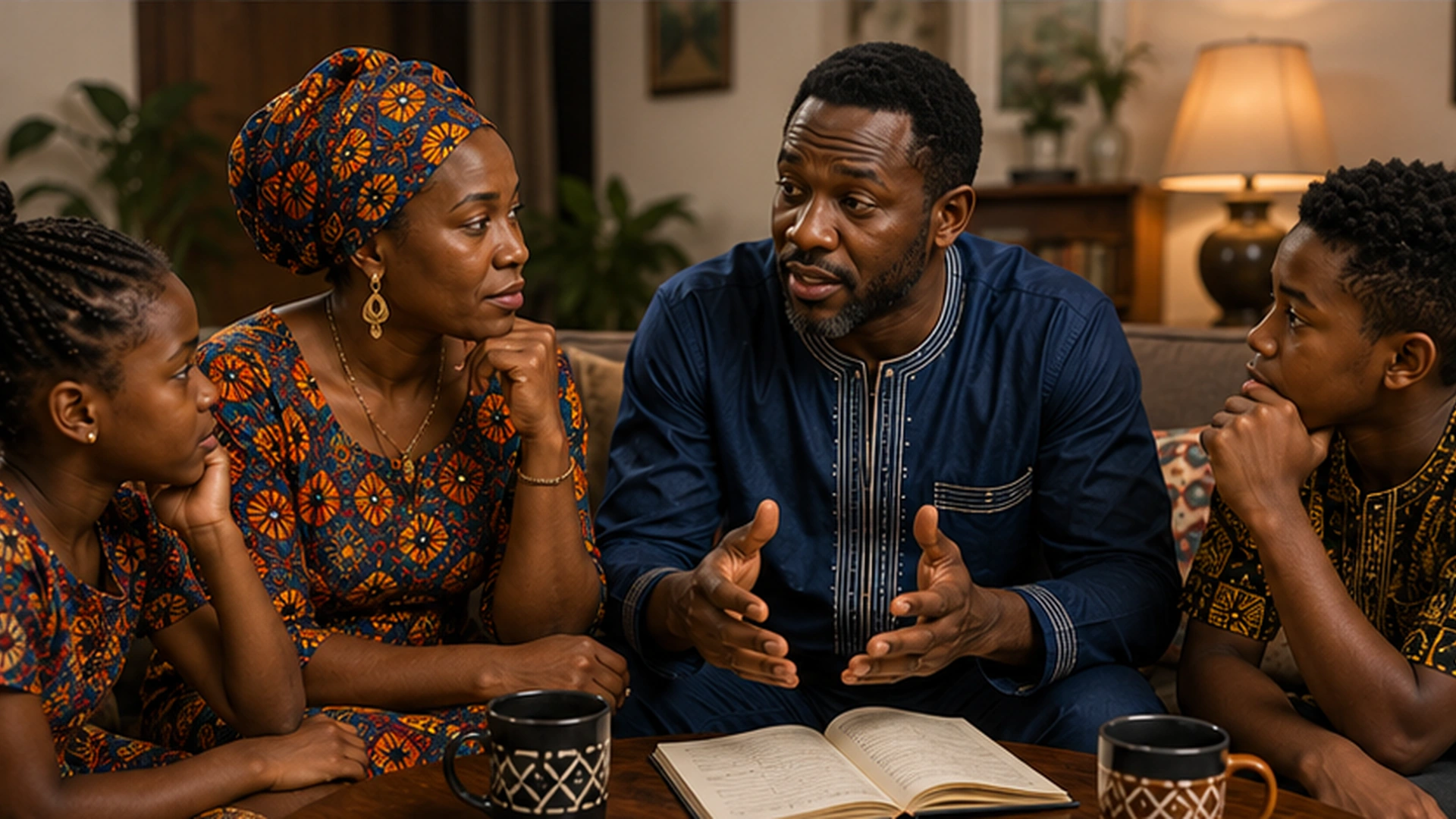
Animals in dreams may feel protective, threatening, familiar, sacred, or strange. Their possible meanings depend on personal experience, cultural context, emotion, and waking-life relationships rather than a universal animal-symbol dictionary.
Dreams About Animals explores how dreams have been interpreted in cultural, symbolic and personal ways. Dream meanings are not universal proof of future events; they depend on context, tradition, emotion and the details remembered by the dreamer.
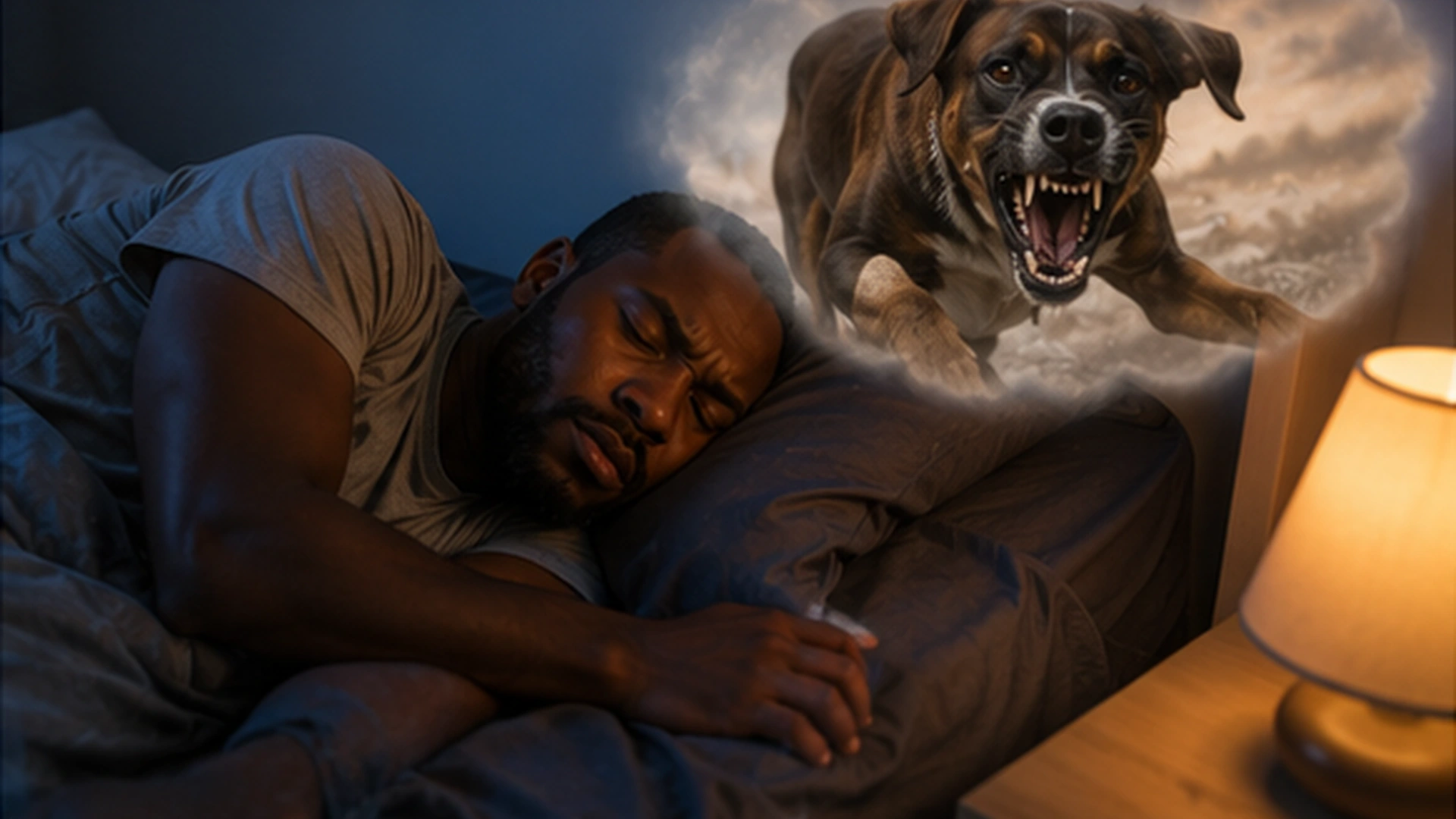
Animals can make dreams feel unusually vivid. A familiar dog may speak, a snake may appear inside a house, cattle may block a road, birds may circle overhead, or an unknown animal may chase the dreamer through an unfamiliar landscape.
Such dreams often produce an immediate question: “What does that animal mean?”
The most responsible answer is that no animal has one fixed meaning in every dream. A dog can represent companionship to one person, danger to another, work to a livestock keeper, grief to someone whose pet recently died, or simply a dog encountered earlier that day.
Animal imagery is shaped by personal experience, local ecology, occupation, religion, stories, family history, media, fear, affection, and the events surrounding the dream. A complete interpretation therefore examines the whole dream rather than assigning a meaning to one animal in isolation.
Key Points
Animals appear frequently in dreams, especially in children’s reports and in dreams involving threat or pursuit.
Animal dream meanings are not universal. The dreamer’s relationship with the animal is essential.
Research on dog dreams found that dogs appeared more often in the dreams of dog owners, supporting a connection between waking experience and dream content.
Ancient Egyptian scribes preserved organized dream-interpretation manuals, but these texts reflect particular historical systems rather than a modern universal dictionary.
In the biblical and Qur’anic Joseph narratives, cattle and other agricultural images gain meaning through the complete story and its social context.
Specific African traditions may assign cultural importance to birds, cattle, spiders, lions, snakes, or other animals, but cultural symbolism should not automatically be converted into a dream prediction.
Dreams of animal attacks can follow stress, trauma, real encounters, films, news, or fear and do not prove spiritual attack.
Dreaming about a deceased pet may be connected with grief, attachment, memory, or spiritual belief.
A dream cannot identify a witch, enemy, criminal, unfaithful partner, disease, or future event.
Frequent nightmares that disrupt sleep or daily life may require medical or mental-health support.
Clear Definition
A dream about animals is a remembered sleep experience in which one or more animals play a noticeable role in the setting, action, emotion, message, or outcome.
Plain-Language Meaning
An animal dream becomes meaningful through questions such as:
What animal appeared?
Was it familiar or unknown?
Was it calm, injured, protective, trapped, speaking, attacking, or being cared for?
How did the dreamer feel?
What relationship does the dreamer have with that animal while awake?
Does the animal carry a specific family, occupational, religious, or cultural association?
The same animal can carry several possible meanings, and sometimes it may have no stable symbolic meaning at all.
Why Animals Appear in Dreams
Animals Are Part of Human Daily Life
People live with pets, livestock, working animals, wildlife, pests, insects, birds, fish, and animals represented in food, clothing, stories, sport, religion, advertising, and social media. These encounters provide material that can reappear during sleep.
A study of remembered dog dreams reported that dogs appeared in about five percent of dreams overall and more often in the dreams of dog owners. The result supports the continuity hypothesis: waking relationships and activities can influence dream content.
Animals Easily Carry Emotion
Animals can evoke affection, disgust, admiration, fear, grief, responsibility, or awe. Strong emotions make an image memorable and may increase the likelihood that it is discussed after waking.
Animals Can Represent Real Threats
A person who has been chased, bitten, stung, or frightened by an animal may later dream about a similar encounter. Such a dream may be a memory-related or trauma-related experience rather than a coded prediction.
Animals Are Important in Stories and Religion
Animal characters appear in scriptures, folktales, praise poetry, proverbs, clan histories, children’s stories, films, and oral traditions. These learned associations can influence dreams, but they should be traced to a specific tradition rather than described as universal.
Common Animal Themes Are Not Universal Meanings
Research on children’s dream reports has found that animals can be especially prominent in younger children’s dreams. Research on recurrent dreams in adolescents has also identified confrontations with monsters or animals among frequently reported themes. These findings show that animal imagery is common; they do not prove that each species has a fixed psychological meaning.
The continuity hypothesis proposes that dreams often reflect waking concerns, relationships, and activities. Even when dream plots become impossible, emotional reactions may remain similar to waking reactions. A dreamer frightened by a dog while awake may also experience fear when a dog appears in a dream, while a person attached to a pet may experience comfort.
Historical and Religious Contexts
Ancient Egyptian Dream Manuals
The British Museum preserves Papyrus Chester Beatty III, whose recto contains a manual for interpreting dreams written in Middle Egyptian. The document shows that dream interpretation could be organized, recorded, copied, and consulted in ancient Egypt.
The surviving text belongs to a particular scribal and historical setting. It does not prove that all ancient Egyptians interpreted every animal in the same way, and it should not be used as a ready-made modern African dream dictionary.
Cattle in the Joseph Narratives
In Genesis and in the Qur’anic account of Yusuf, a ruler’s dream includes healthy and unhealthy cattle and healthy and dry grain. The interpretation concerns years of abundance followed by famine and the need for preparation.
The cattle do not receive meaning as isolated symbols. Their condition, number, sequence, agricultural setting, and relationship to the entire narrative are essential. This is a useful model for responsible interpretation: examine the complete dream before focusing on one image.
Dream Authority Requires Boundaries
Religious communities differ in how they evaluate dreams. A dream may be discussed as possible guidance, ordinary mental activity, memory, temptation, or a private experience. A personal animal dream should not be treated as unquestionable law or used to control another person.
African Cultural Contexts Require Specificity
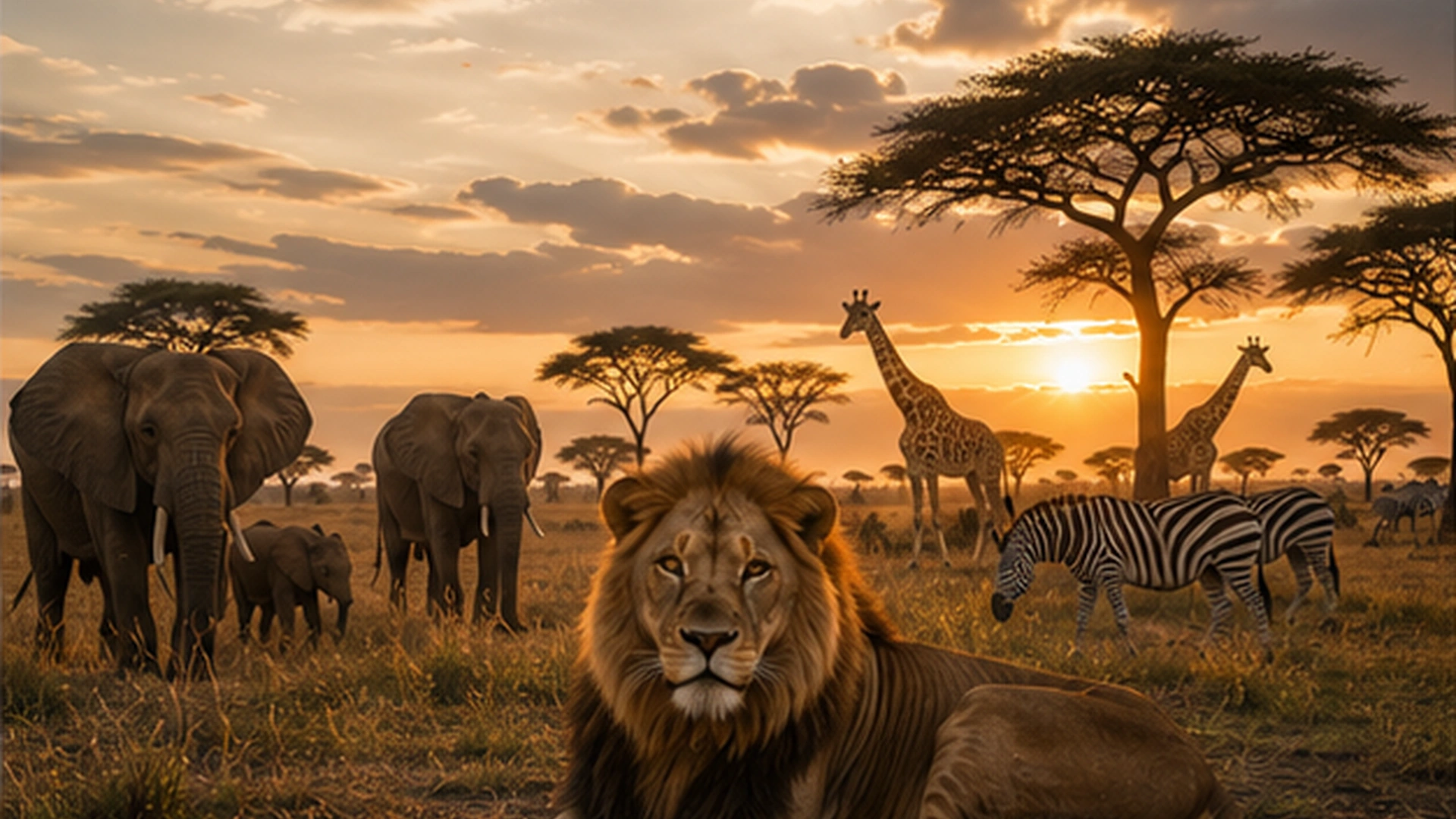
There is no single African interpretation of animal dreams. Africa contains thousands of communities, languages, religious institutions, environments, and histories. The meanings associated with cattle in a pastoral community may differ from those connected with fishing, hunting, urban pet ownership, or a particular religious office.
Birds in KhoeSān Thought and Practice
Anthropological research has identified important associations between birds, healing, spirits, and everyday life in particular KhoeSān contexts. This evidence concerns a cultural field of meaning, not a rule that every bird dream carries a spiritual message.
A culturally connected dreamer might consider such associations, while another person may dream about a bird because one entered the house, appeared in a film, or woke them with its call.
Lele Dream Summons and Religious Office
Historical anthropological research on Lele religious symbolism in the present-day Democratic Republic of the Congo notes that entry into a diviners’ group involved initiation and evidence of a dream summons. This example shows that dreams may sometimes be evaluated institutionally rather than interpreted privately.
It does not authorize outsiders to imitate initiation procedures, claim Lele authority, or assume that any animal dream is a calling to become a diviner.
Anansi and Cultural Memory
Spider stories associated with Anansi developed within Akan and wider African-diaspora histories as narratives of intelligence, survival, humour, and resistance. A spider dream may draw on those stories for someone familiar with them, while another dreamer may simply fear spiders or have recently seen one.
General animal symbolism can help identify possible associations, but it cannot replace the dreamer’s actual context.
Dreaming About Dogs
Dogs may appear as companions, guards, hunters, working animals, strays, threats, or deceased pets.
A Friendly Dog
A calm or affectionate dog may be connected with companionship, safety, routine, or a specific relationship with a pet. It does not automatically mean that a loyal friend will arrive.
A Barking or Aggressive Dog
Possible influences include fear, a real neighbourhood dog, past bites, concern about security, or recent media. The dream should not be used to label a real person as an enemy.
A Lost or Injured Dog
The dream may involve responsibility, helplessness, grief, guilt, or worry about an actual animal. A pet owner should check real-world concerns rather than relying only on symbolism.
A Deceased Dog
Dreams of a pet that has died may be comforting or distressing. They can be understood through grief, attachment, memory, or spiritual belief without requiring one explanation to be forced on the dreamer.
Dreaming About Snakes
Snake dreams are among the most heavily commercialized online. They are often presented as proof of betrayal, enemies, witchcraft, sexuality, transformation, or healing.
None of those meanings is universal.
A snake dream may be influenced by:
A real encounter or local snake risk
A childhood fear
Religious imagery
Medical symbolism
A documentary or social-media video
A family story or proverb
Concern about venom, safety, or the environment
The animal’s movement and appearance within the dream
A dream about a snake cannot identify a witch, jealous relative, unfaithful partner, or hidden enemy. Accusations require evidence, and claims of spiritual danger should never be used to frighten, exploit, or isolate someone.
Dreaming About Birds
Bird dreams may involve flying, singing, nesting, migration, feathers, eggs, injured birds, or large flocks.
A Flying Bird
Possible associations include movement, distance, migration, freedom, observation, weather, or a familiar species. The bird’s direction and the dreamer’s emotion matter.
A Bird Entering a House
This may feel surprising or frightening. It can connect with a real experience, local beliefs, concern for the animal, or the disruption of a private space. It does not automatically predict death or visitors.
A Trapped or Injured Bird
The dream may evoke vulnerability, care, guilt, or helplessness. A fixed interpretation such as “lost freedom” may be useful as a metaphor but should not be presented as fact.
Dreaming About Lions and Other Big Cats
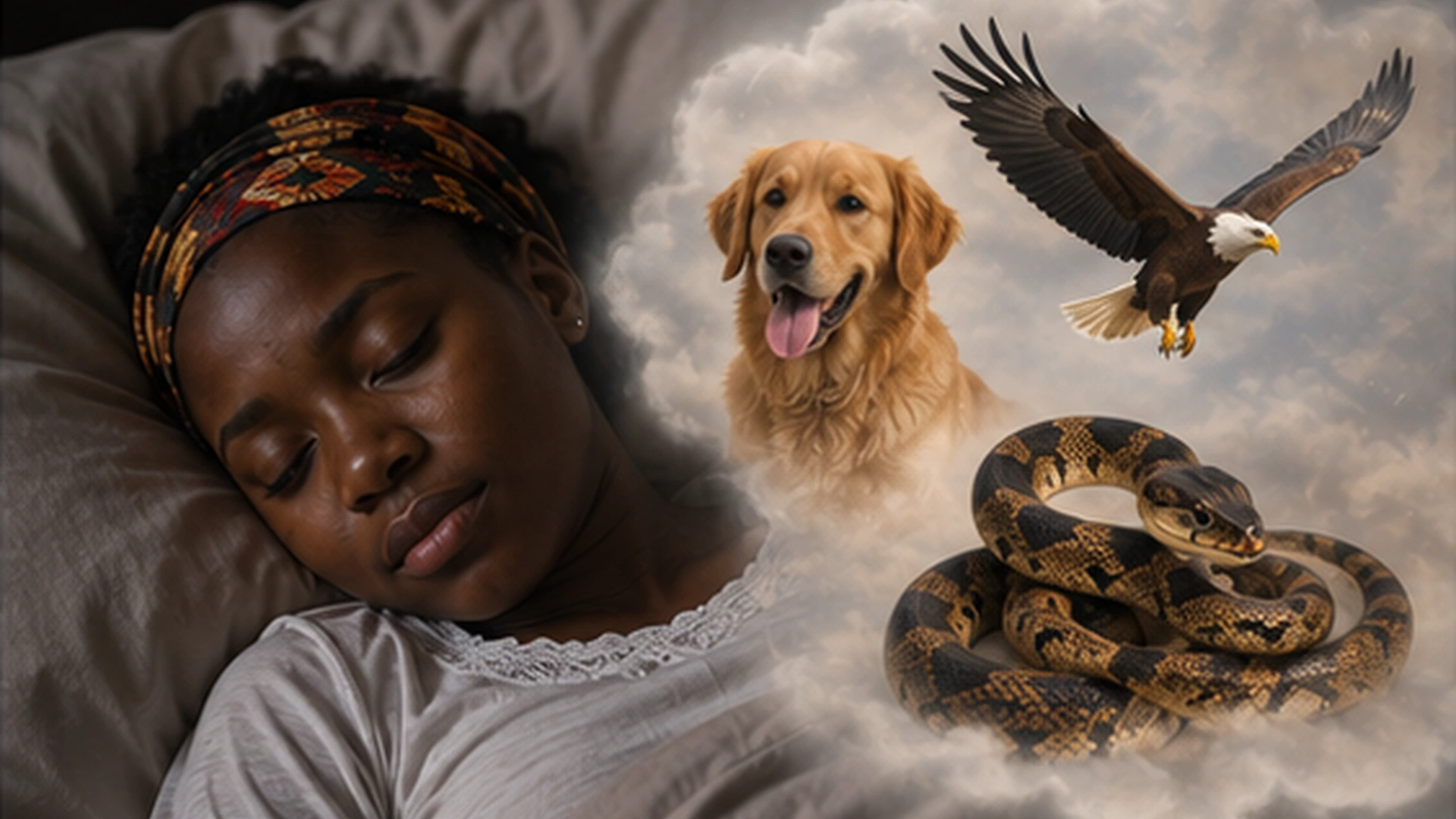
Lions, leopards, cheetahs, and other big cats may appear through wildlife experience, national symbolism, folktales, tourism, conservation concerns, sport, film, or fear.
A lion may feel majestic in one dream and life-threatening in another. The dreamer may admire the animal, run from it, protect it, or become it.
It is inaccurate to say that a lion always represents leadership, royalty, courage, or an important ancestor. Those associations may be relevant in some contexts but must be established rather than assumed.
Dreaming About Cattle, Goats, and Sheep
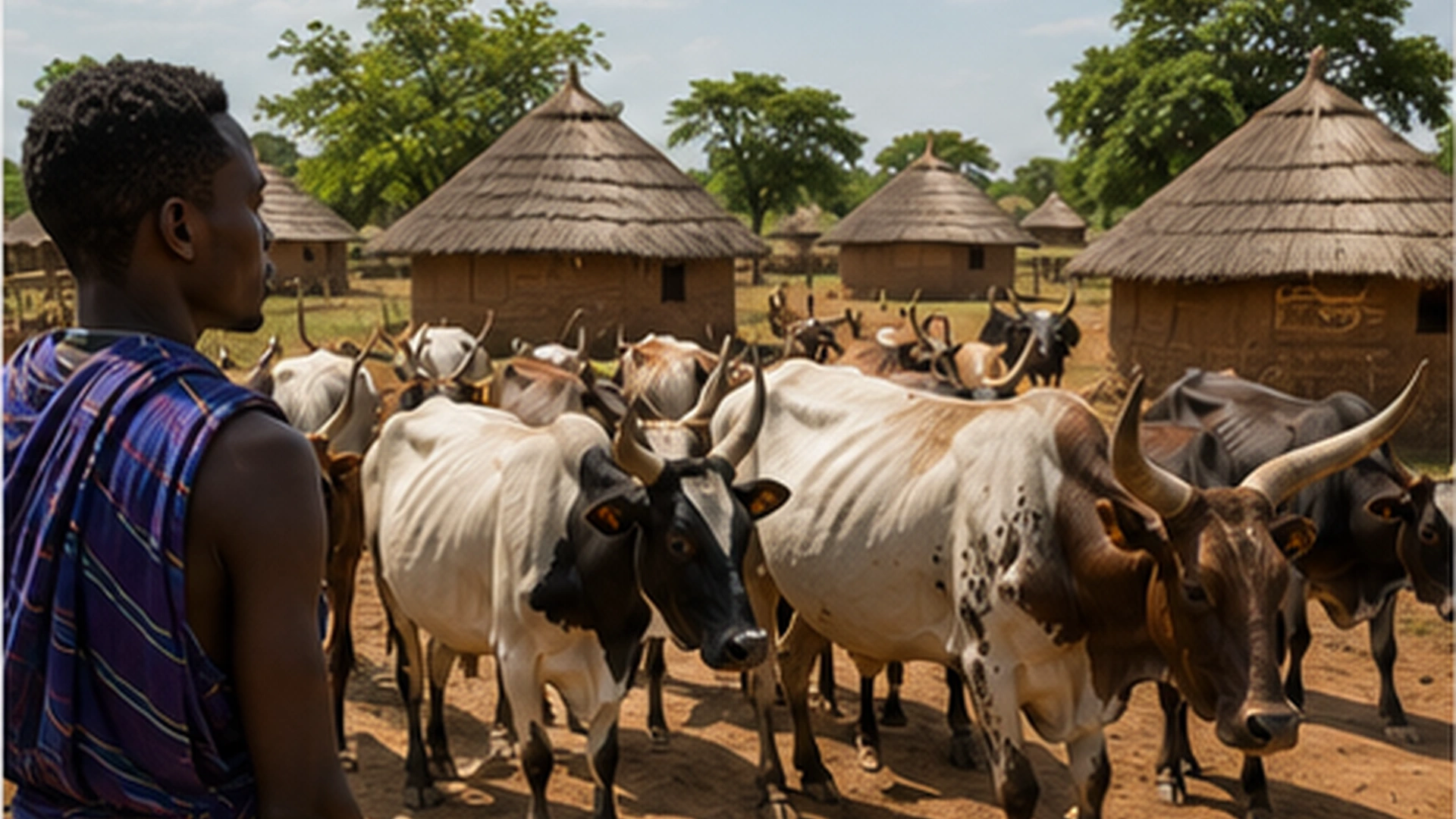
Livestock dreams may have especially practical meanings for farmers, pastoralists, traders, veterinarians, butchers, cooks, or families whose wealth and responsibilities involve animals.
Possible waking-life connections include:
Food security
Animal health
Drought or pasture
Market prices
Inheritance
Bridewealth practices in a specific community
Family responsibility
Theft or conflict
Religious sacrifice in an appropriate historical context
A recent journey or agricultural task
Cattle should not automatically be treated as a symbol of wealth, and goats should not automatically be described as evil or sacrificial. Such claims flatten complex relationships between people, animals, labour, and religion.
Dreaming About Insects and Spiders
Insects may appear in large numbers, enter food or a house, bite the dreamer, build structures, or move across the body.
Possible influences include a real infestation, malaria or disease concerns, fear, disgust, recent bites, environmental conditions, or cultural stories.
Spiders may evoke Anansi stories for some dreamers, patient construction for others, and intense fear for someone with arachnophobia. The dreamer’s actual relationship with spiders should come before a universal symbolic claim.
Dreaming About Fish and Aquatic Animals
Fish dreams may relate to fishing, food, markets, rivers, lakes, oceans, aquariums, religious stories, pregnancy folklore, or environmental concern.
A fish dream does not confirm pregnancy or guarantee financial gain. A person who works on Lake Victoria, sells fish, keeps an aquarium, or recently saw a dead fish may have a direct waking-life explanation.
Crocodiles, hippopotamuses, sharks, and other aquatic animals can also reflect real environmental knowledge and danger. Their meaning should not be reduced to generalized fear or “hidden enemies.”
Dreaming About Wild or Unknown Animals
Some dream animals do not match any known species. They may combine features of several animals or change form during the dream.
Such imagery can result from the creative and discontinuous nature of dreaming. A strange animal is not proof that the dreamer encountered a spirit, demon, cryptid, or future creature.
Useful questions include:
Which features were familiar?
What did the animal do?
Did it communicate?
Was the dreamer curious or terrified?
Did the image resemble a game, film, mask, sculpture, or story?
Was the animal changing along with the setting?
Dreaming of Being Chased or Attacked by an Animal
Animal pursuit is common in disturbing and recurrent dreams, particularly among children and adolescents. A threat-simulation theory proposes that some dreams rehearse threatening situations, but this remains one theory rather than a complete explanation of all dreams.
An attack dream may follow:
A real bite, chase, or wildlife encounter
Trauma
Fear of a species
Stress or anxiety
A violent film or game
News about an attack
Concern about protecting children or livestock
An unfamiliar sleeping environment
The dream does not prove spiritual attack or predict a real animal encounter. Repeated nightmares after trauma deserve compassionate professional support.
Dreaming About Dead, Injured, or Neglected Animals
These dreams may be emotionally difficult because they activate care, guilt, grief, disgust, or helplessness.
Possible waking connections include:
The death of a pet
Concern about animal welfare
Roadkill or slaughter witnessed recently
Work involving animals
Environmental loss
A memory from childhood
Fear of failing to protect someone vulnerable
Interpreting the animal as a “dead part of the self” may be a reflective metaphor, but it is not a scientific diagnosis.
Talking Animals and Animal Transformation
Dream animals may speak, give instructions, change into people, or cause the dreamer to transform into an animal.
Talking animals are common in stories, animation, folktales, and religious narratives, so the imagery may draw on familiar narrative forms. The specific words matter more than the generic fact that the animal spoke.
A command received from an animal in a dream should not override medical advice, law, consent, safeguarding, or evidence. The dreamer remains responsible for waking decisions.
What Modern Dream Research Suggests
Waking Relationships Influence Dreams
The dog-dream survey found that dog owners reported dogs in their dreams more often than non-owners. This is consistent with the continuity hypothesis, which links dream content with waking experience.
Age Influences Dream Content
Laboratory and longitudinal research on young children has found that early dream reports often contain animals and body states. Dream narrative complexity generally develops with cognitive and language abilities.
Emotion Remains Important
Dream plots may be unrealistic, but research suggests that emotional reactions in dreams often resemble the dreamer’s waking reactions. This supports beginning interpretation with emotion rather than a fixed symbol dictionary.
Science Has Not Created a Universal Animal Code
No scientifically validated system can determine that a dog always means loyalty, a snake always means betrayal, a bird always means freedom, or a lion always means leadership. These may be possible associations, not proven translations.
How to Reflect on an Animal Dream Responsibly
Record the whole dream immediately, including the setting, sequence, people, animal behaviour, words, and ending.
Name the strongest emotion: fear, affection, grief, disgust, admiration, confusion, or responsibility.
Identify whether the animal was known personally, common locally, seen in media, or completely unfamiliar.
Consider recent waking events, including animal encounters, pet care, work, travel, stories, religious activity, and news.
Ask what the animal means in the dreamer’s family, language, occupation, religion, and community.
Consider practical explanations before predicting spiritual danger.
Allow several possible interpretations and keep uncertainty visible.
Avoid major medical, legal, financial, or relationship decisions based only on one dream.
Protect privacy when the dream involves relatives, religious matters, trauma, or accusations.
Common Misconceptions
“A dog always represents a loyal friend.”
False. Dogs may be companions, threats, working animals, memories, or ordinary dream content.
“A snake proves that someone is betraying you.”
False. A dream cannot identify a guilty person or hidden enemy.
“A bird entering the house predicts death.”
False. The image has no reliable universal predictive meaning.
“A lion means the dreamer will become a leader.”
False. Leadership is only one possible cultural association.
“Fish dreams confirm pregnancy or money.”
False. Dreams cannot diagnose pregnancy or guarantee wealth.
“Every animal attack is spiritual warfare.”
False. Stress, trauma, fear, memory, and media may influence threat dreams.
“All African cultures interpret animals similarly.”
False. Meanings differ by community, ecology, language, religion, occupation, and individual.
“Science has proved that animal dreams are meaningless.”
False. Research connects dreams with waking experience, memory, development, and emotion, but it does not establish a fixed dictionary.
Ethical and Safety Boundaries
Animal dream interpretation should never be used to:
Accuse someone of witchcraft
Label a relative as an enemy
Declare a partner unfaithful
Diagnose disease or pregnancy
Stop prescribed treatment
Encourage violence against people or animals
Demand large payments for protection
Frighten children
Control marriage, travel, employment, or family decisions
Claim guaranteed prophecy
Capture, harm, or kill wildlife because of a dream
Present private cultural knowledge without permission
Spiritual reflection may accompany medical, psychological, legal, or pastoral support, but it should not replace appropriate professional care.
When Animal Nightmares Need More Than Interpretation
Nightmares may be associated with stress, anxiety, trauma, major life changes, medication, or sleep disruption. Clinical guidance recommends seeking help when nightmares are frequent, cause significant distress, interrupt sleep, or interfere with daytime functioning.
Professional assessment is especially important when the dreamer:
Fears going to sleep
Has repeated nightmares after a traumatic event
Physically punches, kicks, shouts, or leaves the bed while dreaming
Injures themselves or a sleeping partner
Experiences hallucinations while fully awake
Develops severe anxiety, depression, or thoughts of self-harm
Notices symptoms after a medication change
Dream enactment can be associated with a sleep disorder and should be assessed by a qualified healthcare professional.
Key Takeaways
Animals in dreams may be familiar, threatening, protective, injured, speaking, or transformed.
Common animal imagery does not create universal meaning.
The dreamer’s waking relationship with the animal is central.
Dog-owner research supports continuity between waking experience and dream content.
Animal imagery can be prominent in children’s and recurrent dreams.
Ancient Egyptian dream manuals demonstrate historical interpretation but not a timeless universal code.
The Joseph narratives interpret cattle through a complete agricultural and political story.
African cultural meanings must be linked to specific communities and institutions.
Animal symbolism in stories or religion may shape a dream without determining it.
Snake dreams do not identify enemies, and fish dreams do not confirm pregnancy or money.
Animal-attack dreams may follow fear, trauma, or real encounters and do not prove spiritual attack.
Recurring nightmares or dangerous dream enactment may require professional help.
Responsible interpretation uses context, evidence, cultural respect, privacy, and humility.
People Also Ask
What does it mean to dream about animals?
It may relate to waking encounters, emotions, relationships, cultural stories, fears, responsibilities, or memories. The specific animal and dream context matter.
Why do I keep dreaming about the same animal?
Recurring imagery may reflect an unresolved concern, repeated waking exposure, strong personal association, fear, affection, or a memorable earlier dream.
Are animal dreams spiritual?
They may carry spiritual meaning for some people, but not every animal dream is a religious message.
Does a snake dream mean betrayal?
No. It cannot prove betrayal or identify an enemy.
Why do I dream about my deceased pet?
The dream may be connected with grief, attachment, memory, comfort, or spiritual belief.
Frequently Asked Questions
1. What does dreaming about a dog mean?
It may relate to companionship, protection, fear, responsibility, work, or a real pet. The dog’s behaviour and the dreamer’s history matter.
2. What does a snake in a dream mean?
It may reflect fear, a real encounter, religious imagery, medical symbolism, media, or another personal association. It does not automatically mean betrayal.
Article Information
- Publisher
- Ancestral Temple
- Editor
- Ancestral Temple
- Last updated
- Jul 26, 2026
- Last reviewed
- Jul 26, 2026
- Content version
- 1f50dc482d
This educational article should be read as cultural and spiritual information, not as medical, legal, financial, or emergency advice.
Helpful Related Guidance
Explore This Topic
Dreams & Symbolism · Spiritual Protection After A Nightmare
About the Author
 Ancestral Temple
Spiritual guide and practitioner with decades of experience in ancestral wisdom, rituals, and divine guidance.
Related Posts
View All

Leave a Comment
We'd love to hear your thoughts.
The dog study was useful because it showed how waking relationships can enter dreams.
I appreciated the explanation that the same animal can mean different things to different dreamers.