
Sacred Symbols Found Across African Spiritual Traditions
Pillar Article
Quick Summary
Explore sacred symbols used across diverse African spiritual traditions, from Adinkra and Nsibidi to masks, animals, crosses, divination signs, colors, and ritual objects.
Sacred symbols found across African spiritual traditions include visual signs, colors, objects, animals, gestures, materials, sounds, and natural places that communicate religious, ethical, historical, or social meaning.
These symbols do not form one universal African system. A shape that represents wisdom in an Akan context may carry no such meaning in a Yoruba, Shona, Kongo, Ethiopian, San, or Cross River tradition. Even when similar images appear in different communities, their meanings, owners, and permitted uses may be completely different.
Some symbols are publicly displayed on clothing, architecture, jewelry, monuments, or festival objects. Others belong to initiated religious specialists, families, royal institutions, diviners, healers, or restricted associations. A symbol may also have several levels of meaning: one interpretation may be widely known, while another is taught only to authorized members.
Understanding African sacred symbolism therefore requires more than identifying an attractive pattern. Readers must ask who created the symbol, which community uses it, where it appears, who may interpret it, and what role it performs.
Key Points
Sacred symbols in African spiritual traditions are culturally specific signs and objects that communicate ideas about spirituality, ancestry, wisdom, morality, protection, leadership, healing, life, death, nature, and community.
They may appear as:
- Graphic signs and pictorial systems
- Geometric designs
- Masks and masquerade costumes
- Human and animal figures
- Crosses and religious emblems
- Beads, textiles, and royal regalia
- Divination marks and ritual tools
- Colors and material combinations
- Drums, bells, and other sound-producing objects
- Sacred trees, rivers, rocks, and landscapes
- Body painting, scarification, or ceremonial gestures
The meaning of a sacred symbol depends on its cultural context. It should never be assumed that one symbol represents all African spirituality.
What Is a Sacred Symbol?
A sacred symbol is a sign, image, object, sound, movement, material, or place that communicates religious or spiritual meaning within a particular community.
A symbol may represent:
- A creator or divinity
- An ancestor
- A spirit
- A moral teaching
- A historical event
- A stage of life
- Protection or healing
- Leadership and authority
- Community membership
- The relationship between visible and spiritual realities
Clear Definition
A sacred symbol is a culturally recognized sign or object that expresses spiritual knowledge, religious authority, ethical teaching, or a relationship with sacred reality.
Plain-Language Meaning
A sacred symbol carries more meaning than its physical appearance.
A carved bird may not merely represent a bird. Within a particular tradition, it might communicate leadership, communication, spiritual movement, family identity, or a connection between different realms.
However, that meaning cannot be assumed without knowing the community and context.
Why There Is No Universal Dictionary of African Symbols
Africa contains thousands of communities with different languages, histories, environments, religious institutions, and artistic traditions.
For that reason, there is no reliable universal dictionary in which:
- Every circle means unity
- Every triangle means femininity
- Every spiral means eternity
- Every snake means evil
- Every bird means freedom
- Every mask represents an ancestor
- Every white object represents purity
Such interpretations may apply in a particular setting, but they cannot automatically be extended across the continent.
African works of art frequently served religious, political, educational, healing, or social functions. Their meanings often depended on who owned them, where they were placed, how they were prepared, and what happened when they were used. Museums and historians therefore interpret African objects through cultural and performance context rather than appearance alone.
Key Point
The same shape can hold different meanings in different cultures, while different shapes can express similar ideas.
How Symbols Become Sacred
A physical object is not necessarily sacred simply because it appears old, unusual, handmade, or African.
It may become sacred through:
- Consecration
- Ritual preparation
- Association with a divinity or ancestor
- Placement inside a shrine
- Use by an authorized specialist
- Connection with a royal institution
- Inclusion in a ceremony
- Contact with particular substances
- Transmission through a family or initiation group
- Recognition by the community
A wooden figure sold as decoration may look similar to a figure used in a shrine, but their roles may be entirely different.
Form and Function Work Together
The meaning of a symbol may depend on several elements:
- Its physical form
- The materials used to make it
- The person authorized to use it
- The words, songs, or prayers performed with it
- Its location
- Its relationship to other objects
- The event during which it appears
- The community’s interpretation
Removing a sacred object from its ritual setting can therefore remove much of its meaning.
Graphic Signs and Symbolic Systems
Some African cultures developed organized visual systems through which ideas, proverbs, social relationships, authority, and spiritual knowledge could be communicated.
These systems should not be grouped together as one “African alphabet.” They developed in different regions and served different purposes.
Adinkra Symbols in Akan Traditions
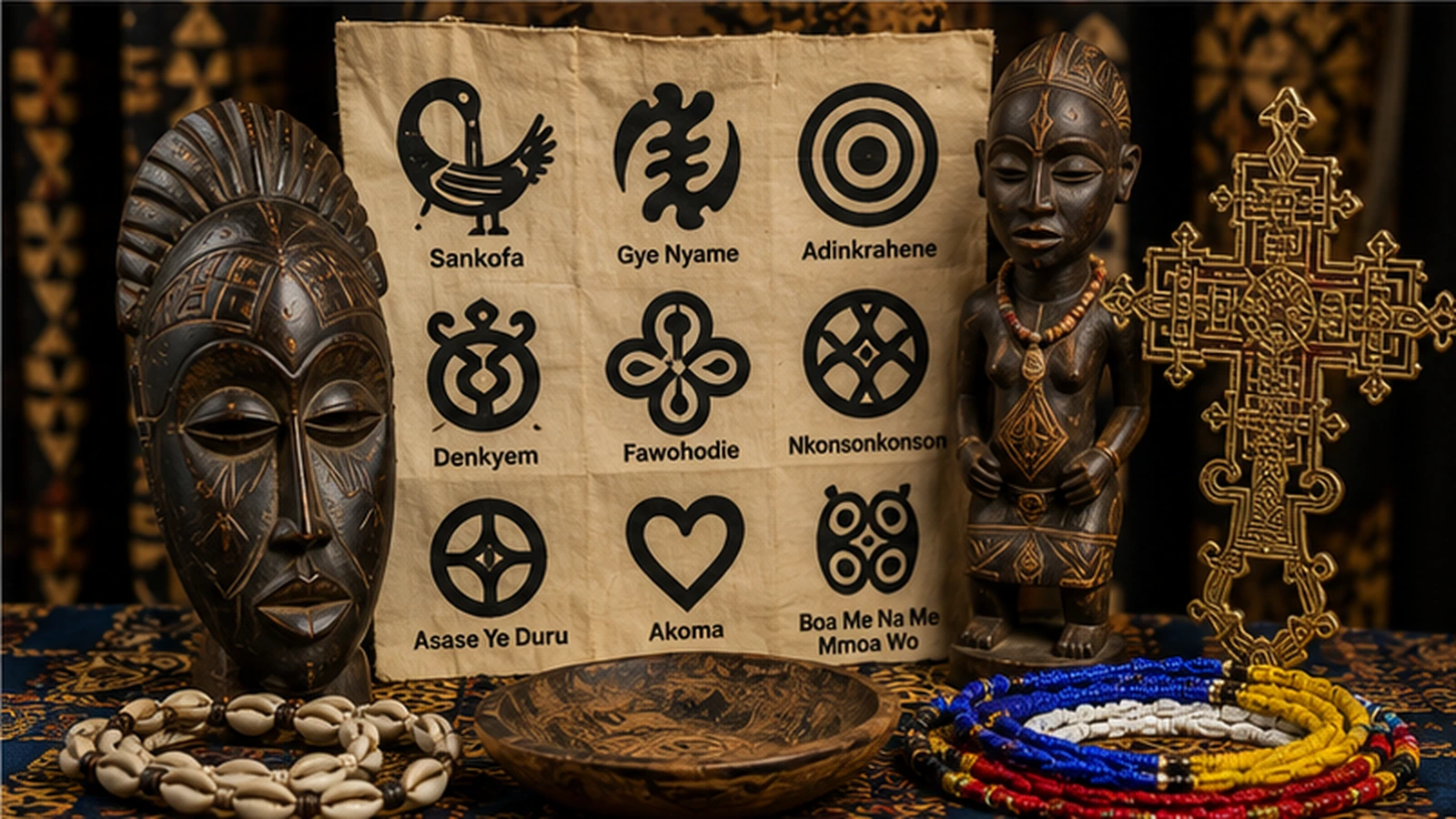
Adinkra symbols are associated with Akan communities, especially in Ghana and Côte d’Ivoire. They commonly appear on cloth, architecture, printed materials, jewelry, pottery, and contemporary art.
Each symbol may be associated with a proverb, value, historical idea, or set of interpretations.
The Smithsonian National Museum of African Art describes Adinkra as a stamping tradition used in Akan funerary cloth, with individual symbols representing particular proverbs and related interpretations.
What Adinkra Symbols May Express
Depending on the design, an Adinkra symbol may communicate ideas related to:
- Wisdom
- Strength
- Adaptability
- Leadership
- Unity
- Patience
- Courage
- Divine presence
- Learning from history
- Responsibility
- Community cooperation
Adinkrahene
Adinkrahene, often translated as “king” or “chief of the Adinkra symbols,” is formed through concentric circular shapes. A Smithsonian collection entry identifies it as the “King of the Adinkra symbols.”
Its interpretations may involve authority, greatness, leadership, and the central role from which other designs are understood.
Sankofa
Sankofa is commonly associated with learning from the past. It may be represented through a stylized bird turning its head backward or through a heart-like design.
The broad lesson is not that people should live permanently in the past. It encourages recovering valuable knowledge so it can guide the present and future.
Important Caution
Adinkra symbols are not a universal language of Africa.
They should be identified as Akan symbols rather than described simply as “ancient African spiritual symbols.” Their meanings may also change according to historical period, artist, audience, and modern use.
Nsibidi Signs of the Cross River Region
Nsibidi is a system of symbolic and ideographic communication associated with communities in the Cross River region of southeastern Nigeria and southwestern Cameroon.
It has appeared on:
- Cloth
- Buildings
- Sculptures
- Musical instruments
- Headdresses
- Walls
- Bodies
- Ceremonial objects
A Metropolitan Museum of Art entry describes pyro-engraved geometric patterns and symbolic Nsibidi ideograms as associated with the Efik people of Nigeria’s coastal Calabar region.
Public and Restricted Meanings
Nsibidi signs have not all been equally accessible.
The Metropolitan Museum notes that Nsibidi has included layered symbols, with some available publicly and others restricted, functioning as a form of encoded communication alongside the Akwanshi monolith traditions of the Cross River region.
This means that online charts claiming to translate every Nsibidi symbol may be incomplete, decontextualized, or inaccurate.
Sacred and Social Communication
Depending on the community and setting, Nsibidi signs may communicate:
- Social relationships
- Authority
- Identity
- Agreements
- Court or legal ideas
- Initiation knowledge
- Proverbs
- Spiritual meanings
- Association membership
Some signs were connected with organizations such as Ekpe or related institutions. Knowledge of particular signs could demonstrate training, status, or authorization.
Why Nsibidi Must Be Used Carefully
Modern designers sometimes copy Nsibidi symbols for logos, tattoos, and fashion without verifying their meanings.
A respectful approach requires asking:
- Is the sign public or restricted?
- Which community’s interpretation is being used?
- Is the documented meaning reliable?
- Does the design belong to an initiation society?
- Is commercial use appropriate?
Sacred Geometry and Repeated Patterns
Geometric designs occur in many African artistic traditions, but they do not carry a single shared meaning.
Common forms include:
- Circles
- Spirals
- Diamonds
- Crossed lines
- Zigzags
- Chevrons
- Checkerboard patterns
- Concentric shapes
- Interlocking forms
- Repeated borders
These shapes may represent ideas such as continuity, movement, balance, authority, transition, protection, or community structure.
However, interpretation must come from the culture using the design.
Repetition as Meaning
Repeated patterns may communicate:
- Order
- Discipline
- Rhythm
- continuity
- Abundance
- Connection among parts
- The passage of time
- The strength of a collective
Repetition may also be primarily aesthetic in one setting and spiritually meaningful in another.
Yoruba Ifá Signs and Divination Objects
Ifá is a Yoruba system of knowledge and divination associated with Ọ̀rúnmìlà, the òrìṣà of wisdom and intellectual development.
UNESCO describes Ifá as using an extensive corpus of texts and mathematical formulas among Yoruba communities and in parts of the African diaspora.
During consultation, a trained diviner interprets combinations of marks connected with the Odù Ifá, an extensive body of sacred knowledge, stories, verses, and ethical teachings.
The Ọ̀pọn Ifá
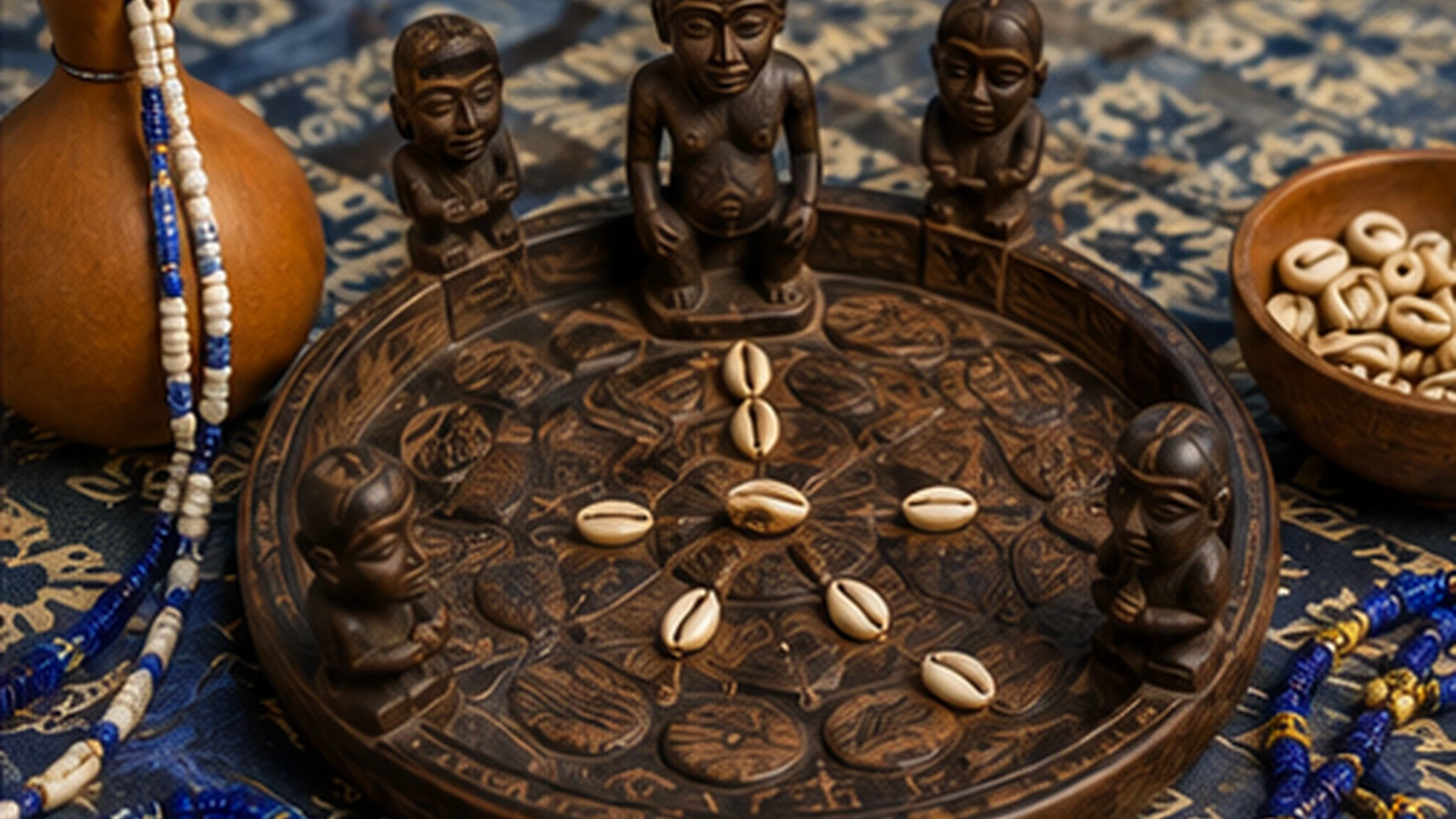
An ọ̀pọn Ifá is a divination tray used within Ifá practice.
The tray may include:
- A carved border
- Human or animal figures
- Images connected with Èṣù
- Geometric forms
- Designs relating to the diviner’s community or artistic tradition
The Metropolitan Museum holds numerous Yoruba divination trays made from wood or metal, showing that their designs vary rather than following one fixed visual model.
Signs Are Part of a Knowledge System
Ifá markings are not isolated decorations.
Their interpretation depends on:
- Formal training
- The divination procedure
- The relevant Odù
- Memorized verses
- Ethical interpretation
- The client’s circumstances
- The diviner’s recognized authority
Copying the signs without this system does not reproduce the meaning of Ifá.
Masks and Masquerade Symbols
Masks are among the most recognizable forms associated with African art, but the phrase “African mask” is too broad to explain their meaning.
A mask may be connected with:
- Ancestors
- Nature spirits
- Initiation
- Political authority
- Social education
- Funerals
- Harvest
- Community protection
- Entertainment
- Moral instruction
Some masks are sacred. Others are secular. Some combine religious, political, and theatrical roles.
A Mask Is More Than a Face Covering
The full symbolic form may include:
- The carved headpiece
- A complete costume
- Music
- Dance
- Spoken language
- The performer
- Ritual preparation
- The audience
- The location
- The authority of the association presenting it
The mask may have little meaning when separated from its movement and ceremony.
Bwa and Neighboring Mask Traditions
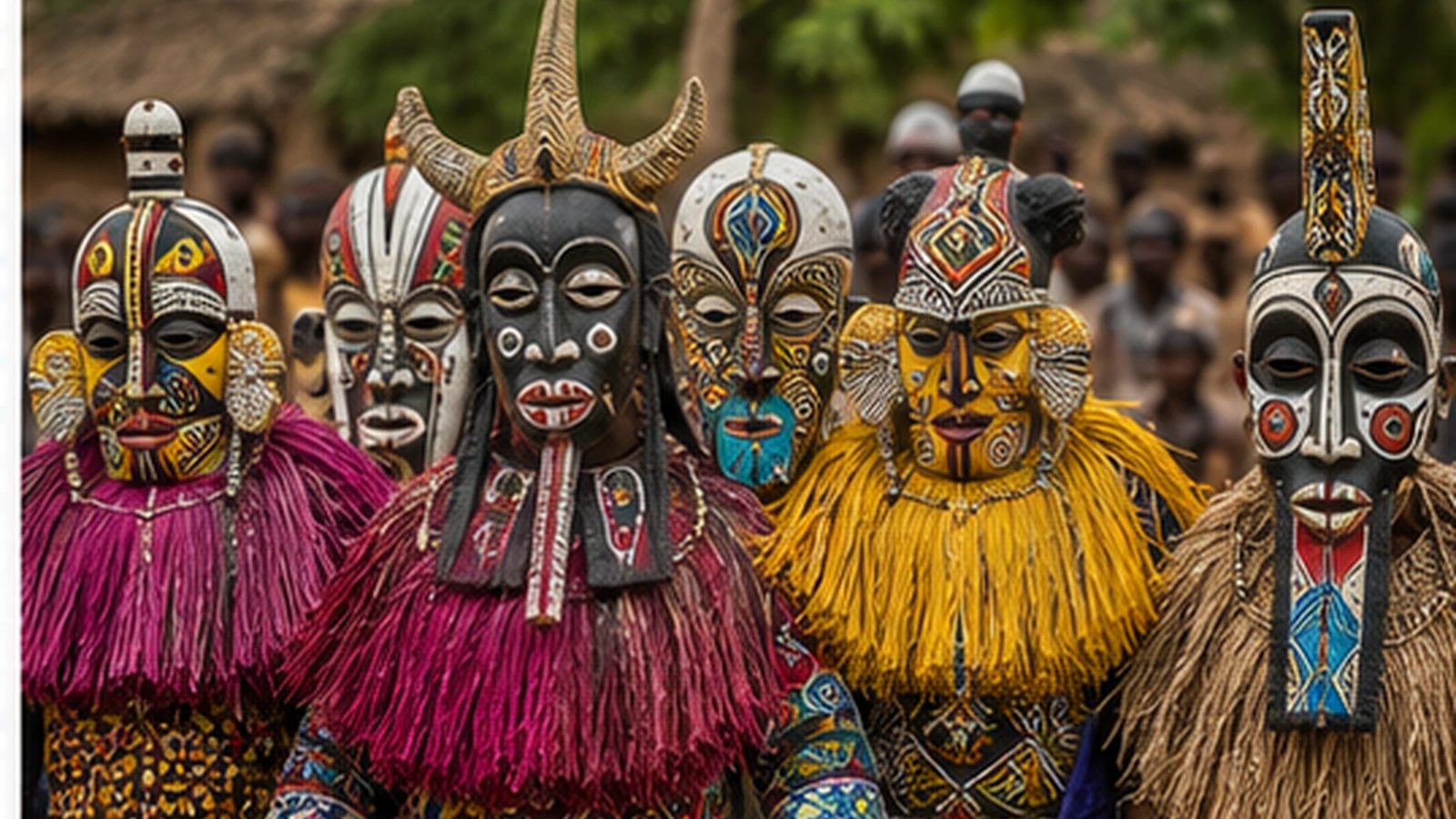
Masks associated with Bwa and neighboring peoples in Burkina Faso may combine human, animal, and insect features with strongly painted geometric forms.
The Metropolitan Museum explains that some such masks embody nature or ancestor spirits during performances and appear at important community events.
This does not mean all geometric African masks represent spirits. It demonstrates how a particular form functions within particular communities.
Human and Animal Combination
A mask combining human and animal features may express:
- Transformation
- Exceptional knowledge
- Connection between natural and human life
- Spiritual power
- A moral quality
- Communication across different domains
The Smithsonian describes one mask as representing a nature spirit that combines human and animal forms, including bird and chameleon features, suggesting knowledge and powers linking earth and sky.
Animal Symbols in African Spiritual Traditions
Animals can carry symbolic meaning because of their observed behavior, physical qualities, environment, or connection with religious stories.
Animals represented in sacred art may include:
- Birds
- Snakes
- Leopards
- Lions
- Crocodiles
- Tortoises
- Antelopes
- Elephants
- Chameleons
- Fish
An animal’s meaning is not universal.
Birds
Birds may be associated with:
- Communication
- Heightened vision
- Movement between earth and sky
- Leadership
- Spiritual travel
- Maternal protection
In another context, a specific bird may represent a family, deity, political office, or warning.
Leopards
Leopards may symbolize royal authority, danger, strength, controlled power, or elite status in some West and Central African societies.
A leopard image should not automatically be interpreted this way outside those settings.
Snakes
Snakes may represent:
- Renewal
- Water
- Protection
- Danger
- Fertility
- Continuity
- Spiritual presence
The widespread Western association between snakes and evil should not be imposed on traditions where the snake has a different role.
Tortoises and Chameleons
Tortoises may be associated with patience, intelligence, cunning, age, or storytelling. Chameleons may communicate transformation, adaptability, careful movement, or the connection of different environments.
Meanings depend on local narratives and visual traditions.
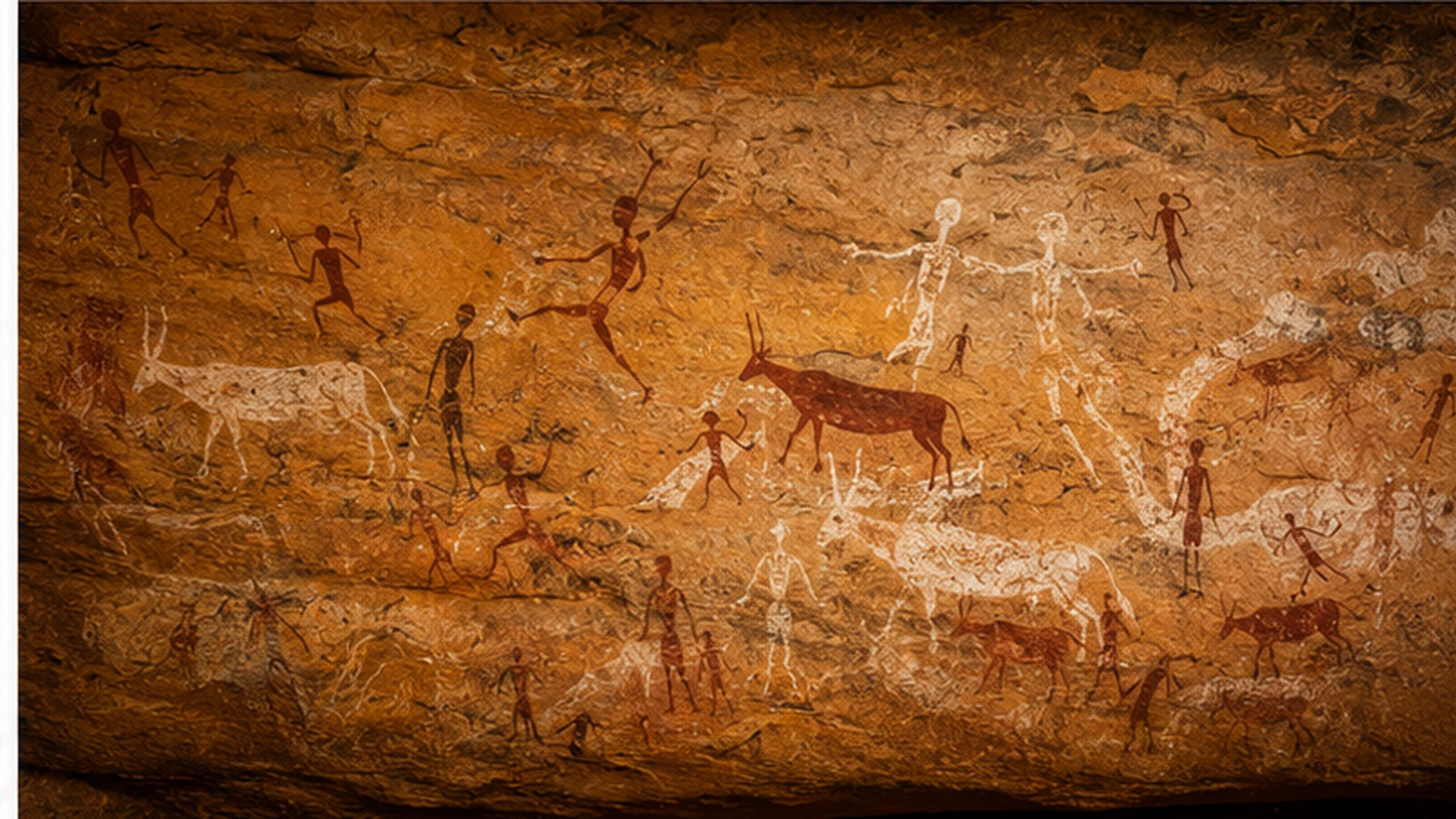
Eland Imagery in San Rock Art
San rock art in southern Africa contains human figures, animals, movement, and scenes that scholars have related to religious experience and the healing or trance dance.
The eland holds particular importance in interpretations of San spiritual symbolism. The Metropolitan Museum explains that San religious beliefs and trance dance traditions involve supernatural power associated with the eland and other animals.
Art and Spiritual Experience
San rock art should not be treated simply as an illustrated record of hunting.
Some images may relate to:
- Healing
- Trance
- Transformation
- Rainmaking
- Spiritual power
- Community ceremony
- Relationships with animals
Scholars continue to interpret individual images carefully because not every painting necessarily has the same purpose.
Crosses in Ethiopian Orthodox Christianity
African spiritual traditions include longstanding Christian traditions as well as indigenous religions, Islam, Judaism, and newer religious movements.
The Ethiopian Orthodox cross is one of Africa’s most important sacred symbols.
Christianity was established in the Aksumite kingdom during the fourth century, and crosses have appeared in Ethiopian religious culture since that period.
Ethiopian Cross Designs
Ethiopian crosses may appear as:
- Hand crosses
- Processional crosses
- Neck crosses
- Altar crosses
- Liturgical crosses
- Architectural carvings
- Manuscript designs
Their intricate patterns may include:
- Interlocking lines
- Repeated smaller crosses
- Plant-like forms
- Birds
- Geometric frames
- Openwork designs
Meanings of the Cross
Within Ethiopian Orthodox traditions, the cross may represent:
- Christ’s crucifixion
- Resurrection
- Triumph
- Protection
- Healing
- Blessing
- The Tree of Paradise
- Renewal of spiritual life
The Metropolitan Museum explains that Ethiopian processional crosses can be understood as emblems of triumph and instruments through which spiritual and bodily life is restored.
Another Ethiopian liturgical cross uses branching forms that may suggest the cross as the Tree of Paradise.
Royal Symbols and Sacred Authority
Political and spiritual authority have often been closely connected.
Royal symbols may appear in:
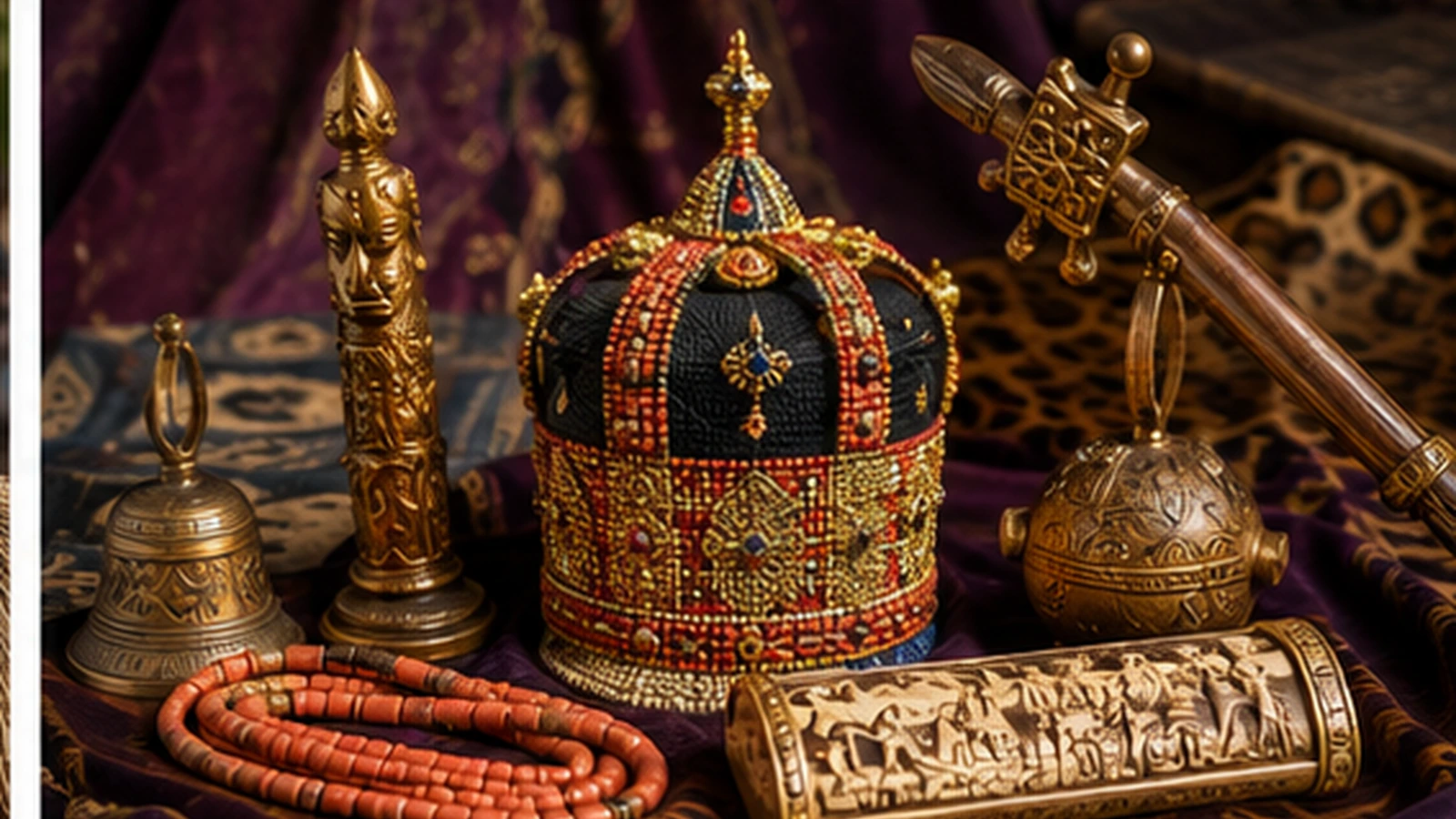
- Crowns
- Staffs
- Thrones
- Swords
- Beaded clothing
- Ivory objects
- Brass plaques
- Pendant masks
- Drums
- Umbrellas
- Palace architecture
These objects may communicate more than wealth. They can express divine approval, ancestral continuity, political legitimacy, protection, and the ruler’s responsibilities.
Benin Royal and Ancestral Symbols
The historical Kingdom of Benin, located in present-day Nigeria, developed a sophisticated visual system connected with the Oba, royal ancestors, court offices, warfare, trade, and spiritual authority.
Many works commonly called the Benin Bronzes were created for royal palace settings and ancestral altars.
The British Museum states that numerous Benin works were commissioned for ancestral altars honoring former Obas and Queen Mothers and were also used to validate the accession of new rulers.
Queen Mother Imagery
Pendant masks representing Queen Mother Idia became symbols of royal authority, protection, historical memory, and the important political role of the Iyoba, or Queen Mother.
The Metropolitan Museum explains that Benin Obas wore ivory pendant masks representing the Iyoba during ceremonies intended to protect the kingdom from harmful spiritual forces.
Material Matters
In royal traditions, the material itself may communicate meaning.
Examples include:
- Ivory associated with wealth, purity, or overseas trade
- Brass associated with permanence, royal authority, and palace history
- Coral beads associated with status and royal identity
- Iron associated with power, transformation, or warfare in certain settings
These meanings should not be generalized across all African cultures.
Colors as Sacred Symbols
Colors can carry spiritual and social meanings, but there is no continent-wide color code.
Depending on the tradition:
- White may relate to ancestors, peace, purity, healing, age, or the spiritual world.
- Red may suggest life, danger, authority, transition, blood, energy, or protection.
- Black may express maturity, mystery, fertile earth, power, death, or continuity.
- Blue may connect with water, calmness, distance, wealth, or particular spiritual beings.
- Green may relate to vegetation, growth, renewal, healing, or Islamic identity.
- Gold or yellow may communicate wealth, royalty, sunlight, sacred authority, or prosperity.
Meaning Comes From Combination
A color’s meaning may depend on:
- The material carrying it
- The person wearing it
- The ceremony
- The neighboring colors
- The community
- The historical period
- The object’s religious role
A white cloth used in one healing ceremony cannot automatically explain white clothing in another region.
Materials as Symbols
The material used to create an object can be as meaningful as its shape.
Sacred materials may include:
- Wood
- Iron
- Brass
- Gold
- Ivory
- Clay
- Stone
- Shells
- Beads
- Leather
- Raffia
- Plant fibers
- Feathers
- Water
- Earth
Iron
Iron may be connected with:
- Transformation
- Technology
- Agriculture
- Warfare
- Protection
- Blacksmiths
- Particular divinities or ritual specialists
These meanings vary considerably.
Beads
Beads may communicate:
- Rank
- Age
- Initiation
- Royal identity
- Religious devotion
- Wealth
- Protection
- Family or community membership
A bead’s color, material, arrangement, and wearer may all affect its meaning.
Cloth
Textiles can carry proverbs, status, mourning customs, historical identity, and spiritual messages.
Adinkra cloth, Nsibidi-patterned cloth, royal textiles, initiation garments, and funeral cloths belong to different traditions and should not be interpreted through one shared system.
Staffs, Thrones, and Objects of Office
A staff may symbolize:
- Leadership
- Religious authority
- Judicial responsibility
- Communication with ancestors
- Membership in an institution
- A ruler’s duty to maintain order
A throne may represent more than a seat. It can embody the office, history, ancestors, and legitimacy of leadership.
Some objects remain sacred even when they are not being actively used because they represent an institution rather than one individual.
Drums, Bells, and Sound Symbols
A sacred symbol does not have to be visual.
Sounds can communicate:
- The beginning of a ceremony
- The arrival of a leader
- The identity of a divinity
- A funeral announcement
- A warning
- A transition in ritual
- A message to the wider community
A drum pattern or bell sequence may function like a recognizable sign.
Musical Instruments as Sacred Objects
An instrument may become sacred through:
- Consecration
- Restricted ownership
- Association with a shrine
- Use during initiation
- Connection with an ancestor or divinity
- Rules controlling when it may be played
It should not be assumed that every African drum is sacred. Many are used for social entertainment, communication, professional music, or public celebration.
Natural Places as Sacred Symbols
Trees, rivers, mountains, caves, rocks, forests, and springs may symbolize spiritual presence, ancestry, protection, origins, or community identity.
A tree may represent:
- Long life
- Family continuity
- A meeting place
- An ancestral location
- A shrine
- Protection
- Connection between earth and sky
A river may represent:
- Life
- Movement
- Fertility
- A spiritual being
- A boundary
- Purification
- Historical migration
The natural object is not always worshipped as a god. It may be respected because of the history, power, or relationship associated with it.
Body Markings, Clothing, and Gesture
The human body may function as a surface of symbolic communication.
Meaning can be expressed through:
- Body painting
- Hairstyles
- Scarification
- Beads
- Clothing
- Head coverings
- Hand movements
- Posture
- Dance
- Ceremonial walking
These may indicate:
- Age
- Initiation
- Marriage
- Mourning
- Religious office
- Family identity
- Social status
- Participation in a ceremony
Historical body markings must be discussed carefully. Some practices changed or declined because of colonial rule, religious change, law, health concerns, or community preference.
Symbols Are Activated Through Performance
A symbol may not be fully understood as a static image.
Its meaning can emerge through:
- Music
- Movement
- Prayer
- Storytelling
- Call and response
- Procession
- Touch
- Placement
- Timing
- Audience participation
A mask hanging on a museum wall is not performing the same role as that mask appearing with its full costume, music, trained performer, and community authorization.
A divination tray displayed in a case is not functioning as it does during consultation.
Public Symbols and Restricted Symbols
Some sacred symbols are intended for public recognition. Others are controlled by families, initiation groups, religious specialists, or royal institutions.
Restricted symbols may communicate:
- Rank
- Secret teachings
- Internal laws
- Ritual authority
- Initiation status
- Spirit identities
- Specialized knowledge
Why Restriction Matters
Restriction is not necessarily an attempt to hide information from outsiders for no reason.
It may protect:
- Community authority
- Religious responsibility
- The dignity of participants
- Knowledge requiring training
- Individuals receiving consultation
- The power attributed to a ritual
- Family privacy
Photographing or publishing a restricted symbol may violate community expectations even when no national law prohibits it.
Colonialism and the Misinterpretation of Symbols
European collectors, missionaries, colonial officials, and early researchers frequently removed African objects from their original settings.
Objects were often labeled with broad terms such as:
- Fetish
- Idol
- Primitive art
- Tribal symbol
- Witchcraft object
- Pagan mask
These labels obscured distinctions among:
- Divinities
- Ancestors
- rulers
- Healers
- Initiation societies
- Household protection
- Public performance
- Memorial art
Some symbols were also separated from their creators’ names, local languages, ceremonial roles, and ownership histories.
Sacred Symbols in Modern Life
African sacred symbols continue to appear in:
- Contemporary religious practice
- Church and mosque architecture
- Cultural festivals
- Fashion
- Jewelry
- Public monuments
- Political movements
- Contemporary art
- Digital design
- Diaspora religions
Modern use does not automatically make a symbol inauthentic.
Traditions can adapt while retaining meaningful connections with history.
Cultural Revival
Artists and communities may use historical symbols to:
- Recover suppressed knowledge
- Teach younger generations
- Express cultural identity
- Challenge colonial stereotypes
- Preserve language and proverbs
- Connect with diaspora communities
Commercialization
Commercial use becomes problematic when:
- Restricted symbols are copied
- Meanings are invented for marketing
- Designs are presented as universally African
- Communities receive no credit
- Sacred objects become novelty products
- Sellers promise supernatural results
Common Misconceptions
Misconception 1: Every African Pattern Is Sacred
Reality: Many designs are decorative, practical, social, commercial, or personal rather than religious.
Misconception 2: One Symbol Has the Same Meaning Everywhere
Reality: Meanings differ by culture, period, location, and use.
Misconception 3: Every Mask Represents an Ancestor
Reality: Masks may represent spirits, social characters, moral lessons, political authority, entertainment, or other roles.
Misconception 4: Adinkra Is a Universal African Symbol System
Reality: Adinkra belongs to Akan cultural history, even though it is now used internationally.
Misconception 5: Nsibidi Is Available for Anyone to Copy
Reality: Some Nsibidi signs have public uses, while others are associated with restricted knowledge.
Misconception 6: African Sacred Symbols Are Always Ancient
Reality: Communities continue to create, adapt, and reinterpret symbols.
Misconception 7: Similar Shapes Prove Two Traditions Are the Same
Reality: Circles, crosses, spirals, and animal forms appear in many cultures without necessarily carrying identical meanings.
Misconception 8: Symbols Guarantee Spiritual Power
Reality: No image, necklace, tattoo, or object guarantees healing, wealth, protection, love, or success.
How to Interpret African Sacred Symbols Respectfully
Step 1: Identify the Community
Ask:
- Which people created or use it?
- What language names the symbol?
- In which region is it found?
- What historical period does it come from?
Step 2: Identify the Object or Setting
Determine whether the symbol appears on:
- Cloth
- A mask
- A shrine
- Jewelry
- Architecture
- A divination tool
- A grave
- Royal regalia
- The body
Step 3: Identify Its Function
Ask whether it serves a:
- Religious
- Political
- Memorial
- Educational
- Protective
- Healing
- Decorative
- Social purpose
Step 4: Look for Community-Informed Sources
Prioritize:
- African scholars
- Cultural institutions
- Community museums
- Practitioners
- Oral historians
- Reputable museum research
- University publications
Step 5: Check Whether the Meaning Is Public
Do not reproduce a symbol if reliable sources identify it as restricted or initiation-based.
Step 6: Avoid Universal Claims
Use wording such as:
- “In this Akan context…”
- “Among these Yoruba practitioners…”
- “Within this Ethiopian Orthodox tradition…”
- “In some San interpretations…”
Avoid saying, “This is what Africans believe.”
Step 7: Do Not Invent Spiritual Results
A symbol may have recognized religious meaning, but it should not be marketed with guaranteed promises.
Spiritual symbols do not replace medical care, legal assistance, financial advice, mental health support, or professional safety services.
Key Takeaways
- African sacred symbols belong to specific cultures and traditions.
- A symbol’s meaning depends on context, ownership, performance, and community interpretation.
- Adinkra symbols communicate Akan proverbs and values.
- Nsibidi is an encoded visual system associated with Cross River communities, with both public and restricted signs.
- Ifá marks belong to a Yoruba divination and knowledge system.
- Masks must be understood through costume, music, movement, and ceremony.
- Animals may symbolize spiritual or social ideas, but their meanings are not universal.
- Ethiopian crosses express a distinctive African Christian tradition.
- Royal objects can symbolize ancestry, authority, protection, and political continuity.
- Colors and materials do not follow one continent-wide code.
- Some symbols are public, while others require initiation or authorization.
- Respectful interpretation requires cultural specificity and reliable sources.
People Also Ask
What are African sacred symbols?
African sacred symbols are culturally specific signs, objects, images, sounds, movements, or places that express spiritual, ethical, ancestral, or religious meaning.
Is there one symbol for African spirituality?
No. African spiritual traditions are diverse, and no single symbol represents them all.
Are Adinkra symbols religious?
Some Adinkra symbols express spiritual ideas, while others communicate social values, proverbs, leadership, ethics, or historical knowledge.
What is Nsibidi?
Nsibidi is an encoded visual communication system associated with communities in the Cross River region of Nigeria and Cameroon.
What do African masks symbolize?
Their meanings vary. A mask may represent an ancestor, nature spirit, social role, political authority, moral lesson, or form of public entertainment.
Are African sacred symbols safe to use as tattoos?
Some public symbols may be used respectfully, but restricted, incorrectly translated, or sacred designs should not be copied without reliable research and appropriate permission.
Frequently Asked Questions
1. Do all African spiritual traditions use symbols?
Most religious traditions use symbolic language in some form, but the types and importance of symbols vary.
2. What is the most widely recognized African symbol?
Sankofa and other Adinkra designs are internationally recognized, but they are specifically rooted in Akan culture.
Related Cultural Guides
For more context, continue with protective beads in African traditions, ancient Egyptian protective symbols, the difference between talismans and amulets and global spiritual symbols.
Frequently Asked Questions
What should readers know first about Sacred symbols in African spiritual traditions?
Sacred symbols in African spiritual traditions: Explore sacred symbols used across diverse African spiritual traditions, from Adinkra and Nsibidi to masks, an
What causes Sacred symbols in African spiritual traditions?
Explore sacred symbols used across diverse African spiritual traditions, from Adinkra and Nsibidi to masks, animals, crosses, divination signs, colors, and ritual objects. The safest next step is to compare the signs, prepare clear details, and request private
How does Sacred symbols in African spiritual traditions work?
Explore sacred symbols used across diverse African spiritual traditions, from Adinkra and Nsibidi to masks, animals, crosses, divination signs, colors, and ritual objects. The safest next step is to compare the signs, prepare clear details, and request private
Is it possible to get private guidance for Sacred symbols in African spiritual traditions?
Explore sacred symbols used across diverse African spiritual traditions, from Adinkra and Nsibidi to masks, animals, crosses, divination signs, colors, and ritual objects. The safest next step is to compare the signs, prepare clear details, and request private
How long does Sacred symbols in African spiritual traditions take to understand?
Explore sacred symbols used across diverse African spiritual traditions, from Adinkra and Nsibidi to masks, animals, crosses, divination signs, colors, and ritual objects. The safest next step is to compare the signs, prepare clear details, and request private
Can Sacred symbols in African spiritual traditions affect relationships, family, work, or personal peace?
Explore sacred symbols used across diverse African spiritual traditions, from Adinkra and Nsibidi to masks, animals, crosses, divination signs, colors, and ritual objects. The safest next step is to compare the signs, prepare clear details, and request private
Why do people seek spiritual guidance for Sacred symbols in African spiritual traditions?
Explore sacred symbols used across diverse African spiritual traditions, from Adinkra and Nsibidi to masks, animals, crosses, divination signs, colors, and ritual objects. The safest next step is to compare the signs, prepare clear details, and request private
What signs should someone notice before asking about Sacred symbols in African spiritual traditions?
Explore sacred symbols used across diverse African spiritual traditions, from Adinkra and Nsibidi to masks, animals, crosses, divination signs, colors, and ritual objects. The safest next step is to compare the signs, prepare clear details, and request private
When should someone contact a private spiritual guide?
Explore sacred symbols used across diverse African spiritual traditions, from Adinkra and Nsibidi to masks, animals, crosses, divination signs, colors, and ritual objects. The safest next step is to compare the signs, prepare clear details, and request private
Article Information
- Publisher
- Ancestral Temple
- Editor
- Ancestral Temple
- Last updated
- Jul 26, 2026
- Last reviewed
- Jul 13, 2026
- Content version
- 0f20331bda
This educational article should be read as cultural and spiritual information, not as medical, legal, financial, or emergency advice.
Helpful Related Guidance
Explore This Topic
African Spiritual Traditions · Sacred Symbols In African Spiritual Traditions
Related Topic Cluster
Sacred Symbols In African Spiritual Traditions
Complete Guide Understanding African Spiritual Traditions: A Historical IntroductionAbout the Author
 Ancestral Temple
Spiritual guide and practitioner with decades of experience in ancestral wisdom, rituals, and divine guidance.
Related Posts
View All

Leave a Comment
We'd love to hear your thoughts.
This was one of the clearest explanations I have read about why African symbols should not be generalized.
Are there reliable books or museum collections where beginners can learn more about Nsibidi?
The explanation of cultural revival versus commercialization was balanced and relevant.
I would like a future article about how African sacred symbols changed in diaspora communities.
The section about materials was interesting because wood, iron, beads, and cloth can all add meaning.
Strong article. Context, ownership, and function really do matter more than visual appearance alone.
The misconceptions section addressed many incorrect ideas I see in online symbol charts.
I liked the neutral tone. The article respected belief while still questioning unsupported claims.
This made me reconsider using an unfamiliar symbol in a design project without researching it properly.
The Adinkra section was accurate and avoided the usual social-media exaggerations.
More links to African museums and African scholars would be useful in the related articles.
The San rock-art section challenged my assumption that all the paintings were simply hunting records.
The main lesson for me is to ask which community a symbol belongs to before trying to interpret it.
It was responsible to distinguish public cultural education from restricted religious knowledge.
I never considered sound itself as a symbol. The section about drums and bells was interesting.
The article explained why an object in a museum may no longer be performing its original role.
I would like to know more about the symbols found on African royal staffs and thrones.
Long article, but the sections made it easy to read on mobile.
The step-by-step guide for researching symbols respectfully is very practical.
This would be a useful introduction for art-history and religious-studies students.
Thank you for making it clear that wearing a symbol does not guarantee protection or spiritual results.
The connection between royal symbols and ancestral authority deserves a separate article.
I appreciated the section on natural places because sacred rivers and trees are often described inaccurately.
The Ethiopian cross designs are fascinating. A full post about their different regional styles would be interesting.
The glossary makes this article useful for people who are completely new to the subject.
I will look at museum masks differently after reading about the importance of music, costume, and movement.
The animal-symbolism section was helpful because it did not assume snakes or leopards always mean one thing.
I did not know that some Nsibidi signs were public while others were restricted.
This was detailed without becoming sensational or describing everything as magic.
The information about the Ifá tray helped me understand that the markings belong to a larger knowledge system.
Could you write a detailed article explaining different Adinkra symbols one at a time?
The point that similar shapes do not prove two cultures share the same belief was very useful.
I liked that the article explained colors without presenting a false universal color chart.
The warning about restricted symbols is important, especially now that people copy designs for tattoos.
I was glad Ethiopian crosses were included. African spirituality is often discussed as if Christianity has no deep African history.
The section about masks being part of a full performance was one of the strongest parts.
The article helped me understand why translating a symbol based only on its shape can be misleading.
I would enjoy a separate article about the Sankofa symbol and how it is used today.
The difference between a decorative object and a consecrated ritual object was explained clearly.
I appreciate that Adinkra was correctly identified as Akan instead of being called a general African alphabet.
This article was respectful and did not treat every African pattern as spiritual or mystical.
The section on Nsibidi made me realize how much information is lost when symbols are copied without context.
I had seen Adinkra symbols many times but did not know they were connected with Akan proverbs and funerary cloth.
The explanation of how an object becomes sacred through use and community recognition was very helpful.
I liked the reminder that there is no universal dictionary for African symbols. Too many websites give one meaning without naming the culture.