
Understanding African Spiritual Traditions: A Historical Introductio
Pillar Article
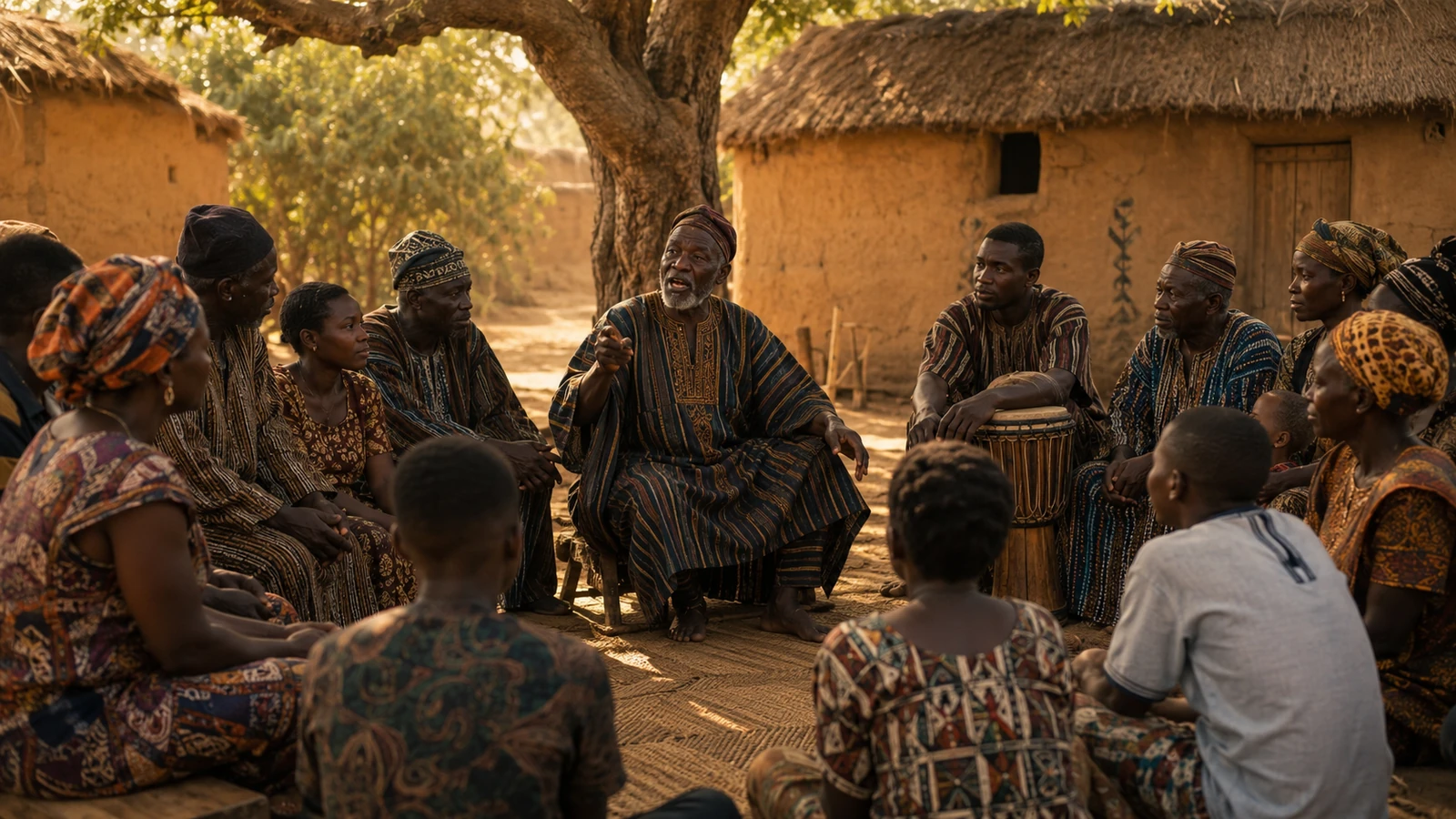
Quick Summary
A respectful historical introduction to African spiritual traditions, exploring oral history, ancestors, rituals, healing, sacred places, and cultural continuity.
African spiritual traditions are diverse systems of belief, ethics, ceremony, healing, historical memory, and community responsibility developed by different peoples across the African continent.
They should not be treated as one religion. Africa contains many languages, societies, environments, political histories, and religious communities. Beliefs associated with Yoruba communities, for example, should not automatically be applied to Akan, Kongo, Shona, Maasai, Serer, Igbo, Dinka, Amazigh, San, or other peoples.
Some traditions emphasize relationships with ancestors. Others place greater attention on a supreme creator, divinities, spirits, sacred landscapes, initiation, healing, divination, political authority, or community obligations. Several of these elements may also appear together within the same tradition.
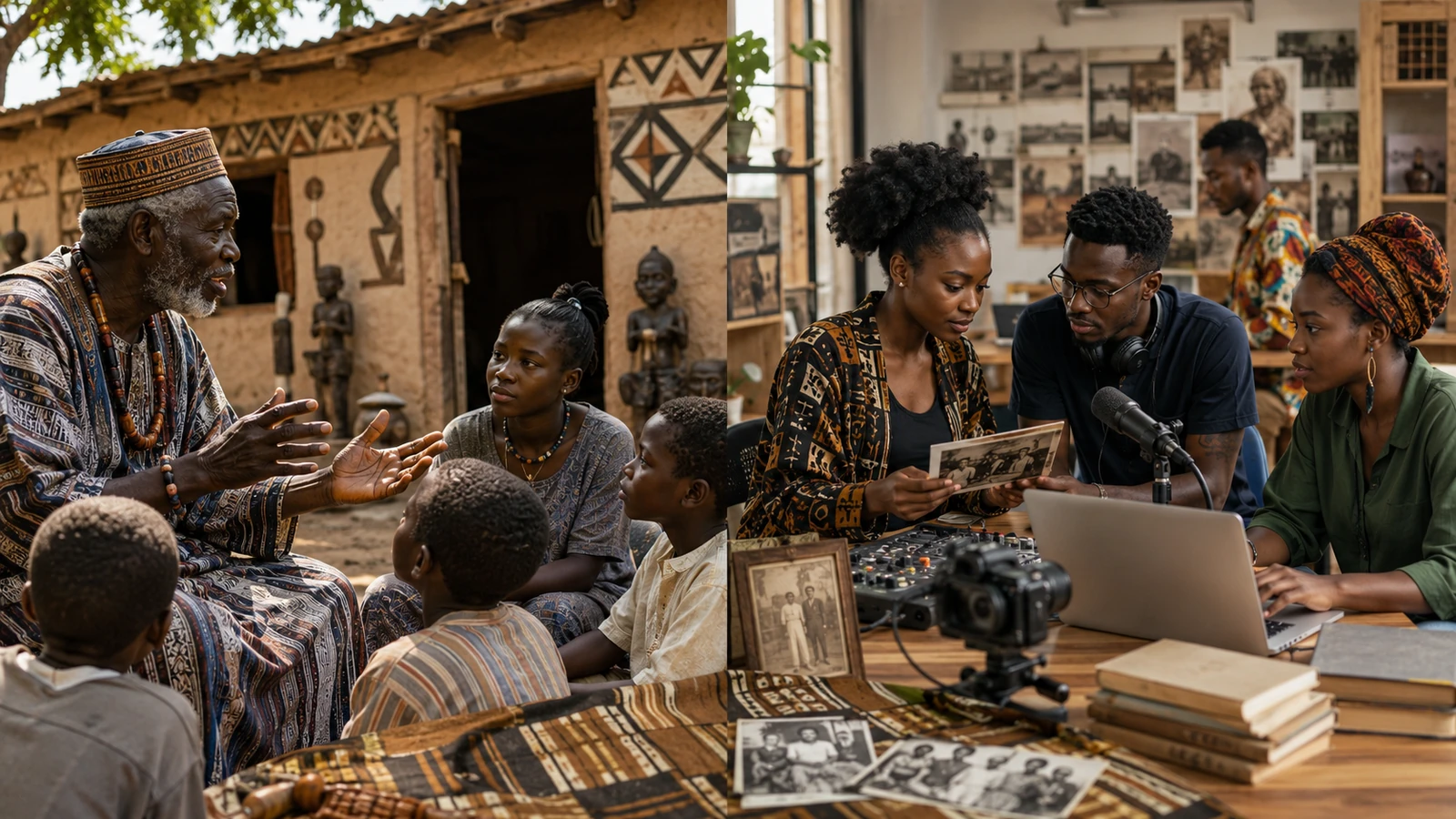
Much of this knowledge has been transmitted through speech, storytelling, proverbs, prayer, music, ritual performance, dance, visual symbols, sacred objects, and the teachings of elders or trained specialists. UNESCO describes oral traditions as important ways of transmitting collective memory, cultural values, and knowledge between generations.
This article offers a historical and educational introduction. It does not provide instructions for performing ceremonies or entering traditions that require initiation, lineage authority, community recognition, or private instruction.
Key Points
African spiritual traditions are culturally specific systems through which communities understand creation, morality, ancestry, nature, health, leadership, death, and social responsibility.
Common themes may include:
- A supreme creator or source of existence
- Divinities, spirits, or sacred forces
- Respect for ancestors and family lineages
- Oral preservation of history and knowledge
- Rituals connected with life transitions
- Sacred relationships with land and natural places
- Music, dance, prayer, and symbolic art
- Healing and divination by trained specialists
- Ethical duties toward family and community
- Continuity through adaptation and cultural change
These themes are not identical everywhere. The meaning of an ancestor, spirit, shrine, ritual, mask, healer, or sacred place depends on the community and historical context in which it is found.
What Are African Spiritual Traditions?
African spiritual traditions are indigenous systems of belief and practice through which particular African communities relate to spiritual powers, ancestors, ethical responsibilities, nature, history, and communal life.
The phrase refers to many traditions rather than a single standardized institution.
Examples include:
- Yoruba religious traditions involving the òrìṣà
- Ifá knowledge and divination
- Vodun traditions in Benin, Togo, and neighboring areas
- Akan beliefs concerning divinity, lineage, and ancestry
- Kongo religious philosophies
- Serer religious traditions
- Igbo religious systems
- Shona relationships with ancestors and spirit mediums
- Numerous locally rooted traditions across eastern, central, northern, western, and southern Africa
Even communities living near one another may use different sacred languages, symbols, ceremonies, leadership structures, and explanations of spiritual reality.
Clear Definition
African spiritual traditions are culturally specific systems of belief, ritual, knowledge, and ethics that connect communities with spiritual powers, ancestors, nature, history, and social responsibility.
Plain-Language Meaning
African spirituality is not one rulebook followed throughout the continent. It is a broad description for many religious and cultural traditions that developed in particular communities.
Why Terminology Matters
Common terms include:
- African spiritual traditions
- African traditional religions
- African indigenous religions
- Traditional African spirituality
- Indigenous African belief systems
Each term has limitations.
The word traditional can incorrectly suggest that these religions exist only in the past. Many remain living traditions that continue to develop in modern villages, towns, cities, and diaspora communities.
The word indigenous emphasizes local cultural roots, but it should not imply isolation. African communities interacted through migration, marriage, trade, scholarship, diplomacy, warfare, and political alliances long before European colonialism.
The singular expression African traditional religion can also create the false impression that the continent has one unified religious system. Current scholarship increasingly emphasizes diversity, historical change, and relationships among indigenous religion, Christianity, Islam, colonialism, and modern society.
Why Africa Must Not Be Treated as One Culture
Africa includes a vast range of languages, climates, social structures, livelihoods, and histories. Spiritual traditions developed differently among farming communities, pastoral societies, fishing communities, forest peoples, trading states, urban kingdoms, and mobile populations.
A practice from one community should not be used as evidence for the entire continent.
For example:
- A Yoruba ceremony should be identified as Yoruba.
- A Kongo sacred object should be interpreted through Kongo history.
- An Akan understanding of ancestry should not be presented as universally African.
- A Serer religious practice should not be confused with Vodun.
- A mask used for initiation should not be assumed to have the same meaning as a mask used for political authority, burial, entertainment, or social education.
Many African artworks were historically connected with religious, political, healing, or social functions. Their meanings cannot be determined through appearance alone because context, ownership, performance, ritual preparation, and community interpretation all matter.
Key Point
Cultural specificity means identifying the people, language, region, historical period, and social purpose of a tradition whenever that information is available.
Historical Foundations
African spiritual traditions do not have one beginning date. They developed across long periods as communities formed relationships with land, ancestors, political institutions, neighboring societies, and changing environments.
Historians study these traditions through several forms of evidence:
- Oral narratives
- Genealogies
- Praise poetry
- Songs and proverbs
- Ritual language
- Archaeology
- Linguistic evidence
- Sacred landscapes
- Architecture
- Sculptures and ceremonial objects
- Written records
- Accounts preserved by African communities
Oral traditions have been especially important in the reconstruction of African history. Scholars examine who tells a narrative, when it is performed, how it changes, and what social purpose it serves rather than treating oral testimony as either unquestionable fact or meaningless folklore.
Before Surviving Written Records
Archaeological evidence such as burials, rock art, monuments, arranged spaces, and decorated objects suggests that ancient African societies expressed ideas about death, identity, protection, belonging, and sacred power.
However, researchers must avoid assigning exact modern meanings to ancient materials without sufficient evidence. An unusual burial or symbolic object may indicate ritual importance, but it does not automatically prove that a later belief existed in exactly the same form.
Spiritual Authority and Early States
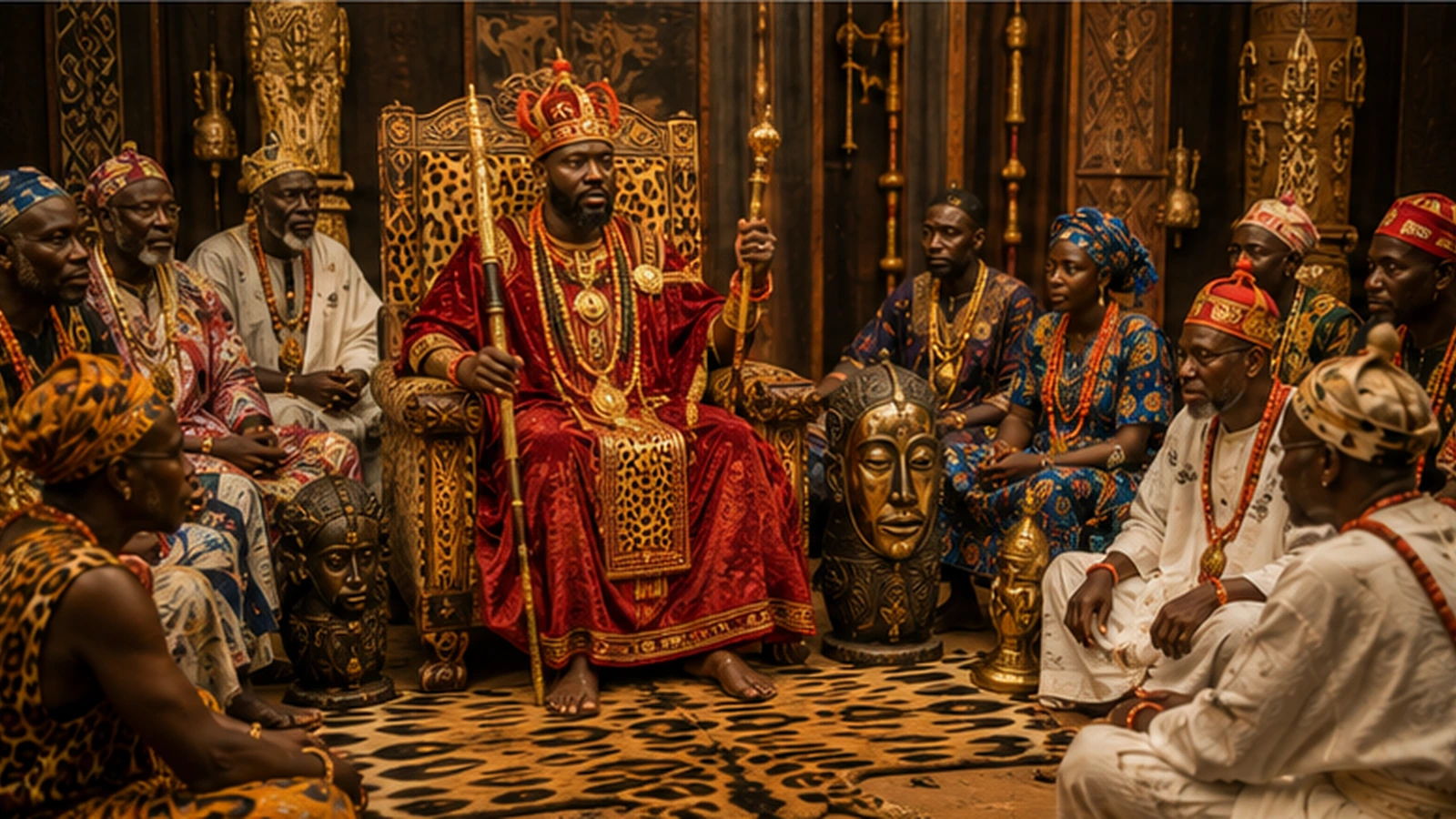
As kingdoms and complex political societies developed, spiritual authority was often connected with government, agriculture, warfare, fertility, law, and public order.
A ruler’s position might be supported through:
- Sacred ancestry
- Installation ceremonies
- Custodianship of land
- Oaths and ritual obligations
- Rainmaking responsibilities
- Public festivals
- Protection of shrines
- Relationships with royal ancestors
These arrangements varied. Some rulers held important ritual roles, while councils, priests, elders, or associations could place restrictions on political authority.
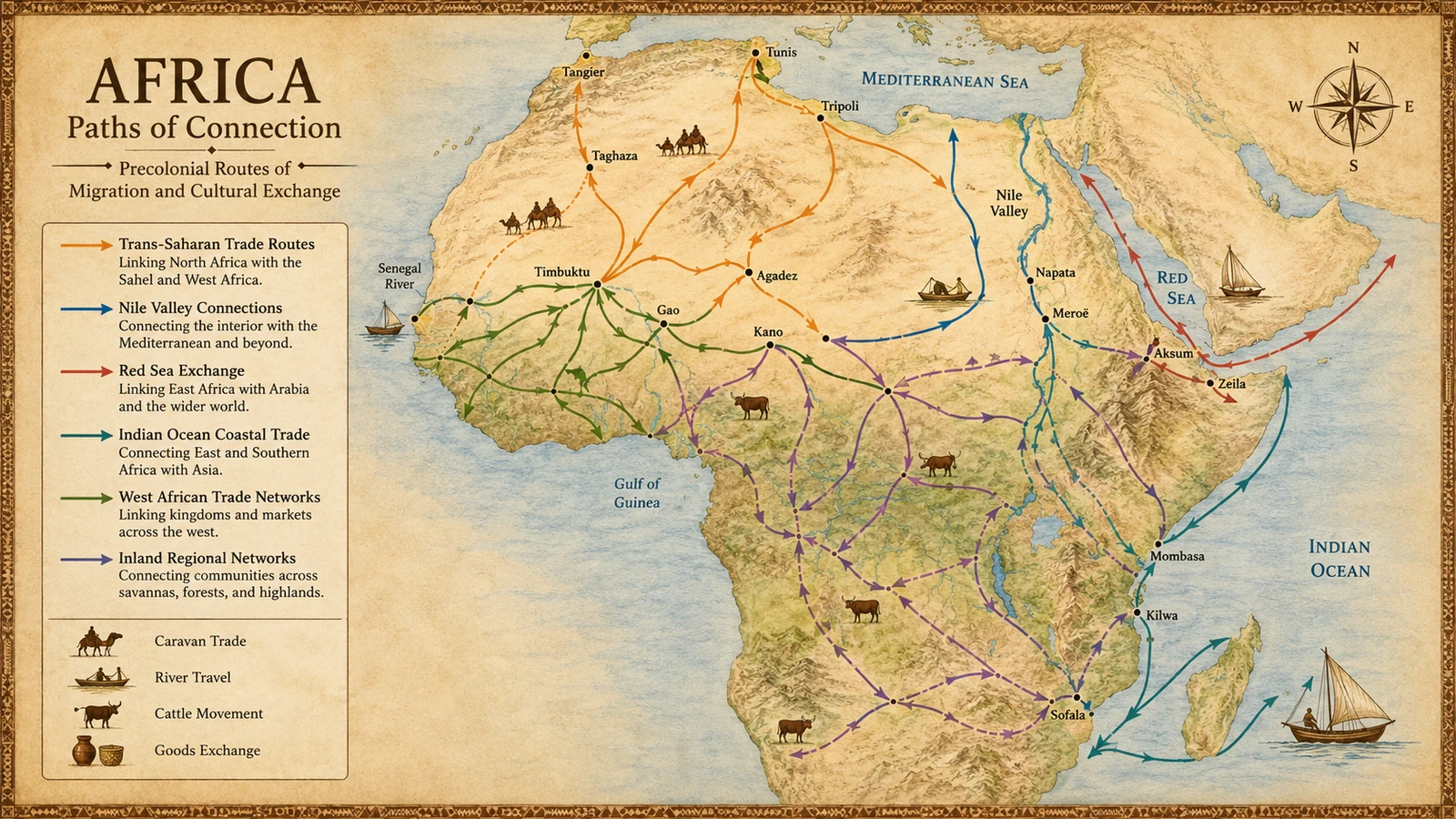
Migration and Cultural Exchange
African societies were never completely sealed from one another.
People moved for:
- Trade
- Marriage
- Farming
- Herding
- Settlement
- Pilgrimage
- Scholarship
- Political alliances
- Conflict
- Environmental survival
Through these movements, communities exchanged artistic styles, languages, healing knowledge, religious ideas, divination methods, political institutions, and ritual practices.
Trans-Saharan networks, Nile Valley connections, Red Sea exchange, Indian Ocean trade, and inland commercial routes linked African regions with one another and with wider parts of the world. Islam’s early presence in West Africa, for example, was closely connected with pre-existing trade networks linking the region with North Africa.
Oral Tradition and Cultural Memory
Oral tradition is one of the central ways spiritual, historical, and ethical knowledge has been preserved.
It may include:
- Origin narratives
- Family histories
- Clan genealogies
- Sacred stories
- Proverbs
- Riddles
- Praise names
- Prayers
- Chants
- Songs
- Epic poetry
- Ritual instructions
- Accounts of migration and conflict
UNESCO includes myths, legends, tales, epic songs, poems, prayers, chants, dramatic performances, and proverbs within oral traditions and expressions.
Oral Does Not Mean Unchanging
Oral knowledge may be adapted to:
- Teach younger generations
- Address current events
- Preserve historical identity
- Reinforce social responsibilities
- Explain political change
- Connect present communities with earlier generations
Variation does not automatically make oral tradition unreliable. Historians investigate why different versions exist and what each version reveals about memory, authority, and society.
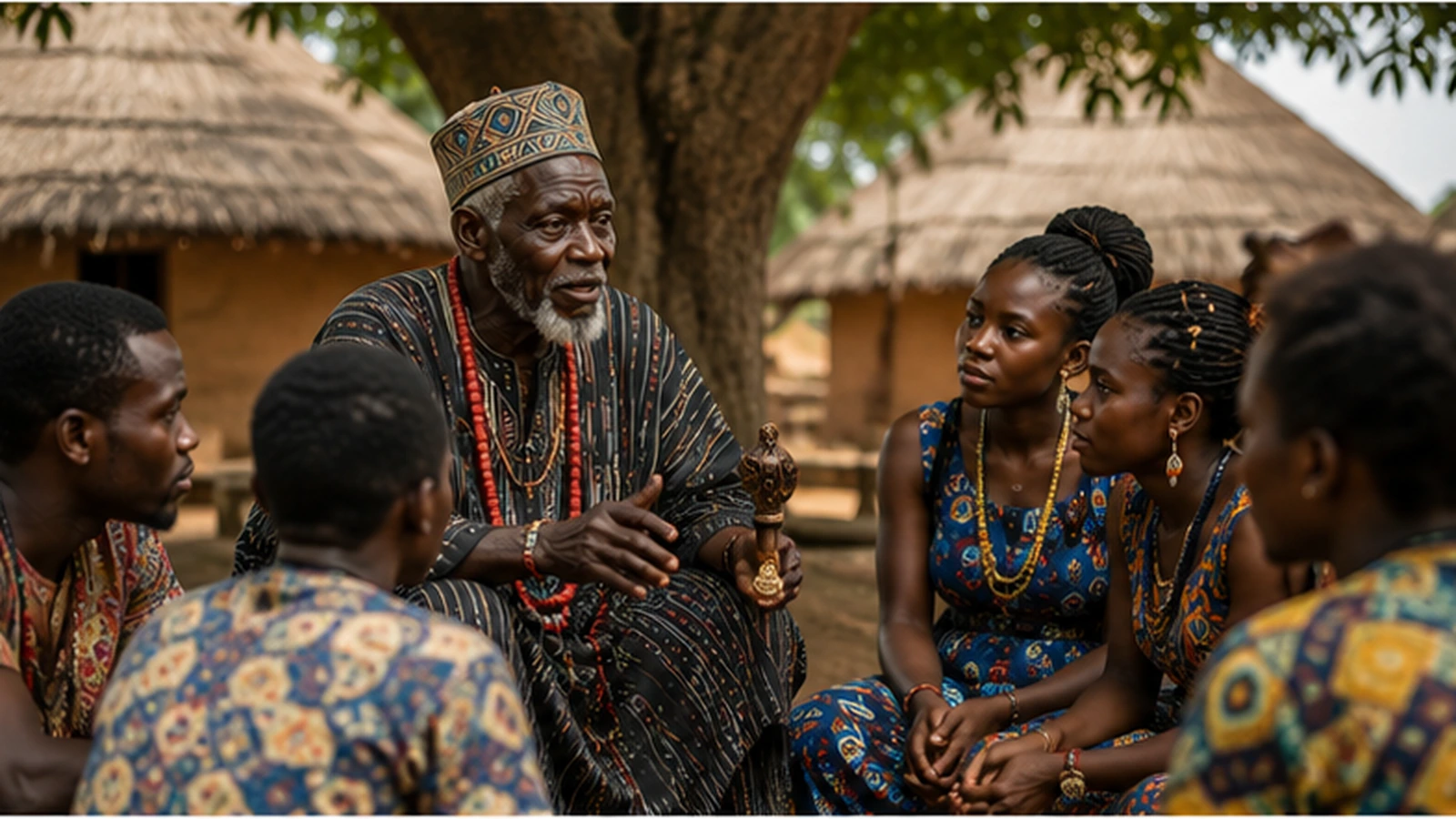
Elders and Knowledge Keepers
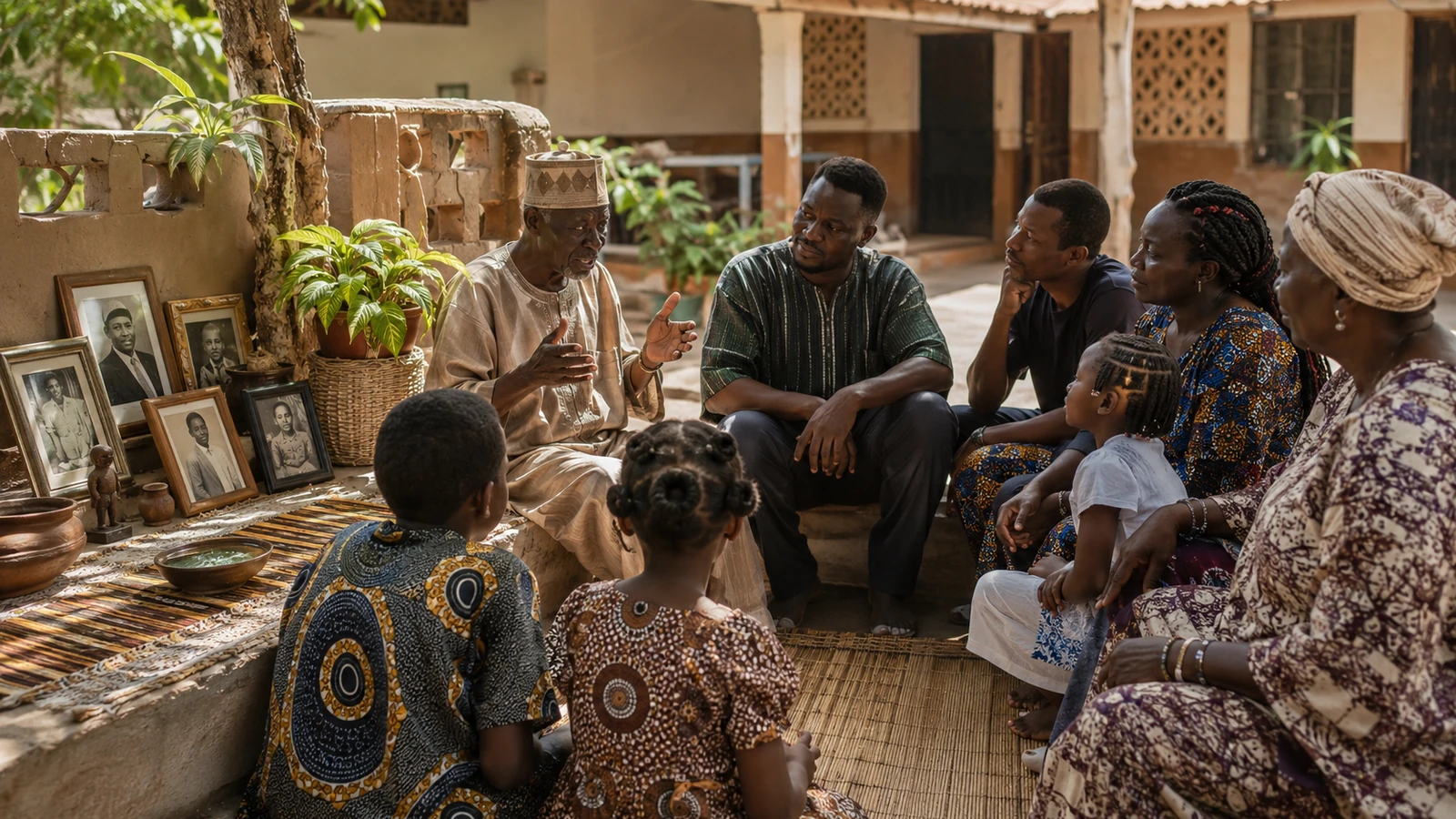
Elders may preserve family histories, genealogies, moral teachings, explanations of customs, land boundaries, and community memories.
However, not every elder is a religious specialist, and not all knowledge is public.
Certain teachings may belong to:
- Particular families
- Initiated members
- Healers
- Diviners
- Priests or priestesses
- Shrine custodians
- Royal institutions
- Age-grade associations
- Professional oral historians
Respectful education recognizes that communities have the right to protect restricted knowledge.
Griots and Oral Historians
In parts of West Africa, professionally trained oral historians, praise singers, musicians, advisers, and genealogists are often described in English as griots.
Their work may involve:
- Preserving family histories
- Reciting genealogies
- Advising leaders
- Mediating disputes
- Performing praise poetry
- Remembering political events
- Connecting individuals with a wider historical identity
The term should not be applied to every African storyteller or elder. It describes particular West African professional traditions.
Ancestors and Intergenerational Responsibility
Ancestors hold an important place in many African spiritual traditions, but beliefs differ widely.
An ancestor is often understood as more than any person who has died. Recognition may depend on:
- Moral reputation
- Age
- Family position
- Manner of death
- Proper burial
- Continued remembrance
- Descendants
- Fulfillment of social responsibilities
What Ancestors May Represent
Depending on the community, ancestors may be understood as:
- Guardians of family continuity
- Sources of moral authority
- Links between generations
- Protectors of descendants
- Witnesses to agreements
- Custodians of inherited land
- Members of an extended spiritual community
Veneration and Worship
The phrase ancestor worship is often too broad.
In many traditions, ancestors are honored, remembered, consulted, or given offerings without being considered equal to a supreme creator or major divinity.
The term ancestor veneration may be more accurate, although the community’s own language and explanation should always be preferred.
Ancestry as an Ethical Relationship
Respect for ancestors may be expressed through everyday responsibilities, including:
- Caring for family members
- Preserving family history
- Acting with integrity
- Protecting inherited land
- Raising children responsibly
- Honoring agreements
- Remembering deceased relatives
- Participating in appropriate ceremonies
Ancestral relationships may therefore involve moral conduct as much as ritual practice.
The Visible and Spiritual Worlds
Many African traditions understand human life as part of a wider reality containing visible and non-visible dimensions.
The visible world includes people, animals, land, water, objects, and social institutions. A non-visible dimension may include a creator, divinities, spirits, ancestors, or sacred forces.
These dimensions are often understood as connected rather than completely separate.
A family conflict, for example, may be viewed as affecting not only the people directly involved but also the wider lineage, community, inherited obligations, and relationships with earlier generations.
Plain-Language Meaning
In many communities, spirituality is not limited to private belief or attendance at a place of worship. It may influence marriage, farming, leadership, healing, naming, burial, morality, and responsibility toward the environment.
Common Themes and Important Differences
The following themes appear in many traditions, but their meanings are never identical everywhere.
- Theme
- Possible role
- Important caution
- Supreme creator
- Origin or highest spiritual authority
- Names and relationships vary
- Divinities or spirits
- Powers connected with life, nature, society, or history
- Not recognized in the same way everywhere
- Ancestors
- Continuing family or communal significance
- Not every deceased person becomes an ancestor
- Ritual
- Marks change, responsibility, remembrance, or sacred communication
- Procedures are community-specific
- Divination
- Interprets signs through an established system
- It is not simply random prediction
- Healing
- May address physical, emotional, social, or spiritual concerns
- It should not replace qualified healthcare
- Sacred land
- Connects place with memory, identity, spirits, or ancestry
- Access may be restricted
- Community ethics
- Defines responsibilities among people and generations
- Moral values vary by tradition
Ritual and Community Life
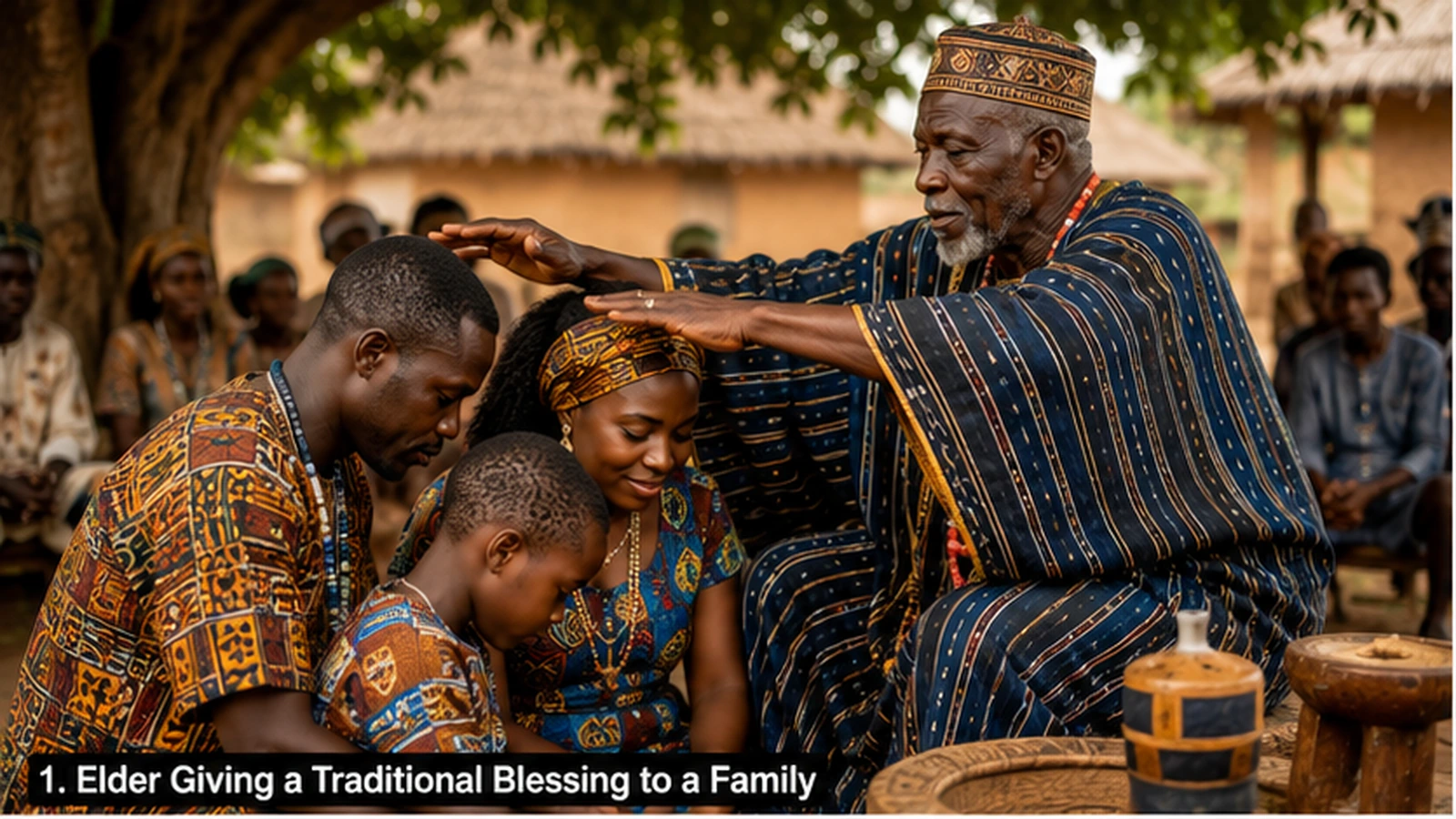
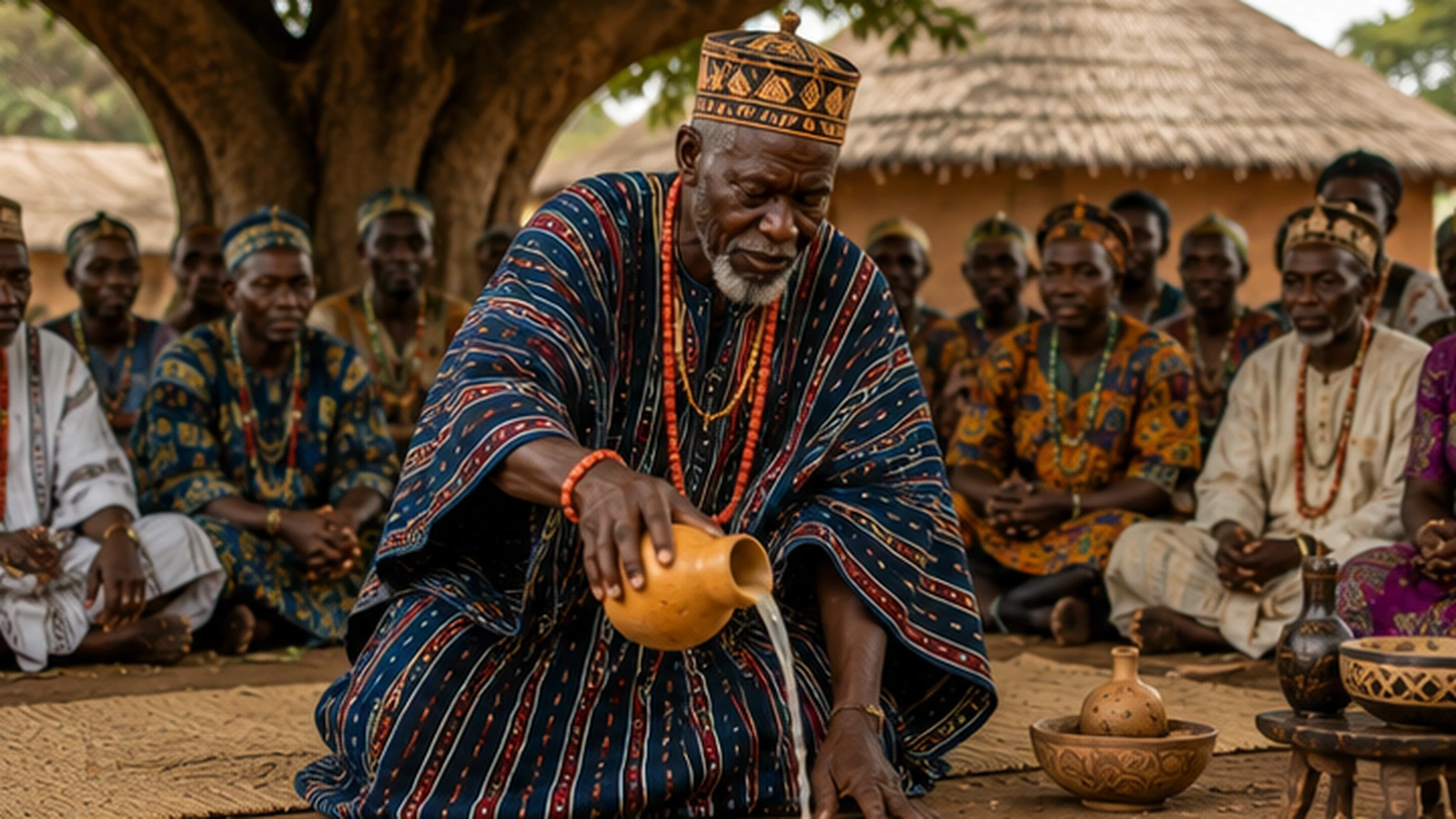
Rituals are structured actions through which communities mark important events, express belief, remember history, restore relationships, or respond to spiritual and social concerns.
They may include:
- Prayer
- Music
- Dance
- Offerings
- Symbolic clothing
- Sacred objects
- Food
- Water
- Fire
- Silence
- Spoken formulas
- Collective participation
Common Ritual Occasions
Rituals may accompany:
- Birth and naming
- Initiation
- Adulthood
- Marriage
- Leadership
- Planting and harvest
- Healing
- Reconciliation
- Funeral and burial
- Ancestral remembrance
- Entry into a religious association
- Seasonal festivals
Rites of Passage
A rite of passage marks a movement from one social status to another.
A useful general model identifies three stages:
- Separation: The participant leaves an earlier role or ordinary setting.
- Transition: The participant receives instruction, preparation, or symbolic transformation.
- Reintegration: The participant returns with a new identity or responsibility.
This model helps explain certain ceremonies, but it should not be forced onto every African tradition.
Music, Dance, and Embodied Knowledge
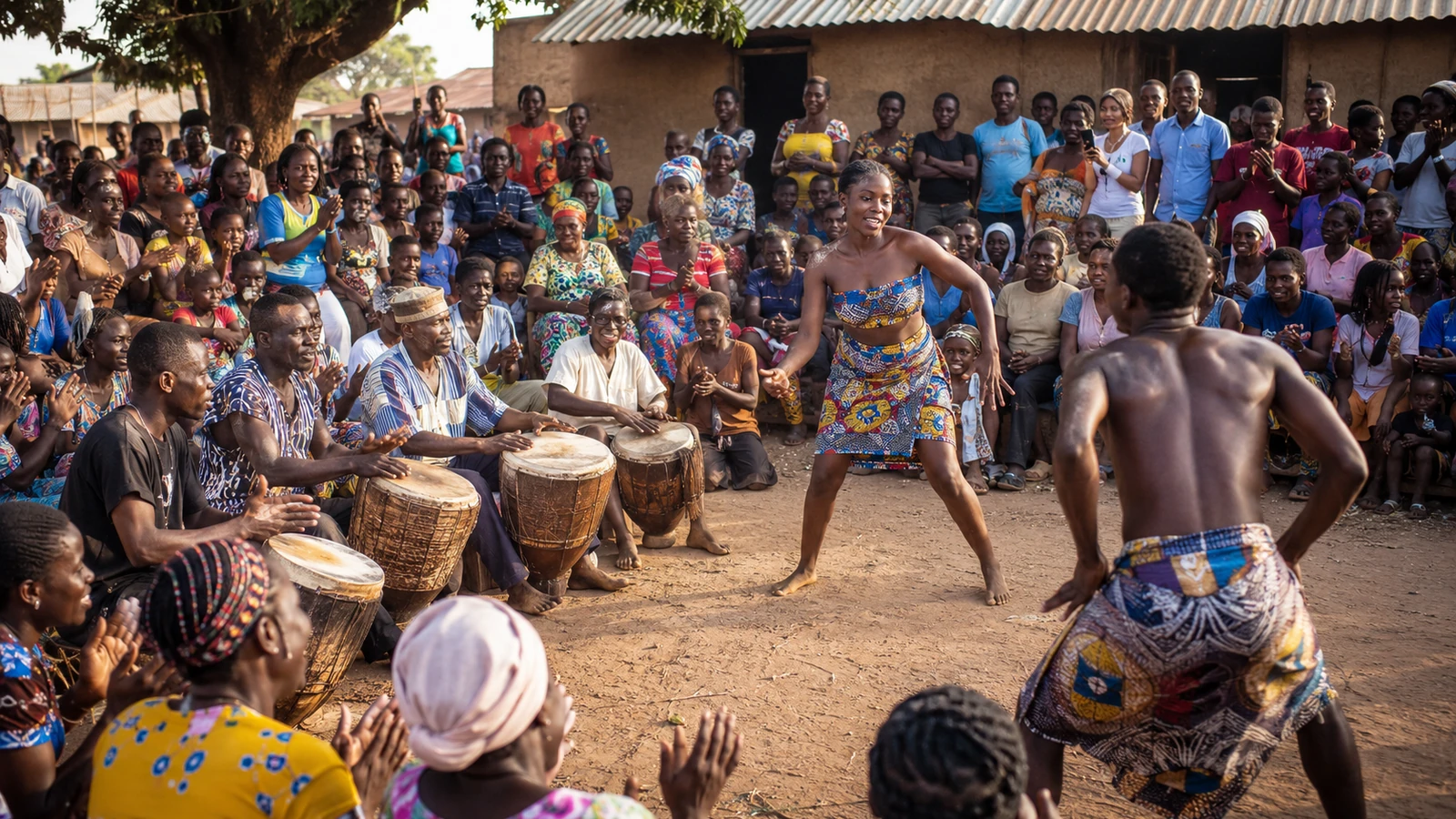
Music and dance may serve religious, historical, educational, healing, political, and social purposes.
They can function as:
- Prayer
- Historical memory
- Community education
- Spiritual communication
- Mourning
- Celebration
- Social commentary
- Healing participation
- Initiation
- Collective identity
In many performances, musicians do more than provide background entertainment. Rhythms may announce participants, signal a transition, communicate with dancers, or guide the order of a ceremony.
Dance can also preserve knowledge through posture, gesture, movement, timing, costume, and interaction with an audience. Studies of religion and dance increasingly challenge the assumption that spirituality and embodied performance can always be separated.
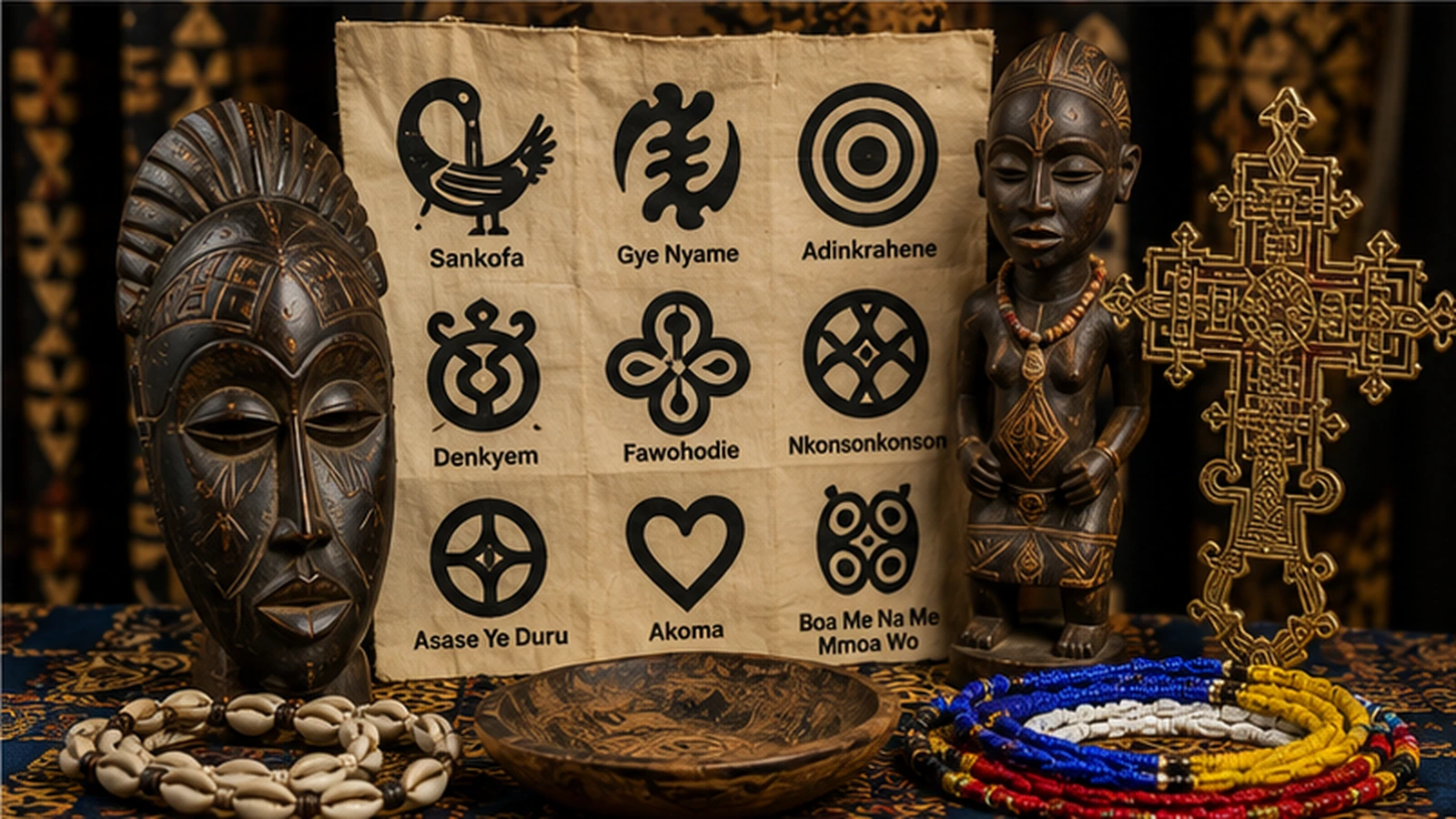
Symbols, Masks, and Sacred Objects
African spiritual and cultural traditions may communicate through:
- Masks
- Carved figures
- Staffs
- Beads
- Textiles
- Drums
- Bells
- Shrines
- Stones
- Metal objects
- Containers of ritual substances
- Royal regalia
A mask might represent an ancestor, spirit, political office, ethical lesson, social character, or protective force. Its meaning may depend on the costume, performer, music, movement, ritual preparation, audience, and authority of the organization that owns it.
An object may become spiritually important through:
- Consecration
- Placement in a shrine
- Ritual use
- Association with a lineage
- Materials used in its construction
- Ownership by a recognized custodian
- Connection with a historical event
Museum displays may preserve physical objects while removing them from the songs, performances, relationships, and responsibilities that originally gave them meaning.
Nature, Land, and Sacred Places
Sacred places may include:
- Rivers
- Springs
- Mountains
- Forests
- Groves
- Caves
- Ancient trees
- Burial grounds
- Family compounds
- Shrines
- Unusual rock formations
Such locations may be associated with origin narratives, ancestors, divinities, healing, initiation, historical events, rainmaking, or community protection.
The UNESCO World Heritage system recognizes several African cultural landscapes in which spiritual traditions, oral histories, sacred forests, rivers, and community stewardship remain closely connected.
Nature Is Not Always “Worshipped”
It is often inaccurate to say that a community simply worships a tree, river, rock, or animal.
A river may be respected because it is connected with:
- A divinity
- A migration history
- Community survival
- A sacred presence
- An ancestral event
- A protected ritual location
The physical place and its religious meaning should not be reduced to a simplistic description.

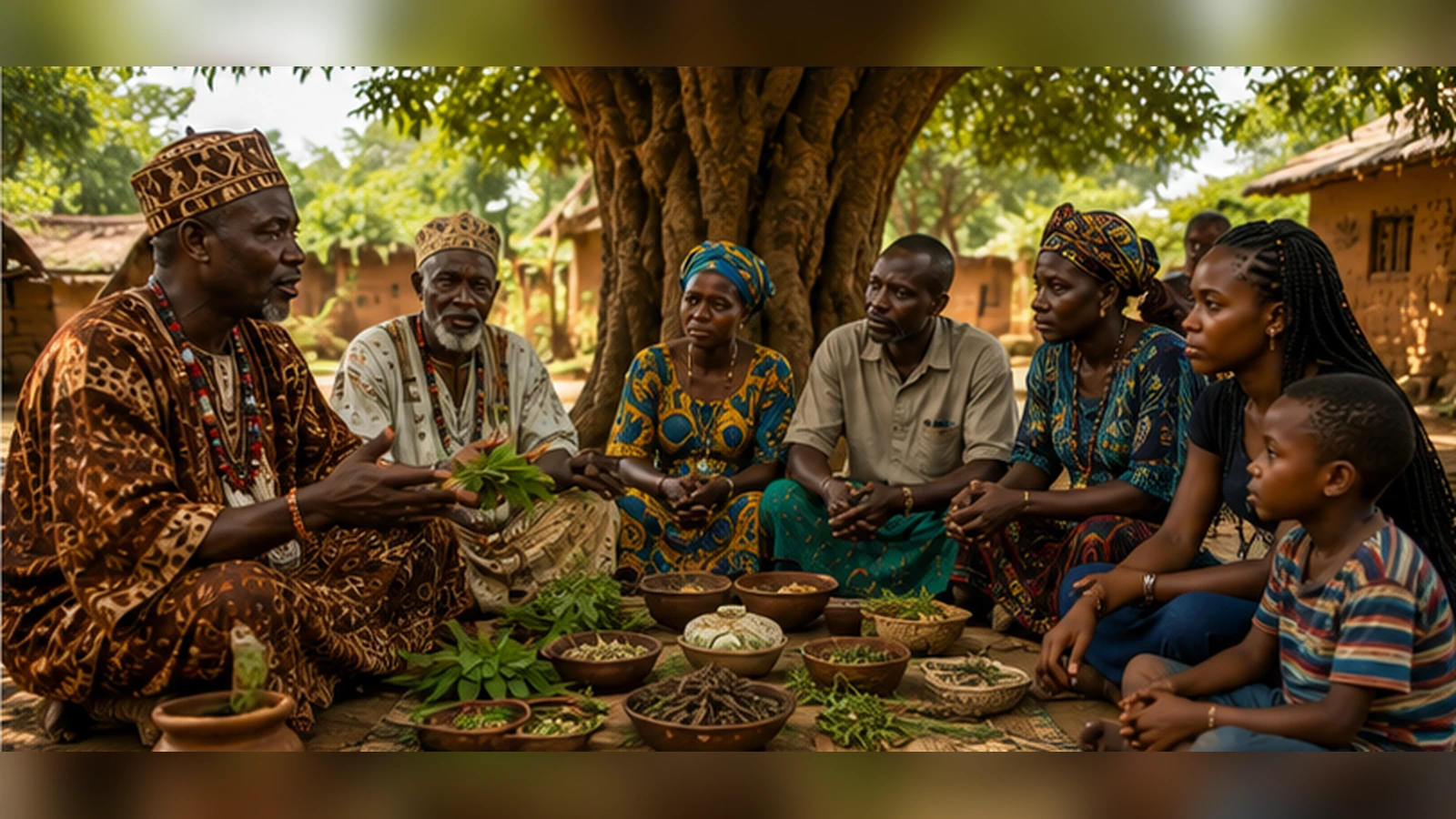
Healing Traditions
Traditional healing may address a person within a wider network of body, family, community, emotion, environment, morality, and spirituality.
A healer may use:
- Plant-based preparations
- Physical care
- Massage
- Counseling
- Prayer
- Divination
- Family mediation
- Ritual cleansing
- Community support
Different specialists may focus on herbal knowledge, childbirth, bone setting, counseling, divination, spirit-medium work, or particular illnesses.
Healing as Restoration
In some traditions, healing may involve restoring balance between:
- A person and the family
- An individual and the community
- The living and the ancestors
- Human activity and the environment
- Emotional distress and social support
- Moral conduct and social expectations
Health and Safety Notice
Traditional healing may hold cultural, emotional, and communal value. However, spiritual guidance and traditional remedies do not replace qualified medical care, emergency assistance, mental health support, legal advice, financial advice, or professional safety services.
Some plants may contain powerful substances or interact with prescribed medication. Serious symptoms and emergencies require appropriate professional care.
Divination and the Search for Guidance
Divination is a structured method of interpreting signs to understand a problem, clarify responsibility, or identify an appropriate response.
It is not always focused on predicting future events.
A consultation may ask:
- What is contributing to this difficulty?
- Has an obligation been neglected?
- Which relationship requires attention?
- What action may restore balance?
- What information is missing?
- Which social or ritual response is appropriate?
A trained diviner may work with shells, seeds, chains, marked objects, patterns, dreams, sacred texts, or established symbolic combinations.
Ifá as a Specific Example
Ifá is a Yoruba system of divination and knowledge associated with Ọ̀rúnmìlà, who is connected with wisdom.
The system uses an extensive corpus of texts and signs interpreted by trained diviners. UNESCO identifies Ifá as a Yoruba tradition also practiced by communities in the African diaspora.
Ifá should not be presented as representative of every African divination practice.
Ethical Limits
Spiritual consultation should never be used to justify:
- Violence
- Abuse
- Coercion
- Fraud
- Medical neglect
- Harmful accusations
- Manipulation
- Exploitation of vulnerable people
A spiritual claim does not remove legal, ethical, or personal responsibility.
Initiation and Religious Training
Some religious roles require apprenticeship, initiation, and long-term instruction.
Training may cover:
- Sacred language
- Prayers
- Songs
- Rhythms
- Oral histories
- Herbal knowledge
- Divination systems
- Ritual procedures
- Counseling
- Ethical duties
- Restrictions and taboos
Authority generally comes from recognized training and community accountability rather than personal interest alone.
A person cannot responsibly become a priest, healer, diviner, or initiated specialist merely by copying a ceremony from social media or a website.
Christianity, Islam, and Indigenous Continuity
Christianity and Islam both have long and complex histories in Africa.
Christian communities developed in North Africa, Egypt, Nubia, and Ethiopia during the early centuries of Christianity. Islam later expanded across North Africa and into regions of West and East Africa through conquest, trade, scholarship, migration, political states, and coastal networks.
Interactions with indigenous traditions have included:
- Conversion
- Resistance
- Coexistence
- Adaptation
- Reinterpretation
- Selective acceptance
- Blending of customs
- Separation between public and private practice
A person may identify as Christian or Muslim while participating in family customs connected with naming, marriage, burial, land, elders, or remembrance. The meaning of that participation depends on the individual and community.
Colonialism and Misrepresentation
European colonial officials, missionaries, and early writers frequently described African religions using terms such as:
- Primitive
- Pagan
- Superstitious
- Fetishistic
- Devil worship
- Witchcraft
These descriptions often reflected colonial assumptions rather than careful study.
Colonial and missionary institutions sometimes:
- Destroyed shrines
- Prohibited ceremonies
- Removed sacred objects
- Criminalized healers
- Discouraged indigenous languages
- Reclassified local religious authorities as fraudulent
- Replaced or reshaped customary institutions
Modern scholarship examines how colonialism changed the public status of indigenous religions and how communities responded through concealment, adaptation, cultural associations, revival movements, and new forms of religious identity.
Historical Continuity and Adaptation
African spiritual traditions have survived partly because communities adapted them to changing conditions.
Change may result from:
- Migration
- Urbanization
- Colonialism
- Religious conversion
- Intermarriage
- War
- New technology
- Economic transformation
- Environmental change
- Diaspora movement
Adaptation does not automatically make a tradition inauthentic.
Core principles may remain important even when language, clothing, music, locations, leadership structures, or teaching methods change.
African Spiritual Traditions in the Diaspora
The Atlantic slave trade forcibly displaced millions of Africans and attempted to break family, linguistic, religious, and cultural connections.
Despite these conditions, displaced African peoples and their descendants preserved and transformed knowledge through:
- Songs
- Drumming
- Herbal practices
- Burial customs
- Storytelling
- Family traditions
- Religious associations
- Symbolic adaptation
- New community institutions
Afro-diasporic traditions include Haitian Vodou, Cuban Regla de Ocha or Santería, Brazilian Candomblé, Winti, and other locally developed systems.
These religions are not unchanged copies of African traditions. They developed through interactions among diverse African cultures, Christianity, Indigenous American traditions, colonial law, enslavement, resistance, and new social environments.
African Spirituality in Modern Life
African spiritual traditions continue in rural communities, cities, homes, shrines, cultural associations, festivals, healing centers, and diaspora networks.
Modern practitioners may use:
- Mobile phones
- Recorded music
- Online communication
- Digital archives
- International religious networks
- Contemporary art
- Urban cultural centers
Technology may help preserve language and connect communities across distance. It can also create ethical problems when private ceremonies are recorded, sacred materials are commercialized, or unauthorized individuals claim religious authority online.
Common Misconceptions
Misconception 1: Africa Has One Traditional Religion
Reality: Africa contains many culturally and historically distinct religious traditions.
Misconception 2: African Spirituality Is Mainly About Magic
Reality: These traditions may address morality, family, leadership, identity, healing, history, land, and social responsibility.
Misconception 3: All Africans Worship Ancestors
Reality: Ancestral beliefs vary, and some traditions place more emphasis on ancestors than others.
Misconception 4: Traditional Religions Have No Supreme Creator
Reality: Many recognize a creator or highest spiritual authority, although beliefs differ.
Misconception 5: Masks Are Decorative Costumes
Reality: Masks may have religious, political, educational, historical, or social functions.
Misconception 6: Oral Tradition Is Unreliable
Reality: Oral traditions are important historical sources that must be studied critically alongside archaeology, language, material culture, and written evidence.
Misconception 7: Indigenous Traditions Disappeared After Conversion
Reality: Some declined, while others continued, adapted, or remained present in family and community customs.
Misconception 8: Spiritual Practices Guarantee Results
Reality: No ethical practitioner should guarantee wealth, love, healing, protection, reconciliation, or success.
How to Study African Spiritual Traditions Respectfully
Step 1: Identify the Community
Ask:
- Which people?
- Which language?
- Which region?
- Which historical period?
- Which religious role?
Step 2: Use Community-Specific Sources
Prioritize:
- African scholars
- Community historians
- Cultural institutions
- Recorded oral histories
- University research
- Practitioner-informed studies
Step 3: Respect Restricted Knowledge
Do not assume that every ceremony, prayer, sacred name, shrine, or object should be recorded or reproduced.
Step 4: Compare Sources
Missionary accounts, colonial records, oral testimony, modern scholarship, and community explanations may interpret the same practice differently.
Step 5: Avoid Sensational Language
Avoid terms such as:
- Dark
- Primitive
- Exotic
- Bizarre
- Demonic
- Superstitious
Use specific and neutral language.
Step 6: Recognize Living Communities
These traditions are not merely historical artifacts. They remain connected with living people who have the right to define, preserve, question, or reinterpret their heritage.
Key Takeaways
- African spiritual traditions are diverse and culturally specific.
- No single belief or practice represents the entire continent.
- Oral history, music, dance, ritual, and symbolic art preserve knowledge.
- Ancestors may represent moral and family continuity, but beliefs vary.
- Divination is usually a trained interpretive system.
- Healing may address social and spiritual concerns but should not replace medical care.
- Christianity, Islam, and indigenous traditions have interacted for centuries.
- Colonial rule often misrepresented or suppressed African religions.
- Traditions continue by adapting to migration, cities, technology, and globalization.
- Respectful study requires cultural specificity and ethical attention.
People Also Ask
What are African spiritual traditions?
African spiritual traditions are culturally specific systems of belief, ritual, ethics, healing, ancestry, and community life developed by different African peoples.
Is African spirituality one religion?
No. Africa contains many traditions with distinct languages, histories, divinities, ceremonies, and institutions.
What role do ancestors play?
In some traditions, ancestors connect families with earlier generations and may represent protection, moral authority, identity, or responsibility.
Do African traditional religions believe in God?
Many recognize a supreme creator, but names, characteristics, and relationships with other spiritual beings vary.
Why are music and dance important?
Music and dance may preserve history, support prayer, educate communities, mark transitions, communicate spiritual meaning, or express mourning and celebration.
Are African spiritual traditions still practiced?
Yes. Many remain active in Africa and the diaspora, although their forms have changed over time.
Frequently Asked Questions
1. How old are African spiritual traditions?
They developed across thousands of years, but no single date marks their beginning.
2. Are ancestors considered gods?
Not necessarily. Many traditions distinguish ancestors from creators, divinities, or spirits.
Related Cultural Guides
For more context, continue with spiritual symbols shared worldwide, indigenous knowledge systems in Africa, Yoruba spiritual heritage, ancient wisdom traditions and respecting cultural diversity.
Frequently Asked Questions
What should readers know first about African spiritual traditions?
A respectful historical introduction to African spiritual traditions, exploring oral history, ancestors, rituals, healing, sacred places, and cultural continu
What causes African spiritual traditions?
A respectful historical introduction to African spiritual traditions, exploring oral history, ancestors, rituals, healing, sacred places, and cultural continuity. The safest next step is to compare the signs, prepare clear details, and request private guidance
How does African spiritual traditions work?
A respectful historical introduction to African spiritual traditions, exploring oral history, ancestors, rituals, healing, sacred places, and cultural continuity. The safest next step is to compare the signs, prepare clear details, and request private guidance
Is it possible to get private guidance for African spiritual traditions?
A respectful historical introduction to African spiritual traditions, exploring oral history, ancestors, rituals, healing, sacred places, and cultural continuity. The safest next step is to compare the signs, prepare clear details, and request private guidance
How long does African spiritual traditions take to understand?
A respectful historical introduction to African spiritual traditions, exploring oral history, ancestors, rituals, healing, sacred places, and cultural continuity. The safest next step is to compare the signs, prepare clear details, and request private guidance
Can African spiritual traditions affect relationships, family, work, or personal peace?
A respectful historical introduction to African spiritual traditions, exploring oral history, ancestors, rituals, healing, sacred places, and cultural continuity. The safest next step is to compare the signs, prepare clear details, and request private guidance
Why do people seek spiritual guidance for African spiritual traditions?
A respectful historical introduction to African spiritual traditions, exploring oral history, ancestors, rituals, healing, sacred places, and cultural continuity. The safest next step is to compare the signs, prepare clear details, and request private guidance
What signs should someone notice before asking about African spiritual traditions?
A respectful historical introduction to African spiritual traditions, exploring oral history, ancestors, rituals, healing, sacred places, and cultural continuity. The safest next step is to compare the signs, prepare clear details, and request private guidance
When should someone contact a private spiritual guide?
A respectful historical introduction to African spiritual traditions, exploring oral history, ancestors, rituals, healing, sacred places, and cultural continuity. The safest next step is to compare the signs, prepare clear details, and request private guidance
Article Information
- Publisher
- Ancestral Temple
- Editor
- Ancestral Temple
- Last updated
- Jul 26, 2026
- Last reviewed
- Jul 13, 2026
- Content version
- ee386c427e
This educational article should be read as cultural and spiritual information, not as medical, legal, financial, or emergency advice.
Helpful Related Guidance
Explore This Topic
African Spiritual Traditions · Sacred Symbols In African Spiritual Traditions
Related Topic Cluster
African Spiritual Traditions
Complete Guide The Role of Elders in Traditional African Spiritual PracticesAbout the Author
 Ancestral Temple
Spiritual guide and practitioner with decades of experience in ancestral wisdom, rituals, and divine guidance.
Related Posts
View All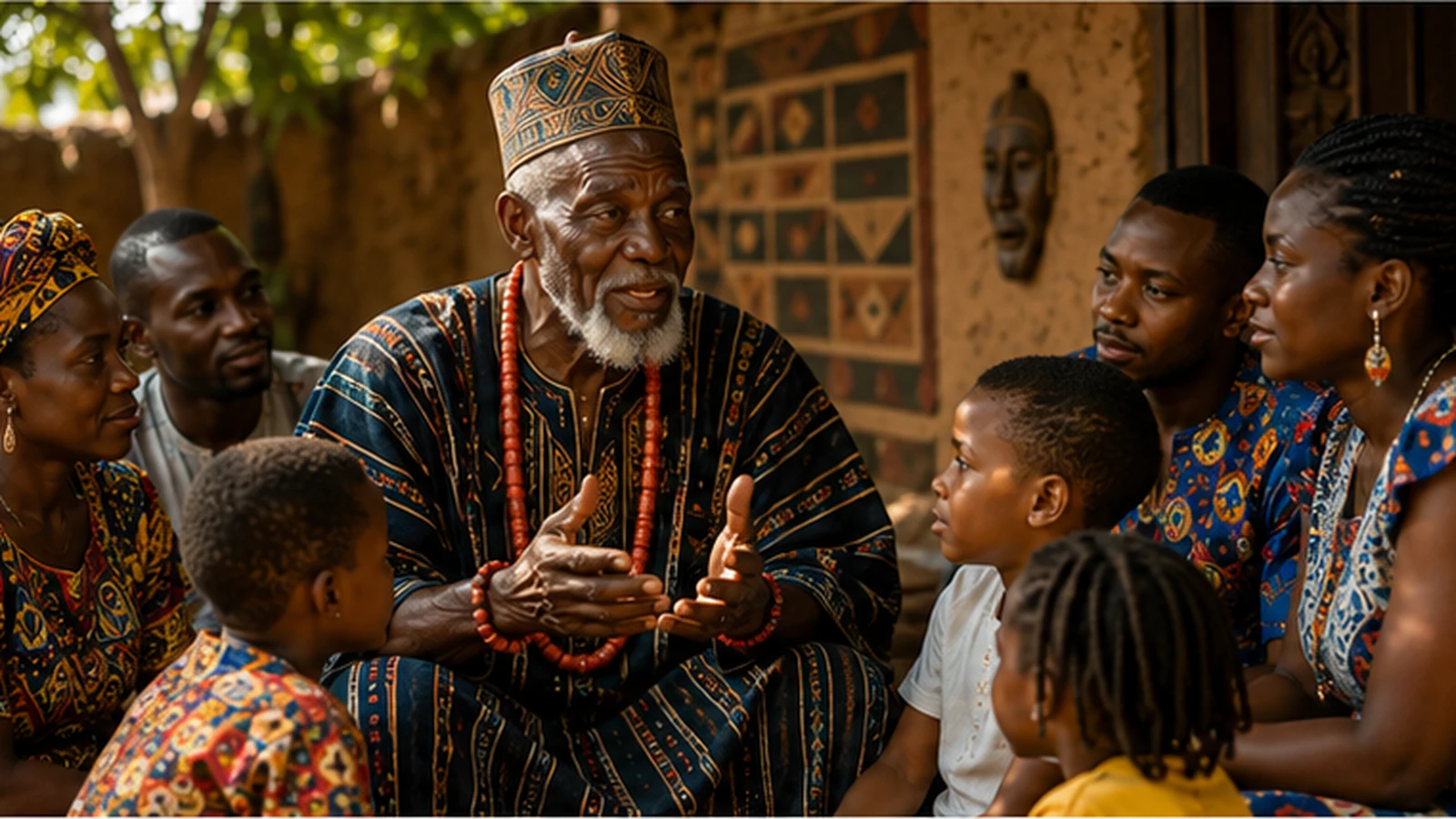

Leave a Comment
We'd love to hear your thoughts.
This article made the subject feel understandable without reducing its complexity. I am looking forward to the related posts.
Are there recommended books written by African historians or religious studies scholars for beginners?
The health disclaimer was responsible and did not disrespect the cultural role of traditional healing.
I would be interested in learning how urban communities maintain traditions when people live far from ancestral land.
I arrived here while researching oral history and ended up learning much more than I expected.
A strong historical introduction. Cultural specificity should always come before generalization.
The misconceptions section addressed many ideas that films and social media repeat without context.
The article stayed neutral. It did not insult traditional beliefs or pretend every religious claim had scientific proof.
Sacred dances are often copied online without understanding the music, occasion, or community rules. This explained the problem well.
The statement that adaptation does not automatically make a tradition inauthentic was important.
I hope the related articles will feature more African scholars and voices from the communities being discussed.
The trade and migration section was interesting. African cultures were exchanging knowledge long before colonialism.
The biggest lesson for me was to study one community at a time instead of searching for one universal African belief system.
I appreciate that this article teaches the history without giving people instructions to copy private rituals.
The explanation of different healing specialties was helpful. I had assumed traditional healers all performed the same role.
I liked the point that participation in a family custom does not always mean someone is practicing two religions.
Could you publish an article explaining the differences between elders, healers, diviners, priests, and spirit mediums?
It is a long article, but the headings made it easy to read in smaller sections.
The questions about who made a sacred object and who was allowed to use it really show why context matters.
This would be a useful starting point for students studying African history or comparative religion.
Including ethical limits was a good decision. Spiritual claims should never be used to manipulate or frighten people.
The African diaspora section deserves a separate long article. There is a lot more history to explore there.
I appreciated the explanation of sacred places. Saying people simply worship rivers or trees leaves out the real cultural meaning.
The section on continuity was encouraging. A tradition can change without losing every connection to its past.
The glossary is useful for readers who are just beginning to study African religious traditions.
The point about museum objects losing part of their meaning outside the original community was very strong.
Thank you for presenting Ifá as a specific Yoruba tradition instead of using it to represent the whole continent.
I did not realize divination could involve such extensive training and memorization.
This is one of the more respectful introductions I have read. It avoided the usual dramatic language.
The three stages of a rite of passage were explained clearly. Some specific examples would make a good follow-up article.
It would be interesting to read more about how different communities decide who becomes an ancestor.
I liked the distinction between shared themes and identical beliefs. Similar ideas do not mean the traditions are interchangeable.
This answered several questions I had without making exaggerated spiritual claims.
The part about restricted knowledge is important. Not every ritual should be recorded and uploaded online.
The discussion about Islam, Christianity, and indigenous traditions was handled carefully. Religious identity is often more complicated than labels suggest.
The colonial terminology section gave me a lot to think about. Words really shape how people understand unfamiliar traditions.
I would love a full article about sacred landscapes and how communities protect forests, rivers, and burial places.
Thank you for explaining that music and dance can carry history and spiritual meaning, not just entertainment.
I knew very little about this subject before reading. The definitions made it much easier to follow.
The comparison table made the main ideas easy to understand without suggesting that every African tradition is the same.
Very balanced article. It respected traditional healing while still being clear that people should seek professional medical care.
The section about oral tradition was probably my favorite. Spoken history is often dismissed even though it preserves so much knowledge.
I liked how the article connected spirituality with family, land, ethics, and community instead of focusing only on rituals.
The explanation of ancestor veneration helped me. I had always heard the phrase ancestor worship, but now I understand why it can be misleading.
This was a thoughtful introduction. I especially appreciated the reminder that Africa should never be discussed as though it has one culture or one spiritual system.