
How African Spiritual Beliefs Have Evolved Through History
Pillar Article
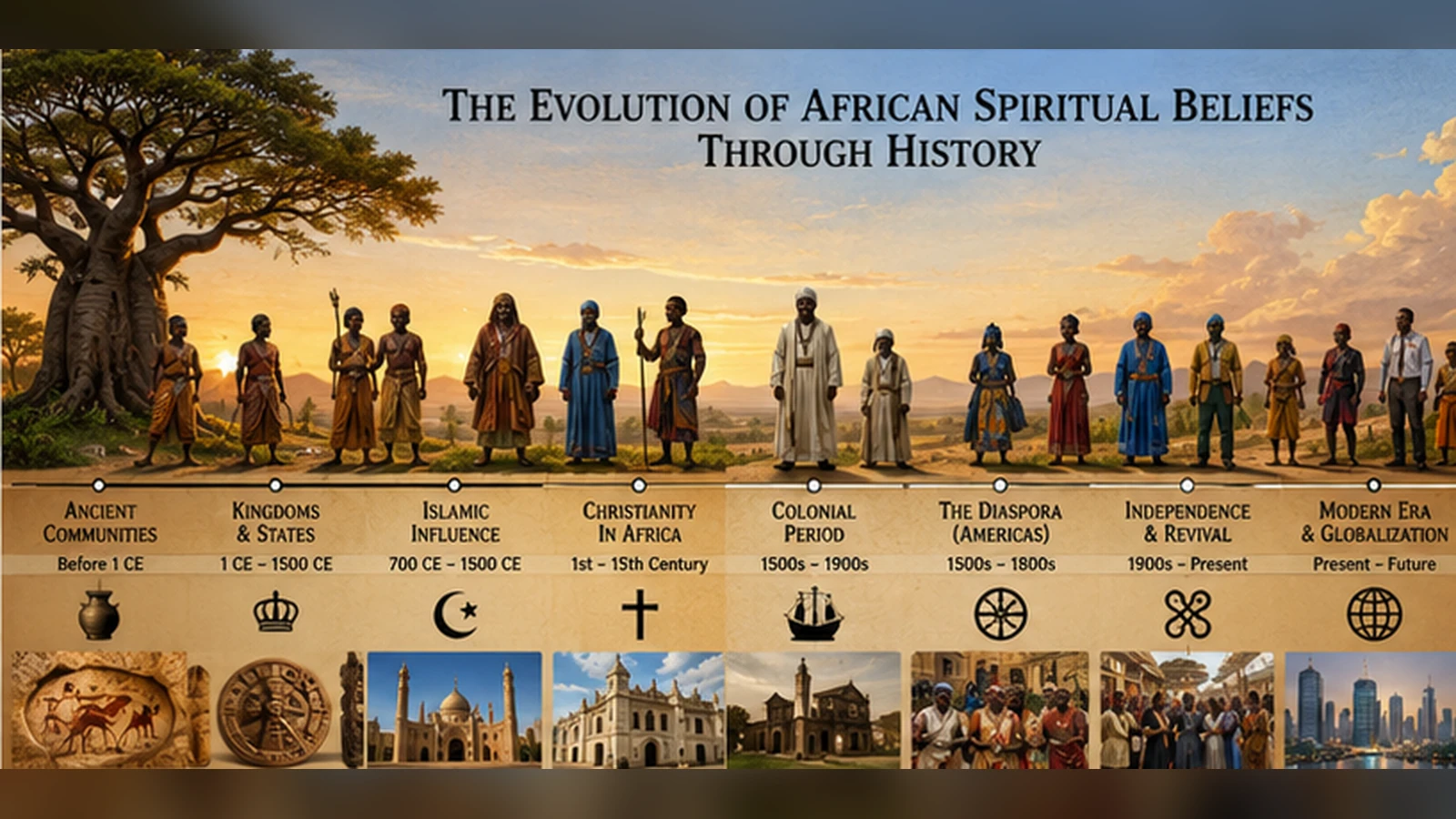
Quick Summary
Trace the evolution of African spiritual beliefs from early community traditions through kingdoms, trade, Islam, Christianity, colonialism, diaspora, independence, and modern revival.
African spiritual beliefs have evolved continuously through migration, trade, state formation, environmental change, religious encounter, enslavement, colonialism, independence, urbanization, and globalization.
They were never one fixed system shared by the entire continent.
Africa’s communities developed different understandings of creators, divinities, ancestors, spirits, sacred land, healing, morality, leadership, death, and community responsibility. These traditions changed as people formed kingdoms, moved into new environments, exchanged ideas with neighboring societies, adopted Islam or Christianity, entered diaspora communities, and responded to colonial and postcolonial institutions.
Evolution does not necessarily mean that older beliefs disappeared. In many cases, communities preserved important principles while changing names, ceremonies, institutions, languages, objects, or public forms of worship.
UNESCO’s General History of Africa presents the continent’s past as a long history of internal development, cultural exchange, religious interaction, political transformation, and African agency rather than a history beginning with European colonial rule.
Key Points
African spiritual beliefs evolved through several overlapping historical processes:
- Communities developed locally rooted spiritual systems connected with ancestry, morality, nature, healing, and social life.
- Migration and trade spread religious ideas, artistic styles, healing practices, and political institutions.
- Kingdoms connected spirituality with leadership, law, fertility, ancestry, and public authority.
- Christianity developed early African traditions in North Africa, Egypt, Nubia, and Ethiopia.
- Islam spread through North Africa, the Sahel, the Horn, the Swahili coast, and trading networks.
- The Atlantic slave trade carried African beliefs into the Americas and Caribbean, where new diaspora religions emerged.
- European colonialism and missionary activity suppressed, reclassified, or transformed many indigenous practices.
- Africans adapted Christianity and Islam into locally meaningful religious traditions.
- Independence movements encouraged new interest in African history, philosophy, names, art, and spirituality.
- Urbanization, migration, media, and digital technology continue to reshape spiritual identity.
African spirituality should therefore be understood as living, adaptive, and historically diverse.
What Does It Mean for Spiritual Beliefs to Evolve?
Spiritual evolution refers to changes in how people understand, practice, organize, transmit, and publicly express religious beliefs.
Change may affect:
- Names used for spiritual beings
- Ritual procedures
- Religious leadership
- Sacred objects
- Places of worship
- Funeral customs
- Healing practices
- Family responsibilities
- Political authority
- Music and dance
- Written teachings
- Relationships with other religions
Clear Definition
The evolution of African spiritual beliefs is the historical process through which culturally specific religious traditions have adapted to social, political, environmental, and religious change.
Plain-Language Meaning
A tradition may change without disappearing.
A family may stop performing one ceremony while continuing to respect ancestral land. A community may become Christian or Muslim while preserving naming customs, funeral responsibilities, oral histories, or relationships with elders.
A religious system may also adopt writing, digital media, modern buildings, or international organizations while maintaining older ideas about morality and community.
African Spiritual Traditions Before Large States
The earliest African spiritual beliefs cannot be reconstructed as one uniform religion.
Archaeological evidence—including burials, rock art, monuments, decorated objects, and intentionally arranged spaces—suggests that ancient African communities developed symbolic understandings of death, identity, protection, social belonging, and forces beyond ordinary human control.
However, researchers must be cautious. An ancient burial or painted figure may indicate ritual meaning, but it does not automatically prove that later religious beliefs existed in the same form.
Africa’s deep history includes mobile hunter-gatherer societies, farming communities, pastoral populations, towns, and powerful states. Their beliefs developed through different relationships with environment, family, subsistence, migration, and political organization. The Metropolitan Museum emphasizes that Africa’s cultures represent a deep history of experimentation with beliefs and forms of expression, much of which was transmitted orally rather than through surviving written documents.
Early Sources of Spiritual Knowledge
Knowledge may have been preserved through:
- Burial customs
- Rock paintings
- Oral narratives
- Ritual performance
- Symbolic objects
- Sacred landscapes
- Music
- Dance
- Family teaching
- Seasonal ceremonies
The lack of written records does not mean that communities lacked organized beliefs or historical knowledge.
Oral Tradition and Continuous Adaptation
Oral tradition has been one of the most important ways African communities have preserved spiritual knowledge.
It includes:
- Myths
- Origin narratives
- Proverbs
- Prayers
- Chants
- Genealogies
- Praise poetry
- Epic songs
- Ritual language
- Historical accounts
UNESCO explains that oral traditions transmit cultural knowledge, social values, and collective memory and play a central role in keeping cultures alive.
Oral Traditions Change With Their Communities
An oral account may be adapted to:
- Address a new political situation
- Teach a younger generation
- Explain migration
- Incorporate new religious ideas
- Preserve a family’s authority
- Respond to environmental change
- Interpret a historical crisis
This does not automatically make oral tradition unreliable.
Historians examine who tells a story, why it is told, how versions differ, and what the differences reveal about community memory.
Continuity Through Interpretation
A tradition can remain continuous even when its exact wording changes.
The important continuity may lie in:
- Moral lessons
- Family relationships
- Ancestral identity
- Sacred responsibilities
- Community belonging
- The authority of elders
- Connection with land
Migration and the Movement of Spiritual Ideas
African populations moved throughout history for farming, herding, trade, settlement, marriage, conflict, pilgrimage, and environmental survival.
These movements carried:
- Languages
- Religious narratives
- Divination systems
- Artistic traditions
- Healing knowledge
- Political institutions
- Burial customs
- Sacred symbols
- Ideas about ancestry
Communities did not simply copy one another. They selected, rejected, translated, and reinterpreted what they encountered.
Religious Exchange Before Colonialism
Long before European colonial rule, African communities participated in regional and international networks across:
- The Sahara
- The Nile Valley
- The Red Sea
- The Indian Ocean
- The Swahili coast
- The Sahel
- Central African river systems
- West African forest and savanna routes
These networks moved religious ideas as well as goods.
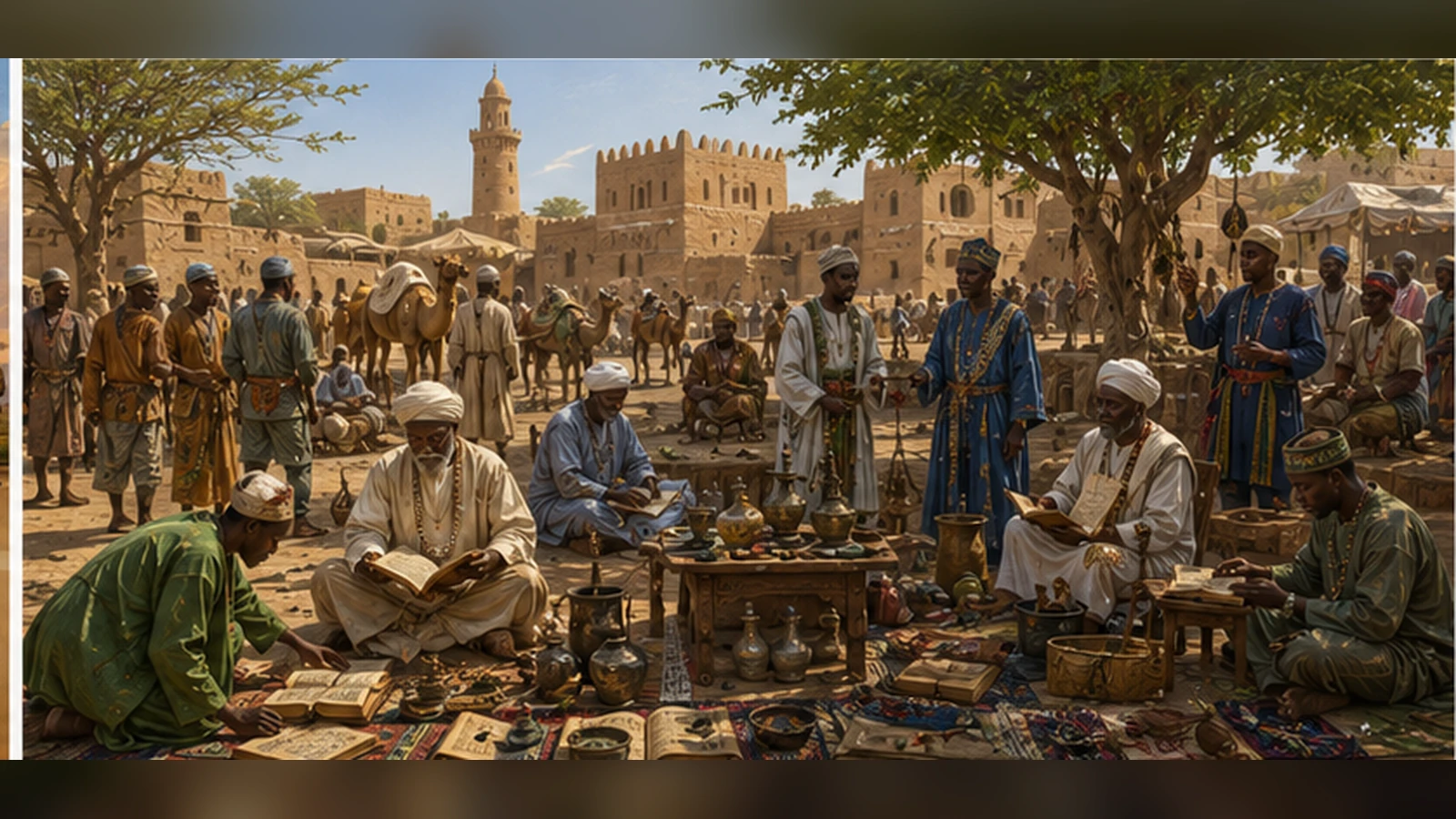
Kingdoms and the Development of Sacred Authority
As kingdoms and states developed, spiritual belief often became connected with political institutions.
Rulers might be associated with:
- Sacred ancestry
- Divine approval
- Fertility
- Rain
- Protection
- Justice
- Territorial spirits
- Royal ancestors
- Public festivals
Religious specialists might serve rulers, while councils, priests, elders, and associations could also limit royal power.
Sacred Kingship
Sacred kingship did not have one African form.
In some societies, the ruler represented social or cosmic order. Elsewhere, the ruler’s authority came through lineage, installation ceremonies, royal ancestors, Islam, Christianity, or custody of sacred land.
Royal institutions encouraged spiritual beliefs to become more formally connected with:
- Succession
- Law
- Palace ritual
- Public monuments
- Royal regalia
- State festivals
- Dynastic memory
Political Change Also Changed Religion
When a dynasty fell, a capital moved, or a kingdom expanded, spiritual institutions could also change.
A local ancestor might become a royal founder. A community shrine might become a state institution. A ruler might adopt a new religion while retaining older ceremonies of legitimacy.
Christianity’s Early African Histories
Christianity has ancient African roots.
Christian communities developed in North Africa and Egypt during the early centuries of Christianity. Christian kingdoms later emerged in Nubia, while Ethiopia developed one of the world’s longest continuous Christian traditions.
Nubian kingdoms adopted Christianity beginning in the sixth century, creating distinctive African Christian states and religious cultures.
African Christianity Was Not Merely European
Christianity in Africa did not begin with nineteenth-century European missionaries.
Early African Christians contributed to theology, monasticism, liturgy, architecture, manuscript traditions, and church institutions.
Over time, Christianity interacted with:
- Local languages
- Kingship
- Burial customs
- Sacred landscapes
- Family structures
- Music
- Artistic traditions
Conversion Was Not Always a Complete Break
People adopting Christianity could reject certain older practices while retaining others.
They might preserve:
- Family names
- Respect for elders
- Ancestral land
- Funeral obligations
- Traditional music
- Community leadership structures
Religious identity was often negotiated rather than changed in one single moment.
Islam and the Transformation of African Spiritual Life
Islam entered North Africa during the seventh century and spread over many centuries through conquest, trade, scholarship, migration, pilgrimage, and state formation.
Its influence expanded through:
- The Sahara
- The Sahel
- West African empires
- The Nile Valley
- The Horn of Africa
- The Swahili coast
- Indian Ocean networks
UNESCO’s General History of Africa identifies the spread and interaction of Islam with African cultures as one of the major historical developments of the seventh through eleventh centuries.
Gradual Adoption
Islam did not replace local beliefs everywhere at once.
In many areas:
- Rulers adopted Islam before rural populations.
- Muslim merchants lived beside non-Muslim communities.
- Islamic scholars influenced law and education.
- Local ceremonies continued.
- Families combined Islamic identity with inherited customs.
The gradual adoption of Islam in the Sahel expanded existing cultural and spiritual repertoires before Islam became dominant in many regions.
African Islamic Traditions
African Muslims developed distinctive traditions involving:
- Sufi orders
- Qur’anic scholarship
- Pilgrimage
- Local-language teaching
- Poetry
- Manuscript production
- Healing and protective practices
- Sacred lineages
West Africa became an important center of Islamic scholarship and philosophical education, with teaching methods continuing to change through colonialism, print culture, modern schools, and international networks.
Religious Pluralism
Indigenous religions, Islam, and Christianity interacted in West Africa long before the twentieth century, producing coexistence, debate, selective adoption, and plural religious communities.
The Atlantic Slave Trade and the African Diaspora
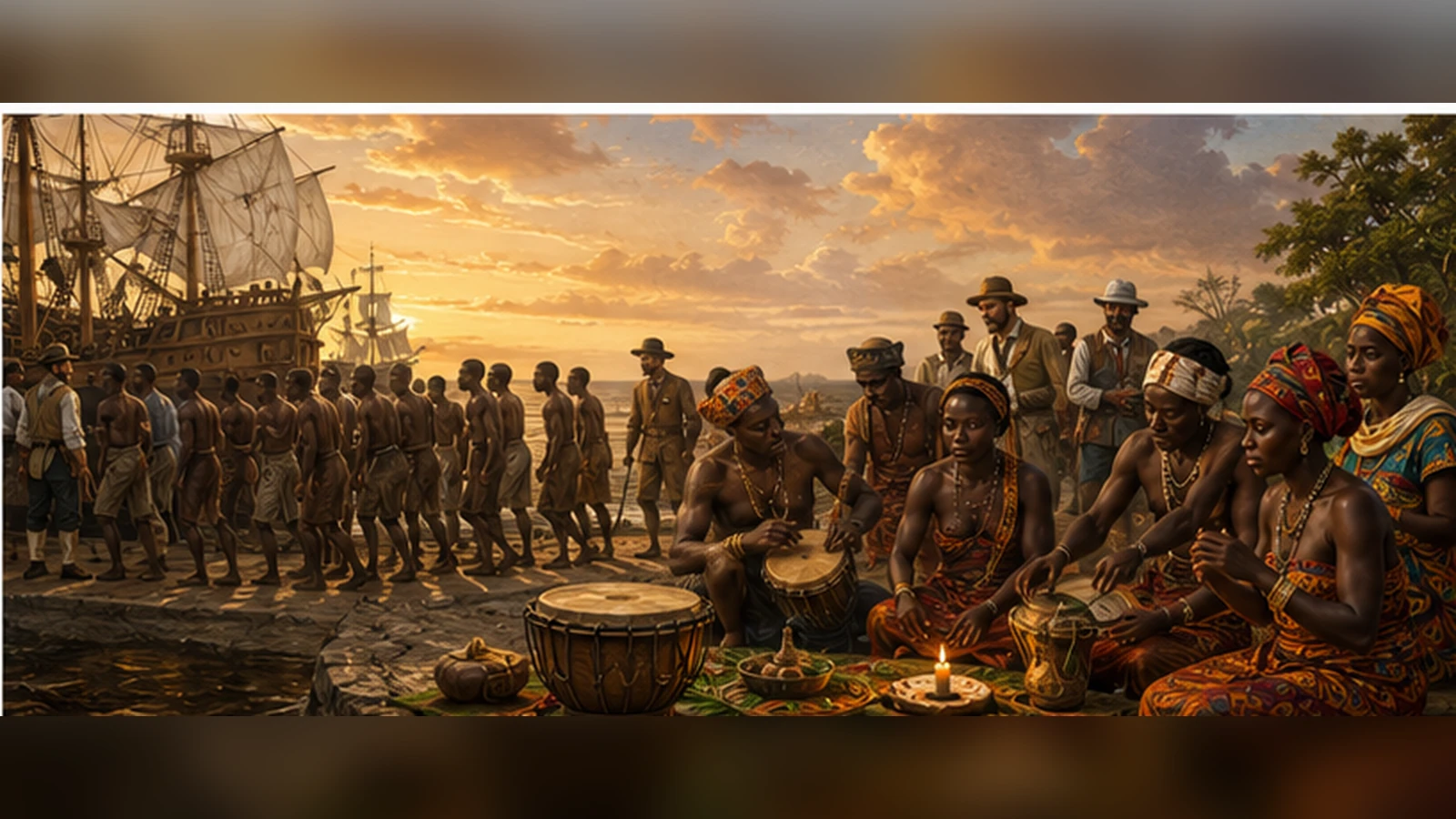
The transatlantic slave trade forcibly displaced millions of Africans and separated people from families, languages, sacred places, and religious institutions.
Enslaved Africans nevertheless preserved and transformed spiritual knowledge through:
- Songs
- Drumming
- Dance
- Herbal practices
- Burial customs
- Storytelling
- Protective traditions
- Spirit-medium practices
- Collective worship
African diaspora traditions developed through the interaction of multiple African cultures with Christianity, colonial law, Indigenous American knowledge, enslavement, resistance, and new environments.
These traditions include:
- Haitian Vodou
- Cuban Regla de Ocha
- Brazilian Candomblé
- Trinidad Orisha traditions
- Winti
- Hoodoo
- Other Afro-diasporic systems
They are not unchanged copies of African religions. They are historically developed religions in their own right.
UNESCO’s work on Africa and its diasporas emphasizes the resilience and transformation of African beliefs, cultural knowledge, and heritage across global communities.
Spiritual Survival Under Enslavement
Religious adaptation could include:
- Identifying African divinities with Christian saints
- Using Christian language for African spiritual ideas
- Preserving rhythms within new forms of worship
- Reorganizing religious authority
- Developing new healing traditions
- Hiding practices from slaveholders
Key Point
Diaspora religions demonstrate that cultural continuity can exist through creative transformation rather than exact preservation.
European Colonialism and Missionary Expansion
European colonial rule from the late nineteenth century radically changed African political, economic, social, and religious life.
Colonial governments and missionary institutions often:
- Destroyed or closed shrines
- Prohibited ceremonies
- Criminalized healers
- Removed sacred objects
- Redefined customary law
- Replaced political institutions
- Discouraged indigenous names and languages
- Described African beliefs as superstition or paganism
The colonial period disrupted local political institutions, trade patterns, social systems, and religious beliefs across many regions.
Colonial Categories Changed How Religions Were Described
Terms such as:
- Animism
- Fetishism
- Primitive religion
- Paganism
- Witchcraft
were often used to group together beliefs that communities themselves understood as different.
These categories shaped colonial law, missionary education, museum collecting, and later academic writing.
Oxford scholarship on Indigenous religions in West Africa notes that colonialism and Christian missionization changed how traditions were publicly understood and represented.
Suppression Did Not Produce Complete Disappearance
Communities responded through:
- Private practice
- Reinterpretation
- Selective conversion
- Cultural associations
- Secret ceremonies
- Adoption of new religious language
- Integration into Christianity or Islam
- Migration to less regulated locations
The colonial experience transformed African cultures, but indigenous religions remained influential in many areas at the time of independence.
African Responses to Christianity
African converts did not simply receive European Christianity without changing it.
They translated scripture, composed music, established churches, developed African leadership, and interpreted Christian teachings through local concerns.
African Initiated Churches
African Initiated Churches emerged in many parts of the continent as African-led movements that developed their own leadership, ritual practices, healing ministries, music, theology, and community structures.
By the end of the twentieth century, thousands of African Independent or African Initiated movements existed across sub-Saharan Africa, representing consciously African forms of Christianity that challenged or departed from Western church models.
They might incorporate:
- African music and dance
- Healing
- Prophecy
- Dreams
- Community prayer
- Local languages
- Symbolic clothing
- Respect for African cultural identity
Indigenization
African Christians increasingly demanded:
- African clergy
- Local-language worship
- African music
- Independent leadership
- Contextual theology
- Recognition of African cultural dignity
By the decolonization period, African Christian communities had produced distinctive liturgical, musical, and institutional forms rather than remaining simple extensions of European missions.
African Responses to Islam
African Muslims also shaped Islam through local history, scholarship, language, law, and social organization.
Islamic practice could interact with:
- Lineage systems
- Political authority
- Healing
- Protective writing
- Poetry
- Architecture
- Sufi orders
- Local ceremonies
- Trade networks
African Islamic societies were not passive recipients of a foreign religion.
They became centers of scholarship, pilgrimage, manuscript culture, legal interpretation, and religious reform.
Reform and Debate
Some Muslim reformers opposed practices they considered inconsistent with Islam. Others accepted inherited customs that they did not view as contradicting the faith.
This produced continuing debates over:
- Ancestor-related customs
- Healing
- Sacred places
- Religious authority
- Women’s participation
- Festivals
- Protective objects
- Political Islam
Religious Blending and Selective Adaptation
The term syncretism is often used for the combination of elements from different religions.
However, it can be misleading when it suggests that religious communities are confused or inauthentic.
People may selectively combine traditions for understandable historical reasons.
For example, a Christian or Muslim family may:
- Follow religious burial prayers
- Preserve a clan genealogy
- Respect ancestral land
- Consult family elders
- Participate in cultural naming customs
- Attend a traditional festival
These actions do not necessarily mean the family sees itself as following several religions.
Religious Boundaries Are Negotiated
A practice may be interpreted differently by different participants.
One person may understand a funeral custom as spiritual. Another may view it as cultural respect. A third may reject it entirely.
Religious evolution often occurs through these disagreements.
Urbanization and Migration
Twentieth-century urbanization brought people from different ethnic, linguistic, and religious backgrounds into towns and cities.
Urban life changed:
- Family structures
- Access to elders
- Religious leadership
- Places of worship
- Funeral practices
- Healing networks
- Marriage customs
- Community associations
Late-colonial urbanization created new occupations, political relationships, forms of association, and patterns of social life.
Spirituality Did Not Disappear in Cities
Urban residents created:
- Neighborhood shrines
- Cultural associations
- Independent churches
- Healing centers
- Muslim brotherhood networks
- Family unions
- Diaspora communities
- New religious movements
Traditional religions in modern Africa have survived through adaptation, reinterpretation, and the creation of new forms suited to modern circumstances.
Distance From Ancestral Land
People living far from their home communities may:
- Return for funerals
- Send money for ceremonies
- Consult elders by phone
- Maintain urban family associations
- Preserve names and genealogies
- Hold adapted ceremonies in cities
Independence and Cultural Reclamation
African independence movements encouraged renewed interest in African history, philosophy, language, names, art, religion, and political identity.
Indigenous traditions sometimes became symbols of:
- Cultural pride
- Resistance to colonialism
- National identity
- Pan-Africanism
- Decolonization
- Historical recovery
Reclaiming African History
UNESCO launched the General History of Africa initiative in 1964 as newly independent African nations sought to reconstruct the continent’s history from African perspectives.
This wider historical movement encouraged scholars to question colonial descriptions of African religion.
Nationalism and Tradition
Political leaders sometimes celebrated traditional beliefs as symbols of national unity.
However, this could create new simplifications by presenting one ethnic tradition as representative of an entire nation.
Cultural revival therefore needed the same attention to diversity as historical research.
Pentecostalism, Charismatic Religion, and New Spiritual Debates
Pentecostal and charismatic Christian movements expanded dramatically across many African countries during the twentieth and twenty-first centuries.
Their focus may include:
- Healing
- Prophecy
- Spiritual warfare
- Deliverance
- Personal conversion
- Success
- Media ministry
- Large urban churches
These movements often reject indigenous religious practices while also addressing questions historically associated with spiritual protection, healing, misfortune, and unseen power.
Continuity Through Opposition
A religion may change earlier beliefs even when it opposes them.
For example, a church that strongly condemns ancestral spirits may still treat the spiritual world as active and influential.
This means religious change does not always remove older categories of thought. It may reinterpret them through new theological language.
Postcolonial Revival of Indigenous Spirituality
Some Africans and diaspora communities have renewed interest in:
- Indigenous names
- Ancestor reverence
- Traditional philosophy
- Sacred sites
- Divination systems
- African-language prayers
- Cultural festivals
- Precolonial history
Revival movements may seek to correct colonial stereotypes and recover suppressed knowledge.
Revival Is Not Simple Restoration
No community can return to an unchanged precolonial past.
Languages, cities, states, religions, economies, and technologies have changed.
Modern revivals therefore create new forms of tradition shaped by:
- Historical research
- Family memory
- National politics
- Diaspora identity
- Tourism
- Social media
- Contemporary art
- Global spiritual movements
Museums, Restitution, and Sacred Objects
Many African sacred and royal objects were removed during colonial conquest, missionary activity, military expeditions, unequal trade, or collecting.
Modern restitution debates involve:
- Legal ownership
- Historical injustice
- Cultural identity
- Sacred responsibility
- Community access
- Museum ethics
Kongo religious and political objects illustrate both the complexity of precolonial African traditions and the transformations caused by European contact and collecting.
Objects Can Change Meaning
A sacred object may become:
- Museum art
- National heritage
- Tourist merchandise
- Academic evidence
- A symbol of cultural revival
- A focus of restitution demands
Its physical form may remain while its social role changes.
Digital Technology and Spiritual Revival
Digital media now allows people to:
- Record elders
- Preserve oral histories
- Teach languages
- Share festival performances
- Connect diaspora communities
- Research genealogy
- Promote heritage protection
- Organize religious communities
UNESCO continues to support community-led safeguarding of oral traditions, rituals, performing arts, and environmental knowledge as living heritage passed between generations.
Digital Risks
Online spiritual content can also create:
- False historical claims
- Invented rituals
- Cultural appropriation
- Commercialized sacred symbols
- Exposure of restricted knowledge
- Fraudulent practitioners
- Oversimplified “African spirituality” brands
Digital access increases visibility but does not guarantee accuracy.
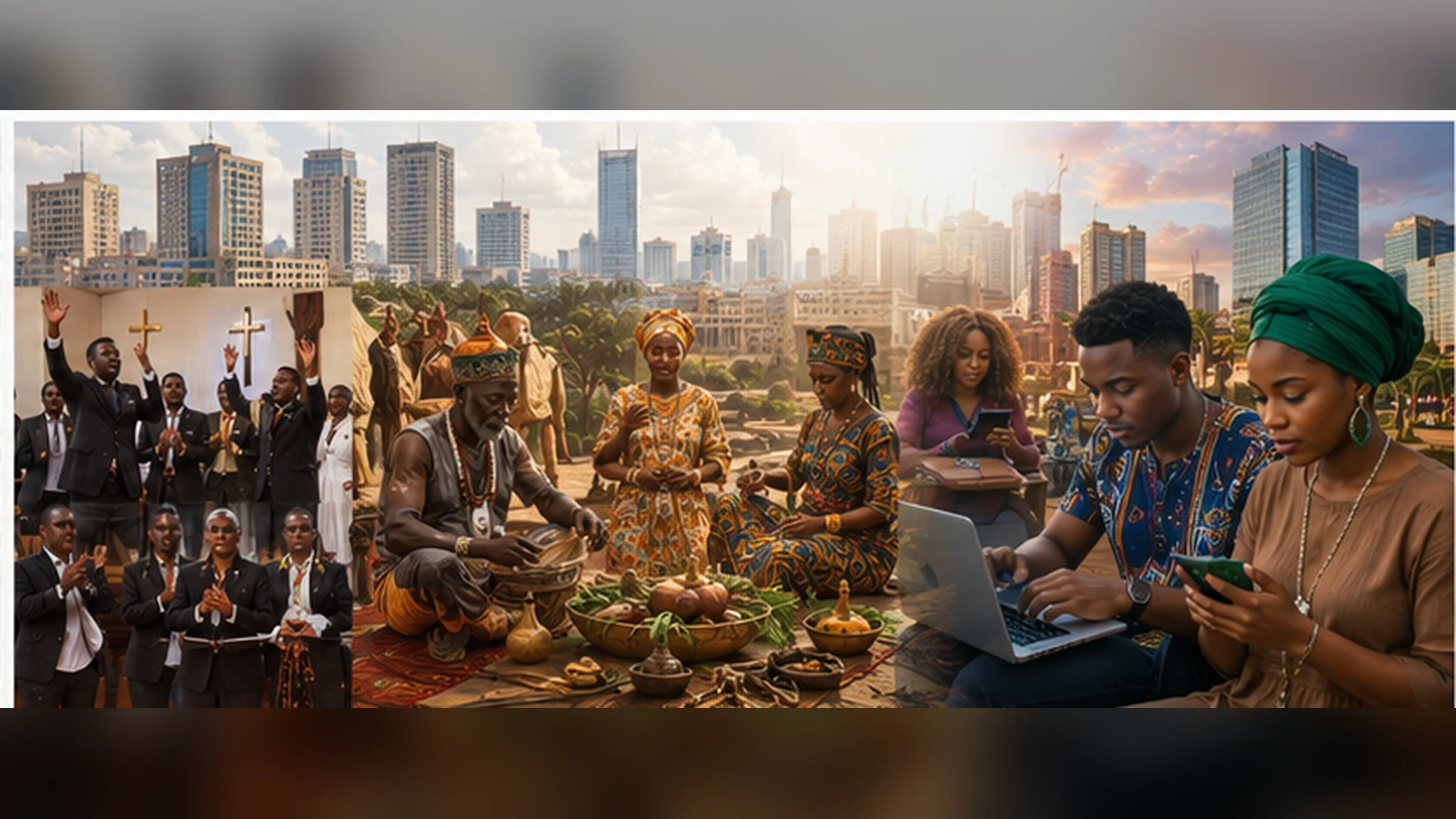
What Has Remained Continuous?
Despite major historical changes, some principles remain important in many communities.
These may include:
- Respect for elders
- Family responsibility
- Ancestral memory
- Community participation
- Sacred relationships with land
- Moral accountability
- Ritual marking of life transitions
- Oral preservation of history
- Healing as social as well as physical
- Recognition of spiritual dimensions of life
Continuity does not mean that practices remain identical.
A community may preserve the principle of honoring ancestors while replacing an offering ceremony with a Christian memorial service. Another may preserve sacred land through environmental conservation law.
What Has Changed Most?
Major areas of change include:
- Public religious identity
- Religious vocabulary
- Authority structures
- Gender roles
- Places of worship
- Funeral procedures
- Healing institutions
- Relationships with the state
- Written and digital transmission
- Commercialization
- International religious networks
From Local to Global
Many traditions once associated mainly with particular communities now have international practitioners and diaspora networks.
Yoruba-derived religions, for example, developed across Africa, the Caribbean, Latin America, North America, and Europe through migration and diaspora.
Global expansion can preserve traditions while also creating debates over initiation, authority, language, and authenticity.
Comparison of Major Historical Periods
- Historical period
- Major influences
- Common forms of change
- Early community traditions
- Environment, family, migration, subsistence
- Local cosmologies, burial practices, sacred places
- Kingdoms and states
- Political authority, trade, royal ancestry
- Sacred kingship, state ritual, formal institutions
- Islamic expansion
- Trade, scholarship, pilgrimage, law
- Muslim states, education, religious pluralism
- Early African Christianity
- Monasticism, kingdoms, theology
- African Christian institutions and liturgy
- Atlantic slave trade
- Forced migration and enslavement
- Diaspora religions and transformed traditions
- Colonial rule
- Missions, law, schools, conquest
- Suppression, reinterpretation, private survival
- Independence era
- Nationalism and decolonization
- Cultural reclamation and African scholarship
- Urban and global era
- Migration, media, Pentecostalism, globalization
- New movements, hybrid identities, digital revival
Common Misconceptions
Misconception 1: African Spirituality Never Changed
Reality: African religions evolved continuously through migration, politics, trade, religious exchange, and social change.
Misconception 2: Christianity and Islam Completely Replaced Indigenous Beliefs
Reality: Some practices declined, while others survived, adapted, or continued within family and cultural life.
Misconception 3: All Religious Change Was Forced by Europeans
Reality: African societies experienced religious exchange and internal change long before colonialism, including Christianity and Islam.
Misconception 4: Conversion Happened Instantly
Reality: Conversion was often gradual, selective, contested, and interpreted differently across generations.
Misconception 5: Blended Traditions Are Inauthentic
Reality: Religious traditions throughout the world change through contact, translation, and adaptation.
Misconception 6: Indigenous Spirituality Exists Only in Rural Areas
Reality: Indigenous beliefs and practices also exist in cities, universities, digital communities, and diaspora networks.
Misconception 7: Revival Means Returning to an Unchanged Past
Reality: Modern revival movements are shaped by contemporary politics, technology, scholarship, and identity.
Misconception 8: One Timeline Explains Every African Religion
Reality: Different regions experienced Islam, Christianity, colonialism, and modernization at different times and in different ways.
How to Study the Evolution of African Spirituality Respectfully
Step 1: Identify the Specific Community
Ask:
- Which people?
- Which region?
- Which language?
- Which historical period?
- Which religious institution?
Step 2: Avoid a Simple Replacement Story
Do not assume:
- Indigenous religion existed first.
- Islam or Christianity arrived.
- Older beliefs immediately disappeared.
The real history is usually more complex.
Step 3: Use African Historical Sources
Prioritize:
- African historians
- Community scholars
- Oral histories
- Archaeology
- Local-language sources
- Religious records
- Reputable museums
- University research
Step 4: Distinguish Continuity From Exact Repetition
A principle can survive even when its outward practice changes.
Step 5: Recognize Internal Debate
Not all members of a community agree about tradition, conversion, ancestors, healing, or religious revival.
Step 6: Avoid Romanticization
Precolonial traditions were historically complex and should not be presented as perfect, peaceful, or unchanged.
Step 7: Respect Restricted Knowledge
Historical interest does not create a right to reveal private rituals, sacred names, initiation knowledge, or confidential consultations.
Key Takeaways
- African spiritual traditions were never one fixed religion.
- Religious beliefs changed through internal development as well as external contact.
- Oral tradition allowed spiritual knowledge to remain flexible and culturally relevant.
- Kingdoms connected spirituality with political authority, ancestry, and law.
- Christianity has ancient African histories predating European colonialism.
- Islam spread gradually through conquest, trade, scholarship, pilgrimage, and African state formation.
- Enslaved Africans created new diaspora religions through preservation and adaptation.
- Colonial governments and missions suppressed many indigenous institutions.
- Africans transformed Christianity and Islam into locally meaningful religious traditions.
- Urbanization did not eliminate spirituality; it created new organizations and practices.
- Independence encouraged historical and cultural reclamation.
- Modern revival uses research, media, festivals, and digital technology.
- Continuity often exists through values and relationships rather than exact ritual repetition.
- Religious change should be studied through specific communities and historical periods.
People Also Ask
How have African spiritual beliefs changed over time?
They have changed through migration, trade, kingdoms, Islam, Christianity, enslavement, colonialism, urbanization, independence, and globalization.
Did Christianity exist in Africa before colonialism?
Yes. Christianity developed in North Africa, Egypt, Nubia, and Ethiopia many centuries before modern European colonial rule.
How did Islam influence African spirituality?
Islam influenced law, education, trade, scholarship, political authority, healing, architecture, and religious identity while interacting with existing customs.
Did colonialism destroy African traditional religions?
Colonialism severely disrupted many traditions, but communities also preserved, adapted, privatized, and reinterpreted them.
What are African Initiated Churches?
They are African-led Christian movements that developed locally rooted leadership, worship, healing, music, theology, and community institutions.
Are African traditional religions still practiced?
Yes. They continue in different forms in rural communities, cities, cultural associations, religious institutions, and diaspora networks.
Frequently Asked Questions
1. What were African spiritual beliefs like before colonialism?
They were diverse systems connected with creators, divinities, ancestors, spirits, land, healing, morality, political authority, and community life.
2. Did Islam replace African traditional religion?
In some regions Islam became dominant, but the process was gradual and often involved coexistence, adaptation, and continued local customs.
Frequently Asked Questions
What should readers know first about How African spiritual beliefs evolved?
How African spiritual beliefs evolved: Trace the evolution of African spiritual beliefs from early community traditions through kingdoms, trade, Islam, Christ
What causes How African spiritual beliefs evolved?
Trace the evolution of African spiritual beliefs from early community traditions through kingdoms, trade, Islam, Christianity, colonialism, diaspora, independence, and modern revival. The safest next step is to compare the signs, prepare clear details, and req
How does How African spiritual beliefs evolved work?
Trace the evolution of African spiritual beliefs from early community traditions through kingdoms, trade, Islam, Christianity, colonialism, diaspora, independence, and modern revival. The safest next step is to compare the signs, prepare clear details, and req
Is it possible to get private guidance for How African spiritual beliefs evolved?
Trace the evolution of African spiritual beliefs from early community traditions through kingdoms, trade, Islam, Christianity, colonialism, diaspora, independence, and modern revival. The safest next step is to compare the signs, prepare clear details, and req
How long does How African spiritual beliefs evolved take to understand?
Trace the evolution of African spiritual beliefs from early community traditions through kingdoms, trade, Islam, Christianity, colonialism, diaspora, independence, and modern revival. The safest next step is to compare the signs, prepare clear details, and req
Can How African spiritual beliefs evolved affect relationships, family, work, or personal peace?
Trace the evolution of African spiritual beliefs from early community traditions through kingdoms, trade, Islam, Christianity, colonialism, diaspora, independence, and modern revival. The safest next step is to compare the signs, prepare clear details, and req
Why do people seek spiritual guidance for How African spiritual beliefs evolved?
Trace the evolution of African spiritual beliefs from early community traditions through kingdoms, trade, Islam, Christianity, colonialism, diaspora, independence, and modern revival. The safest next step is to compare the signs, prepare clear details, and req
What signs should someone notice before asking about How African spiritual beliefs evolved?
Trace the evolution of African spiritual beliefs from early community traditions through kingdoms, trade, Islam, Christianity, colonialism, diaspora, independence, and modern revival. The safest next step is to compare the signs, prepare clear details, and req
When should someone contact a private spiritual guide?
Trace the evolution of African spiritual beliefs from early community traditions through kingdoms, trade, Islam, Christianity, colonialism, diaspora, independence, and modern revival. The safest next step is to compare the signs, prepare clear details, and req
Article Information
- Publisher
- Ancestral Temple
- Editor
- Ancestral Temple
- Last updated
- Jul 26, 2026
- Last reviewed
- Jul 13, 2026
- Content version
- 758316c8fd
This educational article should be read as cultural and spiritual information, not as medical, legal, financial, or emergency advice.
Helpful Related Guidance
Explore This Topic
African Spiritual Traditions · Sacred Natural Places In African Spirituality
Related Topic Cluster
How African Spiritual Beliefs Evolved
Complete Guide Understanding African Spiritual Traditions: A Historical IntroductionAbout the Author
 Ancestral Temple
Spiritual guide and practitioner with decades of experience in ancestral wisdom, rituals, and divine guidance.
Related Posts
View All

Leave a Comment
We'd love to hear your thoughts.
This article explained a complex history without treating Africa as one culture or one religion.
Are there recommended books about religious interaction in precolonial West Africa?
The discussion of living heritage showed why tradition should not be treated as something frozen in a museum.
I would like to learn more about how migration affects funeral customs and ancestor remembrance.
I did not know how much African Christianity had developed before European colonial rule.
A strong explanation of continuity, change, and adaptation across African religious history.
The misconceptions section answered many oversimplified statements I have seen online.
The article remained factual and respectful without making spiritual claims that cannot be verified.
I liked the warning that digital access does not automatically make spiritual information accurate.
The section about independence and cultural reclamation was especially important.
More African historians and local-language sources should be included in future reading lists.
The museum and restitution section deserves a longer article of its own.
The biggest lesson was that Africans actively shaped Christianity and Islam rather than simply receiving them.
This was balanced and did not blame or praise one religion without historical context.
The article made me think about how family customs can have different meanings for different relatives.
I appreciated the idea that cultural continuity may survive through values rather than identical rituals.
Could you write next about African Initiated Churches and their relationship with traditional healing?
The headings and timeline made the article easy to read on a phone.
The article stayed clear even while covering a very long historical period.
This would be useful for students studying African history, religion, anthropology, or colonialism.
Thank you for explaining that revival does not mean returning to a perfectly unchanged past.
It was interesting to learn that urbanization created new spiritual communities rather than simply destroying tradition.
The section about digital revival was relevant because there is so much inaccurate spiritual content online.
I would like to read more about Sufi traditions and Islamic scholarship in West Africa.
The glossary is useful, especially the definitions of indigenization and religious pluralism.
The colonial terminology section explains why many older books should be read critically.
The section on ancestral land and funeral customs showed how cultural continuity can remain after conversion.
I appreciated the explanation that opposing an older religion can still preserve some of its questions and categories.
The article was detailed without turning African religious history into a simple story of loss.
The information about African kingdoms turning community beliefs into state institutions was fascinating.
I would like a separate article about women’s roles in religious change across African history.
This article showed why one timeline cannot explain every African community.
I liked that the article did not treat blended traditions as confused or inauthentic.
The point that conversion is often gradual and selective was important.
I appreciated the discussion of religious pluralism rather than presenting Islam, Christianity, and indigenous religion as completely separate worlds.
The comparison table made the historical periods much easier to follow.
The diaspora section helped me understand why Vodou and Candomblé should not be described as unchanged African religions.
A full article about Christianity in Nubia and Aksum would be interesting.
I had not realized that African Initiated Churches were such a major part of modern Christianity.
The gradual spread of Islam through trade and scholarship was explained very clearly.
This article handled colonialism honestly without suggesting that every religious change came from Europe.
The discussion of oral tradition showed why historical knowledge can remain flexible without becoming meaningless.
I liked the distinction between a tradition disappearing and a tradition changing its outward form.
The section about Christianity having ancient African roots corrected an assumption I had held for years.
I appreciated the explanation that African spirituality was always changing even before colonialism.