
The Role of Elders in Traditional African Spiritual Practices
Pillar Article
Quick Summary
Discover how elders preserve oral knowledge, guide ceremonies, teach ethics, support initiation, mediate disputes, and protect cultural continuity in diverse African traditions.
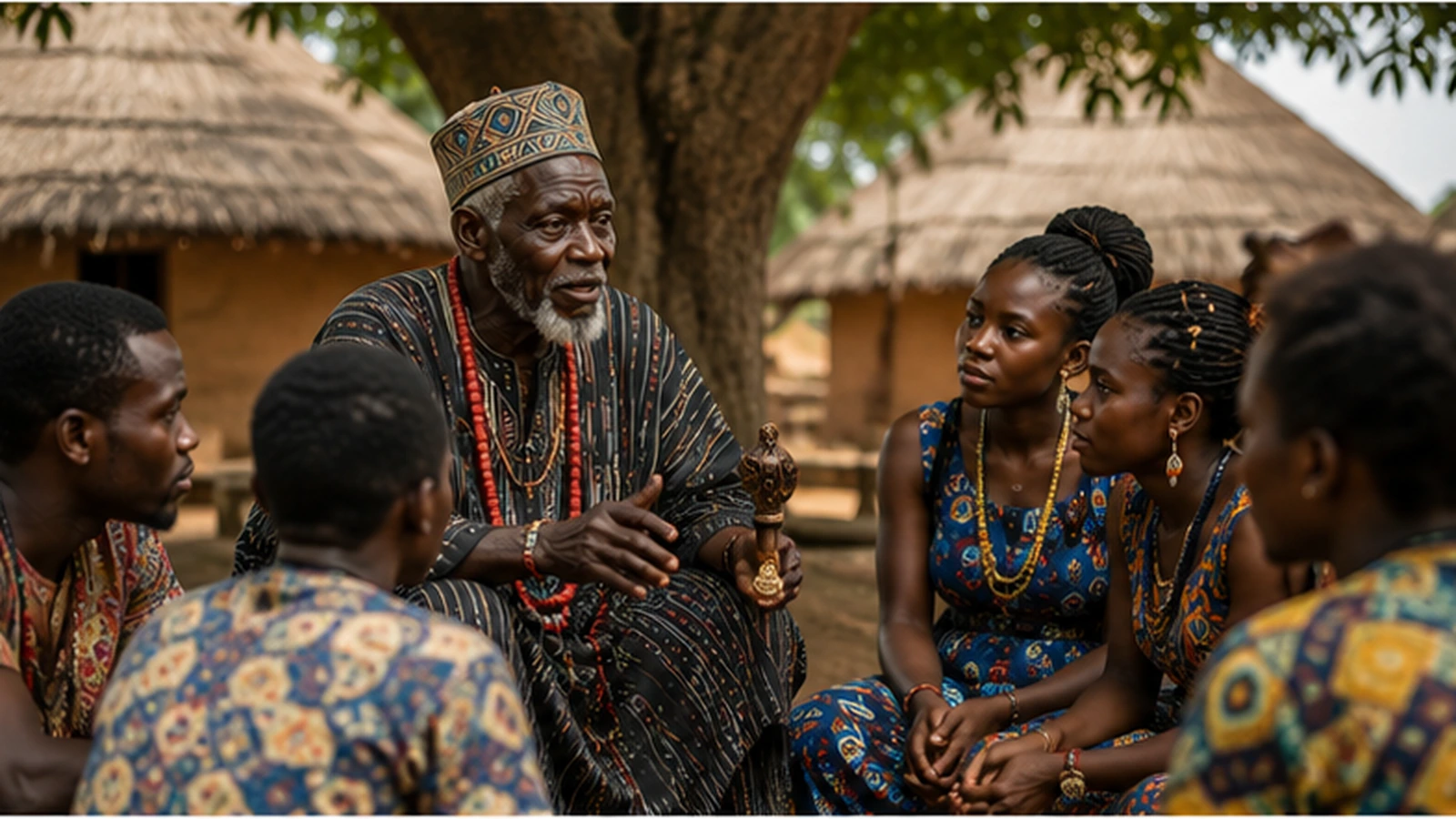
Elders can hold important cultural, moral, political, and spiritual responsibilities in many African communities. Their roles may include preserving oral history, explaining customs, guiding life transitions, advising families, mediating disputes, supervising ceremonies, and teaching younger generations.
However, Africa does not have one universal system of eldership. The authority of elders varies by culture, region, lineage, gender, religious institution, historical period, and personal experience. In some communities, age provides a foundation for respect. In others, an elder must also demonstrate knowledge, good character, family responsibility, initiation, leadership, or years of service.
An older person is therefore not automatically a priest, healer, diviner, or ritual leader. Some elders possess specialized spiritual authority, while others are respected primarily as family heads, historians, counselors, political advisers, or custodians of community values.
African indigenous religions also contain distinct institutions, associations, and ritual roles rather than one undifferentiated religious system. Roles that belong to elders in one society may be assigned to priests, mediums, lineage heads, healers, titled officials, or initiation specialists elsewhere.
Key Points
Elders in traditional African spiritual practices may serve as:
- Custodians of oral history and collective memory
- Teachers of customs, values, and sacred knowledge
- Advisers during birth, marriage, initiation, and funerals
- Representatives of families, lineages, or ancestors
- Mediators during disputes and reconciliation
- Members of religious, political, or judicial councils
- Supervisors of ceremonies and community obligations
- Mentors to younger ritual specialists
- Protectors of sacred places and inherited land
- Links between earlier, present, and future generations
These responsibilities are not identical across Africa.
Some elders hold formal offices. Others exercise influence through experience and reputation. Certain traditions also place women elders in central roles involving family history, childbirth, mourning, healing, initiation, ancestral memory, or leadership.
What Is an Elder in an African Cultural Context?
An elder is generally a mature person recognized by a family or community as possessing experience, knowledge, authority, or responsibility.
Age may be important, but it is often only one part of eldership.
A respected elder may also be expected to demonstrate:
- Knowledge of community history
- Responsible family leadership
- Familiarity with customary law
- Moral reliability
- Ability to settle disagreements
- Understanding of rituals and ceremonies
- Skill in teaching younger people
- Respect for community boundaries
- Service to the lineage or wider community
Clear Definition
An elder is a person recognized by a community for maturity, experience, cultural knowledge, moral responsibility, or authority rather than simply for reaching a particular age.
Plain-Language Meaning
Being elderly describes age. Being an elder may describe a trusted social position.
A person may be old without being authorized to lead a ceremony. A younger initiated specialist may also possess religious knowledge that an older, uninitiated person does not have.
Elders Are Not All the Same
The English word elder can refer to several different roles:
- A senior family member
- A lineage head
- A council member
- A ritual specialist
- A titled officeholder
- An initiated member of an association
- A respected community adviser
- A custodian of land or sacred places
Accurate writing should identify the specific office or local title whenever possible.
Why Elders Are Often Associated With Wisdom
Elders may be respected because they have witnessed community events, family transitions, environmental changes, political conflicts, migrations, religious developments, and earlier ways of life.
Their knowledge may come from:
- Personal experience
- Oral teaching
- Apprenticeship
- Initiation
- Family responsibility
- Observation of ceremonies
- Participation in councils
- Work with earlier elders
- Long-term service to a religious institution
Wisdom is therefore often understood as accumulated knowledge combined with good judgment.
In Senufo contexts, for example, objects connected with the Poro institution associate elders with knowledge, authority, responsibility, and maturity. A Senufo sejen bird described by the Metropolitan Museum uses its form as a teaching tool linked to the body of knowledge held by Poro elders.
Elders as Custodians of Oral Tradition
One of the most important roles associated with elders is preserving and transmitting oral knowledge.
Oral traditions may include:
- Family genealogies
- Origin narratives
- Migration histories
- Proverbs
- Praise poetry
- Funeral songs
- Prayers
- Moral stories
- Accounts of political leadership
- Descriptions of sacred places
- Explanations of customary law
- Knowledge of farming and seasonal change
UNESCO identifies oral traditions as an important means of transmitting knowledge, social values, and collective memory. These traditions may include myths, legends, poems, prayers, chants, songs, dramatic performances, proverbs, and other spoken forms.
Oral Knowledge Is More Than Memorization
An elder may not simply repeat a fixed story word for word.
The elder may also explain:
- Why the story matters
- Which version belongs to a family
- What moral lesson it contains
- Which names should be included
- How the story relates to land
- When it is appropriate to tell it
- Which parts are public or restricted
This interpretive role is important because oral knowledge is performed in particular social settings rather than stored only as detached information.
Elders as Living Archives
An elder may remember details that do not appear in written records, including:
- Earlier boundaries between families
- Reasons behind marriage alliances
- Meanings of old place names
- Circumstances surrounding migrations
- Identities in historical photographs
- Changes to ceremonies
- Relationships among lineages
- Reasons certain places are protected
When elders die without passing on this knowledge, communities may lose information that cannot easily be reconstructed.
Teaching Spiritual and Ethical Values
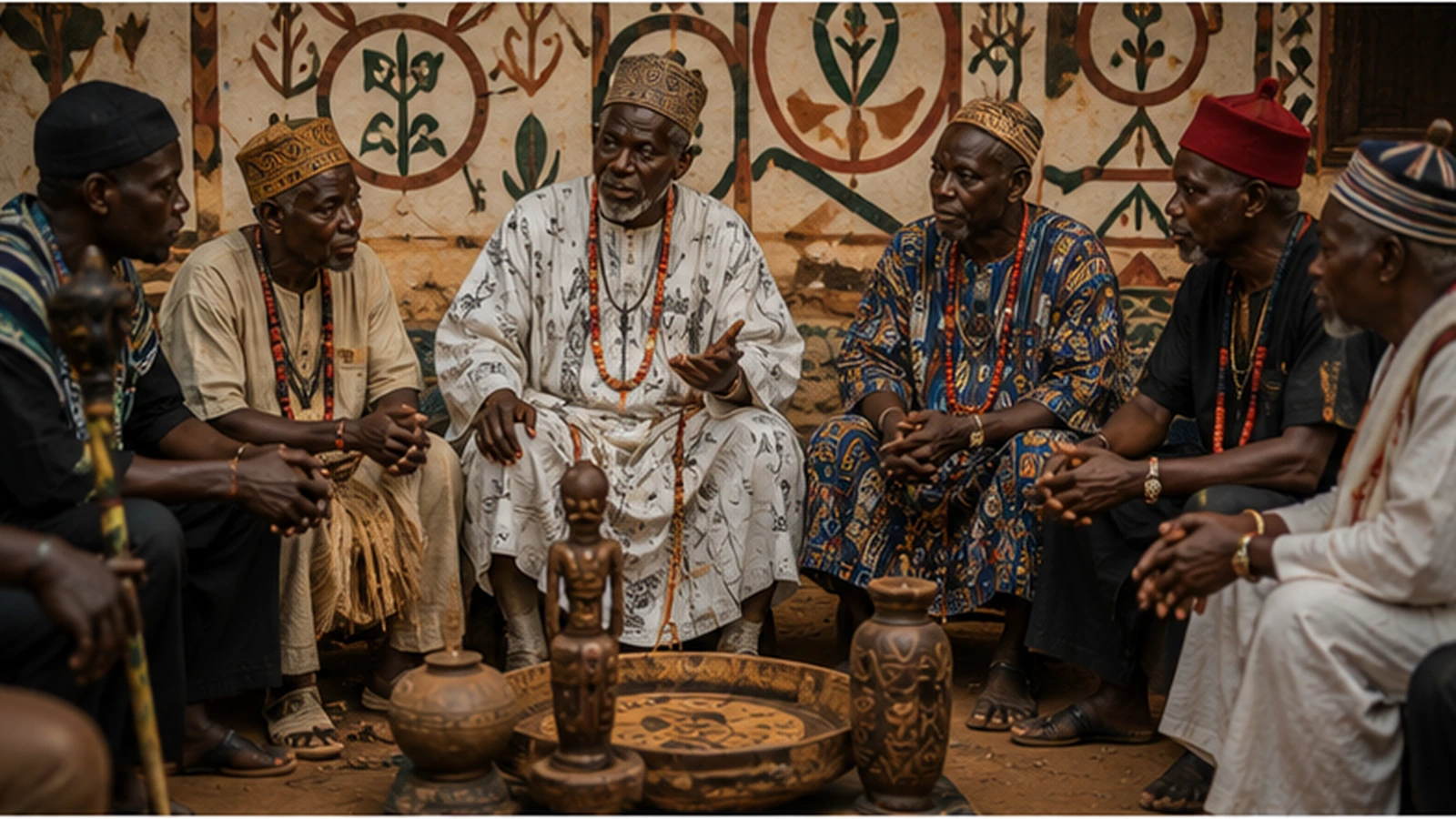
Elders may teach younger generations how spiritual beliefs relate to everyday behavior.
Lessons can concern:
- Honesty
- Respect
- Hospitality
- Care for relatives
- Responsibility toward children
- Treatment of the deceased
- Protection of family property
- Proper conduct during ceremonies
- Fulfillment of promises
- Community cooperation
In some African moral philosophies, relationships among the creator, ancestors, living people, animals, and the wider world form part of an interconnected order. Religious values can therefore influence both ritual conduct and ordinary social responsibilities.
Stories as Moral Education
An elder may use a story rather than a direct command.
A narrative about a selfish ruler, dishonest hunter, neglected parent, wise animal, respected ancestor, or divided family may teach consequences without naming a current offender directly.
Proverbs can serve a similar function. Their brief form allows listeners to remember complex advice and apply it to new situations.
Correcting Misconduct
Elders may be called upon when a person:
- Disrespects family obligations
- Breaks an agreement
- Causes a serious dispute
- Ignores funeral responsibilities
- Misuses inherited property
- Violates ceremonial expectations
Their response may include advice, mediation, apology, compensation, reconciliation, or referral to another authority.
Respect for elders should not be used to silence reports of abuse, conceal crime, or prevent people from seeking medical, legal, mental-health, or safety support.
Elders and Ancestor Reverence
Elders may serve as important links between living families and deceased generations.
They may preserve:
- Names of ancestors
- Family genealogies
- Stories about earlier relatives
- Burial locations
- Inherited responsibilities
- Knowledge of ancestral land
- Appropriate remembrance customs
In some traditions, elders explain which deceased relatives are regarded as ancestors and how the living should relate to their memory.
Representing the Lineage
A senior family member may speak on behalf of the lineage during:
- Funerals
- Marriage negotiations
- Naming ceremonies
- Family meetings
- Land discussions
- Memorial observances
- Reconciliation ceremonies
The elder’s authority may come from seniority, descent, knowledge, or recognized family responsibility.
Elders Are Not Ancestors
A living elder is not automatically an ancestor.
An ancestor is generally a deceased person who retains recognized family, moral, political, or spiritual importance. Beliefs about who becomes an ancestor and what ancestors can do differ considerably across African societies.
Elders in Rites of Passage
Rites of passage mark important changes in a person’s social position.
They may relate to:
- Birth
- Naming
- Adulthood
- Initiation
- Marriage
- Parenthood
- Leadership
- Death
- Ancestral recognition
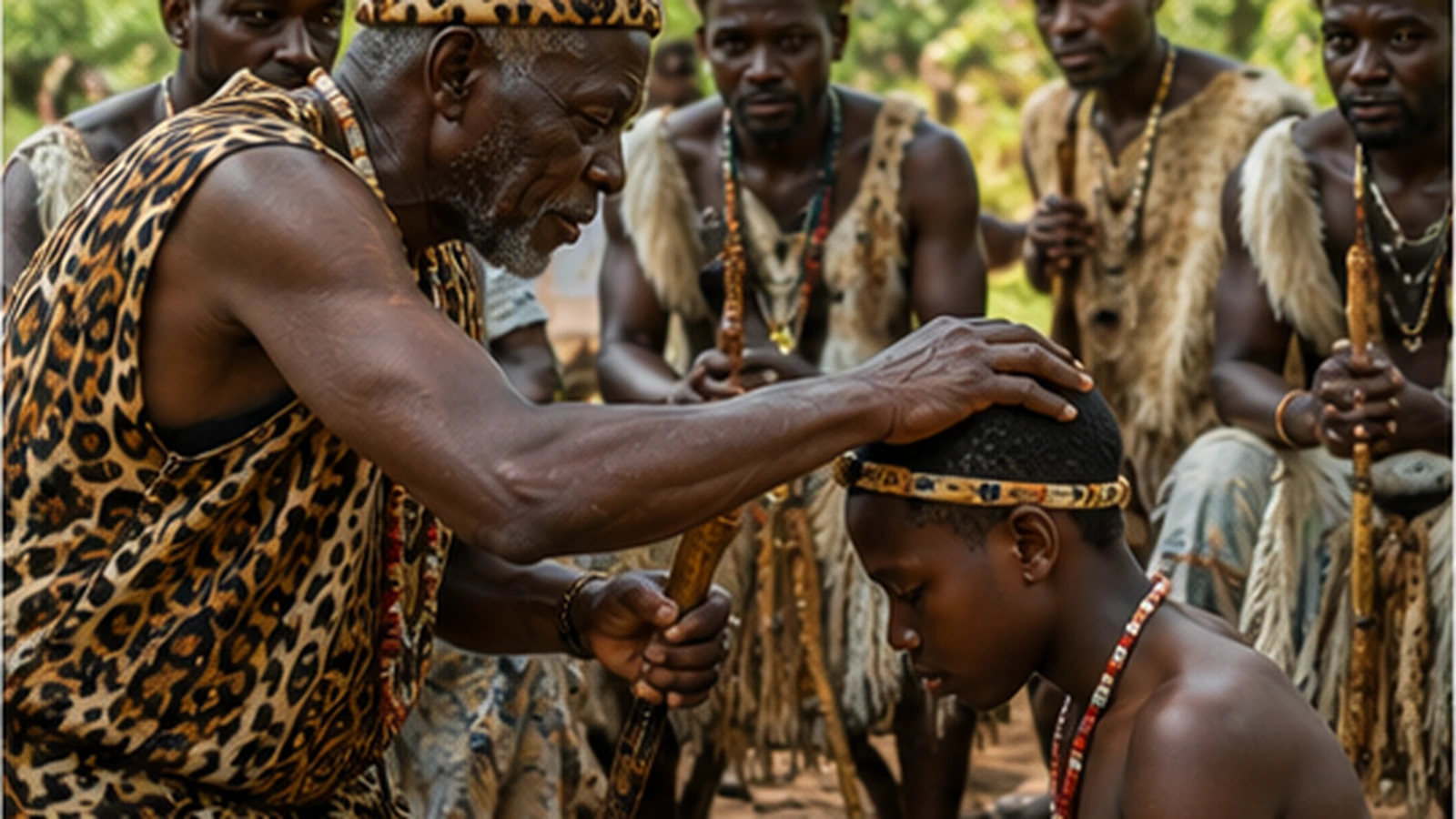
Elders may explain the responsibilities associated with a new stage of life, witness the transition, supervise teaching, or formally welcome the participant into a new social role.
Initiation and Structured Learning
Some initiation systems organize learning over a long period.
Instruction may include:
- Community history
- Ethical behavior
- Social duties
- Restricted language
- Religious songs
- Symbolic meanings
- Respect for family and land
- Responsibilities connected with adulthood
Among Senufo peoples, the Poro institution has historically supervised male initiation through age grades, with advancement associated with increasing responsibility, maturity, and authority.
Elders as Mentors
Elders may teach by:
- Explaining community expectations
- Demonstrating appropriate behavior
- Supervising participation
- Correcting mistakes
- Evaluating readiness
- Recognizing successful completion
Not every initiation is religious, and not every elder is allowed to teach restricted material.
Elders and Ritual Leadership
Some elders officiate or assist with rituals. Others advise the specialist who performs them.
Their responsibilities may include:
- Confirming that procedures follow custom
- Identifying the correct participants
- Selecting an appropriate time or place
- Reciting family histories
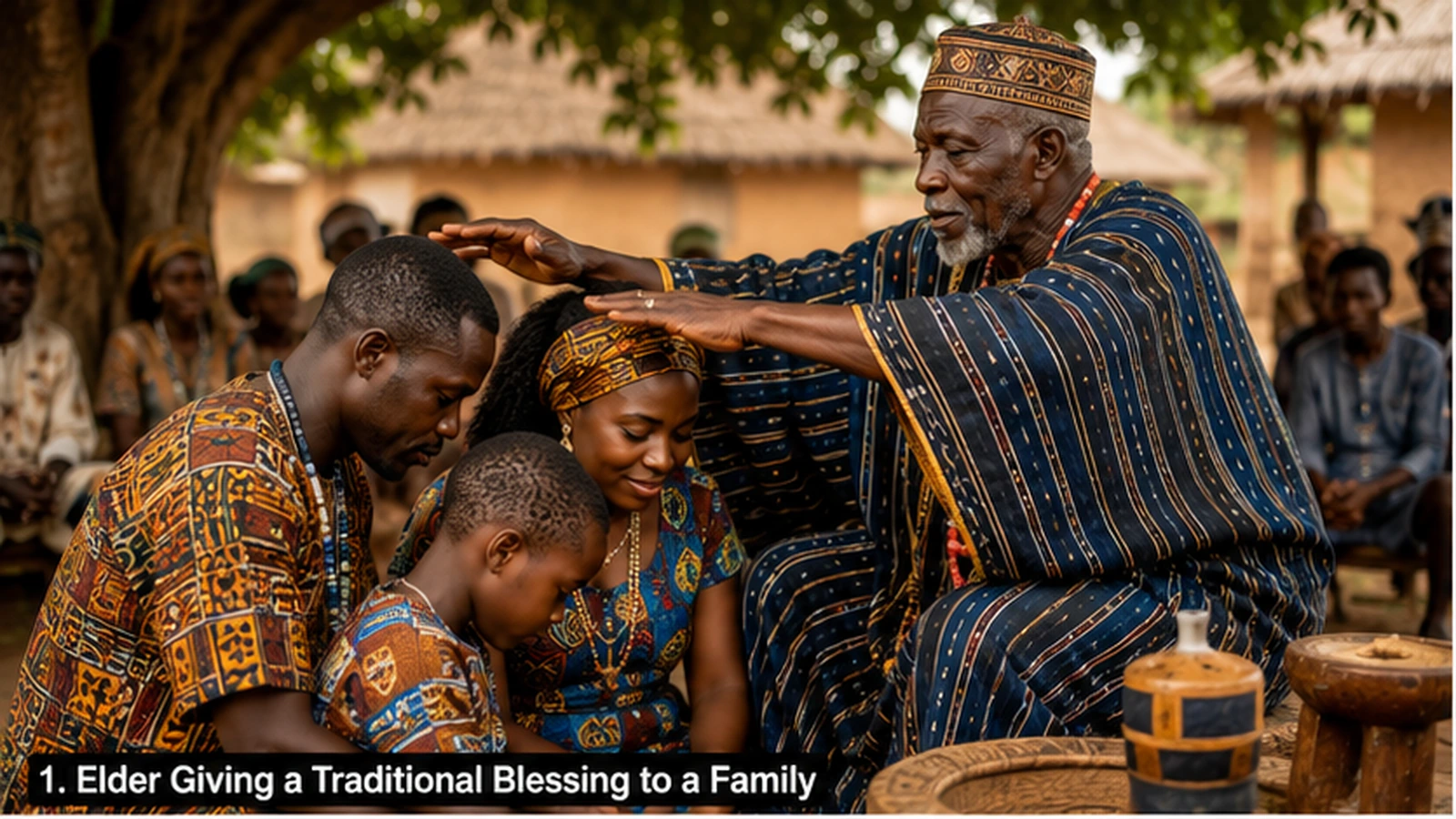
- Giving blessings
- Witnessing agreements
- Supervising offerings
- Explaining the meaning of the event
- Ensuring that restrictions are respected
Elders and Specialists May Be Different People
A ritual may involve both an elder and a trained specialist.
- Role
- Possible responsibility
- Family elder
- Represents the lineage
- Priest or priestess
- Serves a shrine or divinity
- Diviner
- Interprets an established system of signs
- Healer
- Provides culturally recognized forms of care
- Spirit medium
- Communicates messages attributed to spirits
- Council elder
- Advises on social, legal, or political matters
- Oral historian
- Preserves genealogies and community memory
One person may hold more than one role, but the titles should not automatically be treated as interchangeable.
Councils of Elders and Collective Authority
In some African political and spiritual systems, authority is shared rather than concentrated in one ruler.
A council of elders may:
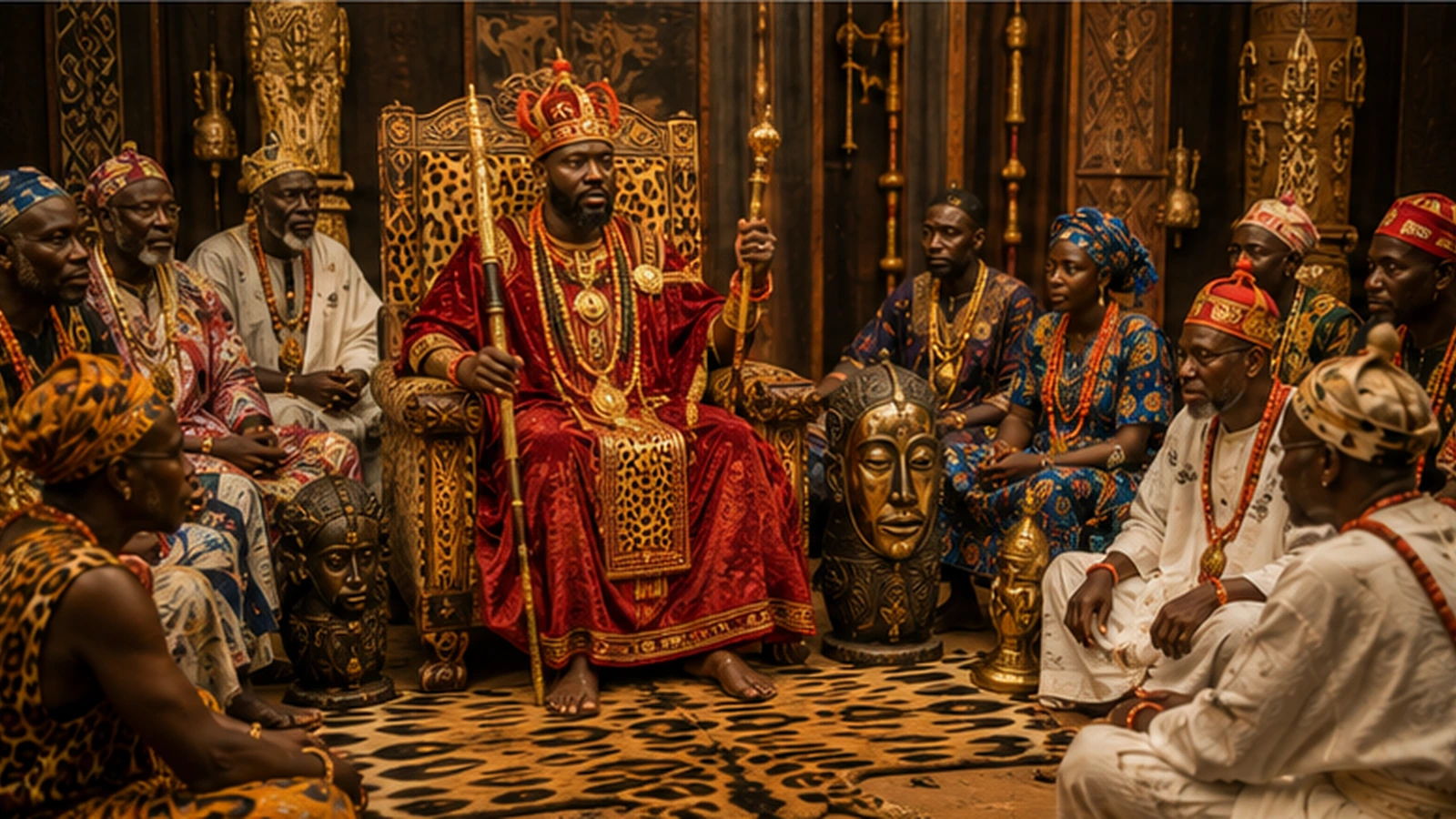
- Advise a chief or ruler
- Interpret custom
- Hear disputes
- supervise succession
- Represent lineages
- Protect shrines or sacred places
- Approve major community decisions
- Limit abuses of political power
The Metropolitan Museum notes that many historical African states included governing bodies of elders or nobles that counterbalanced royal authority. Yoruba Ogboni elders are one example, while the Kwifor council in the Cameroon Grassfields has also functioned as a check on royal power.
Consensus and Deliberation
A council may seek agreement through extended discussion rather than immediate voting.
Participants may consider:
- Customary precedent
- Family relationships
- Consequences for future generations
- Religious obligations
- Community peace
- The authority of earlier decisions
This does not mean every elder council is democratic, fair, or free from hierarchy. Institutions must be understood within their specific histories.
Elders as Mediators and Peacemakers
Because elders may know the histories of families and earlier agreements, they can be asked to mediate disputes.
Conflicts may involve:
- Marriage
- Inheritance
- Land
- Family responsibilities
- Insults
- Unpaid obligations
- Leadership
- Funeral contributions
- Boundaries
- Broken agreements
A Typical Mediation Process
Practices differ, but mediation may involve:
- Listening to each side
- Reviewing family or community history
- Identifying the damaged relationship
- Referring to custom or precedent
- Encouraging acknowledgment of harm
- Recommending compensation or apology
- Witnessing reconciliation
The goal may be to restore workable relationships rather than merely identify a winner.
Spiritual Dimensions of Reconciliation
In some traditions, conflict is understood as affecting ancestors, land, family reputation, or community harmony.
Reconciliation may therefore include symbolic actions, shared food, prayer, blessing, or a formal public statement.
No spiritual or customary process should prevent a victim from reporting violence, exploitation, abuse, or other crimes to appropriate authorities.
Elders and Traditional Healing
Some elders possess knowledge of plants, childbirth, counseling, diet, physical care, or community-based healing.
However, elder and healer are not synonyms.
A traditional healer may receive specialized training that other elders do not possess. Likewise, a respected elder may offer emotional support and family mediation without preparing medicines.
Healing Knowledge Elders May Preserve
Depending on the tradition, elders may know:
- Names and uses of local plants
- Seasonal availability
- Preparation methods
- Dietary customs
- Childcare practices
- Approaches to grief
- Community responses to distress
- Referral to recognized specialists
Traditional healing can hold cultural and emotional value, but remedies may have side effects or interact with medication. Serious symptoms require qualified medical care, and spiritual explanations should not delay emergency treatment.
Elders and Divination
Divination in African traditions is normally a specialized interpretive practice rather than a general ability possessed by all older people.
An elder may:
- Recommend consulting a diviner
- Help explain the family background
- Witness the consultation
- Interpret advice in relation to custom
- Ensure that recommendations do not violate community responsibilities
Actual divination may be conducted by a trained practitioner using established signs, objects, texts, dreams, or spirit-medium traditions. The instruments and systems used in African divination are closely tied to particular religious ideas and ritual practices.
Ethical Boundaries
Divination should not be used to justify:
- Violence
- False accusations
- Financial exploitation
- Medical neglect
- Abuse
- Coercion
- Punishment without evidence
Elders can play a protective role by challenging irresponsible claims rather than accepting every spiritual allegation.
Elders and Funeral Practices
Funerals often bring together family history, spiritual beliefs, social obligations, and community identity.
Elders may:
- Announce or confirm the death
- Identify relatives who must be informed
- Explain burial customs
- Coordinate family responsibilities
- Recite the deceased person’s lineage
- Settle unfinished obligations
- Advise on mourning practices
- Help transfer family duties
- Preserve the deceased person’s history
Funeral Knowledge Is Culturally Specific
Practices differ according to:
- Religion
- Region
- Family
- Status of the deceased
- Cause of death
- Age
- Historical period
- Urban or rural setting
Christianity, Islam, migration, national law, and urbanization have changed funeral practices in many communities, but elders may continue to help families interpret older customs within current circumstances.
Women Elders and Spiritual Authority
Discussions of African elders sometimes focus too heavily on men.
Women elders may hold important responsibilities involving:
- Childbirth
- Naming
- Marriage guidance
- Family genealogy
- Mourning
- Initiation
- Healing
- Market institutions
- Land use
- Women’s associations
- Ancestral remembrance
- Counseling younger women and men
Their authority may come from age, motherhood, lineage position, religious office, initiation, economic influence, or specialist knowledge.
Gender Roles Vary
Some institutions are male-led, some are female-led, and others involve complementary responsibilities.
Writers should avoid assuming that women have no spiritual authority simply because a public council contains men. Important knowledge may be held within households, women’s associations, healing networks, or ceremonies not easily visible to outsiders.
Elders and Sacred Land
Elders may preserve knowledge about:
- Ancestral boundaries
- Burial sites
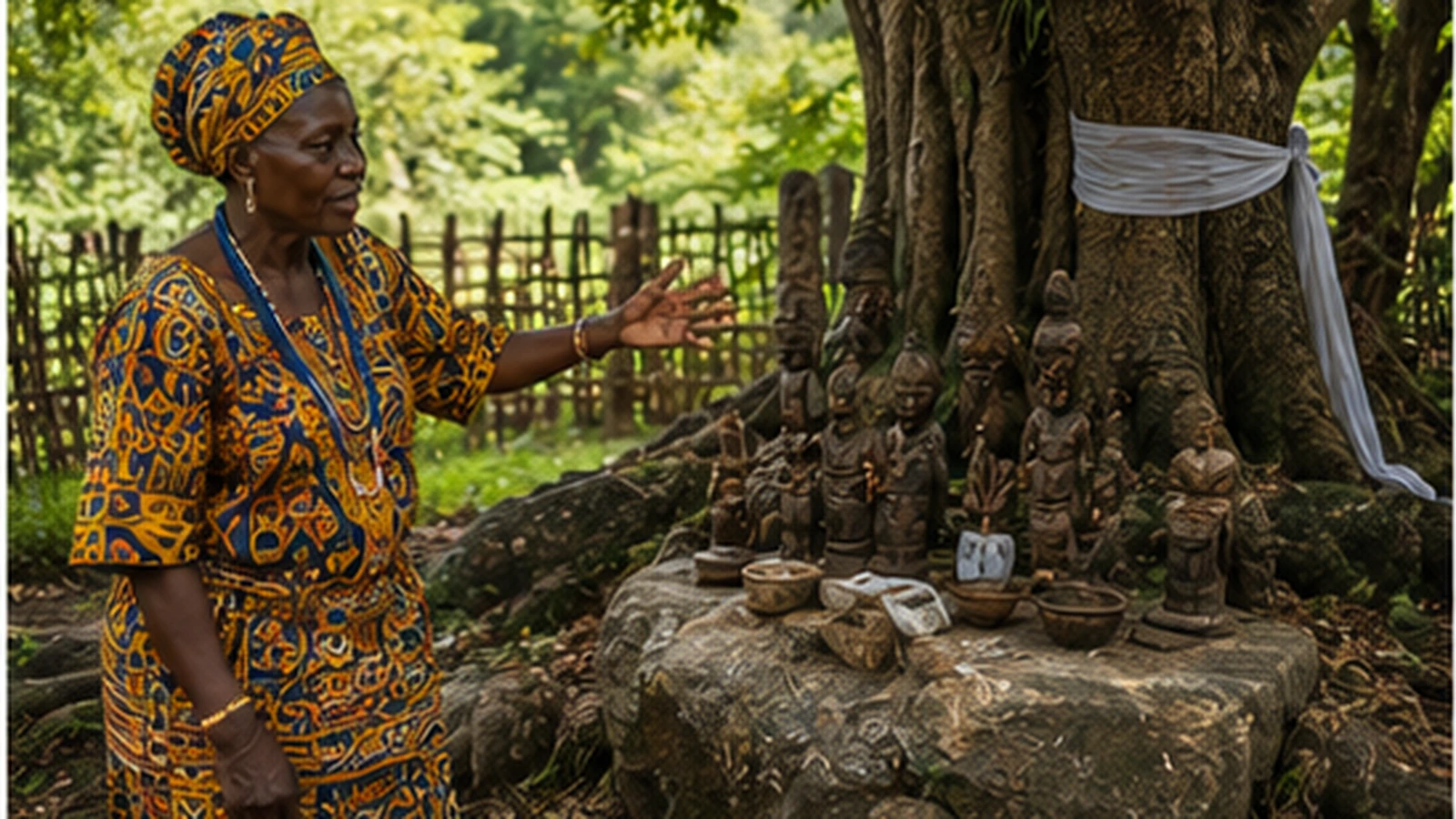
- Sacred groves
- Water sources
- Seasonal movement
- Protected trees
- Historical settlements
- Sites connected with migration
- Places associated with spirits or divinities
This knowledge may influence decisions about farming, construction, burial, hunting, or access to particular locations.
UNESCO treats knowledge and practices concerning nature, the universe, rituals, social practices, and oral traditions as interconnected forms of living cultural heritage transmitted across generations.
Elders and Religious Change
African communities have experienced centuries of interaction among indigenous religions, Christianity, Islam, and newer religious movements.
Elders may respond to religious change in different ways:
- Preserving older practices
- Rejecting certain customs
- Reinterpreting traditions
- Separating cultural duties from religious worship
- Combining new and inherited forms
- Negotiating between generations
Some elders are Christian or Muslim leaders as well as custodians of family history.
A person may reject direct spiritual consultation with ancestors while still caring for graves, preserving genealogy, attending family funerals, and respecting inherited land.
Colonialism and the Changing Authority of Elders
Colonial governments and missionary institutions often altered local systems of authority.
They sometimes:
- Appointed selected chiefs
- Replaced councils
- Criminalized ceremonies
- Redefined customary law
- Removed sacred objects
- Favored male officeholders
- Dismissed indigenous knowledge as superstition
- Transferred authority to churches or colonial courts
These interventions could strengthen certain elders while weakening others.
Modern scholarship emphasizes that African religious traditions have continued through adaptation and innovation rather than remaining unchanged remnants of the past.
Elders in Contemporary African Communities
Elders continue to hold influence, but their roles are changing.
Modern elders may use:
- Mobile phones
- Video calls
- Digital recordings
- Social media
- Community radio
- Written archives
- Online family groups
- Cultural organizations
- Urban associations
An elder living in a rural community may advise relatives working abroad. Families may record oral histories or share information through messaging platforms.
Challenges to Knowledge Transmission
Transmission may be weakened by:
- Migration
- Language loss
- Family separation
- Religious conflict
- Lack of interest among younger people
- Death of knowledge keepers
- Commercialization of sacred practices
- Recording without consent
UNESCO’s safeguarding framework emphasizes that living heritage depends on transmission from one generation to the next rather than merely preserving objects in museums.
Elders and Young People
Cultural transmission works best as a relationship rather than a one-sided command.
Younger people can contribute:
- Digital skills
- Recording equipment
- Translation
- Archiving
- Research
- New educational formats
Elders contribute knowledge, interpretation, context, and authority.
What Elders Should Not Be Assumed to Do
It is inaccurate to assume that every African elder:
- Performs rituals
- Communicates with ancestors
- Practices divination
- Knows herbal medicine
- Supports every traditional custom
- Rejects Christianity or Islam
- Lives in a village
- Opposes modern technology
- Has unquestionable authority
- Speaks for an entire ethnic group
Elders are individuals with different beliefs, education, experiences, and opinions.
Common Misconceptions
Misconception 1: Every Old Person Is a Spiritual Elder
Reality: Eldership may require knowledge, service, initiation, lineage position, or community recognition.
Misconception 2: Elders Are the Same as Priests
Reality: An elder may be a family leader or adviser without holding a priestly role.
Misconception 3: Elders Always Work Alone
Reality: Authority may be exercised through councils, associations, families, or partnerships with specialists.
Misconception 4: Only Men Can Be Elders
Reality: Women elders hold important roles in many African communities.
Misconception 5: Elders Preserve Traditions Without Change
Reality: Elders may adapt, reinterpret, reject, or negotiate traditions in response to new conditions.
Misconception 6: Respect Means Unquestioning Obedience
Reality: Respect does not justify abuse, discrimination, coercion, or harmful conduct.
Misconception 7: Elders Are Opposed to Modern Life
Reality: Many use modern technology and participate in urban, professional, Christian, Muslim, and global communities.
Misconception 8: One Elder Can Explain All African Spirituality
Reality: Elders speak from particular communities, families, institutions, and experiences.
How to Learn From Elders Respectfully
Step 1: Ask for Consent
Explain:
- Why you are asking
- How information will be used
- Whether it will be recorded
- Who will see it
- Whether it may be published
Step 2: Identify the Elder’s Area of Knowledge
Ask whether the person is speaking as:
- A family elder
- A religious specialist
- A historian
- A healer
- A council member
- A personal witness
Step 3: Respect Restricted Knowledge
Do not pressure an elder to reveal:
- Initiation secrets
- Private prayers
- Confidential consultations
- Sacred names
- Family disputes
- Restricted ritual procedures
Step 4: Preserve Context
Record:
- Names
- Places
- Dates
- Language
- Family relationships
- Alternative versions
- Explanations of significance
Step 5: Verify Carefully
Compare oral accounts with:
- Other elders
- Community records
- Archaeology
- Historical documents
- Linguistic research
- Reputable scholarship
Verification does not mean disrespect. It helps preserve complexity and distinguish personal memory from collective history.
Step 6: Give Credit
Acknowledge the person and community when permission has been granted.
Do not publish an elder’s knowledge as though it were your own discovery.
Key Takeaways
- Elders may preserve oral, spiritual, historical, and ethical knowledge.
- Age alone does not automatically create spiritual authority.
- Elders may serve as teachers, mediators, lineage representatives, counselors, or council members.
- Priests, healers, diviners, mediums, and elders are not always the same people.
- Some elders guide rites of passage and initiation.
- Councils of elders may advise rulers or limit political authority.
- Women elders can hold important religious and cultural roles.
- Elders may preserve knowledge about ancestors, graves, land, and sacred places.
- Respect for elders must not be used to excuse harm or silence victims.
- Eldership changes through urbanization, Christianity, Islam, migration, education, and technology.
- Cultural knowledge should be recorded only with informed consent.
- No single elder or community represents all African spirituality.
People Also Ask
What is the role of elders in African spirituality?
Elders may preserve oral history, teach ethics, advise families, guide ceremonies, mediate disputes, and connect younger generations with community memory.
Are all elderly Africans spiritual leaders?
No. Spiritual authority may require training, initiation, family position, specialist knowledge, or community recognition.
Do elders perform African rituals?
Some do, while others advise trained priests, healers, diviners, or family representatives who perform them.
Why are elders respected?
They may possess experience, historical knowledge, social responsibility, sound judgment, or years of service.
What role do elders play in initiation?
Elders may teach community values, supervise learning, evaluate readiness, and welcome initiates into new responsibilities.
Can women be spiritual elders?
Yes. Women elders hold important roles in family history, healing, initiation, childbirth, mourning, ancestral remembrance, and community leadership.
Frequently Asked Questions
1. What is the difference between an elder and a priest?
An elder is generally recognized for maturity, knowledge, or social authority. A priest holds a specific religious office connected with a shrine, divinity, or institution.
2. Are elders always the oldest people in a community?
Not necessarily. Seniority matters, but knowledge, character, lineage, initiation, and service may also determine status.
Frequently Asked Questions
What should readers know first about Role of elders in African spiritual practices?
Role of elders in African spiritual practices: Discover how elders preserve oral knowledge, guide ceremonies, teach ethics, support initiation, mediate disput
What causes Role of elders in African spiritual practices?
Discover how elders preserve oral knowledge, guide ceremonies, teach ethics, support initiation, mediate disputes, and protect cultural continuity in diverse African traditions. The safest next step is to compare the signs, prepare clear details, and request p
How does Role of elders in African spiritual practices work?
Discover how elders preserve oral knowledge, guide ceremonies, teach ethics, support initiation, mediate disputes, and protect cultural continuity in diverse African traditions. The safest next step is to compare the signs, prepare clear details, and request p
Is it possible to get private guidance for Role of elders in African spiritual practices?
Discover how elders preserve oral knowledge, guide ceremonies, teach ethics, support initiation, mediate disputes, and protect cultural continuity in diverse African traditions. The safest next step is to compare the signs, prepare clear details, and request p
How long does Role of elders in African spiritual practices take to understand?
Discover how elders preserve oral knowledge, guide ceremonies, teach ethics, support initiation, mediate disputes, and protect cultural continuity in diverse African traditions. The safest next step is to compare the signs, prepare clear details, and request p
Can Role of elders in African spiritual practices affect relationships, family, work, or personal peace?
Discover how elders preserve oral knowledge, guide ceremonies, teach ethics, support initiation, mediate disputes, and protect cultural continuity in diverse African traditions. The safest next step is to compare the signs, prepare clear details, and request p
Why do people seek spiritual guidance for Role of elders in African spiritual practices?
Discover how elders preserve oral knowledge, guide ceremonies, teach ethics, support initiation, mediate disputes, and protect cultural continuity in diverse African traditions. The safest next step is to compare the signs, prepare clear details, and request p
What signs should someone notice before asking about Role of elders in African spiritual practices?
Discover how elders preserve oral knowledge, guide ceremonies, teach ethics, support initiation, mediate disputes, and protect cultural continuity in diverse African traditions. The safest next step is to compare the signs, prepare clear details, and request p
When should someone contact a private spiritual guide?
Discover how elders preserve oral knowledge, guide ceremonies, teach ethics, support initiation, mediate disputes, and protect cultural continuity in diverse African traditions. The safest next step is to compare the signs, prepare clear details, and request p
Article Information
- Publisher
- Ancestral Temple
- Editor
- Ancestral Temple
- Last updated
- Jul 26, 2026
- Last reviewed
- Jul 13, 2026
- Content version
- 7ae73b7d09
This educational article should be read as cultural and spiritual information, not as medical, legal, financial, or emergency advice.
Helpful Related Guidance
Explore This Topic
African Spiritual Traditions · Ancestor Reverence In African Cultures
Related Topic Cluster
Role Of Elders In African Spiritual Practices
Complete Guide Understanding African Spiritual Traditions: A Historical IntroductionAbout the Author
 Ancestral Temple
Spiritual guide and practitioner with decades of experience in ancestral wisdom, rituals, and divine guidance.
Related Posts
View All

Leave a Comment
We'd love to hear your thoughts.
This was detailed without suggesting that one elder or one community can represent all African spirituality.
Are there recommended books about the Senufo Poro institution and Yoruba Ogboni councils?
The role of women elders in childbirth, healing, and family guidance deserves more attention.
I would like to learn more about how young people and elders work together on digital archives.
This has encouraged me to organize a recorded family-history session with older relatives.
Strong introduction to the subject. It explains both the importance and the limits of elders’ authority.
The misconceptions section answered many assumptions I had seen repeated online.
The article stayed neutral and did not present every spiritual claim as proven fact.
The consent section should be required reading for anyone recording family stories.
I liked the statement that wisdom means experience combined with good judgment, not just old age.
More interviews with African elders and community historians would make a strong future series.
The historical discussion about colonial governments changing elder institutions deserves a longer article.
The most important lesson was to identify the elder’s actual area of knowledge before treating them as an expert on everything.
This was respectful but did not romanticize every tradition or authority structure.
The section about teaching through proverbs and stories was one of my favorite parts.
I appreciated the point that elders can advise diviners without being diviners themselves.
Could you write next about how elder councils settle land and inheritance disputes?
The headings made the article easy to read on my phone despite its length.
The article explained cultural complexity in language that was easy to understand.
This is useful for readers studying religion, African history, anthropology, or community leadership.
Thank you for including clear medical and safety limits when discussing traditional healing.
It is interesting how technology can help elders teach relatives who live abroad.
The discussion of sacred land explains why elders may remember boundaries that are not shown on modern maps.
I would enjoy a full article comparing family elders, lineage heads, and councils.
The glossary will be helpful when reading future articles about African spiritual specialists.
The section about mediation focused on restoring relationships rather than simply declaring a winner.
Elders as living archives is a powerful description, especially where family history was never written down.
The Poro example helped me understand how responsibility can increase through structured stages of learning.
I liked the neutral tone. The article respected elders without presenting them as perfect.
The discussion of initiation was informative without revealing private ritual instructions.
I would like to learn more about women who lead mourning and funeral traditions.
This article showed that elders may have political, family, religious, or historical authority depending on the community.
The section about women elders was necessary. Their roles are often overlooked.
The warning about recording restricted knowledge is important now that everyone has a phone camera.
I appreciated the discussion of elders who are also Christian or Muslim while preserving family history.
The explanation of oral knowledge as interpretation rather than simple memorization was excellent.
The step-by-step section about interviewing elders was practical and respectful.
A separate article about councils of elders and conflict resolution would be useful.
I had assumed elders and traditional healers were usually the same people. This article corrected that idea.
The information about councils of elders limiting a ruler’s authority was especially interesting.
Very balanced discussion of respect and accountability. Respect should never be used to hide harmful behavior.
I liked that the article did not treat Africa as though every community has the same elder system.
The section about elders preserving family names and oral history reminded me to speak with my grandparents more often.
The distinction between elders, priests, healers, and diviners made the subject much clearer.
I appreciated the explanation that an older person is not automatically a spiritual leader. Community recognition and knowledge also matter.