
Traditional African Ways of Seeking Blessings
Pillar Article
Quick Summary
Explore how diverse African communities traditionally seek blessings through prayer, elders, ancestors, gratitude, offerings, sacred places, ethical living, and communal ceremonies.
Traditional African ways of seeking blessings include culturally specific practices through which individuals, families, and communities ask for wellbeing, protection, wisdom, peace, fertility, health, successful work, safe journeys, reconciliation, or social harmony.
There is no single African blessing ritual. Africa contains many peoples, languages, religions, environments, and histories. A blessing requested through an Akan family elder may differ greatly from a Yoruba prayer, a Shona ancestral consultation, an Ethiopian Christian benediction, a Muslim supplication in the Sahel, or a community ceremony in southern Africa.
Some traditions seek blessings from a supreme creator. Others also recognize divinities, spirits, ancestors, sacred places, religious specialists, or elders as part of the process. Many communities combine inherited cultural customs with Christianity, Islam, or other religious identities.
Blessings are also not always understood as supernatural rewards. They may be expressed through advice, reconciliation, community support, moral approval, shared food, family unity, protection of inherited responsibilities, or recognition that a person is entering a new stage of life.
African religious traditions are historically diverse and may include ancestor rites, healing, burial practices, initiation, prayer, praise, sacrifice, communal meals, and ceremonies associated with particular institutions. These practices should be studied in their specific cultural contexts rather than presented as one continent-wide system.
Key Points
Traditional African ways of seeking blessings may include:
- Praying to a creator or supreme spiritual authority
- Receiving words of blessing from parents or elders
- Honoring ancestors and family memory
- Pouring libations
- Presenting culturally appropriate offerings
- Visiting sacred places
- Consulting trained religious specialists
- Participating in naming, marriage, initiation, or funeral ceremonies
- Sharing meals and practicing hospitality
- Reconciling damaged relationships
- Giving thanks after success or survival
- Living according to community ethics
- Seeking communal rather than purely individual wellbeing
These practices vary widely. Not every African tradition uses libation, ancestral consultation, offerings, divination, or the same sacred language.
No ethical spiritual practice can guarantee wealth, love, healing, protection, or success.
What Does a Blessing Mean?
A blessing is an expression of goodwill, spiritual favor, approval, protection, hope, or prayer for a person, family, activity, place, or community.
Depending on the tradition, a blessing may ask for:
- Long life
- Good health
- Peace
- Children
- Wisdom
- Safe travel
- Successful farming
- Protection
- Family unity
- Prosperity
- Responsible leadership
- Healing
- Rain
- Community stability
- Guidance during a transition
Clear Definition
A blessing is a spoken, symbolic, communal, or ritual expression seeking wellbeing, protection, guidance, harmony, or spiritual favor.
Plain-Language Meaning
A blessing is a wish or prayer that life will move in a good and responsible direction.
It may be expressed through words, gestures, water, food, prayer, song, touch, gifts, or participation in a ceremony.
Blessings Are Often Relational
In many African cultural settings, a blessing concerns more than one person.
A request for prosperity may also include:
- The family
- The lineage
- Neighbors
- The land
- Future children
- Community peace
- Relationships with ancestors
- Responsibility toward others
This communal emphasis distinguishes a blessing from a purely private desire.
Why Cultural Specificity Matters
It is inaccurate to describe any one ceremony as “the African way of receiving blessings.”
Important questions include:
- Which community performs the practice?
- Which language is used?
- Who is authorized to lead it?
- Is it public or restricted?
- Is it religious, cultural, familial, or political?
- Which spiritual authority is addressed?
- What ethical responsibilities accompany the request?
A practice should be named as Yoruba, Akan, Igbo, Shona, Kongo, Ethiopian Orthodox, Serer, Vodun, or another specific tradition whenever that information is known.
Key Point
Similar actions do not always carry identical meanings.
Pouring water in one tradition may honor ancestors. Elsewhere, water may symbolize hospitality, purification, life, or prayer to a divinity.
Prayer as a Way of Seeking Blessings
Prayer is one of the most widespread ways people seek blessings.
It may be:
- Spoken
- Sung
- Chanted
- Whispered
- Recited collectively
- Expressed through silence
- Combined with gestures
- Accompanied by music
Oral traditions include prayers, chants, songs, proverbs, myths, and other spoken forms that transmit cultural values and collective memory.
Who May Be Addressed?
Depending on the tradition, prayer may be directed toward:
- A supreme creator
- A divinity
- A spirit
- An ancestor
- A sacred institution
- God within Christianity or Islam
Many African religions distinguish a supreme being from divinities and ancestors rather than treating all spiritual beings as identical. Scholarship on Igbo religion, for example, describes the Supreme Being, divinities, and ancestors as distinct but related categories.
Common Subjects of Prayer
People may pray for:
- A peaceful household
- Recovery from illness
- Safe childbirth
- Rain
- Successful crops
- Wisdom before a decision
- Protection during travel
- Reconciliation
- Guidance for leaders
- The wellbeing of children
Prayer should not be treated as a replacement for medical treatment, legal help, financial advice, emergency support, or safety planning.
Blessings From Parents and Elders
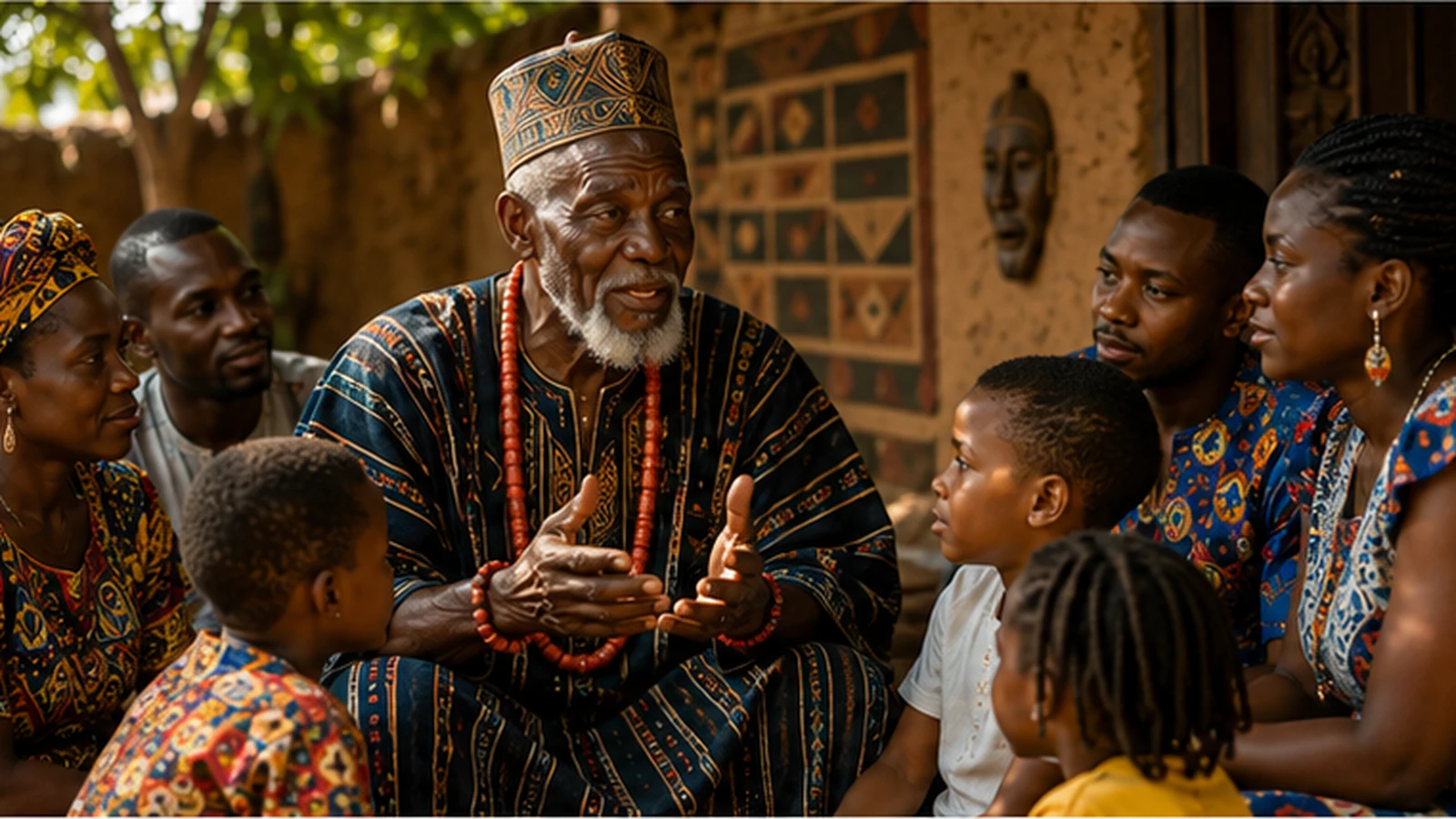
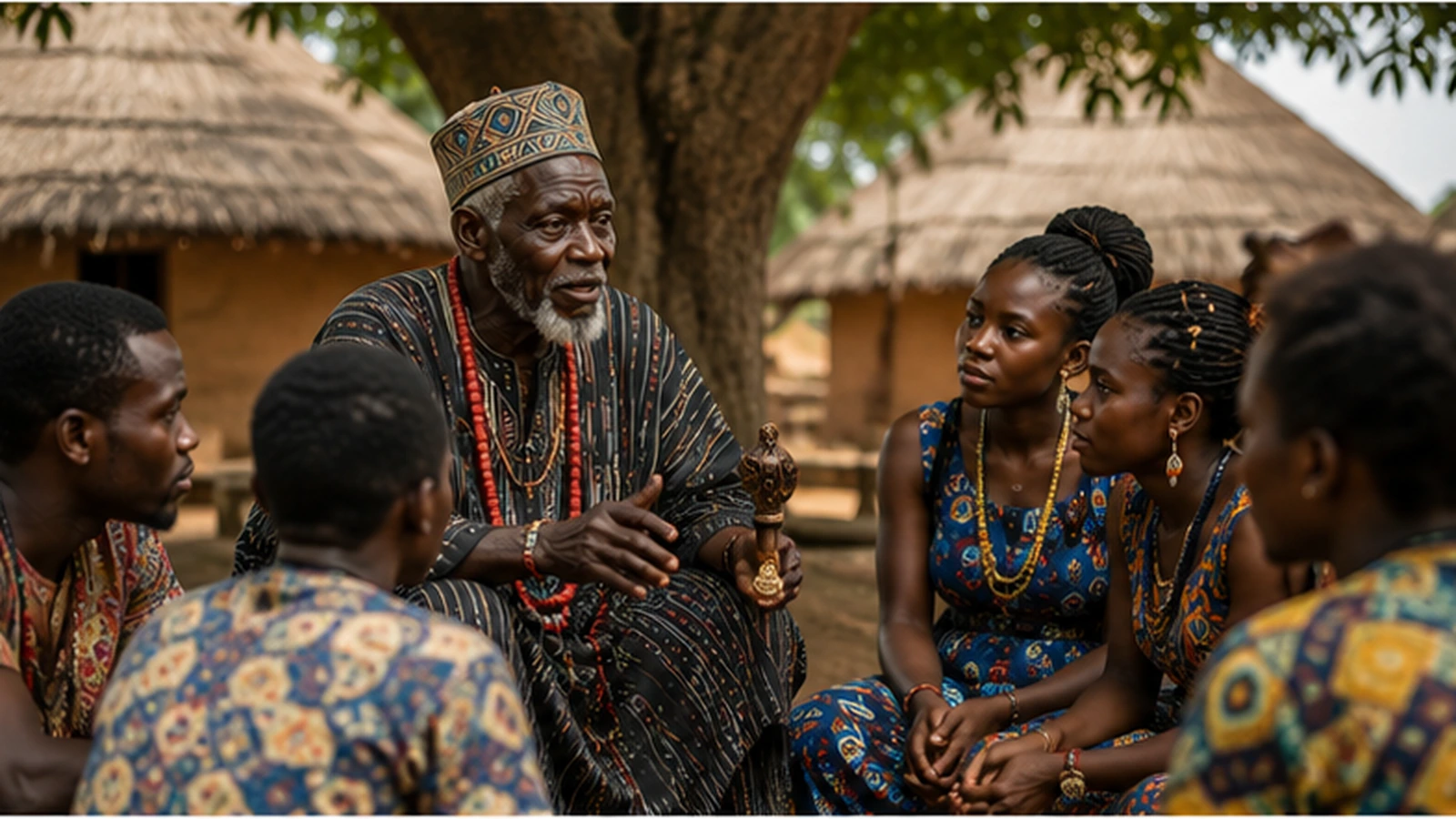
In many communities, parents and elders may bless younger relatives before important transitions.
An elder’s blessing may be sought before:
- Marriage
- A journey
- Starting work
- Moving to another place
- Childbirth
- Taking leadership
- Initiation
- Reconciliation
- Beginning a major project
- Returning home after a long absence
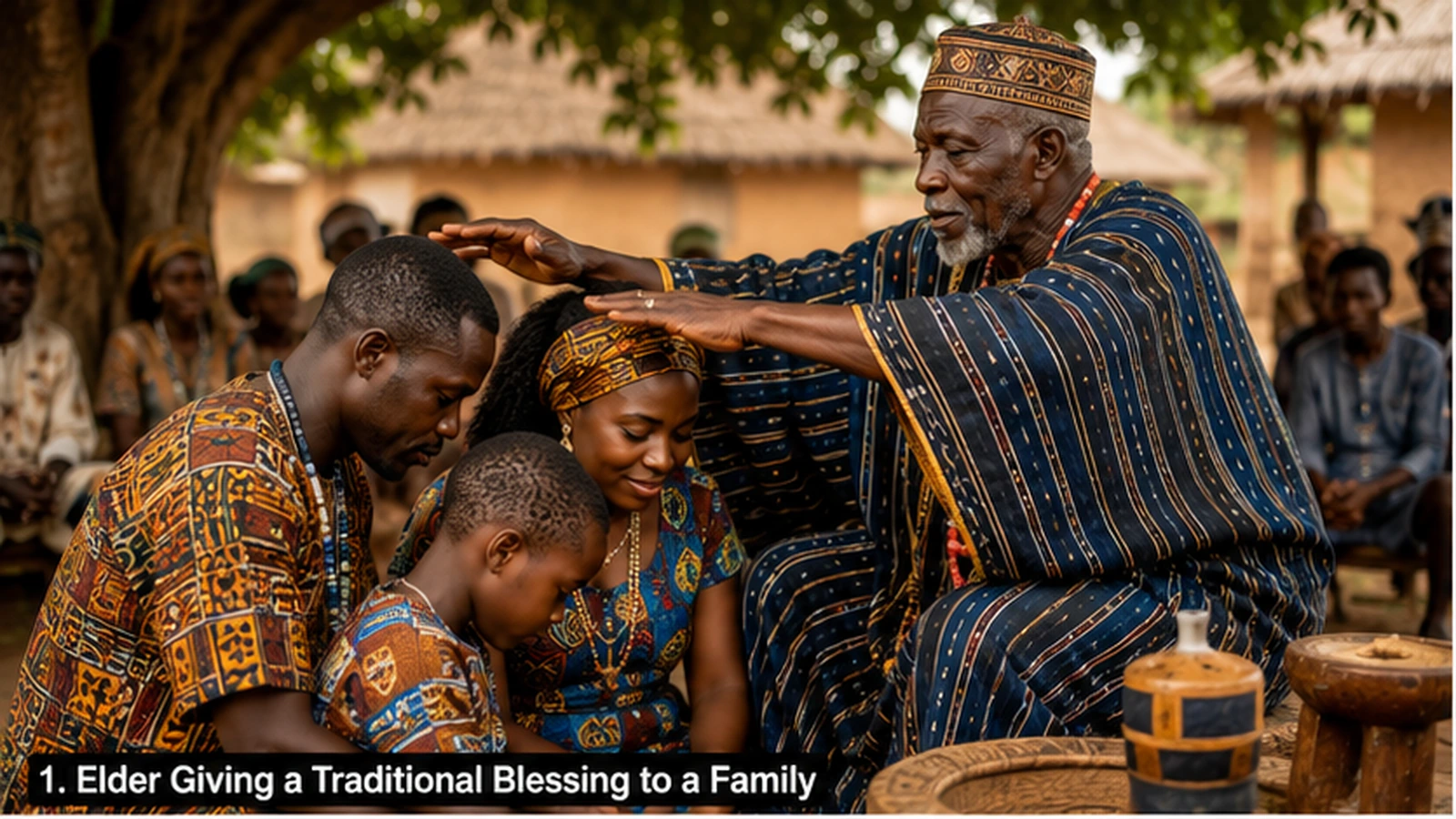
How an Elder May Bless Someone
The blessing might include:
- Spoken prayers
- Advice
- Laying a hand on the person
- Touching the head or shoulders
- Presenting water or food
- Calling family names
- Invoking respected ancestors
- Expressing approval
- Warning the person about responsibilities
The exact form depends on the community.
Why Elders’ Approval Matters
An elder may represent:
- Family continuity
- Experience
- The lineage
- Community authority
- Earlier generations
- Moral expectations
The blessing may communicate, “You go with our support, but you must also remember your responsibilities.”
Seeking Blessings Through Ancestor Reverence
Some African traditions recognize ancestors as continuing members of an extended family or moral community.
People may seek ancestral blessing by:
- Remembering deceased relatives
- Calling their names
- Maintaining graves
- Preserving genealogies
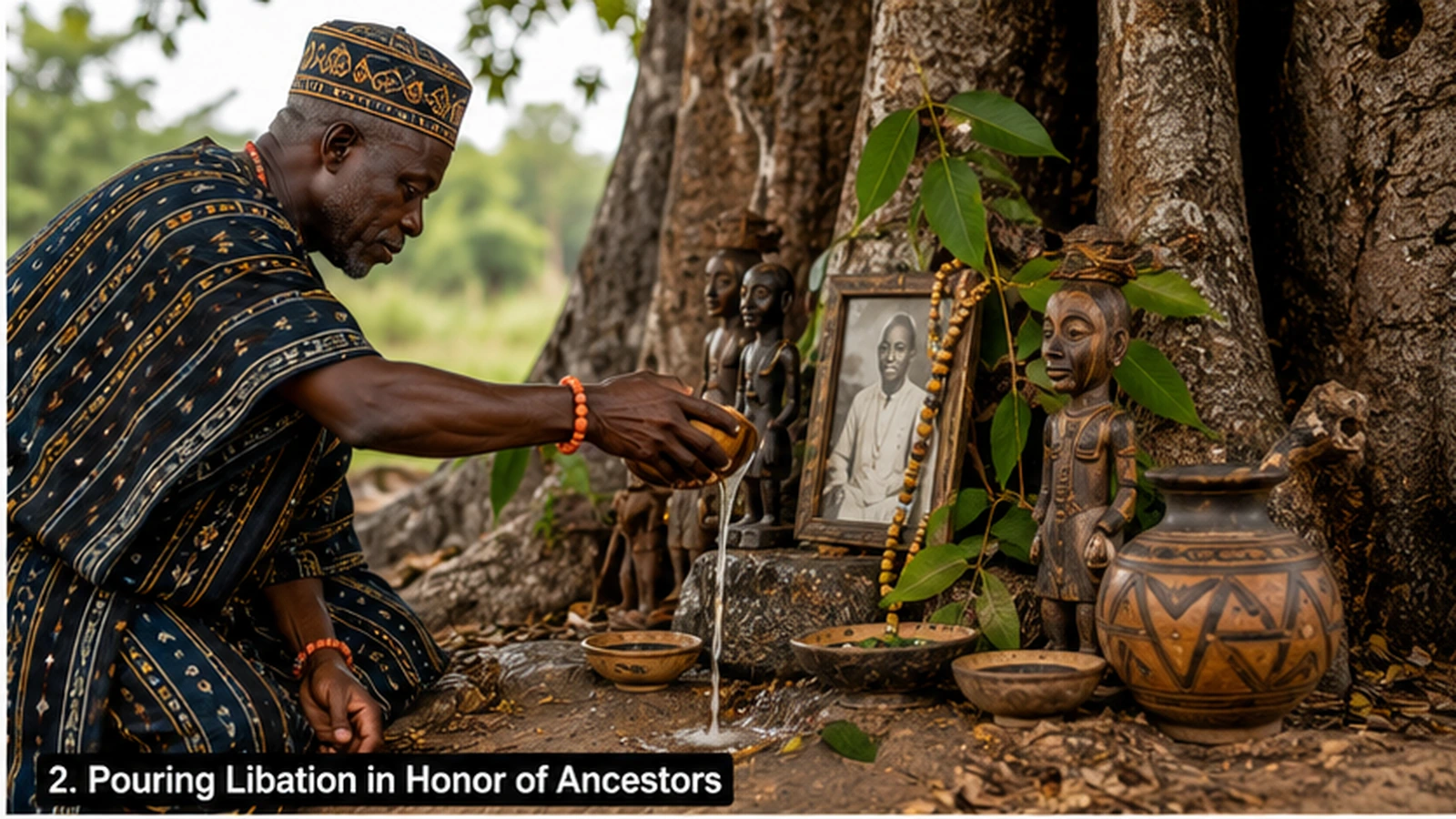
- Pouring libations
- Presenting offerings
- Seeking reconciliation within the family
- Living according to inherited values
- Consulting an authorized specialist
Ancestor-related practices vary greatly and should not be reduced to a single model. Modern scholarship has challenged older assumptions that every African society organizes ancestor relationships in the same way.
Ancestors Are Not Always Gods
Ancestor reverence is not necessarily the same as worship.
A community may recognize ancestors as:
- Senior family members
- Moral witnesses
- Protectors
- Historical links
- Custodians of lineage identity
- Intermediaries
These roles may remain distinct from the role of a supreme creator or divinity.
Blessing Through Ethical Conduct
A person may seek ancestral favor by behaving responsibly rather than merely performing a ceremony.
This may include:
- Caring for children
- Respecting elders
- Protecting inherited land
- Keeping promises
- Settling disputes
- Supporting relatives
- Preserving family history
In this sense, blessing is connected with moral responsibility.
Libation
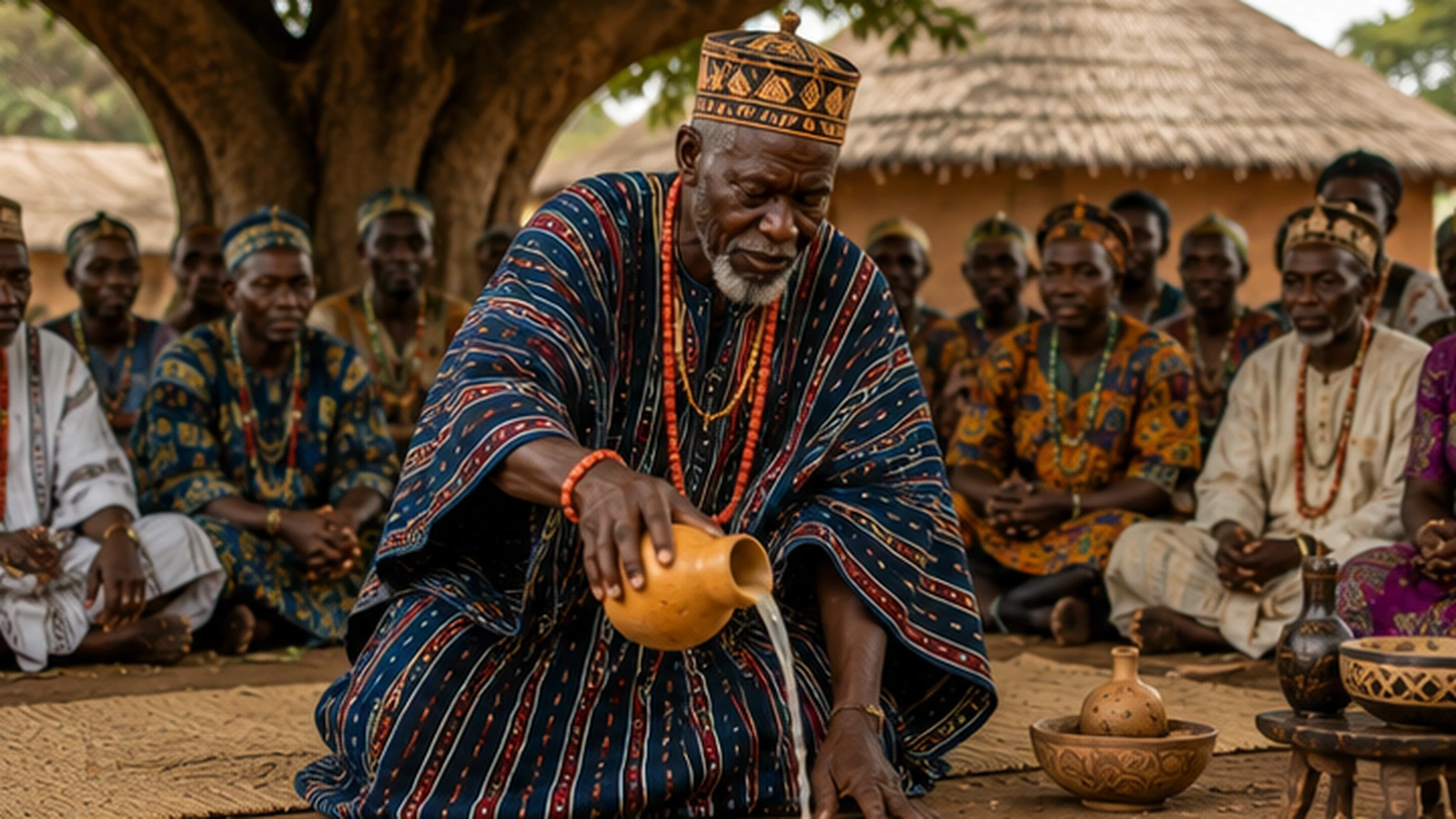
Libation generally refers to the ceremonial pouring of a liquid.
The liquid may be:
- Water
- A traditional beverage
- Wine
- Another culturally approved substance
The words, materials, participants, and meaning vary.
What Libation May Express
Depending on the tradition, libation may communicate:
- Gratitude
- Hospitality
- Remembrance
- Prayer
- Respect
- Welcome
- Recognition of ancestors
- A request for peace
- The opening of a ceremony
- Thanks after success
A documented ritual tradition in Ghana and Togo, for example, describes libation that calls upon shared ancestors during a cross-border community procession, demonstrating how libation may connect memory, identity, and collective relationships.
Libation Is Not a Universal Procedure
There is no single approved African libation prayer.
A responsible description should identify:
- The specific community
- Who may pour it
- Which liquid is appropriate
- Who or what is addressed
- The ceremony’s purpose
Online instructions should not be copied without cultural knowledge or permission.
Offerings and Gifts
Offerings may be presented as expressions of gratitude, respect, obligation, hospitality, remembrance, or prayer.
They may include:
- Food
- Water
- Drink
- Plants
- Cloth
- Beads
- Incense
- Agricultural products
- Culturally meaningful objects
Offerings Are Forms of Relationship
An offering may communicate:
- “We remember you.”
- “We give thanks.”
- “We ask for guidance.”
- “We fulfill an obligation.”
- “We welcome you.”
- “We recognize this sacred relationship.”
It should not automatically be interpreted as payment for a guaranteed result.
Communal Meals
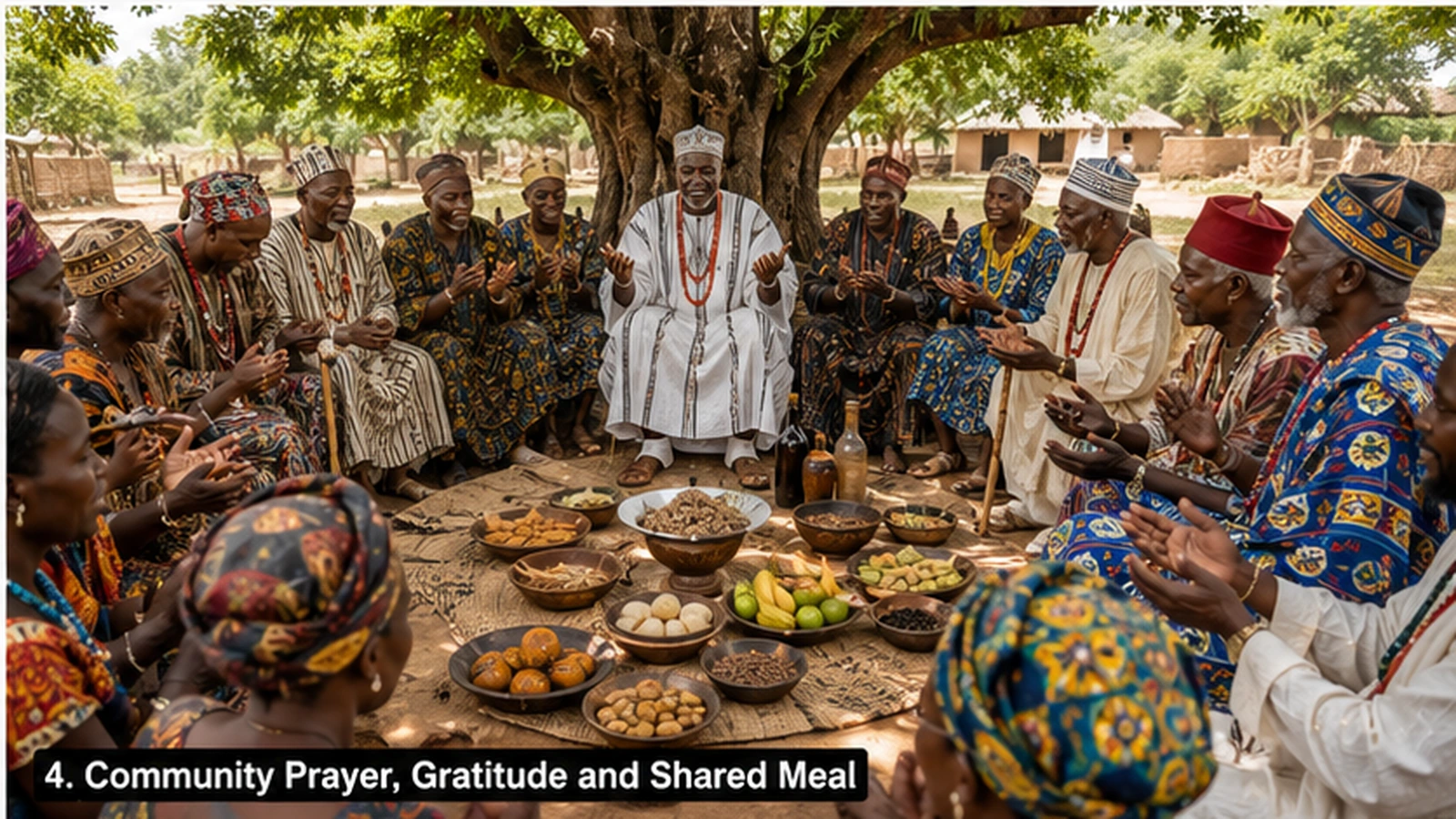
Food presented during a ceremony may later be shared among participants.
The shared meal may strengthen:
- Family unity
- Hospitality
- Gratitude
- Community participation
- Reconciliation
- Equality among participants
Research on traditional religions in modern Africa notes the continued importance of prayer, offerings, sacrifice, festivals, and communal feasts in some communities.
Gratitude as a Source of Blessing
People do not only seek blessings before events. They may also give thanks afterward.
Gratitude may follow:
- Recovery
- Childbirth
- A successful harvest
- Safe travel
- Reconciliation
- Survival during hardship
- Completion of initiation
- A marriage
- Success in work
- Community protection
Thanksgiving practices may include:
- Prayer
- Public testimony
- Gifts
- Shared food
- Music
- Dance
- Support for relatives
- Donations to a shrine, church, mosque, or community institution
Spiritual Lesson
A blessing is not only something to receive; it may create an obligation to give back.
Blessings Through Hospitality
Hospitality can hold moral and spiritual significance.
Welcoming a visitor may involve:
- Water
- Food
- A place to sit
- Greetings
- Introductions
- Protection
- Conversation
- Inclusion in a meal
Hospitality may be considered a blessing because it creates peaceful relationships and recognizes the dignity of another person.
Giving and Receiving
In relational spiritual systems, a person who seeks blessing may also be expected to become a blessing to others through:
- Generosity
- Compassion
- Fairness
- Protection
- Sharing
- Service
Naming Ceremonies
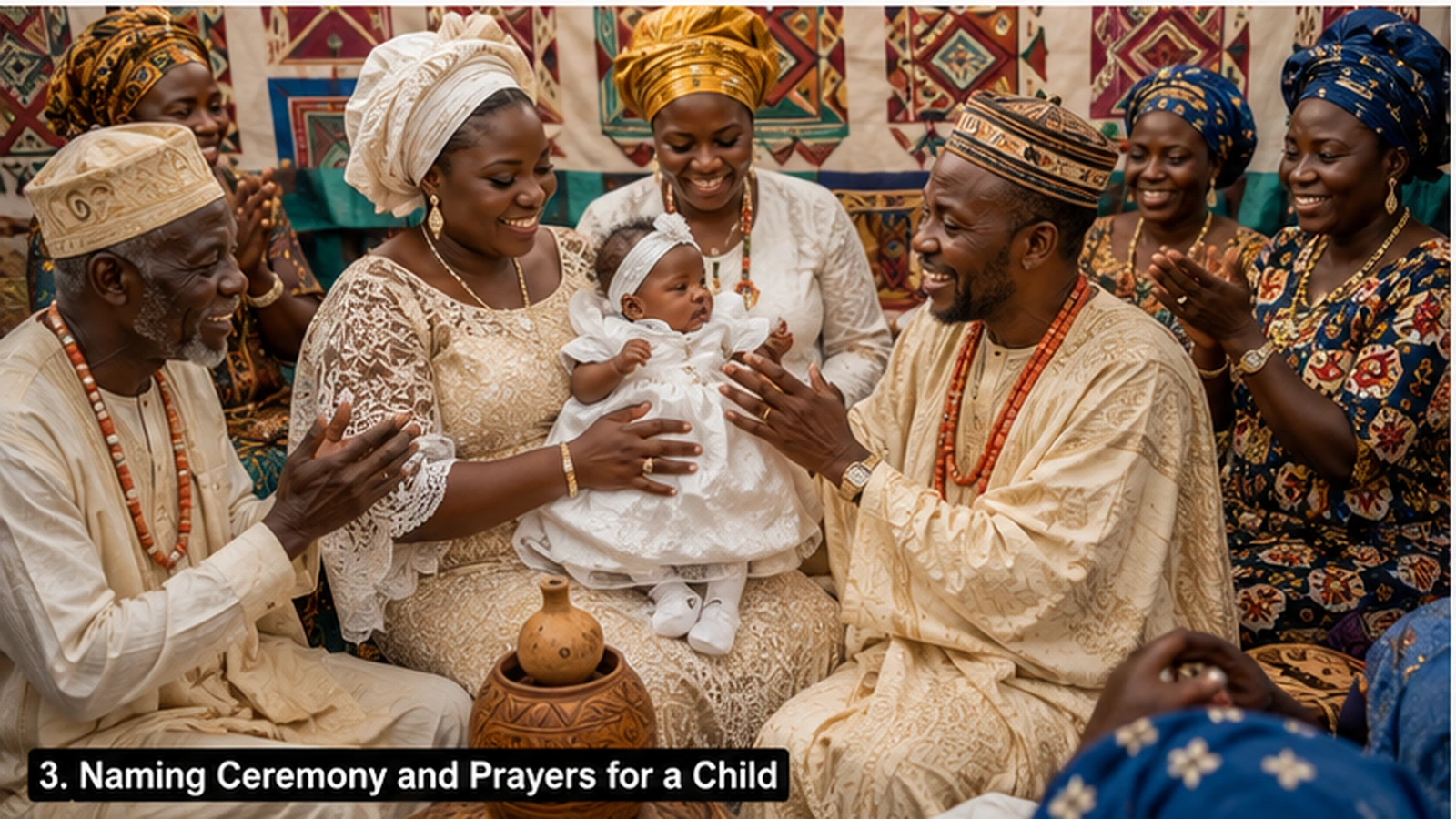
Naming ceremonies can seek blessings for a child’s life, health, character, relationships, and future.
Participants may include:
- Parents
- Grandparents
- Elders
- Religious leaders
- Extended family
- Neighbors
A name may connect a child with:
- Family history
- An ancestor
- Birth circumstances
- Hope
- Faith
- Place
- Community identity
- Moral values
Blessings for the Child
Prayers may seek:
- Long life
- Wisdom
- Good character
- Health
- Protection
- Strong family relationships
- A meaningful future
Naming traditions vary and should not be generalized.
Marriage Blessings
Marriage is often understood as a relationship involving families and communities rather than only two individuals.
Blessings may be sought through:
- Family introductions
- Elders’ approval
- Prayer
- Gift exchange
- Advice
- Shared meals
- Public promises
- Reconciliation of family concerns
- Religious ceremonies
What Marriage Blessings May Seek
They may ask for:
- Peace
- Patience
- Mutual respect
- Children
- Economic stability
- Family unity
- Faithfulness
- Wisdom
- Protection
A blessing should never be used to pressure someone into an unwanted marriage or excuse abuse within a relationship.
Initiation and Rites of Passage
Blessings may accompany transitions from one social stage to another.
These transitions may include:
- Childhood to adulthood
- Entry into an association
- Religious initiation
- Acceptance of leadership
- Professional apprenticeship
- Marriage
- Parenthood
Elders or specialists may bless participants while also teaching responsibilities.
Blessing and Accountability
A rite of passage does not simply grant status.
It may require the participant to demonstrate:
- Discipline
- Ethical behavior
- Knowledge
- Service
- Respect
- Responsibility
Blessings Before Travel or Work
A person may seek family or spiritual blessing before:
- Traveling
- Migrating
- Beginning employment
- Starting a business
- Farming
- Hunting
- Fishing
- Entering public office
- Studying far from home
The blessing may ask for safety, wisdom, favorable relationships, and a successful return.
Practical Action Still Matters
Prayer for safe travel should be accompanied by:
- Responsible planning
- Safe transport
- Communication
- Proper documents
- Medical preparation
- Awareness of risks
Spiritual practice does not replace practical responsibility.
Sacred Places
Some blessings are sought at places associated with spiritual, historical, ancestral, or environmental significance.
These may include:
- Shrines
- Sacred groves
- Rivers
- Mountains
- Springs
- Caves
- Burial grounds
- Family compounds
- Churches
- Mosques
A place may be sacred because of:
- An origin story
- A divinity
- An ancestor
- A historical event
- Healing traditions
- Community memory
- Long religious use
Access may be restricted, and visitors should follow community rules.
Music and Dance
Music and dance may help communities express prayer, gratitude, celebration, mourning, and spiritual participation.
They may:
- Open a ceremony
- Invite participation
- Preserve sacred language
- Praise a creator or divinity
- Honor ancestors
- Celebrate answered prayer
- Mark a transition
- Strengthen communal unity
Music and dance should not be treated as decoration when they carry religious meaning.
Blessings Through Reconciliation
In some communities, a person may not seek blessing while knowingly maintaining serious conflict or neglecting an obligation.
Reconciliation may involve:
- Acknowledging harm
- Listening to the affected person
- Apologizing
- Returning property
- Making compensation
- Involving family or elders
- Sharing food
- Offering prayer
Blessing and Restored Relationships
Peace within the family or community may itself be understood as a blessing.
This does not mean every conflict must be handled privately. Violence, abuse, theft, exploitation, and other crimes may require legal and safety intervention.
Blessings Through Moral Living
Many traditions connect wellbeing with conduct.
A person may be encouraged to:
- Tell the truth
- Honor agreements
- Care for family
- Respect life
- Protect community property
- Avoid exploitation
- Practice hospitality
- Support vulnerable people
- Act with humility
Blessing Is Not a Transaction
Ethical conduct should not be treated as a technique that forces spiritual powers to provide wealth or success.
Good conduct has value because it supports human dignity and community wellbeing.
Consulting Spiritual Specialists
Some communities consult trained specialists when seeking guidance or blessing.
These may include:
- Priests or priestesses
- Diviners
- Healers
- Spirit mediums
- Shrine custodians
- Initiated elders
- Religious teachers
Indigenous religions in West Africa may include professional religious specialists, ancestor rites, healing, initiation, praise traditions, and mask institutions.
Training and Accountability
A responsible specialist may be expected to have:
- Recognized training
- Community authorization
- Ethical rules
- Knowledge of tradition
- Accountability
- Clear limits
Warning signs of exploitation include:
- Guaranteed results
- Threats
- Demands for increasingly large payments
- Instructions to avoid medical care
- Pressure to harm another person
- Claims that questioning is forbidden
- Manipulation based on fear
Divination and Blessing
Divination may be used in some traditions to clarify a situation before a prayer, offering, or decision.
It may ask:
- What obligation requires attention?
- Which relationship needs repair?
- What action is appropriate?
- What is contributing to a problem?
- Which ritual or social response is recommended?
Divination is not one universal African practice, and it should not be reduced to fortune-telling.
Divination Cannot Guarantee Outcomes
A consultation should not be used as proof that:
- A business must succeed
- A particular person must marry someone
- An illness will disappear
- A person is guilty of wrongdoing
- Financial profit is certain
Christianity, Islam, and Cultural Blessings
Many African families seek blessings through Christianity or Islam while retaining cultural practices involving elders, naming, hospitality, marriage, land, and family memory.
A Christian family may request:
- Pastoral prayer
- A church blessing
- Baptismal prayers
- Marriage benediction
A Muslim family may seek:
- Duʿāʾ
- Qur’anic recitation
- Advice from a religious teacher
- Blessing connected with marriage, childbirth, or travel
Religious interaction in Africa has included coexistence, adaptation, resistance, and reinterpretation rather than one simple process of replacement.
Blessing Ceremonies in Modern Life
Traditional forms of blessing continue to adapt.
Modern families may seek blessings through:
- Video calls with elders
- Family WhatsApp groups
- Urban religious gatherings
- Travel to ancestral homes
- Combined cultural and church ceremonies
- Recorded prayers
- Diaspora family reunions
- Digital memorials
Adaptation does not automatically make a practice inauthentic.
What Blessings Should Never Be Used to Justify
Spiritual language must never be used to justify:
- Abuse
- Violence
- Forced marriage
- Medical neglect
- Financial fraud
- Harmful accusations
- Coercion
- Exploitation
- Discrimination
- Isolation from support
Traditional guidance does not replace qualified medical, legal, financial, mental-health, or emergency assistance.
Common Misconceptions
Misconception 1: Africa Has One Blessing Ritual
Reality: Blessing practices differ among cultures, religions, families, and regions.
Misconception 2: Blessings Are Always Requested From Ancestors
Reality: Some traditions emphasize a supreme creator, divinities, God within Christianity or Islam, elders, or other authorities.
Misconception 3: Every Blessing Requires an Offering
Reality: Blessings may be expressed through prayer, advice, touch, song, gratitude, or reconciliation.
Misconception 4: Libation Is the Same Everywhere
Reality: Materials, words, participants, and purposes vary.
Misconception 5: A Spiritual Blessing Guarantees Success
Reality: No ethical practice can guarantee wealth, love, healing, protection, or business results.
Misconception 6: Only Priests Can Give Blessings
Reality: Depending on the setting, blessings may be given by parents, elders, religious specialists, family heads, or community leaders.
Misconception 7: Traditional Blessings Belong Only to the Past
Reality: Families continue to adapt blessing practices in cities, churches, mosques, homes, and diaspora communities.
Misconception 8: Blessing Rituals Replace Practical Action
Reality: Spiritual support should be combined with responsible planning, healthcare, safety, and ethical conduct.
How to Learn About African Blessing Traditions Respectfully
Step 1: Identify the Specific Community
Do not search only for “African blessing ritual.”
Identify:
- People
- Language
- Region
- Religious tradition
- Historical period
Step 2: Use Reliable Sources
Prioritize:
- African scholars
- Community historians
- Religious practitioners
- Cultural institutions
- University research
- Oral-history projects
Step 3: Ask Permission
Do not record or reproduce private prayers, ceremonies, or sacred names without consent.
Step 4: Distinguish Public and Restricted Practice
A public family blessing is not the same as an initiated shrine ritual.
Step 5: Avoid Guaranteed Claims
A blessing is an expression of faith, hope, responsibility, and relationship—not a guaranteed contract.
Step 6: Respect Religious Identity
Do not assume that participation in a cultural ceremony defines a person’s entire religious identity.
Key Takeaways
- Traditional African blessing practices are diverse and culturally specific.
- Blessings may seek protection, wisdom, fertility, peace, healing, or community wellbeing.
- Prayer is one of the most common methods.
- Parents and elders may bless younger relatives during major transitions.
- Some traditions seek ancestral support through remembrance and ethical conduct.
- Libation may express gratitude, prayer, hospitality, or ancestral recognition.
- Offerings should not be understood as payments for guaranteed results.
- Naming, marriage, initiation, travel, and work may all involve blessings.
- Sacred places, music, dance, and shared meals can form part of blessing ceremonies.
- Reconciliation and moral conduct may be considered sources of blessing.
- Christianity, Islam, and cultural traditions often interact in modern practice.
- Spiritual guidance must not replace professional care or justify harm.
People Also Ask
How do traditional African communities seek blessings?
They may use prayer, elders’ words, ancestor remembrance, libation, offerings, sacred places, communal ceremonies, reconciliation, and ethical living.
Who can give a traditional African blessing?
Depending on the community, blessings may be given by parents, elders, priests, healers, family heads, religious teachers, or other recognized specialists.
What is the role of ancestors in blessings?
In some traditions, ancestors are remembered as moral guardians, family elders, protectors, or intermediaries. Their role varies considerably.
Why is libation poured?
Libation may express prayer, gratitude, hospitality, remembrance, or recognition of ancestors and spiritual authority.
Are offerings required to receive blessings?
Not in every tradition. Prayer, advice, reconciliation, gratitude, and ethical behavior may also be important.
Can a blessing guarantee wealth or success?
No. Responsible spiritual practice should never promise guaranteed results.
Frequently Asked Questions
1. What is a traditional African blessing?
It is a culturally specific expression of prayer, goodwill, protection, approval, or hope for wellbeing.
2. Do all African cultures seek blessings from ancestors?
No. Some emphasize ancestors, while others direct prayers primarily to a creator, divinity, God, or another religious authority.
Related Cultural Guides
For more context, continue with harvest celebrations across cultures, libation ceremonies in African communities, family blessings across generations and the history of blessing ceremonies.
Related Family Blessing Context
Readers comparing blessing customs may also want the focused guide to fertility blessings and cultural family-continuity practices.
Frequently Asked Questions
What should readers know first about Traditional African ways of seeking blessings?
Traditional African ways of seeking blessings: Explore how diverse African communities traditionally seek blessings through prayer, elders, ancestors, gratitu
What causes Traditional African ways of seeking blessings?
Explore how diverse African communities traditionally seek blessings through prayer, elders, ancestors, gratitude, offerings, sacred places, ethical living, and communal ceremonies. The safest next step is to compare the signs, prepare clear details, and reque
How does Traditional African ways of seeking blessings work?
Explore how diverse African communities traditionally seek blessings through prayer, elders, ancestors, gratitude, offerings, sacred places, ethical living, and communal ceremonies. The safest next step is to compare the signs, prepare clear details, and reque
Is it possible to get private guidance for Traditional African ways of seeking blessings?
Explore how diverse African communities traditionally seek blessings through prayer, elders, ancestors, gratitude, offerings, sacred places, ethical living, and communal ceremonies. The safest next step is to compare the signs, prepare clear details, and reque
How long does Traditional African ways of seeking blessings take to understand?
Explore how diverse African communities traditionally seek blessings through prayer, elders, ancestors, gratitude, offerings, sacred places, ethical living, and communal ceremonies. The safest next step is to compare the signs, prepare clear details, and reque
Can Traditional African ways of seeking blessings affect relationships, family, work, or personal peace?
Explore how diverse African communities traditionally seek blessings through prayer, elders, ancestors, gratitude, offerings, sacred places, ethical living, and communal ceremonies. The safest next step is to compare the signs, prepare clear details, and reque
Why do people seek spiritual guidance for Traditional African ways of seeking blessings?
Explore how diverse African communities traditionally seek blessings through prayer, elders, ancestors, gratitude, offerings, sacred places, ethical living, and communal ceremonies. The safest next step is to compare the signs, prepare clear details, and reque
What signs should someone notice before asking about Traditional African ways of seeking blessings?
Explore how diverse African communities traditionally seek blessings through prayer, elders, ancestors, gratitude, offerings, sacred places, ethical living, and communal ceremonies. The safest next step is to compare the signs, prepare clear details, and reque
When should someone contact a private spiritual guide?
Explore how diverse African communities traditionally seek blessings through prayer, elders, ancestors, gratitude, offerings, sacred places, ethical living, and communal ceremonies. The safest next step is to compare the signs, prepare clear details, and reque
Article Information
- Publisher
- Ancestral Temple
- Editor
- Ancestral Temple
- Last updated
- Jul 26, 2026
- Last reviewed
- Jul 13, 2026
- Content version
- 9c02e395b2
This educational article should be read as cultural and spiritual information, not as medical, legal, financial, or emergency advice.
Helpful Related Guidance
Explore This Topic
Ancestor Reverence In African Cultures · Traditional African Ways Of Seeking Blessings
Related Topic Cluster
Traditional African Ways Of Seeking Blessings
Complete Guide Understanding African Spiritual Traditions: A Historical IntroductionAbout the Author
 Ancestral Temple
Spiritual guide and practitioner with decades of experience in ancestral wisdom, rituals, and divine guidance.
Related Posts
View All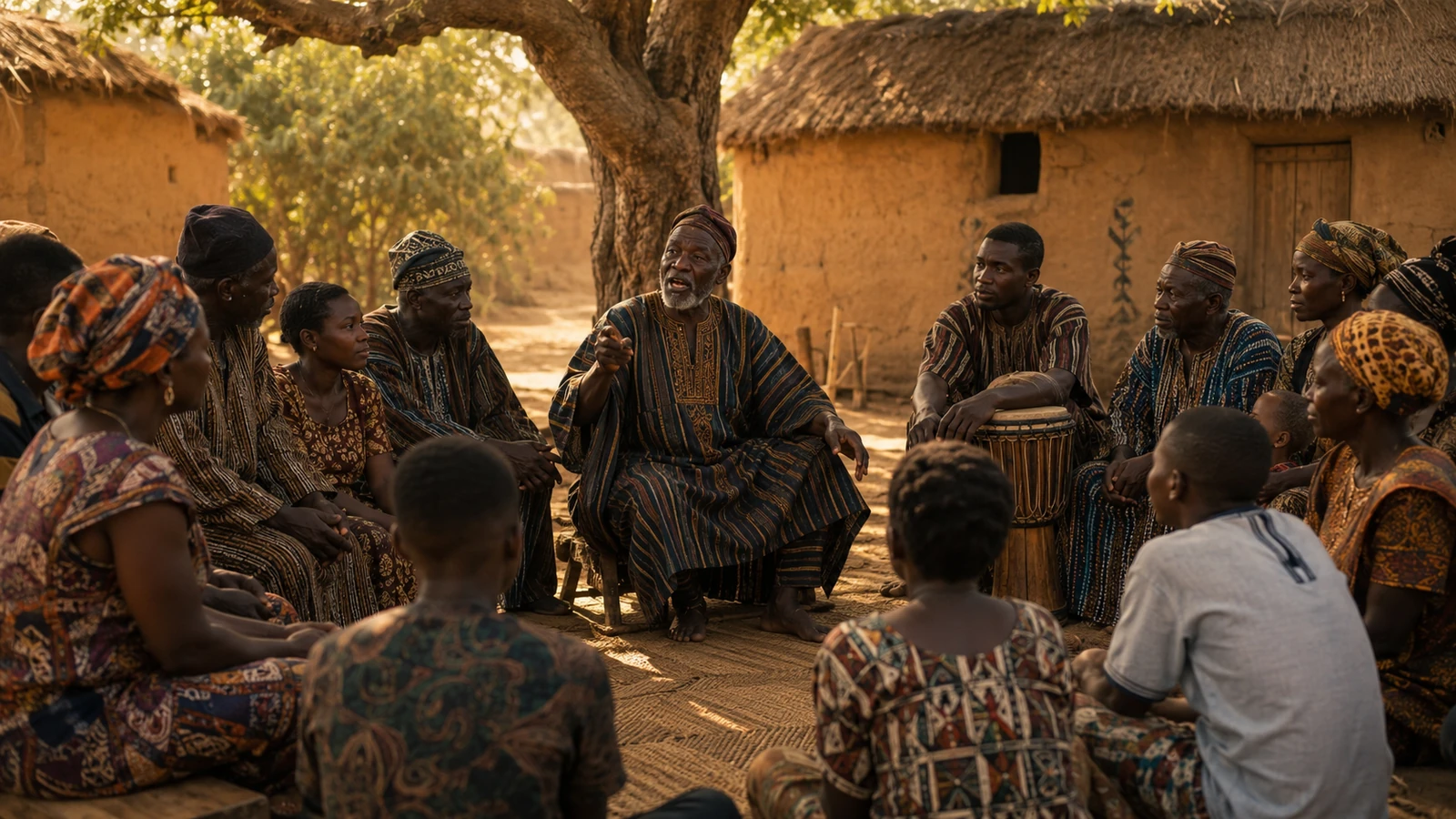

Leave a Comment
We'd love to hear your thoughts.
This was comprehensive without suggesting that every African community seeks blessings in the same way.
Are there books that document traditional blessing prayers in specific African languages?
The article handled Christianity, Islam, and cultural traditions respectfully.
I would like to read more about prayers offered before farming and harvesting.
The section about receiving advice as a form of blessing was very relatable.
Strong introduction. Blessing appears to be as much about relationships and responsibility as personal benefit.
The misconceptions section answered several things I had seen incorrectly stated online.
The article stayed neutral and did not claim that spiritual results were scientifically guaranteed.
The consent and privacy reminders are important when people record family ceremonies.
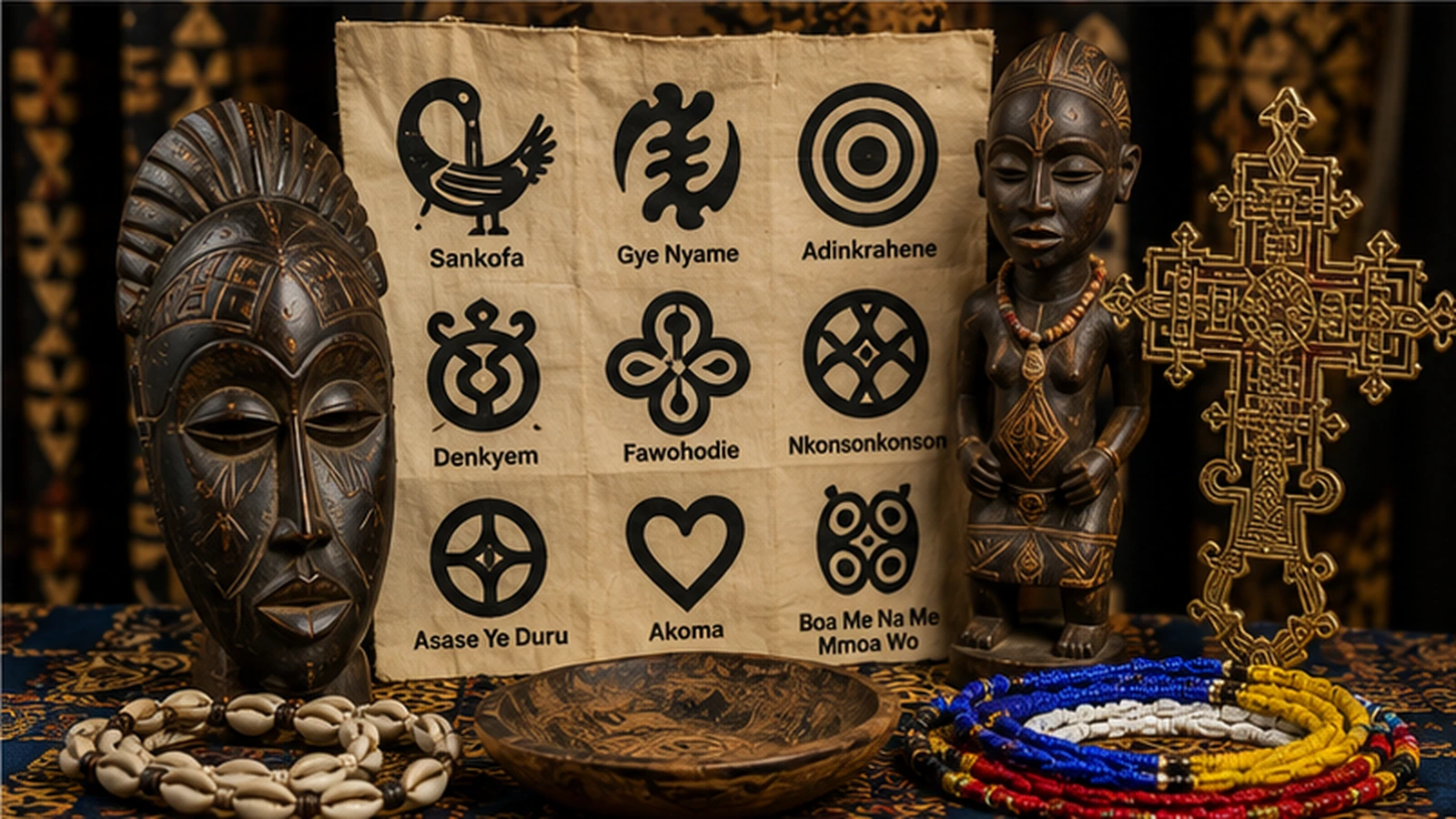
I appreciated that the article did not present Adinkra, Yoruba, Shona, or other traditions as interchangeable.
More quotations from African elders and scholars would be useful in future articles.
The communal meal section reminded me how food can bring families together after ceremonies.
The biggest lesson for me was that a person seeking blessing may also be expected to bless others.
This was educational without giving instructions for restricted ceremonies.
The blessings associated with naming, marriage, and initiation deserve separate articles.
I liked the point that prayer should be combined with practical responsibility.
Could you write next about the meaning of libation in different African cultures?
The short sections made it readable on mobile.
The article was respectful and easy to follow despite covering many different practices.
This is a good introduction for readers studying African spirituality and community traditions.
Thank you for warning readers about spiritual practitioners who guarantee results or use fear.
It is interesting how modern families now receive blessings from elders through video calls.
The hospitality section was one of my favorites because it made spirituality feel connected to everyday life.
A detailed article comparing blessing traditions from specific communities would be useful.
The glossary will help readers understand the differences between prayer, libation, and offerings.
The explanation of offerings as relationship rather than payment was very clear.
The idea that ethical behavior can be a way of honoring ancestors was meaningful.
I liked the connection between reconciliation and blessing.
This article was detailed without making traditional practices sound strange or mysterious.
The section on marriage blessings was useful and included an important warning about consent.
I would like to learn more about the blessings given during naming ceremonies.
The discussion of prayer showed how different spiritual authorities may be recognized in different traditions.
The article explained why blessings are often about the whole family rather than only one individual.
The warning against copying libation instructions from the internet was necessary.
I appreciated the section about cultural blessings existing alongside Islam and Christianity.
The health and safety cautions were responsible and did not disrespect the traditions.
The part about gratitude creating an obligation to help others stood out to me.
A full article about traditional African prayers would be interesting.
I had assumed all traditional blessings required offerings. This article corrected that idea.
The explanation of libation was helpful because it showed that the meaning depends on the community.
Very balanced article. It respected spirituality without promising guaranteed results.
I appreciated the clear distinction between ancestral blessing and worship.
The section about elders blessing young people before travel reminded me of family traditions from my childhood.
The reminder that there is no single African blessing ritual was very important.
I liked that the article explained blessings as responsibility and community support, not only supernatural favors.