
Libation Ceremony: Meaning, History and African Cultural Traditions
Pillar Article

Quick Summary
Discover how libation ceremonies express prayer, remembrance, gratitude, hospitality, ancestral connection, and community identity across diverse African cultures.
Libation ceremonies in African communities are culturally specific practices in which a liquid is poured, sprinkled, presented, or shared as part of prayer, remembrance, thanksgiving, hospitality, spiritual communication, or public ceremony.
There is no single African libation ritual. The words spoken, liquid used, spiritual authorities addressed, person officiating, and purpose of the ceremony differ among communities.
In some traditions, libation is addressed to a supreme creator, divinities, ancestors, the earth, or other recognized spiritual powers. In other settings, it may emphasize family memory, political authority, communal unity, hospitality, or respect for those who came before.
Among the Akan of Ghana, for example, libation can function as a highly structured form of sacred prayer and ceremonial speech. Research on Akan libations shows that the spoken performance may address spiritual beings while also communicating moral, political, and social messages to the living people present.
Libation should therefore not be reduced to “pouring alcohol for the dead.” It is often a complex combination of language, gesture, memory, religious belief, community participation, and ethical responsibility.
Key Points
A libation ceremony generally involves pouring or presenting a liquid during a culturally recognized act of prayer, remembrance, gratitude, or communication.
Depending on the community, libation may:
- Open a public ceremony
- Ask for peace or protection
- Honor ancestors
- Recognize a creator or divinity
- Welcome guests
- Give thanks after success
- Bless a marriage or naming ceremony
- Mark a funeral or memorial
- Recognize traditional authority
- Connect participants with family history
- Seek reconciliation
- Affirm community identity
Liquids may include water, palm wine, beer, wine, honey-based beverages, or other locally appropriate substances.
Not every African community practices libation, and those that do may understand it in different ways.
What Is a Libation Ceremony?
A libation ceremony is a ritual act in which liquid is poured, sprinkled, offered, or presented while words of prayer, praise, remembrance, gratitude, or invocation are spoken.
The liquid may be poured:
- Onto the earth
- Near a shrine
- At a grave or memorial place
- Onto a ceremonial object
- Within a family compound
- At the entrance to a gathering
- In a designated sacred location
Clear Definition
A libation ceremony is a culturally structured act of pouring or presenting liquid as part of prayer, remembrance, hospitality, thanksgiving, or spiritual communication.
Plain-Language Meaning
Libation joins an action with spoken meaning.
The liquid is not the entire ceremony. The words, identity of the officiant, location, audience, occasion, and cultural rules all help determine what the act means.
Libation Is Not One Universal African Tradition
The expression “African libation” can be useful as a broad category, but it may also hide important differences.
Questions that must be asked include:
- Which community performs the ceremony?
- What is the local name for it?
- Who is permitted to officiate?
- Which liquid is used?
- Who or what is addressed?
- Is the ceremony public or restricted?
- What event does it mark?
- What ethical responsibilities accompany it?
Akan, Ga, Anlo-Ewe, Obang, Okoyong, Kenyan, South African, and other traditions should not be treated as interchangeable.
Key Point
Similar physical actions do not always carry identical spiritual meanings.
Pouring water in one tradition may express peace or welcome. Pouring a traditional beverage elsewhere may invite ancestral participation, give thanks, mark leadership, or open a festival.
Why Liquid Is Used
Liquids possess qualities that can make them meaningful within ritual life.
They:
- Flow
- Refresh
- Clean
- Nourish
- Enter the earth
- Can be shared
- Are necessary for life
- Can mark hospitality
- Can carry agricultural or social importance
Water may symbolize life, peace, purity, welcome, or renewal in one setting. A fermented beverage may represent hospitality, agricultural labor, shared community life, ancestral memory, or celebration in another.
These interpretations must come from the community using the material rather than from a universal symbolic chart.
Libation as Prayer
Libation is often best understood as a form of enacted prayer.
The officiant may speak while pouring the liquid, combining:
- Invocation
- Praise
- Petition
- Thanksgiving
- Historical remembrance
- Moral instruction
- Blessing
- Community representation
Among the Akan, scholars have described libation as one of the most sacred forms of specialized prayer. The performance may address the supreme being, earth, divinities, ancestors, or other spiritual authorities recognized within the occasion.
Prayer Through Word and Action
The ceremony communicates through both language and movement.
The spoken words may identify:
- The spiritual authority being addressed
- The purpose of the gathering
- The people represented
- The history of the occasion
- The blessing requested
- The problem requiring attention
The pouring action gives physical form to the prayer.
Who May Be Addressed During Libation?
The beings or authorities addressed vary by tradition.
They may include:
- A supreme creator
- Divinities
- Ancestors
- Territorial spirits
- Family founders
- Royal ancestors
- The earth
- Sacred natural powers
- God within a culturally adapted Christian setting
It is inaccurate to assume that every libation is directed only to ancestors.
Some traditions recognize an order in which prayer begins with a supreme being before acknowledging other spiritual authorities. Others focus on family ancestors, local divinities, sacred land, or the purpose of a particular event.
Ancestors and Divinities Are Not Identical
Ancestors are generally deceased people who continue to hold recognized family, moral, political, or spiritual significance.
Divinities or spirits may possess different origins, powers, offices, and relationships with worshippers.
Libation prayers may recognize several categories without treating them as the same.
Libation and Ancestor Reverence
Libation is closely associated with ancestor remembrance in many—but not all—African communities.
It may communicate:
- “We remember those who came before us.”
- “We recognize the foundation they established.”
- “We invite their moral presence.”
- “We ask for peace within the family.”
- “We acknowledge inherited obligations.”
- “We request guidance or protection.”
A Cambridge overview of pre-contact African religion notes that descendants in some traditions hold the responsibility of offering sacrifices and pouring libations at family shrines.
Is Libation Ancestor Worship?
Not necessarily.
The term ancestor worship can imply that ancestors are treated as gods. In many communities, libation expresses remembrance, respect, family continuity, gratitude, or consultation rather than worship in that sense.
A more accurate explanation identifies what the community believes and does instead of imposing a general label.
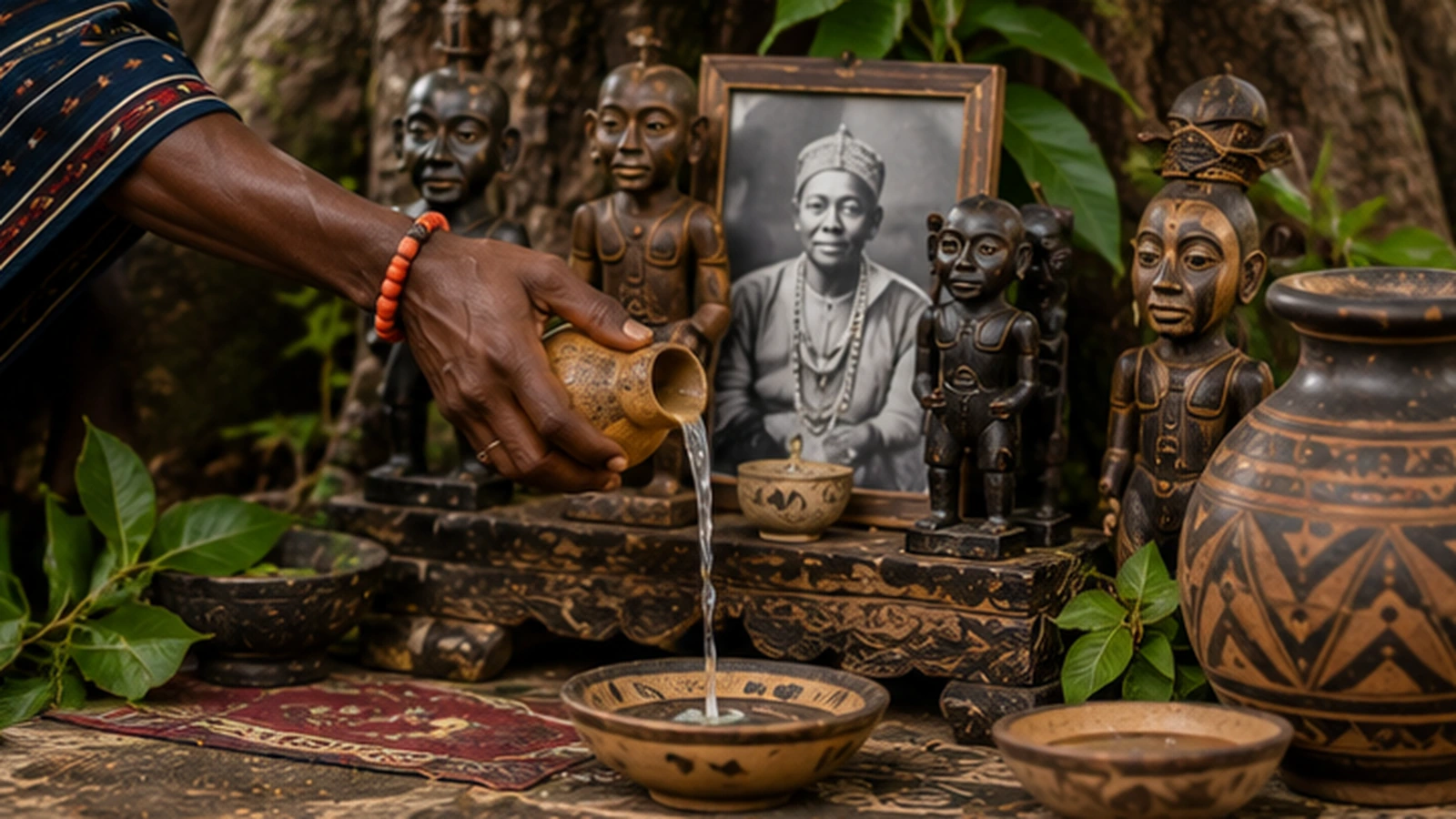
Libation as Ceremonial Speech
A libation is often a carefully organized verbal performance.
It may include:
- Opening greetings
- Recognition of the occasion
- Address to spiritual authorities
- Naming of ancestors or community founders
- Praise or thanksgiving
- Statement of the community’s concern
- Request for peace, protection, or guidance
- Closing words or communal response
This structure is not universal, and the exact wording may be restricted or community-specific.
Indirect Communication
Research on Akan libation describes how the words may speak to ancestors or divinities while simultaneously communicating with the living audience.
The officiant may use the ceremony to:
- Praise responsible people
- Remind leaders of their duties
- Encourage unity
- Address tension carefully
- Recall historical obligations
- Correct misconduct indirectly
In this way, libation may act as both prayer and public moral speech.
Who Is Permitted to Pour Libation?
The appropriate officiant varies.
It may be:
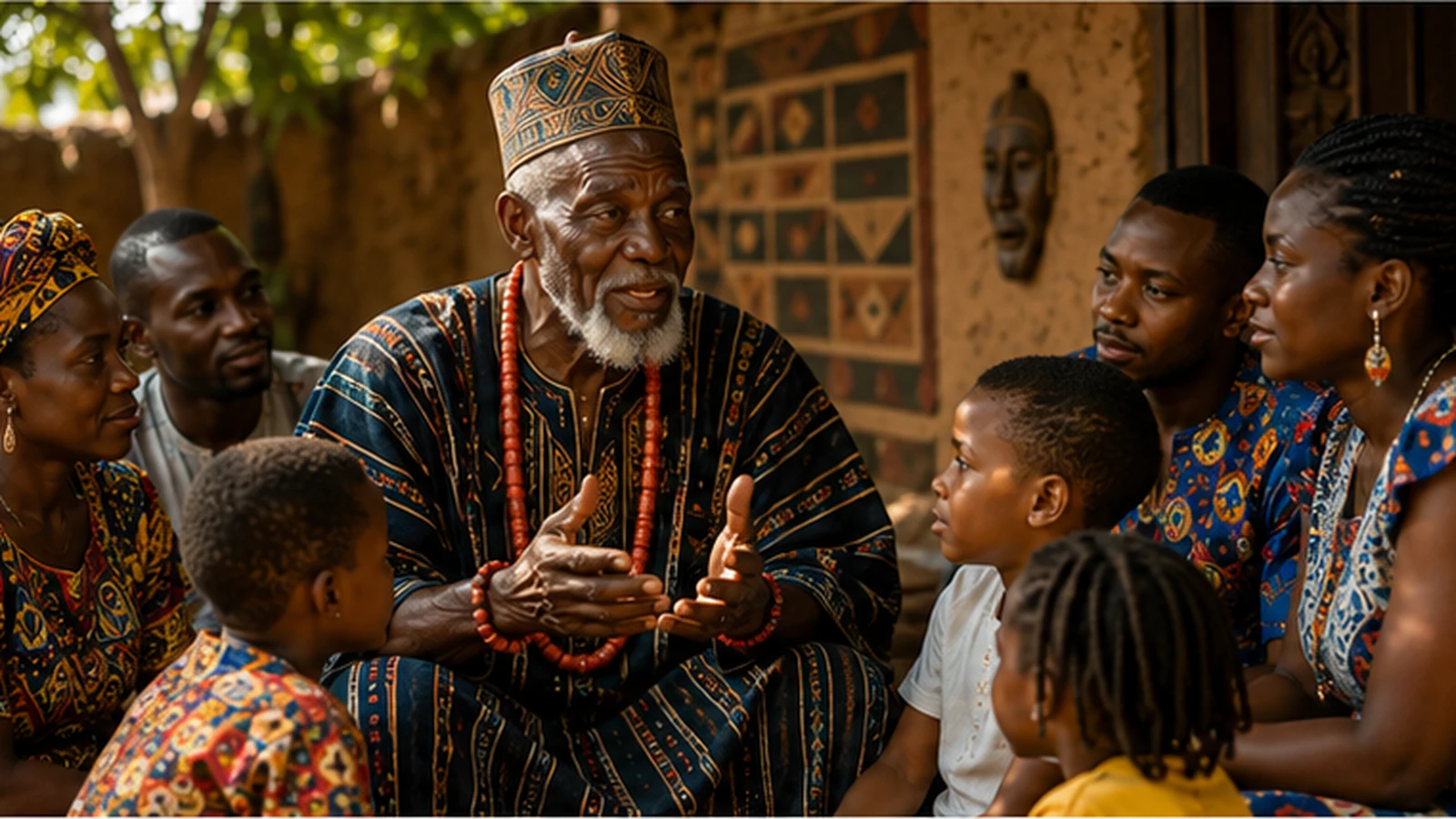
- A family elder
- A lineage head
- A chief
- A priest or priestess
- A shrine custodian
- A titled official
- An initiated specialist
- A designated family representative
- Another person authorized for the occasion
Age alone does not always give a person authority to perform the ceremony.
Authorization may depend on:
- Family position
- Gender roles
- Initiation
- Religious office
- Knowledge of the prayer
- Relationship to the event
- Community recognition
- Seniority
Why the Officiant Matters
The officiant may speak on behalf of more people than themselves.
The person may represent:
- A family
- A lineage
- A traditional institution
- A village
- A royal court
- A religious community
- The participants gathered
Performing the ceremony without the required authority may be considered disrespectful or ineffective within that tradition.
What Liquids Are Used?
There is no universal liquid used in African libation ceremonies.
Depending on the community and occasion, materials may include:
- Water
- Palm wine
- Traditional beer
- Wine
- Distilled beverages
- Honey-based drinks
- Sugarcane-based drinks
- Water mixed with culturally meaningful ingredients
UNESCO’s description of Kenya’s Mwazindika sacred spirit dance notes that a traditional beverage made with honey and sugarcane is offered as libation to ancestors during preliminary ritual observances.
In parts of the South African Lowveld, documented ancestral rituals have included the pouring of sorghum beer onto an altar to honor and placate ancestors.
Why Materials Cannot Be Substituted Casually
A liquid may carry meanings related to:
- Hospitality
- Agriculture
- Family labor
- Purity
- Social status
- Local history
- Religious restrictions
- The identity of the spiritual authority addressed
Replacing the traditional liquid without understanding these meanings may alter the ceremony.
This article therefore explains libation historically and culturally rather than providing a universal performance formula.
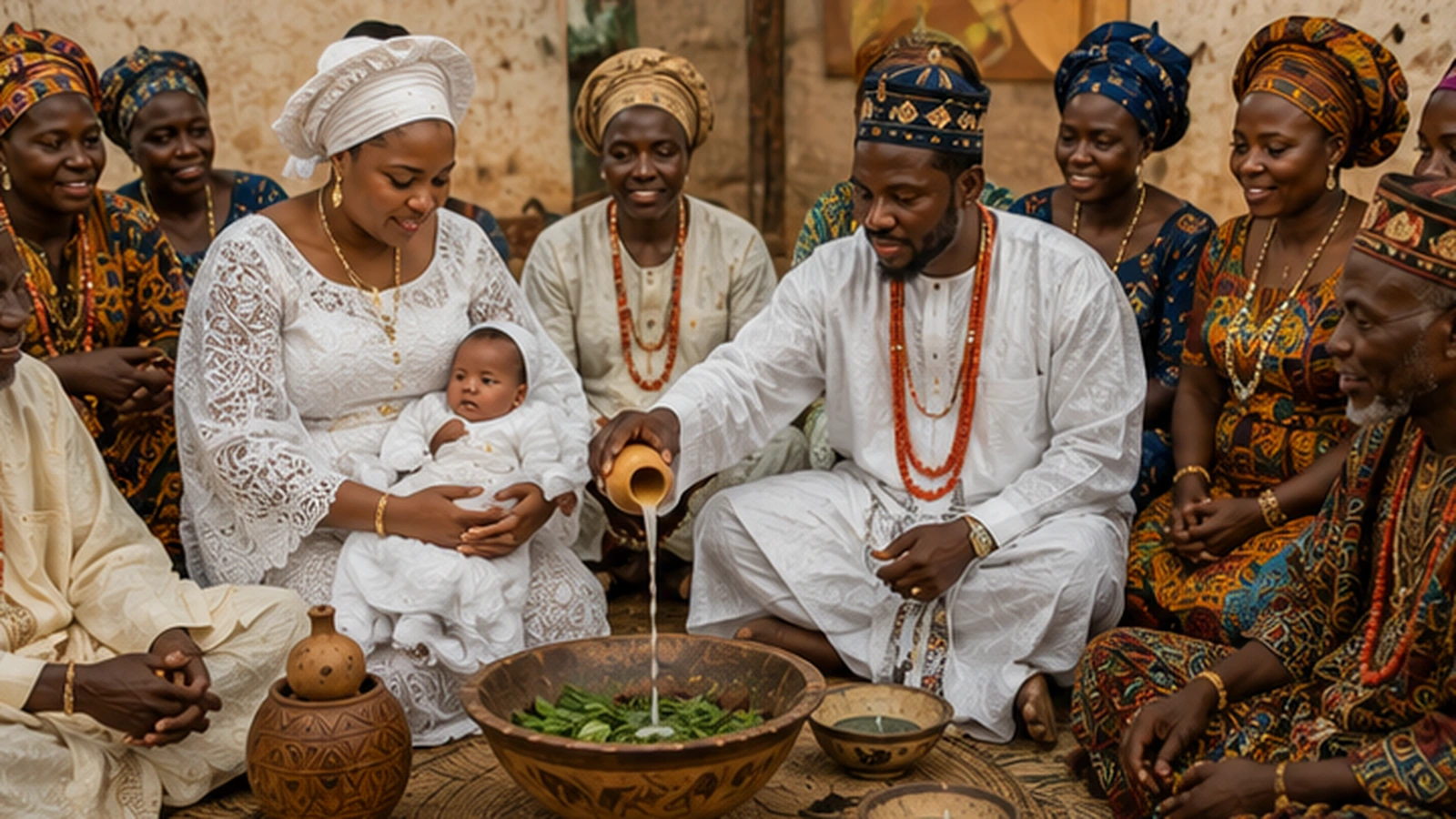
Libation at Naming Ceremonies
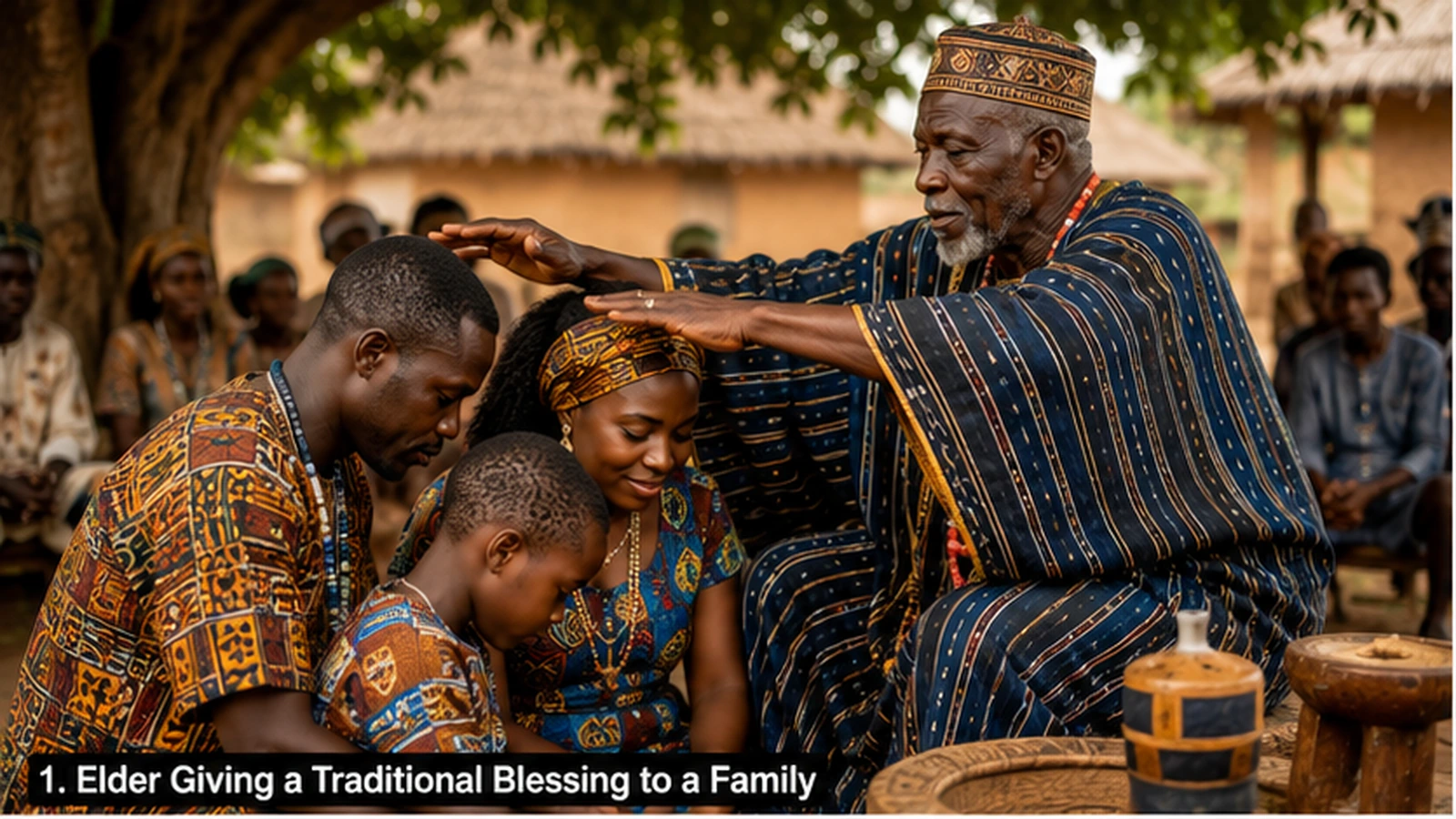
Libation may form part of ceremonies welcoming a newborn child into a family and community.
Depending on the tradition, it may:
- Give thanks for the child
- Ask for health and long life
- Recognize ancestors
- Connect the child with the lineage
- Open the naming process
- Request good character
- Publicly announce family responsibility
Studies of Ga naming rites in Ghana document the use of water and, in some cases, corn wine within ceremonial contexts. The details and prevalence of individual practices have also changed over time.
Naming as Community Recognition
The ceremony may do more than give the child a name.
It can formally recognize:
- Family belonging
- Social identity
- Responsibilities of the parents
- Connections with grandparents
- Hopes for the child’s future
- The community’s duty toward the child
Libation may help situate the child within this wider network.
Libation at Marriage Ceremonies
In some communities, libation may be poured during marriage negotiations, family introductions, or the public recognition of a union.
Its purposes may include:
- Asking for peace between families
- Recognizing ancestors
- Giving thanks
- Blessing the couple
- Confirming agreements
- Requesting fertility or family continuity
- Asking for patience and mutual respect
A marriage libation does not by itself create consent. Cultural or spiritual language should never be used to pressure a person into an unwanted relationship.
Libation at Funerals and Memorials
Funerals are among the occasions most closely associated with libation in some African traditions.
The ceremony may:
- Recognize the deceased
- Address ancestors
- Introduce the deceased to earlier generations
- Give thanks for the person’s life
- Ask for peace
- Protect the living
- Unite the family
- Mark a transition in mourning
- Fulfill inherited obligations
Memory and Social Continuity
Libation can help transform private grief into public remembrance.
The officiant may recall:
- The person’s lineage
- Family relationships
- Achievements
- Responsibilities
- Place within the community
- Connection with earlier generations
The ceremony may therefore preserve history as well as express spiritual belief.
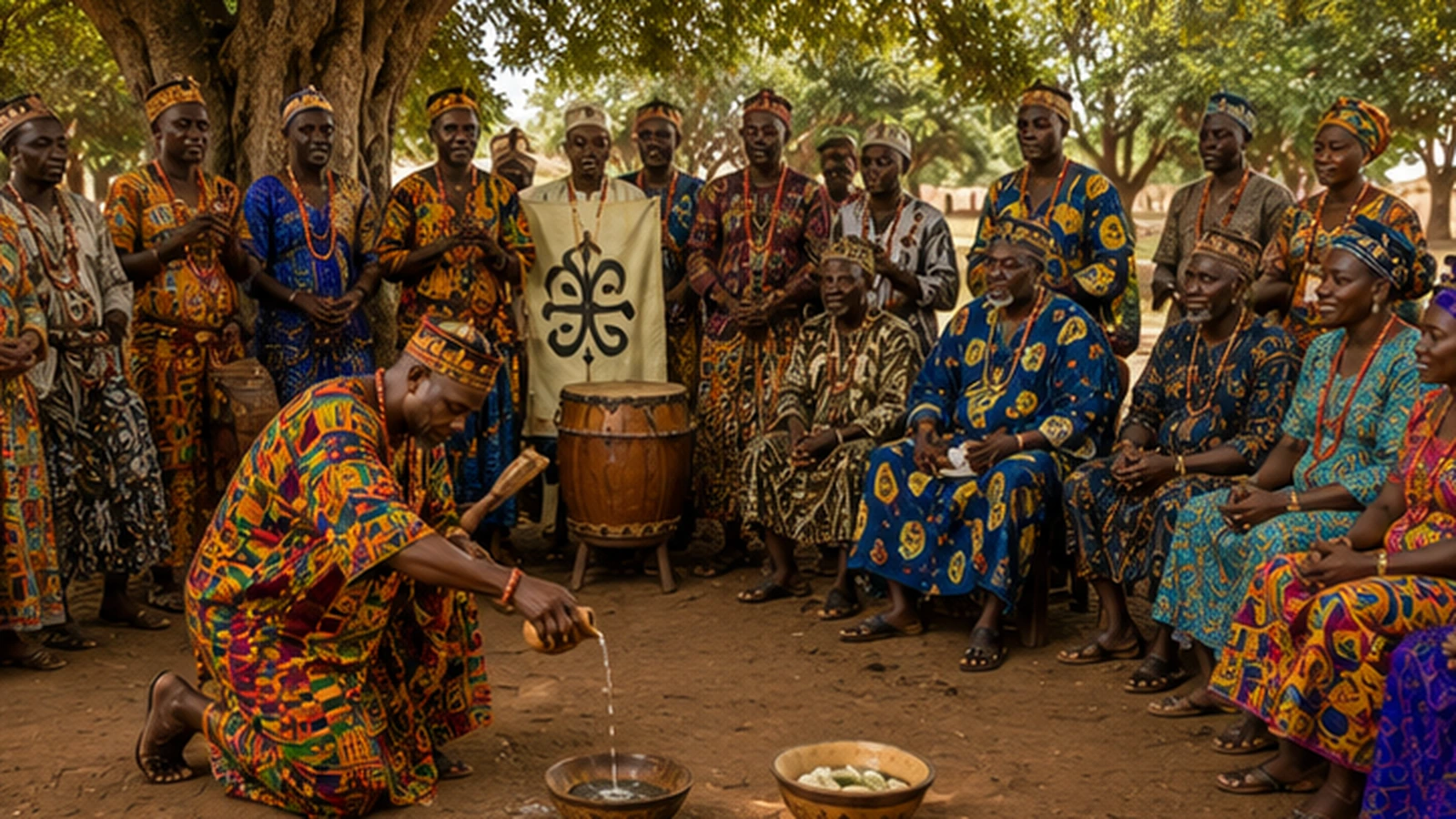
Libation During Festivals
Libation may open or mark stages of public festivals.
It can be used to:
- Request permission to begin
- Recognize founders
- Honor divinities
- Invite ancestral participation
- Give thanks for harvest
- Ask for public safety
- Confirm community unity
Research on Ghana’s Kundum Festival describes libation and the eating of ritual food as marking a transition into a later stage involving music and dance.
Festivals as Historical Memory
Festivals may commemorate:
- Migration
- Agricultural cycles
- Victory
- Survival
- Community founders
- Religious events
- Political history
Libation can connect the current celebration with the history that gives it meaning.
Libation and Political Authority
Traditional rulers and officials may pour or supervise libation during:
- Installation ceremonies
- Public meetings
- Festivals
- State occasions
- Reconciliation processes
- Visits to sacred places
- Recognition of community projects
Libation may affirm that leadership exists within a relationship involving the living, ancestors, land, spiritual authority, and community responsibility.
Among the Obang people, research has connected libation with kingship, festivals, shared ancestry, cultural memory, and community identity.
Leadership and Accountability
A libation prayer may request support for a ruler, but it can also remind leaders that they inherit obligations.
These may include:
- Maintaining justice
- Protecting the community
- Respecting custom
- Preserving peace
- Caring for land
- Listening to advisers
Libation and Sacred Land
Because libation is often poured onto the earth, it may express a relationship with place.
The earth may represent:
- Life
- Fertility
- Ancestral burial
- Community territory
- Agricultural survival
- Historical belonging
- A sacred spiritual presence
A ceremony performed at a particular river, hill, grove, grave, or family compound may be meaningful because of that place’s history.
The location should not be treated as an interchangeable background.
Libation as Hospitality
Not every libation is centered only on death or ancestors.
The act can also express welcome and hospitality.
Offering or pouring a small portion before drinking may acknowledge:
- Guests
- Community relationships
- The source of the beverage
- Those who produced it
- Spiritual authorities
- Deceased members who remain remembered
The practice may communicate that individual enjoyment takes place within a wider network of relationships.
Libation as Thanksgiving
Libation may be performed after:
- A successful harvest
- Safe travel
- Recovery from danger
- Childbirth
- Reconciliation
- Completion of a project
- Political installation
- Survival during hardship
- A favorable community event
Thanksgiving changes the ceremony from requesting assistance to acknowledging what has already occurred.
Gratitude and Responsibility
Giving thanks may create an expectation that the beneficiary will:
- Share with others
- Support family
- Protect the vulnerable
- Fulfill promises
- Remember community obligations
- Use success responsibly
Blessing and responsibility are often connected.
Libation in Healing and Cleansing Contexts
Some communities use libation within healing or cleansing ceremonies.
It may be intended to:
- Request spiritual assistance
- Restore family harmony
- Acknowledge ancestors
- Open communication
- Accompany prayer
- Mark the beginning of treatment
- Express gratitude afterward
UNESCO documentation of a healing ritual has described palm wine and a small amount of food being placed on the ground within an ancestral ritual context.
Health and Safety Notice
Traditional ritual practices may offer cultural, emotional, or communal support, but they do not replace:
- Medical diagnosis
- Emergency treatment
- Mental-health care
- Medication
- Legal assistance
- Professional safety services
A spiritual explanation should never delay urgent care or be used to accuse someone of causing an illness without evidence.
Libation and Music
Libation ceremonies may include or be followed by:
- Drumming
- Singing
- Chanting
- Call and response
- Dancing
- Praise poetry
Music may:
- Announce the beginning of the ceremony
- Support prayer
- Recognize spiritual authorities
- Guide a procession
- Unite participants
- Preserve sacred language
- Mark the transition to celebration
In some cross-border Ghanaian and Togolese ritual traditions, libation, drums, movement, common ancestry, and community identity operate together during processions.
Public and Restricted Libation Knowledge
Some libation ceremonies are public and may be witnessed by visitors.
Others contain restricted elements, including:
- Sacred names
- Family histories
- Initiation language
- Confidential requests
- Shrine-specific prayers
- Political information
- Divination results
- Private disputes
Why Privacy Matters
A person recording a ceremony may unintentionally expose:
- Family conflict
- Restricted religious knowledge
- Names not intended for publication
- Images of sacred places
- Information about the deceased
- Community members who did not consent
Permission should be obtained before photographing, recording, translating, or publishing a libation ceremony.
Libation, Christianity, and Islam
The relationship between libation, Christianity, and Islam differs among communities.
Some Christians reject libation because they understand it as communication with spiritual beings other than God.
Others reinterpret it as:
- Cultural remembrance
- Thanksgiving
- Respect for family history
- Prayer addressed to God
- A public acknowledgment of ancestors without invocation
Among the Anlo-Ewe, research has documented settings in which customary libation may be integrated into some Christian services while honoring community spiritual traditions.
Some Muslim families may preserve cultural ceremonies involving elders, hospitality, naming, or family memory while directing prayer according to Islamic teaching.
Cultural Participation Does Not Define an Entire Religious Identity
A person may attend a libation ceremony because of:
- Family obligation
- Public office
- Cultural identity
- Respect for elders
- Participation in a festival
- Historical interest
It should not automatically be assumed that every attendee shares the same theology.
Colonial and Missionary Misinterpretations
European missionaries and colonial writers often described libation as:
- Paganism
- Idolatry
- Superstition
- Fetishism
- Ancestor worship
These labels frequently ignored its social, political, linguistic, historical, and ethical dimensions.
Among Akan Christians, libation has remained a subject of theological debate because missionary condemnation conflicted with its longstanding place in cultural and religious life.
Why Historical Language Matters
A description that focuses only on “pouring drink for spirits” may miss:
- Prayer
- Family memory
- Public accountability
- Political history
- Hospitality
- Moral instruction
- Community identity
- Thanksgiving
Respectful interpretation begins by listening to how communities describe their own practices.
Libation in the African Diaspora
African-descended communities carried and transformed libation practices in the Americas, Caribbean, Europe, and elsewhere.
Diaspora libations may honor:
- Family ancestors
- Victims of enslavement
- Community leaders
- Freedom fighters
- Cultural founders
- Deceased friends
- Collective historical memory
These practices are not unchanged copies of one African ritual. They developed through the meeting of different African cultures, slavery, colonialism, Christianity, local traditions, migration, and modern identity.
Libation in Modern Public Life
Libation continues to appear in:
- Cultural festivals
- State events
- University ceremonies
- Community projects
- Family gatherings
- Funerals
- Naming ceremonies
- Diaspora commemorations
- Heritage programs
- Traditional installations
Modern performances may use microphones, public stages, recorded music, livestreaming, and translated explanations.
Continuity and Adaptation
A ceremony can change in form while preserving ideas such as:
- Gratitude
- Respect
- Historical memory
- Community unity
- Recognition of elders
- Responsibility to future generations
Adaptation does not automatically make a tradition inauthentic.
What Libation Does Not Guarantee
A libation ceremony cannot ethically guarantee:
- Wealth
- Romantic love
- Medical healing
- Pregnancy
- Business success
- Legal victory
- Protection from every danger
- Control over another person
- Reversal of all misfortune
Spiritual practices should not be marketed as guaranteed transactions.
Warning signs of exploitation include:
- Threats of ancestral punishment
- Demands for repeated large payments
- Claims that questioning is forbidden
- Instructions to avoid doctors
- Pressure to harm another person
- False accusations based on ritual claims
- Promises of immediate wealth
Common Misconceptions
Misconception 1: All African Communities Pour Libation
Reality: Some communities practice it prominently, while others use different forms of prayer and ceremony.
Misconception 2: Libation Is Always Alcohol
Reality: Water, palm wine, beer, honey-based beverages, and other culturally appropriate liquids may be used.
Misconception 3: Libation Is Only for Ancestors
Reality: It may address a creator, divinity, sacred land, community founders, or the purpose of a public ceremony.
Misconception 4: Anyone Can Perform It
Reality: Some traditions limit the role to authorized elders, family representatives, priests, chiefs, or specialists.
Misconception 5: Libation Is the Same Everywhere
Reality: Its language, materials, purpose, and theology vary.
Misconception 6: Libation Is Simply Ancestor Worship
Reality: It may involve remembrance, prayer, thanksgiving, political legitimacy, hospitality, or cultural identity.
Misconception 7: The Liquid Alone Creates the Meaning
Reality: The words, officiant, occasion, place, and participants are equally important.
Misconception 8: Libation Guarantees Spiritual Results
Reality: Responsible traditions do not guarantee specific material outcomes.
How to Study Libation Ceremonies Respectfully
Step 1: Identify the Community
Ask:
- Which people practice it?
- Which language is spoken?
- What is the local name?
- Which region is involved?
Step 2: Identify the Occasion
Determine whether the libation marks:
- A naming ceremony
- Marriage
- Funeral
- Festival
- Installation
- Healing event
- Family gathering
- Public commemoration
Step 3: Identify the Officiant
Find out whether the person is:
- An elder
- A lineage head
- A priest
- A chief
- A family representative
- Another recognized specialist
Step 4: Understand the Words
Do not focus only on the pouring action.
The prayer may contain the ceremony’s most important historical, ethical, and spiritual meaning.
Step 5: Ask Before Recording
Obtain informed permission before photographing, filming, translating, or publishing the ceremony.
Step 6: Avoid Copying Restricted Formulas
A prayer belonging to a family, shrine, or initiated office should not be reproduced casually.
Step 7: Avoid Universal Claims
Write:
- “In this Akan context…”
- “During this Ga ceremony…”
- “Among this Kenyan community…”
Avoid saying that all Africans follow the same practice.
Key Takeaways
- Libation is a ritual act combining liquid, speech, gesture, and cultural authority.
- It can express prayer, gratitude, remembrance, hospitality, or community unity.
- There is no universal African libation ceremony.
- Ancestors may be addressed, but libation is not always limited to ancestors.
- The officiant may be an elder, lineage head, chief, priest, or authorized representative.
- Water, palm wine, beer, and other culturally appropriate liquids may be used.
- Libation can appear at naming ceremonies, marriages, funerals, festivals, installations, and healing rituals.
- Spoken words may communicate moral and political messages to the living.
- Some libation knowledge is public, while other aspects are restricted.
- Christianity and indigenous libation traditions may conflict, coexist, or be reinterpreted.
- Libation cannot guarantee wealth, healing, love, or protection.
- Cultural specificity, consent, and reliable sources are essential.
People Also Ask
What is the meaning of libation in African cultures?
Libation is a culturally structured act of pouring or presenting liquid as part of prayer, remembrance, gratitude, hospitality, or spiritual communication.
Why is libation poured onto the ground?
The earth may be understood as connected with life, ancestry, burial, fertility, community territory, or a spiritual presence. Meanings vary by tradition.
Is libation a form of ancestor worship?
Not necessarily. It may express ancestor reverence, family memory, thanksgiving, prayer, hospitality, or recognition of spiritual authority.
Who can pour libation?
Depending on the community, the officiant may be an elder, chief, lineage head, priest, family representative, or another authorized person.
What liquids are used?
Water, palm wine, traditional beer, wine, honey-based drinks, and other culturally approved liquids may be used.
Is libation still practiced?
Yes. It continues in family ceremonies, festivals, public events, religious settings, and African diaspora communities.
Frequently Asked Questions
1. What is an African libation ceremony?
It is a culturally specific ritual involving the pouring or presentation of liquid with prayer, remembrance, thanksgiving, or invocation.
2. Do all African cultures pour libation?
No. Practices vary, and many communities use other forms of prayer or offering.
Frequently Asked Questions
What should readers know first about Libation ceremonies in African communities?
Libation ceremonies in African communities: Discover how libation ceremonies express prayer, remembrance, gratitude, hospitality, ancestral connection, and co
What causes Libation ceremonies in African communities?
Discover how libation ceremonies express prayer, remembrance, gratitude, hospitality, ancestral connection, and community identity across diverse African cultures. The safest next step is to compare the signs, prepare clear details, and request private guidanc
How does Libation ceremonies in African communities work?
Discover how libation ceremonies express prayer, remembrance, gratitude, hospitality, ancestral connection, and community identity across diverse African cultures. The safest next step is to compare the signs, prepare clear details, and request private guidanc
Is it possible to get private guidance for Libation ceremonies in African communities?
Discover how libation ceremonies express prayer, remembrance, gratitude, hospitality, ancestral connection, and community identity across diverse African cultures. The safest next step is to compare the signs, prepare clear details, and request private guidanc
How long does Libation ceremonies in African communities take to understand?
Discover how libation ceremonies express prayer, remembrance, gratitude, hospitality, ancestral connection, and community identity across diverse African cultures. The safest next step is to compare the signs, prepare clear details, and request private guidanc
Can Libation ceremonies in African communities affect relationships, family, work, or personal peace?
Discover how libation ceremonies express prayer, remembrance, gratitude, hospitality, ancestral connection, and community identity across diverse African cultures. The safest next step is to compare the signs, prepare clear details, and request private guidanc
Why do people seek spiritual guidance for Libation ceremonies in African communities?
Discover how libation ceremonies express prayer, remembrance, gratitude, hospitality, ancestral connection, and community identity across diverse African cultures. The safest next step is to compare the signs, prepare clear details, and request private guidanc
What signs should someone notice before asking about Libation ceremonies in African communities?
Discover how libation ceremonies express prayer, remembrance, gratitude, hospitality, ancestral connection, and community identity across diverse African cultures. The safest next step is to compare the signs, prepare clear details, and request private guidanc
When should someone contact a private spiritual guide?
Discover how libation ceremonies express prayer, remembrance, gratitude, hospitality, ancestral connection, and community identity across diverse African cultures. The safest next step is to compare the signs, prepare clear details, and request private guidanc
Article Information
- Publisher
- Ancestral Temple
- Editor
- Ancestral Temple
- Last updated
- Jul 26, 2026
- Last reviewed
- Jul 13, 2026
- Content version
- 2d15f6db98
This educational article should be read as cultural and spiritual information, not as medical, legal, financial, or emergency advice.
Helpful Related Guidance
Explore This Topic
Ancestor Reverence In African Cultures · Traditional African Ways Of Seeking Blessings
Related Topic Cluster
Ancestors and shrines
Complete Guide Ancestor Reverence: Meaning, History and Cultural ImportanceAbout the Author
 Ancestral Temple
Spiritual guide and practitioner with decades of experience in ancestral wisdom, rituals, and divine guidance.
Related Posts
View All



Leave a Comment
We'd love to hear your thoughts.
This was comprehensive without treating every African community as though it follows the same ritual.
Are there recommended books about Akan ceremonial speech and libation?
The diaspora section was brief but important because these practices continue outside Africa.
I would like to learn more about how libation traditions have changed in African cities.
The idea that a libation can praise or correct people indirectly was fascinating.
Strong introduction. Libation appears to connect spirituality, history, family, and public responsibility.
The misconceptions section answered many oversimplified descriptions I have seen online.
The article respected spiritual belief without presenting every claim as scientifically proven.
This has encouraged me to ask older relatives about the meaning of ceremonies I saw as a child.
The description of libation as enacted prayer was simple and accurate.
More examples in African languages would be useful, as long as the prayers are public and properly sourced.
The historical discussion about missionary opposition deserves its own detailed post.
The biggest lesson for me was that the meaning comes from the whole ceremony, not just the pouring.
I liked that the article distinguished public ceremonies from restricted family or shrine knowledge.
The funeral section was respectful and showed how ritual can preserve family history.
The political-authority section showed that libation can be connected with leadership and accountability.
I would like a full article about the role of women in libation ceremonies.
The headings made the long article easy to read on mobile.
The article remained detailed without giving people a formula to copy.
This is a useful introduction for students of African religion, history, and oral tradition.
Thank you for clearly warning readers that libation does not replace medical treatment.
I found the use of honey and sugarcane beverages in the Kenyan example interesting.
The section about sacred land explained why the location of a ceremony matters.
I would enjoy a comparison of Akan, Ga, Ewe, and East African libation traditions.
The glossary made the differences between invocation, offering, prayer, and libation easier to understand.
The festival section showed how libation can connect current celebrations with historical memory.
The relationship between gratitude and responsibility was one of the best lessons in the article.
I did not know libation could contain moral messages directed indirectly toward leaders.
This article was educational without making the ceremony sound frightening or mysterious.
The section about hospitality gave me a new understanding of why a portion may be poured before people drink.
Could you write next about libation traditions at marriages and family introductions?
I liked the explanation that not every elder is automatically authorized to pour libation.
The point that the words can be more important than the liquid itself was very clear.
The consent warning is important because people record private ceremonies without asking.
The discussion about Christianity and libation was balanced and did not assume every Christian has the same opinion.
I appreciated the difference between ancestor reverence and ancestor worship.
The section about naming ceremonies helped connect libation with family and community identity.
A separate article about the language used in Akan libation prayers would be interesting.
I had always assumed libation was only for funerals. I learned that it can be used during many ceremonies.
The Akan section was informative, especially the idea that libation can communicate indirectly with the living.
Very respectful article. It explained the tradition without making guaranteed spiritual claims.
The explanation of water, palm wine, and traditional beer showed why the materials should not be generalized.
I liked that the article did not describe one Ghanaian practice as representing the whole continent.
The section about libation being both prayer and public speech was very interesting.
I appreciated the explanation that libation is more than pouring liquid onto the ground.