
Ancestor Reverence: Meaning, History and Cultural Importance
Quick Summary
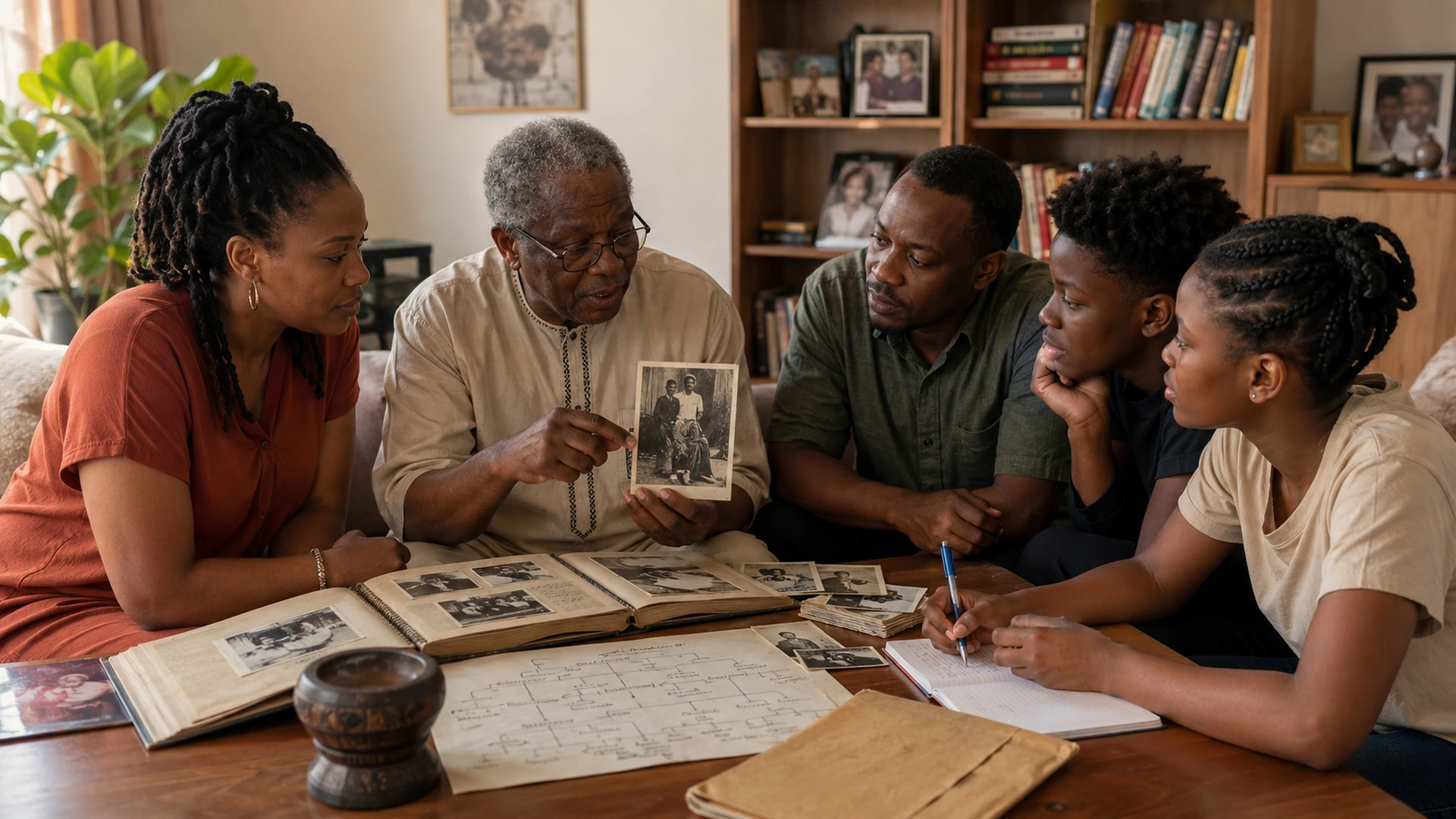
Ancestor reverence is the respectful remembrance and recognition of deceased family, lineage, royal or community members whose lives continue to shape identity, values, obligations...
Ancestor reverence is the respectful remembrance and recognition of deceased family, lineage, royal or community members whose lives continue to shape identity, values, obligations or spiritual belief. It can involve stories, names, graves, portraits, tablets, shrines, offerings, festivals, music, moral conduct or care for inherited land. No single practice defines it everywhere.
The subject is often described as “ancestor worship,” but that phrase can be too broad. In some traditions, ancestors receive prayers or offerings within a religious system. In others, they are treated more like senior family members, moral witnesses, founders, remembered dead or symbols of continuity. The most accurate language depends on the community, time period and source.
Ancestor reverence is also not one African, Asian or Indigenous religion. The royal spiritual significance of the Kasubi Tombs in Buganda, the Confucian ancestral rites at Jongmyo in Korea, the worship of the Hùng Kings in Viet Nam, Chinese Qingming grave care and Indigenous Mexican festivities for the dead belong to different histories and institutions. Their similarities invite comparison, but their differences must remain visible. [3][4][5][9][10]
| Quick Answer Ancestor reverence means honoring and remembering deceased people who remain important to a family, lineage, community or religious tradition. It may preserve genealogy, moral authority, identity and spiritual continuity through names, stories, grave care, portraits, offerings, festivals or public rites. It is not one universal religion, and it is not always the same as worship. |
|---|
What Is Ancestor Reverence?
Ancestor reverence is the practice of remembering and honoring deceased people whose lives, relationships or authority remain significant to the living. Cambridge Dictionary groups “ancestor worship” and “ancestor veneration” under deep respect for ancestors expressed through ceremonies, offerings and public commemorations, but real traditions are more varied than one dictionary definition can capture. [1]
An ancestor may be a parent, grandparent, lineage founder, royal predecessor, community founder, titled elder or remembered historical figure. A deceased person does not automatically become an ancestor in every tradition. Recognition can depend on age, descendants, character, social office, funeral completion, lineage membership, manner of death or continued remembrance.
Reverence may be religious, social, political, ethical or commemorative. Families may preserve names and stories without believing that the dead actively intervene. Other communities understand ancestors as continuing members of the lineage who may advise, protect, witness obligations or receive offerings. These are beliefs and interpretations, not scientific conclusions.
Ancestor Reverence, Veneration and Worship: What Is the Difference?
“Reverence” and “veneration” emphasize deep respect. “Worship” may suggest devotion offered to a deity, although scholars, museums and heritage institutions sometimes use the term more broadly for ritual attention to ancestors. A responsible article should not assume that every offering, prayer, portrait or grave visit means the ancestor is treated as a god.
In many traditions, ancestors occupy a distinct category below a supreme creator, gods, saints or other sacred beings. They may be approached as senior kin, moral authorities, intermediaries, founders or members of the extended family. In other traditions, invoking the dead is rejected while remembrance, cemetery visits and prayer for the departed remain important.
The safest editorial rule is to use the community’s own public terminology when known. When writing comparatively, “ancestor reverence” is a useful umbrella because it can include memory, respect, gratitude, ritual and social continuity without forcing one theology onto everyone.
What Ancestor Reverence Is Not
It is not one universal religion practiced the same way around the world.
It is not evidence that every culture believes the dead control daily events.
It is not the same as genealogy alone, although genealogy can support it.
It is not automatically opposed to Christianity, Islam, Buddhism or other religions; communities negotiate these relationships differently.
It is not permission for outsiders to copy private ceremonies or display restricted objects.
It does not scientifically guarantee protection, healing, fertility, wealth, punishment or communication with the dead.
A Brief History of Ancestor Reverence
Burial Evidence and the Limits of Interpretation
Human communities have cared for the dead for tens of thousands of years, but burial alone does not prove ancestor reverence. Archaeologists can identify graves, repeated burial places, offerings, monuments and changes in settlement, yet the meaning of these practices must be inferred carefully. Care for a body may express grief, status, sanitation, fear, affection, religion or several motives at once.
The historical record becomes clearer where texts, inscriptions, ritual manuals, oral traditions and living custodians can be compared with material evidence. Even then, beliefs change. Ancestral figures can be reinterpreted, promoted, forgotten or connected to new political identities.
China: From Lineage Ritual to State Ideology
Archaeologist Li Liu describes ancestor worship as a major religious form in ancient and modern China and traces changing ancestral cults from Neolithic evidence through the Shang dynasty, when lineage ancestors became state deities. The history was not static: elites could reshape ancestral narratives to legitimize political power. [2]
Chinese ancestral practice developed in households, lineages, temples and the state. Portraits and spirit tablets could preserve names, rank and generational relationships. A Metropolitan Museum scroll of seven generations includes labels shaped like spirit tablets, described as ritual placards through which the living could venerate the deceased at a household altar. [12]
Today, Qingming combines a seasonal observance with grave care and tribute to deceased relatives. Government cultural descriptions emphasize tomb sweeping, ancestor remembrance and spring outings, while customs differ across regions and families. [10]
Royal and State Ancestors
Ancestor reverence has often supported political legitimacy. Rulers may present themselves as heirs of founding ancestors, maintain royal shrines, sponsor funerary monuments or organize public rites that connect dynasty, land and moral order.
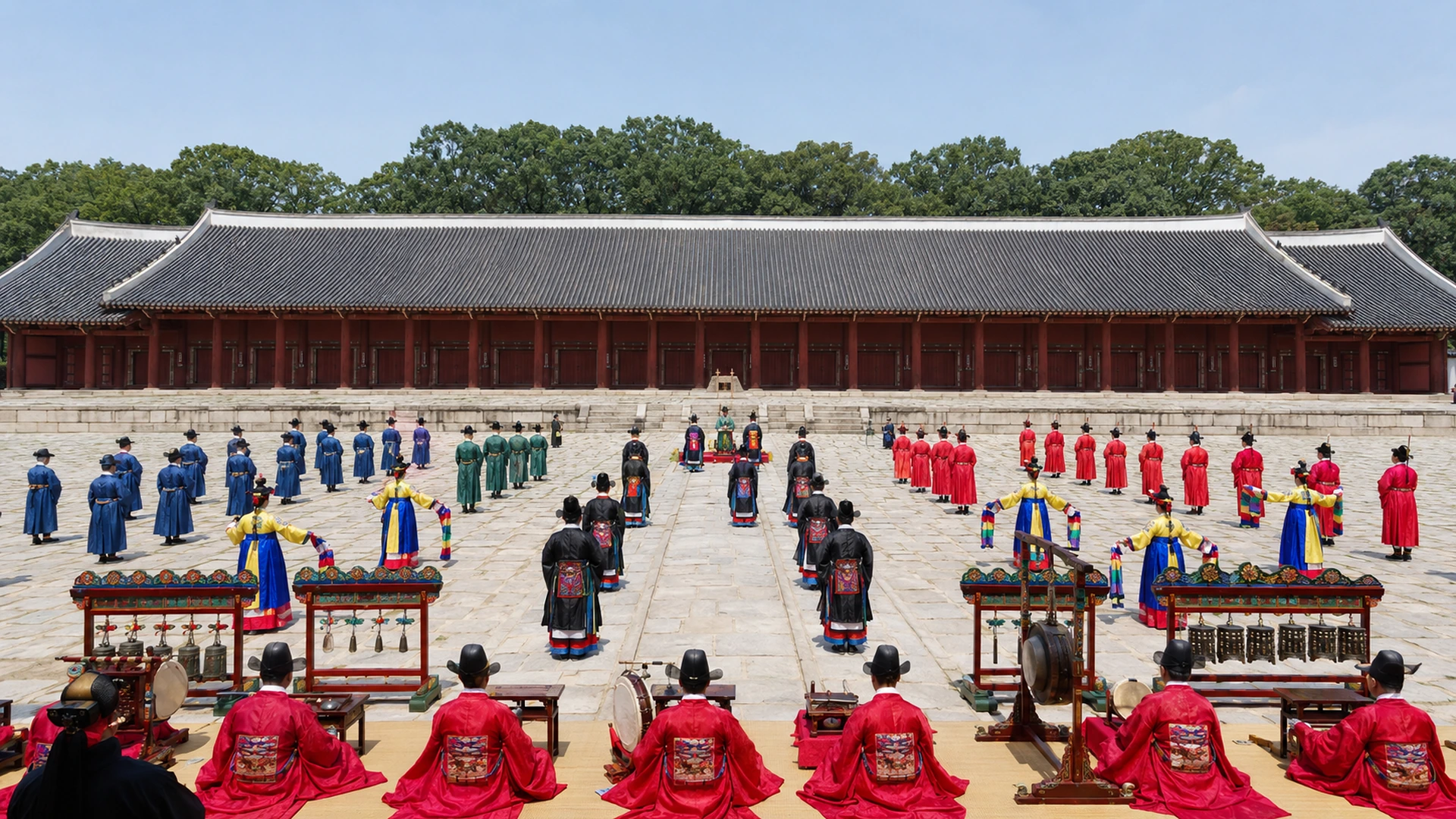
At Jongmyo Shrine in Seoul, spirit tablets of Joseon kings and queens are housed within a preserved royal ancestral complex. UNESCO describes an annual rite combining offerings, music, song and dance, with forms recorded in royal protocols and transmitted through safeguarding institutions. [4]
In Viet Nam, worship of the Hùng Kings at Phú Thọ links local villages, national origins, pilgrimage, offerings, music and ritual custodianship. UNESCO stresses both community participation and customary restrictions on access to sacred aspects. [3]
Why Ancestors Matter Culturally
1. Family and Lineage Identity
Ancestor reverence can organize people into lineages that extend beyond the living. Names, genealogies, marriage histories, inheritance and migration stories explain who belongs, how families are related and which obligations continue across generations.
2. Moral Responsibility
Ancestors may symbolize standards of conduct. Their remembered decisions can become examples, warnings or sources of authority. The moral force may be religious, but it can also operate through family reputation and the desire not to disgrace those who came before.
3. Land and Place
Burial grounds, ancestral halls, sacred forests, royal tombs and family homes can anchor a group to place. Caring for these locations may express identity, land rights, stewardship and obligations to descendants.
4. Political Legitimacy
Royal and state ancestral rites can justify succession, connect rulers with founders and present government as part of an inherited moral order. This function is visible in imperial ancestral temples, dynastic shrines and royal burial landscapes.
5. Grief and Continuing Bonds
Memorial practice gives grief a social language. Visiting graves, preparing food, telling stories, displaying photographs and gathering annually can allow the dead to remain part of family conversation without denying the reality of death.
6. Intergenerational Education
Rituals and memorials teach younger people names, histories, songs, etiquette, craft, language and responsibilities. UNESCO defines intangible heritage as living expressions inherited from ancestors and passed to descendants, but transmission depends on active communities rather than archives alone. [15]
7. Cultural Resilience
Ancestor reverence can survive migration, colonial rule, religious change, urbanization, war and political suppression by moving between public and domestic spaces. Survival does not mean practices remain unchanged; adaptation is often part of continuity.
Ancestor Reverence in African Cultures: Diversity, Not One System
Africa contains thousands of communities, languages, religious histories and political institutions. It is inaccurate to claim that “Africans worship ancestors” in one uniform way. Some societies emphasize family ancestors; others recognize royal, titled, territorial or founding ancestors. Some living African Christians and Muslims reinterpret, limit or reject particular ancestral practices while maintaining family remembrance and respect for the dead.
Anthropological writing has often connected African ancestor systems with kinship and descent, but older scholarship sometimes generalized too broadly. Modern cultural writing should identify the specific people, place, period and public evidence rather than turning the continent into one spiritual category. [13]
Buganda and the Kasubi Tombs
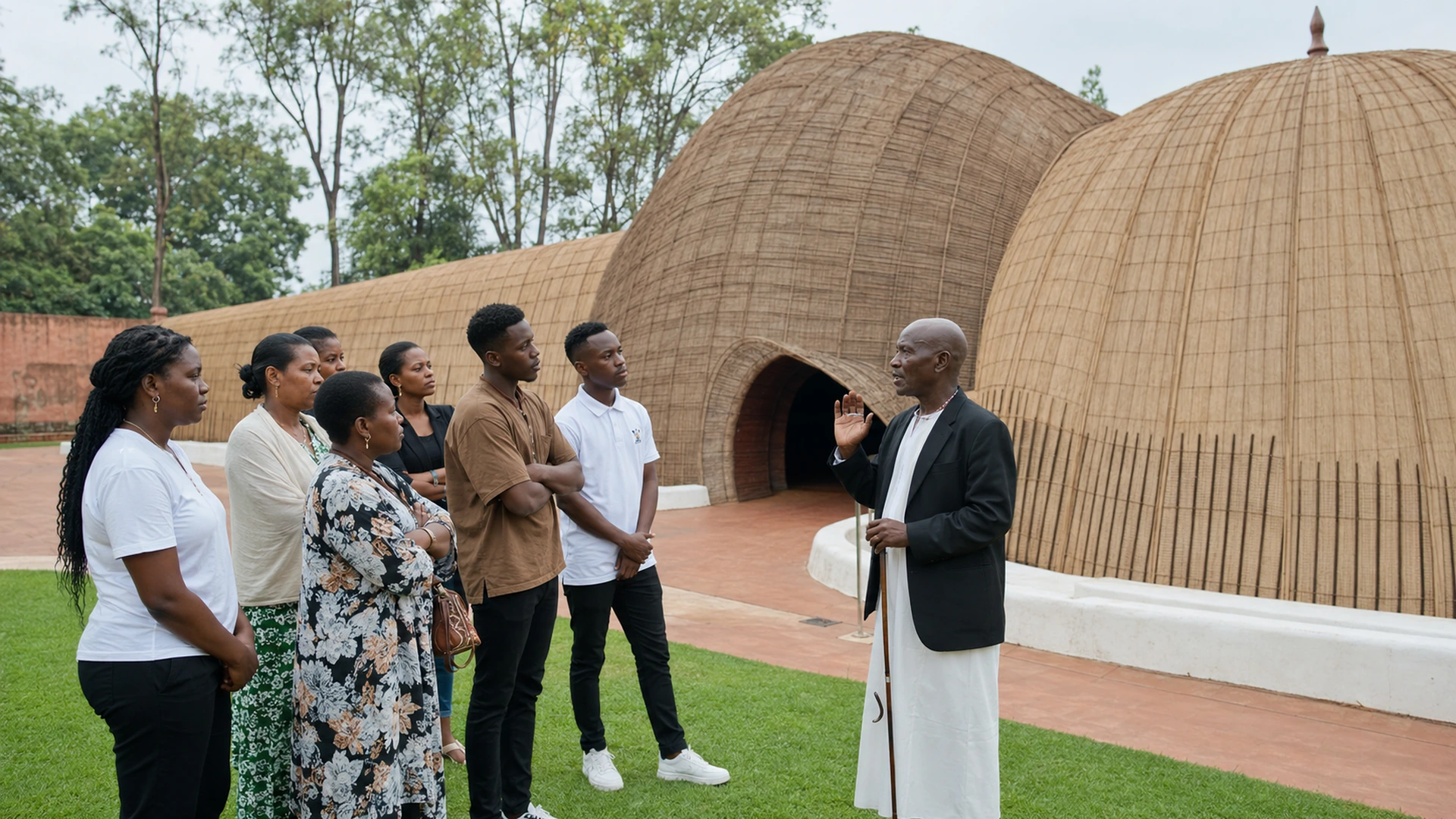
The Tombs of Buganda Kings at Kasubi are a royal burial ground and living spiritual centre in Kampala. UNESCO emphasizes the site’s intangible values of belief, continuity and identity, as well as its architecture in organic materials. Four Kabakas are buried within the main structure, Muzibu Azaala Mpanga. [5]
Kasubi should not be presented as a model for every Ugandan or African ancestor tradition. It belongs to the history and institutions of the Buganda Kingdom. Public educational writing can describe its royal, architectural and spiritual importance without exposing restricted ritual knowledge.
Yoruba, Fon, Fang and Other Material Traditions
Museum objects show how ancestral memory can take highly specific material forms. Smithsonian records describe Yoruba Oshugbo staffs connected with veneration of town founders and with political and judicial authority. Fon asen from Ouidah are memorial sculptures whose imagery refers to a particular ancestor’s work, beliefs and family heritage. [6][7]
Among Fang peoples of Gabon and Equatorial Guinea, reliquary guardian figures were associated with preserved ancestral remains and remembrance of names and deeds. These practices belong to particular historical contexts; museum labels should not be turned into instructions for modern ritual. [8]
Such examples show why “African ancestor statue” is an inadequate category. Objects may commemorate specific people, guard relics, represent office, support lineage authority or function within ceremonies governed by custodians.
Korea: Jongmyo and Confucian Royal Ancestral Rites
Jongmyo is a preserved royal ancestral shrine dedicated to the forebears of the Joseon dynasty. UNESCO describes the complex as the oldest and most authentic Confucian royal ancestral shrine to survive, with spirit tablets, ritual spaces and an annual rite supported by music and dance. [4]
The importance of Jongmyo is not only spiritual. The architecture orders movement, rank, preparation and offering. The rite also connects royal memory with political legitimacy and responsibility for the safety of the people and state.
Visitors should remember that a public performance does not make every interior or ritual detail open. UNESCO notes controlled access to the heritage area and restricted access to shrine interiors.
Viet Nam: Worship of the Hùng Kings
At Nghĩa Lĩnh mountain in Phú Thọ, communities commemorate the Hùng Kings through pilgrimage, offerings, music, Xoan singing, drums and village organization. UNESCO describes the practice as a source of spiritual solidarity, national origins and cultural identity. [3]
The tradition demonstrates that ancestors may be more than domestic family figures. Founding ancestors can connect local communities with national narratives. The same example also shows the need for boundaries: UNESCO’s safeguarding decision recognizes customary restrictions and respect for sacred aspects.
Mexico: Indigenous Festivities Dedicated to the Dead
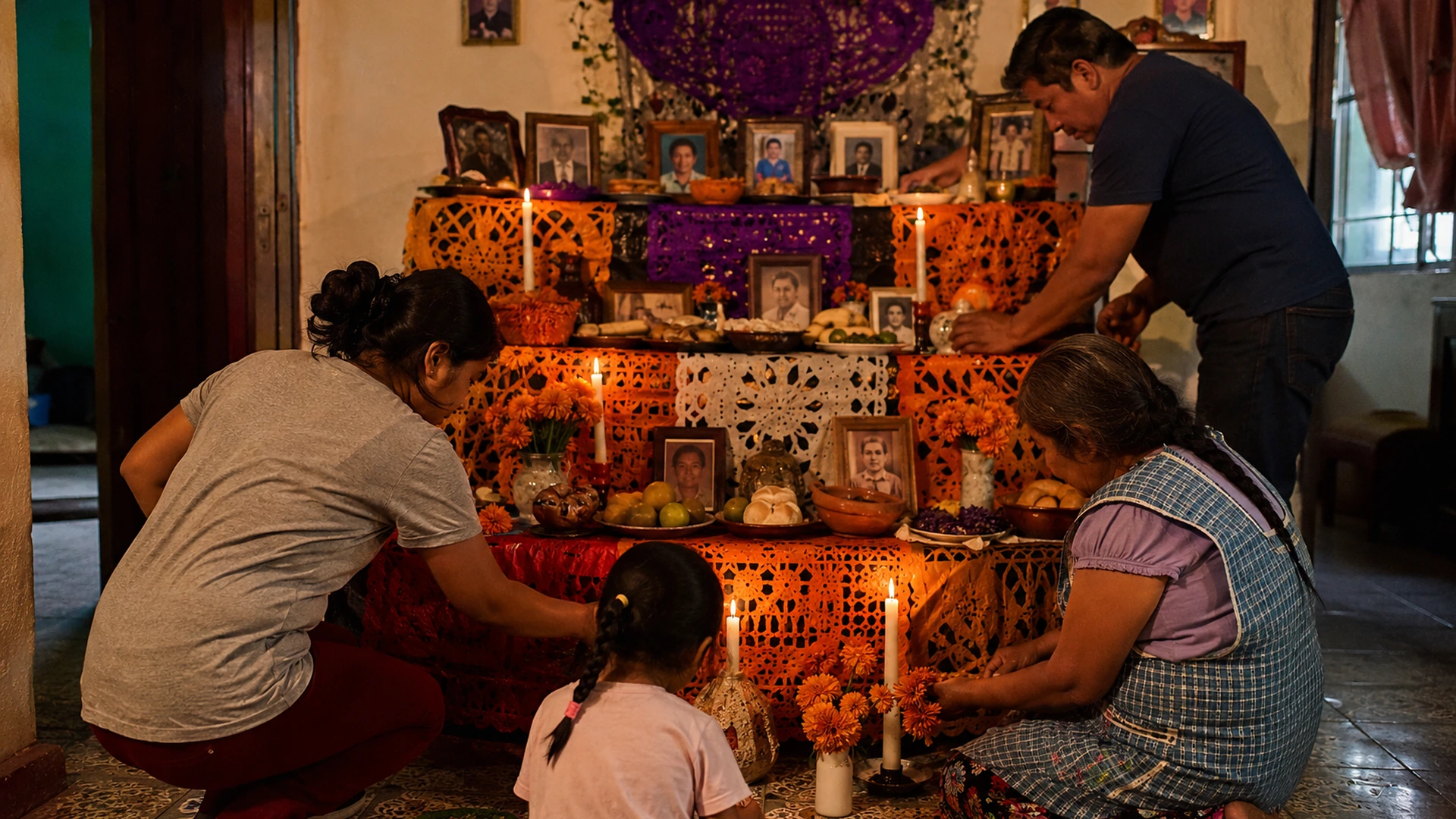
UNESCO’s description of Indigenous Mexican festivities dedicated to the dead focuses on the temporary return of deceased relatives and loved ones, family offerings, candles, flowers, favourite foods and movement between home and cemetery. The observance also intersects with the maize cycle and with Catholic feasts introduced after European colonization. [9]
Día de los Muertos is not a single decorative style. Practices and meanings differ among Indigenous communities and across Mexican society. Reducing the tradition to face paint, skull merchandise or a generic “ancestor festival” removes it from family, agriculture, religion and community identity.
Christian Remembrance of the Dead
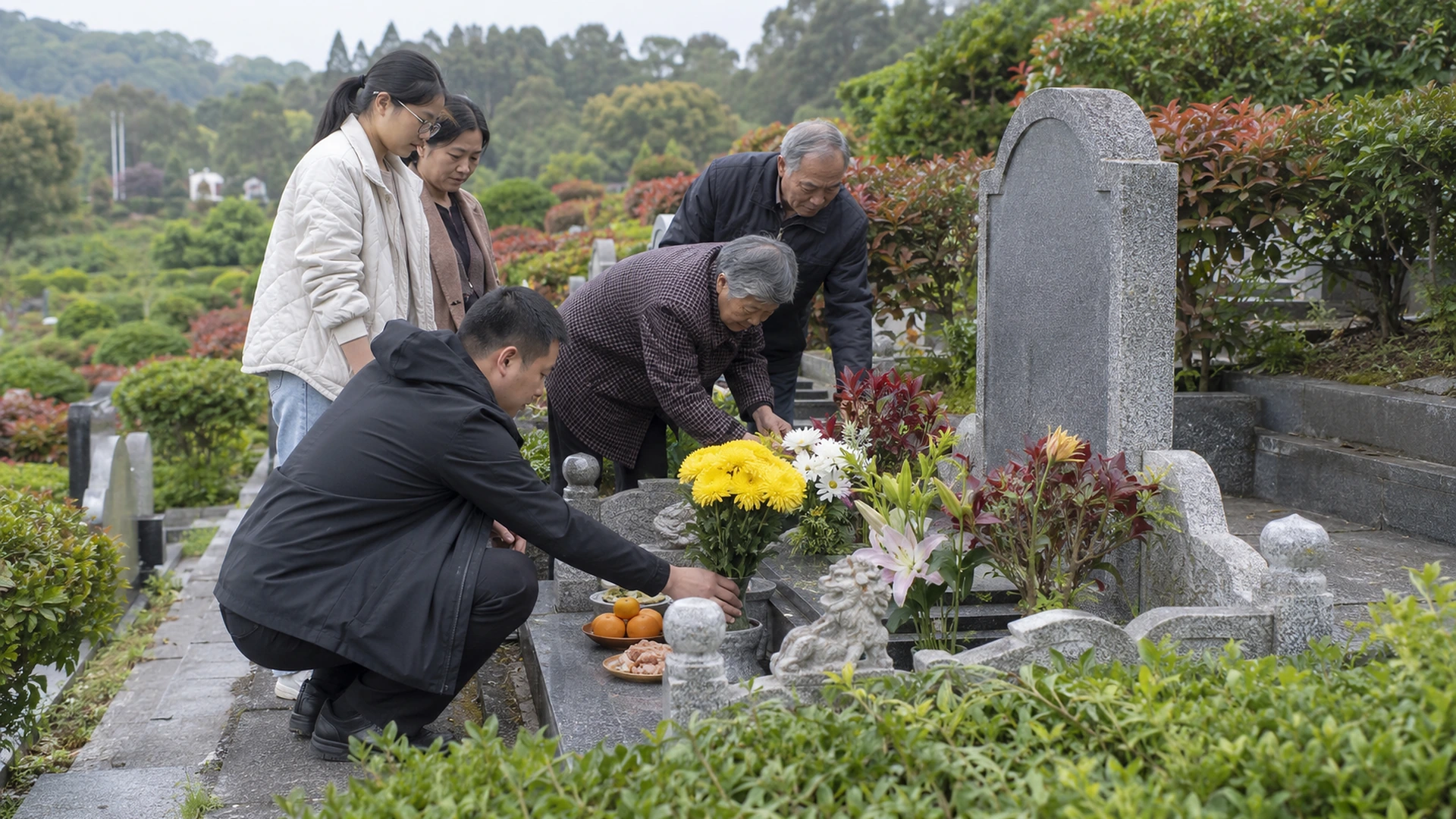
Christian traditions commonly honor the memory of the dead, but they do not all define this as ancestor worship. In Roman Catholic practice, All Souls’ Day commemorates the faithful departed through prayer, cemetery visits and hope in resurrection. Vatican teaching distinguishes prayer for the dead from superstition and places remembrance within Christian theology. [11]
This example matters because outwardly similar acts can have different meanings. Lighting a candle, visiting a grave or speaking a name may express prayer, grief, gratitude, lineage identity or religious devotion depending on the tradition.
Common Forms of Ancestor Reverence
| Form | Possible public expression |
|---|---|
| Names and genealogy | Reciting ancestors, preserving family trees, naming children and remembering migration histories. |
| Grave care | Cleaning tombs, maintaining burial grounds, placing flowers and gathering at cemeteries. |
| Portraits and tablets | Displaying images, spirit tablets, memorial plaques or lineage records in homes or halls. |
| Offerings | Food, drink, incense, flowers or symbolic objects offered according to specific religious rules. |
| Storytelling | Teaching names, deeds, moral lessons, family struggles and local history. |
| Music and performance | Songs, dances, drums, processions or ritual music maintained by trained custodians. |
| Memorial architecture | Tombs, shrines, ancestral halls, royal compounds, sacred groves and monuments. |
| Moral conduct | Living in a way understood to honor family values, obligations and inherited responsibilities. |
| Annual festivals | Qingming, Hùng Kings commemorations, Jongmyo rites, festivities for the dead and other local calendars. |
Portraits, Tablets, Relics and Memorial Art
Objects can make ancestry visible, but their function depends on context. A photograph on a living-room wall, a Chinese spirit tablet, a Fon asen, a Fang reliquary guardian, a royal tomb and a cemetery headstone are not interchangeable versions of one object. Each belongs to a different relationship among person, family, spirit, history and place.
Portraits may preserve likeness, office or genealogy. The Metropolitan Museum’s seven-generation family scroll uses portrait groups and tablet-shaped labels to organize descent. In other contexts, commemorative images are deliberately stylized rather than realistic. The purpose may be recognition, legitimacy, memory or ritual presence rather than modern portraiture. [12]
Relics and human remains require particular ethical care. Objects connected with bones, graves or sacred authority may have been collected under colonial inequality or without meaningful consent. Museums and researchers increasingly face questions about restitution, descendant access, restricted display and whether an object should be photographed at all.
Memorial art also changes with migration and technology. Families now preserve digital photographs, recorded voices, online memorials and scanned genealogies alongside graves, heirlooms and oral history. Digital access can support continuity, but it can also expose private names, sacred knowledge or vulnerable burial places. Community rules should guide what is made public.
How Ancestor Traditions Change Over Time
Living traditions are not frozen survivals from an untouched past. They respond to religious conversion, colonial rule, urbanization, migration, law, education, tourism, conflict, new media and changing family structures. A ceremony may move from a lineage compound to a public heritage site; a portrait may become a digital archive; a royal rite may be safeguarded through a national institution.
Change can strengthen a tradition, but it can also create conflict. Younger descendants may question gender restrictions, costs, inheritance rules or claims of authority. Religious leaders may reinterpret offerings or invocation. Governments may promote a founder as a national ancestor, while local communities retain more complex histories.
For this reason, authenticity should not mean that every detail must remain identical. A better question is whether recognized bearers still guide the practice, whether knowledge is transmitted responsibly, whether restrictions are respected and whether adaptation continues to serve the community rather than outside spectacle.
Who Becomes an Ancestor?
Not every deceased person is necessarily recognized as an ancestor. Some traditions include most adult family members; others emphasize parents with descendants, lineage founders, elders, titled people, chiefs, rulers or people who completed required funerary transitions.
Ancestral status can be shaped by character, office, descendants, burial, age, manner of death and community recognition. These rules may change over time and can be debated within the community. Writers should not invent eligibility rules or assume that a museum object proves a universal belief.
Belief, Evidence and Scientific Limits
Ancestor reverence is a cultural, religious and social phenomenon. Historical records, archaeology, art and ethnography can document what people built, said, performed or believed. They cannot scientifically prove that ancestors cause illness, wealth, fertility, protection, accidents or political success.
People may experience dreams, coincidences, family memories or a sense of ancestral presence as deeply meaningful. Responsible writing can describe those experiences as belief or interpretation without guaranteeing supernatural outcomes.
Grief practices, family storytelling and memorial gatherings may help people organize loss and identity, but anyone experiencing severe grief, trauma, hallucinations or danger should seek appropriate professional and community support rather than relying only on spiritual explanations.
Common Misunderstandings
| Misunderstanding | Responsible answer |
|---|---|
| “Ancestor reverence is one ancient religion.” | No. It is a broad comparative label covering distinct traditions and institutions. |
| “It means treating ancestors as gods.” | Sometimes ancestors receive religious offerings, but many traditions distinguish them from gods or a supreme creator. |
| “All Africans practice it the same way.” | No. African traditions differ by community, language, region, religion, class and history. |
| “Every deceased relative becomes an ancestor.” | Not necessarily. Recognition rules vary. |
| “Similar rituals prove one lost global religion.” | No. Similar responses to death, family and memory can emerge independently or through contact. |
| “A public festival makes the whole tradition public.” | No. Communities may keep prayers, objects, spaces or roles restricted. |
| “Ancestor rituals guarantee protection or prosperity.” | Such outcomes are matters of belief, not scientific certainty. |
| “Modern practice is less authentic.” | Living traditions change. Adaptation does not automatically erase continuity. |
How to Study or Participate Respectfully
Name the exact community, country, language group, religious tradition and historical period.
Use community, museum, university and heritage sources rather than copying anonymous spiritual websites.
Distinguish public education from restricted ritual knowledge.
Ask permission before photographing graves, altars, ceremonies, custodians or memorial objects.
Do not remove offerings, plants, soil, bones, relics, stones or objects from sacred places.
Do not combine clothing, music, symbols and rituals from unrelated cultures into one invented ceremony.
Use “reverence,” “veneration,” “worship,” “commemoration” or “prayer for the dead” according to the source and context.
Do not promise supernatural, medical, legal, financial, fertility or protective results.
Credit living custodians and acknowledge that traditions change and contain internal differences.
When creating a personal remembrance practice, focus on your own family history, consent, grief and values rather than imitating restricted ceremonies.
People Also Ask
What is ancestor reverence?
Ancestor reverence is the respectful remembrance and recognition of deceased family, lineage, royal or community members whose lives remain important to identity, values, obligations or spiritual belief.
Is ancestor reverence the same as ancestor worship?
Not always. “Worship” may imply devotion to a deity, while many traditions treat ancestors as senior kin, founders, moral authorities or remembered dead. The correct term depends on the community.
How old is ancestor veneration?
Care for the dead is prehistoric, but burial alone cannot prove ancestor reverence. Clearer evidence appears where archaeology can be compared with texts, art, ritual records and living traditions.
Why do cultures honor ancestors?
Common reasons include preserving genealogy, teaching morality, maintaining family and land identity, legitimizing leadership, processing grief and transmitting culture across generations.
What are common ancestor-reverence practices?
Examples include storytelling, grave care, portraits, spirit tablets, memorial offerings, prayers, annual festivals, ritual music, family names and care for sacred or burial places.
Do all cultures believe ancestors have spiritual power?
No. Some traditions understand ancestors as active spiritual beings; others emphasize memory, prayer, history or family continuity without the same belief.
Can Christians honor ancestors?
Many Christians honor deceased relatives through remembrance, cemetery visits and prayer for the dead, while rejecting worship or invocation that conflicts with their theology. Practices vary by church and community.
Are ancestor rituals scientifically proven?
No. Science can study behavior, history and social effects, but it has not established that ancestors supernaturally control health, fertility, wealth, protection or events.
Frequently Asked Questions
1. Is ancestor reverence practiced only in Africa and Asia?
No. Forms of ancestral remembrance and ritual occur in many regions, including Europe, the Americas and Oceania, but their meanings differ.
2. What is an ancestor altar?
It is a designated place where a family or community may display portraits, tablets, names, candles, flowers or offerings according to a specific tradition. It should not be copied without understanding its context.
3. Why are food and drink offered?
In some traditions offerings express hospitality, reciprocity, remembrance, nourishment or ritual obligation. The meaning is not identical everywhere.
4. Can ancestor reverence be secular?
Yes. Families can honor ancestors through genealogy, storytelling, memorial visits, archives, names and ethical commitments without claiming spiritual communication.
5. Are ancestors always benevolent?
Beliefs vary. Some traditions describe ancestors as protective; others see them as moral authorities capable of correction, while some focus only on remembrance.
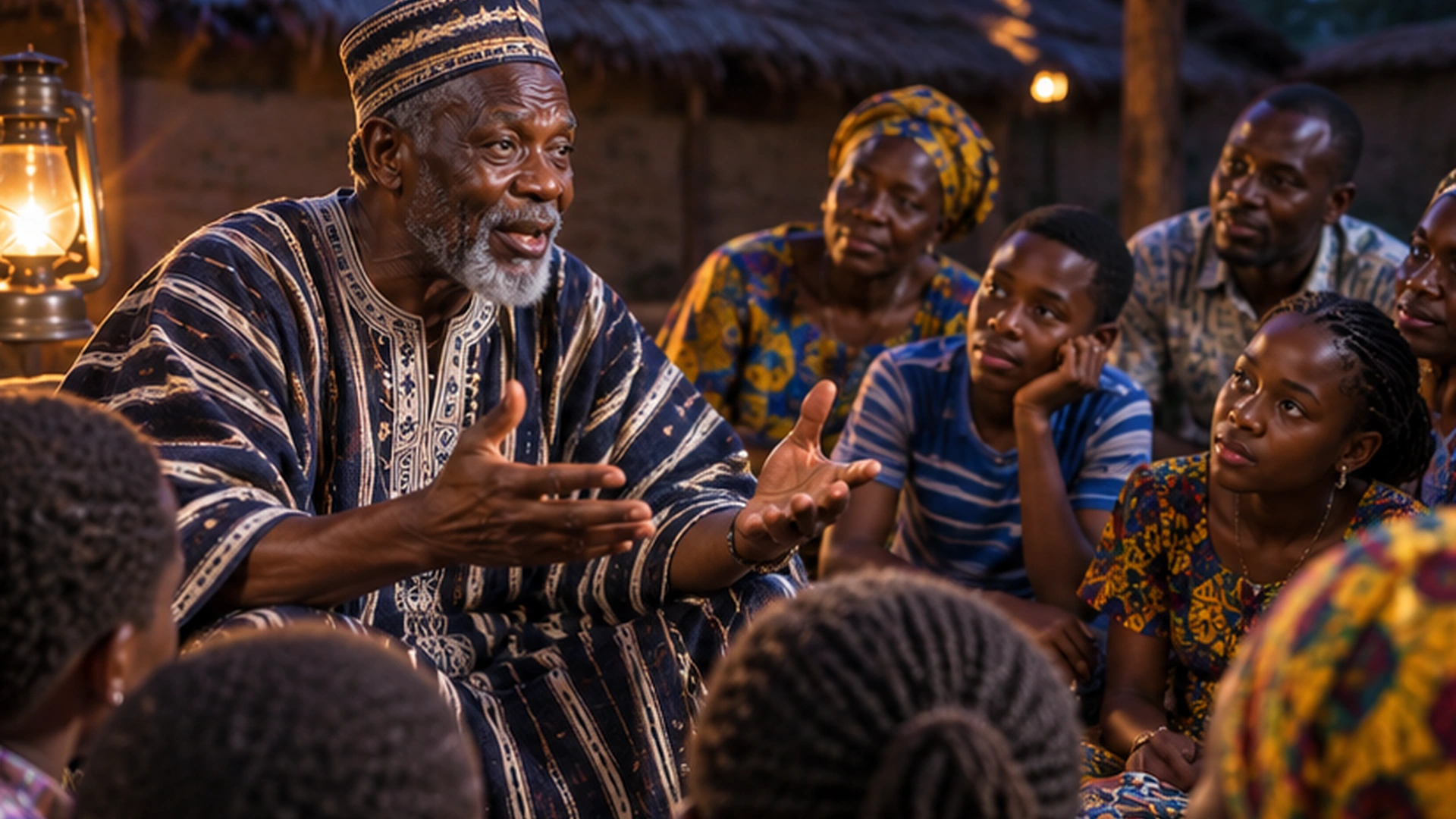
6. What is the role of elders?
Elders may preserve genealogy, teach protocol, authorize public ceremonies, interpret family history or serve as custodians. Authority varies by community.
7. Is Día de los Muertos simply ancestor worship?
That label is too broad. UNESCO describes an Indigenous Mexican festivity involving deceased relatives, offerings, homes, cemeteries, agriculture and Catholic-era history. Meanings differ among communities.
8. How can I honor my ancestors without copying another culture?
Record names and stories, care for family graves where appropriate, preserve photographs, cook a family recipe, support elders, learn your genealogy and act on inherited responsibilities.
9. Should ancestral objects be displayed in museums?
The answer depends on ownership, consent, sacred restrictions and community wishes. Some objects require restitution, restricted access or collaboration with descendants and custodians.
10. What should I do if a practice is private?
Do not photograph, publish, reproduce or commercialize it. Follow the instructions of recognized custodians and use public sources only.
Key Takeaways
Ancestor reverence is an umbrella term for honoring deceased people who remain important to family, community, identity or belief.
“Reverence,” “veneration,” “worship,” “commemoration” and “prayer for the dead” are not interchangeable in every tradition.
Historical evidence must separate burial, archaeology, written records, living belief and modern interpretation.
China, Viet Nam, Korea, Buganda, Yoruba, Fon, Fang and Indigenous Mexican traditions provide distinct examples, not one universal system.
Ancestors can support genealogy, morality, land identity, grief, political legitimacy and intergenerational education.
Not every deceased person automatically becomes an ancestor.
Public heritage does not erase private or restricted knowledge.
No ancestral practice scientifically guarantees protection, healing, fertility, money or control over events.
The most respectful approach names the community, follows custodians and avoids copying rituals out of context.
Conclusion
Ancestor reverence is best understood as a relationship between memory and responsibility. It keeps names, stories, places, moral examples and social bonds active after death. Sometimes that relationship is expressed through religious ritual; sometimes through graves, portraits, genealogy, family meals, public heritage or prayer.
The global comparison is meaningful only when cultural differences remain visible. Jongmyo is not Qingming; Kasubi is not a generic African shrine; the Hùng Kings are not simply family ancestors; and Día de los Muertos is not a decorative version of one universal “ancestor festival.” Each tradition belongs to people, institutions, languages and histories.
To honor ancestors responsibly is also to honor the living: descendants, custodians, elders, communities and future generations who decide what may be remembered publicly, what must remain private and how heritage can continue without becoming spectacle.
Research Sources and Further Reading
[1] Cambridge Dictionary — “Ancestor worship” / ancestor veneration definition
[2] Li Liu, Antiquity — “Who Were the Ancestors? The Origins of Chinese Ancestral Cult and Racial Myths”
[3] UNESCO Intangible Cultural Heritage — Worship of Hùng Kings in Phú Thọ
[4] UNESCO — Jongmyo Shrine and the Royal Ancestral Ritual
[5] UNESCO — Tombs of Buganda Kings at Kasubi
[6] Smithsonian National Museum of African Art — Yoruba Oshugbo staff
[7] Smithsonian National Museum of African Art — Fon asen memorial altar
[8] Smithsonian National Museum of African Art — Fang reliquary guardian figure
[9] UNESCO Intangible Cultural Heritage — Indigenous festivity dedicated to the dead, Mexico
[10] State Council Information Office of China — Qingming Festival
[11] Vatican — Commemoration of the Faithful Departed / All Souls
[12] Metropolitan Museum of Art — Portrait scroll of seven generations of one family
[13] Meyer Fortes, Cambridge University Press — Ancestor Worship in Africa
[14] AncestralTemple.com — The Meaning of Ancestor Reverence in African Cultures
[15] UNESCO — Living heritage and intergenerational transmission
Publishing and Post-Publication Notes
Use this article as the global definition hub and link prominently to the existing Africa-specific ancestor-reverence pillar.
Do not create separate pages for “ancestor reverence meaning,” “ancestor veneration meaning” and “ancestor worship explained” unless Search Console later shows clearly different intent.
Add Article and Breadcrumb structured data. Keep FAQ content for readers and AI extraction without promising FAQ rich results.
After publication, monitor query impressions, CTR, average position and terms containing “meaning,” “history,” “worship,” “veneration,” “Africa,” “Qingming,” “Kasubi” and “Jongmyo.”
Refresh examples and safeguarding notes when UNESCO or community institutions publish significant updates.
When images are generated, create exactly the five retained scenes for ARTICLE_ID ancestor-reverence-global-2026 and export them as 1920×1080 WebP in sRGB.
| Estimated article word count 3,804 words, excluding metadata and query-map tables. |
|---|
Article Information
- Publisher
- Ancestral Temple
- Editor
- Ancestral Temple
- Last updated
- Jul 26, 2026
- Last reviewed
- Jul 26, 2026
- Content version
- 8fb3fa69a0
This educational article should be read as cultural and spiritual information, not as medical, legal, financial, or emergency advice.
Helpful Related Guidance
Explore This Topic
Related Topic Cluster
Dreams & Symbolism
About the Author
 Ancestral Temple
Spiritual guide and practitioner with decades of experience in ancestral wisdom, rituals, and divine guidance.
Related Posts
View All






Leave a Comment
We'd love to hear your thoughts.