
The Meaning of Ancestor Reverence in African Cultures
Pillar Article
Quick Summary
Discover how ancestor reverence connects family, morality, memory, identity, and community across diverse African cultures without reducing them to one belief system.
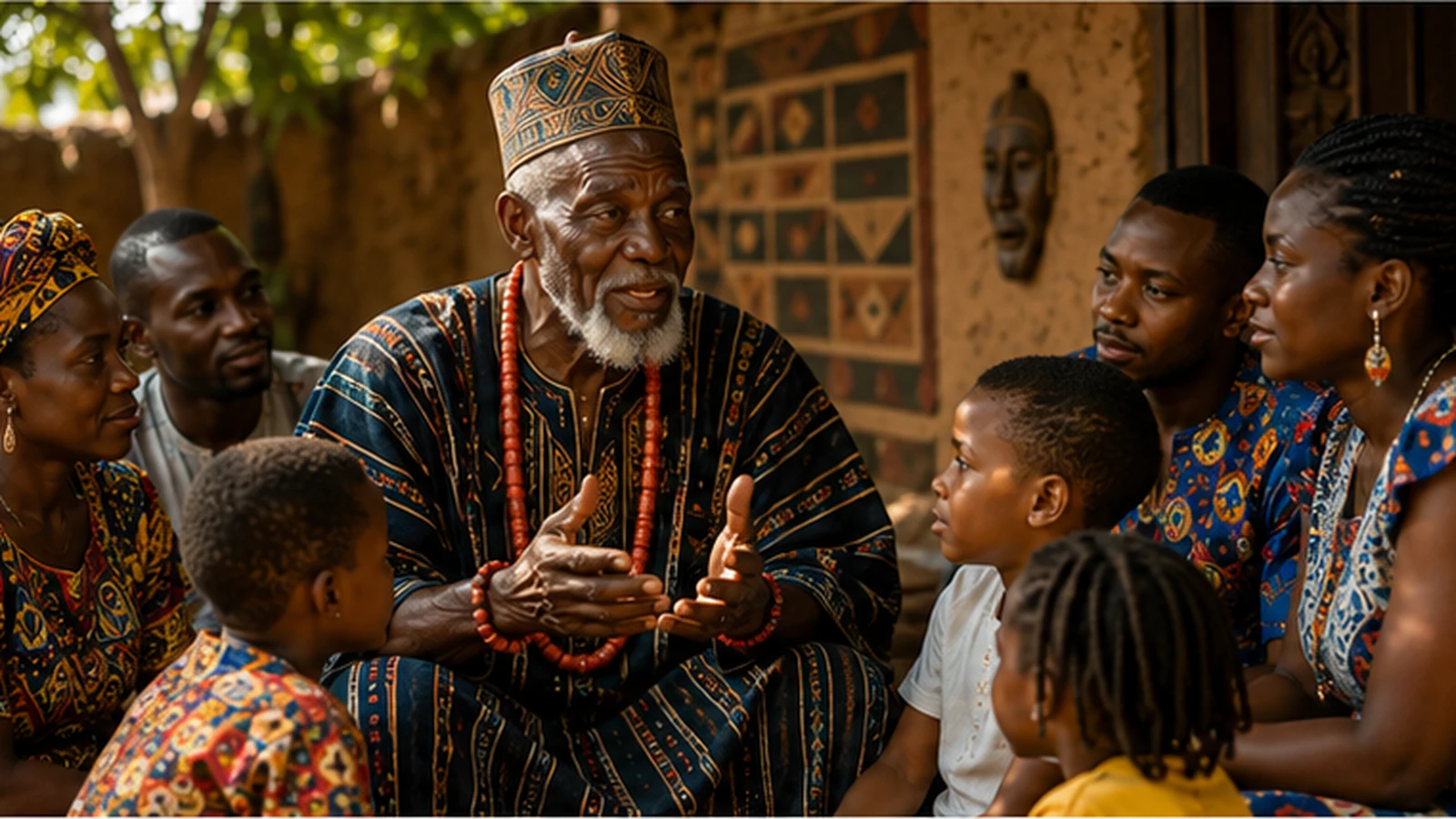
Ancestor reverence in African cultures refers to the ways some communities remember, respect, honor, and maintain relationships with deceased family or community members who continue to hold moral, historical, or spiritual significance.
It is not one standardized belief practiced across the entire continent. Africa contains many peoples, languages, religions, and historical experiences. Ideas about who qualifies as an ancestor, what ancestors can do, how they should be remembered, and whether they communicate with the living vary considerably.
In some traditions, ancestors are understood as respected elders who remain part of an extended family community after death. In others, only certain deceased leaders, founders, parents, or morally respected individuals receive ancestral status. Some communities place ancestors at the center of family and ritual life, while others emphasize different spiritual beings or religious authorities.
Ancestor reverence should therefore be studied through specific cultures rather than presented as a universal African practice. Academic research repeatedly emphasizes the internal diversity of African religions and the importance of interpreting ancestral practices through their own historical and social settings.
Key Points
Ancestor reverence is the respectful remembrance and recognition of deceased people who continue to matter within a family, lineage, community, or spiritual tradition.
Depending on the culture, ancestors may be understood as:
- Guardians of family continuity
- Sources of moral authority
- Links between past and present generations
- Protectors of descendants
- Custodians of inherited land
- Witnesses to family obligations
- Founders of lineages, communities, or political institutions
- Spiritual members of the extended family
Ancestor reverence is not always the same as worship. In many traditions, ancestors remain distinct from a supreme creator, divinities, or other spiritual beings.
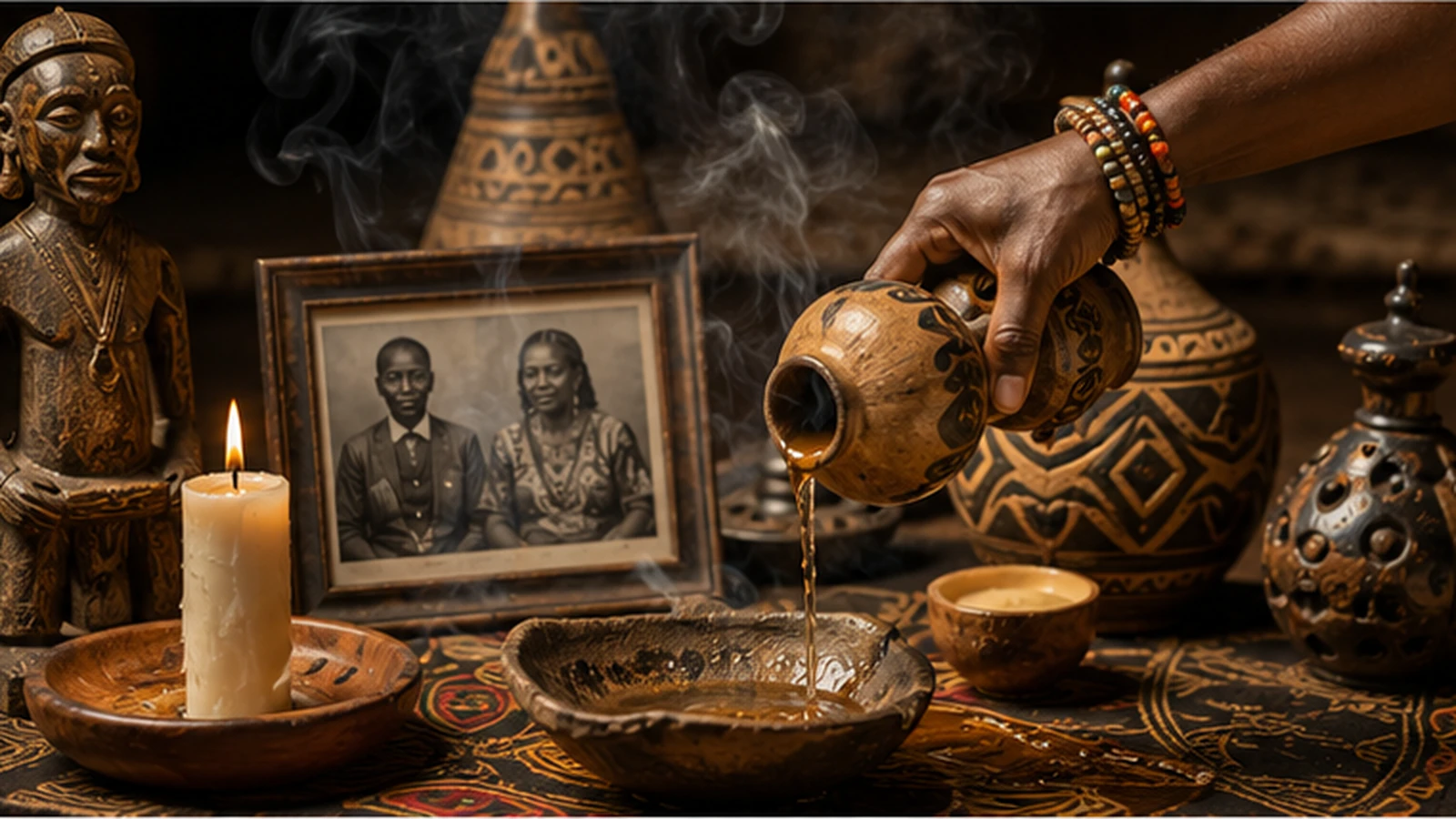
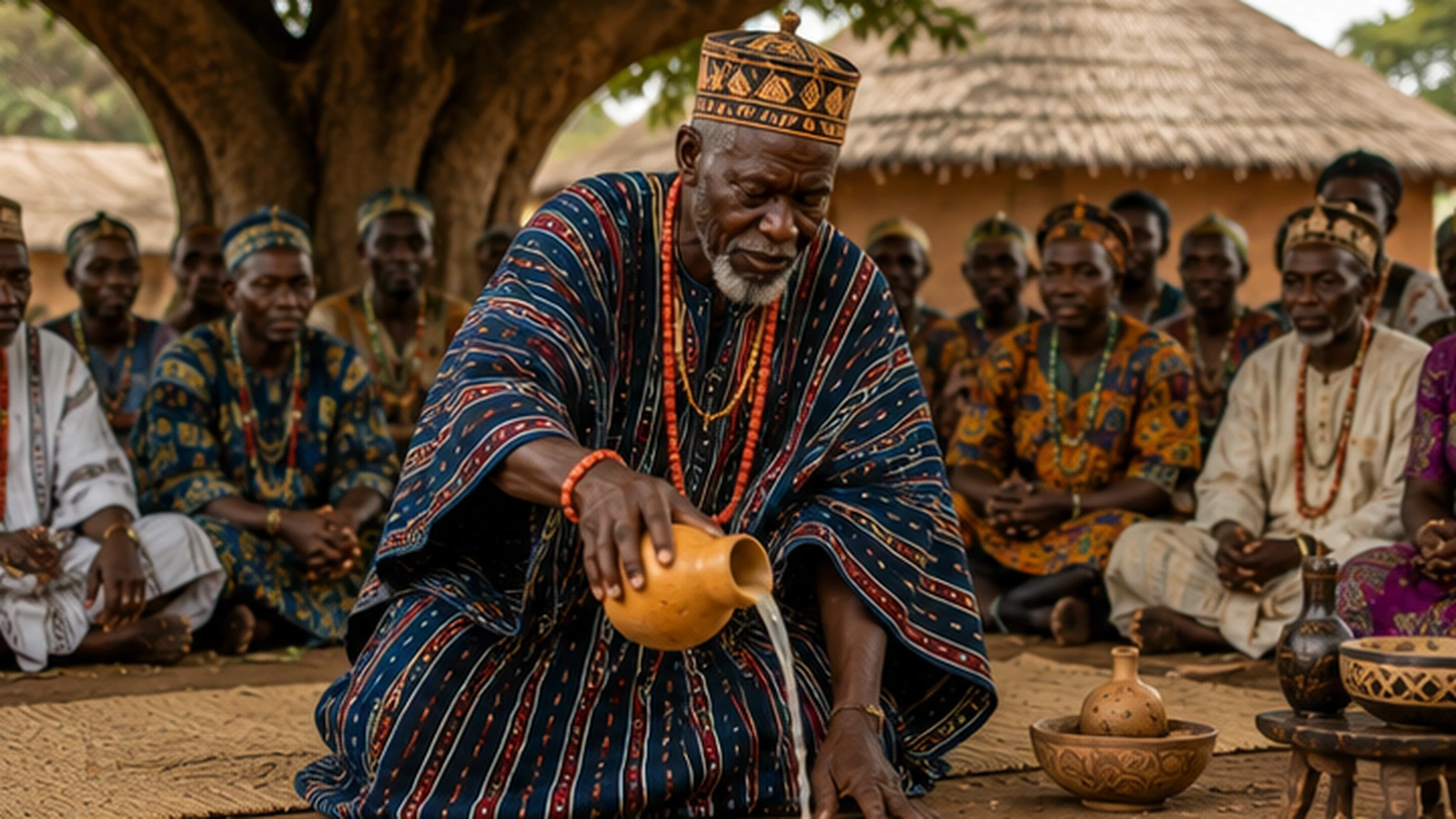
Respect may be expressed through storytelling, remembrance, burial customs, family names, moral behavior, care for inherited land, prayers, offerings, libations, memorial objects, or participation in family ceremonies.
No single description applies to every African culture.
What Is Ancestor Reverence?
Ancestor reverence is the practice of remembering and honoring deceased people whose lives, authority, relationships, or contributions remain important to the living.
The term may include spiritual practices, but it also involves family history, social identity, moral responsibility, political legitimacy, and cultural continuity.
Clear Definition
Ancestor reverence is the respectful recognition of deceased family or community members who continue to influence the identity, values, responsibilities, or spiritual life of the living.
Plain-Language Meaning
Ancestor reverence means that death does not necessarily erase a person’s place in the family or community.
A respected parent, grandparent, founder, leader, or elder may continue to be remembered as part of the wider social group. Their life may provide an example, their name may preserve family identity, and their memory may influence how descendants behave.
Why the Word “Reverence” Is Useful
The word reverence means deep respect. It can describe remembrance, honor, gratitude, consultation, or ceremonial recognition without automatically suggesting that an ancestor is treated as a god.
This distinction matters because the phrase ancestor worship has often been applied broadly to African religions without explaining what communities themselves believe.
Some traditions may use actions that resemble religious worship, such as prayer or offerings. Others treat ancestors more like senior family members, moral authorities, guardians, or intermediaries. Academic descriptions of African kin groups have sometimes characterized them as communities that include both living and deceased members, while also noting that the relationship can involve protection, obligation, correction, and authority.
Ancestor Reverence Is Not One African Belief
It is inaccurate to write that “Africans believe” one specific thing about ancestors.
Beliefs differ according to:
- Culture
- Language
- Region
- Family lineage
- Political history
- Religious affiliation
- Social status
- Historical period
- Local religious authority
In some societies, most respected adults may be regarded as ancestors after death. In others, ancestral status may be limited to elders, titled people, lineage heads, political leaders, parents with descendants, or people who received appropriate funerary rites.
Historical research shows that qualifications for ancestral status vary. Some Yoruba interpretations have treated deceased adults as ancestors while excluding children, whereas certain communities in the Cameroon Grassfields historically reserved ancestral recognition for titled individuals and chiefs.
Key Point
A deceased relative and a recognized ancestor are not always the same thing.
Ancestral status may be connected to the person’s character, social role, descendants, manner of death, burial, age, or relationship with the community.
Who May Become an Ancestor?
There is no continent-wide rule for who becomes an ancestor.
A community may consider factors such as:
- Whether the person lived to adulthood
- Whether the person had children
- Whether the person fulfilled family responsibilities
- Whether the person was respected
- Whether burial customs were completed
- Whether the person held a title or leadership position
- Whether descendants continue to remember the person
- Whether the person died under socially accepted circumstances
- Whether the person contributed to the lineage or community
An ancestor may therefore be understood as someone whose life continues to carry recognized meaning.
Family Ancestors
Family ancestors may include parents, grandparents, earlier lineage members, or respected relatives.
Their remembrance may help a family preserve:
- Genealogy
- Inherited names
- Land history
- Marriage relationships
- Moral expectations
- Family responsibilities
- Accounts of migration or hardship
Founding Ancestors
A founding ancestor may be remembered as the originator of a lineage, clan, settlement, political community, or ruling house.
Stories about such figures may explain:
- Where a community came from
- How land was acquired
- Why a lineage holds authority
- How leadership should be transferred
- Which families share historical relationships
Royal and Political Ancestors
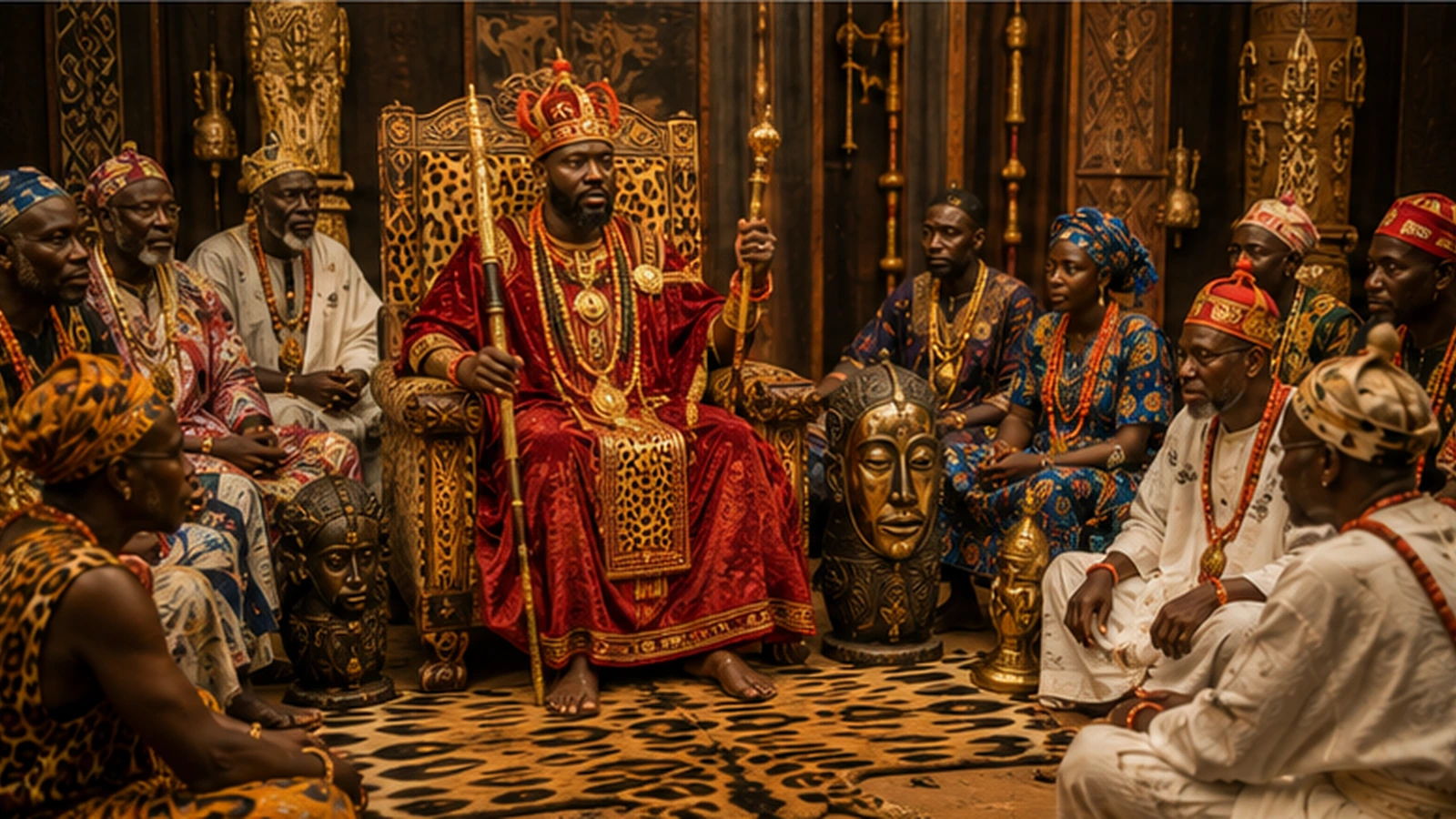
In some African kingdoms, rulers strengthened their legitimacy through relationships with earlier kings, dynastic founders, or culture heroes.
For example, artistic representations associated with Luba and Chokwe leadership in Central Africa have commemorated royal progenitors and expressed continuity with authoritative dynastic lines.
Such figures were not merely private family ancestors. They could symbolize political unity, inherited authority, and the historical identity of a wider population.
Community or Territorial Ancestors
Some ancestors may be connected with a clan, territory, or people rather than one household.
Among Shona traditions, for example, scholarly accounts distinguish family ancestral spirits from higher-level territorial or clan spirits, including mhondoro. Spirit mediums may act as recognized channels through which ancestral authority is expressed within community life.
Why Are Ancestors Revered?
Ancestor reverence can serve several overlapping purposes.
1. Preserving Family Identity
Ancestors connect living people with earlier generations.
Knowing family history can explain:
- Names
- Kinship ties
- Land rights
- Social responsibilities
- Marriage restrictions
- Leadership succession
- Family alliances
- Past conflicts
A person may understand their identity not only as an individual but as a member of a continuing lineage.
2. Teaching Moral Responsibility
Ancestors may represent the values expected of descendants.
A family may remember an ancestor for:
- Courage
- Honesty
- Generosity
- Leadership
- Care for children
- Protection of the community
- Skill in a profession
- Faithfulness to agreements
The ancestor’s story becomes a moral lesson.
Ancestor reverence is therefore not always focused on requesting supernatural help. It may encourage descendants to live in ways that protect the reputation and wellbeing of the family.
Frequently Asked Questions
What should readers know first about Ancestor reverence in African cultures?
Ancestor reverence in African cultures: Discover how ancestor reverence connects family, morality, memory, identity, and community across diverse African cult
What causes Ancestor reverence in African cultures?
Discover how ancestor reverence connects family, morality, memory, identity, and community across diverse African cultures without reducing them to one belief system. The safest next step is to compare the signs, prepare clear details, and request private guid
How does Ancestor reverence in African cultures work?
Discover how ancestor reverence connects family, morality, memory, identity, and community across diverse African cultures without reducing them to one belief system. The safest next step is to compare the signs, prepare clear details, and request private guid
Is it possible to get private guidance for Ancestor reverence in African cultures?
Discover how ancestor reverence connects family, morality, memory, identity, and community across diverse African cultures without reducing them to one belief system. The safest next step is to compare the signs, prepare clear details, and request private guid
How long does Ancestor reverence in African cultures take to understand?
Discover how ancestor reverence connects family, morality, memory, identity, and community across diverse African cultures without reducing them to one belief system. The safest next step is to compare the signs, prepare clear details, and request private guid
Can Ancestor reverence in African cultures affect relationships, family, work, or personal peace?
Discover how ancestor reverence connects family, morality, memory, identity, and community across diverse African cultures without reducing them to one belief system. The safest next step is to compare the signs, prepare clear details, and request private guid
Why do people seek spiritual guidance for Ancestor reverence in African cultures?
Discover how ancestor reverence connects family, morality, memory, identity, and community across diverse African cultures without reducing them to one belief system. The safest next step is to compare the signs, prepare clear details, and request private guid
What signs should someone notice before asking about Ancestor reverence in African cultures?
Discover how ancestor reverence connects family, morality, memory, identity, and community across diverse African cultures without reducing them to one belief system. The safest next step is to compare the signs, prepare clear details, and request private guid
When should someone contact a private spiritual guide?
Discover how ancestor reverence connects family, morality, memory, identity, and community across diverse African cultures without reducing them to one belief system. The safest next step is to compare the signs, prepare clear details, and request private guid
Article Information
- Publisher
- Ancestral Temple
- Editor
- Ancestral Temple
- Last updated
- Jul 26, 2026
- Last reviewed
- Jul 13, 2026
- Content version
- ff1e88f81a
This educational article should be read as cultural and spiritual information, not as medical, legal, financial, or emergency advice.
Helpful Related Guidance
Explore This Topic
African Spiritual Traditions · Ancestor Reverence In African Cultures
Related Topic Cluster
Ancestor Reverence In African Cultures
Complete Guide Understanding African Spiritual Traditions: A Historical IntroductionAbout the Author
 Ancestral Temple
Spiritual guide and practitioner with decades of experience in ancestral wisdom, rituals, and divine guidance.
Related Posts
View All

Leave a Comment
We'd love to hear your thoughts.
This was detailed without treating Africa as one culture. I am looking forward to the related articles.
The Shona examples were interesting. A full article about spirit mediums would be helpful.
The discussion of future generations made the article feel relevant rather than focused only on the past.
I would like to know more about how urban families maintain relationships with ancestral villages.
This has encouraged me to ask older relatives about our family history before more details are lost.
A strong introduction. I now understand why ancestor reverence should not automatically be called worship.
The misconceptions section addressed many ideas I have heard repeated online.
I appreciated the neutral tone. The article neither mocked the beliefs nor treated every claim as proven fact.
The section about ancestral land helped explain why graves and family compounds matter so much.
Remembering ancestors through good behavior is a powerful idea.
More recommended books and African scholars would be useful at the end of future posts.
The explanation of royal ancestors and political authority was interesting.
The most important lesson was that each community has its own understanding of who qualifies as an ancestor.
I liked that the article remained educational and did not provide instructions for private rituals.
The section about ethical conduct showed that honoring ancestors is not only about making offerings.
I agree that attending a family ceremony does not automatically define someone’s entire religious identity.
Could you write next about funeral rites and how they relate to ancestral status?
The headings made the long article easy to follow on my phone.
The article explained why cultural specificity matters without becoming too academic.
This would be useful reading for students of religion, anthropology, and African history.
Thank you for making it clear that spiritual claims should never justify abuse or medical neglect.
The diaspora section could become a separate article because that history is very deep.
I would love practical advice on recording interviews with grandparents and older relatives.
Digital family archives are a great idea. Too many old photographs have names that nobody remembers.
The glossary is helpful, especially the definitions of lineage, libation, and collective memory.
The discussion of memorial objects in museums gave me a new perspective on African art collections.
I liked the explanation that naming a child after a relative does not always mean reincarnation.
The examples from Yoruba, Igbo, Shona, and Central African cultures helped show the diversity.
This is one of the few articles I have read that treats the subject seriously without making it sound frightening or mysterious.
I would be interested in learning more about the difference between family ancestors and territorial ancestors.
The part about protecting the family name and leaving a good example for future generations stood out to me.
It was good to see the article avoid statements such as “all Africans believe.”
The explanation of ancestors as continuing elders was very clear.
The privacy reminder was necessary. People should not film every family ceremony and post it online.
I appreciated the discussion of Christian and Muslim families that continue some ancestral customs.
The section about colonial language was useful. Many old descriptions clearly lacked cultural context.
The comparison table made the difference between remembrance, reverence, veneration, and worship easier to understand.
I would like to read a full article about libation and how its meaning changes between different communities.
I came here thinking ancestor reverence was one practice across Africa. This article corrected that assumption.
The point about ancestral land being more than economic property was especially important.
Very respectful and balanced. It explained spiritual beliefs without making exaggerated promises.
The section on oral history reminded me how much family knowledge can disappear when elders are not interviewed.
I liked that the article connected ancestors with morality and family responsibility instead of focusing only on rituals.
The explanation about not every deceased person automatically becoming an ancestor was new to me.
I appreciated the distinction between ancestor reverence and ancestor worship. People often use those phrases as though they mean exactly the same thing.