
How Different African Communities Remember Their Ancestors
Pillar Article
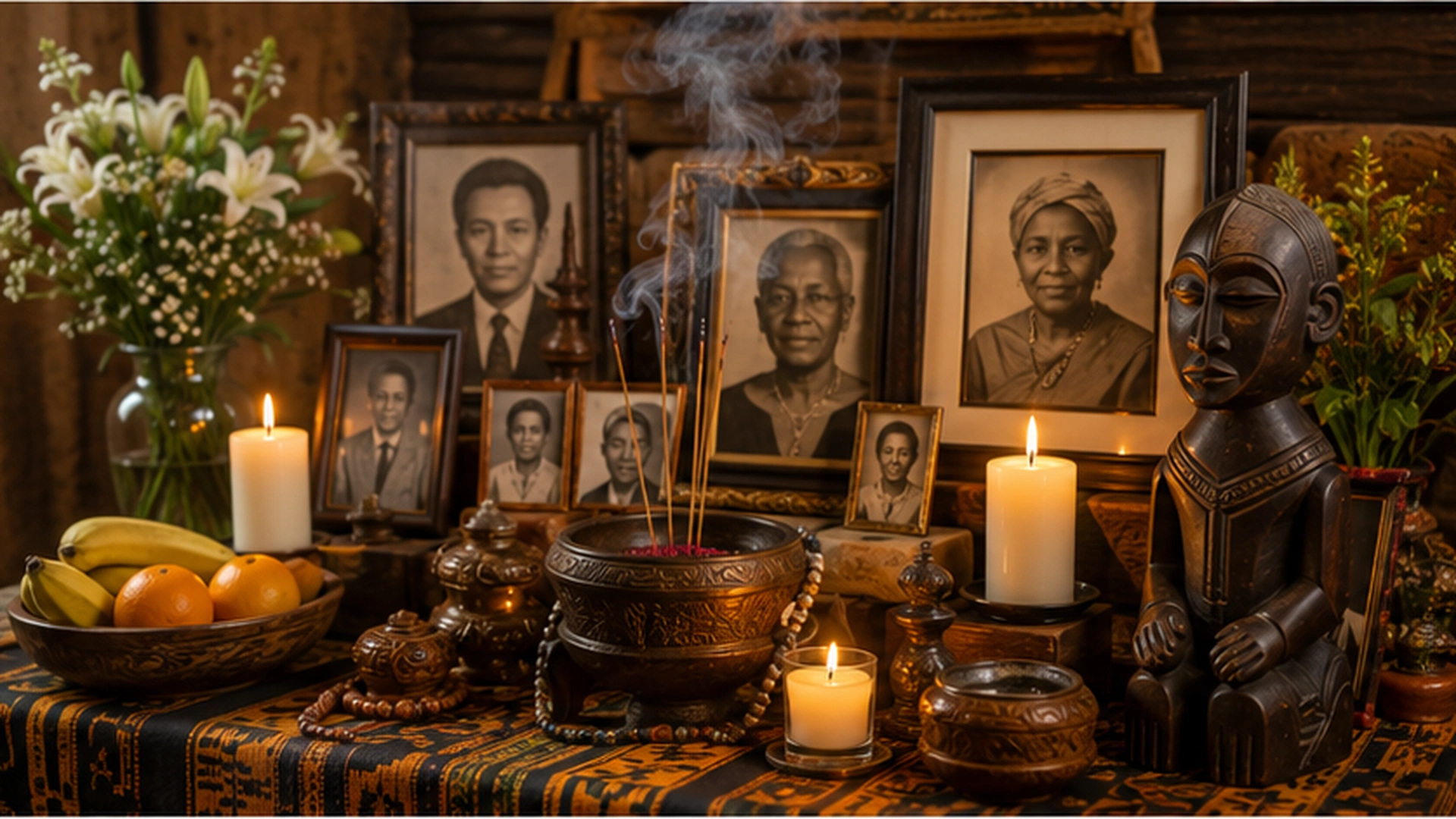
Quick Summary
Discover how African communities remember their ancestors through family stories, graves, libations, masquerades, music, royal altars, sacred land, and modern digital archives.
Different African communities remember their ancestors through oral histories, family names, graves, libations, memorial meals, sacred places, music, masquerades, commemorative objects, royal altars, and responsibilities toward living relatives.
These practices are not identical across Africa.
The Yoruba traditions associated with Egúngún masquerades differ from Shona bira ceremonies in Zimbabwe. Royal ancestral altars in the historical Kingdom of Benin serve different purposes from Fang reliquary traditions in Central Africa. Xhosa family rituals in South Africa should not be interpreted through the same assumptions as Malagasy famadihana customs.
Even within one ethnic or linguistic community, families may differ according to region, lineage, church membership, Islamic practice, migration, education, urban life, and personal belief.
Ancestor remembrance is therefore not one universal African religion. Scholars have repeatedly emphasized that ancestor-related practices are rooted in specific systems of family, descent, political authority, history, and community organization. They have also warned that older academic theories sometimes exaggerated the uniformity of African lineage and ancestor systems.
Key Points
African communities may remember their ancestors by:
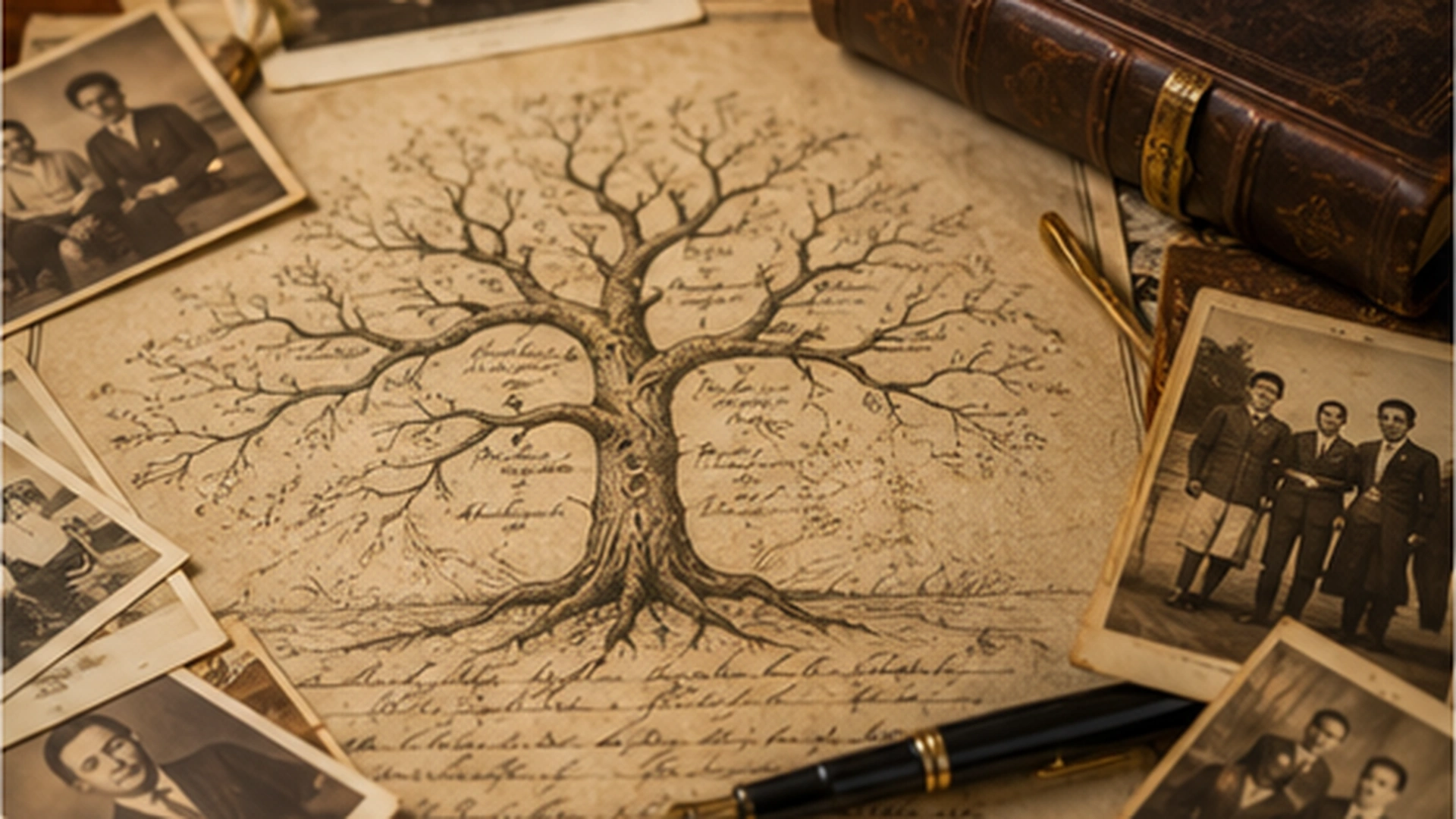
- Preserving genealogies and family names
- Sharing oral histories
- Maintaining graves and burial sites
- Pouring libations
- Preparing memorial food or drink
- Holding funeral and anniversary gatherings
- Performing ancestral music and dance
- Presenting masquerades associated with lineage ancestors
- Consulting recognized family elders
- Maintaining family shrines or commemorative objects
- Honoring royal predecessors
- Protecting ancestral land
- Naming children after deceased relatives
- Reburying or caring for ancestral remains in culturally specific traditions
- Recording photographs, stories, and family records digitally
Not every community uses all these practices. Some emphasize spiritual interaction, while others focus on historical remembrance, family responsibility, religious prayer, or grave care.
What Does It Mean to Remember an Ancestor?
Remembering an ancestor means recognizing the continuing importance of a deceased relative, family founder, community elder, ruler, or earlier generation.
The remembrance may be:
- Spiritual
- Familial
- Historical
- Political
- Moral
- Emotional
- Territorial
- Religious
- Cultural
Clear Definition
Ancestral remembrance is the preservation or ceremonial recognition of deceased people who remain important to the identity, history, responsibilities, or spiritual life of a family or community.
Plain-Language Meaning
An ancestor is remembered when the living continue to preserve the person’s name, story, burial place, values, office, or relationship with the family.
This does not always involve a formal ritual.
A grandmother may be remembered through a recipe. A royal predecessor may be represented on an ancestral altar. A family founder may be recognized through a genealogy, grave, praise name, or story about ancestral land.
Why There Is No Single African Ancestor Tradition
Africa contains thousands of communities with distinct:
- Languages
- Family structures
- Religions
- Political histories
- Funeral customs
- Environments
- Legal traditions
- Ideas about life and death
Ancestor-related practices may be organized around:
- A household
- A lineage
- A clan
- A royal dynasty
- A village
- A religious association
- A territorial community
- A national history
Some traditions understand ancestors as deceased elders who remain concerned with their descendants. In others, only certain deceased people qualify for ancestral recognition. Age, moral reputation, descendants, proper burial, political title, family position, or the circumstances of death may influence whether someone is treated as an ancestor.
The relationship may also be structured through living elders who represent the lineage and mediate between deceased and living generations.
Oral History and Family Storytelling
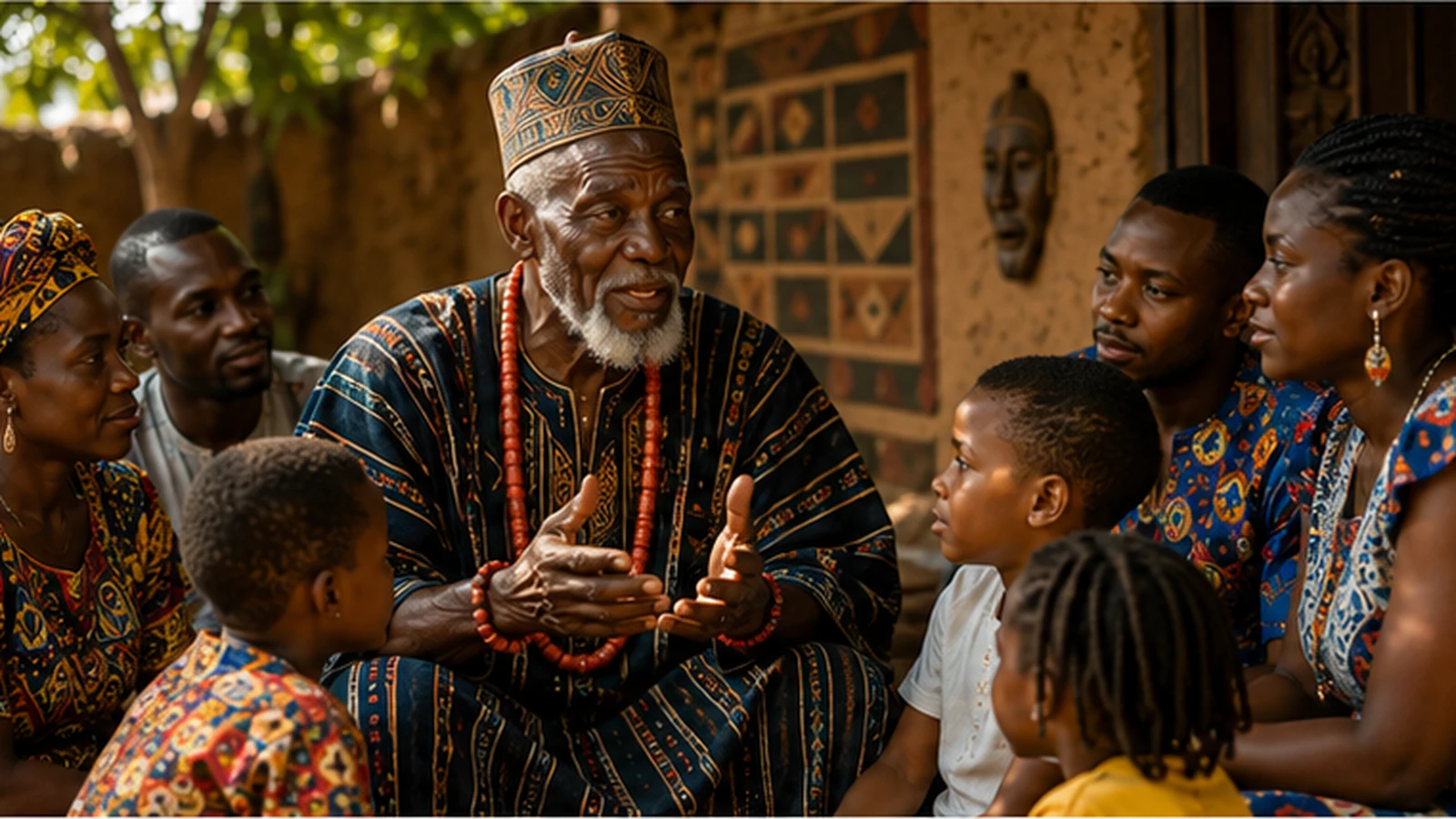
One of the most widespread ways African communities preserve ancestral memory is through speech.
Oral knowledge may include:
- Genealogies
- Migration accounts
- Praise names
- Family histories
- Proverbs
- Funeral songs
- Clan origins
- Stories about land
- Accounts of marriage alliances
- Memories of political leadership
- Explanations of sacred places
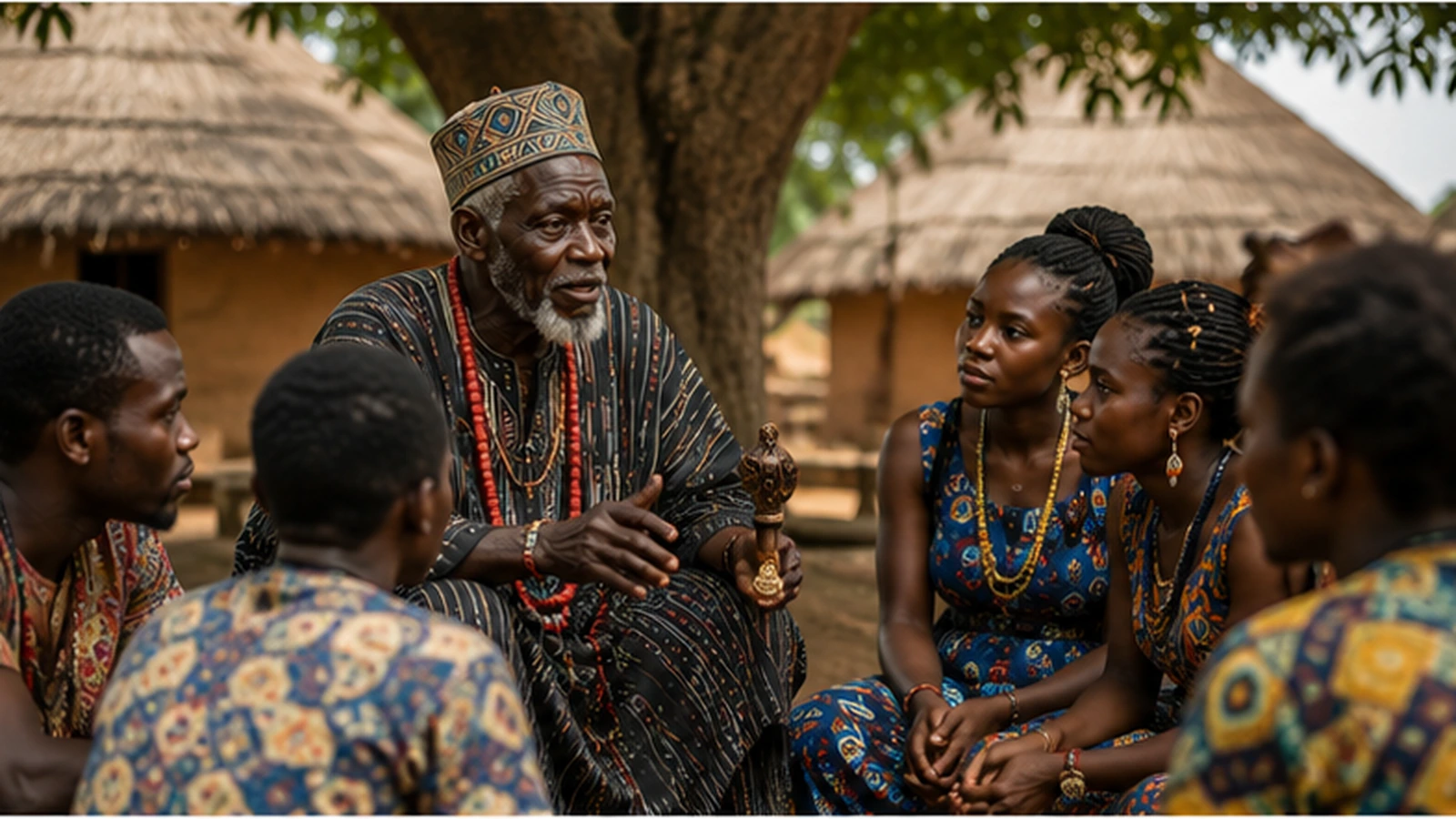
An elder may know why a family carries a particular name, where earlier relatives lived, who established a settlement, or how land and responsibilities passed between generations.
Stories Preserve More Than Names
A genealogy may explain who descended from whom, but a story provides context.
It may describe:
- An ancestor’s occupation
- A difficult migration
- A conflict between relatives
- A period of famine
- Religious conversion
- A marriage between communities
- The founding of a family home
- The loss or recovery of land
Oral tradition is not always a fixed script. Different relatives may preserve different versions, and those differences should be documented rather than erased.
Elders as Custodians of Memory
In some communities, elders possess authority because they stand closer in generational order to deceased family leaders. Their knowledge may include both public history and information intended only for relatives or initiated participants.
An elder may preserve ancestral memory by:
- Naming deceased relatives
- Leading a family meeting
- Explaining funeral obligations
- Identifying graves
- Correcting genealogies
- Teaching younger people
- Mediating inheritance disputes
- Preserving the meaning of family property
Names as Living Memorials
Names can function as powerful forms of ancestral remembrance.
A child may receive:
- The name of a grandparent
- A lineage name
- A praise name
- A name connected with a founder
- A name recalling the circumstances of birth
- A title inherited through family history
Naming a child after an ancestor does not always mean the child is believed to be the ancestor reborn.
It may express:
- Gratitude
- Continuity
- Family belonging
- Admiration
- Historical memory
- Hope that valued qualities will continue
Correct pronunciation and spelling are important because altering a name can weaken the historical information it carries.
Graves and Burial Places
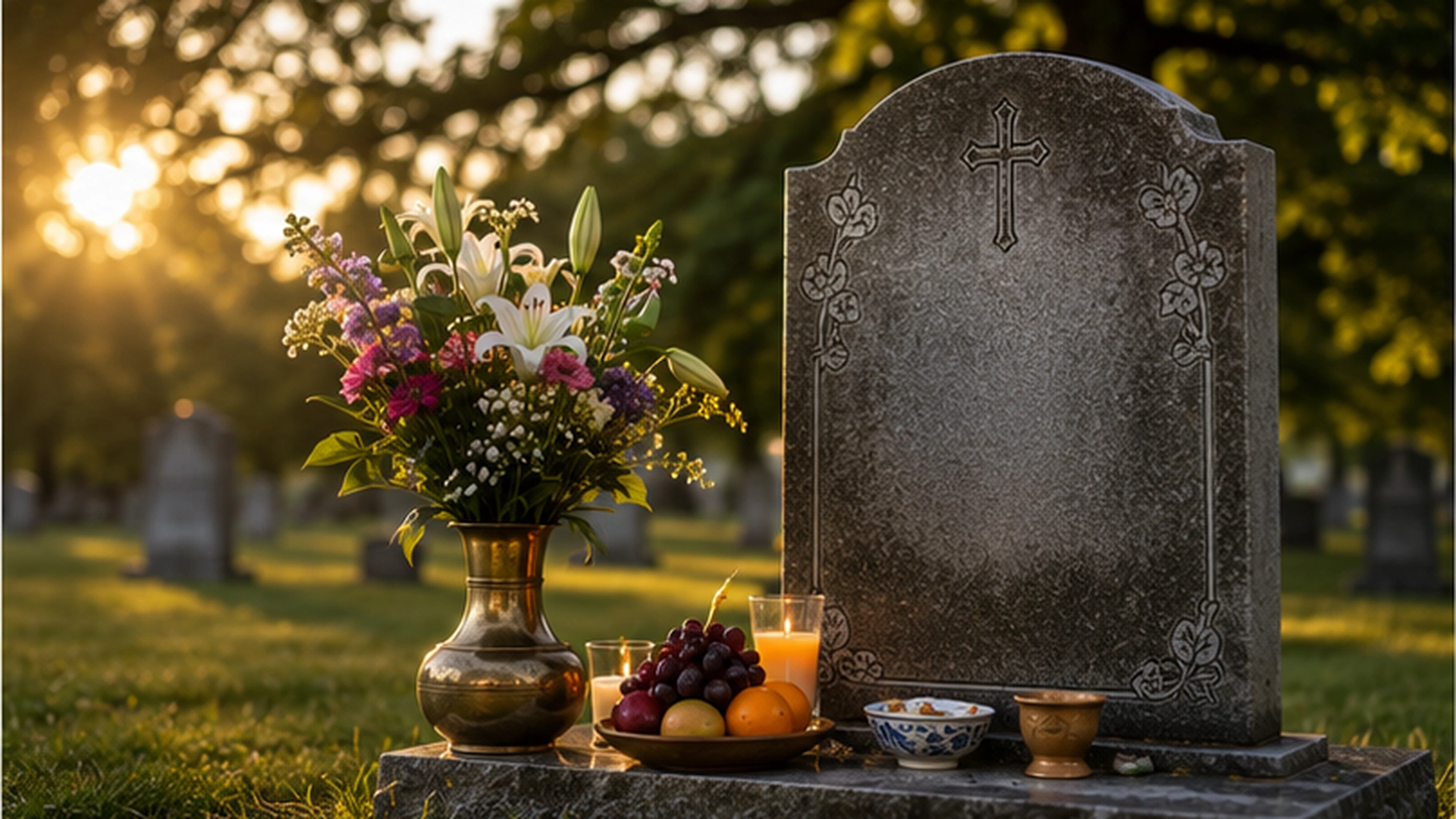
Graves provide physical locations where families can mourn, remember, pray, clean, repair, or teach younger relatives about deceased family members.
A grave may connect:
- A person with a name
- A family with a particular place
- Descendants with earlier generations
- Burial history with land rights
- Personal grief with community memory
Grave Care
Depending on the family, grave remembrance may involve:
- Clearing vegetation
- Repairing a marker
- Bringing flowers
- Burning culturally appropriate incense
- Praying
- Sharing family news
- Pouring a libation
- Gathering on an anniversary
- Introducing children to deceased relatives
These activities do not have the same meaning everywhere.
Some families consider a grave a place for spiritual communication. Others understand grave care mainly as respect, mourning, historical preservation, or religious duty.
Graves and Ancestral Land
In many communities, burial places help establish long relationships with land.
A family may point to:
- An ancestral graveyard
- Ruins of an earlier home
- A sacred tree
- A river crossing
- An old cattle enclosure
- A former farming area
Such places can become evidence of historical belonging and inherited responsibility. Research around Lake Mutirikwi in Zimbabwe, for example, shows how graves, ruins, landscape, lineage claims, and contemporary struggles over land remain closely connected.
Libation and Spoken Remembrance
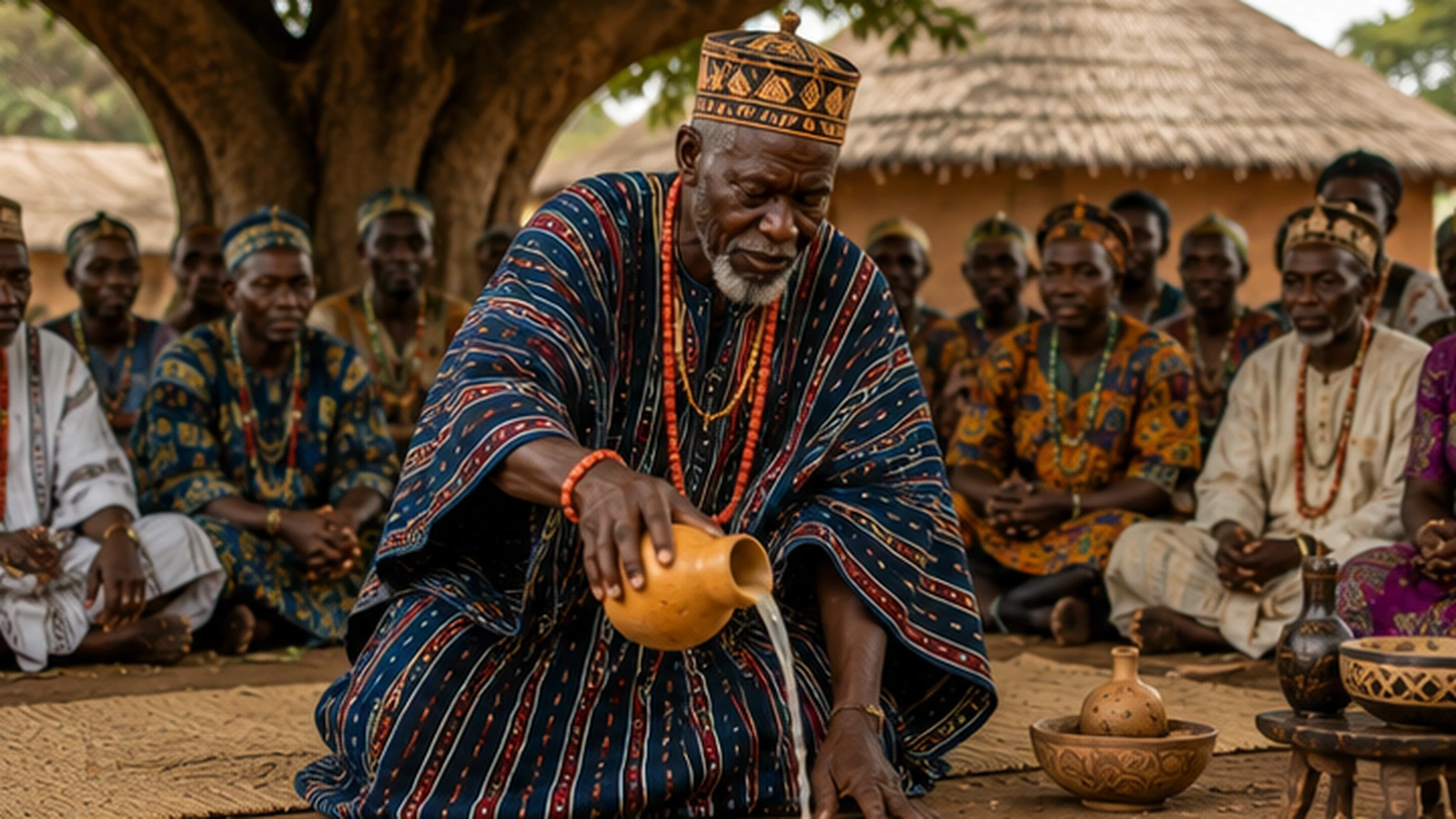
Some African communities pour libations during funerals, family gatherings, festivals, installations, or ceremonies seeking peace and blessing.
A libation may involve water, palm wine, traditional beer, or another culturally appropriate liquid.
The officiant may:
- Recognize a creator
- Name ancestors
- Give thanks
- Ask for family unity
- Request protection
- Explain why people have gathered
- Remember deceased elders
- Call for reconciliation
There is no universal African libation prayer.
The person authorized to perform it may be a family elder, lineage head, chief, priest, priestess, or another recognized representative.
Libation as Historical Speech
The spoken words may preserve:
- Names
- Titles
- Family relationships
- Community origins
- Earlier agreements
- Moral expectations
- Leadership responsibilities
The ceremony may therefore communicate with both the spiritual authorities being addressed and the living audience.
Yoruba Egúngún Traditions
Among Yoruba communities, Egúngún traditions are associated with honoring lineage ancestors through elaborate masquerade performance.
Egúngún ensembles are not merely costumes. They may include layered textiles, a fully concealed performer, music, chanting, drumming, movement, family participation, and recognized ceremonial authority.
Smithsonian documentation describes Egúngún as localized Yoruba masquerade traditions that appear at annual festivals, funerals, and special events and generally honor ancestral spirits.
Ancestors Remembered Through Movement
During performance, the masquerade may:
- Represent collective lineage ancestors
- Bless descendants
- Recall family history
- Honor deceased elders
- Offer moral commentary
- Participate in funerary commemoration
- Strengthen family identity
The motion of the layered cloth is an important part of the performance. It should not be interpreted only by examining a static museum object.
Community-Specific Styles
Egúngún traditions vary among Yoruba towns, lineages, and regions.
Differences may involve:
- Textiles
- Colors
- Music
- Titles
- Performance style
- Family ownership
- Gendered offices
- Festival timing
- Local history
It is therefore inaccurate to describe one Egúngún ensemble as representing every Yoruba community.
Edo and Benin Royal Ancestor Altars
In the historical Kingdom of Benin, royal ancestors were commemorated through palace altars containing cast-brass heads, bells, carved objects, and other works connected with the authority of deceased Obas and Queen Mothers.
A new Oba’s responsibilities included establishing a shrine for his predecessor. The altar supported dynastic continuity and provided a place where the reigning ruler maintained a relationship with his royal ancestor.
Brass Commemorative Heads
The heads did not function as ordinary portraits in the modern photographic sense.
They represented:
- Royal office
- Dynastic continuity
- The deceased ruler
- Leadership
- The wellbeing of the kingdom
- Communication between present and earlier rulers
Brass bells arranged on Benin ancestral altars could be rung to summon royal ancestors to hear prayers and receive offerings.
Remembering Queen Mothers
Past Queen Mothers, known as Iyobas, also received ancestral altars furnished with distinctive commemorative heads. Their remembrance reflected their political and dynastic importance within the Benin court.
Royal Memory Is Not the Same as Household Memory
Benin royal ancestor altars belonged to a palace institution.
They should not be treated as general instructions for how every Edo family remembers deceased relatives.
Fon Commemorative Asen
Among Fon communities, asen are portable iron commemorative altars created in memory of significant individuals.
An asen could be installed within a family shrine house and serve as a place through which living relatives engaged with the remembered dead.
The object required continued care and ritual attention rather than functioning as a static decoration.
What an Asen May Preserve
Its imagery may communicate:
- The deceased person’s occupation
- Social identity
- Status
- Family relationships
- Personal history
- Religious associations
The asen demonstrates how memory can be preserved through commissioned metalwork as well as oral storytelling.
Fang Reliquary Traditions
Historically, some Fang families preserved ancestral remains within reliquary containers that moved with the family during migration.
Carved heads or figures known as reliquary guardians could be positioned above the containers, protecting sacred contents and making the ancestral relationship visible to authorized participants.
Metropolitan Museum documentation explains that Fang families transported bark containers holding ancestral remains, while carved guardian figures protected the contents from unauthorized viewing.
Memory Through Relics
The preserved remains could represent:
- Family continuity
- Lineage legitimacy
- Protection
- Migration history
- Relationships with deceased elders
- Restricted religious authority
These traditions must be approached carefully because they involve human remains and knowledge that was not available equally to every community member.
Museum Separation
Many reliquary figures in international collections were separated from their original containers and ancestral materials.
This separation can make the objects appear to be independent sculptures when they were once parts of larger family and ritual systems.
Mbete and Kota Reliquary Forms
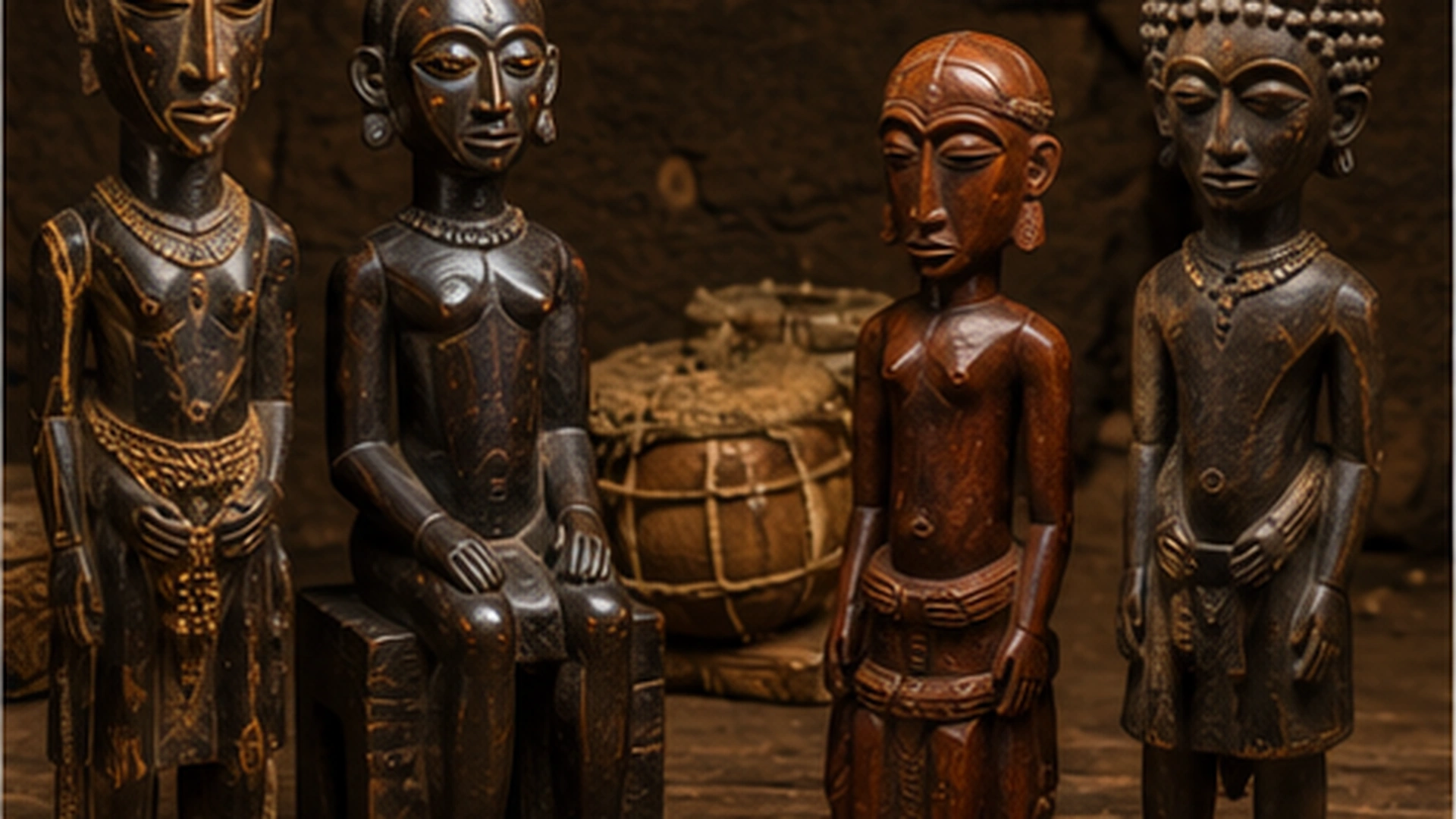
Mbete and Kota communities also developed distinctive ancestral reliquary traditions.
In some Mbete figures, ancestral materials were placed inside a hollowed torso. The visible sculpture functioned as both a receptacle and guardian.
These objects should not be generalized as “African ancestor statues.”
Their meanings depended on:
- The particular community
- Family ownership
- The materials contained
- Access restrictions
- Ritual use
- Historical period
Shona Bira Ceremonies in Zimbabwe
Among Shona communities, a bira may bring families together through music, dance, prayer, food, and spirit-medium traditions.
Academic descriptions identify bira as an ancestral ceremony that may include mbira music, singing, dancing, and forms of spirit possession through which ancestral spirits are invited to communicate with the living.
Music as Ancestral Memory
The mbira dzavadzimu, often translated as “mbira of the ancestral spirits,” can play an important role in some ceremonies.
Music may:
- Establish the ceremonial environment
- Preserve traditional compositions
- Support dancing and singing
- Connect participants with oral history
- Accompany spirit-medium practice
- Unite the extended family
The instrument alone is not the entire tradition. Meaning comes from performers, songs, family participation, timing, and ceremonial purpose.
Bira and Family Recognition
A bira may be associated with:
- Introducing a deceased person into ancestral status
- Seeking guidance
- Addressing family problems
- Remembering deceased relatives
- Reaffirming relationships among living family members
- Recognizing responsibilities toward land
One academic description characterizes bira as a commemoration involving ritual, song, and dance through which the spirit of the deceased may be accepted into the family of ancestors.
Not Every Shona Family Practices Identically
Practices differ according to region, family, Christian affiliation, specialist authority, and historical change.
Xhosa Family Rituals in South Africa
Among some Xhosa families in South Africa’s Eastern Cape, ancestral rituals remain connected with the rural homestead, extended kinship, family cooperation, and relationships between relatives living in rural and urban areas.
Research describes ceremonies invoking ancestors alongside forms of Christian prayer as ways families try to maintain trust, investment in the homestead, and reciprocal obligations among dispersed relatives.
The Homestead as a Place of Memory
The homestead may represent:
- Family continuity
- Livestock and livelihood
- Ancestral presence
- Burial history
- The authority of senior relatives
- A place to which urban family members remain connected
Ancestral remembrance may therefore help maintain relationships across migration and economic change.
Christianity and Ancestral Relationships
Some families understand Christianity and ancestral obligations as compatible, while others reject ancestral invocation.
A person may attend a family ceremony for:
- Kinship responsibility
- Respect for elders
- Cultural identity
- Family unity
- Spiritual belief
Attendance alone does not reveal one uniform theology.
Nguni Diviners and Ancestral Calling
In some Nguni traditions, becoming a diviner may be associated with a calling attributed to ancestors.
Historical scholarship describes diviners, often women, undergoing a training and initiation process connected with an ancestor-sent calling or illness known in some settings as thwasa.
This is a specialist religious role and should not be treated as a general experience shared by every Xhosa, Zulu, Swati, or Ndebele person.
Malagasy Famadihana
In parts of Madagascar’s central highlands, some Malagasy families practice famadihana, often translated as “turning of the ancestors” or “turning of the bones.”
The ceremony can involve opening a family tomb, bringing out ancestral remains, replacing old burial cloth with new cloth, carrying the wrapped remains, sharing music and food, and returning the ancestors to the tomb.
Family Reunion and Remembrance
Famadihana may bring together relatives who live in different locations.
The gathering can involve:
- Remembering family history
- Renewing burial cloth
- Introducing younger relatives
- Music and dancing
- Maintaining the family tomb
- Reaffirming kinship
- Sharing expenses and responsibilities
The atmosphere may combine mourning, celebration, reunion, and respect.
Important Caution
Famadihana is not practiced by every Malagasy community or family.
Its timing, meaning, religious interpretation, and continued practice vary. It should not be presented as “the Madagascar funeral ritual” or copied outside its family and regional context.
Human remains should never be photographed, handled, displayed, or imitated without explicit permission and respect for the communities concerned.
Funeral Ceremonies and the Transition to Ancestral Memory
Funerals are important moments of remembrance across African societies, but customs differ greatly.
A funeral may:
- Publicly identify the deceased
- Gather dispersed relatives
- Recite family history
- Recognize social achievements
- Transfer responsibilities
- Resolve unfinished obligations
- Mark stages of mourning
- Confirm burial rights
- Preserve songs and prayers
- Begin the process through which a deceased elder may be remembered as an ancestor
Funeral and Ancestor Are Not Identical Categories
A funeral honors a deceased person, but not every deceased person is necessarily regarded as an ancestor.
A community may distinguish among:
- Recently deceased relatives
- Remembered family members
- Moral elders
- Lineage ancestors
- Royal ancestors
- Restless or improperly buried dead
- Historical founders
These distinctions must be learned from the community itself.
Memorial Food and Shared Meals
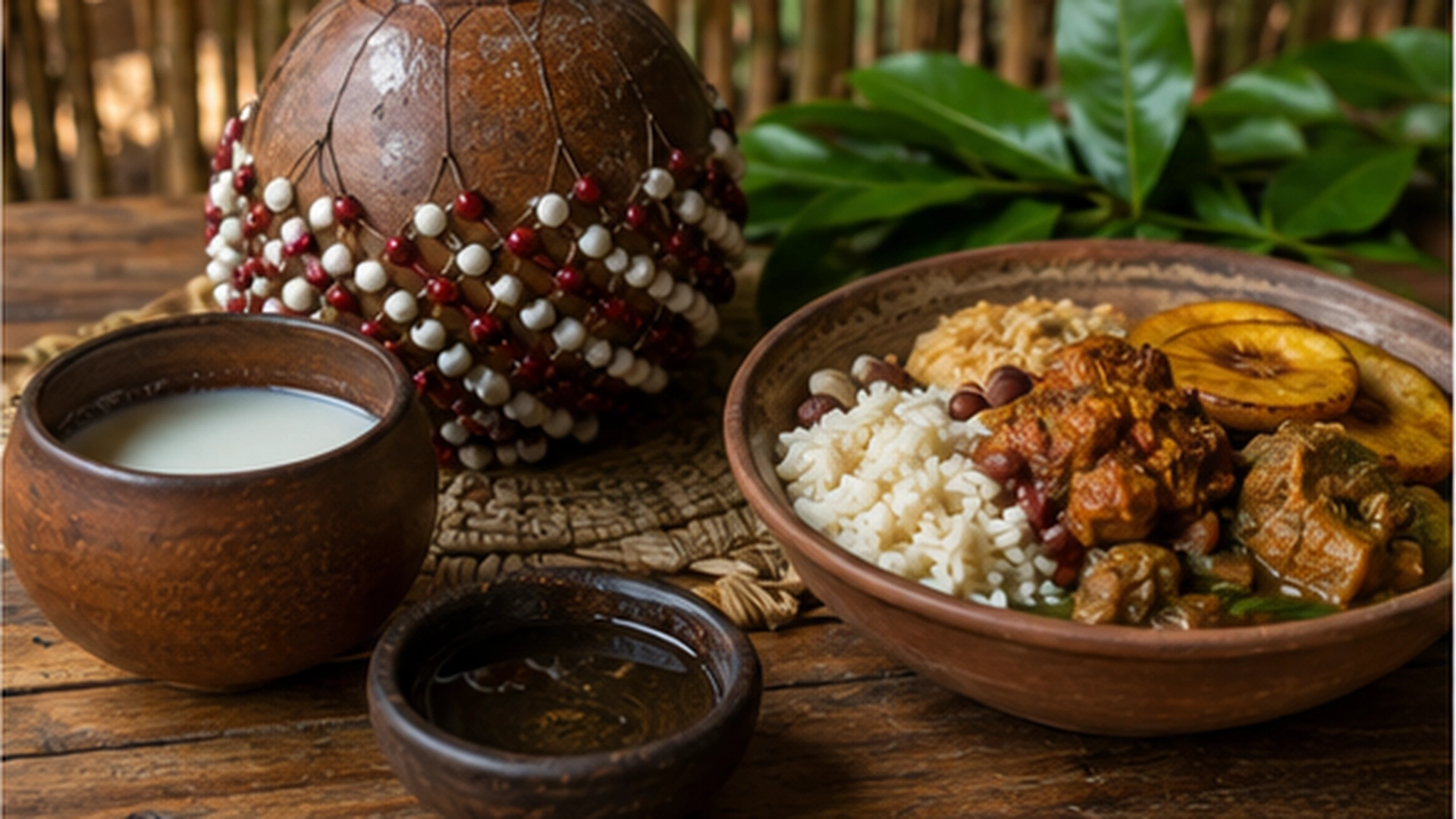
Food can help preserve ancestral memory through taste, hospitality, and family participation.
Families may prepare:
- A deceased relative’s favorite dish
- Food associated with a funeral
- A traditional beverage
- A meal shared after prayer
- Seasonal foods connected with a memorial date
- Dishes inherited through generations
Food may serve as:
- An offering
- A memorial meal
- A form of hospitality
- A symbol of family identity
- A way to teach younger people
A meal eaten in memory of a grandparent should not automatically be described as a religious offering.
Personal Belongings and Heirlooms
Families may preserve ancestral memory through objects such as:
- Walking sticks
- Jewelry
- Tools
- Clothing
- Religious books
- Musical instruments
- Cooking utensils
- Letters
- Photographs
- Furniture
- Land documents
An object becomes meaningful because of its relationship with a person and a story.
A tool may recall an ancestor’s occupation. A head covering may represent religious service. A cooking pot may preserve the memory of family gatherings.
Without documentation, later generations may lose the stories attached to these objects.
Royal Ancestors and Community Ancestors
Royal ancestors often receive different forms of remembrance from ordinary household ancestors.
Royal memory may support:
- Succession
- Political legitimacy
- Palace history
- Community identity
- The authority of a current ruler
- Public festivals
Household memory may focus more on:
- Kinship
- Property
- burial
- Parenting
- Moral example
- Family continuity
These categories can overlap, but they should not be confused.
Ancestors and Moral Responsibility
Ancestors may be remembered as moral examples whose lives teach descendants how to behave.
Stories may praise:
- Courage
- Generosity
- Hospitality
- Good leadership
- Responsible parenting
- Protection of land
- Honesty
- Community service
They may also warn against:
- Greed
- Family division
- Broken promises
- Abuse of authority
- Neglect
- Betrayal
Honest Memory
Respectful remembrance does not require presenting every ancestor as perfect.
A family can appreciate sacrifices while acknowledging:
- Violence
- Unfair inheritance
- Gender discrimination
- Abandonment
- Political wrongdoing
- Harmful decisions
Ending a harmful inherited pattern may be one of the most meaningful ways to protect future descendants.
Christianity, Islam, and Ancestor Remembrance
Christianity and Islam have shaped ancestor remembrance in many African communities.
Families may:
- Pray to God for deceased relatives
- Maintain graves
- Hold church memorial services
- Recite Qur’anic passages
- Give charity in memory of the deceased
- Preserve family names and genealogy
- Reject direct ancestral invocation
- Combine cultural and religious funeral customs
There is no single Christian or Muslim African response to ancestral traditions.
Cultural Remembrance Without Invocation
A person may reject communication with ancestors while still:
- Visiting graves
- Preserving photographs
- Attending family funerals
- Caring for ancestral land
- Recording genealogy
- Naming children after relatives
Cultural participation should not automatically be interpreted as agreement with every spiritual belief associated with the event.
Colonialism and Changes in Ancestral Memory
Colonial authorities and missionaries frequently condemned African ancestor practices as superstition, idolatry, or paganism.
Colonial systems also altered:
- Land ownership
- Burial access
- Traditional leadership
- Family settlement
- Sacred sites
- Movement between rural and urban areas
- Control over historical objects
Museums and collectors removed ancestral figures, reliquaries, royal altar objects, masks, and human remains from their original communities.
When objects were separated from songs, prayers, containers, remains, families, or ceremonial settings, much of their meaning became difficult to reconstruct.
Urbanization and Migration
Migration has changed how families remember ancestors.
Relatives may live in:
- Different cities
- Different countries
- Refugee communities
- Diaspora neighborhoods
- University towns
- Mining or industrial regions
Families may return to ancestral homes for:
- Funerals
- Grave visits
- family meetings
- Weddings
- Annual ceremonies
- Land discussions
Xhosa research illustrates how ritual gatherings can sustain relationships between urban relatives and rural homesteads.
Digital Ancestral Memory
Modern African families increasingly preserve ancestral history through:
- Scanned photographs
- Recorded interviews
- Family WhatsApp groups
- Online family trees
- Memorial videos
- Digital grave records
- Cloud archives
- Livestreamed funerals
- Family-history websites
- Recorded songs and praise poetry
Technology may help preserve information that would otherwise disappear.
Digital Privacy
Families should obtain permission before uploading:
- Funeral videos
- Grave locations
- Sensitive genealogies
- Private prayers
- Disputed family histories
- Photographs of human remains
- Restricted ceremonies
Digital preservation should not turn family grief or sacred knowledge into public entertainment.
African Diaspora Communities
African-descended communities outside the continent have developed ancestral remembrance traditions shaped by migration, enslavement, colonialism, Christianity, Islam, Indigenous interaction, and modern cultural revival.
Diaspora remembrance may involve:
- Libations
- Family genealogy
- Memorial ceremonies
- Honoring victims of enslavement
- Remembering freedom fighters
- Visiting African ancestral sites
- Preserving names and cultural practices
- Digital family research
Diaspora traditions should not be treated as unchanged copies of one African culture. They have their own histories and meanings.
Comparison of Selected Communities and Practices
- Community or tradition
- Form of remembrance
- Main context
- Yoruba Egúngún
- Masquerade, textiles, music, dance
- Lineage ancestors, festivals, funerals
- Edo/Benin royal tradition
- Brass heads, bells, palace altars
- Royal ancestors and dynastic continuity
- Fon asen
- Portable commemorative iron altar
- Family or royal remembrance
- Fang reliquaries
- Preserved ancestral materials and guardian figures
- Family continuity and restricted ritual
- Shona bira
- Mbira, song, dance, mediums, family gathering
- Communication and ancestral recognition
- Some Xhosa families
- Homestead rituals and extended-kin gatherings
- Reciprocity, land, family continuity
- Some Malagasy families
- Famadihana and family-tomb care
- Kinship renewal and ancestral remembrance
- Modern urban families
- Photographs, recordings, digital archives
- Historical and intergenerational memory
The table presents broad educational themes and should not replace community-specific research.
What These Traditions Have in Common
Despite their differences, many ancestral remembrance practices emphasize:
- Family continuity
- Gratitude
- Historical memory
- Responsibility
- Proper treatment of the dead
- Respect for elders
- Relationships with land
- Teaching younger generations
- Community participation
These similarities do not make the traditions interchangeable.
What Should Not Be Generalized
Do not assume that every African community:
- Pours libation
- Maintains an ancestor shrine
- Believes ancestors communicate
- Uses masquerades
- Preserves human remains
- Holds spirit-possession ceremonies
- Treats all deceased relatives as ancestors
- Rejects Christianity or Islam
- Follows rural traditions
- Uses the same funeral customs
Individual beliefs may differ even within one household.
Common Misconceptions
Misconception 1: Africa Has One Ancestor Religion
Reality: Ancestor-related practices differ greatly by community, family, history, and religion.
Misconception 2: Every African Family Worships Ancestors
Reality: Some families practice spiritual ancestor reverence, while others focus on graves, memory, genealogy, Christian prayer, Islamic prayer, or cultural history.
Misconception 3: Every Mask Represents an Ancestor
Reality: Masks may represent ancestors, spirits, political institutions, moral characters, entertainment, or other roles.
Misconception 4: Every Deceased Relative Becomes an Ancestor
Reality: Some communities require age, descendants, proper burial, moral standing, or other conditions.
Misconception 5: All Ancestral Ceremonies Are Secret
Reality: Some are public festivals, while other prayers, objects, and procedures are restricted.
Misconception 6: Ancestor Traditions Never Change
Reality: Traditions adapt through migration, Christianity, Islam, technology, education, law, and urban life.
Misconception 7: Museum Objects Explain the Whole Tradition
Reality: An object removed from music, movement, family ownership, and ritual setting provides only part of the story.
Misconception 8: Ancestral Practices Guarantee Results
Reality: No ethical tradition guarantees wealth, healing, love, pregnancy, protection, or business success.
How to Study African Ancestor Traditions Respectfully
Step 1: Identify the Community
Use culturally specific language such as:
- Yoruba Egúngún tradition
- Shona bira ceremony
- Edo royal ancestor altar
- Fang family reliquary tradition
Avoid saying only “African ancestor ritual.”
Step 2: Identify the Family or Institutional Context
Ask whether the practice belongs to:
- A household
- A lineage
- A royal court
- A shrine
- An initiation association
- A village
- A national commemoration
Step 3: Distinguish Remembrance From Worship
Describe what participants actually do rather than imposing a label.
Step 4: Learn Who Is Authorized
The leader may be:
- An elder
- A family head
- A priest or priestess
- A medium
- A chief
- A masquerade official
- A royal representative
Step 5: Respect Restricted Knowledge
Do not publish:
- Private prayers
- Human remains
- Initiation procedures
- Confidential family names
- Shrine contents
- Divination results
Step 6: Obtain Consent
Ask before recording, photographing, translating, or posting ceremonies.
Step 7: Use Community-Informed Sources
Prioritize African scholars, cultural institutions, community historians, practitioners, and responsibly documented museum research.
Health, Safety, and Ethical Boundaries
Ancestor claims must never be used to justify:
- Violence
- Abuse
- Forced marriage
- Financial exploitation
- False accusations
- Medical neglect
- Isolation
- Threats
- Discrimination
- Harm to human remains
Spiritual and cultural practices do not replace qualified medical care, legal advice, financial guidance, mental-health support, or emergency services.
Key Takeaways
- African communities remember ancestors through diverse spiritual, familial, historical, and political traditions.
- Oral history and genealogy preserve names, migrations, and family responsibilities.
- Graves connect deceased relatives with family memory and land.
- Some communities use libations, while others do not.
- Yoruba Egúngún traditions honor lineage ancestors through masquerade performance.
- Benin royal altars preserve the memory and authority of deceased rulers and Queen Mothers.
- Fon asen commemorate significant individuals through iron altar forms.
- Fang, Kota, and Mbete reliquaries belong to distinct Central African traditions involving ancestral materials.
- Shona bira ceremonies may use mbira music, dance, and spirit-medium practices.
- Some Xhosa rituals sustain relationships among ancestors, rural homesteads, and dispersed relatives.
- Famadihana is a culturally and regionally specific Malagasy ancestral tradition.
- Christianity, Islam, urbanization, and digital technology continue to reshape remembrance.
- Cultural specificity, consent, and ethical boundaries are essential.
People Also Ask
How do African communities remember their ancestors?
They may preserve oral histories, maintain graves, pour libations, hold memorial meals, perform music and masquerades, care for ancestral land, and preserve commemorative objects.
Do all African cultures worship ancestors?
No. Practices range from spiritual reverence to grave care, family history, cultural remembrance, Christian prayer, and Islamic memorial customs.
What is an Egúngún masquerade?
Egúngún is a Yoruba ancestral masquerade tradition involving layered textiles, a concealed performer, music, dance, chanting, and lineage participation.
What is a Shona bira ceremony?
A bira is an ancestral ceremony that may include mbira music, singing, dancing, family gathering, and communication through recognized spirit mediums.
What were Benin ancestral altars?
They were palace shrines containing commemorative objects such as brass heads and bells dedicated to deceased Obas and Queen Mothers.
What is famadihana?
Famadihana is a tradition practiced by some Malagasy families involving family tombs, the renewal of burial cloths, music, reunion, and ancestral remembrance.
Frequently Asked Questions
1. Are African ancestor traditions the same everywhere?
No. Meanings, ceremonies, authorized participants, and beliefs vary significantly.
2. Why do elders preserve ancestral memory?
Elders may know genealogies, graves, family histories, land boundaries, ceremonies, and earlier social agreements.
Frequently Asked Questions
What should readers know first about How African communities remember their ancestors?
Discover how African communities remember their ancestors through family stories, graves, libations, masquerades, music, royal altars, sacred land, and modern
What causes How African communities remember their ancestors?
Discover how African communities remember their ancestors through family stories, graves, libations, masquerades, music, royal altars, sacred land, and modern digital archives. The safest next step is to compare the signs, prepare clear details, and request pr
How does How African communities remember their ancestors work?
Discover how African communities remember their ancestors through family stories, graves, libations, masquerades, music, royal altars, sacred land, and modern digital archives. The safest next step is to compare the signs, prepare clear details, and request pr
Is it possible to get private guidance for How African communities remember their ancestors?
Discover how African communities remember their ancestors through family stories, graves, libations, masquerades, music, royal altars, sacred land, and modern digital archives. The safest next step is to compare the signs, prepare clear details, and request pr
How long does How African communities remember their ancestors take to understand?
Discover how African communities remember their ancestors through family stories, graves, libations, masquerades, music, royal altars, sacred land, and modern digital archives. The safest next step is to compare the signs, prepare clear details, and request pr
Can How African communities remember their ancestors affect relationships, family, work, or personal peace?
Discover how African communities remember their ancestors through family stories, graves, libations, masquerades, music, royal altars, sacred land, and modern digital archives. The safest next step is to compare the signs, prepare clear details, and request pr
Why do people seek spiritual guidance for How African communities remember their ancestors?
Discover how African communities remember their ancestors through family stories, graves, libations, masquerades, music, royal altars, sacred land, and modern digital archives. The safest next step is to compare the signs, prepare clear details, and request pr
What signs should someone notice before asking about How African communities remember their ancestors?
Discover how African communities remember their ancestors through family stories, graves, libations, masquerades, music, royal altars, sacred land, and modern digital archives. The safest next step is to compare the signs, prepare clear details, and request pr
When should someone contact a private spiritual guide?
Discover how African communities remember their ancestors through family stories, graves, libations, masquerades, music, royal altars, sacred land, and modern digital archives. The safest next step is to compare the signs, prepare clear details, and request pr
Article Information
- Publisher
- Ancestral Temple
- Editor
- Ancestral Temple
- Last updated
- Jul 26, 2026
- Last reviewed
- Jul 13, 2026
- Content version
- e42c7e7096
This educational article should be read as cultural and spiritual information, not as medical, legal, financial, or emergency advice.
Helpful Related Guidance
Explore This Topic
African Spiritual Traditions · Ancestor Reverence In African Cultures
Related Topic Cluster
How African Communities Remember Their Ancestors
Complete Guide The Meaning of Libation Ceremonies in African CommunitiesAbout the Author
 Ancestral Temple
Spiritual guide and practitioner with decades of experience in ancestral wisdom, rituals, and divine guidance.
Related Posts
View All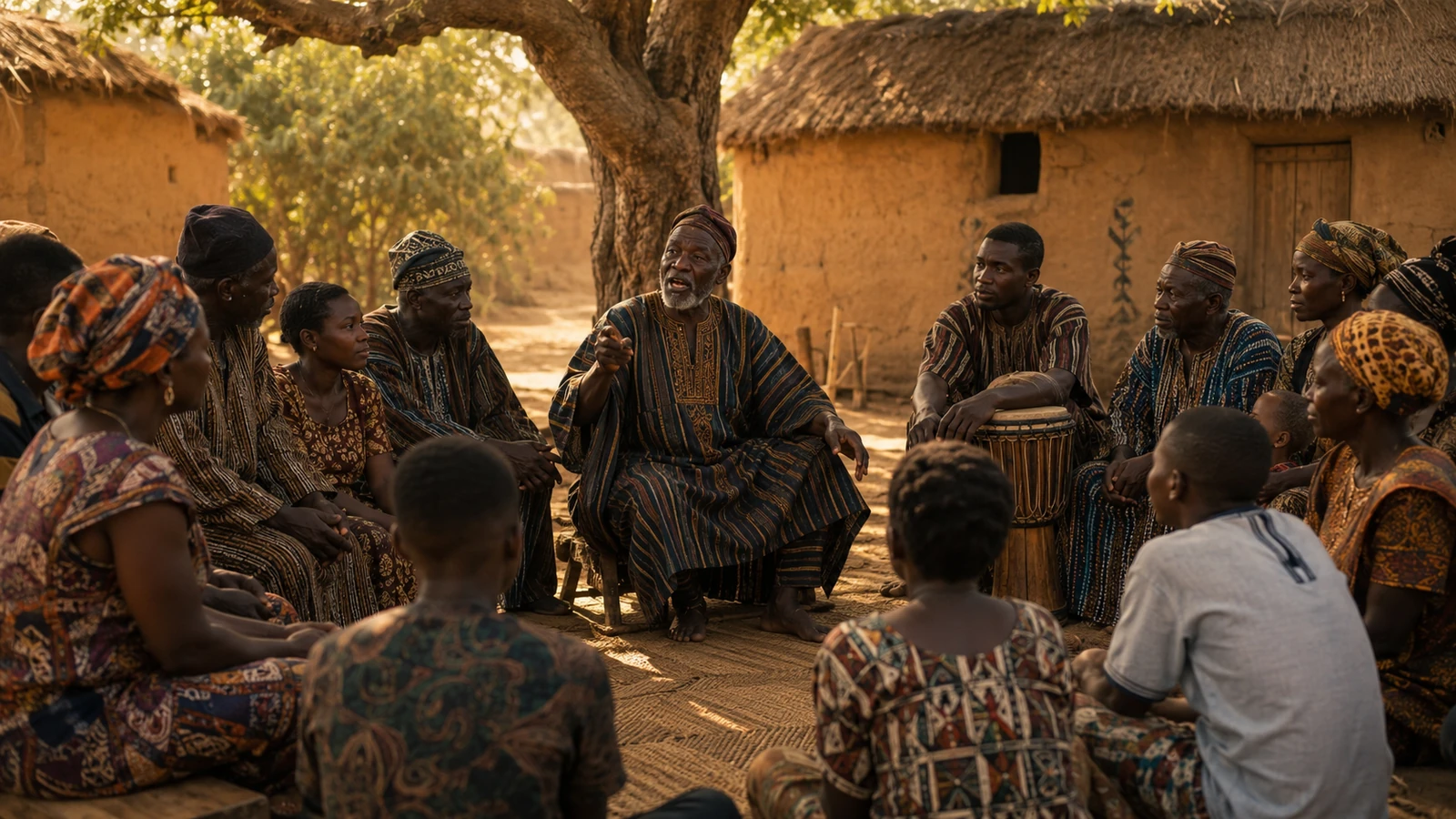

Leave a Comment
We'd love to hear your thoughts.
This was comprehensive without suggesting that every African community follows the same beliefs.
Are there recommended African museums for studying ancestral objects responsibly?
The diaspora section showed why traditions change when families migrate.
A future article about African ancestral music would be interesting.
I liked the reminder that honest ancestral memory should include mistakes as well as achievements.
Strong overview connecting remembrance with family, land, music, history, and responsibility.
The misconceptions section answered several inaccurate statements I have seen online.
The article stayed neutral while explaining why these traditions matter to participants.
The digital archive section was relevant for families whose relatives now live in several countries.
The article corrected the common idea that every African mask represents an ancestor.
More direct accounts from African scholars and community historians would make a strong future series.
The Benin Queen Mother section deserves a full article.
The biggest lesson for me was that family and community context determine the meaning of a tradition.
The tone respected spiritual belief without presenting every claim as scientifically proven.
The article should encourage families to record the correct pronunciation of ancestral names.
I appreciated the distinction between funeral remembrance and formal ancestral status.
Could you write next about how African families care for ancestral graves?
The short sections and comparison table worked well on mobile.
The community-by-community structure made the article easy to understand.
This is useful for readers studying African history, religion, anthropology, music, or art.
Thank you for clearly stating that ancestral practices do not replace professional care.
The discussion of graves, land, and historical belonging was one of the strongest sections.
The article showed that personal belongings and recipes can also preserve ancestral memory.
A comparison between Fang, Kota, and Mbete reliquary traditions would make a good follow-up.
The glossary made the differences between lineage, reliquary, asen, and ancestral altar easier to understand.
The famadihana section was respectful and clearly stated that not every Malagasy family practices it.
This encouraged me to ask older relatives where our grandparents and great-grandparents are buried.
I did not know Fang families historically carried ancestral reliquaries during migration.
The article was educational without making the practices sound frightening or mysterious.
The Xhosa homestead section explained how ancestral traditions can connect rural and urban relatives.
I would like a detailed article about women’s roles in African ancestor traditions.
I appreciated the reminder that not every deceased relative automatically becomes an ancestor.
The Shona bira section made the connection between music and ancestral memory clear.
The article showed why family consent matters before recording ceremonies.
The section about Christianity and cultural remembrance was balanced.
I liked that grave care was explained as historical and familial as well as potentially spiritual.
The warning about human remains and museum collections was necessary.
A complete article about Egúngún textiles, dance, and family participation would be interesting.
I had not heard of Fon asen before reading this article.
The Benin section explained how brass heads and bells preserved the memory of earlier rulers.
The article remained respectful and did not claim that every African family worships ancestors.
The distinction between royal ancestor altars and household remembrance was very helpful.
I learned that Egúngún involves a full performance rather than only a colorful costume.
The section about oral history showed how remembering names and stories can be as important as a formal ceremony.
I appreciated that the article compared specific communities instead of describing one African ancestor ritual.