
The Spiritual Importance of Family Lineage
Pillar Article
Quick Summary
Explore how family lineage connects people with ancestors, names, inherited responsibilities, sacred land, community identity, moral values, and future generations.
Family lineage can hold deep spiritual, historical, and social importance in many African traditions.
A lineage may connect a living person with parents, grandparents, remembered ancestors, ancestral land, inherited responsibilities, family names, community institutions, and future generations. It can help answer questions such as:
- Who are we?
- Where did our family come from?
- Which people and places shaped us?
- What responsibilities have we inherited?
- How should we remember those who came before us?
- What should we preserve for those who come after us?
However, Africa does not have one universal lineage system.
Some communities traditionally emphasize descent through the father’s family. Others emphasize the mother’s line. Some recognize relationships through both sides, while political office, property, ritual authority, residence, and inheritance may follow different rules within the same society.
Family lineage is also not always purely biological. Adoption, marriage, initiation, guardianship, migration, political alliance, shared residence, and long-term responsibility can all shape how belonging is understood.
The spiritual importance of lineage therefore depends on the specific community, historical period, family, and religious tradition being discussed.
Key Points
Family lineage may be spiritually important because it connects people with:
- Ancestors
- Family identity
- Oral history
- Personal names
- Inherited land
- Burial places
- Moral responsibilities
- Ritual obligations
- Community membership
- Leadership roles
- Property and inheritance
- Protection of younger generations
- Historical memory
- Future descendants
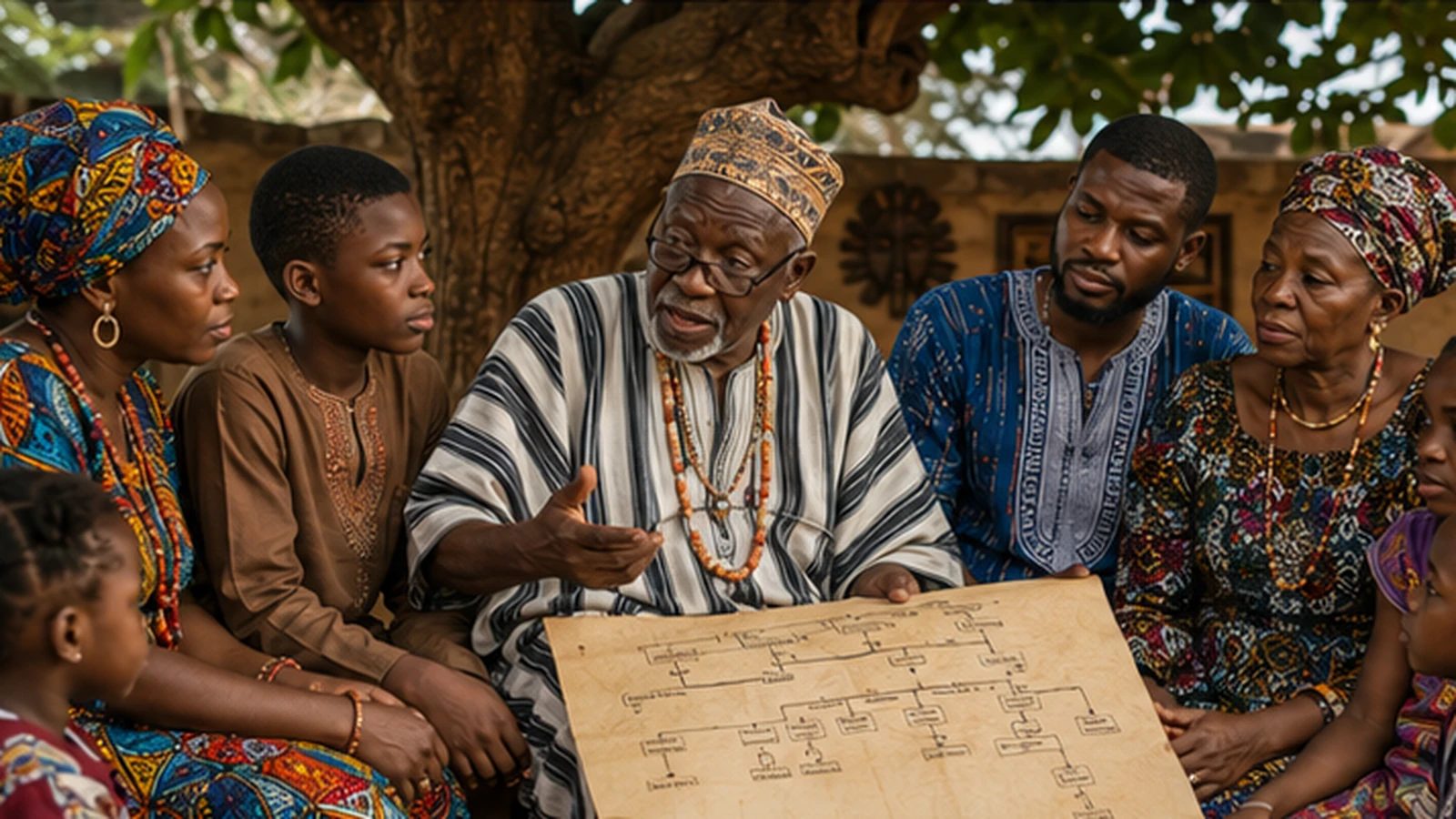
In some traditions, lineage elders preserve genealogy and represent the family during ceremonies. In others, priests, queen mothers, clan heads, titled officials, or initiated specialists hold particular responsibilities.
Knowing one’s lineage does not make a person spiritually superior. It should also never be used to justify discrimination, exclusion, abuse, forced marriage, inheritance injustice, or hostility toward people whose ancestry is unknown.
What Is Family Lineage?
Family lineage is a recognized line of descent connecting people with earlier generations.
It may include:
- Parents
- Grandparents
- Great-grandparents
- Founding ancestors
- Extended relatives
- Clan members
- Descendants
- People incorporated through marriage or adoption
Clear Definition
Family lineage is a socially recognized connection among generations based on descent, family history, inherited identity, or accepted membership in a kinship group.
Plain-Language Meaning
A family tree records relationships.
A lineage gives those relationships social meaning.
It may explain which family a person belongs to, where the family originated, which names it preserves, who represents it publicly, and what responsibilities its members share.
Lineage, Clan, and Family Are Not Always the Same
The terms family, lineage, and clan are often used interchangeably, but they may describe different levels of relationship.
- Term
- General meaning
- Household
- People who live together or share daily responsibilities
- Family
- Close and extended relatives connected by descent, marriage, adoption, or care
- Lineage
- A group that traces descent through remembered generations
- Clan
- A broader identity group that may claim descent from a shared or symbolic ancestor
- Dynasty
- A ruling family whose members hold political or royal office across generations
These are broad definitions. Local-language terms may express relationships more accurately than English categories.
Africa Has Diverse Descent Systems
African societies have historically used several ways of organizing descent.
Patrilineal Traditions
In a patrilineal system, important aspects of identity or inheritance are traced through the father’s family.
This may influence:
- Clan membership
- Property
- Leadership
- Burial
- Family names
- Ritual responsibilities
Patrilineality does not necessarily mean that the mother’s family is unimportant.
Matrilineal Traditions
In a matrilineal system, descent or particular rights are traced through the mother’s line.
A person’s maternal uncle may sometimes hold responsibilities involving inheritance, education, leadership, or family representation.
Matrilineality does not automatically mean that women control every political or economic institution.
Bilateral and Flexible Systems
Some communities recognize close relationships through both parents.
Other systems assign different responsibilities to different sides of the family. A person might inherit property through one line while receiving spiritual, political, or ceremonial identity through another.
Historical research from east-central Uganda, for example, shows that patrilineages and clans played important but changing roles among communities including the Ganda, Gwere, and Soga rather than functioning as completely fixed institutions.
Key Point
Lineage is not a single formula. It is a culturally organized way of understanding relationships and responsibilities.
Lineage as a Link Between the Living and the Dead
In traditions involving ancestor reverence, lineage provides the relationship through which ancestors are remembered.
Ancestors are not necessarily understood as unrelated spirits available to everyone.
Their significance may be based on:
- Family descent
- Marriage
- Leadership
- Shared land
- Historical responsibility
- Membership in a lineage
- Continued remembrance by descendants
Scholars have frequently observed that African ancestor traditions are rooted in domestic life, kinship, and descent relationships.
Ancestors and Kinship
An ancestor may remain important because the person:
- Established a family
- Protected the community
- Held leadership
- Preserved land
- Transmitted knowledge
- Demonstrated respected character
- Played a major historical role
Not every deceased relative automatically becomes an ancestor in every tradition.
Some communities distinguish among:
- Recently deceased relatives
- Remembered family members
- Founding ancestors
- Royal ancestors
- Ancestors connected with particular offices
- People whose conduct prevents full ancestral recognition
Elders as Representatives of Lineage
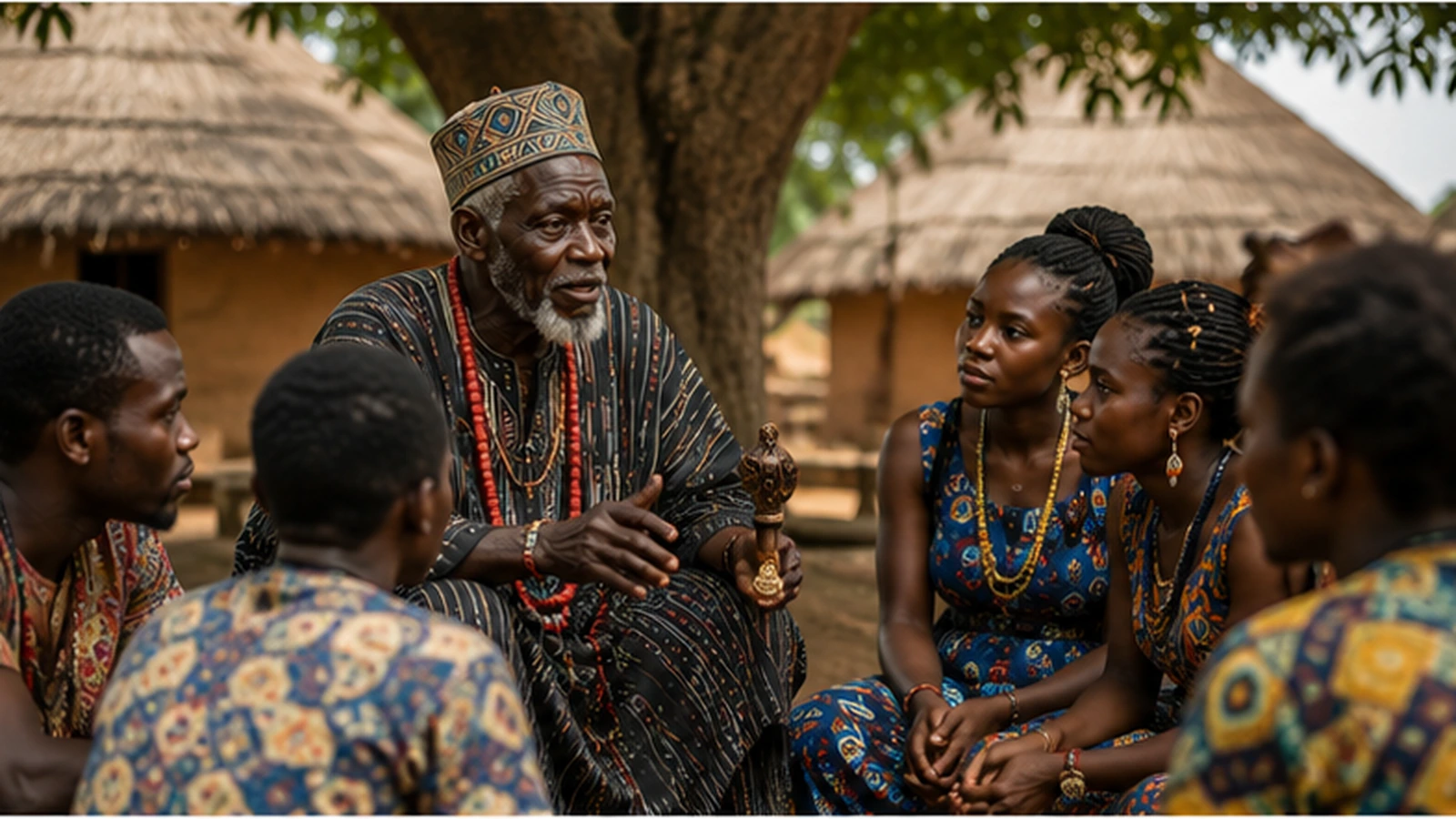
Elders may stand between earlier and younger generations.
They can preserve:
- Family names
- Genealogies
- Migration histories
- Marriage relationships
- Burial locations
- Land boundaries
- Stories of earlier relatives
- Customary responsibilities
- Explanations of inherited conflicts
In some kinship systems, elders are understood as representatives of ancestors because their authority comes partly from their position within the lineage and their knowledge of family history.
What a Lineage Elder May Do
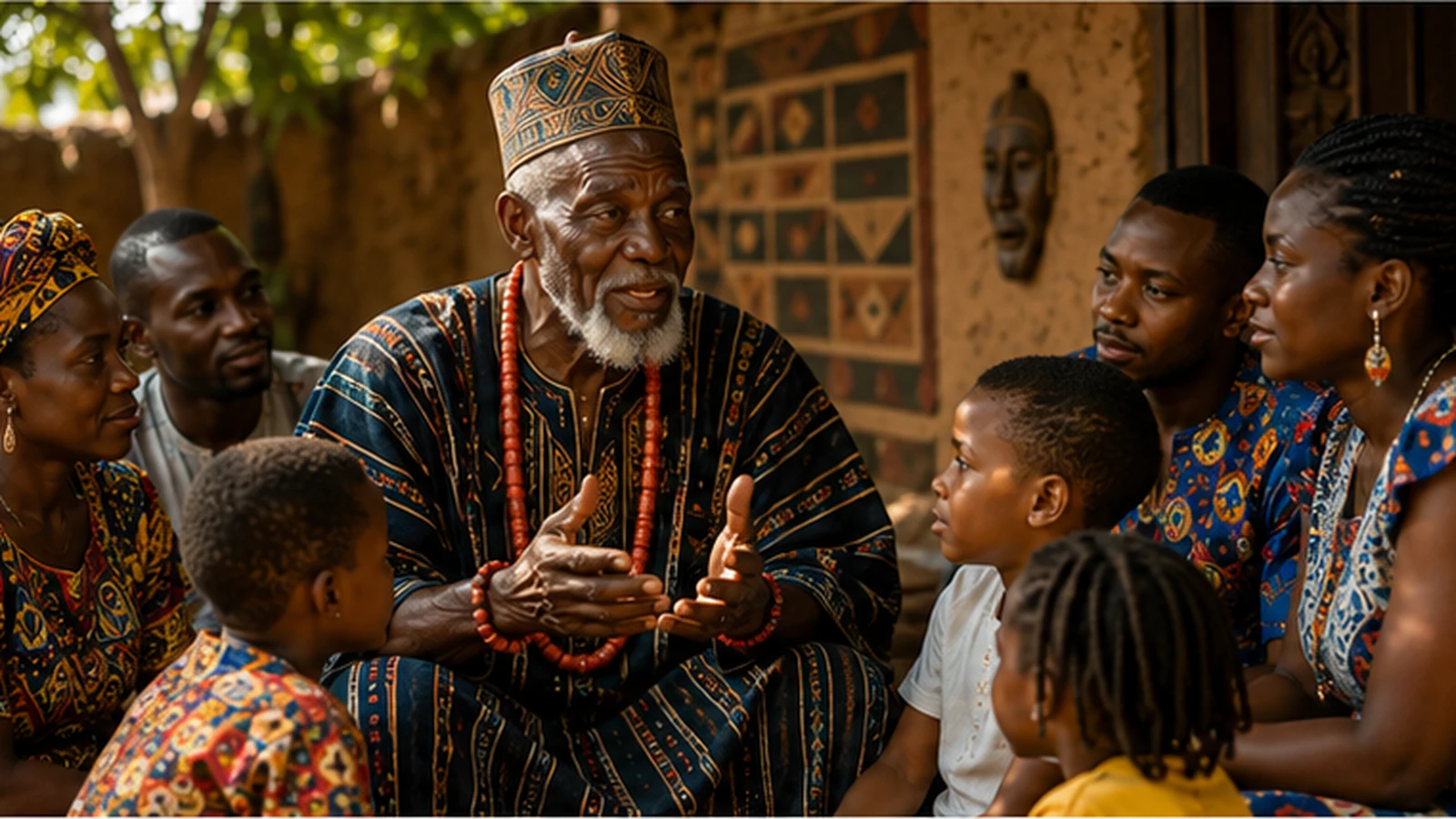
A recognized elder may:
- Speak for the family
- Confirm genealogical relationships
- Introduce relatives
- Guide funeral responsibilities
- Witness marriage negotiations
- Mediate disputes
- Explain inheritance customs
- Preserve stories about ancestors
- Represent the lineage at community meetings
An elder is not automatically a priest, healer, or diviner.
Oral History Preserves Lineage
Many family histories have been transmitted orally rather than through written records.
Lineage knowledge may survive through:
- Genealogical recitation
- Stories
- Praise names
- Songs
- Proverbs
- Funeral speeches
- Naming ceremonies
- Family meetings
- Royal histories
- Clan narratives
UNESCO identifies oral traditions as important ways of transmitting knowledge, cultural values, social values, and collective memory.
Genealogy as More Than a List of Names
A lineage history may explain:
- Where a family originated
- Why relatives migrated
- Which families intermarried
- How land was acquired
- Why a title belongs to a particular branch
- Which relatives settled a dispute
- How the family survived conflict
- Which obligations remain unfinished
Genealogy therefore preserves relationships among people, places, events, and responsibilities.
Lineage Memory in Luba Traditions
The Luba peoples of what is now the Democratic Republic of the Congo developed sophisticated ways of preserving political and historical memory.
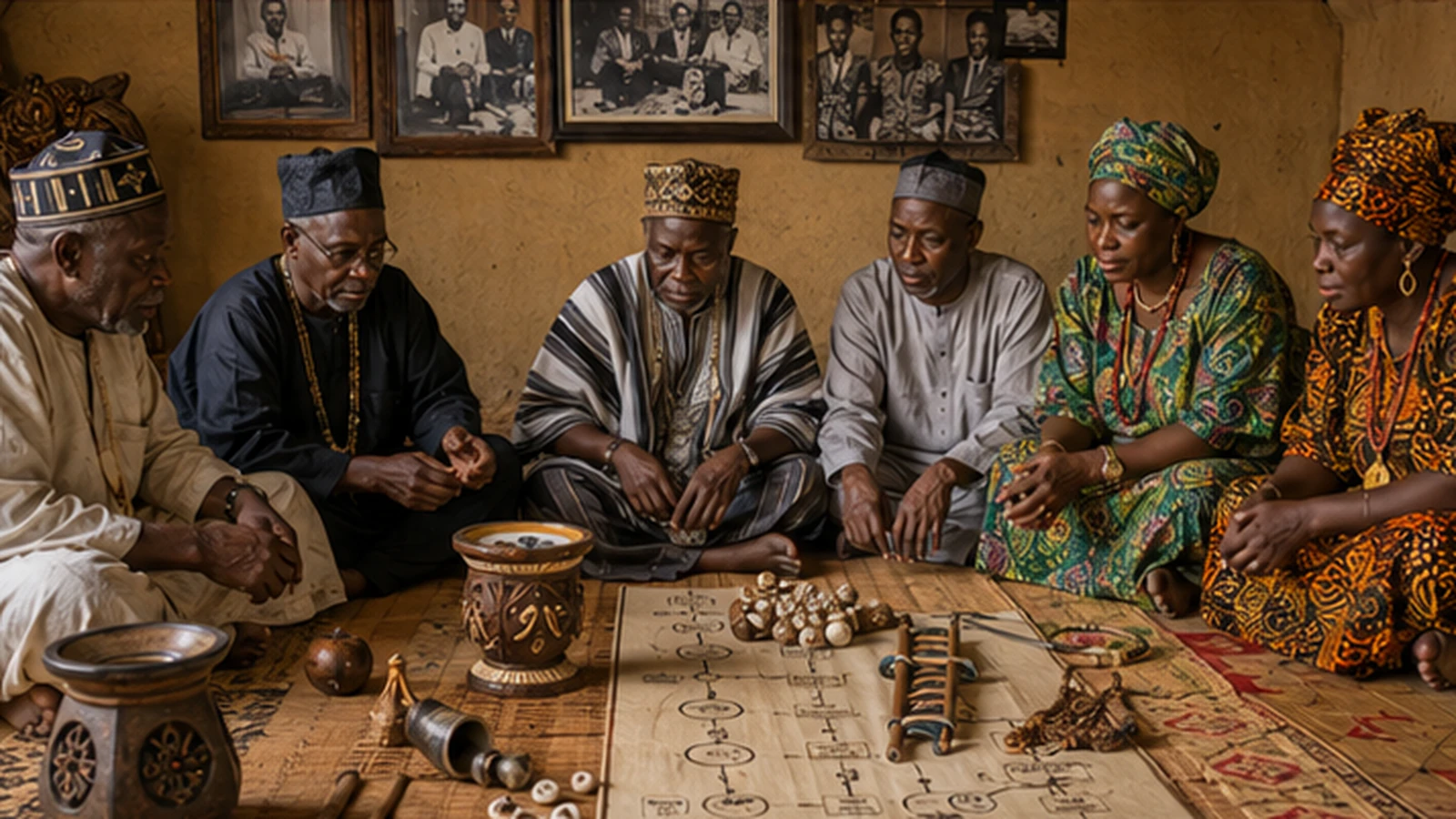
A lukasa, or memory board, could encode:
- Historical events
- Genealogies
- Leadership structures
- Territorial relationships
- Sacred locations
- Political principles
Members of the Luba mbudye association interpreted the arrangement of beads, shells, carvings, and symbols on the board.
The Metropolitan Museum describes lukasa as historical chronicles and conceptual maps of Luba political and territorial knowledge.
Another Met study explains that these boards could preserve genealogical records of rulers and titleholders alongside information about medicine, geography, politics, and religion.
Spiritual Lesson
Family history may be preserved through objects, performance, memory, and trained interpretation rather than writing alone.
Lineage and Personal Names
Names can connect a person with family history.
Depending on the community, a name may refer to:
- An ancestor
- A grandparent
- Birth circumstances
- A family event
- A place
- A spiritual expectation
- A day of birth
- A clan
- A historical figure
- A moral hope
Naming as Continuity
Giving a child an ancestral name may:
- Preserve the memory of an earlier relative
- Express continuity between generations
- Recognize the child’s position in the family
- Communicate expectations
- Reaffirm a relationship between family branches
The child is not necessarily believed to be the exact return of the deceased person.
The meaning depends on the tradition.
Multiple Names
Many people carry several names, such as:
- A family name
- A religious name
- A local-language name
- A birth-order name
- A praise name
- A clan-related name
- A professional or public name
This can reflect several layers of identity rather than confusion.
Family Lineage and Ancestral Land
Lineage may connect people with land because earlier generations:
- Settled there
- Farmed there
- Were buried there
- Protected water sources
- Built homes or shrines
- Established boundaries
- Formed agreements with neighboring groups
Ancestral land may therefore hold:
- Economic value
- Historical memory
- Spiritual significance
- Burial responsibilities
- Political identity
- Family security
Land as an Inherited Trust
In some communities, land is understood less as an unrestricted private possession and more as something held for:
- Living relatives
- Deceased ancestors
- Children
- Future descendants
- The wider community
This does not mean all traditional land systems were equal or free from conflict.
Lineage-based claims could also exclude women, migrants, younger relatives, adopted children, or historically marginalized groups.
Ethical Lesson
Ancestral connection should encourage responsible care for land rather than unlimited control over it.
Burial Places and Family Continuity
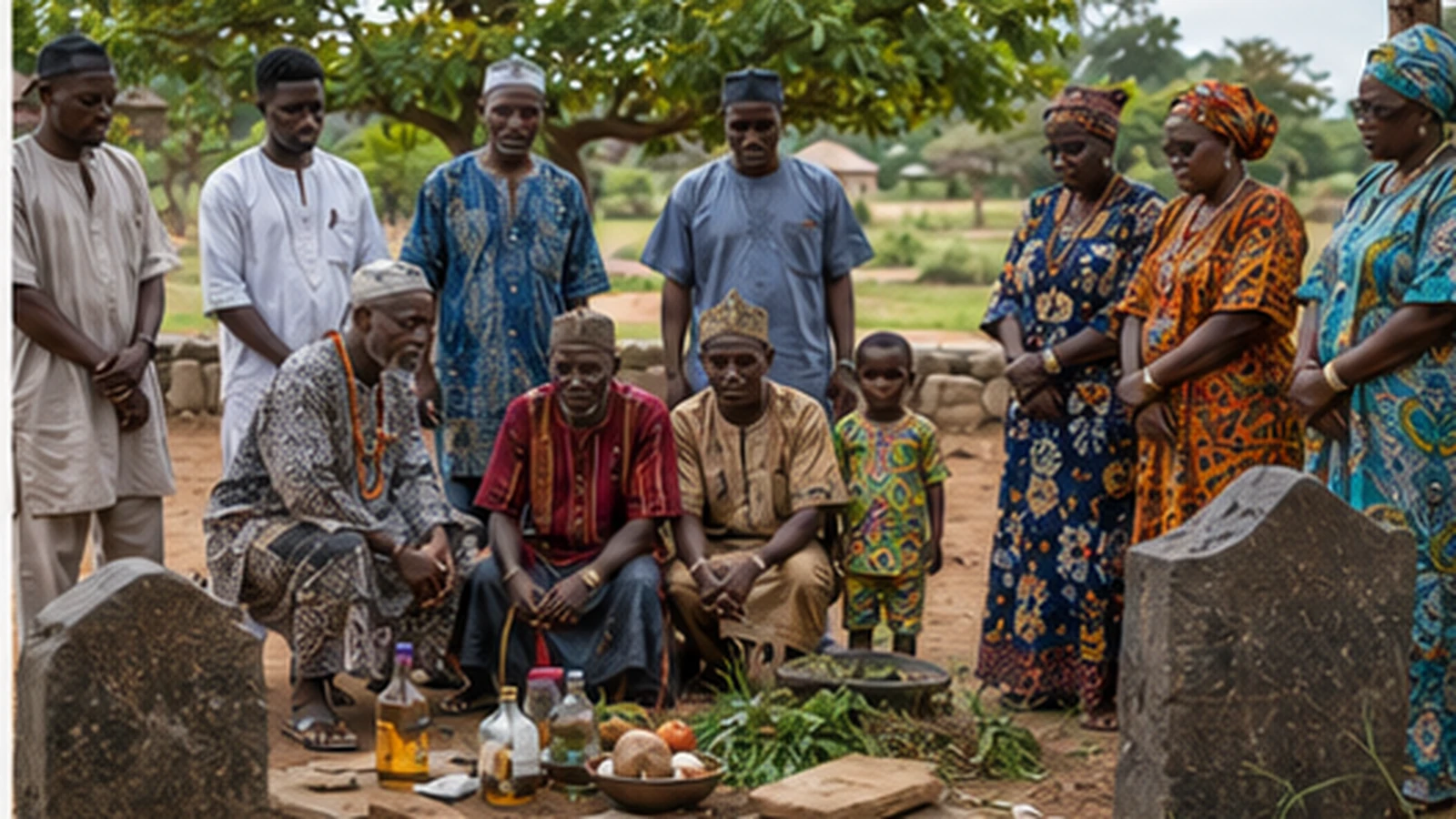
Burial grounds may connect lineage, memory, and land.
Families may return to ancestral areas for:
- Burial
- Memorial ceremonies
- Grave maintenance
- Family meetings
- Recognition of successors
- Settlement of responsibilities
A grave may serve as:
- A place of remembrance
- Evidence of family connection to land
- A historical marker
- A location for prayer
- A focus of mourning
Not every family performs rituals at graves, and African Christian, Muslim, and indigenous burial customs differ widely.
Lineage Shrines and Family Altars
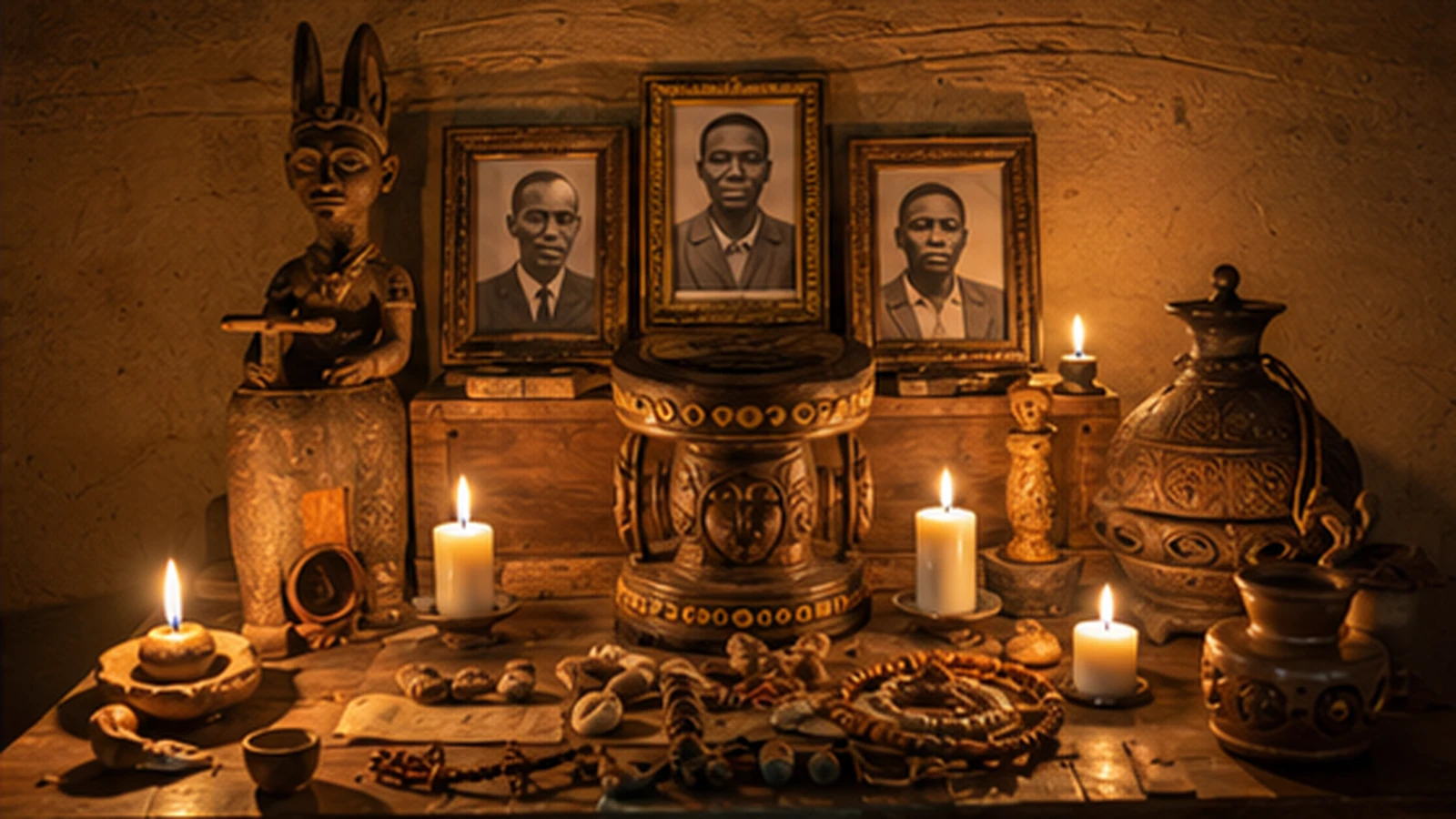
Some traditions maintain designated places associated with family ancestors.
These may contain:
- Memorial objects
- Staffs
- Stools
- Figures
- Bells
- Photographs
- Personal belongings
- Written names
- Religious objects
- Offerings
The shrine may be located in a home, palace, compound, forest, burial area, or dedicated structure.
Benin Royal Ancestral Altars
In the historical Kingdom of Benin, a new Oba’s responsibilities included creating a shrine for his predecessor.
The shrine supported dynastic continuity and communication between the living ruler and the deceased king. Cast-brass commemorative heads reinforced succession across the ruling family.
Royal altars also commemorated queen mothers. Sculptures dedicated to deceased Iyobas celebrated their achievements and their continuing importance to the dynasty.
Important Distinction
Royal lineage traditions should not be assumed to describe ordinary families or every community in Nigeria.
Ancestral Stools in Asante Traditions
Among Asante communities, stools can represent more than physical seats.
A ruler’s personal stool may become closely connected with:
- Office
- Identity
- Political legitimacy
- Ancestral memory
- Community continuity
The stools of deceased chiefs and queen mothers may be blackened and preserved in ancestral stool rooms, where they become associated with periodic remembrance and offerings.
Spiritual Lesson
An object may represent the continuity of an office and lineage rather than merely the individual who once used it.
Family Reliquaries in Central African Traditions
Some Central African communities historically preserved relics or memorial objects associated with important ancestors.
Kota Reliquaries
In Kota traditions, family reliquaries could be kept in the home of a clan leader. They connected an extended family with notable forebears and supported prayers relating to community wellbeing.
Fang Reliquary Traditions
Some Fang families preserved ancestral relics in portable containers protected by carved guardian figures.
One documented guardian originally belonged to an altar holding the relics of several generations of an extended lineage.
These practices were culturally specific and often restricted. They should not be copied or treated as universal African customs.
Lineage and Moral Responsibility
Lineage may provide more than identity.
It can create expectations concerning how a person should behave.
Responsibilities may include:
- Caring for parents
- Protecting children
- Supporting relatives during illness
- Contributing to funerals
- Respecting family agreements
- Preserving inherited property
- Avoiding conduct that damages the family’s reputation
- Teaching younger generations
- Helping vulnerable relatives
Reputation Across Generations
A person’s conduct may be understood as affecting:
- Personal dignity
- Parents
- Children
- The wider family
- The memory of ancestors
- Future descendants
This can encourage responsibility.
However, family reputation should never be used to conceal abuse, violence, exploitation, addiction, criminal activity, or mental-health crises.
Lineage and Blessing
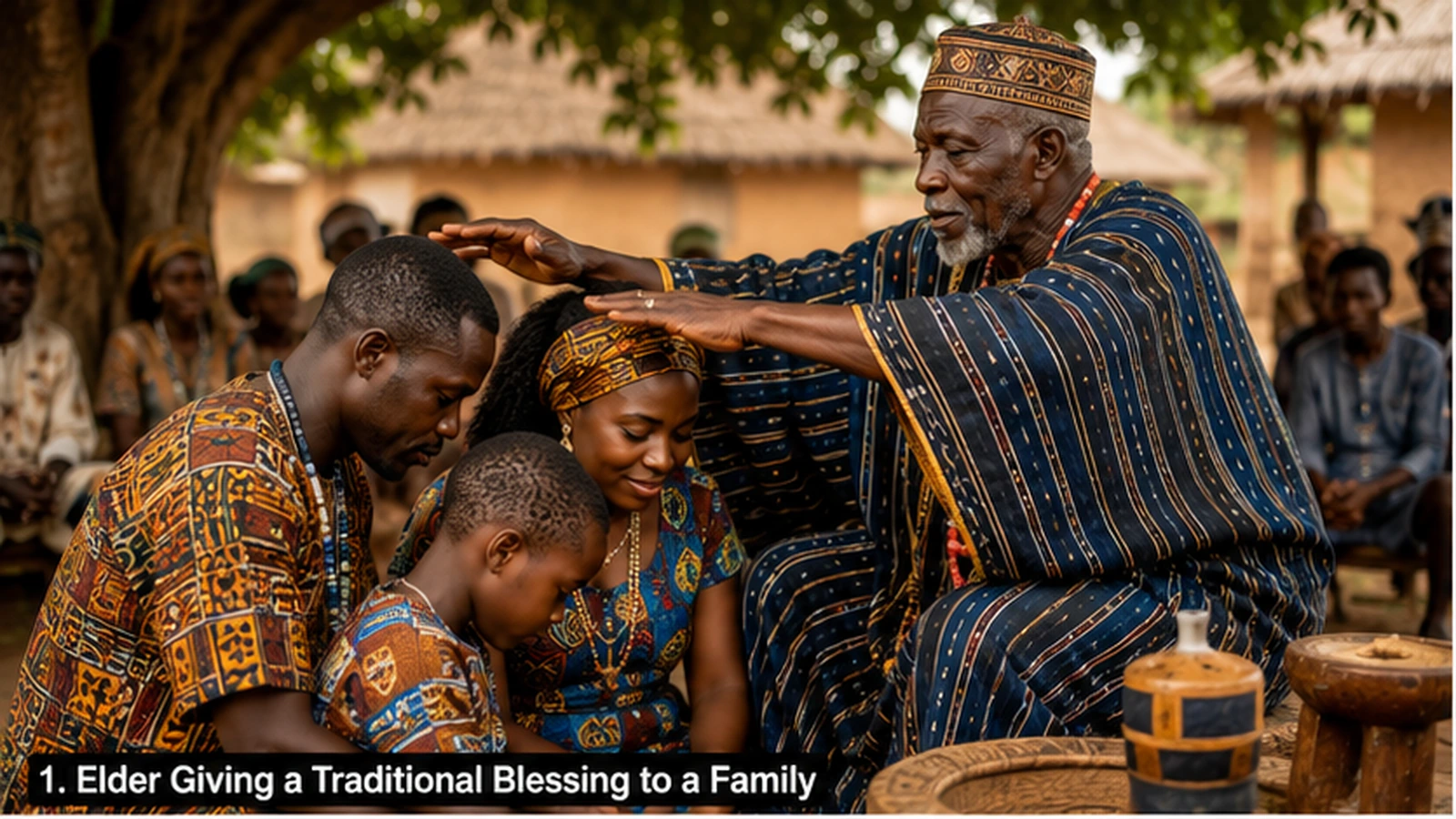
In some traditions, relatives seek blessings from:
- Parents
- Grandparents
- Elders
- Lineage heads
- Religious specialists
A blessing may express:
- Approval
- Protection
- Reconciliation
- Goodwill
- Recognition of adulthood
- Support for marriage
- Acceptance of responsibility
The spiritual meaning depends on the community.
A family blessing is not a guaranteed supernatural result.
Lineage and Marriage
Marriage can connect two individuals and two extended families.
Lineage may influence:
- Partner eligibility
- Prohibited relationships
- Marriage negotiations
- Bridewealth or other exchanges
- Residence
- Children’s identity
- Inheritance
- Funeral obligations
Exogamy and Marriage Restrictions
Some clans or lineages traditionally prohibit marriage between members regarded as close relatives, even when the precise biological relationship is distant.
Such rules may support:
- Prevention of close-relative marriage
- Alliances between families
- Wider social networks
- Shared responsibilities
Marriage rules vary widely and continue to change.
No lineage tradition should be used to justify forced marriage or the denial of an adult’s lawful consent.
Lineage and Inheritance
Inheritance may involve more than money.
Families may inherit:
- Land
- Livestock
- Houses
- Titles
- Sacred objects
- Leadership roles
- Family businesses
- Debts
- Ritual responsibilities
- Knowledge
- Reputation
Inherited Office
A person receiving a title may also receive obligations involving:
- Community leadership
- Shrine care
- Dispute settlement
- Family representation
- Protection of dependents
- Preservation of history
Inheritance Conflict
Lineage can become a source of conflict when relatives disagree over:
- Land
- Succession
- Property
- Paternity
- Burial
- Marriage
- Leadership
- Family documents
Customary mediation can help in some disputes, but legal advice may be necessary where rights, documentation, violence, or major property interests are involved.
Women and Family Lineage
Women are central to lineage continuity even in societies that describe descent through men.
Women may preserve:
- Birth histories
- Marriage alliances
- Family relationships
- Names
- Songs
- Funeral knowledge
- Childcare traditions
- Maternal genealogies
- Stories about earlier women
Matrilineal Authority
In matrilineal communities, women connect descendants to the recognized line of inheritance or identity.
Queen mothers, senior sisters, maternal relatives, and women elders may hold authority relating to:
- Succession
- Family history
- Land
- Marriage
- Child welfare
- Political legitimacy
Hidden Historical Contributions
Written genealogies sometimes emphasize male rulers or household heads while giving less attention to women who preserved families through:
- Migration
- Agriculture
- Trade
- Child-rearing
- Diplomacy
- Healing
- Religious leadership
A responsible family history should seek women’s stories as well as men’s.
Children and the Future of the Lineage
Children can represent continuity, but their value should never be reduced to producing descendants.
A child may inherit:
- Language
- Names
- Stories
- Land
- Responsibilities
- Religious identity
- Family relationships
- Community membership
Teaching Without Burdening
Adults can teach children about lineage through:
- Storytelling
- Family trees
- Visits to historical places
- Photographs
- Songs
- Language
- Meetings with elders
- Written biographies
Children should not be burdened with unresolved family conflicts or pressured to accept harmful expectations simply because they are described as ancestral duties.
Adoption and Belonging
Biological descent is not the only form of family belonging.
Adopted children, fostered relatives, stepchildren, spouses, and long-term dependents may become fully integrated into families.
Belonging can be created through:
- Care
- Recognition
- Shared residence
- Naming
- Inheritance
- Ceremony
- Responsibility
- Community acceptance
Ethical Principle
Family identity should not be used to make adopted or non-biological relatives feel spiritually inferior.
The meaning of kinship is often social as well as biological.
Migration and Changing Lineages
Migration can separate relatives from:
- Ancestral land
- Elders
- Graves
- Local-language traditions
- Family institutions
Families may preserve connections through:
- Return visits
- Funeral attendance
- Remittances
- Phone calls
- Digital family groups
- Recorded interviews
- Genealogical projects
- Urban associations
Lineage can remain important even when relatives live in different countries.
Slavery and the Disruption of Family History
Internal slavery, the Atlantic slave trade, the Indian Ocean slave trade, warfare, and forced migration separated millions of people from families and communities.
These disruptions caused the loss of:
- Names
- Languages
- Genealogies
- Burial places
- Clan relationships
- Religious institutions
- Knowledge of ancestral land
Diaspora families often had to rebuild identity under conditions in which precise ancestry had been deliberately erased.
Unknown Ancestry Does Not Mean No Ancestry
A person whose genealogy is incomplete still belongs to human and family histories.
Spiritual dignity should never depend on proving an unbroken family tree.
Colonialism and Lineage Systems
Colonial governments changed lineage institutions through:
- New land laws
- Appointed chiefs
- Taxation
- Mission schools
- Christian marriage laws
- Labor migration
- Borders
- Written identity documents
- Colonial courts
Administrators sometimes treated flexible customs as fixed laws.
They could also recognize selected male leaders while ignoring women, junior lineages, migrants, or alternative authorities.
Missionary Influence
Some missionaries condemned ancestral practices, family shrines, inherited names, or customary marriage systems.
Other religious institutions adapted family obligations into Christian or Muslim ceremonies.
Modern lineage traditions may therefore combine:
- Indigenous customs
- Christianity
- Islam
- State law
- Urban life
- Global family practices
Family Lineage in Christianity and Islam
Many African Christian and Muslim families continue to value lineage.
They may preserve:
- Genealogies
- Family names
- Burial responsibilities
- Respect for elders
- Ancestral land
- Family meetings
- Marriage relationships
Different Religious Interpretations
A Christian family may remember ancestors through memorial services without addressing them spiritually.
A Muslim family may preserve genealogy and visit graves while following Islamic teachings concerning prayer and the dead.
An indigenous practitioner may understand ancestral relationships differently.
Family members may therefore participate in the same event while assigning different meanings to it.
DNA Testing and African Ancestry
Commercial DNA testing has increased interest in ancestry.
It may help identify:
- Broad regional connections
- Genetic relatives
- Population patterns
However, DNA testing cannot by itself reconstruct:
- A person’s exact clan
- Religious identity
- Cultural upbringing
- Family obligations
- A lost language
- Community acceptance
- Permission to join restricted traditions
DNA Is Not the Same as Lineage
Lineage is social, historical, and cultural as well as biological.
A genetic estimate should not be treated as automatic authority to represent a community or claim sacred knowledge.
Family Lineage in the African Diaspora
Diaspora communities may reconnect with ancestry through:
- Family research
- Historical archives
- DNA testing
- African names
- Cultural organizations
- Religious traditions
- Visits to African countries
- Oral histories
- Genealogy databases
This process can be emotionally meaningful, but it may also involve uncertainty.
Respectful Reconnection
Diaspora descendants should avoid:
- Claiming a precise ethnic identity without reliable evidence
- Entering restricted practices without training
- Treating communities as sources of spiritual products
- Assuming DNA creates automatic cultural membership
- Inventing ancestors or titles
Responsible reconnection involves humility, research, relationships, and respect for living communities.
Family Secrets, Trauma, and Difficult Histories
Family history does not contain only honorable stories.
A lineage may also preserve or conceal:
- Enslavement
- Adoption
- Infidelity
- Violence
- Disinheritance
- Forced migration
- Political collaboration
- Mental illness
- Family separation
- Unresolved disputes
Honest Memory
Spiritual respect for lineage should not require pretending that every ancestor acted well.
A mature approach can:
- Recognize achievements
- Acknowledge harm
- Repair relationships
- Reject inherited prejudice
- Preserve truthful history
- Prevent repetition
Breaking Harmful Cycles
A person can respect family history while refusing to continue:
- Abuse
- Discrimination
- Forced marriage
- Violence
- Addiction
- Exploitation
- Harmful gender expectations
- Family secrecy that protects offenders
An inherited pattern is not automatically a sacred obligation.
Lineage and Healing
Learning family history may support emotional wellbeing by giving people:
- Context
- Belonging
- Identity
- Explanations of migration
- Knowledge of earlier resilience
- Connection with relatives
Family history can also reveal inherited medical risks.
Medical conditions should be addressed through qualified healthcare rather than explained only through spiritual lineage.
Family Health History
Families should share relevant information about:
- Hereditary conditions
- Cancer
- Diabetes
- Heart disease
- Mental-health conditions
- Medication reactions
- Pregnancy complications
Spiritual knowledge and medical family history serve different purposes and should not be confused.
Lineage and Community Leadership
Certain leadership roles may be connected with family descent.
Examples may include:
- Chieftaincy
- Kingship
- Clan leadership
- Shrine custody
- Family representation
- Land stewardship
Lineage can provide continuity, but inherited office must still involve competence and accountability.
Spiritual Lesson
Descent may explain why a person receives responsibility, but conduct determines whether that responsibility is fulfilled well.
Common Misconceptions
Misconception 1: Every African Family Follows the Same Lineage System
Reality: Descent systems differ widely and may be patrilineal, matrilineal, bilateral, or flexible.
Misconception 2: Lineage Is Only Biological
Reality: Adoption, marriage, guardianship, care, political alliance, and community acceptance can also create family belonging.
Misconception 3: Every Deceased Relative Becomes an Ancestor
Reality: Traditions differ concerning who receives ancestral recognition.
Misconception 4: Only Men Preserve Lineage
Reality: Women preserve genealogy, family relationships, names, history, land knowledge, and cultural traditions.
Misconception 5: Knowing Your Ancestors Guarantees Spiritual Power
Reality: Genealogical knowledge does not guarantee protection, wealth, healing, authority, or success.
Misconception 6: DNA Testing Reveals a Complete Spiritual Identity
Reality: DNA estimates cannot replace language, community relationships, cultural upbringing, or recognized initiation.
Misconception 7: Respecting Lineage Means Obeying Every Family Demand
Reality: Family authority does not justify abuse, forced marriage, discrimination, fraud, or medical neglect.
Misconception 8: Unknown Genealogy Makes Someone Spiritually Incomplete
Reality: Displacement, adoption, slavery, conflict, and migration have interrupted many family records. Human dignity does not depend on a complete genealogy.
How to Preserve Family Lineage Respectfully
Step 1: Interview Older Relatives
Ask about:
- Names
- Birthplaces
- Languages
- Migrations
- Marriages
- Occupations
- Historical events
- Burial places
- Family traditions
Obtain permission before recording.
Step 2: Compare Several Accounts
Different relatives may remember events differently.
Record alternative versions rather than forcing one account to become the official truth.
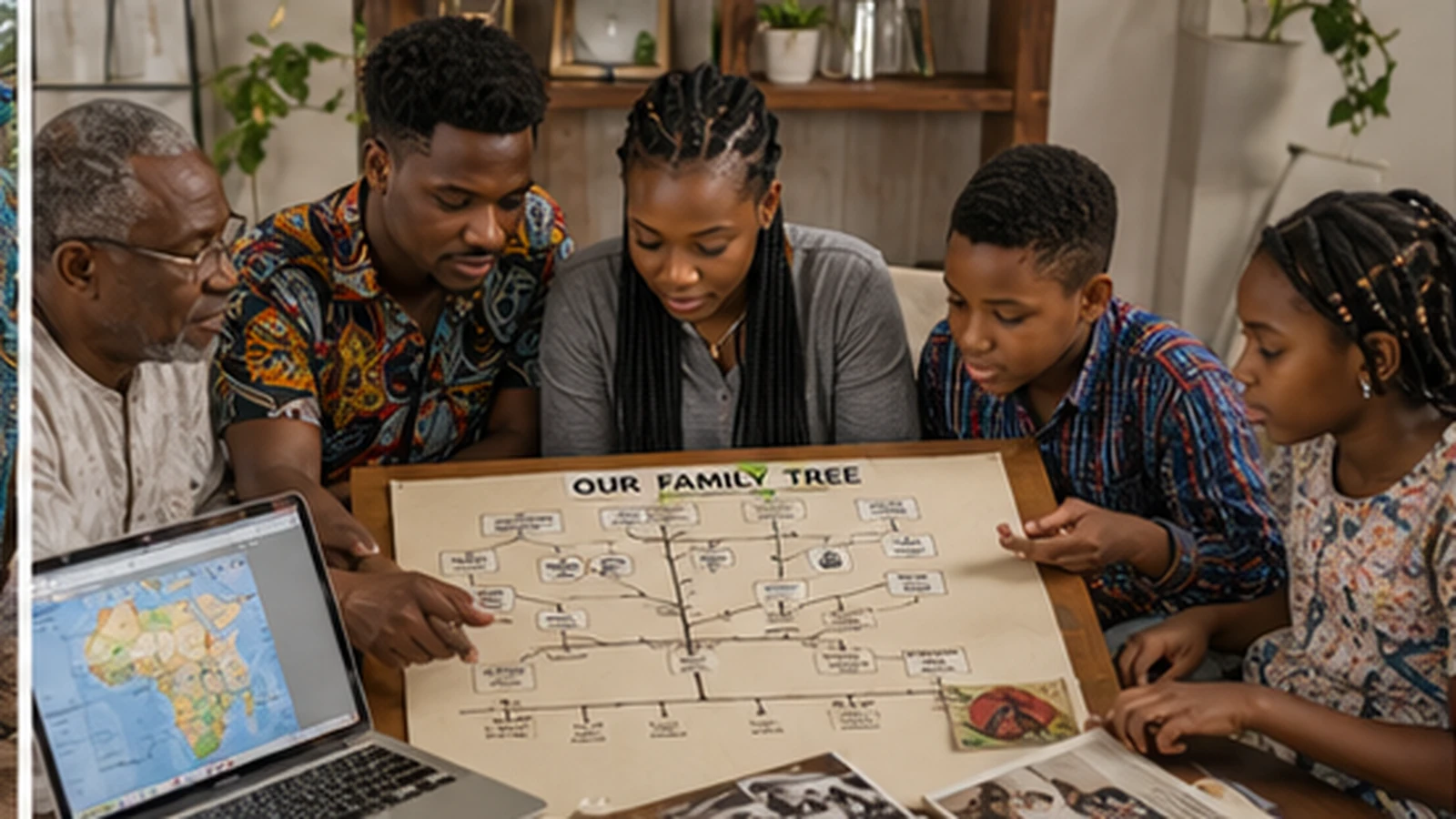
Step 3: Build a Family Tree
Include:
- Women
- Adopted relatives
- Maternal relatives
- Step-relatives
- Guardians
- Important caregivers
Use notes where relationships are uncertain.
Step 4: Preserve Original Names
Record correct spellings, pronunciations, praise names, titles, and local-language meanings where known.
Step 5: Protect Private Information
Do not publish:
- Sensitive paternity claims
- Medical records
- Family disputes
- Personal addresses
- Restricted religious knowledge
- Information that could endanger relatives
Step 6: Preserve Photographs and Documents
Digitize:
- Letters
- Certificates
- Photographs
- Funeral programmes
- Land records
- Audio recordings
- Family books
Store copies in more than one secure location.
Step 7: Connect History With Responsibility
Ask what the family history teaches about:
- Care
- Courage
- Failure
- Migration
- Leadership
- Reconciliation
- Responsibility toward future generations
Key Takeaways
- Family lineage can connect people with ancestors, history, identity, land, and inherited responsibilities.
- African lineage systems are diverse rather than universal.
- Some communities emphasize paternal descent, others maternal descent, and others both.
- Elders may preserve genealogies and represent the family.
- Oral tradition is an important method of transmitting lineage history.
- Names can preserve family memory and cultural expectations.
- Ancestral land may combine historical, economic, and spiritual significance.
- Lineage shrines, stools, memory boards, and reliquaries belong to particular cultural traditions.
- Women are central to preserving and transmitting family histories.
- Adoption and caregiving can create genuine family belonging.
- DNA testing does not automatically provide cultural or spiritual membership.
- Unknown ancestry does not reduce a person’s dignity.
- Family history should be remembered honestly, including painful or harmful events.
- Respect for lineage should never excuse abuse, discrimination, or exploitation.
People Also Ask
Why is family lineage spiritually important?
It may connect people with ancestors, inherited responsibilities, family identity, sacred land, moral values, and future generations.
What is lineage in African spirituality?
Lineage is a recognized connection among generations that may influence identity, ancestral remembrance, property, leadership, ritual, and family obligations.
Are African lineages always traced through men?
No. Some are patrilineal, some matrilineal, and others recognize relationships through both sides of the family.
How do families preserve lineage history?
They may use oral histories, genealogies, names, songs, memorial objects, ceremonies, photographs, documents, and family meetings.
Does every African family have an ancestral shrine?
No. Practices differ by community, family, religion, region, and historical period.
Can DNA testing reveal an African spiritual lineage?
DNA may identify broad genetic connections, but it cannot establish complete cultural identity, community membership, or religious authority.
Frequently Asked Questions
1. What is the difference between lineage and ancestry?
Ancestry refers broadly to the people from whom someone descends. Lineage is a socially recognized line of descent with particular identities or responsibilities.
2. What is a clan?
A clan is a broader social group whose members may claim descent from a shared historical, symbolic, or founding ancestor.
Frequently Asked Questions
What should readers know first about Spiritual importance of family lineage?
Spiritual importance of family lineage: Explore how family lineage connects people with ancestors, names, inherited responsibilities, sacred land, community i
What causes Spiritual importance of family lineage?
Explore how family lineage connects people with ancestors, names, inherited responsibilities, sacred land, community identity, moral values, and future generations. The safest next step is to compare the signs, prepare clear details, and request private guidan
How does Spiritual importance of family lineage work?
Explore how family lineage connects people with ancestors, names, inherited responsibilities, sacred land, community identity, moral values, and future generations. The safest next step is to compare the signs, prepare clear details, and request private guidan
Is it possible to get private guidance for Spiritual importance of family lineage?
Explore how family lineage connects people with ancestors, names, inherited responsibilities, sacred land, community identity, moral values, and future generations. The safest next step is to compare the signs, prepare clear details, and request private guidan
How long does Spiritual importance of family lineage take to understand?
Explore how family lineage connects people with ancestors, names, inherited responsibilities, sacred land, community identity, moral values, and future generations. The safest next step is to compare the signs, prepare clear details, and request private guidan
Can Spiritual importance of family lineage affect relationships, family, work, or personal peace?
Explore how family lineage connects people with ancestors, names, inherited responsibilities, sacred land, community identity, moral values, and future generations. The safest next step is to compare the signs, prepare clear details, and request private guidan
Why do people seek spiritual guidance for Spiritual importance of family lineage?
Explore how family lineage connects people with ancestors, names, inherited responsibilities, sacred land, community identity, moral values, and future generations. The safest next step is to compare the signs, prepare clear details, and request private guidan
What signs should someone notice before asking about Spiritual importance of family lineage?
Explore how family lineage connects people with ancestors, names, inherited responsibilities, sacred land, community identity, moral values, and future generations. The safest next step is to compare the signs, prepare clear details, and request private guidan
When should someone contact a private spiritual guide?
Explore how family lineage connects people with ancestors, names, inherited responsibilities, sacred land, community identity, moral values, and future generations. The safest next step is to compare the signs, prepare clear details, and request private guidan
Article Information
- Publisher
- Ancestral Temple
- Editor
- Ancestral Temple
- Last updated
- Jul 26, 2026
- Last reviewed
- Jul 13, 2026
- Content version
- fefba773c9
This educational article should be read as cultural and spiritual information, not as medical, legal, financial, or emergency advice.
Helpful Related Guidance
Explore This Topic
Ancestor Reverence In African Cultures · Why Cultures Honor Their Ancestors
Related Topic Cluster
Spiritual Importance Of Family Lineage
Complete Guide Understanding African Spiritual Traditions: A Historical IntroductionAbout the Author
 Ancestral Temple
Spiritual guide and practitioner with decades of experience in ancestral wisdom, rituals, and divine guidance.
Related Posts
View All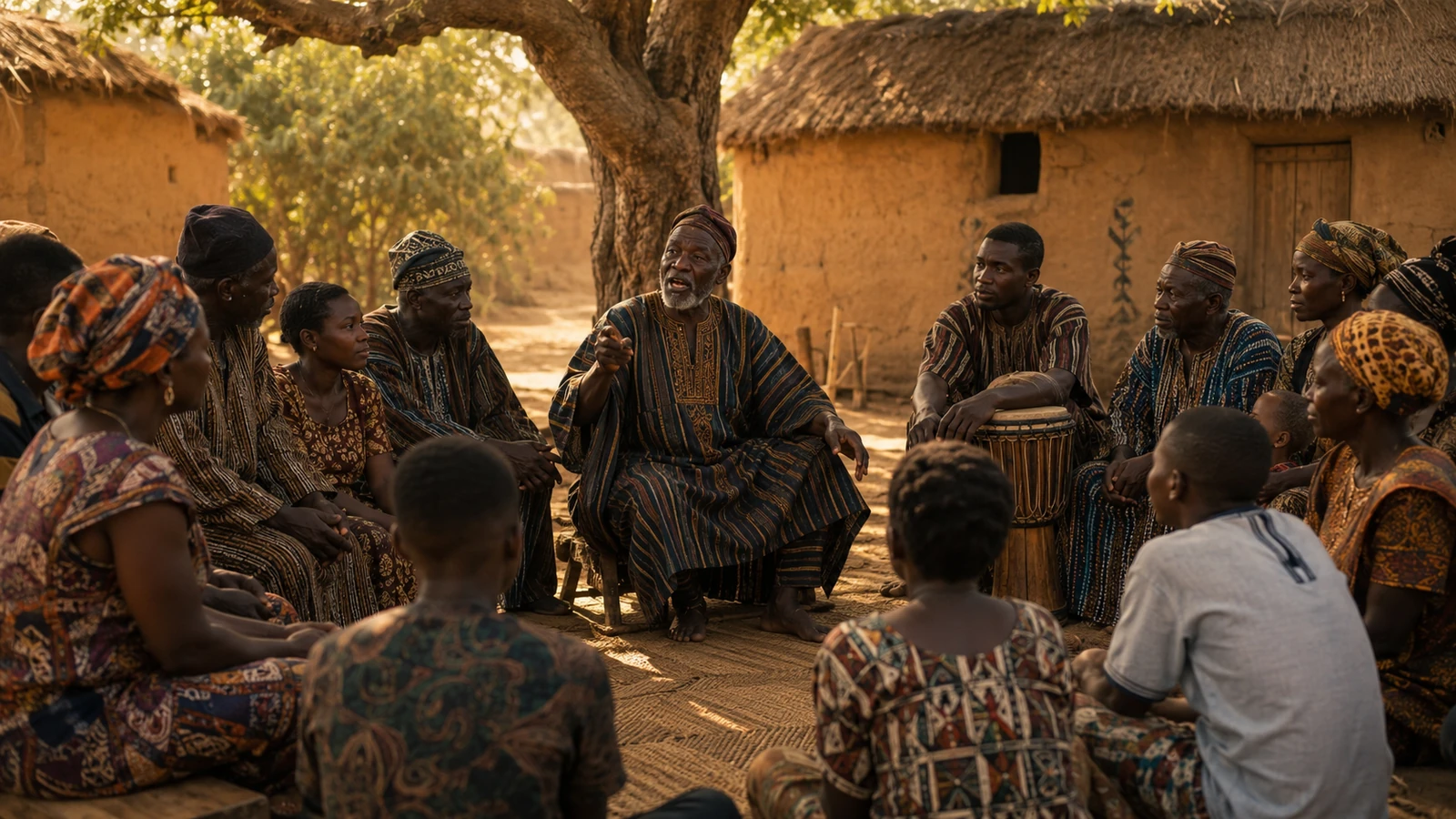

Leave a Comment
We'd love to hear your thoughts.
This article explained lineage without treating Africa as one culture or excluding people whose ancestry is incomplete.
Are there recommended books about Luba memory boards and African oral genealogy?
The discussion of diaspora reconnection was realistic and encouraged humility.
The article made a good distinction between respecting ancestry and repeating harmful family patterns.
I would like to create a digital archive of photographs and stories for younger relatives.
A strong explanation of how family history connects identity, land, morality, and responsibility.
The misconceptions section answered many assumptions people make about African ancestry.
The article stayed respectful, educational, and free from guaranteed spiritual claims.
The privacy guidance is important because family trees can contain sensitive information.
The section about lineage elders representing ancestors was explained carefully.
Families should record women’s names and histories instead of documenting only male household heads.
The effects of slavery and colonial borders on genealogy deserve a separate article.
The strongest message was that family history should guide people without controlling them.
This article did not romanticize every ancestor or suggest that every inherited practice should continue.
I liked that caregivers and guardians were included in the discussion of family belonging.
The explanation that DNA is not the same as cultural membership was responsible.
Could you write next about how families preserve ancestral land records?
The short paragraphs and clear headings made the article comfortable to read on mobile.
The article was detailed but still easy to follow.
This would be useful reading for students of African spirituality, history, and anthropology.
Thank you for saying that inherited tradition should not justify forced marriage or discrimination.
Digital family groups have become one of the main ways our relatives stay connected across countries.
The section about women’s stories being excluded from written genealogies was important.
I would like to learn more about Kota and Fang family reliquaries.
The glossary was useful, especially the definitions of bilateral descent and kinship.
The discussion of inheritance made it clear that people inherit duties as well as property.
I appreciated the idea that each generation must decide what is worth passing forward.
The Benin royal-altars example helped me understand how lineage could support political continuity.
This article respected ancestry while making it clear that unknown genealogy does not reduce anyone’s dignity.
The section about DNA testing was balanced and realistic.
Could you write a full article about the spiritual meanings of African family names?
I liked the warning that family reputation should never be used to conceal abuse.
The explanation of ancestral land as an inherited responsibility was powerful.
The Luba memory-board section showed that history can be recorded in many forms.
The role of women in preserving genealogy and family relationships deserves more attention.
I appreciated the point that family history should include difficult stories as well as honorable ones.
The article handled spiritual lineage without making exaggerated supernatural claims.
A separate article about matrilineal inheritance would be helpful.
I had never considered how personal names can preserve historical events and family expectations.
The information about Asante ancestral stools was especially interesting.
The section about adopted children and social belonging was thoughtful and necessary.
I liked that the article did not assume every African society traces descent through men.
This article encouraged me to record my grandparents discussing our family’s migration history.
The distinction between a family, lineage, clan, and dynasty made the subject much clearer.
I appreciated the explanation that lineage is about responsibility and belonging, not only a list of biological relatives.