
Spiritual Symbols Shared Worldwide: Meaning, History, and Cultural D
Quick Summary
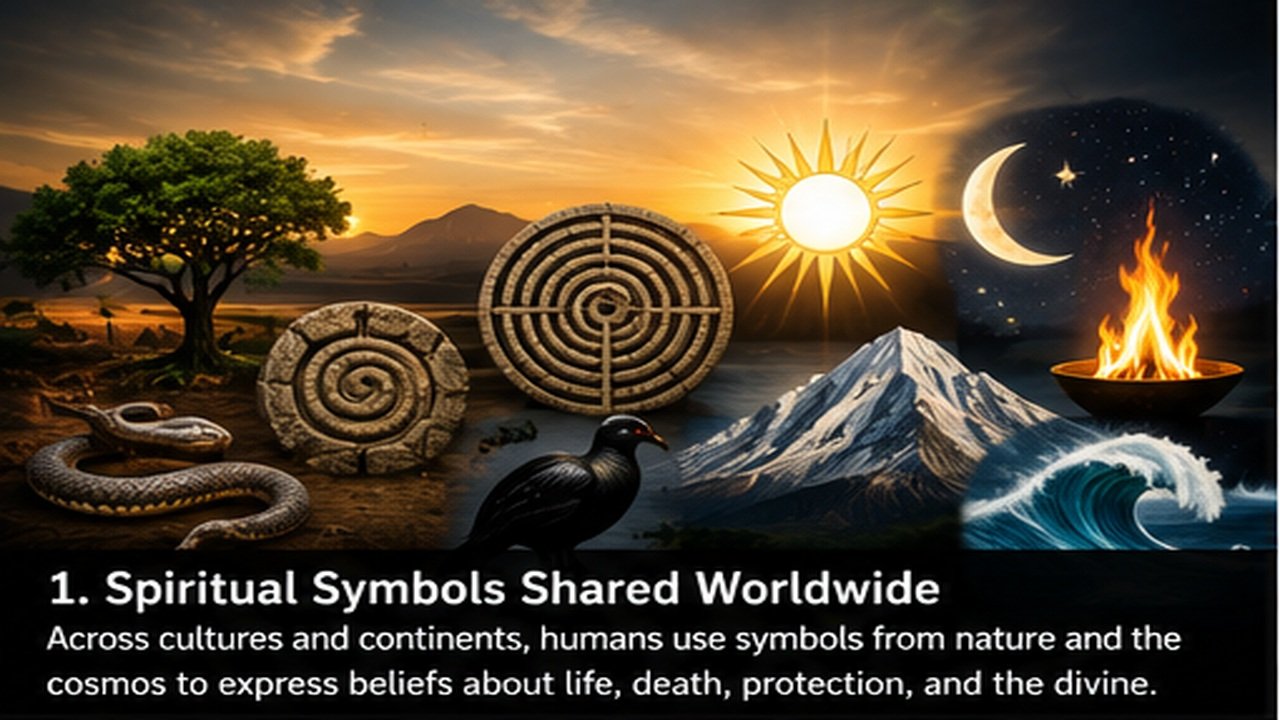
Circles, trees, flames, serpents, birds, mountains, and celestial signs recur in spiritual art worldwide. This guide explains why similar images can carry very different meanings and highlights culturally specific examples from Africa and beyond.
IMAGE 1 PLACEMENT
spiritual-symbols-shared-worldwide.jpg
Alt text: A respectful visual arrangement of recurring spiritual motifs including a circle, sacred tree, sun, water, flame, serpent, bird, and mountain without blending specific rituals.
What This Topic Means
A circle carved into stone, a serpent winding around a sacred figure, a bird looking backward, a mountain rising above a temple, or a tree linking earth and sky can feel immediately meaningful. Similar images appear in spiritual art, architecture, clothing, ritual objects, oral traditions, and sacred landscapes across many parts of the world.
Yet visual similarity can be misleading. A circle may represent a cosmic dwelling in one tradition, a cycle of life in another, a royal boundary in another, or simply a decorative pattern whose original meaning is no longer known. A serpent may protect, heal, threaten, create, destroy, connect realms, or represent a particular deity.
The phrase spiritual symbols shared worldwide is therefore useful only when shared means recurring—not identical. Communities do not inherit one universal dictionary of symbols. Meaning is created through language, story, ritual, place, history, authority, and lived experience.
This article explores recurring motifs with special attention to African examples. It explains public historical meanings without revealing restricted signs or treating sacred imagery as a collection of interchangeable decorations.
What Is a Spiritual Symbol?
A spiritual symbol is an image, shape, gesture, object, sound, animal, plant, colour, natural feature, or arrangement that carries meaning within a religious, ancestral, ethical, ceremonial, or cosmological system.
A symbol does not merely stand for a single word. It can gather several meanings at once. A sacred tree may represent ancestry, fertility, divine presence, community law, territorial identity, or the relationship between different levels of the cosmos.
Symbols can appear in public festivals, household shrines, textiles, manuscripts, architecture, jewellery, royal regalia, graves, body art, masks, pottery, and sacred landscapes. Some are widely taught. Others belong to specialists, initiated members, lineages, or restricted ceremonies.
Why Similar Symbols Appear in Different Cultures
Shared Human Experience of Nature
Every society encounters the sun, moon, water, fire, animals, plants, birth, death, weather, direction, and the changing seasons. These realities provide powerful material for explaining life, danger, renewal, order, and mystery.
Simple Geometric Forms
Circles, crosses, spirals, lines, triangles, and grids can be made with basic tools and observed in bodies, stars, shells, waves, plants, paths, and horizons. Their recurrence does not automatically prove historical connection.
Trade, Migration, Pilgrimage, and Conquest
Symbols also travel. Merchants, migrants, pilgrims, soldiers, enslaved people, artists, missionaries, and scholars carry images and ideas across regions. A travelling motif may be adopted, translated, resisted, combined with local imagery, or given an entirely new meaning.
Modern Global Circulation
Museums, tourism, film, fashion, social media, tattoo culture, and commercial spirituality now move symbols faster than ever. This visibility can support learning, but it can also detach symbols from the communities and obligations that give them meaning.
“Shared” Does Not Mean “Universal”
The idea of a universal symbol can be attractive because it suggests a hidden unity among cultures. Sometimes comparison reveals meaningful similarities. However, a universal explanation can erase the people who actually name, use, safeguard, and interpret a symbol.
UNESCO’s safeguarding framework emphasizes that cultural heritage is recognized and continually recreated by the communities that practise it. This principle applies to symbols as much as to ceremonies: community meaning takes priority over an outsider’s preferred interpretation.
A responsible comparison therefore asks two questions at once: Where else does a similar form appear? What does this exact community say it means here?
The Circle, Wheel, and Enclosed Cosmos
IMAGE 2 PLACEMENT
kongo-cosmogram-circle-cross-symbol.jpg
Alt text: Educational representation of circular and intersecting forms connected with the Kongo cosmogram, presented in a culturally specific Central African context.
The circle is one of the most widespread visual forms in spiritual art. It may suggest completeness, enclosure, return, celestial movement, community, protection, or a world organized around a centre. These meanings are possibilities, not automatic definitions.
The Kongo Cross and Cosmogram
In Kongo visual and intellectual traditions, the cross and circular movement have been interpreted through ideas of intersection, cyclical passage, the sun’s movement, and relationships between visible and spiritual realities. The Metropolitan Museum of Art notes that an X-shaped Kongo cross was later richly interpreted by local knowledge keepers as the Kongo cosmogram.
The Kongo cosmogram should not be reduced to a generic “African circle of life.” It belongs to Bakongo histories and has also shaped artistic and religious expression in the African diaspora.
Buddhist Mandalas
A Buddhist mandala may be represented as a circle containing a square palace and other carefully arranged forms. It can function as a cosmic abode and as a support for visualization and meditation. Its geometry is not interchangeable with a Kongo cosmogram, even though both may organize sacred meaning around a centre.
Prehistoric Circles and Spirals
Archaeological art in Britain, Ireland, and African rock-art traditions includes circles, spirals, parallel lines, and other geometric forms. In many cases scholars cannot securely recover the original meaning. Uncertainty should be preserved rather than filled with modern claims about energy, portals, or universal consciousness.
Sun, Moon, and Celestial Symbols
IMAGE 3 PLACEMENT
sun-moon-celestial-symbols-cultures.jpg
Alt text: Celestial symbols in culturally distinct African, Egyptian, and Asian artistic contexts.
The daily movement of the sun and the changing moon provide visible measures of time. They influence agriculture, navigation, ritual calendars, royal power, architecture, and ideas about birth, death, disappearance, and return.
Solar Imagery in African Traditions
The Smithsonian’s African Cosmos project demonstrates that the sun, moon, stars, lightning, and rainbows have inspired African arts and knowledge systems for thousands of years. This does not imply one African astronomy or one shared solar theology; each work belongs to a specific people and history.
Ancient Egyptian Sun Symbols
Ancient Egyptian temples, tombs, royal imagery, scarabs, sun discs, and divine figures used solar imagery in multiple ways. The scarab could connect the movement of the beetle with the sun’s passage and with rebirth, while the sun disc could identify divine or royal relationships.
The Sun in Shinto
The Ise shrine tradition is associated with Amaterasu, the sun kami and mythical ancestor of Japan’s imperial family. A sacred mirror connected with Amaterasu carries meanings of authority, presence, wisdom, and truth within a specifically Shinto and imperial context.
A solar disc, sunburst, or mirror should therefore not be assigned one universal meaning simply because light is widely associated with life or knowledge.
The Sacred Tree, World Tree, and Grove
IMAGE 4 PLACEMENT
sacred-tree-world-tree-grove-symbols.jpg
Alt text: A living African sacred grove alongside culturally distinct tree-of-life and world-tree imagery.
Trees join roots, trunk, branches, fruit, shade, seasons, and long life in one visible organism. They can become symbols of ancestry, fertility, wisdom, moral order, cosmic structure, shelter, death, or regeneration.
Trees of Life in Christian and European Art
In Christian art, the Tree of Life can refer to biblical creation, abundance, salvation, paradise, and eternal life. A seventeenth-century British embroidered Tree of Life in the Metropolitan Museum, for example, evokes biblical abundance and the promise of the celestial tree.
Indigenous World-Tree Traditions in the Americas
Mesoamerican world-tree imagery could represent a cosmic centre linking different realms. During the colonial period, Indigenous world-tree forms and the Christian cross were sometimes compared, combined, or reinterpreted under unequal conditions of mission and conquest.
Sacred Groves in Africa
A tree motif and a living sacred forest are not the same thing. The Osun-Osogbo Sacred Grove in Nigeria is a Yoruba sacred landscape whose river, forest, shrines, sculptures, priesthoods, and community relationships form one system. The sacred Mijikenda Kaya forests in Kenya preserve ancestral settlement sites and continue to support cultural and ritual practices.
Using a stylized tree in a logo is therefore different from participating in a community’s sacred landscape and its rules of access, care, and authority.
Water and the Wave
IMAGE 5 PLACEMENT
water-fire-spiritual-symbols-worldwide.jpg
Alt text: Water and fire shown as separate sacred elements used differently across cultural traditions.
Water can symbolize life, blessing, transition, danger, fertility, memory, purification, and the boundary between worlds. Its meanings arise from specific rivers, seas, rainfall systems, vessels, prayers, laws, and stories.
The Osun River, Christian baptismal water, Jewish mikveh, Islamic ablution, Hindu sacred-river bathing, Shinto purification, and Māori wai tapu all involve water, but they do not express one shared ritual theory.
Waves may also signify power, impermanence, travel, danger, or natural beauty. Hokusai’s Great Wave became a global icon, yet its artistic and cultural history remains rooted in Edo-period Japanese print culture and the visual relationship between human vulnerability, the sea, and Mount Fuji.
Suggested internal link: Water Ceremonies Around the World — /blog/water-ceremonies-around-the-world
Fire and the Sacred Flame
Fire transforms visible matter into heat, light, smoke, and ash. Because it must be tended, it can represent life, continuity, divine presence, purification, sacrifice, political order, ancestral memory, or danger.
A Kongo or African household hearth, a Zoroastrian consecrated fire, Vedic Agni, a Roman civic flame, and a memorial candle may share the physical element of fire while belonging to very different spiritual and social systems.
The flame is not automatically the object of worship. It may be a witness, offering medium, sacred sign, or responsibility maintained by recognized custodians.
Suggested internal link: Sacred Fire in History — /blog/sacred-fire-in-history
The Serpent: Power, Protection, Healing, and Danger
IMAGE 6 PLACEMENT
serpent-symbols-egypt-mexica-south-asia.jpg
Alt text: Culturally distinct serpent imagery from ancient Egypt, Mexica art, and South Asian naga traditions.
Few symbols demonstrate cultural difference more clearly than the serpent. Its movement, venom, skin-shedding, hidden habitats, and relationship with water or earth have inspired many interpretations.
Ancient Egypt
In ancient Egyptian imagery, serpents could express royal protection and divine power, as with the uraeus cobra, while other serpents represented destructive danger or cosmic opposition. A single culture could therefore hold positive and negative serpent meanings at the same time.
Mexica and Mesoamerican Traditions
The British Museum explains that Mexica serpents could be multifaceted beings associated with water, fertility, celestial events, and movement between spheres. The feathered serpent Quetzalcoatl belongs to specific Mesoamerican histories and should not be collapsed into a worldwide “kundalini” or dragon theory.
South Asian Naga Traditions
In South Asian religious art, naga beings can be connected with water, fertility, sacred power, guardianship, and protection. A multi-headed serpent sheltering a sacred figure carries a different narrative and theological setting from an Egyptian cobra or Mexica feathered serpent.
Because serpent meanings can directly contradict each other, interpretation must always begin with the object, story, deity, period, and community.
Birds, Flight, and the Sankofa Principle
IMAGE 7 PLACEMENT
sankofa-bird-akan-symbol-ghana.jpg
Alt text: A Sankofa bird in an Akan and Ghanaian textile or carved-art context, representing learning from the past.
Birds can move between earth, trees, and sky, making them powerful symbols of freedom, spirit, prophecy, kingship, protection, migration, or communication. No single meaning applies to every species or culture.
Sankofa in Akan and Ghanaian Visual Culture
Sankofa is associated with the principle of returning to retrieve what is valuable from the past. One popular form is a bird turning its head backward while moving forward. Smithsonian sources describe the Sankofa bird as a widely recognized symbol and connect it with learning from the past.
Sankofa belongs to Akan proverb traditions and Ghanaian visual culture. It should not be marketed as a generic African bird symbol without naming its origin.
Bird Symbols Elsewhere
Eagles, ravens, doves, cranes, falcons, and phoenix-like birds carry different meanings across religious and political systems. Even when several are linked with sky or transcendence, the species, story, and context remain essential.
The Ankh, Cross, and Crossroads
IMAGE 8 PLACEMENT
ankh-cross-crossroads-sacred-symbols.jpg
Alt text: The ancient Egyptian ankh, Christian cross, and Kongo intersecting-cross forms shown separately with clear cultural boundaries.
Crossed lines can mark direction, intersection, balance, territory, meeting, or a sacred centre. However, similar shapes may be historically unrelated.
The Ancient Egyptian Ankh
The ankh is the ancient Egyptian hieroglyphic word and symbol for life. It often appears in the hands of deities or being presented to a ruler as a sign of life or divine life. Its looped form later entered new visual contexts, including Coptic Christian art.
The Christian Cross
For Christians, the cross is centrally associated with the crucifixion and resurrection of Jesus, salvation, discipleship, suffering, and hope. Different cross forms developed across regions and denominations.
Kongo Intersections and the Cross
In Kongo contexts, the cross could resonate with pre-existing ideas of intersection and cosmological movement. Kongo Christian artists and communities did not merely copy a European sign; they interpreted Christian forms through local intellectual and visual traditions.
The ankh, Christian cross, Kongo cross, crossroads sign, and four-direction diagram should therefore not be described as one symbol with one ancient source.
Mountains and Sacred Height
IMAGE 9 PLACEMENT
sacred-mountains-spirals-symbolic-landscapes.jpg
Alt text: Sacred mountains and ancient spiral patterns presented as culturally specific landscapes and archaeological motifs.
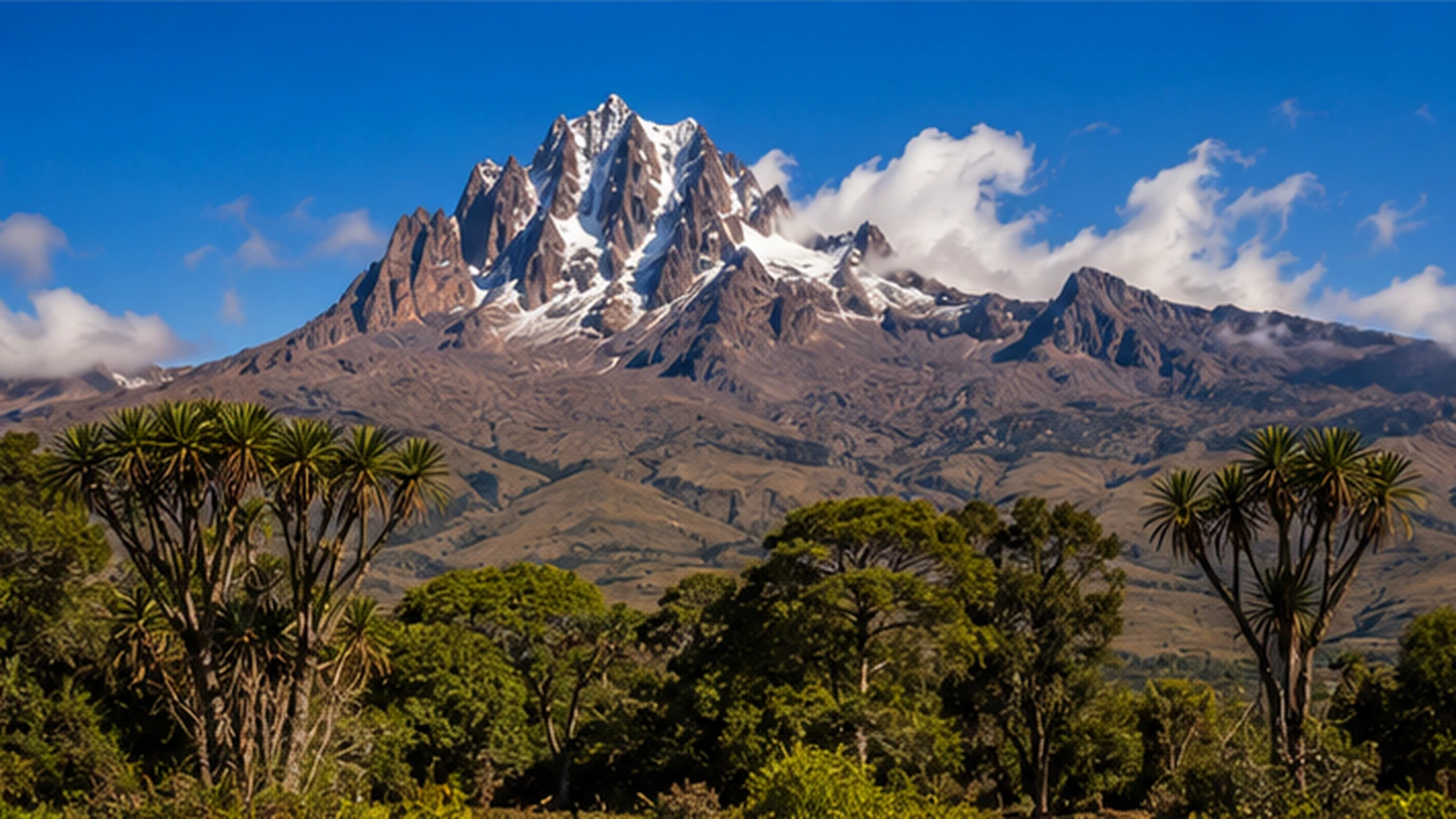
Mountains can shape weather, water, navigation, territorial identity, pilgrimage, myth, burial, revelation, and political power. Their physical elevation makes them natural sites for ideas about closeness to heaven or divine presence, but this is not their only meaning.
Mountains in Chinese Culture
The Metropolitan Museum explains that mountains in Chinese culture were understood as manifestations of nature’s vital energy, qi. They became central to painting, pilgrimage, Daoist practice, imperial journeys, and ideas about immortality and cosmic order.
Mount Fuji and Japanese Identity
Mount Fuji is a sacred mountain, pilgrimage destination, artistic subject, and national symbol in Japan. Its appearance in prints such as Hokusai’s Thirty-six Views does not reduce it to scenery; it carries layers of religious, geographic, and cultural meaning.
Mount Ararat and Armenian Memory
Mount Ararat became a powerful symbol of origins and identity in Armenian Christian tradition through its association with Noah’s ark. The mountain’s symbolic force belongs to a particular historical and theological memory.
Spirals, Labyrinths, and the Limits of Interpretation
Spirals and winding paths are often assigned modern meanings such as growth, energy, eternity, or spiritual journey. Some cultures do use them in ways connected with movement, cycles, water, or life. In other cases, the meaning is uncertain, debated, or primarily decorative.
Archaeological evidence can establish where and when a spiral was made, what material was used, and which patterns occur nearby. It cannot always reveal the maker’s spiritual intention.
Responsible interpretation clearly separates evidence from possibility. Phrases such as “may have represented” or “scholars disagree” are more trustworthy than confident claims that every ancient spiral is a portal, DNA symbol, or map of cosmic energy.
Colours, Materials, and Placement Change Meaning
A symbol’s meaning may depend on colour, orientation, number, material, scale, and location. Gold can suggest divinity, royalty, sunlight, wealth, or simply preciousness. White may signify purity, mourning, ancestral presence, initiation, or status depending on the culture.
A sign worn on the body may differ from the same sign carved on a grave, placed on a royal object, painted in a shrine, printed on commercial clothing, or used as a modern political emblem.
Interpretation should therefore examine the complete object and setting rather than isolating one shape.
How Symbols Change Through Contact and Conversion
Symbols often survive by changing. A community may translate a new religion through existing visual language, adapt an older sign to a new political order, or preserve local identity inside an imported form.
The looped ankh appeared in Coptic Christian contexts. Kongo artists interpreted Christian crosses through Kongo ideas of intersection. Colonial artists in the Americas combined Indigenous world-tree imagery with Christian visual forms. These processes are sometimes called adaptation, translation, hybridity, or syncretism, though each term has limits.
Change does not make a symbol inauthentic. Living communities continually interpret heritage in response to new circumstances. The key question is who has authority to explain that change.
Symbols in Contemporary Spirituality, Fashion, and Tattoos
Global design makes sacred imagery easy to copy. An ankh, Sankofa bird, mandala, serpent, eye, or Indigenous pattern can become a necklace, tattoo, logo, social-media graphic, or commercial product far from its original context.
Use is more respectful when people research the symbol’s origin, learn its exact name, avoid restricted forms, credit the community, and do not claim powers or identities they have not received through legitimate participation.
Commercial use deserves additional care. Selling a sacred sign as a guaranteed protection charm, healing device, wealth symbol, or proof of initiation can mislead customers and exploit living traditions.
How to Interpret Spiritual Symbols Respectfully
Identify the exact culture, religion, language, place, and historical period.
Study the complete object, story, ceremony, or landscape rather than isolating one shape.
Use museum, university, heritage, and community-approved sources.
Distinguish established meaning from scholarly debate and personal interpretation.
Do not assume that similar appearance proves one origin or one universal religion.
Avoid copying restricted signs, initiation marks, sacred garments, or ceremonial arrangements.
Credit the community when using a culturally specific name such as Sankofa, ankh, mandala, or Kongo cosmogram.
Do not promise that a symbol guarantees healing, protection, fertility, love, wealth, or supernatural results.
Recognize that living communities may revise, debate, or expand the meaning of their own symbols.
Key Takeaways
Spiritual symbols shared worldwide reveal both human connection and cultural difference. People repeatedly turn toward circles, trees, flames, water, serpents, birds, mountains, celestial bodies, and crossed paths because these forms are part of the world humans inhabit.
Their recurrence does not make them identical. A symbol becomes meaningful through the people who name it, the stories that explain it, the places where it appears, the responsibilities surrounding it, and the generations that keep interpreting it.
The most respectful comparison does not search for one secret code behind every culture. It learns to see resemblance without erasing difference—and to recognize that the same shape can hold many worlds.
Editorial note on cultural specificity: Verify community names, diacritics, object descriptions, and restrictions before publication. Do not present a modern personal interpretation as a community’s traditional meaning.
Article Information
- Publisher
- Ancestral Temple
- Editor
- Ancestral Temple
- Last updated
- Jul 26, 2026
- Last reviewed
- Jul 26, 2026
- Content version
- 76e8fcad73
This educational article should be read as cultural and spiritual information, not as medical, legal, financial, or emergency advice.
Helpful Related Guidance
Explore This Topic
Sacred Symbols In African Spiritual Traditions · Spiritual Knowledge
About the Author
 Ancestral Temple
Spiritual guide and practitioner with decades of experience in ancestral wisdom, rituals, and divine guidance.
Related Posts
View All
Leave a Comment
We'd love to hear your thoughts.
The entire article remains respectful while still being engaging and visually descriptive.
I valued the instruction to distinguish evidence from personal interpretation.
The publishing package includes the technical SEO elements needed for the blog.
The article is well structured for both general readers and AI-search summaries.
The conclusion about one shape holding many worlds is powerful.
The article provides a strong foundation for future posts about individual symbols.
The serpent examples from Egypt, Mexico, and South Asia are especially informative.
The article explains that living traditions can change without becoming inauthentic.
The discussion of appropriation is balanced and gives practical steps for respectful use.
The image plan is specific enough to avoid mixing unrelated traditions in one ritual scene.
The writing helps readers recognize both shared humanity and cultural difference.
I appreciate that the article does not use one vague category called African symbolism.
The environmental meaning of sacred forests adds depth to the symbol discussion.
The comparison of the ankh, Christian cross, and Kongo cross is handled carefully.
The article would be useful for students of religion, art history, and cultural heritage.
The section on spirals is a good example of preserving scholarly uncertainty.
The Sankofa principle is explained in a memorable but culturally grounded way.
The article treats community authority as more important than a popular online interpretation.
The discussion of sacred mountains is respectful and globally balanced.
The glossary will help readers understand terms such as iconography and cosmogram.
The article avoids promising that symbols guarantee protection or healing.
I liked the reminder that colour, material, orientation, and placement can change meaning.
The FAQ answers are clear and useful for search snippets.
The Kongo Christian adaptation section shows that African communities actively interpreted new forms.
The article makes clear that visual resemblance is evidence for comparison, not proof of one origin.
The explanation of water symbols connects well with the earlier water-ceremony article.
The Tree of Life section keeps Christian, Indigenous, and African traditions separate.
The article is detailed without encouraging readers to copy restricted practices.
The internal links create a strong cultural-education knowledge hub.
The section on mountains shows how landscape, identity, and faith can come together.
I appreciated the difference between a symbol and the full ritual system around it.
The guidance about tattoos and commercial products is practical and respectful.
The ankh section is direct and corrects many vague internet explanations.
The African Cosmos discussion adds a useful perspective on celestial imagery.
The article explains why natural symbols recur without inventing one ancient world religion.
The comparison between mandalas and Kongo circular forms avoids claiming they are identical.
The section on uncertainty in archaeological interpretation is especially responsible.
The article treats sacred groves as living places rather than decorative tree symbols.
The Sankofa discussion correctly names its Akan and Ghanaian context.
I liked the explanation that symbols can travel through trade, migration, and religious change.
The serpent section clearly shows how one image can carry opposite meanings.
The article gives African examples substantial attention while keeping them distinct.
The Kongo cosmogram section explains cultural specificity without reducing it to a slogan.
I appreciated the strong warning against treating every circle as the same spiritual sign.
The distinction between recurring symbols and universal meanings makes the topic much more accurate.