
Zulu Spiritual Customs
Quick Summary
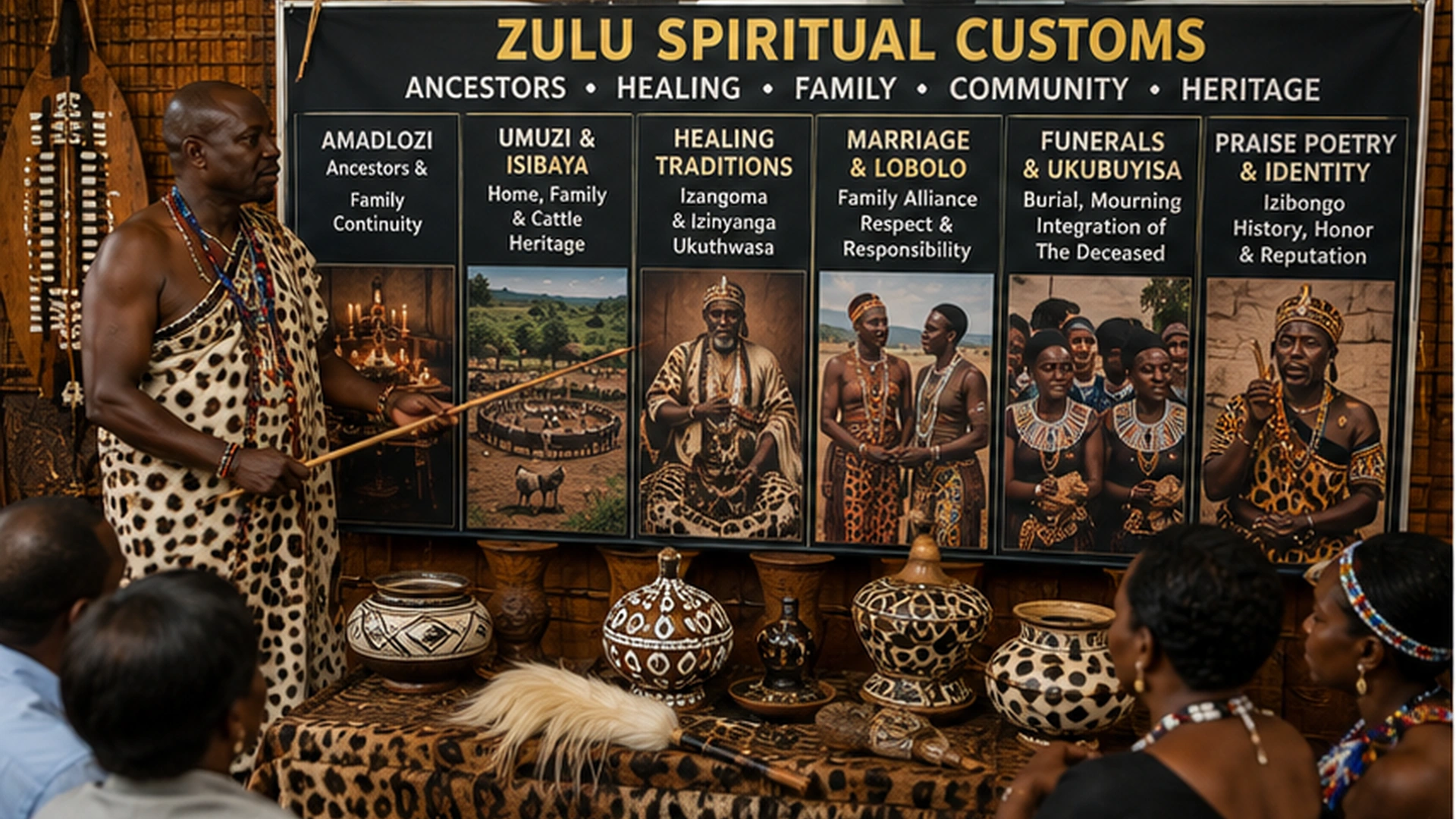
Zulu spiritual customs are living, family-centered traditions rooted in relationships among the living, amadlozi, land, cattle, healing specialists, kingship, marriage, funerals, praise poetry, and community responsibility. Practices differ by family, region, church affiliation, and historical experience.
Zulu spiritual customs belong to a living cultural world centered especially in KwaZulu-Natal, South Africa, while isiZulu-speaking families also live throughout South Africa and beyond.
These customs are not one fixed religion. Family lineages, rural and urban communities, royal institutions, traditional healers, African independent churches, Catholic, Protestant, Pentecostal, Muslim, and secular Zulu people may understand spiritual life differently.
Zulu identity emerged historically among northern Nguni-speaking communities and was reshaped through the formation of the Zulu kingdom, colonial conquest, labor migration, Christianity, apartheid, urbanization, and democratic South Africa.
Ancestor relationships, known through terms such as amadlozi or abaphansi, remain important in many families. They are connected with kinship, moral conduct, dreams, health, naming, marriage, funerals, and the continuity of the homestead.
This article discusses public cultural information. It does not disclose private family invocations, initiation teachings, medicinal formulas, or confidential divination procedures.
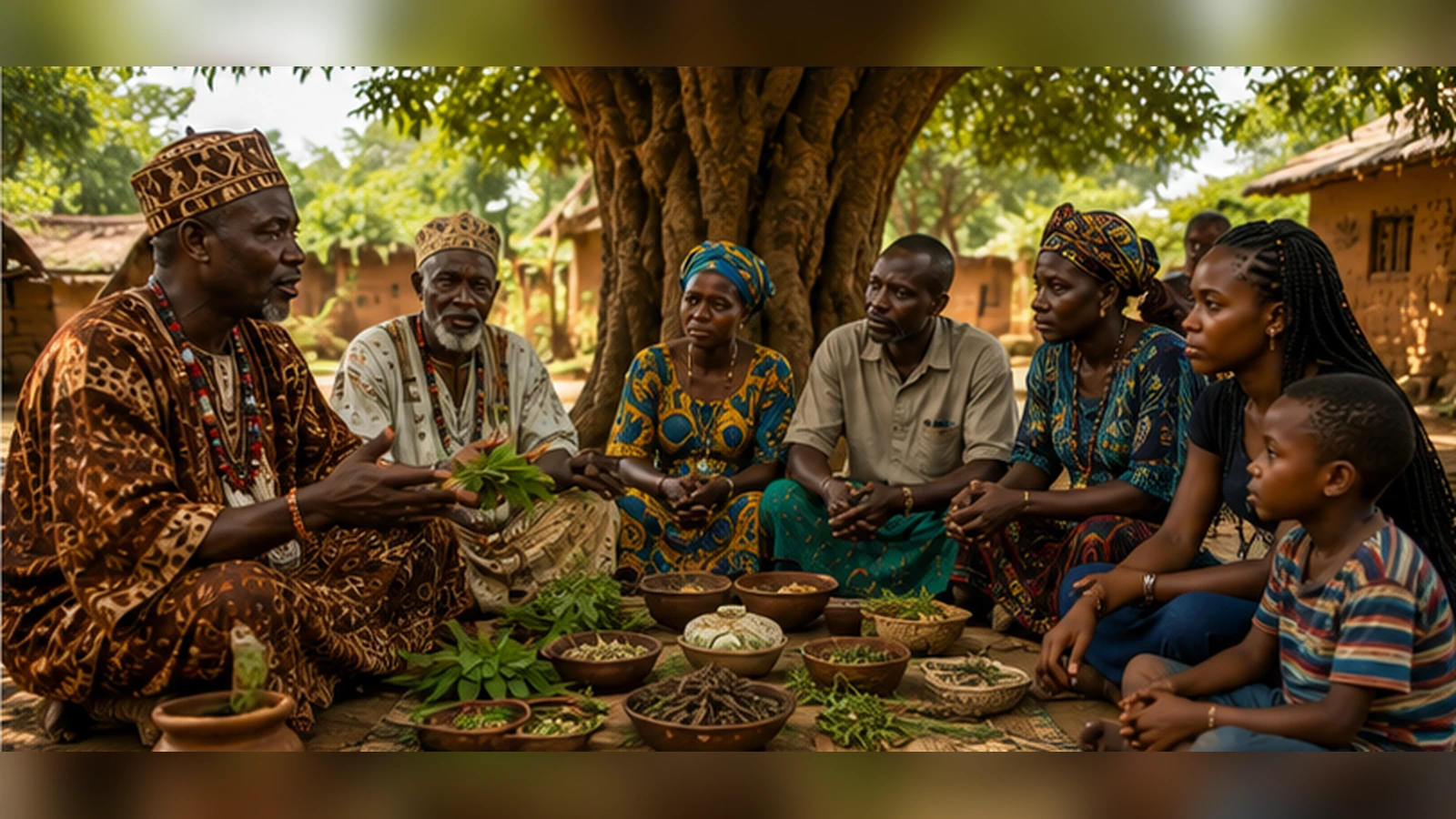
Suggested scene: Zulu cultural historian introducing amadlozi, family ritual, healing, cattle and homestead symbolism, marriage, funerals, beadwork, praise poetry, and royal heritage through separate educational displays.
Key Points
Zulu spiritual customs are family-centered and vary across households, regions, and religious identities.
Amadlozi are deceased family members understood to remain connected with descendants.
Family elders often guide remembrance, offerings, naming, and responses to dreams or misfortune.
Izangoma commonly work through divination and spirit-mediated diagnosis, while izinyanga are often associated especially with herbal and material medicines; roles can overlap.
Ukuthwasa is a demanding process of training and initiation for some traditional healers.
Cattle and the homestead cattle enclosure carry economic, ancestral, marital, and political meaning.
Marriage joins families and may involve lobolo negotiations, gifts, ritual acknowledgment, and Christian or civil ceremonies.
Funeral customs can include burial, mourning, ancestral transition, cleansing, and later ceremonies of return or remembrance.
Beadwork, dress, dance, drumming, and praise poetry communicate identity and social relationships.
Christianity and ancestral customs may coexist, conflict, or be reinterpreted differently by each family.
Important Terms
Term
General meaning
Amadlozi
Ancestors or deceased family members who remain connected with descendants
Abaphansi
Those below; another term used for ancestors
Isangoma
Diviner or traditional healer associated especially with spiritual diagnosis and ancestral calling
Inyanga
Traditional medical specialist often associated with herbal, animal, and mineral medicines
Ukuthwasa
Training and initiation process undertaken by some people called to become traditional healers
Umuzi
Homestead, household, or family settlement
Isibaya
Cattle enclosure and an important social, economic, and ancestral space
Lobolo
Marriage-related transfer or negotiation, historically associated especially with cattle
Impepho
Aromatic plant material burned in some family and healing contexts
Izibongo
Praise poetry preserving identity, history, reputation, and political memory
1. Diversity within Zulu Spiritual Life
Zulu families do not all follow identical customs. Practices differ according to clan history, region, rural or urban residence, education, church affiliation, healer lineage, marriage, and personal conviction. Public discussion should identify the specific family or institution rather than claiming that every Zulu person shares one theology.
2. uNkulunkulu and Supreme Divine Authority
The term uNkulunkulu may refer to a supreme creator, an ancient first ancestor, or divine authority depending on speaker and context. Missionary translation and Christian theology also shaped modern interpretations. It should not be forced into one universal definition.
Article Information
- Publisher
- Ancestral Temple
- Editor
- Ancestral Temple
- Last updated
- Jul 26, 2026
- Last reviewed
- Jul 26, 2026
- Content version
- d729ce9af4
This educational article should be read as cultural and spiritual information, not as medical, legal, financial, or emergency advice.
Helpful Related Guidance
Explore This Topic
Spiritual Knowledge · Community Healing Traditions Across Africa
About the Author
 Ancestral Temple
Spiritual guide and practitioner with decades of experience in ancestral wisdom, rituals, and divine guidance.
Related Posts
View All

Leave a Comment
We'd love to hear your thoughts.
I appreciated the distinction between amadlozi and anonymous spirits.
The article clearly explained that Zulu families do not all practice the same customs.