
What Are the Kasubi Tombs? History, Meaning, and Cultural Significance in Buganda
Quick Summary
The Kasubi Tombs are the royal burial site of four Kabakas of Buganda and one of Uganda’s most important cultural heritage places. Located on Kasubi Hill in Kampala, the site combi...
The Kasubi Tombs are the royal burial site of four Kabakas of Buganda and one of Uganda’s most important cultural heritage places. Located on Kasubi Hill in Kampala, the site combines royal history, traditional Baganda architecture, living cultural practice and spiritual meaning. UNESCO lists it as the Tombs of Buganda Kings at Kasubi, a World Heritage property whose significance lies not only in its buildings, but also in belief, continuity and identity. [1]
For readers discovering the site for the first time, the most important point is that Kasubi should not be treated as a generic “African temple” or a simple tourist monument. It is a specific Buganda royal burial ground, a former palace, a cultural landscape and a living heritage site connected to the Baganda people and the institution of kingship in Buganda. That specificity matters because ancestral heritage is always rooted in place, community, language, history and custodianship.
This guide explains what the Kasubi Tombs are, where they are located, why they matter, how their architecture works, what can responsibly be said about their ritual and spiritual significance, and how the 2010 fire and later reconstruction changed the modern story of the site.
Quick Answer
The Kasubi Tombs are a Buganda royal burial site in Kampala, Uganda, where four former Kabakas are buried within the main thatched building, Muzibu Azaala Mpanga. Built as a palace in 1882 and converted into a royal cemetery in 1884, the site is a UNESCO World Heritage property valued for Baganda architecture, kingship, belief, continuity and identity. [1]
What the Kasubi Tombs Are
The Kasubi Tombs are officially known by UNESCO as the “Tombs of Buganda Kings at Kasubi.” They occupy a hillside site in Kampala City, with the main heritage core located on Kasubi Hill. UNESCO describes the property as covering about 26.8 hectares of hillside, while broader descriptions often round the site to nearly 30 hectares. Much of the surrounding land has historically been agricultural, farmed by traditional methods, while the ceremonial and burial core sits at the top of the hill. [1]
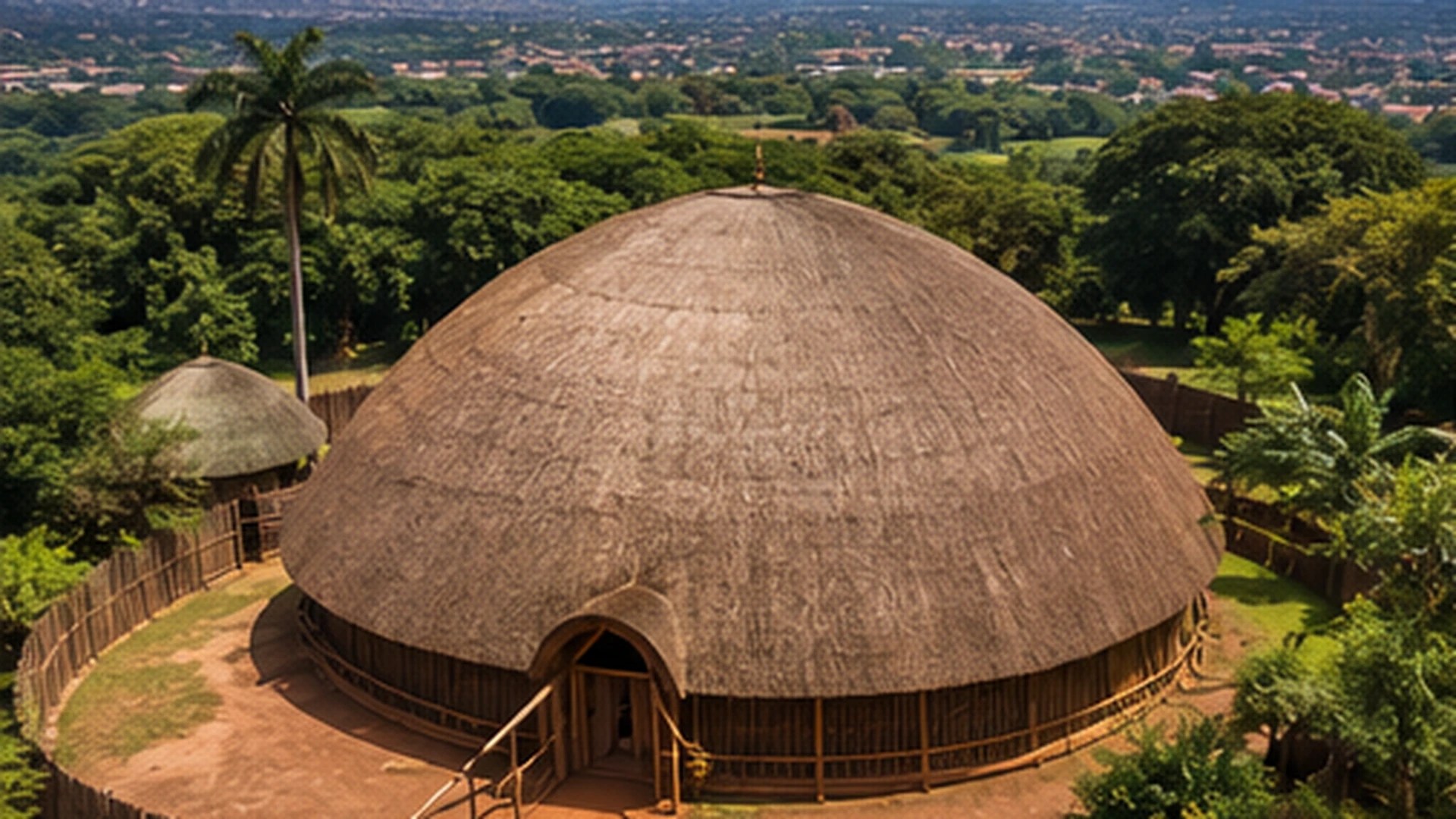
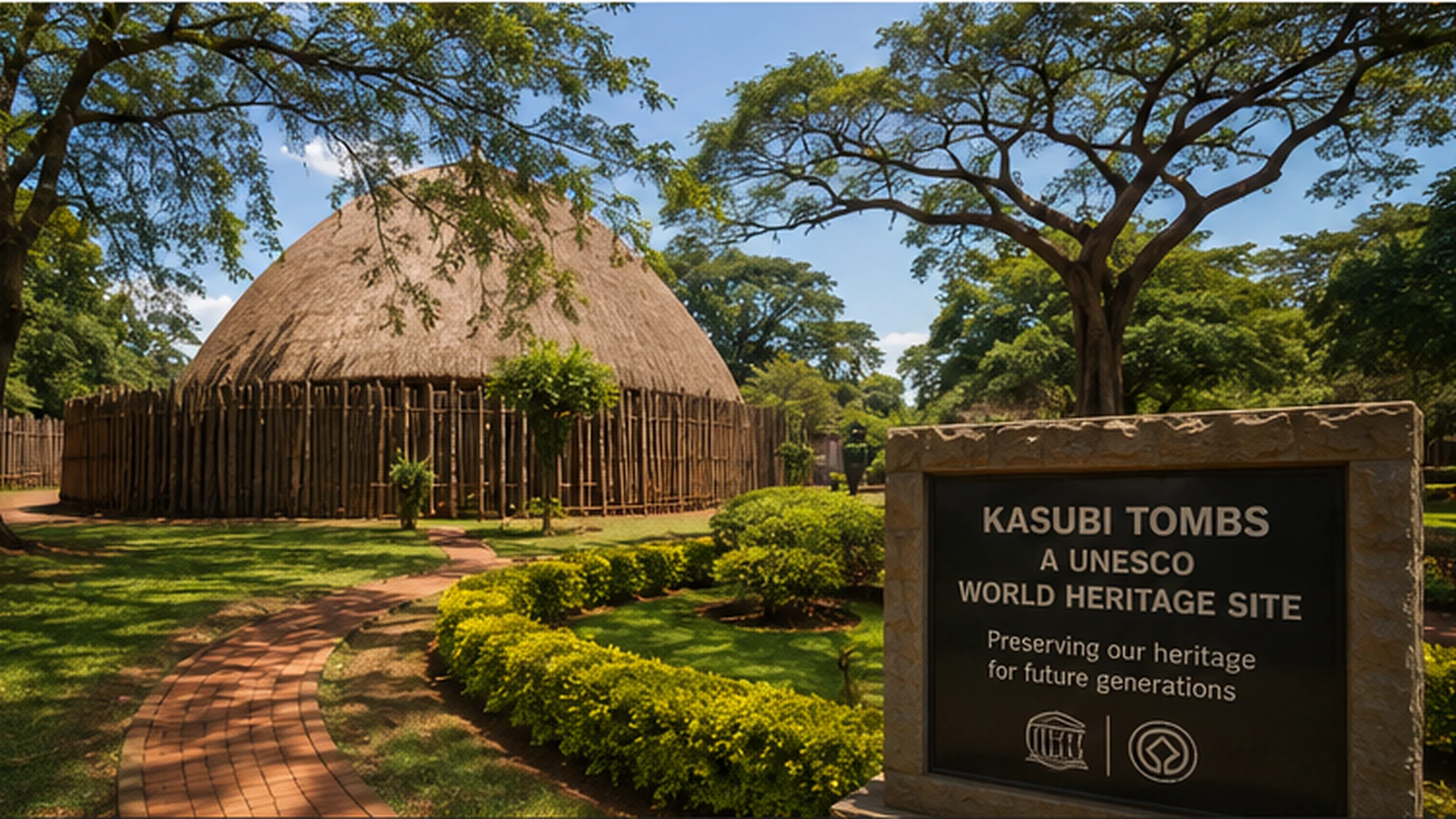
At the centre of the site is Muzibu Azaala Mpanga, the main tomb building. It is a circular, domed structure made with organic materials such as wood, thatch, reeds, wattle and daub. The building is not only architecturally important; it houses the tombs of four Kabakas, or kings, of Buganda. In Baganda cultural life, that royal burial function gives the site a significance that cannot be reduced to architecture alone. [1]
The site began as a palace. The palace was built in 1882 and converted into a royal burial ground in 1884. This dual identity—former palace and royal cemetery—helps explain why the Kasubi Tombs are both political and spiritual in meaning. They preserve the memory of Buganda kingship while also remaining connected to public-facing traditional and cultural practices. [1]
The word “tombs” is therefore important. Although AncestralTemple.com explores sacred places and ancestral heritage, the culturally accurate term here is not “temple” in a generic sense. The public and official name is Kasubi Tombs or Tombs of Buganda Kings at Kasubi. The place functions as a royal burial site and spiritual centre within Buganda culture, not as a universal model for all African sacred architecture.
| Image number | 1 |
|---|---|
| Purpose | Featured image introducing the Kasubi Tombs as a Buganda royal heritage site. |
| Detailed scene | A respectful wide documentary-style view of a large reconstructed thatched circular tomb building on a green Kampala hillside, with a subtle Buganda royal heritage atmosphere and no staged ritual. |
| Specific culture or historical context | Baganda / Buganda Kingdom, Kampala, Uganda; public-facing heritage context. |
| People shown | A few respectful visitors or custodial figures at a distance, not performing private rituals. |
| Location | Kasubi Hill, Kampala, Uganda. |
| Clothing | Contemporary modest Ugandan clothing; no invented ceremonial costumes. |
| Architecture | Large round thatched structure inspired by Muzibu Azaala Mpanga, reed fencing, earth paths, green hillside. |
| Objects | Natural materials: thatch, reeds, wooden poles, woven panels; no text signs. |
| Lighting | Warm natural morning light, documentary realism. |
| Composition | 16:9 landscape, building centred slightly right with approach path leading in. |
| SEO-friendly filename | kasubi-tombs-buganda-royal-heritage.webp |
| Image title | Kasubi Tombs and Buganda Royal Heritage |
| Alt text | Reconstructed thatched main tomb building at the Kasubi Tombs in Kampala within a respectful Buganda heritage setting. |
| Caption | The Kasubi Tombs are a Buganda royal burial site and UNESCO World Heritage property in Kampala. |
| Recommended placement | After “What the Kasubi Tombs Are.” |
| Article section supported | Definition and featured article identity. |
| Important elements to avoid | Avoid fantasy symbols, fake rituals, labels, logos, crowds, tourist stereotypes or mixed African cultural elements. |
Where the Site Is and Why It Matters
The Kasubi Tombs are in Kampala, the capital of Uganda, within the historical and cultural landscape of Buganda. Buganda is a kingdom in central Uganda, and the Baganda are a Bantu-speaking people whose language is Luganda. The site’s meaning is tied to Buganda kingship, royal burial, spiritual continuity and the public memory of the Kabakas.
For the Baganda, the site matters because it is a place where royal ancestry, kingship and community identity meet. UNESCO identifies the site as a major spiritual centre for the Baganda and emphasizes its intangible values of belief, spirituality, continuity and identity. Those words should be read carefully. They do not mean that an outsider can fully explain every ritual meaning of the site. They mean that the property’s heritage value includes living cultural significance, not only old buildings. [1]
The site also matters nationally and internationally. Uganda Museums identifies Kasubi as a gazetted national cultural site and as Uganda’s cultural World Heritage property, alongside Uganda’s natural World Heritage sites. That public heritage status places Kasubi within both Buganda Kingdom custodianship and Uganda’s national heritage framework. [2]
In East African heritage writing, this dual character is important. Kasubi is not only a historical place to be photographed. It is also a living site with custodians, cultural protocols and meanings that continue to matter to a community. Responsible writing must therefore balance public education with respect for boundaries.
A Brief History of the Kasubi Tombs
The documented modern history of the Kasubi Tombs begins with the palace built in 1882. Two years later, in 1884, the palace was converted into a royal burial ground. This transformation from palace to cemetery is central to the site’s meaning: a place of royal authority became a place where royal memory and ancestral continuity are preserved. [1]
UNESCO states that four royal tombs now lie within Muzibu Azaala Mpanga. The Buganda Kingdom’s public information identifies the buried Kabakas as Muteesa I, Mwanga II, Daudi Chwa II and Sir Edward Muteesa II. Sir Edward Muteesa II also became the first president of independent Uganda, which adds another layer of national historical significance to the site. [3]
In 2001, the Tombs of Buganda Kings at Kasubi were inscribed on the UNESCO World Heritage List. The inscription recognized the site’s outstanding universal value, especially as a surviving example of Baganda palace and burial architecture made with organic materials and as a place whose deepest significance lies in intangible cultural values. [1]
On 16 March 2010, a major fire devastated the main tomb building. UNESCO and Ugandan heritage authorities treated the damage as a severe threat to the site’s outstanding universal value, and the property was placed on the List of World Heritage in Danger. This was not simply a construction problem. Rebuilding the site required attention to traditional skills, community participation, heritage conservation and cultural requirements. [4]
Reconstruction proceeded through cooperation among the Ugandan authorities, UNESCO, the Buganda Kingdom and international partners. In September 2023, UNESCO announced that the World Heritage Committee had removed the site from the List of World Heritage in Danger after successful restoration work, including reconstruction of Muzibu Azaala Mpanga, restoration of the guardian’s house Bujjabukala, installation of a fire-fighting system and training of local volunteer fire-fighters. [4]
The modern history of Kasubi is therefore a story of loss and recovery. The 2010 fire showed how vulnerable organic architecture can be. The reconstruction showed that heritage protection must involve both technical conservation and community-held knowledge.
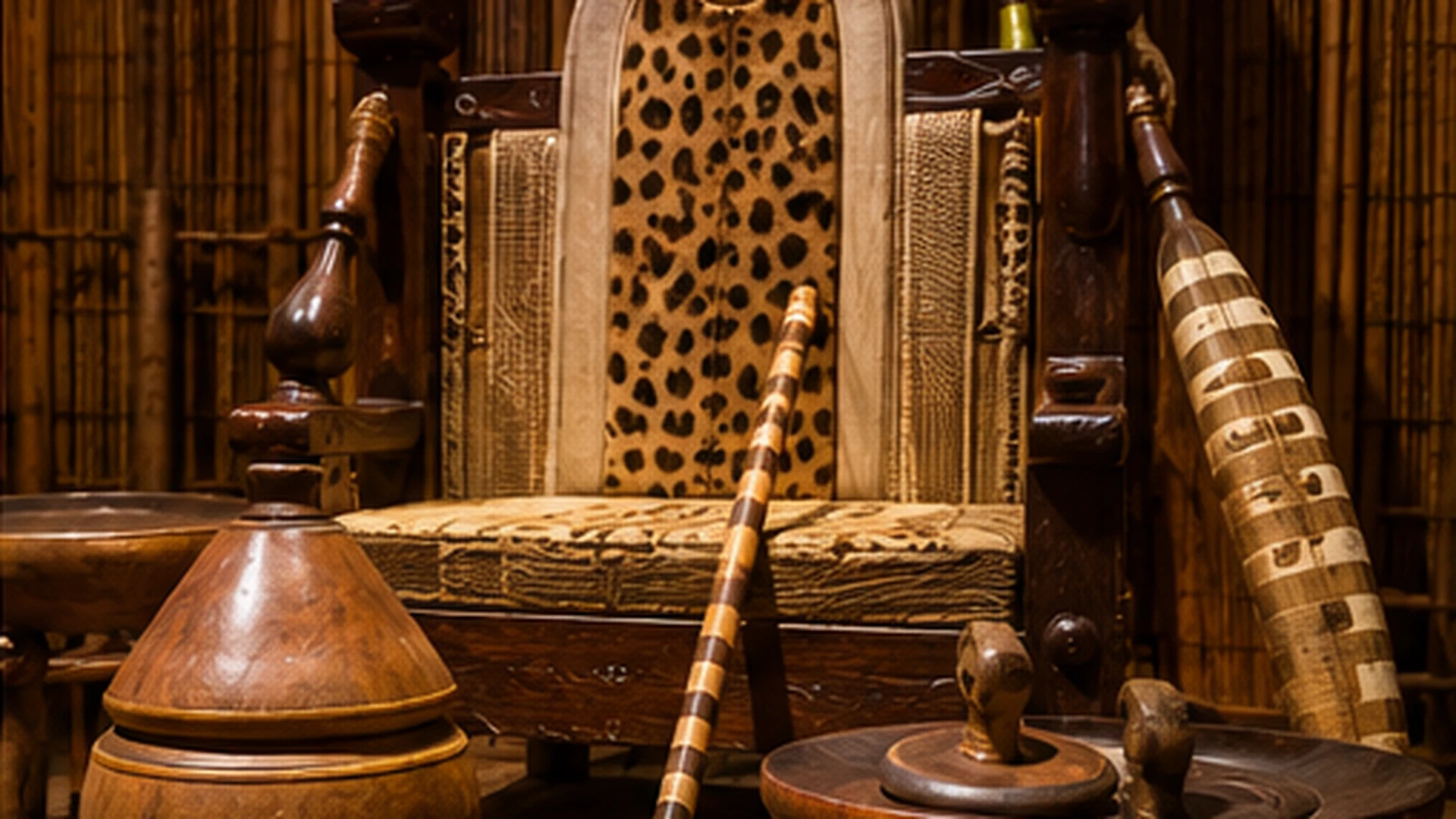
| Image number | 2 |
|---|---|
| Purpose | Illustrate the historical timeline from palace to royal burial ground and World Heritage site. |
| Detailed scene | A museum-quality editorial reconstruction of a late-19th-century Buganda palace landscape, showing a large thatched royal building on a hill with attendants and visitors in historically plausible distance, not a ritual scene. |
| Specific culture or historical context | Buganda Kingdom, late 19th century; palace built in 1882 and converted into burial ground in 1884. |
| People shown | Distant Baganda palace attendants and community members, respectfully posed, no close-up invented ceremony. |
| Location | Kasubi Hill / historical Buganda palace setting. |
| Clothing | Historically plausible bark cloth and modest cloth garments, avoiding theatrical fantasy. |
| Architecture | Thatched royal compound, reed fencing, organic materials, open courtyard. |
| Objects | Walking staffs, woven mats, baskets, royal drums suggested only in public context. |
| Lighting | Soft late afternoon light, dignified heritage reconstruction. |
| Composition | Wide landscape, hilltop palace environment with depth and natural foreground. |
| SEO-friendly filename | kasubi-tombs-history-buganda-palace.webp |
| Image title | Kasubi Tombs Historical Palace Setting |
| Alt text | Historical reconstruction of a Buganda palace setting on Kasubi Hill before its conversion into a royal burial ground. |
| Caption | The Kasubi site began as a Buganda royal palace before becoming a royal burial ground. |
| Recommended placement | After “A Brief History of the Kasubi Tombs.” |
| Article section supported | History and origins. |
| Important elements to avoid | Avoid anachronistic weapons, colonial fantasy, invented royal costumes, battle scenes or sensational drama. |
The Meaning of the Tombs in Buganda Culture
The cultural meaning of the Kasubi Tombs cannot be separated from Buganda kingship. The Kabaka is not merely a political title in the historical record; in Buganda cultural identity, kingship is tied to lineage, memory, authority and continuity. Because the site is the burial ground of previous Kabakas, it functions as a royal ancestral place and a centre of cultural remembrance.
UNESCO describes Kasubi as a major spiritual centre for the Baganda and a place where traditional and cultural practices have been preserved. It also describes the site as a place where communication links with the spiritual world are maintained. These are heritage descriptions of living belief and cultural practice; they should not be turned into sensational claims or presented as scientific proof of spiritual outcomes. [1]
A careful way to explain this is to say: for the Baganda cultural tradition, Kasubi is associated with royal ancestry, spiritual continuity and the relationship between the living kingdom and the memory of former Kabakas. That statement respects the living belief without pretending that an outside writer can reveal all meanings or that every Baganda person relates to the site in exactly the same way.
The site’s meaning is also social. Heritage places such as Kasubi help communities teach history, mark continuity and remember leaders. They can also become sites where younger generations encounter traditional architecture, royal narratives and public cultural protocols. UNESCO’s 2023 restoration update emphasized the role of local communities in passing traditional skills to younger generations during reconstruction. [4]
For AncestralTemple.com readers, Kasubi offers a strong example of why ancestral places are not always “temples” in the narrow sense. A royal burial ground can function as an ancestral and spiritual site; a former palace can become a cemetery; a building made from organic materials can carry national and international significance. The form differs from stone cathedrals, shrines or Asian ancestral halls, but the cultural seriousness is no less real.
Architecture and Spatial Design
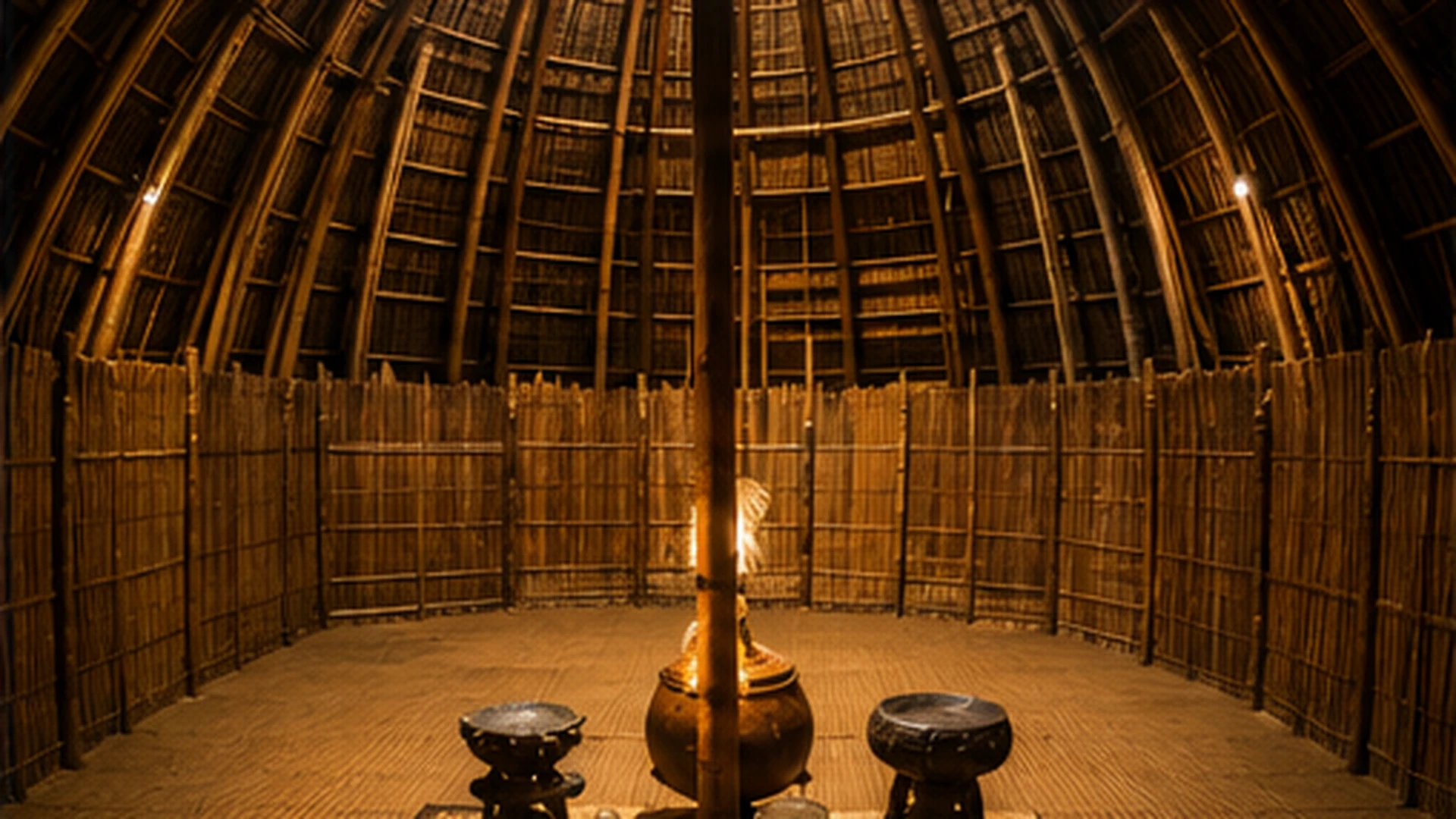
One reason the Kasubi Tombs are internationally recognized is their architecture. Muzibu Azaala Mpanga is circular in plan and surmounted by a dome. It is made principally of organic materials: wood, thatch, reeds, wattle and daub. UNESCO presents the building as an important architectural achievement in organic materials and as an exceptional example of a Baganda palace and burial site. [1]
The architecture should not be described as simple because it uses plant-based materials. Organic materials can require extraordinary skill, maintenance and cultural knowledge. The scale of the main building, the use of thatch and reeds, the organization of the courtyard and the symbolic movement from outer boundary to inner burial area all show deliberate design.
UNESCO’s description of the site’s spatial organization is especially useful. The sequence begins at a boundary traditionally marked by bark-cloth trees, continues through the gatehouse, moves into the main courtyard and culminates in the large thatched building that houses the tombs of the Kabakas. This progression helps visitors understand the site as a landscape of approach, respect and increasing cultural significance. [1]
The official Kasubi site overview also describes important elements such as Bujjabukula, the gatehouse; a forecourt with the house of royal drums; the main courtyard, known as Olugya; and the main tomb building. These public architectural descriptions help readers picture how movement through the site is organized without exposing private ritual details. [5]
The use of vegetal and organic materials also affects conservation. Thatch, wood and reeds are beautiful and culturally meaningful, but they require skilled renewal and fire protection. The post-2010 reconstruction therefore had to preserve traditional building knowledge while adding modern risk-prevention measures.
| Image number | 3 |
|---|---|
| Purpose | Explain architecture, spatial sequence and organic materials. |
| Detailed scene | A realistic editorial view from inside or near the main courtyard, showing reed fencing, wooden poles, thatched roof texture, woven panels and the entrance sequence toward a large circular building. |
| Specific culture or historical context | Public-facing Baganda architectural heritage at Kasubi. |
| People shown | No close-up people required; possibly one guide figure in the distance for scale. |
| Location | Main courtyard approach at Kasubi Tombs. |
| Clothing | If a guide appears, simple contemporary modest clothing. |
| Architecture | Bujjabukula-inspired gatehouse, reed fencing, Olugya courtyard, thatched main structure. |
| Objects | Reeds, thatch, wooden poles, woven screens, earthen path. |
| Lighting | Filtered natural daylight, clear textures. |
| Composition | Strong leading lines from entrance/courtyard toward building, 16:9. |
| SEO-friendly filename | muzibu-azaala-mpanga-architecture.webp |
| Image title | Muzibu Azaala Mpanga Architecture |
| Alt text | Reed fencing and thatched architectural details leading toward the main tomb building at Kasubi. |
| Caption | Kasubi’s architecture uses organic materials and a deliberate sequence from boundary to courtyard to royal tomb building. |
| Recommended placement | After “Architecture and Spatial Design.” |
| Article section supported | Architecture and materials. |
| Important elements to avoid | Avoid modern concrete dominance, fantasy carvings, labels, interior burial imagery, private sacred objects or text. |
Ritual, Custodianship, and Living Heritage
The Kasubi Tombs are a living heritage site. This means they are not only protected because they are old, beautiful or historically famous. They are also connected to ongoing cultural practice, memory and custodianship. UNESCO describes the site as a major spiritual centre for the Baganda and notes that traditional and cultural practices have been kept alive there. [4]
At the same time, responsible educational writing must avoid turning living practice into spectacle. It is appropriate to say that the site is tied to royal rituals, cultural practices and custodial roles. It is not appropriate to invent detailed ceremonies, reveal restricted knowledge or imply that all Baganda people share the same personal beliefs about the site.
Custodianship is one of the most important public-facing concepts. A site such as Kasubi requires people who know how to care for structures, boundaries, cultural protocols and visitors. The 2023 UNESCO update praised community involvement, transmission of traditional skills and the role of Buganda leadership in the reconstruction process. This shows that conservation is not only a technical matter; it depends on people and institutions. [4]
For visitors, this means the correct posture is humility. A guide may explain public history, architectural features and general cultural significance, but not everything at a royal burial site is public information. Photography, movement, dress and behaviour should follow local instructions. Sacred heritage is not a stage set for outsiders; it is a place where living communities decide what may be shared.
Fire, Reconstruction, and Heritage Protection
The 2010 fire is one of the central events in the modern history of the Kasubi Tombs. The main tomb building was devastated, and UNESCO placed the property on the List of World Heritage in Danger. The disaster exposed the vulnerability of large organic structures and the difficulty of protecting living heritage sites that rely on traditional materials. [4]
Reconstruction began as an international and national heritage effort. UNESCO reported that the reconstruction of the Tombs of Buganda Kings was launched in 2014 with support from Japan and implementation by the Ugandan Government and UNESCO. [6]
The restoration process did not simply reproduce a building shell. UNESCO’s 2023 announcement highlighted reconstruction of Muzibu Azaala Mpanga, restoration of Bujjabukala, a fire-fighting system and training for local volunteer fire-fighters. These details show that modern safeguarding must combine traditional skills with practical risk management. [4]
The site has also faced further fire-related concerns. UNESCO reported a separate 2020 fire affecting one of the sacred houses, Abalongo, which reinforced the need for careful fire prevention and disaster planning. [7]
In 2023, the World Heritage Committee removed the site from the List of World Heritage in Danger after the reconstruction programme reached the desired state of conservation. That decision marked an important recovery, but it should not be read as the end of heritage responsibility. Organic architecture must be maintained continuously, and living heritage requires ongoing care by custodians, government bodies, community members and visitors. [4]
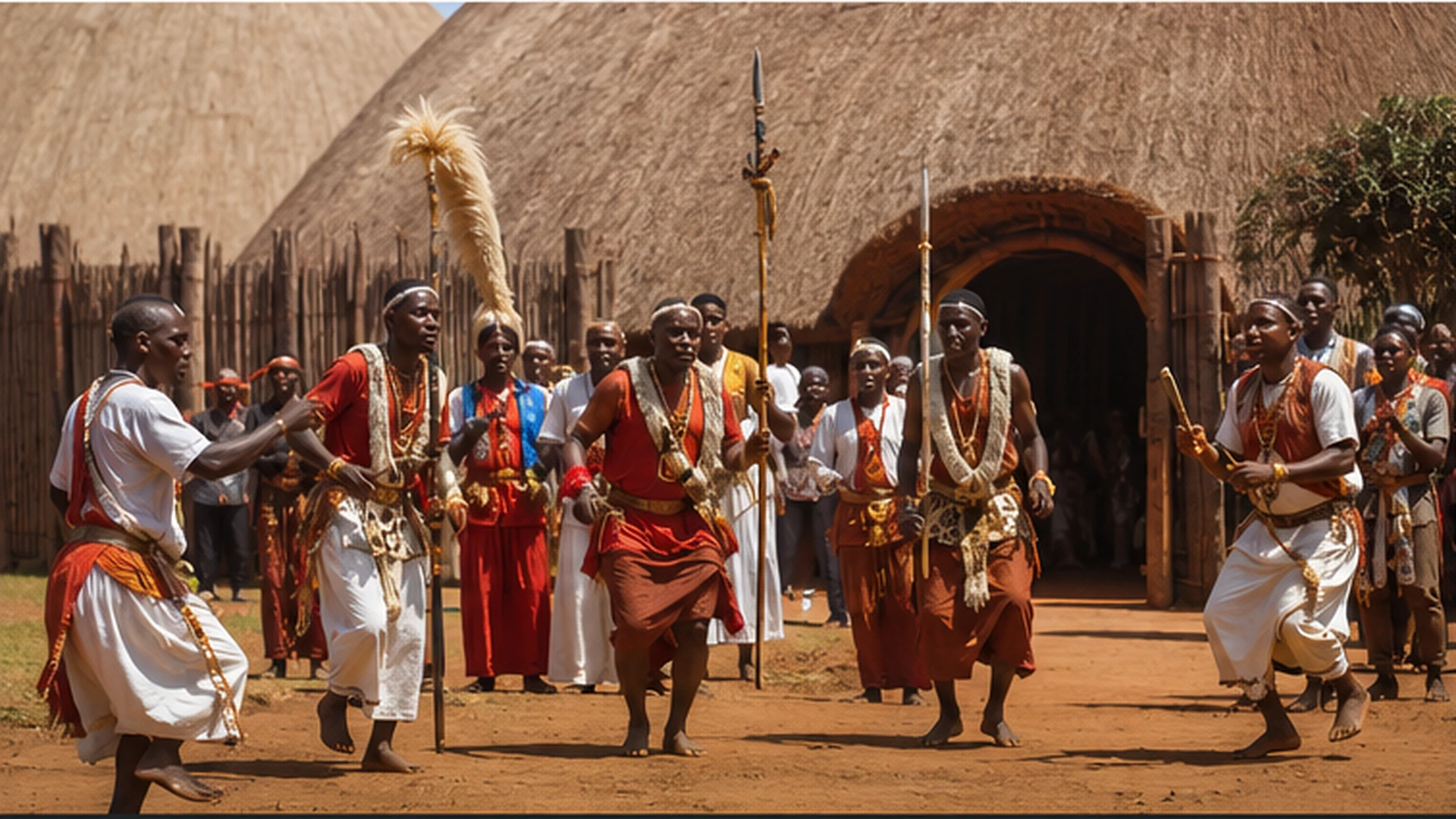
| Image number | 4 |
|---|---|
| Purpose | Show conservation, reconstruction and heritage protection after the 2010 fire. |
| Detailed scene | A respectful documentary scene of skilled Ugandan heritage workers maintaining thatch and wooden materials near a reconstructed heritage building, with fire-safety equipment subtly visible in the background. |
| Specific culture or historical context | Kasubi Tombs reconstruction and conservation after the 2010 fire; Uganda/Buganda heritage protection. |
| People shown | Black Ugandan artisans or conservation workers, focused on public maintenance tasks. |
| Location | Kasubi heritage compound or similar controlled conservation setting. |
| Clothing | Practical work clothing, safety gear where appropriate, no ceremonial invention. |
| Architecture | Thatched roof, reed walls, timber frame details. |
| Objects | Thatch bundles, wooden poles, hand tools, discreet fire-safety elements. |
| Lighting | Clear daylight, practical documentary realism. |
| Composition | Workers in foreground, building texture in background, 16:9 landscape. |
| SEO-friendly filename | kasubi-tombs-reconstruction-conservation.webp |
| Image title | Kasubi Tombs Reconstruction and Conservation |
| Alt text | Ugandan heritage workers maintaining thatch and timber materials during conservation of a Buganda royal tomb structure. |
| Caption | The reconstruction of Kasubi required traditional building knowledge and modern fire-safety planning. |
| Recommended placement | After “Fire, Reconstruction, and Heritage Protection.” |
| Article section supported | Restoration and safeguarding. |
| Important elements to avoid | Avoid flames, disaster sensationalism, ruins-only imagery, unsafe work scenes, watermarks or fake news-style composition. |
Common Misunderstandings About the Site
Misunderstanding one: the Kasubi Tombs are “just a tourist attraction.” The site can be visited and studied, but its meaning is much deeper than tourism. It is a royal burial ground, a spiritual centre for the Baganda and a place of living cultural identity. [1]
Misunderstanding two: the site represents all African ancestral traditions. It does not. Kasubi is specific to Buganda, the Baganda people and the history of the Kabakas. Other African communities have different burial traditions, sacred places, shrines, groves, royal sites and ancestral practices. Respect begins with specificity.
Misunderstanding three: organic architecture is less advanced than stone architecture. Kasubi shows the opposite. Its architecture is sophisticated because of its scale, material knowledge, spatial sequence and cultural function. Buildings made with thatch, reeds and timber can embody complex engineering, symbolism and maintenance systems.
Misunderstanding four: World Heritage recognition freezes a site in the past. Kasubi remains meaningful because it combines history with living heritage. Conservation must protect old forms while respecting the communities and cultural practices that give the place ongoing meaning.
Misunderstanding five: outsiders can fully explain the site after reading one article. A public guide can introduce documented history and responsible context, but living sacred heritage also includes knowledge held by custodians and communities. Not every detail should be treated as public content.
How to Study or Visit the Site Respectfully
If you study the Kasubi Tombs, begin with official and scholarly sources. UNESCO’s World Heritage page, Uganda Museums information and Buganda Kingdom public materials give a stronger foundation than anonymous travel summaries or unsupported spiritual claims. [1][2][3]
If you visit, follow local guidance. Ask before photographing, respect restricted areas, dress modestly, listen to guides and avoid treating the site as a backdrop for casual performance. If instructions change because of conservation work, ceremonial obligations or local protocols, accept those changes as part of the site’s living status.
Visitors should also avoid flattening the site into broad claims about “African ancestors” or “tribal rituals.” The more respectful approach is to learn the names: Buganda, Baganda, Kabaka, Kasubi, Muzibu Azaala Mpanga, Bujjabukula and Olugya. Names help readers and visitors recognize that heritage belongs to specific people, places and histories.
Finally, remember that heritage protection is not only the job of governments or UNESCO. Visitors affect sacred places through behaviour, photography, online storytelling and the kinds of claims they repeat. Responsible attention helps protect dignity.
| Image number | 5 |
|---|---|
| Purpose | Support respectful study and visiting ethics. |
| Detailed scene | A calm educational scene with a Ugandan heritage guide speaking to a small group of visitors outside a reed fence or courtyard entrance, with respectful distance from sacred buildings. |
| Specific culture or historical context | Public visitor education at a Buganda royal heritage site. |
| People shown | One Ugandan guide and two or three diverse visitors listening attentively; no ritual performance. |
| Location | Outer visitor area at a Kasubi-like heritage compound. |
| Clothing | Modest contemporary clothing; visitors not wearing costumes. |
| Architecture | Reed fence, thatched roof glimpsed behind, earthen path. |
| Objects | Guide notebook or brochure without readable text, woven mats or baskets in background. |
| Lighting | Soft afternoon light, calm and respectful. |
| Composition | Guide on one side, visitors on the other, sacred architecture in background but not intruded upon. |
| SEO-friendly filename | kasubi-tombs-respectful-visit-guide.webp |
| Image title | Respectful Visiting at the Kasubi Tombs |
| Alt text | A Ugandan heritage guide explains public history to visitors outside a Buganda royal tomb compound. |
| Caption | Respectful visiting begins with listening to custodians and following local guidance. |
| Recommended placement | After “How to Study or Visit the Site Respectfully.” |
| Article section supported | Visitor ethics and responsible study. |
| Important elements to avoid | Avoid selfies, intrusive cameras, tourists entering restricted areas, staged rituals, labels or stereotypes. |
Frequently Asked Questions
The Kasubi Tombs are a Buganda royal burial site in Kampala, Uganda. The main building, Muzibu Azaala Mpanga, contains the tombs of four Kabakas and is part of a UNESCO World Heritage property.
Where are the Kasubi Tombs located?
They are located on Kasubi Hill in Kampala City, Uganda, within the cultural and historical landscape of Buganda.
Who is buried at the Kasubi Tombs?
The site is the burial ground for four former Kabakas of Buganda. Public Buganda Kingdom information identifies them as Muteesa I, Mwanga II, Daudi Chwa II and Sir Edward Muteesa II.
Why are the Kasubi Tombs important?
They are important because they combine Buganda royal history, Baganda spiritual and cultural continuity, traditional architecture and national/international heritage recognition.
What is Muzibu Azaala Mpanga?
Muzibu Azaala Mpanga is the main tomb building at Kasubi. It is circular, domed and built with organic materials such as wood, thatch, reeds, wattle and daub.
What happened to the Kasubi Tombs in 2010?
A major fire devastated the main tomb building in March 2010. The property was placed on UNESCO’s List of World Heritage in Danger and later reconstructed through cooperation among Ugandan authorities, UNESCO, Buganda Kingdom and partners.
Are the Kasubi Tombs still a UNESCO World Heritage Site?
Yes. UNESCO inscribed the site on the World Heritage List in 2001. It was removed from the List of World Heritage in Danger in 2023 after restoration work.
Can visitors go to the Kasubi Tombs?
Visitor access may depend on current conservation, cultural protocols and local management. Anyone planning to visit should check official local information and follow the instructions of custodians and guides.
Are the Kasubi Tombs an ancestral temple?
They are better described as royal tombs or a royal burial ground. They have ancestral and spiritual significance, but the accurate public-facing term is Kasubi Tombs, not a generic temple.
Key Takeaways
The Kasubi Tombs are a Buganda royal burial site in Kampala, Uganda.
The main building, Muzibu Azaala Mpanga, contains the tombs of four Kabakas.
The site began as a palace in 1882 and became a royal burial ground in 1884.
UNESCO recognizes the site for both architecture and intangible values such as belief, continuity and identity.
The 2010 fire and later reconstruction show why living heritage needs both traditional knowledge and modern conservation systems.
Responsible writing and visiting should respect Baganda specificity, public knowledge boundaries and local custodianship.
Conclusion
The Kasubi Tombs matter because they bring together royal history, ancestral memory, architecture and living cultural identity in one place. Their significance cannot be captured by calling them simply a tourist attraction, a monument or a generic ancestral temple. They are the Tombs of Buganda Kings at Kasubi: a specific Baganda royal burial site with a documented history, a powerful architectural form and continuing cultural meaning.
For AncestralTemple.com, this topic is especially valuable because it shows how ancestral heritage can be explained with respect. The best approach is not to sensationalize the site or flatten it into broad spiritual language. It is to name the culture, explain the history, respect the custodians and distinguish what is publicly documented from what belongs to living tradition.
Research Sources and Further Reading
[1] UNESCO World Heritage Centre. “Tombs of Buganda Kings at Kasubi.” https://whc.unesco.org/en/list/1022/
[2] Uganda Museums. “Kasubi Royal Tombs.” https://museums.tourism.go.ug/kasubi-royal-tombs/
[3] Buganda Kingdom. “Amasiro (Royal Tombs).” https://buganda.or.ug/royal-tombs/
[4] UNESCO World Heritage Centre. “Uganda’s Tombs of the Kings of Buganda at Kasubi removed from the List of World Heritage in Danger.” 12 September 2023. https://whc.unesco.org/en/news/2607
[5] Kasubi Tombs official site overview. “Site Overview.” https://www.kasubitombs.org/en/description/overview.html
[6] UNESCO. “Reconstruction of the Tombs of the Buganda Kings begins.” 13 May 2014. https://www.unesco.org/en/articles/reconstruction-tombs-buganda-kings-begins
[7] UNESCO. “Devastating fire at the Tombs of Buganda Kings at Kasubi.” 9 June 2020. https://www.unesco.org/en/articles/devastating-fire-tombs-buganda-kings-kasubi
[8] UNESCO. “Where the spirits dwell: the Tombs of Buganda Kings in Uganda.” 2025. https://www.unesco.org/en/articles/where-spirits-dwell-tombs-buganda-kings-uganda
Post-publication Optimization Notes
After publishing, submit the URL for indexing and monitor Google Search Console for queries containing “Kasubi Tombs,” “Buganda royal tombs,” “Muzibu Azaala Mpanga,” “Kasubi Tombs history,” and “UNESCO Kasubi Tombs.”
If impressions appear but CTR is low, test a more specific title emphasizing “Buganda royal tombs” or “UNESCO World Heritage.”
If the page begins ranking for architecture queries, create a supporting article on traditional Baganda architecture and link it from the architecture section.
If the page ranks for visitor-intent queries, update the visitor section with current official access guidance, while avoiding unsupported claims about opening times or rituals.
Article Information
- Publisher
- Ancestral Temple
- Editor
- Ancestral Temple
- Last updated
- Jul 26, 2026
- Last reviewed
- Jul 26, 2026
- Content version
- 42d463c6c0
This educational article should be read as cultural and spiritual information, not as medical, legal, financial, or emergency advice.
Helpful Related Guidance
Explore This Topic
Related Topic Cluster
Dreams & Symbolism
About the Author
 Ancestral Temple
Spiritual guide and practitioner with decades of experience in ancestral wisdom, rituals, and divine guidance.
Related Posts
View All






Leave a Comment
We'd love to hear your thoughts.