
What Is a Traditional Ceremony? Meaning, Purpose and Cultural Examples
Quick Summary
A traditional ceremony is a structured cultural occasion through which a community, family, religious group or social institution marks something important. It may recognize a birt...
A traditional ceremony is a structured cultural occasion through which a community, family, religious group or social institution marks something important. It may recognize a birth, name, marriage, new responsibility, season, harvest, welcome, death, reconciliation, leadership transition or relationship with ancestors, divinities, land or community memory.
The word traditional does not mean that every detail has remained unchanged for centuries. Living traditions are transmitted between generations, but communities also adapt them to migration, law, technology, changing beliefs and new social conditions. What makes a ceremony traditional is usually its recognized connection to inherited knowledge, community identity, established protocol and legitimate cultural authority—not simply its age or visual appearance. [1][2]
Traditional ceremonies can include words, silence, prayer, song, dance, food, gifts, clothing, processions, symbolic objects, bodily gestures and designated spaces. Yet no single checklist applies everywhere. A naming ceremony in western Uganda, an Oromo Gada gathering, a Māori welcome and a Japanese tea gathering belong to distinct cultural worlds.
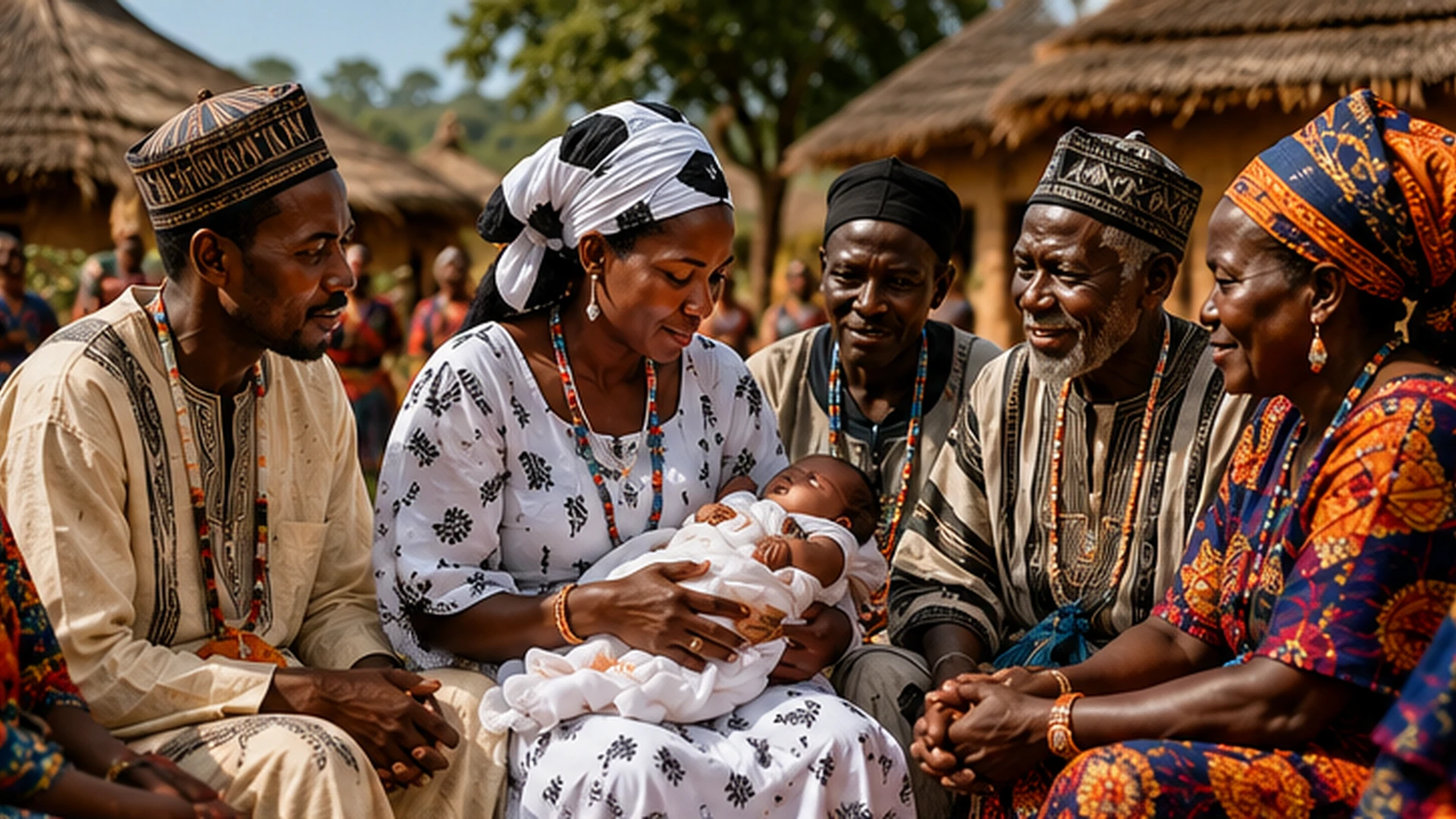
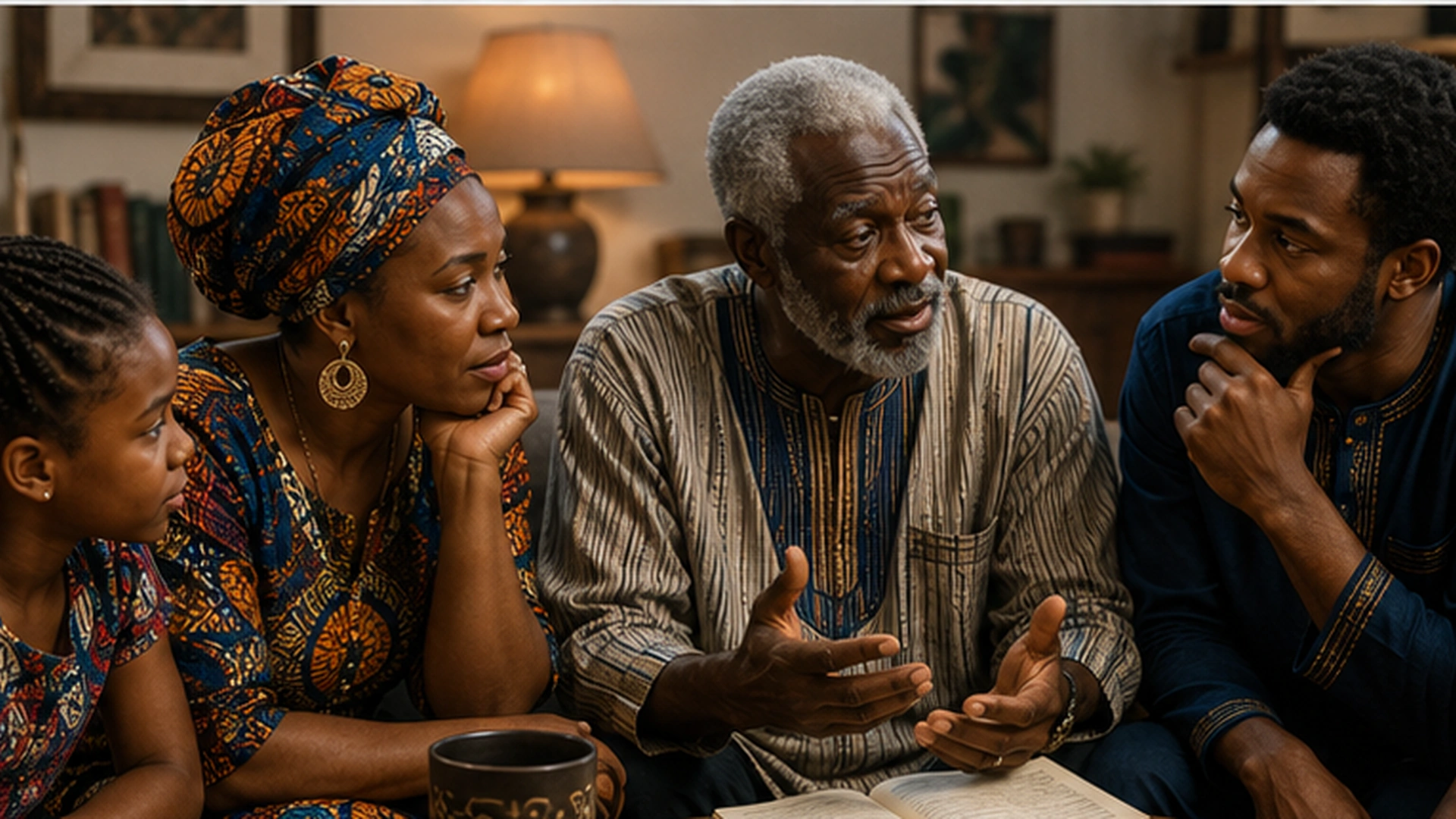
Specific culture or historical context: Contemporary public educational representation of the Empaako tradition among one of the named western Ugandan communities, such as the Batooro or Banyoro. Choose one community and keep the visual details coherent.
People shown: Black Ugandan adults, elders, parents, paternal aunts and one newborn; no generic “African tribe” crowd.
Location: Family home compound in western Uganda.
Clothing: Contemporary modest Ugandan clothing with culturally coherent ceremonial garments where appropriate; no mixture of unrelated African dress.
Architecture: Plausible western Ugandan home and courtyard, not a fantasy shrine.
Objects: Baby cloth, family seating, millet food, gifts and a sapling; no invented magical objects.
Lighting: Natural morning light with warm, realistic skin tones.
Composition: Wide 16:9 editorial image, family grouped to the centre and right, with clean negative space for website cropping.
SEO-friendly filename: traditional-ceremony-meaning-cultural-examples.webp
Image title: Traditional Ceremony as Living Cultural Heritage
Alt text: Western Ugandan family and clan elders gathered respectfully for an Empaako naming ceremony
Caption: Empaako naming ceremonies affirm identity, kinship and social ties among specific communities of western Uganda.
Recommended placement: After the introduction and before Quick Answer.
Article section supported: Introduction and definition.
Important elements to avoid: No fantasy ritual, no pan-African costume mixture, no exposed private knowledge, no random masks, crystals, skulls, text, logos or watermarks.
Quick Answer
A traditional ceremony is an organized cultural occasion that follows inherited community practices to mark an important event, relationship, identity or transition. It may involve elders, family members, religious leaders, witnesses, songs, prayers, gifts, food, special clothing or symbolic actions. Its meaning depends on the specific culture, and not every ceremony is religious or open to outsiders.
What Does “Traditional Ceremony” Mean?
A ceremony is a formally recognized sequence of actions. It has a beginning, an order and an understood purpose. The people taking part usually know who should speak, where participants should stand or sit, which objects may be used, what clothing is appropriate and how the occasion ends.
A traditional ceremony connects that structured occasion with practices recognized as inherited cultural heritage. UNESCO defines intangible cultural heritage as practices, expressions, knowledge and skills that communities recognize as part of their heritage. It includes social practices, rituals and festive events, and it is transmitted from one generation to the next while being continually recreated. [1]
This definition has three important implications.
First, the community matters. An outsider cannot turn an invented performance into a community’s traditional ceremony merely by copying clothing or objects.
Second, transmission matters. Ceremonial knowledge may be learned from parents, elders, specialists, religious teachers, clan authorities, oral historians or experienced practitioners.
Third, change does not automatically destroy tradition. A family may hold a naming ceremony in an urban home rather than an ancestral compound. Relatives may join by video. Modern clothing may appear alongside inherited prayers. The ceremony can remain meaningful when the relevant community recognizes the adaptation.
In Simple Words
A traditional ceremony is a meaningful, organized way for people to say:
The ceremony makes the change visible and memorable.
Ceremony, Ritual, Tradition and Festival: What Is the Difference?
These terms overlap, but they are not identical.
| Term | Practical meaning | Example |
|---|---|---|
| Ceremony | A formally organized occasion marking something important | A naming, wedding, installation or welcome ceremony |
| Ritual | A repeated symbolic action governed by rules or belief | A prayer, offering, greeting sequence or purification act within a ceremony |
| Tradition | Knowledge or practice transmitted and recognized across generations | The inherited protocol that determines who leads and what actions are appropriate |
| Festival | A larger public celebration, often involving many activities over a period of time | A harvest or New Year festival containing several ceremonies, performances and communal meals |
A ceremony may contain several rituals. A festival may contain several ceremonies. A tradition may shape both.
The words should not be forced into one universal academic formula. Communities may use their own terms, and translations can flatten distinctions that are clear in the original language.
Why Do Communities Hold Traditional Ceremonies?
Traditional ceremonies are not merely decorative performances. They can organize relationships, responsibilities and memory.
1. To Recognize a Life Transition
Birth, naming, adulthood, marriage, parenthood, leadership and death change a person’s social position. A ceremony gives the transition witnesses and makes clear that the community recognizes what has changed.
Anthropologists often describe ceremonies surrounding major transitions as rites of passage. Although practices vary, a rite may separate someone from an earlier status, place the person in an in-between period and then recognize entry into a new role. This framework is useful, but it should not be imposed rigidly on every culture.
2. To Affirm Identity and Belonging
Ceremonies may connect a person with a clan, lineage, language, age group, religious community, place or nation. Names, songs, genealogies, dress and public acknowledgements can communicate where someone belongs and which relationships carry obligations.
Belonging is not only emotional. It can involve duties: caring for relatives, respecting elders, protecting land, supporting community events, observing mourning rules or contributing to shared work.
3. To Transmit Knowledge
Young people learn by watching, participating and listening. A ceremony can teach history, laws, moral expectations, songs, language, ecological knowledge, craft skills and appropriate behavior.
The Oromo Gada system, for example, includes structured transmission of history, law, ritual, time reckoning, cosmology and rules of conduct. UNESCO describes it as a system regulating political, economic, social and religious life, with ceremonies and meetings connected to recognized spaces and stages of responsibility. [4]
4. To Create Public Witnesses
A public declaration has greater social force when recognized people hear it. Witnesses may confirm that a name was given, a marriage was acknowledged, an agreement was reached, a leader accepted obligations or a reconciliation occurred.
Ceremonies therefore help communities preserve memory. Later, people can say not only that an event happened, but who was present, what was promised and which authority recognized it.
5. To Renew Relationships
Some ceremonies welcome visitors, reconcile families, share food, exchange gifts or renew alliances. They transform uncertain relationships into recognized ones.
A Māori pōwhiri, for instance, is a structured process through which hosts welcome visitors. Te Ara explains that the practice historically helped determine whether approaching people were friends or enemies and now establishes guests within a relationship of hospitality and care. Protocols vary among marae, so visitors should follow the guidance of hosts rather than assume one fixed sequence. [6]
6. To Mark Seasons and Livelihoods
Agricultural and pastoral calendars create shared moments of risk and gratitude: rain, planting, migration, harvest and the health of animals. Seasonal ceremonies may thank spiritual beings, ancestors, the land or community members; organize food distribution; remember hardship; or renew obligations for the next cycle.
UNESCO describes social practices and rituals as activities that may mark seasons, agricultural events and stages of life. [2]
7. To Express Religious or Spiritual Meaning
Some ceremonies involve prayer, blessing, purification, offerings, sacred texts, ancestral remembrance or divine worship. Others are primarily civic, familial or cultural. Many combine several dimensions.
It is therefore inaccurate to say that every traditional ceremony is religious. It is equally inaccurate to strip spiritual meaning from a ceremony when practitioners understand it as sacred.
Common Elements of Traditional Ceremonies
No element is universal, but many ceremonies use a combination of the following.
Words and Oral Performance
Spoken names, prayers, blessings, vows, praise poetry, genealogies, legal declarations, stories and formal greetings can give the event its meaning. The wording may be fixed, flexible or known only to authorized speakers.
Music, Song and Dance
Performance can announce the occasion, preserve language, express emotion, recount history or guide movement. A dance should not be treated as entertainment detached from the ceremony that gives it meaning.
Special Clothing
Clothing may communicate age, office, family identity, mourning, celebration or readiness for a new role. Wearing ceremonial dress without permission does not transfer the status or authority associated with it.
Symbolic Objects
Objects may include food, vessels, staffs, beads, textiles, plants, instruments, gifts or religious items. Their meanings are culturally specific. A bowl of water, a tree, a blanket or a drum does not symbolize the same thing everywhere.
Food and Gift-Giving
A shared meal may confirm hospitality, redistribute resources, thank participants or mark the transition from a restricted ceremonial space to ordinary social interaction.
Place
A home, courtyard, shrine, church, mosque, temple, forest, river, grave, royal court, community hall or marae may be essential to a ceremony. Place can hold ancestral memory and determine who may enter.
Recognized Roles
Ceremonies may involve parents, aunts, uncles, elders, clan heads, priests, chiefs, age-set leaders, community historians, musicians, witnesses or specialists. Age alone does not make every elder authorized to perform every ceremony.
Main Types of Traditional Ceremonies
Birth and Naming Ceremonies
Naming may welcome a child, connect the child with relatives, express hopes, recognize ancestry or establish social identity. The person who chooses or declares the name varies by culture.
Coming-of-Age and Initiation Ceremonies
These ceremonies may recognize new responsibilities, age grades, religious knowledge or readiness for adulthood. Some are public; others include restricted stages that should not be documented or copied.
Marriage Ceremonies
Marriage ceremonies can recognize consent, establish relationships between families, exchange gifts, state obligations, seek blessings and provide public witnesses. A ceremony cannot excuse forced marriage, abuse or the absence of legal consent.
Leadership and Installation Ceremonies
A chief, king, elder, religious official or civic leader may be installed through ceremony. The event can grant authority while also stating obligations to law, land, ancestors, institutions and the people.
Welcome and Hospitality Ceremonies
Formal welcomes transform strangers into recognized guests. They may include speeches, songs, challenges, gifts, food or gestures of peace.
Seasonal and Harvest Ceremonies
These mark rain, planting, harvest, migration, New Year or another environmental cycle. They may express gratitude, coordinate community labor and renew relationships with land.
Funeral and Memorial Ceremonies
Funeral practices address grief, status, family continuity, religious beliefs and obligations toward the dead. Access may be restricted, especially during private mourning or burial.
Reconciliation and Renewal Ceremonies
Some ceremonies formally acknowledge conflict, apology, compensation, forgiveness or renewed cooperation. Symbolic action should not be used to avoid legal accountability or practical repair.
Cultural Example 1: Empaako Naming in Western Uganda
Empaako is practised by the Batooro, Banyoro, Batuku, Batagwenda and Banyabindi of western Uganda. A child receives an Empaako name in addition to a personal and family name. UNESCO explains that using a person’s Empaako affirms social ties and can communicate affection, respect, honour, identity, peace and reconciliation. [3]
At the naming ceremony described in UNESCO’s public documentation, the clan head presides in the home. Paternal aunts receive the baby and observe resemblance to relatives, which can inform the choice of name. The clan head declares the name, and the family shares food, presents gifts and plants a tree in the child’s honour. [3]
The ceremony illustrates several purposes at once:
Empaako also shows why safeguarding is not simply a matter of photographing a ceremony. UNESCO placed the tradition on the Urgent Safeguarding List in 2013 because transmission, ceremonial knowledge and associated language had declined. Community-led documentation and revitalization have therefore been important. [3]
Cultural Example 2: The Oromo Gada System in Ethiopia
Gada is an Indigenous democratic socio-political system of the Oromo people. It organizes leadership through classes and grades and regulates political, social, economic and religious activities. Leadership changes on a rotational basis, traditionally every eight years. [4]
Ceremonies are not separate decorations added to government. They help mark progression, authority, learning and collective responsibility. Oral historians teach history, law, ritual, time reckoning, cosmology and conduct. Meetings and ceremonies are associated with recognized Gada centres and, in UNESCO’s description, the sycamore tree as an important symbol. [4]
Gada demonstrates that a traditional ceremony can be:
It should not be simplified into a costume display or called “ancient democracy” without explaining its living Oromo context and internal rules.
Specific culture or historical context: Contemporary Oromo Gada practice in Ethiopia, shown only at a public educational level.
People shown: Black Ethiopian Oromo adults and elders; men and women shown in roles consistent with the public context and without inventing participation rules.
Location: Gada ceremonial landscape with a sycamore tree and open assembly space.
Clothing: Culturally coherent contemporary Oromo garments appropriate to the chosen region; avoid mixing Ethiopian ethnic dress.
Architecture: Minimal public ceremonial structures and natural landscape.
Objects: Walking staffs, seating mats and notebooks used unobtrusively; no invented sacred objects.
Lighting: Soft daylight with realistic environmental colour.
Composition: Wide 16:9 view showing the assembly, tree and landscape.
SEO-friendly filename: oromo-gada-traditional-ceremony-ethiopia.webp
Image title: Oromo Gada Ceremony and Community Governance
Alt text: Oromo elders and community members gathered at a Gada ceremonial centre in Ethiopia
Caption: Gada ceremonies connect leadership, law, education, moral conduct and community responsibility in Oromo society.
Recommended placement: After the Gada section.
Article section supported: Governance and leadership ceremonies.
Important elements to avoid: No generic Ethiopian costume mix, no fantasy royal throne, no weapons as spectacle, no invented ritual, text or watermarks.
Cultural Example 3: Maasai Rites of Passage
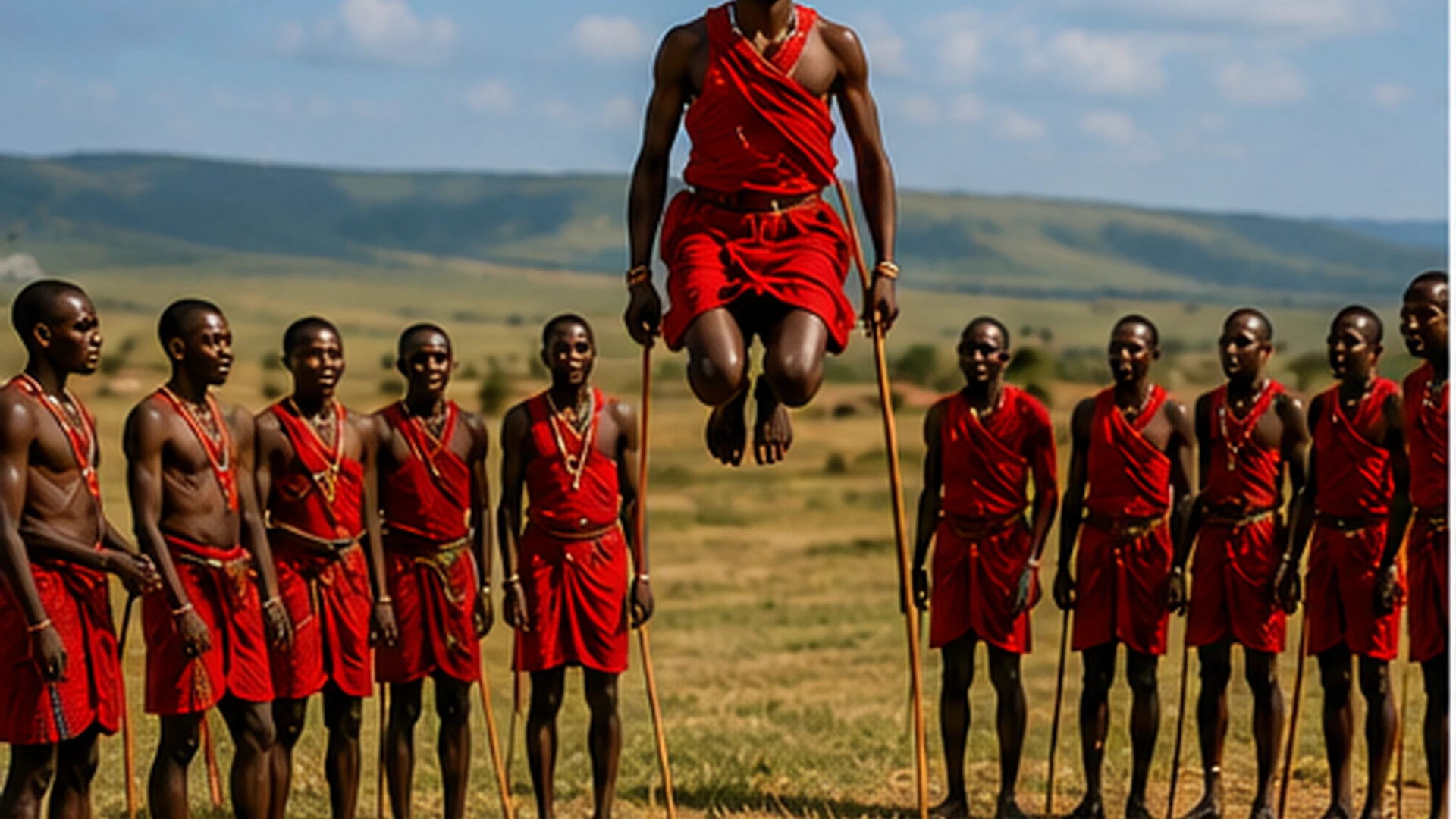
UNESCO identifies Enkipaata, Eunoto and Olng’esherr as three interrelated male rites of passage of the Maasai community. In public descriptions, Enkipaata concerns induction leading toward initiation, Eunoto marks the transition of morans toward adulthood, and Olng’esherr marks the end of moranism and entry into eldership. [5]
These ceremonies demonstrate how age and responsibility can be socially organized. The transition is not only a private feeling of “growing up.” It is recognized through community knowledge, named stages, obligations and witnesses.
Responsible discussion must avoid presenting all Maasai people as if they live one unchanged lifestyle. Maasai communities span different territories, and practices can vary. Restricted initiation details should not be published merely because outsiders are curious.
Cultural Example 4: Māori Pōwhiri in Aotearoa New Zealand
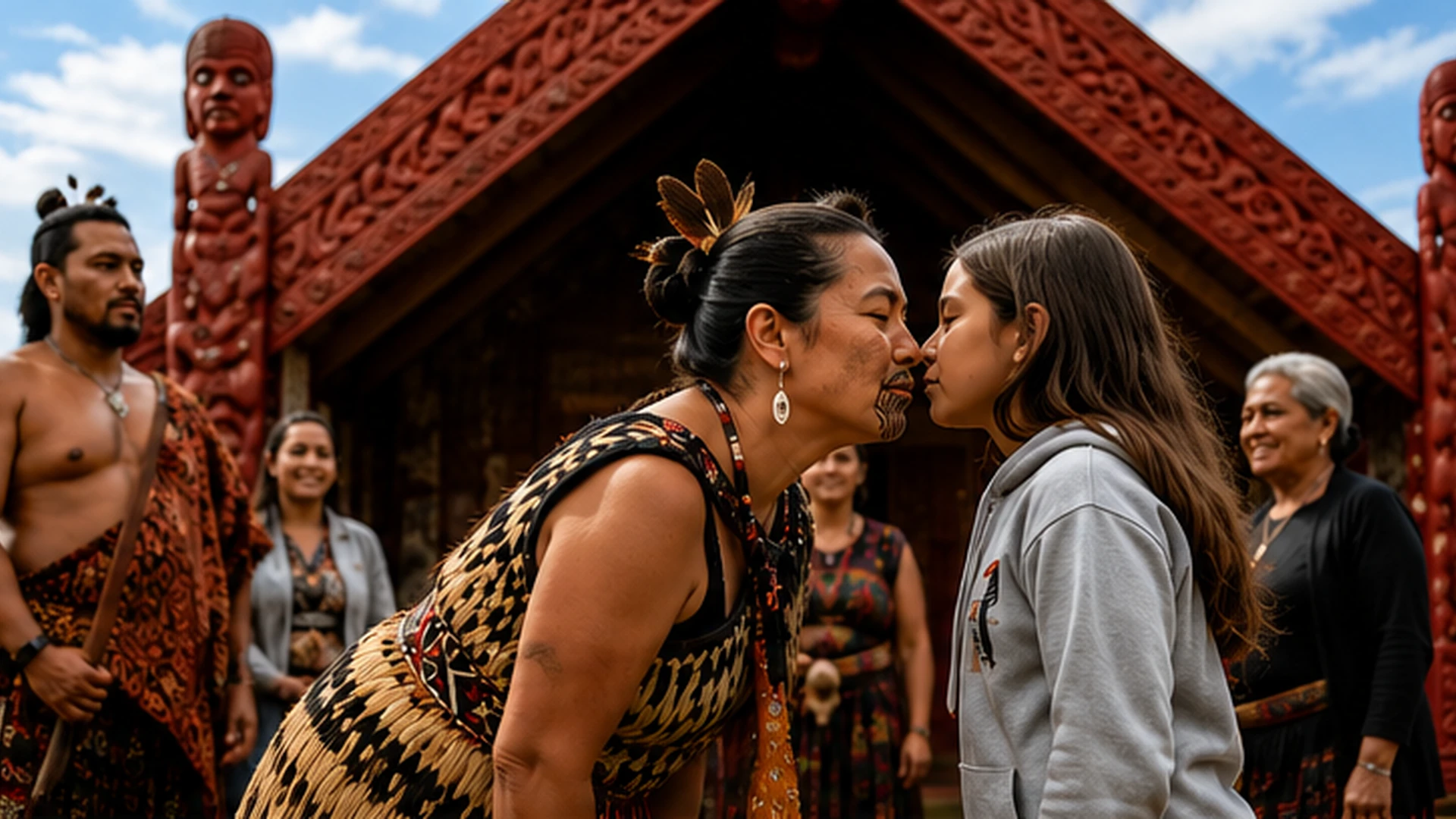
A pōwhiri is a formal process for welcoming visitors, especially onto a marae. It brings hosts and visitors into a recognized relationship governed by kawa, or protocol. Elements can include calls, speeches, songs, greetings, gifts and shared food, but the order and inclusion of particular actions vary among marae and iwi. [6]
The purpose is larger than politeness. Historically, the encounter helped establish whether visitors came in peace. In contemporary settings, it recognizes hosts, visitors, ancestors, place and the responsibilities of hospitality. Te Ara emphasizes that people should follow local guidance because marae have their own protocols. [6]
Specific culture or historical context: Contemporary Māori welcome on a named marae only if the reference is community-approved; otherwise keep the marae unnamed.
People shown: Māori hosts and a diverse adult visiting group.
Location: Marae courtyard with a carved meeting house visible.
Clothing: Contemporary formal clothing with culturally appropriate garments chosen by participants; no invented costume.
Architecture: Accurate marae setting and wharenui, without mixing designs from unrelated iwi.
Objects: Koha envelope or gift may be shown discreetly; no random weapons or sacred objects.
Lighting: Natural soft daylight.
Composition: Wide 16:9 documentary framing with hosts and visitors clearly separated in the welcoming space.
SEO-friendly filename: maori-powhiri-traditional-welcome-ceremony.webp
Image title: Māori Pōwhiri and the Protocol of Welcome
Alt text: Māori hosts welcoming visitors during a respectful pōwhiri at a marae in New Zealand
Caption: Pōwhiri establishes a relationship between hosts and visitors through local marae protocol, speech, song and hospitality.
Recommended placement: After the pōwhiri section.
Article section supported: Welcome and hospitality ceremonies.
Important elements to avoid: No pan-Polynesian motifs, no exaggerated haka scene, no copied facial markings, no invented carving patterns, text or logos.
Cultural Example 5: The Japanese Way of Tea
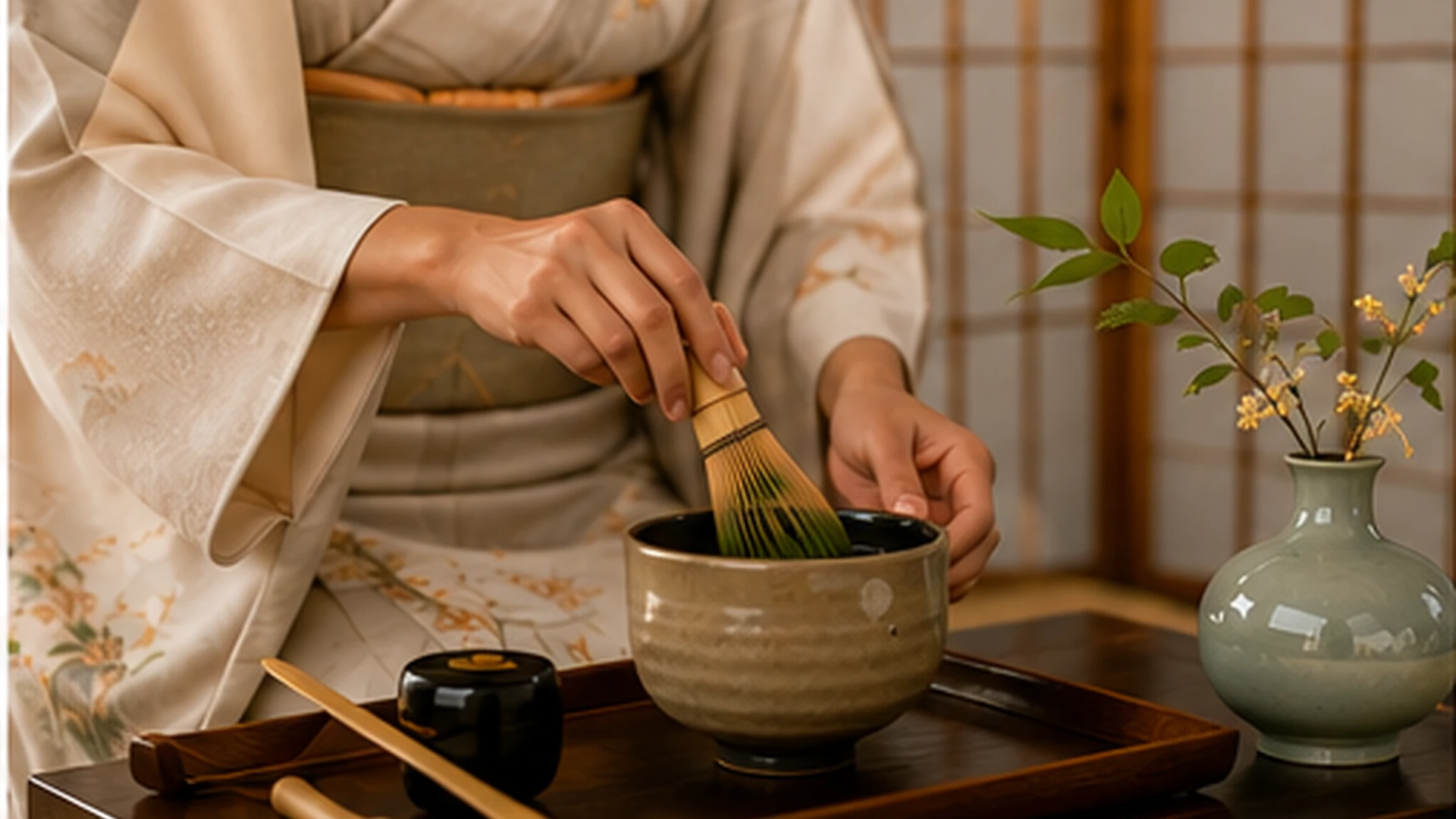
The Japanese tea ceremony is commonly called chanoyu, sadō or chadō. It involves preparing powdered tea for guests according to established forms and receiving it with attention. Japan’s official cultural information describes tea practice as an inherited tradition associated with quietness, disciplined preparation and reflection. It developed over centuries and includes multiple schools that preserve distinct procedures. [7]
The tea gathering shows that a traditional ceremony does not have to involve a large crowd or major life transition. Its purpose can lie in hospitality, attention, aesthetics, discipline, seasonal awareness and relationships among host, guests, utensils and space.
A tea bowl is not meaningful merely because it looks old. The preparation of the room, selection of utensils, order of actions, training of the host and conduct of guests create the ceremonial context.
Specific culture or historical context: Contemporary Japanese tea gathering within one recognized school’s general public visual conventions; do not label the school unless accurately referenced.
People shown: Japanese adult host and two adult guests.
Location: Traditional chashitsu or tea room in Japan.
Clothing: Formal kimono or appropriately modest contemporary clothing, coherent within the chosen setting.
Architecture: Tatami room, low entrance or restrained tea-room interior, and tokonoma alcove.
Objects: Tea bowl, whisk, scoop, kettle and seasonal flower arrangement in realistic quantities.
Lighting: Soft natural window light.
Composition: Wide 16:9 interior editorial view, with the host and preparation area as the focus.
SEO-friendly filename: japanese-tea-traditional-ceremony.webp
Image title: Japanese Tea Ceremony and Disciplined Hospitality
Alt text: Japanese tea practitioner preparing matcha for guests in a traditional tea room
Caption: The Way of Tea turns hospitality, utensils, movement, space and seasonal awareness into a disciplined ceremonial encounter.
Recommended placement: After the Japanese tea section.
Article section supported: Hospitality, discipline and intimate ceremonies.
Important elements to avoid: No geisha stereotype, no fantasy temple, no excessive cherry blossoms, no incorrect utensil handling, text or watermarks.
Cultural Example 6: The Nan Pa’ch Harvest Ceremony in Guatemala
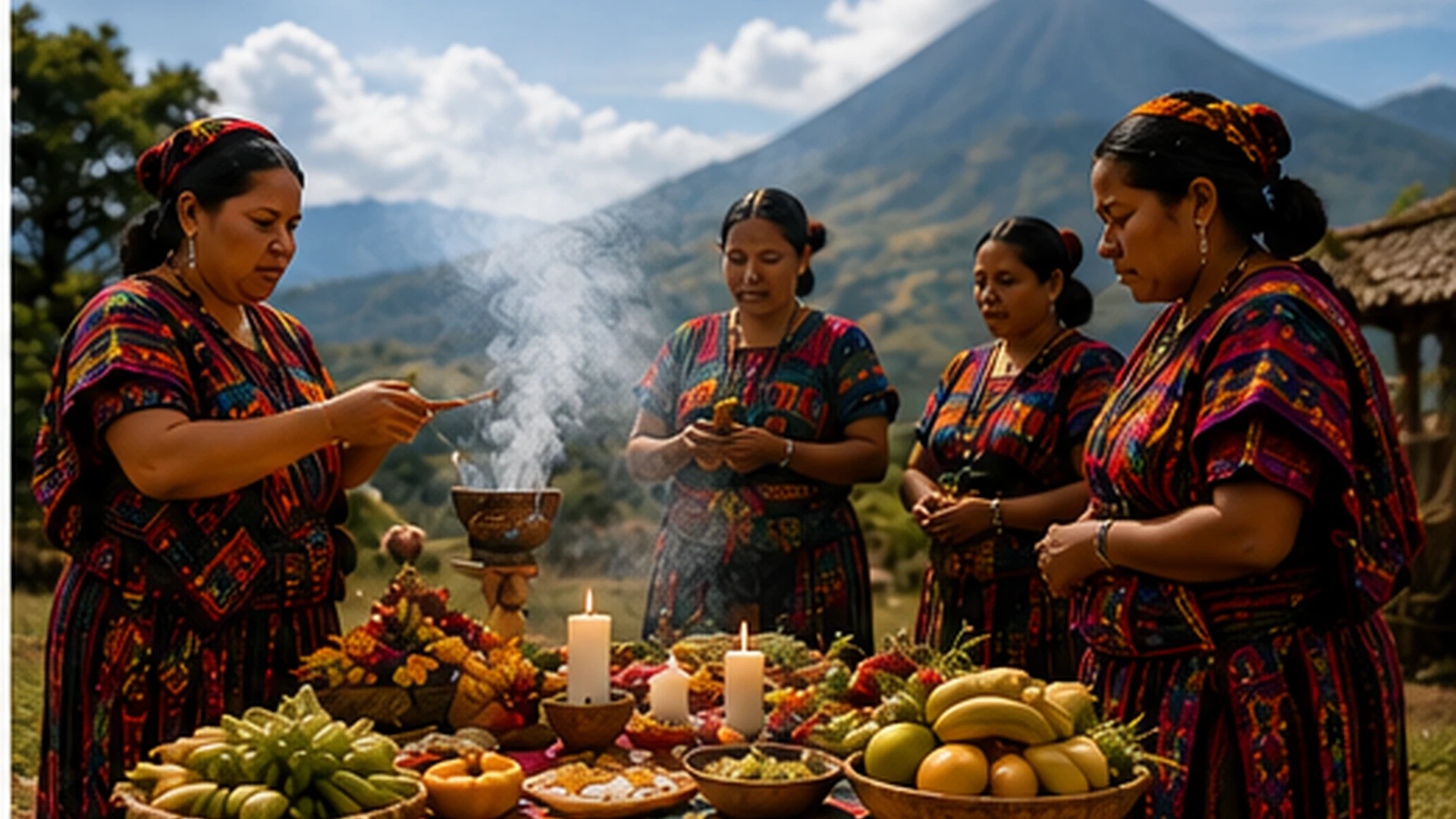
Nan Pa’ch is a harvest ceremony associated with the Mam people of Guatemala. UNESCO describes it as an occasion of thanksgiving for good harvests that emphasizes relationships between humans and nature. Public documentation mentions prayer in the Mam language, ceremonial treatment of corncobs, food preparation and designated roles. [8]
The ceremony demonstrates how harvest traditions can hold agricultural, linguistic, spiritual and communal meaning at once. Corn is not merely a decorative prop. It is connected with livelihood, memory, prayer and responsibility.
Nan Pa’ch has also faced threats to transmission. Safeguarding therefore involves more than staging a public performance. It includes language, community participation, knowledge of roles and respect for the people who maintain the tradition.
Specific culture or historical context: Mam cultural context in Guatemala; use community-approved public references and avoid inventing private prayers.
People shown: Indigenous Mam adults and elders, with younger community members observing or helping.
Location: Highland Guatemalan community courtyard or agricultural setting.
Clothing: Regionally coherent Mam clothing based on a specific public reference; do not mix Maya textile traditions from unrelated communities.
Architecture: Plausible highland courtyard and local homes.
Objects: Corncobs, baskets, cooking vessels and shared food in realistic quantities.
Lighting: Warm natural late-morning light.
Composition: Wide 16:9 documentary view balancing people, maize and landscape.
SEO-friendly filename: nan-pach-harvest-traditional-ceremony.webp
Image title: Nan Pa’ch Harvest Ceremony and Cultural Continuity
Alt text: Mam community members preparing corn and food during a respectful Nan Pa’ch harvest ceremony in Guatemala
Caption: Nan Pa’ch connects harvest thanksgiving with Mam language, designated ceremonial roles and community knowledge.
Recommended placement: After the Nan Pa’ch section.
Article section supported: Seasonal and harvest ceremonies.
Important elements to avoid: No generic Maya costume mixture, no fantasy pyramids, no invented prayer text, no tourist spectacle, logos or watermarks.
What These Examples Share—and What They Do Not
The examples share several broad features:
But they are not versions of one universal ceremony.
Empaako concerns naming and social identity in particular western Ugandan communities. Gada integrates governance, education and ritual among Oromo people. Maasai rites organize age-related transitions. Pōwhiri establishes a formal relationship between hosts and visitors. The Japanese Way of Tea develops disciplined hospitality and aesthetic attention. Nan Pa’ch expresses Mam harvest thanksgiving and agricultural continuity.
Comparison is useful only when difference remains visible.
Who Has Authority to Lead a Traditional Ceremony?
Authority may come from:
A person cannot claim authority merely by watching videos, buying ceremonial objects or copying clothing.
UNESCO’s ethical principles state that communities and practitioners should have the primary role in safeguarding their heritage. Interaction should involve dialogue, consultation and free, prior, sustained and informed consent. Customary restrictions on access should be respected. [9]
Can Outsiders Attend Traditional Ceremonies?
Sometimes. Public festivals, formal welcomes and some family ceremonies may include visitors. Other events are limited to relatives, initiates, office-holders, gendered groups, age groups or religious specialists.
Visitors should:
Public visibility does not equal public ownership.
How Traditional Ceremonies Change Over Time
Ceremonies change because communities change.
Migration may move a ceremony from a rural compound to a city apartment. Religious conversion may reshape prayers. Schools and employment may shorten the event. Laws may prohibit harmful or discriminatory practices. Digital communication may include relatives abroad. Environmental change may make traditional materials scarce. Communities may revive a ceremony after colonial suppression or earlier decline.
Change can involve loss, but it can also show resilience.
A tradition should not be judged authentic solely because it looks old. An old-looking tourist performance may lack community authority, while a ceremony using microphones and modern clothing may remain deeply rooted in inherited responsibility.
UNESCO describes safeguarding as supporting viability, transmission, documentation and revitalization—not freezing living heritage into one historical form. Safeguarding must also respect the community’s decision about what remains meaningful and what should stay restricted. [1][9]
Common Misunderstandings
“Traditional” Means Primitive or Unchanging
False. Traditional ceremonies can exist in cities, use modern technology and respond to contemporary life.
Every African Ceremony Is the Same
False. Africa contains thousands of communities, languages and histories. Empaako, Gada and Maasai rites are culturally distinct.
Every Ceremony Is Religious
False. Ceremonies can be civic, familial, legal, political, agricultural, artistic or religious, and many combine functions.
A Ceremony Guarantees a Supernatural Result
False. A ceremony may express belief, prayer, blessing, hope or obligation, but it does not scientifically guarantee fertility, healing, rain, wealth, marriage success or protection.
Copying the Visible Steps Recreates the Ceremony
False. Meaning depends on authority, language, relationships, history and community recognition—not only visible movement.
Public Ceremonies Have No Private Boundaries
False. A public event may contain restricted spaces, words, images, objects or stages.
Elders Can Perform Every Ceremony
False. Elder status may be important, but authority is usually role-specific.
Ethical Boundaries and Cultural Cautions
A responsible article should not publish:
Ceremonial practices must also be discussed within human-rights, health and legal frameworks. Tradition cannot justify coercion, forced marriage, abuse, unsafe medical acts, discrimination or lack of consent.
Respecting culture does not require ignoring harm. Criticism should be careful, evidence-based and directed at specific practices rather than entire peoples.
Scientific and Practical Limitations
Ceremonies can provide belonging, emotional support, public recognition, moral guidance and a framework for collective action. These are real social functions.
However, ceremony cannot replace:
A naming blessing can welcome a child, but it cannot replace health care. A marriage ceremony can recognize a union, but it cannot remove abuse. A harvest prayer can express gratitude, but it cannot replace climate adaptation, soil management or food-security planning.
How to Study a Traditional Ceremony Responsibly
Start with the Community’s Own Name
Use the original name where possible and explain the translation carefully. “Initiation,” “festival” or “worship” may be incomplete translations.
Identify the Specific People and Place
Name the community, region, language and historical context. Avoid saying “Africans believe” or “Indigenous people do” as if one statement applies everywhere.
Separate Public Knowledge from Restricted Knowledge
Museums, universities and heritage organizations may explain public history without authorizing reproduction of ceremonies.
Prioritize Community and Heritage Sources
Use material produced with community participation. Look for recognized cultural institutions, African scholars, Indigenous researchers, official heritage bodies and peer-reviewed work.
State Uncertainty
Ceremonial meanings may be debated, vary by family or change over time. Say so.
Avoid Guaranteed Claims
Describe what participants believe or hope without presenting spiritual outcomes as scientific fact.
Recognize Modern Practitioners
Living people are not museum exhibits. They have the right to adapt, refuse access, correct outsiders and decide what is transmitted.
Key Takeaways
People Also Ask
What is a traditional ceremony in simple words?
It is an organized cultural occasion in which people follow inherited practices to recognize an important event, relationship, responsibility or transition.
What is the main purpose of a traditional ceremony?
The purpose may be to welcome, name, bless, remember, teach, recognize authority, mark a life stage, give thanks, reconcile people or strengthen community identity.
What are examples of traditional ceremonies in Africa?
Examples include Empaako naming ceremonies in western Uganda, Gada ceremonies among the Oromo in Ethiopia and Enkipaata, Eunoto and Olng’esherr rites of passage among Maasai communities. These practices are distinct and should not be blended together.
Is a traditional ceremony the same as a ritual?
Not exactly. A ceremony is the organized occasion; rituals are the symbolic actions performed within it. In ordinary usage, however, the words often overlap.
Are traditional ceremonies always spiritual?
No. Some are religious or ancestral, while others are familial, civic, legal, political, agricultural or artistic. Many combine several purposes.
Why are witnesses important in ceremonies?
Witnesses give public recognition to names, promises, transitions, leadership roles, agreements and family relationships. They also help preserve memory of what occurred.
Can a traditional ceremony be modern?
Yes. It may use modern clothing, phones, vehicles, microphones or urban venues while retaining inherited meaning and community authority.
Can anyone perform a traditional ceremony?
Usually not. Leadership may require a family role, clan office, religious authority, training, age-grade status or community recognition.
Frequently Asked Questions
1. What makes a ceremony traditional?
A ceremony is traditional when a community recognizes it as connected with inherited knowledge, identity, protocol and transmission across generations. Age alone is not enough.
2. What normally happens during a traditional ceremony?
Depending on the culture, participants may speak formal words, pray, sing, dance, exchange gifts, share food, wear special clothing, use symbolic objects and recognize a new social status.
3. Why do ceremonies use symbols?
Symbols condense complex ideas into objects, gestures, sounds, colours or places. Their meanings depend on the relevant cultural context.
4. Are naming ceremonies rites of passage?
They can be. A naming ceremony may mark a child’s recognized entry into a family, clan, religious community or social world.
5. What is the difference between a ceremony and a festival?
A ceremony usually has a focused formal purpose. A festival is often broader, longer and more public, and may contain several ceremonies, performances, meals and recreational activities.
6. Why do traditional ceremonies change?
They respond to migration, law, religion, technology, environmental conditions, intermarriage, education and the choices of practitioners.
7. Is it disrespectful to photograph a ceremony?
It can be. Permission should be requested from the appropriate hosts or custodians, and some stages, people or objects may not be photographed.
8. Can tourists join a traditional ceremony?
Only when invited or when organizers clearly designate public participation. Visitors must follow local protocol and should not assume that observing permits imitation.
9. Do ceremonies preserve language?
Many do. Formal greetings, names, songs, prayers, praise poetry and oral histories can transmit words and meanings that are not used as often in everyday conversation.
10. Can a ceremony solve a practical problem?
It may organize support, express commitment or help people act together, but it cannot replace medical care, law, safety measures, professional advice or material repair.
Conclusion
A traditional ceremony is a way of making meaning public. It gives form to a birth, name, welcome, promise, harvest, loss, responsibility or relationship. Through ordered actions, recognized roles and shared memory, a community says that something important has happened and that people now carry particular obligations.
Traditional ceremonies survive not because they remain visually unchanged, but because communities continue to find meaning in them. Empaako naming in western Uganda, Oromo Gada gatherings, Maasai rites of passage, Māori pōwhiri, Japanese tea practice and Mam harvest thanksgiving each demonstrate a different relationship among ceremony, identity and responsibility.
The most respectful way to study ceremonies is therefore not to search for one secret ritual behind every culture. It is to learn the right names, listen to recognized custodians, understand the historical setting, respect restricted knowledge and allow living communities to define their own heritage.
Final Summary
A traditional ceremony is a culturally recognized, structured occasion used to mark important events, relationships and responsibilities. Ceremonies help communities transmit knowledge, affirm identity, create witnesses, welcome people, organize transitions and remember the past. Their meanings are specific, their forms can change and their authority belongs to the people who maintain them.
Research Sources and Further Reading
5. Internal Linking Plan
| Anchor text | Target page | Placement | Purpose |
|---|---|---|---|
| history of blessing ceremonies | The History of Blessing Ceremonies | Birth, marriage and leadership sections | Connect ceremony definition with blessing-specific history. |
| community renewal traditions | Community Renewal Traditions | Reconciliation and renewal section | Extend the topic into civic, seasonal and social renewal. |
| seasonal festivals explained | Seasonal Festivals Explained | Seasonal and harvest section | Support festival-versus-ceremony distinctions. |
| pilgrimage traditions | Pilgrimage Traditions | Ceremony, place and movement discussion | Connect ceremonies with sacred journeys and gathering. |
| meaning of ancestor reverence | The Meaning of Ancestor Reverence in African Cultures | Funeral and remembrance section | Explain ancestral memory without calling all ceremonies ancestor worship. |
| cleansing before new beginnings | Cleansing Before New Beginnings | Transition and renewal sections | Link symbolic preparation with life transitions. |
| spiritual symbols shared worldwide | Spiritual Symbols Shared Worldwide | Symbolic objects section | Reinforce that similar-looking symbols can have different meanings. |
| historical African protection ceremonies | Historical African Protection Ceremonies | Ethical limits and African examples | Connect to a culturally specific ceremony cluster. |
Recommended Contextual Link Sentences
6. Glossary Terms
| Term | Definition |
|---|---|
| Ceremony | A formally organized occasion that marks an event, relationship, status or responsibility. |
| Ritual | A repeated or symbolic action governed by cultural, social or religious rules. |
| Tradition | Knowledge or practice transmitted and recognized across generations. |
| Living heritage | Cultural knowledge and practice maintained and continually recreated by communities. |
| Rite of passage | A ceremony or process recognizing movement from one social status or life stage to another. |
| Protocol | Rules governing roles, behavior, order, access and appropriate participation. |
| Custodian | A person or group recognized as responsible for maintaining cultural knowledge or practice. |
| Intangible cultural heritage | Practices, expressions, knowledge and skills that communities recognize as part of their heritage. |
| Kawa | Māori protocol or customary practice, including rules that may guide marae ceremonies. |
| Marae | A Māori communal and ceremonial place associated with kinship, identity, welcome and gathering. |
| Empaako | A shared naming tradition practised by specified communities of western Uganda. |
| Gada | An Oromo socio-political system organizing governance, responsibility, learning and ceremonial life. |
| Chanoyu | A Japanese term commonly used for the preparation and sharing of tea in an established ceremonial form. |
| Safeguarding | Measures supporting the continued viability and transmission of living heritage. |
| Free, prior and informed consent | Consent obtained transparently before documentation, research or public use, with the relevant community fully informed. |
7. Related and Supporting Articles
Highest-Priority Supporting Articles
Ceremony vs Ritual: Meaning, Differences and ExamplesDistinct intent: a focused terminology comparison with examples and a decision table.
Birth and Naming Ceremonies Across AfricaDistinct intent: culturally specific naming and child-welcoming practices, avoiding a continent-wide generalization.
Rites of Passage Explained: Childhood, Adulthood and ResponsibilityDistinct intent: life-stage transitions, initiation ethics and social recognition.
How to Attend a Cultural Ceremony RespectfullyDistinct intent: visitor protocol, consent, photography, clothing and restricted knowledge.
The Role of Witnesses in Traditional CeremoniesDistinct intent: public memory, law, kinship, promises and social recognition.
Traditional Welcome Ceremonies Around the WorldDistinct intent: hospitality and encounter, including culturally specific examples.
Traditional Leadership Installation CeremoniesDistinct intent: authority, obligation, succession and community accountability.
Cannibalization Guidance
Do not create separate articles titled Traditional Ceremony Meaning, What Is a Cultural Ceremony? or Traditional Ceremonies Explained unless they serve a clearly different intent. Those phrases belong on this central definition page.
Article Information
- Publisher
- Ancestral Temple
- Editor
- Ancestral Temple
- Last updated
- Jul 26, 2026
- Last reviewed
- Jul 26, 2026
- Content version
- fca995614e
This educational article should be read as cultural and spiritual information, not as medical, legal, financial, or emergency advice.
Helpful Related Guidance
Explore This Topic
Related Topic Cluster
Dreams & Symbolism
About the Author
 Ancestral Temple
Spiritual guide and practitioner with decades of experience in ancestral wisdom, rituals, and divine guidance.
Related Posts
View All






Leave a Comment
We'd love to hear your thoughts.