
Where Did Horoscopes Come From? History and Origins Explained
Quick Summary
Horoscopes did not begin with a single inventor, book or civilization. The practice developed over many centuries as people recorded the sky, connected celestial events with earthl...
Horoscopes did not begin with a single inventor, book or civilization. The practice developed over many centuries as people recorded the sky, connected celestial events with earthly affairs, calculated planetary positions and eventually applied those calculations to an individual's birth.
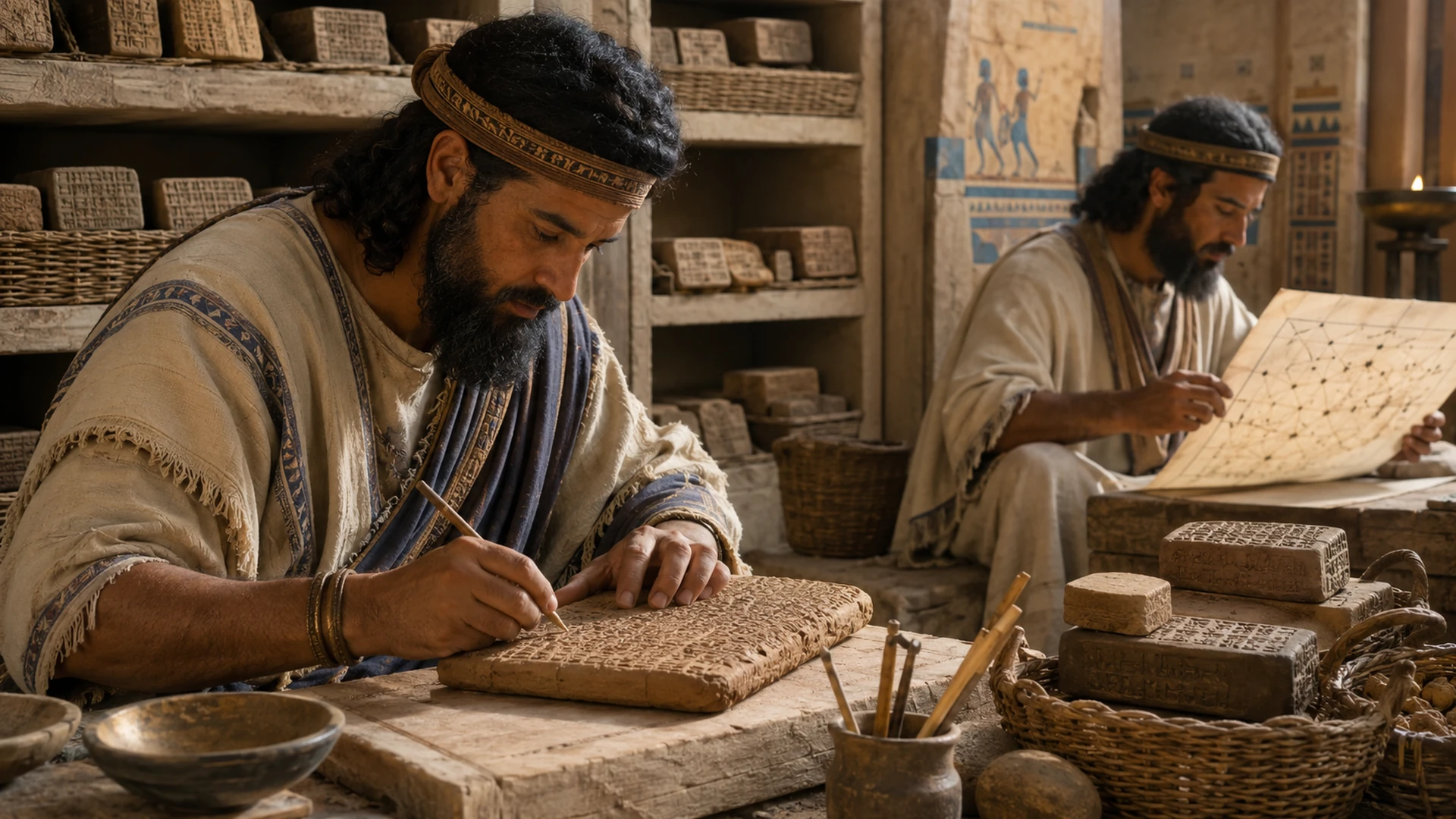
The earliest foundations of the Western horoscope are found in ancient Mesopotamia, especially Babylonia. Mesopotamian scholars created long traditions of celestial omen interpretation and increasingly precise astronomical records. By the late fifth century BCE, surviving cuneiform texts show that some scholars were producing birth-based horoscopes for individuals. The familiar twelve-sign zodiac also developed from Mesopotamian constellations and calendar systems. [1][2]
The more elaborate natal chart known from later Western astrology took shape in the Hellenistic world, where Babylonian celestial knowledge interacted with Greek mathematical astronomy and Egyptian calendrical traditions. Greek and Roman authors then organized and transmitted the system. Medieval scholars writing in Arabic preserved, criticized and expanded this material before it passed into Latin Europe. The short horoscope attached to each sun sign in newspapers and apps is much newer: it developed as a mass-media format during the twentieth century.
Quick Answer
Horoscopes originated through a long process rather than one invention. Ancient Mesopotamians developed celestial omen traditions, the twelve-sign zodiac and the earliest surviving birth horoscopes. Hellenistic scholars later combined Babylonian, Greek and Egyptian knowledge into detailed natal astrology. Modern twelve-sign newspaper horoscopes emerged in Britain during the 1930s. [1][2][11]
What Does the Word “Horoscope” Originally Mean?
The English word horoscope came through Latin from the Greek horoskopos. It combines words connected with “hour” or “time” and “watcher” or “observer.” The term originally referred to observing the significant hour, especially the time of birth, and it became associated with the rising point of the zodiac and the chart calculated for that moment. [3]
Today, “horoscope” is used in several different ways:
This distinction matters because the ancient and medieval horoscope was normally an individualized calculation. A short paragraph for “all Leos” or “all Pisces” is a modern simplification, not the original format.
A Short Timeline of Horoscope History
| Period | Development | Why it mattered |
|---|---|---|
| Second to first millennia BCE | Mesopotamian celestial omen traditions | Scholars recorded eclipses, planetary appearances and other signs in relation to kings, states and public events |
| Late first millennium BCE | Twelve-sign zodiac and birth-based Babylonian horoscopes | Celestial interpretation became increasingly individualized and dependent on astronomical records |
| Hellenistic period, especially after 323 BCE | Babylonian, Greek and Egyptian elements combined | The technical natal chart gained signs, planetary relationships, rising points and other interpretive structures |
| Roman period | Astrology spread across the Mediterranean | Manuals, personal consultations and imperial interest made horoscopes widely known |
| Eighth to thirteenth centuries CE | Translation and development in the Islamic world | Greek, Persian, Indian and Arabic scholarship refined calculations, instruments and astrological literature |
| Twelfth to seventeenth centuries CE | Latin European adoption and debate | Astrology entered courts, universities, medicine, almanacs and political prediction |
| Late seventeenth century onward | Astrology lost its central place in learned natural philosophy | Astronomy and physics developed new standards and explanatory models |
| Nineteenth and early twentieth centuries | Occult revival and popular print culture | Astrology reached a broader reading public through books, magazines and newspapers |
| 1930s | Mass-market sun-sign columns became established | Individual birth charts were simplified into twelve generalized forecasts |
The Mesopotamian Foundations
Celestial Omens Came Before Personal Horoscopes
Long before surviving birth charts appeared, Mesopotamian scholars were compiling celestial omens. The sky was treated as a field of signs that could communicate information about the king, the state, war, harvests, weather or public danger. These interpretations were preserved in cuneiform scholarly traditions and copied across generations.
One of the best-known bodies of material is the omen series conventionally called Enuma Anu Enlil. Its texts connected phenomena such as eclipses, unusual lunar appearances and planetary events with possible earthly consequences. The system was not the same as a modern personality horoscope. It was primarily concerned with collective and royal affairs rather than the private identity of every individual. [2]
The importance of Mesopotamian scholarship lies not only in belief but also in method. Scribes kept records, compared recurring phenomena, developed calendars and used mathematical procedures to predict celestial positions. In their own intellectual setting, astronomy, astrology and divination were not separated into the modern categories we use today.
The Zodiac Developed Gradually
The twelve-sign zodiac was not created all at once. Mesopotamian scholars identified constellations and star groups along the path followed by the Sun, Moon and planets. Over time, the zodiac became a standardized band divided into twelve equal signs of thirty degrees each.
A Late Babylonian tablet in the British Museum, dated to about 500 BCE, lists months with associated zodiac signs. The museum describes it as an important stage in the development of the system familiar today and notes that the twelve-part zodiac derives from ancient Mesopotamian ideas and images. [1]
The equal zodiac signs should not be confused with the modern astronomical constellations. Constellations are irregular areas and visual patterns in the sky. Astrological signs are equal mathematical divisions of the ecliptic. Their names came from nearby constellations, but the divisions are conceptual sectors rather than twelve equal star pictures.

The Earliest Surviving Birth Horoscopes
The major change occurred when celestial data began to be organized around an individual's birth. Historian of science Francesca Rochberg explains that Babylonian horoscopes are attested by the late fifth century BCE. These texts are introduced by a birth date and contain selected astronomical information, showing that the sky was now being interpreted for an individual rather than only for a king or state. [2]
The earliest surviving horoscopes were usually concise. They might record the date, the zodiacal positions of planets, lunar information and other celestial conditions. Many do not contain the long personality readings that modern readers expect. Their purpose is still evident because the data are tied to a birth.
The British Museum preserves several cuneiform tablets explicitly catalogued as horoscopes from Seleucid-period Babylonia. These objects demonstrate that horoscope writing became an established scholarly genre, even though only a fraction of the original material has survived. [4]
It is therefore more accurate to say that the earliest surviving natal horoscopes are Babylonian than to say that a known Babylonian individual “invented” the horoscope. The system emerged from generations of scribal astronomy, omen interpretation and calendar calculation.
The Hellenistic Transformation
Why the Hellenistic World Was Crucial
Alexander the Great's conquests and the kingdoms that followed connected Greek-speaking elites with Egypt, Mesopotamia and a wider eastern Mediterranean intellectual world. This did not produce a simple one-way transfer. Scholars working under Hellenistic and later Roman rule inherited multiple traditions, translated concepts and reorganized them into new systems.
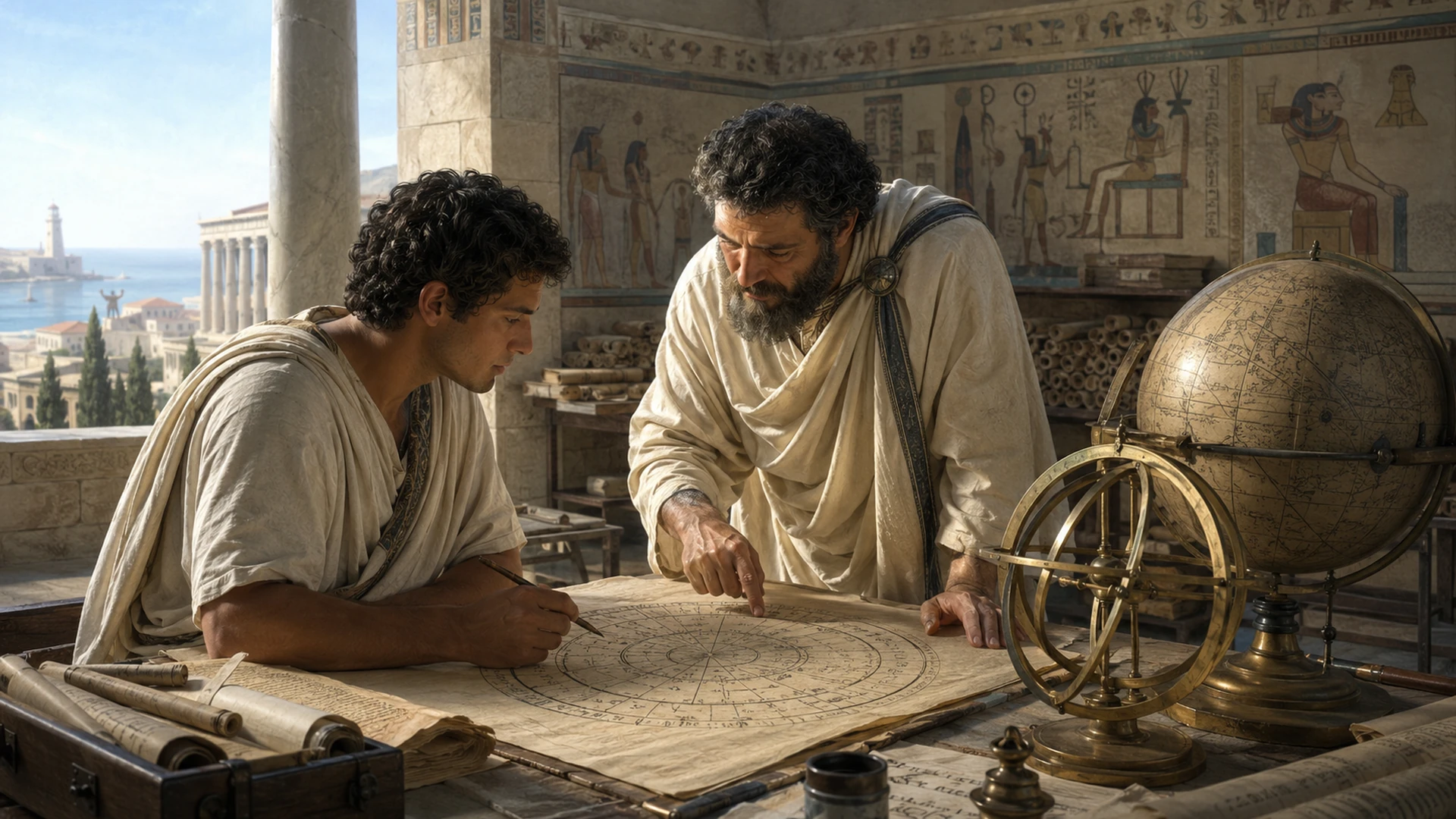
The horoscope familiar from later Western astrology was formed in this cross-cultural environment. Babylonian contributions included the zodiac, planetary data and birth-based celestial interpretation. Greek scholars contributed geometrical astronomy, technical vocabulary and philosophical explanations about how the cosmos might influence earthly life. Egyptian traditions contributed decans, calendrical knowledge and a rich religious landscape in which celestial images could be reinterpreted. [5][6]
For this reason, historians often describe horoscopic astrology as a Hellenistic synthesis. Babylonia supplied indispensable foundations, but the complete later system was not simply copied unchanged from a single Babylonian handbook.
Did Ancient Egypt Invent Horoscopes?
Ancient Egypt had very old traditions of calendar making, star observation, decans and religious symbolism connected with the Sun and stars. However, the evidence does not support the claim that pharaonic Egypt independently created the twelve-sign zodiac or the earliest natal horoscopes.
Zodiacal monuments in Egypt appear during the Greek and Roman periods. Horoscopic astrology reached Egypt as part of the changing intellectual world after the Macedonian conquest and was adapted within Egyptian settings. The result was significant, but it belongs to Hellenistic and Roman Egypt rather than the earliest periods of Egyptian civilization. [5]
A responsible answer is therefore: Babylonia produced the earliest surviving birth horoscopes and the zodiacal framework, while Hellenistic Egypt became one of the major environments in which the more elaborate tradition developed.
What Did an Ancient Natal Horoscope Contain?
A natal horoscope was based on a specific birth moment. The astrologer needed a date, an approximate or precise time and a location. From astronomical tables or observation, the practitioner determined where the planets were positioned in relation to the zodiac.
Over time, Hellenistic practice developed several features that remain familiar in later astrology:
Not every ancient horoscope preserved all these elements, and historians should not assume that a modern chart wheel perfectly reproduces every ancient method. The tradition changed across authors, languages and centuries.
Greek and Roman Writers Systematized the Tradition
Several Greek-language authors preserved technical astrology from the Hellenistic and Roman worlds. Claudius Ptolemy, working in the second century CE, wrote the Tetrabiblos, one of the most influential astrological works in later history. Ptolemy did not invent astrology. He organized parts of an existing tradition and tried to explain them through the natural philosophy and astronomy available to him. [6][7]
Other authors, including Vettius Valens, preserved techniques that differ in important ways from Ptolemy's more selective presentation. This reminds us that ancient astrology was not one perfectly uniform system. It was a field containing debates, local practices, competing methods and different philosophical commitments.
In the Roman world, astrologers could serve private clients, rulers or political factions. Astrology was admired, criticized, regulated and sometimes expelled from cities. Its popularity among elites did not mean that everyone accepted it. Philosophers and religious writers argued over fate, divine providence, free will and the legitimacy of prediction.
Were All Astrological Traditions Derived From Babylon?
The history of Western horoscopic astrology has strong Mesopotamian and Hellenistic roots, but that does not mean every global form of star or calendar divination is simply a copy of Babylon.
Indian Traditions
India had early calendrical astronomy, lunar mansions known as nakshatras and ritual timekeeping traditions. In later centuries, Indian scholars adapted and transformed elements of Hellenistic horoscopy and planetary astronomy within Sanskrit intellectual traditions. The result developed its own terminology, calculation methods, interpretive priorities and religious contexts. It should not be described as merely “Western astrology in India.” [8]
Chinese Traditions
Early Chinese astral divination and calendrical systems developed through distinctive ideas about imperial order, yin and yang, the Five Phases, heavenly stems, earthly branches and other cosmological cycles. The familiar twelve-animal Chinese zodiac is a repeating year cycle, not the same structure as the twelve equal signs used in a Western natal chart. Scholars continue to examine where contact and transmission occurred, but simple claims that Chinese astrology was invented in Babylon are not supported by careful comparison. [9]
Recognizing interaction does not require erasing local creativity. Historical traditions can borrow, translate and transform ideas while remaining distinct.
Horoscopes in the Medieval Islamic World
Translation Was Only the Beginning
From the eighth century onward, scholars working in Arabic translated and studied texts from Greek, Persian and Indian traditions. Baghdad became a major center, but scholarship also flourished in other cities. Astronomers improved observational methods, created tables, refined instruments and criticized earlier planetary models. [10]
Astrology was often studied alongside astronomy because casting a horoscope required calculated celestial positions. Practitioners used tools such as astrolabes and ephemerides. Abu Ma'shar al-Balkhi, known in Latin Europe as Albumasar, became one of the most influential astrological authors. Al-Biruni and other major scholars also discussed astrology, sometimes with significant criticism or qualification.
Astrology Was Popular and Controversial
Astrologers worked in courts and marketplaces. Horoscopes could be cast for births, political decisions, military campaigns or the foundation of cities. The Metropolitan Museum of Art notes that horoscopes were connected with the foundations of capitals such as Baghdad and al-Mahdiyya. [10]
At the same time, Muslim theologians, jurists and philosophers disputed astrology. Some objected that attributing deterministic power to planets conflicted with divine sovereignty and human responsibility. The historical record therefore shows debate rather than universal acceptance.

How Horoscopes Reached Medieval and Renaissance Europe
Arabic astrological and astronomical works were translated into Latin, especially through intellectual centers in the Iberian Peninsula and southern Italy. European readers encountered Ptolemy, Abu Ma'shar and other authorities through these translation networks. The transmission was not a simple return of untouched Greek material. Arabic-speaking scholars had commented on, reorganized and extended the inherited traditions. [10]
By the later Middle Ages, astrology could be found in royal courts, universities, medical theory, calendars and political prediction. It was taught within a worldview in which celestial bodies were believed to influence change in the earthly realm. Physicians sometimes considered celestial timing when discussing diagnosis, treatment or prognosis. [12]
Astrology was also controversial in Christian Europe. Theologians debated whether celestial influence left room for free will and divine action. Critics distinguished between acceptable claims about weather or bodily tendencies and forbidden claims of unavoidable personal fate. Practice varied by place and period.
During the Renaissance, scholars printed new editions of ancient and medieval astrological texts. Figures remembered today for astronomy also lived in a world where astrology remained professionally relevant. Johannes Kepler, for example, cast horoscopes while criticizing many conventional astrological rules. The historical boundary between astronomer and astrologer was not always the same as it is today.
Why Astrology Lost Its Place as a Science
From the sixteenth through seventeenth centuries, European understandings of the cosmos changed. Heliocentric astronomy, improved observations, new instruments and mathematical physics transformed explanations of planetary motion. At the same time, critics challenged the consistency, causal mechanisms and predictive reliability of astrology.
The change was gradual. The Copernican model did not instantly eliminate astrology, and some astrologers adapted their theories. However, by the end of the seventeenth century, astrology had largely lost its earlier position within elite natural philosophy and university science. Astronomy continued as an empirical and mathematical discipline, while astrology increasingly survived in almanacs, popular print, private practice and occult traditions. [13]
This separation explains why historical texts may use “astronomy” and “astrology” less distinctly than modern writers do. In earlier periods, the same scholar could calculate a planetary position and interpret it as an omen. Modern science separates the measurable position from claims about human destiny.
From Individual Birth Charts to Newspaper Horoscopes
The Nineteenth-Century Revival
Astrology did not disappear. It remained visible in almanacs and popular culture, and it gained new audiences through nineteenth-century occultism, spiritual movements, cheap print and astrology manuals. Increasing literacy and mass publishing created a market for personalized guidance that did not require a court astrologer or university-trained calculator.
Even so, a full birth chart still required a birth time, a place and substantial calculation. Newspapers needed a format that could speak to millions of readers at once.
R. H. Naylor and the 1930 Royal Horoscope
The turning point most often associated with the modern newspaper horoscope came in Britain in 1930. The Sunday Express asked astrologer R. H. Naylor to prepare a horoscope for the newborn Princess Margaret. His article appeared on August 24, 1930 and drew strong public interest. The newspaper then gave him further opportunities to publish forecasts. [11][14]
The first royal article was still based on an individual birth chart. The mass-market innovation came as the feature was simplified. By the later 1930s, the column used the reader's sun sign to divide the entire audience into twelve broad groups. Anyone who knew a birthday could find a paragraph addressed to Aries, Taurus, Gemini or another sign without knowing an exact birth time.
The format spread because it was inexpensive, repeatable, personal in tone and easy to place beside advice columns, puzzles and entertainment. Newspapers and magazines across different countries adopted similar features.
How Modern Sun-Sign Horoscopes Differ From Ancient Horoscopes
| Ancient or traditional natal horoscope | Modern sun-sign column |
|---|---|
| Calculated for one time and location | Written for everyone born within a broad annual date range |
| Uses multiple planets and chart factors | Usually emphasizes only the Sun sign |
| Requires astronomical tables, software or calculation | Can be read without a birth time or location |
| Often produces a complex interpretation | Usually offers a short daily, weekly or monthly message |
| Historically served individuals, rulers or specific events | Designed for a mass audience |
| Varied across schools and cultures | Standardized into twelve easily recognized reader groups |
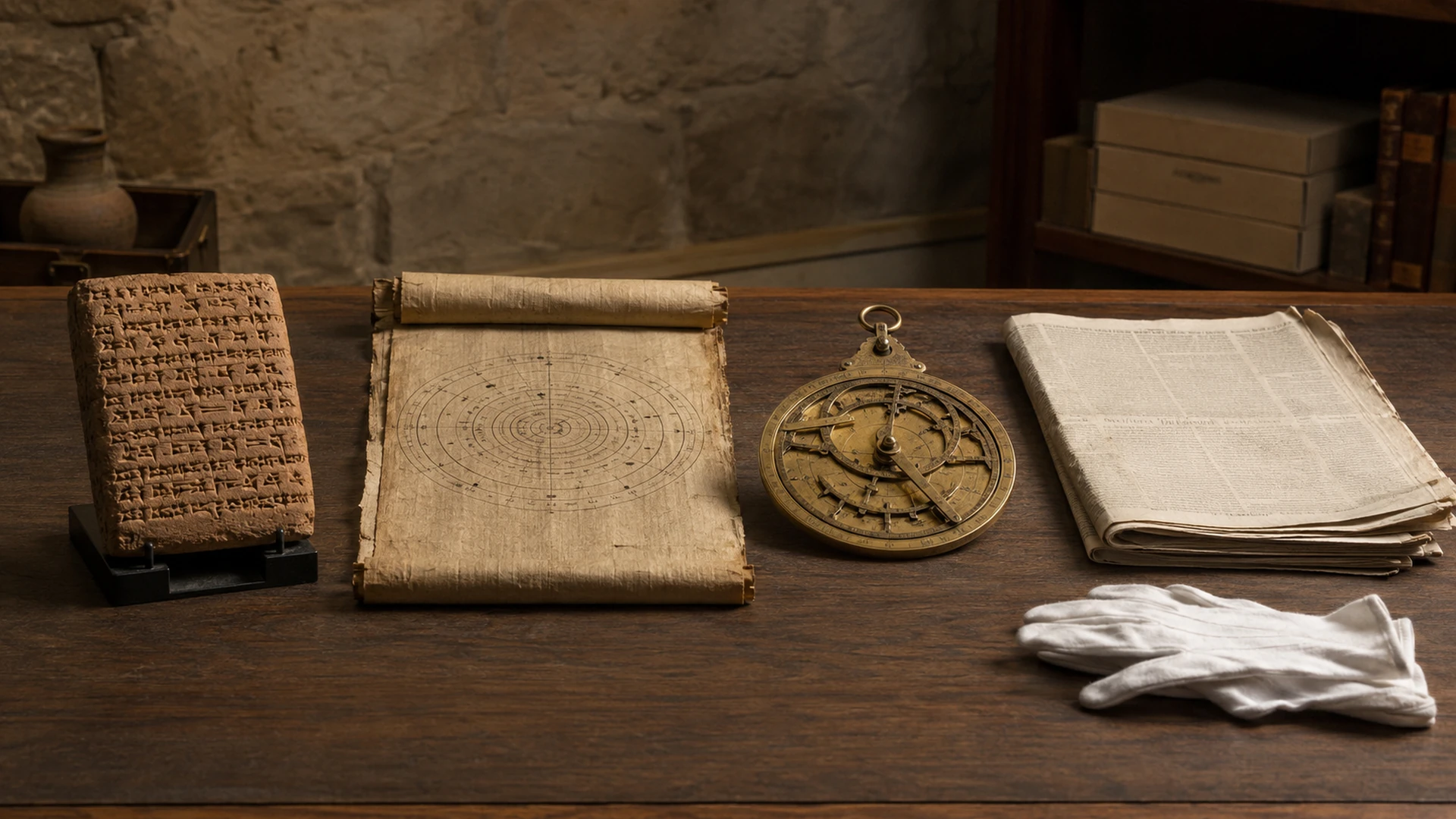
Many practicing astrologers themselves consider sun-sign columns a simplified form of astrology. The modern column is historically connected to natal astrology, but it does not reproduce the level of calculation found in Babylonian, Hellenistic, medieval or professional modern charts.
Why Do Horoscope Readings Often Feel Personal?
A horoscope can feel accurate for several reasons that do not require a demonstrated celestial cause. General descriptions may contain statements that apply to many people, combine positive and negative traits or invite readers to connect the text with recent experiences.
Psychologists often discuss the Forer effect, also called the Barnum effect: people may rate broad personality descriptions as highly accurate when they believe the descriptions were prepared specifically for them. Selective memory can also make a successful-sounding statement easier to remember than predictions that fail or remain vague.
These psychological explanations do not erase the historical, literary or personal meaning people find in astrology. They do explain why perceived accuracy is not the same as controlled scientific evidence.
Are Horoscopes Scientifically Proven?
Astrology is historically important, culturally influential and meaningful to many practitioners, but its predictive claims are not accepted as established science. Modern astronomy can calculate celestial positions with great precision. The unsupported step is the claim that those positions reliably determine personality or predict individual events.
A well-known double-blind study published in Nature in 1985 tested whether astrologers could match natal charts with independently measured personality profiles under controlled conditions. The results did not support the claimed predictive ability. [15]
No single experiment settles every possible claim, but the broader scientific problem remains: astrological systems have not produced consistent, replicable evidence that birth-chart configurations determine personality or future events. Therefore, horoscopes should not replace medical, legal, financial or safety decisions.
A historically responsible article can respect astrology as a cultural tradition while clearly stating that supernatural or predictive outcomes are not scientifically guaranteed.
Common Misunderstandings About Horoscope Origins
“One Ancient Person Invented Horoscopes”
No known individual can be credited with the whole system. It emerged from collective traditions of scribes, observers, translators and authors over centuries.
“The Egyptians Created the Twelve Zodiac Signs”
Egypt had important star and calendar traditions, but the twelve-sign zodiac has Mesopotamian roots. Zodiacal and horoscopic systems became prominent in Egypt during Hellenistic and Roman rule.
“The First Horoscopes Looked Like Today's App Readings”
Early Babylonian horoscopes were concise records of birth-related astronomical data. The generalized motivational paragraph for a sun sign is a twentieth-century media form.
“Astronomy and Astrology Were Always Separate”
They were often intertwined in ancient and medieval scholarship. The sharp modern distinction developed as scientific methods, institutions and explanations changed.
“Every Culture Uses the Same Zodiac”
Different cultures created or adapted distinct calendars, constellations, planetary systems and divination methods. Similar numbers or symbols do not prove that the systems are identical.
People Also Ask
Where did the idea of horoscopes originate?
The strongest documented roots of Western horoscopes are in ancient Mesopotamia. Babylonian scholars developed celestial omen traditions, a standardized zodiac and surviving birth-based horoscopes. Hellenistic scholars later expanded these foundations into a more complex natal system.
Who made the first horoscope?
The name of a single inventor is not known. The earliest surviving birth horoscopes were produced by Babylonian scholar-scribes in the late first millennium BCE as part of a long institutional tradition.
How old are horoscopes?
Surviving individual birth horoscopes date to the late fifth century BCE, making the documented practice more than 2,400 years old. Its omen-based foundations are older.
Did astrology begin in Egypt or Babylon?
For the Western zodiac and earliest surviving natal horoscopes, Babylonia provides the clearest evidence. Hellenistic Egypt later became a major center where Babylonian, Greek and Egyptian elements interacted.
Why are there twelve zodiac signs?
Babylonian scholars standardized the ecliptic into twelve equal divisions, corresponding broadly with twelve months and named after constellations or celestial figures along the Sun's path.
Who invented newspaper horoscopes?
R. H. Naylor is widely credited with establishing the influential modern newspaper horoscope tradition after publishing a horoscope for Princess Margaret in Britain's Sunday Express in 1930. The twelve-sign mass format developed during the following years.
Frequently Asked Questions
1. Is a horoscope the same as a zodiac sign?
No. A zodiac sign is one division of the zodiac. A full horoscope is a chart or interpretation for a particular time and place. Newspaper usage often reduces the horoscope to the reader's Sun sign.
2. What is the oldest known horoscope?
Scholars identify Babylonian birth horoscopes from the late fifth century BCE among the earliest surviving examples. Dating and identification depend on the interpretation of fragmentary cuneiform texts.
3. Were ancient horoscopes used for ordinary people?
Some surviving horoscopes concern individuals whose social identities are not fully known. Over time, personal astrology served rulers, elites and paying clients. Access depended on literacy, calculation skills and social setting.
4. Did the Greeks copy Babylonian astrology?
Greek-speaking scholars adopted important Babylonian data and concepts, but Hellenistic astrology was a transformation rather than a simple copy. Greek astronomy, philosophy and technical organization changed the system, while Egyptian traditions also contributed.
5. What did Ptolemy contribute?
Ptolemy systematized selected astrological principles in the Tetrabiblos and tried to explain them within second-century natural philosophy. He became highly influential but was not the inventor of astrology or the natal horoscope.
6. Why was an exact birth time important?
The time helped determine which zodiacal degree was rising on the eastern horizon and how the sky was oriented relative to the place of birth. Without a reliable time, some chart factors could not be calculated precisely.
7. How were horoscopes calculated before computers?
Practitioners used observation, astronomical tables, calendars, mathematical procedures and instruments such as astrolabes. A prepared ephemeris could provide planetary positions for specific dates.
8. How did astrology reach Europe?
Greek and Arabic texts, translations and commentaries moved through Byzantine, Islamic and Latin scholarly networks. Translation centers in the medieval Mediterranean played a major role.
9. Why did newspapers use only Sun signs?
Sun signs require only a birth date and divide a large audience into twelve groups. This made them practical for regular mass publishing, unlike an individualized chart requiring time, place and calculation.
10. Can a horoscope predict health, money or relationships?
Scientific evidence does not establish horoscope positions as reliable predictors of medical outcomes, financial results or relationship events. Horoscopes may be used as cultural symbolism or personal reflection, but important decisions should rely on qualified professional advice and verifiable information.
Key Takeaways
Conclusion
Where did horoscopes come from? The clearest answer begins in ancient Mesopotamia but does not end there. Babylonian scholars created the essential foundations: systematic celestial omens, the twelve-sign zodiac and the earliest surviving records that organize the sky around an individual's birth. Hellenistic scholars then combined these foundations with Greek astronomy, philosophical ideas and Egyptian calendrical traditions to form the technical natal astrology inherited by later cultures.
The system traveled through Roman society, the medieval Islamic world and Latin Europe. It was preserved by translators, challenged by theologians, used by rulers, connected with medicine and reorganized by generations of practitioners. As astronomy and physics changed, astrology lost its earlier scientific status but remained active in popular and esoteric culture.
The horoscope most people encounter today—a short message for one of twelve signs—is the newest stage of that history. It is not an unchanged survival from Babylon. It is a modern publishing format descended from a much older and more complex tradition.
Final Summary
Horoscopes began as part of a long Mesopotamian tradition of reading and calculating the sky. Birth-based examples appear in late Babylonian cuneiform texts, while the fully developed natal system emerged in the culturally connected Hellenistic world. Medieval Islamic and European scholars transmitted and reshaped it. In the 1930s, newspapers transformed personalized charts into twelve generalized sun-sign forecasts, creating the popular horoscope format familiar today.
Research Sources and Further Reading
Article Information
- Publisher
- Ancestral Temple
- Editor
- Ancestral Temple
- Last updated
- Jul 26, 2026
- Last reviewed
- Jul 26, 2026
- Content version
- 6a2d83d770
This educational article should be read as cultural and spiritual information, not as medical, legal, financial, or emergency advice.
Helpful Related Guidance
Explore This Topic
Related Topic Cluster
Dreams & Symbolism
About the Author
 Ancestral Temple
Spiritual guide and practitioner with decades of experience in ancestral wisdom, rituals, and divine guidance.
Related Posts
View All












Leave a Comment
We'd love to hear your thoughts.