
Why Humans Have Always Valued Dreams
Cornerstone Content
Quick Summary
Across recorded history, people have treated dreams as possible sources of warning, healing, creativity, memory, religious guidance, and emotional insight. This article explores ancient Egyptian dream books, Greek healing sanctuaries, African dream traditions, scriptural narratives, psychoanalysis, and modern sleep science without assuming that every dream predicts the future.
Why Humans Have Always Valued Dreams
Dreams can feel more important than ordinary thoughts.
A person may wake with a powerful sense of fear, peace, grief, urgency, or recognition. They may remember a deceased relative speaking to them, see a place they have never consciously visited, or experience an event that feels real until the moment of waking.
Because dreams combine images, emotions, memories, people, and impossible events, humans have repeatedly asked whether they mean something.
Across recorded history, dreams have been interpreted as:
•Divine communication
•Warnings
•Memories
•Signs of illness
•Encounters with ancestors
•Sources of poetry
•Guidance for leaders
•Emotional processing
•Expressions of desire
•Responses to fear
•Meaningless mental activity
•Mixtures of recent experiences
There has never been one universal theory of dreams.
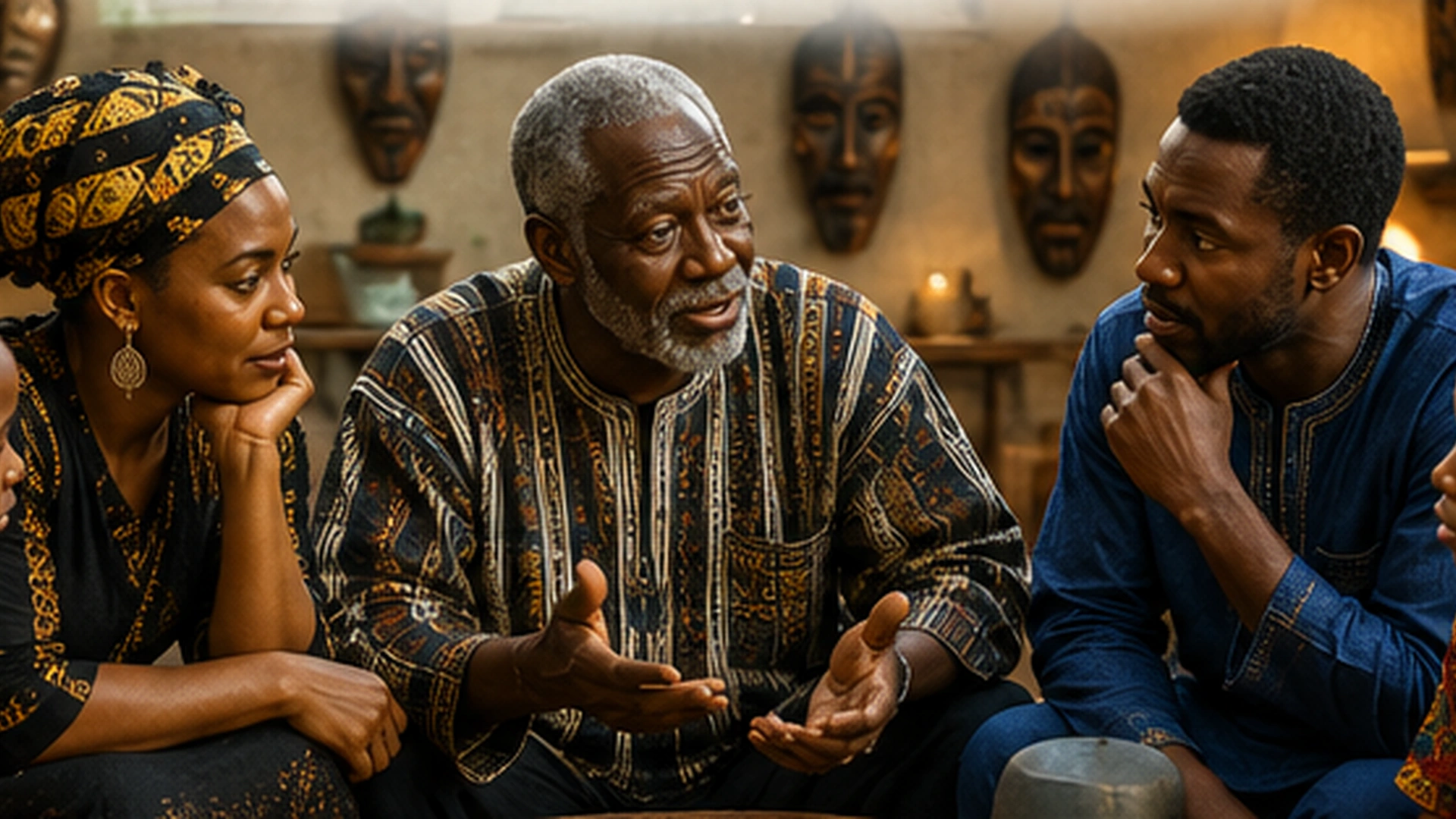
An ancient Egyptian dream interpreter, a worshipper sleeping at a Greek healing sanctuary, a Tuareg poet, a Yoruba family, a Muslim scholar, a Christian congregation, and a modern neuroscientist may ask different questions about the same experience.
It is also difficult to prove that humans have always valued dreams in every society. Prehistoric people left no written explanations of their dreams.
What the evidence does show is that dreams have been treated seriously in many societies across thousands of years.
Quick Summary
•Dreams attract attention because they can be vivid, emotional, surprising, and difficult to control.
•Recorded dream interpretation existed in ancient Egypt by at least the second millennium BCE.
•Ancient Greek patients visited healing sanctuaries where prepared sleep and dream experiences formed part of treatment.
•Hebrew biblical and Christian texts include dreams connected with warning, guidance, political decisions, and religious meaning.
•The Qur’an’s account of Joseph gives dreams and their interpretation a major narrative role.
•In some Yoruba contexts, dreams may be discussed as ways deceased ancestors advise living descendants.
•Tuareg dream traditions can involve memory, poetry, waiting, gender, the dead, and political history.
•Dreams may also become public narratives through which religious commitment and authority are evaluated.
•Freud’s work made dreams central to modern psychoanalytic discussion.
•Modern research connects sleep and dreaming with memory and emotional processing, but scientists do not agree on one complete function for dreams.
•Dreams are not scientifically proven forecasts of wealth, death, pregnancy, legal victory, or future events.
•Repeated nightmares, sleep disruption, dream enactment, or severe distress may require medical or mental-health support.
Concise Definition
A dream is a sequence of images, thoughts, sensations, emotions, or narratives experienced during sleep and sometimes remembered after waking.
Valuing dreams means treating those experiences as worthy of attention, interpretation, preservation, discussion, or action.
In Simple Terms
People value dreams because dreams can feel like messages even when their source is unclear.
A dream may make someone wonder:
“Why did I see that person?”
“Is my mind trying to tell me something?”
“Was this a warning?”
“Why did the dream feel more emotional than waking life?”
“Did my family or religion teach a meaning for this?”
“Does it reflect something I am afraid to face?”
The desire to answer those questions has produced dream books, religious teachings, healing practices, poems, family stories, psychological theories, and scientific research.
Why Dreams Feel Important
Dreams Are Emotionally Intense
Dream emotions can remain after the images have faded.
A person may wake frightened without remembering what chased them. Another may wake comforted after seeing a deceased parent. Someone else may feel embarrassed, angry, or hopeful for the rest of the day.
Dreams recalled from rapid eye movement sleep are often especially vivid and emotionally rich, although dreams can also occur during non-REM sleep.
Strong emotion encourages memory.
An ordinary thought may be forgotten immediately, while a frightening or beautiful dream may be remembered for years.
Dreams Create Stories Without Conscious Planning
During waking life, people usually know when they are inventing a story.
In dreams, events may unfold without deliberate choice. A deceased person appears. A familiar house changes shape. A child becomes an elder. A road leads to a forgotten village.
Because the dreamer did not consciously construct each scene, the result may feel as though it came from somewhere outside the ordinary self.
Different traditions identify that “somewhere” differently:
•God
•Ancestors
•Spirits
•Memory
•The unconscious
•Emotional conflict
•Brain activity during sleep
•A combination of several influences
Dreams Connect the Present With the Past
Dreams often reuse people, places, worries, and memories.
A person may dream about a childhood home after moving abroad or see a relative during a period of grief.
Modern research suggests that dream experience is related to memory processes occurring during sleep. Studies have connected dreams with the reactivation, reorganization, and emotional processing of memories, although the exact function of dreaming remains debated.
Dreams Seem to Cross Ordinary Boundaries
In dreams, people may encounter the dead, travel great distances, speak languages they do not know, return to childhood, or witness an imagined future.
This apparent freedom from normal physical boundaries has made dreams especially important in traditions concerned with:
•Divination
•Ancestors
•Prophecy
•Healing
•Initiation
•Creativity
•Mourning
•Religious authority
Dreams Give Form to Uncertainty
When people do not know what will happen, they search for signs.
Before a journey, marriage, war, harvest, medical decision, or political change, a vivid dream may appear meaningful because it offers a story where waking life offers uncertainty.
This does not prove that the dream predicts events.
It explains why dreams become especially valuable during unstable periods.
Dreams Can Be Shared
A dream becomes socially significant when it is told.
The listener may comfort the dreamer, identify a religious symbol, connect the story with family history, or challenge the interpretation.
Dream meaning is therefore not produced only inside one person’s mind. It may emerge through discussion with:
•Relatives
•Elders
•Religious leaders
•Healers
•Therapists
•Friends
•Poets
•Community members
Ancient Egyptian Dream Interpretation
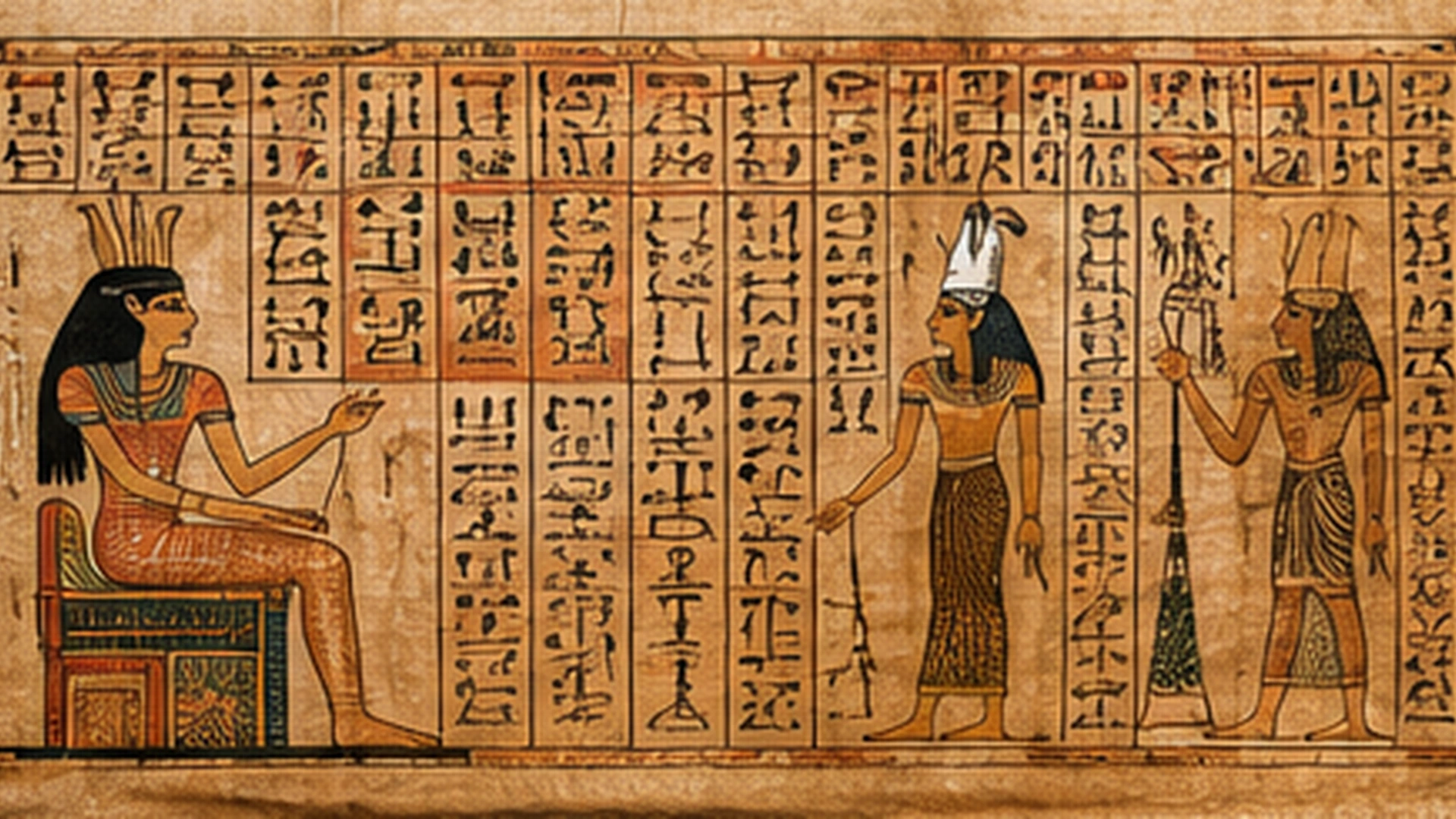
Ancient Egypt provides some of the earliest surviving written evidence for organized dream interpretation.
The British Museum’s Papyrus Chester Beatty III, dated to approximately 1220 BCE and associated with Deir el-Medina, contains a manual for interpreting dreams. The surviving text organized dream experiences into categories that could be judged favourable or unfavourable.
The existence of a written dream manual shows that interpretation was not always an improvised response.
Dream knowledge could be:
•Collected
•Copied
•Classified
•Preserved
•Consulted
•Passed between owners
Ancient Egyptians did not necessarily treat every dream as prophetic.
The presence of interpretation manuals suggests a need for expertise. A dream image might be ambiguous, and its meaning could depend on accepted associations rather than the dreamer’s immediate reaction.
Historical evidence should not be used to claim that every ancient Egyptian interpreted dreams identically.
Egyptian religious and social life changed over thousands of years. Court officials, temple personnel, village workers, healers, and family members may have approached dreams differently.
Ancient Egyptian practices should also not be treated as evidence for one timeless belief shared by all African societies.
Dream Incubation in Ancient Greek Healing
At the Sanctuary of Asklepios at Epidaurus, people seeking healing participated in a system that included worship, preparation, exercise, and enkoimesis, a form of induced or prepared sleep associated with healing dreams.
UNESCO describes dream-like sleep as an important part of the sanctuary’s historical healing procedure.
The patient did not simply fall asleep at home and search online for a symbol’s meaning.
Dream experience was connected with:
•Pilgrimage
•Sacred space
•Preparation
•Religious officials
•Asklepios, the healing deity
•Public accounts of healing
•The wider organization of the sanctuary
The dream mattered partly because of where it occurred.
A dream at a healing sanctuary carried a different social and religious status from an ordinary night’s dream.
The practice also shows that medicine, religion, exercise, environment, and psychological expectation were not always separated in the same way they are in many modern health systems.
Ancient dream healing should not be copied as a substitute for evidence-based medical care.
Dreams in Biblical Traditions
Dreams play prominent roles in Jewish and Christian scriptures.
In Genesis, Joseph interprets dreams experienced by prisoners and by Pharaoh. Pharaoh’s dreams of cattle and grain become connected with preparation for years of abundance and famine.
In the Gospel of Matthew, dreams warn the Magi not to return to Herod and direct Joseph to protect the child Jesus by leaving for Egypt.
These narratives contribute to religious understandings of dreams as possible channels of:
•Warning
•Guidance
•Divine communication
•Political consequence
•Protection
•Interpretation requiring wisdom
However, the presence of meaningful dreams in scripture does not mean that every dream experienced by a Christian or Jewish person is treated as divine instruction.
Jewish and Christian communities differ substantially in how much authority they assign to personal dreams.
Some may discuss a dream during prayer or pastoral care. Others may treat it primarily as an ordinary product of sleep.
A personal dream should not override scripture, law, medical advice, safeguarding responsibilities, or the rights of other people.
Dreams in Islam
Dreams occupy an important place in Islamic scripture, history, scholarship, and devotional life.
The Qur’an’s account of Prophet Yusuf, or Joseph, begins with a significant dream and later describes his interpretations of the dreams of fellow prisoners and a ruler.
Muslim scholars developed extensive discussions of:
•True or meaningful dreams
•Disturbing dreams
•Dreams influenced by daily thought
•Symbolic interpretation
•Visions of religious figures
•The limits of dream authority
Islamic dream traditions are historically rich and varied. Dreams have appeared in biographies, chronicles, devotional accounts, mystical literature, political claims, and personal narratives.
At the same time, Islamic teachers commonly caution against assuming that every dream contains a divine command.
Contemporary guidance also warns that people sometimes expect a dream after istikhāra, the prayer for guidance, even though a dream is not required as the answer.
A dream should not be used to declare another person guilty, forbidden, possessed, unfaithful, or dangerous without real evidence.
Dreams in Specific African Contexts
There is no single African dream tradition.
Dreams may be interpreted differently according to:
•Community
•Religion
•Language
•Family
•Gender
•Historical period
•Religious office
•Conversion history
•Urban or rural location
•Personal conviction
The examples below demonstrate variation rather than a continental rule.
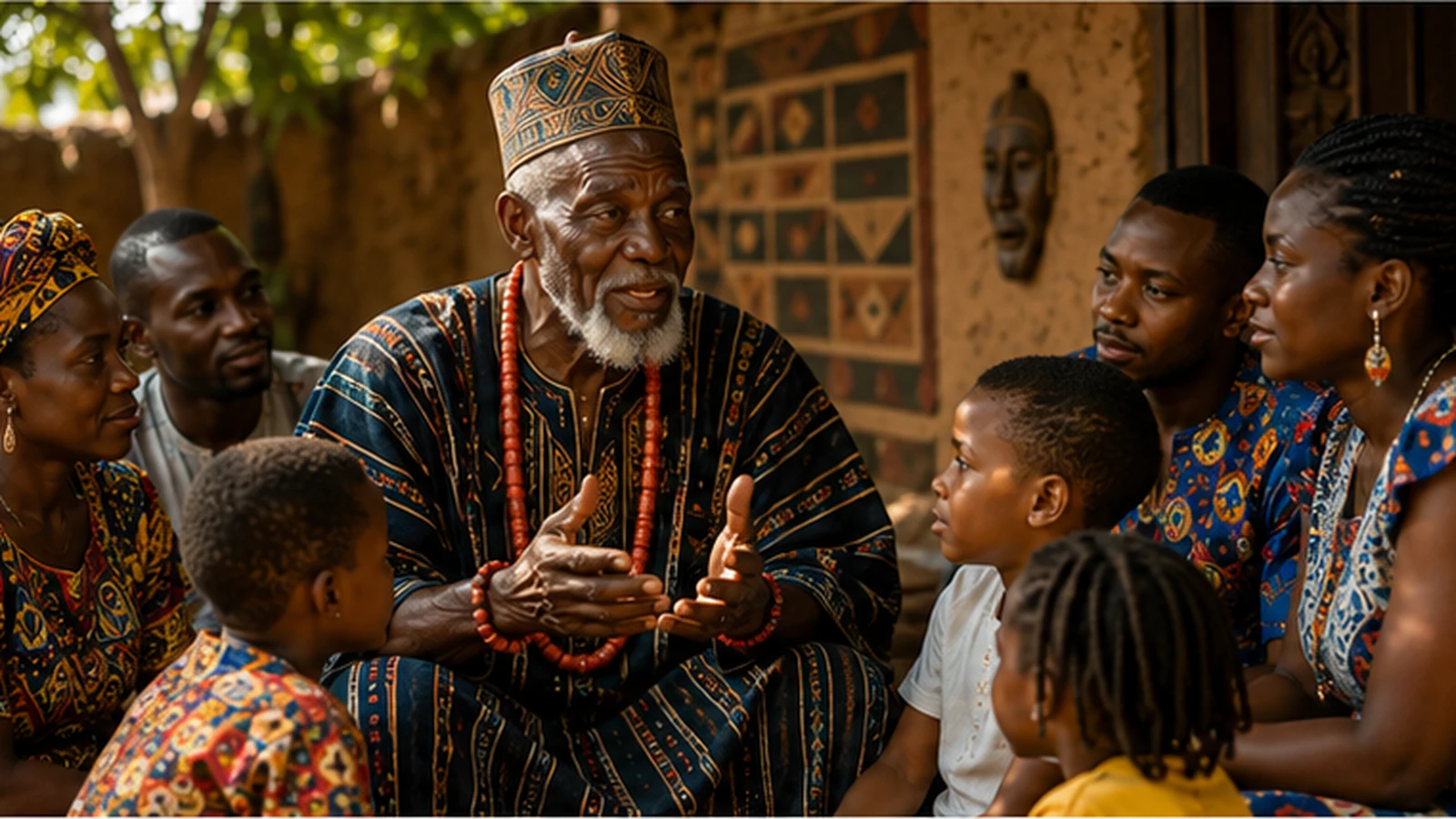
Dreams and Ancestors in Some Yoruba Contexts
A Cambridge history of Yoruba religion notes that ancestors may be understood as remaining connected with living descendants and offering advice through dreams in certain contexts.
This does not mean every Yoruba dream is believed to come from an ancestor.
Yoruba people include:
•Muslims
•Christians
•Practitioners of Indigenous religious traditions
•People combining several religious influences
•People who do not assign spiritual meaning to dreams
Even within families practising ancestor reverence, not every deceased relative automatically holds ancestral authority.
A dream about a dead relative may be interpreted as:
•Memory
•Grief
•Ancestral communication
•Emotional comfort
•A warning
•An ordinary dream
The interpretation depends on the family and religious setting.
Dreams, Poetry, and Memory Among Tuareg Communities
Research on Tuareg dream traditions demonstrates that dreams can be connected with poetry, gender, waiting, political history, deceased poets, and communication concerning absent relatives.
The research draws on material from Tuareg communities in Niger, Mali, Algeria, France, and West African diaspora settings. It also shows that dream narration may be culturally sensitive, private, gendered, or associated with subjects that are not freely discussed.
In some documented women’s poetry, dreams concern men who have travelled, gone to war, joined caravans, or remained absent.
Dreaming can therefore become a way of expressing:
•Waiting
•Separation
•Fear
•Hope
•Political conflict
•Refuge
•Love
•Historical memory
The article also shows that cultural importance does not always produce constant public discussion.
A society may value dreams precisely because they are considered powerful, private, or difficult to interpret.
Dreams as Public Religious Narratives
Dreams can also influence social status.
An anthropological study of a West African religious movement found that publicly narrated dreams were evaluated by other church members. Dream accounts could demonstrate religious commitment and help individuals compete for recognized roles within the church.
This example shows that dream interpretation is not only about discovering a hidden symbol.
A narrated dream can become:
•Testimony
•Public performance
•Evidence of commitment
•A claim to authority
•A story supporting an institution
•A way of gaining recognition
The researcher also cautioned that public dream narratives may be retold, developed, or shaped for social purposes.
That does not mean every dream account is dishonest.
It means historians and anthropologists must study both the dream and the context in which it is narrated.
Why Religious Movements Value Dreams
Dreams can provide authority without requiring ordinary credentials.
A person who lacks wealth, formal education, hereditary office, or institutional rank may claim that a dream gave them:
•A calling
•A song
•A prayer
•A warning
•A healing instruction
•A mission
•A new interpretation
•Permission to lead
This can make dreams socially powerful.
It can also create conflict.
Religious communities may ask:
•Is the dream consistent with accepted teaching?
•Who has authority to interpret it?
•Was the dream private or intended for the community?
•Does it benefit the dreamer personally?
•Does it create fear or exploitation?
•Does it contradict ethical responsibilities?
A dream claim should never remove accountability.
Dreams and Mourning
Dreams of deceased relatives are common human experiences.
They may be comforting, distressing, or emotionally confusing.
A person may dream that the relative is alive, speaks normally, offers advice, or says goodbye. The dream may temporarily restore a relationship that death interrupted.
Different people interpret such dreams differently:
•A psychological continuation of attachment
•A memory being processed
•A religious encounter
•An ancestral visit
•A grief dream
•A mixture of memory and belief
No outsider should force one interpretation onto the dreamer.
A grieving person can receive comfort from a dream without needing to prove that it was supernatural.
Dreams and Creativity
Dreams have inspired:
•Poems
•Songs
•Paintings
•Religious movements
•Stories
•Political visions
•Inventions
•Personal decisions
Tuareg research demonstrates the connection between dreams and poetic inspiration in particular historical and contemporary contexts.
Dream creativity may come from the unusual way sleeping experience combines memories and images.
A dream may join ideas that waking thought normally keeps separate.
However, a creative idea from a dream still requires testing, editing, ethical judgment, and practical development.
Freud and the Modern Psychological Turn
Dreams gained a new kind of prominence in European psychology around the beginning of the twentieth century.
Sigmund Freud’s The Interpretation of Dreams, first published in 1900, placed dreams at the centre of his theory of unconscious mental life and psychoanalytic interpretation.
Freud argued that dreams could reveal disguised wishes and psychological conflict.
His ideas strongly influenced:
•Psychoanalysis
•Literature
•Art
•Film
•Popular dream interpretation
•Later psychological theories
Freud’s theory is historically influential, but it is not accepted as a complete scientific explanation of all dreams.
Modern researchers use brain imaging, sleep laboratories, controlled awakenings, memory tests, and other methods that were unavailable to early psychoanalysis.
What Modern Sleep Science Says
Sleep is organized into non-REM and REM stages.
Most vivid dreaming is reported during REM sleep, but dreaming also occurs during non-REM sleep. During REM sleep, brain activity becomes closer to waking patterns while major muscles are normally temporarily inhibited.
Research suggests connections between sleep, dreaming, emotional regulation, and memory.
A 2024 study found evidence that dreaming after emotional experiences was associated with overnight emotional-memory processing and reduced reactivity to negative memories the next day. The authors presented this as evidence for an active role of dreaming, but one study does not settle the complete function of dreams.
Researchers continue to debate whether dreams:
•Directly help process emotions
•Reflect memory consolidation
•Simulate threats
•Support creativity
•Maintain social cognition
•Emerge from brain activity without one specific purpose
•Perform several functions
The scientifically responsible position is that dreaming is real, measurable, and related to sleep and brain activity, but there is no single proven dictionary for interpreting every dream.

Why Universal Dream Dictionaries Are Unreliable
A dream dictionary may claim:
“Snake means betrayal.”
“Water means money.”
“Death means pregnancy.”
“Teeth mean family loss.”
Such formulas are unreliable because symbols do not have one universal meaning.
A snake may represent:
•Danger
•Medicine
•A local species
•A recent encounter
•Religious symbolism
•A childhood fear
•A family story
•Nothing stable at all
Water may represent purification in one context, a flood in another, an ordinary memory of fetching water, or anxiety about drowning.
Interpretation should consider:
•The dreamer’s feelings
•Recent experiences
•Personal memories
•Religion
•Language
•Cultural background
•Health
•Stress
•Medication
•Sleep quality
Can Dreams Predict the Future?
Dreams sometimes appear to match later events.
Several explanations are possible:
•Coincidence
•Selective memory
•Broad symbolism
•Unconscious recognition of existing clues
•Repeated dreams producing many opportunities for a match
•Retelling the dream differently after the event
•A religious interpretation of prophecy
Science has not established that ordinary dreams reliably predict future events.
A dream should not be treated as guaranteed evidence of:
•Death
•Pregnancy
•Infidelity
•Winning money
•Legal victory
•Business success
•Illness
•A curse
•Criminal behaviour
Important decisions should be based on evidence, professional advice, safety, and informed judgment.
Nightmares and Disturbing Dreams
Nightmares may become more frequent during stress, grief, trauma, illness, medication changes, sleep disruption, or other difficult conditions.
A disturbing dream does not prove that a person is spiritually attacked.
Seek appropriate medical or mental-health support when dreams:
•Repeatedly interrupt sleep
•Cause fear of going to bed
•Follow a traumatic event
•Contribute to severe daytime anxiety
•Occur with hallucinations while awake
•Involve acting out violent movements
•Appear after a medication change
•Accompany breathing problems during sleep
•Lead to self-harm thoughts
Some sleep disorders can involve dream enactment, paralysis, breathing disruption, or unusual movements and require professional assessment.
Ethical Boundaries in Dream Interpretation
Dream interpretation should never be used to justify:
•Accusing someone of witchcraft
•Ending medical treatment
•Declaring another person unfaithful
•Forcing a marriage or separation
•Demanding large payments
•Threatening someone with death
•Abusing a child
•Controlling another person
•Publicly revealing private information
•Claiming guaranteed prophecy
•Diagnosing illness without evidence
•Encouraging violence
•Declaring a person spiritually contaminated
A responsible interpreter should acknowledge uncertainty.
They should not pretend that personal intuition is unquestionable authority.
How to Reflect on a Dream Responsibly
Record It Quickly
Write the dream shortly after waking.
Include:
•People
•Places
•Emotions
•Colours
•Words
•Physical sensations
•Recent events
•The ending
Dream memories often fade quickly.
Begin With Emotion
Ask:
“What did I feel?”
Fear, joy, grief, shame, relief, and confusion may be more informative than a single object.
Consider Recent Experiences
A dream may include something seen briefly during the day, a conversation, a film, a worry, or a physical sensation during sleep.
Consider Cultural Context
A symbol may have a family, religious, linguistic, or regional meaning.
Do not replace that context with a generic online definition.
Allow More Than One Interpretation
A dream may reflect stress and still carry religious meaning for the dreamer.
Psychological and spiritual interpretations do not always have to cancel one another.
Avoid Immediate Major Decisions
Do not make irreversible medical, legal, relationship, or financial decisions based only on one dream.
Protect Privacy
A dream may include other people, intimate experiences, or family information.
The dreamer should control whether it is shared publicly.
Common Misconceptions
“Every Dream Has a Hidden Message”
Not necessarily.
Some dreams may reflect ordinary memory fragments, physical sensations, recent concerns, or sleep-stage activity.
“Every Dream About the Dead Is an Ancestral Visit”
Not necessarily.
It may be interpreted spiritually, psychologically, culturally, or through grief and memory.
“African Cultures Interpret Dreams the Same Way”
False.
Dream traditions differ among Yoruba, Tuareg, Christian, Muslim, Indigenous, urban, rural, family, and other contexts.
“Science Has Proved Dreams Are Meaningless”
False.
Research connects dreams with memory, emotion, and sleep processes, but scientists do not agree on one complete function.
“Science Has Proved Dreams Predict the Future”
False.
There is no reliable scientific method for using ordinary dreams to forecast specific future events.
“A Frightening Dream Proves Spiritual Attack”
False.
Nightmares may be connected with stress, trauma, medication, sleep disorders, or many other factors.
“Only Religious People Value Dreams”
False.
Artists, psychologists, historians, neuroscientists, writers, and ordinary families also study or discuss dreams.
“A Dream Interpreter Cannot Be Questioned”
False.
Interpretation should remain open to evidence, ethics, cultural context, and uncertainty.
Key Takeaways
•Dreams have been valued across recorded history because they are vivid, emotional, unpredictable, and memorable.
•Ancient Egyptian dream manuals show that dream interpretation could be organized and written down.
•Ancient Greek healing sanctuaries incorporated prepared dream experiences into religious treatment.
•Jewish, Christian, and Islamic scriptures contain influential dream narratives.
•Specific African traditions connect dreams with ancestors, poetry, social authority, memory, and religious life.
•There is no single African or universal dream interpretation system.
•Dreams may become important through the way they are narrated and evaluated socially.
•Freud made dreams central to psychoanalytic theories of the unconscious.
•Modern science links dreaming with sleep, memory, and emotion but has not identified one universal function.
•Universal dream dictionaries oversimplify personal and cultural meaning.
•Dreams do not provide guaranteed predictions.
•Distressing dreams may require medical or mental-health support.
•Dream interpretation should never justify abuse, accusations, exploitation, or unsafe decisions.
•Responsible reflection combines emotion, memory, culture, evidence, and humility.
People Also Ask
Why have humans always been fascinated by dreams?
Dreams feel vivid and emotionally powerful while occurring outside conscious control. This makes them seem mysterious, meaningful, or worthy of interpretation.
Did ancient civilizations interpret dreams?
Yes. Ancient Egyptian dream manuals survive, and Greek healing sanctuaries included prepared sleep and dream experiences.
What do dreams mean in African traditions?
Meanings vary by community. Dreams may relate to ancestors, poetry, warning, religious commitment, healing, memory, or
Frequently Asked Questions
What should readers know first about african spirituality and cultural history?
African spirituality and cultural history: Read clear guidance, key signs, practical steps, and private support from Ancestral Temple.
What causes Why Humans Have Always Valued Dreams?
The safest next step is to compare the signs, prepare clear details, and request private guidance when the matter feels personal.
How does Why Humans Have Always Valued Dreams work?
The safest next step is to compare the signs, prepare clear details, and request private guidance when the matter feels personal.
Is it possible to get private guidance for Why Humans Have Always Valued Dreams?
The safest next step is to compare the signs, prepare clear details, and request private guidance when the matter feels personal.
How long does Why Humans Have Always Valued Dreams take to understand?
The safest next step is to compare the signs, prepare clear details, and request private guidance when the matter feels personal.
Can Why Humans Have Always Valued Dreams affect relationships, family, work, or personal peace?
The safest next step is to compare the signs, prepare clear details, and request private guidance when the matter feels personal.
Why do people seek spiritual guidance for Why Humans Have Always Valued Dreams?
The safest next step is to compare the signs, prepare clear details, and request private guidance when the matter feels personal.
What signs should someone notice before asking about Why Humans Have Always Valued Dreams?
The safest next step is to compare the signs, prepare clear details, and request private guidance when the matter feels personal.
When should someone contact a private spiritual guide?
The safest next step is to compare the signs, prepare clear details, and request private guidance when the matter feels personal.
What causes african spirituality and cultural history?
African spirituality and cultural history: Read clear guidance, key signs, practical steps, and private support from Ancestral Temple. The safest next step is to compare the signs, prepare clear details, and request private guidance when the matter feels perso
Article Information
- Publisher
- Ancestral Temple
- Editor
- Ancestral Temple
- Last updated
- Jul 26, 2026
- Last reviewed
- Jul 13, 2026
- Content version
- f4991173df
This educational article should be read as cultural and spiritual information, not as medical, legal, financial, or emergency advice.
Helpful Related Guidance
Explore This Topic
Ancestor Reverence In African Cultures · Honoring Ancestors Through Respectful Traditions
Related Topic Cluster
African Spirituality And Cultural History
Complete Guide Why Homes Have Been Blessed Throughout HistoryAbout the Author
 Ancestral Temple
Spiritual guide and practitioner with decades of experience in ancestral wisdom, rituals, and divine guidance.
Related Posts
View All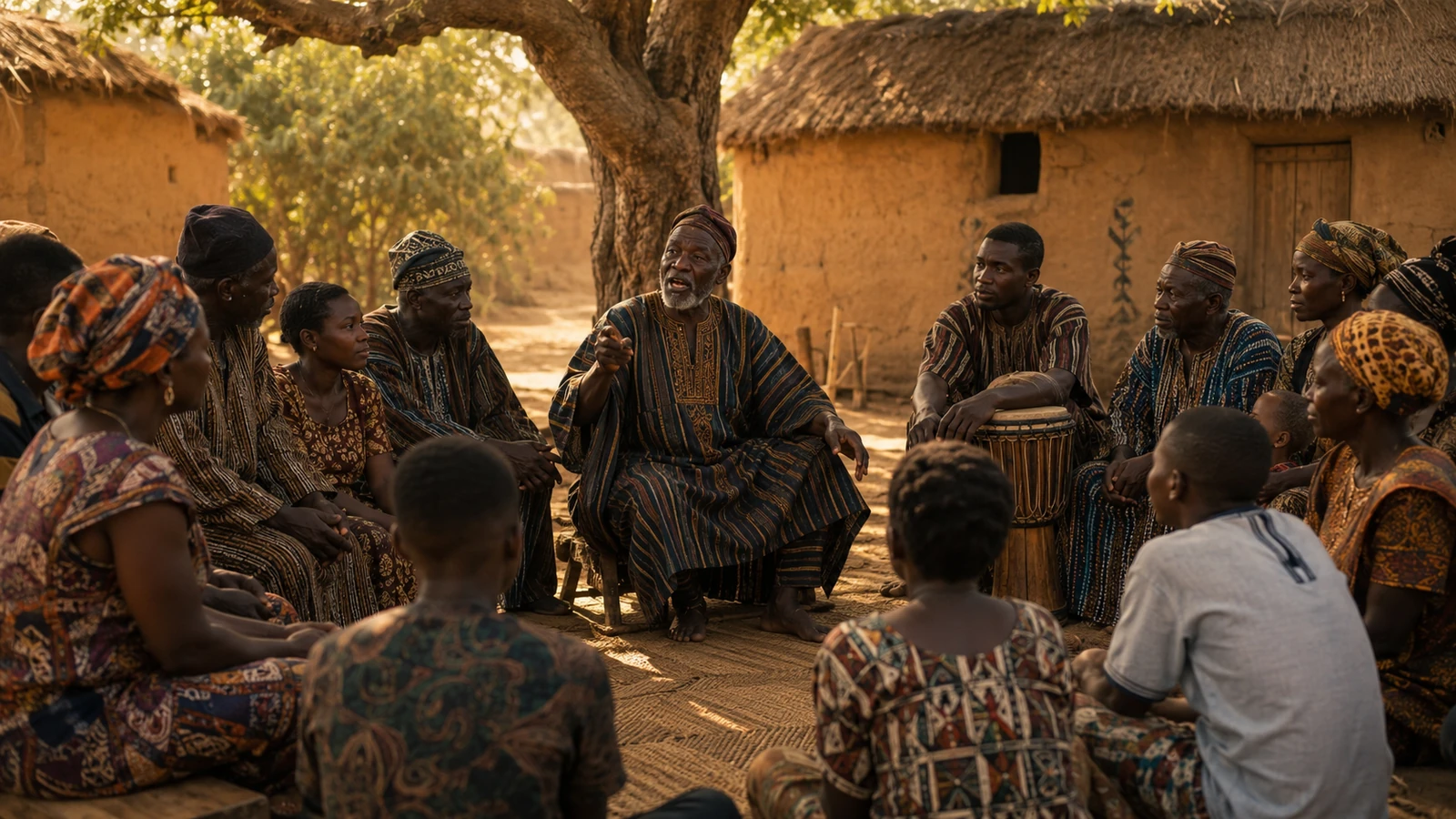

Leave a Comment
We'd love to hear your thoughts.