
Understanding Generational Traditions
Cornerstone Content
Quick Summary
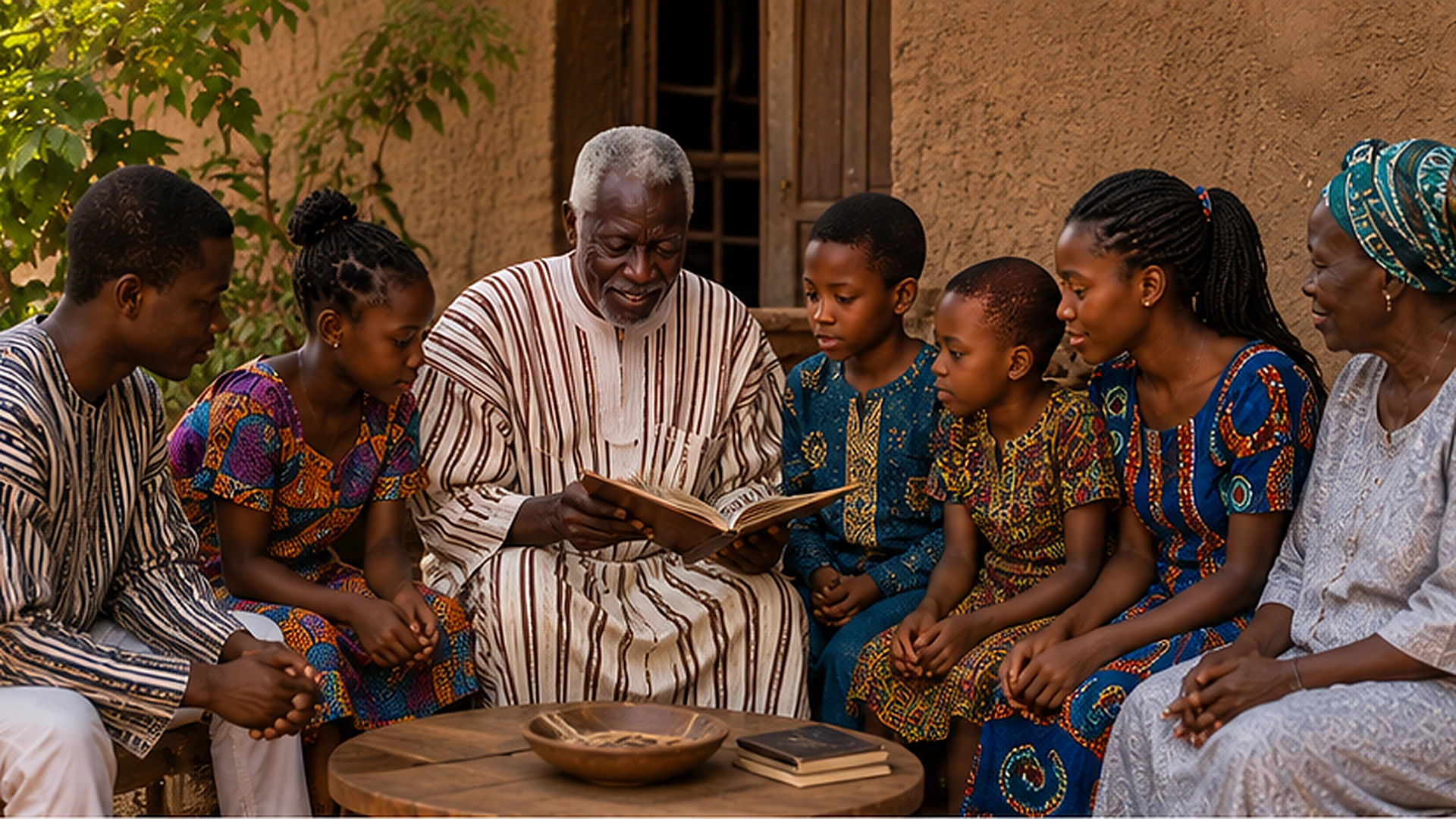
Generational traditions are the stories, skills, values, ceremonies, responsibilities, and everyday practices passed between generations. This guide explains how they create cultural continuity, how they differ across African communities, and why living traditions naturally change over time.
Generational traditions help people connect the experiences of the past with the responsibilities of the present and the possibilities of the future.
They may include family stories, naming customs, songs, food preparation, craftsmanship, moral teachings, ceremonies, methods of leadership, ways of caring for relatives, or knowledge about land and the natural environment.
However, traditions are not identical everywhere. A custom practiced in one family may be unknown in the neighboring family. A tradition associated with a particular Akan, Oromo, Basongora, Ewe, Mande, or Zafimaniry community should not automatically be presented as representative of an entire country or continent.
Generational traditions are also not lifeless copies of ancient behavior. UNESCO describes intangible cultural heritage as practices, knowledge, expressions, and skills inherited from earlier generations and passed to descendants. This heritage is continually recreated as communities respond to their environment, history, and changing circumstances.
This means that a tradition may remain meaningful even when its language, setting, materials, participants, or methods of transmission change.
Key Points
Generational traditions are cultural practices, knowledge, values, stories, skills, or responsibilities transmitted between age groups.
They may be passed through:
- Family participation
- Storytelling and oral history
- Observation and imitation
- Apprenticeship
- Religious education
- Ceremonial participation
- Community institutions
- Schools, museums, and cultural organizations
- Written, audio, video, and digital records
Generational traditions provide continuity, but they are rarely preserved without change. Communities may adapt them to urban life, migration, new religions, formal education, modern technology, or changing ideas about gender and authority.
The people who belong to a tradition should play the leading role in deciding what it means, what may be shared publicly, and how it should be safeguarded.
What Are Generational Traditions?
Generational traditions are customs, knowledge systems, skills, values, roles, and forms of cultural expression that people receive from earlier generations and transmit to younger ones.
The phrase can refer to both ordinary family practices and formally recognized community institutions.
A generational tradition might be:
- A grandmother teaching children how to prepare a family dish
- A parent explaining the meaning of a child’s name
- A craftworker training an apprentice
- A storyteller recounting community history
- A religious teacher instructing younger members
- A family gathering at a particular time each year
- A community teaching rules of leadership or conflict resolution
- Relatives preserving genealogies, praise names, songs, or proverbs
Not every inherited habit is necessarily a cultural tradition. A practice becomes especially significant when people connect it with identity, memory, belonging, responsibility, or continuity.
UNESCO emphasizes that communities themselves—not outside observers alone—identify which practices form part of their living heritage.
Plain-Language Meaning
A generational tradition is something meaningful that older or more experienced people pass to younger people.
It may teach younger generations:
- Who they are
- Where their family or community came from
- How to behave in particular situations
- How to perform a skill
- How to understand an important story
- How to fulfill a family, social, or religious responsibility
Tradition does not mean that every person must behave exactly like previous generations. It means that knowledge or meaning continues to travel between people over time.
Why Generational Traditions Matter
They strengthen identity and belonging
Traditions can help people understand their relationship to a family, language, neighborhood, religious institution, profession, kingdom, ethnic community, or nation.
A name, song, proverb, recipe, textile, or family narrative may remind an individual that they belong to a history larger than their own lifetime.
This sense of belonging can be especially important for people living far from their ancestral homes. Families in cities or diasporic communities may preserve selected practices to maintain connections across distance.
They preserve collective memory
Collective memory is the shared understanding a group holds about its past.
It may include accounts of migration, political leadership, conflict, survival, religious change, environmental knowledge, family achievement, or community hardship.
Oral traditions can transmit knowledge, social values, and collective memory through proverbs, songs, poems, narratives, prayers, riddles, and other spoken forms.
Oral transmission should not be misunderstood as careless repetition. Skilled narrators may follow recognized structures, performance conventions, responsibilities, and standards of accuracy.
They teach practical knowledge
Some generational traditions preserve skills that are learned best through observation and practice.
These may include:
- Farming methods
- Animal care
- Food preservation
- Pottery
- Weaving
- Woodworking
- Building techniques
- Music
- Dance
- Midwifery knowledge
- Environmental observation
- Methods of mediation and leadership
Such knowledge may be taught through formal apprenticeship or gradually learned by assisting parents, relatives, specialists, or community members.
They communicate values
Traditions frequently teach values through action rather than formal lectures.
A child may learn generosity by participating in communal food preparation. A young craftworker may learn patience through apprenticeship. A family gathering may reinforce obligations toward relatives, children, elders, or visitors.
The values communicated are not always uncontested. Younger people may question inherited expectations, particularly when traditions conflict with personal freedom, health, equality, or contemporary law.
Healthy cultural continuity allows discussion rather than demanding unquestioning obedience.
How Traditions Pass Between Generations
Storytelling and oral tradition
Storytelling is one of the most widely recognized forms of intergenerational transmission, but it takes many culturally specific forms.
Stories may communicate history, humor, genealogy, moral reasoning, political memory, or religious meaning. Their significance may depend on who is authorized to tell them, when they are performed, and who is listening.
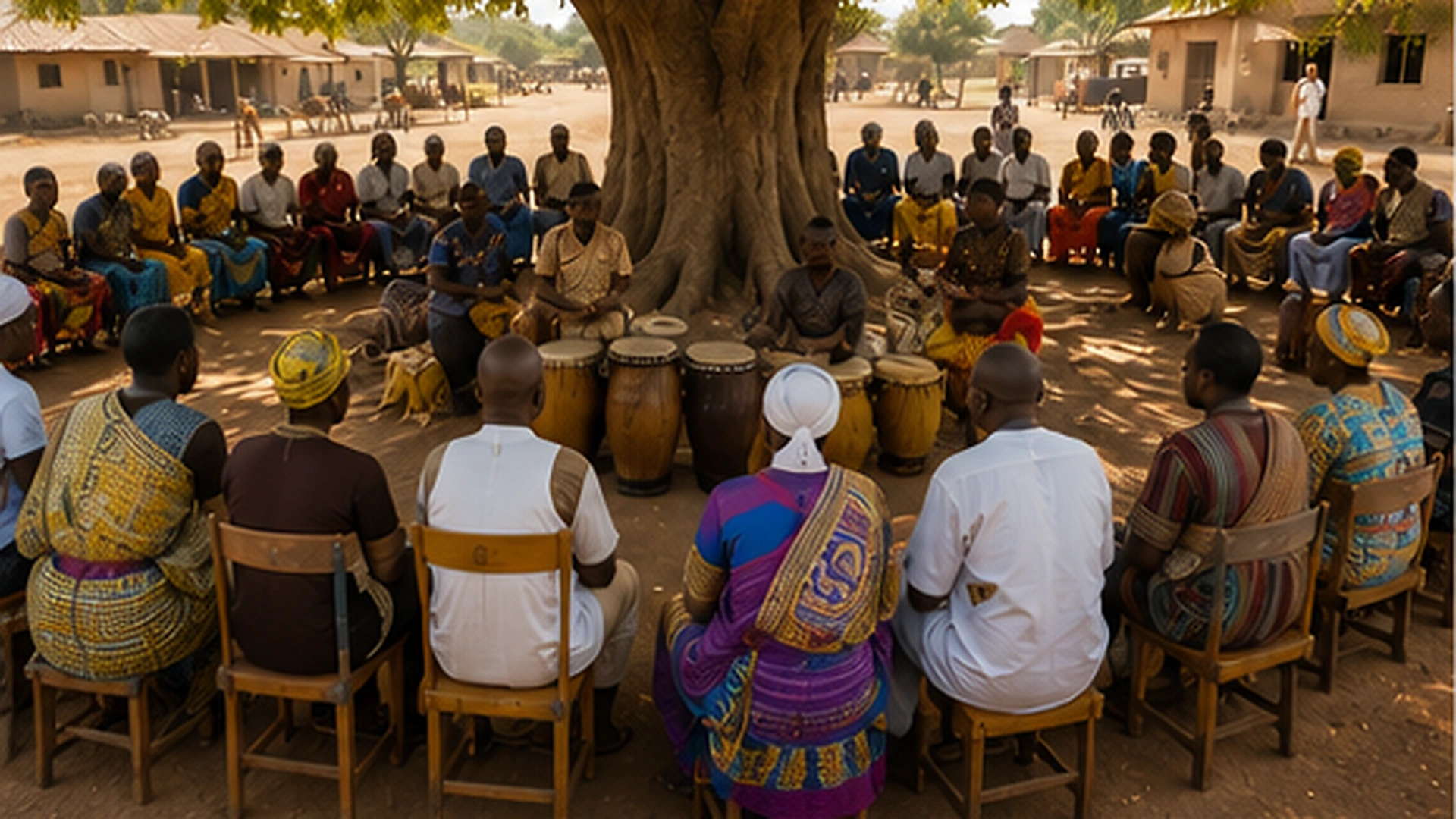
Within Mande societies of the western Sahel, professional oral specialists commonly known as jeliw may serve as narrators, genealogists, praise singers, musicians, diplomats, and public speakers. Their work cannot be reduced to the generic idea of an elderly person casually telling stories. It is a recognized field of knowledge and performance with particular social responsibilities.
Observation and participation
Children often learn traditions by watching daily activities and gradually joining them.
They may begin with small tasks:
- Preparing materials
- Watching food being cooked
- Listening during family gatherings
- Repeating songs
- Helping organize an event
- Carrying tools for an artisan
- Learning appropriate greetings
- Observing how elders settle disagreements
Participation transforms abstract instruction into embodied knowledge. A person learns not only what to do but also when, why, and in whose presence it should be done.
Apprenticeship
Apprenticeship involves sustained learning under a more experienced practitioner.
The teacher may be a parent, relative, specialist, religious officeholder, craftworker, musician, healer, or unrelated master practitioner.
The relationship may include technical training, ethical standards, social responsibilities, and rules about restricted knowledge.
A public demonstration of weaving, drumming, carving, or herbal identification does not necessarily reveal everything a recognized practitioner learns. Some knowledge may be reserved for qualified apprentices or authorized community members.
Religious institutions
Religious traditions may be passed through households, churches, mosques, shrines, temples, schools, initiation institutions, or recognized religious offices.
It is important to distinguish between religious roles.
An elder is not automatically a priest. A healer is not necessarily a diviner. A chief may possess political authority without serving as a medium. A family head may lead household observances without holding a specialized religious office.
Similarly, an ancestor, divinity, spirit, and recently deceased relative are not interchangeable categories. Their meanings and relationships vary among communities and religious systems.
Formal education and cultural organizations
Schools, museums, archives, festivals, language programs, and community heritage organizations increasingly support cultural transmission.
These institutions can help document endangered languages, invite practitioners to teach students, preserve recordings, and connect younger people with community knowledge.
Institutional involvement must remain community-informed. Documentation should not remove knowledge from the people who created it or make restricted material publicly available without consent.
Examples of Generational Traditions in African Communities
The following examples illustrate different forms of transmission. They should not be treated as a complete description of any community.
The Koogere oral tradition in western Uganda
The Koogere oral tradition is associated with Basongora, Banyabindi, and Batooro communities in western Uganda.
Narratives, songs, and poems recount Koogere as a female leader remembered for wisdom and prosperity. The tradition contributes to collective memory and provides opportunities for learning, recreation, and intergenerational exchange.
UNESCO has noted that reduced performance opportunities, changing education patterns, and declining knowledge among younger people have threatened its transmission.
This example shows that oral history does not survive merely because stories are old. It requires narrators, audiences, meaningful occasions, and younger participants who see value in learning it.
The Gada system among Oromo communities
The Gada system is an Indigenous socio-political institution associated with Oromo communities in Ethiopia.
It organizes aspects of governance, social responsibility, conflict resolution, moral conduct, and community leadership through structured stages and generational classes.
UNESCO describes the system as knowledge developed through community experience over generations. Transmission occurs through both household learning and formal or non-formal educational mechanisms.
Gada demonstrates that generational traditions may involve more than stories or ceremonies. They can organize political education, public responsibility, and the movement of people through recognized social stages.
The system should not be simplified into a universal model of African democracy. It belongs to particular Oromo historical and cultural contexts.
Mande jeliw and oral memory
In parts of the western Sahel, Mande jeliw preserve and perform genealogies, epics, praise poetry, music, political memory, and accounts of social relationships.
Their knowledge may be transmitted within families and through long periods of observation and training.
A jeli does not simply memorize a fixed script. Performance may respond to the audience, social occasion, patron, and historical context while maintaining recognizable narrative structures.
This flexibility demonstrates why oral tradition should not be judged by the same standards as a printed document. Its authority may rest in trained custodianship, community recognition, continuity of themes, and social accountability.
Kente weaving among particular Asante and Ewe practitioners
Kente is associated with distinct weaving histories among Asante and Ewe communities in Ghana.
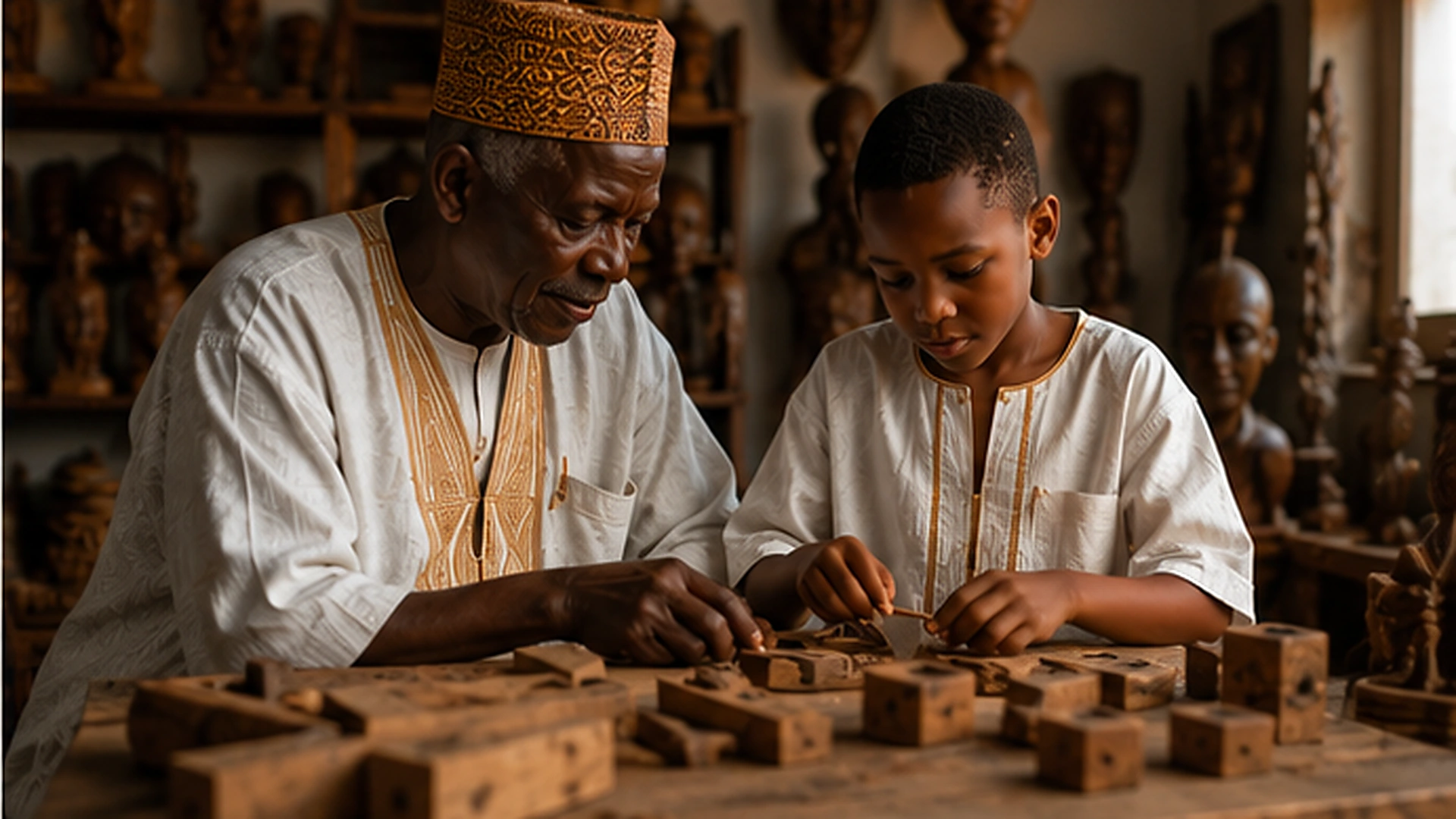
Knowledge may be transmitted through family workshops and apprenticeships. Smithsonian documentation describes Ewe and Asante-associated weavers who learned by observing fathers and uncles and later taught younger relatives and students.
Patterns, materials, names, and meanings can vary by workshop, community, historical period, and intended use.
Kente should therefore not be treated as a single, universal “African print.” It is a woven textile tradition with specific histories, technical requirements, and community associations. Its modern international use has introduced additional meanings, but those meanings do not erase its culturally specific origins.
Zafimaniry woodcrafting knowledge in Madagascar
For generations, Zafimaniry foresters, carpenters, and craftworkers in Madagascar have developed knowledge connected with wood selection, construction, carving, and the local environment.
UNESCO identifies this knowledge as a body of practical skills developed and transmitted over generations.
The example shows how generational tradition may unite craftsmanship, architecture, ecological understanding, and community identity.
It also illustrates why preserving only finished objects is insufficient. Without trained practitioners, access to appropriate materials, and opportunities to learn, the knowledge required to create those objects may disappear.
Family Traditions and Community Traditions
Family traditions and community traditions may overlap, but they are not identical.
- Family traditions
- Community traditions
- Often centered on a household or extended family
- Recognized by a wider cultural, religious, or social group
- May include recipes, stories, reunions, names, or heirlooms
- May include public festivals, political institutions, crafts, oral histories, or religious practices
- Can change through marriage, migration, or personal choice
- Often require community recognition and collective participation
- Authority may rest with parents, grandparents, or family heads
- Authority may rest with practitioners, councils, religious offices, associations, or recognized custodians
- Usually shared privately or within relatives
- May include both public and restricted knowledge
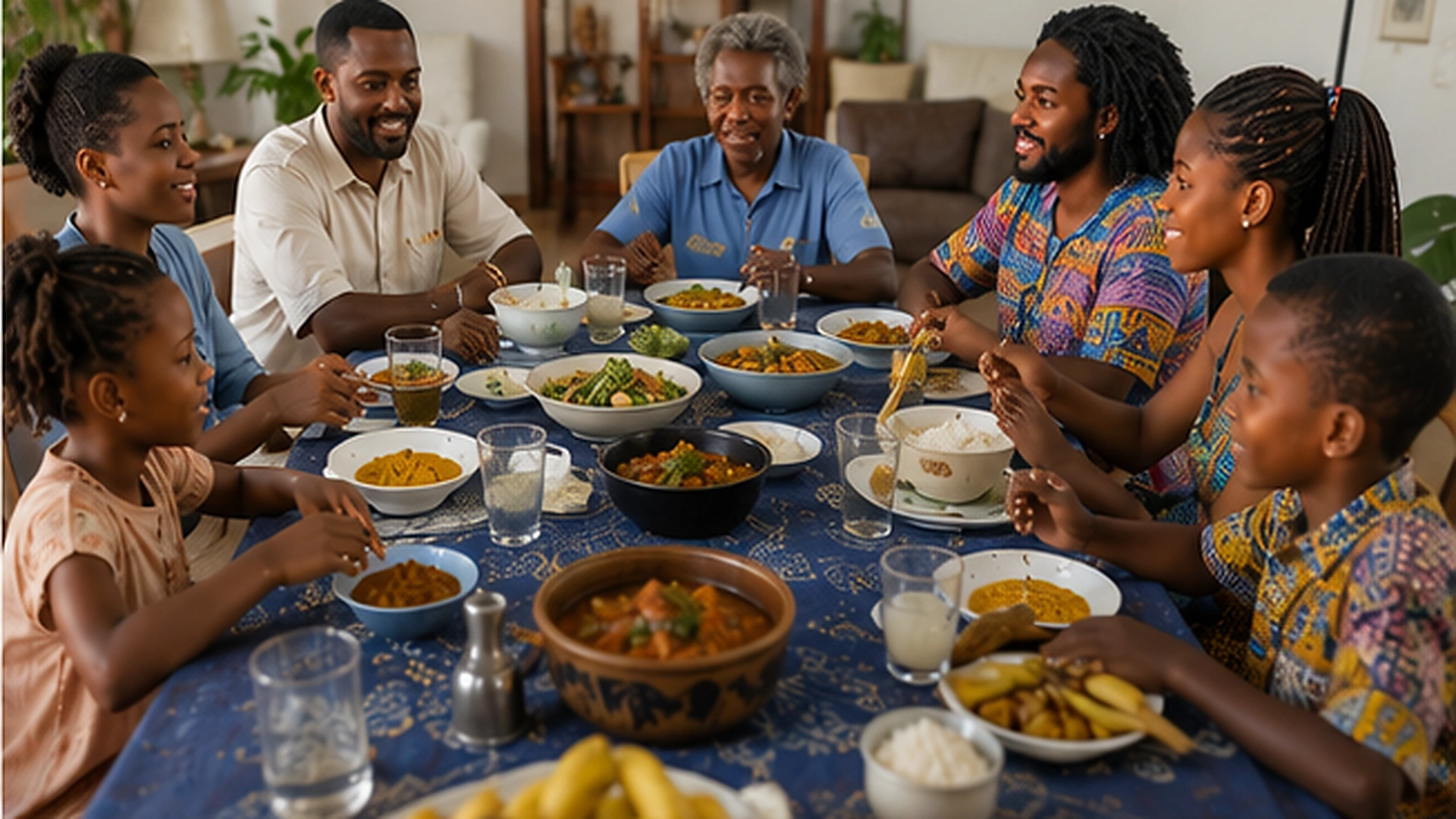
A family may participate in a wider community tradition while preserving its own interpretation.
For example, two families belonging to the same linguistic or religious community may prepare ceremonial food differently, remember different ancestors, use different praise names, or assign responsibilities according to separate family histories.
Generational Traditions Are Not Always Ancient
A common misconception is that a tradition must be hundreds of years old.
Some traditions are relatively recent. A family may begin an annual gathering after migration. A community may create a remembrance ceremony following a major historical event. A religious congregation may develop new musical practices that children later inherit.
Over time, repeated actions may acquire emotional and cultural importance.
Traditions can also combine older and newer elements. A family might preserve oral storytelling while recording it on a smartphone. A weaving workshop may use inherited techniques with newly available fibers. A community festival may include traditional performance alongside modern sound systems and livestreaming.
Change does not automatically make a tradition false.
UNESCO’s safeguarding approach specifically warns against freezing living heritage into an imagined pure or original form. Safeguarding focuses on transmitting knowledge, meaning, and skills while allowing communities to recreate practices in changing circumstances.
The Role of Elders
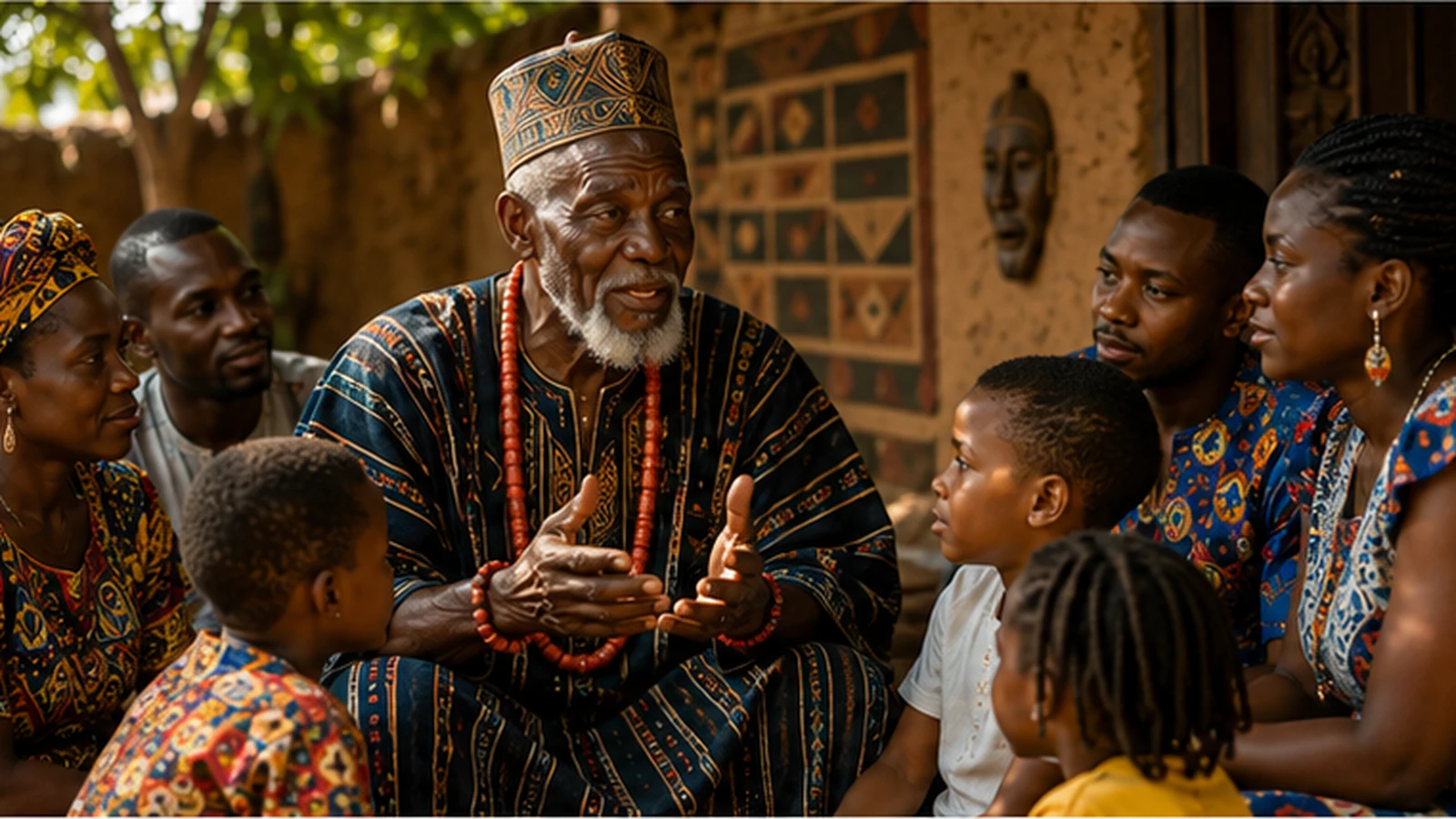
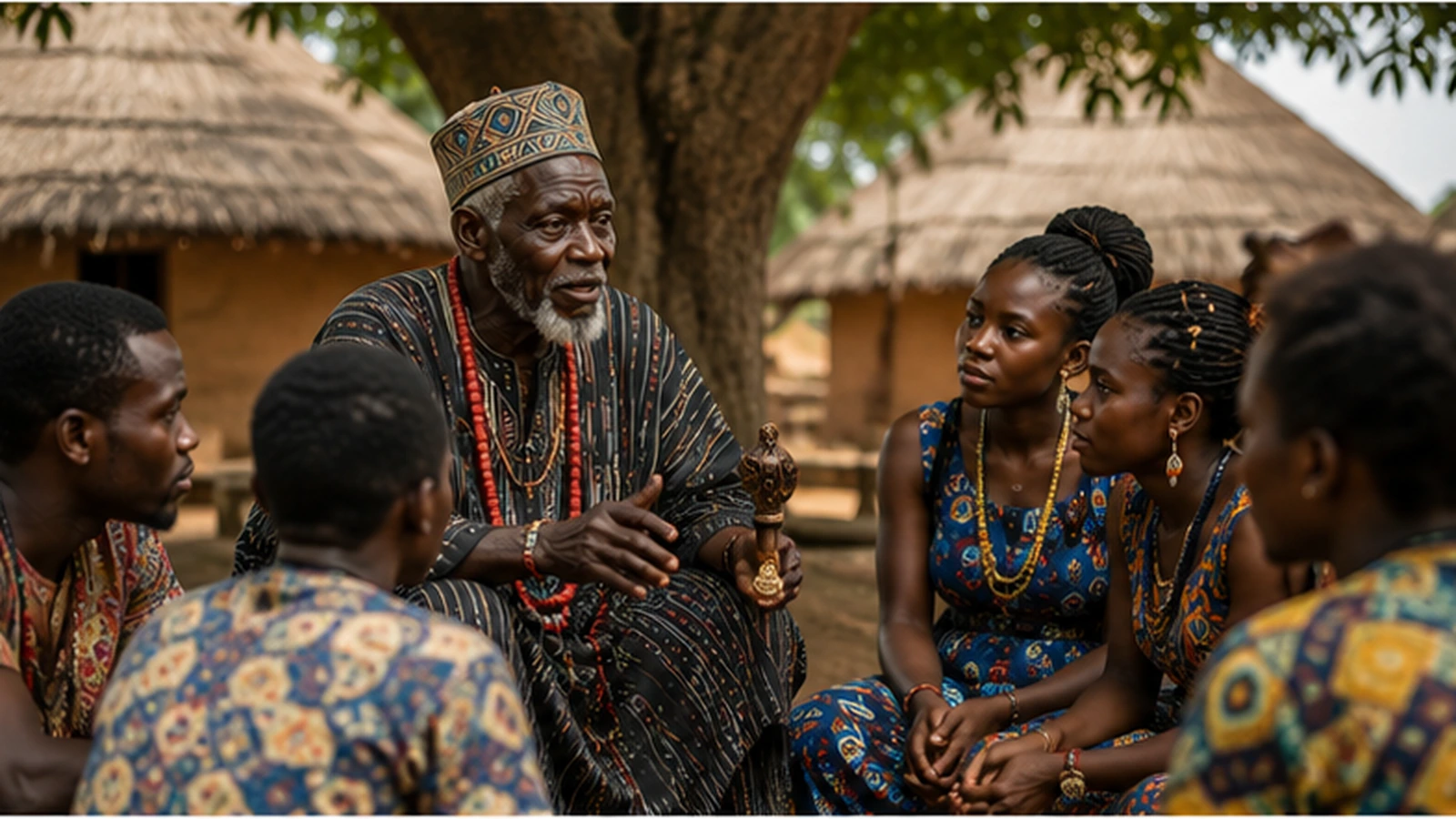
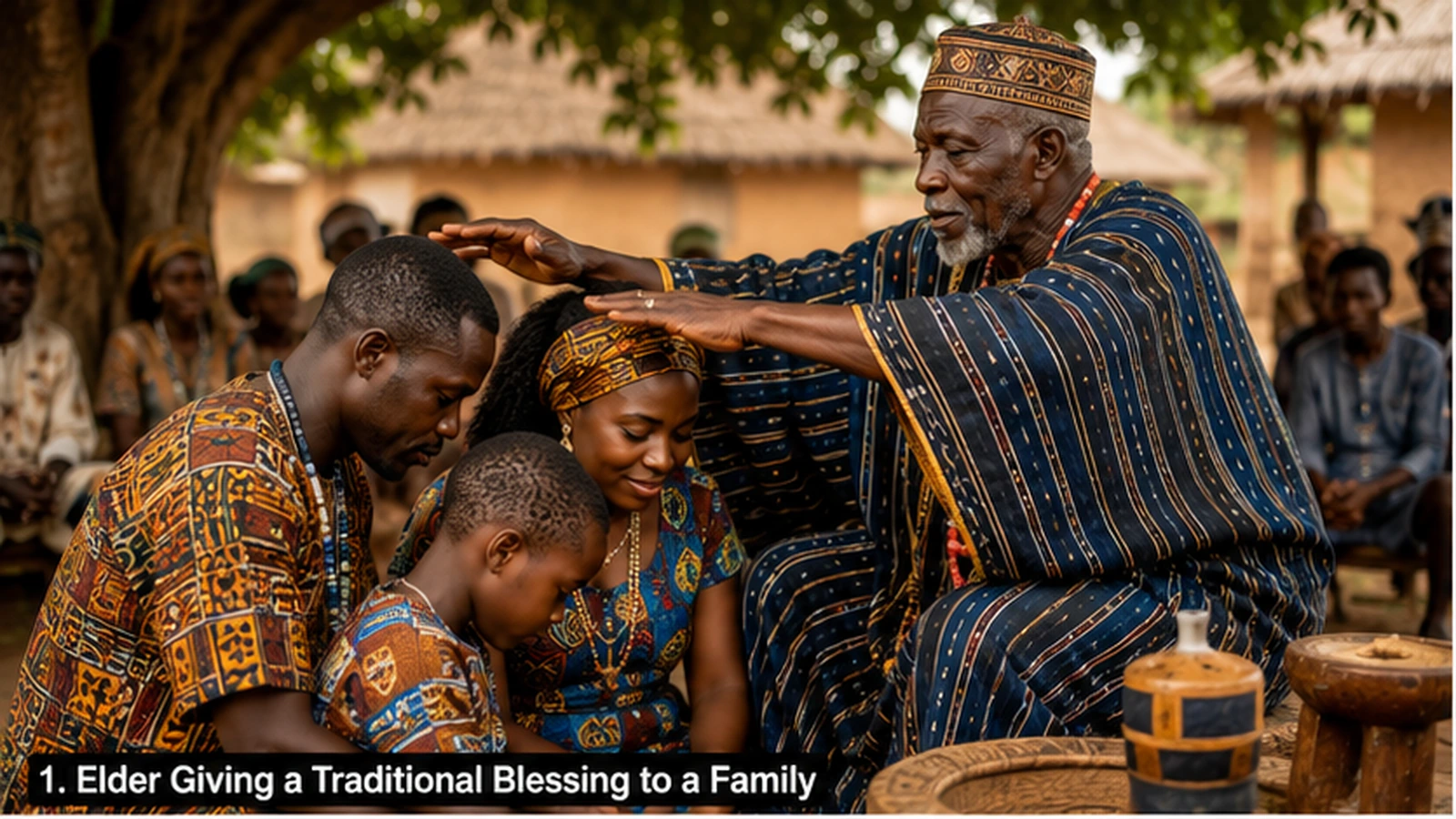
Elders may play important roles as storytellers, advisers, witnesses, teachers, family historians, or custodians of knowledge.
However, age alone does not grant expertise in every tradition.
An older person may know a family genealogy but not possess the training of a ritual specialist. Another elder may be respected for political experience but have no authority to teach a restricted craft. A younger practitioner may have completed specialized training that an older relative has not.
It is more accurate to ask:
- Which elder?
- In what community?
- What knowledge do they hold?
- How was that authority acquired?
- Who recognizes their role?
- Is the knowledge public, family-based, professional, religious, or restricted?
Respect for elders should not be used to silence younger people, excuse mistreatment, or prevent legitimate questions about safety and equality.
The Role of Young People
Young people are not merely passive recipients of tradition.
They interpret, question, perform, document, teach, and sometimes transform inherited practices.
A tradition is more likely to remain meaningful when younger participants understand its purpose and have opportunities to contribute. Forced participation may create resentment, while respectful explanation can encourage ownership.
Young people may support traditions by:
- Learning a community language
- Recording family histories with permission
- Studying songs or proverbs
- Training with recognized practitioners
- Helping organize cultural events
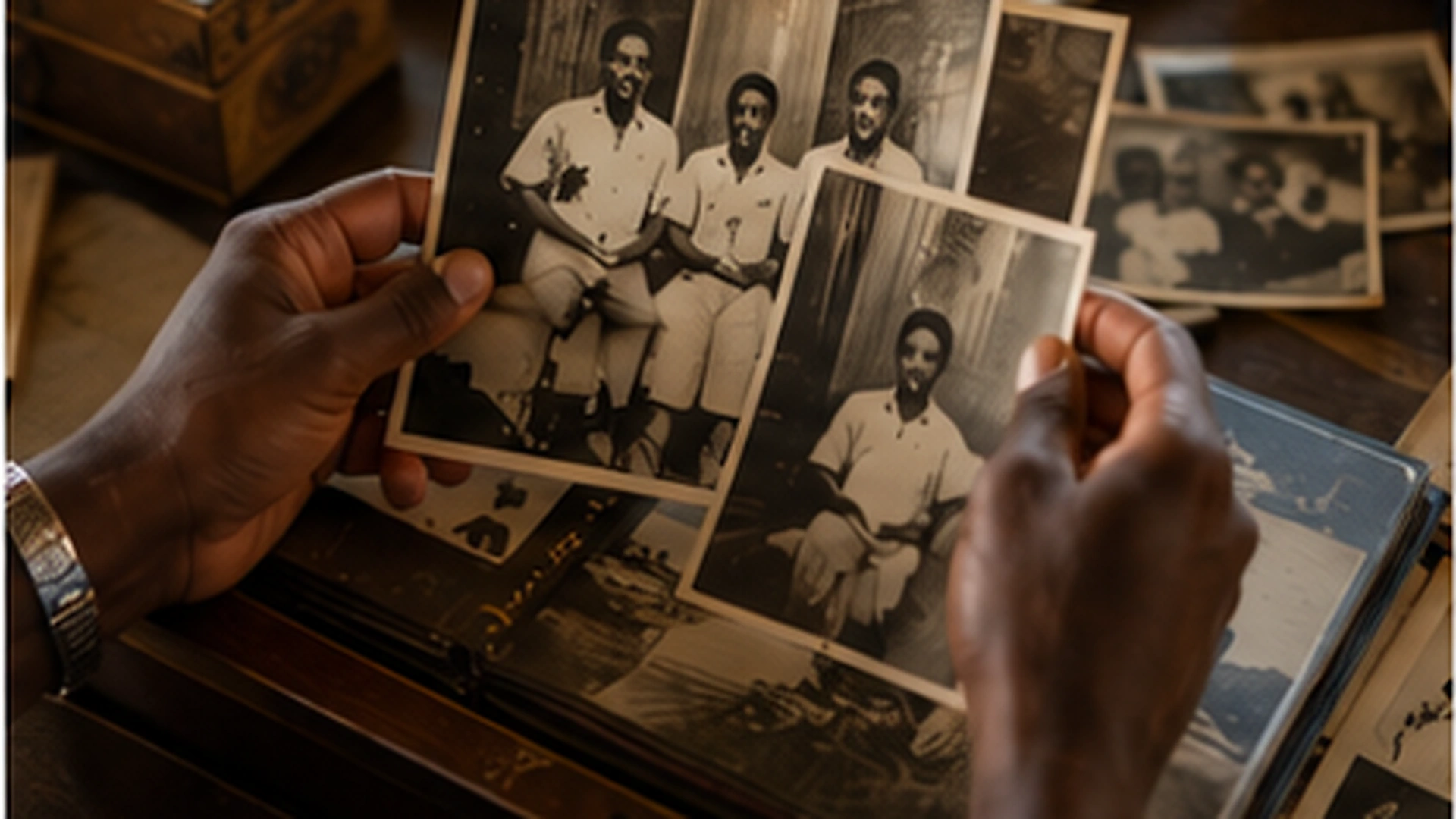
- Digitizing photographs and documents
- Interviewing relatives
- Teaching younger children
- Creating community-approved digital archives
- Using inherited artistic methods in contemporary work
Innovation and continuity are not necessarily opposites. New forms may help a tradition survive, provided that communities retain control over meaning and representation.
How Migration Changes Generational Traditions
Migration can interrupt established methods of transmission.
Families may become separated from:
- Elders
- Community institutions
- Sacred or historically important places
- Local plants and materials
- Language communities
- Skilled practitioners
- Seasonal events
- Extended family networks
Children raised in a new country may understand the dominant local language better than their parents’ or grandparents’ language. Work and school schedules may reduce time available for communal learning.
At the same time, migration can produce new methods of preservation.
Families may organize cultural associations, language classes, online gatherings, religious congregations, food festivals, or visits to ancestral regions.
Traditions may become more deliberate in diaspora. Practices that once occurred naturally in daily life may need to be scheduled and explained.
This can change a tradition’s form, but it may also strengthen awareness of its importance.
Language and Cultural Memory
Language carries more than vocabulary.
Proverbs, praise names, jokes, songs, kinship terms, and ceremonial expressions may lose part of their meaning when translated.
Some words describe relationships, responsibilities, environments, or spiritual concepts that do not have exact equivalents in another language.
Language loss can therefore weaken access to cultural memory. It may become difficult for younger generations to understand elders, oral histories, songs, or historical records.
Preservation efforts can include:
- Recording fluent speakers with consent
- Creating community dictionaries
- Supporting children’s books
- Teaching songs and stories
- Developing school programs
- Encouraging conversation between age groups
- Producing community-controlled digital resources
Documentation is valuable, but a recording is not the same as an active speaking community. Language remains strongest when people use it in meaningful relationships and everyday situations.
Similarities and Differences Across Generational Traditions
Common similarities
Many traditions involve:
- Repetition over time
- Recognized teachers or custodians
- Participation by younger people
- Shared memory
- Cultural values
- A sense of identity
- Specific occasions or settings
- Adaptation to social change
These similarities allow scholars to discuss cultural transmission without claiming that all traditions are the same.
Important differences
Traditions may differ according to:
- Community
- Family
- Language
- Religion
- Historical period
- Gender
- Age
- Professional office
- Initiation status
- Rural or urban setting
- Migration history
- Political authority
- Access to land and materials
Some traditions are open to everyone. Others belong to a family, profession, gendered association, religious office, or initiated group.
Some are performed publicly. Others are private.
Some emphasize ancestors, while others focus on divinities, saints, historical leaders, natural forces, family founders, or recently deceased relatives.
The existence of one practice in one region does not prove that it exists elsewhere.
Common Misconceptions
“Tradition never changes”
Living traditions change whenever people adapt them to new environments, technologies, languages, and social needs.
Complete lack of change may indicate that a practice has become a museum reconstruction rather than an active part of community life.
“Every older person is a cultural authority”
Elders may deserve respect, but expertise depends on experience, training, office, family history, and community recognition.
“All inherited customs are beneficial”
Some inherited expectations may create harm, inequality, exclusion, or health risks.
Cultural respect does not require ignoring abuse or abandoning legal and ethical protections.
“African traditions are essentially the same”
Africa contains thousands of communities, languages, histories, religious institutions, and political traditions.
Even people who share a language or ethnic identity may follow different family, regional, denominational, or professional customs.
“Ancestor reverence is ancestor worship”
In some communities, ancestors may be remembered, respected, consulted, or included in moral understandings of family continuity.
The precise relationship varies. Respectful remembrance should not automatically be labeled worship, and ancestors should not be confused with divinities or all categories of spirits.
“Every object with a pattern is sacred”
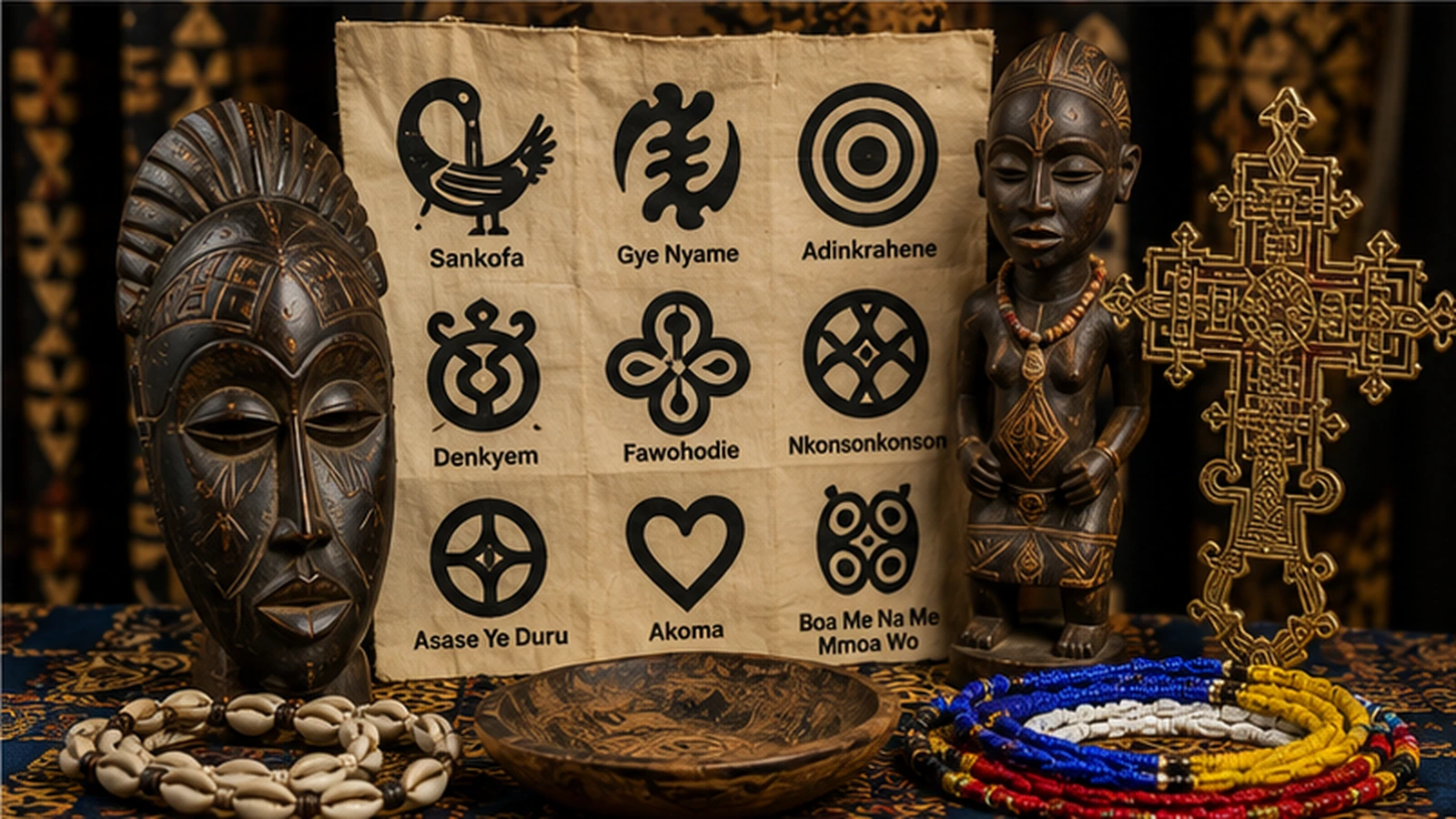
Textiles, carvings, masks, jewelry, and household objects can have aesthetic, political, professional, commercial, commemorative, or religious functions.
Meaning depends on context, maker, owner, occasion, and community interpretation.
Ethical and Safety Boundaries
Public education about generational traditions should not expose restricted knowledge.
Researchers, writers, photographers, and visitors should seek permission before documenting:
- Private ceremonies
- Restricted ritual objects
- Sacred names
- Initiation teachings
- Burial locations
- Private prayers
- Healing consultations
- Family disputes
- Personal spiritual experiences
A community’s willingness to discuss a tradition publicly does not mean that every detail may be published.
Traditional health knowledge should also be presented responsibly. Cultural practices do not replace qualified medical care, mental-health support, emergency services, legal assistance, or professional safety planning.
No traditional or spiritual practice can ethically guarantee wealth, pregnancy, healing, legal success, romantic control, business success, or protection from every form of harm.
Preserving Traditions Responsibly
Responsible safeguarding begins with the people who practice the tradition.
Record knowledge with permission
Families may record interviews, songs, genealogies, recipes, and stories, but participants should understand where the material will be stored and who will access it.
Support practitioners
Traditions survive when practitioners have students, resources, appropriate materials, fair compensation, and respected places to teach.
Purchasing authentic work directly from recognized makers can support continuity more effectively than buying mass-produced imitations.
Teach context, not just appearance
Copying a design, costume, dance movement, or ceremony without understanding its origin can remove it from its cultural meaning.
Education should identify the specific community, practitioner, function, and history whenever possible.
Protect restricted knowledge
Not everything needs to be digitized or displayed.
Communities may decide that particular material should remain within families, religious offices, age groups, professional associations, or initiated circles.
Allow traditions to develop
Safeguarding should not force practitioners to reproduce an outsider’s idea of authenticity.
Communities should be able to decide how their traditions respond to cities, schools, migration, environmental change, religious diversity, and new technology.
Key Takeaways
- Generational traditions pass knowledge, skills, values, stories, and responsibilities between age groups.
- Traditions may belong to families, communities, religious institutions, professions, or political systems.
- African traditions must be discussed through specific communities and historical contexts.
- Oral tradition is a structured means of preserving memory, not an unreliable substitute for written history.
- Elders may be important teachers, but age alone does not grant authority in every subject.
- Young people actively interpret and reshape inherited traditions.
- Change does not necessarily destroy tradition; adaptation often keeps living heritage relevant.
- Some cultural knowledge is public, while other knowledge is private or restricted.
- Cultural respect does not require accepting harmful, coercive, or illegal practices.
- Communities should lead decisions about safeguarding, documentation, and public representation.
People Also Ask
What is the meaning of generational traditions?
Generational traditions are meaningful customs, skills, stories, values, and responsibilities passed from older or experienced people to younger generations.
What are examples of traditions passed through generations?
Examples include family storytelling, naming customs, recipes, weaving, music, ceremonies, religious education, apprenticeships, oral histories, and methods of community leadership.
Why are generational traditions important?
They can preserve cultural memory, strengthen identity, teach practical knowledge, maintain relationships, and connect present-day communities with earlier generations.
Do generational traditions remain unchanged?
No. Living traditions usually adapt to new environments, technologies, religions, laws, and social expectations while maintaining important meanings.
Are family traditions the same as cultural traditions?
Not always. Family traditions belong primarily to a household or lineage, while cultural traditions may be recognized by a wider community. The two can overlap.
How are African traditions passed to younger generations?
Depending on the community, they may be passed through storytelling, observation, apprenticeship, language learning, ceremonies, religious instruction, schools, museums, and cultural associations.
What role do elders play in preserving traditions?
Some elders serve as teachers, witnesses, advisers, storytellers, or custodians. Their authority depends on knowledge, experience, office, and community recognition rather than age alone.
Can young people change a tradition?
Yes. Young people regularly interpret and adapt traditions. Community-supported changes can help living heritage remain meaningful under new circumstances.
How does migration affect generational traditions?
Migration can separate families from languages, elders, places, and practitioners. It can also encourage new preservation methods such as cultural associations, online teaching, recordings, and planned family gatherings.
How can traditions be preserved respectfully?
Traditions can be supported through consent-based documentation, language education, apprenticeships, practitioner support, contextual teaching, and protection of private or restricted knowledge.
Frequently Asked Questions
1. What is the meaning of generational traditions?
Generational traditions are customs, knowledge, skills, values, and responsibilities transmitted from one generation to another. They can exist within families, communities, professions, political institutions, and religions.
2. What are examples of traditions passed through generations?
Examples include oral histories, family recipes, naming practices, songs, proverbs, weaving skills, woodworking, religious education, annual gatherings, and systems of community responsibility.
Frequently Asked Questions
What should readers know first about african spirituality and cultural history?
African spirituality and cultural history: Read clear guidance, key signs, practical steps, and private support from Ancestral Temple.
What causes Understanding Generational Traditions?
The safest next step is to compare the signs, prepare clear details, and request private guidance when the matter feels personal.
How does Understanding Generational Traditions work?
The safest next step is to compare the signs, prepare clear details, and request private guidance when the matter feels personal.
Is it possible to get private guidance for Understanding Generational Traditions?
The safest next step is to compare the signs, prepare clear details, and request private guidance when the matter feels personal.
How long does Understanding Generational Traditions take to understand?
The safest next step is to compare the signs, prepare clear details, and request private guidance when the matter feels personal.
Can Understanding Generational Traditions affect relationships, family, work, or personal peace?
The safest next step is to compare the signs, prepare clear details, and request private guidance when the matter feels personal.
Why do people seek spiritual guidance for Understanding Generational Traditions?
The safest next step is to compare the signs, prepare clear details, and request private guidance when the matter feels personal.
What signs should someone notice before asking about Understanding Generational Traditions?
The safest next step is to compare the signs, prepare clear details, and request private guidance when the matter feels personal.
When should someone contact a private spiritual guide?
The safest next step is to compare the signs, prepare clear details, and request private guidance when the matter feels personal.
What causes african spirituality and cultural history?
African spirituality and cultural history: Read clear guidance, key signs, practical steps, and private support from Ancestral Temple. The safest next step is to compare the signs, prepare clear details, and request private guidance when the matter feels perso
Article Information
- Publisher
- Ancestral Temple
- Editor
- Ancestral Temple
- Last updated
- Jul 26, 2026
- Last reviewed
- Jul 13, 2026
- Content version
- 9ec872a084
This educational article should be read as cultural and spiritual information, not as medical, legal, financial, or emergency advice.
Helpful Related Guidance
Explore This Topic
Role Of Elders In African Spiritual Practices · Libation Ceremonies In African Communities
Related Topic Cluster
African Spirituality And Cultural History
Complete Guide Why Homes Have Been Blessed Throughout HistoryAbout the Author
 Ancestral Temple
Spiritual guide and practitioner with decades of experience in ancestral wisdom, rituals, and divine guidance.
Related Posts
View All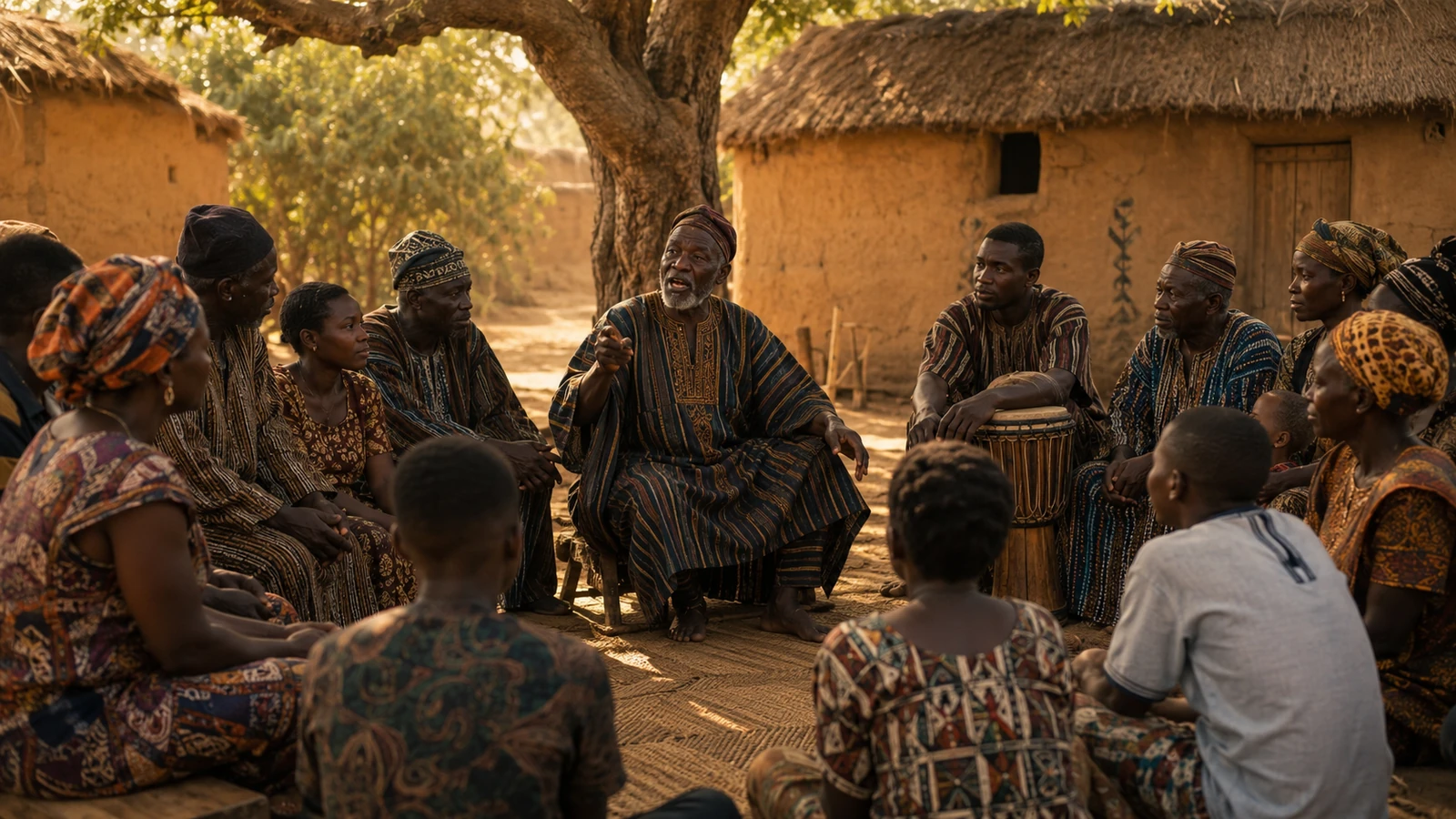

Leave a Comment
We'd love to hear your thoughts.
I would recommend adding future case studies from North Africa, Southern Africa, and Indian Ocean communities.
The article was informative and respectful. I especially appreciated the warnings against cultural appropriation.
Could community-controlled mobile apps help younger people learn languages and oral histories?
This article made me think about the ordinary family habits that may become meaningful traditions over time.
The conclusion clearly explains why cultural preservation must support people and not only objects.
A future article about proverbs and how their meanings change across generations would be interesting.
The misconception section addressed several stereotypes that appear frequently online.
I liked that the article encouraged documentation while still respecting restricted knowledge.
How should museums decide which cultural knowledge can be displayed publicly?
The migration section explained why traditions sometimes become more deliberate in diaspora communities.
I would like to read more about the Gada system and its stages of responsibility.
The point that age alone does not make someone an expert was respectfully expressed.
The article provides a balanced explanation of continuity and change.
Could you discuss how marriage between people from different cultural backgrounds creates new family traditions?
The section about kente correctly emphasized the importance of identifying particular weaving communities.
I appreciate the careful distinction between ancestors, divinities, spirits, and recently deceased relatives.
The discussion of apprenticeship deserves a full article, especially the relationship between technical skill and ethical responsibility.
This article would be useful for students studying heritage, identity, and social change.
How can young people verify family histories when different elders remember events differently?
I liked the reminder that two families from the same community may still practice customs differently.
The table made the differences between family and community traditions easy to understand.
I would appreciate a follow-up article about respectful cultural documentation and informed consent.
Thank you for explaining that oral history can involve trained specialists and recognized standards.
The language section was especially meaningful. Some family expressions are very difficult to translate accurately.
It would be interesting to compare traditions preserved in rural communities with those maintained in large cities.
I enjoyed the section about young people being active participants rather than passive recipients.
The Zafimaniry example shows how craftsmanship and environmental knowledge can be connected.
The article helped me understand why preserving an object is not the same as preserving the knowledge needed to create it.
Could you explore how formal education can support traditions without replacing community teachers?
The glossary definitions are clear, especially the difference between living heritage and cultural continuity.
I appreciate that the article did not assume every inherited practice is automatically safe or beneficial.
The ethical boundaries section should be included in more cultural education articles.
I found the discussion of Mande jeliw interesting. A full article about their social responsibilities would be valuable.
The point about learning through observation reminded me how much children absorb during ordinary family activities.
Can digital archives genuinely preserve oral traditions, or do they remove stories from their proper performance context?
This was detailed without treating all African communities as identical. That was very important.
I would like to learn more about the different methods used to teach community languages to younger generations.
The section about migration reflects many questions families face when children grow up far from their grandparents.
I liked that the article distinguished elders from priests, healers, and other specialists.
The explanation of living heritage was one of my favorite parts. Traditions are often discussed as though they never change.
Could you write more about how families can record oral histories without making private information public?
The section about kente was helpful because many online articles present it as though it belongs to one single tradition.
I would enjoy a separate article about the Koogere oral tradition and how it is being preserved in Uganda.
The comparison between family traditions and wider community traditions was very useful. I had never thought about the difference so carefully.
I appreciated the explanation that traditions can change without losing all their meaning. That distinction made the article much clearer.