
Water as a Symbol of Purification
Quick Summary
Water often represents purification because it washes, refreshes, and marks a movement from one condition to another. This guide explores how water is understood in specific African, Christian, Muslim, Jewish, Hindu, and Shinto contexts while distinguishing ritual purity from hygiene and avoiding the assumption that all sacred-water traditions mean the same thing.
Water as a Symbol of Purification explains the meaning, background and cultural context of water as a symbol of purification in clear educational language. The article answers the main topic near the beginning, preserves the original examples and highlights important distinctions for respectful understanding.
Water is one of the most widely recognized symbols of purification, renewal, preparation, and new beginnings.
Its symbolic power is easy to understand. Water removes visible dirt, cools the body, supports life, revives dry land, and changes its form as rain, rivers, mist, ice, and vapor. Because it physically cleans and restores, communities have often used it to express less visible forms of change.
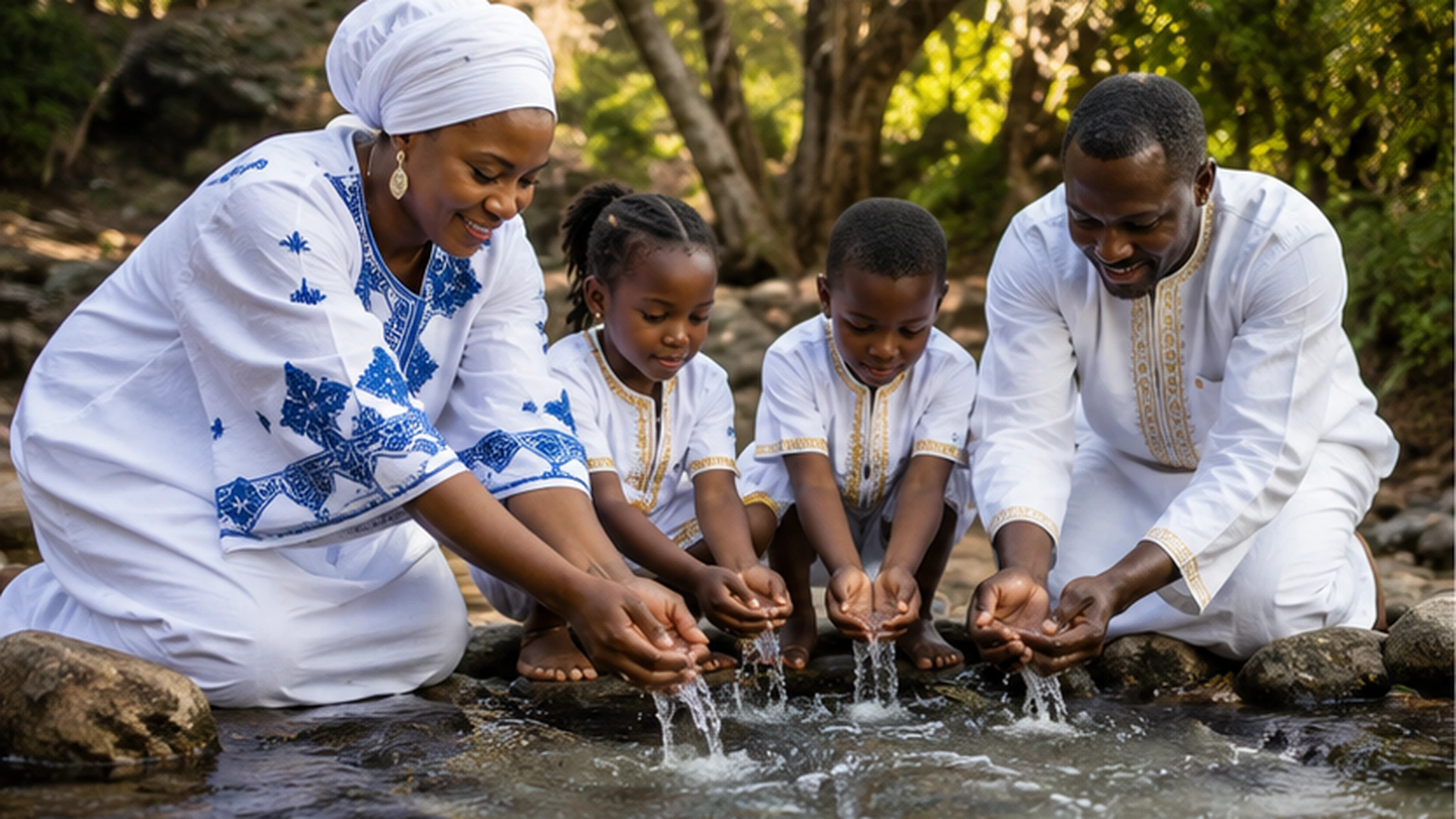
A person may wash before prayer, enter water during a religious ceremony, receive blessed water, visit a sacred river, or use water to mark entry into a new stage of life.
However, water does not carry one universal spiritual meaning.
In one religious setting, it may represent forgiveness. In another, it may prepare a person to approach the sacred. Elsewhere, a river may be understood as the dwelling place of a divinity, a source of fertility, a boundary between worlds, or a center of community identity.
Even the word purification can mean different things.
It may refer to:
- Physical cleanliness
- Ritual readiness
- Moral renewal
- Removal of ceremonial impurity
- Spiritual protection
- Reconciliation
- Transition into a new social status
- Restoration after illness, mourning, or crisis
A respectful study of water symbolism must therefore identify the specific community, religion, historical period, and ritual context involved.
Key Points
- Water often symbolizes purification because it visibly washes and renews.
- Ritual purity is not always the same as hygiene, moral innocence, or freedom from sin.
- Different religious traditions interpret cleansing water in different ways.
- In Ethiopian Orthodox Timkat celebrations, blessed water commemorates the baptism of Jesus.
- Muslim communities use water in wuḍūʾ, a prescribed preparation for prayer.
- Christian baptism may symbolize purification, death to an old life, and spiritual rebirth.
- Jewish mikveh immersion follows specific religious laws concerning ritual status.
- The Ọ̀ṣun River in southwestern Nigeria illustrates that sacred water can represent divine presence and identity, not only cleansing.
- Hindu bathing in the Ganges and Shinto misogi offer additional examples of purification symbolism.
- Spiritually sacred water is not automatically medically safe to drink or enter.
Clear Definition
Water as a symbol of purification refers to the use of water to represent cleansing, preparation, renewal, restored order, or movement from one spiritual or social condition to another.
Plain-Language Meaning
Water can wash dust from the body.
Because people can see that change happen, water also becomes a powerful way to express an inner change that cannot be seen directly.
A washing ceremony may therefore communicate:
“You are leaving something behind.”
“You are preparing to enter a sacred place.”
“You are beginning again.”
“You have moved into a new stage of life.”
“You are being welcomed into a religious community.”
The exact meaning depends on the tradition.
Why Water Becomes a Symbol of Purification
Water Removes What Is Visible
The most direct connection is physical washing.
Mud, sweat, blood, dust, and other substances can be rinsed away. This visible action makes water a natural symbol for removing emotional, ritual, or spiritual burdens.
The symbolic meaning does not require a belief that spiritual impurity is a physical substance. The act of washing gives people a concrete action through which they can express an invisible transition.
Water Restores and Refreshes
Water can revive a thirsty person, soften dry soil, and support the return of vegetation after drought.
For this reason, purification with water is often linked with:
- Renewal
- Healing
- Fertility
- Hope
- Restoration
- New life
These meanings may overlap, but they should not automatically be treated as identical.
Water Flows Away
Flowing water can suggest that something unwanted has been carried away.
A river moves continuously. Rainwater disappears into the soil. Water poured over the body runs downward and leaves.
This movement can symbolize release from grief, failure, misfortune, impurity, or an earlier social condition.
Immersion Creates a Temporary Separation
A person entering water briefly leaves the ordinary environment of dry land.
Immersion may therefore represent a transition between two states: before and after, old and new, unprepared and prepared, outsider and member.
When the person emerges, the action may symbolize rebirth, renewal, or restoration.
Water Is Necessary for Life
Water is not only a cleansing substance. It is essential for survival.
This gives it symbolic associations with creation, blessing, fertility, mercy, and divine generosity. In many traditions, purification and life are therefore closely connected.
Physical Cleanliness, Ritual Purity, and Moral Renewal
These concepts are related, but they are not interchangeable.
Physical Cleanliness
Physical cleanliness concerns the removal of dirt, sweat, germs, or contaminants.
It can be assessed through ordinary hygiene and public-health standards.
Ritual Purity
Ritual purity refers to a religiously defined condition that allows a person, object, or place to participate in particular sacred activities.
A ritually impure person is not necessarily dirty, sinful, immoral, or socially inferior.
Likewise, a physically clean person may still need to complete a prescribed ritual before entering a sacred setting.
Moral or Spiritual Cleansing
Moral purification concerns repentance, forgiveness, ethical reform, or release from wrongdoing.
Some traditions connect water with moral cleansing. Others distinguish ceremonial washing from the forgiveness of wrongdoing.
Using the word purity without explaining which meaning is intended can cause confusion and reinforce harmful stereotypes.
Water and Purification in African Contexts
Africa contains many distinct religious, linguistic, and cultural traditions. There is no single African water ritual or unified African understanding of purification.
The following examples illustrate different relationships between water, sacred preparation, identity, and renewal.
Timkat in Ethiopian Orthodox Tewahedo Tradition
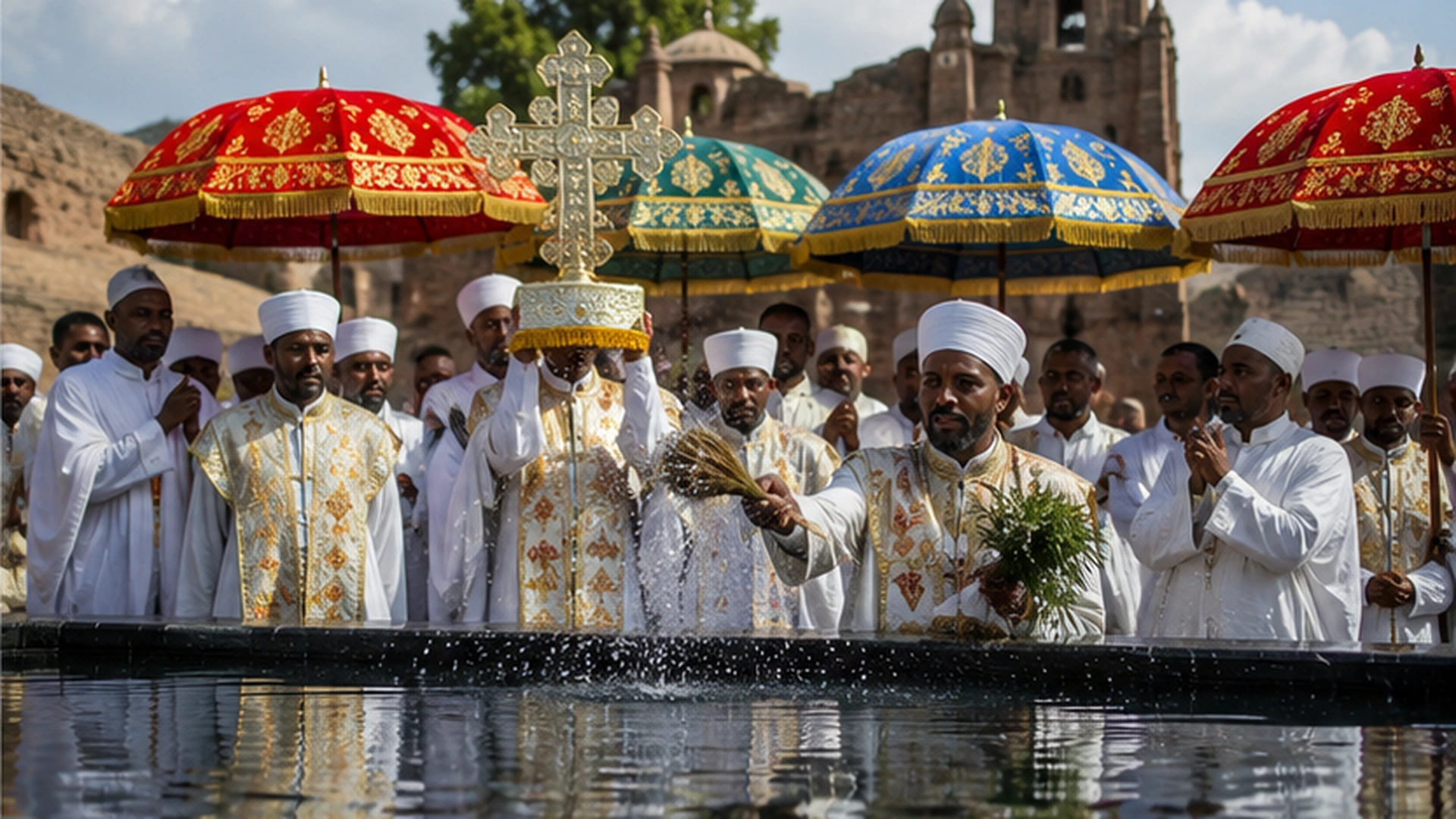
Within Ethiopian Orthodox Tewahedo Christianity, Timkat, or Ethiopian Epiphany, commemorates the baptism of Jesus Christ in the River Jordan.
The celebration includes processions in which a church’s tabot is escorted toward a pool, river, or prepared reservoir. Prayers and hymns accompany the observance, and water is blessed in connection with the commemoration of Christ’s baptism. UNESCO recognizes Ethiopian Epiphany as intangible cultural heritage.
Water in this setting carries several connected meanings:
- Remembrance of Christ’s baptism
- Renewal of Christian identity
- Blessing
- Community participation
- Spiritual preparation
- Connection between scripture, liturgy, and public celebration
It would be inaccurate to describe Timkat simply as a generic “African cleansing ceremony.” It is a specifically Christian observance shaped by Ethiopian Orthodox theology, liturgy, history, and church authority.
The tabot is also sacred and subject to community-specific rules. Educational material should not treat it as a decorative festival object or reproduce restricted representations carelessly.
Wuḍūʾ in African Muslim Communities
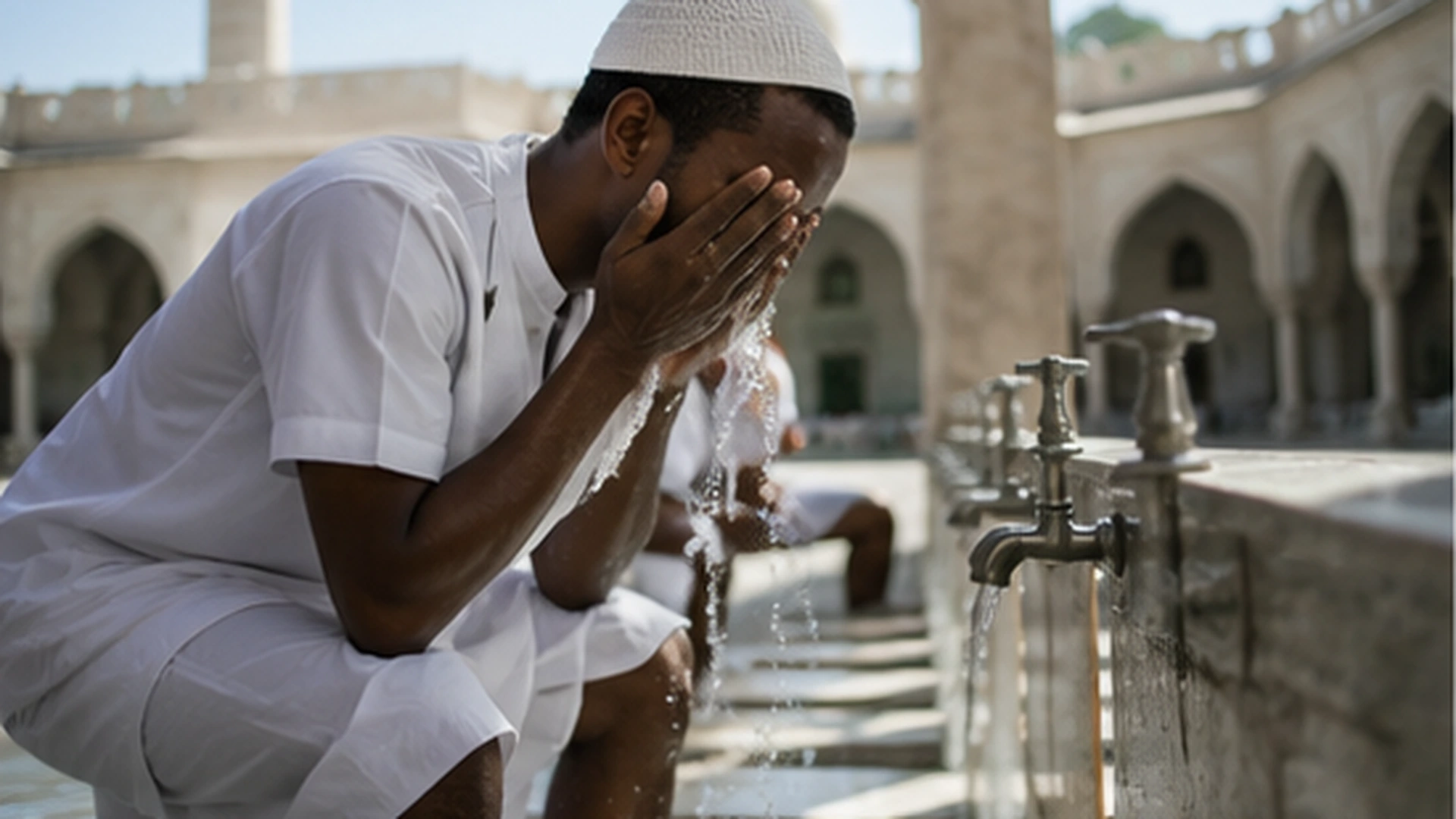
Muslim communities throughout Africa practice wuḍūʾ, the prescribed ablution commonly performed before formal prayer.
The Qur’an instructs believers preparing for prayer to wash the face and arms, wipe the head, and wash the feet. It also addresses full washing in particular circumstances and the use of clean earth when water is unavailable.
Wuḍūʾ is not an Indigenous African ceremony, nor does it belong to a single ethnic group. It is an Islamic religious practice followed in diverse forms across Muslim communities worldwide.
Within Africa, it may be observed by communities as varied as:
- Hausa Muslims in Nigeria and Niger
- Swahili Muslims along the East African coast
- Somali Muslim communities
- Muslim families in Senegal and The Gambia
- North African Muslim communities
- Muslim households in Uganda, Kenya, South Africa, and elsewhere
Local architecture, water access, clothing, legal schools, and community customs may shape how facilities are arranged, but the practice is grounded in Islamic religious law.
Wuḍūʾ combines physical washing with preparation for worship. It should not be reduced to ordinary handwashing, although cleanliness is an important element.
The Ọ̀ṣun River and Sacred Presence
The Ọ̀ṣun-Òṣogbo Sacred Grove in southwestern Nigeria demonstrates why not every sacred-water tradition should be described primarily as purification.
UNESCO describes the grove and its river as a sacred landscape associated with Ọ̀ṣun, a Yoruba divinity connected with fertility. The site contains shrines, sculptures, worship points, and living traditions maintained by designated religious authorities and the wider community.
In this context, the river may communicate:
- Divine presence
- Fertility
- Relationship between the town and Ọ̀ṣun
- Cultural identity
- Continuity of Yoruba religious heritage
- Sacred geography
Some devotees may associate the river’s water with blessing, healing, or cleansing, but it is unsafe to present one interpretation as the belief of every Yoruba person.
Yoruba communities include Christians, Muslims, practitioners of Indigenous religions, people who combine elements from several traditions, and people who do not participate in religious observances.
The Ọ̀ṣun example therefore shows that water symbolism may extend beyond purification into relationship, identity, and sacred presence.
Olokun, the Sea, and Ritual Purity in Benin Court Symbolism
In historical Benin court art, the sea-associated divinity Olokun was connected with wealth, fertility, and royal power.
The Metropolitan Museum of Art explains that ivory’s whiteness was associated with ritual purity and with Olokun in Benin symbolism.
This does not mean that every Edo water practice involved bathing or ritual washing.
Instead, it shows that ideas of the sea, whiteness, purity, wealth, and kingship could form part of a larger symbolic system within the royal court.
Court traditions must be distinguished from ordinary family practices. Objects connected with the oba, palace, or royal ancestral institutions should not be treated as evidence for every Edo household.
Ngondo and the Sawa Communities of Cameroon
The Ngondo traditions of particular Sawa communities in Cameroon are centered on water oracles and associated cultural observances.
UNESCO describes Ngondo as a living heritage tradition based on the worship of water oracles and practiced by Sawa communities.
This example is important because its central meaning is not simply “washing away impurity.”
Water may instead function as:
- A sacred environment
- A place of communication
- A source of collective identity
- A connection between community history and the aquatic world
- A focus of public cultural observance
Labeling every water-centered ceremony a purification ritual would erase these distinctions.
Water in African Christian Churches
Christian baptism is practiced in Catholic, Orthodox, Anglican, Lutheran, Methodist, Baptist, Pentecostal, African Independent, and other churches across Africa.
However, baptismal practice differs.
Some churches baptize infants. Others baptize people after a personal profession of faith. Some use full immersion, while others pour or sprinkle water.
In Catholic teaching, immersion signifies purification, death, regeneration, and renewal, while baptism marks entry into Christian life.
Other Christian denominations interpret details of baptism differently. It is therefore better to write:
“In this denomination…”
“Within this congregation…”
“According to this church’s teaching…”
rather than presenting one explanation as universal Christianity.
In some African churches, blessed water may also appear in prayer, healing ministries, house blessings, or services of deliverance. Such practices require careful documentation because their meaning and authority vary significantly between churches.
They should not be described as scientifically proven cures or guaranteed spiritual protection.
Water Purification in Other Global Traditions
Jewish Mikveh
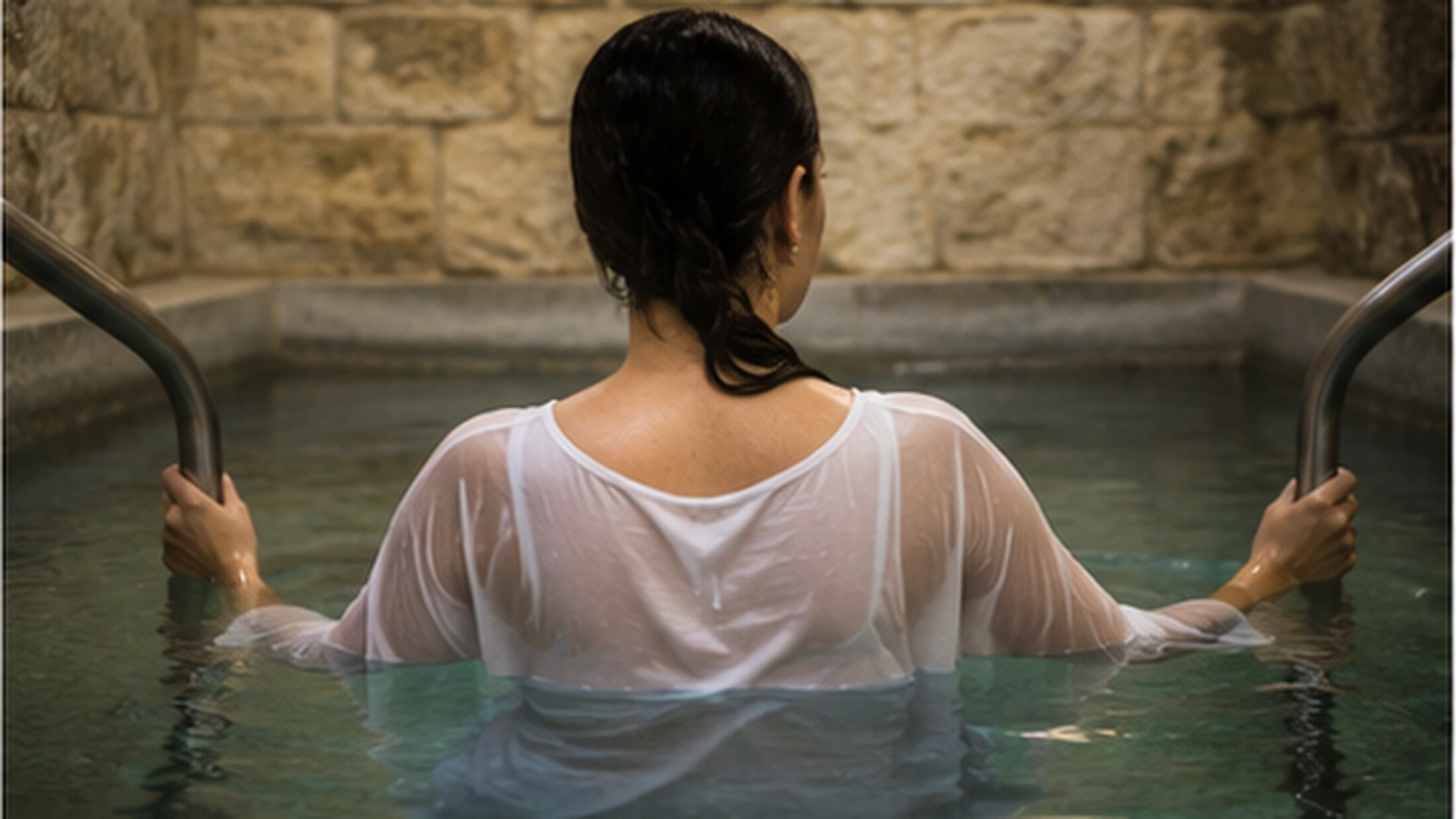
A mikveh is a Jewish ritual immersion pool constructed according to specific religious requirements.
Traditional regulations connect the mikveh with naturally collected or connected water, and full bodily immersion is used in particular circumstances, including conversion and aspects of family-purity observance.
Jewish ritual impurity should not be interpreted as dirtiness, inferiority, or moral guilt.
The mikveh is governed by Jewish law and community authority. It is not simply a spiritual bath that outsiders can reproduce using any pool or river.
Hindu Traditions and the Ganges
Within Hindu traditions, the Ganges, or Ganga, is sacred and personified as a goddess.
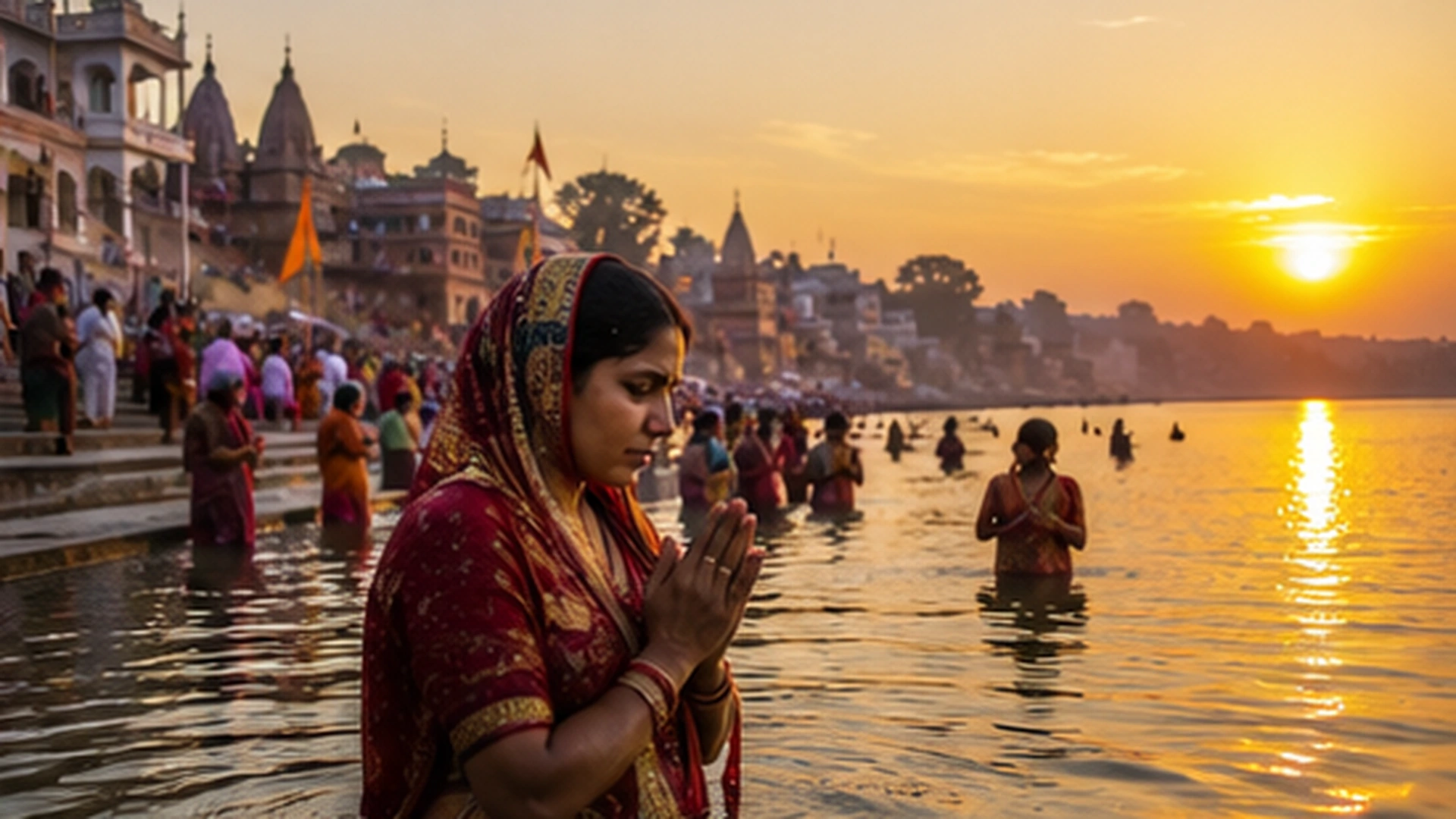
At Kumbh Mela and other pilgrimage settings, devotees may enter the river with the belief that ritual bathing cleanses sin and connects them with sacred history. A University of California, Davis account describes the central role of Ganges bathing in Kumbh Mela and the distinction between religious purity and ordinary hygiene.
Hindu traditions are diverse, and not every Hindu participates in river bathing or interprets purification in the same way.
The Ganges also demonstrates an important safety distinction: water may be understood as spiritually pure while still facing measurable environmental pollution.
Shinto Misogi
In Shinto contexts in Japan, misogi is a water-based purification practice.
At Shirayama-Hime Shrine, participants are guided through a cold-water purification ceremony intended to cleanse mind and body and reconnect participants with nature. Japan’s official tourism organization describes the rite as connected to the cycles of water, land, sea, rain, and snow.
Misogi should not be reduced to a modern fitness challenge or cold-water wellness trend.
It is a religious practice with specific prayers, leadership, preparation, and sacred context.
Comparing Water-Purification Traditions
- Tradition or context
- Form of water use
- Central meaning
- Important distinction
- Ethiopian Orthodox Timkat
- Blessed water and public commemoration
- Baptism, renewal, Christian identity
- A specific Ethiopian Orthodox celebration
- Islamic wuḍūʾ
- Washing prescribed parts of the body
- Preparation for prayer and ritual purity
- Not merely ordinary hygiene
- Christian baptism
- Immersion, pouring, or sprinkling
- Initiation, purification, rebirth, belonging
- Theology differs among denominations
- Jewish mikveh
- Full ritual immersion
- Change in ritual status and religious transition
- Impurity does not equal moral guilt
- Hindu Ganges bathing
- Immersion in a sacred river
- Cleansing, pilgrimage, connection to sacred history
- Ritual purity does not guarantee water safety
- Shinto misogi
- Immersion or guided washing
- Purification and renewed harmony
- A religious rite, not simply cold-water therapy
- Ọ̀ṣun-Òṣogbo traditions
- Sacred river and grove
- Divine presence, fertility, identity
- Not every sacred river is mainly about cleansing
- Sawa Ngondo traditions
- Water-oracle observances
- Communication, heritage, communal identity
- Should not be generalized as purification
Common Ways Water Is Used Symbolically
Washing the Hands or Face
Washing selected parts of the body may express readiness, respect, humility, or preparation before prayer.
Sprinkling
Sprinkled water may bless people, objects, homes, or spaces.
The act does not always represent full cleansing. It may indicate consecration, protection, remembrance, or inclusion.
Pouring Water Over a Person
Pouring can symbolize removal, blessing, initiation, or renewal.
Its meaning depends on who performs it, the words spoken, and the institution authorizing the ceremony.
Full Immersion
Immersion is visually powerful because the whole body enters and emerges from water.
It may represent death and rebirth, conversion, restoration, or movement into a new identity.
Crossing a River
A river crossing may symbolize transition, migration, danger, liberation, death, or arrival.
Not every symbolic river crossing is a purification act.
Collecting Sacred Water
Water may be collected from a spring, river, shrine, church, or pilgrimage site.
The water may be used for blessing, remembrance, household devotion, or prayer.
Collection should follow local environmental rules and religious guidance.
Washing Objects or Sacred Spaces
Objects may be washed before use, after contact with particular substances, or during a seasonal ceremony.
Outsiders should not assume they are permitted to handle, photograph, or reproduce these objects.
Who Has Authority to Use or Bless Water?
Authority varies by tradition.
A water-related ceremony may be led by:
- A priest
- An imam
- A rabbi
- A shrine custodian
- A lineage authority
- A recognized healer
- A ritual specialist
- A family elder
- A community association
- The individual worshipper
These roles are not interchangeable.
An elder is not automatically a priest. A healer is not automatically a diviner. A family head may have domestic authority without holding public religious office.
When documenting a practice, identify who leads it and why that person is recognized.
Water, Gender, Age, and Access
Some purification traditions have different requirements according to gender, age, marital status, religious office, or life stage.
These distinctions may be central to the tradition, but they should be explained carefully.
Writers should avoid:
- Presenting women’s bodies as naturally dirty
- Treating menstruation as a moral failure
- Mocking ritual-purity laws
- Assuming every restriction is identical across religions
- Publishing private bathing practices without consent
- Photographing partially clothed participants without authorization
A public educational article can explain the existence and purpose of a tradition without exposing private details.
Common Misconceptions
“All Water Rituals Are the Same”
False.
Baptism, wuḍūʾ, mikveh, misogi, river pilgrimage, water-oracle traditions, and Indigenous blessing practices belong to different theological and cultural systems.
“Ritual Impurity Means a Person Is Sinful”
Not necessarily.
In many traditions, ritual impurity is a temporary religious status, not a judgment about someone’s character.
“Sacred Water Is Always Safe to Drink”
False.
Spiritual status and microbiological safety are different categories.
Water can appear clean while containing harmful bacteria, parasites, chemicals, or sewage contamination.
“Every African Community Performs Water Cleansing”
False.
Some communities have water-related religious traditions, while others emphasize fire, smoke, earth, prayer, sacrifice, fasting, oil, herbs, or other practices.
“A River Ceremony Is Automatically Ancestor Worship”
False.
A river may be connected with a divinity, community identity, healing, agricultural cycles, pilgrimage, or other meanings.
“Blessed Water Guarantees Healing”
False.
Blessed or sacred water may provide religious comfort and meaning, but it should not be presented as a guaranteed cure.
“Anyone Can Recreate a Purification Ritual”
False.
Some rituals require recognized authority, specific prayers, religious membership, preparation, or community permission.
Ritual Purity and Public Health
Religious respect does not require ignoring health risks.
The World Health Organization warns that unsafe water can transmit diarrhoeal disease and other illnesses, while polluted rivers, lakes, and coastal waters may expose bathers to sewage, chemical contamination, or harmful algal blooms.
Before drinking or entering natural water, people should consider:
- Local public-health advisories
- Water-quality testing
- Sewage contamination
- Strong currents
- Flood conditions
- Schistosomiasis risk
- Crocodiles or other dangerous animals
- Open wounds
- Toxic algae
- Chemical pollution
- Drowning risk
- Accessibility and supervision
Religious leaders and public-health professionals can work together to preserve meaningful traditions while reducing preventable harm.
Water Conservation as an Ethical Responsibility
A purification tradition depends on access to water.
Pollution, drought, climate change, damaged wetlands, poor sanitation, and unequal water distribution can threaten both public health and cultural heritage.
Respect for sacred water should therefore include:
- Avoiding litter
- Preventing sewage discharge
- Limiting harmful offerings
- Protecting riverbanks and springs
- Using water efficiently
- Respecting community water access
- Following conservation rules
- Supporting safe sanitation systems
A river cannot remain a living cultural site if it is treated as a dumping ground.
Environmental responsibility is not separate from cultural preservation. It helps ensure that future generations can continue to gather, remember, pray, and learn at meaningful water sites.
How to Discuss Sacred Water Respectfully
Identify the Specific Tradition
Do not write “Africans use water to cleanse themselves spiritually.”
Write:
“During Ethiopian Orthodox Timkat observances…”
“In Islamic wuḍūʾ…”
“At the Ọ̀ṣun-Òṣogbo Sacred Grove…”
“Within this Shinto shrine context…”
Distinguish Belief From Scientific Evidence
Use language such as:
“Devotees understand the water as blessed…”
“The ceremony symbolizes renewal…”
“Participants may believe…”
Avoid claiming that water has medically proven supernatural power.
Protect Restricted Knowledge
Do not publish:
- Secret prayers
- Initiatory formulas
- Private bathing instructions
- Restricted sacred names
- Hidden shrine procedures
- Confidential healing consultations
- Images of prohibited objects
Obtain Consent
Ask permission before photographing or recording:
- Worshippers
- Children
- People bathing
- Religious specialists
- Private ceremonies
- Sacred objects
Attendance at a public event does not automatically grant unlimited permission to publish close-up images.
Avoid Cultural Mixing
Do not create an illustration that combines:
- Yoruba shrine objects
- Ethiopian Orthodox vestments
- Maasai clothing
- Egyptian symbols
- Central African masks
- Islamic prayer arrangements
unless the article is explicitly documenting a real intercultural event.
Mixing unrelated traditions creates misinformation.
Ethical and Safety Boundaries
Water-based spiritual practice should never be used to justify:
- Forced immersion
- Dangerous river entry
- Withholding medical treatment
- Drinking contaminated water
- Abuse disguised as cleansing
- Humiliation
- Sexual exploitation
- Child endangerment
- Financial manipulation
- Claims of guaranteed healing
- Claims of guaranteed protection
- Attempts to control another person
A person experiencing illness should seek qualified medical care.
A person facing abuse, coercion, or immediate danger should contact appropriate local safeguarding, legal, medical, or emergency support.
Spiritual purification may support reflection and hope, but it does not replace health care, mental-health assistance, legal advice, or safety planning.
Key Takeaways
- Water symbolizes purification because it visibly washes, refreshes, and supports life.
- Purification may be physical, ritual, moral, social, or symbolic.
- Ritual impurity does not automatically mean dirtiness or sin.
- African water traditions differ according to community, religion, region, and historical context.
- Timkat is a specifically Ethiopian Orthodox commemoration of Christ’s baptism.
- Wuḍūʾ is an Islamic preparation for prayer practiced by diverse Muslim communities.
- The Ọ̀ṣun River demonstrates that sacred water may represent divine presence and identity rather than only cleansing.
- Baptism, mikveh, Ganges bathing, and misogi have different theological meanings.
- Sacred water is not automatically safe for drinking or bathing.
- Environmental protection is essential to the preservation of water-related heritage.
- Private and restricted traditions should not be exposed without consent.
- Respectful education explains differences rather than blending unrelated practices.
People Also Ask
Why does water symbolize purification?
Water physically removes dirt and refreshes the body, making it a natural symbol for renewal, preparation, forgiveness, or transition.
Is water purification the same in every religion?
No. Different traditions use water for different purposes, including preparation for prayer, initiation, blessing, ritual-status change, pilgrimage, and remembrance.
What does water represent in African spiritual traditions?
Its meaning varies. In specific contexts, water may represent sacred presence, fertility, blessing, community identity, renewal, or communication with spiritual beings.
What is the difference between holy water and clean drinking water?
Holy water is defined by religious meaning or blessing. Safe drinking water is defined by microbiological and chemical standards.
Can anyone perform a traditional purification ritual?
Not always. Some ceremonies require recognized religious authority, membership, preparation, permission, or restricted knowledge.
Frequently Asked Questions
1. What does water symbolize spiritually?
Water may symbolize purification, life, renewal, blessing, transition, fertility, forgiveness, or divine presence, depending on the tradition.
2. Why is water used in purification ceremonies?
Its visible ability to wash and refresh provides a physical action through which communities can express inner or ritual change.
Article Information
- Publisher
- Ancestral Temple
- Editor
- Ancestral Temple
- Last updated
- Jul 26, 2026
- Last reviewed
- Jul 26, 2026
- Content version
- be67c1e94d
This educational article should be read as cultural and spiritual information, not as medical, legal, financial, or emergency advice.
Helpful Related Guidance
Explore This Topic
Sacred Symbols In African Spiritual Traditions · Libation Ceremonies In African Communities
About the Author
 Ancestral Temple
Spiritual guide and practitioner with decades of experience in ancestral wisdom, rituals, and divine guidance.
Related Posts
View All

Leave a Comment
We'd love to hear your thoughts.
This was a balanced introduction to purification symbolism and would work well as part of a larger sacred-symbols knowledge hub.
Could you write about how families preserve water-related traditions after migration?
The Timkat example was handled with care, especially the note about sacred objects.
I enjoyed the section explaining why flowing water can symbolize release and transition.
The article correctly noted that prayer and sacred water should not replace medical treatment.
The Qur’anic context for wuḍūʾ was explained simply and accurately.
I would like a follow-up article about sacred rivers in the African diaspora.
The comparison between physical, ritual, and moral purification was one of the strongest sections.
The article did not sensationalize African religious practices, which I appreciated.
Please consider adding an article about water in funeral and remembrance traditions.
I learned that the same symbol can carry very different meanings in different religions.
The section on environmental responsibility could become a full article of its own.
The article explained similarities without erasing important differences.
The discussion of gender and privacy was respectful and necessary.
I would like to read more about how drought affects communities with sacred water traditions.
The explanation of sacred water and safe drinking water should be highlighted in more articles.
I appreciated the warning against turning misogi into a generic wellness challenge.
This article was detailed but still easy to read on a phone.
The section about who has authority to bless or use water was very useful.
Could you write an article comparing wuḍūʾ and ghusl without revealing private details?
The internal-link suggestions will make a strong topic cluster for this subject.
I liked the point that water can symbolize divine presence and identity, not only cleansing.
The safety section was responsible and did not dismiss religious belief.
The article made it clear that ritual impurity should not be used to shame people.
Please write more about the Ọ̀ṣun-Òṣogbo Sacred Grove and how its traditions are preserved.
The common misconceptions section answered several questions I had about purification rituals.
This article would be useful for students comparing religious symbolism.
I appreciated the environmental perspective. Sacred rivers also need practical protection from pollution.
The explanation of immersion as a temporary separation between two conditions was interesting.
Could you add a future guide about traditional springs and wells in Uganda?
I liked that the article included Muslim, Christian, Jewish, Hindu, and Shinto examples without saying they were identical.
The article helped me understand why not every river tradition should be called ancestor worship.
The section on consent when photographing water ceremonies was thoughtful.
I would enjoy a longer article focused entirely on the history and meaning of Timkat.
The glossary definition of ritual impurity was concise and helpful.
The distinction between Islamic purification and ordinary hygiene was well explained.
I found the discussion about water conservation and sacred sites especially relevant.
The article avoided mixing different African cultures together, which made it feel more trustworthy.
Could you write a future article about sacred wells and springs in West African communities?
The warning about sacred water not automatically being safe to drink was very important.
I liked the comparison table because it made the differences between the traditions easier to understand.
The explanation of wuḍūʾ was clear and respectful. It would be helpful to have a separate article about ablution facilities in African mosques.
Thank you for presenting Timkat as a specifically Ethiopian Orthodox tradition rather than a general African ritual.
The section about the Ọ̀ṣun River was useful because it showed that sacred water does not always mean purification.
I appreciated the explanation that ritual purity and physical cleanliness are not always the same thing.