
The Moon and Agriculture
Pillar Article
Quick Summary
Learn how farmers and pastoral communities have used the Moon to organize time, movement, fishing, planting, and seasonal work—and what modern science says about lunar effects on crops.
The relationship between the Moon and agriculture is both practical and symbolic.
For thousands of years, farming, pastoral, fishing, and coastal communities have watched the Moon to organize months, anticipate tides, coordinate labor, mark ceremonies, and remember seasonal activities. In some traditions, particular lunar phases are also believed to favor sowing, pruning, transplanting, harvesting, livestock movement, or food storage.
Modern agricultural science requires an important distinction:
- A lunar calendar can be a useful system for organizing time.
- The Moon has a measurable gravitational effect on ocean tides.
- Moonlight can be detected by some organisms and plants under particular conditions.
- These facts do not automatically prove that planting a crop during one phase produces a better yield than planting it during another.
A major scientific review of agricultural literature found no reliable evidence that Moon phases justify standard farming rules such as planting above-ground crops while the Moon is waxing or root crops while it is waning. At the same time, newer laboratory studies indicate that plants can perceive very low levels of full-moon light and may respond biologically under controlled conditions. These findings are scientifically interesting, but they do not yet establish a dependable field calendar for crop production. [4][5]
The most responsible approach respects traditional agricultural knowledge while separating cultural scheduling systems from claims that have not been confirmed through replicated field research.
Key Points
The Moon can relate to agriculture in several different ways:
- Lunar phases provide a repeating calendar of approximately 29.5 days.
- Farmers may use lunar months to coordinate planting, harvesting, grazing, ceremonies, and communal work.
- Coastal farmers, fishers, and aquaculture operators must consider lunar-linked tides.
- Bright Moonlight can change nighttime visibility and may affect nocturnal animals, insects, and human work patterns.
- Some traditional systems prescribe specific lunar phases for planting, pruning, cutting timber, or harvesting.
- Current scientific evidence does not support using Moon phase alone to predict crop yield.
- Soil temperature, soil moisture, rainfall, crop variety, seed quality, pests, disease, and frost risk are usually more important for planting decisions.
- Traditional calendars can remain valuable as cultural records and organizational tools.
- Farmers can test lunar claims through controlled field comparisons rather than relying on assumptions.
What Does “The Moon and Agriculture” Mean?
The phrase can refer to several different relationships.
Clear Definition
The Moon and agriculture refers to the use of lunar cycles in farming calendars, cultural traditions, coastal planning, pastoral movement, and claims about plant or animal responses to Moonlight and lunar gravity.
Plain-Language Meaning
The Moon may help farmers answer a calendar question—“Where are we in the month?”—without necessarily answering an agronomic question—“Is the soil ready for this seed?”
Both questions matter, but they require different evidence.
The Basic Astronomy Farmers Observe
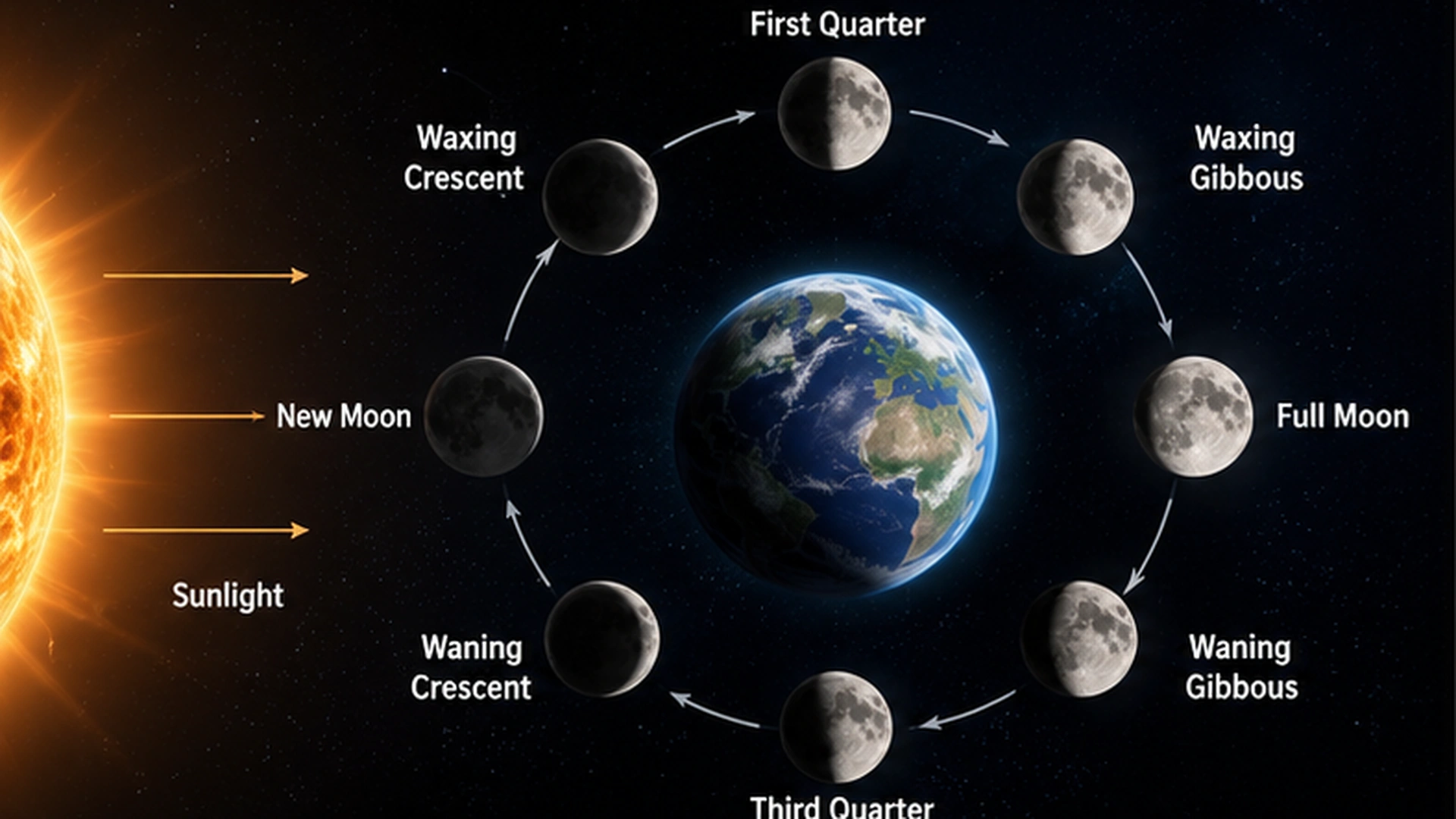
The Moon does not produce visible light. Moonlight is reflected sunlight. The Sun always illuminates approximately half of the Moon, while observers on Earth see different portions of that illuminated half as the Moon travels around Earth. The familiar sequence from new Moon to full Moon and back repeats approximately every 29.5 days. [1][2]
This regularity makes the lunar cycle an easily recognized natural clock.
A farmer without a printed calendar can still observe:
- The first thin crescent after sunset
- The first-quarter Moon in the evening
- The full Moon rising near sunset
- The third-quarter Moon in the morning
- The fading crescent before sunrise
These observations can help a community count days and organize recurring work.
Lunar Calendars Versus Lunar Influence
These ideas are often confused.
A Lunar Calendar
A lunar calendar uses the Moon’s repeating cycle to divide time into months.
Lunar Influence
A lunar-influence claim says that the Moon physically changes crop growth, sap movement, germination, pest pressure, wood quality, or yield according to phase.
A community may use a lunar calendar successfully even when the Moon is not causing the agricultural event.
For example, a lunar month may provide a memorable schedule for checking fences, moving livestock, gathering workers, or preparing seed. The value may come from consistent organization, not from a direct physical effect of Moon phase on the crop.
Calendars can be solar, lunar, or lunisolar. Lunar calendars follow Moon cycles, while lunisolar systems make adjustments to keep lunar months connected with annual seasons. [9]
Why Farmers Historically Watched the Moon
Before mobile phones, printed almanacs, weather stations, and digital forecasts, the sky offered visible patterns.
The Moon was useful because it is:
- Easy to recognize
- Repeatedly visible
- Shared by the whole community
- Connected with tides
- Useful for counting nights
- Bright enough near full Moon to increase nighttime visibility
- Compatible with oral teaching and memory
A farmer could teach a younger person that an activity occurred “after the first crescent,” “near the full Moon,” or “before the next new Moon.”
This created a shared timetable even when exact clock dates were unavailable.
Traditional Agricultural Calendars as Knowledge Systems
Traditional calendars often combine more than the Moon.
They may also include:
- Rainfall
- Wind direction
- Soil conditions
- Flowering plants
- Bird migration
- Insect emergence
- River level
- Animal behavior
- Seasonal stars
- Temperature
- Community festivals
A lunar marker may be one element within a much larger environmental system.
This distinction prevents a complex agricultural tradition from being reduced to the claim that “farmers planted because the Moon told them to.”
African Examples of Lunar Timekeeping and Agriculture
Africa does not have one universal Moon-farming tradition.
Different communities developed calendars suited to local rainfall patterns, grazing systems, crops, coastlines, religions, and political structures.
Fulani Pastoral Movement
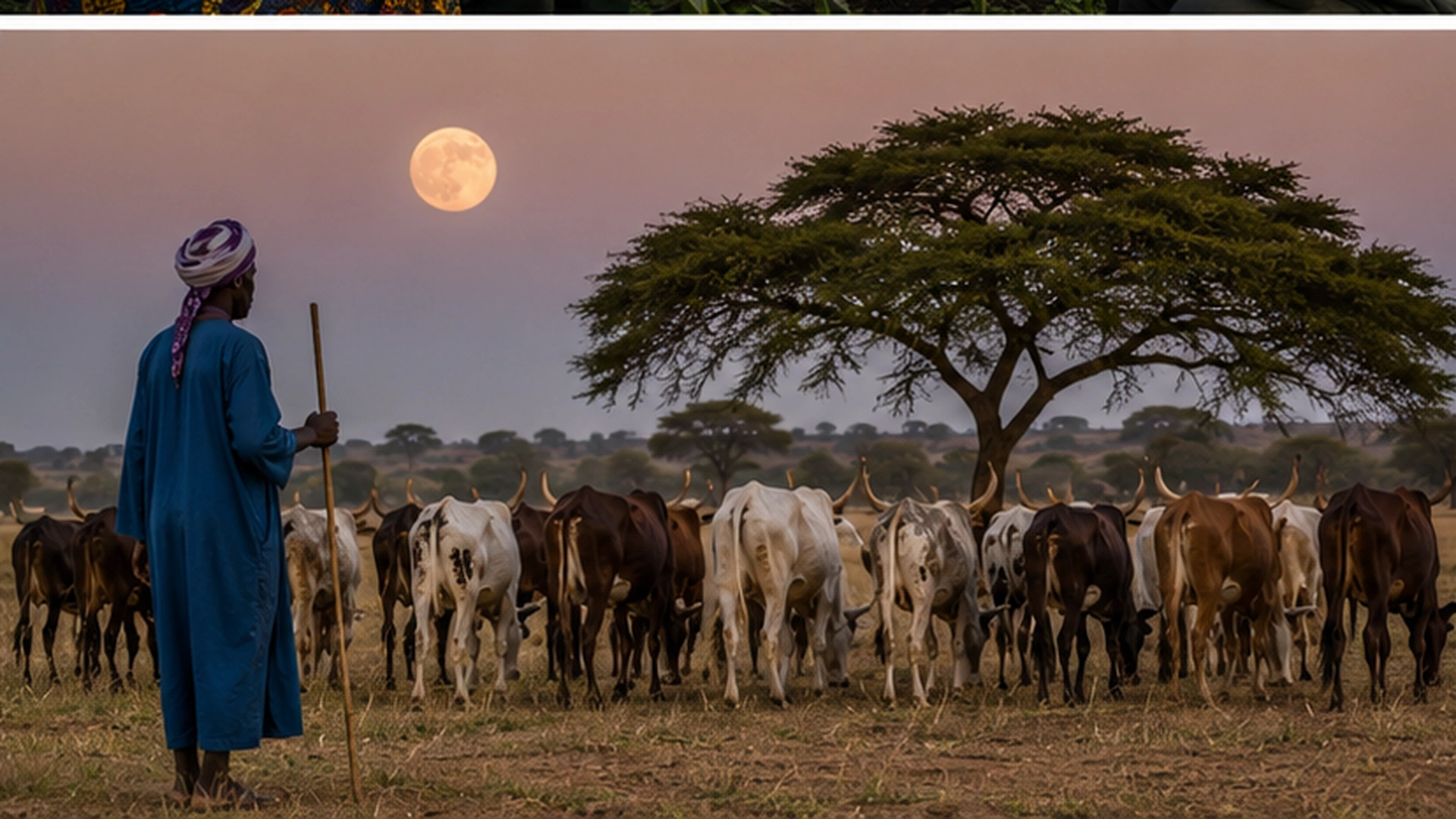
FAO documentation describes a historical Borno Wo’daabe Fulani transhumance pattern in Nigeria in which camp movement was coordinated through a lunar cycle. The final days of the month involved waiting until the new Moon was seen—or until elders agreed that a new pastoral month had begun. [7]
This system connected lunar timekeeping with:
- Herd movement
- Water access
- Grazing
- Seasonal migration
- Community decision-making
The Moon did not replace observation of rain and pasture. The same account explains that pastoralists waited for reliable information that rains had begun before moving northward. [7]
Coastal Kenya and Lunar Knowledge
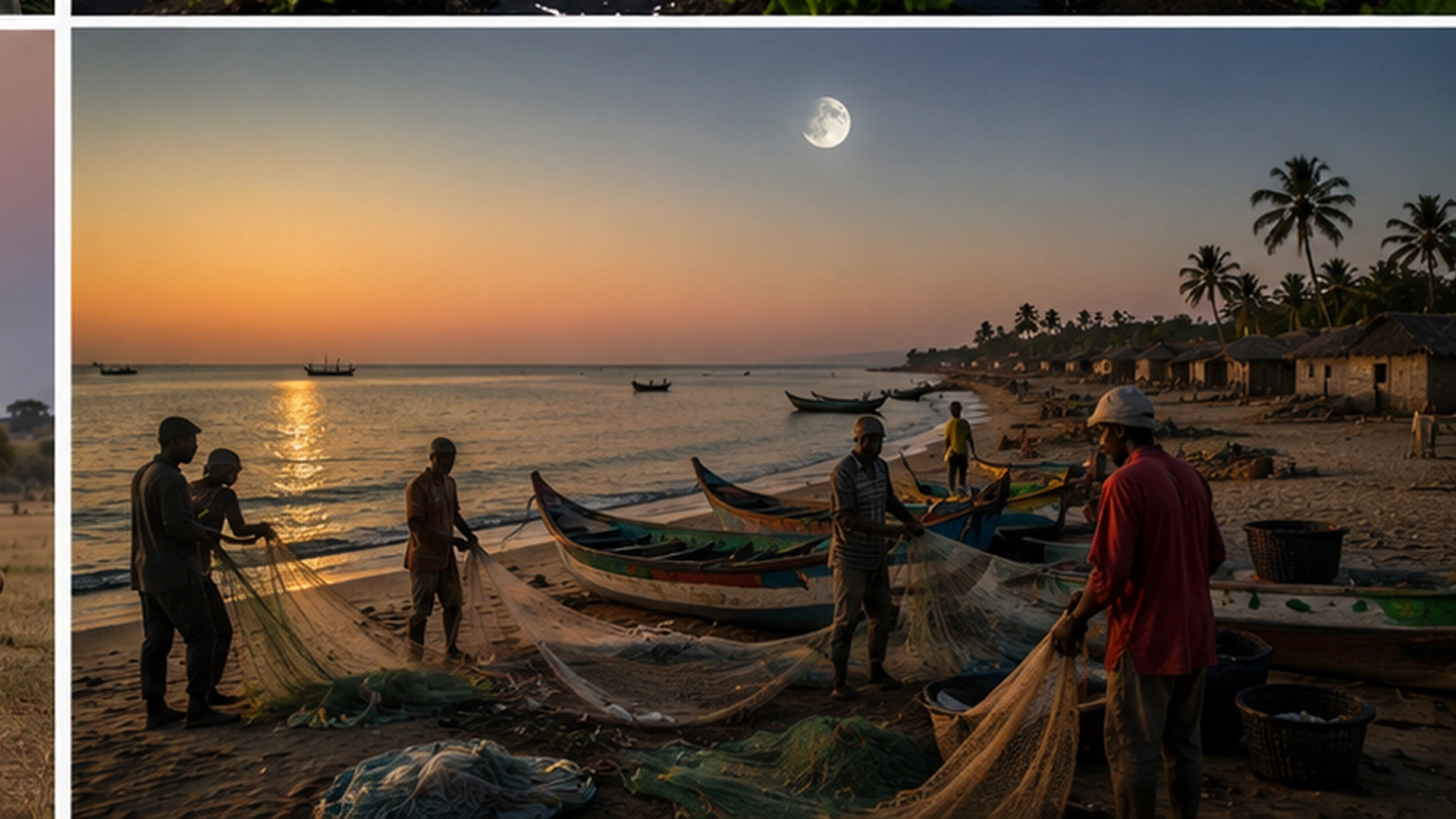
FAO research on Kenyan coastal communities records extensive use of Moon calendars to describe tidal phases and plan fishing, identify periods of spring and neap tides, and organize some planting activities. Local terminology connected particular lunar days with tidal conditions and fishing opportunities. [6]
This is an example of a relationship that has a clear physical basis: lunar and solar gravity influence tides.
It is also an example of local knowledge being more detailed than a generic statement such as “fish during a full Moon.” Fishers distinguished several tidal periods within the lunar month and connected them with time of day, currents, fish behavior, and location. [6]
Lunar Calendars and Farming Communities
Historical research has documented lunar calendars among African farming communities, including the Tallensi. Such calendars helped organize agricultural and social time, but their existence alone does not prove that every crop operation was caused by a particular phase. [9]
The correct questions are:
- What was the local name of the month?
- Which crop or livestock activity occurred then?
- Which rainfall or ecological signs were also observed?
- Was the Moon used to count time or believed to cause the result?
- Who had authority to interpret the calendar?
Planting by the Moon
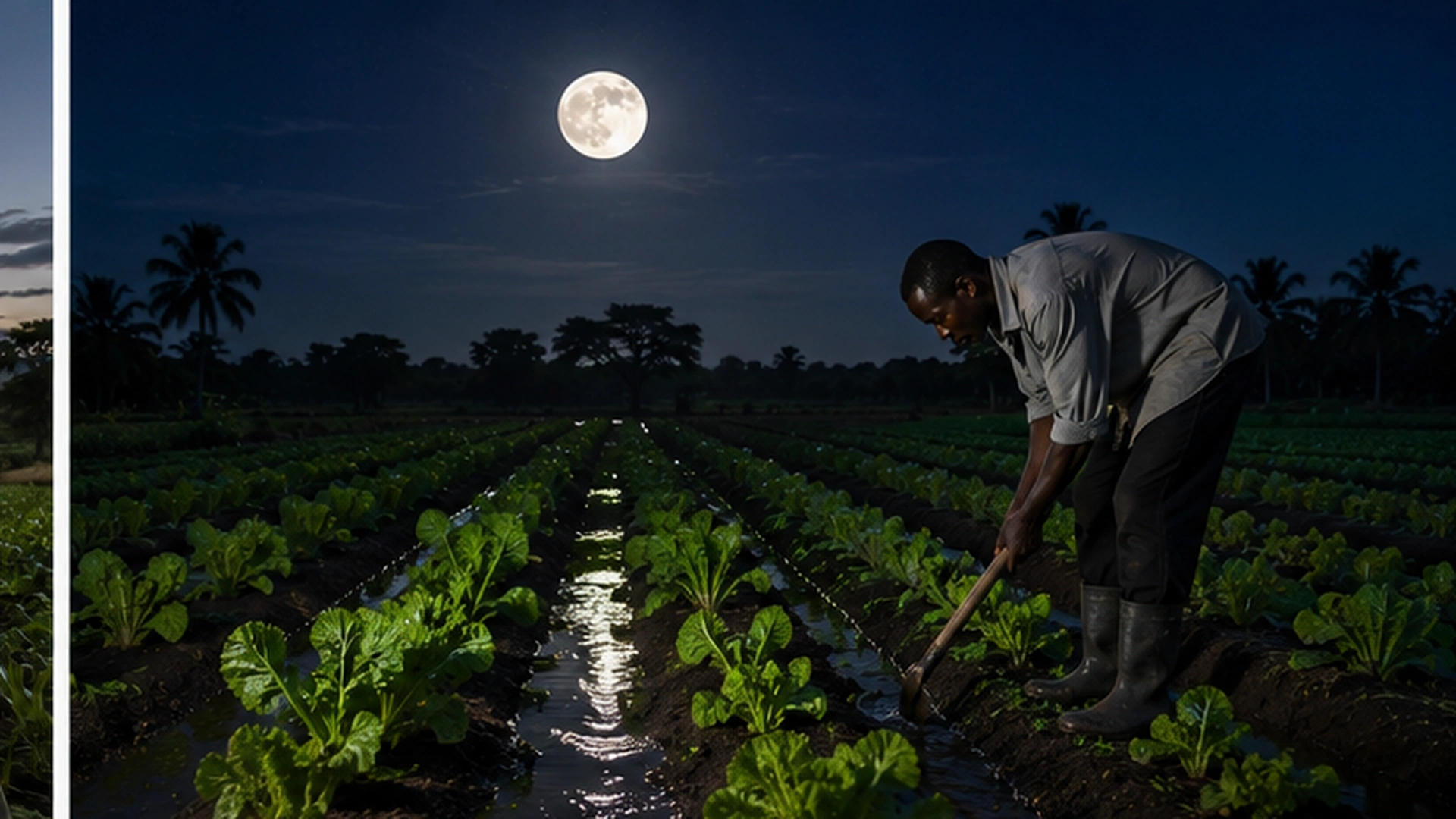
“Planting by the Moon” is a general label for systems that schedule agricultural work according to lunar phases.
Common modern rules include:
- Plant leafy or above-ground crops during the waxing Moon.
- Plant root crops during the waning Moon.
- Prune during a waning phase.
- Harvest near a new or full Moon.
- Avoid planting during particular days.
- Combine Moon phases with zodiac signs.
These rules are not universal.
Different almanacs may recommend different dates, and a farmer following biodynamic agriculture may use a more complex calendar involving the Moon, planets, constellations, and designated root, leaf, flower, or fruit days. FAO’s organic-agriculture glossary describes biodynamic agriculture as a system that incorporates cosmic rhythms and detailed planting calendars. [14]
Where Did Lunar Planting Traditions Come From?
They emerged through many pathways:
- Observation of regular lunar months
- Religious and ceremonial calendars
- Oral farming traditions
- European “planting by the signs” systems
- Biodynamic agriculture
- Indigenous seasonal calendars
- Coastal awareness of tides
- Family experience and almanacs
Because these traditions developed in different places, no single origin explains every lunar farming practice.
What Science Says About Moon-Phase Planting
A 2020 review examined plant-science textbooks, agronomy literature, plant physiology, and physical explanations proposed for lunar farming. The authors concluded that there was no reliable scientific evidence supporting agricultural practices conditioned by Moon phase. They also found no convincing physical mechanism showing that lunar gravity or phase-specific illumination produces the widely claimed changes in plant physiology. [4]
This conclusion does not prove that every traditional observation is meaningless.
It means that broad rules such as “waxing Moon improves all above-ground crops” have not been validated well enough to replace standard agronomy.
Can Plants Detect Moonlight?
Plants have photoreceptors that respond to light intensity, color, and duration.
Recent controlled research has reported biological responses when plants were exposed to full-moon light or simulated Moonlight. Studies involving the model plant Arabidopsis thaliana have examined gene regulation and longer-term developmental effects following very low light exposure. [5]
These studies should be interpreted carefully.
They show that:
- Moonlight is not always biologically irrelevant.
- Plants can respond to extremely low light under controlled conditions.
- Molecular or developmental responses may occur.
They do not yet prove that:
- Every crop responds in the same way.
- Sowing under a full Moon increases farm yield.
- Root crops should be planted while the Moon wanes.
- A lunar calendar outperforms weather and soil measurements.
- Results from a laboratory automatically apply to a field under clouds, artificial light, pests, and variable temperature.
A scientifically interesting signal is not the same as an agronomic recommendation.
How Bright Is Moonlight Compared With Sunlight?
Moonlight is reflected sunlight and is dramatically weaker than daylight.
For normal crop photosynthesis, daytime solar radiation is the major energy source. Moonlight is not a substitute for sunlight, and a bright full Moon does not provide enough energy to drive daytime levels of photosynthesis.
Its possible biological importance is more likely to involve signaling, nighttime behavior, or sensitive rhythms rather than major carbon gain.
Does Lunar Gravity Pull Water Up Through Plants?
A popular explanation says that the Moon pulls groundwater and plant sap upward just as it creates ocean tides.
This analogy is misleading.
Ocean tides involve enormous connected bodies of water responding to differential gravitational forces across Earth. Water in soil pores, plant cells, stems, and irrigation channels exists at much smaller scales and is strongly controlled by:
- Capillary forces
- Soil texture
- Root pressure
- Transpiration
- Water potential
- Temperature
- Atmospheric humidity
- Irrigation
- Rainfall
The 2020 scientific review found no physical evidence supporting the claim that Moon-phase gravity produces agricultural sap or soil-moisture cycles large enough to justify common lunar planting rules. [4]
The Moon, Tides, and Coastal Agriculture
The Moon’s role is clearest near oceans and tidal rivers.
When the Sun, Earth, and Moon are approximately aligned at new and full Moon, solar and lunar tidal effects reinforce one another. This produces larger tidal ranges called spring tides. Near first and third quarter, the forces partly offset each other, producing neap tides. [3]
This matters for:
- Coastal irrigation
- Saltwater intrusion
- Drainage of tidal fields
- Mangrove farming
- Seaweed cultivation
- Shellfish aquaculture
- Fishing access
- Landing boats
- Flood risk
A coastal farmer should use local tide tables, because actual tide height and timing depend on coastline shape, water depth, weather, wind, pressure, and local geography.
The Moon creates a predictable component of the tide, but it does not determine the entire coastal water level.
Moon Calendars in Fishing and Aquaculture
Agriculture includes aquatic food production as well as land crops.
Some fish and marine organisms have spawning, feeding, or migration patterns linked with lunar or tidal cycles. FAO documentation for orange-spotted grouper, for example, notes lunar patterns in spawning activity. [15]
Aquaculture and fishing decisions may therefore consider:
- Tidal current strength
- Spawning periods
- Moonlight
- Water exchange
- Animal behavior
- Safe access to farms
These species-specific relationships should not be generalized to all fish or all farms.
Moonlight, Insects, and Farm Ecology
Nighttime illumination can influence animal behavior.
A bright Moon may change:
- Nocturnal insect activity
- Predator–prey behavior
- Movement of some mammals
- Visibility for farm workers
- Use of light traps
- Pollinator activity in species active at night
The direction of the effect can vary. Some animals become more active under bright Moonlight; others reduce activity because predators can see them more easily.
Farmers should avoid treating “full Moon” as a universal predictor of pests. Local species, cloud cover, artificial lighting, temperature, and habitat conditions matter.
Moonlight and Night Farming
Before electric lighting, bright nights could make certain tasks easier.
A nearly full Moon may have supported:
- Night travel
- Guarding livestock
- Harvesting during cooler hours
- Communal work
- Fishing
- Ceremonial gatherings
This practical benefit may help explain why lunar phases became connected with agricultural customs.
The Moon may have influenced the timing of work through visibility even when it did not directly change plant growth.
Documented Traditional Practice: Banana Management in Haiti
FAO documents an integrated banana risk-management practice in Haiti involving leaf removal, staking, and early harvesting before hurricanes or strong winds. The description notes that local farmers may time pruning around a lunar phase, approximately seven days before new Moon. [8]
Importantly, the same FAO source recommends additional scientific field experimentation to determine whether an optimal lunar phase exists and to define safe pruning intensity. [8]
This is an excellent example of respectful evidence-based interpretation:
- The traditional timing is documented.
- The practical hazard-management method has clear value.
- The lunar component is not automatically treated as scientifically proven.
- Further testing is recommended.
The Moon and Livestock
Livestock management may be connected with lunar calendars through:
- Pastoral movement
- Night grazing
- Predator visibility
- Breeding traditions
- Market days
- Religious months
- Community schedules
A lunar calendar can coordinate households across a large grazing region.
However, livestock health and reproduction depend more directly on:
- Nutrition
- Water
- Disease prevention
- Genetics
- Housing
- Heat stress
- Veterinary care
- Breeding management
A lunar date should not replace veterinary advice or observation of the animal.
What Actually Determines a Good Planting Date?
For most crops, successful establishment depends on measurable field conditions.
Soil Temperature
Seeds require suitable temperatures for germination and early growth. University of Minnesota Extension notes that corn establishment is safer when the seed zone is near 50°F and expected to warm, while cold water uptake shortly after planting can injure seed tissues. [10]
The exact temperature threshold differs by crop.
Soil Moisture
A seed needs enough moisture to germinate but can fail in waterlogged soil with poor oxygen.
Rainfall and Forecasts
Rain can determine whether seedlings establish, whether machinery can enter the field, and whether fertilizer or soil will be washed away.
Seed Quality
Germination percentage, vigor, storage history, disease, and physical damage affect emergence.
Variety and Crop Duration
Early- and late-maturing varieties require different planting windows.
Frost and Heat Risk
A crop may germinate successfully and still be destroyed by frost or extreme heat.
Soil Structure and Drainage
Compaction, crusting, salinity, erosion, and poor drainage can limit roots.
Pests and Disease
Planting time can influence exposure to insects, birds, rodents, weeds, fungi, bacteria, and viruses.
Labor and Equipment
A theoretically ideal date is useless if workers, seed, irrigation, or machinery are unavailable.
These factors should take priority over an unverified lunar rule.
Irrigation Scheduling and the Moon
Most irrigation scheduling is based on:
- Crop growth stage
- Soil moisture
- Weather
- Evapotranspiration
- Rainfall
- Root depth
- Soil texture
- Irrigation-system capacity
FAO irrigation guidance describes plant observation, soil-moisture measurement, weather-based estimation, and calculated water balance as practical scheduling methods. [11]
A lunar calendar may help farmers remember inspection dates, but it should not replace field measurements.
For example, irrigating because “the Moon is waxing” while the soil remains wet can waste water and promote disease. Refusing to irrigate during a designated lunar period while crops are under water stress can reduce yield.
Harvesting and the Moon
Traditional systems sometimes recommend harvesting at a specific phase to improve:
- Flavor
- Storage life
- Moisture content
- Seed quality
- Wood durability
- Medicinal strength
These claims should be tested crop by crop.
Harvest quality is commonly affected by:
- Maturity
- Time of day
- Temperature
- Humidity
- Recent rain
- Dry-matter content
- Sugar or oil concentration
- Storage conditions
- Handling damage
- Disease
If a traditional lunar harvest date also coincides with cool weather, low humidity, or a community labor period, the practical benefit may be wrongly attributed entirely to Moon phase.
Forestry and Lunar Cutting Traditions
Some forestry traditions prescribe cutting timber during particular lunar phases to reduce moisture, insect attack, cracking, or decay.
The evidence is mixed and species-specific. Wood properties depend strongly on:
- Species
- Tree age
- Site
- Season
- Sapwood and heartwood ratio
- Drying method
- Storage
- Fungal exposure
- Moisture content
A lunar cutting tradition can be culturally important without being universally effective for all trees.
Biodynamic Agriculture
Biodynamic farming emerged in the twentieth century as a holistic system combining organic practices with spiritual and cosmic concepts.
Biodynamic calendars may assign days for:
- Roots
- Leaves
- Flowers
- Fruits
- Sowing
- Pruning
- Compost work
Some biodynamic farms also use distinctive preparations applied to soil, compost, or crops.
It is important to distinguish two questions:
- Can a biodynamic farm use beneficial practices such as composting, crop diversity, soil care, and reduced synthetic inputs?
- Are planetary or lunar calendar claims scientifically demonstrated?
A farm may achieve good results because of excellent soil management, biodiversity, attention, and experience even when the cosmic explanation is not supported.
Traditional Knowledge and Scientific Testing Are Not Enemies
Traditional knowledge can contain:
- Long-term observations
- Local crop varieties
- Soil knowledge
- Rainfall indicators
- Pest behavior
- Seed preservation methods
- Community organization
- Risk-management strategies
Scientific testing can help identify:
- Which observations are repeatable
- Which mechanisms are plausible
- Which practices work under specific conditions
- Which practices are symbolic or ceremonial
- Which recommendations require modification
Respect does not require accepting every claim without testing.
Science does not require dismissing the people who developed the tradition.
Climate Change and Traditional Lunar Calendars
A calendar may preserve the timing of historical seasons, but climate change can alter:
- Rainfall onset
- Drought frequency
- Heat extremes
- Pest ranges
- Flowering periods
- River flow
- Grazing availability
If a lunar month was once associated with reliable rain, the Moon may remain regular while the rainfall pattern shifts.
Farmers may therefore need to combine inherited calendars with:
- Updated weather forecasts
- Local rain gauges
- Soil-moisture checks
- Climate advisories
- Drought-tolerant varieties
- Flexible planting windows
The traditional calendar can remain culturally meaningful while its agricultural interpretation adapts.
How to Use a Lunar Calendar Responsibly
A farmer can use a Moon calendar as a supplementary tool.
Use It for Organization
Schedule recurring tasks such as:
- Tool inspection
- Record review
- Compost turning
- Fence checks
- Seed inventory
- Community meetings
Do Not Ignore Field Conditions
Delay or advance work when:
- Soil is too wet
- A storm is expected
- Frost threatens
- Seed is unavailable
- Disease risk is high
- Irrigation is needed
Keep Records
Record:
- Moon phase
- Planting date
- Soil temperature
- Rainfall
- Variety
- Field location
- Germination rate
- Yield
- Pest pressure
Records help distinguish lunar claims from weather and management effects.
How to Test Moon-Phase Planting on a Farm
A fair test requires more than planting one bed during a full Moon and another weeks later.
The weather may have changed.
A Better Small-Plot Experiment
- Choose one crop and one seed lot.
- Prepare similar plots with the same soil and fertilizer.
- Plant several replicated plots during each chosen phase.
- Keep depth, spacing, irrigation, and management equal.
- Record soil temperature and moisture.
- Measure emergence, plant survival, flowering, yield, and quality.
- Repeat across more than one season.
- Analyze whether differences are larger than ordinary field variation.
Without replication, a result may reflect:
- Better rain
- Warmer soil
- Different seed depth
- Shade
- Pests
- Uneven fertility
- Chance
Cultural Respect When Discussing Lunar Farming
Avoid statements such as:
- “Africans plant everything during the full Moon.”
- “Indigenous farmers all use the same lunar calendar.”
- “Ancient people knew the Moon pulls sap upward.”
- “Science has proven every traditional lunar practice.”
- “Traditional farmers were simply superstitious.”
Use careful language:
- “Some farmers in this community…”
- “This historical source records…”
- “The lunar calendar organized…”
- “The practice is traditionally believed to…”
- “Field evidence remains limited…”
Safety and Agricultural Responsibility
Lunar farming advice should never encourage farmers to:
- Delay emergency irrigation
- Ignore a severe weather warning
- Apply pesticides at an unsafe time
- Plant in cold or flooded soil
- Withhold veterinary care
- Consume unidentified plants
- Enter dangerous tidal areas
- Work at night without lighting or protection
- Risk debt for expensive spiritual services
Cultural practice should support wellbeing, not replace safety.
When Lunar Claims Become Exploitative
Be cautious when someone claims:
- A paid lunar ritual guarantees a harvest.
- Crop failure proves that ancestors are angry.
- Only one practitioner can identify the correct planting hour.
- Farmers must buy expensive charms or preparations.
- Veterinary or agronomic advice should be rejected.
- A Moon phase can cure crop disease without treatment.
- A ceremony guarantees rain.
No ethical adviser should use fear or guaranteed outcomes to exploit farmers.
Common Misconceptions
Misconception 1: The Moon Pulls Water Through Crops Like Ocean Tides
Reality: Water movement in plants and soils is mainly controlled by small-scale physical and biological processes. Ocean-tide analogies do not establish phase-specific sap movement. [4]
Misconception 2: Full-Moon Light Produces Major Photosynthesis
Reality: Moonlight is far weaker than sunlight. Plants may detect it as a signal, but it is not a major daytime-equivalent energy source.
Misconception 3: Lunar Calendars Prove Lunar Causation
Reality: A calendar may organize time effectively without the Moon physically causing the scheduled event.
Misconception 4: Every Traditional Farmer Uses the Same Rules
Reality: Lunar practices differ by community, crop, religion, climate, and history.
Misconception 5: Science Has Proven That the Moon Never Affects Plants
Reality: Plants can respond to very low light, and research on biological lunar rhythms continues. What has not been established is a reliable universal farming calendar based on phase. [5]
Misconception 6: Planting by the Moon Is Harmless in Every Situation
Reality: It becomes harmful when it causes farmers to ignore rainfall, soil temperature, irrigation, pests, or safety.
Misconception 7: Full and New Moon Cause High Tide at the Same Clock Time Everywhere
Reality: They produce larger average tidal ranges, but local timing and height depend on geography and weather. [3]
Misconception 8: Traditional Knowledge and Science Must Compete
Reality: Traditional observations can guide research, while scientific testing can clarify where, when, and why a practice works.
Key Takeaways
- The Moon’s 29.5-day phase cycle provides a natural calendar. [1]
- Farmers, fishers, and pastoral communities have used lunar timekeeping in culturally specific ways.
- Fulani pastoral movement and Kenyan coastal knowledge demonstrate practical uses of lunar months. [6][7]
- The Moon directly influences ocean tides, which can matter for coastal farming and aquaculture. [3]
- Some plants respond to low Moonlight in controlled studies, but field implications remain uncertain. [5]
- A major review found no reliable evidence for universal Moon-phase planting rules. [4]
- Soil temperature, moisture, rainfall, crop variety, pests, and management usually determine planting success. [10][11]
- Traditional lunar practice should be documented respectfully rather than generalized.
- Farmers can test claims through replicated field trials.
- Lunar calendars should supplement—not replace—agronomic observation, weather information, and safety.
People Also Ask
Does the Moon affect agriculture?
The Moon affects tides and provides a repeating calendar. It may also influence nighttime biological behavior and low-light signaling, but universal Moon-phase planting rules have not been reliably demonstrated.
Is planting by the Moon scientifically proven?
No reliable evidence currently supports general rules that specific Moon phases improve crop yield across species and environments.
Why did traditional farmers use lunar calendars?
Lunar calendars helped communities count time, coordinate work, anticipate tides, organize pastoral movement, and connect agricultural tasks with social or religious events.
Does a full Moon help seeds germinate?
There is no dependable evidence that full-Moon planting improves germination across crops. Soil temperature, moisture, seed quality, and planting depth are more important.
How does the Moon affect coastal farming?
New and full Moons are associated with spring tides, which can influence drainage, flooding, saltwater movement, aquaculture access, and tidal irrigation.
Can a farmer test lunar planting?
Yes. Use replicated plots, identical seed and management, and records of soil, weather, emergence, and yield across multiple seasons.
Frequently Asked Questions
1. What is lunar farming?
Lunar farming is the scheduling of agricultural activities according to Moon phases, lunar months, or related celestial calendars.
2. Is lunar farming the same as biodynamic farming?
No. Biodynamic agriculture is a broader system that may include organic practices, preparations, and detailed cosmic calendars.
Frequently Asked Questions
What should readers know first about The Moon and agriculture?
The Moon and agriculture: Learn how farmers and pastoral communities have used the Moon to organize time, movement, fishing, planting, and seasonal work—and w
What causes The Moon and agriculture?
Learn how farmers and pastoral communities have used the Moon to organize time, movement, fishing, planting, and seasonal work—and what modern science says about lunar effects on crops. The safest next step is to compare the signs, prepare clear details, and r
How does The Moon and agriculture work?
Learn how farmers and pastoral communities have used the Moon to organize time, movement, fishing, planting, and seasonal work—and what modern science says about lunar effects on crops. The safest next step is to compare the signs, prepare clear details, and r
Is it possible to get private guidance for The Moon and agriculture?
Learn how farmers and pastoral communities have used the Moon to organize time, movement, fishing, planting, and seasonal work—and what modern science says about lunar effects on crops. The safest next step is to compare the signs, prepare clear details, and r
How long does The Moon and agriculture take to understand?
Learn how farmers and pastoral communities have used the Moon to organize time, movement, fishing, planting, and seasonal work—and what modern science says about lunar effects on crops. The safest next step is to compare the signs, prepare clear details, and r
Can The Moon and agriculture affect relationships, family, work, or personal peace?
Learn how farmers and pastoral communities have used the Moon to organize time, movement, fishing, planting, and seasonal work—and what modern science says about lunar effects on crops. The safest next step is to compare the signs, prepare clear details, and r
Why do people seek spiritual guidance for The Moon and agriculture?
Learn how farmers and pastoral communities have used the Moon to organize time, movement, fishing, planting, and seasonal work—and what modern science says about lunar effects on crops. The safest next step is to compare the signs, prepare clear details, and r
What signs should someone notice before asking about The Moon and agriculture?
Learn how farmers and pastoral communities have used the Moon to organize time, movement, fishing, planting, and seasonal work—and what modern science says about lunar effects on crops. The safest next step is to compare the signs, prepare clear details, and r
When should someone contact a private spiritual guide?
Learn how farmers and pastoral communities have used the Moon to organize time, movement, fishing, planting, and seasonal work—and what modern science says about lunar effects on crops. The safest next step is to compare the signs, prepare clear details, and r
Article Information
- Publisher
- Ancestral Temple
- Editor
- Ancestral Temple
- Last updated
- Jul 26, 2026
- Last reviewed
- Jul 13, 2026
- Content version
- af290b70e2
This educational article should be read as cultural and spiritual information, not as medical, legal, financial, or emergency advice.
Helpful Related Guidance
Explore This Topic
The Moon And Agriculture · New Moon Symbolism
Related Topic Cluster
The Moon And Agriculture
Complete Guide Traditional Cleansing Herbs Used Around the WorldAbout the Author
 Ancestral Temple
Spiritual guide and practitioner with decades of experience in ancestral wisdom, rituals, and divine guidance.
Related Posts
View All
Leave a Comment
We'd love to hear your thoughts.
This was comprehensive without telling readers that they must follow or reject lunar farming traditions.
Are there agricultural research stations that publish long-term Moon-phase planting experiments?
The safety section was important because calendar traditions should not override storm warnings.
A future article about how farmers can run replicated field trials would be useful.
I liked the reminder that Moonlight may be a biological signal without being a major source of photosynthesis.
Strong overview connecting the Moon with calendars, tides, pastoral movement, crops, and scientific testing.
The misconceptions section answered several claims I have seen in farming groups online.
The tone stayed neutral while clearly identifying unsupported universal claims.
The irrigation section was practical and easy to apply.
I appreciated that African farming knowledge was not reduced to one spiritual explanation.
More community-specific African examples would make a good series when reliable sources are available.
The plant photoreceptor research deserves a separate technical article.
The strongest point was that a useful calendar does not automatically prove a physical lunar effect.
The article respected belief without presenting uncertain claims as proven science.
I liked that the article allowed farmers to keep traditions while still checking soil and weather data.
The difference between correlation and causation was one of the most important lessons.
Could you write next about Moon calendars used by East African fishing communities?
The short sections and lists made the long article easy to read on mobile.
The article was balanced between practical agriculture, astronomy, and cultural history.
This is useful for farmers, students, extension workers, and readers interested in cultural astronomy.
Thank you for warning farmers about people who guarantee harvests through paid lunar rituals.
The section on climate change showed why old seasonal associations may need adjustment.
I appreciated the warning against delaying irrigation because of a Moon phase.
A future comparison of biodynamic and traditional African calendars would be interesting.
The glossary helped me understand the difference between lunar and lunisolar calendars.
The article made it clear that rainfall and field conditions should override a calendar rule.
I liked the idea of using Moon phases as reminders for record-keeping and equipment checks.
The explanation of spring and neap tides was easy to understand.
This was educational without reducing cultural farming traditions to superstition.
The banana-pruning example was strong because it separated the practical method from the unconfirmed lunar timing.
I would like a downloadable record sheet for comparing lunar planting dates.
The small-plot experiment is a good way for farmers to test claims fairly.
I appreciated the point that traditional knowledge can guide research without every explanation being accepted automatically.
The Kenya coastal example showed how detailed local tidal knowledge can be.
The section on lunar calendars and religious months was clear without mixing different beliefs.
I used to believe the Moon pulled water up through every plant in the same way it affects the ocean.
The Moonlight research section was careful about the difference between a laboratory response and a field recommendation.
A separate article about traditional African agricultural calendars would be valuable.
The discussion of soil temperature and moisture was a useful practical balance to the cultural sections.
I liked that the article did not present one Moon-farming tradition for all African communities.
The Fulani pastoral example showed how lunar timekeeping can organize movement and community decisions.
The scientific evidence was explained respectfully without mocking traditional farmers.
I had never considered that a lunar calendar could be useful even when the Moon is not causing the farming event.
The coastal-tides section explained one clear way the Moon genuinely affects food production.
I appreciated the distinction between using the Moon as a calendar and claiming it directly changes crop growth.