
Full Moon Traditions Around the World
Pillar Article
Quick Summary
Discover how communities around the world mark the full Moon through family reunions, harvest meals, lanterns, prayer, dance, moon viewing, charity, storytelling, and cultural calendars.
Full Moon traditions around the world include family reunions, harvest meals, lantern displays, religious observances, moon viewing, circle dances, charitable giving, prayer, storytelling, and the marking of important dates in lunar or lunisolar calendars.
These traditions are not versions of one universal Moon religion.
The full Moon associated with China’s Mid-Autumn Festival carries different meanings from the Moon observed during Korean Chuseok, Japanese Tsukimi, Sri Lankan Buddhist Poya days, Indian Sharad Purnima, or culturally specific African and Indigenous lunar traditions.
Even when several festivals occur on the fifteenth day of a lunar month, their:
- Religious teachings
- Historical origins
- Foods
- Prayers
- Family duties
- Seasonal meanings
- Authorized participants
- Community expectations
may be very different.
Astronomically, a full Moon occurs when the Moon is positioned approximately opposite the Sun in Earth’s sky, allowing observers to see nearly the entire illuminated Earth-facing hemisphere. It normally rises around sunset and sets around sunrise. Although the precise full Moon occurs at a specific moment, the lunar disk can appear almost completely illuminated for several nights.
Key Points
Full Moon traditions may involve:
- Gathering relatives for a shared meal
- Giving thanks for a harvest
- Admiring the Moon
- Lighting lanterns
- Preparing ceremonial or seasonal foods
- Honoring ancestors
- Visiting temples
- Listening to religious teaching
- Practicing charity
- Dancing in circles
- Composing poetry
- Telling stories about figures seen on the lunar surface
- Marking a holy day or calendar month
- Reflecting on completion, reunion, or renewal
Examples include:
- China’s Mid-Autumn Festival
- Korea’s Chuseok and Ganggangsullae
- Japan’s Tsukimi
- Sri Lankan Poya observances
- Vesak and Poson Poya
- India’s Sharad Purnima
- China’s Lantern Festival
- Community-specific African lunar symbolism
- Indigenous lunar calendars and seasonal Moon names
No cultural or spiritual tradition proves that the full Moon guarantees healing, fertility, wealth, protection, romantic success, or behavioral change.
What Is a Full Moon?
A full Moon is the lunar phase during which the Moon appears nearly circular and fully illuminated from Earth.
Clear Definition
A full Moon occurs when the Moon is approximately opposite the Sun in Earth’s sky, allowing observers to see nearly all of its illuminated near side.
Plain-Language Meaning
Earth is positioned roughly between the Sun and Moon, but usually not in a perfectly straight line.
Sunlight illuminates the side of the Moon facing Earth, making the lunar disk appear round and bright.
A perfect alignment can produce a lunar eclipse, but most full Moons pass above or below Earth’s shadow because the Moon’s orbit is tilted relative to Earth’s orbit around the Sun.
Why Has the Full Moon Attracted Cultural Attention?
The full Moon is:
- Bright
- Predictable
- Visible throughout much of the night
- Easy to recognize
- Useful for marking time
- Connected with the approximately monthly lunar cycle
- Capable of illuminating outdoor activities before electric lighting
A full Moon can cast noticeable shadows because it reflects sufficient sunlight toward Earth.
Communities have used lunar cycles to organize:
- Calendars
- Religious dates
- Agricultural activities
- Seasonal festivals
- Travel
- Storytelling
- Community gatherings
However, calendars do not all define months in the same way. Lunar calendars follow Moon cycles, while lunisolar calendars adjust lunar months to remain connected with the seasons.
Full Moon Does Not Mean One Universal Symbol
Modern spiritual writing often describes the full Moon as universally representing:
- Completion
- Manifestation
- Release
- Fertility
- Feminine energy
- Emotional intensity
Some communities or modern practitioners may use these interpretations.
They should not be presented as universal ancient beliefs.
A full Moon may instead represent:
- Family reunion
- A harvest date
- A Buddhist holy day
- The first full Moon of a new year
- A calendrical marker
- A time for dance
- A religious commemoration
- A visually beautiful seasonal event
The correct meaning must come from the community concerned.
1. China’s Mid-Autumn Festival
China’s Mid-Autumn Festival is held on the fifteenth day of the eighth month of the traditional Chinese calendar.
It is strongly associated with:
- The full Moon
- Harvest season
- Family reunion
- Mooncakes
- Lanterns
- Moon viewing
- Regional customs
- Historical ceremonies honoring the Moon
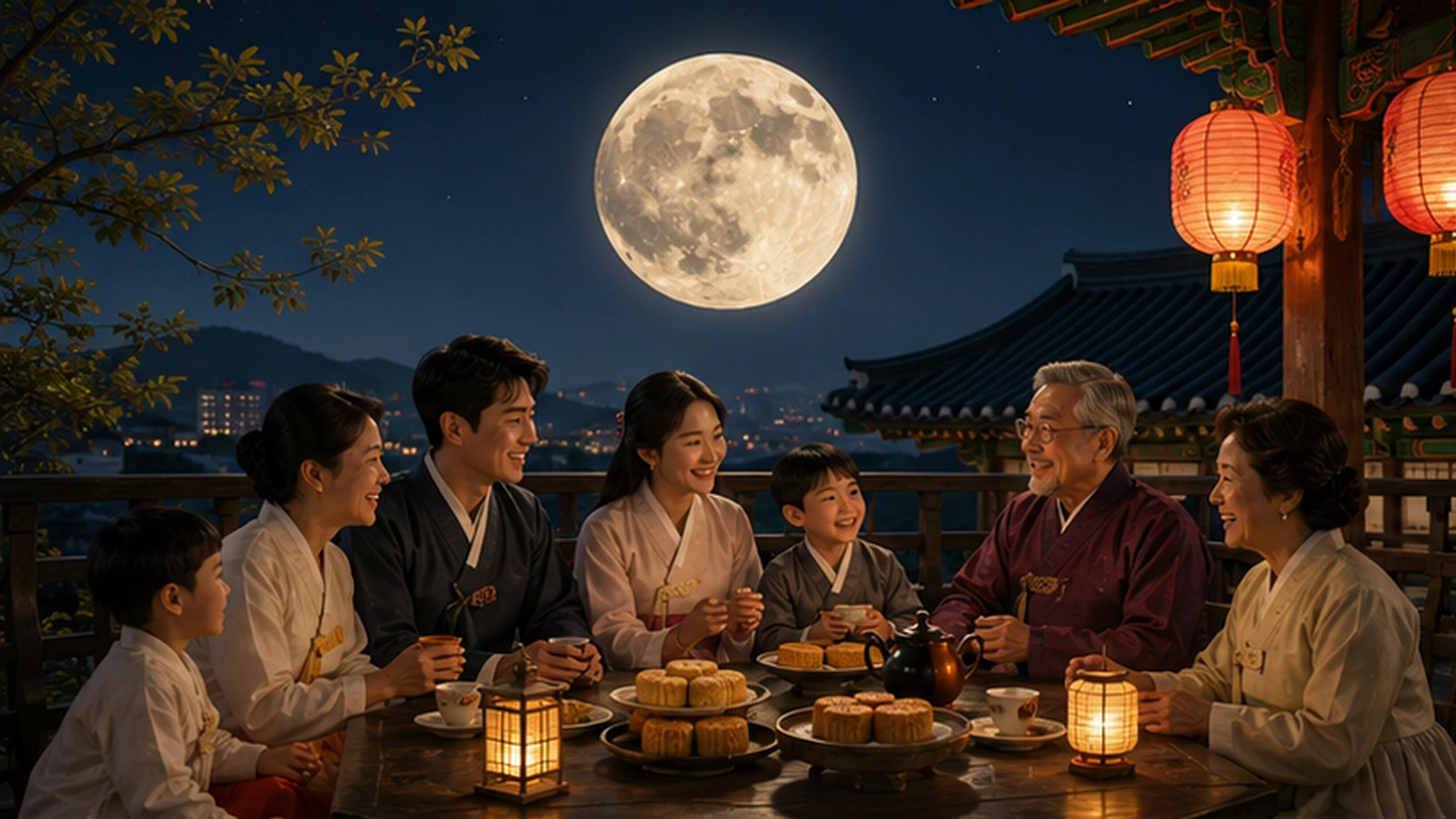
Official Chinese cultural sources describe families gathering to appreciate the full Moon and share mooncakes. The round Moon is widely associated with reunion and completeness, which is why the celebration is also commonly described as a reunion festival.
Family Reunion
Families may gather for:
- A shared evening meal
- Tea
- Mooncakes
- Fruit
- Moon viewing
- Lantern activities
- Conversation with relatives
The Moon can become a symbol connecting relatives who live far apart.
This does not mean every Chinese family observes the festival identically. China contains many regional, ethnic, religious, and household traditions.
Mooncakes
Mooncakes are round pastries associated with the festival.
Their circular form may reinforce ideas of:
- Reunion
- Completeness
- Family continuity
- Seasonal celebration
Recipes, fillings, sizes, and regional styles differ widely.
Historical Moon Ceremonies
Historical records describe royal and household ceremonies connected with the autumn Moon. Over time, formal worship practices in some settings became broader celebrations focused on moon viewing, food, lanterns, and family gathering.
The Moon Rabbit
Stories and images involving a rabbit on the Moon appear in several Asian traditions.
A Chinese artwork from the eighteenth century, for example, depicts a rabbit gazing toward the full autumn Moon and connects the scene with the season of the Moon Festival.
The Moon rabbit should not be treated as having one identical story across China, Japan, Korea, and other Asian communities.
2. Chuseok in Korea
Chuseok is one of Korea’s major traditional holidays.
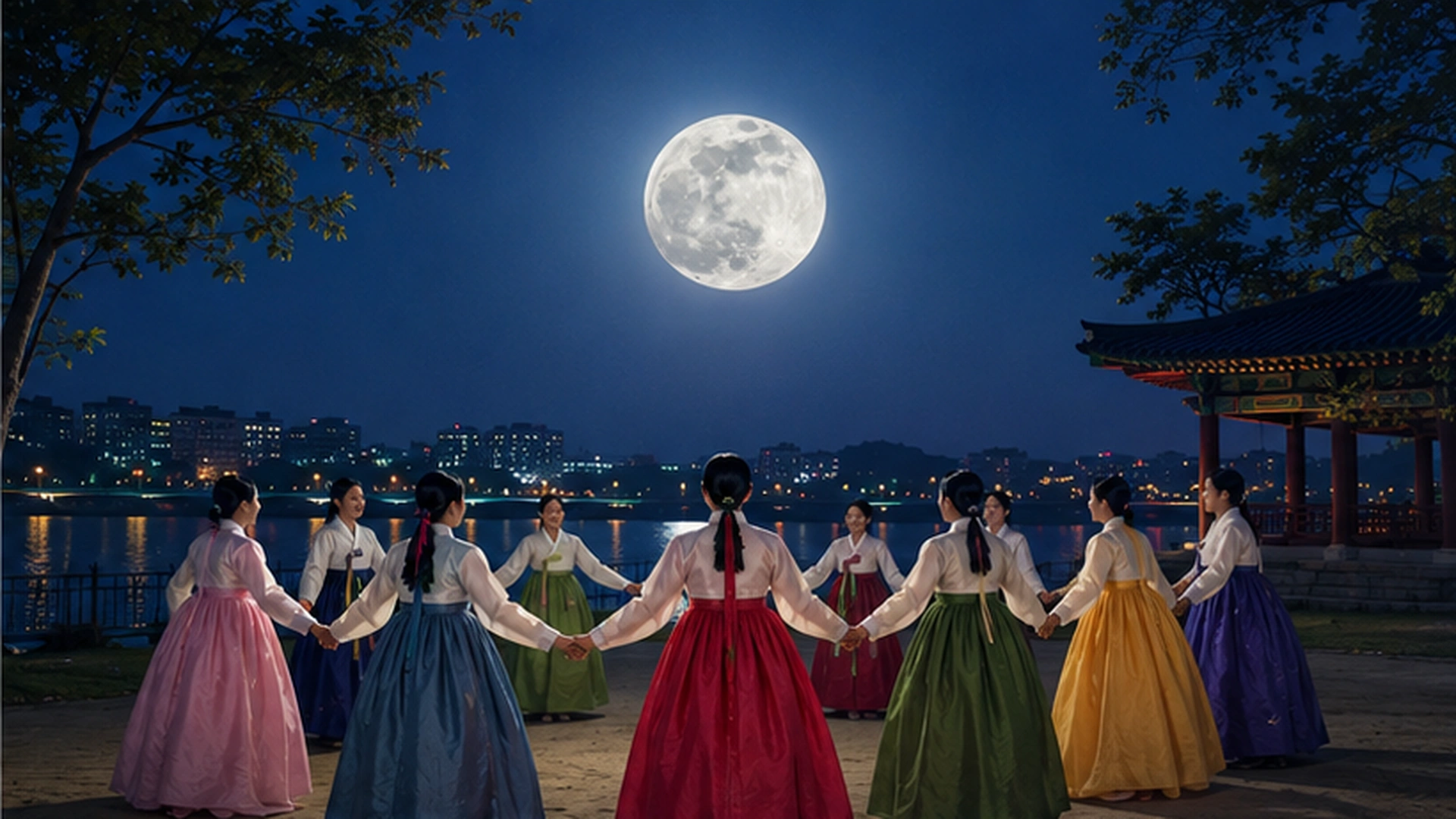
It is observed on the fifteenth day of the eighth lunar month and is closely associated with the autumn full Moon, harvest, family gathering, ancestral remembrance, and seasonal food.
Family and Ancestors
Chuseok customs may include:
- Returning to one’s hometown
- Preparing food
- Honoring ancestors
- Visiting family graves
- Sharing meals
- Wearing traditional clothing
- Participating in games and performances
Practices have changed with urbanization, migration, religious belief, work patterns, and family structure.
Not every Korean household performs ancestral ceremonies, and participation should not be interpreted as one uniform religious belief.
Songpyeon
Songpyeon are rice cakes associated with Chuseok.
They are commonly made from newly harvested grain and may be prepared by family members together. Korea’s official cultural information describes them as half-moon-shaped foods connected with the harvest festival.
The half-moon shape is significant because the festival itself occurs near the full Moon. Cultural symbols do not always copy an astronomical object literally.
Frequently Asked Questions
What should readers know first about Full Moon traditions around the world?
Full Moon traditions around the world: Discover how communities around the world mark the full Moon through family reunions, harvest meals, lanterns, prayer,
What causes Full Moon traditions around the world?
Discover how communities around the world mark the full Moon through family reunions, harvest meals, lanterns, prayer, dance, moon viewing, charity, storytelling, and cultural calendars. The safest next step is to compare the signs, prepare clear details, and
How does Full Moon traditions around the world work?
Discover how communities around the world mark the full Moon through family reunions, harvest meals, lanterns, prayer, dance, moon viewing, charity, storytelling, and cultural calendars. The safest next step is to compare the signs, prepare clear details, and
Is it possible to get private guidance for Full Moon traditions around the world?
Discover how communities around the world mark the full Moon through family reunions, harvest meals, lanterns, prayer, dance, moon viewing, charity, storytelling, and cultural calendars. The safest next step is to compare the signs, prepare clear details, and
How long does Full Moon traditions around the world take to understand?
Discover how communities around the world mark the full Moon through family reunions, harvest meals, lanterns, prayer, dance, moon viewing, charity, storytelling, and cultural calendars. The safest next step is to compare the signs, prepare clear details, and
Can Full Moon traditions around the world affect relationships, family, work, or personal peace?
Discover how communities around the world mark the full Moon through family reunions, harvest meals, lanterns, prayer, dance, moon viewing, charity, storytelling, and cultural calendars. The safest next step is to compare the signs, prepare clear details, and
Why do people seek spiritual guidance for Full Moon traditions around the world?
Discover how communities around the world mark the full Moon through family reunions, harvest meals, lanterns, prayer, dance, moon viewing, charity, storytelling, and cultural calendars. The safest next step is to compare the signs, prepare clear details, and
What signs should someone notice before asking about Full Moon traditions around the world?
Discover how communities around the world mark the full Moon through family reunions, harvest meals, lanterns, prayer, dance, moon viewing, charity, storytelling, and cultural calendars. The safest next step is to compare the signs, prepare clear details, and
When should someone contact a private spiritual guide?
Discover how communities around the world mark the full Moon through family reunions, harvest meals, lanterns, prayer, dance, moon viewing, charity, storytelling, and cultural calendars. The safest next step is to compare the signs, prepare clear details, and
Article Information
- Publisher
- Ancestral Temple
- Editor
- Ancestral Temple
- Last updated
- Jul 26, 2026
- Last reviewed
- Jul 13, 2026
- Content version
- 8b1b47c0b5
This educational article should be read as cultural and spiritual information, not as medical, legal, financial, or emergency advice.
Helpful Related Guidance
Explore This Topic
Full Moon Traditions Around The World · Full Moon Rituals
Related Topic Cluster
Full Moon Traditions Around The World
Complete Guide Understanding African Spiritual Traditions: A Historical IntroductionAbout the Author
 Ancestral Temple
Spiritual guide and practitioner with decades of experience in ancestral wisdom, rituals, and divine guidance.
Related Posts
View All
Leave a Comment
We'd love to hear your thoughts.
This was comprehensive without suggesting that readers need to perform any ceremony.
Are there recommended museum collections for studying Moon imagery across cultures?
The modern Moon-gathering section was honest about the difference between new and inherited practices.
A future article about Moon stories from different African communities would be interesting.
I liked the reminder that lunar calendars are not all constructed in the same way.
Strong overview connecting the full Moon with calendars, harvests, religion, tides, and family life.
The misconceptions section answered many popular social-media claims.
The tone remained neutral while explaining cultural and religious differences.
The supermoon explanation corrected several claims I have seen online.
I appreciated that the article did not invent an African full-Moon ritual.
More African examples would be useful when strong community sources are available.
The Sharad Purnima section deserves a more detailed regional guide.
The strongest lesson was that every Moon tradition needs cultural context.
The article respected religious belief while maintaining scientific accuracy.
I liked the point that food shapes do not always copy the full Moon literally.
The full Moon and eclipse section answered a common misunderstanding.
Could you write next about traditional African lunar calendars?
The short paragraphs worked well on mobile.
The country-by-country sections made the article easy to navigate.
This is useful for readers interested in astronomy, religion, anthropology, and cultural heritage.
Thank you for clarifying that spiritual beliefs do not guarantee outcomes.
The article showed that full-Moon festivals can be about harvest, family, religion, or beauty.
I appreciated the warning against diagnosing behavior according to the Moon.
A future comparison of mooncakes, songpyeon, and tsukimi dango would be interesting.
The glossary made Poya, Chuseok, Tsukimi, and lunation easy to understand.
The Vesak section connected religious teaching with charity and community service.
I liked that families can create new Moon traditions without falsely claiming ancient origins.
The Ganggangsullae section deserves a separate article with more history.
This was educational without making the full Moon sound frightening or supernatural.
The article correctly explained that exact full Moon is one astronomical moment.
I would like a detailed guide to Sri Lanka’s different Poya days.
The explanation of spring tides made the scientific section easy to follow.
I had not heard of tsukimi dango before reading this.
The warning against combining unrelated ceremonies was necessary.
The section about Indigenous Moon names was especially important.
I appreciated the difference between the Lantern Festival and Mid-Autumn Festival.
The article showed why a holy day can follow a full-Moon calendar without worshipping the Moon.
A full article about Shona stories of Mwedzi would be interesting.
The Mid-Autumn family-reunion symbolism was explained beautifully.
The African lunar-knowledge section was careful and culturally specific.
I liked that the article did not present one universal full-Moon ritual.
The explanation of Poya days corrected my assumption that they involved Moon worship.
I did not know that Ganggangsullae was traditionally performed under the full Moon.
The comparison between Mid-Autumn Festival, Chuseok, and Tsukimi was very clear.
I appreciated that the article separated astronomy from cultural and spiritual interpretation.