
The 12 Zodiac Signs in Order: Dates, Meanings and Origins
Quick Summary
The 12 zodiac signs in order are Aries, Taurus, Gemini, Cancer, Leo, Virgo, Libra, Scorpio, Sagittarius, Capricorn, Aquarius and Pisces. In the tropical zodiac used by most Western...
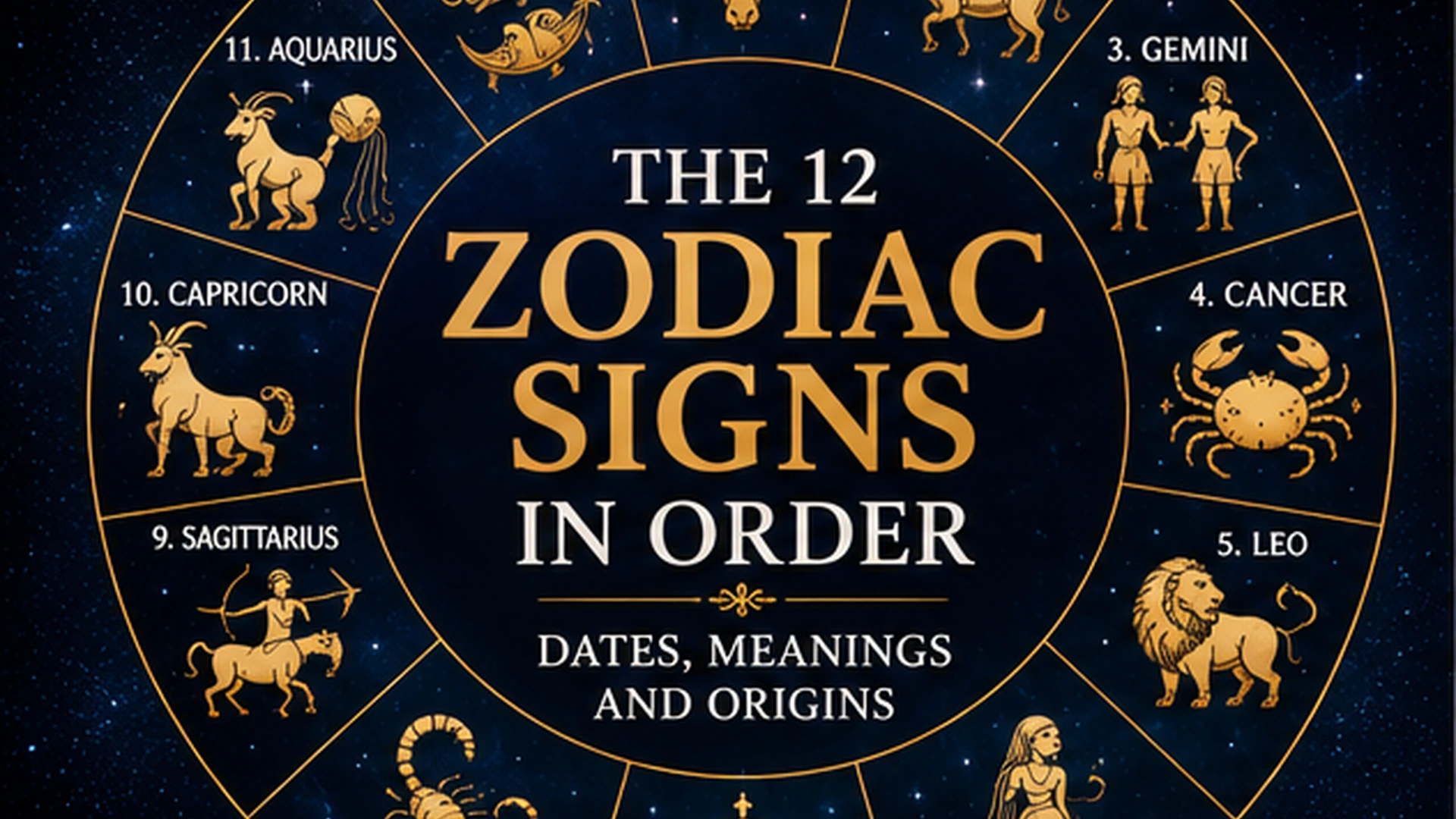
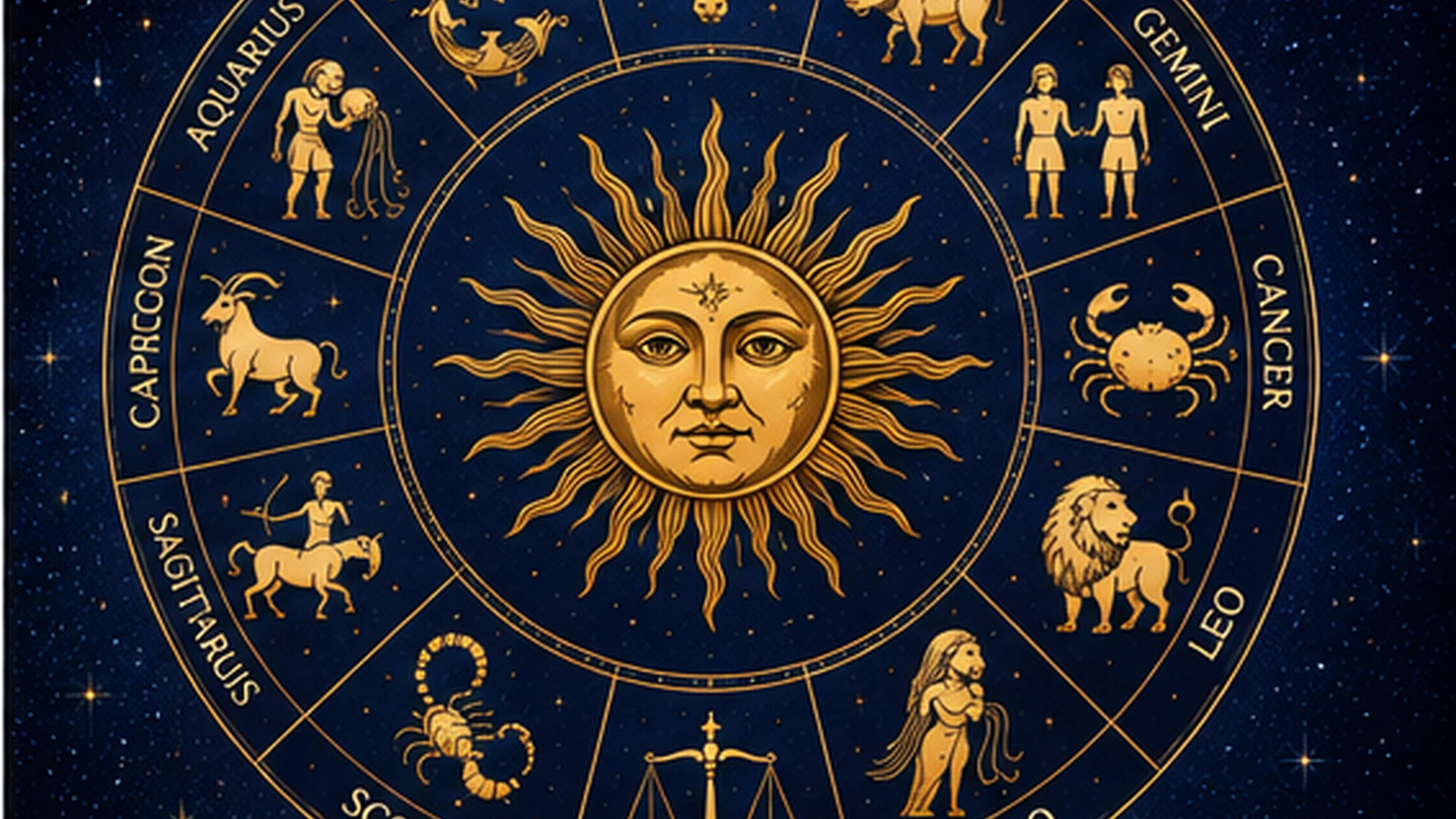
The 12 zodiac signs in order are Aries, Taurus, Gemini, Cancer, Leo, Virgo, Libra, Scorpio, Sagittarius, Capricorn, Aquarius and Pisces. In the tropical zodiac used by most Western horoscopes, Aries begins at the March equinox and Pisces completes the cycle just before the next equinox. Each sign occupies an equal 30-degree section of a symbolic 360-degree circle and is associated in astrology with a date range, element, modality, ruling planet and set of traditional meanings.
The zodiac is also a historical system. Its twelve-part structure developed gradually in ancient Mesopotamia, where scholars tracked the Sun, Moon and planets against stars near the ecliptic. Greek-speaking astrologers later adapted this knowledge within Hellenistic philosophy and mythology, helping create the Western zodiac recognizable today. The result is not a single invention from one person or one moment, but a layered tradition shaped by Babylonian astronomy, Greco-Roman interpretation and later astrological practice. [1][2][3]
This guide explains the zodiac signs and dates and meanings while making an important distinction: astrological signs are symbolic divisions, whereas astronomical constellations are unequal regions of the real sky. Astrology remains culturally influential, but its claims about personality and prediction are not accepted as scientific evidence. [4][5][8]
| Image number | 1 - Featured image |
|---|---|
| Purpose | Immediately communicate a complete, ordered twelve-sign zodiac guide. |
| Detailed scene | A realistic celestial observatory scene at night with a refined circular zodiac wheel arranged from Aries through Pisces around a luminous ecliptic. The symbols should be visible as embossed, historically inspired forms, not written labels. |
| Specific culture or historical context | A modern educational visualization informed by ancient Mediterranean and Mesopotamian celestial art, without blending ritual clothing or inventing a ceremony. |
| People shown | No people; the focus is the sky, instrument and twelve symbols. |
| Location | Open-air stone observatory overlooking a clear horizon. |
| Clothing | Not applicable. |
| Architecture | Subtle ancient observatory-inspired stonework, historically neutral and not presented as a reconstruction of a named site. |
| Objects | Brass armillary sphere, circular zodiac instrument, star chart materials, twelve embossed zodiac emblems. |
| Lighting | Natural moonlight and warm lamplight, with crisp stars and realistic shadows. |
| Composition | Wide 16:9 hero composition; zodiac wheel centered slightly right with open sky on the left for website text overlays. |
| SEO-friendly filename | 12-zodiac-signs-in-order-dates-meanings-origins.webp |
| Image title | The Twelve Zodiac Signs in Order |
| Alt text | Twelve zodiac symbols arranged in order around a realistic celestial wheel beneath a star-filled night sky |
| Caption | The tropical zodiac divides a complete circle into twelve equal signs, beginning with Aries and ending with Pisces. |
| Recommended placement | After the introduction and before the Quick Answer. |
| Article section supported | Introduction and complete zodiac overview. |
| Important elements to avoid | No text, labels, logos, fantasy magic effects, glowing people, collage panels, inaccurate extra zodiac symbols or a thirteenth sign. |
Quick Answer
The twelve zodiac signs, from first to twelfth, are Aries, Taurus, Gemini, Cancer, Leo, Virgo, Libra, Scorpio, Sagittarius, Capricorn, Aquarius and Pisces. Aries is the first sign because the tropical zodiac begins at the March equinox. Pisces is the 12th sign of the zodiac. The familiar birth-date ranges are approximate and can shift by a day depending on the year, time and time zone.
The 12 Zodiac Signs and Dates at a Glance
| Order | Sign | Symbol | Typical dates | Element | Modality | Ruler | Traditional theme |
|---|---|---|---|---|---|---|---|
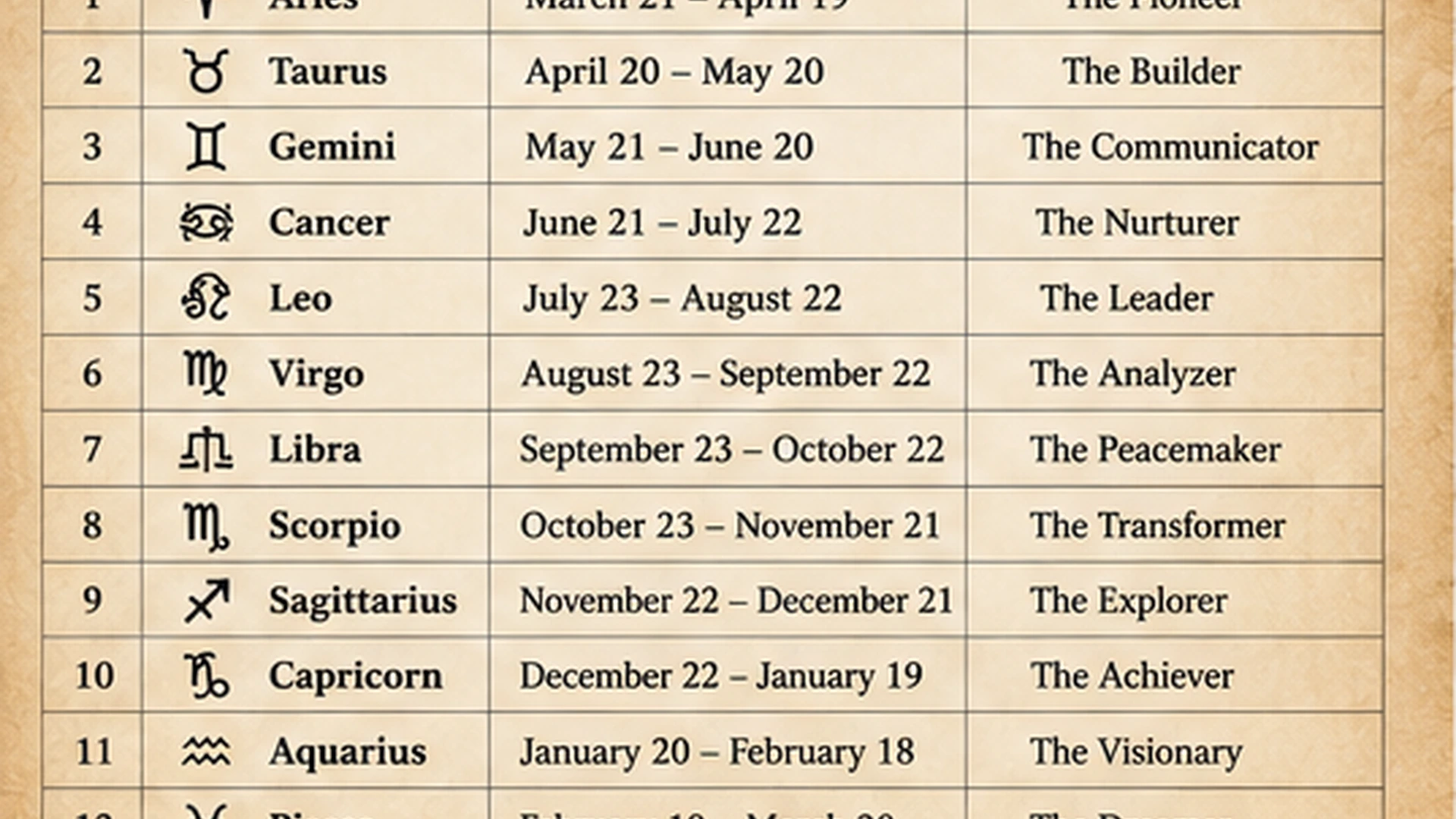
| 1 | Aries | Ram | March 21-April 19 | Fire | Cardinal | Mars | initiative, courage and direct action |
| 2 | Taurus | Bull | April 20-May 20 | Earth | Fixed | Venus | stability, value and material continuity |
| 3 | Gemini | Twins | May 21-June 20 | Air | Mutable | Mercury | communication, exchange and dual perspective |
| 4 | Cancer | Crab | June 21-July 22 | Water | Cardinal | Moon | care, protection and emotional belonging |
| 5 | Leo | Lion | July 23-August 22 | Fire | Fixed | Sun | visibility, creativity and self-expression |
| 6 | Virgo | Maiden | August 23-September 22 | Earth | Mutable | Mercury | discernment, service and practical refinement |
| 7 | Libra | Scales | September 23-October 22 | Air | Cardinal | Venus | balance, relationship and fair judgment |
| 8 | Scorpio | Scorpion | October 23-November 21 | Water | Fixed | Mars; Pluto in many modern schools | depth, intensity and transformation |
| 9 | Sagittarius | Archer | November 22-December 21 | Fire | Mutable | Jupiter | exploration, belief and expanded perspective |
| 10 | Capricorn | Sea-Goat | December 22-January 19 | Earth | Cardinal | Saturn | structure, responsibility and long-term achievement |
| 11 | Aquarius | Water-Bearer | January 20-February 18 | Air | Fixed | Saturn; Uranus in many modern schools | community, systems and future-oriented ideas |
| 12 | Pisces | Fishes | February 19-March 20 | Water | Mutable | Jupiter; Neptune in many modern schools | imagination, empathy and endings that lead to renewal |
Date note: These are the most widely published tropical-zodiac ranges. Exact solar ingress can occur on a neighboring calendar date, especially for people born near a sign boundary. In astrology, an exact birth time and location are used to resolve a boundary case.
What Is the Zodiac?
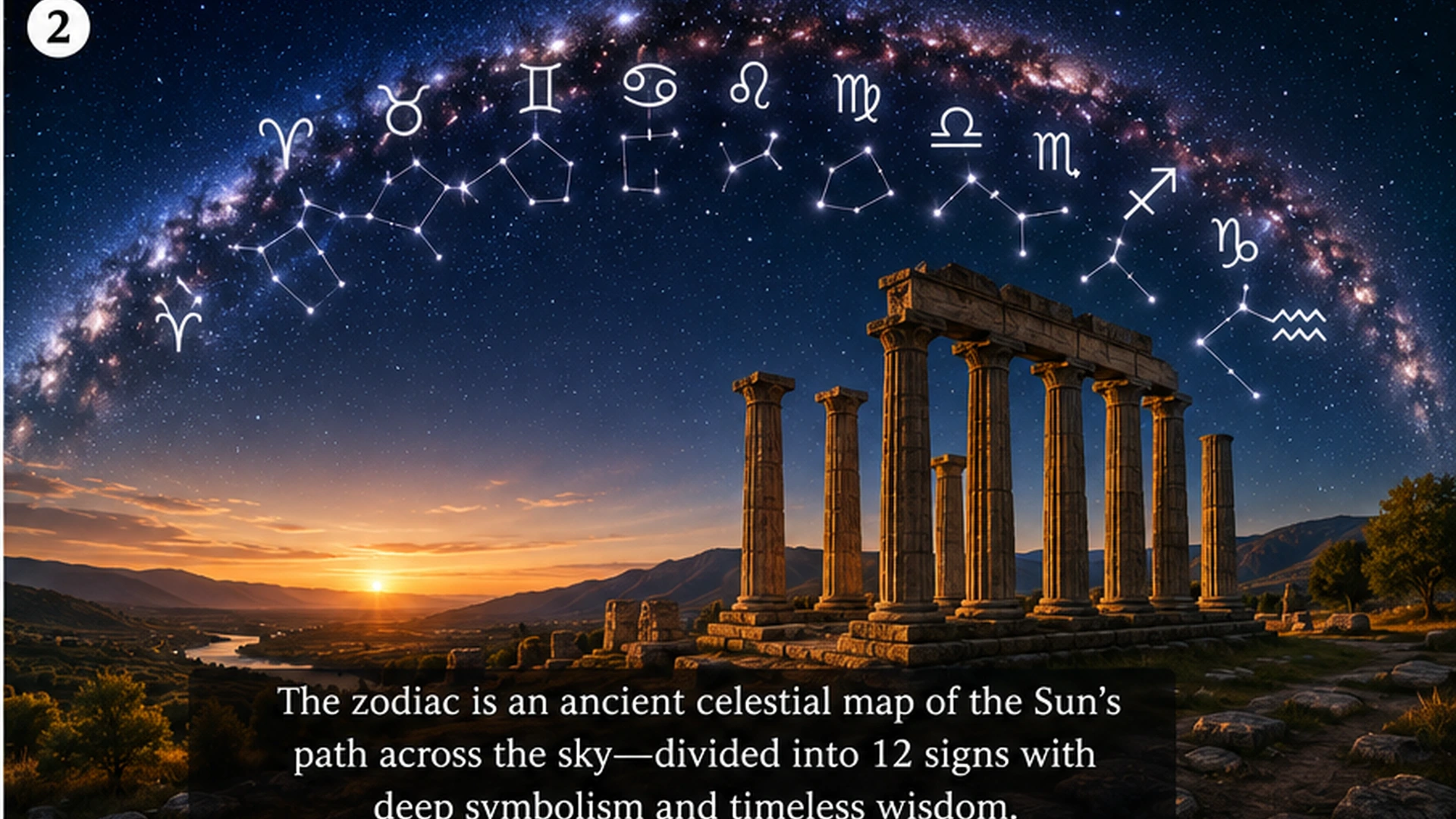
The zodiac is a band of the sky centered on the ecliptic, the apparent annual path of the Sun as viewed from Earth. Because the major planets orbit in nearly the same plane, they also appear near this band. NASA describes the ecliptic plane as the imaginary plane containing Earth’s orbit around the Sun, while the International Astronomical Union defines constellations as officially bounded areas of sky. [4][5]
In astrology, the zodiac is usually treated as a complete 360-degree circle divided into twelve equal signs of 30 degrees each. The word “zodiac” came into English through Latin and Greek. Its Greek root refers to a circle of figures or living images, which helps explain why many signs are represented by animals. [7]
“Zodiac sign,” “astrological sign,” “star sign” and “horoscope sign” are often used as synonyms in everyday language. Strictly speaking, a horoscope is the chart or interpretation calculated for a particular time, while the sign is one division of the zodiac.
Why the Zodiac Starts With Aries Instead of January
The zodiac’s traditional order is seasonal, not based on the modern calendar year. In the tropical system, zero degrees Aries is defined by the March equinox, when the Sun crosses the celestial equator moving northward. Taurus follows after 30 degrees, then Gemini, and so on until Pisces closes the circle.
That is why Capricorn, Aquarius and Pisces appear at the start of the calendar year but near the end of the zodiac sequence. Aries remains sign number one, and Pisces remains sign number twelve.
The Twelve Zodiac Signs in Order and What They Mean
The meanings below summarize common modern Western astrological interpretations. They are cultural and symbolic descriptions, not scientifically verified personality diagnoses. Historical sign images are older than many of the modern keyword lists now circulated online, so it is useful to separate the origin of a symbol from later personality interpretation.
1. Aries: Ram
Dates: March 21-April 19 Element: Fire Modality: Cardinal Traditional ruler: Mars Core traditional theme: initiative, courage and direct action
Aries means “ram.” In the tropical zodiac, it begins at the March equinox and therefore opens the zodiac cycle. Ancient Mesopotamian and later Greek sky traditions contributed to the ram imagery, while Greco-Roman storytelling connected the constellation with the golden-fleeced ram.
Traditional Western astrology describes Aries as active, competitive, candid and willing to begin. Its symbolism is less about being permanently aggressive than about the first push of energy: starting, separating, testing and moving before every detail is settled.
2. Taurus: Bull
Dates: April 20-May 20 Element: Earth Modality: Fixed Traditional ruler: Venus Core traditional theme: stability, value and material continuity
Taurus is Latin for “bull.” Bull imagery was important across several ancient Near Eastern cultures, and a bull constellation was recognized long before the fully standardized twelve-sign zodiac. The later zodiac retained the powerful animal as its second sign.
Traditional interpretations associate Taurus with patience, sensory awareness, loyalty, resources and resistance to unnecessary change. As a fixed earth sign, it symbolizes cultivation: maintaining what has already begun and giving form to ideas through steady effort.
3. Gemini: Twins
Dates: May 21-June 20 Element: Air Modality: Mutable Traditional ruler: Mercury Core traditional theme: communication, exchange and dual perspective
Gemini means “twins.” Babylonian star lists included a pair known as the Great Twins, while Greek and Roman traditions commonly connected the constellation with Castor and Pollux, the Dioscuri. The Getty’s iconography record identifies them as twin deities associated with protection, horsemanship and seafarers.
Traditional astrology links Gemini with language, questions, movement, versatility and the ability to hold more than one viewpoint. Its twin image often represents relationship and comparison, not dishonesty or a “two-faced” personality.
4. Cancer: Crab
Dates: June 21-July 22 Element: Water Modality: Cardinal Traditional ruler: Moon Core traditional theme: care, protection and emotional belonging
Cancer is Latin for “crab.” The crab became part of the classical constellation tradition and was woven into Greek myth, especially stories connected with Heracles. Its sideways movement and protective shell later supported symbolic readings concerning caution, shelter and vulnerability.
Traditional Western astrology associates Cancer with home, family bonds, memory, care and emotional security. As a cardinal water sign, it symbolizes initiating through feeling: forming a safe base, responding to needs and protecting what is considered close.
5. Leo: Lion
Dates: July 23-August 22 Element: Fire Modality: Fixed Traditional ruler: Sun Core traditional theme: visibility, creativity and self-expression
Leo is Latin for “lion.” Lion imagery appears in ancient Mesopotamian celestial symbolism and was later interpreted through Greek stories, including the Nemean Lion. The animal’s long-standing links with power and royalty helped make it one of the zodiac’s most recognizable figures.
Traditional astrology connects Leo with confidence, generosity, performance, play, leadership and the wish to create something personally meaningful. Its fixed-fire symbolism describes sustained radiance rather than constant attention-seeking.
6. Virgo: Maiden
Dates: August 23-September 22 Element: Earth Modality: Mutable Traditional ruler: Mercury Core traditional theme: discernment, service and practical refinement
Virgo means “maiden” or “young woman.” The constellation has been associated with several female figures across cultures. Its bright star Spica means “ear of grain,” preserving an agricultural connection that reaches back into ancient Near Eastern and Mediterranean traditions.
Traditional Western astrology links Virgo with analysis, skill, craft, health routines, organization and improvement. Its mutable-earth symbolism concerns adapting practical systems. The archetype is better understood as careful discrimination than as perfectionism alone.
7. Libra: Scales
Dates: September 23-October 22 Element: Air Modality: Cardinal Traditional ruler: Venus Core traditional theme: balance, relationship and fair judgment
Libra is Latin for “scales” or “balance.” It is the only zodiac sign represented by an inanimate object. In some older sky traditions the stars were treated as the claws of the neighboring scorpion; the scales became firmly established as an independent sign in the Greco-Roman zodiac.
Traditional astrology associates Libra with negotiation, aesthetics, partnership, proportion and justice. As a cardinal air sign, it initiates through dialogue and comparison. Balance here is an active process of adjustment, not permanent indecision.
8. Scorpio: Scorpion
Dates: October 23-November 21 Element: Water Modality: Fixed Traditional ruler: Mars; Pluto in many modern schools Core traditional theme: depth, intensity and transformation
Scorpio takes its name from the scorpion. The figure has deep Mesopotamian precedents and a strong classical mythic identity. Astronomically, the official constellation name is Scorpius, while “Scorpio” is standard for the astrological sign.
Traditional Western astrology connects Scorpio with privacy, trust, shared resources, crisis, desire, endurance and renewal. Its fixed-water symbolism suggests concentrated emotional force. Popular stereotypes often exaggerate secrecy or revenge and ignore loyalty and resilience.
9. Sagittarius: Archer
Dates: November 22-December 21 Element: Fire Modality: Mutable Traditional ruler: Jupiter Core traditional theme: exploration, belief and expanded perspective
Sagittarius is Latin for “archer.” The classical image is often a centaur drawing a bow, although its ancient Mesopotamian predecessor was not identical to the later Greek figure. The sign’s arrow supplied a durable symbol of direction and long-range aim.
Traditional astrology associates Sagittarius with travel, study, philosophy, humor, conviction and the search for a wider horizon. Its mutable-fire symbolism describes adaptable enthusiasm. At its best, it explores; at its least careful, it may overstate certainty.
10. Capricorn: Sea-Goat
Dates: December 22-January 19 Element: Earth Modality: Cardinal Traditional ruler: Saturn Core traditional theme: structure, responsibility and long-term achievement
Capricorn derives from Latin words associated with a horned goat. Its full traditional figure is the sea-goat: a goat’s forequarters joined to a fish-like tail. This composite creature has ancient Mesopotamian roots and should not be reduced to an ordinary mountain goat.
Traditional Western astrology connects Capricorn with discipline, boundaries, institutions, maturity and goals that require time. As a cardinal earth sign, it begins by organizing resources and accepting responsibility. The symbolism emphasizes durable results rather than status alone.
11. Aquarius: Water-Bearer
Dates: January 20-February 18 Element: Air Modality: Fixed Traditional ruler: Saturn; Uranus in many modern schools Core traditional theme: community, systems and future-oriented ideas
Aquarius is Latin for “water-bearer.” Water-pouring figures were associated with the rainy season and divine water symbolism in ancient Mesopotamia. Despite its water imagery, Aquarius is classified as an air sign in Western astrology.
Traditional astrology links Aquarius with networks, reform, independence, social ideals and unconventional thinking. Its fixed-air symbolism concerns sustained ideas and collective systems. The archetype can describe community involvement as much as personal eccentricity.
12. Pisces: Fishes
Dates: February 19-March 20 Element: Water Modality: Mutable Traditional ruler: Jupiter; Neptune in many modern schools Core traditional theme: imagination, empathy and endings that lead to renewal
Pisces is Latin for “fishes.” Ancient Mesopotamian zodiac lists associated the final part of the cycle with fish imagery, and the later classical constellation commonly shows two fish connected by a cord. Pisces closes the tropical zodiac immediately before the March equinox.
Traditional Western astrology connects Pisces with imagination, compassion, permeability, faith, art and the dissolving of rigid boundaries. As a mutable water sign, it symbolizes adaptation through feeling. Pisces is the 12th sign of the zodiac; Aries begins the next cycle.
The Four Zodiac Elements
Western astrology groups the twelve signs into four elements, with three signs in each group. The elements function as symbolic categories rather than chemical substances.
| Element | Signs | Traditional symbolism |
|---|---|---|
| Fire | Aries, Leo, Sagittarius | initiative, vitality, inspiration and expression |
| Earth | Taurus, Virgo, Capricorn | material reality, skill, stability and practical results |
| Air | Gemini, Libra, Aquarius | language, ideas, relationships and social systems |
| Water | Cancer, Scorpio, Pisces | emotion, intuition, memory and psychological depth |
Cardinal, Fixed and Mutable Signs
The three modalities describe how a sign is traditionally said to express its element. Each modality contains one fire, earth, air and water sign.
| Modality | Signs | Traditional function |
|---|---|---|
| Cardinal | Aries, Cancer, Libra, Capricorn | beginning, initiating and setting a direction |
| Fixed | Taurus, Leo, Scorpio, Aquarius | stabilizing, sustaining and concentrating |
| Mutable | Gemini, Virgo, Sagittarius, Pisces | adapting, translating and completing a phase |
Where Did the 12 Zodiac Signs Originate?
Mesopotamian foundations
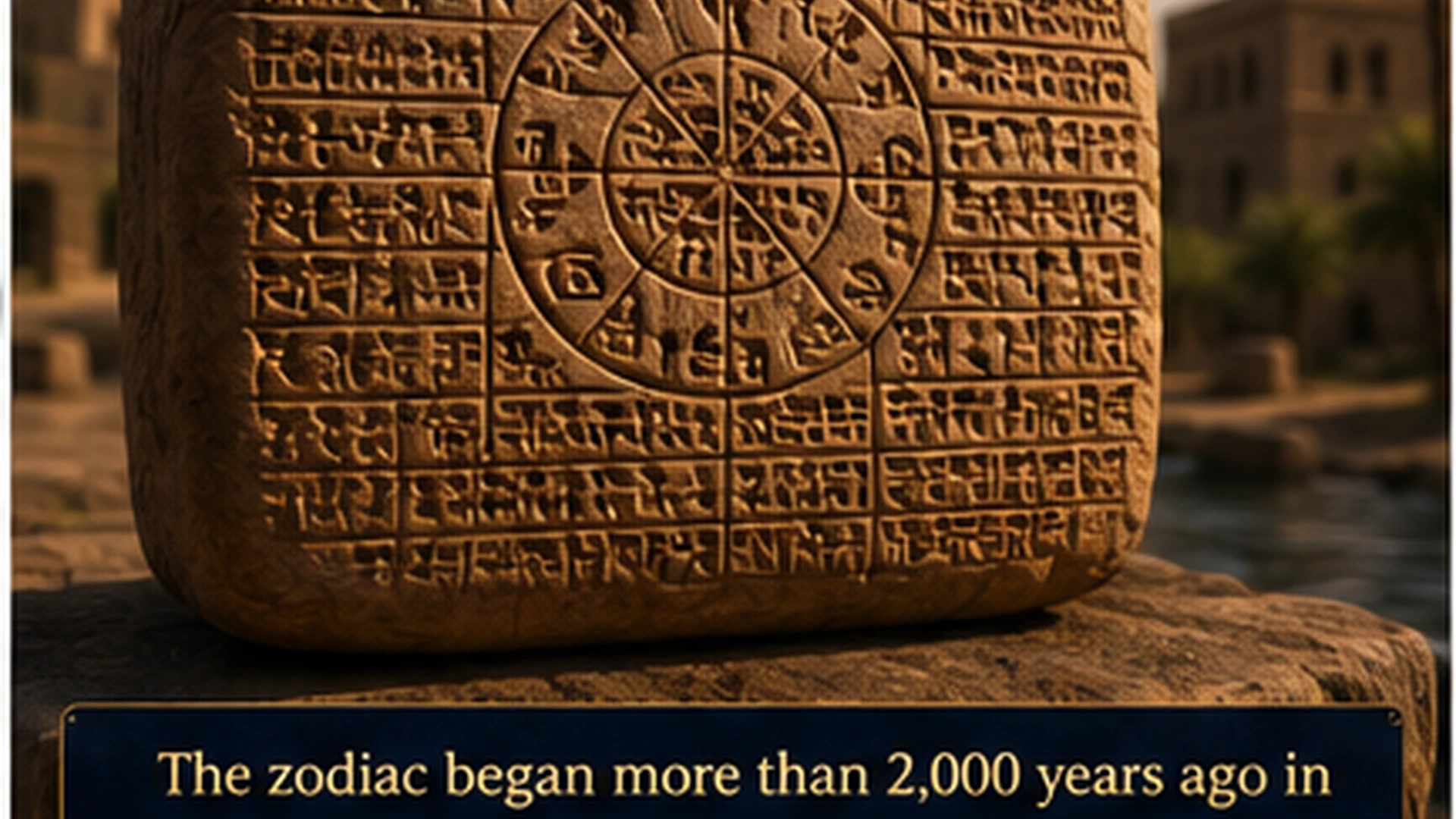
The strongest evidence for the twelve-part zodiac comes from ancient Mesopotamian scholarly culture. Babylonian astronomers and astrologers observed celestial cycles, recorded omens and developed mathematical methods for predicting planetary phenomena. Earlier star catalogues already included many figures later associated with the zodiac, but the standardized scheme of twelve equal signs was a later development.
A Late Babylonian clay tablet in the British Museum, dated to about 500 BCE, lists months alongside associated zodiac signs. The museum describes it as an important stage in the development of the familiar system and notes that the twelve-part zodiac derives from ancient Mesopotamian ideas and images. Historian of science John M. Steele dates the invention of the zodiac to the late fifth century BCE. [1][2]
The number twelve was practical. A year contains roughly twelve lunar months, and twelve equal signs of 30 degrees create a complete 360-degree circle. This mathematical regularity made positions easier to describe and calculate, even though the visible constellations themselves do not have equal sizes.
| Image number | 2 |
|---|---|
| Purpose | Illustrate the Mesopotamian evidence behind the twelve-part zodiac. |
| Detailed scene | Museum-quality historical reconstruction of a Late Babylonian scholarly workspace. A trained scribe studies a clay tablet containing month and zodiac associations beside measuring cords, a reed stylus and astronomical notes. |
| Specific culture or historical context | Late Babylonian Mesopotamia, approximately fifth to fourth century BCE. |
| People shown | One adult Babylonian scholar-scribe with natural anatomy and focused posture. |
| Location | Interior scholarly room in Babylon or Sippar, presented as a cautious reconstruction rather than a specific excavated building. |
| Clothing | Historically plausible woven wool or linen garment appropriate to Late Babylonian elite scholarly work. |
| Architecture | Mud-brick walls, plastered surfaces, wooden shelving and simple reed elements. |
| Objects | Clay tablets, reed stylus, oil lamp, small astronomical reference board; no modern paper or telescope. |
| Lighting | Warm oil-lamp light with soft daylight entering from a high opening. |
| Composition | Documentary medium-wide scene; tablet and hands clearly visible, with no readable invented cuneiform close-up. |
| SEO-friendly filename | babylonian-origins-of-twelve-zodiac-signs.webp |
| Image title | Babylonian Origins of the Twelve-Sign Zodiac |
| Alt text | Late Babylonian scholar studying a clay astronomical tablet in a historically reconstructed workspace |
| Caption | The twelve-sign zodiac developed gradually in ancient Mesopotamian scholarly astronomy and astrology. |
| Recommended placement | After “Mesopotamian foundations.” |
| Article section supported | Origins and historical development. |
| Important elements to avoid | No pyramids, Egyptian costumes, fantasy priests, invented ritual, modern zodiac wheel, readable fake text or mixed African and Mesopotamian cultures. |
From Babylonia to the Hellenistic world
After Alexander the Great’s conquests in the fourth century BCE, knowledge circulated more intensively among Mesopotamian, Egyptian and Greek-speaking scholarly communities. Hellenistic astrologers combined Babylonian astronomical techniques with Greek geometry, philosophy, elemental theory and mythology. By this period, the zodiac and natal horoscope were taking forms recognizable in later Western astrology. [3][9]
The Greek and Roman worlds did not simply copy a finished Babylonian system unchanged. They translated names, reinterpreted figures and attached classical stories to constellations. Gemini became strongly identified with Castor and Pollux; Leo with the Nemean Lion; Sagittarius with an archer or centaur; and other signs acquired Greco-Roman narrative associations. These stories are important to Western iconography, but they should not erase the earlier Mesopotamian layers.
| Image number | 4 |
|---|---|
| Purpose | Represent the Hellenistic and Greco-Roman reshaping of inherited zodiac imagery. |
| Detailed scene | Museum-quality reconstruction of artisans laying a zodiac mosaic in a Hellenistic Mediterranean workshop. Several completed emblems, including scales, twins and an archer, are visible as mosaic figures while a scholarly patron reviews a circular design. |
| Specific culture or historical context | Hellenistic eastern Mediterranean, approximately third to first century BCE. |
| People shown | Three adult artisans and one patron or scholar, with diverse Mediterranean appearances. |
| Location | Courtyard workshop in a Hellenistic city. |
| Clothing | Historically plausible tunics and work garments; no theatrical Roman armor. |
| Architecture | Stone courtyard, plaster walls, columns used sparingly and accurately. |
| Objects | Tesserae, bowls of colored stone, compass, straightedge and partial circular mosaic. |
| Lighting | Natural Mediterranean daylight with soft shade. |
| Composition | Editorial documentary angle from slightly above, showing the craft process rather than a posed ceremonial tableau. |
| SEO-friendly filename | hellenistic-greek-roman-zodiac-development.webp |
| Image title | Hellenistic Development of Zodiac Imagery |
| Alt text | Hellenistic artisans creating a circular zodiac mosaic in a historically reconstructed workshop |
| Caption | Greek and Roman traditions reinterpreted inherited Near Eastern star figures and helped shape the familiar Western zodiac. |
| Recommended placement | After “From Babylonia to the Hellenistic world.” |
| Article section supported | Transmission and historical development. |
| Important elements to avoid | No Christian medieval symbols, Renaissance clothing, Egyptian pyramids, fantasy gods appearing physically, embedded lettering or collage format. |
Medieval transmission and modern popular astrology
Astrological and astronomical learning continued through Greek, Syriac, Persian, Arabic, Sanskrit and Latin scholarly traditions. Medieval Islamic astronomers preserved, criticized and expanded earlier astronomy, while Latin European scholars translated many works from Arabic and Greek. Astronomy and astrology remained closely connected in many institutions until the scientific transformations of the early modern period.
Modern newspaper and magazine horoscopes simplified astrology by focusing on the Sun sign alone. Traditional natal astrology, however, interprets a full chart containing the Sun, Moon, planets, angles and relationships among them. A person’s “zodiac sign” in popular conversation normally means the tropical Sun sign.
Zodiac Signs Are Not the Same as Constellations
This distinction resolves many common arguments about zodiac dates. An astrological sign is an equal 30-degree segment of a coordinate system. An astronomical constellation is an officially bounded region of sky. The International Astronomical Union recognizes 88 constellations of different shapes and sizes; astronomers use those boundaries to describe where celestial objects appear. [5]
The Sun therefore does not spend exactly one month in each astronomical constellation. It moves through large constellations for longer periods and small ones for shorter periods. Because Earth’s rotational axis slowly changes direction—a motion called precession—the seasonal signs no longer align with the background constellations in the same way they did in antiquity. NASA’s educational material notes that horoscope signs correspond to ancient positions rather than the constellation behind the Sun in the same modern month. [4]
| Image number | 3 |
|---|---|
| Purpose | Show the difference between equal astrological signs and unequal astronomical constellations. |
| Detailed scene | A modern astronomer in a dark-sky field uses a portable telescope while a subtle, scientifically accurate visual overlay traces the ecliptic and irregular constellation boundaries across the stars. A separate brass circular instrument in the foreground shows twelve equal segments without written labels. |
| Specific culture or historical context | Contemporary observational astronomy. |
| People shown | One Black African astronomer or astronomy educator. |
| Location | Highland or savannah dark-sky site in Africa with a clear horizon and minimal light pollution. |
| Clothing | Practical modern field jacket and neutral astronomy gear. |
| Architecture | No architecture; natural landscape. |
| Objects | Portable telescope, red-light torch, star atlas, brass twelve-division teaching instrument. |
| Lighting | Realistic starlight, faint red task light and early-night horizon glow. |
| Composition | Wide landscape; astronomer at left, sky and ecliptic dominating the upper frame, instrument in lower right. |
| SEO-friendly filename | zodiac-signs-versus-constellations-ecliptic.webp |
| Image title | Zodiac Signs Versus Constellations |
| Alt text | African astronomer observing the ecliptic while an educational instrument shows twelve equal zodiac divisions |
| Caption | Astrological signs are equal 30-degree divisions, while astronomical constellations have unequal official boundaries. |
| Recommended placement | After “Zodiac signs are not the same as constellations.” |
| Article section supported | Astronomy, ecliptic, tropical zodiac and Ophiuchus explanation. |
| Important elements to avoid | No horoscope predictions, supernatural light beams, inaccurate constellation lines, text labels, extra fingers or science-fiction equipment. |
Tropical Zodiac, Sidereal Zodiac and Astronomical Constellations
| System | How it is defined | Common use | Key point |
|---|---|---|---|
| Tropical zodiac | Twelve equal 30-degree signs anchored to the equinoxes and solstices | Most modern Western astrology | Aries begins at the March equinox. |
| Sidereal zodiac | Twelve equal signs adjusted to remain closer to a stellar reference frame | Many Indian astrology traditions and some Western schools | Dates usually differ from tropical Sun-sign dates. |
| IAU constellations | Unequal sky regions with official boundaries | Modern astronomy | They are not twelve equal signs and the ecliptic also passes through Ophiuchus. |
Why Zodiac Dates Sometimes Differ by One Day
Popular lists use convenient calendar ranges, but the Sun does not enter every tropical sign at the same clock time each year. Leap years, the exact length of Earth’s orbit, time zones and the observer’s calendar date can place an ingress late on one day or early on the next. This is why one source may begin Aries on March 20 while another uses March 21.
For most birthdays, the standard table is enough. Someone born close to a boundary—often called a cusp—would need the exact year, birth time and location to calculate the Sun’s zodiac longitude within astrology. Astrology does not normally treat a person as half of one Sun sign and half of another; the Sun occupies one calculated sign at a given moment.
What Is the 12th Zodiac Sign?
Pisces is the 12th zodiac sign. It follows Aquarius and comes immediately before Aries begins the next tropical cycle at the March equinox. Pisces is traditionally represented by two fishes and associated in Western astrology with the water element and mutable modality.
The answer remains Pisces whether the query is phrased as “12th zodiac sign,” “12th sign of the zodiac,” “what is the 12 zodiac sign” or “last zodiac sign.” Ophiuchus does not replace Pisces in the traditional twelve-sign astrological system.
Is Ophiuchus the 13th Zodiac Sign?
Ophiuchus is an astronomical constellation crossed by the ecliptic, but it is not one of the twelve traditional astrological signs. The IAU explains that the Sun’s apparent path passes through Ophiuchus and that astronomical constellations are not equal in size. Astrology’s twelve signs are a separate equal-division system. [6]
Calling Ophiuchus a “13th sign” mixes two definitions: modern constellation boundaries and the twelve-sign astrological zodiac. It is more accurate to say that Ophiuchus is an ecliptic constellation but not a standard tropical or sidereal zodiac sign.
Common Misunderstandings About the Twelve Star Signs
The zodiac did not originate as twelve modern personality profiles. The sky figures, mathematical signs and personality keywords developed in different periods.
Your Sun sign is not your complete birth chart. Traditional astrology also considers the Moon, planets, angles, houses and aspects.
Aquarius is an air sign despite the water-bearer image. The figure carries water; the sign’s element is air in the Western elemental scheme.
Capricorn is traditionally a sea-goat, not simply a goat. Its composite form preserves ancient imagery.
Scorpio is the astrological sign name; Scorpius is the modern astronomical constellation name.
“Cusp” does not usually mean two Sun signs at once. It means a birthday near a boundary that may require an exact calculation.
The twelve-sign zodiac is not the same as the Chinese zodiac, which uses a twelve-year animal cycle and a different historical system.
Scientific Limitations and Responsible Interpretation
Astrology has major historical, religious, artistic and social importance, and many people use zodiac language for reflection, identity or entertainment. Those uses should not be confused with scientific proof that a birth sign causes personality, predicts events or guarantees relationship, medical, fertility, financial or spiritual outcomes.
Modern astronomy studies celestial objects through observation, measurement, mathematics and testable models. Astrology’s claims about human affairs are classified by mainstream philosophy of science as pseudoscientific rather than established scientific knowledge. Responsible writing should therefore use phrases such as “traditionally associated with” and avoid presenting a zodiac reading as diagnosis, certainty or professional advice. [8]
Historical caution is equally important. “Babylonian,” “Greek,” “Roman,” “Egyptian,” “Indian” and “Arabic” are not interchangeable labels. The zodiac crossed languages and regions over centuries, and each scholarly or religious tradition adapted it differently. A respectful article should name the period and culture being discussed rather than presenting one timeless universal astrology.
| Image number | 5 |
|---|---|
| Purpose | Present responsible modern study of astrology as cultural symbolism, distinct from scientific astronomy. |
| Detailed scene | A calm contemporary library table with an open historical astronomy book, a replica clay tablet, a star atlas, and a modern blank birth-chart diagram beside a laptop showing a planetarium sky map without readable interface text. A researcher compares the materials. |
| Specific culture or historical context | Contemporary interdisciplinary study of history, religion, astronomy and astrology. |
| People shown | One Black African researcher, seen in three-quarter profile. |
| Location | University or museum research library. |
| Clothing | Professional contemporary clothing in neutral tones. |
| Architecture | Modern library with archival shelving and soft academic atmosphere. |
| Objects | Historical source reproductions, star atlas, laptop, notebook, replica tablet, circular chart. |
| Lighting | Natural window light with warm desk lamp. |
| Composition | Wide 16:9 editorial image with researcher on right and comparative materials across the center. |
| SEO-friendly filename | responsible-study-zodiac-astrology-astronomy.webp |
| Image title | Studying Zodiac History Responsibly |
| Alt text | Researcher comparing historical zodiac sources, a star atlas and a modern astrological chart in a library |
| Caption | The zodiac can be studied as history and cultural symbolism while keeping astrological interpretation separate from scientific astronomy. |
| Recommended placement | After “Scientific limitations and responsible interpretation.” |
| Article section supported | Ethical study, cultural caution and scientific limitations. |
| Important elements to avoid | No fortune-telling performance, crystal ball, medical claims, guaranteed predictions, visible copyrighted book pages, embedded text or mystical smoke. |
People Also Ask
What are the 12 zodiac signs in order?
Aries, Taurus, Gemini, Cancer, Leo, Virgo, Libra, Scorpio, Sagittarius, Capricorn, Aquarius and Pisces.
What is the 12th sign of the zodiac?
Pisces is the 12th and final sign of the traditional tropical zodiac. Aries begins the next cycle.
Why is Aries the first zodiac sign?
The tropical zodiac begins at the March equinox, defined as zero degrees Aries, rather than at January 1.
What are the dates for all 12 zodiac signs?
The standard ranges run from Aries, March 21-April 19, through Pisces, February 19-March 20. Boundary dates can shift by a day.
Where did the zodiac signs originate?
The twelve-sign structure developed in ancient Mesopotamia, especially Late Babylonian scholarship, and was later reshaped in the Hellenistic and Greco-Roman worlds.
Are zodiac signs and constellations the same?
No. Signs are twelve equal 30-degree divisions used in astrology; constellations are unequal officially bounded regions used in astronomy.
Is Ophiuchus a zodiac sign?
Ophiuchus is an ecliptic constellation, but it is not one of the twelve standard astrological signs.
Frequently Asked Questions
How many zodiac signs are there?
Traditional Western astrology uses twelve signs. Modern astronomy recognizes thirteen constellations crossed by the ecliptic when Ophiuchus is included, but constellations and signs are not the same system.
Which zodiac sign comes first?
Aries comes first in the traditional zodiac order.
Which zodiac sign comes last?
Pisces comes last and is sign number twelve.
What sign follows Scorpio?
Sagittarius follows Scorpio.
What sign comes before Pisces?
Aquarius comes immediately before Pisces.
Are star signs and zodiac signs the same?
In everyday use, yes. “Star sign” is a common synonym for a person’s zodiac Sun sign, particularly in British English.
Is a horoscope the same as a zodiac sign?
No. A zodiac sign is one division of the zodiac. A horoscope is a chart or interpretive forecast based on celestial positions for a particular time.
Why are there twelve zodiac signs?
The system uses twelve equal 30-degree divisions of a 360-degree circle, fitting the approximate twelve-lunar-month structure of a year and creating a convenient mathematical framework.
Do zodiac signs match the constellations today?
Not exactly. Tropical signs remain anchored to the seasons, while the background constellations have shifted relative to the equinoxes because of precession.
Can zodiac dates change?
The standard date ranges stay broadly consistent, but the exact moment the Sun enters a sign can fall on a neighboring calendar day in different years and time zones.
What are the fire signs?
Aries, Leo and Sagittarius.
What are the earth signs?
Taurus, Virgo and Capricorn.
What are the air signs?
Gemini, Libra and Aquarius.
What are the water signs?
Cancer, Scorpio and Pisces.
Does astrology scientifically prove personality traits?
No. Zodiac traits are traditional astrological interpretations and are not scientifically established personality measures.
Key Takeaways
The 12 zodiac signs in order run from Aries to Pisces.
Pisces is the 12th sign of the zodiac; Aries is the first.
The familiar dates refer to the tropical zodiac and are approximate near boundaries.
The twelve-part zodiac developed in ancient Mesopotamia and was reshaped in the Hellenistic world.
Astrological signs are equal divisions; astronomical constellations are unequal sky regions.
Ophiuchus is an ecliptic constellation, not a standard thirteenth astrological sign.
Zodiac meanings are traditional cultural interpretations, not scientifically verified predictions.
Conclusion
The twelve zodiac signs form an ordered symbolic cycle: Aries begins, Pisces completes, and each sign contributes a distinct combination of element, modality, image and traditional meaning. Understanding the order and dates is straightforward, but understanding the origins requires more care. The system grew from Mesopotamian celestial scholarship, acquired new stories and concepts in the Hellenistic world, and continued changing through medieval and modern astrology.
The most useful approach is therefore both clear and responsible: learn the signs as a cultural and historical system, distinguish astrology from astronomy, and treat personality descriptions as symbolic traditions rather than guaranteed facts. With those distinctions in place, the zodiac becomes more interesting—not less—because it reveals how generations of people organized the sky, time and meaning.
Final Summary
Aries, Taurus, Gemini, Cancer, Leo, Virgo, Libra, Scorpio, Sagittarius, Capricorn, Aquarius and Pisces are the 12 zodiac signs in order. Pisces is the 12th sign. Standard Western dates run from Aries around March 21-April 19 to Pisces around February 19-March 20. The twelve-sign framework originated in Late Babylonian scholarship and developed further in Hellenistic astrology. Signs should not be confused with modern astronomical constellations.
Research Sources and Further Reading
[1] British Museum - Late Babylonian tablet listing months and associated zodiac signs, museum number 77824. View source
[2] J. M. Steele - “A Late Babylonian Compendium of Calendrical and Stellar Astrology,” Journal of Cuneiform Studies 67 (2015). View source
[3] John M. Steele - “Babylonian and Assyrian Astral Science,” in The Cambridge History of Science (Cambridge University Press, 2018). View source
[4] NASA - “The Path of the Sun, the Ecliptic” and “What Is the Plane of the Ecliptic?” View source
[5] International Astronomical Union - “The Constellations” - official explanation of the 88 constellation regions. View source
[6] International Astronomical Union - Frequently Asked Questions: Ophiuchus and the zodiac. View source
[7] Merriam-Webster - “Zodiac” - definition and Greek/Latin etymology. View source
[8] Stanford Encyclopedia of Philosophy - “Science and Pseudo-Science,” including scholarly discussion of astrology. View source
[9] World History Encyclopedia - “Hellenistic Astrology,” used as a secondary overview alongside academic and museum sources. View source
[10] J. Paul Getty Trust - CONA Iconography Record for the Dioscuri (Castor and Pollux). View source
5. Internal Linking Plan
| Anchor text in this article | Suggested destination | Purpose |
|---|---|---|
| tropical and sidereal zodiac | /blog/tropical-vs-sidereal-zodiac | Resolve date and sign differences. |
| four zodiac elements | /blog/zodiac-elements-fire-earth-air-water | Build elemental cluster relevance. |
| cardinal, fixed and mutable signs | /blog/zodiac-modalities | Explain modalities in depth. |
| how to read a birth chart | /blog/how-to-read-birth-chart | Move readers beyond Sun-sign content. |
| zodiac symbols and their meanings | /blog/zodiac-symbols-meanings-origins | Expand visual and historical intent. |
| Ophiuchus and the 13th-sign question | /blog/ophiuchus-13th-zodiac-sign | Target a distinct but closely related query. |
Recommended inbound links: every individual sign article should link back to this page using a natural variation such as “complete list of the 12 zodiac signs,” “zodiac signs in order,” or “all zodiac dates and meanings.” Avoid using the exact same anchor on every page.
6. Supporting Article Recommendations
| Article | Primary query | Priority | Strategic role |
|---|---|---|---|
| Tropical vs. Sidereal Zodiac: Why Your Sign May Be Different | tropical vs sidereal zodiac | High | Directly supports date variation and astronomy distinction. |
| The Four Zodiac Elements: Fire, Earth, Air and Water | zodiac elements | High | Strong evergreen educational cluster. |
| Cardinal, Fixed and Mutable Signs Explained | zodiac modalities | High | Natural next step after the table. |
| Ophiuchus: Is There Really a 13th Zodiac Sign? | Ophiuchus 13th zodiac sign | High | Distinct enough for its own article if fully developed. |
| Zodiac Symbols and Their Historical Meanings | zodiac symbols meanings | Medium | Image-friendly history and symbolism page. |
| Why Aries Is the First Zodiac Sign | why Aries is first | Medium | Can target equinox intent but must link canonically and avoid duplicating the full sign list. |
| How to Find Your Exact Sun Sign on a Cusp Date | zodiac cusp dates | Medium | Practical long-tail page requiring careful non-deterministic language. |
| Babylonian Astrology and the Origins of the Zodiac | Babylonian zodiac origins | High | Deep historical authority page grounded in museum and academic sources. |
Article Information
- Publisher
- Ancestral Temple
- Editor
- Ancestral Temple
- Last updated
- Jul 26, 2026
- Last reviewed
- Jul 26, 2026
- Content version
- 798c58d4b4
This educational article should be read as cultural and spiritual information, not as medical, legal, financial, or emergency advice.
Helpful Related Guidance
Explore This Topic
Related Topic Cluster
Dreams & Symbolism
About the Author
 Ancestral Temple
Spiritual guide and practitioner with decades of experience in ancestral wisdom, rituals, and divine guidance.
Related Posts
View All












Leave a Comment
We'd love to hear your thoughts.