
Understanding the Eight Moon Phases
Pillar Article
Quick Summary
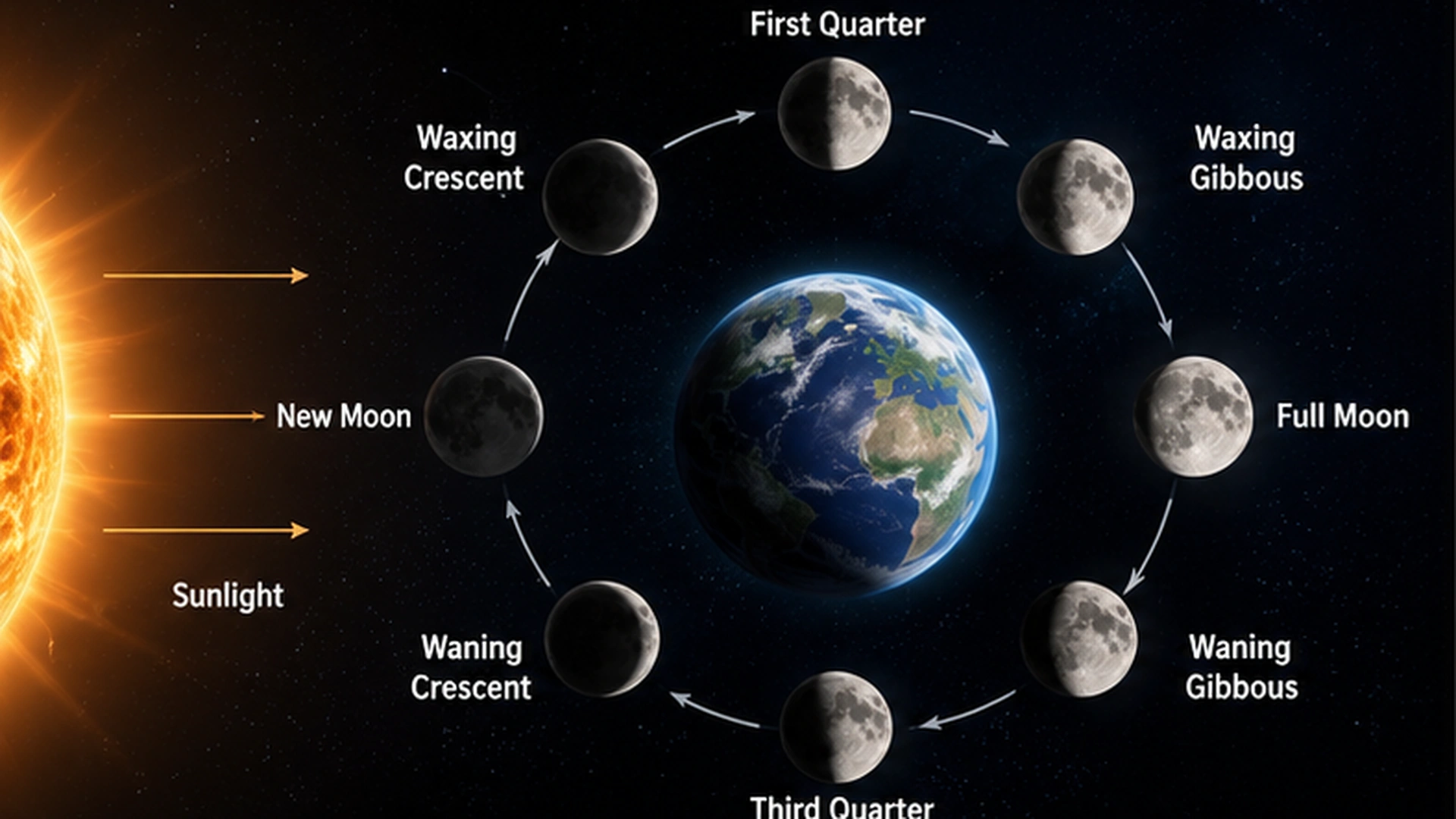
Discover the eight Moon phases in order and learn how sunlight, the Moon’s orbit, and our viewpoint from Earth create the changing lunar shapes seen throughout the month.
Understanding the Eight Moon Phases explains the meaning, background and cultural context of 8 phases of the moon definitions in clear educational language. The article answers the main topic near the beginning, preserves the original examples and highlights important distinctions for respectful understanding.
Understanding the eight Moon phases begins with one simple fact: the Moon does not produce its own visible light.
What we call moonlight is sunlight reflected from the Moon’s surface.
The Sun always illuminates approximately half of the Moon. However, as the Moon travels around Earth, our viewing angle changes. Sometimes we see almost none of the illuminated half, sometimes we see part of it, and sometimes nearly the entire Earth-facing side appears bright.
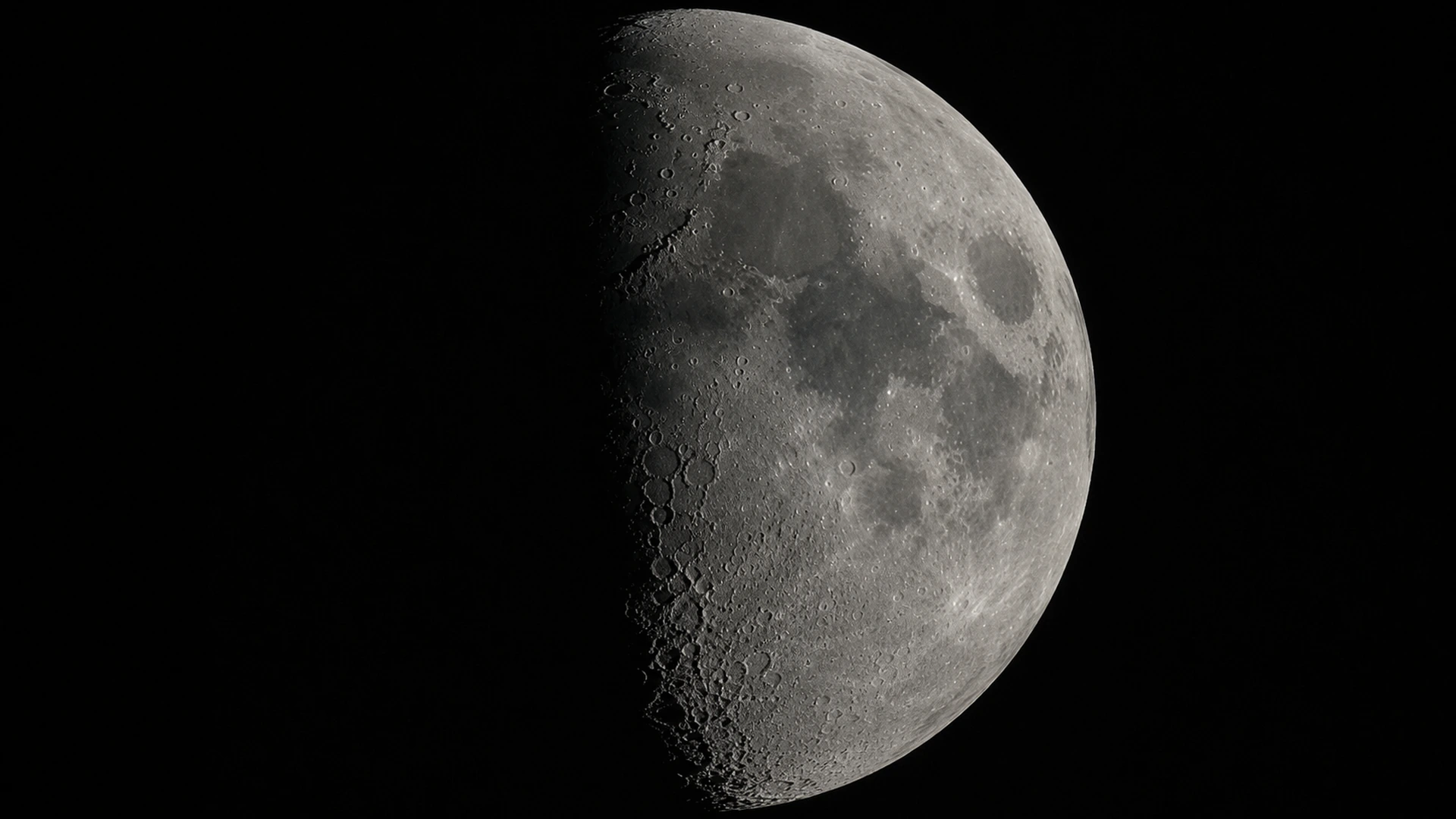
This changing view creates the eight commonly named Moon phases:
- New Moon
- Waxing Crescent
- First Quarter
- Waxing Gibbous
- Full Moon
- Waning Gibbous
- Third Quarter
- Waning Crescent
NASA explains that the sequence repeats approximately every 29.5 days. The phase does not change suddenly from one shape to another; the eight names divide one continuous cycle into recognizable stages.
Key Points
The Moon phases occur because:
- The Moon orbits Earth.
- The Moon reflects sunlight.
- Half of the Moon is normally illuminated by the Sun.
- Our perspective on that illuminated half changes throughout the orbit.
- The Moon’s phase cycle takes about 29.5 days.
- Waxing means the visible illuminated portion is increasing.
- Waning means the visible illuminated portion is decreasing.
- Crescent means less than half of the visible disk is illuminated.
- Gibbous means more than half is illuminated.
- First and third quarter Moons appear half lit because their names describe their positions within the cycle, not the visible fraction of the disk.
Moon phases are not normally caused by Earth’s shadow. Earth’s shadow darkens the Moon only during a lunar eclipse.
What Is a Moon Phase?
A Moon phase is the apparent shape of the Moon’s sunlit portion as seen from Earth.
Clear Definition
A Moon phase is a stage in the changing appearance of the Moon caused by its position relative to Earth and the Sun.
Plain-Language Meaning
The Moon is always round.
It does not physically shrink, grow, disappear, or become sliced in half. We simply see different amounts of its illuminated side as it moves around Earth.
What Causes the Moon Phases?
Imagine placing a ball in a dark room and shining a lamp on it.
The lamp always illuminates one half of the ball. If you walk around the ball, the amount of the bright half visible to you changes.
The same basic geometry applies to the Moon:
- The lamp represents the Sun.
- The ball represents the Moon.
- The observer represents someone standing on Earth.
At new Moon, the illuminated side faces mostly away from Earth. At full Moon, the illuminated side faces mostly toward Earth. During crescents, quarters, and gibbous phases, we see different proportions between those two positions.
The Moon’s Orbit Versus Its Phase Cycle
The Moon takes about 27.3 days to complete one orbit relative to the distant stars.
However, it takes about 29.5 days to return from one new Moon to the next. This longer period is called the synodic month or lunation.
The difference occurs because Earth and the Moon are also moving around the Sun. After completing one orbit around Earth, the Moon must travel slightly farther before the Sun, Earth, and Moon return to the same relative alignment.
The Eight Moon Phases in Order
- Phase
- Visible illumination
- Waxing or waning
- Typical visibility
- New Moon
- Nearly 0%
- Beginning of waxing cycle
- Near the Sun; normally not visible
- Waxing Crescent
- Less than half
- Waxing
- Western sky after sunset
- First Quarter
- About half
- Waxing
- Afternoon and evening
- Waxing Gibbous
- More than half
- Waxing
- Evening and much of the night
- Full Moon
- Nearly 100%
- Turning toward waning
- Sunset to sunrise
- Waning Gibbous
- More than half
- Waning
- Late evening through morning
- Third Quarter
- About half
- Waning
- Late night and morning
- Waning Crescent
- Less than half
- Waning
- Eastern sky before sunrise
The percentages are useful descriptions, but the lunar cycle is continuous. New, full, and quarter phases occur at specific astronomical moments, while crescent and gibbous phases extend across multiple days.
1. New Moon
The new Moon begins the commonly described lunar phase cycle.
During this phase, the Moon is located in approximately the same direction in the sky as the Sun. Its sunlit hemisphere faces mainly away from Earth, while the side facing Earth is mostly dark.
What the New Moon Looks Like
The Moon is usually invisible or extremely difficult to see.
This does not mean the Moon has disappeared. It is still present in the sky, but:
- Its illuminated side faces away from us.
- Its dark side faces Earth.
- It appears close to the bright Sun.
- Daylight makes the dark lunar disk difficult to distinguish.
A new Moon generally rises around sunrise, travels across the sky during the day, and sets around sunset.
Does Every New Moon Cause a Solar Eclipse?
No.
The Moon’s orbit is tilted approximately five degrees relative to Earth’s orbital plane around the Sun. During most new Moons, the Moon passes slightly above or below the Sun from our viewpoint, so its shadow misses Earth.
A solar eclipse occurs only when the alignment is sufficiently precise near one of the points where the Moon’s orbit crosses Earth’s orbital plane.
Can the New Moon Ever Be Seen?
The exact astronomical moment of new Moon is generally not visible with the unaided eye.
The first thin waxing crescent may become visible after sunset roughly a day later, although visibility depends on the Moon’s position, weather, atmospheric clarity, latitude, season, and the observer’s experience.
2. Waxing Crescent
After the new Moon, a thin illuminated crescent begins to appear.
The word waxing means increasing. Each evening, a slightly larger portion of the Moon’s sunlit hemisphere becomes visible from Earth.
What the Waxing Crescent Looks Like
It appears as a narrow curved sliver.
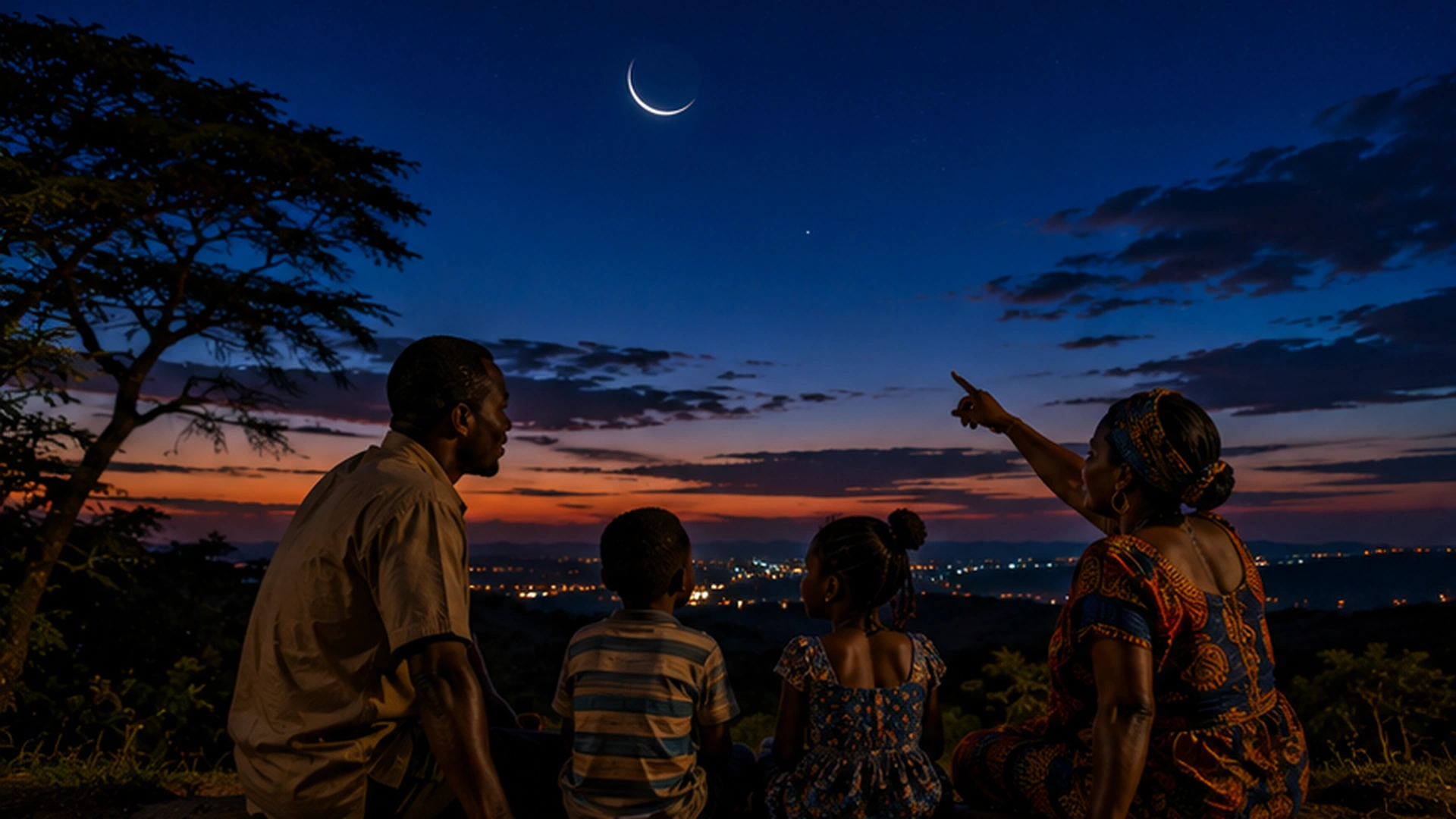
In the Northern Hemisphere, the bright portion commonly appears on the right side. In the Southern Hemisphere, the orientation appears reversed. Near the equator, including much of East Africa, the crescent may appear tilted or shaped more like a bowl depending on the season and the Moon’s position.
Everyone on Earth sees the same phase at a given moment, but viewers in different hemispheres see it from different orientations.
When to See a Waxing Crescent
Look toward the western sky after sunset.
A very young crescent remains low near the horizon and sets shortly after the Sun. As the crescent grows, it becomes:
- Higher in the evening sky
- Visible for longer
- Easier to observe
- Farther east of the Sun
Earthshine
Sometimes the dark portion of a crescent Moon is faintly visible.
This glow is called earthshine. Sunlight reflects from Earth onto the Moon and then back toward Earth, gently illuminating the Moon’s night side.
Frequently Asked Questions
What should readers know first about Understanding the eight Moon phases?
Understanding the eight Moon phases: Discover the eight Moon phases in order and learn how sunlight, the Moon’s orbit, and our viewpoint from Earth create the
What causes Understanding the eight Moon phases?
Discover the eight Moon phases in order and learn how sunlight, the Moon’s orbit, and our viewpoint from Earth create the changing lunar shapes seen throughout the month. The safest next step is to compare the signs, prepare clear details, and request private
How does Understanding the eight Moon phases work?
Discover the eight Moon phases in order and learn how sunlight, the Moon’s orbit, and our viewpoint from Earth create the changing lunar shapes seen throughout the month. The safest next step is to compare the signs, prepare clear details, and request private
Is it possible to get private guidance for Understanding the eight Moon phases?
Discover the eight Moon phases in order and learn how sunlight, the Moon’s orbit, and our viewpoint from Earth create the changing lunar shapes seen throughout the month. The safest next step is to compare the signs, prepare clear details, and request private
How long does Understanding the eight Moon phases take to understand?
Discover the eight Moon phases in order and learn how sunlight, the Moon’s orbit, and our viewpoint from Earth create the changing lunar shapes seen throughout the month. The safest next step is to compare the signs, prepare clear details, and request private
Can Understanding the eight Moon phases affect relationships, family, work, or personal peace?
Discover the eight Moon phases in order and learn how sunlight, the Moon’s orbit, and our viewpoint from Earth create the changing lunar shapes seen throughout the month. The safest next step is to compare the signs, prepare clear details, and request private
Why do people seek spiritual guidance for Understanding the eight Moon phases?
Discover the eight Moon phases in order and learn how sunlight, the Moon’s orbit, and our viewpoint from Earth create the changing lunar shapes seen throughout the month. The safest next step is to compare the signs, prepare clear details, and request private
What signs should someone notice before asking about Understanding the eight Moon phases?
Discover the eight Moon phases in order and learn how sunlight, the Moon’s orbit, and our viewpoint from Earth create the changing lunar shapes seen throughout the month. The safest next step is to compare the signs, prepare clear details, and request private
When should someone contact a private spiritual guide?
Discover the eight Moon phases in order and learn how sunlight, the Moon’s orbit, and our viewpoint from Earth create the changing lunar shapes seen throughout the month. The safest next step is to compare the signs, prepare clear details, and request private
Article Information
- Publisher
- Ancestral Temple
- Editor
- Ancestral Temple
- Last updated
- Jul 26, 2026
- Last reviewed
- Jul 13, 2026
- Content version
- 8da04f22b4
This educational article should be read as cultural and spiritual information, not as medical, legal, financial, or emergency advice.
Helpful Related Guidance
Explore This Topic
Understanding The Eight Moon Phases · Moon, Sun And Seasons
Related Topic Cluster
Understanding The Eight Moon Phases
Complete Guide Traditional Family Blessing Ceremonies ExplainedAbout the Author
 Ancestral Temple
Spiritual guide and practitioner with decades of experience in ancestral wisdom, rituals, and divine guidance.
Related Posts
View All
Leave a Comment
We'd love to hear your thoughts.
This was comprehensive and suitable for readers learning the Moon phases for the first time.
Are there recommended mobile apps for recording lunar observations accurately?
The article explained the science without using unnecessary technical language.
A future guide about photographing each Moon phase would be interesting.
I liked that new Moon was explained as being near the Sun during the daytime.
Strong introduction to the relationship among the Sun, Earth, and Moon.
The table showing visibility times is one of the most useful parts.
The article made the difference between Moon phases and eclipses easy to understand.
I am going to start recording the Moon’s position every evening.
I liked that the article mentioned how lunar knowledge helped communities organize time.
More information about the Moon’s orientation near the equator would be useful.
The first quarter and third quarter comparison deserves its own diagram.
The strongest lesson was that the Moon is not actually changing shape.
The article stayed scientifically accurate without dismissing cultural traditions.
The phrase waxing means growing and waning means shrinking will help me remember the order.
I appreciated that the article explained why the Moon can be visible during daylight.
Could you write next about traditional African calendars based on the Moon?
The short paragraphs and tables worked well on mobile.
The numbered structure made all eight phases easy to follow.
This is useful for beginners, parents, teachers, and students.
The common misconceptions section answered many questions in one place.
The explanation of spring and neap tides was very clear.
I liked that the article did not assign one universal spiritual meaning to every phase.
A future article comparing lunar and solar calendars would be helpful.
The glossary made terms such as lunation and synodic month easy to understand.
The tides section clearly separated reflected light from gravitational effects.
The article explained why waning phases are often seen in the morning.
I did not realize that a full Moon rises around sunset.
This was detailed without making the astronomy difficult.
The explanation of the terminator helped me understand why quarter Moons show craters clearly.
A printable Moon observation journal would make a useful companion resource.
I appreciated the warning about using binoculars near the Sun.
The eclipse section answered a question I have had for years.
This article would be useful for school astronomy lessons.
I liked the explanation that everyone sees the same phase from different angles.
The waxing and waning comparison table was simple and memorable.
I did not know the dark part of a crescent could sometimes be seen because of earthshine.
A full guide to observing the Moon from Africa would be interesting.
The section about how the crescent looks near the equator was useful.
I appreciated that scientific explanations were separated respectfully from cultural interpretations.
The difference between the 27.3-day orbit and the 29.5-day phase cycle was clearly explained.
I used to think Earth’s shadow caused every Moon phase.
The Moonrise and Moonset table was especially useful.
I finally understand why a first quarter Moon looks half full.
The explanation that the Moon is always half illuminated made the entire phase cycle easier to understand.