
Nature's Cycles and Spiritual Reflection
Pillar Article
Quick Summary
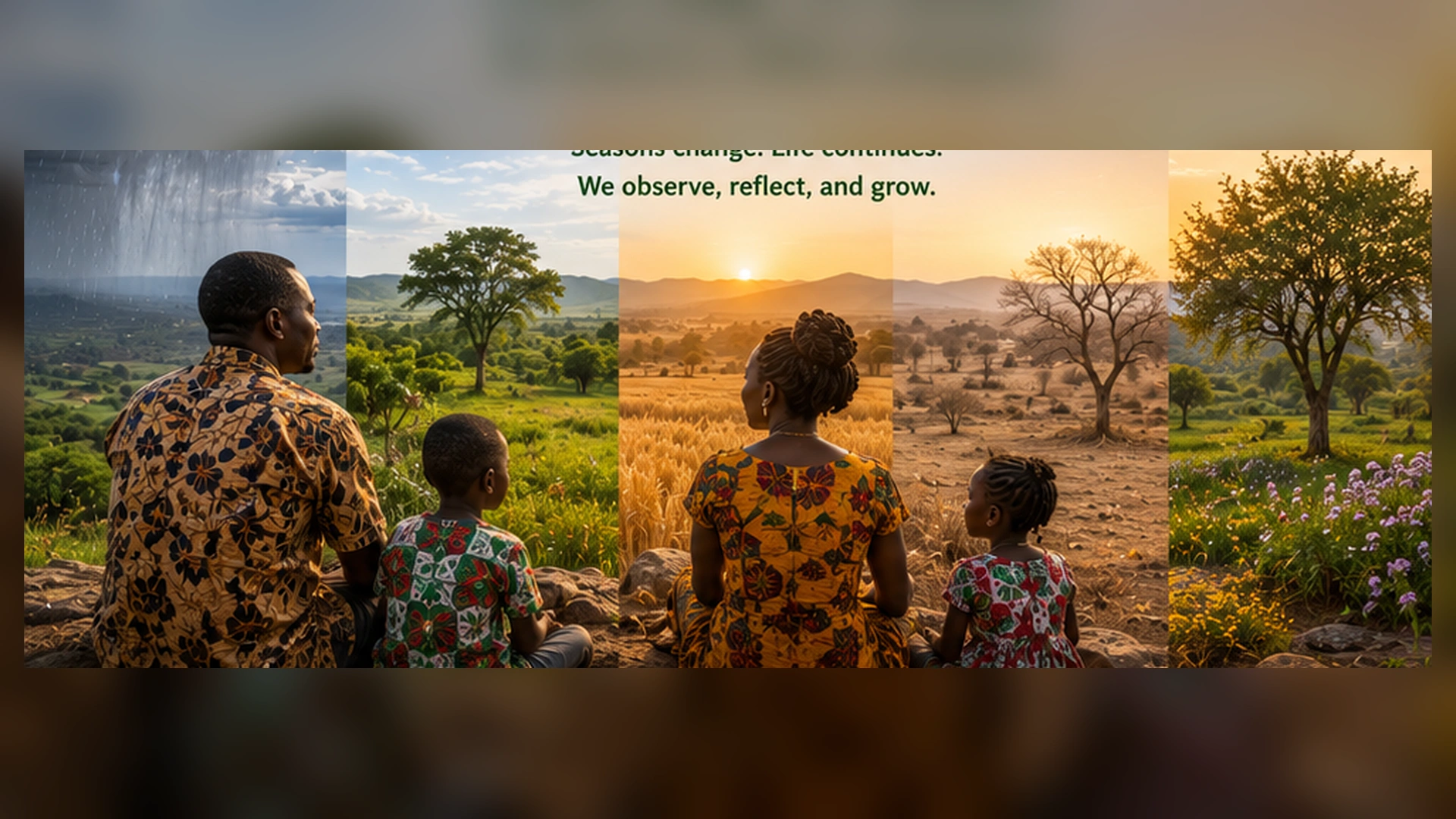
Nature's Cycles and Spiritual Reflection Nature's cycles and spiritual reflection meet wherever people pause long enough to notice change. A seed germinates, grows, bears...
Nature's Cycles and Spiritual Reflection
Nature's cycles and spiritual reflection meet wherever people pause long enough to notice change.
A seed germinates, grows, bears fruit, releases new seed, and eventually returns to the soil. Rain gathers, falls, flows, evaporates, and returns. The Moon waxes and wanes. Day becomes night. Wet seasons give way to dry seasons. Bodies grow, age, rest, recover, and die.
These patterns have inspired calendars, prayers, festivals, proverbs, poetry, agriculture, and moral teaching in many societies. UNESCO recognizes that living-heritage practices frequently mark seasonal change, agricultural events, and relationships between communities and nature. [1]
Natural cycles do not provide one universal spiritual code.
A rainy season may signify blessing in one community, danger in another, and ordinary agricultural timing in a third. A full Moon may mark a holy day, a fishing period, or simply a beautiful night. A forest may be understood as sacred territory, ancestral land, a livelihood, a protected ecosystem, or several of these at once.
The value of nature reflection lies less in forcing every event into a spiritual message and more in developing attention, humility, gratitude, responsibility, and honest self-examination.
Nature's cycles can encourage reflection on:
Beginnings and new possibilities
Growth that requires time
Rest and dormancy
Limits and seasonal change
Loss, decay, and grief
Renewal after difficulty
Gratitude during abundance
Responsibility toward land and community
The difference between control and participation
The importance of adapting when conditions change
Scientific research suggests that contact with green and blue spaces and a stronger sense of connection with nature are associated with aspects of mental well-being, mood, restoration, and cognitive health. These associations are meaningful but do not prove that nature cures every illness or that a spiritual interpretation will work equally for everyone. [2][3]
What Are Nature's Cycles?
Clear Definition
Nature's cycles are recurring patterns of change in living organisms, ecosystems, weather, water, daylight, celestial motion, and the seasons.
Plain-Language Meaning
Nature rarely remains in one condition.
It moves through patterns such as:
Germination, growth, flowering, fruiting, and seed dispersal
Birth, maturity, aging, and death
Rainfall, runoff, evaporation, and condensation
Day, night, dawn, and dusk
New Moon, crescent, quarter, full Moon, and waning phases
Wet season, dry season, planting, harvest, and fallow periods
Disturbance, recovery, and ecological succession
These are cycles because similar stages return. They are not perfect repetitions. Every rainy season, harvest, tree, family, and human life is different.
Spiritual Reflection Versus Scientific Explanation
A scientific explanation asks questions such as:
What physical process causes this change?
What evidence supports the claim?
Can the result be measured or repeated?
Which biological, geological, or atmospheric mechanisms are involved?
Spiritual reflection asks different questions:
What does this change invite me to notice?
What responsibilities does it reveal?
How does my tradition interpret it?
What values should guide my response?
What can I learn about patience, loss, gratitude, or care?
The two approaches can coexist when their boundaries are respected.
Rainfall can be explained through atmospheric processes while also becoming an occasion for gratitude. A harvest can be studied through agronomy and celebrated through prayer. A dying tree can be understood biologically while prompting reflection on mortality.
Problems arise when symbolism is presented as proof that nature guarantees wealth, fertility, healing, protection, or control over another person.
Cycles Are Patterns, Not Commands
Nature does not tell every person to make the same decision.
The appearance of a crescent Moon does not automatically mean that everyone should begin a relationship, launch a business, fast, or perform a ritual. Falling leaves do not mean that every loss is beneficial. Rain does not prove divine approval, and drought does not prove spiritual failure.
A reflective symbol can help a person form questions. It should not remove critical thinking, consent, professional advice, or cultural context.
1. Beginnings: Seeds, Dawn, and First Rains
Beginnings are often represented by:
A germinating seed
Dawn
The first visible crescent
The first rain after a dry period
New leaves
A new agricultural season
These images may invite reflection on possibility.
A beginning is not a completed result. A seed contains potential, but it still requires suitable soil, water, temperature, protection, and time.
Reflection Questions
What is beginning in my life?
What conditions will help it grow?
What support is missing?
Am I expecting immediate results from something that requires patience?
Which beginning is realistic, and which is only a wish without a plan?
Spiritual Lesson
Potential creates responsibility.
Hope becomes meaningful when it is accompanied by preparation, action, and care.
2. Growth: Patience, Nourishment, and Hidden Work
Plants often grow slowly before their progress becomes dramatic.
Roots may develop before leaves expand. Soil organisms work unseen. Rain enters the ground. A tree may spend years strengthening before producing a major harvest.
Growth can therefore symbolize:
Patience
Practice
Learning
Discipline
Hidden preparation
Dependence on community and environment
Reflection Questions
Which part of my growth is invisible to others?
Am I nourishing the roots of a goal or only displaying its leaves?
Which daily practice matters more than public recognition?
Whose labor supports my progress?
Spiritual Lesson
Healthy growth is rarely isolated.
A plant depends on soil, water, sunlight, fungi, insects, climate, and human care. Human growth likewise depends on relationships, institutions, history, opportunity, and support.
Frequently Asked Questions
What should readers know first about uncategorized?
Uncategorized: Nature's Cycles and Spiritual Reflection Nature's cycles and spiritual reflection meet wherever people pause long enough to notice change. A se
What should readers know first about Nature's Cycles and Spiritual Reflection?
Explore how seasons, growth, rest, decay, renewal, rain, and celestial cycles can support spiritual reflection, gratitude, resilience, and ecological care.
What causes Nature's Cycles and Spiritual Reflection?
Explore how seasons, growth, rest, decay, renewal, rain, and celestial cycles can support spiritual reflection, gratitude, resilience, and ecological care. The safest next step is to compare the signs, prepare clear details, and request private guidance when t
How does Nature's Cycles and Spiritual Reflection work?
Explore how seasons, growth, rest, decay, renewal, rain, and celestial cycles can support spiritual reflection, gratitude, resilience, and ecological care. The safest next step is to compare the signs, prepare clear details, and request private guidance when t
Is it possible to get private guidance for Nature's Cycles and Spiritual Reflection?
Explore how seasons, growth, rest, decay, renewal, rain, and celestial cycles can support spiritual reflection, gratitude, resilience, and ecological care. The safest next step is to compare the signs, prepare clear details, and request private guidance when t
How long does Nature's Cycles and Spiritual Reflection take to understand?
Explore how seasons, growth, rest, decay, renewal, rain, and celestial cycles can support spiritual reflection, gratitude, resilience, and ecological care. The safest next step is to compare the signs, prepare clear details, and request private guidance when t
Can Nature's Cycles and Spiritual Reflection affect relationships, family, work, or personal peace?
Explore how seasons, growth, rest, decay, renewal, rain, and celestial cycles can support spiritual reflection, gratitude, resilience, and ecological care. The safest next step is to compare the signs, prepare clear details, and request private guidance when t
Why do people seek spiritual guidance for Nature's Cycles and Spiritual Reflection?
Explore how seasons, growth, rest, decay, renewal, rain, and celestial cycles can support spiritual reflection, gratitude, resilience, and ecological care. The safest next step is to compare the signs, prepare clear details, and request private guidance when t
What signs should someone notice before asking about Nature's Cycles and Spiritual Reflection?
Explore how seasons, growth, rest, decay, renewal, rain, and celestial cycles can support spiritual reflection, gratitude, resilience, and ecological care. The safest next step is to compare the signs, prepare clear details, and request private guidance when t
When should someone contact a private spiritual guide?
Explore how seasons, growth, rest, decay, renewal, rain, and celestial cycles can support spiritual reflection, gratitude, resilience, and ecological care. The safest next step is to compare the signs, prepare clear details, and request private guidance when t
Article Information
- Publisher
- Ancestral Temple
- Editor
- Ancestral Temple
- Last updated
- Jul 26, 2026
- Last reviewed
- Jul 13, 2026
- Content version
- 3033065b64
This educational article should be read as cultural and spiritual information, not as medical, legal, financial, or emergency advice.
Helpful Related Guidance
Explore This Topic
Uncategorized · African Spirituality And Cultural History
Related Topic Cluster
Uncategorized
Complete Guide Understanding African Spiritual Traditions: A Historical IntroductionAbout the Author
 Ancestral Temple
Spiritual guide and practitioner with decades of experience in ancestral wisdom, rituals, and divine guidance.
Related Posts
View All


Leave a Comment
We'd love to hear your thoughts.
This was comprehensive without suggesting that readers need to perform any ritual.
Ruth E.
Are there recommended apps for recording local seasonal changes without collecting too much personal data?
Nathan C.
The article showed why similar nature symbols can carry different meanings in different traditions.
Sophia D.
A future article about seasonal proverbs in African languages would be interesting.
Emmanuel R.
I liked the idea that limits and endings are part of healthy cycles.
Alice M.
Strong overview connecting seasons, land, grief, gratitude, and ecological responsibility.
Brian W.
The misconceptions section corrected several claims I have seen online.
Patricia N.
The tone remained neutral while discussing Christian, Indigenous, and contemporary practices.
Omar S.
The seven-day nature observation practice is something families and schools could try.
Janet R.
I appreciated that the article did not invent a universal African nature ceremony.
Kofi A.
More examples of women preserving seasonal knowledge would make a strong follow-up.
Evelyn P.
A separate article about the spiritual meaning of rain in different communities would be interesting.
Thomas D.
The strongest lesson was that natural cycles can guide questions without dictating answers.
Mariam F.
The scientific evidence was presented with appropriate caution.
Victor L.
I liked the reminder that dry seasons are not spiritually inferior to green seasons.
Hannah O.
The article showed that reflection should lead to action and responsibility.
George E.
Could you write next about sacred forests and community conservation in Africa?
Rose B.
The short paragraphs worked well on mobile.
Abdul J.
The headings made the long article easy to navigate.
Linda C.
This is useful for readers interested in culture, spirituality, psychology, and environmental care.
Paul K.
Thank you for rejecting claims that a nature ritual can guarantee healing or wealth.
Rebecca M.
The section on abundance and responsibility was one of the strongest parts.
Henry A.
I appreciated the consent and cultural-appropriation guidance.
Naomi T.
A future comparison of seasonal calendars and spiritual calendars would be interesting.
Christopher S.
The glossary made terms such as ecological season and nature connectedness easy to understand.
Zainab R.
The Shona example was presented carefully and did not represent the whole continent.
David N.
The article connected personal reflection with care for the environment instead of focusing only on the self.
Esther G.
I liked that grief was described as nonlinear rather than a fixed season.
Andrew H.
This was spiritual without becoming superstitious or manipulative.
Josephine E.
The explanation of cycles as patterns rather than perfect repetition was insightful.
Michael P.
A printable seasonal reflection journal would make a useful companion resource.
Beatrice L.
The climate-change section showed why seasonal traditions may need to adapt.
Ibrahim C.
I appreciated the warning that nature time does not replace therapy or medical care.
Sarah W.
The discussion of land, responsibility, and gratitude made the topic practical.
Moses K.
The article respected religious belief while avoiding one universal spiritual teaching.
Fatima D.
I liked the idea of recording rainfall, flowering, and personal reflections in one journal.
James R.
The section about rest as part of a cycle was a needed reminder.
Nadia S.
A future article about nature reflection in Ugandan communities would be valuable.
Peter O.
The difference between observation, symbolism, and scientific causation was clearly explained.
Maria J.
I appreciated the community-specific African examples rather than one general African spirituality.
Kwame B.
The practical reflection exercises were simple enough to use without copying a sacred ceremony.
Lydia A.
The explanation of ecological seasons was especially useful for people living near the equator.
Samuel T.
I liked that the article did not treat every culture as having the same seasonal beliefs.
Grace N.
The section about renewal after loss was thoughtful and realistic.
Daniel M.
I appreciated the distinction between learning from natural cycles and claiming that nature guarantees spiritual outcomes.
Amina K.