
Court Case Protection Rituals: Prayers for Courage, Justice and Fair Judgment
Pillar Article
Quick Summary
Court proceedings can bring fear, uncertainty, anger and a sense of powerlessness. A person may worry about being misunderstood, forgetting important facts, facing an aggressive op...
Court proceedings can bring fear, uncertainty, anger and a sense of powerlessness. A person may worry about being misunderstood, forgetting important facts, facing an aggressive opponent, paying legal costs or receiving an unfair decision. In these moments, many people turn to prayer, blessings, sacred texts, family support or personal rituals for courage.
A court case protection ritual is a spiritual or reflective practice used before or during legal proceedings to seek courage, clarity, truthful speech, protection from intimidation and a fair process. It may include prayer, fasting, a blessing from a faith leader, reading scripture, carrying a permitted devotional object, attending worship, journaling or quietly grounding oneself before entering court.
Such practices should never be described as guaranteed methods for winning a case, controlling a judge, confusing an opponent, hiding evidence or escaping lawful responsibility. A fair legal system depends on truth, evidence, impartial decision-making and equal treatment. Spiritual practice can support a person emotionally and morally, but it cannot replace legal advice, deadlines, documents, witnesses, safety planning or respectful courtroom conduct.
This article explains court-related spiritual beliefs, ethical limits and healthier preparation. It is general educational information, not legal advice for a specific case. Court rules and legal rights vary by country and case type, so a qualified lawyer or recognized legal-aid provider should be consulted.
Quick Answer
Court case protection rituals are prayers, blessings or personal practices used to seek courage, truthful speech, protection from intimidation and fair judgment. They can support emotional strength and moral focus, but they cannot guarantee victory or lawfully influence a judge. The safest approach combines faith with legal advice, organized evidence, honest testimony, punctual attendance, courtroom etiquette and protection from threats.
What Does “Court Case Protection” Mean?
The phrase can describe several different needs.
Emotional protection
Court can be stressful. Prayer, breathing, family support and familiar devotional practices may help a person remain calm enough to listen, remember and communicate.
Protection from intimidation
A witness, victim, defendant or litigant may fear threats, harassment or retaliation. This requires practical reporting and safety measures, not only spiritual action. Court staff, police, prosecutors, lawyers and victim-support services may be able to arrange protection or special procedures.
Moral protection
A person may pray not to become consumed by anger, revenge or dishonesty. The ritual becomes a commitment to tell the truth, avoid bribery and respect the rights of all parties.
Procedural fairness
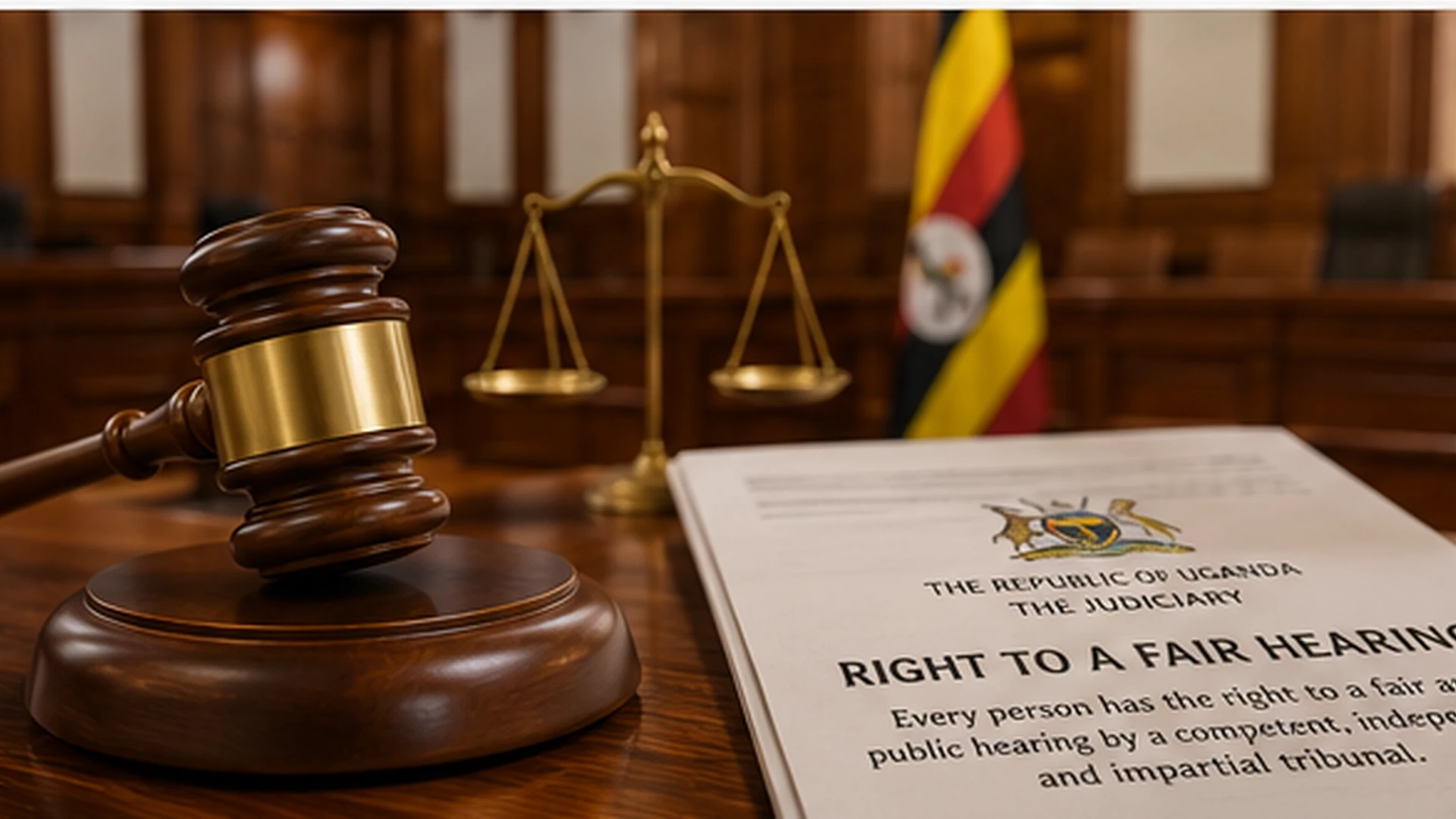
A person may ask God for an independent judge, honest witnesses, competent representation and a hearing in which evidence is considered fairly. International human-rights law recognizes equality before courts and the right to a fair and public hearing before a competent, independent and impartial tribunal.[1]
Hope for a favourable outcome
It is natural to hope to win. However, “protection” should not be used to justify controlling another person’s will or promising a particular judgment. A lawful decision may not match one party’s wishes.
What a Court Protection Ritual Cannot Do
A responsible article must be direct about the limits.
No prayer, candle, oil, amulet, bath, written petition or spiritual worker can scientifically or legally guarantee that:
a judge will rule in your favour;
criminal charges will disappear;
evidence will become inadmissible;
witnesses will forget or change their testimony;
a visa, bail application, divorce, land dispute or compensation claim will automatically succeed;
an opponent will become confused or frightened;
a conviction will be overturned without a lawful appeal;
police, prosecutors or court officials can be bypassed.
Claims to “bind the judge,” “silence a witness,” “destroy the prosecution,” “make the court fear you” or “erase evidence spiritually” are ethically dangerous. They may also encourage obstruction of justice, witness tampering, intimidation, perjury or fraud.
The Human Rights Committee explains that fairness requires proceedings free from direct or indirect influence, pressure, intimidation or intrusion from any side.[2] A spiritual practice that genuinely values justice should support impartiality rather than seek secret control.
Why People Seek Ritual Help During Court Cases
Fear of an unfamiliar system
Legal language, formal clothing, security procedures and strict deadlines can make court feel inaccessible. Justice Centres Uganda states that explaining court etiquette, processes and what to expect can help clients represent themselves with greater confidence.[3]
Previous injustice or discrimination
People who have experienced corruption, poverty, discrimination or police abuse may distrust institutions. Prayer may express a hope that truth will be heard despite these experiences.
Financial pressure
Legal fees, transport, missed work and delayed hearings can create severe strain. This vulnerability can make people more susceptible to anyone promising an instant spiritual solution.
Family and community expectations
A court case may involve land, inheritance, marriage, business or reputation. Relatives may gather to pray, provide transport, help organize documents or accompany the person to court.
Trauma and intimidation
Victims and witnesses may fear seeing the accused or being questioned publicly. In some systems, special measures can include screens, video links, interpreters, private waiting areas or other support. The available measures depend on local law and the court.[4]
Desire for certainty
Ritual can create structure when the outcome is uncertain. The ethical goal is not false certainty but steadiness: “I will prepare, speak truthfully, follow advice and accept that the court must decide.”
Christian Prayers for Justice and Courage
Christian traditions contain prayers for judges, prisoners, victims, lawyers, public officials and people facing accusations. There is no single universal “Christian court-winning ritual.”
Psalms of justice and protection
Psalm 9 describes God as judging the world with justice and acting as a stronghold for the oppressed. Psalm 72 asks that rulers judge with justice and defend the poor. Christians may read such passages as prayers for fair authority rather than weapons against an opponent.[5]
Other frequently used themes include:
courage in trouble;
truthful speech;
protection from false accusation;
wisdom for leaders;
healing for victims;
mercy joined with accountability.
A person should be cautious with violent or adversarial language in ancient psalms. Reading a text devotionally does not authorize threats or revenge.
Prayer before meeting a lawyer or entering court
A Christian may ask for:
calm enough to understand advice;
humility to correct mistakes;
courage to disclose difficult facts to counsel;
protection for victims and witnesses;
wisdom for the judge;
honesty from every party;
a decision consistent with truth and justice.
The United States Conference of Catholic Bishops publishes prayers that ask for justice, courage, wisdom and healing, including support for people harmed by abuse.[6] Such prayer centres human dignity; it does not promise a specific verdict.
Blessings and devotional objects
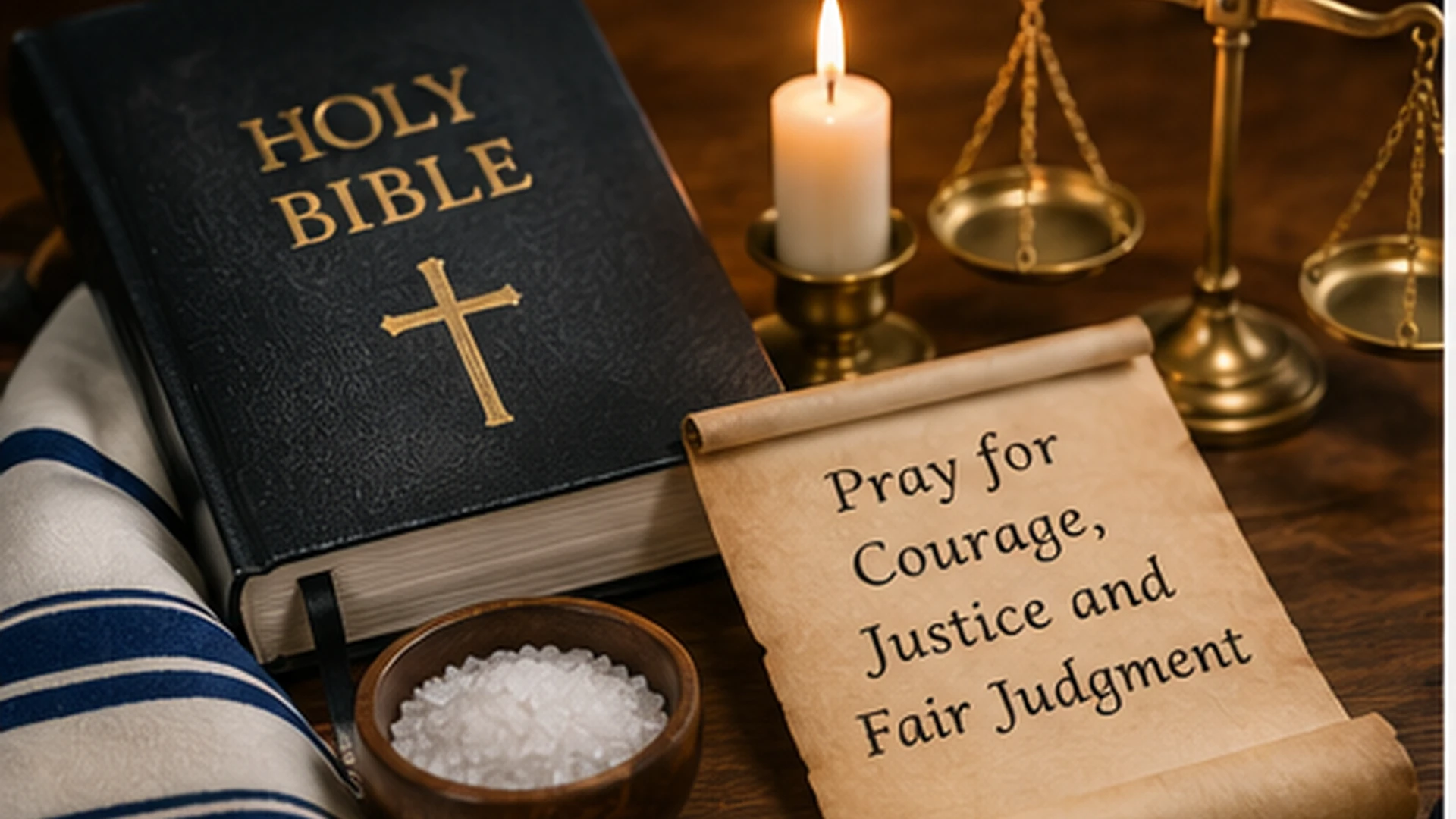
Some Christians may carry a cross, rosary, prayer card, Bible or medal where court security permits. The object is a reminder of faith, not evidence and not a legal shield. Court rules may restrict bags, phones, metal items or visible displays.
Islamic Teachings on Justice, Testimony and Supplication
Islamic scripture places strong emphasis on justice and truthful testimony.
Qur’an 4:135 instructs believers to stand firmly for justice as witnesses, even when the truth is against themselves, their parents or close relatives. It warns against allowing personal desire to distort or withhold testimony.[7]
Qur’an 5:8 similarly teaches that hatred of another group must not cause a person to depart from justice.[8]
These verses make an important ethical point: an Islamic prayer related to court should not ask for falsehood to prevail. It should seek truth, fairness, patience and protection from oppression.
Du’a for courage and ease
Muslims may make personal du’a before legal proceedings, asking Allah for:
ease in speaking;
protection from injustice;
patience under questioning;
truthful memory;
wisdom for the decision-maker;
lawful assistance;
safety for family and witnesses;
acceptance of what is just.
Exact wording can vary. Some people recite Qur’anic passages or prophetic supplications associated with ease, anxiety or clear speech. A trusted imam or scholar can advise on religious practice.
Tawakkul and preparation
Tawakkul, reliance on Allah, does not require neglecting practical means. A Muslim litigant can pray while also consulting a lawyer, gathering documents, attending court and speaking truthfully.
Amulets and written protection
Muslim views on written amulets are diverse. Some communities accept certain Qur’anic writings; others reject amulets as religiously impermissible. A sealed object should not be copied, opened or marketed as a universal Islamic court charm.

Jewish Traditions of Justice and Truth
Jewish scripture and legal tradition repeatedly emphasize fair judgment.
Deuteronomy 16:20 declares, “Justice, justice shall you pursue.” Deuteronomy 16:18 calls for judges who govern with due justice, and Leviticus 19:15 warns against favouring either the poor or the powerful.[9]
These texts place responsibility on judges, witnesses, lawyers and the community. Prayer for a court matter should not become a request for partiality.
Prayer and ethical intention
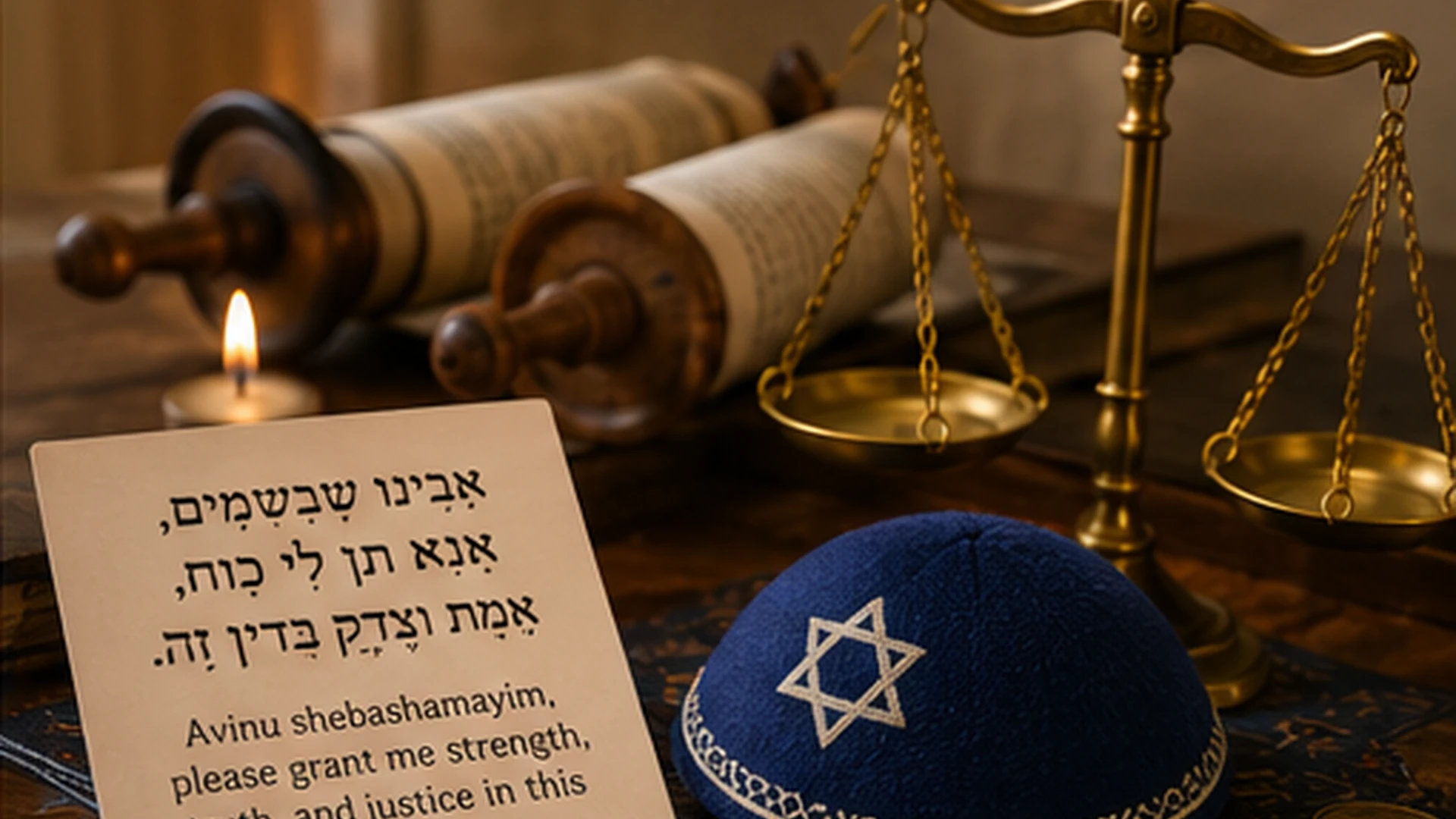
A Jewish litigant, witness or lawyer may pray for:
a reliable and fair court;
truthful testimony;
wisdom and ordered speech;
protection from unjust gain;
courage to admit what is not known;
compassion without distortion of justice.
Sefaria’s collected Jewish sources on law emphasize integrity, right action and truth in the heart, while warning against false testimony and bribery.[10]
Psalms and personal devotion
Individuals may recite psalms or private prayers according to their community and personal practice. Religious advice should come from a trusted rabbi where questions involve specific vows, texts or halakhic requirements.
African Community Support and Legal Preparation
There is no single African court protection ritual. Uganda alone contains many ethnic communities, Christian and Muslim traditions, Indigenous beliefs, secular households and different family practices.
A person may receive support through:
family prayer;
a blessing from an elder;
church or mosque counselling;
community fundraising for transport or legal fees;
accompaniment to the courthouse;
help caring for children;
mediation in suitable civil disputes;
referral to legal aid.
These forms of support can reduce isolation, but they should not pressure a person to withdraw a lawful complaint, reconcile with an abuser or accept an unsafe settlement.
Customary and religious justice
Customary or religious dispute-resolution systems may play important roles in some communities. However, international fair-trial principles still require basic safeguards when such bodies exercise recognized judicial functions. The Human Rights Committee states that proceedings should meet fair-trial requirements and remain subject to appropriate state-court review.[2]
Mediation can be helpful in some family, land, neighbourhood or commercial disputes. It may be inappropriate where there is serious violence, coercive control, child abuse, sexual assault or a major power imbalance.
Uganda’s legal-aid resources
Justice Centres Uganda provides legal advice, court representation and preparation on court etiquette and procedures for indigent and vulnerable people.[3] The Legal Aid Service Providers Network connects organizations offering advice, representation, mediation and public legal education.[11]
A spiritual adviser should never tell someone to abandon qualified legal help.
A Non-Coercive Personal Prayer Before Court
The following is a general reflection, not a traditional prayer from a named religion:
May I enter this court with courage and self-control.
May I speak only what I know to be true.
May I listen carefully and answer clearly.
May the evidence be considered fairly.
May the judge, lawyers, witnesses and all parties act with integrity.
May those who are vulnerable be protected.
May justice be done without hatred, bribery or intimidation.
Give me strength to accept lawful advice and take the next right step.
A person can adapt this privately according to their faith. It should not be presented as a guaranteed court spell.
Safe Personal Rituals for Calm and Focus
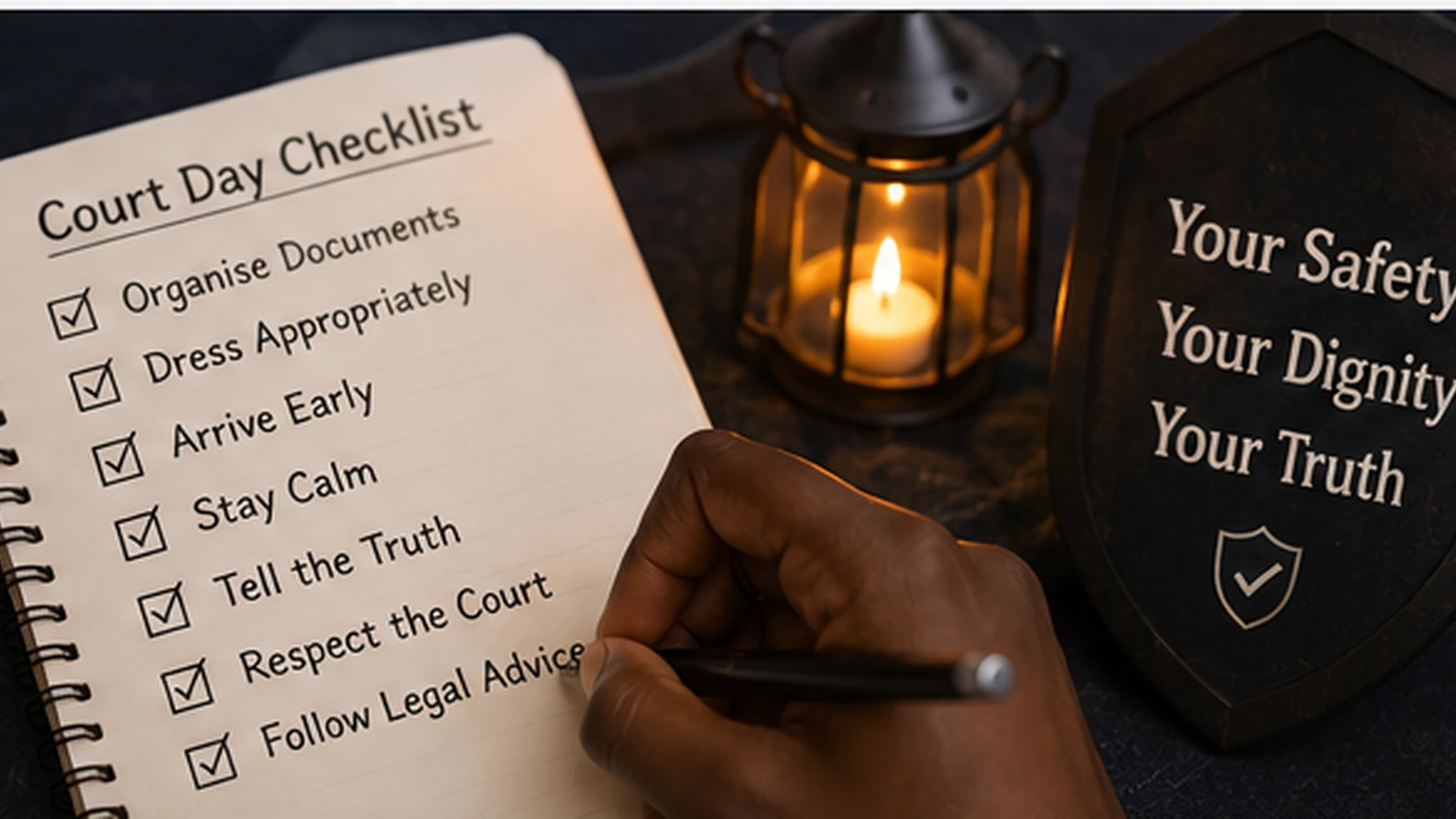
Organize a court folder
Place the hearing notice, identification, lawyer’s contact information, permitted evidence, notes and transport details in one folder. Do not alter original documents.
Use a short grounding routine
Before entering, place both feet on the floor, breathe slowly and name five things you can see. This may reduce panic enough to focus, though it is not treatment for severe anxiety.
Choose a meaningful permitted object
A small cross, prayer bead, family photograph or written affirmation may be comforting if court security allows it. Never bring prohibited objects or hide items from security.
Dress and arrive appropriately
Follow local court rules, allow time for security and avoid clothing with offensive slogans. Confirm the courtroom and hearing time in advance.
Use a support person
A trusted person may accompany you where permitted. A witness may have restrictions on hearing other testimony before giving evidence, so ask court staff or your lawyer.
Plan the period after court
A hearing may be adjourned or emotionally exhausting. Arrange transport, food, medication, childcare and a person to contact afterward.
Practical Court Preparation
1. Get legal advice early
A lawyer can explain the law, possible outcomes, deadlines, evidence rules and whether you should speak in court. If you cannot afford a private lawyer, ask a recognized legal-aid provider.
2. Tell your lawyer the difficult facts
Hiding embarrassing or damaging information can weaken your case. Legal advice is most useful when counsel understands the full situation.
3. Preserve evidence lawfully
Keep original messages, contracts, photographs, medical records, receipts or official reports. Do not edit screenshots, fabricate documents, access another person’s account or secretly obtain evidence unlawfully.
4. Review your statement
Witness guidance commonly recommends refreshing memory from the statement rather than memorizing a script. Speak in your own words and identify estimates as estimates.[12]
5. Separate facts from assumptions
Say what you personally saw, heard, did or recorded. Do not repeat rumours as direct knowledge.
6. Prepare questions for counsel
Write down questions about:
where to report;
what documents to carry;
whether phones are allowed;
who will speak;
how long the hearing may last;
what happens if the other party does not attend;
whether an interpreter or accessibility support is needed;
what to do if threatened.
7. Do not discuss testimony with other witnesses
Hearing another witness’s account can affect memory. Follow instructions from your lawyer, prosecutor or court.
8. Answer only the question asked
Listen fully. Ask for clarification when necessary. It is acceptable to say, “I do not know,” “I do not remember,” or “That is only an estimate” when truthful.
9. Control visible anger
Disagreement is handled through evidence and legal argument. Do not insult, threaten, interrupt or confront the other party in corridors.
10. Record the next step
After the hearing, confirm the next date, orders, deadlines and documents required. Do not rely only on memory.
Witness Safety and Intimidation
Threatening a witness, victim, lawyer or party is not a spiritual matter to handle privately. Report it.
Possible intimidation includes:
threats of violence;
repeated unwanted contact;
following or surveillance;
threats to children, relatives, work or property;
pressure to withdraw a complaint;
offers of money for silence;
demands to change testimony;
publishing private information;
using spiritual threats to frighten someone.
Keep records where safe, tell your lawyer and notify relevant authorities or court staff. Do not arrange a private confrontation.
Some courts can provide separate waiting areas, video testimony, screens, interpreters or other protective measures. Availability varies. Uganda’s judiciary has also discussed the importance and challenges of witness protection, especially in serious cases.[13]
When Mediation or Reconciliation May Help
Not every dispute requires a full trial. Negotiation, mediation or arbitration may reduce cost and hostility in suitable cases.
A safe settlement should be:
voluntary;
informed;
lawful;
written clearly;
reviewed by counsel where possible;
free from threats;
realistic to enforce;
protective of children and vulnerable people.
Do not use mediation to pressure a survivor into meeting an alleged abuser. Criminal charges and public-safety concerns may remain under state control even if a victim wishes to withdraw support.
Court-Case Spell Scams and Financial Exploitation
People under legal stress can be targeted by spiritual or psychic scams.
Warning signs include:
guaranteed victory;
a claim that the judge has already been spiritually controlled;
repeated demands for larger payments;
threats that stopping payment will cause prison, death or family harm;
requests for passwords, banking details or intimate photographs;
claims that evidence can be erased spiritually;
insistence that you fire your lawyer;
instructions to lie, bribe or threaten;
secrecy that prevents you from discussing the service with family;
expensive objects that must supposedly be purchased immediately.
The U.S. Federal Trade Commission has taken action against psychic-service businesses accused of deceptive advertising, billing, collection and harassment.[14] The exact laws differ by country, but the pattern is relevant: emotional vulnerability can be turned into repeated charges and false promises.
Keep receipts and messages. Contact your bank, consumer-protection authority, police or lawyer if you believe you have been defrauded or threatened.
Practices to Avoid
Judge-binding rituals
Trying to force a decision conflicts with judicial independence and the ethics of fair process.
Witness-silencing or confusion spells
The goal of testimony is truthful evidence. Seeking to silence or confuse a witness supports injustice.
Curses against the opponent
Curses can intensify obsession and retaliation. Threatening language may also create legal risk.
Bribery disguised as an offering
Money or gifts to court staff, police, prosecutors or judges are not spiritual offerings. They may be criminal corruption.
Destroying or hiding evidence
No ritual justifies deleting messages, burning records, changing documents or asking someone to conceal facts.
Contacting the judge privately
Parties should not attempt private communication about an active case unless the law and court procedures expressly allow it.
Ignoring court orders
Prayer does not suspend bail conditions, protection orders, custody directions, filing deadlines or summonses.
What Fair Judgment Means
Fair judgment does not mean that every party receives the outcome they want.
A fair process aims for:
equality before the court;
an independent and impartial decision-maker;
adequate opportunity to prepare;
access to counsel where required;
an interpreter where needed;
the ability to present lawful evidence;
protection from intimidation;
public reasoning and lawful appeal where applicable;
respect for the presumption of innocence in criminal cases.
Article 14 of the International Covenant on Civil and Political Rights recognizes these core protections.[1]
A prayer for fair judgment can include willingness to accept correction, responsibility or lawful consequences. Justice is not identical to personal victory.
People Also Ask
What is a court case protection ritual?
It is a prayer, blessing or reflective practice used to seek courage, truthful speech, safety and a fair legal process. It cannot lawfully guarantee victory or control the judge.
What can I pray for before court?
You may pray for calm, honesty, good memory, wise legal advice, impartial judgment, protection from intimidation and strength to accept the lawful process.
Can prayer help me win a court case?
Prayer may support emotional and spiritual strength, but it does not prove facts or guarantee a ruling. Legal preparation and evidence remain essential.
Are court-winning spells real?
There is no reliable evidence that spells can control legal decisions. Guaranteed-win claims are a major scam warning.
What should I carry to court?
Requirements vary, but people commonly need identification, the hearing notice, permitted documents, lawyer contact details, medication and transport information. Confirm local rules.
What should a witness do if threatened?
Tell the lawyer, prosecutor, police or court staff promptly. Keep records where safe and ask about available protection or special measures.
Frequently Asked Questions
Is it wrong to carry a religious object into court?
Not necessarily, but court security rules apply. Use only permitted items and do not display them to intimidate others.
Can a pastor, imam, rabbi or elder attend court with me?
A support person may attend where the court permits, but witnesses may face restrictions before testifying. Confirm with court staff or counsel.
Can I fast before court?
Fasting is a personal religious decision. Consider medical needs, medication, concentration and the length of the hearing. Religious guidance and medical advice may be appropriate.
Can I use oil or water for protection?
A person may use safe devotional practices privately, but substances may be restricted at court. They have no proven ability to alter a legal decision.
What if I cannot afford a lawyer in Uganda?
Contact a recognized legal-aid provider such as Justice Centres Uganda, a member of the Legal Aid Service Providers Network or another provider regulated under Ugandan law.[3][11]
Should I memorize my testimony?
No. Review your statement to refresh memory, but answer questions in your own words. Never rehearse false facts.
Can family members speak to the judge for me?
Usually not. Communications with the court must follow formal procedure. Your lawyer can advise on affidavits, witnesses or submissions.
What if the other side lies?
Do not retaliate. Tell your lawyer, preserve evidence and respond through lawful testimony, cross-examination and submissions.
Can spiritual counselling replace therapy?
No. A faith leader may provide comfort, but severe anxiety, trauma or safety risk may also require qualified mental-health and legal support.
Is losing a case proof that prayer failed?
No. Legal outcomes depend on law, evidence and procedure. Faith traditions interpret prayer in many ways and do not necessarily promise the requested result.
Key Takeaways
Court case protection rituals can support courage, calm, truthful speech and spiritual hope.
They cannot guarantee victory or control a judge.
Christian, Islamic and Jewish teachings emphasize justice, honesty and protection of the vulnerable.
Africa does not have one universal court ritual; family, faith and legal-aid support vary by community.
Legal preparation is essential: consult counsel, preserve evidence, review statements and follow court rules.
Threats and witness intimidation should be reported.
Avoid bribery, perjury, evidence destruction, curses and judge-binding promises.
Guaranteed court-win spiritual services are a scam warning.
Fair judgment means impartial process, not automatic personal victory.
Conclusion
A court case places a person inside a system they cannot fully control. Prayer and ritual may create courage, structure and a sense of moral accountability. They can remind a frightened witness to speak truthfully, help a family support one another and encourage a litigant to resist revenge.
Their healthiest purpose is not to force the court. It is to strengthen the person.
Christian prayers may ask God to defend the oppressed and guide judges. Islamic teachings require justice even when truth is personally difficult. Jewish tradition commands the pursuit of justice and condemns bribery and false testimony. In Uganda and elsewhere, family blessings and faith communities can accompany the practical work of advocates and legal-aid providers.
The strongest “protection” combines spiritual steadiness with lawful action: understand the case, meet deadlines, organize evidence, seek qualified advice, report intimidation, respect the court and tell the truth.
Final Summary
Court case protection rituals are prayers, blessings and personal practices used to seek courage, truthful speech, safety and fair judgment. They should never be marketed as guaranteed court-winning spells or tools for controlling judges and witnesses. Ethical spiritual support works alongside legal advice, evidence, courtroom preparation, witness protection and respect for every party’s right to a fair hearing.
Article Information
- Publisher
- Ancestral Temple
- Editor
- Ancestral Temple
- Last updated
- Jul 30, 2026
- Last reviewed
- Jul 30, 2026
- Content version
- dc97264b49
This educational article should be read as cultural and spiritual information, not as medical, legal, financial, or emergency advice.
Helpful Related Guidance
Explore This Topic
Related Topic Cluster
Court Case Protection Rituals
Complete Guide Debt-Relief Prayers and Rituals: Spiritual Support, Discipline and Cultural BeliefsAbout the Author
 Ancestral Temple
Spiritual guide and practitioner with decades of experience in ancestral wisdom, rituals, and divine guidance.
Related Posts
View All












Leave a Comment
We'd love to hear your thoughts.