
Dreams About Ancestors
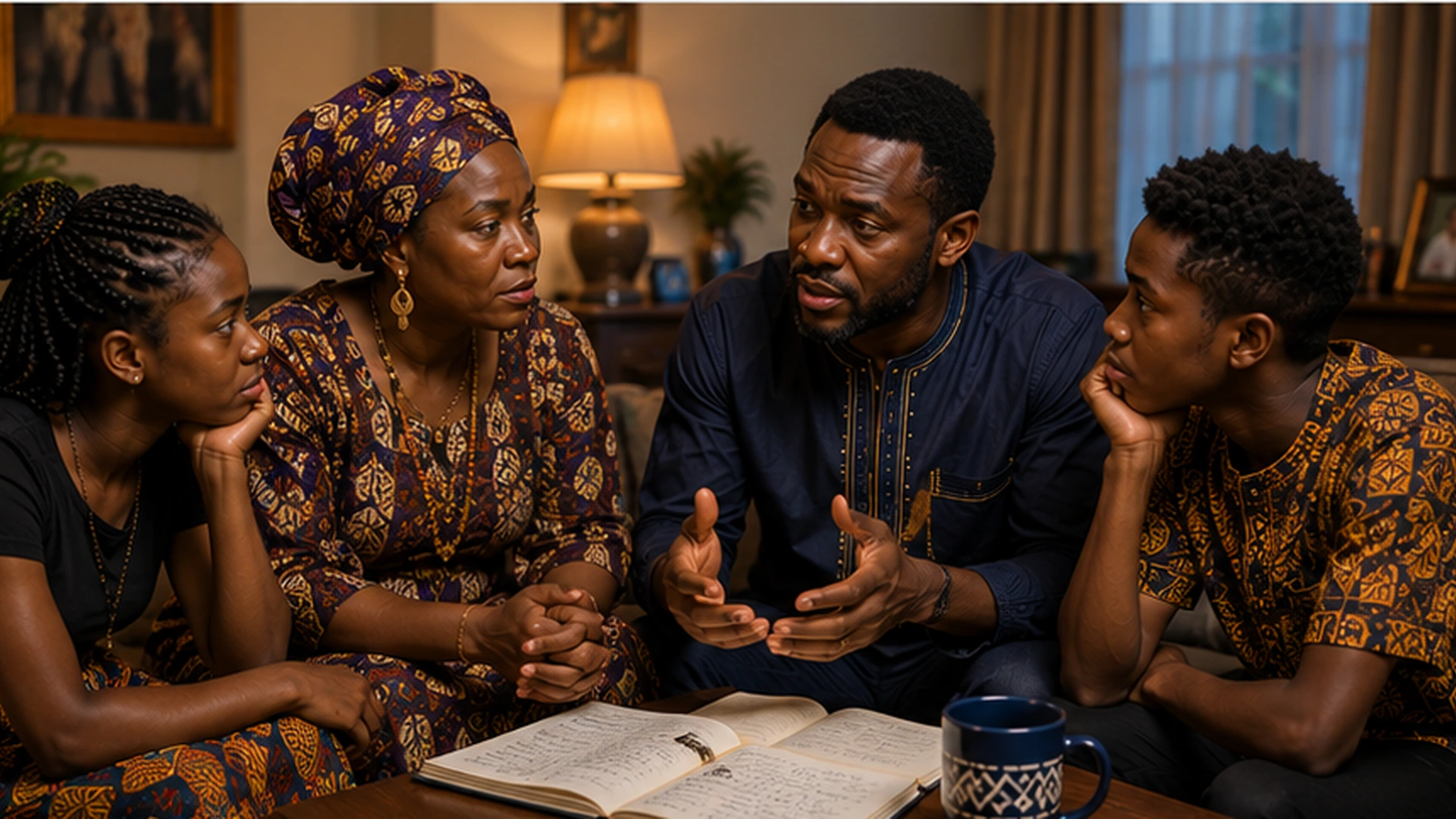
Quick Summary
Dreams about ancestors or deceased relatives can feel comforting, frightening, or unusually real. Their possible meanings depend on grief, family memory, religion, cultural tradition, personal experience, and the complete dream rather than one universal interpretation.
Dreams About Ancestors
Dreams about ancestors can feel different from ordinary dreams.
A deceased parent may appear healthy and speak as though no time has passed. A grandparent may sit silently in a familiar home. An unknown elder may identify themselves as part of the dreamer’s lineage. Another dream may involve a warning, a family gathering, a journey, a meal, a blessing, an argument, or an unfinished goodbye.
These experiences can produce comfort, fear, curiosity, grief, responsibility, or a strong conviction that the encounter was more than imagination.
There is no single explanation that applies to every dream about the dead.
In some religious and cultural traditions, particular dreams may be understood as communication from recognized ancestors. In grief research, dreams of deceased loved ones are also studied as experiences that may help people maintain emotional bonds, process loss, or confront unresolved feelings. Modern sleep science examines how memories and emotions are reorganized during sleep without claiming that it can prove or disprove every spiritual interpretation. Research on bereaved people has found that dreams of the deceased are common and may be experienced as comforting, distressing, or both. (Wright et al., “The Impact of Dreams of the Deceased on Bereavement,” PubMed: https://pubmed.ncbi.nlm.nih.gov/23449603/)
A respectful interpretation leaves room for belief while remaining honest about uncertainty.
Dreams about ancestors and deceased relatives are common during bereavement.
A recently deceased loved one is not automatically an ancestor in every cultural tradition.
Ancestors, divinities, spirits, elders, healers, and recently deceased people are distinct categories.
Some Yoruba contexts recognize continuing relationships between ancestors and descendants, including guidance through dreams.
In particular southern African healing traditions, dreams may be evaluated as one part of an ancestral calling, but not every dream is a calling to become a healer.
Tuareg dream traditions may connect the dead with poetry, memory, separation, gender, and political history.
Publicly narrated dreams can also influence religious authority and social position within particular communities.
Grief research suggests that dreams of the deceased may support acceptance, comfort, spirituality, continuing bonds, or emotional processing.
Distressing dreams may also intensify sadness, fear, guilt, or confusion.
Modern science links vivid dreaming with sleep stages, memory, and emotion, but it has not established a universal dream dictionary.
A dream should not be used to accuse someone, diagnose illness, demand money, or override medical, legal, financial, or safeguarding decisions.
Frequent nightmares, dangerous dream enactment, or grief that severely disrupts daily life may require professional support.
Clear Definition
A dream about ancestors is a remembered sleep experience involving a deceased person understood by the dreamer or their community as part of a meaningful family, lineage, spiritual, or cultural relationship.
The term should be used carefully because not every deceased relative is automatically recognized as an ancestor.
Plain-Language Meaning
A dream about a deceased person may lead someone to ask:
Was this a memory?
Was I processing grief?
Was my relative visiting me?
Was I being warned or comforted?
Why did the person look healthy and alive?
Does my family or religion recognize dreams like this?
Am I supposed to act on what happened?
A responsible answer considers the dreamer’s beliefs and emotions without pretending that one interpretation can be proven with certainty.
First Distinction: Ancestor, Deceased Relative, Spirit, or Elder?
These terms should not be treated as synonyms.
Recently Deceased Person
A recently deceased person is someone whose death may still be part of active mourning. The dream may reflect longing, shock, unfinished conversations, practical concerns, or the mind’s continued expectation that the person is still alive.
Deceased Relative
A deceased relative is connected to the dreamer by family or kinship. Their importance in a dream may come from attachment, memory, conflict, caregiving, inheritance, or grief.
Ancestor
An ancestor is a forebear recognized through genealogy, lineage, history, or a community-specific religious framework. In some traditions, ancestral status may depend on the person’s life, moral standing, relationship to descendants, burial, remembrance, or ritual recognition. It should not be assumed that every dead family member becomes an ancestor immediately or automatically.
Elder
An elder may be living or deceased. Elderhood can refer to age, experience, family position, public service, religious authority, or another recognized role. A deceased elder in a dream is not automatically a priest, healer, diviner, or ancestor.
Spirit or Divinity
A spirit or divinity is not the same category as an ancestor. Some traditions distinguish family ancestors from deities, nature beings, saints, angels, or unrelated spirits. Blending these categories produces inaccurate and disrespectful interpretation.
Why Ancestor Dreams Feel So Real
Familiar People Are Deeply Embedded in Memory
Parents, grandparents, siblings, mentors, and other important people are connected with voices, gestures, places, routines, smells, stories, and emotional expectations. Dreams can recombine these memories into encounters that feel immediate.
The Deceased May Appear Healthy
Dreams often ignore chronological reality. A person who died after a long illness may appear younger, stronger, or free from pain. This can be comforting because the dream restores a remembered version of the person rather than their final condition.
The Dreamer May Temporarily Forget the Death
During a dream, the person may simply seem alive. The shock can come after waking, when the dreamer remembers the loss again.
Strong Emotion Increases Recall
Dreams involving grief, fear, love, or surprise are more likely to be remembered than neutral dreams. REM sleep is often associated with vivid, emotionally rich dreaming, although dreaming can also occur during non-REM sleep. (National Institute of Neurological Disorders and Stroke, “Brain Basics: Understanding Sleep”: https://www.ninds.nih.gov/health-information/public-education/brain-basics/brain-basics-understanding-sleep)
Common Types of Dreams About Ancestors
The Ancestor Appears Alive and Well
This is one of the most frequently described forms of dream involving the dead.
The person may:
Sit in a familiar room
Prepare food
Walk beside the dreamer
Speak normally
Attend a family gathering
Look younger than at the time of death
Possible interpretations include memory, comfort, continuing attachment, grief processing, or a spiritual encounter within the dreamer’s worldview.
The Ancestor Gives Advice or a Warning
The message may concern:
Family conflict
Health
Travel
Property
Children
Religious responsibility
A forgotten promise
The dream may feel urgent, but it should still be assessed responsibly.
A warning about health should encourage appropriate medical evaluation rather than replace it. A warning about another person should not become an accusation without evidence.
The Ancestor Is Silent
A silent presence may feel peaceful, sad, frightening, or authoritative.
Silence does not have one fixed meaning. It may reflect the absence of words, uncertainty, grief, cultural expectations of respect, or the dreamer’s own difficulty expressing emotion.
The Ancestor Gives an Object
Objects may include:
Clothing
Food
Jewellery
A letter
A tool
Money
Water
A family item
The object’s actual family history is more important than a generic dream dictionary. A necklace inherited from a grandmother carries a different meaning from an unfamiliar object.
The Ancestor Requests Something
A deceased person may ask for remembrance, reconciliation, a visit, prayer, care for another relative, or attention to an unfinished matter.
The request should be considered within the dreamer’s culture and ethical responsibilities. No dream should be used to justify harmful offerings, exploitation, secrecy, violence, or financial pressure.
The Dreamer Argues With the Deceased
Conflict dreams may reflect:
Unresolved anger
Guilt
Family tension
A difficult relationship before death
Fear of repeating past patterns
A need to establish emotional boundaries
The dreamer is not required to idealize the deceased. Grief can include love, anger, relief, regret, and ambivalence at the same time.
The Dream Involves an Unknown Ancestor
An unfamiliar elder may identify themselves as part of the family or appear within a historical setting.
Possible sources include:
Family stories
Photographs
Imagination
Cultural imagery
A spiritual interpretation
Forgotten or indirect memories
The dream does not prove an exact genealogy. Historical family research still requires records, oral testimony, archives, and careful verification.
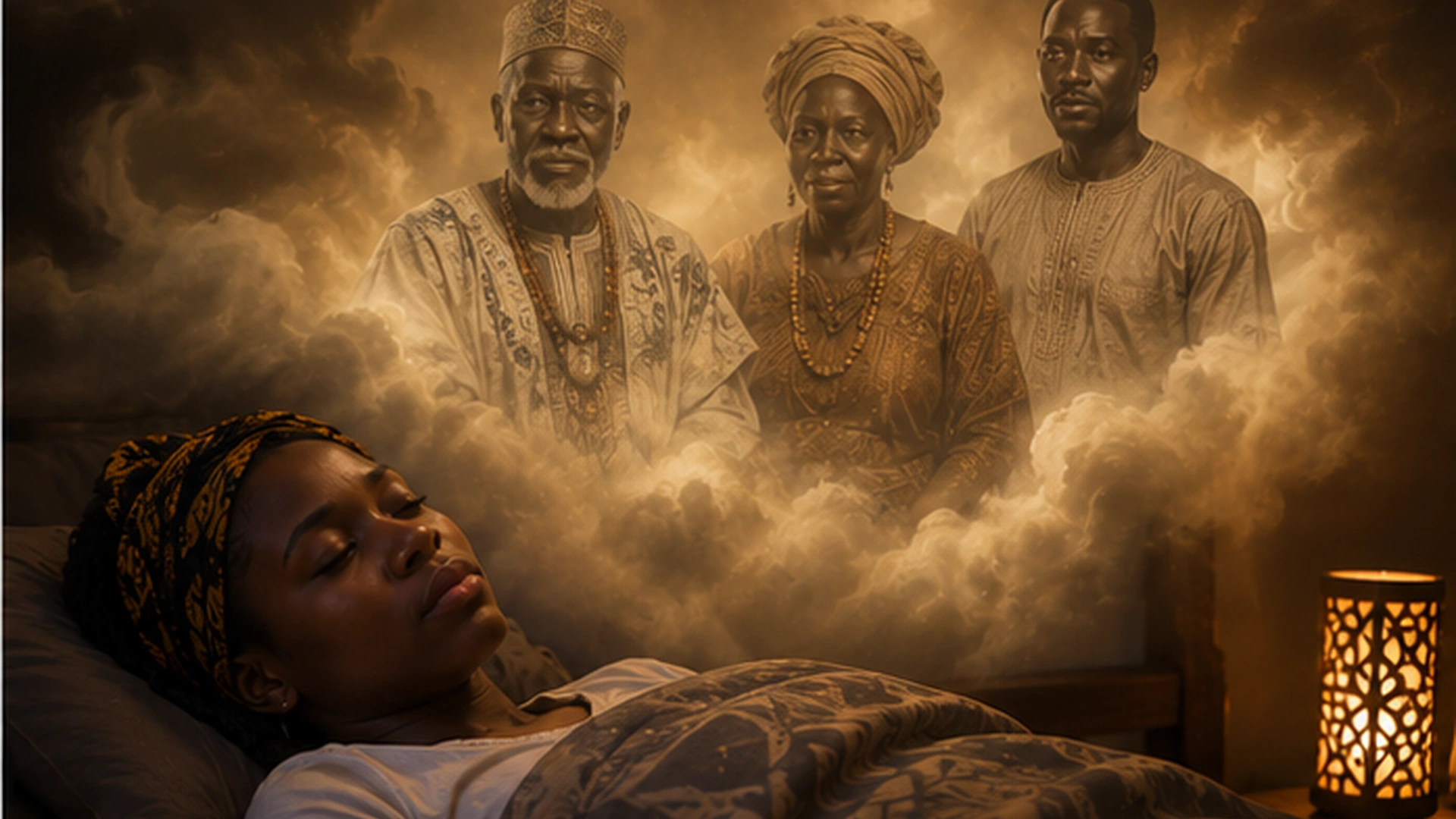
Ancestor Dreams in Specific African Contexts
There is no single African belief about dreams or ancestors.
Interpretations vary by community, language, religion, family, historical period, and individual conviction. African Christians, Muslims, practitioners of Indigenous religions, and people with secular views may interpret the same dream differently.
Yoruba Contexts
In particular Yoruba religious and family contexts, ancestors may be understood as remaining connected with living descendants and as capable of offering guidance. Scholarly accounts of Yoruba religion describe the continuing importance of deceased parents and forebears in family identity and religious thought. (Cambridge University Press, “Religion and World View” in *The Yoruba from Prehistory to the Present*: https://www.cambridge.org/core/books/yoruba-from-prehistory-to-the-present/religion-and-world-view/68A3D8A890652642D87A3660184A51CA)
A dream involving a deceased parent or elder may therefore be discussed as:
Family memory
Ancestral advice
A warning
A reminder of responsibility
Grief
A call to repair family relationships
This does not mean that every Yoruba person interprets dreams spiritually. Yoruba communities include Muslims, Christians, practitioners of Indigenous traditions, people who combine influences, and people who do not assign religious authority to dreams.
The term ancestor reverence is usually more accurate than automatically calling the relationship “worship.” The meaning depends on the community’s own language and theology.
Southern African Healing Traditions and Ancestral Calling
In particular Nguni and other southern African healing traditions, dreams may be evaluated as one part of a possible ancestral calling to train as a healer or diviner. Academic and university accounts describe dreams, illness, unusual experiences, and guidance from established practitioners as elements that may be considered during such a process. (University of Cape Town, “Heeding the Ancestors’ Call”: https://humanities.uct.ac.za/apc/heeding-ancestors-call-part-1; Cambridge University Press, “The Transmission of Knowledge in South African Traditional Healing”: https://www.cambridge.org/core/journals/africa/article/transmission-of-knowledge-in-south-african-traditional-healing/AB7496C545C21C7A2045083D7DFC359B)
This context requires several boundaries:
Not every vivid dream is an ancestral calling.
Not every person who dreams of a deceased relative should become a sangoma.
A calling is not confirmed by an online article or stranger.
The roles of sangoma, inyanga, healer, diviner, and herbal practitioner should not be treated as interchangeable.
Mental and physical health symptoms still require appropriate professional assessment.
A culturally informed clinician or trusted community authority may help a person navigate experiences that cross religious, psychological, and social categories.
Tuareg Dreams, Memory, and Poetry
Research on Tuareg dream traditions shows that dreams may be connected with poetry, memory, gender, separation, deceased poets, travel, and political history. Dreams may provide a form through which absence and relationships with the dead are narrated, especially where direct public discussion is culturally sensitive. (Amalia Dragani, “The Past of Dreams: Gender, Memory and Tuareg Oneiric Inspiration”: https://ird.hal.science/ird-01853799v1/document)
This example is important because it shows that dreams about the dead are not always reduced to instructions or predictions.
They may become:
Poems
Memories of absent people
Expressions of longing
Accounts of political violence or displacement
Reflections on gender and social life
Private experiences that are not freely disclosed
Tuareg communities are diverse, and the research should not be converted into a universal Saharan dream system.
Public Dream Narratives in West African Religious Movements
Dreams can also become public testimony.
An anthropological study of a West African religious movement found that publicly narrated dreams were evaluated by other church members and could influence perceptions of commitment, worth, and eligibility for religious roles. The researcher emphasized that dream accounts are also social performances shaped by the institutions in which they are told. (Cambridge University Press, “Dreams of Power: Social Process in a West African Religious Movement”: https://www.cambridge.org/core/journals/africa/article/dreams-of-power-social-process-in-a-west-african-religious-movement/5A73F4FDDBFBAE54FE4D4040E90CA601)
This creates an important interpretive question:
Is the dream being explored privately, or is it being used publicly to claim authority?
Public ancestor-dream claims require accountability because they may affect leadership, money, family decisions, and the reputation of other people.
Ancestors in Christian and Muslim Families
African Christian and Muslim families do not all respond to ancestor dreams in the same way.
Some may understand a dream as:
A memory of the deceased
A call to pray
A reminder of family responsibility
A normal part of grief
A spiritually meaningful experience
An experience that should not be treated as religious instruction
Others may reject the language of ancestral communication while still finding comfort in the dream.
A dream can be emotionally important without being granted the same authority as scripture, established doctrine, law, or evidence.
Dreams of the Deceased and Grief Research
Research on bereavement provides another framework for understanding these experiences.
A survey of 278 bereaved people found that dreams of the deceased were widely reported and that many participants believed the dreams affected their grieving process. Reported effects included comfort, increased acceptance, spirituality, sadness, and changes in quality of life. (Wright et al., PubMed: https://pubmed.ncbi.nlm.nih.gov/23449603/)
Later research has distinguished between comforting and distressing dreams. Some dreams help the bereaved feel connected, reassured, or able to say goodbye. Others reactivate traumatic memories, guilt, conflict, or fear. (Black et al., “Comforting Versus Distressing Dreams of the Deceased,” PubMed: https://pubmed.ncbi.nlm.nih.gov/32036745/)
A 2026 scoping and mixed-methods review concluded that dreams of the deceased occur across diverse cultural contexts and often serve significant emotional functions related to grief, while also emphasizing the need for further research. (Mamat et al., PubMed: https://pubmed.ncbi.nlm.nih.gov/41570642/)
These findings do not prove that the deceased caused the dream.
They show that the experience can be psychologically and socially meaningful regardless of how its ultimate source is understood.
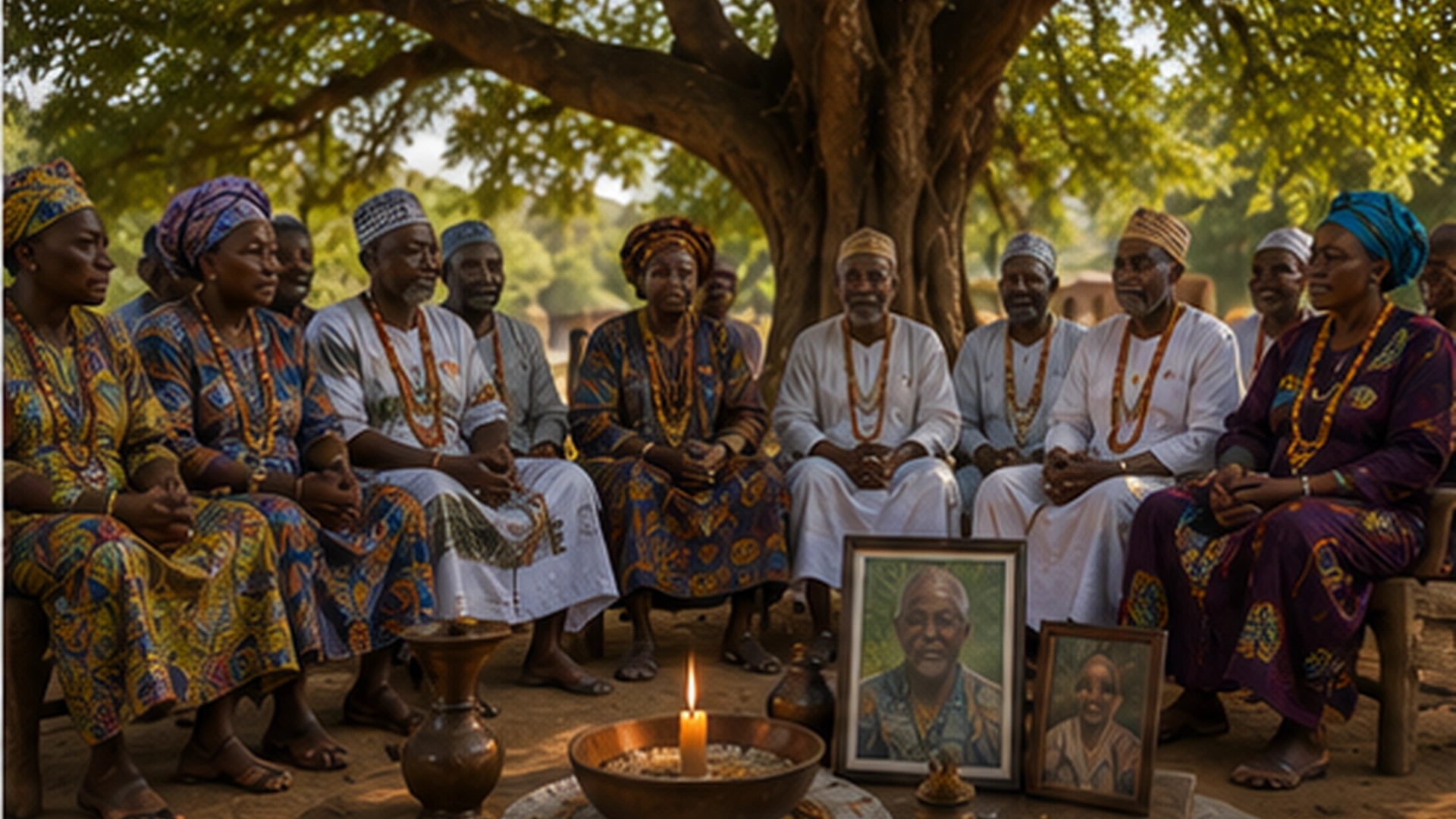
Continuing Bonds Rather Than “Moving On” Completely
Older models of grief sometimes suggested that healthy mourning required people to detach from the deceased.
Contemporary grief discussions often recognize continuing bonds: the ways people preserve an inner relationship through memory, values, stories, objects, prayer, family customs, or dreams.
A dream may strengthen this bond by allowing the deceased to appear within an active relationship rather than only as a historical memory.
A continuing bond can be healthy when it supports life, relationships, responsibility, and acceptance of the death.
It may become concerning when the person:
Cannot accept that the death occurred
Withdraws almost completely from living relationships
Makes dangerous decisions based on dream commands
Experiences severe and persistent functional impairment
Is exploited by people claiming exclusive access to the deceased
What Modern Sleep Science Can and Cannot Say
Dreams Occur During Sleep Stages
Vivid, story-like dreams are commonly recalled from REM sleep, but dream experiences can also occur in non-REM sleep. During REM sleep, the brain generates images, sounds, emotions, and other sensations while major muscles are normally inhibited. (National Institute of Neurological Disorders and Stroke: https://www.ninds.nih.gov/health-information/public-education/brain-basics/brain-basics-understanding-sleep)
Memory Is Reorganized During Sleep
Sleep contributes to memory processing. People, places, emotions, and events may be combined in ways that do not follow waking chronology.
This helps explain why a deceased grandparent can appear in a present-day house, speak with a child born after their death, or look as they did decades earlier.
Emotional Memories May Be Especially Powerful
Research reviews connect REM sleep with emotional-memory processing, although the exact function of dreams remains debated. (Scarpelli et al., “The Functional Role of Dreaming in Emotional Processes”: https://pmc.ncbi.nlm.nih.gov/articles/PMC6428732/)
Science Does Not Provide a Universal Symbol Dictionary
There is no scientifically validated code showing that:
A smiling ancestor always means approval
Silence means anger
White clothing means death
Food means an offering is required
A warning guarantees future danger
Receiving money predicts wealth
These associations may matter in a specific family or tradition, but they are not universal scientific rules.
Science Cannot Settle Every Spiritual Claim
Laboratory research can study sleep stages, memory, emotion, and dream reports.
It generally cannot verify whether a particular dream was a spiritual visitation. A careful article should not pretend that science has proved either all ancestor dreams or none of them.
Are Ancestor Dreams Visitations?
People answer this question differently.
Spiritual Interpretation
The dreamer may believe the ancestor genuinely visited, communicated, warned, blessed, or requested remembrance.
Psychological Interpretation
The dream may be understood as memory, grief processing, continuing attachment, emotional conflict, or the integration of past and present experience.
Cultural Interpretation
The dream may fit a recognized family or community pattern and gain meaning through discussion with elders, clergy, healers, or relatives.
Multiple Interpretations
A person may believe that the dream was spiritually meaningful while also recognizing that grief and memory shaped its form.
These interpretations do not always have to be treated as enemies.
The ethical question is often more important than proving the dream’s source:
What effect will this interpretation have on the dreamer and other people?
Common Misconceptions
“Every Dead Relative Is an Ancestor”
False.
Ancestral status varies by tradition and may involve lineage, recognition, moral standing, ritual, or time.
“A Dream About an Ancestor Must Contain a Message”
False.
The dream may involve memory, grief, ordinary sleep processes, spiritual meaning, or several influences.
“A Silent Ancestor Is Angry”
Not necessarily.
Silence has no universal meaning.
“Dreaming of Food Means the Ancestor Demands an Offering”
Not necessarily.
Food may come from family memories, hunger, a funeral meal, daily life, or a culturally specific practice.
“Repeated Dreams Prove a Calling to Become a Healer”
False.
In traditions where ancestral calling is recognized, dreams are evaluated alongside other experiences and established community processes.
“All African Cultures Understand Ancestor Dreams the Same Way”
False.
Beliefs differ greatly across communities, religions, languages, and individuals.
“Ancestor Reverence Is Automatically Ancestor Worship”
False.
The community’s own theology and terminology should determine how the relationship is described.
“A Frightening Dream Proves Spiritual Attack”
False.
Nightmares may be influenced by stress, trauma, grief, medication, sleep disruption, or other factors.
“A Dream Can Identify a Witch or Enemy”
False.
Dreams are not reliable evidence for accusations.
How to Reflect on an Ancestor Dream Responsibly
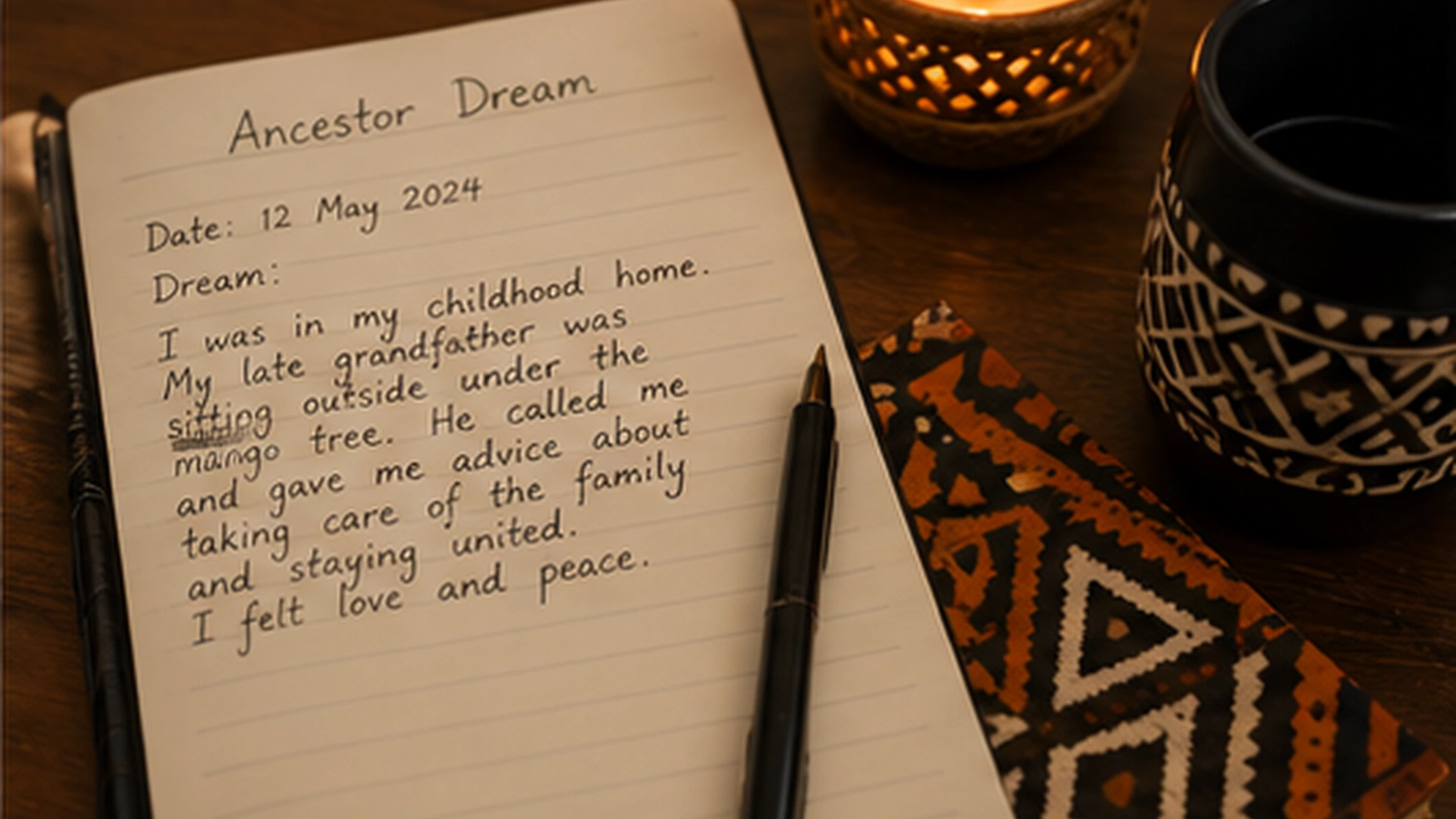
Record the Complete Dream
Write down:
Who appeared
What they looked like
Where the dream occurred
What was said
What objects appeared
Who else was present
The dreamer’s emotions
The ending
Avoid interpreting one image before recording the whole narrative.
Identify the Relationship
Ask:
Was this person a parent, grandparent, sibling, elder, mentor, or unknown figure?
What was the relationship like while they were alive?
Is the dreamer actively grieving?
Is an anniversary or family event approaching?
Separate the Message From the Action
A dream can be considered meaningful without obeying it immediately.
Before taking action, ask:
Is the action safe?
Is it legal?
Does it respect consent?
Does it affect another person’s reputation or rights?
Is professional advice required?
Could grief or fear be influencing the decision?
Consult the Right Person
Depending on the dreamer’s worldview, a useful conversation may involve:
A trusted family elder
A qualified mental-health professional
A recognized religious leader
A culturally knowledgeable healer or diviner
A grief counsellor
No adviser should demand unquestioning obedience or exploit the dreamer financially.
Allow Uncertainty
Useful language includes:
“One possibility is…”
“This may connect with…”
“How does your family understand dreams like this?”
“What feeling remained after waking?”
Avoid:
“This definitely proves…”
“Your ancestor demands…”
“Someone has bewitched you…”
“You must pay immediately…”
Ethical Boundaries
Dream interpretation should never be used to:
Accuse someone of witchcraft
Identify a murderer or thief without evidence
Declare a partner unfaithful
Force marriage or separation
Demand expensive ceremonies
Threaten death, illness, or infertility
Frighten children
Stop prescribed treatment
Replace legal advice
Control inheritance or property
Claim automatic religious authority
Pressure someone into initiation
Reveal private family matters publicly
Exploit a grieving person
Restricted prayers, initiation procedures, ritual medicines, and private family knowledge should not be reconstructed from an online article.
When Dreams Become Distressing
Nightmares may increase during stress, anxiety, bereavement, trauma, major changes, illness, or medication changes. Mayo Clinic guidance notes that nightmares may require treatment when they repeatedly cause distress, interrupt sleep, or impair daytime functioning. (Mayo Clinic, “Nightmare Disorder”: https://www.mayoclinic.org/diseases-conditions/nightmare-disorder/symptoms-causes/syc-20353515)
Seek appropriate professional support when dreams:
Cause fear of sleeping
Occur repeatedly after a traumatic death
Produce severe daytime anxiety or depression
Lead to dangerous behaviour
Include commands to harm oneself or another person
Occur with hallucinations while fully awake
Involve punching, kicking, shouting, or leaving the bed
Contribute to inability to work, eat, study, or care for family
Are accompanied by prolonged and disabling grief
Physically acting out vivid dreams can be associated with REM sleep behaviour disorder and should be medically assessed. (Mayo Clinic, “REM Sleep Behavior Disorder”: https://www.mayoclinic.org/diseases-conditions/rem-sleep-behavior-disorder/symptoms-causes/syc-20352920)
Spiritual support may accompany medical or psychological care, but it should not replace it.
Key Takeaways
Dreams about ancestors can be comforting, distressing, spiritual, psychological, or culturally meaningful.
Not every deceased person is automatically an ancestor.
Ancestors are distinct from divinities, unrelated spirits, elders, healers, and recently deceased relatives.
Yoruba, southern African healing, Tuareg, Christian, Muslim, and other contexts must be described separately.
In particular southern African traditions, dreams may form one part of an ancestral calling, but they do not confirm a calling by themselves.
Dreams of the deceased are common in grief research and may support comfort, acceptance, spirituality, or continuing bonds.
Distressing dreams may also reactivate fear, guilt, trauma, or conflict.
Modern sleep science connects dreaming with memory and emotion but does not provide a universal symbol dictionary.
A dream cannot prove witchcraft, betrayal, illness, pregnancy, criminal activity, or future events.
Dream interpretation must respect consent, privacy, cultural authority, and safety.
Frequent nightmares, dangerous dream enactment, or disabling grief may require professional help.
People Also Ask
What does it mean when an ancestor appears in a dream?
It may relate to grief, memory, family identity, cultural belief, spiritual interpretation, or unresolved emotion. The complete dream and the dreamer’s context matter.
Are dreams about ancestors real visitations?
Some people understand them as visitations, while others interpret them psychologically or culturally. Science cannot confirm the source of one individual dream.
Why do deceased relatives look alive in dreams?
Dreams can recreate older memories and ignore the chronology of illness, aging, and death.
Does an ancestor warning predict danger?
No dream provides guaranteed prediction. Practical safety concerns should be checked through evidence and appropriate professional advice.
Are repeated ancestor dreams a spiritual calling?
Not automatically. In traditions that recognize ancestral callings, the experience is evaluated through established community processes rather than one dream alone.
Frequently Asked Questions
1. Why do I keep dreaming about a deceased parent?
Repeated dreams may relate to attachment, grief, family responsibility, an approaching anniversary, unresolved feelings, or spiritual belief.
2. What does it mean when an ancestor gives advice?
The advice may reflect memory, internalized family values, cultural interpretation, or a spiritual message within the dreamer’s worldview. Any action should still be ethical and evidence-based.
Article Information
- Publisher
- Ancestral Temple
- Editor
- Ancestral Temple
- Last updated
- Jul 26, 2026
- Last reviewed
- Jul 26, 2026
- Content version
- 6ea114b31b
This educational article should be read as cultural and spiritual information, not as medical, legal, financial, or emergency advice.
Helpful Related Guidance
Explore This Topic
Ancestor Reverence In African Cultures · Ancestor Reverence Around The World
About the Author
 Ancestral Temple
Spiritual guide and practitioner with decades of experience in ancestral wisdom, rituals, and divine guidance.
Related Posts
View All

Leave a Comment
We'd love to hear your thoughts.
I appreciated the distinction between a recently deceased relative and a recognized ancestor.