
Dream Interpretation Across Cultures
Cornerstone Content
Quick Summary
Dreams have been interpreted as warnings, memories, divine messages, ancestral encounters, poetic inspiration, emotional processing, and ordinary products of sleep. This guide compares documented traditions without claiming that one symbol carries the same meaning in every culture.
Dream Interpretation Across Cultures explores how dreams have been interpreted in cultural, symbolic and personal ways. Dream meanings are not universal proof of future events; they depend on context, tradition, emotion and the details remembered by the dreamer.
Dream Interpretation Across Cultures
Dream interpretation begins with a problem: dreams feel meaningful, but their meaning is rarely obvious.
A person may dream about a deceased relative, a river, an animal, a journey, a wedding, an unfamiliar house, or an approaching danger. When they wake, the emotional force of the dream may remain even after many details disappear.
People have therefore developed different ways of asking:
•Was the dream produced by memory?
•Was it a warning?
•Was it religious guidance?
•Was it connected with an ancestor?
•Did it reflect fear or desire?
•Was it caused by illness, stress, or disturbed sleep?
•Was it simply an unusual combination of recent experiences?
There is no universal system of dream interpretation.
A river in a dream does not automatically mean purification. A snake does not always represent betrayal. Dreaming about death does not prove that someone will die, and dreaming about pregnancy does not guarantee conception.
Interpretation depends on the dreamer, community, language, religion, historical period, emotional state, and circumstances surrounding the dream.
Quick Summary
•Dream interpretation varies greatly among cultures and religious traditions.
•Ancient Egyptian scribes preserved written manuals that categorized dreams as favourable or unfavourable.
•Ancient Greek healing sanctuaries used prepared sleep, known as enkoimesis, within religious healing.
•Dreams occupy important narrative roles in Jewish, Christian, and Islamic scripture.
•In some Yoruba contexts, dreams may be understood as one way ancestors or spiritual beings communicate.
•Tuareg dream traditions may connect dreaming with poetry, gender, memory, separation, travel, and political history.
•Dreams can become public testimony and may influence religious authority within particular communities.
•Japan’s hatsuyume, or first dream of the New Year, is traditionally treated as a possible indication of the coming year.
•Modern sleep science connects dreaming with REM sleep, memory, and emotional activity but has not produced a universal symbol dictionary.
•Disturbing dreams can be related to stress, grief, medication, trauma, or sleep disorders.
•Dreams should not be used as unquestionable evidence against another person.
•Major medical, legal, relationship, and financial decisions should not be based solely on a dream.
Concise Definition
Dream interpretation is the process of assigning personal, cultural, religious, psychological, or social meaning to experiences remembered from sleep.
In Simple Terms
Dream interpretation asks:
“What might this dream mean for the person who experienced it?”
A culturally responsible interpretation does not begin with a universal list of symbols.
It begins by asking:
•What did the dreamer feel?
•What was happening in their life?
•What does the image mean in their family or religion?
•Has the dreamer seen something similar recently?
•Is the dream part of grief, stress, illness, or a major transition?
•Who is interpreting it, and what authority do they claim?
Why Dream Meanings Differ
Symbols Are Learned Through Culture
People do not encounter symbols in a vacuum.
A cow may represent livelihood to one dreamer, religious importance to another, childhood memories to a third, and fear to someone who was injured by livestock.
A river may remind one person of baptism, another of fishing, another of migration, and another of a dangerous flood.
Meaning comes from lived experience as much as from the dream image itself.
Language Shapes Interpretation
Words, names, proverbs, puns, and sound similarities may influence dream meaning.
A dream image may carry associations in Yoruba, Arabic, Amharic, Luganda, Japanese, French, or another language that disappear when translated into English.
A translated dream should therefore preserve important original words where possible.
Religion Shapes Authority
A Christian may compare a dream with scripture. A Muslim may consult established teachings about dreams and avoid treating an ordinary dream as divine law. A practitioner of a community-specific ancestral tradition may ask whether the dream resembles recognized forms of ancestral communication.
The same dream can receive different interpretations because the communities use different standards of authority.
Personal Experience Changes Symbols
A dog may symbolize loyalty for one person and danger for another.
No responsible interpreter should ignore the dreamer’s actual history in favour of a fixed online definition.
Ancient Egyptian Dream Books
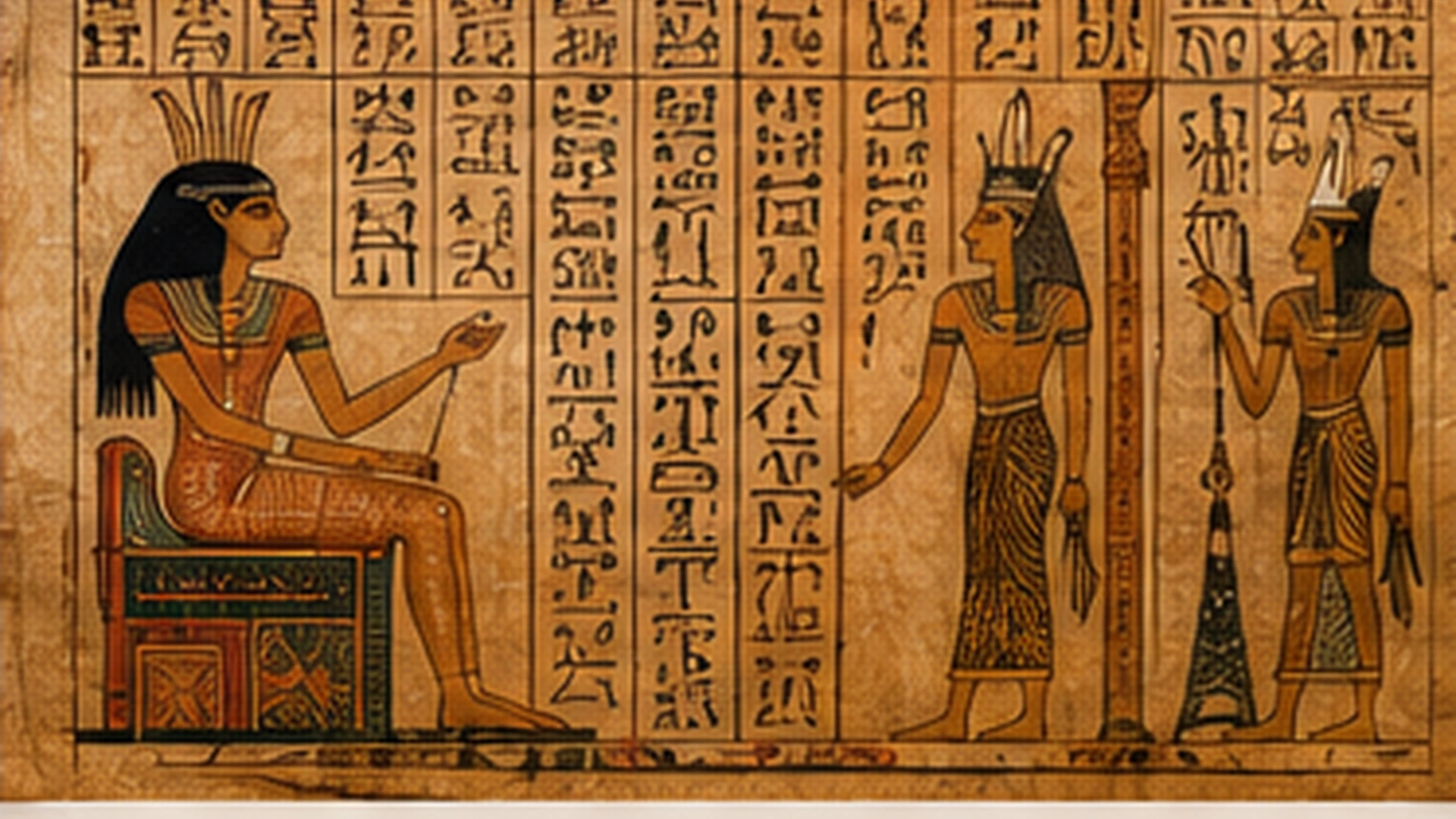
Ancient Egypt provides some of the earliest surviving evidence of organized written dream interpretation.
Papyrus Chester Beatty III contains a manual for interpreting dreams written in Middle Egyptian. The surviving document groups dream experiences into favourable and unfavourable categories and demonstrates that dream knowledge could be recorded, copied, and consulted rather than interpreted only through spontaneous intuition.
The document is associated with Deir el-Medina, the community of workers connected with royal tomb construction during Egypt’s New Kingdom.
Its existence suggests several things:
•Dream interpretation could involve specialized knowledge.
•Similar dream images could be classified according to established associations.
•Written interpretation could circulate alongside other literary material.
•Dreams were not necessarily understood only through the dreamer’s immediate feelings.
The papyrus does not prove that every ancient Egyptian followed the same system.
Ancient Egyptian religion and daily life changed across regions, occupations, social classes, and thousands of years. A surviving manual reflects a particular written tradition, not one timeless African dream dictionary.
Dream Incubation in Ancient Greece
At the Sanctuary of Asklepios at Epidaurus, healing included enkoimesis, a prepared form of sleep associated with dreams.
Worshippers seeking help entered a sacred medical and religious environment that included ritual preparation, worship, physical activity, accommodation, and the expectation of an encounter with Asklepios, the healing deity. UNESCO identifies dream-like induced sleep as part of the sanctuary’s historical healing procedure.
The meaning of a dream at Epidaurus depended partly on place.
It was not interpreted like an ordinary dream experienced after an uneventful night at home. The sanctuary, religious preparation, healing expectations, and institutional setting gave the experience authority.
This practice is often called dream incubation: intentionally sleeping in a sacred setting in the hope of receiving guidance, healing, or a meaningful dream.
Historical dream incubation should not be used as a substitute for modern medical diagnosis or treatment.
Dreams in Jewish and Christian Scripture
Dreams play important roles in the Hebrew Bible and Christian New Testament.
In Genesis, Joseph’s dreams create conflict within his family, while Pharaoh’s dreams of cattle and grain become connected with preparation for abundance
Related Cultural Guides
For more context, continue with why humans have always valued dreams, common dream symbols and meanings, dreams about water and dreams about animals.
Frequently Asked Questions
What should readers know first about african spirituality and cultural history?
African spirituality and cultural history: Read clear guidance, key signs, practical steps, and private support from Ancestral Temple.
What causes Dream Interpretation Across Cultures?
The safest next step is to compare the signs, prepare clear details, and request private guidance when the matter feels personal.
How does Dream Interpretation Across Cultures work?
The safest next step is to compare the signs, prepare clear details, and request private guidance when the matter feels personal.
Is it possible to get private guidance for Dream Interpretation Across Cultures?
The safest next step is to compare the signs, prepare clear details, and request private guidance when the matter feels personal.
How long does Dream Interpretation Across Cultures take to understand?
The safest next step is to compare the signs, prepare clear details, and request private guidance when the matter feels personal.
Can Dream Interpretation Across Cultures affect relationships, family, work, or personal peace?
The safest next step is to compare the signs, prepare clear details, and request private guidance when the matter feels personal.
Why do people seek spiritual guidance for Dream Interpretation Across Cultures?
The safest next step is to compare the signs, prepare clear details, and request private guidance when the matter feels personal.
What signs should someone notice before asking about Dream Interpretation Across Cultures?
The safest next step is to compare the signs, prepare clear details, and request private guidance when the matter feels personal.
When should someone contact a private spiritual guide?
The safest next step is to compare the signs, prepare clear details, and request private guidance when the matter feels personal.
What causes african spirituality and cultural history?
African spirituality and cultural history: Read clear guidance, key signs, practical steps, and private support from Ancestral Temple. The safest next step is to compare the signs, prepare clear details, and request private guidance when the matter feels perso
Article Information
- Publisher
- Ancestral Temple
- Editor
- Ancestral Temple
- Last updated
- Jul 26, 2026
- Last reviewed
- Jul 13, 2026
- Content version
- 96b65b98f6
This educational article should be read as cultural and spiritual information, not as medical, legal, financial, or emergency advice.
Helpful Related Guidance
Explore This Topic
Sacred Symbols In African Spiritual Traditions · Dreams & Symbolism
Related Topic Cluster
African Spirituality And Cultural History
Complete Guide Why Homes Have Been Blessed Throughout HistoryAbout the Author
 Ancestral Temple
Spiritual guide and practitioner with decades of experience in ancestral wisdom, rituals, and divine guidance.
Related Posts
View All

Leave a Comment
We'd love to hear your thoughts.