
Snake Dreams Explained: Meaning, Symbolism and Cultural Interpretations
Quick Summary
Snake dreams can feel unusually vivid because snakes combine real-world danger with powerful cultural symbolism. A dream may involve a snake that bites, chases, watches, sheds its...
Snake dreams can feel unusually vivid because snakes combine real-world danger with powerful cultural symbolism. A dream may involve a snake that bites, chases, watches, sheds its skin, appears in water or remains unexpectedly calm. The image can be frightening, fascinating or even reassuring.
There is no scientifically validated dream dictionary in which every snake has one fixed meaning. Current dream research instead suggests that dreams often draw on waking concerns, emotionally important experiences, memories and expectations, while the purpose and construction of dreams remain actively debated. [1][2][3] A snake dream is therefore best interpreted through the dreamer’s emotions, recent experiences and cultural background—not by matching one image to a guaranteed prediction.
Cultural context matters because serpents have never represented only one idea. They may be venomous threats, protectors, water beings, symbols of rebirth, guardians of sacred knowledge, signs of fertility or figures linked with ancestors. Those meanings belong to particular histories and communities; they should not be blended into a single fictional “universal serpent tradition.”
Quick Answer
| A snake dream may reflect fear, vigilance, change, conflict, healing, sexuality, spiritual belief or a recent encounter with snake imagery. The strongest clues are what the snake did, how you felt, what was happening in your life and what snakes mean in your own culture. It is not a guaranteed prophecy or universal code. |
|---|
What Does Dreaming About Snakes Mean?
The most honest answer is that a snake dream can have several plausible meanings, and the dream’s emotional pattern matters more than a generic symbol list. A threatening snake may reflect danger, mistrust or avoidance. A calm snake may represent curiosity, respect or controlled power. A shedding snake can invite thoughts about renewal because skin shedding is a visible feature of snake biology, but it does not automatically prove that the dream predicts a life transformation.
Dream meaning is not located in the animal alone. It emerges from the relationship among the dreamer, the snake, the setting, the action and the waking situation. Two people can dream of the same green snake and experience entirely different meanings: one may remember a beloved garden, while another may associate green with illness, jealousy or a venomous species seen in childhood.
Four Questions to Ask First
What emotion was strongest—fear, awe, disgust, calm, fascination, guilt or relief?
What was the snake doing—watching, hiding, biting, chasing, shedding, swimming or protecting something?
What has recently happened in waking life—conflict, change, illness, learning, exposure to snake media or an actual encounter?
What do snakes mean in your family, religion, community and personal history?
Why Snakes Become Powerful Dream Images
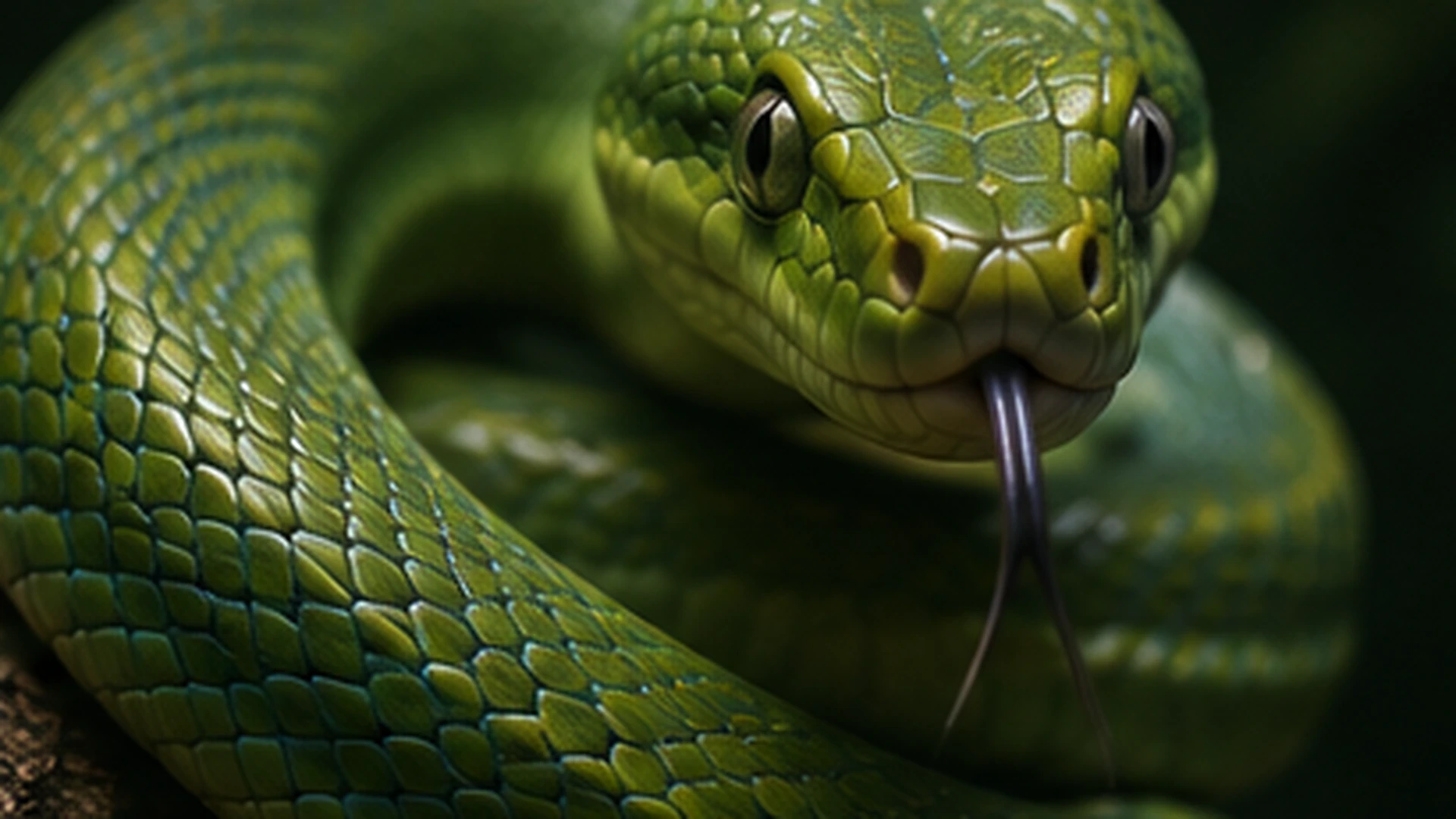
Snakes are biologically distinctive animals: they move without limbs, can appear suddenly from concealment, and include species capable of causing serious injury. Human attention to them is therefore understandable. At the same time, their ability to shed skin, live underground or near water, and coil into striking forms has made them unusually productive symbols in art, religion and storytelling.
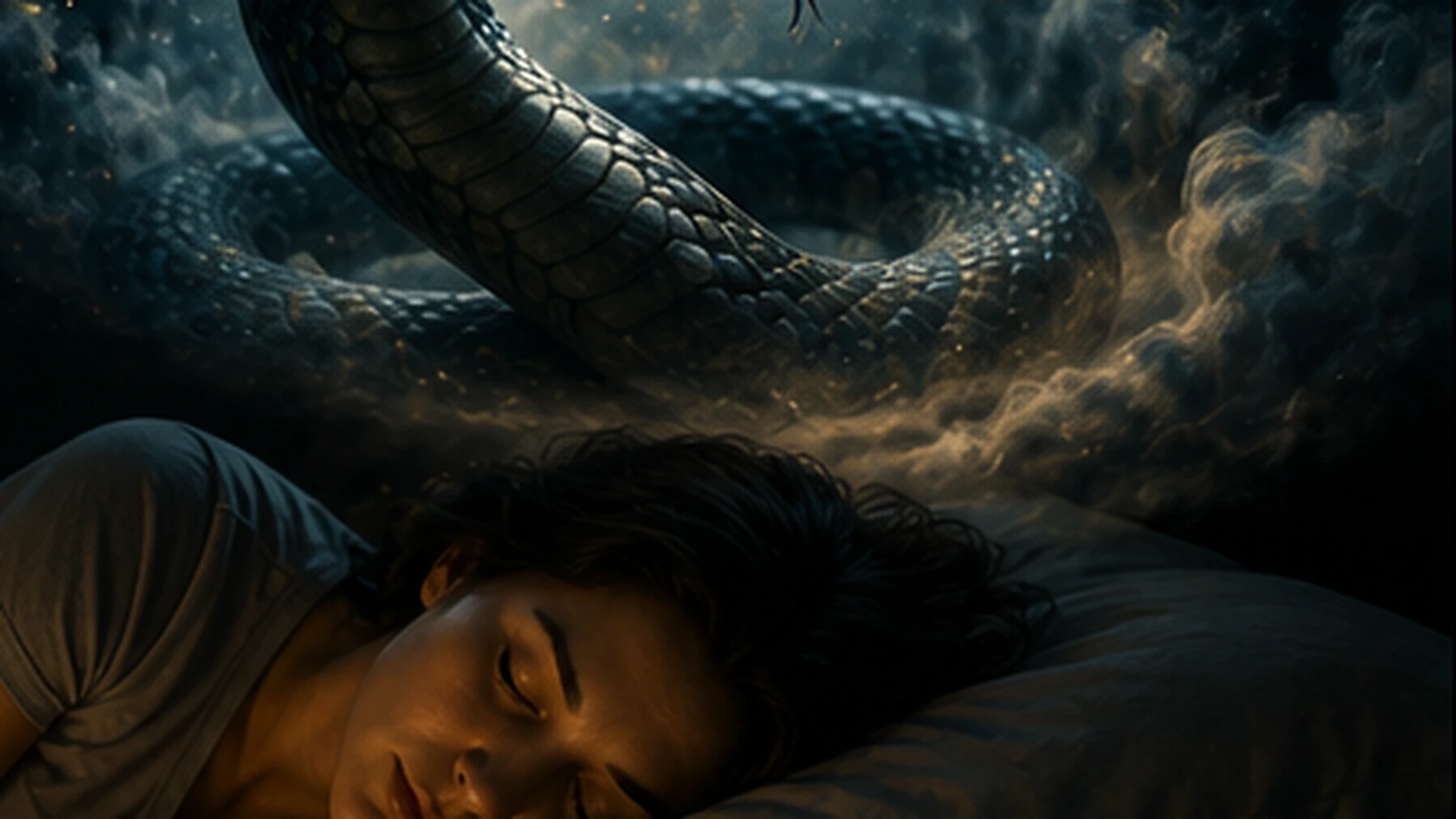
This combination of real danger and symbolic flexibility makes snakes useful material for dreams. A sleeping mind can recruit the image to represent a threat, a boundary, a bodily sensation, a relationship, a memory or a culturally learned story. The image may be emotionally important even when it has no hidden message.
Psychological Perspectives on Snake Dreams
The Continuity Hypothesis
One influential approach in dream science is the continuity hypothesis: dreams often incorporate waking-life concerns, activities, emotions and memories. Reviews of dream research describe strong links between dreaming and personally or emotionally salient experiences, although dreams also contain discontinuities and bizarre combinations. [1][2] Under this approach, a snake dream might be connected with recent stress, a dangerous situation, a documentary, a conversation, a childhood memory or a concern the dreamer has not resolved.
Threat-Simulation Theories
Threat-simulation theory proposes that some dreams simulate dangerous events and responses to them. Snake attacks, pursuit and hiding fit the kind of threat imagery the theory tries to explain. However, threat simulation is a debated hypothesis, not a complete explanation of why people dream or why a particular person dreamed about a snake on a particular night. [1][4]
Psychoanalytic and Symbolic Approaches
Freudian and later psychodynamic traditions often treat dream images as expressions of conflict, desire or material outside ordinary awareness. Jungian approaches may discuss serpents as archetypal images associated with instinct, transformation, healing or the unconscious. These frameworks have influenced literature and therapy, but their symbolic claims should not be confused with experimentally validated one-to-one meanings. The American Psychological Association defines dream analysis as an interpretive technique used in psychoanalysis and some psychotherapies, not as a laboratory decoding system. [5]
A Responsible Psychological Use
A therapist may use a snake dream as a prompt for association: “What does this snake remind you of?” or “Where in your life do you feel watched, trapped or ready to change?” The value lies in the conversation and the dreamer’s responses—not in the therapist declaring that a snake always means sex, betrayal, illness or an enemy.
Common Snake-Dream Scenarios
The interpretations below are possibilities for reflection, not predictions. The same scenario may have different meanings depending on the dreamer’s emotional and cultural context.
Being Chased by a Snake
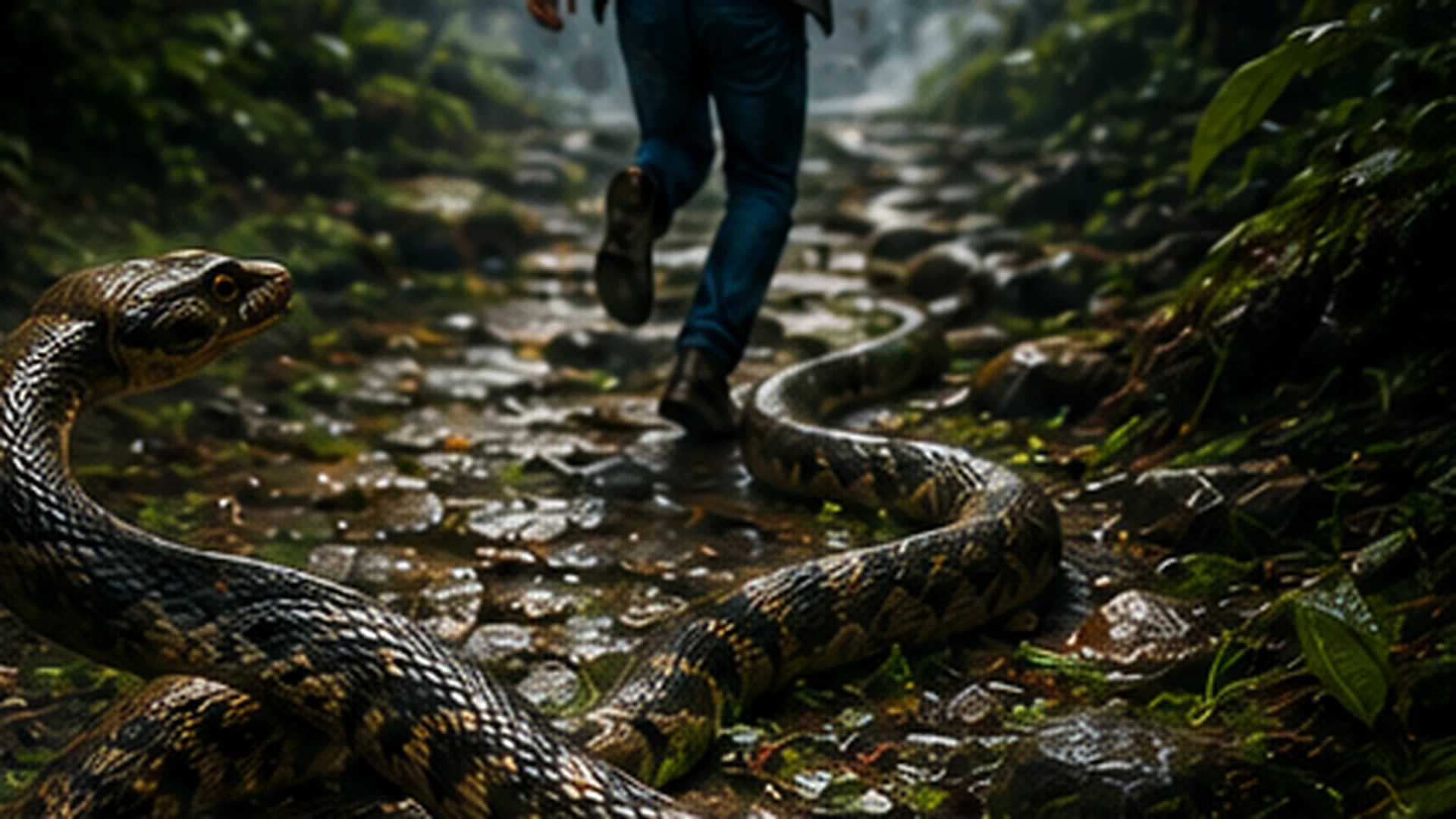
A chase dream commonly centers on avoidance. The snake may represent a conflict, responsibility, fear, memory or person that feels difficult to face. Ask what happens when you stop running in imagination: does the snake attack, speak, disappear or simply remain present? The answer can reveal whether the central issue is danger, uncertainty or avoidance itself.
A Snake Bite
A bite creates a sudden boundary violation. It may be associated with feeling hurt, betrayed, criticized, infected by an idea or forced to pay attention. The body location can become a useful personal prompt, but fixed formulas such as “a bite on the hand always means money trouble” are not evidence-based. A vivid bite dream after a real snake encounter, medical procedure or bodily sensation during sleep may also reflect recent experience.
A Calm or Friendly Snake
A non-aggressive snake can represent controlled power, curiosity, respect for danger, a relationship that is becoming less frightening or a culturally positive serpent association. Calm does not automatically mean “good luck”; it may instead show that the dreamer is observing something previously feared.
A Snake Shedding Its Skin
Because snakes shed an outer layer as they grow, shedding has become a widespread metaphor for renewal. In a dream, it may resonate with identity change, recovery, aging, leaving a role or revealing something hidden. The most relevant question is whether the scene felt healthy, painful, incomplete or threatening.
Many Snakes
A large number of snakes can intensify feelings of overwhelm, vigilance or being surrounded by risks. It can also reflect fascination, abundance or a setting where snakes belong naturally. Look at whether the snakes cooperate, compete, remain hidden or move in one direction.
Killing or Finding a Dead Snake
Killing a snake may feel like overcoming danger, but it can also produce guilt or signal the suppression of something the dreamer values. A dead snake may suggest that a threat has passed, that energy has been lost, or simply that the dream drew on an image of mortality. The emotional aftermath is more informative than the action alone.
A Snake in Water
Water often intensifies emotional or spiritual associations, but cultural meanings vary. The dream may combine uncertainty with depth, healing, fertility, danger or ancestral imagery. In some Southern African and West/Central African traditions, snake-like water beings have specific religious meanings; those traditions should not be applied automatically to every dreamer. [8][9][10]
Do Snake Colors Have Fixed Meanings?
Color can matter, but not as a universal code. A black snake may feel hidden, night-like, elegant or ominous. Green may suggest vegetation, growth, envy, illness or a specific species. White may evoke purity, death, rarity or spirituality. Red may signal alarm, vitality, anger or decoration. The dreamer’s own associations, the species and the emotional tone are more reliable than a chart copied from the internet.
Color perception in dreams can also be uncertain. People often remember the overall impression after waking and fill in details during retelling. A careful dream journal should distinguish what was clearly experienced from what was inferred later.
Cultural Interpretations of Snake Dreams and Serpent Symbols
Cultural interpretation requires two cautions. First, a culture’s serpent art or mythology is not automatically a dream dictionary. Second, communities are internally diverse and change over time. The examples below show why the same snake image can carry opposite meanings without proving that any single meaning applies to a modern individual dream.
Ancient Egypt: Dream Manuals, Danger and Protection
Ancient Egyptian evidence includes an actual manual for dream interpretation. Papyrus Chester Beatty III, dated to about 1220 BCE and associated with Deir el-Medina, contains a hieratic “dream book” that classified dream experiences and their outcomes. [6] Its existence demonstrates organized dream interpretation in Ramesside Egypt, but it does not justify attributing every modern snake dream to Egyptian beliefs.
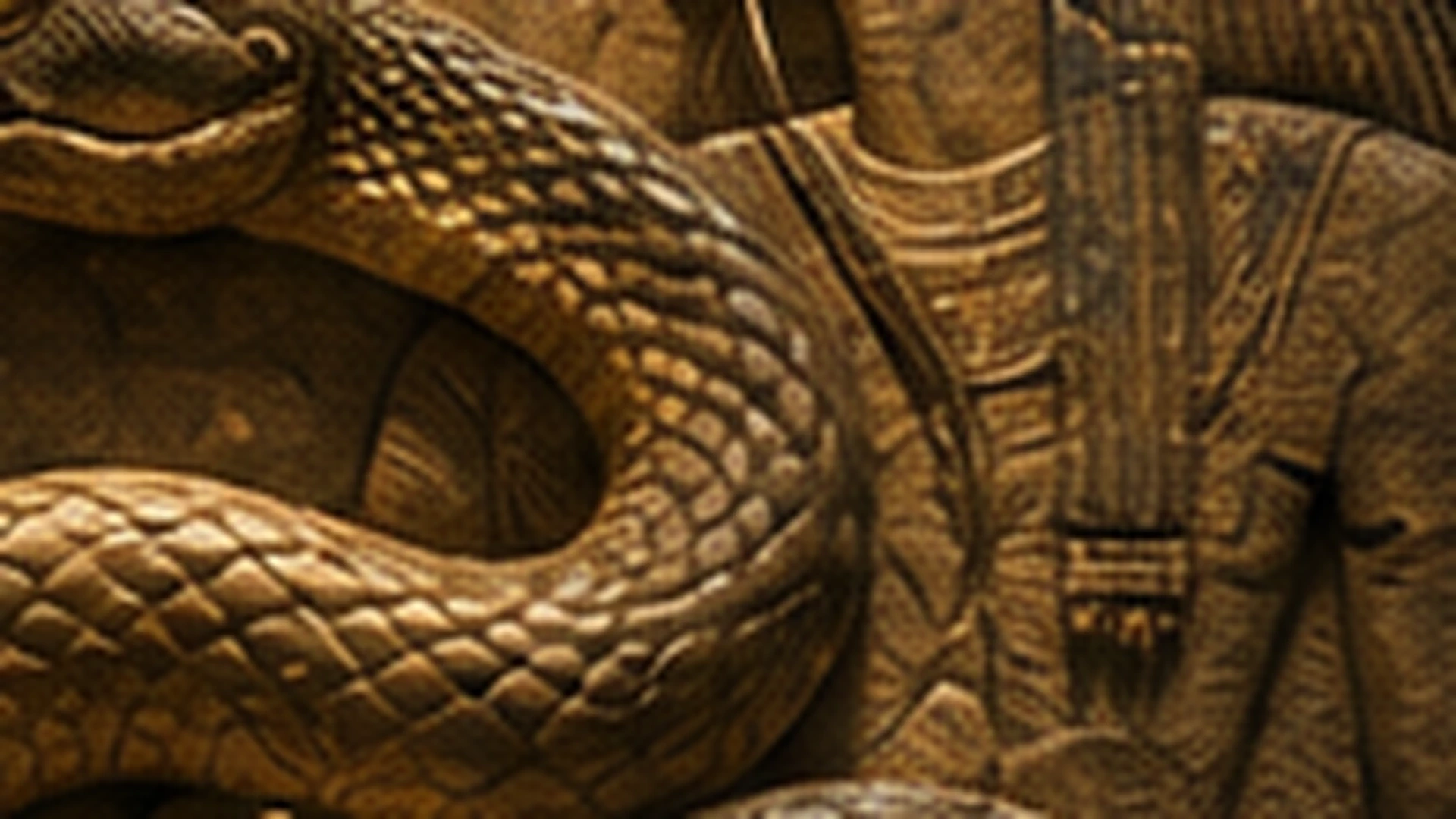
Serpents in ancient Egyptian material could be threatening or protective. Snakes appear among dangers in funerary literature, while cobra imagery could also protect the sun god, the king and amulet wearers. [11] This ambivalence is important: “snake” did not equal only evil. A dreamer influenced by Egyptian symbolism might associate a cobra with royal protection, divine danger, rebirth or a hostile force depending on the scene.
Greco-Roman Traditions: Context Before a Fixed Symbol
The second-century writer Artemidorus of Daldis produced the most extensive surviving Greek dream manual. Modern scholarship emphasizes that ancient interpretation was often concerned with dreams as signs of future events and that Artemidorus considered the dreamer’s circumstances, status and occupation. [7] This contextual method is a useful historical reminder: even highly systematized dream books did not always treat one image as having one meaning for everyone.
Greek and Roman serpent symbolism also included medicine, healing cults, household protection, monsters and danger. A snake in a dream could therefore be interpreted through religious, medical or social associations rather than through a single moral label.
Southern Africa: Water Beings, Ancestors and Vocational Calling
Research on Southern African traditions documents snake- and mermaid-like water divinities associated in some Zulu, Cape Nguni, Shona and Khoisan contexts with ancestors, fertility, rain, healing knowledge and the calling of diviner-healers. [9] A recent South African study likewise describes dreams as meaningful within some traditional healthcare practices, while stressing that this field is under-researched. [8]
These findings should not be reduced to “Africans believe a snake dream means your ancestors.” Africa is not one culture, and even within the communities discussed, meanings depend on lineage, training, place and interpretation by cultural specialists. For a person formed within one of these traditions, a water-snake dream may be discussed with knowledgeable family members or legitimate custodians. For outsiders, it is more respectful to learn than to claim a calling based on an online list.

West and Central Africa and the African Atlantic: Mami Wata
Mami Wata is recognized in varied forms across parts of Africa and the African Atlantic world as a powerful water spirit frequently represented with snakes. Smithsonian scholarship describes her as protective yet dangerous and emphasizes that her imagery changed through regional creativity, imported images and modern history. [10] This is a living and diverse body of traditions—not a universal African code for snake dreams.
For devotees or communities where Mami Wata traditions are meaningful, a snake-and-water dream may be interpreted through established religious relationships. For others, the imagery may simply reflect art, media, personal spirituality or fear. Responsible interpretation identifies the dreamer’s actual connection before borrowing a sacred explanation.
South Asia: Nāgas as Powerful and Ambivalent Serpent Beings
In Hindu, Buddhist and Jain contexts, nāgas and nāginīs are serpent beings associated with water, fertility, abundance, protection and sacred power, but also with venom, floods and destruction. Museum scholarship explicitly describes this double capacity. [12] Buddhist art includes stories in which a nāga protects the Buddha, while other traditions tell of dangerous serpent beings that must be subdued.
A dreamer raised with nāga traditions may therefore experience a serpent as guardian, water power, danger, fertility or divine presence. It would be misleading to turn this complex religious field into a generic claim that “a cobra dream always means kundalini awakening.” Kundalini language belongs to particular yogic and tantric histories and should not be applied automatically to every snake dream.
Chinese Traditions: Calendar Animal, Cosmology and Personal Association
The snake is one of the twelve animals of the Chinese zodiac, whose conventional sequence was established by the Eastern Han period. [13] Chinese cosmology and art also include serpent-like dragons and the entwined snake-and-tortoise symbol of the north. These systems do not create one standard Chinese interpretation for all snake dreams. A person may associate the snake with a birth year, intelligence, danger, family stories, medicine or popular culture.
Jewish, Christian and Islamic Contexts
In Jewish and Christian scriptures, serpents can signify temptation and danger, but the biblical tradition is not one-dimensional: the bronze serpent in Numbers becomes an instrument of healing, while later Christian readings may treat the serpent as a symbol of evil or prudence depending on the text. In Islamic intellectual history, dream interpretation developed as a recognized field with rules concerning the dreamer and interpreter. [14] Contemporary believers may understand a snake dream through scripture, local teaching or personal prayer, but interpretations differ and should not be presented as divine certainty.
Is a Snake Dream a Spiritual Warning?
A person may experience a snake dream as spiritually significant, especially within a religious tradition that treats dreams as possible guidance. That experience can be meaningful without becoming a universal fact. There is no scientific method that can verify that a particular snake dream predicts betrayal, pregnancy, money, death, witchcraft or an enemy.
A responsible spiritual interpretation uses humility. It asks whether the dream aligns with the person’s established tradition, whether trusted cultural or religious mentors would recognize the interpretation, and whether the message encourages ethical action rather than fear, accusation or dependency. A dream should not be used as evidence that another person is cursed, unfaithful or dangerous.
Can Snake Dreams Predict the Future?
Dreams can feel predictive because they combine concerns, expectations and pattern recognition. People also remember apparent matches more readily than dreams that do not correspond to later events. Dream science has not established a reliable method for using dream content to forecast specific future events. [1][3] Historical cultures often treated some dreams as omens, but that is evidence of cultural belief and practice—not scientific confirmation of prediction.
Recurring Snake Dreams and Nightmares
A recurring snake dream may indicate that a theme remains emotionally active, that similar stressors continue, or that the dream has become memorable enough to be rehearsed and anticipated. It does not necessarily mean that the same external event is repeatedly approaching.
Occasional frightening dreams are common. Persistent nightmares deserve attention when they cause fear of sleep, daytime distress, exhaustion or impaired functioning. The American Psychological Association notes that nightmares can affect emotional regulation and health and describes evidence-based treatments such as imagery rehearsal therapy. [4] A qualified clinician can help, particularly when nightmares follow trauma or occur alongside anxiety, depression, medication changes or other sleep symptoms.
How to Interpret a Snake Dream Responsibly
Write the dream immediately. Record the setting, people, snake behavior, color, size, body sensations and ending before searching online.
Name the emotion. Fear, awe, disgust, calm and curiosity point toward different questions.
List personal associations. Include real encounters, films, books, family stories, religious teaching and local snake species.
Review recent waking life. Note conflict, change, health worries, study, travel, relationship boundaries and exposure to snake imagery.
Separate evidence from belief. Mark which ideas come from dream science, personal reflection, a religious tradition or an internet claim.
Avoid accusations. Do not decide that a dream proves another person is an enemy, unfaithful or spiritually harmful.
Seek the right kind of guidance. Use a clinician for persistent nightmares, a legitimate cultural custodian for a living tradition, and a qualified wildlife professional for real snakes.
Common Misunderstandings
“Every snake dream means betrayal.” Betrayal is one possible personal association, not a universal rule.
“A black snake always means evil.” Color meanings depend on personal, cultural and visual context.
“A snake bite predicts physical illness.” A dream is not a diagnosis. New symptoms require medical evaluation, not symbolic interpretation.
“African traditions all interpret snakes as ancestors.” African traditions are diverse. Some specific communities connect snake or water-being dreams with ancestors or healing callings; many others use different frameworks.
“Ancient dream books prove modern dream dictionaries are accurate.” Historical manuals show that people interpreted dreams, not that their predictions have been scientifically validated.
“A spiritual dream must be obeyed immediately.” Meaningful spiritual reflection should still respect consent, evidence, safety and ethical judgment.
Key Takeaways
Snake dreams do not have one universal meaning.
Emotion, action, setting and waking-life context are the strongest interpretive clues.
Dream science supports links between dreams and waking concerns but does not validate a fixed symbol dictionary.
Serpents can represent danger, protection, fertility, healing, water, ancestors or transformation in specific traditions.
Cultural interpretations should be named precisely and not borrowed as automatic personal identities.
Recurring distressing nightmares can be treated and may warrant professional support.
People Also Ask
What does a snake symbolize in a dream?
It may symbolize danger, vigilance, change, instinct, healing, sexuality, protection or a culturally specific spiritual idea. The dreamer’s emotions and personal associations determine which possibilities are relevant.
Is dreaming about snakes good or bad?
Neither by itself. A frightening attack, a calm encounter and a protective serpent create different emotional patterns. “Good” or “bad” depends on the dream’s context and the dreamer’s beliefs.
What does a snake bite mean in a dream?
A bite may reflect a sudden hurt, boundary violation, fear, conflict or urgent need for attention. It is not a guaranteed warning of betrayal, illness or spiritual attack.
Why do I keep dreaming about snakes?
Recurring dreams may reflect ongoing stress, repeated exposure, unresolved emotion or anticipation of the dream itself. Seek professional help if nightmares regularly disrupt sleep or daytime functioning.
What is the spiritual meaning of snakes in dreams?
Spiritual meanings vary. Serpents may be viewed as protectors, water beings, ancestors, sacred powers, healers or dangers in particular traditions. A valid interpretation should be grounded in the dreamer’s actual religious and cultural context.
Can a snake dream predict the future?
There is no scientifically reliable method for using snake dreams to predict specific events. Some traditions treat dreams as possible omens or guidance, but that is a matter of belief and interpretation.
Frequently Asked Questions
Does a snake shedding its skin mean transformation?
It can be a useful metaphor for change or renewal, especially if the dreamer is leaving an old role. It is still an interpretation, not a forecast.
What does a snake in the house mean?
A house often represents personal or family space in dream reflection. A snake there may raise questions about boundaries, hidden concerns, safety or a real memory of wildlife near the home.
Does killing a snake mean victory?
It may feel like overcoming danger, but it can also reflect guilt, suppression or fear of one’s own power. Consider the emotion after the act.
What if I was not afraid of the snake?
Calmness may suggest respect, familiarity, curiosity or integration of something previously feared. Cultural associations with protective or sacred serpents may also matter.
Should I use an online dream dictionary?
Use it only for brainstorming. Reject claims of certainty, compare ideas with your own associations, and verify cultural claims through reputable scholarship.
When should I speak to a clinician?
Consider professional support when nightmares are frequent, trauma-related, cause fear of sleep, worsen mental health or impair daily functioning.
Conclusion
Snake dreams are memorable because serpents sit at the meeting point of biological danger, human imagination and centuries of cultural meaning. That richness is precisely why a rigid definition fails. The same image can be frightening in one dream, protective in another and spiritually significant within a particular tradition.
The most responsible interpretation begins with the dream itself: what happened, how it felt and what the snake means to the dreamer. Historical manuals, psychological theories and cultural traditions can deepen reflection, but they should not replace personal context or become guarantees of prophecy.
Final Summary
A snake dream may point toward fear, boundaries, change, healing, vigilance or spiritual symbolism, but no single explanation fits everyone. Interpret the dream through emotion, action, waking life and cultural background; distinguish evidence from belief; and seek professional help when recurring nightmares disrupt sleep or wellbeing.
Research Sources and Further Reading
[1] What about dreams? State of the art and open questions. Journal of Sleep Research / PubMed Central. Review of current neuroscientific questions, dream recall and continuity with waking experience.
[2] Our dreams, our selves: automatic analysis of dream reports. Royal Society Open Science / PubMed Central. Large-scale dream-content research and discussion of the continuity hypothesis.
[3] Why do we dream? With Mark Blagrove, PhD. American Psychological Association. Overview of what researchers know and do not know about dreams.
[4] Nightmares in adults: Symptoms, causes, and science-backed therapies. American Psychological Association. Clinical significance and treatment of persistent nightmares.
[5] Dream analysis. APA Dictionary of Psychology. Definition of dream analysis as an interpretive psychotherapeutic technique.
[6] Papyrus Chester Beatty III, EA10683. British Museum. Collection record for the 19th-Dynasty hieratic dream book.
[7] Greek Literature: reviews of Artemidorus translations and studies. Cambridge University Press. Modern scholarship on Artemidorus and ancient dream interpretation.
[8] Dreams as a Diagnostic and Treatment Tool in Mental Health Care Practice by Traditional Healthcare Practitioners. African Journal of Inter/Multidisciplinary Studies. Recent Afrocentric qualitative research on dreams in South African traditional healthcare practice.
[9] Messages from the deep: water divinities, dreams and diviners in Southern Africa. Rhodes University Research Repository. Comparative thesis on snake- and mermaid-like water divinities and diviner-healer callings.
[10] Artful Animals and Mami Wata collection resources. Smithsonian National Museum of African Art. Museum interpretation of python, water-spirit and Mami Wata imagery across specific African contexts.
[11] Protective cobra amulet, EA29222. British Museum. Collection record explaining protective cobra symbolism in ancient Egypt.
[12] Standing Balarama or Nagaraja (Serpent King). The Metropolitan Museum of Art. Museum discussion of nāgas as water-associated, abundant, dangerous and protective beings.
[13] Set of twelve zodiac animals. The Metropolitan Museum of Art. Historical record of the Chinese zodiac sequence including the snake.
[14] On the Muhammedan Science of Tâbír, or Interpretation of Dreams. Journal of the Royal Asiatic Society / Cambridge University Press. Historical study of Islamic dream-interpretation methods and interpreter qualifications.
Editorial and Safety Disclaimer
This article is educational and distinguishes scientific research, historical evidence, living cultural belief and modern spiritual interpretation. It does not provide medical or mental-health diagnosis, guarantee supernatural outcomes or replace qualified cultural, religious or clinical guidance. Real snakes should be handled only by trained wildlife professionals.
Article Information
- Publisher
- Ancestral Temple
- Editor
- Ancestral Temple
- Last updated
- Jul 26, 2026
- Last reviewed
- Jul 26, 2026
- Content version
- f52bb10fe6
This educational article should be read as cultural and spiritual information, not as medical, legal, financial, or emergency advice.
Helpful Related Guidance
Explore This Topic
Related Topic Cluster
Dreams & Symbolism
About the Author
 Ancestral Temple
Spiritual guide and practitioner with decades of experience in ancestral wisdom, rituals, and divine guidance.
Related Posts
View All












Leave a Comment
We'd love to hear your thoughts.