
Where Does Myrrh Come From? Origins, Harvesting and Ancient Trade
Quick Summary
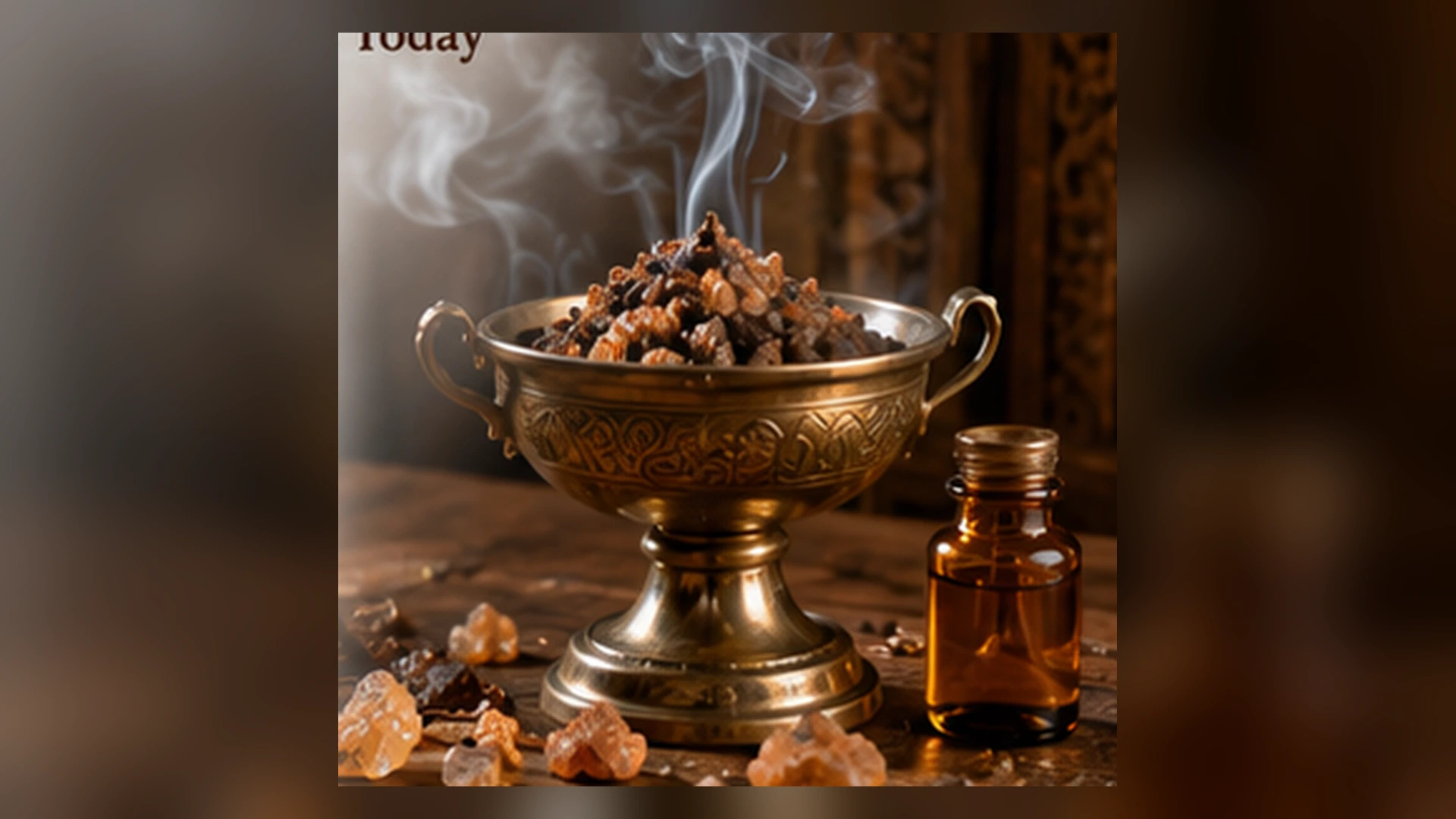
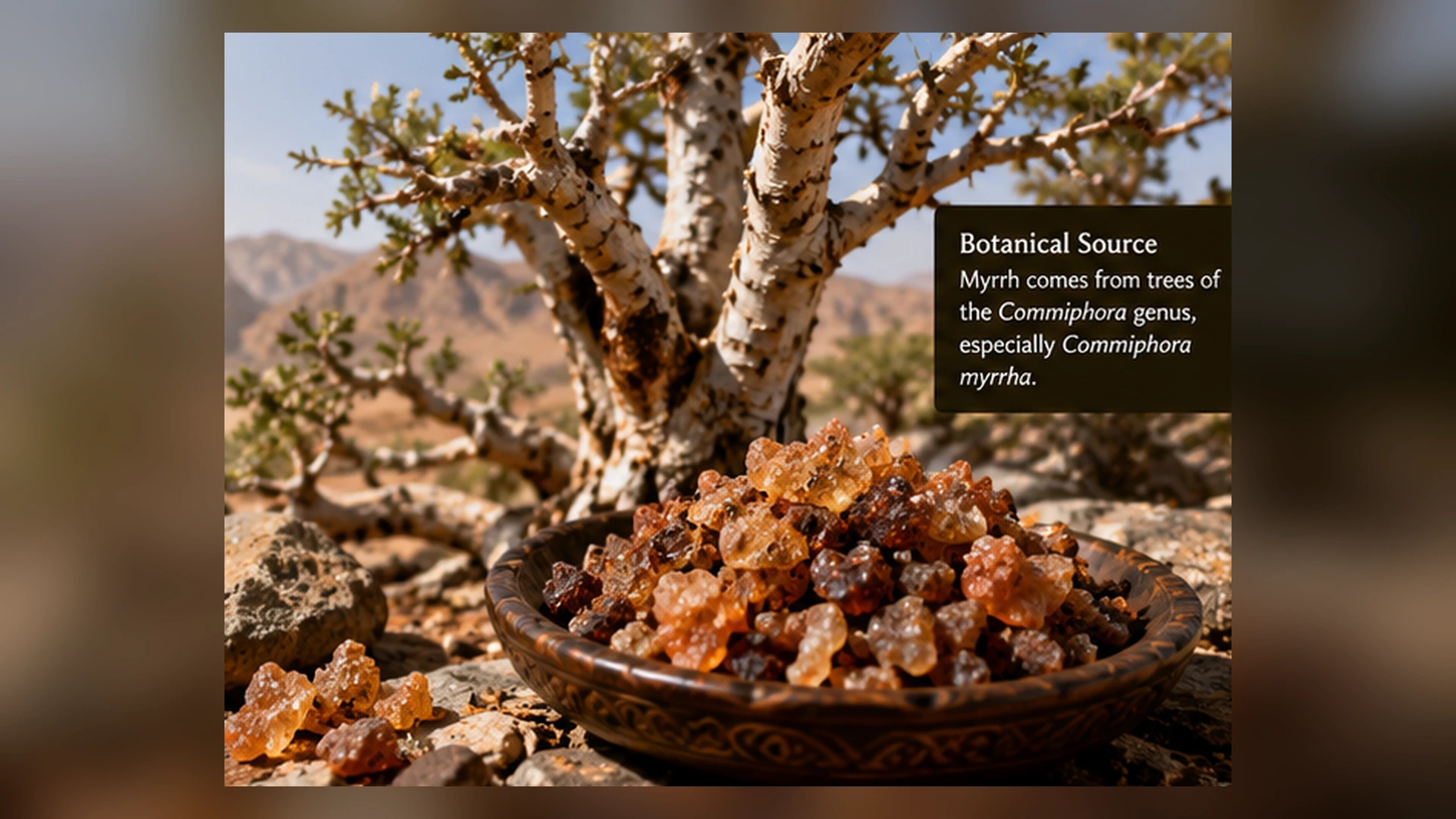
Myrrh comes from aromatic resin-producing trees and shrubs in the genus Commiphora, especially Commiphora myrrha. These plants are native to dry regions stretching across the Horn...
Myrrh comes from aromatic resin-producing trees and shrubs in the genus Commiphora, especially Commiphora myrrha. These plants are native to dry regions stretching across the Horn of Africa and the southern Arabian Peninsula. Royal Botanic Gardens, Kew records the native range of C. myrrha across Djibouti, Eritrea, Ethiopia, Kenya, Somalia, Oman, Saudi Arabia and Yemen. The plant survives in desert and dry-shrubland environments where rainfall is limited and rocky soils are common. [1]
Myrrh is not a leaf, flower or manufactured perfume. It is an oleo-gum-resin: a natural mixture of resin, gum and volatile aromatic compounds released by the tree. When the bark is damaged naturally or carefully cut by a collector, sticky droplets appear, darken and harden into irregular pieces often called “tears.” Those pieces can then be cleaned, sorted, sold whole, ground into powder or distilled and extracted for fragrance and other products.
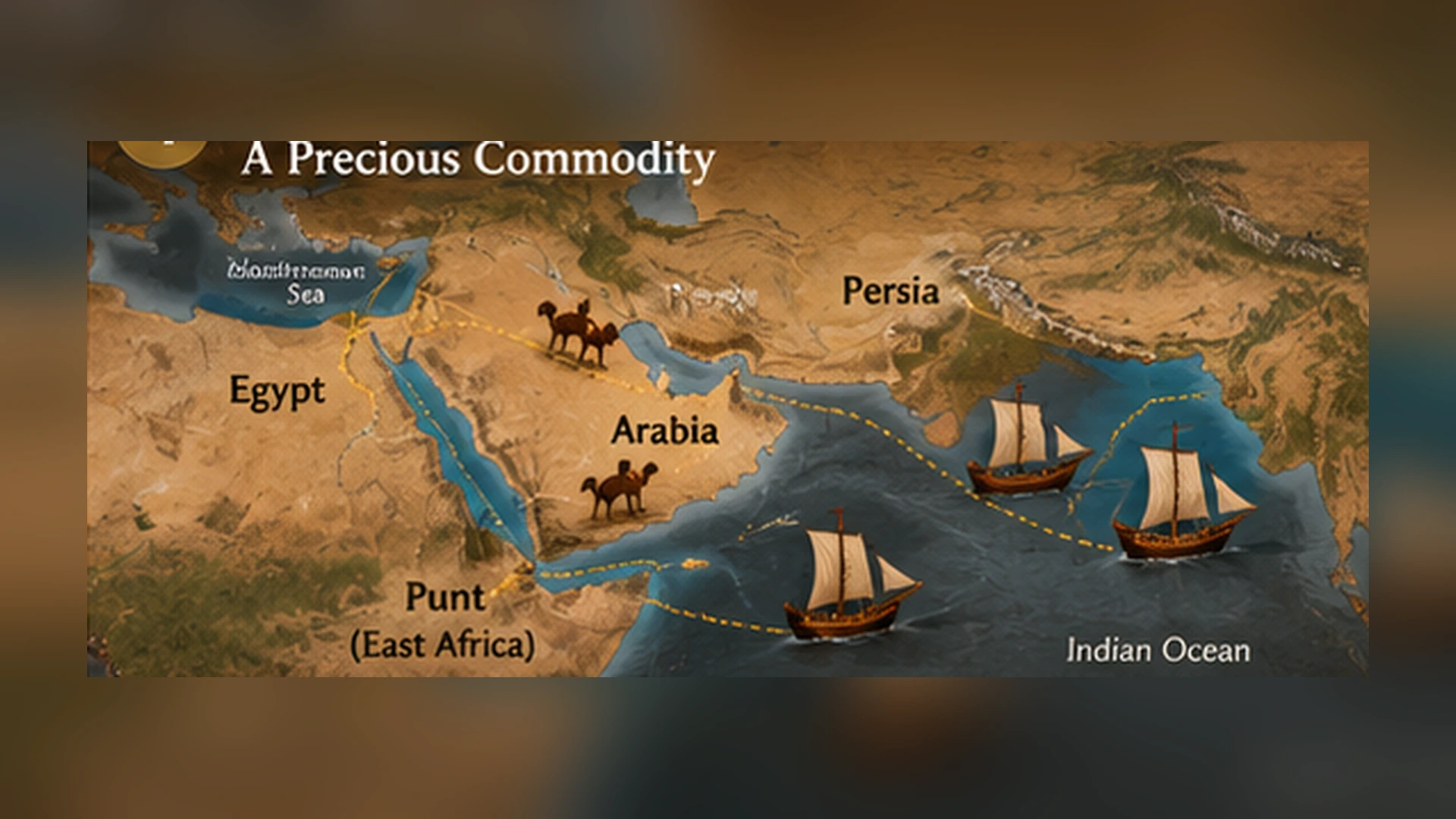
Its fame, however, cannot be explained by botany alone. Myrrh-producing regions were linked to Egypt, the Levant, South Arabia, the Mediterranean and the Indian Ocean through complex trade networks. Ancient Egyptian expeditions sought myrrh and even transported living trees from Punt. South Arabian kingdoms profited from incense commerce. Red Sea sailors and camel caravans carried resins to ports and markets far from the places where the trees grew. [5][6][7]
Quick Answer
Myrrh comes mainly from Commiphora trees native to the drylands of the Horn of Africa and southern Arabia. Collectors gather the aromatic resin after it flows from natural wounds or controlled bark incisions and hardens into reddish-brown “tears.” Ancient African, Red Sea and Arabian trade networks carried myrrh to Egypt, the Mediterranean and western Asia. [1][3][5]
What Is Myrrh?
Myrrh is the hardened aromatic exudate of certain Commiphora species in the Burseraceae family, the same botanical family that includes the Boswellia trees that produce frankincense. “Exudate” means a substance that flows from plant tissue. In myrrh, the material contains water-soluble gum, alcohol-soluble resin and a smaller volatile-oil fraction responsible for much of its characteristic scent. [4][12]
Fresh myrrh can begin as a pale, sticky or yellowish material. As it is exposed to air, it becomes firmer and may turn yellow-brown, reddish-brown or dark brown. Commercial pieces vary in size, color, aroma and cleanliness because species, growing conditions, collection time and handling practices differ.
The Principal Myrrh Tree
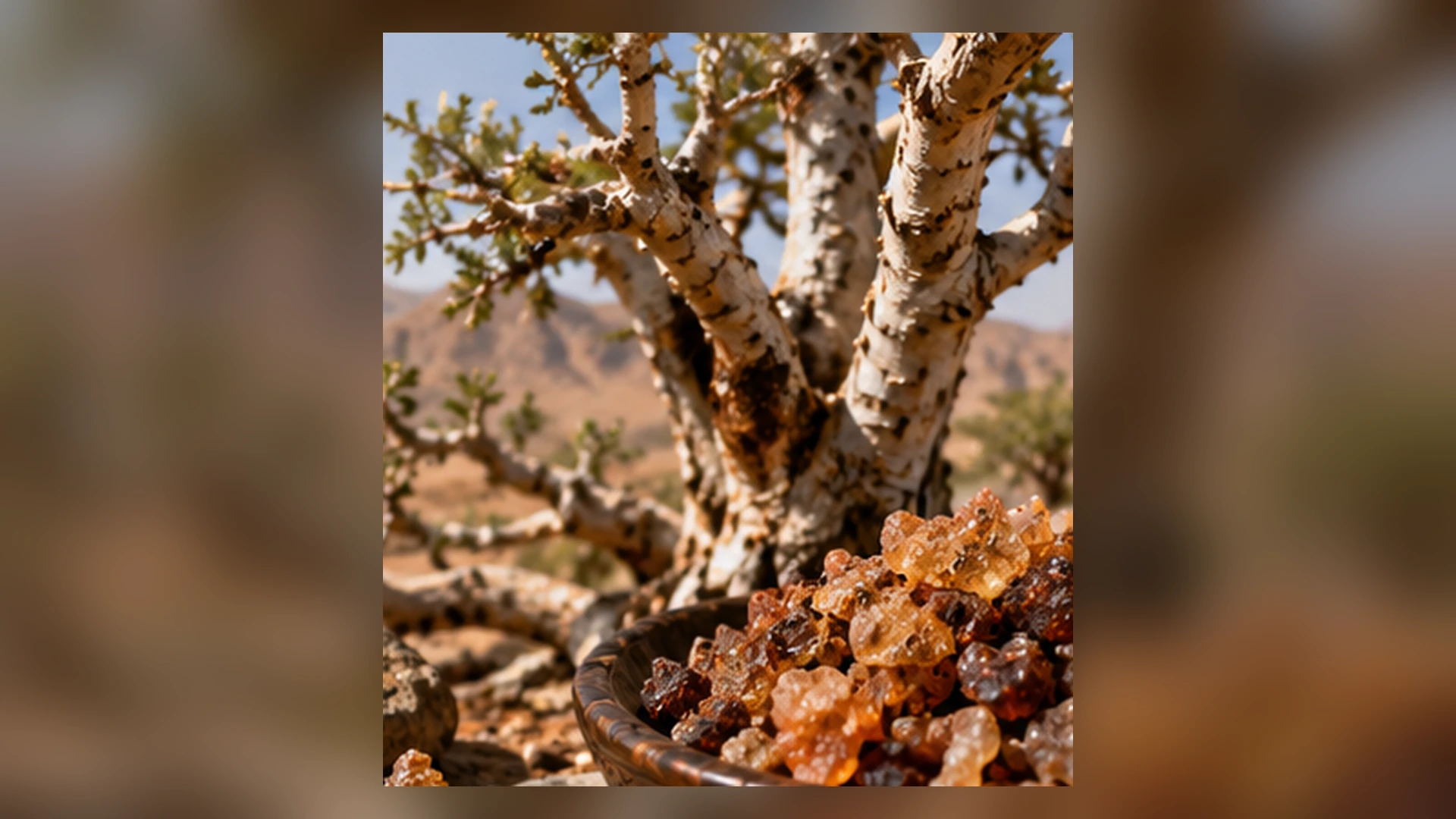
The accepted botanical source most commonly identified with “true myrrh” is Commiphora myrrha. Kew describes it as a spiny shrub or small tree, often no more than a few meters tall, with peeling pale bark and resin that hardens into translucent yellowish material. It grows in open Acacia-Commiphora bushland, frequently on shallow or limestone-derived soils under low rainfall. [1]
The plant’s modest size matters. Popular illustrations sometimes show myrrh as a large forest tree, but its natural form is usually a rugged shrub or small tree adapted to heat, drought, browsing animals and stony ground.
Myrrh Is a Trade Name as Well as a Botanical Name
Not every resin sold as myrrh comes from exactly the same species. Commiphora guidottii, native to Somalia and Ethiopia, produces a fragrant resin commonly called scented myrrh or opopanax in trade. Kew notes that this species is tapped during the dry season and remains commercially important. [2]
The vocabulary is confusing because traders, pharmacopoeias and local communities may classify resins by aroma, source, grade or traditional name rather than by modern botanical taxonomy. “Opopanax” can refer to scented Commiphora resin, but the same English word has also been applied historically to an unrelated plant product. A scientifically careful article should therefore identify a resin’s botanical species when that information is known.
Where Does Myrrh Grow Naturally?
The Horn of Africa
The Horn of Africa is central to myrrh’s natural and commercial history. Commiphora myrrha is native to areas that now lie within Djibouti, Eritrea, Ethiopia, Kenya and Somalia. FAO reports have long identified Somalia, Ethiopia and Kenya as important sources of myrrh and related Commiphora resins, with collection supporting rural and pastoral livelihoods in dry regions. [1][3]
The trees do not require rich agricultural land. They are adapted to open dry bushland, rocky slopes and soils where many crops would struggle. That ecological adaptation made aromatic resins one of the valuable commodities available from landscapes often dismissed by outsiders as unproductive.
Modern political borders should not be projected backward onto ancient trade. Collectors, herders and merchants moved through connected ecological zones before the creation of today’s states. When ancient records refer to broad regions such as Punt, the identification cannot be reduced automatically to one modern country.
Southern Arabia
The natural range of C. myrrha also includes Oman, Saudi Arabia and Yemen. Southern Arabia became especially famous as a center of incense commerce because its own resin-producing landscapes were connected to ports and caravan routes. Merchants in South Arabian kingdoms traded myrrh, frankincense and imported commodities arriving from Africa and the Indian Ocean. [1][5]
Some classical writers and later popular accounts blurred the distinction between where a product grew and where merchants controlled its trade. A resin sold from a South Arabian port might have been collected locally, imported from the African coast or combined with products from several areas.
Did Myrrh Grow in Ancient Egypt?
Myrrh-producing Commiphora trees were not naturally abundant in the Nile Valley. Egyptian rulers imported myrrh and associated its source with lands to the south and southeast, especially Punt. Reliefs from Hatshepsut’s temple at Deir el-Bahri famously commemorate an expedition and the transport of valuable products, including living incense trees. The exact geographic extent of Punt remains debated, but scholarship generally places it within the Red Sea and Horn of Africa sphere rather than in Egypt itself. [7][8]
How Is Myrrh Harvested?
Myrrh can flow from natural injuries, insect damage or cracks in the bark, but commercial collection often involves controlled tapping. Specific techniques vary by species, region, collector and season. A responsible description should not imply that every community follows one standardized procedure.
1. Selecting a Mature Tree
Collectors identify trees capable of producing resin and assess their condition. A young, weakened or heavily damaged plant should not be treated like a healthy mature specimen. Local knowledge is important because tree productivity depends on rainfall, soil, previous tapping and seasonal growth.
2. Making a Controlled Incision
A collector may make a small cut or remove a limited section of outer bark. The purpose is to open resin-bearing tissue without cutting so deeply or repeatedly that the tree cannot recover. The wound stimulates the release of sticky oleo-gum-resin.
Kew’s profile of scented myrrh describes trees being tapped during the dry season through incisions in the bark. FAO descriptions of resin production likewise treat myrrh as a naturally collected non-wood forest product rather than a plantation crop in most source regions. [2][3]
3. Allowing the Resin to Harden
The fresh exudate is left on the bark so that water evaporates and the surface hardens. The droplets develop into irregular tears or lumps. Weather, resin composition and the size of the wound affect the drying period and final appearance.
4. Collecting the Hardened Tears
Once firm enough, the resin is detached by hand or with a small tool. Collectors may return to the same tree more than once during a season, but repeated tapping must be limited. Excessive cutting can reduce tree vigor, create entry points for disease and threaten future yields.
5. Cleaning, Sorting and Grading
Raw resin may contain bark, dust, sand and plant debris. It is cleaned and sorted by qualities such as color, aroma, size, contamination and botanical type. Higher grades usually contain cleaner, more fragrant pieces, while lower grades may be crushed, extracted or distilled.
Why Sustainable Tapping Matters
A resin tree is valuable only while it remains alive and productive. Sustainable collection therefore depends on leaving recovery time, avoiding unnecessary wounds, respecting customary ownership or access rules and preventing destructive harvesting. Conservation questions must be evaluated species by species and region by region. Kew’s current predictive assessment does not classify C. myrrha itself as threatened, but that should not be treated as proof that every local population or related Commiphora species is secure. [1]
Why Was Myrrh So Valuable?
Myrrh combined several qualities that favored long-distance trade.
First, its aroma was concentrated. A small quantity could scent a room, perfume an oil mixture or add fragrance to ceremonial burning. Second, the resin hardened into durable pieces that were easier to transport than fresh flowers or leaves. Third, it came from a limited ecological zone. Mediterranean, Nile Valley and Mesopotamian consumers could not simply grow large quantities in their own agricultural regions.
Its value also reflected labor and distance. Resin had to be located, collected, dried, cleaned and transferred through several hands. Merchants moved it from inland drylands to ports or caravan towns, across sea passages or deserts, through customs points and finally into urban markets. Taxes, security, storage and commercial risk added to the price.
Myrrh was not traded alone. Incense routes carried frankincense, spices, textiles, ivory, gold, pearls and other luxury goods. The Metropolitan Museum of Art describes South Arabian merchants using routes that connected Shabwah in Hadhramaut with Gaza, while ports linked Arabia with products from Africa, India and farther east. [5]
Myrrh, Ancient Egypt and the Land of Punt
Egyptian interest in myrrh reaches far back in pharaonic history. Texts and images associate aromatic products with temple offerings, perfume preparation, elite consumption and funerary practice. Egyptian sources frequently name Punt as a region from which myrrh and other valuable products arrived.
Hatshepsut’s Expedition
The most famous visual record is carved at the mortuary temple of Hatshepsut at Deir el-Bahri. The relief cycle dates to the joint reign of Hatshepsut and Thutmose III in the fifteenth century BCE and depicts an Egyptian expedition to Punt. Museum records preserve casts of these scenes and identify their original location and date. [7]
The reliefs are important because they show diplomacy, transport and valued plant products, including incense trees. They should not be read as a photographic map. Egyptian artists organized scenes according to royal and religious conventions, and the precise borders of Punt remain debated.
What Egyptians Did With Myrrh
Myrrh and related aromatic resins were used in incense, perfumed preparations and funerary treatments. The British Museum notes that Egyptian mummification involved drying the body and treating it with oils and resins. Not every resin detected in an embalming mixture can automatically be identified as myrrh, and recipes changed across periods, but imported aromatics formed part of Egyptian preservation and ritual traditions. [10]
Myrrh’s role in Egypt was therefore both practical and symbolic. Fragrance could mark sacred space, accompany offerings and counter unpleasant odors. Resinous and oily substances also contributed to the complex physical treatment of bodies and ritual objects.
South Arabia and the Incense Route
Ancient South Arabian kingdoms occupied a strategic position between resin-producing landscapes, Red Sea ports and overland routes toward the Mediterranean. Merchants moved frankincense and myrrh northward through a chain of settlements where caravans needed water, food, security and animal care.
The route often called the Incense Route was not one single unchanging road. It was a network whose branches shifted with political power, market demand and access to ports. The Met describes an important route beginning at Shabwah, the Hadhramaut capital, and reaching Gaza near the Mediterranean. South Arabian merchants also moved goods by sea and handled products arriving from Africa, India and the wider Indian Ocean. [5]
Cities and kingdoms benefited by taxing trade, supplying caravans and controlling market access. A British Museum incense burner from the ancient kingdom of Qataban reflects the wealth and religious use associated with aromatic commerce; its museum record notes that South Arabian kingdoms exported incense and perfumes by sea and camel caravan to Egypt, the Mediterranean and other Middle Eastern markets. [10]
Red Sea and Indian Ocean Shipping
Sea transport complemented the caravan network. Ships crossed between the African and Arabian coasts, moved along the Red Sea and connected with Egyptian ports. The first-century CE Periplus of the Erythraean Sea, a Greek-language merchant guide, describes ports and commodities across the Red Sea, Gulf of Aden and western Indian Ocean. Its references to different qualities and origins of myrrh show that traders evaluated the product by source and market reputation. [9]
This maritime world was multilingual and multicultural. African, South Arabian, Egyptian, Greek, Roman, Persian and Indian merchants participated at different points. Myrrh’s journey was rarely a direct trip from one collector to one Mediterranean buyer. It moved through brokers, caravan organizers, shipowners, tax stations, warehouses and urban merchants.
A Short Timeline of Myrrh’s Ancient Trade
| Period | Evidence or development | Historical significance |
|---|---|---|
| Third to second millennia BCE | Egyptian records and material culture show demand for imported aromatic resins | Myrrh became associated with elite, temple and funerary use in the Nile Valley |
| Fifteenth century BCE | Hatshepsut’s Deir el-Bahri reliefs commemorate an expedition to Punt | The scenes preserve a major royal representation of obtaining aromatics and living incense trees |
| First millennium BCE | South Arabian kingdoms expanded caravan and port-based incense commerce | Taxed routes linked Arabia and African imports with Levantine and Mediterranean markets |
| Hellenistic period | Red Sea ports connected Ptolemaic Egypt with Arabia and the Horn of Africa | Maritime trade increasingly complemented overland routes |
| First century CE | The Periplus of the Erythraean Sea described ports, merchants and myrrh qualities | The text provides direct evidence for organized Indian Ocean and Red Sea commerce |
| Roman imperial period | Mediterranean demand continued for incense, perfume ingredients and medicinal preparations | Myrrh circulated through urban markets, temples, households and pharmacological traditions |
| Late antiquity and medieval periods | Religious, medical and commercial uses continued across Christian, Jewish, Islamic and regional traditions | Older routes changed, but myrrh remained a recognized aromatic commodity |
How Ancient Societies Used Myrrh
Incense and Sacred Fragrance
Burning aromatic material could define a ceremonial environment, accompany offerings or symbolize honor. South Arabian incense burners and temple dedications show that fragrant resins were used locally as well as exported. The fact that myrrh appears in several religious literatures does not mean every culture assigned it the same meaning. [10]
Perfume and Cosmetics
Myrrh could be blended with oils, fats and other aromatics. Because ancient recipes varied and ingredient names are not always easy to match with modern species, historians should avoid treating every translated “myrrh” reference as chemically identical material.
Funerary Preparation
Egyptian funerary treatment used oils and resins in changing combinations. Myrrh is frequently associated with embalming in historical literature, but surviving residues may contain complex mixtures. The most accurate statement is that myrrh and related imported aromatics belonged to the wider world of Egyptian funerary resins, not that one universal recipe was used in every dynasty. [10]
Medicine and Mouth Care
Greek, Roman, Middle Eastern, African and later pharmacological traditions used myrrh in preparations for the mouth, skin, wounds and digestion. Historical use is evidence of cultural and medical practice, not automatic proof of modern clinical effectiveness.
The European Medicines Agency recognizes traditional use of myrrh preparations applied to the mouth or skin for limited indications, while also requiring quality and safety evaluation. Broad online claims that myrrh cures infections, cancer, infertility or chronic disease go far beyond the evidence. [11]
Myrrh Versus Frankincense
Myrrh and frankincense are often paired because both are aromatic tree resins from dry regions around the Horn of Africa and Arabia. They are not the same substance.
| Feature | Myrrh | Frankincense |
|---|---|---|
| Main botanical genus | Commiphora | Boswellia |
| Typical aroma | Warm, bitter, earthy, balsamic and sometimes medicinal | Brighter, pine-like, citrusy or lemon-resinous depending on type |
| Common appearance | Reddish-brown to dark irregular tears or lumps | Pale yellow, cream, greenish or amber tears depending on species and grade |
| Traditional uses | Incense, perfume, funerary materials, mouth and skin preparations | Incense, perfume, chewing in some regions, ceremonial and medicinal preparations |
| Major source landscapes | Horn of Africa and southern Arabia | Horn of Africa, Arabia and parts of South Asia, depending on species |
| Botanical family | Burseraceae | Burseraceae |
The two resins often traveled along the same routes, but traders distinguished types, grades and origins. “Incense trade” is therefore a broad term covering several products rather than a synonym for frankincense alone.
What Does Myrrh Smell Like?
Whole myrrh resin has a complex scent that many people describe as warm, earthy, woody, smoky, bitter, medicinal or balsamic. Its aroma is generally less sweet and more austere than many modern perfumes. The scent changes when the resin is warmed, burned, tinctured or distilled.
Quality also matters. Clean, freshly broken resin can smell different from old, dusty or adulterated material. Scented myrrh from C. guidottii is distinct from true myrrh and may be marketed separately as opopanax. A single verbal description cannot capture every species and grade.
Modern Harvesting, Trade and Ethical Sourcing
Myrrh is still collected and traded for incense, perfumery, flavoring, traditional medicine and regulated herbal preparations. FAO records emphasize that Commiphora resins have supported thousands of collectors and remain important non-wood forest products in Somalia, Ethiopia and neighboring regions. [3][4]
A responsible buyer should look beyond a romantic label such as “ancient,” “wild” or “sacred.” Useful sourcing questions include:
Ethical sourcing is not only a conservation issue. It concerns land access, customary rights, local knowledge, security, trader power and the share of the final price received by collectors.
Scientific and Safety Limitations
Myrrh contains biologically active compounds, and laboratory research has examined antimicrobial, anti-inflammatory and other effects. Much of this work involves extracts, cells or animals rather than strong clinical trials in humans. Historical use should not be converted into guaranteed health claims. [12]
Myrrh resin, tincture and essential oil are also different preparations with different concentrations. Essential oils should not be swallowed casually. Myrrh products may irritate skin or mucous membranes, interact with medicines or be unsuitable in pregnancy. The EMA advises following product instructions and seeking professional care when symptoms persist or worsen. [11]
Myrrh should not replace prescribed treatment, emergency care, dental treatment or infection control. Burning resin also produces smoke and particulate matter, so ventilation and moderation matter, especially around children and people with asthma or other respiratory conditions.
Common Misunderstandings About Myrrh
Misunderstanding 1: Myrrh Comes From Egypt
Ancient Egyptians used and valued myrrh, but the principal trees grow naturally farther south and east in the Horn of Africa and southern Arabia. Egypt was a major consumer and trading power, not the main native habitat. [1][7]
Misunderstanding 2: Myrrh and Frankincense Are the Same
They are related aromatic resins from the same plant family, but myrrh comes from Commiphora species and frankincense from Boswellia species.
Misunderstanding 3: All Myrrh Has One Botanical Source
True myrrh is associated mainly with C. myrrha, but scented myrrh, opopanax and regional trade grades can come from other Commiphora species. [1][2]
Misunderstanding 4: Ancient Trade Followed One Road
The “Incense Route” was a changing network of inland tracks, caravan towns, ports and sea lanes. Goods could cross between Africa and Arabia before moving north or west. [5][6]
Misunderstanding 5: Natural Means Medically Safe
A plant product can be natural and still cause irritation, interact with medicines or be unsafe for some people. Historical importance is not a substitute for modern safety evidence. [11]
People Also Ask
Where does myrrh originally come from?
Myrrh comes primarily from Commiphora trees native to the Horn of Africa and southern Arabia. The accepted range of Commiphora myrrha includes Djibouti, Eritrea, Ethiopia, Kenya, Somalia, Oman, Saudi Arabia and Yemen. [1]
What part of the tree is myrrh?
Myrrh is hardened oleo-gum-resin released from the bark and underlying resin-bearing tissue. It is not the wood, leaf, seed or flower.
How is myrrh collected?
Collectors gather resin that flows naturally or after small bark incisions. The sticky droplets are allowed to harden, then removed, cleaned and graded.
Was myrrh from the Land of Punt?
Ancient Egyptian records strongly associate Punt with myrrh and incense trees. The exact boundaries of Punt remain debated, but it is generally connected with the Red Sea and Horn of Africa region. [7][8]
Why did ancient people burn myrrh?
They valued its concentrated fragrance in temples, offerings, homes and funerary settings. Meanings differed among cultures and periods.
How did myrrh reach Rome?
It moved through African and Arabian source regions to Red Sea ports and South Arabian caravan networks, then onward to Egypt, the Levant and Mediterranean markets. [5][9]
Is myrrh more valuable than frankincense?
There was no single fixed relationship. Price depended on period, source, grade, supply, transport cost and market demand.
Does myrrh still come from Somalia?
Yes. Somalia remains an important source and trading center for myrrh and related Commiphora resins, although modern production and export conditions vary. [3][4]
Frequently Asked Questions
1. Is myrrh a sap?
In everyday language it is often called sap, but “resin” or “oleo-gum-resin” is more accurate. Sap transports water and nutrients inside a plant, while resin is a defensive and aromatic exudate produced in specialized tissues.
2. What color is real myrrh?
Pieces may range from yellowish or amber to reddish-brown and dark brown. Color alone cannot confirm identity or quality.
3. Can a myrrh tree be grown outside Africa and Arabia?
It may be cultivated in suitable hot, dry conditions, but its native ecology is arid to semi-arid. A potted plant outside its natural range does not reproduce the social and environmental system of traditional resin production.
4. Is biblical myrrh definitely Commiphora myrrha?
Commiphora myrrha is a major candidate for true myrrh, but ancient plant names, trade mixtures and species boundaries make absolute identification difficult in every text.
5. Did Hatshepsut bring myrrh trees to Egypt?
Her Deir el-Bahri reliefs commemorate an expedition to Punt and depict the transport of living incense trees. The scenes are among the strongest visual records of Egyptian efforts to obtain valuable aromatics. [7]
6. What is opopanax?
In the myrrh trade, opopanax often refers to scented resin from species such as Commiphora guidottii. The term has also been used for an unrelated resin, so botanical identification is important. [2]
7. How long does myrrh resin last?
Whole resin can remain aromatic for years when kept dry, cool and protected from light and contamination. Its volatile aroma gradually changes over time.
8. Can myrrh be burned directly?
Small pieces are traditionally warmed on charcoal or an incense heater, but smoke can irritate the lungs. Use ventilation, fire-safe equipment and modest quantities.
9. Is myrrh essential oil the same as resin?
No. Essential oil is a concentrated volatile fraction obtained by distillation, while whole resin contains gum, resin and aromatic oil components.
10. Is wild-harvested myrrh automatically sustainable?
No. Wild collection can support habitats and livelihoods when carefully managed, but excessive tapping, unclear land rights and poor prices can create ecological and social harm.
11. Why are myrrh pieces called tears?
The name describes the rounded or irregular drops that form as liquid resin hardens on the bark.
12. Can myrrh cure infections?
Laboratory findings do not establish myrrh as a replacement for antibiotics or professional medical care. Some regulated traditional topical uses exist, but broad curative claims are not supported by strong clinical evidence. [11][12]
Key Takeaways
Conclusion
Myrrh begins with a drought-adapted tree in landscapes that connect northeastern Africa and southern Arabia. Its resin is a biological response to injury, transformed by careful collection into durable aromatic tears. From there, the story becomes human: pastoral collectors, local knowledge, Egyptian expeditions, South Arabian kingdoms, Red Sea sailors, caravan organizers, temple personnel, perfumers and merchants all shaped its history.
Understanding where myrrh comes from corrects a common imbalance in popular accounts. The resin was not simply a mysterious substance appearing in Egyptian tombs, Mediterranean temples or religious texts. It came from specific African and Arabian environments and from the work of people who knew how to find, tap, grade and transport it. Its ancient prestige depended on those source communities and on trade networks that joined the Horn of Africa, Arabia, Egypt and the wider ancient world.
Final Summary
Myrrh is an aromatic oleo-gum-resin obtained mainly from Commiphora trees native to the Horn of Africa and southern Arabia. Collectors allow resin from natural or controlled bark wounds to harden before gathering it. Ancient Egyptian demand, Punt expeditions, South Arabian caravan systems and Red Sea shipping turned this regional plant product into one of antiquity’s best-known aromatics.
Research Sources and Further Reading
Article Information
- Publisher
- Ancestral Temple
- Editor
- Ancestral Temple
- Last updated
- Jul 26, 2026
- Last reviewed
- Jul 26, 2026
- Content version
- 5216b5050b
This educational article should be read as cultural and spiritual information, not as medical, legal, financial, or emergency advice.
Helpful Related Guidance
Explore This Topic
Related Topic Cluster
Dreams & Symbolism
About the Author
 Ancestral Temple
Spiritual guide and practitioner with decades of experience in ancestral wisdom, rituals, and divine guidance.
Related Posts
View All












Leave a Comment
We'd love to hear your thoughts.