
Dreams About Snakes

Quick Summary
Dreams about snakes can feel threatening, protective, mysterious, or ordinary. Their possible meanings depend on the snake's behaviour, the dreamer's emotions, personal experience, local environment, religion, and cultural background rather than one universal symbol dictionary.
Dreams about snakes often feel urgent.
A snake may appear under a bed, cross a road, coil beside a river, enter a family home, bite the dreamer, or remain completely still while everyone else panics. The dream may end in escape, confrontation, curiosity, injury, or a surprising sense of calm.
Because snakes can be venomous, beautiful, medically important, religiously significant, and common in stories, people often assume that a snake dream must contain a powerful message.
Online interpretations frequently claim that a snake always means betrayal, witchcraft, sexual desire, transformation, healing, hidden enemies, or financial change. These claims turn a complicated dream into a single formula.
No scientifically validated or culturally universal dictionary proves that one snake image carries the same meaning for every dreamer.
A snake dream may reflect a real encounter, fear of venom, local wildlife knowledge, religious imagery, a recent film, concern about household safety, emotional stress, or a culturally meaningful interpretation. Several influences may be present at once.
A responsible interpretation begins with the complete dream and the dreamer's actual life.
Key Points
Dreams about snakes do not have one fixed meaning.
Snakes are emotionally powerful images because they can evoke danger, fascination, respect, disgust, medicine, religion, and environmental knowledge.
Research recognizes snakes as a typical dream theme, but a common theme is not a universal interpretation.
A long-term dream study found that negative contacts with snakes and spiders might reflect emotional continuity even when the dreamer had little comparable waking contact.
The ancient Egyptian uraeus cobra represented royal and divine protection in a specific historical setting.
Mami Wata imagery in parts of western and central Africa incorporated the image of a female snake charmer into diverse local water-spirit traditions.
South Asian naga traditions associate serpent beings with water, agricultural abundance, protection, venom, and destructive flooding.
In Australian First Nations contexts, the capitalized term Dreaming refers to ancestral law, country, creation, and relationships; it should not be confused with an ordinary sleep dream.
Cultural snake symbolism may influence a dream, but it does not automatically determine its meaning.
A snake dream cannot prove betrayal, witchcraft, pregnancy, illness, criminal activity, or future danger.
Frequent nightmares, trauma-related dreams, or dangerous dream enactment may require medical or mental-health support.
Clear Definition
A dream about snakes is a remembered sleep experience in which a snake, serpent, snake-like being, or snake-related action plays a noticeable role in the setting, emotion, conflict, message, or outcome.
Plain-Language Meaning
A snake dream may lead someone to ask:
Was the snake dangerous?
Why was it inside my home?
Did the bite mean something?
Was I frightened, calm, or curious?
Does my religion or family have a specific understanding of snakes?
Did I recently see, discuss, or worry about snakes?
Was the dream a nightmare or simply unusual?
The best interpretation asks what this particular snake meant in this particular dream.
Why Snakes Appear in Dreams
Snakes Produce Fast Emotional Reactions
Snakes are visually distinctive and can produce rapid fear or attention. Experimental research describes snakes as emotionally salient stimuli, while also noting that species differ in their actual danger and in how people perceive them.
This helps explain why snake imagery can become memorable without proving that every snake dream is an ancient warning system.
Source: Snakes Represent Emotionally Salient Stimuli That May Evoke Both Fear and Disgust
Snakes Exist in Real Environments
For people living or working in regions where venomous snakes occur, a snake dream may reflect practical knowledge about:
Footpaths
Farms
Tall grass
Firewood
Livestock areas
Household entry points
Rainy seasons
First aid
Children playing outdoors
Treating every such dream as mystical can ignore real environmental experience.
Snakes Are Prominent in Stories and Religion
Snakes appear in sacred art, folktales, historical emblems, medicine, films, proverbs, and family stories.
A dreamer may therefore bring many learned associations into a dream, including protection, water, danger, renewal, fertility, deception, wisdom, or healing.
These associations are culturally specific. They are not interchangeable.
Dreams Rework Waking Emotions
A study based on 8,420 dreams from one individual found animals in about seven percent of the reports. The study noted that negative encounters with snakes and spiders did not directly match the dreamer's waking animal contacts and might instead reflect continuity at an emotional level.
That finding came from one long dream series and cannot establish one explanation for all snake dreams, but it demonstrates why researchers examine emotions as well as literal experience.
Source: Animals in a Long Dream Series
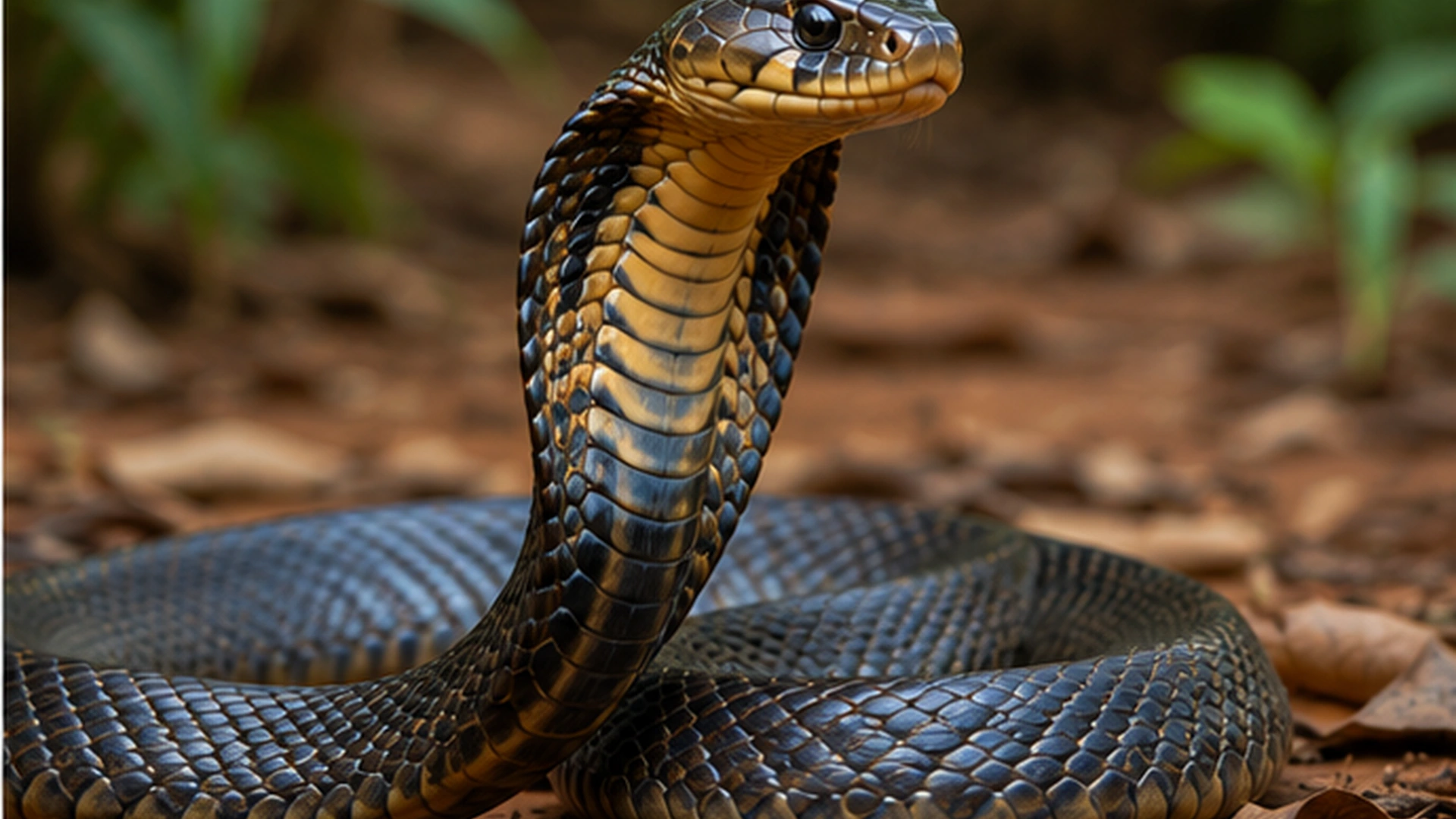
Common Types of Snake Dreams
Seeing a Snake Without Being Attacked
A snake may remain still, move away, or simply be present.
The dream may involve:
Alertness
Curiosity
Respect
Fear
Recognition
Observation
A non-attacking snake does not automatically represent a hidden enemy waiting to strike.
Ask:
Where was the snake?
Did it notice the dreamer?
Was the species familiar?
Was the dreamer safe?
Did the snake block a path or continue moving?
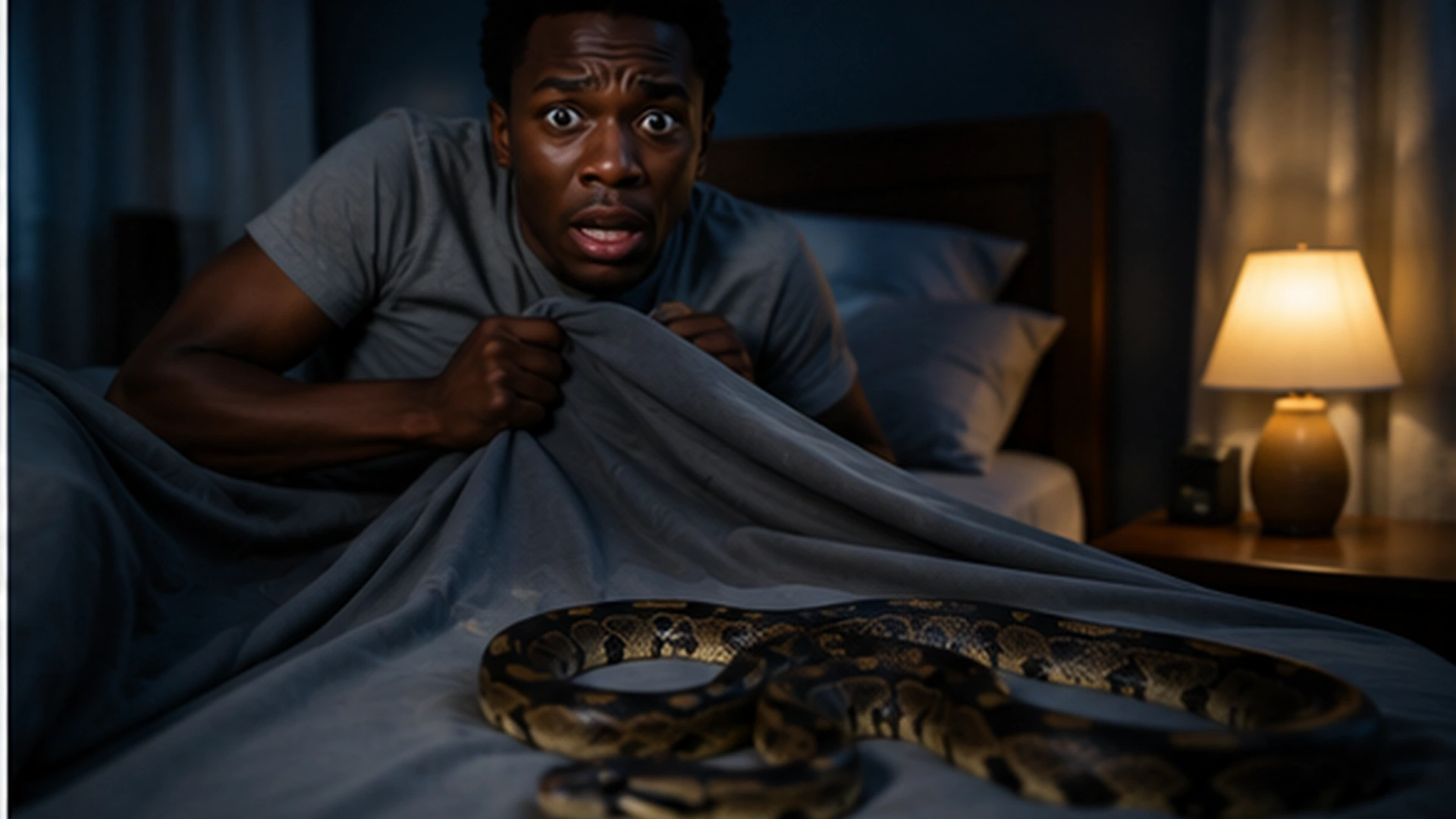
A Snake Inside the House
A snake in a bedroom, kitchen, sitting room, or family compound may feel especially threatening because it enters a space associated with privacy and safety.
Possible waking influences include:
A real household snake incident
Fear of doors or windows being left open
Concern for children or pets
A recent story or video
Family tension
The feeling that an ordinary safe space has become uncertain
The house matters as much as the snake.
A snake in an abandoned childhood home differs from one in the dreamer's current bedroom.
The dream cannot prove that a family member is dangerous or spiritually harmful.
Being Chased by a Snake
A chase dream may focus on escape rather than the species itself.
Possible influences include:
Fear
Stress
A real encounter
Trauma
An approaching responsibility
A frightening film or story
Concern about local snake danger
The threat-simulation theory proposes that some dreams may rehearse threatening situations. Research has found mixed support for treating that theory as a complete explanation of dreaming, so it should remain one possible framework rather than a diagnosis.
Source: The Threat Simulation Theory of the Evolutionary Function of Dreaming
Being Bitten by a Snake
Snake-bite dreams can feel physically vivid.
Important details include:
Which part of the body was bitten
Whether pain was felt
Whether the snake was seen clearly
Whether help was available
Whether the dreamer recovered
Whether a real bite or medical fear exists
A bite may reflect fear of injury, illness, betrayal, loss of control, or a direct memory. It does not diagnose poisoning, infection, pregnancy, or spiritual attack.
Anyone who is bitten by a snake while awake needs urgent real-world medical assessment according to local emergency guidance. A dream should not be mistaken for an actual bite, and an actual bite should never be treated only through dream interpretation.
Many Snakes Everywhere
A dream involving numerous snakes may create a sense of being surrounded or unable to find a safe route.
Possible waking connections include:
Overload
Repeated worries
A place known for snakes
A documentary or social-media clip
Fear of infestation
A religious or artistic image
The number of snakes does not establish the number of enemies, problems, or future events.
Killing a Snake
Killing a snake in a dream may involve relief, guilt, fear, self-defence, or regret.
Its meaning may depend on whether the snake was:
Attacking
Harmless
Protected
Familiar
Inside a home
Injured before the dreamer acted
The dream should never encourage the unnecessary killing of wildlife. Real snakes should be handled through appropriate local wildlife or emergency services, not through unsafe personal intervention.
A Dead or Injured Snake
A dead snake may evoke:
Relief
Sadness
Disgust
Concern for wildlife
Memory of roadkill or farming
A sense that danger has passed
It does not automatically mean victory over an enemy.
A Snake Shedding Its Skin
Shedding is commonly used as a metaphor for renewal or transformation because snakes replace their outer skin as they grow.
That metaphor may be useful when the dream involves change, recovery, aging, identity, or transition.
It remains a metaphor, not a guaranteed prediction that the dreamer's life will improve.
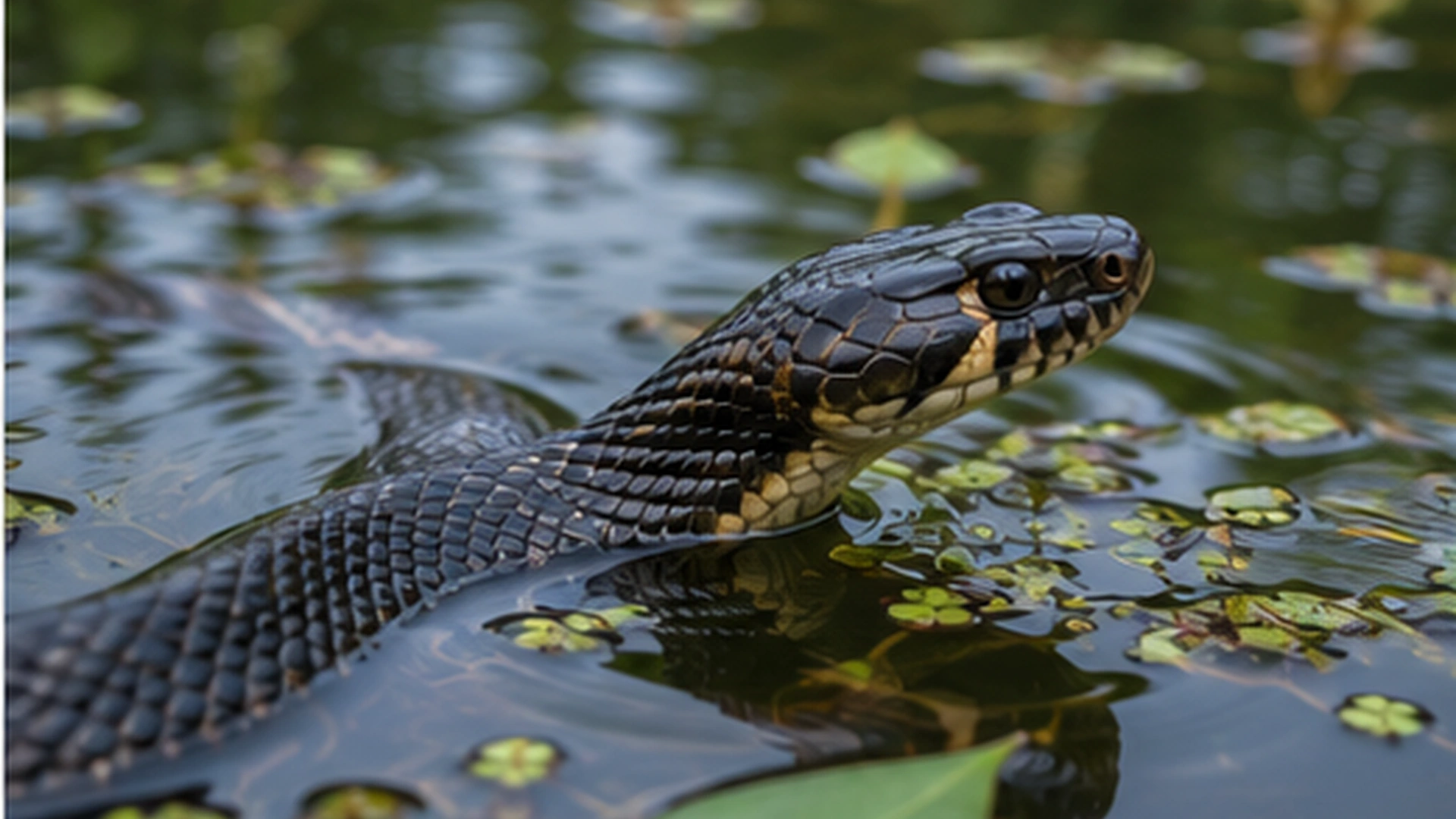
A Snake in Water
A snake in a river, lake, well, ocean, or bath combines two emotionally and culturally powerful forms.
Possible associations include:
Local aquatic species
Fishing or farming
Fear of hidden danger
Water-spirit traditions
A recent nature programme
Flooding or travel
The dream should not automatically be labelled a Mami Wata encounter, a naga encounter, or an ancestral message. Those terms belong to specific cultural and religious frameworks.
A Snake Speaking
A talking snake may give a warning, ask a question, introduce itself, or speak with a familiar voice.
Talking animals are common in stories, scriptures, animation, and folktales. The dream may draw on those narrative forms.
The words should be considered within the full dream, but a dream command should not override law, consent, medical advice, safeguarding, or another person's rights.
A Snake Becoming a Person
Transformation dreams may be frightening because they connect the animal with a known or unknown human figure.
This does not prove that the person is secretly dangerous, possessed, unfaithful, or involved in witchcraft.
Dreams combine identities and images in ways that do not obey waking reality.
A Protective or Friendly Snake
Some dreamers feel protected rather than threatened.
The snake may guard a doorway, guide the dreamer, remain beside a child, or defend the home from another danger.
Possible associations include:
Historical protective imagery
Family stories
Religious art
Personal fascination
The dreamer's calm relationship with snakes
A protective dream should still not be treated as proof that the dreamer has supernatural authority.
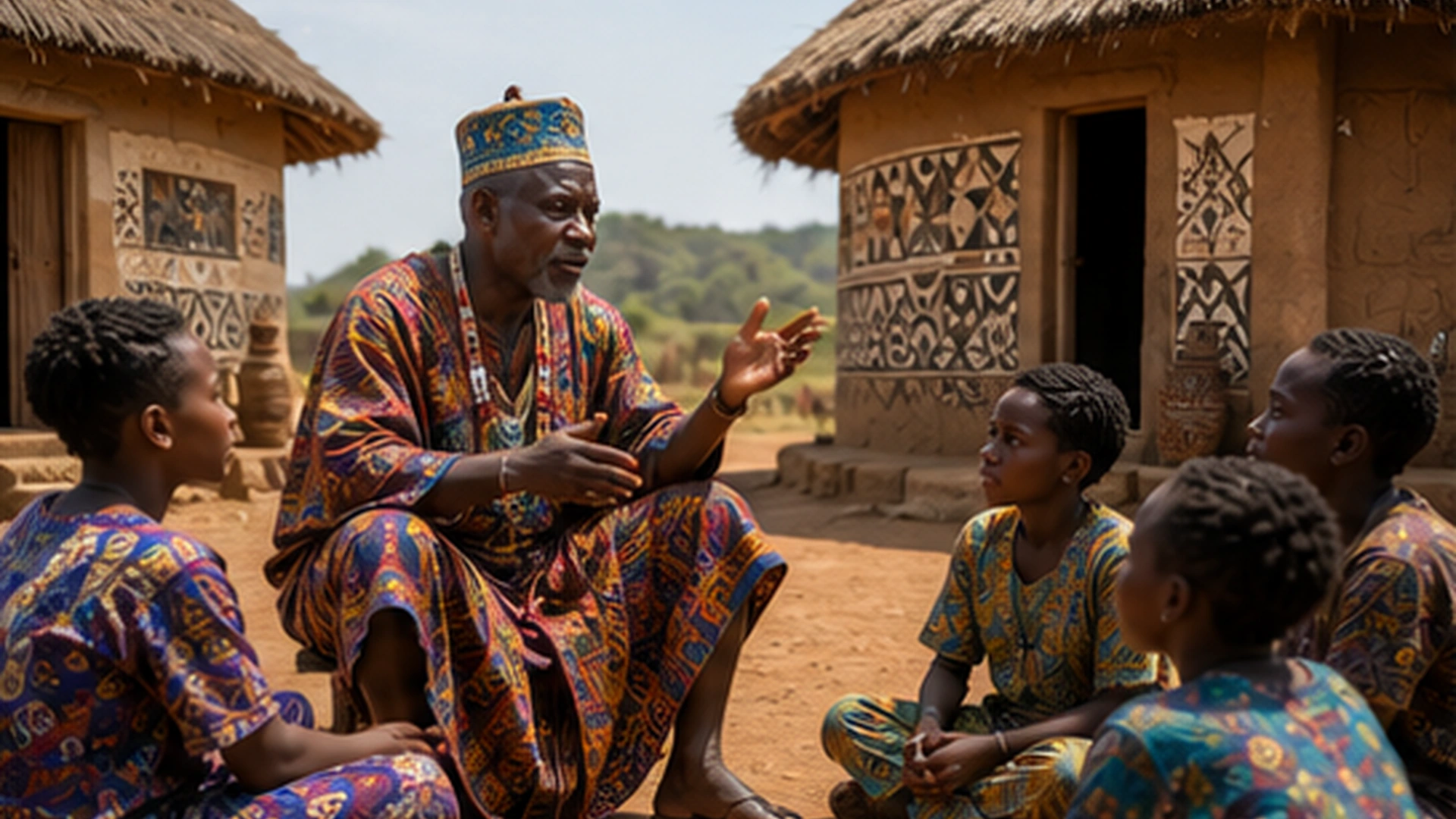
Snake Symbolism Across Cultures
Cultural symbolism can help explain why an image feels important, but it must not be turned into a universal dream code.
Ancient Egyptian Uraeus and Protection
In ancient Egypt, the rearing cobra known by the Greek term uraeus represented royal and divine protection. The cobra was associated particularly with the goddess Wadjet and appeared on royal or divine headdresses and along shrines to mark protected space.
This history shows that a cobra could represent protection and authority rather than only danger.
It does not mean every modern Egyptian, African, or global snake dream represents Wadjet, royalty, or victory.
Source: Uraeus Fitting From a Shrine, The Metropolitan Museum of Art
Mami Wata Imagery in Western and Central Africa
The National Museum of African Art explains that the late nineteenth-century image of a female snake charmer circulated in western and central Africa and was creatively adapted within diverse Mami Wata traditions.
The snake could become part of imagery associated with beauty, foreignness, water, prosperity, danger, healing, and spiritual power, depending on the community and artwork.
Mami Wata traditions are diverse. A snake dream should not be declared a Mami Wata calling merely because the dreamer is African or saw a snake near water.
Source: Artful Animals, National Museum of African Art
South Asian Naga Traditions
In South Asian religious histories, nagas are serpent beings associated with water and agricultural abundance while also possessing venomous and destructive power. They were incorporated into Hindu, Buddhist, and Jain traditions in different ways.
This dual association demonstrates why snakes may carry protective and dangerous meanings within the same cultural field.
A dream about a snake cannot automatically be identified as a naga encounter without the dreamer's actual religious and cultural context.
Source: Standing Nagaraja, The Metropolitan Museum of Art
The Rainbow Serpent and the Meaning of “Dreaming”
In Australian First Nations contexts, Dreaming can refer to ancestral beings, law, country, creation, relationships, and the tracks connecting sacred places. The Rainbow Serpent appears in multiple Aboriginal traditions, but stories and authority differ by community.
The Australian Museum notes that some aspects of Rainbow Serpent stories are restricted to initiated people.
This capitalized cultural term should not be reduced to “someone dreamed about a snake while sleeping.” A sleep dream involving a snake is not automatically part of an Aboriginal Dreaming tradition.
Source: Indigenous Australians: Australia's First Peoples, Australian Museum
Religious Serpent Imagery
Jewish, Christian, Muslim, Indigenous, Hindu, Buddhist, and other traditions contain different serpent stories and interpretations.
Some emphasize danger, deception, protection, wisdom, healing, water, creation, or divine authority.
The presence of serpent imagery in a religion does not mean every member interprets a snake dream identically. Personal dreams should not be granted the same authority as scripture, established doctrine, or community law.
African Cultural Specificity
There is no single African meaning for a snake dream.
A person living near snake habitat may focus on physical safety. A museum curator may think of ancient Egyptian cobras. A devotee within a Mami Wata tradition may consider water-spirit associations. A Christian or Muslim family may interpret the dream through their own religious teachings. Another person may regard it as an ordinary nightmare.
These perspectives should not be blended into one “African snake belief.”
What Modern Dream Research Suggests
Snake Dreams Are a Recognized Typical Theme
Research on typical dreams includes snakes among recurring or widely reported themes. However, researchers have cautioned that lists of typical dreams combine very different categories, such as objects, actions, and broad situations.
The fact that snakes appear on such lists does not establish their meaning.
Source: Typical Dreams Across the Life Cycle
Emotional Continuity May Matter
The continuity hypothesis proposes that dreams relate to waking life. The connection may be literal, such as dreaming about a snake after seeing one, or emotional, such as using a threatening animal to express fear that originated elsewhere.
The long-dream-series study involving 8,420 reports found evidence of both literal waking continuity for some animals and possible emotional continuity for negative snake and spider encounters.
Source: Animals in a Long Dream Series
Fear Does Not Create a Universal Symbol
Snakes attract attention because they can be dangerous, but fear varies by species, location, experience, and individual history.
A person who keeps snakes, studies reptiles, or works in wildlife conservation may dream differently from someone with severe snake phobia.
Dreams Occur Across Sleep Stages
Most vivid dreaming is associated with REM sleep, though dreams also occur during non-REM sleep. During normal REM sleep, major arm and leg muscles become temporarily inhibited, helping prevent the sleeper from physically acting out dreams.
Source: Brain Basics: Understanding Sleep, National Institute of Neurological Disorders and Stroke
Does a Snake Dream Mean Betrayal?
Not necessarily.
Betrayal is one popular interpretation because a hidden or sudden snake can be used as a metaphor for concealed danger.
Before using that metaphor, ask whether the dreamer:
Has evidence of betrayal while awake
Recently encountered a snake
Watched frightening media
Lives in an area where snakes are a practical concern
Has a personal or religious association with snakes
Felt betrayed in the dream or only afraid
A dream cannot establish that a partner, relative, neighbour, or colleague is unfaithful or malicious.
Does a Snake Dream Mean Witchcraft or Spiritual Attack?
A frightening dream is not proof of witchcraft, possession, a curse, or spiritual attack.
Such claims can lead to:
Family conflict
Abuse
Financial exploitation
Accusations against vulnerable people
Delayed medical or mental-health care
A person may discuss spiritual concerns with a trusted and accountable religious or cultural authority, but no interpretation should remove the need for evidence, consent, safety, and professional care.
Does a Snake Dream Mean Pregnancy, Fertility, or Sexuality?
Different historical and popular systems have connected snakes with fertility or sexuality.
A dream cannot confirm pregnancy, infertility, sexual orientation, reproductive illness, or another person's intentions.
Pregnancy requires an appropriate test and healthcare where needed. Sexual and relationship conclusions require communication and evidence, not dream symbolism.
Does a Snake Dream Predict Death or Money?
No reliable scientific method uses an ordinary dream to predict death, wealth, lottery results, business success, or financial loss.
Cultural beliefs may assign such meanings in particular families or communities, but they should not be presented as guaranteed forecasts.
Common Misconceptions
“Every Snake Represents an Enemy”
False. The snake may relate to nature, fear, protection, religion, medicine, media, or personal experience.
“A Snake Bite Means Someone Will Harm You”
False. A dream bite does not identify a future attacker.
“Many Snakes Mean Many Enemies”
False. Dream quantity is not a count of real people or future problems.
“Killing a Snake Guarantees Victory”
False. It may involve fear, self-defence, guilt, or ordinary dream action.
“A White, Black, Green, or Red Snake Has One Meaning”
False. Colour meanings vary by person, culture, species, lighting, art, and recent experience.
“A Snake in Water Is Always a Water Spirit”
False. Water-spirit interpretations belong to specific traditions and require cultural context.
“Shedding Skin Guarantees Transformation”
False. Renewal is a possible metaphor, not a prediction.
“African Snake Dreams Always Concern Witchcraft”
False. African communities and individuals have diverse environmental, religious, historical, and personal interpretations.
How to Reflect on a Snake Dream Responsibly
Record the Complete Dream
Write down:
The setting
The snake's appearance
Its behaviour
The dreamer's actions
Other people present
Spoken words
The strongest emotion
How the dream ended
Identify the Real-World Relationship With Snakes
Ask:
Are snakes common where the dreamer lives or works?
Has the dreamer seen a snake recently?
Has someone nearby been bitten?
Does the dreamer keep reptiles or study wildlife?
Is there a strong phobia?
Consider Media and Stories
Documentaries, social-media videos, religious teachings, films, news, and family stories may enter dreams.
Examine Emotion Before Symbol
Fear, curiosity, respect, disgust, and calm can produce different interpretations of the same species.
Consider Culture Without Borrowing Authority
A symbol from ancient Egypt, South Asia, Mami Wata traditions, or an Australian First Nations community should not be applied merely because it appears interesting online.
Allow Several Possibilities
Useful language includes:
“This may connect with…”
“One possibility is…”
“What does this snake mean in your own experience?”
“Was there a recent event that resembles the emotion?”
Avoid:
“This definitely proves…”
“Your enemy has been revealed…”
“You must pay immediately for protection…”
“The snake guarantees…”
Ethical and Safety Boundaries
Snake dream interpretation should never be used to:
Accuse someone of witchcraft
Declare a partner unfaithful
Identify a criminal without evidence
Frighten children
Demand expensive protection ceremonies
Stop prescribed treatment
Diagnose pregnancy, poisoning, or illness
Encourage violence against people
Encourage unsafe handling or killing of snakes
Control marriage, inheritance, travel, or employment
Reveal private family matters publicly
Claim automatic spiritual authority
Restricted prayers, initiation procedures, ritual medicines, and private cultural knowledge should not be reconstructed from a public dream article.
When Snake Nightmares Need More Than Interpretation
Nightmares can be triggered by stress, anxiety, trauma, reduced sleep, medication, substance use or withdrawal, other health conditions, and frightening media. They become clinically important when they repeatedly cause distress, disrupt sleep, or impair daytime functioning.
Source: Nightmare Disorder, Mayo Clinic
Professional support may be appropriate when snake dreams:
Occur repeatedly after an actual bite or traumatic encounter
Cause fear of going to sleep
Produce severe daytime anxiety
Disrupt work, study, driving, or caregiving
Begin after a medication change
Occur with hallucinations while fully awake
Lead to thoughts of self-harm
Involve dangerous physical movement
Physically punching, kicking, shouting, or jumping from bed while acting out vivid dreams can be associated with REM sleep behaviour disorder and should be medically assessed because it can cause injury.
Source: REM Sleep Behavior Disorder, Mayo Clinic
Key Takeaways
Dreams about snakes are common enough to appear in research on typical dream themes.
A common image does not have a universal meaning.
Snake dreams may reflect direct encounters, environmental knowledge, fear, media, religion, art, or emotional continuity.
The snake's behaviour, location, species, and the dreamer's emotion matter.
A snake in a home, water, road, bed, or field creates different contexts.
Ancient Egyptian cobra imagery could represent protection and royal authority.
Mami Wata, naga, and Rainbow Serpent traditions belong to distinct cultural frameworks.
The Australian First Nations term Dreaming should not be confused with an ordinary sleep dream.
A snake dream cannot prove betrayal, witchcraft, pregnancy, illness, death, or future financial change.
Spiritual interpretations should not replace evidence, consent, medical care, legal responsibility, or safeguarding.
Recurrent nightmares or dangerous dream enactment may require professional support.
Responsible interpretation combines personal context, cultural respect, safety, evidence, and humility.
People Also Ask
What does it mean when you dream about snakes?
It may relate to fear, a real encounter, cultural symbolism, religion, media, environmental knowledge, stress, or another personal association. The complete dream matters.
Does a snake dream mean betrayal?
No. Betrayal is one possible metaphor, but a dream cannot prove that another person is dishonest or unfaithful.
What does being bitten by a snake in a dream mean?
It may reflect fear of injury, illness anxiety, vulnerability, a real memory, or emotional stress. It does not diagnose poisoning or predict an attack.
Are snake dreams spiritual?
They may carry spiritual meaning for some people, but not every snake dream is a religious message, calling, or warning.
Why do I keep dreaming about snakes?
Recurring dreams may reflect repeated fear, environmental exposure, trauma, strong cultural associations, media, or a memorable earlier dream.
Frequently Asked Questions
1. What does a snake inside the house mean in a dream?
It may relate to household safety, a real incident, family tension, a fear entering a private space, or recent media. It does not identify a dangerous relative.
2. What does being chased by a snake mean?
It may involve fear, stress, avoidance, trauma, or a real wildlife concern. The pursuer does not automatically represent a specific person.
Article Information
- Publisher
- Ancestral Temple
- Editor
- Ancestral Temple
- Last updated
- Jul 26, 2026
- Last reviewed
- Jul 26, 2026
- Content version
- 6b3f0a7174
This educational article should be read as cultural and spiritual information, not as medical, legal, financial, or emergency advice.
Helpful Related Guidance
Explore This Topic
Dreams & Symbolism · Spiritual Protection After A Nightmare
About the Author
 Ancestral Temple
Spiritual guide and practitioner with decades of experience in ancestral wisdom, rituals, and divine guidance.
Related Posts
View All



Leave a Comment
We'd love to hear your thoughts.
The distinction between real snake safety and dream symbolism was useful.
I appreciated the explanation that snake dreams do not automatically reveal betrayal.