
Rivers in African Spiritual Heritage: Meaning, Memory, and Living Tr
Quick Summary
Rivers have carried food, trade, memory, prayer, stories, and community identity across Africa. This guide explores culturally specific river traditions without treating the continent as one spiritual system.
Rivers in African Spiritual Heritage explains the cultural and historical meaning of rivers in African spiritual heritage without treating one tradition as universal. The article preserves safety cautions, distinguishes spiritual interpretation from medical or legal advice, and avoids guaranteed-result claims.
What This Topic Means
Across Africa, rivers have sustained settlement, agriculture, fishing, transport, trade, and political life. They have also carried prayer, memory, moral law, artistic imagination, and relationships with the sacred.
A river may be understood as the dwelling or manifestation of a deity, a route followed by ancestors, a boundary between territories, a place of healing, a witness to oaths, or a living source that demands respect. Yet these meanings are never universal. The Osun River in Yoruba tradition, the Nile in ancient Egyptian religion, waterways of the Niger Delta, Congo Basin rivers, and the Okavango Delta belong to different cultural worlds.
This article explores public, educational aspects of selected river traditions. It does not reveal restricted rites, reproduce community-owned prayers, or provide instructions for collecting or using ceremonial water.
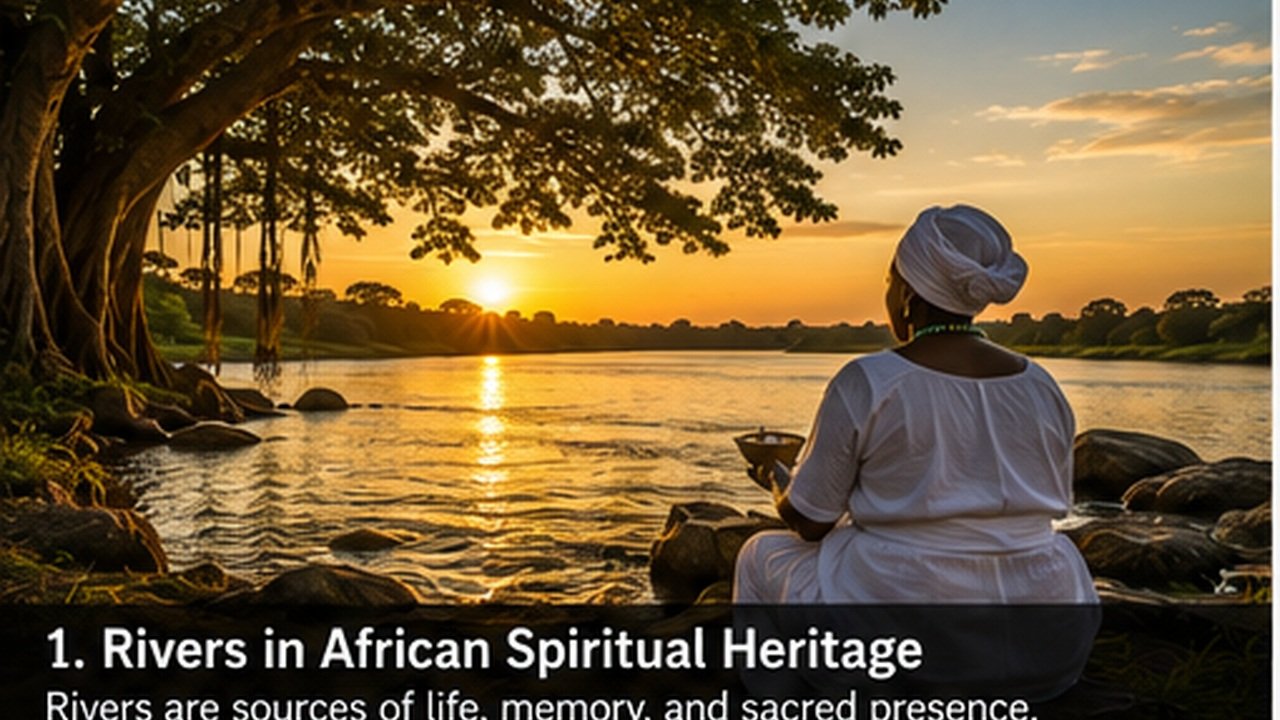
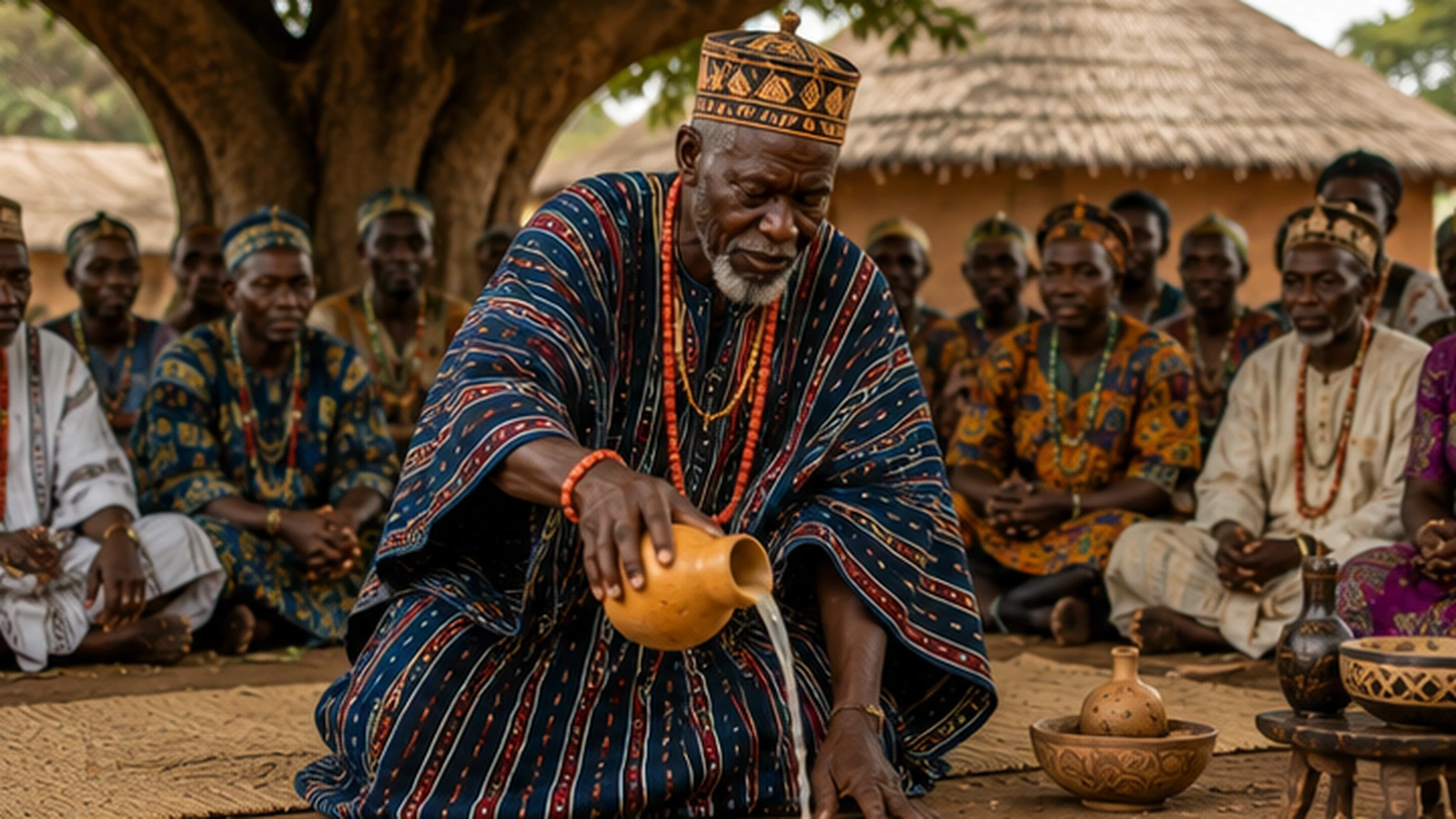
IMAGE 1 PLACEMENT
rivers-african-spiritual-heritage-hero.jpg
Alt text: African river landscape with elders and younger community members learning respectfully at the riverbank
What Does “Spiritual Heritage” Mean?
Spiritual heritage includes the beliefs, stories, ceremonies, ethical duties, art, knowledge, and community institutions through which people understand their relationship with sacred realities. When connected with a river, this heritage may include origin stories, praise names, taboos, annual festivals, offerings, songs, sacred sites, priestly offices, fishing customs, and rules protecting water or riverbanks.
The river is not simply a symbol placed beside religion. It may be part of the religion itself: a named presence, a living landscape, a source of law, or an active participant in community history.
Sacred meaning can also change. Migration, conversion, colonial rule, urbanization, environmental damage, new artistic forms, and diaspora communities may reshape how a river is remembered and approached.
Why Rivers Become Sacred
Rivers make life possible. They provide water, fish, fertile soil, transport, plants, and routes between settlements. Their seasonal rise and fall can determine whether communities experience abundance or hunger.
Rivers also transform landscapes. They flood, carve channels, disappear underground, join larger waters, and move continuously while remaining recognizably the same river. These qualities make them powerful ways to think about continuity, danger, renewal, death, fertility, and movement between visible and unseen worlds.
Life and fertility: river water supports people, animals, crops, and ecosystems.
Boundary and transition: crossing a river may mark movement between territories, life stages, or ritual conditions.
Memory and ancestry: rivers preserve migration stories, settlement histories, graves, and the names of founders.
Sacred presence: a river may be associated with a deity, spirit, ancestor, or community covenant.
Power and danger: floods, currents, crocodiles, hippos, disease, and drowning remind communities that water is never only gentle.
Governance: customary rules may regulate fishing, access, offerings, water use, and protection of riverbanks.
Africa Does Not Have One River Tradition
Africa contains thousands of communities and many Indigenous, Islamic, Christian, Jewish, and other religious histories. The phrase “African river spirituality” should therefore be used with caution.
It is misleading to describe every river as an ancestor, every water spirit as Mami Wata, or every ceremonial use of water as cleansing. A river may be connected with kingship in one place, burial in another, fertility in another, and practical ecological law elsewhere.
Respectful interpretation begins with the exact river, community, language, period, and recognized authority.
CULTURAL SPECIFICITY
Similar actions—pouring water, visiting a riverbank, bathing, fishing, singing, or making an offering—can carry entirely different meanings. Always use the community’s own name and explanation before applying a broad label.
The Osun River in Yoruba Heritage
The Osun River flows through the Osun-Osogbo Sacred Grove in southwestern Nigeria. UNESCO describes the river as the spiritual abode of Osun within a living Yoruba sacred landscape that includes forest, shrines, sculptures, worship points, priests, priestesses, royal authority, and an annual festival.
The river cannot be separated from the grove or reduced to a generic source of “spiritual water.” Its meaning emerges through the relationship among Osun, the people of Osogbo, the Ataoja, ritual custodians, the forest, and the history of the town.
The annual Osun-Osogbo festival renews social and spiritual bonds through public procession, prayer, performance, and community participation. Public visibility does not mean that every shrine, prayer, or ritual action is open for imitation.
UNESCO has also raised concern about pollution in the sacred river. This illustrates an important principle: reverence must include water quality, upstream responsibility, and protection of devotees and ecosystems.
Source: UNESCO World Heritage Centre, Osun-Osogbo Sacred Grove; World Heritage Committee Decision 45 COM 7B.129.
IMAGE 2 PLACEMENT
osun-river-yaruba-spiritual-heritage.jpg
Alt text: Osun River flowing through the sacred grove with culturally appropriate shrines and respectful community presence
The Nile in Ancient Egyptian Spiritual Life
The Nile supported agriculture, transport, settlement, and political unity in ancient Egypt. Its annual inundation deposited fertile soil and made the river central to understandings of abundance, kingship, divine order, and the continuity of life.
Hapy—often spelled Hapi or Hapy in museum catalogues—personified the annual inundation. Ancient images show Hapy with papyrus plants, food offerings, or paired figures associated with the unification of Egypt. The river’s fertility was therefore represented not only as a natural event but as a sacred and political reality.
Ancient Egyptian relationships with the Nile changed across thousands of years and should not be described as one unchanging “Nile cult.” Temples, local deities, funerary beliefs, royal ideology, agriculture, and regional traditions all shaped how the river was understood.
The ancient Nile example also warns against assuming that every African river spirit is equivalent. Hapy belongs to ancient Egyptian language, imagery, institutions, and cosmology.
Sources: The Metropolitan Museum of Art, Scarab with Representations of Hapi; British Museum, Hapy and ancient Egyptian deities.
IMAGE 3 PLACEMENT
nile-hapy-ancient-egypt-spiritual-heritage.jpg
Alt text: Ancient Egyptian Nile landscape with Hapy imagery, papyrus, boats, and temple context
Niger Delta Waterways and Ijo Water-Spirit Traditions
The Niger Delta is formed by rivers, creeks, mangroves, islands, and tidal waterways. Among Ijo communities, life and culture are closely connected with water, and artistic traditions include masks and masquerades associated with water spirits.
The Smithsonian National Museum of African Art records that Ijo water spirits may appear in human, fish, crocodile, hippopotamus, or composite forms. Masquerades, festivals, shrines, stories, and the use of mangrove wood connect artistic practice with the creeks where the spirits are understood to dwell.
These traditions should not be reduced to entertainment or costume. The performance may express relationships among community history, water ecology, danger, beauty, wealth, social change, and sacred presence.
The Niger Delta also demonstrates why environmental justice is inseparable from heritage. Oil pollution has damaged water, soil, fisheries, and community health in parts of the region, including Ogoniland. When waterways are contaminated, spiritual and cultural relationships are harmed alongside livelihoods and ecosystems.
Sources: Smithsonian National Museum of African Art, Currents: Water in African Art; United Nations Environment Programme, Environmental Assessment of Ogoniland.
IMAGE 4 PLACEMENT
niger-delta-ijo-water-spirit-heritage.jpg
Alt text: Ijo river community with mangrove waterways and a culturally appropriate water-spirit masquerade
Idoma Anjenu River Spirits and Local Shrine Traditions
Among some Idoma communities in Nigeria, anjenu are associated with river and nature-spirit traditions. The Metropolitan Museum of Art describes shrine figures connected with river spirits and notes offerings of river water and calabash vessels at dedicated sites.
The tradition is culturally specific. It involves local histories, priestesses, shrines, health beliefs, artistic commissions, and relationships with neighbouring Igala and Hausa spirit traditions.
Anjenu figures also show that spiritual heritage is not isolated from cultural exchange. Artists and communities can absorb and reinterpret new images while maintaining local religious meaning.
Source: The Metropolitan Museum of Art, Anjenu shrine figure by Oklenyi of Okungaga.
Mami Wata: A Dynamic Water-Spirit Complex
Mami Wata is recognized in different forms by communities across parts of western and central Africa and the African diaspora. She may be associated with rivers, lakes, seas, wealth, beauty, danger, healing, fertility, modernity, or foreign goods, depending on the community and period.
The widely circulated image of a snake charmer helped shape modern Mami Wata iconography during the late nineteenth and twentieth centuries. African communities did not passively copy the imported image; they reinterpreted it through existing water-spirit traditions and local concerns.
Mami Wata is therefore not one timeless goddess with a single ritual. The name covers a varied and changing field of beliefs, images, shrines, and practices. It should not be used as a label for every African river spirit.
Source: Smithsonian National Museum of African Art, Currents: Water in African Art and Mami Wata collection records.
IMAGE 5 PLACEMENT
mami-wata-african-water-spirit-art.jpg
Alt text: Culturally grounded Mami Wata-inspired shrine art shown as one distinct water-spirit tradition
Rivers and Indigenous Heritage in the Congo Basin
The Congo Basin contains an extensive network of rivers, lakes, wetlands, and forest ecosystems. A 2025 UNESCO–IPACC publication records that Indigenous communities understand water not only as a domestic resource but also as part of cultural, spiritual, and ecological heritage.
For forest communities, rivers can support fishing, travel, food collection, healing practices, rainwater knowledge, and relationships with wetland forests. Women may hold important knowledge about fishing, water collection, household use, and resource management.
These relationships are threatened by pollution, deforestation, mining, insecure land rights, and exclusion from water governance. Protecting spiritual heritage therefore requires more than documenting beliefs. It requires protecting community access, land, clean water, and the right of knowledge holders to participate in decisions.
Source: UNESCO and the Indigenous Peoples of Africa Co-ordinating Committee, The Indigenous Experience of Water in Africa, 2025.
IMAGE 6 PLACEMENT
congo-basin-river-indigenous-water-heritage.jpg
Alt text: Indigenous forest community beside a Congo Basin river sharing ecological and cultural knowledge
Khwe Water Devotion in the Okavango Delta
The Okavango Delta is a vast inland wetland where seasonal floodwaters support people, wildlife, plants, and complex ecological relationships. For Khwe communities, UNESCO–IPACC documentation describes water as central to cultural, historical, ecological, and spiritual identity.
Tshá or Cáá refers to Khwe water devotion and the values governing relationships with water. The account connects water with a divine gift, ancestral principles, place names, customary rules, and responsibilities for future generations.
This example shows that spiritual heritage can function as public governance. Respect for water is expressed through rules about use, access, biodiversity, and community well-being rather than through ceremony alone.
The Khwe tradition belongs to particular communities in and around the Okavango region. It should not be converted into a generic San water ritual or copied outside its social and ecological context.
Source: UNESCO–IPACC, “Tshá or Cáá: The Khwe Water Devotion & Public Water Governance,” in The Indigenous Experience of Water in Africa, 2025.
IMAGE 7 PLACEMENT
khwe-okavango-water-devotion-governance.jpg
Alt text: Khwe knowledge holders at an Okavango waterway discussing customary water responsibilities
Rivers as Archives of Migration and Community Memory
Rivers preserve memory through place names, crossing points, fishing grounds, former settlements, battle sites, graves, trade routes, and stories of migration.
An oral narrative may explain why a community settled beside a river, how a dangerous crossing was survived, or which ancestor first established rules for using a water source. Songs and praise poetry may describe the river’s movement, animals, colours, seasonal behaviour, and moral character.
Such traditions are not merely decorative folklore. They can function as maps, legal memory, environmental observation, and instruction about relationships among neighbouring communities.
Rivers, Healing, Purification, and Blessing
Rivers may appear in practices connected with healing, blessing, birth, initiation, mourning, or preparation for sacred activity. Yet the word “cleansing” should not be applied automatically.
Water may be used to welcome, cool, dedicate, witness, remember, protect, or restore social balance. In other settings, a river may be avoided during particular times or approached only by a designated specialist.
No article can provide a universal African river ritual. The liquid, words, timing, place, officiant, and purpose depend on the tradition. Natural water can also carry pathogens, chemicals, parasites, or dangerous currents, so spiritual significance must never be used to dismiss public-health guidance.
Rivers, Leadership, Law, and Political Authority
Rivers often mark boundaries between kingdoms, chiefdoms, clans, farms, and ritual territories. Control of a crossing, fishing area, port, or floodplain can become part of political authority.
In some traditions, rulers and priests maintain relationships with river deities or sacred water sites as part of public well-being. Oaths, reconciliation, or installation rites may occur near water because the river is understood as a witness or source of legitimacy.
These practices should be described through specific historical evidence rather than broad claims that all African rulers receive power from rivers.
River Art, Animals, and Symbolic Language
African artists have represented rivers and water through fish, crocodiles, snakes, hippos, mudfish, birds, boats, masks, beads, flowing lines, reflective surfaces, and composite beings.
The meaning of an animal depends on the community. A crocodile may represent danger, royal authority, ancestry, protection, or a particular spirit. A fish may suggest abundance, transformation, beauty, or movement between worlds.
Objects should be interpreted through their maker, community, period, use, and performance—not through a universal dictionary of spiritual symbols.
Colonialism, Dams, Extraction, and Loss of Access
Colonial borders and land policies often divided river communities or transferred control of water to states, companies, and settler institutions. Missionary and administrative accounts sometimes dismissed river traditions as superstition while extracting knowledge and sacred objects.
Modern dams, mines, oil operations, irrigation projects, urban expansion, and conservation zones can alter river flow, flood sacred sites, restrict access, contaminate water, or displace communities.
Environmental impact assessments should therefore consider cultural and spiritual heritage alongside engineering, economics, and biodiversity. Consultation is not meaningful when communities are informed only after decisions have been made.
Pollution and the Protection of Sacred Rivers
Pollution creates a direct conflict between spiritual use and physical safety. A community may continue to approach a river because the relationship is central to identity even when the water has become contaminated.
Responsible conservation requires cooperation among traditional custodians, public-health authorities, environmental scientists, upstream industries, farmers, local governments, and worshippers.
Monitor water quality regularly and publish understandable results.
Prevent industrial, mining, sewage, plastic, and agricultural pollution at the source.
Protect wetlands, forests, springs, and riverbanks that maintain water systems.
Include custodians and affected communities in planning and enforcement.
Provide safe alternatives during festivals when water is unsafe for contact or consumption.
Treat cultural survival and clean water as connected rights.
IMAGE 8 PLACEMENT
sacred-river-conservation-community-monitoring.jpg
Alt text: Community custodians and water specialists monitoring an African sacred river respectfully
How to Approach African River Traditions Respectfully
Name the exact river, people, language, location, and historical period.
Learn from recognized custodians, community institutions, universities, museums, and heritage organizations.
Ask before entering restricted riverbank sites, photographing worshippers, recording prayers, or collecting water.
Do not combine Osun, Hapy, Mami Wata, Ijo water spirits, anjenu, and Khwe water devotion into one invented ceremony.
Never remove offerings, stones, plants, soil, water, shrine materials, or objects without explicit permission.
Follow current safety guidance concerning floods, wildlife, currents, disease, and water pollution.
Describe community beliefs without promising guaranteed healing, fertility, wealth, protection, or supernatural results.
Support community-led water protection, land rights, and fair participation in tourism and research.
IMAGE 9 PLACEMENT
respectful-sacred-river-visitor-africa.jpg
Alt text: Visitors following a recognized community guide at a permitted African river heritage site
Key Takeaways
Rivers in African spiritual heritage are not empty symbols onto which people project belief. They are living waterways that feed bodies, shape landscapes, carry history, sustain art, and organize relationships among communities, ancestors, sacred beings, and future generations.
The Osun River, Nile, Niger Delta waterways, Congo Basin rivers, and Okavango Delta reveal different ways of understanding water. Their similarities invite careful comparison, but their differences must remain visible.
To respect a sacred river is to respect the people who name it, the stories and laws that protect it, the ecosystems that sustain it, and the right of future generations to inherit clean water and living cultural memory.
Article Information
- Publisher
- Ancestral Temple
- Editor
- Ancestral Temple
- Last updated
- Jul 26, 2026
- Last reviewed
- Jul 26, 2026
- Content version
- 7dffa7dcd4
This educational article should be read as cultural and spiritual information, not as medical, legal, financial, or emergency advice.
Helpful Related Guidance
Explore This Topic
Spiritual Knowledge · Sacred Natural Places In African Spirituality
About the Author
 Ancestral Temple
Spiritual guide and practitioner with decades of experience in ancestral wisdom, rituals, and divine guidance.
Related Posts
View All

Leave a Comment
We'd love to hear your thoughts.
The final message about inheriting clean water and living memory is memorable.
I valued the instruction to ask before photographing worshippers or recording prayers.
The article provides a strong foundation for future posts about individual rivers.
The research sources are authoritative and relevant.
The section on oral history shows how rivers can function as maps and archives.
The article respects spiritual meaning without dismissing environmental science.
The Congo Basin section keeps Indigenous participation central to water governance.
The article distinguishes offerings, blessing, healing, and cleansing instead of treating them as one action.
I appreciated the explanation of Mami Wata as a dynamic tradition rather than a timeless stereotype.
The safety guidance about currents, disease, and pollution is responsible.
The conclusion connects clean water, community rights, and future generations beautifully.
The article shows why a river can be a legal and political boundary as well as a sacred place.
The Hapy section provides a clear ancient Egyptian example.
The article gives substantial attention to African sources and institutions.
The SEO structure and metadata are ready for publication.
The discussion of river animals and art is culturally careful.
The article recognizes that sacred water can still be physically polluted.
I appreciate the instruction not to collect water without permission.
The section on colonialism and infrastructure gives the topic historical depth.
The article explains river symbolism without relying on vague universal claims.
The Idoma anjenu section shows how specific local traditions can adapt through contact.
The image plan avoids blending unrelated communities in one ritual scene.
The FAQ answers are direct and suitable for search results.
The article would be useful for students of religion, history, and environmental studies.
I liked the explanation that water governance can be spiritual heritage.
The section about public ceremonies not making every ritual public is important.
The Osun-Osogbo section keeps the river, grove, ruler, and priesthood connected.
The discussion of pollution and festival safety is balanced and responsible.
The internal links create a strong topic cluster for the website.
The article treats clean water as part of respect for sacred heritage.
The environmental-justice section adds important modern context.
I appreciate that the article does not promise healing or supernatural outcomes.
The glossary makes unfamiliar terms easy to understand.
The article explains why rivers are connected with both life and danger.
The Nile section is careful not to describe ancient Egypt as one unchanging religion.
The article avoids publishing restricted rituals while still providing useful history.
The visitor guidance is clear and respectful.
The Khwe water-governance section shows that spirituality can include practical responsibilities.
The discussion of cultural specificity should be included in more spiritual education articles.
I liked the warning that Mami Wata is not the name of every African river spirit.
The Niger Delta section treats masks and masquerades as living heritage rather than entertainment.
The article connects environmental protection with cultural survival in a responsible way.
The section on rivers as archives of migration and memory was especially meaningful.
I appreciated the clear distinction between the Osun River and other water-spirit traditions.
The article explains that rivers can be sacred without pretending every African community has the same beliefs.