
Sacred Forests in African Traditions: Meaning, Heritage, and Conserv
Quick Summary
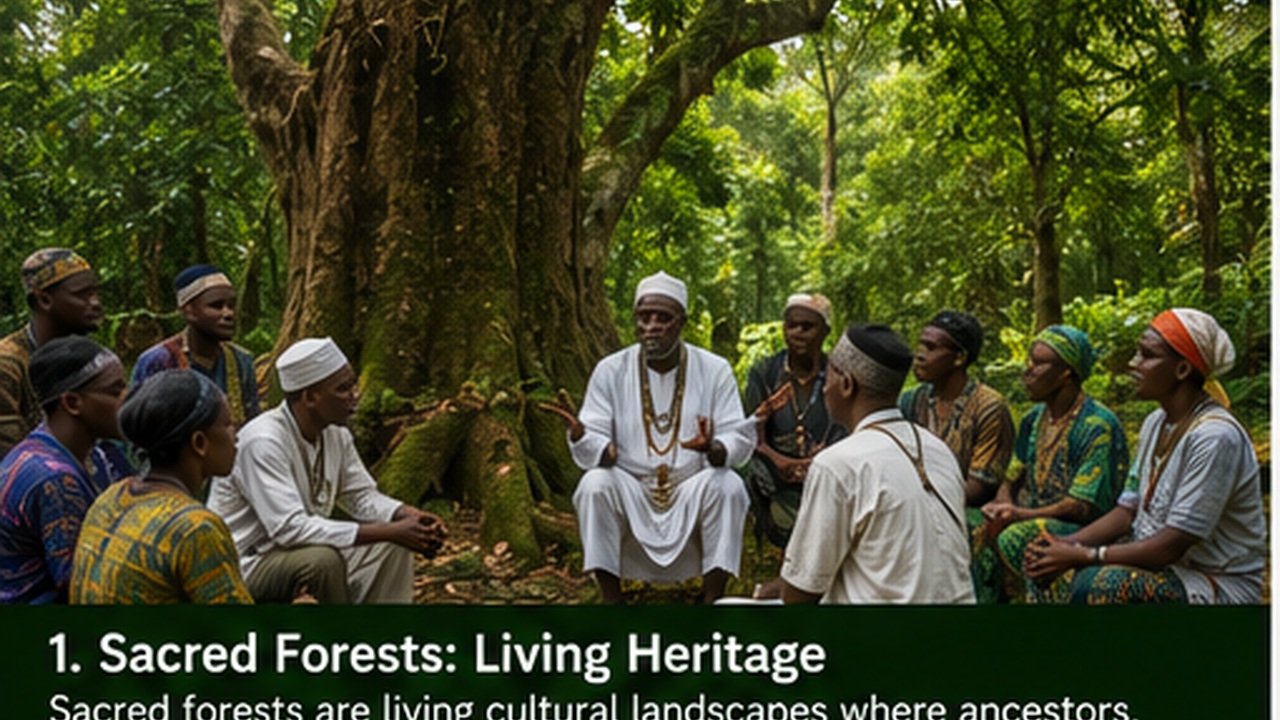
Sacred forests are living cultural landscapes where ancestry, community law, prayer, healing knowledge, biodiversity, and responsibility meet. This guide explores culturally specific examples across Africa without treating them as one universal tradition.
What This Topic Means
A forest can be many things at once: a source of water, food, medicine, shade, wildlife habitat, history, identity, and spiritual obligation. In African traditions, some forests and groves are set apart because communities understand them as places of ancestral presence, divine power, burial, oath-taking, healing, initiation, rainmaking, or political legitimacy.
The phrase sacred forest is useful, but it can also hide important differences. The Mijikenda Kaya forests of coastal Kenya, the Yoruba Osun-Osogbo grove in Nigeria, sacred forest areas of Mount Mulanje in Malawi, and Ghanaian ancestral or shrine groves belong to distinct peoples and histories. They should not be blended into one imagined African woodland religion.
This article explains public, educational aspects of selected traditions. It does not disclose restricted rites, medicinal formulas, initiation procedures, or locations that communities choose to keep private.
IMAGE PLACEMENT
sacred-forests-african-traditions-hero.jpg
Alt text: A culturally respectful African sacred forest landscape showing elders and younger community members at the forest boundary, without depicting restricted rites
What Is a Sacred Forest?
A sacred forest is a woodland, grove, forest fragment, thicket, mountain zone, or former settlement area that a community recognizes as spiritually, historically, or morally significant. Its sacredness may arise from a founding story, ancestral graves, a deity or spirit, a rain shrine, a royal institution, a healing tradition, or a covenant governing how people may use the land.
The forest may be protected by customary law, state legislation, religious authority, or a combination of these. Rules can determine who may enter, what may be collected, when ceremonies may occur, which trees may be cut, and how breaches are repaired. In some places, even speaking loudly, cooking, hunting, farming, or taking photographs may be restricted.
A sacred forest is therefore not simply a nature reserve with spiritual decoration. It is a cultural landscape shaped by relationships among people, ancestors, sacred beings, plants, animals, water, memory, and authority.
Why Forests Became Sacred
Forests as Places of Ancestral Presence
Forests can preserve graves, abandoned settlements, memorial sites, or places linked with the founders of a community. Their shade, age, relative quiet, and separation from ordinary settlement can mark them as thresholds between the living and remembered generations.
Forests as Sources of Life and Healing
Woodlands protect springs, streams, soil, medicinal plants, pollinators, and wildlife. Communities may understand this practical life-giving role in spiritual and ethical terms. Knowledge of plants is often held by trained specialists and should not be treated as freely available public information.
Forests as Centres of Law and Governance
Some sacred forests are places where elders settle disputes, administer oaths, conduct reconciliation, authorize leadership, or teach community rules. The forest becomes part of a governance system rather than only a ceremonial location.
Forests as Boundaries
A sacred grove can separate ordinary and restricted space, settlement and wilderness, public access and custodial authority, or the living community and the ancestral past. Crossing the boundary may require permission, preparation, or an accompanying elder.
Africa Does Not Have One Sacred-Forest Tradition
Africa contains thousands of languages, communities, religious histories, and systems of land tenure. Terms such as shrine forest, ancestral forest, burial grove, holy wood, rain shrine, and sacred landscape may overlap in English while referring to very different local categories.
A responsible article names the community, location, language, and historical context. It avoids claims such as “Africans worship trees” or “all sacred forests are homes of ancestors.” Trees may be respected as beings, symbols, medicines, boundaries, or places of divine presence, but the meaning depends on the specific tradition.
The Sacred Mijikenda Kaya Forests of Kenya
The Sacred Mijikenda Kaya Forests extend along Kenya’s coast and contain the remains of fortified settlements known as kayas. UNESCO describes the forests as repositories of Mijikenda spiritual beliefs and sacred abodes of ancestors. The surrounding woodland was maintained to protect graves, groves, settlement traces, and ritual centres, and it now preserves some of the remaining coastal lowland forest.
The Mijikenda comprise nine Bantu-speaking peoples. Their traditions associated with the kayas include oral history, prayer, oath-taking, burial, naming, initiation, reconciliation, marriage, coronation, ethical codes, and systems of governance. Councils of elders have historically served as custodians and interpreters of these practices.
The kayas demonstrate that a sacred forest may simultaneously be an ancestral settlement, archive of migration, legal institution, ritual centre, and biodiversity refuge. They should not be described merely as “untouched jungle.” Their significance comes from long-term community management and inherited rules.
UNESCO has also warned that traditional practices associated with the kayas are vulnerable. Safeguarding requires more than fencing trees: it requires transmitting language, authority, stories, ceremonies, and the social role of elders while allowing Mijikenda communities to define what may be shared publicly.
IMAGE PLACEMENT
mijikenda-kaya-sacred-forest-kenya.jpg
Alt text: A shaded entrance path to a Mijikenda Kaya forest in coastal Kenya, with a community elder guiding visitors respectfully
Osun-Osogbo Sacred Grove in Nigeria
The Osun-Osogbo Sacred Grove lies on the outskirts of Osogbo in southwestern Nigeria. UNESCO identifies it as one of the last remnants of primary high forest in southern Nigeria and as a sacred Yoruba landscape associated with Osun, a deity connected with water, fertility, protection, and well-being.
The grove includes the Osun River, sanctuaries, shrines, sculptures, paths, priestly institutions, and places associated with the history of Osogbo. Its annual festival renews relationships among the people of Osogbo, their ruler, Osun, and the sacred landscape.
The grove is not simply a forest containing art. Its river, vegetation, shrines, sculptures, priesthoods, historical memory, and public ritual form one cultural system. Removing any element from this context can distort its meaning.
Conservation remains an active responsibility. UNESCO documentation has identified pressures involving pollution, tourism, land use, legal protection, forest management, and maintenance of modern sculptures. A current conservation plan therefore has to address both living worship and the physical condition of the forest, river, and artworks.
IMAGE PLACEMENT
osun-osogbo-sacred-grove-nigeria.jpg
Alt text: A forest path, river, and culturally appropriate sculptures within the Osun-Osogbo Sacred Grove in Nigeria
Mount Mulanje: Sacred Mountain Forests in Malawi
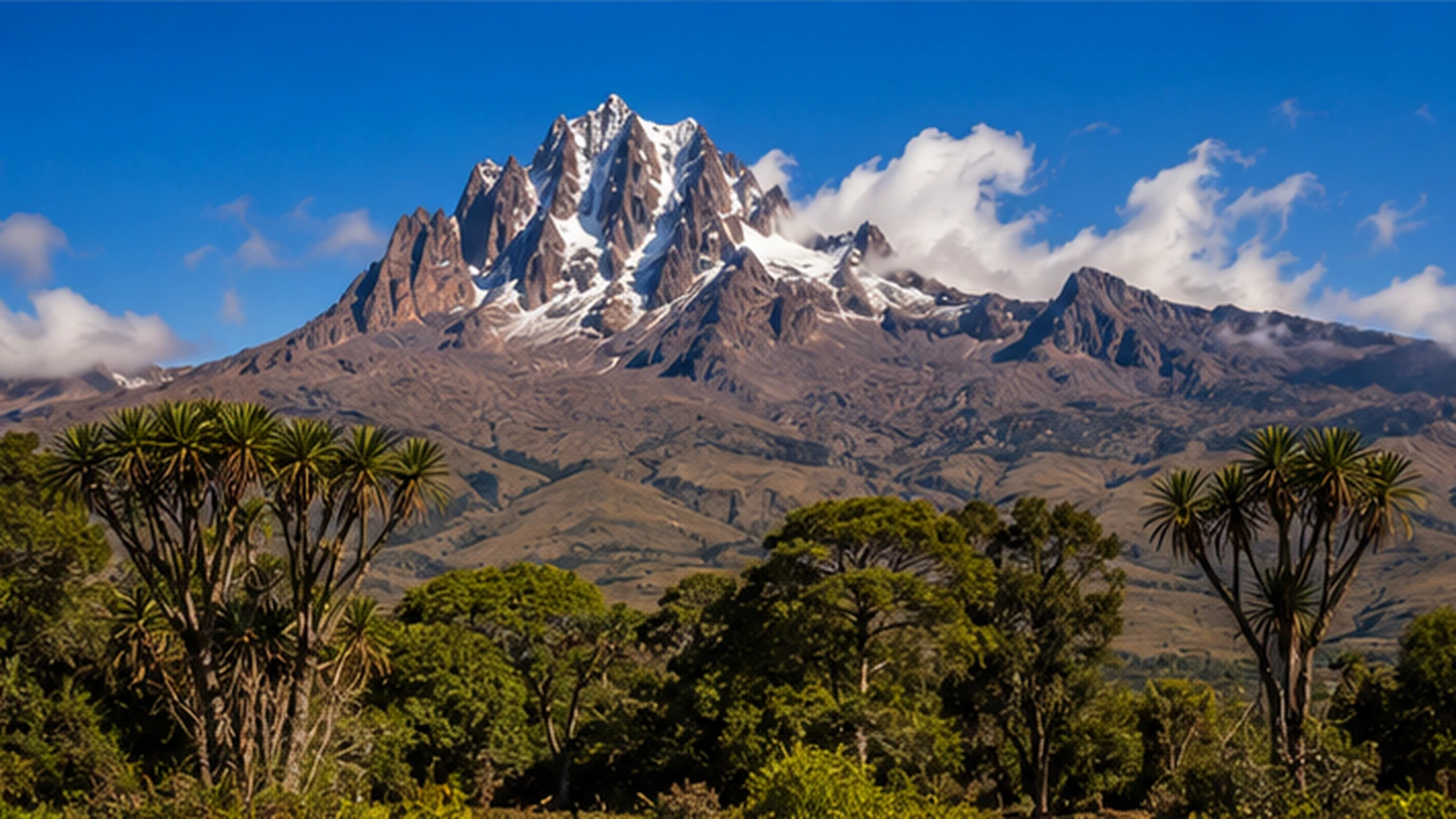
Mount Mulanje Cultural Landscape was inscribed on the UNESCO World Heritage List in 2025. The landscape is revered by Yao, Mang’anja, and Lhomwe communities and is associated with gods, spirits, ancestors, healing, sacred trees, water, ritual practice, and inherited systems of respect for the mountain.
Mount Mulanje demonstrates that sacred forests may form part of a wider landscape that includes peaks, cliffs, streams, caves, forest zones, paths, and specific trees. Spiritual meaning is not confined to a small grove; it can extend across a mountain ecosystem and the communities living around it.
The site also illustrates why environmental and cultural heritage cannot be separated. Damage to forest cover, water systems, sacred trees, or access routes can also damage stories, ceremonies, healing knowledge, and community relationships with the mountain.
IMAGE PLACEMENT
mount-mulanje-sacred-forest-malawi.jpg
Alt text: Forested slopes, a sacred tree, and streams within the Mount Mulanje Cultural Landscape in Malawi
Sacred Forests and Groves in Ghana
Ghanaian sacred forests have been protected for varied reasons, including the presence of deities or spirits, ancestral associations, burial grounds, ritual practice, and watershed protection. Local names and categories differ among communities, and not every grove has the same rules or religious purpose.
Research on Ghanaian sacred forests shows that cultural and conservation values often reinforce one another. Restrictions on tree cutting, hunting, farming, or entry can help preserve forest fragments and species in landscapes where surrounding woodland has been cleared or transformed.
These protections are not static. The authority of custodians, local religious change, population growth, land value, and state law can all reshape the future of a grove. Conservation projects work best when they begin with local history and governance rather than treating sacredness as a convenient tool for outside environmental goals.
IMAGE PLACEMENT
ghana-sacred-grove-community-custodians.jpg
Alt text: Ghanaian community custodians at the boundary of a sacred grove, with mature trees and no staged ritual
Khulubvi and the Mbona Rain-Shrine Landscape
Malawi’s Khulubvi and Associated Mbona Rain Shrines Cultural Landscape is linked with the Mang’anja rain tradition centred on Mbona, an ancestral spirit and rainmaker. The wider landscape includes shrines, forests, rivers, pools, thickets, oral histories, ritual language, and community custodianship.
This example shows that forests may be one element in a network of sacred places rather than isolated sacred islands. Rain, water, vegetation, ancestral memory, and community morality can be understood as connected parts of one spiritual geography.
Sacred Forests as Living Archives
A sacred forest can preserve forms of knowledge that are difficult to separate into modern categories. A single place may hold migration history, genealogy, plant knowledge, religious authority, legal precedent, stories of conflict, burial memory, and seasonal observation.
Knowledge is often transmitted through guided participation. Younger people learn not only names and stories but also how to behave: where to stand, when to remain silent, who may speak, which paths may be used, and why certain resources are protected.
Recording stories can support safeguarding, but a digital archive cannot replace living authority. Communities may decide that some names, locations, plants, or ceremonies should remain restricted.
Customary Rules, Taboos, and Forest Protection
Sacred forests are often protected through customary restrictions sometimes translated as taboos. These may prohibit cutting particular trees, hunting certain animals, cultivating land, collecting deadwood, entering at specific times, or approaching without permission.
The word taboo can sound irrational when removed from context. In practice, such rules may express moral duties, ancestral respect, safety, social authority, and ecological restraint at the same time.
However, it is inaccurate to assume that all customary rules automatically produce perfect conservation. Sacred forests are dynamic landscapes shaped by people. Rules can weaken, change, be contested, or be enforced unequally. Effective protection requires attention to both cultural authority and present-day economic realities.
Biodiversity and Ecological Importance
Sacred groves can retain mature trees, medicinal plants, wildlife habitat, seed sources, and water functions in heavily used landscapes. Research across Africa has shown that even small forest patches may support rare or locally important species.
Their ecological importance does not mean they were preserved only for biodiversity. Communities may have protected them primarily for ancestors, shrines, burial, rain, political authority, or healing. Conservation benefits may emerge from spiritual and social obligations rather than modern environmental categories.
This distinction matters. Outside organizations should not praise a community’s conservation value while ignoring land rights, religious freedom, livelihoods, or the authority of custodians.
Threats Facing Sacred Forests
Land Conversion and Development
Roads, housing, agriculture, quarrying, mining, tourism infrastructure, and urban expansion can reduce forest area or isolate a grove from its wider landscape.
Pollution and Water Degradation
Waste, sewage, agricultural runoff, and changes to streams can damage sacred rivers and forests whose spiritual meaning depends on clean water and living ecosystems.
Loss of Custodial Knowledge
When elders die without recognized successors, languages decline, or younger generations lose access to land, the forest may remain physically present while its social meaning weakens.
Commercialization and Unmanaged Tourism
Tourism can generate income and awareness, but intrusive photography, staged ceremonies, souvenir extraction, uncontrolled foot traffic, or pressure for unrestricted entry can damage sacredness and community trust.
Climate Change and Ecological Stress
Changing rainfall, fire patterns, invasive species, storms, and temperature can affect forest health, water sources, and species used in cultural practice. Climate adaptation must therefore include community knowledge and cultural values.
Sacred Does Not Mean Untouched
Sacred forests are sometimes described as primeval spaces preserved by fear of spirits. This stereotype ignores the role of human management. Communities may plant, clear paths, maintain boundaries, protect selected species, conduct ceremonies, move settlements, and change rules over time.
Scholars of African sacred groves have emphasized that ecological and social histories are intertwined. A grove may expand, shrink, recover, or change species composition while remaining culturally significant.
The better question is not whether a forest is untouched, but how people have shaped, protected, interpreted, and negotiated it across generations.
How to Visit or Study Sacred Forests Respectfully
Identify the exact community and local name of the forest or grove.
Use recognized community guides, custodians, heritage institutions, or elders where access is permitted.
Ask before entering, photographing, recording audio, or sharing locations online.
Do not remove plants, seeds, soil, stones, water, carvings, offerings, or fallen wood.
Do not assume that a public festival makes every shrine or ceremony public.
Follow rules concerning clothing, silence, footwear, food, alcohol, and movement.
Avoid describing custodians as superstitious or reducing sacred forests to tourist attractions.
Support community-led conservation and fair local economic participation.
Do not publish medicinal knowledge or restricted ritual information without consent.
Use current environmental and safety guidance, especially in mountain, river, and wildlife areas.
Sacred Forests and Modern Conservation
Modern conservation can benefit from community knowledge, but partnership must not become appropriation. Sacred forests are not free conservation tools available for outside institutions to manage while communities lose authority.
Strong approaches recognize customary governance, land tenure, religious freedom, intergenerational teaching, and the right of communities to define appropriate access. Scientific monitoring can complement—not replace—local knowledge and spiritual responsibility.
UNESCO and FAO increasingly recognize the importance of Indigenous peoples and local communities in sustaining forests and biodiversity. The challenge is to build conservation systems that protect ecosystems while also protecting the people, institutions, and knowledge that have cared for them.
Key Takeaways
Sacred forests in African traditions are not merely patches of trees protected by old beliefs. They are living cultural landscapes shaped by ancestry, worship, community law, memory, healing knowledge, water, biodiversity, and responsibility.
The Mijikenda kayas, Osun-Osogbo, Mount Mulanje, Ghanaian sacred groves, and the Mbona rain-shrine landscape show the diversity of ways communities relate to forests. Their similarities invite comparison, but their differences must remain visible.
To respect a sacred forest is to respect more than nature. It is to respect the people who name the place, the rules that protect it, the histories it carries, and the future generations who will inherit both the forest and the duty of care.
Article Information
- Publisher
- Ancestral Temple
- Editor
- Ancestral Temple
- Last updated
- Jul 26, 2026
- Last reviewed
- Jul 26, 2026
- Content version
- ac859b834b
This educational article should be read as cultural and spiritual information, not as medical, legal, financial, or emergency advice.
Helpful Related Guidance
Explore This Topic
Sacred Symbols In African Spiritual Traditions · Sacred Natural Places In African Spirituality
About the Author
 Ancestral Temple
Spiritual guide and practitioner with decades of experience in ancestral wisdom, rituals, and divine guidance.
Related Posts
View All
Leave a Comment
We'd love to hear your thoughts.
The final message about inheriting both the forest and the duty of care is memorable.
I valued the instruction to avoid sharing restricted locations online.
The publishing checklist includes the cultural and technical details needed for quality control.
The article provides strong material for future posts about sacred trees and groves.
The section on biodiversity does not erase the original spiritual reasons for protection.
The article treats ancestors as part of specific traditions rather than a universal claim.
The Mijikenda section is detailed without presenting private practices as public instructions.
The article recognizes that community custodians must benefit from conservation and tourism.
The conclusion connects nature, history, and responsibility beautifully.
The safety and photography guidance is responsible.
The article would be useful for students of religion, heritage, and environmental studies.
The difference between a shrine forest and an ancestral forest is explained clearly.
The section on colonial categories and outside conservation could become another useful article.
The article correctly presents sacred forests as dynamic social landscapes.
The SEO package and image plan are ready for a structured blog system.
The discussion of forest and water relationships adds useful ecological depth.
The Ghana section avoids pretending that every grove has the same deity or rule.
I appreciate the instruction not to remove even fallen wood or soil without permission.
The article explains sacred landscapes without turning them into fantasy.
The section on language and custodial knowledge is important for heritage preservation.
The article makes clear that tourism can help or harm depending on how it is managed.
The explanation of community-led conservation is practical and respectful.
The FAQ answers are clear and suitable for search snippets.
The article gives a strong African foundation without using vague stereotypes.
I liked the point that forest rules may express ethics, law, safety, and ecology at once.
The explanation of access restrictions will help visitors behave responsibly.
The cultural and environmental sections are well balanced.
The article respects the differences among Kenyan, Nigerian, Malawian, and Ghanaian traditions.
The internal-link plan creates a strong topic cluster for the website.
The discussion of living archives is especially meaningful.
The section on threats explains why physical conservation alone is not enough.
I appreciate that the article does not promise spiritual or medical results.
The glossary will help readers understand terms such as biocultural heritage and customary law.
The article recognizes that sacred forests can also be places of law and reconciliation.
The discussion of customary rules avoids calling communities superstitious.
The Mount Mulanje section connects spiritual meaning with the whole mountain ecosystem.
The article avoids revealing restricted rituals or medicinal knowledge.
The visitor guidance is practical and respectful.
The Ghana section shows how cultural protection can also preserve forest fragments.
I liked the distinction between sacredness and untouched wilderness.
The Osun-Osogbo section explains why the river, forest, shrines, and festival belong together.
The article keeps community authority at the centre of conservation.
The Mijikenda Kaya section connects ancestry, governance, history, and biodiversity very well.
I appreciated the warning against treating every African sacred grove as the same tradition.
The article clearly explains that sacred forests are living institutions, not simply old trees.