
Why Homes Have Been Blessed Throughout History
Cornerstone Content
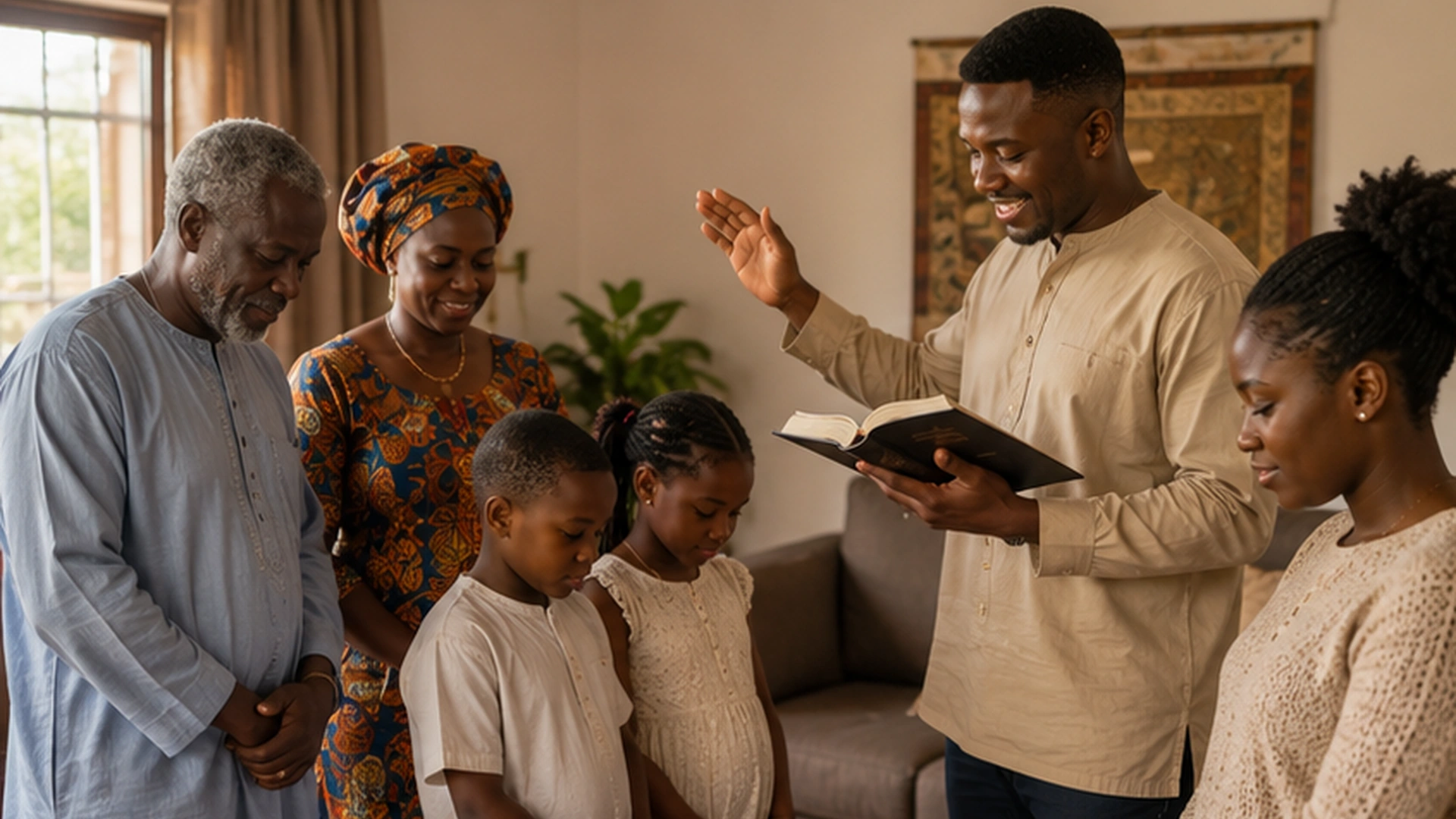
Quick Summary
Homes have been blessed for many reasons, including gratitude, protection, hospitality, religious dedication, family unity, and the marking of a new beginning. This guide explores specific historical, African, Christian, Jewish, Muslim, Roman, and Japanese examples without treating all house-blessing traditions as identical.
A home is more than a roof, walls, doors, and furniture.
It is where people sleep, raise children, prepare food, receive visitors, recover from illness, celebrate achievements, grieve losses, and pass memories from one generation to another.
Because the home holds so much of human life, families throughout history have often marked it with prayers, blessings, sacred objects, meals, songs, or other meaningful actions.
A newly completed house may be blessed before the family moves in. An established home may be blessed during a religious festival. A family may pray after surviving danger, returning from migration, welcoming a child, or beginning married life.
However, there has never been one universal house-blessing ceremony.
A Christian priest sprinkling holy water, a Jewish family affixing a mezuzah, Muslims reciting the Qur’an in their home, and a Japanese Shinto priest conducting a ceremony before construction are participating in distinct traditions.
Their ceremonies may share themes such as peace, protection, gratitude, and responsibility, but their beliefs, authorities, prayers, and sacred objects are not interchangeable.
Key Points
- Homes have been blessed to express gratitude, seek peace, mark ownership, dedicate family life, and begin a new chapter.
- A house blessing may involve prayer, water, incense, scripture, food, music, or symbolic objects.
- Ancient Roman homes contained household shrines connected with family protection and prosperity.
- Christian house blessings commonly ask that a household become a place of peace, faith, welcome, and responsible living.
- Ethiopian Orthodox traditions include the use of holy water in particular household and family circumstances.
- Jewish homes are marked by the mezuzah, which places passages from the Torah at the doorway.
- Muslim home practices may include prayer, Qur’an recitation, greetings of peace, gratitude, and charity.
- Some African communities maintain domestic shrines or consecrated objects, but these should not all be labelled house blessings.
- Japanese jichinsai is performed before construction to pray for safety and respectfully mark the use of the land.
- Blessing a home does not guarantee protection from crime, fire, disease, structural failure, or every misfortune.
Clear Definition
A house blessing is a religious, cultural, or family ceremony that dedicates a dwelling, welcomes its occupants, expresses gratitude, or asks for peace and well-being within the home.
Plain-Language Meaning
People bless homes because they want the place where they live to represent more than property.
A blessing may express the hope that:
- Family members will treat one another well.
- Visitors will be welcomed.
- Children will grow in safety and wisdom.
- The household will remember its faith.
- Food and resources will be shared responsibly.
- Conflict will be resolved peacefully.
- The family will remain grateful for shelter.
The ceremony gives physical form to those hopes.
Why the Home Became a Sacred and Symbolic Place
The Home Protects Human Life
A home separates people from rain, cold, heat, animals, conflict, and other dangers.
In many societies, entering a home means entering a protected social space. The household decides who belongs, who may visit, and how guests should behave.
A blessing can therefore acknowledge the home as a place where life is sheltered.
The Home Contains Family Memory
Births, marriages, meals, arguments, reconciliations, illness, aging, and death may all be experienced within the same dwelling.
Even after people move away, the family home may remain connected with identity.
Blessing it can be a way of recognizing the memories already held there or the memories the family hopes to create.
A New Home Marks a Transition
Moving into a house changes daily life.
The family crosses from one location into another. A couple may be establishing their first household. Migrants may be beginning life in a new country. A family may be returning after displacement.
Ceremonies help people understand such transitions.
A house blessing may communicate:
“This is now our home.”
“We are grateful to have reached this point.”
“We will try to live well here.”
“We welcome our relatives and neighbours.”
Homes Can Become Places of Worship
In many religions, prayer is not limited to formal temples, mosques, churches, or synagogues.
Families may pray, read scripture, remember the deceased, teach children, or observe religious festivals at home.
Blessing the home recognizes that ordinary domestic life can also have spiritual meaning.
Families Have Sought Protection
Throughout history, people have worried about fire, theft, illness, conflict, dangerous weather, infertility, food shortages, and unseen threats.
Some home traditions therefore include prayers or objects associated with protection.
These practices should be described as religious or cultural beliefs rather than scientifically verified guarantees.
Ancient Roman Household Religion
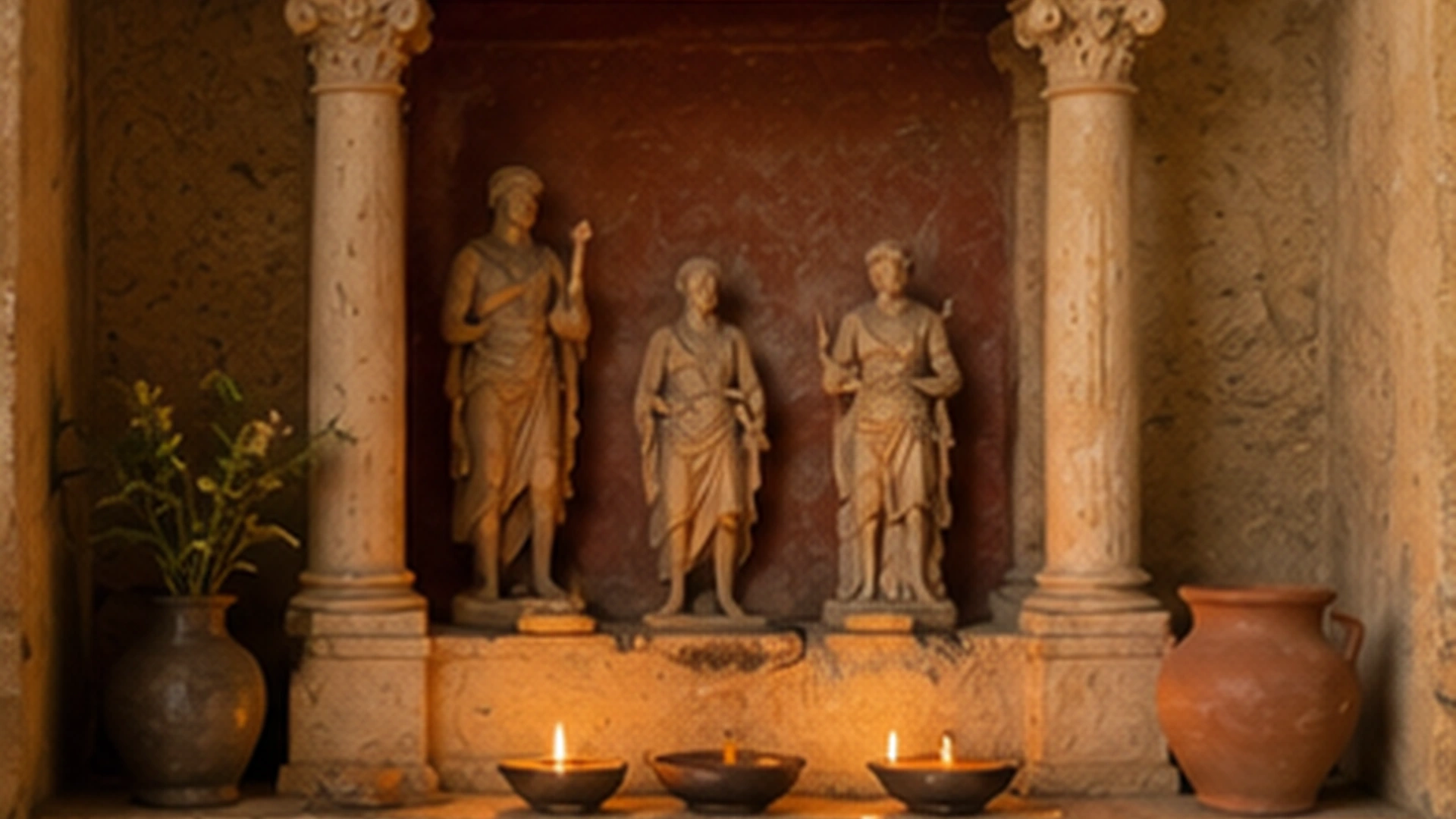
Ancient Roman homes often contained a lararium, a household shrine associated with domestic religious life.
The Lares were household deities connected with the family’s well-being. The Metropolitan Museum of Art describes the lar familiaris as a deity believed to protect family members and support their health and prosperity. Roman lararia could contain small figures and vessels used in domestic offerings.
This was not exactly a house blessing in the modern sense.
Instead, the shrine made ongoing religious observance part of daily domestic life. Family members could acknowledge household deities repeatedly rather than performing only one ceremony when moving into the property.
The Roman example shows that the idea of a spiritually protected household is very old.
It also demonstrates that modern religious terms should not be placed carelessly onto ancient traditions. Roman household religion had its own deities, rituals, social structures, and historical context.
Thresholds and Doorways
Doorways often carry symbolic meaning because they separate two spaces.
A person standing at a doorway is neither completely outside nor fully inside. Crossing the threshold changes their position and their relationship to the household.
For this reason, entrances may be treated as places of:
- Welcome
- Protection
- Identity
- Transition
- Religious remembrance
- Hospitality
- Social permission
A sacred object placed near the door may remind residents how they should live inside the home and how they should behave when entering the wider world.
However, not every doorway symbol is an amulet, and not every object near an entrance is intended to repel spirits.
Its meaning must be established from the tradition that uses it.
The Mezuzah in Jewish Homes
A mezuzah is a handwritten parchment scroll containing passages from the Torah, including sections of the Shema. It is placed in a protective case and affixed to qualifying doorposts of Jewish homes.
The practice is rooted in the instruction to place sacred words on the doorposts of the house and gates. Jewish educational sources describe the mezuzah as a reminder of faith, divine unity, religious responsibility, and the Jewish identity of the household.
Affixing a mezuzah may accompany moving into a new home, but the mezuzah is not simply a decorative housewarming item.
Its central importance lies in the properly prepared scroll rather than the outer case. Traditional requirements concern how the text is written, where it is placed, and which doorways require it.
Some Jewish interpretations also associate the mezuzah with divine protection. However, it should not be reduced to a magical object or copied as generic home décor by people unfamiliar with its religious meaning.
The mezuzah illustrates how a doorway can connect belief with daily behaviour. Each entrance and departure becomes an opportunity to remember the values represented by the words inside the scroll.
Christian House Blessings
Christian house blessings generally ask God to bless the people who live in a home and to help them practise peace, hospitality, faith, generosity, and mutual care.
The blessing is not normally understood as making the building incapable of suffering damage or preventing every hardship.
Instead, the home is dedicated as a place where Christian life should be practised.
Blessing a New Home
When Christians move into a new dwelling, a priest, pastor, family member, or other authorized leader may pray in the rooms.
Depending on the denomination, the ceremony may include:
- Scripture readings
- The sign of the cross
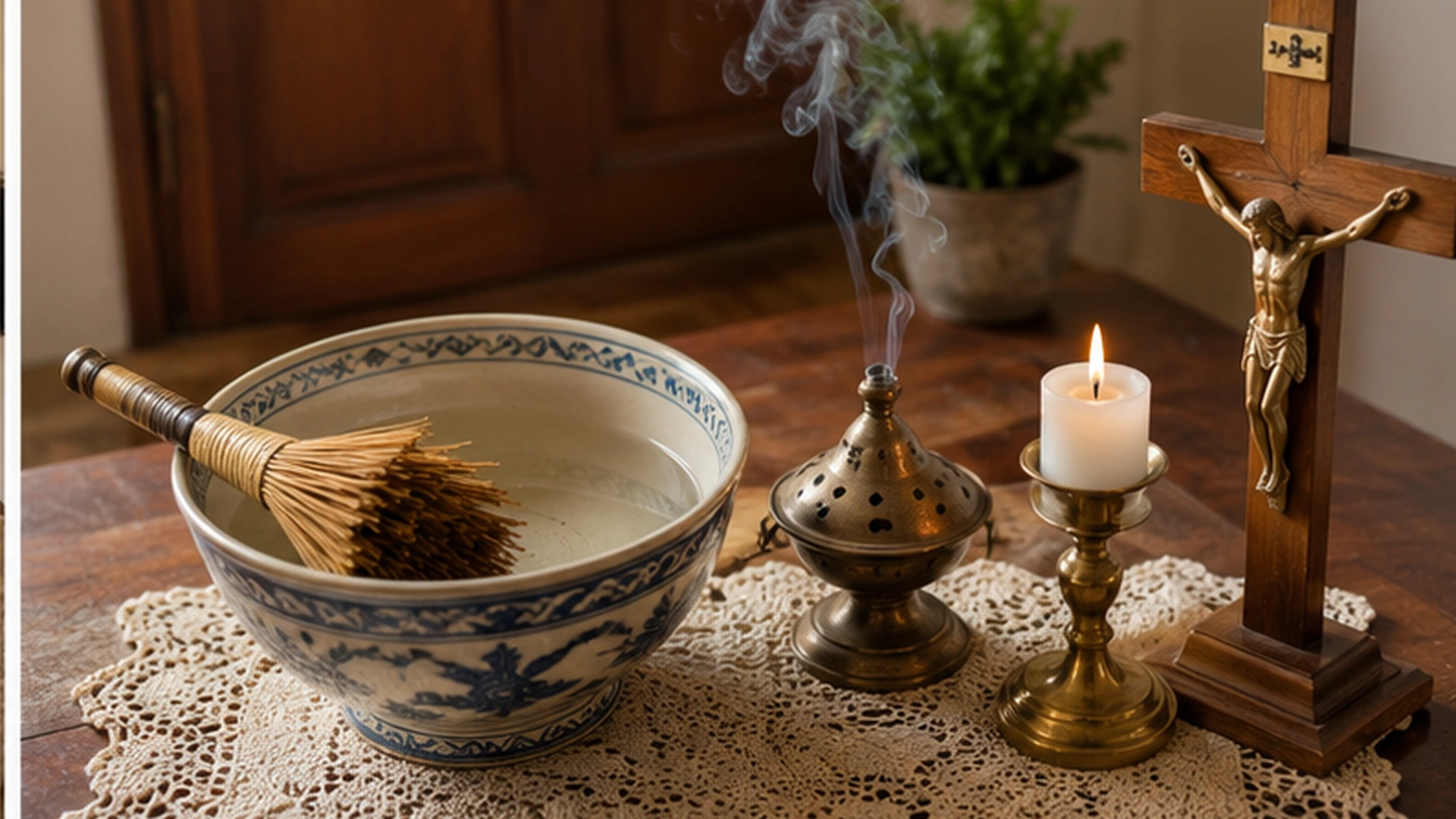
- Holy water
- Incense
- Hymns
- Prayers for the household
- Prayers for neighbours and visitors
- A shared meal
The Church of England provides prayers for moving house that combine gratitude for the place being left with a prayer for hospitality and relationships in the new home.
This is an important point: blessing a home is not only about keeping danger outside.
It can also be about what the household offers to others.
A home may be blessed so that it becomes a place where guests are welcomed, lonely people receive companionship, children are cared for, and those in difficulty find support.
Epiphany House Blessings
In some Catholic and other Christian communities, homes are blessed around Epiphany.
The United States Conference of Catholic Bishops provides an Epiphany blessing for the home and household that asks God to fill hearts and homes with peace. The ritual involves the gathered household, scripture, prayer, and blessing.
Some families also mark the doorway with chalk as part of an Epiphany tradition.
The exact form differs by country, parish, and denomination. It should not be assumed that all Christians observe it or interpret each symbol identically.
Holy Water and Incense
Holy water may be sprinkled in rooms as a reminder of baptism and divine blessing.
Incense may symbolize prayer, honour, purification, or the setting apart of the home for faithful living.
These materials do not function independently of the religious setting. Their meaning comes from prayer, scripture, church teaching, and community practice.
Ethiopian Orthodox Household Practice
The Ethiopian Orthodox Tewahedo Church maintains specific traditions involving holy water, priests, family life, and the blessing of domestic space.
An official church resource describes a priest sprinkling a house and those within it with holy water after the birth of a child.
This example should be presented carefully.
It is not evidence that every Ethiopian household follows the same procedure. Practice may vary according to location, parish, family circumstances, religious participation, and guidance from clergy.
It is also specifically Ethiopian Orthodox. It should not be combined with unrelated Indigenous, Muslim, Pentecostal, or other African practices and labelled a general “African house cleansing.”
Within its proper context, the use of holy water connects the home with church life, family transition, and religious care.
Homes in Muslim Religious Life
Islam does not have one universally required ceremony that functions exactly like a Christian priestly house blessing.
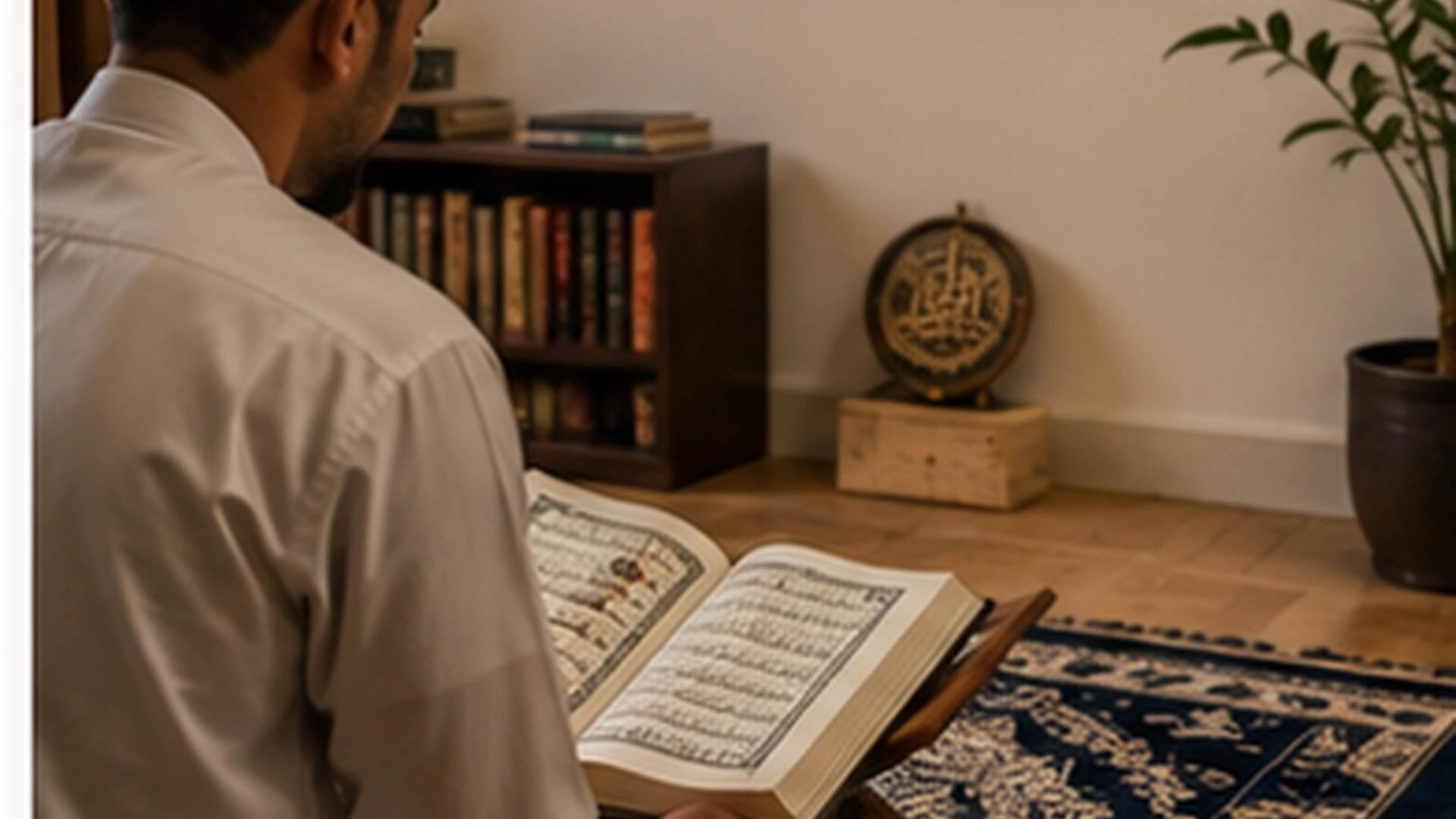
However, Muslim households may mark a new home through prayer, gratitude, Qur’an recitation, hospitality, greetings of peace, and charity.
Prayer and Qur’an Recitation
A well-known hadith encourages Muslims not to turn their houses into places without prayer and states that Satan flees from a house in which Sūrat al-Baqarah is recited.
For many Muslim families, this supports the idea that a home should be spiritually active through:
- Daily prayer
- Qur’an recitation
- Remembrance of Allah
- Ethical family life
- Hospitality
- Religious education
These activities are more important than treating the house itself as a magical object.
Barakah and Gratitude
Muslims may ask Allah for barakah, often translated as blessing, beneficial increase, or enduring goodness.
A new home may be marked by inviting relatives, sharing food, making supplication, or giving charity.
Islamic Relief notes that some families give voluntary charity when entering a new home as an expression of generosity and a hope for blessing.
Customs vary significantly among Muslim communities.
A Hausa family in northern Nigeria, a Somali household, a Muslim family in Kampala, and a Swahili household on the East African coast may have different cultural ways of celebrating a new residence.
Those customs should not automatically be described as requirements of Islam.
Sacred Household Objects in Specific African Traditions
Not every African domestic religious practice is a ceremony that blesses an entire house.
Some traditions involve personal shrines, family altars, consecrated objects, or places within the home associated with ancestors, divinities, or individual achievement.
Ikenga in Particular Igbo Contexts
In particular historical Igbo contexts, an ikenga could be commissioned, consecrated, and placed in a shrine within its owner’s home.
Smarthistory describes ikenga as personal objects associated with achievement, occupation, ability, and the owner’s accomplishments.
An ikenga should not be presented as a general African house-protection statue.
It belongs to specific Igbo artistic and religious histories. Its ownership, consecration, meaning, and use were governed by cultural knowledge.
Displaying a random reproduction in a house does not recreate its traditional status.
Family Shrines and Ancestral Objects
Some African communities have maintained family shrines connected with particular ancestors or spiritual relationships.
For example, the Metropolitan Museum of Art notes that particular stone figures were identified by some Kissi communities as ancestors and kept in family shrines.
This does not mean that:
- Every African household has an ancestral shrine.
- Every deceased relative becomes an ancestor.
- Every family shrine protects the entire building.
- Every carved figure is a household deity.
- Ancestor reverence is identical to worship.
The correct interpretation depends on the community, lineage, object, period, and religious authority involved.
Japanese Jichinsai Before Construction
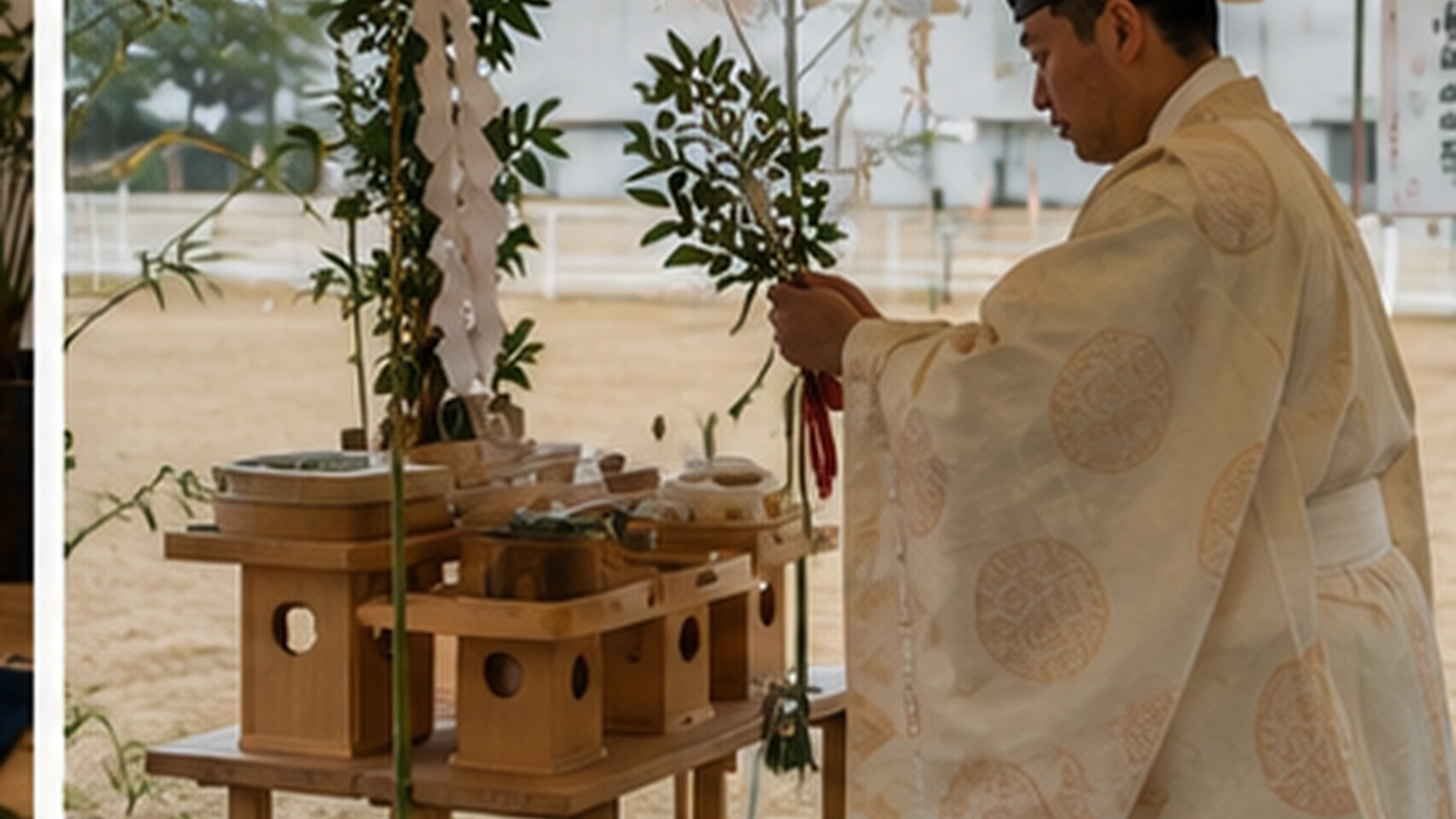
In Japan, jichinsai is a Shinto ground-purification or groundbreaking ceremony commonly associated with construction sites.
The ceremony is performed before building work to pray for safety and respectfully mark the use of the land. Japanese government educational material identifies jichinsai as a customary ceremony connected with construction and the safety of building work.
A Shinto priest may conduct the observance before the house exists.
This broadens the meaning of home blessing. The blessing may concern:
- The land
- Construction workers
- The future occupants
- Safe completion
- Respectful beginning
- The relationship between people and place
Jichinsai should not be described as Japanese “magic” or treated as a decorative performance for tourists.
It belongs to a living religious and cultural context.
Why Water, Incense, Oil, Food, and Light Appear
Water
Water can symbolize purification, life, baptism, refreshment, or blessing.
Its meaning differs between religions.
Holy water in a Christian house blessing is not the same as water used in an Indigenous African ceremony or a Shinto purification.
Incense
Incense may represent prayer, honour, purification, divine presence, or hospitality.
The type of incense, who may burn it, and where it is used differ greatly.
Oil
Oil may be associated with healing, consecration, welcome, or blessing in certain religious traditions.
It should not be applied to walls, people, or objects without understanding the relevant tradition and practical risks.
Food and Drink
Shared food turns the newly occupied house into a place of social relationship.
Housewarming meals may thank workers, welcome neighbours, introduce relatives, or express abundance.
In some traditions, food has a religious role. In others, it is primarily social.
Light
Candles, lamps, or fires may represent hope, warmth, prayer, divine guidance, or the beginning of domestic life.
Fire also creates risk. Ceremonial candles and incense should never be left unattended.
Blessing, Cleansing, Dedication, and Exorcism
These terms are often confused.
House Blessing
A house blessing asks for well-being, peace, faith, hospitality, or divine favour for the occupants and their home.
Spiritual Cleansing
A cleansing ceremony is intended to remove impurity, unwanted influence, misfortune, or a troubling association.
Not every blessing assumes that something negative is present.
Dedication
Dedication formally assigns a place to a religious or ethical purpose.
A family may dedicate its home to hospitality, prayer, service, or responsible living.
Consecration
Consecration sets something apart as sacred within a tradition that recognizes such an act.
The term should not be used casually for every family prayer.
Exorcism
Exorcism concerns a tradition’s response to perceived demonic or spiritual oppression.
It is not the same as an ordinary house blessing.
Within the Catholic Church, a major exorcism requires specific ecclesiastical authorization and may be performed only by an authorized priest.
People should not attempt dangerous confrontations, restraint, violence, or unregulated rituals in response to unexplained sounds, illness, fear, or mental distress.
The Social Meaning of a House Blessing
A house blessing can have value even for people who interpret it primarily through family and community rather than supernatural claims.
It can:
- Gather relatives in one place.
- introduce the household to neighbours.
- mark the end of construction.
- thank those who helped.
- acknowledge a major financial sacrifice.
- create shared expectations for family life.
- help children understand the meaning of the move.
- transform an unfamiliar building into an emotionally recognized home.
The ceremony may also remind household members that receiving a home brings responsibility.
They must maintain it, care for those inside it, respect neighbours, keep it safe, and use their resources ethically.
House Blessings After Crisis or Loss
Homes may be blessed again after:
- A death
- Serious illness
- Fire
- Flooding
- Violence
- Long absence
- Family conflict
- Renovation
- Displacement
- Return from migration
Such a ceremony can provide a structured moment for grief, remembrance, gratitude, or renewed commitment.
It should not be used to conceal practical dangers.
After a fire or flood, the property must still be inspected. After violence, survivors may need medical care, counselling, police assistance, legal help, or safe accommodation.
Prayer can accompany practical support, but it should not replace it.
Common Misconceptions
“All House Blessings Are Designed to Remove Evil Spirits”
False.
Many focus on gratitude, hospitality, family responsibility, religious identity, or the celebration of a new beginning.
“Every African Home Has a Protective Shrine”
False.
African households vary according to community, religion, family history, region, and personal belief.
“A Blessed House Cannot Experience Misfortune”
False.
A blessing is an expression of faith or hope, not a guarantee against burglary, illness, fire, conflict, or structural damage.
“All Sacred Objects Are Amulets”
False.
A mezuzah, cross, Qur’an, icon, ikenga, candle, or bowl of water may have completely different meanings.
“Anyone Can Copy a Traditional House Ceremony”
False.
Some practices require clergy, lineage authority, consecrated objects, community membership, or restricted knowledge.
“House Blessing Replaces Home Security”
False.
Families still need strong locks, fire alarms, safe wiring, proper ventilation, secure cooking areas, insurance where available, and emergency planning.
“Old House Traditions Never Change”
False.
Families adapt ceremonies when they move to cities, apartments, diaspora communities, rented properties, or interfaith households.
Ethical and Safety Boundaries
A house blessing should never involve:
- Fire used without supervision
- Toxic smoke in enclosed rooms
- Forced participation
- Physical restraint
- Harm to children or animals
- Drinking unsafe substances
- Damage to rented property
- Illegal activity
- Financial exploitation
- Threats of curses
- Claims of guaranteed protection
- Pressure to abandon medical care
- Secret filming of private rituals
- Publication of restricted prayers
People experiencing unexplained noises should first consider practical causes such as plumbing, animals, wiring, structural movement, appliances, or nearby activity.
Symptoms such as severe anxiety, hallucinations, confusion, breathing difficulty, poisoning, or loss of consciousness require appropriate medical evaluation.
A responsible spiritual leader should not discourage emergency assistance or professional care.
How to Document a Home-Blessing Tradition Respectfully
Identify the Community
Use precise language.
Write:
“In this Ethiopian Orthodox context…”
“Among this Jewish family…”
“Within this Igbo historical tradition…”
Avoid phrases such as:
“Africans bless houses by…”
Identify the Authority
Explain who leads the ceremony:
- Priest
- Pastor
- Rabbi
- Imam
- Shinto priest
- Shrine custodian
- Family elder
- Household member
- Ritual specialist
Do not assume these roles are interchangeable.
Ask Before Recording
A family gathering may take place in a private home even when many guests attend.
Obtain consent before photographing:
- Children
- Sacred objects
- Prayer spaces
- Religious texts
- Family members in vulnerable moments
- Restricted ritual activity
Distinguish History From Current Practice
A museum object may document a historical tradition without proving that the same practice is widespread today.
State the period and place whenever possible.
Avoid Invented Cultural Mixtures
Do not illustrate a house blessing by placing Ethiopian Orthodox crosses, Yoruba shrine objects, Maasai clothing, Islamic prayer beads, and Central African masks into one room.
That creates visual misinformation.
Key Takeaways
- Homes have been blessed because domestic life carries emotional, social, and religious meaning.
- Blessings often mark gratitude, protection, hospitality, transition, identity, and responsibility.
- Ancient Roman households maintained shrines connected with domestic deities.
- Jewish mezuzot place sacred text at the threshold of the home.
- Christian house blessings commonly dedicate family life to peace, faith, and hospitality.
- Ethiopian Orthodox practice includes particular uses of holy water within household life.
- Muslim families may emphasize Qur’an recitation, prayer, charity, and remembrance of Allah in the home.
- Specific African domestic shrines should not be generalized to all African families.
- Japanese jichinsai marks the land and construction process before a house is built.
- Blessing, cleansing, dedication, and exorcism are different concepts.
- Spiritual practice does not replace building safety, security, medical care, or emergency planning.
- Cultural ceremonies should be documented with accuracy, consent, and respect for restricted knowledge.
People Also Ask
Why do people bless a new home?
People may bless a home to express gratitude, welcome the family, seek peace, dedicate the household to religious values, and mark a new beginning.
Is a house blessing the same as spiritual cleansing?
No. A blessing asks for goodness or dedication, while cleansing is intended to remove impurity or an unwanted influence.
What items are used during house blessings?
Depending on the tradition, a ceremony may involve water, incense, scripture, oil, candles, food, music, or sacred objects.
Can a family bless its own home?
In some traditions, family members may lead prayers. Other ceremonies require recognized clergy or religious specialists.
Does blessing a house guarantee protection?
No. A blessing expresses faith and hope but does not replace security, maintenance, medical care, or safety precautions.
Frequently Asked Questions
1. What is the main purpose of a house blessing?
Its purpose may be to express gratitude, ask for peace, dedicate family life, welcome occupants, or mark a transition into a new home.
2. How old is the tradition of blessing homes?
Domestic religious practices are ancient. Roman households, for example, maintained shrines connected with family protection and prosperity.
Frequently Asked Questions
What should readers know first about african spirituality and cultural history?
African spirituality and cultural history: Read clear guidance, key signs, practical steps, and private support from Ancestral Temple.
What causes Why Homes Have Been Blessed Throughout History?
The safest next step is to compare the signs, prepare clear details, and request private guidance when the matter feels personal.
How does Why Homes Have Been Blessed Throughout History work?
The safest next step is to compare the signs, prepare clear details, and request private guidance when the matter feels personal.
Is it possible to get private guidance for Why Homes Have Been Blessed Throughout History?
The safest next step is to compare the signs, prepare clear details, and request private guidance when the matter feels personal.
How long does Why Homes Have Been Blessed Throughout History take to understand?
The safest next step is to compare the signs, prepare clear details, and request private guidance when the matter feels personal.
Can Why Homes Have Been Blessed Throughout History affect relationships, family, work, or personal peace?
The safest next step is to compare the signs, prepare clear details, and request private guidance when the matter feels personal.
Why do people seek spiritual guidance for Why Homes Have Been Blessed Throughout History?
The safest next step is to compare the signs, prepare clear details, and request private guidance when the matter feels personal.
What signs should someone notice before asking about Why Homes Have Been Blessed Throughout History?
The safest next step is to compare the signs, prepare clear details, and request private guidance when the matter feels personal.
When should someone contact a private spiritual guide?
The safest next step is to compare the signs, prepare clear details, and request private guidance when the matter feels personal.
What causes african spirituality and cultural history?
African spirituality and cultural history: Read clear guidance, key signs, practical steps, and private support from Ancestral Temple. The safest next step is to compare the signs, prepare clear details, and request private guidance when the matter feels perso
Article Information
- Publisher
- Ancestral Temple
- Editor
- Ancestral Temple
- Last updated
- Jul 26, 2026
- Last reviewed
- Jul 13, 2026
- Content version
- 94c5476e19
This educational article should be read as cultural and spiritual information, not as medical, legal, financial, or emergency advice.
Helpful Related Guidance
Explore This Topic
African Spirituality And Cultural History · What Is Spiritual Cleansing
Related Topic Cluster
African Spirituality And Cultural History
Complete Guide Why People Have Carried Talismans Throughout HistoryAbout the Author
 Ancestral Temple
Spiritual guide and practitioner with decades of experience in ancestral wisdom, rituals, and divine guidance.
Related Posts
View All


Leave a Comment
We'd love to hear your thoughts.
This was a strong historical introduction and gave me several ideas for related articles.
I liked the final idea that a blessing expresses how people intend to live in the home.
The FAQ about whether every religion blesses homes was especially helpful.
The image placeholders are positioned well for breaking up the longer sections.
The article correctly separated Ethiopian Orthodox practice from unrelated African traditions.
The explanation of barakah was concise and easy to understand.
The discussion of ikenga respected the cultural setting and avoided generalization.
I would like an article about prayers and family gatherings after completing a new house.
The point about hospitality being part of a blessed home was one of my favourite ideas.
Could you write a future comparison of Christian and Muslim new-home traditions?
The article would work well in a larger knowledge hub about sacred spaces.
I appreciated the warning that unexplained household sounds may have ordinary structural or electrical causes.
The Japanese jichinsai example showed that a home can be blessed before construction even begins.
The article avoided frightening language and exaggerated claims.
Please write more about family altars and how they differ from public shrines.
The section about blessing homes after crisis or loss was thoughtful.
I liked that practical home maintenance was included as part of responsible living.
The glossary will be useful for readers who are new to this subject.
The ancient Roman section was a good reminder that domestic religion has a long history.
Could you write a guide about how families preserve house-blessing traditions in apartments?
The article showed similarities between traditions while still respecting their differences.
I appreciated the advice about obtaining permission before photographing ceremonies inside private homes.
The differences between dedication, consecration, cleansing, and exorcism were clearly explained.
The safety advice about fire, candles, and incense was practical.
Please consider a future article on sacred household spaces in East African communities.
The discussion of charity when moving into a new home was interesting.
I liked the explanation that a blessing may dedicate the behaviour of the household rather than change the physical building.
The article was detailed without making supernatural promises.
The threshold section helped me understand why so many traditions place symbols near doors.
Could you write about the greetings and prayers Muslim families use when entering their homes?
The explanation of ikenga was careful and did not turn it into a generic protection statue.
The paragraph about homes holding memories was simple but powerful.
I appreciated that the article did not claim Islam has one universal priest-led house-blessing ceremony.
The Ethiopian Orthodox example could become a detailed article of its own.
Thank you for warning readers not to use sacred objects from cultures they do not understand as decorations.
The section explaining why families bless homes after moving or returning from migration was relatable.
I would enjoy a separate article about housewarming meals and their cultural meanings.
The reminder that a blessing does not replace locks and fire safety was necessary.
Could you write a follow-up article about house blessings commonly practised by Christian families in Uganda?
The information about the mezuzah made the importance of the doorway much clearer.
I liked the distinction between a house blessing and spiritual cleansing.
The Muslim section was balanced and correctly focused on prayer, Qur’an recitation, charity, and gratitude.
Thank you for identifying Ethiopian Orthodox household traditions specifically instead of describing them as universal African customs.
The section on ancient Roman household shrines gave useful historical background.
I appreciated the explanation that blessing a house is often about hospitality and family responsibility, not only protection.