
Why People Have Carried Talismans
Quick Summary
For thousands of years, people have carried small objects intended to offer protection, health, courage, identity, or reassurance. This guide explores ancient Egyptian amulets, Mesopotamian protective pendants, West and East African Qur’anic cases, Ethiopian amulets, Jewish birth-room charms, Byzantine gemstones, and Japanese omamori while distinguishing belief from scientific proof.
Why People Have Carried Talismans explains the meaning, background and cultural context of why people have carried talismans in clear educational language. The article answers the main topic near the beginning, preserves the original examples and highlights important distinctions for respectful understanding.
People have carried talismans because life has always involved uncertainty.
Travel could be dangerous. Pregnancy and childbirth carried serious risks. Illnesses were poorly understood. Crops could fail. Conflict could begin unexpectedly. A person leaving home might not know when—or whether—they would return.
A small object worn on the body could offer a sense of protection, connection, courage, memory, or religious presence during those uncertain moments.
Talismans have taken many forms:
- Pendants
- Rings
- Beads
- Leather pouches
- Written scrolls
- Stones
- Shells
- Metal cases
- Knotted cords
- Miniature figures
- Religious medals
- Pieces of cloth
- Objects containing prayers or sacred texts
The meanings of these objects have never been universal.
An ancient Egyptian wedjat-eye amulet, a Somali hersi, a West African Qur’anic case, a Byzantine gemstone, and a Japanese omamori belong to different historical and religious systems.
They may all be carried close to the body, but they should not be treated as interchangeable versions of one global magical tradition.
Key Points
- Talismans and amulets have been carried for protection, health, travel, fertility, courage, status, identity, and reassurance.
- The terms talisman, amulet, and charm often overlap in museum and popular usage.
- Ancient Egyptian amulets gained meaning from their shape, material, colour, inscription, and ritual preparation.
- Mesopotamian protective objects could depict feared beings in order to defend against them.
- Byzantine Christians carried engraved gemstones and images of saints for protection or hoped-for healing.
- West and East African Muslim communities have used leather, cloth, silver, or gold cases containing Qur’anic writing.
- Ethiopian amulet traditions have crossed Christian, Muslim, ethnic, and regional boundaries.
- Jewish communities have historically used written amulets in particular circumstances, including childbirth.
- Japanese omamori are obtained from Buddhist temples and Shinto shrines for purposes such as travel safety, health, study, and family well-being.
- Not every necklace, symbol, religious medal, or sacred object should be labelled a talisman.
- Religious authorities sometimes disagree about whether particular amulets are permitted.
- Talismans may provide cultural meaning or emotional reassurance, but they cannot guarantee healing, wealth, protection, pregnancy, or success.
Clear Definition
A talisman is an object believed within a particular cultural or religious setting to carry, attract, represent, or transmit a beneficial power such as protection, health, courage, success, or spiritual support.
Plain-Language Meaning
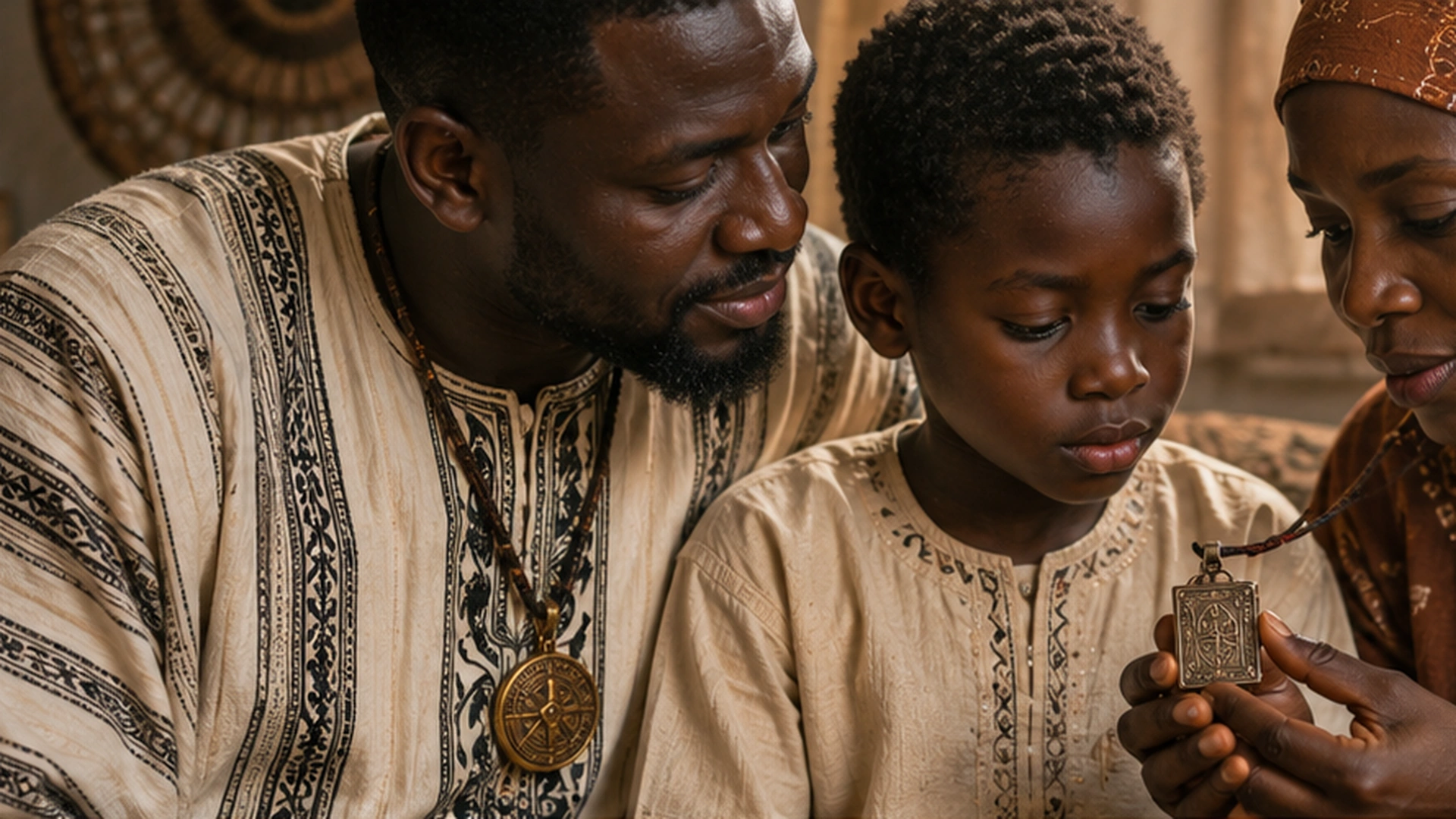
A talisman is something a person keeps close because they believe it helps them feel protected, connected, fortunate, spiritually supported, or prepared.
The object might remind the person:
“I am not alone.”
“My family or community is with me.”
“My prayers travel with me.”
“This symbol represents strength.”
“I am carrying something connected with my faith.”
The object’s meaning usually comes from more than its appearance.
Its material, maker, inscription, blessing, place of origin, family history, or connection with a religious institution may all matter.
Talisman, Amulet, Charm, and Devotional Object
These words are often used inconsistently.
The Metropolitan Museum of Art defines an amulet as an object believed to possess beneficial properties that can be transferred to its owner. The museum also uses talisman broadly for objects believed to hold protective power. This overlap means that modern labels do not always match the words originally used by the communities that made the objects.
A general distinction is sometimes made:
- An amulet wards away harm.
- A talisman attracts or strengthens a desired benefit.
- A charm is a broad term for a small meaningful or fortunate object.
- A devotional object supports prayer or religious remembrance.
In practice, one item may fit more than one category.
A pendant might be jewellery, a family heirloom, a sign of religious identity, and a protective object at the same time.
For this article, talisman is used as a broad educational term. Whenever possible, the specific community name—such as hersi, hatumere, safi, or omamori—is more accurate.
Why People Wanted Portable Protection
A Talisman Could Travel With the Person
A shrine, temple, sacred river, or family altar stays in one place.
A pendant or pouch can be worn during a journey, battle, migration, pregnancy, trade expedition, pilgrimage, or ordinary work.
Portability made the object especially meaningful when people were far from familiar places and relatives.
It Kept Sacred Words Close to the Body
Some talismans contain scripture, prayers, divine names, symbols, or written formulas.
The case protects the writing physically while the wearer understands the text as providing religious remembrance, blessing, or protection.
In such traditions, the words inside may matter more than the decoration outside.
It Made Invisible Hope Visible
Protection, courage, blessing, and health cannot be seen directly.
A wearable object gives those hopes a visible and touchable form.
A person can hold it during fear, feel it against the skin, or see it before beginning a difficult task.
It Connected a Person With Authority
Talismans were often prepared, blessed, written, selected, or consecrated by someone recognized as having knowledge.
That person might be:
- A priest
- A Qur’anic teacher
- A scribe
- A healer
- A ritual specialist
- A shrine attendant
- A family elder
- A jeweller working within religious custom
The object’s perceived importance could depend on who made it and how it was prepared.
It Preserved Family and Community Identity
An inherited pendant may become meaningful even when later generations interpret it differently.
It can carry memories of:
- A grandparent
- Migration
- Religious conversion
- Marriage
- Military service
- Childhood
- A pilgrimage
- A place of origin
- Survival during crisis
In such cases, the talisman functions partly as cultural memory.
Ancient Egyptian Amulets
Ancient Egypt provides one of the richest surviving records of protective amulets.
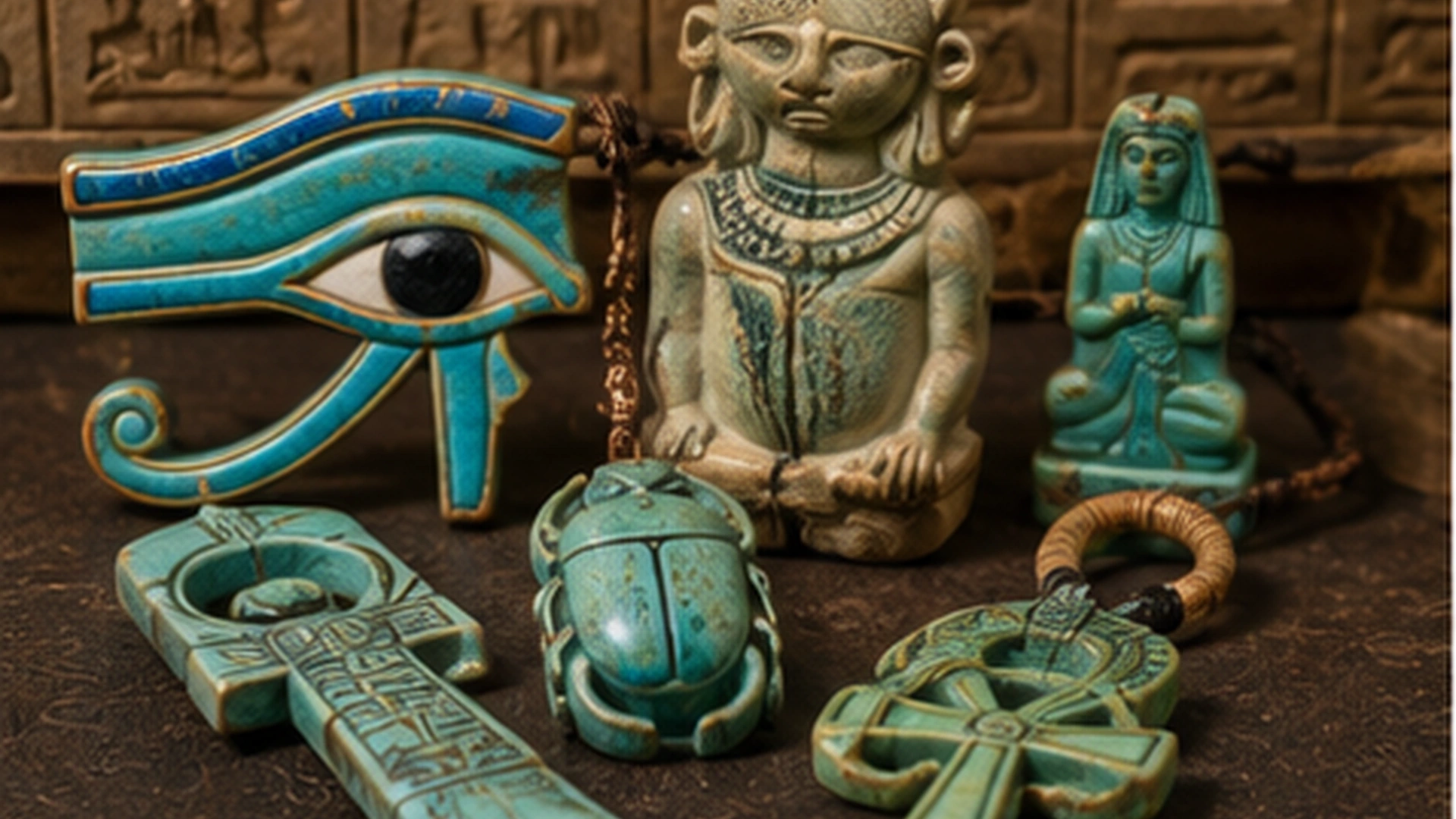
Amulets were worn by living people and placed with the dead. Their perceived effectiveness could depend on the combination of shape, material, colour, inscription, spoken words, and ritual actions.
Common examples included:
- Scarabs
- Wedjat eyes
- Images of deities
- Knots
- Animal forms
- Symbols for life, protection, stability, and rebirth
- Miniature body parts
- Heart amulets
The wedjat eye represented the restored eye of Horus and was associated with healing, regeneration, and renewed wholeness. It was used for both living people and the deceased.
The sa amulet represented the Egyptian word for protection. The Metropolitan Museum records that such amulets were intended to extend protection to a wearer in life or death.
Amulets depicting Taweret were particularly connected with the protection of women during pregnancy and childbirth. Taweret combined features of powerful animals, including the hippopotamus, lion, and crocodile.
These objects should not be described simply as “African lucky charms.”
Ancient Egyptian religious practice changed over thousands of years and involved temples, priesthoods, household devotion, royal ideology, funerary belief, and relationships with specific deities.
Talismans in Ancient Mesopotamia
People in ancient Mesopotamia used amulets, incantations, figurines, stones, and ritual objects as part of systems that combined religion, medicine, divination, and protection.
The modern distinction between magic, religion, medicine, and science did not operate in the same way in first-millennium BCE Mesopotamia. Specialist practitioners worked with incantations, medicinal substances, omens, and protective objects as connected forms of knowledge.
Some amulets portrayed beings considered dangerous.
Images of the demon Lamashtu, for example, could be used within rituals intended to protect pregnant women and infants from the harm associated with her. Pendants showing Pazuzu were also used for protective purposes.
This may appear contradictory: why carry the image of something feared?
Within that system, representing, naming, confronting, or controlling a harmful being could form part of the method used to defend against it.
The image was not necessarily an act of admiration.
Byzantine Gemstones and Protective Images
In Byzantine society, engraved stones and pendants could combine Christian imagery, inherited Mediterranean symbolism, medical beliefs, and protective intentions.
The Metropolitan Museum describes hematite and agate amulets associated with hoped-for relief from bleeding, miscarriage, illness, spiritual danger, and the evil eye. Some displayed Christ, archangels, biblical figures, or military saints such as Theodore.
Material itself could matter.
Hematite’s colour and association with blood influenced its use for conditions involving bleeding. An image of a biblical healing could strengthen the wearer’s hope that the event represented on the stone would also be reflected in their own life.
However, Christian institutions have often distinguished devotional objects from objects treated as independently magical.
Catholic teaching, for example, presents sacramentals as practices or blessed objects that direct believers toward prayer and cooperation with grace, while warning against superstition or treating religious acts as automatic mechanisms.
A Christian medal, cross, rosary, or relic should therefore not automatically be labelled a talisman without considering how its community understands it.
Qur’anic Amulets in West Africa
Across parts of West Africa, written Qur’anic passages have been placed in leather, cloth, metal, or other cases and carried on the body.
The Smithsonian National Museum of African Art identifies paper and cloth amulets known as hatumere in parts of West Africa. They are inscribed with Qur’anic Arabic and traditionally produced by religious specialists or healers for particular clients.
Historical examples include Wolof leather amulets containing written Qur’anic material and cases worn as pendants or attached to clothing.
Such objects may be associated with:
- Protection
- Health
- Travel
- Personal well-being
- Courage
- Success in an undertaking
- Religious remembrance
- The authority of sacred writing
The terms gris-gris, hatumere, safi, and related names should not be treated as exact synonyms across all West African communities.
Language, religious education, materials, ethnic identity, trade networks, and local history shape how each object is understood.
Muslim Religious Disagreement
Muslim scholars and institutions do not all give the same ruling on wearable Qur’anic amulets.
Some authorities have permitted cases containing only Qur’anic verses or recognized prayers under particular conditions. Other authorities reject all amulets or warn that reliance on an object may conflict with proper trust in Allah.
This disagreement is important.
A museum may accurately document that Muslim communities used an object without deciding whether every Muslim theologian considers that practice permissible.
Writers should avoid saying either:
“Islam teaches Muslims to wear talismans.”
or:
“No Muslim has ever carried an amulet.”
Both claims erase historical and theological diversity.
Somali Hersi and East African Amulet Cases
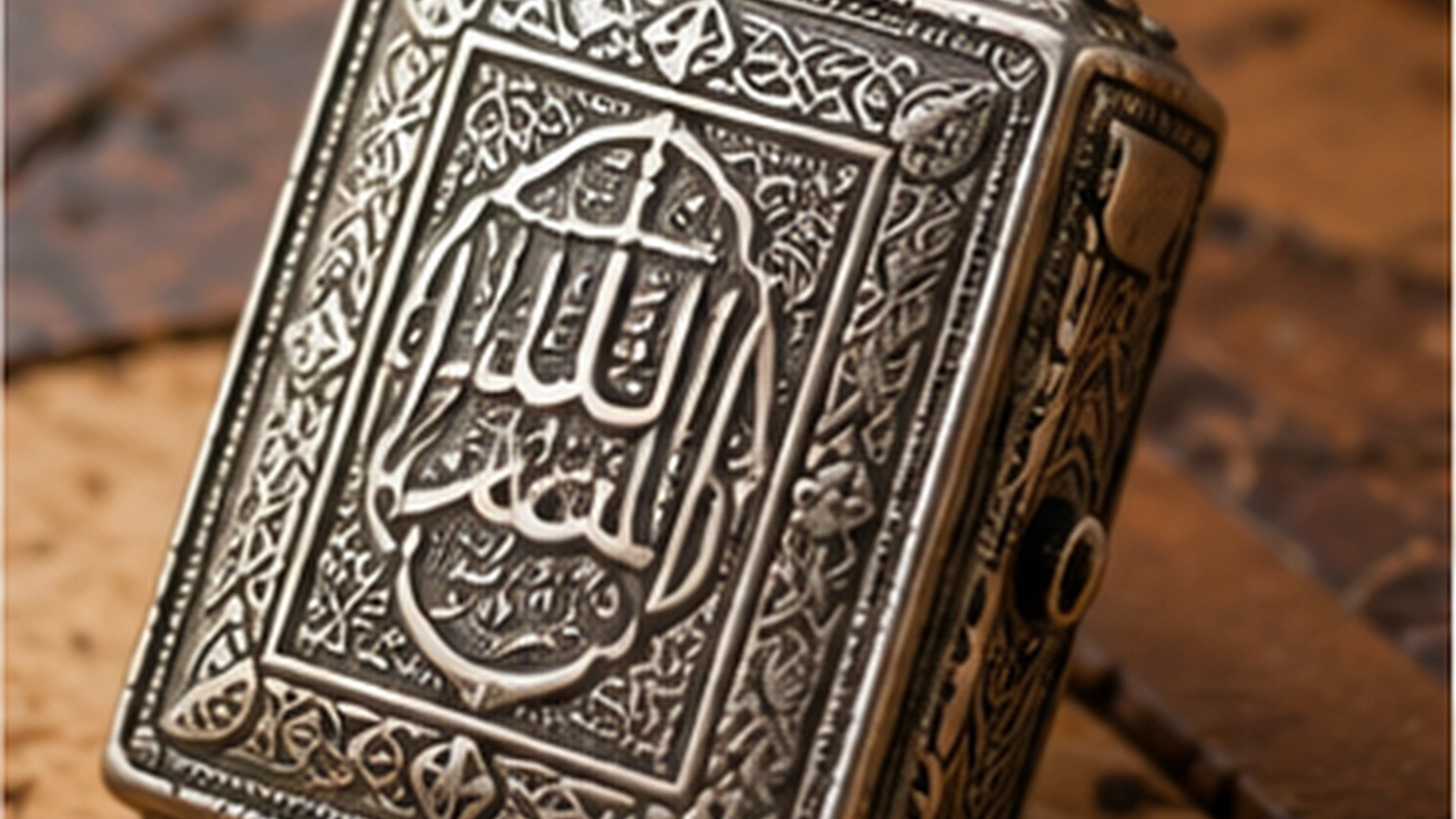
The Smithsonian National Museum of African Art documents Somali amulet containers called hersi, a term translated as “protection.”
These containers traditionally held tightly wrapped Qur’anic verses written by specialists. Silver was a preferred material, and both men and women could wear such objects close to the body for health and well-being. In ceremonial contexts, amulet jewellery could also communicate social status.
This example shows that a talisman can carry several meanings simultaneously:
- Religious text
- Protection
- Personal adornment
- Skilled metalwork
- Status
- Gendered dress
- Community identity
The protective case should not be opened casually if the tradition treats the contents as sacred or private.
A museum photograph of an empty or opened object does not automatically authorize others to reproduce, inspect, or commercialize similar sacred texts.
Ethiopian Amulet Traditions
In Ethiopia, leather amulet cases and written protective objects have historically been used among different communities, including Christians, Muslims, and practitioners of local religious traditions.
Smarthistory notes that square leather amulet cases have been worn among Argobba, Oromo, Amhara, and Tigrayan communities and that they are frequently connected with protection from the evil eye.
This does not mean all Ethiopians carry amulets.
Nor does it mean that Christian, Muslim, and Indigenous interpretations are identical.
An Ethiopian Christian healing scroll, a Muslim Qur’anic case, and an ordinary leather necklace may look superficially similar while carrying different texts, authorities, and religious meanings.
The term buda, associated in some Ethiopian contexts with the harmful evil eye, also requires careful use. It should not be used to accuse real people, ethnic groups, artisans, or marginalized communities of possessing harmful supernatural powers.
Historical belief should be documented without encouraging present-day stigma.
Asante Safi and Courtly Display
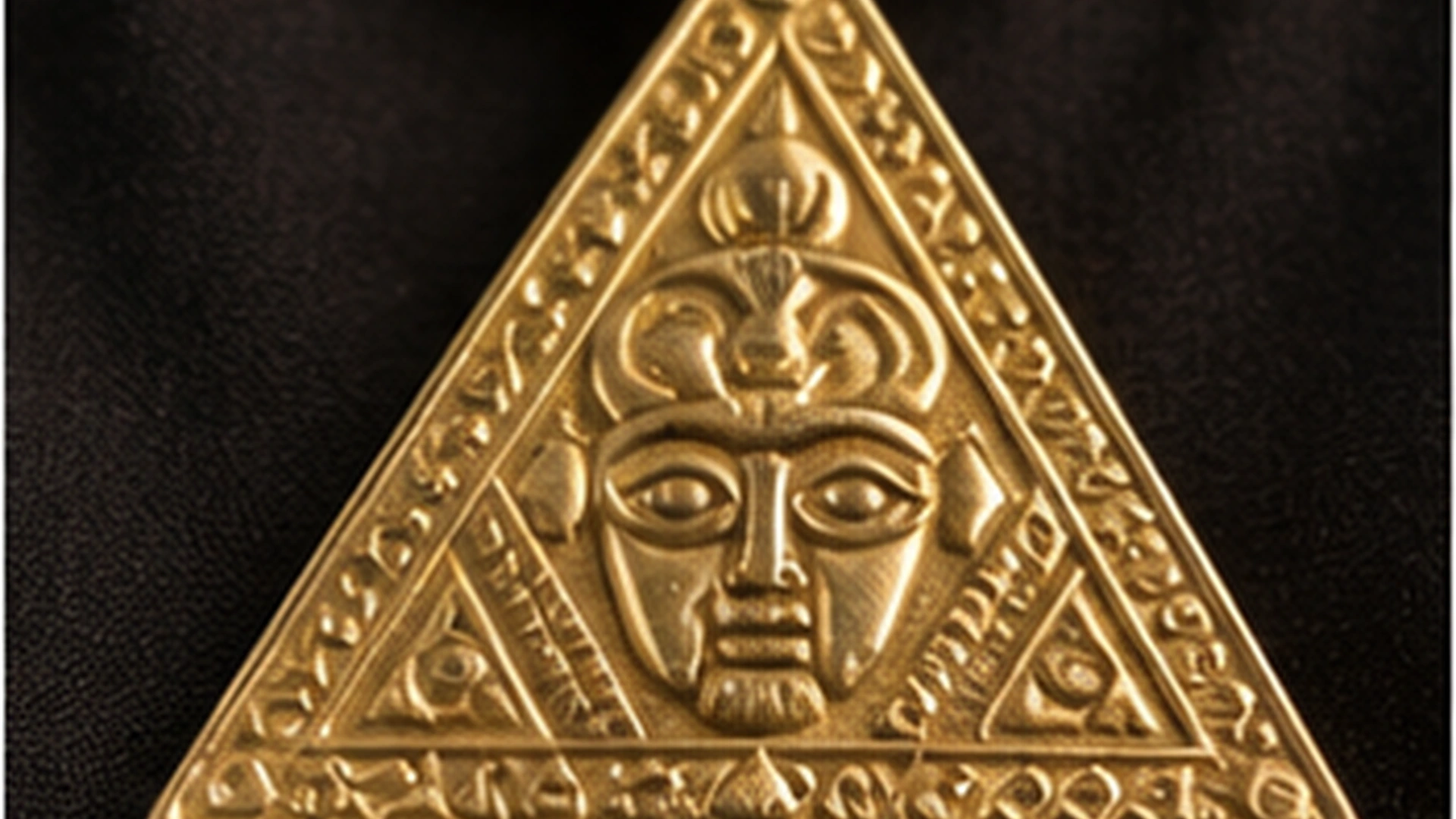
The British Museum identifies gold triangular amulet cases called safi within Asante material culture.
Such cases could be worn as part of royal or elite regalia and may have held protective substances or written material. Their gold surfaces, craftsmanship, and placement also communicated status and political authority.
An Asante safi should not be described merely as a good-luck necklace.
Its meaning may involve:
- Court hierarchy
- Royal display
- Goldworking traditions
- Protection
- Islamic influence through written amulets
- Political identity
- Historical trade and cultural exchange
Many Asante royal objects in European museums also have complex acquisition histories connected with colonial warfare and the removal of regalia.
That history should be acknowledged when museums, publishers, or commercial sellers reproduce such objects.
Jewish Written Amulets
Jewish communities in different regions have historically used written amulets in particular circumstances.
Smarthistory documents amulets from Jewish communities in Kurdistan that were placed on the walls of birth rooms or infant spaces. These examples contained Hebrew, Aramaic, and Ladino writing and were intended to surround the mother and child with protection.
Other Jewish manuscripts preserved in the Cairo Geniza include protective writings intended to be rolled and worn in amulet cases, including texts directed against specific dangers such as scorpions.
Jewish religious attitudes toward amulets have varied over time and among communities.
A written amulet is also not the same as a mezuzah, which is connected with a specific Torah commandment and follows defined scribal and placement requirements.
Using all Jewish sacred texts as “talismans” would erase important religious distinctions.
African Diaspora Talismans and Balangandãs
In Brazil, the penca de balangandãs developed within the history of Africans and African-descended communities.
These objects brought multiple small pendants or charms together on a holder. Individual elements could express protection, faith, status, fertility, memory, work, or personal circumstances.
Balangandãs illustrate how talismanic traditions change through:
- Enslavement
- Forced migration
- Religious mixing
- Urban life
- New materials
- African cultural survival
- Catholic influence
- Personal creativity
They should not be presented as unchanged copies of one African tradition.
They are part of an Afro-Brazilian history formed under specific social and political conditions.
Japanese Omamori
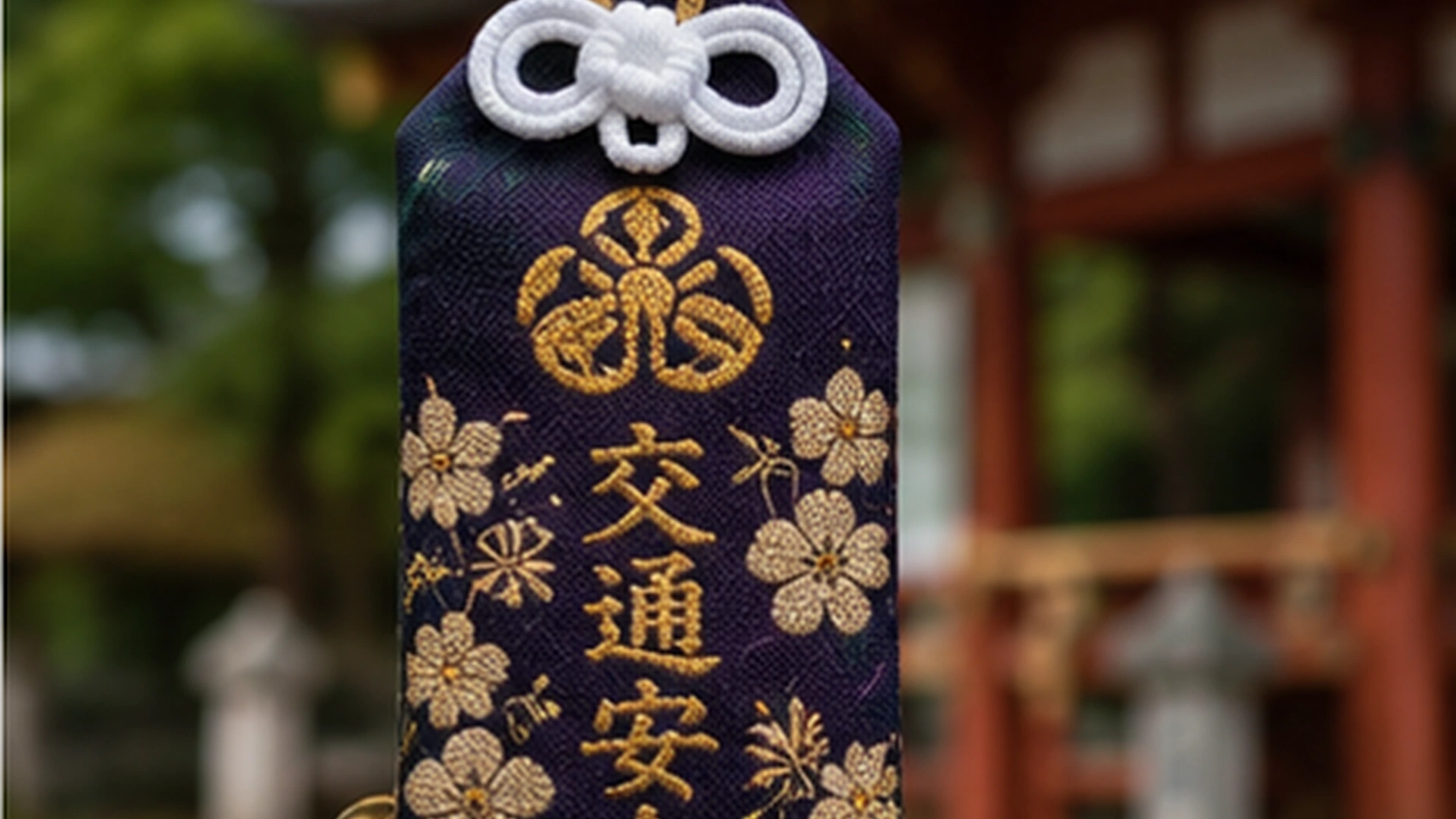
In Japan, omamori are protective objects obtained from Buddhist temples and Shinto shrines.
They commonly consist of a decorated fabric case containing a sacred or written element and may be associated with travel safety, education, health, family safety, business, relationships, or protection from misfortune.
Omamori are typically kept closed and treated respectfully.
People may attach them to bags, keep them in vehicles, carry them during examinations, or place them near a family member.
This example shows that talismanic practices continue within technologically modern societies.
Carrying a protective object is not evidence that a community is primitive, uneducated, or opposed to science.
Why Talismans Were Connected With Childbirth
Pregnancy, childbirth, and infancy were historically among the most dangerous periods of life.
Before modern obstetric care, antibiotics, blood transfusion, neonatal medicine, and emergency surgery, families faced high levels of uncertainty.
Protective objects associated with childbirth appear in several traditions:
- Taweret amulets in ancient Egypt
- Mesopotamian objects directed against Lamashtu
- Jewish birth-room amulets
- Byzantine gemstones associated with bleeding or miscarriage
- Family-specific written prayers or cases in African communities
These objects provided a way for relatives to act when practical options were limited.
Today, spiritual support may remain meaningful, but it must not replace prenatal care, skilled birth attendance, emergency transport, or medical treatment.
Why Travellers and Soldiers Carried Talismans
Travel historically exposed people to:
- Robbery
- Shipwreck
- Animal attacks
- Disease
- War
- Getting lost
- Extreme weather
- Unfamiliar communities
- Separation from family
A portable object could represent divine care, family blessing, courage, or the hope of returning home.
Soldiers might also carry objects connected with religious protection, saints, ancestors, commanders, national identity, or loved ones.
The emotional purpose may have been as important as the claimed supernatural effect.
Holding a familiar object can remind a frightened person why they are trying to survive.
Materials Were Part of the Meaning
Talismans were not made from random substances.
Materials could be selected because of:
- Colour
- Scarcity
- Durability
- Religious association
- Cost
- Sound
- Texture
- Place of origin
- Symbolic resemblance
- Medical belief
Ancient Egyptian faience, turquoise colours, carnelian, gold, silver, hematite, leather, shells, paper, cloth, and wood could all communicate different meanings.
The Metropolitan Museum notes that Egyptian amulets gained power from combinations of shape, colour, material, inscription, and ritual preparation rather than from shape alone.
This is why copying the outline of an object does not necessarily reproduce its traditional significance.
Were Talismans Only Used by Poor or Uneducated People?
No.
Protective objects were used by:
- Kings
- Priests
- Soldiers
- Merchants
- Parents
- Children
- Scholars
- Artisans
- Nobles
- Travellers
- Rural communities
- Urban families
Byzantine intellectuals wrote about the supposed properties of stones, ancient Egyptian elites were buried with amulets, and Asante gold amulet cases formed part of courtly regalia.
The idea that talismans belong only to “superstitious” or “primitive” people reflects outdated hierarchies.
People may participate in advanced medicine, formal education, commerce, and technology while also preserving religious or family objects.
Emotional Reassurance and Cultural Meaning
A talisman can matter even when a person does not believe it physically changes external events.
It may provide:
- Comfort
- Focus
- Familiarity
- Confidence
- Continuity
- A reminder to pray
- Connection with family
- A sense of belonging
- A way to honour someone who died
This does not scientifically prove that the object prevents accidents or disease.
It shows that objects can carry emotional and social meaning beyond their material composition.
A necklace inherited from a grandmother may be valuable because of memory, even when its current owner does not share every belief associated with it.
Talismans, Medicine, and Healing Claims
Historical talismans frequently addressed illness.
This is understandable because many societies lacked effective treatments for infection, trauma, blood loss, chronic pain, and complications of childbirth.
However, a historical healing belief is not the same as scientific evidence.
A talisman should never be marketed as a guaranteed treatment for:
- Cancer
- Malaria
- HIV
- Infertility
- Mental illness
- Epilepsy
- Diabetes
- Pregnancy complications
- Infection
- Poisoning
- Chronic pain
People may combine prayer or culturally meaningful objects with medical care, but the object should not replace diagnosis, medication, surgery, therapy, vaccination, or emergency assistance.
A seller who guarantees healing or demands large payments for secret protection may be exploiting fear.
Common Misconceptions
“Every Talisman Is an Object of Worship”
False.
People may carry an object as a prayer reminder, protective symbol, family heirloom, sacred-text case, or sign of identity without worshipping the object itself.
“All African Talismans Are the Same”
False.
An ancient Egyptian scarab, an Asante safi, a Somali hersi, an Ethiopian leather case, and a Wolof Qur’anic amulet belong to different communities and histories.
“Every Shell, Bead, or Pendant Is a Talisman”
False.
An object may be decorative, economic, political, commemorative, or ordinary.
Its meaning must be established from evidence.
“Talismans Always Attract Good Luck”
False.
Some are intended to ward away a specific danger rather than attract general fortune.
“Religions Agree About Talismans”
False.
Religious communities often debate whether protective objects are acceptable, superstitious, devotional, cultural, or prohibited.
“Ancient Talismans Prove Supernatural Effects”
False.
Archaeological survival proves that people made and valued the objects. It does not scientifically prove that the objects caused the results attributed to them.
“Anyone Can Copy a Sacred Talisman”
False.
Some objects contain restricted writing, consecrated substances, family knowledge, or sacred materials.
“A Talisman Guarantees Safety”
False.
Protective objects do not replace seat belts, medical care, legal assistance, safe housing, security systems, or emergency planning.
Ethical Collecting and Cultural Ownership
Talismans in museums and private collections often raise difficult ethical questions.
Objects may have been:
- Excavated legally
- Purchased from owners
- Donated
- Collected during colonial rule
- Removed during warfare
- Taken from graves
- Seized from palaces
- Sold under economic pressure
- Acquired without proper consent
Before buying an old amulet or sacred object, consider:
- Provenance
- Export laws
- Community ownership
- Grave-looting concerns
- Whether it contains human remains
- Whether it was stolen
- Whether its contents are restricted
- Whether it is still ritually active
- Whether selling it violates community norms
A sacred object is not automatically an ethical souvenir.
Commercial demand can encourage theft from shrines, graves, archaeological sites, and families.
Photographing and Publishing Talismans
Permission may be required before photographing:
- Written prayers
- Healing scrolls
- Qur’anic contents
- Objects worn beneath clothing
- Initiatory materials
- Burial amulets
- Family-owned objects
- Consecrated cases
- Private shrine items
A museum displaying an object publicly does not necessarily mean every community considers all details suitable for unrestricted reproduction.
Bloggers should identify the source, historical period, community, and known purpose rather than writing speculative captions such as:
“Powerful African protection charm.”
That wording is vague, sensational, and commercially misleading.
Ethical and Safety Boundaries
Talismans should never be used to justify:
- Withholding medical care
- Threatening someone with a curse
- Accusing a person of witchcraft
- Financial exploitation
- Child abuse
- Forced wearing of an object
- Secret substances placed on the skin
- Poisonous herbs
- Dangerous ingestion
- Sexual exploitation
- Control over another person
- Guaranteed wealth claims
- Guaranteed pregnancy claims
- Guaranteed legal victory
- Guaranteed business success
A person experiencing illness, violence, poisoning, severe anxiety, hallucinations, or immediate danger requires appropriate professional support.
Cultural respect does not require accepting abuse or false medical promises.
How to Study Talismans Respectfully
Use the Community’s Own Name
Use hersi, hatumere, safi, omamori, or another verified term where appropriate.
Identify the Period
An object made in ancient Egypt should not be presented as evidence of what modern Egyptians believe.
Identify the Religion
A Qur’anic amulet, Christian medal, Jewish birth-room text, and Indigenous protective object should not be grouped under vague language such as “tribal magic.”
Identify the Maker
Explain whether the object was made by a scribe, priest, jeweller, healer, shrine attendant, or ordinary family member.
Explain What Is Known and Unknown
Museum labels sometimes reflect limited records or outdated collector terminology.
Use phrases such as:
“The museum identifies this object as…”
“The original owner’s interpretation was not recorded…”
“Scholars disagree about…”
Avoid Guaranteed Claims
Describe what owners or communities believed without presenting the effect as scientifically proven.
Key Takeaways
- People carried talismans because protection and reassurance needed to travel with them.
- Talismans could address health, childbirth, travel, warfare, social status, identity, or spiritual concern.
- The words amulet, talisman, and charm often overlap.
- Ancient Egyptian amulets gained meaning from material, colour, image, inscription, and ritual preparation.
- Mesopotamian amulets could portray dangerous beings as part of protection against them.
- Byzantine gemstones combined Christian imagery, material belief, and hoped-for healing.
- West African hatumere and related cases commonly contained written Qur’anic material.
- Somali hersi could combine religious protection, jewellery, and social status.
- Ethiopian amulet traditions crossed ethnic and religious boundaries without becoming one uniform practice.
- Muslim authorities disagree about the permissibility of wearable amulets.
- Talismans may provide cultural and emotional meaning without scientifically guaranteeing an outcome.
- Sacred objects should not be copied, opened, sold, or photographed without regard for community boundaries.
- Talismans never replace medical care, practical safety, or legal assistance.
People Also Ask
Why did ancient people carry talismans?
They carried them for protection, health, travel, childbirth, courage, status, religious identity, and reassurance during uncertain situations.
What is the difference between a talisman and an amulet?
An amulet is often described as warding away harm, while a talisman may attract a desired benefit. In practice, the terms frequently overlap.
Are talismans always religious?
No. Some are religious, while others function as family heirlooms, cultural symbols, memorial objects, jewellery, or personal reminders.
Did African communities use talismans?
Yes, but in highly varied forms. Specific examples include ancient Egyptian amulets, West African Qur’anic cases, Somali hersi, Ethiopian leather amulets, and Asante safi.
Do talismans really work?
They may provide emotional, cultural, or religious meaning, but there is no guarantee that an object will prevent illness, accidents, financial loss, or other harm.
Frequently Asked Questions
1. Why have people carried talismans throughout history?
People carried them to seek protection, health, courage, safe travel, fertility, success, religious support, or connection with family and community.
2. What materials were talismans made from?
They were made from stone, metal, leather, paper, cloth, shells, beads, wood, bone, glass, faience, and other culturally meaningful materials.
Related Cultural Guides
For more context, continue with talismans versus amulets, rings through history, protective beads in African traditions and ancient Egyptian protective symbols.
Article Information
- Publisher
- Ancestral Temple
- Editor
- Ancestral Temple
- Last updated
- Jul 26, 2026
- Last reviewed
- Jul 26, 2026
- Content version
- ca22fc2f38
This educational article should be read as cultural and spiritual information, not as medical, legal, financial, or emergency advice.
Helpful Related Guidance
About the Author
 Ancestral Temple
Spiritual guide and practitioner with decades of experience in ancestral wisdom, rituals, and divine guidance.
Related Posts
View All






Comments
We'd love to hear your thoughts.
This is a strong foundation for a full topic about amulets, charms, sacred jewellery, and protection.
I appreciated the section on consent before photographing private or written talismans.
The article correctly emphasized that trust in a religious object should not replace medical treatment.
The image markers are positioned well for showing separate traditions without creating a mixed collage.
Thank you for warning against using the term buda to accuse real people.
The FAQ answers were clear, especially the one explaining that not all Muslims accept amulets.
The article did a good job separating historical African objects from vague ideas about tribal magic.
Could you write more about talismans carried by travellers and soldiers?
The section on materials explained why copying the shape alone does not reproduce the original meaning.
I liked the Japanese example because it showed that amulet traditions exist in modern societies too.
This article will connect well with content about sacred symbols and protective traditions.
The warning about healers who guarantee results or demand large sums was necessary.
I learned that some objects carried political authority as well as spiritual meaning.
The article was respectful and did not use frightening or sensational language.
Please write a future guide about the evil eye in different African communities.
The discussion of childbirth objects was historically interesting and medically responsible.
The section on religious disagreement prevented the article from making general claims about Islam.
I liked that the article explained why sacred cases should not be opened casually.
The comparison between Christian devotional medals and magical talismans was carefully handled.
Could you write about talismans and family heirlooms in African diaspora communities?
The hatumere section deserves a full article with more regional examples.
The article made it clear that a historical belief is not automatically scientific evidence.
I enjoyed the connection between portable protection and long-distance travel.
The section on emotional reassurance helped explain why people may value an object without expecting a miracle.
The ethical and safety boundaries were responsible and clear.
Please consider an article about protective jewellery worn by women in West Africa.
I appreciated the statement that educated and powerful people also used talismans historically.
The explanation of museum terminology was useful because labels can sometimes seem too definite.
The article avoided the usual stereotypes about African protective objects.
I liked the explanation that the sacred writing inside an amulet may be more important than the outer case.
Could you write more about how talismans were prepared by specialists?
The section about talismans during childbirth showed how uncertainty influenced these traditions.
The discussion of Qur’anic amulets respected both historical practice and theological disagreement.
Please write a separate article about Ethiopian healing scrolls and their visual traditions.
I appreciated that not every bead or shell was automatically described as sacred.
The warning about buying objects without proven ownership history was valuable.
I would like a detailed article about gris-gris traditions and the different meanings of that term.
The Asante safi section was interesting because it connected protection with royal status and goldworking.
Could you write a future article about protective objects used historically in Uganda?
The ancient Egyptian section explained why material, colour, and inscription all mattered.
I liked the point that portable objects allowed people to carry reminders of home and faith while travelling.
The section about disagreement among Muslim scholars was balanced and important.
Thank you for including Ethiopian traditions while making it clear that Christians and Muslims may interpret similar cases differently.
The distinction between amulets, talismans, charms, and devotional objects was very helpful.
I appreciated the explanation that talismans can hold family and cultural meaning without every wearer believing the same thing.