
Frankincense and Myrrh
Quick Summary
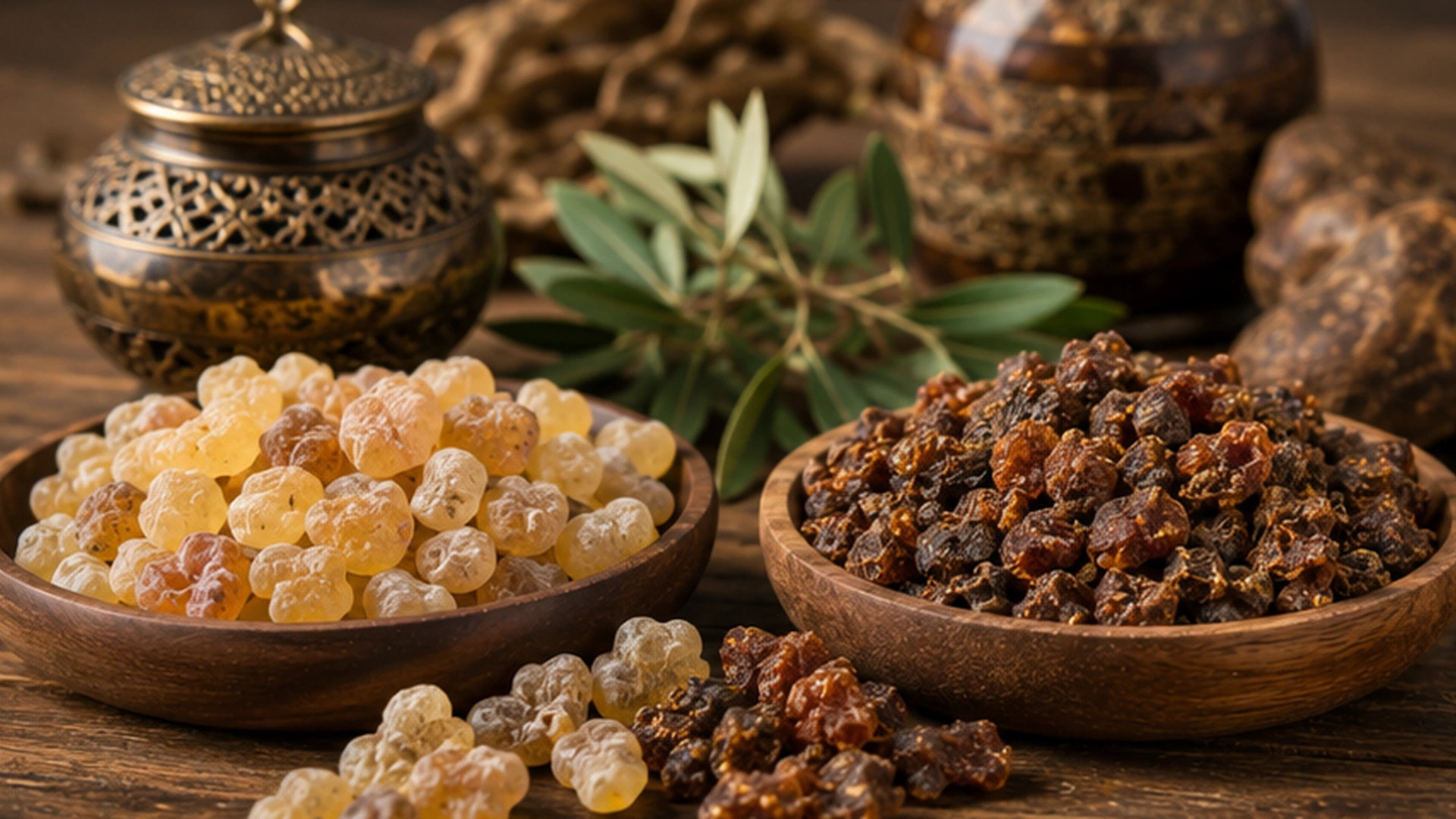
Frankincense and myrrh are aromatic tree resins with deep histories in the Horn of Africa, South Arabia, ancient trade, worship, perfumery, medicine, mourning, and hospitality. This guide explains their differences, meanings, safety considerations, and conservation challenges.
Frankincense and Myrrh
Frankincense and myrrh are often mentioned together, yet they are not the same substance.
Both are aromatic gum-resins collected from trees and shrubs in the Burseraceae family. Frankincense generally comes from species of Boswellia, while true myrrh is most closely associated with Commiphora myrrha and related Commiphora species. Boswellia species are native across parts of tropical Africa, the Arabian Peninsula, Madagascar, and India, while Commiphora myrrha is native from eastern and southeastern Ethiopia into northeastern Kenya and parts of the Arabian Peninsula. (Kew Gardens)
For thousands of years, these resins have travelled far beyond the dry landscapes where their source plants grow.
They have been used as:
Incense
Perfume ingredients
Offerings
Anointing materials
Funeral and burial aromatics
Household fragrance
Medicines in historical systems
Trade commodities
Symbols in religious storytelling
Their history connects African and Arabian producers with Egypt, the Mediterranean, the Levant, South Asia, and other regions linked by land and maritime trade.
However, popular writing often reduces them to the gifts of the Magi or describes them as mystical substances with guaranteed healing power. Their real history is broader, more complex, and closely connected with ecology, labour, trade, religion, and cultural authority.
Frankincense and myrrh are aromatic tree resins, not botanical herbs.
Frankincense is collected from Boswellia species; true myrrh is associated especially with Commiphora myrrha.
Important frankincense-producing landscapes occur in the Horn of Africa and southern Arabia.
Boswellia papyrifera grows from northeastern Nigeria toward Eritrea and northeastern Uganda, while Boswellia sacra is strongly associated with Oman and Yemen. (Kew Gardens)
Commiphora myrrha is native to dry regions from Ethiopia and Kenya into southern Arabia. (Kew Gardens)
The ancient Incense Route moved frankincense and myrrh for more than 2,000 kilometres toward Mediterranean markets. (UNESCO World Heritage Centre)
Ancient Egyptians used incense, myrrh, and scented oils in temple offerings and funerary contexts. (British Museum)
Hebrew and Christian scriptures mention frankincense in sacred incense, myrrh in anointing preparations, and both among the gifts presented to Jesus in Matthew. (Biblical texts)
Frankincense is commonly burned, while myrrh has also been especially valued in perfume, medicine, anointing, and burial traditions.
Different religious communities use aromatic resins in different ways; there is no single African, Christian, Jewish, Muslim, or traditional meaning.
Burning resin produces smoke and should be done with ventilation and fire safety.
Frankincense supplements and essential oils should not replace medical care.
Several Boswellia populations face poor regeneration, overharvesting, grazing pressure, land conversion, fire, and other ecological threats. (Recent conservation research)
Ethical sourcing should protect trees, harvesters, local land rights, cultural knowledge, and supply-chain transparency.
Clear Definition
Frankincense is an aromatic gum-resin obtained from Boswellia trees, while myrrh is an aromatic gum-resin obtained mainly from Commiphora species.
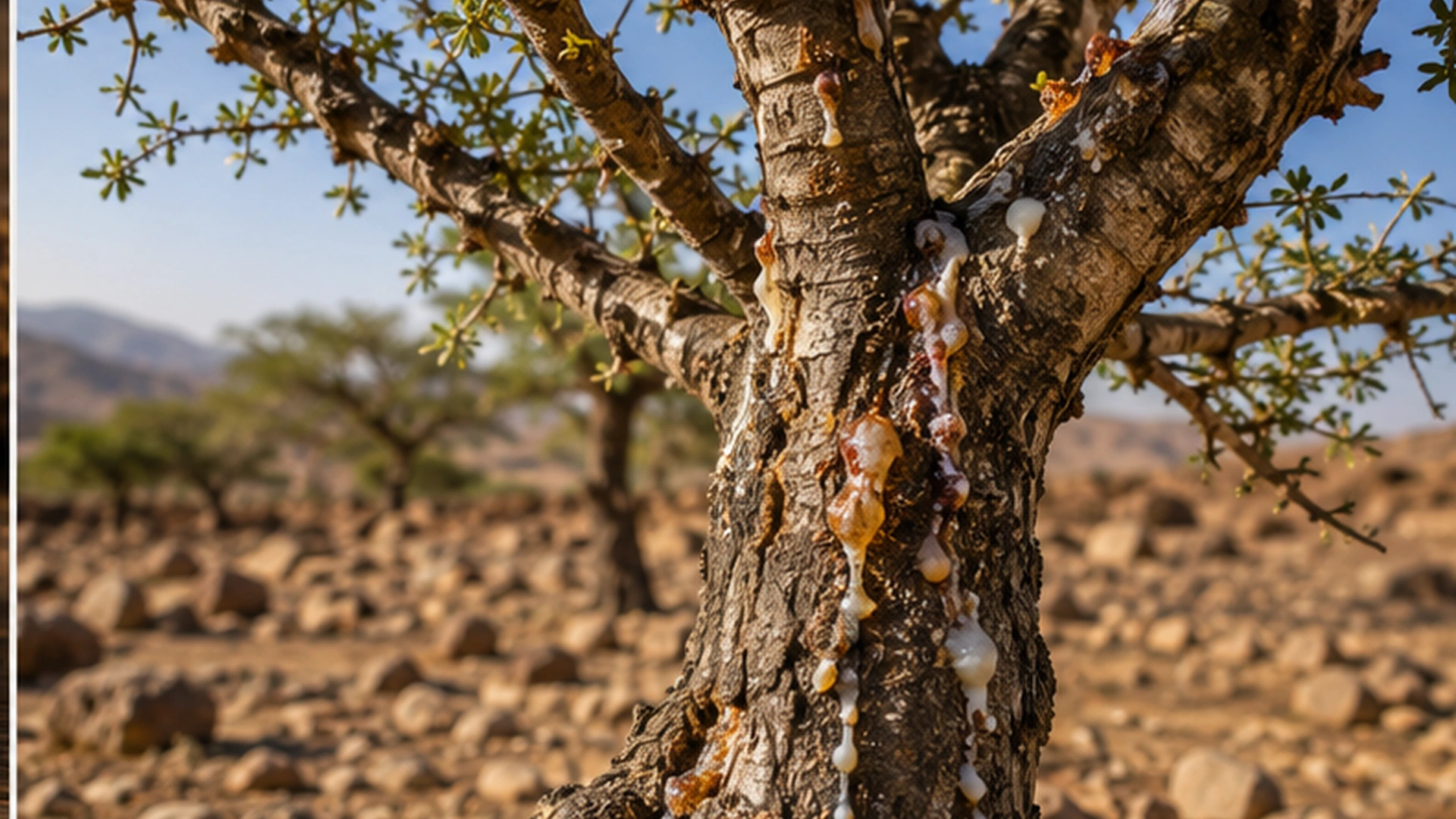
Both materials harden after flowing from cuts or natural injuries in the bark.
Plain-Language Meaning
Frankincense and myrrh are fragrant plant resins.
They are produced when certain dryland trees release sticky material that later hardens into small pieces sometimes called tears.
Frankincense usually has a fresher, citrus-like, pine-like, or balsamic aroma depending on the species and grade.
Myrrh is often darker, more bitter, earthy, warm, and medicinal in scent.
The exact appearance and aroma vary because several species, landscapes, harvest periods, storage methods, and trade grades are involved.
What Is Frankincense?
Frankincense is also known as olibanum.
It is collected from trees in the Boswellia genus. Kew records Boswellia as native across tropical Africa, Madagascar, the Arabian Peninsula, and India. The genus includes multiple resin-producing species rather than one universal frankincense tree. (Kew Gardens)
Important examples include:
Boswellia sacra in Oman and Yemen
Boswellia papyrifera across parts of northeastern and eastern Africa
Boswellia frereana in Somalia
Boswellia rivae in Ethiopia, Somalia, and northeastern Kenya
Boswellia serrata in South Asia
The resin differs by species.
This means a package labelled simply “frankincense” may not tell the buyer:
Which species produced it
Where it was harvested
Whether it was wild harvested or cultivated
How many times the tree was tapped
Whether harvesters were fairly compensated
Whether the source population is regenerating
What Is Myrrh?
Myrrh is most strongly associated with Commiphora myrrha, a dryland shrub or small tree native from eastern and southeastern Ethiopia into northeastern Kenya and parts of southern Arabia. The wider Commiphora genus contains many species, several of which produce fragrant or commercially valuable gum-resins. (Kew Gardens)
Myrrh pieces are often darker and less translucent than many common frankincense grades.
Historically, myrrh has been used in:
Perfume
Anointing oils
Burial preparations
Incense mixtures
Oral and topical remedies in traditional medical systems
Household fragrance
Trade and gift exchange
Commercial names can be confusing. Products called “myrrh,” “African myrrh,” “sweet myrrh,” or “bdellium” may come from different Commiphora species.
Accurate species identification matters for historical interpretation, quality, conservation, and safety.
Frankincense and Myrrh Compared
Feature
Frankincense
Myrrh
Main botanical genus
Boswellia
Commiphora
Plant family
Burseraceae
Burseraceae
Typical material
Hardened gum-resin
Hardened gum-resin
Common appearance
Pale cream, yellow, amber, greenish, or brown tears
Amber-brown, reddish-brown, or dark irregular pieces
Common aroma
Fresh, citrus-like, pine-like, balsamic, or woody
Earthy, bitter, warm, smoky, medicinal, or balsamic
Well-known historical uses
Incense, worship, fragrance, medicine, trade
Perfume, anointing, burial, medicine, incense, trade
Key warning
Species and sustainability may be unclear
Commercial naming and species identity may be unclear
These descriptions are general.
Colour and fragrance alone cannot reliably confirm species or authenticity.
How Resin Is Produced
Frankincense and myrrh trees survive in dry, rocky, and seasonally harsh environments.
Resin is part of the plant’s response to injury. Harvesters may make controlled cuts in the bark, allowing resin to emerge and harden before collection.
The process can involve:
1. Selecting a mature tree
2. Making a shallow incision
Article Information
- Publisher
- Ancestral Temple
- Editor
- Ancestral Temple
- Last updated
- Jul 26, 2026
- Last reviewed
- Jul 26, 2026
- Content version
- 1b71e5182d
This educational article should be read as cultural and spiritual information, not as medical, legal, financial, or emergency advice.
Helpful Related Guidance
Explore This Topic
Frankincense Vs Myrrh · Ancestors
Related Topic Cluster
Herbs & Rituals
About the Author
 Ancestral Temple
Spiritual guide and practitioner with decades of experience in ancestral wisdom, rituals, and divine guidance.
Related Posts
View All
Leave a Comment
We'd love to hear your thoughts.
I appreciated the clear explanation that frankincense and myrrh come from different plant genera.