
History of Protective Jewelry
Cornerstone Content
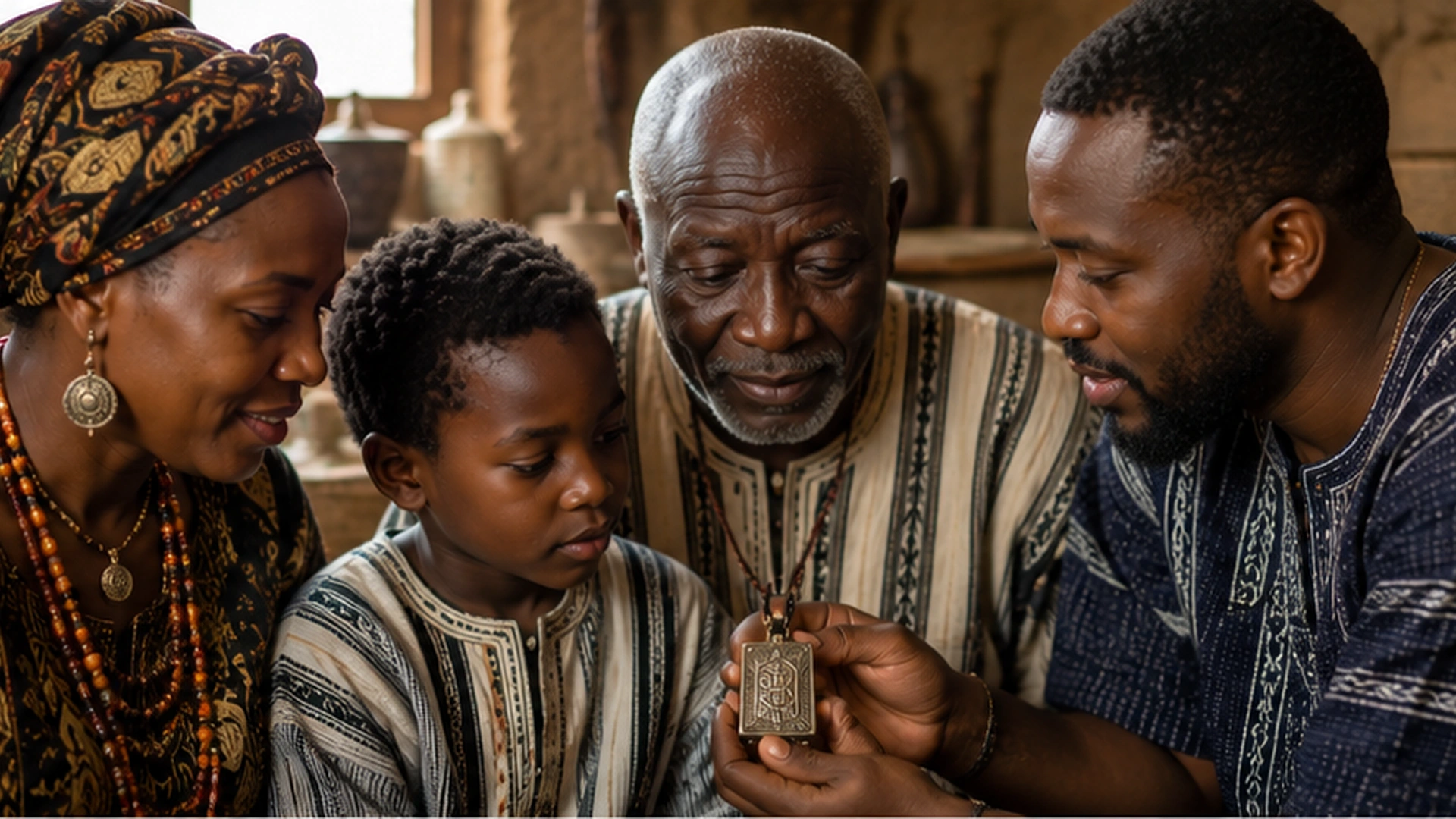
Quick Summary
Protective jewelry has combined adornment with prayer, identity, status, family memory, and hopes for safety. This guide explores ancient Egyptian amulets, Byzantine gemstones, Fatimid rings, Somali hersi, West African Qur’anic cases, Asante safi, Ethiopian necklaces, and modern inherited symbols.
History of Protective Jewelry explains the meaning, background and cultural context of history of protective jewelry in clear educational language. The article answers the main topic near the beginning, preserves the original examples and highlights important distinctions for respectful understanding.
Protective jewelry has accompanied people through travel, childbirth, warfare, illness, migration, marriage, religious conversion, and everyday uncertainty.
A necklace could hold a written prayer. A ring could carry a sacred inscription. A bracelet might include a small case prepared by a religious specialist. A gemstone could depict a healing story, while an inherited pendant could remind its wearer of family members who survived hardship.
Such objects were rarely only decorative.
They could communicate several meanings at once:
- Protection
- Religious identity
- Family belonging
- Social rank
- Wealth
- Gender or marital status
- Political authority
- Healing hope
- Memory
- Skilled craftsmanship
However, not every necklace, ring, bead, shell, or pendant is protective jewelry.
An object’s purpose must be established from reliable evidence about its community, owner, maker, inscription, material, and historical setting. A museum label identifying one amulet does not prove that every visually similar object had the same meaning.
Protective jewelry must also be discussed carefully. Archaeological evidence can show that people made and valued an object, but it cannot scientifically prove that the object prevented illness, accidents, infertility, conflict, or other harm.
Key Points
- Protective jewelry combines bodily adornment with hopes for safety, health, blessing, strength, or spiritual support.
- The terms amulet, talisman, charm, devotional object, and protective jewelry overlap but are not always identical.
- Ancient Egyptian amulets gained meaning from their form, material, colour, inscription, and ritual preparation.
- Seals and beads in the ancient Near East could serve both administrative and protective functions.
- Byzantine gemstone pendants sometimes combined Christian imagery with beliefs about healing materials.
- Fatimid jewelry could display wealth while also using inscriptions for talismanic protection.
- Somali hersi and related armlets held Qur’anic verses and could communicate protection, craftsmanship, and status.
- West African hatumere were written for particular clients and placed in wearable cases.
- Asante safi incorporated Islamic written traditions into gold courtly adornment.
- Ethiopian amuletic necklaces could combine prayer cases, silver pendants, sound, status, and Christian identity.
- Religious authorities may distinguish devotional jewelry from objects treated as independently magical.
- Protective jewelry does not replace medicine, security, legal assistance, or other practical safeguards.
Clear Definition
Protective jewelry is body-worn adornment believed within a particular community to protect, bless, strengthen, heal, identify, or spiritually support the wearer.
Plain-Language Meaning
Protective jewelry is something worn on the body because it represents more than beauty.
The wearer may believe:
“This prayer stays close to me.”
“This symbol represents protection.”
“This belonged to my grandmother.”
“This reminds me of my faith.”
“This was prepared for my journey.”
“This connects me with my family or community.”
Its importance may come from the object itself, the words inside it, the person who prepared it, the place where it was obtained, or the family history attached to it.
Why Jewelry Became a Powerful Form of Protection
Jewelry Stays Close to the Body
A shrine, sacred river, church, mosque, temple, or family altar remains in one location.
Jewelry travels with the wearer.
It can accompany a person into a marketplace, onto a trade route, into battle, during pregnancy, across a border, or through ordinary work.
That portability made jewelry especially suitable for people seeking continuous remembrance or protection.
Jewelry Can Be Visible or Hidden
Some protective objects are displayed publicly as signs of rank, religion, courage, or family identity.
Others are hidden beneath clothing.
A concealed pendant may protect private writing, avoid unwanted attention, or preserve knowledge that is not intended for public viewing.
The difference between visible and hidden jewelry can be socially important.
Jewelry Touches the Skin
Contact with the body may be part of the object’s perceived effectiveness.
A necklace may rest over the chest. An armlet may be tied close to the skin. A ring remains on the hand during work and prayer.
In some historical traditions, contact with a specific stone, metal, relic, or written object was considered beneficial.
Jewelry Can Contain Sacred Material
Hollow pendants, rings, lockets, armlets, and cases can hold:
- Scripture
- Prayers
- Sacred names
- Perfumed thread
- Small relics
- Herbs
- Written formulas
- Consecrated substances
- Family keepsakes
The container may be valuable, but the hidden contents may carry the central religious meaning.
Jewelry Communicates Social Position
Gold, silver, imported beads, skilled filigree, and elaborate metalwork can display wealth or office.
Protective meaning and status often overlap.
A ruler’s gold amulet case and an ordinary person’s leather pouch may contain related forms of writing while communicating very different positions within society.
Protective Jewelry, Amulets, and Talismans
Modern writers sometimes define these terms narrowly:
- An amulet wards away harm.
- A talisman attracts a desired benefit.
- A charm is a small object associated with luck or protection.
- A devotional object supports prayer or religious remembrance.
- Protective jewelry is any protective object designed to be worn.
Historical communities did not always use these English categories.
The Metropolitan Museum of Art defines an amulet broadly as an object believed to possess beneficial properties transferable to its owner. The museum also explains that Egyptian examples drew meaning from several combined elements rather than from shape alone.
For cultural accuracy, the community’s own name is often better than a generic label.
Examples include:
- Hersi in Somali contexts
- Hatumere in parts of West Africa
- Safi in Asante and related contexts
- Omamori in Japanese shrine and temple traditions
Early Protective Adornment
The historical boundary between jewelry, seals, administrative tools, and protective objects was often flexible.
In the ancient Near East, cylinder and stamp seals could identify individuals, authorize transactions, and be worn on the body. A Metropolitan Museum educational publication notes that some seals were also understood as apotropaic—intended to avert harm—and could be worn as jewelry or attached to clothing.
This demonstrates an important principle:
An object could be practical and protective at the same time.
A seal might confirm a person’s identity in official life while also carrying images or materials associated with divine care.
Ancient Egyptian Protective Jewelry
Ancient Egypt provides some of the best-preserved evidence for protective adornment.
Amulets were worn by living people and placed with the deceased. Their perceived effectiveness could depend on the combination of form, material, colour, inscription, spoken words, and ritual preparation.
Scarabs
Scarab-shaped amulets were connected with ideas of becoming, transformation, renewal, and rebirth.
Some were worn as pendants or incorporated into rings. Others functioned as seals or funerary objects.
A scarab should not automatically be described as a generic good-luck charm. Its meaning depended on period, inscription, owner, and use.
The Wedjat Eye
The wedjat eye represented the restored eye of Horus and was associated with healing, regeneration, wholeness, and protection.
It appeared in pendants, bracelets, bead arrangements, and funerary assemblages.
The symbol’s meaning arose from Egyptian religious narratives rather than from a universal belief that eye-shaped jewelry blocks all harm.
Sa Amulets
The sa sign represented protection and could be made into a pendant or incorporated into jewelry.
A surviving electrum example in the British Museum may have formed part of a bracelet clasp, showing how protective symbols could be integrated into a larger wearable design.
Taweret and Childbirth
Taweret, represented with features including those of a hippopotamus, was associated particularly with the protection of women and children.
The Metropolitan Museum explains that the observed protectiveness of female hippopotamuses may have contributed to the goddess’s maternal symbolism.
Jewelry depicting Taweret was therefore not merely ornamental. It could express the fears and hopes surrounding pregnancy, birth, and infancy.
Materials and Colour
Ancient Egyptian materials carried symbolic associations.
Silver was connected with the moon, ritual purity, and the bones of the gods, while faience’s bright surface was associated with light and rebirth.
This means that copying an amulet’s outline in a different material does not necessarily reproduce its historical meaning.
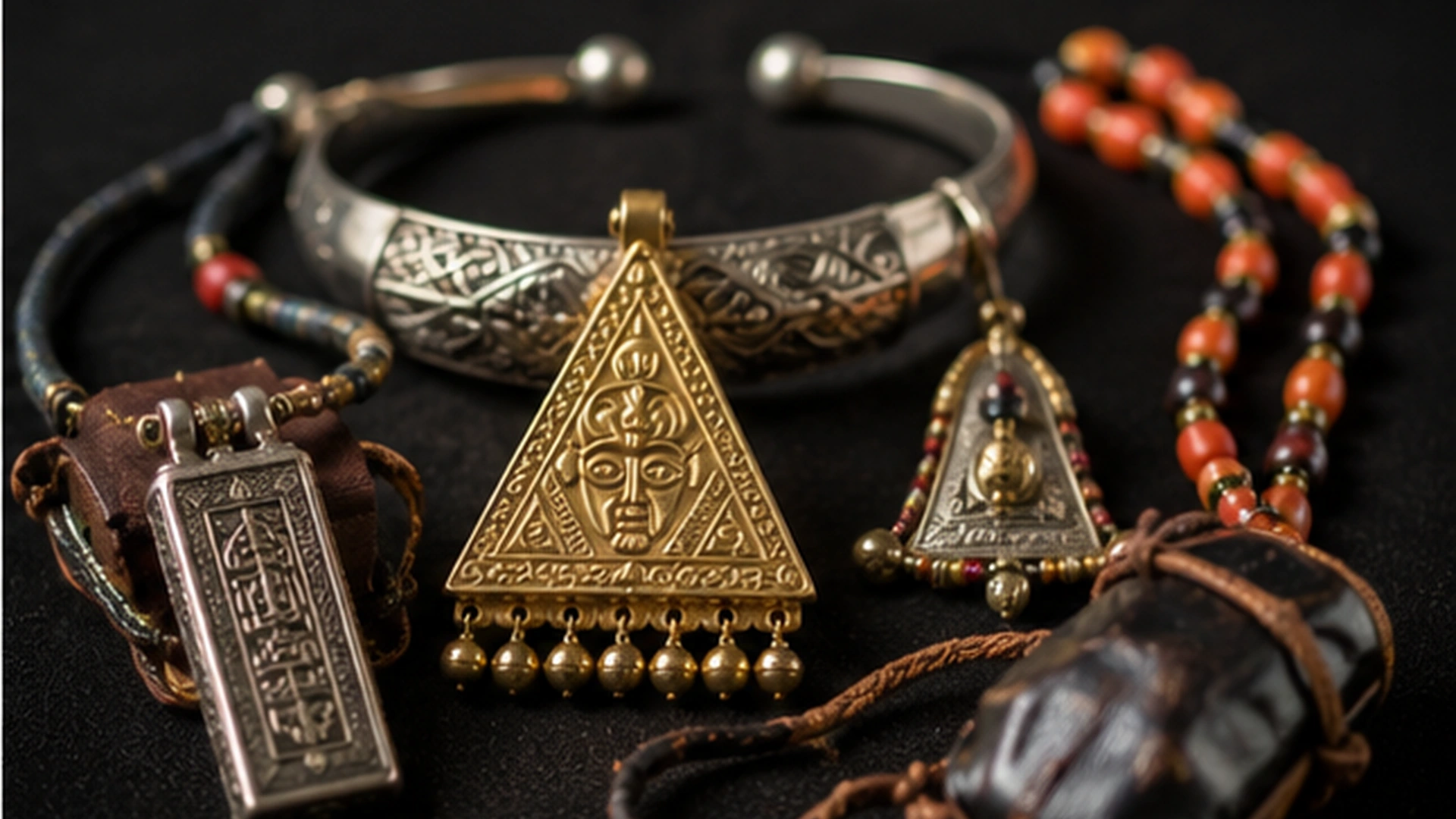
Byzantine Gemstones and Christian Protective Pendants
In Byzantine society, protective jewelry could combine Christian imagery, inherited Mediterranean symbolism, medical beliefs, and the perceived properties of gemstones.
The Metropolitan Museum records pendants and engraved stones showing Christ, archangels, prophets, and military saints. Some were intended to protect against spiritual or physical danger, while others addressed bleeding, miscarriage, illness, or the evil eye.
A hematite amulet depicting the biblical woman healed after touching Christ’s robe connected three elements:
- A healing narrative
- The wearer’s faith
- A material believed to have a relationship with blood
The gemstone did not function only as an illustration.
Its material, image, inscription, and bodily contact were understood as working together.
Byzantine church authorities did not necessarily approve every popular protective practice. Objects could occupy an uncertain boundary between accepted devotion and uses regarded as excessive or magical.
Fatimid Jewelry and Talismanic Inscriptions
The Fatimid dynasty ruled from Cairo between the tenth and twelfth centuries and supported highly skilled goldworking, filigree, granulation, and enamel production.
Jewelry displayed wealth and political importance, but some pieces also carried inscriptions or pseudo-inscriptions intended to provide talismanic protection.
The Metropolitan Museum describes a Fatimid gold ring whose inscription may have invoked baraka, or blessing, through references to God, the Prophet Muhammad, or revered figures.
This example demonstrates that protective jewelry could be:
- Luxurious
- Commercially valuable
- Religiously meaningful
- Connected with courtly society
- Used as financial security
- Worn by both men and women
Protective adornment should therefore not be associated only with poor or rural communities.
Hand-Shaped and Eye-Related Pendants
Across parts of North Africa, the Middle East, the Mediterranean, and neighbouring regions, hand-shaped and eye-related jewelry has been used in response to beliefs concerning envy or the harmful gaze.
A gilded hand-shaped pendant in the British Museum was identified as an amulet against the “evil eye” or “eye of envy.” It was made in Gaza during the early twentieth century and combined metalwork with a turquoise bead.
Such objects are often called by terms including hamsa, Hand of Fatima, Hand of Miriam, or other regional names.
These labels should not be treated as exact synonyms in every Jewish, Muslim, Christian, North African, or Middle Eastern context.
The same hand form may be interpreted differently according to language, religion, location, and family history.
Qur’anic Jewelry and Wearable Cases in Africa
Islam spread through African trade routes, scholarship, migration, pilgrimage, kingdoms, towns, and family networks.
In several regions, written Qur’anic passages were placed in wearable cases made from leather, cloth, silver, gold, or other materials.
These objects were not one uniform “African Muslim necklace.”
They developed within specific communities and were shaped by local craftsmanship, Islamic learning, social hierarchy, and religious debate.
Somali Hersi
The Smithsonian National Museum of African Art identifies Somali amulet containers called hersi, a word translated as “protection.”
Specialists wrote Qur’anic verses on paper, wrapped them tightly, and placed them inside hollow containers. Silver was a preferred metal, and the objects could be worn close to the skin by men and women for health and well-being.
A Somali armlet in the Smithsonian collection shows that amulet jewelry could also communicate ceremonial status. Women might wear gold examples during important occasions, combining protection with highly visible social distinction.
Hersi therefore operated through several overlapping dimensions:
- Sacred writing
- Metalworking
- Personal protection
- Bodily adornment
- Gender
- Ceremony
- Wealth and status
The case should not be opened casually when the contents are regarded as sacred or private.
West African Hatumere
The Smithsonian uses the term hatumere for paper or cloth amulets found in parts of West Africa.
They were inscribed with Qur’anic Arabic and prepared by religious specialists or healers for individual clients seeking protection, assistance, or success in a particular undertaking.
Written material could then be:
- Folded
- Wrapped
- Sewn into leather
- Placed in a pendant
- Attached to clothing
- Incorporated into a belt, necklace, or armlet
The term does not describe every West African Qur’anic amulet.
Specific names and practices vary among Mande, Wolof, Fulani, Temne, Hausa, and other communities.
Asante Safi
Asante goldworking transformed wearable amulet cases into objects of courtly prestige.
The British Museum identifies a nineteenth-century gold safi from the Asante region. It was constructed from folded gold sheet and decorated through repoussé and punching. Museum documentation connects safi with Islamic written amulets adopted and adapted within Gold Coast societies.
Gold and silver cases were especially associated with people of rank.
The protective object therefore communicated:
- Access to religious specialists
- Control of valuable materials
- Courtly position
- Goldworking skill
- Political authority
- Protection
- Historical contact between Muslim scholars and Asante institutions
It is misleading to call a safi merely a lucky necklace.
Its meaning belongs to histories of religion, trade, kingship, warfare, and social rank.
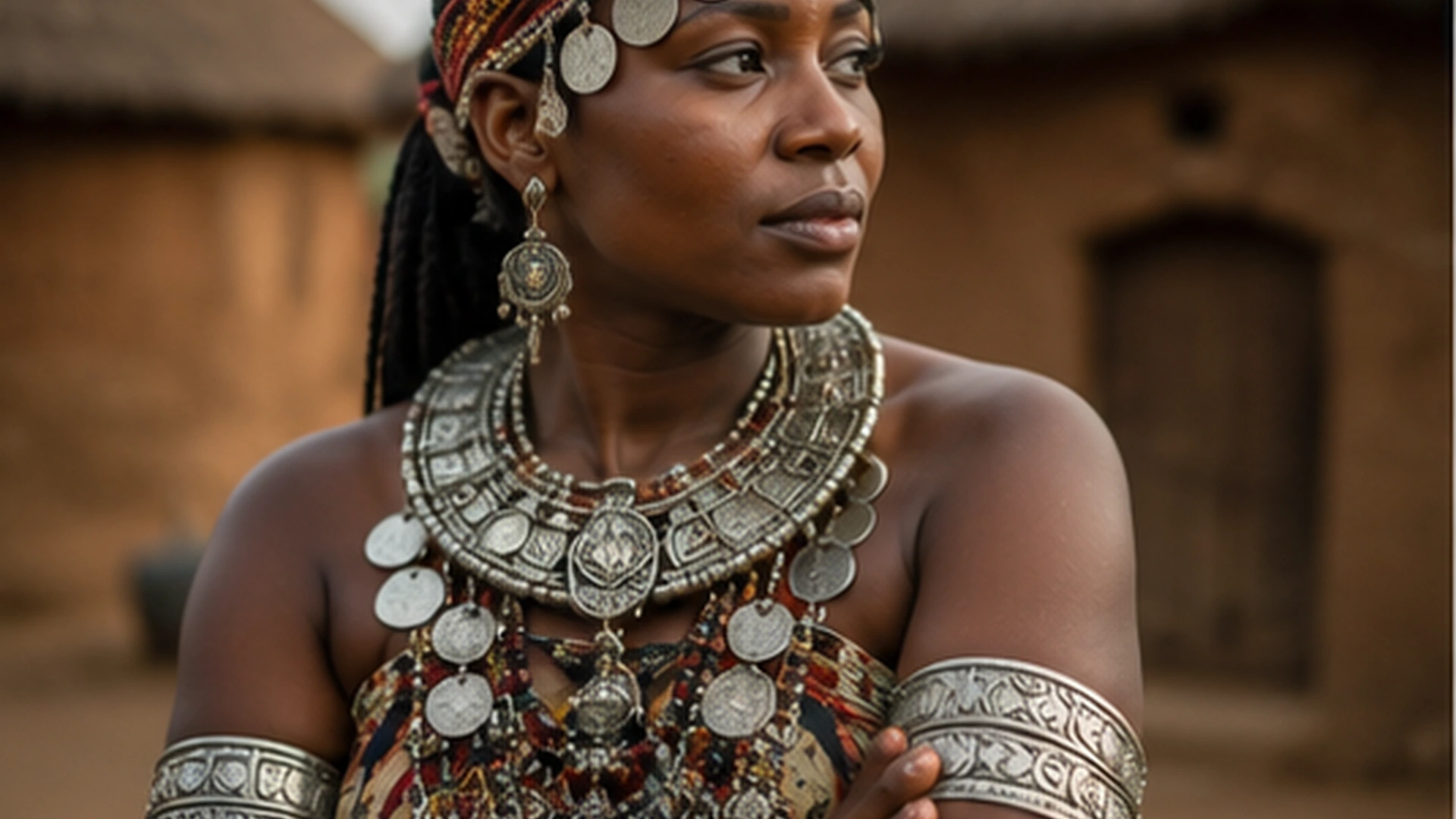
Ethiopian Amuletic Necklaces
Ethiopian protective jewelry has included prayer cases, crosses, beads, silver pendants, blue cords, written scrolls, and other forms of body-worn adornment.
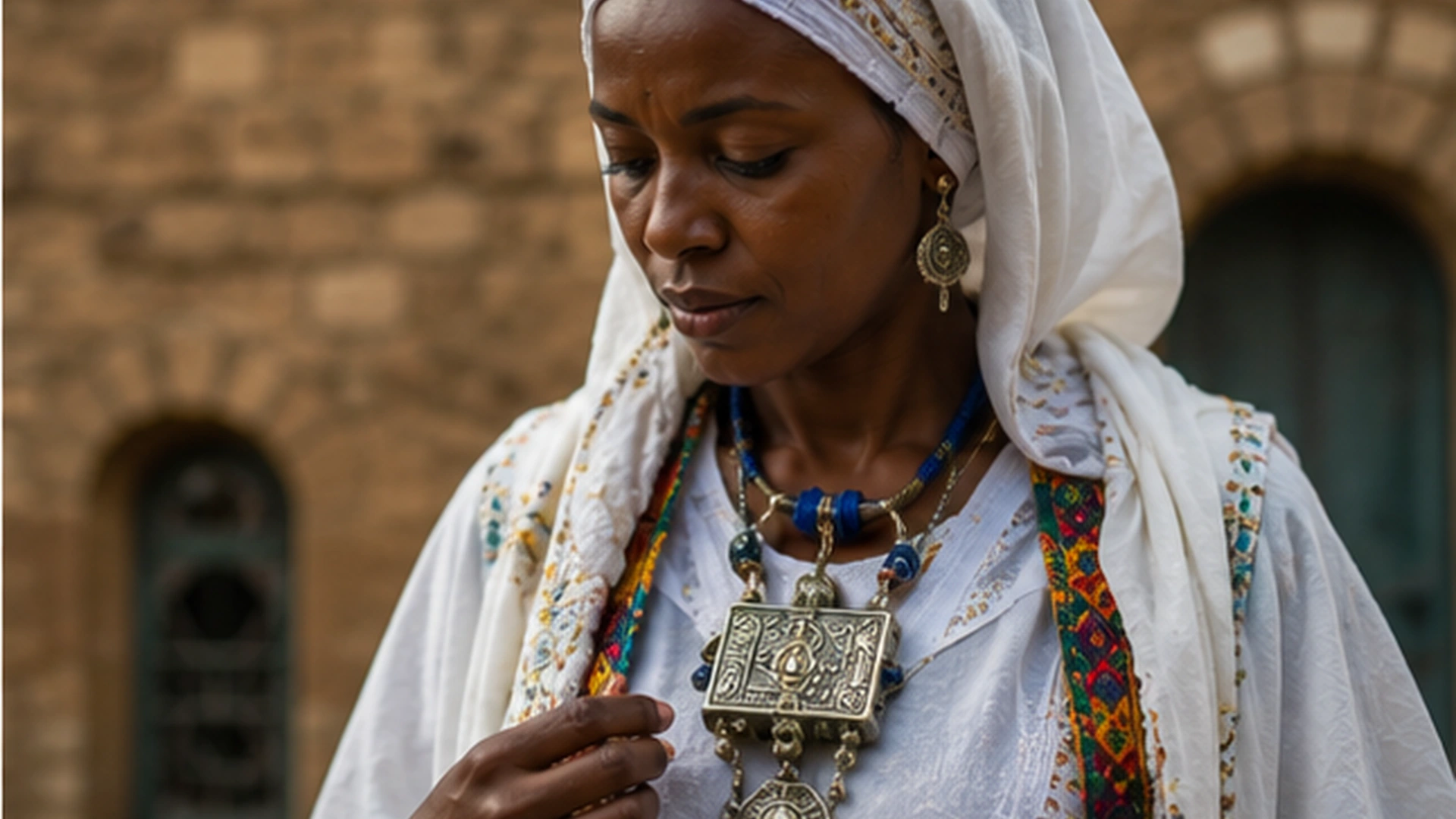
The British Museum documents an amuletic necklace known as Ashän Ketab, made for a high-ranking Ethiopian Christian woman.
Its blue silk cord, called metab, was widely worn by Ethiopian Christians. The necklace included cases that may have held prayers or perfumed cotton thread, while the movement and sound of silver pendants were also associated with protection.
This object illustrates several layers of meaning:
- Ethiopian Christian identity
- Written or spoken prayer
- Silver craftsmanship
- Sound
- Gender and status
- Bodily protection
- Religious memory
It should not be generalized to every Ethiopian Christian or every historical period.
Ethiopia contains many Christian, Muslim, Indigenous, ethnic, linguistic, and regional traditions.
Protective Jewelry and Childbirth
Protective jewelry is frequently associated with pregnancy, birth, and childhood because these were historically periods of serious danger.
Before modern obstetric care, antibiotics, neonatal medicine, emergency surgery, and blood transfusion, families had limited ways to respond to complications.
Protective adornment offered a meaningful action when outcomes were uncertain.
Examples include:
- Taweret pendants in ancient Egypt
- Byzantine gemstones connected with bleeding or miscarriage
- Written amulets placed near mothers and infants
- Bracelets or necklaces prepared for children
- Family heirlooms passed to a pregnant relative
- Religious medals or prayer cases worn during pregnancy
These practices may remain culturally meaningful, but protective jewelry must never replace prenatal care, skilled birth attendance, vaccination, medication, or emergency treatment.
Protection During Travel and Warfare
Travelers, merchants, pilgrims, sailors, soldiers, and migrants have carried jewelry connected with hopes for safe passage.
A portable object could represent:
- Divine care
- A family blessing
- Courage
- A remembered home
- A promise to return
- Membership in a religious community
- Protection against robbery, disease, conflict, or accident
For soldiers and political leaders, protective jewelry could also communicate confidence and authority.
Asante amulet cases attached to courtly or military dress, for example, could combine protection with highly visible rank.
The historical use of such jewelry does not prove that it prevented injury. It shows how people expressed hope and identity under dangerous conditions.
Materials and Their Protective Meanings
Gold
Gold resists corrosion and visually suggests permanence, sunlight, wealth, and authority.
Its cost also restricted access and made it suitable for elite regalia.
Silver
Silver has been associated with purity, the moon, health, status, and protection in different traditions.
Somali hersi and Ethiopian pendants demonstrate its importance in several East African jewelry traditions.
Iron and Copper Alloys
Iron, bronze, brass, and copper could be selected for strength, colour, availability, trade value, or community-specific symbolism.
No metal has one universal spiritual meaning.
Gemstones
Hematite, turquoise, carnelian, agate, lapis lazuli, and other stones were valued for colour, rarity, durability, medical associations, or religious stories.
A gemstone’s historical meaning cannot be determined only from modern crystal-healing websites.
Leather and Cloth
Leather and textile cases are especially practical for protecting folded writing.
They can also display dyeing, sewing, embroidery, and regional design.
Beads
Beads may identify age, wealth, trade relationships, family status, or aesthetic preference.
Not every bead arrangement is an amulet.
Sound
Small metal pendants, bells, or suspended forms may produce sound as the wearer walks.
In some traditions that sound was understood as protective; in others it was decorative, ceremonial, or an expression of wealth.
Inscriptions and Hidden Contents
Protective jewelry may depend more on what is written than on what is visible.
Inscriptions can include:
- Scripture
- Divine names
- Prayers
- Invocations
- Protective formulas
- Names of saints
- Geometric letter arrangements
- Symbols of office
- The owner’s name
An apparently empty case in a museum may once have held paper, cloth, perfume, hair, herbs, or another perishable substance.
Removing the contents can fundamentally change the object.
Publishers and collectors should not reproduce sacred writing carelessly or assume that opening a case is harmless.
Jewelry, Identity, and Social Rank
Protective jewelry often communicates who the wearer is.
It may identify:
- Religion
- Region
- Family
- Office
- Wealth
- Marriage
- Age
- Gender
- Political allegiance
- Initiation or specialist status
This can make the object protective in a social sense as well as a spiritual one.
A recognized emblem may help a traveler find community support. A court ornament may signal political authority. An inherited necklace may establish family continuity.
Protection is therefore not always imagined as an invisible force.
It can include the practical protection created by identity, reputation, relationships, and social recognition.
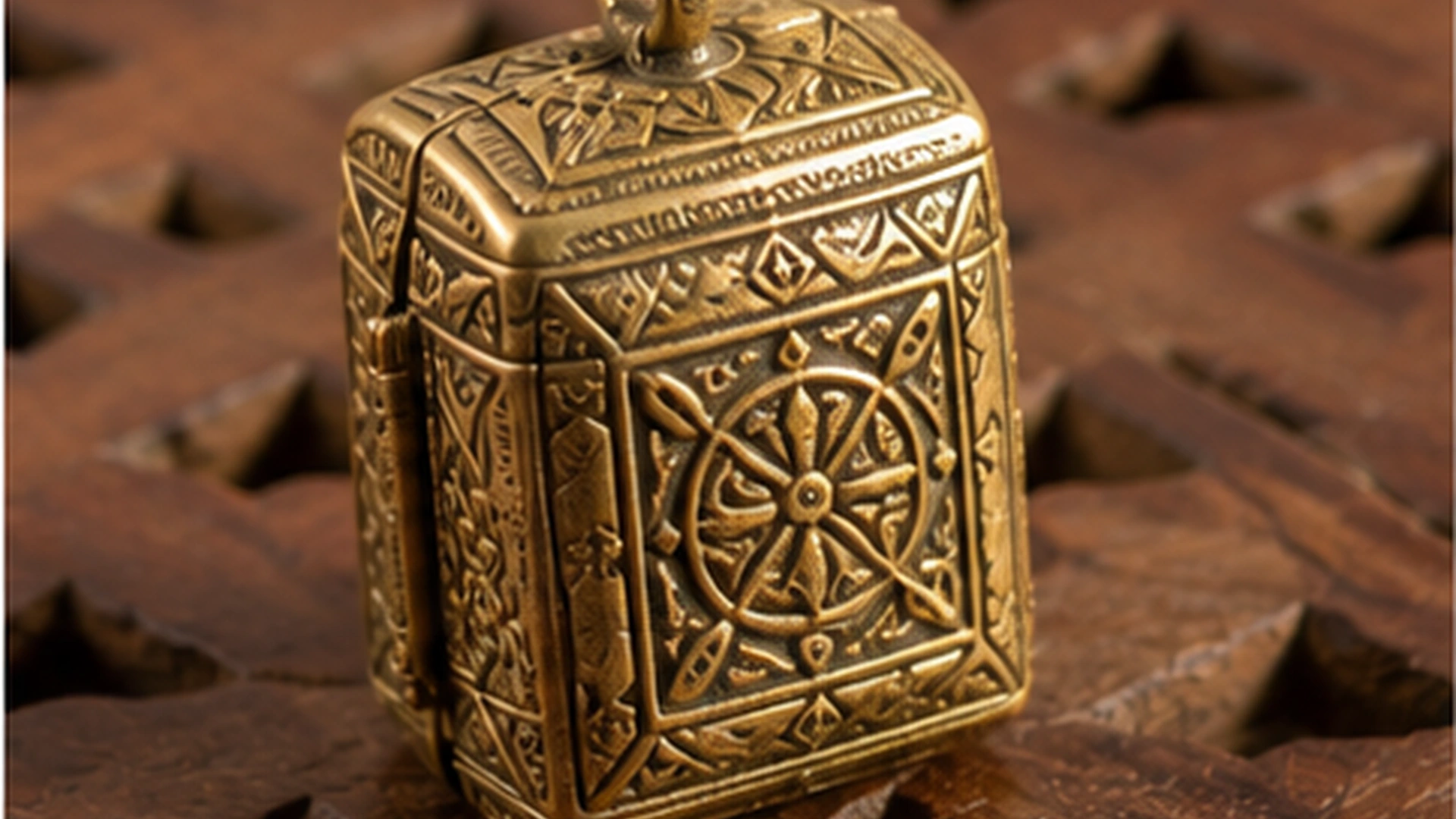
Devotional Jewelry Versus Talismans
Religious institutions may accept body-worn sacred objects while rejecting the idea that an object operates automatically.
Catholic guidance, for example, states that devotional medals should not be regarded as talismans or approached with blind credulity. Their purpose is tied to prayer, Christian commitment, and religious life rather than mechanical power.
Muslim authorities have also disagreed over wearable Qur’anic cases.
Jordan’s official Iftaa Department permits particular objects containing Qur’anic verses, divine names, or recognized prayers under specified conditions. Other Muslim institutions reject wearable amulets more broadly.
This disagreement should be represented honestly.
It is incorrect to say either:
“All Muslims wear Qur’anic amulets.”
or:
“No Islamic community has ever accepted written amulets.”
Historical practice and theological approval are related but not identical questions.
Protective Jewelry as Family Heritage
An object can remain meaningful after its original religious interpretation changes.
A person may inherit a necklace from a grandparent and value it because it represents:
- Family survival
- Migration
- Marriage
- Religious commitment
- Craft knowledge
- A place of origin
- A deceased relative
- A childhood memory
The current wearer may interpret the jewelry primarily as heritage rather than supernatural protection.
That does not erase its earlier history.
Families documenting inherited jewelry should record:
- Who owned it
- Where it came from
- What it was called
- Which language the name belongs to
- When it was worn
- Whether it contains anything
- Whether it may be photographed
- Whether it may be opened
- Whether it should remain within the family
Protective Jewelry and Scientific Evidence
Historical records prove that people believed in and used protective jewelry.
They do not prove that a necklace prevents:
- Cancer
- Malaria
- HIV
- Infertility
- Miscarriage
- Accidents
- Legal defeat
- Financial loss
- Violence
- Every spiritual problem
Protective jewelry may provide comfort, confidence, religious focus, or cultural belonging.
Those benefits should not be confused with guaranteed medical or supernatural effects.
A person can wear meaningful jewelry while also using seat belts, locks, prescribed medication, prenatal care, therapy, insurance, and other practical protections.
Common Misconceptions
“All Protective Jewelry Is African Magic”
False.
Protective jewelry appears in African, Mediterranean, Middle Eastern, European, Asian, and diaspora histories.
African examples must also be identified by specific community and period.
“Every African Necklace Has Spiritual Power”
False.
Jewelry may be decorative, economic, political, commemorative, ceremonial, or fashionable.
“Amulets Are Used Only by Uneducated People”
False.
Rulers, merchants, priests, soldiers, court officials, scholars, wealthy families, and ordinary workers have all worn protective adornment.
“Expensive Jewelry Is Only About Status”
False.
Gold and silver objects may communicate status while also carrying inscriptions, sacred contents, or protective meanings.
“A Religious Pendant Works Automatically”
Many religious institutions reject that interpretation.
They may understand sacred jewelry as supporting faith, prayer, remembrance, or ethical commitment rather than operating independently.
“All Qur’anic Amulets Are Accepted in Islam”
False.
Historical use is well documented, but religious authorities disagree about permissibility.
“Museum Labels Explain Everything”
False.
Older records may contain colonial terminology, limited information, uncertain community identifications, or interpretations based on collectors rather than original owners.
“Protective Jewelry Can Replace Medical Treatment”
False.
Jewelry cannot diagnose disease or guarantee healing.
Ethical Collecting and Museum Histories
Protective jewelry may have entered collections through:
- Legal excavation
- Purchase
- Gift
- Family sale
- Colonial collecting
- Warfare
- Palace seizure
- Grave disturbance
- Missionary collecting
- Economic pressure
- Theft
The British Museum’s Ethiopian amuletic necklace is connected with the 1868 British military campaign at Maqdala, a history that must be acknowledged when discussing the object.
Before buying historical protective jewelry, investigate:
- Provenance
- Export documentation
- Community ownership
- Archaeological-site protection
- Possible grave looting
- Whether the object was stolen
- Whether it contains sacred writing
- Whether it remains ritually active
- Whether its sale violates family or community norms
A sacred object is not automatically an ethical souvenir.
Photographing Protective Jewelry Respectfully
Permission may be necessary before photographing:
- Jewelry worn under clothing
- Sacred inscriptions
- Qur’anic cases
- Prayer scrolls
- Burial jewelry
- Initiatory adornment
- Family heirlooms
- Objects used during healing
- Children wearing protective objects
Do not ask a wearer to open a case merely to create more interesting content.
Do not publish an enlarged image of restricted writing without consent.
Avoid captions such as:
“Powerful African magic necklace.”
A responsible caption identifies the community, historical period, material, known function, museum source, and areas of uncertainty.
Ethical and Safety Boundaries
Protective jewelry should never be used to justify:
- Withholding medical care
- Poisonous substances against the skin
- Forced wearing of an object
- Child restraint
- Financial exploitation
- Threats involving curses
- Accusations of witchcraft
- Sexual abuse
- Control over another person
- Guaranteed healing claims
- Guaranteed pregnancy claims
- Guaranteed wealth
- Guaranteed legal victory
- Guaranteed business success
Jewelry containing lead, mercury, sharp metal, unidentified powders, toxic herbs, or corroded materials may present physical risks.
Antique objects should not be placed in a child’s mouth or worn against broken skin without appropriate conservation and safety advice.
How to Research Protective Jewelry Accurately
Identify the Community
Write:
“A Somali hersi…”
“An Asante safi…”
“An Ethiopian Christian amuletic necklace…”
Avoid:
“An African protection charm…”
Identify the Historical Period
Ancient Egyptian jewelry should not be presented as evidence of what all modern Egyptians believe.
Identify the Wearer
Ask whether the object belonged to:
- A ruler
- A soldier
- A child
- A pregnant woman
- A religious specialist
- A merchant
- An ordinary household member
Identify the Material and Contents
The same shape may carry different meanings when made from gold, silver, leather, cloth, stone, or wood.
Identify the Source of Interpretation
Was the meaning recorded from the owner, a community specialist, an excavator, a colonial collector, or a later museum curator?
State Uncertainty
Use wording such as:
“The museum identifies…”
“The original contents are no longer present…”
“The owner’s explanation was not recorded…”
“Scholars have proposed…”
Key Takeaways
- Protective jewelry combines adornment with hopes for safety, blessing, health, courage, and spiritual support.
- Jewelry is especially suited to protection because it is portable, body-worn, and able to contain sacred materials.
- Not every decorative object is an amulet.
- Ancient Egyptian protective jewelry drew meaning from form, colour, material, inscription, and ritual preparation.
- Byzantine pendants combined sacred images with beliefs about gemstone properties.
- Fatimid rings could communicate wealth, blessing, and talismanic protection.
- Somali hersi contained Qur’anic verses and could also express status and skilled craftsmanship.
- West African hatumere were prepared for individual clients by recognized specialists.
- Asante safi integrated written amulets into gold courtly adornment.
- Ethiopian amuletic necklaces could combine prayer cases, silver, sound, identity, and rank.
- Religious authorities may distinguish devotional jewelry from independently magical objects.
- Protective jewelry may become an heirloom even when later generations interpret it differently.
- Museum and private collections require careful attention to provenance and colonial history.
- Protective jewelry does not replace medical care, security, legal help, or practical safety.
People Also Ask
What is protective jewelry?
Protective jewelry is wearable adornment believed within a particular tradition to protect, bless, strengthen, heal, or spiritually support its wearer.
How old is protective jewelry?
Archaeological evidence from ancient Egypt and the Near East shows that people were wearing amulets and protective seals thousands of years ago.
Why did people wear amulets as jewelry?
Wearing an amulet kept it close to the body and allowed it to accompany the wearer during travel, work, illness, childbirth, or danger.
Is all African jewelry spiritually protective?
No. African jewelry may be decorative, political, economic, ceremonial, commemorative, or protective depending on its community and context.
Does protective jewelry really prevent harm?
It may provide cultural, emotional, or religious support, but it cannot guarantee protection from illness, accidents, violence, or financial loss.
Frequently Asked Questions
1. What is the difference between protective jewelry and ordinary jewelry?
Protective jewelry is worn with a specific belief or intention involving safety, blessing, health, spiritual support, or the avoidance of harm. Ordinary jewelry may be primarily decorative, economic, or commemorative.
2. What types of protective jewelry existed in ancient Egypt?
Examples included scarabs, wedjat eyes, sa amulets, Taweret pendants, heart amulets, symbolic knots, and images of deities.
Frequently Asked Questions
What should readers know first about african spirituality and cultural history?
African spirituality and cultural history: Read clear guidance, key signs, practical steps, and private support from Ancestral Temple.
What causes History of Protective Jewelry?
The safest next step is to compare the signs, prepare clear details, and request private guidance when the matter feels personal.
How does History of Protective Jewelry work?
The safest next step is to compare the signs, prepare clear details, and request private guidance when the matter feels personal.
Is it possible to get private guidance for History of Protective Jewelry?
The safest next step is to compare the signs, prepare clear details, and request private guidance when the matter feels personal.
How long does History of Protective Jewelry take to understand?
The safest next step is to compare the signs, prepare clear details, and request private guidance when the matter feels personal.
Can History of Protective Jewelry affect relationships, family, work, or personal peace?
The safest next step is to compare the signs, prepare clear details, and request private guidance when the matter feels personal.
Why do people seek spiritual guidance for History of Protective Jewelry?
The safest next step is to compare the signs, prepare clear details, and request private guidance when the matter feels personal.
What signs should someone notice before asking about History of Protective Jewelry?
The safest next step is to compare the signs, prepare clear details, and request private guidance when the matter feels personal.
When should someone contact a private spiritual guide?
The safest next step is to compare the signs, prepare clear details, and request private guidance when the matter feels personal.
What causes african spirituality and cultural history?
African spirituality and cultural history: Read clear guidance, key signs, practical steps, and private support from Ancestral Temple. The safest next step is to compare the signs, prepare clear details, and request private guidance when the matter feels perso
Article Information
- Publisher
- Ancestral Temple
- Editor
- Ancestral Temple
- Last updated
- Jul 26, 2026
- Last reviewed
- Jul 13, 2026
- Content version
- 8926366b27
This educational article should be read as cultural and spiritual information, not as medical, legal, financial, or emergency advice.
Helpful Related Guidance
Explore This Topic
Evil Eye Protection Rituals · Urgent Child Protection Rituals
Related Topic Cluster
African Spirituality And Cultural History
Complete Guide Why People Have Carried Talismans Throughout HistoryAbout the Author
 Ancestral Temple
Spiritual guide and practitioner with decades of experience in ancestral wisdom, rituals, and divine guidance.
Related Posts
View All



Leave a Comment
We'd love to hear your thoughts.
This is a strong historical overview with many opportunities for future internal links.
The research guidelines at the end will be useful for bloggers and museum visitors.
The article clearly stated that jewelry should not replace medicine or practical protection.
The image placeholders are well positioned for separate, culturally specific scenes.
Thank you for acknowledging the Maqdala history connected with the Ethiopian necklace.
I liked the FAQ explaining that religious authorities have different views about amulet jewelry.
The article correctly explained that protective meaning must be proven from context rather than appearance alone.
Could you write about the historical trade routes that spread protective jewelry designs?
The explanation of gold, silver, leather, cloth, and gemstone symbolism was very useful.
The hand-shaped pendant section respected the different Jewish, Muslim, and regional interpretations.
This will fit well into a topic cluster about talismans, sacred symbols, and personal adornment.
The practical safety information made the article more responsible.
I learned that sound from moving silver pendants could also carry protective meaning.
The article avoided fear-based language and exaggerated supernatural claims.
Please write a future guide about protective bracelets and armlets in African history.
I appreciated the connection between family memory and changing interpretations of inherited jewelry.
The article represented Islamic diversity without dismissing historical practice.
The warning against opening sacred cases for photographs was necessary.
The section on Christian devotional medals was careful and did not call every sacred pendant a talisman.
Could you write about how African diaspora families preserve protective jewelry as heirlooms?
The Somali hersi section deserves a complete follow-up article with more examples.
I liked the explanation of jewelry as something that could remain close to the skin.
The Fatimid section showed clearly that protective jewelry was also worn by wealthy and educated people.
I appreciated the warning that antique jewelry may contain unsafe metals or unknown substances.
The distinction between social protection and supernatural protection was thoughtful.
Please consider an article focused on protective jewelry worn by mothers and children.
The museum-provenance section added an important historical perspective.
The article was long but well divided into sections for mobile reading.
I liked that African jewelry was not described using vague language about tribal magic.
The explanation that the writing inside a case may be more important than its outer decoration was valuable.
Could you write more about the specialists who prepared written amulets?
The childbirth section explained why protective jewelry became important without making medical promises.
The article correctly avoided saying that every Muslim authority accepts wearable amulets.
Please create a detailed article about Ethiopian silver crosses, prayer cases, and blue cords.
I appreciated the reminder that not every bead, shell, or necklace has a spiritual meaning.
The section about travelers carrying portable protection was easy to understand.
I would enjoy a full article comparing hatumere traditions in different West African communities.
The explanation of status and protection overlapping in gold jewelry was very helpful.
Could you write a future article about protective jewelry historically worn in Uganda?
The section about ancient Egyptian materials showed why colour and metal mattered as much as shape.
I liked the distinction between protective jewelry and ordinary decorative jewelry.
The discussion of Qur’anic amulet cases was balanced and acknowledged religious disagreement.
Thank you for presenting Ethiopian Christian necklaces within their specific historical context.
The Asante safi section was especially useful because it explained the connection between goldworking and written amulets.
I appreciated the explanation that protective jewelry can communicate religion, status, family memory, and craftsmanship at the same time.