
Protective Necklaces
Cornerstone Content
Quick Summary
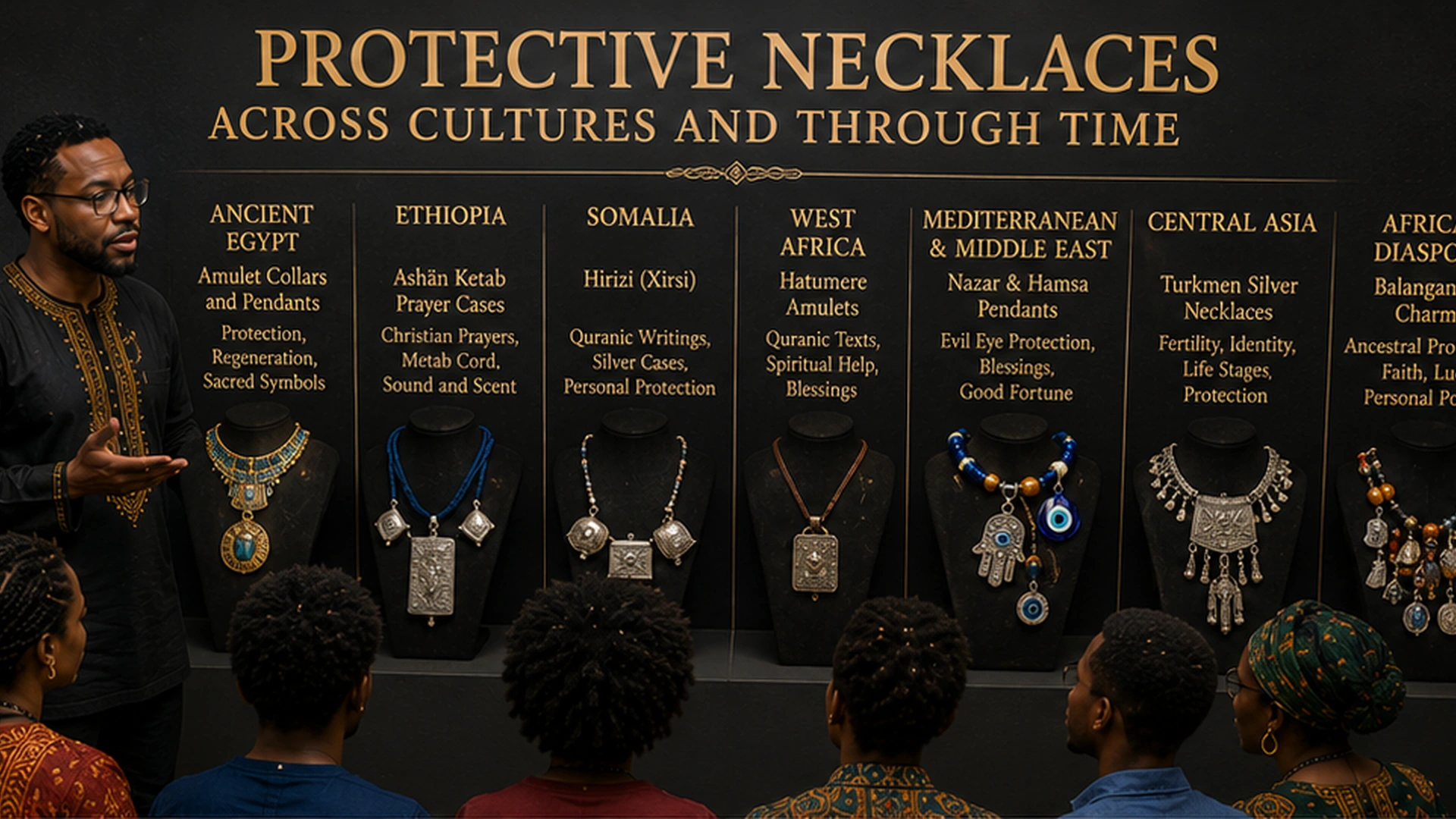
Protective necklaces have carried amulets, prayers, sacred names, deity images, shells, gemstones, metals, and family memories. Their meanings differ by culture: an Egyptian amulet collar, Ethiopian Ashän Ketab, Somali hirizi, Turkish nazar pendant, and Afro-Brazilian balangandan do not belong to one universal system.
Protective necklaces are necklaces believed to guard, strengthen, bless, guide, or support the wearer. They may carry a single pendant, multiple charms, inscribed cases, sacred images, gemstones, shells, beads, coins, relics, or inherited objects.
The necklace itself is not always the protective element. In many traditions, the cord or chain simply holds a prayer case, amulet, seal, deity image, written verse, or other object close to the body.
Protective necklaces should never be treated as one universal form of magic. Ancient Egyptian amulet collars, Ethiopian Christian prayer-case necklaces, Somali Islamic hirizi, Mediterranean evil-eye pendants, Turkmen silver jewelry, and African diaspora charm assemblages developed within different religions, languages, and histories.
Museum evidence documents that people believed such necklaces could protect health, pregnancy, children, travel, social well-being, the dead, or spiritual identity. Historical belief is well documented, but guaranteed supernatural protection is not scientifically established.
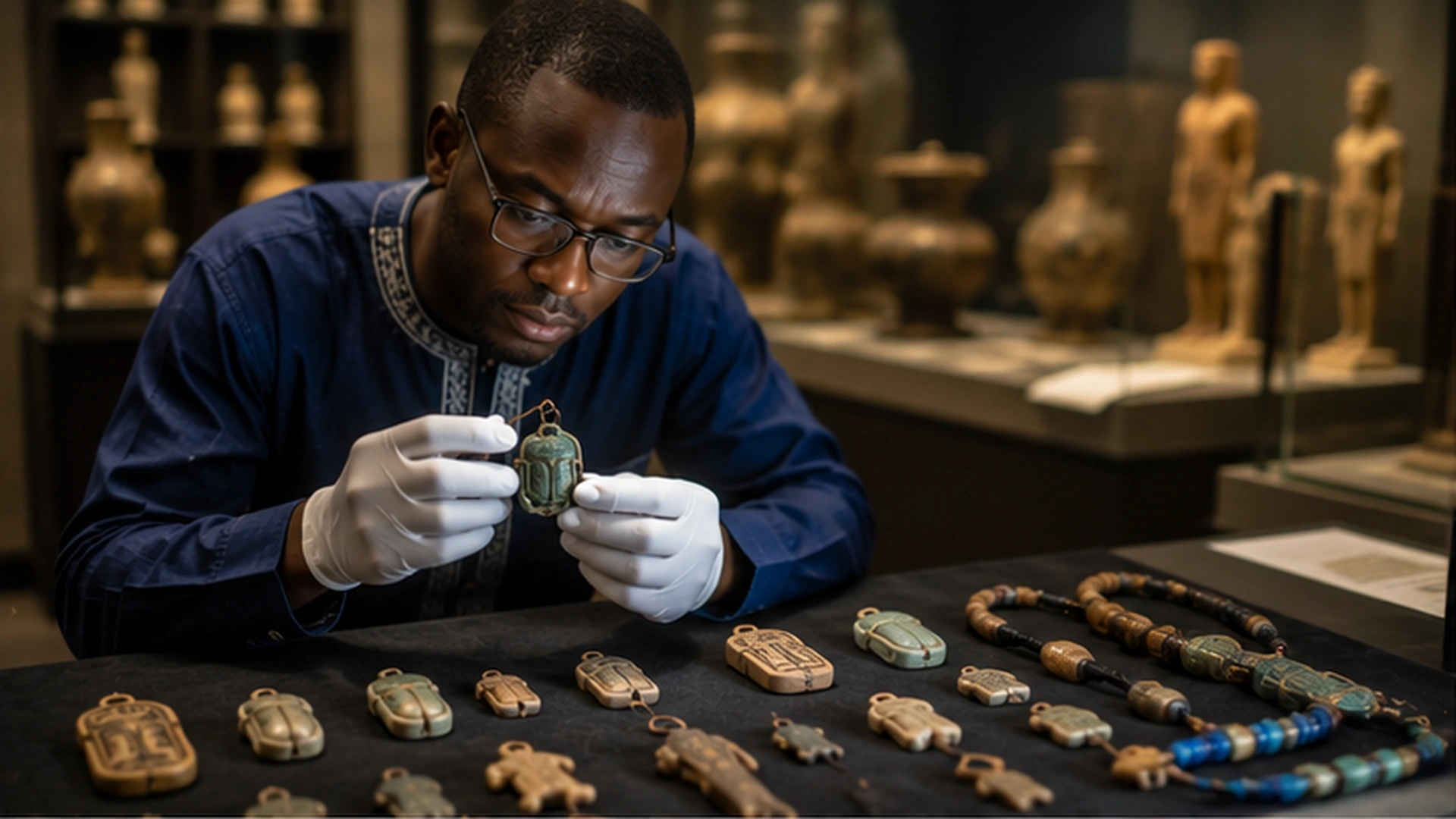
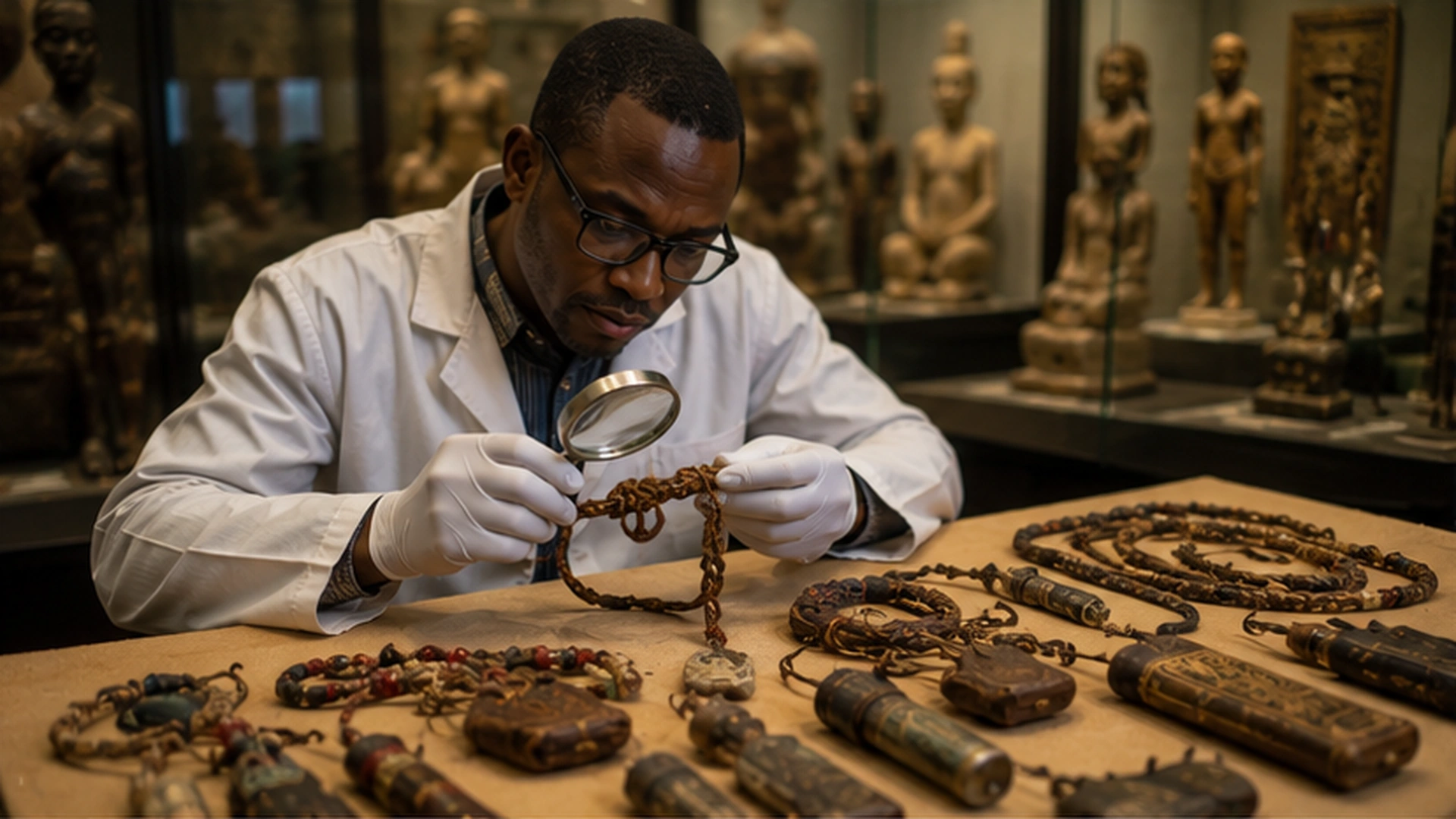
Suggested scene: Black African museum historian introducing culturally separated protective necklaces from ancient Egypt, Ethiopia, Somalia, West Africa, the Mediterranean, Central Asia, and the African diaspora.
Key Points
Protective necklaces may carry prayers, deity images, sacred names, shells, gemstones, metals, or written amulets.
Ancient Egyptian amulets gained meaning through shape, material, color, inscription, placement, and ritual context.
Ethiopian Ashän Ketab necklaces combined blue metab cords, silver cases, prayers, scent, sound, and Christian devotion.
Somali hirizi or xirsi necklaces enclosed Quranic or philosophical writings prepared for the wearer.
West African hatumere could contain Quranic Arabic texts prepared by religious specialists.
Mediterranean and West Asian eye or hamsa pendants were used against the evil eye in specific regional traditions.
Turkmen silver jewelry marked life stages and could be associated with fertility and protection.
Afro-Brazilian balangandan assemblages combined African, Catholic, personal, and protective meanings.
Not every necklace from Africa, Asia, or the Middle East is spiritual or protective.
Protective necklaces do not replace healthcare, legal advice, or practical safety measures.
How a Necklace Becomes Protective
Element
Possible role
Pendant or amulet
Carries the deity image, symbol, prayer, relic, shell, stone, or written text.
Cord or chain
Keeps the object close to the body and may itself have a culturally specific meaning.
Material
Gold, silver, faience, glass, stone, coral, shell, leather, wood, or textile may carry different associations.
Inscription
Names, prayers, verses, blessings, or protective formulas may define the purpose.
Sound or scent
Jingling pendants, bells, perfume, or scented thread may contribute to documented protective practice.
Maker or specialist
A cleric, healer, jeweler, relative, or ritual specialist may prepare or authorize the object.
Wearer and occasion
Childbirth, travel, illness, marriage, initiation, burial, pilgrimage, or everyday life can change meaning.
Provenance
Ownership, collection history, excavation context, and colonial removal affect interpretation.
1. Ancient Egyptian Amulet Necklaces
Ancient Egyptians wore and buried necklaces containing amulets shaped as deities, animals, hieroglyphs, plants, body parts, and sacred objects.
The Metropolitan Museum explains that an amulet’s power could come from its shape, decoration, inscription, color, material, words spoken over it, and acts performed with it. Amulets were worn or placed on the body so their qualities could pass to the owner.
Common necklace elements
Wedjat eyes for restoration and protection
Scarabs for renewal and becoming
Sa signs for protection
Taweret and Bes for pregnancy, birth, and children
Isis and other deity amulets
Djed pillars for stability
Tyet knots for Isis and funerary regeneration
Nefer signs for goodness or beauty
A broad collar of nefer amulets may have expressed good wishes and elite status. Egyptian necklaces could therefore combine adornment, protection, social rank, and funerary meaning.
2. Menat Necklaces and Protective Sound
The ancient Egyptian menat was a heavy beaded necklace with a counterweight, especially associated with great female deities.
It could be shaken so the beads and counterweight produced sound. Museum interpretation connects the menat with appeasing goddesses and invoking their powerful protection.
The menat was not an ordinary modern necklace design. Its meaning belonged to Egyptian temple, goddess, music, movement, and ritual traditions.
Frequently Asked Questions
What should readers know first about african spirituality and cultural history?
African spirituality and cultural history: Read clear guidance, key signs, practical steps, and private support from Ancestral Temple.
What causes protective-necklaces?
The safest next step is to compare the signs, prepare clear details, and request private guidance when the matter feels personal.
How does protective-necklaces work?
The safest next step is to compare the signs, prepare clear details, and request private guidance when the matter feels personal.
Is it possible to get private guidance for protective-necklaces?
The safest next step is to compare the signs, prepare clear details, and request private guidance when the matter feels personal.
How long does protective-necklaces take to understand?
The safest next step is to compare the signs, prepare clear details, and request private guidance when the matter feels personal.
Can protective-necklaces affect relationships, family, work, or personal peace?
The safest next step is to compare the signs, prepare clear details, and request private guidance when the matter feels personal.
Why do people seek spiritual guidance for protective-necklaces?
The safest next step is to compare the signs, prepare clear details, and request private guidance when the matter feels personal.
What signs should someone notice before asking about protective-necklaces?
The safest next step is to compare the signs, prepare clear details, and request private guidance when the matter feels personal.
When should someone contact a private spiritual guide?
The safest next step is to compare the signs, prepare clear details, and request private guidance when the matter feels personal.
What causes african spirituality and cultural history?
African spirituality and cultural history: Read clear guidance, key signs, practical steps, and private support from Ancestral Temple. The safest next step is to compare the signs, prepare clear details, and request private guidance when the matter feels perso
Article Information
- Publisher
- Ancestral Temple
- Editor
- Ancestral Temple
- Last updated
- Jul 26, 2026
- Last reviewed
- Jul 13, 2026
- Content version
- dba915093e
This educational article should be read as cultural and spiritual information, not as medical, legal, financial, or emergency advice.
Helpful Related Guidance
Explore This Topic
African Spirituality And Cultural History · Evil Eye Protection Rituals
Related Topic Cluster
African Spirituality And Cultural History
Complete Guide Why Homes Have Been Blessed Throughout HistoryAbout the Author
 Ancestral Temple
Spiritual guide and practitioner with decades of experience in ancestral wisdom, rituals, and divine guidance.
Related Posts
View All

Leave a Comment
We'd love to hear your thoughts.
I appreciated that the traditions were not combined into one system.
The article clearly separated necklaces from the amulets they carry.