
Sacred Knots and Protective Objects
Cornerstone Content
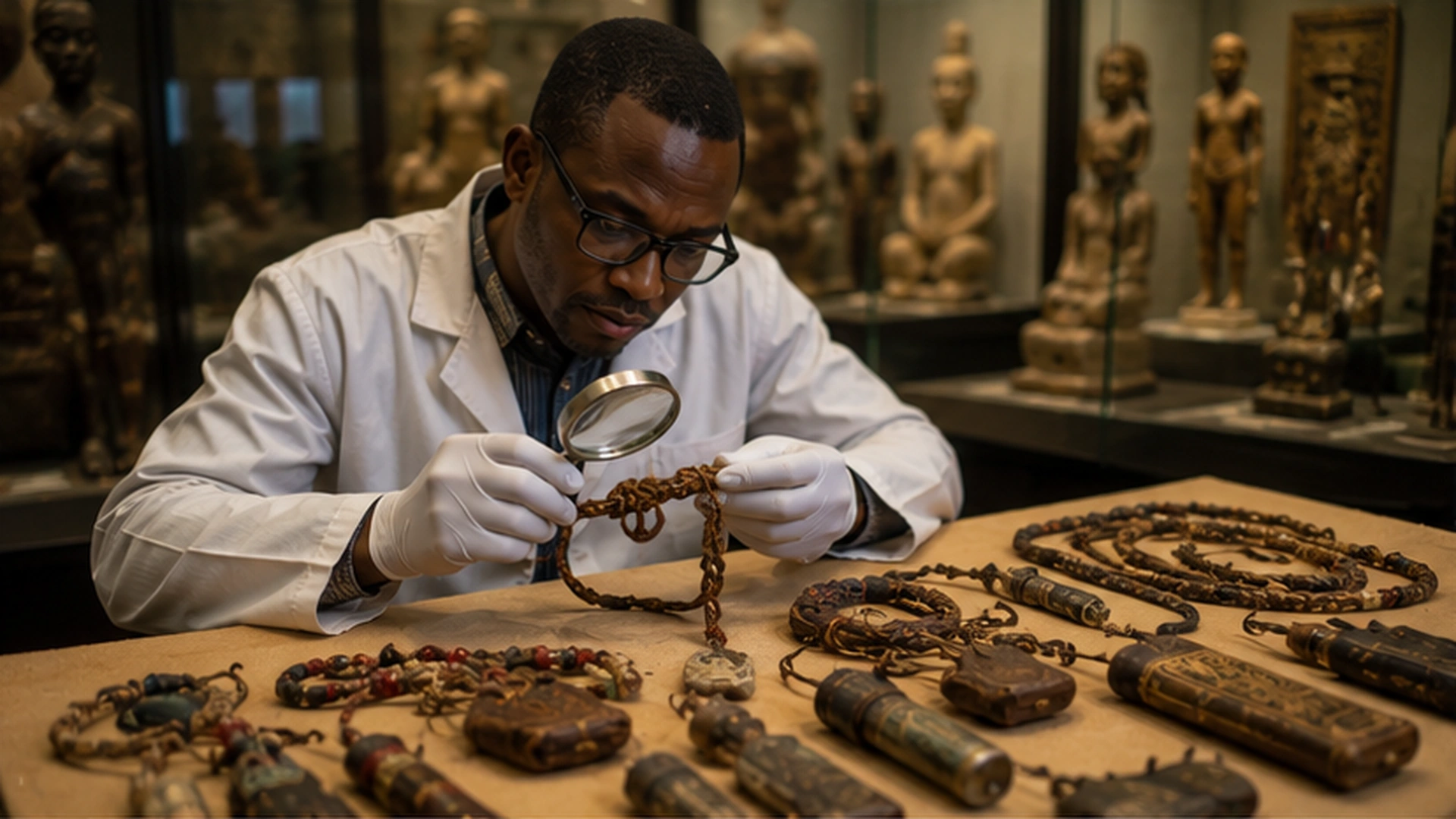
Quick Summary
Sacred knots and protective objects have carried meanings connected with binding, safeguarding, remembrance, prayer, healing support, and community authority. This guide explores ancient Egyptian knot amulets, Kongo power objects, Ethiopian protective scrolls, African Muslim amulet cases, and related traditions without treating them as one universal system.
Sacred Knots and Protective Objects explains the meaning, background and cultural context of sacred knots and protective objects in clear educational language. The article answers the main topic near the beginning, preserves the original examples and highlights important distinctions for respectful understanding.
Knots are ordinary technologies.
They fasten clothing, secure loads, join fishing nets, close bags, suspend jewelry, bundle materials, repair tools, and hold buildings or boats together.
In religious and cultural settings, however, a knot may acquire additional meaning.
It may represent protection, connection, obligation, continuity, restriction, healing, secrecy, memory, or the controlled containment of something considered powerful.
Protective objects can also rely on tying, wrapping, folding, sealing, enclosing, or suspending. A prayer may be folded into leather and tied around the neck. A scroll may be rolled and placed in a case. Materials may be bundled onto a carved figure. A symbolic knot may be shaped in stone and placed with the dead.
These practices are not identical.
An ancient Egyptian tyet amulet does not have the same meaning as a Kongo nkisi, an Ethiopian protective scroll, or a Wolof leather case containing Qur’anic writing.
The phrase sacred knots and protective objects is therefore a broad educational category. It should help readers compare materials and ideas without erasing the specific histories of the communities that created them.
Key Points
Sacred knots are knots or knot-shaped symbols that carry religious, social, ceremonial, or protective meanings within a particular tradition.
Protective objects may include:
- Knotted cords
- Amulets
- Pendants
- Leather cases
- Cloth packets
- Parchment scrolls
- Beads
- Carved figures
- Horn containers
- Written prayers
- Wrapped bundles
- Religious medals
- Objects sewn into clothing
- Items placed near a bed, doorway, grave, or household shrine
The meaning of an object may depend on:
- The community that created it
- Its maker
- Its material
- What it contains
- The words written on it
- Its owner
- Who prepared it
- Where it is worn or stored
- The occasion for which it was made
- Whether it is public, private, or restricted
Knots do not carry one universal spiritual meaning. A knot that symbolizes protection in one historical setting may be practical, decorative, legal, or unrelated to religion in another.
Protective objects are not scientifically proven substitutes for medicine, physical security, legal assistance, or emergency services.
What Is a Sacred Knot?
A sacred knot is a tied form or knot-shaped symbol given religious, ceremonial, social, or protective importance by a particular community.
It may be formed from:
- Rope
- Fiber
- Leather
- Hair
- Textile
- Thread
- Metal
- Stone
- Wood
- Beads
- Carved or painted imagery
A physical knot may secure an object to the body. A carved knot may represent protection without functioning as an actual fastening device.
The word sacred does not mean that every community treats the object as a deity.
An object may be sacred because it is connected with:
- A divinity
- A religious text
- A family lineage
- A ritual office
- A burial tradition
- A protective prayer
- A recognized healer
- An ancestor
- A community covenant
- A place of worship
Plain-Language Meaning
A sacred knot is a knot that means more than simply holding two pieces of material together.
It may communicate:
- Keep this person safe.
- Hold this prayer close.
- Preserve this relationship.
- Bind this promise.
- Contain what has been placed inside.
- Connect the wearer with a religious tradition.
- Mark the authority of the person using it.
- Prevent something from being opened casually.
The exact meaning cannot be known from appearance alone.
Why Knots Became Powerful Symbols
Knots have qualities that make them useful symbols.
They can join separate parts. They can tighten or loosen. They can close a container. They can restrain movement. They can be difficult to understand without knowing how they were tied.
These physical qualities may inspire symbolic meanings such as:
- Binding
- Release
- Connection
- Containment
- Secrecy
- Continuity
- Obligation
- Protection
- Capturing
- Sealing
However, these associations are not universal laws.
A community may use a knot only because it is the safest way to attach an object. Another may regard the tying itself as meaningful. A third may focus on the prayer or substance inside the object rather than the cord holding it.
Writers should distinguish between a practical fastening and a culturally interpreted sacred knot.
Ancient Egyptian Knot Amulets
Ancient Egypt provides some of the clearest surviving examples of knot-shaped protective objects.
The tyet or Tit amulet
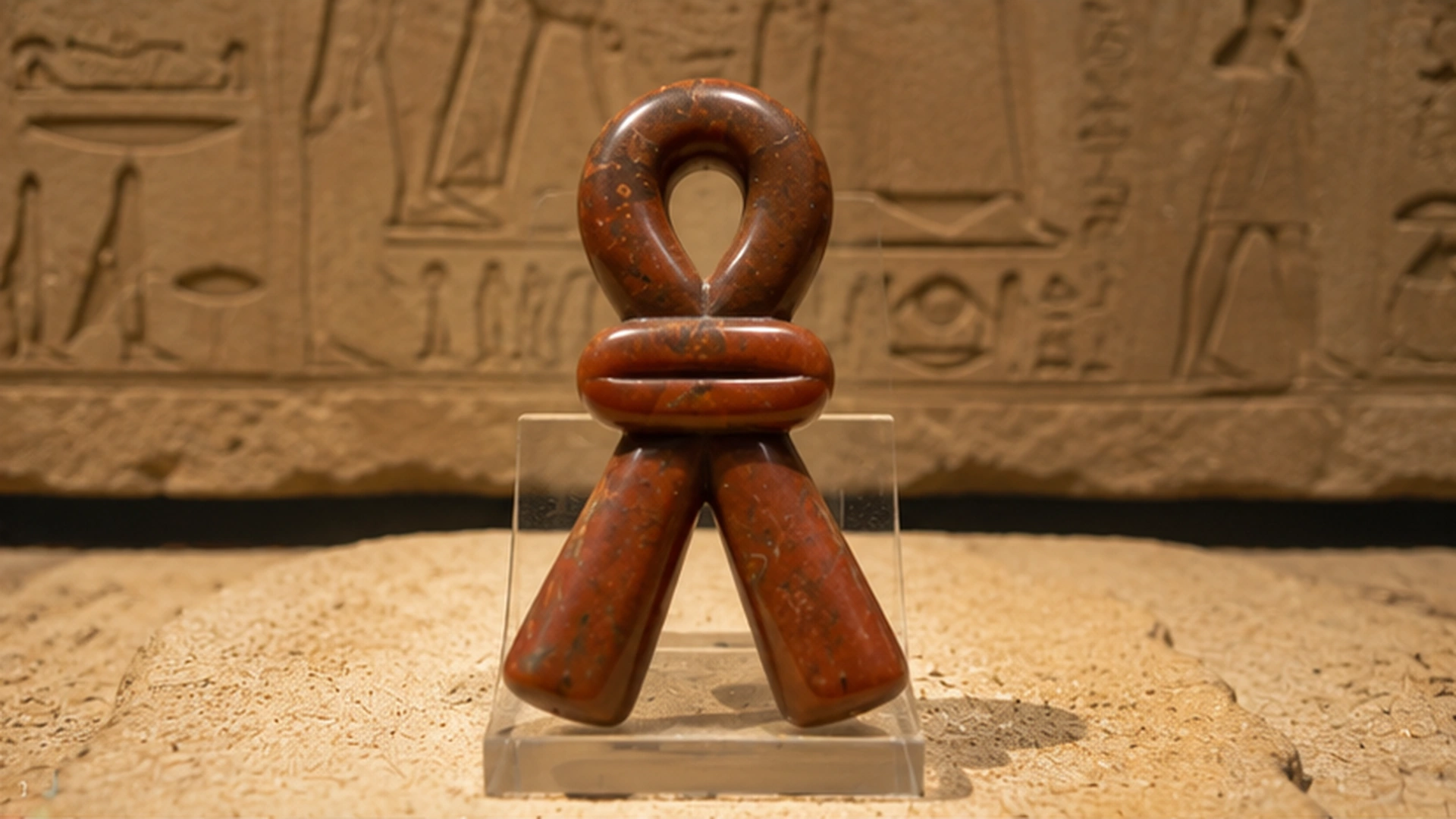
The tyet, also written tit, is a symbol shaped like a knotted strip of cloth. Its earliest meaning is uncertain, but during the New Kingdom it was closely associated with the goddess Isis.
The symbol was linked with protection in the afterlife. A passage in the Book of the Dead directed that the amulet be made from a red material and placed at the neck of the deceased. The Metropolitan Museum of Art notes that ancient Egyptians widely used knots as amulets because they associated them with binding and releasing sacred power.
The tyet is sometimes called the Knot of Isis.
That modern phrase can be useful, but the object should not be reduced to a generic knot for love, luck, or personal manifestation. Its documented history belongs to ancient Egyptian funerary religion and the mythology of Isis and Osiris.
Material and color
Ancient Egyptian amulets could be made from jasper, faience, stone, metal, glass, or other materials.
The material was not always a neutral choice. Red stone was particularly associated with the tyet in funerary texts. The form, color, placement, and religious language surrounding an amulet could work together.
Protection for the dead
Many surviving tyet amulets come from burial settings.
Their purpose should therefore be understood within ancient Egyptian beliefs about death, rebirth, divine protection, and the continued existence of the deceased.
A modern necklace copied from a museum object may resemble a tyet, but it does not automatically carry the original object’s funerary role or religious status.
The Herakles Knot in the Ancient Mediterranean
Another well-known knot form appeared in Greek and Roman jewelry.
The Herakles knot consists of two interlocking loops. It became a popular motif in Hellenistic and Roman-period jewelry and was associated with the legendary strength of Herakles. Surviving examples appear on bracelets, armbands, diadems, and other ornaments.
The motif demonstrates that knot imagery moved through:
- Jewelry
- Mythology
- Personal adornment
- Status display
- Protective symbolism
- Regional artistic exchange
Ancient Egyptian, Greek, and Roman traditions interacted over long periods, especially during Hellenistic and Roman rule in Egypt.
Interaction did not erase cultural differences. The Herakles knot should not be presented as another name for the tyet.
Knots, Cords, and Protective Objects in African Traditions
African protective objects include an enormous range of materials and institutions.
They may involve:
- Leather
- Cotton
- Plant fiber
- Horn
- Wood
- Metal
- Paper
- Parchment
- Beads
- Cowrie shells
- Written scripture
- Carved figures
- Bundled substances
- Family heirlooms
- Religious images
No object should be identified simply as an “African protection charm” without more precise information.
Kongo Minkisi and the Meaning of Tying
Among Kongo peoples of west-central Africa, the term nkisi refers to a broad category of power objects or receptacles. The plural is minkisi.
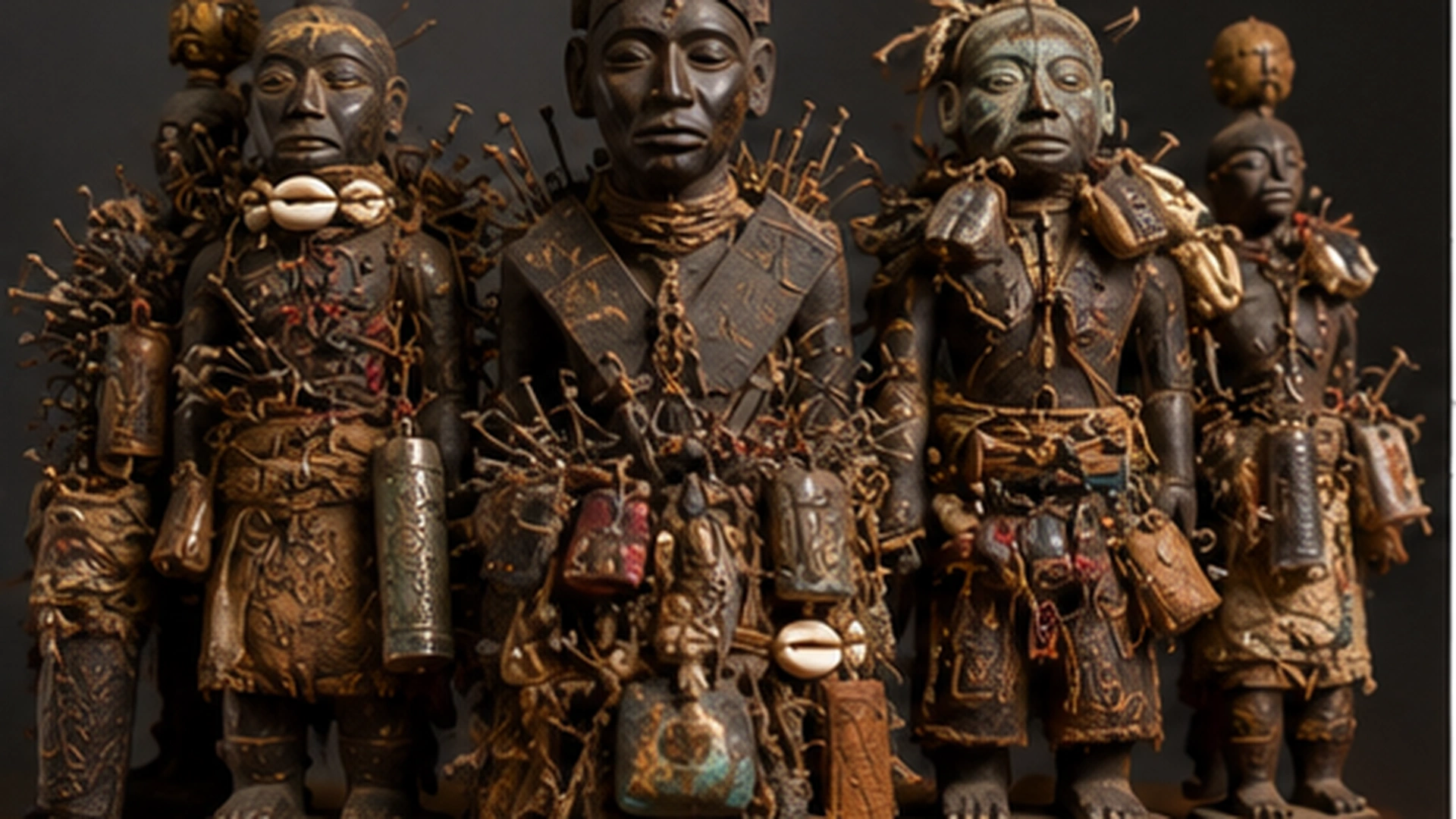
Minkisi could take the form of carved figures, cloth packets, filled containers, or other material forms. Their creation involved collaboration between an artist and a trained ritual specialist known as an nganga.
Museum documentation explains that particular minkisi were used in connection with healing, dispute settlement, safeguarding peace, enforcing agreements, or responding to wrongdoing.
Bound materials on an nkisi
Some Kongo power figures carry:
- Knotted cloth
- Fiber cords
- Small packets
- Beads
- Cowrie shells
- Bells
- Crosses
- Containers
- Other attached objects
On one documented nkisi, the act of tying was connected with binding or capturing a spirit. Cloth could also represent an offering or establish a personal connection between a supplicant and the object.
This interpretation belongs to that Kongo context.
It should not be turned into a general instruction claiming that tying any object with cloth will trap a spirit.
Objects of law and community responsibility
Some nkisi nkondi figures served as witnesses to vows, agreements, dispute resolution, and community standards.
Metal pieces inserted into a figure could document occasions when its authority was invoked. A famous Mangaaka figure was connected with jurisprudence and the enforcement of social obligations.
Describing these works merely as frightening “nail fetishes” ignores their legal, political, artistic, and community roles.
Who had authority?
An ordinary observer could not create an equivalent object merely by carving a figure and tying materials onto it.
The nganga possessed specialized knowledge and controlled the object’s recognized use. Artistic skill and ritual authority were distinct but collaborative roles.
West African Islamic Amulet Cases
Across particular Muslim communities in West Africa, written Qur’anic passages, prayers, or other religious texts have been enclosed in leather cases and worn on cords.
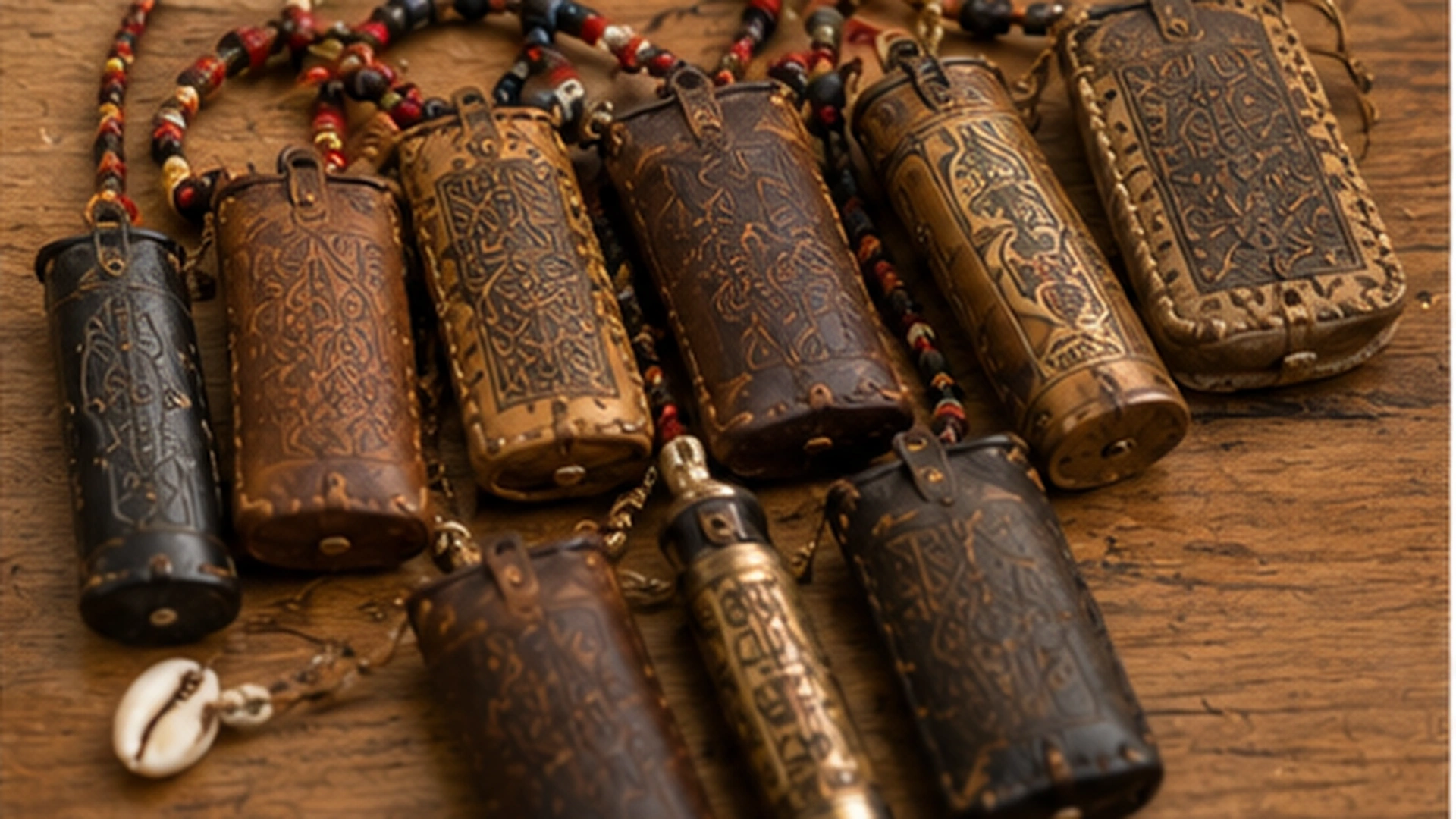
A nineteenth-century object in the British Museum was made by a Wolof artisan in The Gambia. It consists of a leather case containing paper with a Qur’anic inscription and is suspended from a leather strap.
Other African Muslim amulets contain several small cases attached to one cord or necklace. A British Museum example probably made in South Sudan includes eight leather cases containing Qur’anic texts, along with a bead and cowrie shell.
What does the cord do?
The cord may:
- Hold the case against the body
- Join several cases
- Allow the object to be worn
- Protect the enclosed writing from loss
- Form part of the visual design
- Carry culturally meaningful knots or wrapping
The religious significance may lie primarily in the enclosed text rather than in the cord itself.
An outside observer should not assume that every knot on a leather amulet is a separate magical symbol.
Diversity within Islam
Muslim scholars and communities have debated the use of wearable amulets.
Some accept objects containing known Qur’anic passages or prayers when God is understood as the source of protection. Others reject the wearing of amulets because of concerns about superstition, unknown formulas, or dependence upon an object.
Islamic talismans have historically included small amulets, prayer books, scrolls, textiles, and inscribed objects intended to be worn or carried. Their form and acceptance vary by region, legal interpretation, scholarly tradition, and historical period.
A Wolof amulet case should not be presented as representative of all African Muslims.
Ethiopian Protective Scrolls
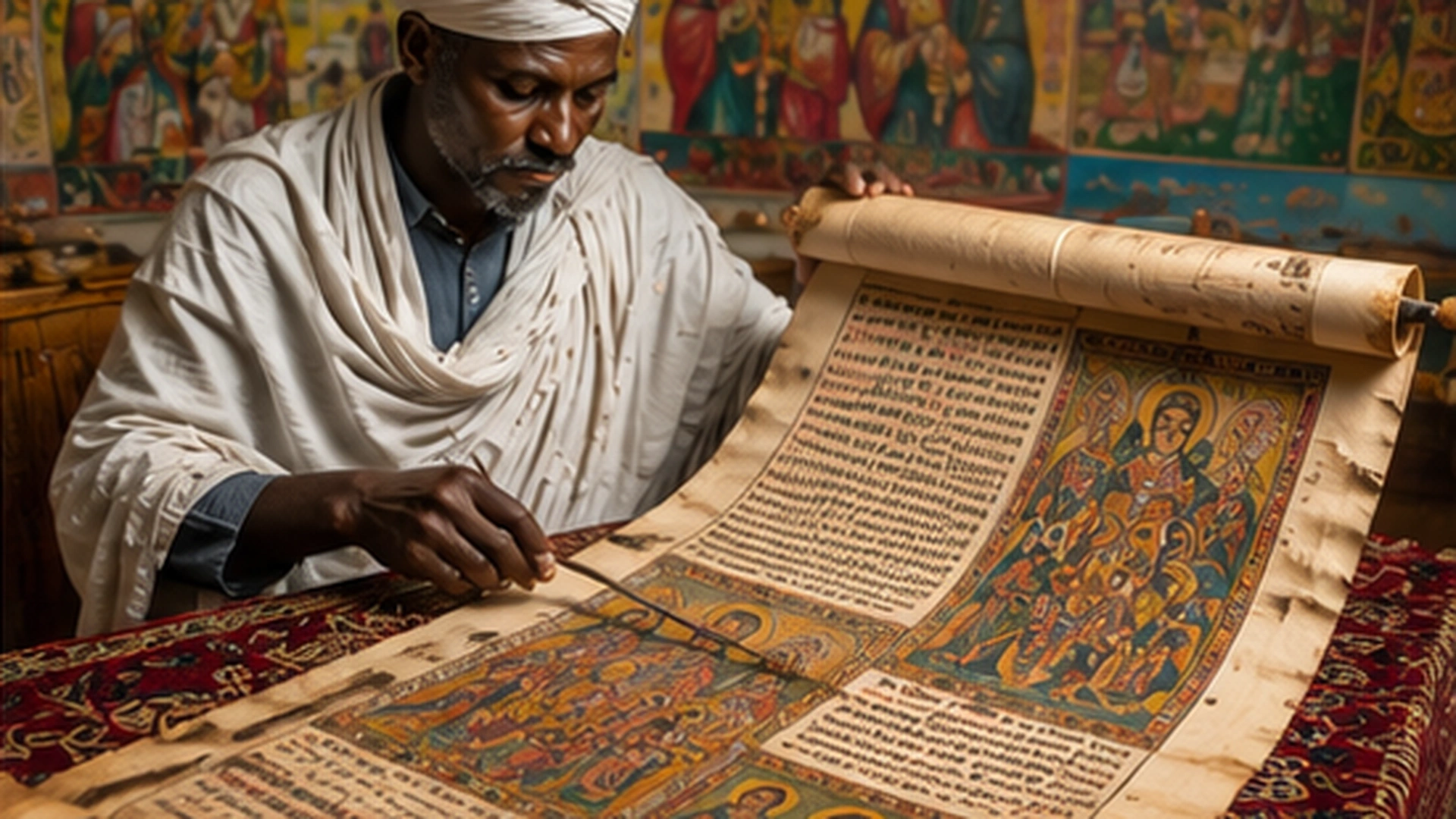
Ethiopian protective and healing scrolls are personalized parchment manuscripts associated particularly with Amhara and Tigrinya-speaking settings.
They may combine:
- Christian prayers
- Sacred names
- Scriptural passages
- Angelic images
- Geometric designs
- Protective imagery
- The owner’s name
The scrolls were prepared for particular individuals and could be carried on the body, stored rolled in a case, unrolled during religious support, or displayed in a household.
The role of the däbtära
Many scrolls were prepared by a däbtära, an unordained Ethiopian Orthodox cleric with specialist education in chant, manuscripts, religious learning, and related practices.
The role should not be simplified into the English words “priest,” “magician,” or “witch doctor.”
The scroll’s meaning depended on the relationship between its maker, its owner, its prayers, its imagery, and the religious setting in which it was used.
Rolling, enclosing, and carrying
The physical structure of the scroll mattered.
It could be:
- Rolled for storage
- Enclosed in a protective case
- Suspended from a cord
- Made in relation to the intended owner
- Opened for viewing and prayer
This does not mean that every rolled manuscript is a protective object. The function depends on its content, preparation, and documented use.
Health boundaries
Historical users understood these scrolls through religious ideas about illness and protection.
Modern educational writing can explain those beliefs without claiming that a scroll has been scientifically proven to cure disease.
WHO’s current traditional-medicine strategy emphasizes evidence, safety, regulation, informed choice, community participation, and responsible integration with health systems.
Mohara Ody Among Particular Sakalava Communities
A documented twentieth-century mohara ody from the Sakalava peoples of Madagascar was made from zebu horn, wood, glass beads, fiber, and cotton thread.
The horn served as a container, while the base was wrapped with cotton thread in complex patterns. The object was worn from the neck or waist and was understood within its Sakalava setting as protective.
This example shows that wrapping can perform several functions simultaneously:
- Closing or reinforcing a container
- Decorating the object
- Connecting materials
- Allowing the object to be worn
- Communicating culturally specific protective meaning
The object’s historical association with cattle raiding and masculine status must also be acknowledged rather than romanticized.
It should not be copied as a general Malagasy necklace or marketed as a universal African protection object.
Luluwa Protective Figures
Among Luluwa peoples in the region now known as the Democratic Republic of the Congo, particular carved figures were used in personal and household contexts.
Museum documentation notes that small figures could be tucked into wrappers or belts during pregnancy, placed near an infant after birth, or suspended from a hunter’s belt. These objects could combine protective, practical, ancestral, and artistic functions.
A carved figure might therefore be:
- An amulet
- A container
- A personal object
- A reference to ancestral protection
- A work of sculpture
- An item attached through a cord or belt
Its meaning cannot be determined from the figure’s shape alone.
What Counts as a Protective Object?
A protective object may be any material item believed to safeguard a person, household, animal, activity, or community.
- Object type
- Possible function
- Knot-shaped amulet
- Represents protection, binding, or a specific sacred symbol
- Knotted cord
- Secures an object or carries culturally defined meaning
- Leather amulet case
- Protects and contains written prayers or other materials
- Protective scroll
- Carries prayers, images, and personalized religious content
- Power figure
- Serves as a receptacle used by recognized specialists
- Horn container
- Holds culturally significant substances
- Pendant
- Allows a symbol or sacred text to be worn
- Cloth packet
- Encloses materials and may be tied to the body or another object
- Religious medal
- Supports devotion, identity, remembrance, or prayer
- Household object
- Placed near a doorway, sleeping area, shrine, or family space
These categories overlap.
A protective object may also function as jewelry, clothing, legal evidence, religious writing, art, family property, or an expression of social identity.
Knots Versus Containers
A knot is not always the main source of meaning.
In some traditions, the protective significance may be concentrated in:
- The enclosed prayer
- Sacred writing
- A recognized substance
- A carved symbol
- The authority of the maker
- The identity of the owner
- A divine or ancestral association
The knot or cord may simply keep everything together.
In other settings, tying itself is symbolically important because it represents binding, capturing, sealing, or establishing a relationship.
Good cultural research asks which of these interpretations participants actually recognize.
Protective Objects Versus Sacred Objects
Not every sacred object is protective, and not every protective object is considered sacred.
A sacred object may be used for:
- Worship
- Leadership
- Remembrance
- Divination
- Teaching
- Burial
- Initiation
- Community law
- Healing
- Music
- Religious identity
A protective object has a more specific connection with safeguarding, preventing harm, supporting health, or addressing danger.
An object can belong to both categories, but the terms should not be used automatically as synonyms.
Protective Objects Versus Jewelry
Jewelry may communicate:
- Beauty
- Wealth
- Marriage
- Age
- Gender
- Rank
- Community identity
- Fashion
- Religious affiliation
- Mourning
- Professional office
Some jewelry also functions as an amulet. Other jewelry has no protective meaning.
A bead necklace should not be called sacred merely because it was made in Africa.
Researchers should look for evidence from the owner, maker, community, museum record, inscription, historical source, or documented use.
Who Creates Protective Objects?
Depending on the tradition, protective objects may be made by:
- Jewelers
- Leatherworkers
- Scribes
- Clerics
- Carvers
- Metalworkers
- Healers
- Family members
- Weavers
- Religious scholars
- Ritual specialists
- Commercial workshops
The craftsperson and religious authority may be the same person, but they may also hold separate roles.
A Kongo artist could carve a figure while an nganga prepared it for recognized use. A West African leatherworker might make an amulet case containing writing produced by a Muslim scholar. An Ethiopian däbtära might prepare both the written and visual content of a scroll.
Why Objects Are Wrapped or Sealed
Wrapping and sealing may:
- Protect contents from damage
- Prevent casual viewing
- Keep materials together
- Preserve sacred writing
- Maintain privacy
- Restrict access
- Connect the object to its owner
- Mark that the contents are complete
- Support portability
- Express containment symbolically
Opening a sealed object can damage it physically and may violate religious or community expectations.
Museums and collectors should not open protective packets merely out of curiosity without ethical consultation and conservation planning.
Can Knots Be Opened?
The answer depends on the object.
A practical knot may be untied when the object is removed or repaired.
A sealed religious object may not be intended for casual opening. A burial amulet may have been positioned permanently. A packet attached to an nkisi may belong to a restricted professional context.
People should not cut open inherited amulet cases, scroll containers, packets, or medicine bundles without first considering:
- Ownership
- Family consent
- Religious significance
- Conservation risks
- Possible hazardous substances
- Community authority
- Legal restrictions
Unknown contents may include fragile writing, sharp pieces, powders, plant material, metals, or biological substances.
Common Misconceptions
“Every knot has a spiritual meaning”
False.
Most knots are practical. Sacred meaning depends on cultural context.
“All sacred knots mean eternal love”
False.
That interpretation may belong to particular modern or historical traditions, but it cannot be applied universally.
“Every African cord is an amulet”
False.
Cords may hold clothing, tools, containers, jewelry, weapons, bags, instruments, or household materials.
“The tyet is a universal African protection symbol”
False.
The tyet belongs specifically to ancient Egyptian religion and was associated with Isis and funerary protection.
“All Kongo power figures are evil objects”
False.
Particular minkisi were connected with healing, law, peace, dispute settlement, agreements, and community protection.
“Every written amulet contains secret magic”
False.
Some contain recognizable Qur’anic passages, Christian prayers, personal names, or other religious writing.
“A replica has the same status as an original sacred object”
Not necessarily.
Meaning may depend on authorization, ownership, preparation, material, community recognition, or religious context.
“Protective objects guarantee safety”
False.
No knot, amulet, scroll, figure, cord, or case can guarantee protection from illness, violence, accidents, pregnancy complications, legal problems, or financial loss.
“Old museum labels are always accurate”
False.
Older catalogues often used broad colonial terms such as “fetish,” “charm,” “magic object,” or “native medicine” without identifying the object’s actual name, maker, or institution.
Cultural Appropriation and Commercialization
Sacred knots and protective objects are frequently copied for jewelry, fashion, tourism, and online spiritual services.
Problems arise when sellers:
- Combine unrelated symbols
- Claim every design is “ancient African”
- Invent guaranteed meanings
- Use sacred titles without training
- Sell copies as ritually authentic
- Reveal restricted contents
- Present funerary symbols as casual decoration
- Remove objects from community ownership
- Promise supernatural protection
- Erase named makers and traditions
A modern designer may study historical knot forms, but the product should be described honestly.
A necklace inspired by the tyet is not an ancient Egyptian amulet. A leather pouch inspired by West African cases does not automatically contain Qur’anic authority. A carved figure decorated with nails is not an nkisi.
Museum Ethics and Cultural Ownership
Protective objects entered museums through archaeology, trade, purchase, missionary collecting, military expeditions, colonial administration, private collecting, and donation.
Important questions include:
- Was the object obtained with consent?
- Was it removed from a burial?
- Does it contain restricted material?
- Is the maker known?
- Was the community name recorded accurately?
- Should the object remain sealed?
- Should descendants be consulted?
- Is repatriation appropriate?
- Can the object be photographed publicly?
UNESCO’s ethical principles emphasize that communities, groups, and individuals who create and maintain cultural heritage should play a central role in decisions about safeguarding, representation, and access.
Are Sacred Knots and Protective Objects Scientifically Proven?
There is no reliable scientific evidence that a knot, cord, amulet, scroll, pendant, packet, or carved figure creates a supernatural barrier against harm.
Such objects may still provide:
- Emotional comfort
- Religious meaning
- Cultural belonging
- Family continuity
- A reminder to pray
- Confidence
- Community support
- A sense of identity
These experiences should not be confused with proof that an object can:
- Stop a weapon
- Cure infection
- Prevent pregnancy complications
- Guarantee fertility
- Control another person
- Win a court case
- Prevent every accident
- Reverse financial loss
- Replace a security system
The WHO Global Traditional Medicine Strategy 2025–2034 calls for stronger evidence, safety standards, regulation, autonomy, and community engagement in the responsible use of traditional and complementary practices.
Practical Safety Risks
Protective objects may create risks when they contain:
- Lead
- Mercury
- Toxic pigments
- Unknown powders
- Unidentified herbs
- Contaminated animal material
- Sharp metal
- Small choking hazards
- Tight cords
- Flammable substances
- Skin irritants
Children should not sleep with neck cords or small objects that create strangulation or choking risks.
An unknown object should not be:
- Swallowed
- Burned indoors
- Opened near food
- Placed inside the body
- Applied to an open wound
- Given to a child
- Used instead of medical care
Ethical Boundaries
Educational content should not provide:
- Secret prayers
- Restricted sacred names
- Instructions for activating power objects
- Formulas involving unknown substances
- Methods intended to control another person
- Instructions for concealing illegal activity
- Private initiation knowledge
- Directions for opening inherited sacred packets
- Claims of guaranteed results
Protective traditions do not replace:
- Medical treatment
- Mental-health support
- Legal advice
- Emergency services
- Domestic-violence assistance
- Child-protection services
- Physical security
- Financial planning
How to Study Sacred Knots Respectfully
Identify the tradition
Do not stop at labels such as “African knot” or “tribal protection object.”
Identify:
- Community
- Region
- Religion
- Language
- Maker
- Date
- Materials
- Owner
- Function
- Collection history
Separate form from meaning
Two objects may both contain knots while serving completely different purposes.
Ask whether the knot is:
- Practical
- Decorative
- Protective
- Funerary
- Religious
- Legal
- Restrictive
- Symbolic
- Unknown
Use community terminology
Use tyet, nkisi, mohara ody, tälsäm, or another documented term where appropriate.
English words such as charm, fetish, magic, and amulet may be incomplete or historically biased.
Respect closed objects
Do not open a case, packet, bundle, scroll container, or sealed object without permission and professional guidance.
Avoid claims of effectiveness
Describe what people believed, intended, or practiced.
Do not state that an object objectively prevented harm unless there is evidence for an ordinary physical function.
Key Takeaways
- Sacred knots are culturally defined knots or knot-shaped symbols with religious, social, or protective meanings.
- Knots do not carry one universal spiritual meaning.
- The ancient Egyptian tyet was associated with Isis and protection in the afterlife.
- The Herakles knot became a prominent motif in Hellenistic and Roman jewelry.
- Kongo minkisi could include tied cloth, packets, cords, and other attached materials.
- Particular minkisi were used in connection with healing, community law, peace, vows, and dispute settlement.
- West African Muslim amulet cases may contain Qur’anic writing enclosed in leather and suspended from cords.
- Ethiopian protective scrolls combine personalized prayers and sacred imagery.
- Sakalava mohara ody may combine horn containers, beads, fiber, and protective wrapping.
- Luluwa figures could be attached to belts, clothing, or sleeping areas in particular protective contexts.
- Not every knot, cord, necklace, figure, or packet is sacred.
- Protective objects should be interpreted through their makers, owners, communities, and documented uses.
- Replicas do not automatically possess the cultural or religious status of original objects.
- No protective object guarantees safety, healing, fertility, love, wealth, or legal success.
- Unknown sealed objects should not be opened without consent and appropriate expertise.
- Communities should participate in decisions about documentation, museum display, and cultural safeguarding.
People Also Ask
What is a sacred knot?
A sacred knot is a knot or knot-shaped symbol given religious, ceremonial, social, or protective meaning within a particular tradition.
What do sacred knots symbolize?
Depending on the tradition, they may represent protection, binding, connection, continuity, containment, obligation, or release.
What is the ancient Egyptian Knot of Isis?
The Knot of Isis is a modern name for the tyet or Tit amulet, a knotted-cloth symbol associated with Isis and funerary protection.
What is an African protective object?
The phrase describes many culturally distinct objects, including amulet cases, scrolls, carved figures, horn containers, pendants, packets, and religious texts.
What is a Kongo nkisi?
An nkisi is a Kongo power object or receptacle prepared through collaboration between an artist and a recognized ritual specialist.
Why are written prayers placed inside leather cases?
In particular Muslim communities, written Qur’anic passages or prayers may be enclosed to preserve them and allow them to be worn on the body.
What is an Ethiopian protective scroll?
It is a personalized parchment manuscript containing Christian prayers and protective imagery associated with particular Ethiopian religious traditions.
Are sacred knots scientifically proven to provide protection?
No. Their protective meaning is religious or cultural rather than a scientifically established physical effect.
Is it acceptable to wear a sacred knot from another culture?
It depends on the object, context, and community. Public historical designs may be used respectfully, while restricted or official objects require greater care.
Should an inherited protective packet be opened?
Not casually. It may contain fragile, sacred, private, sharp, toxic, or biologically unsafe material.
Frequently Asked Questions
1. What is the difference between a sacred knot and an ordinary knot?
An ordinary knot serves a practical purpose. A sacred knot carries additional meaning recognized within a particular religious, cultural, or ceremonial setting.
2. Do all sacred knots mean protection?
No. Some may symbolize obligation, marriage, continuity, restriction, remembrance, authority, or another concept.
Frequently Asked Questions
What should readers know first about african spirituality and cultural history?
African spirituality and cultural history: Read clear guidance, key signs, practical steps, and private support from Ancestral Temple.
What causes Sacred Knots and Protective Objects?
The safest next step is to compare the signs, prepare clear details, and request private guidance when the matter feels personal.
How does Sacred Knots and Protective Objects work?
The safest next step is to compare the signs, prepare clear details, and request private guidance when the matter feels personal.
Is it possible to get private guidance for Sacred Knots and Protective Objects?
The safest next step is to compare the signs, prepare clear details, and request private guidance when the matter feels personal.
How long does Sacred Knots and Protective Objects take to understand?
The safest next step is to compare the signs, prepare clear details, and request private guidance when the matter feels personal.
Can Sacred Knots and Protective Objects affect relationships, family, work, or personal peace?
The safest next step is to compare the signs, prepare clear details, and request private guidance when the matter feels personal.
Why do people seek spiritual guidance for Sacred Knots and Protective Objects?
The safest next step is to compare the signs, prepare clear details, and request private guidance when the matter feels personal.
What signs should someone notice before asking about Sacred Knots and Protective Objects?
The safest next step is to compare the signs, prepare clear details, and request private guidance when the matter feels personal.
When should someone contact a private spiritual guide?
The safest next step is to compare the signs, prepare clear details, and request private guidance when the matter feels personal.
What causes african spirituality and cultural history?
African spirituality and cultural history: Read clear guidance, key signs, practical steps, and private support from Ancestral Temple. The safest next step is to compare the signs, prepare clear details, and request private guidance when the matter feels perso
Article Information
- Publisher
- Ancestral Temple
- Editor
- Ancestral Temple
- Last updated
- Jul 26, 2026
- Last reviewed
- Jul 13, 2026
- Content version
- c6b75566b5
This educational article should be read as cultural and spiritual information, not as medical, legal, financial, or emergency advice.
Helpful Related Guidance
Explore This Topic
Sacred Symbols In African Spiritual Traditions · African Spirituality And Cultural History
Related Topic Cluster
African Spirituality And Cultural History
Complete Guide Understanding Generational TraditionsAbout the Author
 Ancestral Temple
Spiritual guide and practitioner with decades of experience in ancestral wisdom, rituals, and divine guidance.
Related Posts
View All

Leave a Comment
We'd love to hear your thoughts.
The article explained a complex topic without using fear-based or supernatural language.
A downloadable guide to protective-object terminology would be useful.
The conclusion correctly emphasized relationships between makers, owners, and communities.
I appreciated that the article identified specific African communities instead of mixing them together.
Can digital scans help preserve Ethiopian scrolls without exposing restricted text?
The explanation of why sealed objects should not be opened casually was valuable.
I would like a comparison between Kongo minkisi and Songye nkishi traditions.
The article was detailed but remained easy to scan on a phone.
Could modern designers use knot symbols respectfully if they clearly identify their inspiration?
I appreciated the reminder that religious comfort is different from scientific proof.
The section about symbolic binding and practical fastening was particularly clear.
I would enjoy an article about the history of prayer texts worn on the body.
The safety warnings were practical without dismissing cultural beliefs.
Could you write a detailed guide about the ethics of photographing sacred objects?
I appreciated the distinction between sacred objects, protective objects, and jewelry.
The museum-ethics section added important historical context.
Can sacred objects legally be returned to the communities from which they were collected?
I would like more information about women as owners and makers of protective objects.
The article correctly avoided claiming that every written amulet contains secret magic.
The table comparing object types and functions was easy to understand.
How should a family preserve an inherited leather case that is becoming brittle?
I appreciated the explanation that the tyet should not be marketed as a universal African symbol.
The Kongo examples were much more complex than the descriptions usually found online.
I would enjoy a separate article about protective objects used during pregnancy in different historical communities.
The article helped me understand why a replica is not automatically a traditional sacred object.
Could you explore how sacred cords differ from ordinary jewelry cords?
I liked the statement that the enclosed prayer may matter more than the cord itself.
The Ethiopian-scroll section was detailed without turning the tradition into instructions.
Are there non-invasive ways to identify writing inside a leather amulet case?
The glossary definition of provenance was useful.
A follow-up article about old museum labels such as “fetish” would be valuable.
I appreciated the warning against cutting open inherited packets without guidance.
The explanation of the Sakalava mohara ody was culturally specific and informative.
Could you write more about protective objects used in Madagascar?
The article clearly separates cultural belief from scientifically proven protection.
I would like more information about the different responsibilities of an artist and an nganga.
The section about wrapping and sealing gave me a new way to understand protective objects.
I appreciated the careful explanation of diversity within Islamic amulet traditions.
The child-safety warning about cords and small objects was important.
Can museum technology examine sealed amulet cases without physically opening them?
Thank you for explaining why the phrase “African protection charm” is often too vague.
The Kongo nkisi section showed that these objects could relate to law and community responsibility.
I would enjoy a complete article about the Knot of Isis and its funerary history.
The difference between the tyet and the Herakles knot was especially helpful.
I appreciated the explanation that an ordinary practical knot should not automatically be described as sacred.