
Animal Symbols in Sacred Objects
Cornerstone Content
Quick Summary
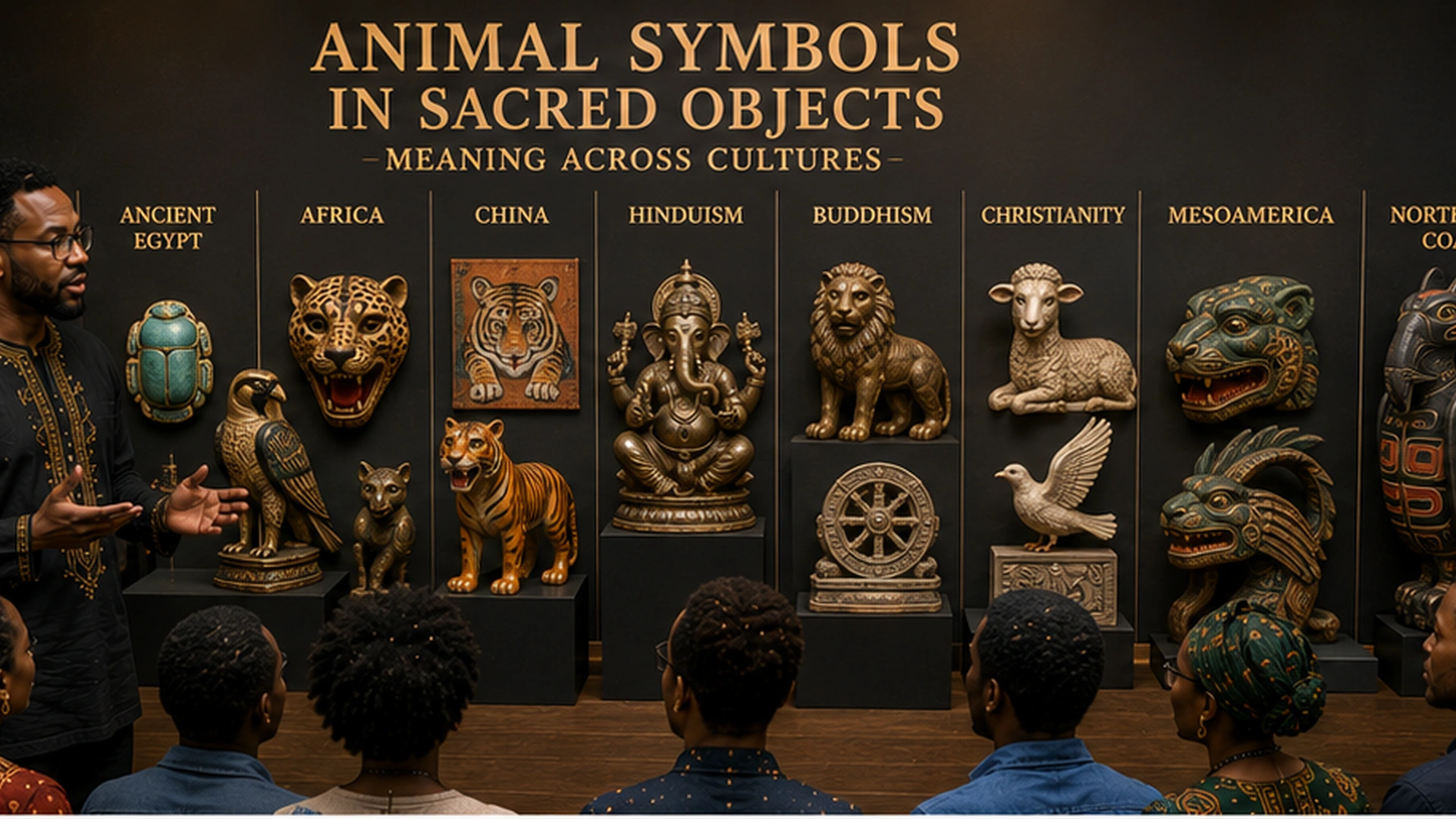
Animal symbols in sacred objects can express protection, divine presence, leadership, ancestry, fertility, transformation, moral teaching, clan identity, or cosmic order. Their meanings are culturally specific: a scarab, tiger, elephant, lamb, jaguar, or eagle does not carry one universal message.
Animal Symbols in Sacred Objects explains the meaning, background and cultural context of animal symbols in sacred objects in clear educational language. The article answers the main topic near the beginning, preserves the original examples and highlights important distinctions for respectful understanding.
Animals appear on amulets, masks, staffs, crowns, vessels, shrines, textiles, temple sculpture, jewelry, reliquaries, and ritual architecture across the world.
Their presence does not mean that every culture worshipped animals. An animal may represent a deity, ancestor, royal office, clan, moral quality, ecological relationship, protective force, feared danger, or remembered historical event.
The National Museum of African Art notes that animals in African arts can symbolize leadership, appear in masquerades, and communicate histories and moral values. Such meanings must be identified by the particular community and object rather than generalized across the continent.
Visual similarity also does not prove a shared origin. Lions, snakes, birds, and powerful predators can acquire symbolic importance independently in different societies.
This article compares public, documented traditions. It avoids secret ritual instructions and does not claim that any animal image guarantees supernatural protection.
Suggested scene: Black African museum historian introducing culturally separated sacred objects featuring Egyptian scarabs and falcons, African leadership animals, Chinese tigers, Hindu elephants, Buddhist lions, Christian lambs, and Mesoamerican jaguars.
Key Points
Animal symbols do not have one universal meaning.
Ancient Egyptian animal forms linked deities, protection, kingship, rebirth, danger, and healing.
African animal imagery may express leadership, ancestry, social values, masquerade identities, or spiritual perception.
Chinese tiger images could symbolize bravery and act as defensive talismans.
Ganesha’s elephant head belongs to specific Hindu theology, not a generic elephant symbol.
Buddhist lions, deer, elephants, and mythical animals can signify teaching, sovereignty, memory, and protection.
Christian lambs and doves represent Christ, sacrifice, peace, and the Holy Spirit in specific contexts.
Mesoamerican jaguars, eagles, serpents, and hybrid beings could express rulership, warfare, fertility, cosmic order, or transformation.
Northwest Coast crest animals identify clans and inherited rights.
Historical significance does not scientifically prove supernatural power.
How Animal Meaning Is Created
Factor
Why it matters
Species
A falcon, lion, snake, deer, dog, or beetle brings different observed qualities and histories.
Behavior
Flight, hunting, migration, hibernation, shedding, fertility, or nocturnal activity may shape interpretation.
Deity or ancestor
An animal may embody, accompany, or identify a divine or ancestral being.
Object type
The same animal can mean something different on an amulet, crown, mask, altar, vessel, or tomb.
Pose and attributes
Standing, attacking, nursing, flying, crowned, horned, or hybrid forms change meaning.
Material and color
Gold, wood, ivory, shell, stone, textile, or metal can add status and sacred associations.
Placement
An animal at a doorway may guard, while one on royal regalia may signify authority.
Community and period
Meanings change across languages, regions, institutions, and historical eras.
1. Ancient Egyptian Animal-Form Amulets
Ancient Egyptian religion linked many deities with animal forms, but the relationship was complex. A god could appear as a human, an animal, or a hybrid, and one animal species could connect with several divine beings.
Common animal forms included scarabs, falcons, cats, lions, crocodiles, ibises, jackals, baboons, cobras, hippopotamuses, and rams.
Scarab
The scarab beetle was associated with Khepri, becoming, the renewed morning sun, and rebirth. Scarab amulets, seals, and heart scarabs had distinct functions and should not be treated as identical.
Falcon
Falcons were closely associated with Horus and royal kingship. A falcon could communicate celestial power, divine protection, and legitimate rule.
Lion and lioness
Lion imagery could express royal force and solar power. Lioness deities such as Sekhmet combined dangerous power with healing and royal defense.
Crocodile
The crocodile was associated especially with Sobek and could represent water, fertility, military strength, danger, and royal power.
Cat
Cats were connected with Bastet and could express household protection, motherhood, music, pleasure, and controlled protective power.
Cobra
The rearing cobra or uraeus represented divine and royal defense, especially on the crowns of kings and deities.
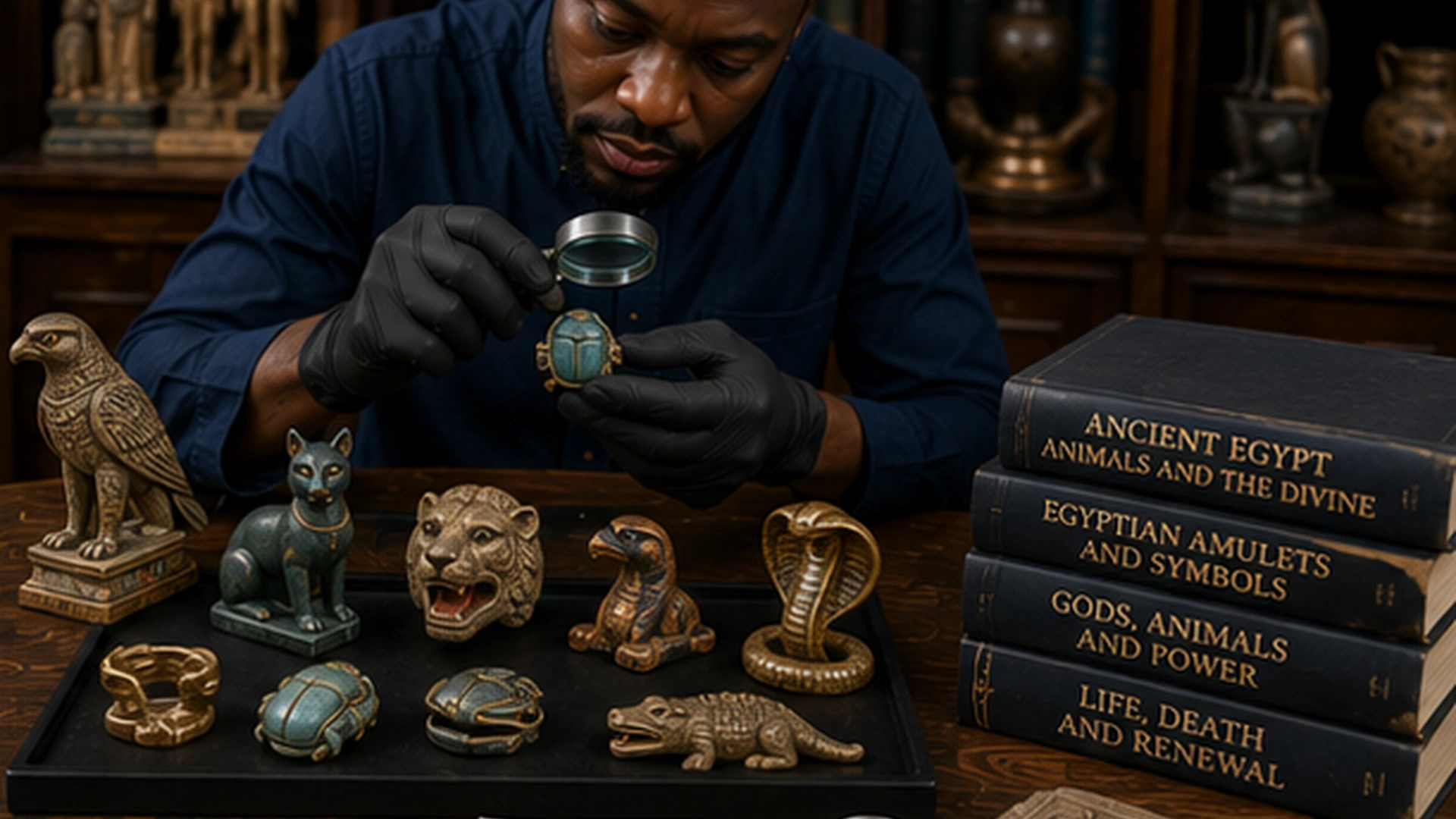
Suggested scene: Black African Egyptologist examining separate scarab, falcon, lioness, crocodile, cat, and cobra amulets in a conservation laboratory.
2. Animals in African Sacred and Ceremonial Arts
African visual traditions are extraordinarily diverse. Animal imagery can represent leadership, social values, spiritual presence, clan history, political office, ecological knowledge, or the identity assumed in masquerade.
The National Museum of African Art emphasizes that animals in African art may symbolize leadership, appear in masquerades, and tell histories and moral values.
Leadership animals
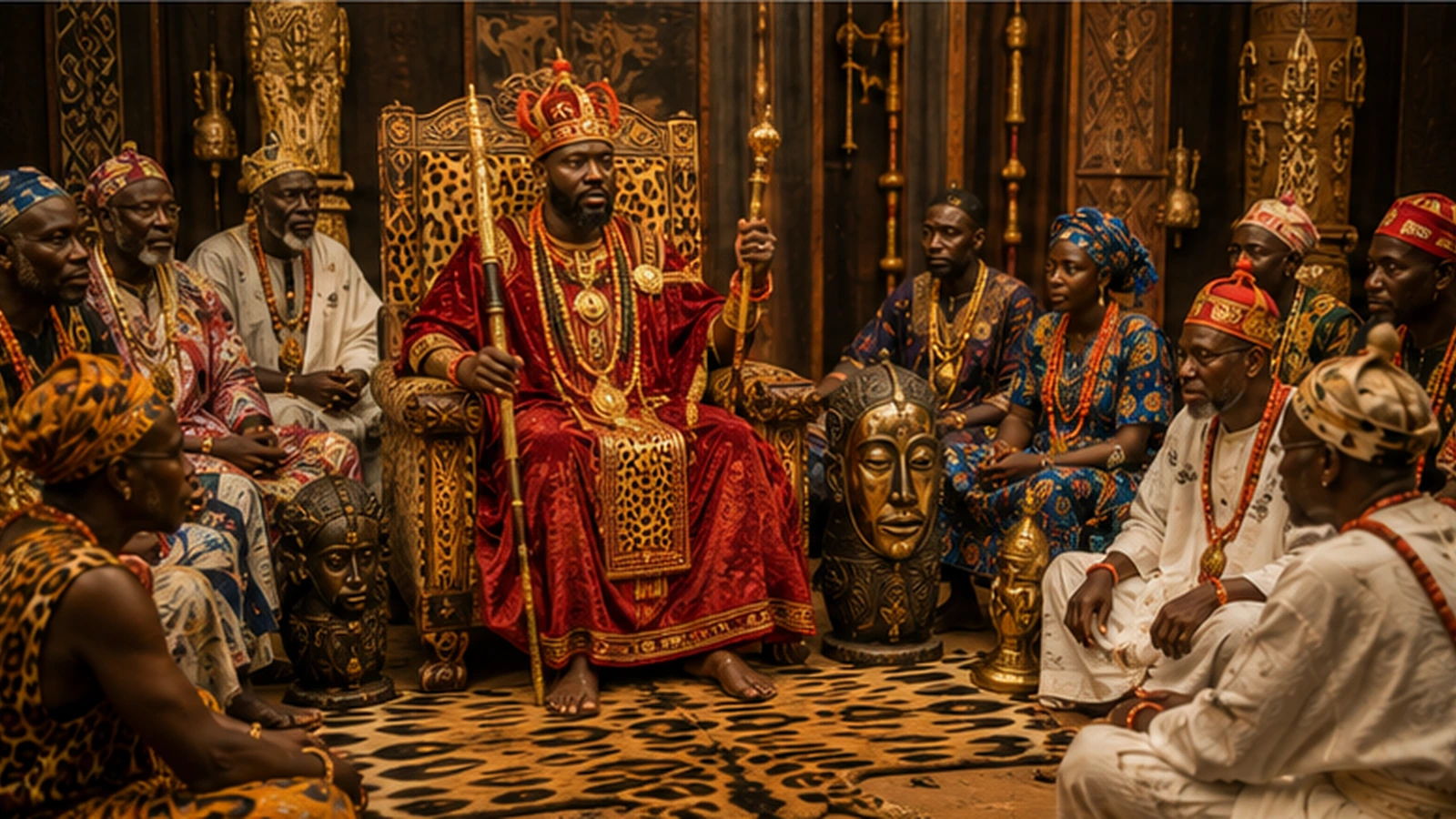
Powerful animals such as leopards, elephants, buffalo, crocodiles, and birds may signify authority in particular kingdoms and communities. The exact meaning depends on court history and local language.
Composite beings
Some sacred or political objects combine features from several animals. Composite forms can communicate exceptional power, mediation between realms, or the ability to command multiple qualities.
Masquerade animals
An animal represented in masquerade is not merely a costume. The performer, music, audience, institution, season, and community interpretation create meaning.
Benin court animals
Crocodiles, mudfish, leopards, and other creatures appear in Benin court art. Their associations include the Oba’s authority, liminal power, royal history, and the relationship between land and water.
Asante animal imagery
Animal forms on gold weights, staffs, swords, and regalia can communicate proverbs, royal qualities, moral lessons, and political relationships.
Frequently Asked Questions
What should readers know first about african spirituality and cultural history?
African spirituality and cultural history: Read clear guidance, key signs, practical steps, and private support from Ancestral Temple.
What causes animal-symbols-in-sacred-objects?
The safest next step is to compare the signs, prepare clear details, and request private guidance when the matter feels personal.
How does animal-symbols-in-sacred-objects work?
The safest next step is to compare the signs, prepare clear details, and request private guidance when the matter feels personal.
Is it possible to get private guidance for animal-symbols-in-sacred-objects?
The safest next step is to compare the signs, prepare clear details, and request private guidance when the matter feels personal.
How long does animal-symbols-in-sacred-objects take to understand?
The safest next step is to compare the signs, prepare clear details, and request private guidance when the matter feels personal.
Can animal-symbols-in-sacred-objects affect relationships, family, work, or personal peace?
The safest next step is to compare the signs, prepare clear details, and request private guidance when the matter feels personal.
Why do people seek spiritual guidance for animal-symbols-in-sacred-objects?
The safest next step is to compare the signs, prepare clear details, and request private guidance when the matter feels personal.
What signs should someone notice before asking about animal-symbols-in-sacred-objects?
The safest next step is to compare the signs, prepare clear details, and request private guidance when the matter feels personal.
When should someone contact a private spiritual guide?
The safest next step is to compare the signs, prepare clear details, and request private guidance when the matter feels personal.
What causes african spirituality and cultural history?
African spirituality and cultural history: Read clear guidance, key signs, practical steps, and private support from Ancestral Temple. The safest next step is to compare the signs, prepare clear details, and request private guidance when the matter feels perso
Article Information
- Publisher
- Ancestral Temple
- Editor
- Ancestral Temple
- Last updated
- Jul 26, 2026
- Last reviewed
- Jul 13, 2026
- Content version
- bd2495a2cd
This educational article should be read as cultural and spiritual information, not as medical, legal, financial, or emergency advice.
Helpful Related Guidance
Explore This Topic
Protective Symbols Used Throughout History · Sacred Symbols In African Spiritual Traditions
Related Topic Cluster
African Spirituality And Cultural History
Complete Guide Why Homes Have Been Blessed Throughout HistoryAbout the Author
 Ancestral Temple
Spiritual guide and practitioner with decades of experience in ancestral wisdom, rituals, and divine guidance.
Related Posts
View All


Leave a Comment
We'd love to hear your thoughts.
I appreciated the difference between animal symbolism and animal worship.
The article clearly showed that animal meanings are not universal.