
Indigenous Knowledge Systems: Meaning, Examples and Cultural Importance
Quick Summary
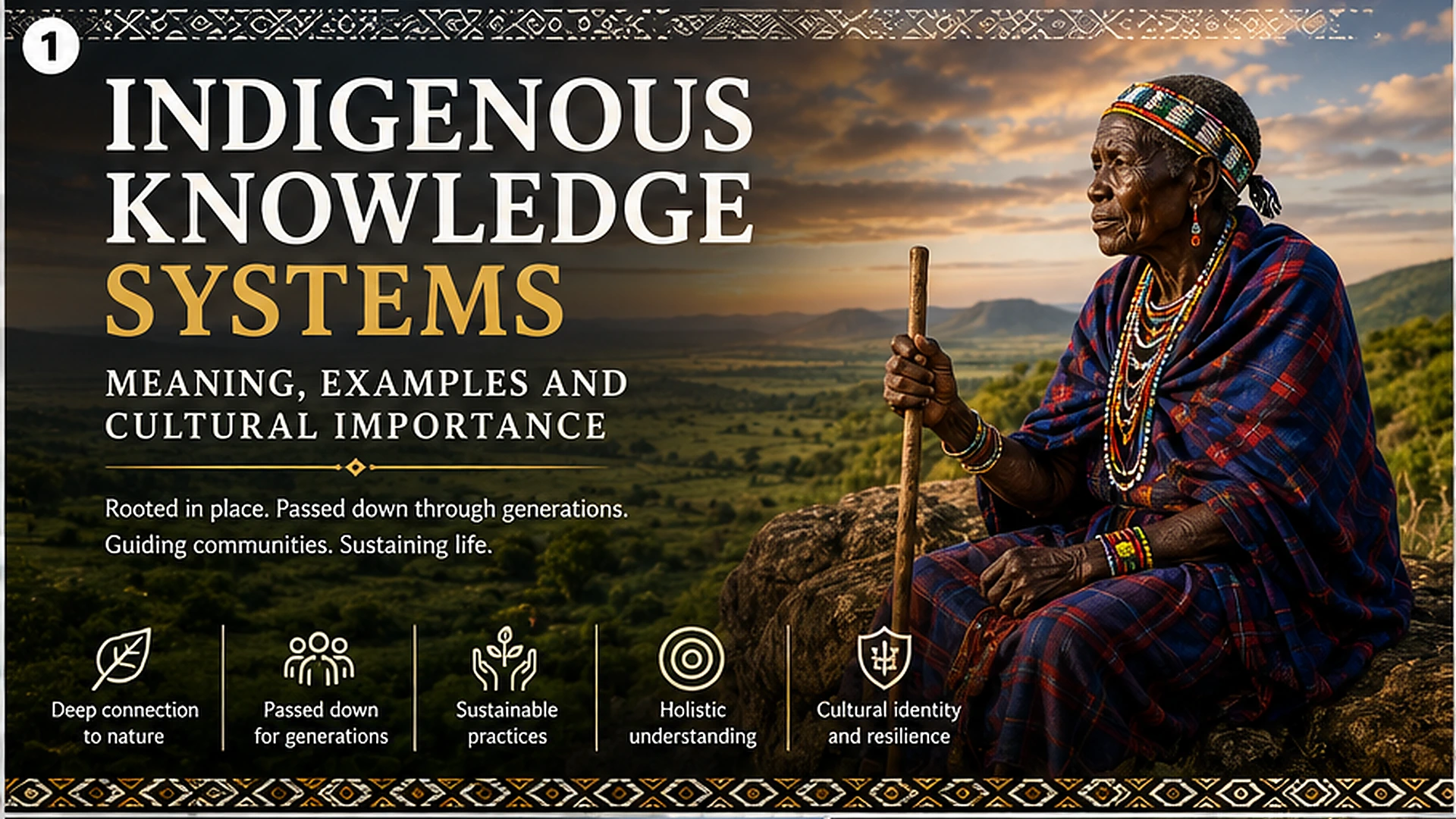
Indigenous knowledge systems are living bodies of knowledge, practice, skill and belief developed by communities through long relationships with particular lands, waters, species,...
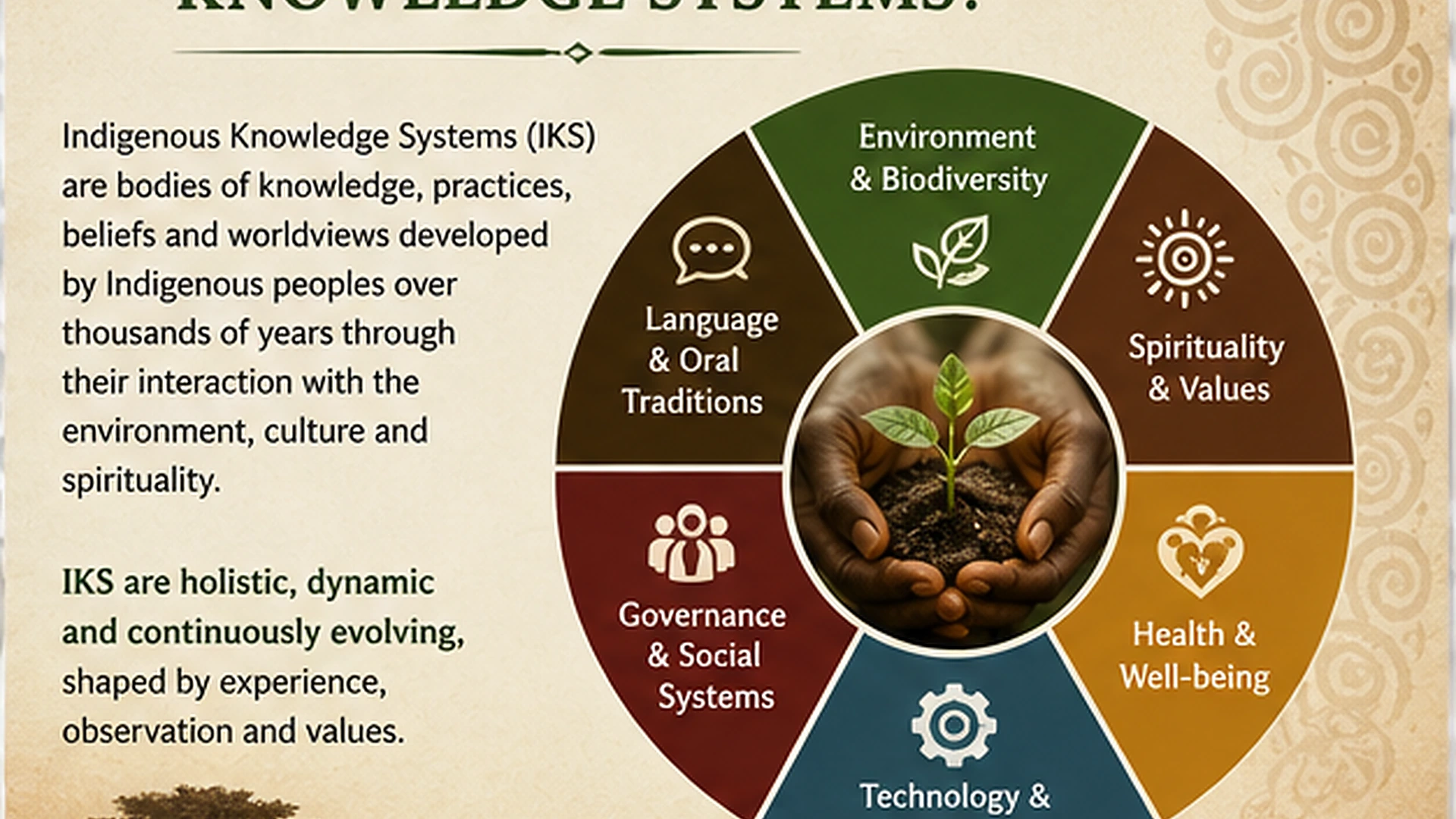
Indigenous knowledge systems are living bodies of knowledge, practice, skill and belief developed by communities through long relationships with particular lands, waters, species, livelihoods, languages and social institutions. They may include seasonal calendars, farming and pastoral techniques, plant knowledge, navigation, architecture, customary law, oral history, healing practices, spiritual responsibilities and methods of teaching younger generations. They are not simply collections of old facts. They are ways of observing, interpreting, testing, remembering and acting within a community.
The term must be used carefully. Indigenous Peoples are culturally and politically distinct, and not every local custom should automatically be called Indigenous knowledge. Knowledge can also be public, family-based, gendered, specialist, sacred or restricted. Some practices are widely shared; others may only be taught through initiation, apprenticeship or community authorization.
International bodies increasingly recognize that Indigenous and local knowledge can contribute to biodiversity conservation, climate adaptation, food security and disaster-risk reduction. At the same time, communities have rights to control, protect and develop their knowledge. Respect therefore requires more than collecting information: it requires consent, participation, attribution, fair benefits and recognition of customary rules.
Quick Answer
| Quick Answer An Indigenous knowledge system is a dynamic body of community knowledge, practices, skills and beliefs shaped through long relationships with a specific environment and culture. It may guide food production, health, weather forecasting, land care, governance, teaching and spiritual responsibility. Such knowledge is continually adapted and is governed by the rights, protocols and consent of its holders. |
|---|
What Are Indigenous Knowledge Systems?
The Intergovernmental Science-Policy Platform on Biodiversity and Ecosystem Services describes Indigenous and local knowledge systems as dynamic, integrated, holistic, social and ecological bodies of knowledge, practices and beliefs about relationships among living beings and their environments. They are grounded in territory, highly diverse and continuously evolving. They may be oral, written, visual, practical, tacit, gendered or scientific in form.[1]
This definition corrects several common misconceptions. Indigenous knowledge is not automatically ancient, unchanged or opposed to innovation. Communities experiment, compare results, adopt useful tools and adjust their practices as environments and political conditions change. A pastoralist may combine a seasonal calendar with radio forecasts. A seed keeper may evaluate a new crop variety while maintaining locally adapted landraces. A healer may distinguish inherited plant knowledge from modern clinical advice.
The word system is important because knowledge does not exist alone. It is connected to language, ethics, kinship, land tenure, authority, spirituality, work, memory and responsibility. Knowing the name of a medicinal plant is not the same as understanding when it is harvested, who may prepare it, how dosage is judged, what warnings apply, how access is governed and what obligations accompany its use.
Indigenous, local and traditional knowledge are related but not identical
| Term | Useful working meaning | Important caution |
|---|---|---|
| Indigenous knowledge | Knowledge held and developed by Indigenous Peoples in relation to their territories, institutions, identities and histories. | Indigeneity is not simply another word for rural, old or non-Western. |
| Local knowledge | Knowledge developed by people through sustained experience in a particular place or livelihood. | Local communities may or may not identify as Indigenous. |
| Traditional knowledge | Knowledge, skills and practices sustained and transmitted within a community, often across generations. | Traditional does not mean static; international law has no single universally accepted definition. |
| Scientific knowledge | Knowledge produced through systematic inquiry, explicit methods, peer review and reproducible or contestable evidence. | Science is diverse, and productive cooperation does not require erasing differences between systems. |
Key Characteristics of Indigenous Knowledge Systems
1. They are place-based
Knowledge develops through detailed attention to particular soils, winds, grazing areas, coastlines, species, water sources and seasonal changes. A forecast method useful in one dryland may not apply in a neighboring ecological zone. Place also includes history: migration, dispossession, drought, conflict and conservation rules influence what communities know and how they use it.
2. They are relational and holistic
Many Indigenous knowledge systems do not divide ecology, economy, spirituality, health and social responsibility into separate compartments. A fishing rule can be simultaneously an ecological practice, a moral obligation and a customary law. A sacred grove can be a place of worship, a historical archive and a habitat protected through community restrictions.
3. They are practical and learned through participation
Some knowledge is taught in stories or formal instruction, but much is learned by observing skilled people, accompanying them, repeating tasks and receiving correction. This tacit knowledge can be difficult to capture in a written list because it involves timing, judgement, touch, sound, smell, bodily memory and social context.
4. They are collective but not equally accessible
A community may recognize collective ownership while particular families, clans, age groups, women, men, ritual specialists, artisans or healers hold different responsibilities. Publication can therefore be harmful when it assumes that one interviewee has authority to disclose everything.
5. They are dynamic
Communities continuously evaluate new conditions. Indigenous knowledge can incorporate mobile phones, geographic information systems, laboratory tests, new crops or government forecasts without losing its identity. Change does not make it less Indigenous; forced extraction or loss of community control is the more important concern.
6. They are governed by values and customary rules
Knowledge may be connected to duties of reciprocity, care, restraint and accountability. Customary law can define who may gather plants, enter a sacred place, share a design, use a family remedy or speak for the community. WIPO notes that customary law is integral to how many communities seek protection against misuse and misappropriation.[2]
Examples of Indigenous Knowledge Systems
Examples differ by community and should not be treated as interchangeable. The table below shows major fields in which Indigenous knowledge may operate, followed by specific case studies.
| Field | Examples of knowledge and practice | What makes it a system |
|---|---|---|
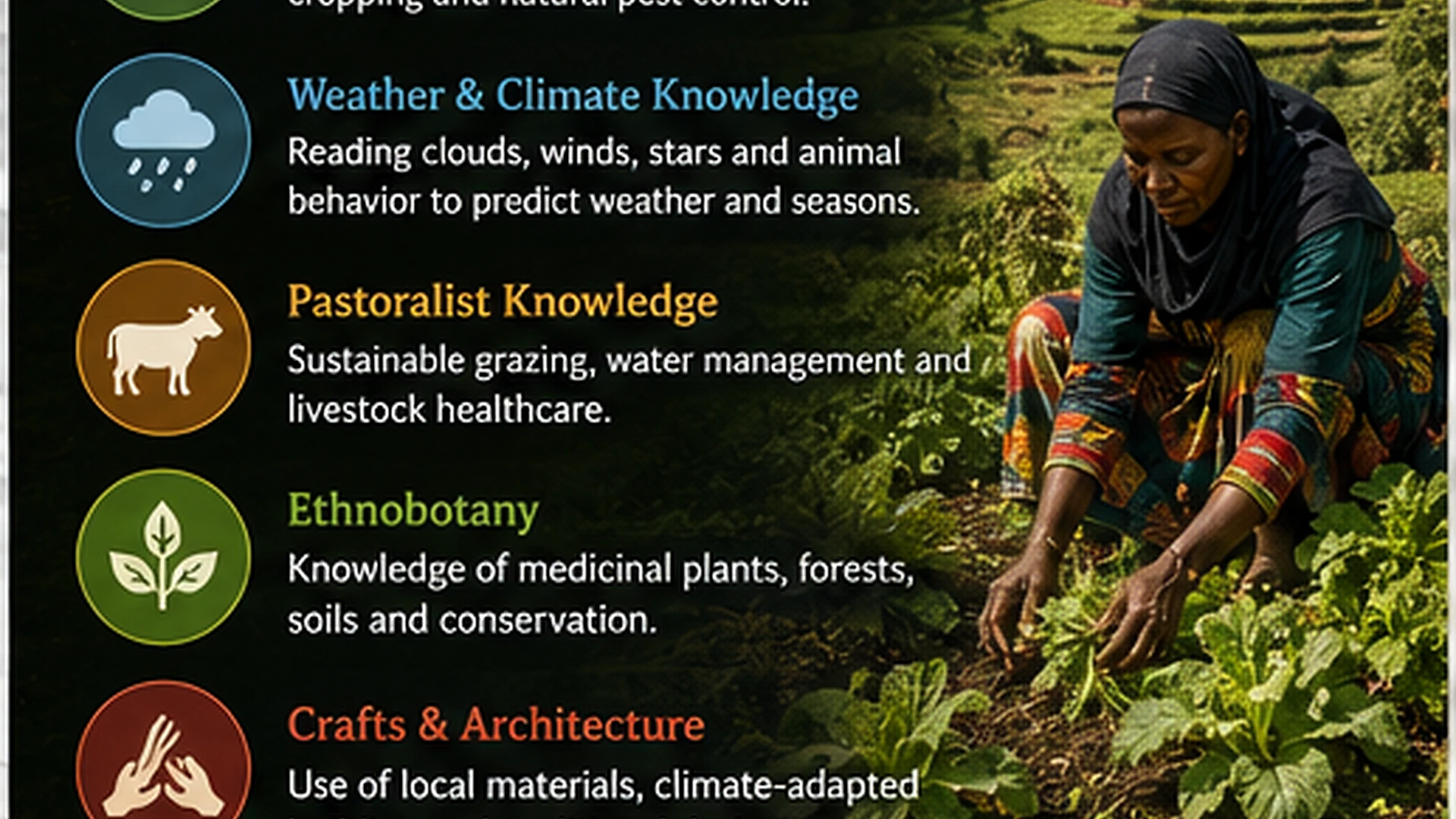
| Weather and climate | Seasonal calendars; observations of winds, stars, insects, flowering, animal behavior and clouds. | Indicators are interpreted with local history, livelihood decisions and community forecasting roles. |
| Food and agriculture | Seed selection, mixed cropping, soil care, harvesting, storage, gathering and food preservation. | Plant knowledge is tied to taste, nutrition, ritual, exchange, land access and risk management. |
| Pastoralism | Mobility, water-point knowledge, animal breeding, rangeland condition and ethnoveterinary practice. | Herd management depends on social networks, customary access, weather and species knowledge. |
| Medicine and healing | Plant identification, preparation methods, massage, midwifery, diet and spiritual care. | Knowledge may be specialist, restricted and culturally governed; safety and evidence vary. |
| Water and land management | Terracing, flood control, dryland water capture, sacred forests and rotational use. | Techniques are linked to communal labor, tenure and responsibilities to future generations. |
| Navigation and astronomy | Reading stars, swells, currents, winds, landmarks and seasonal skies. | Practical observation is integrated with naming systems, oral instruction and route memory. |
| Architecture and material knowledge | Local building orientation, ventilation, earth construction, fibers, dyes, metals and ceramics. | Skills combine environmental adaptation, aesthetics, social use and apprenticeship. |
| Governance and law | Conflict resolution, resource rules, kinship obligations and community decision-making. | Authority, procedure and social accountability determine how rules are interpreted. |
| Language and oral history | Place names, stories, praise poetry, genealogies, proverbs and classification systems. | Language stores categories, ethics, memory and ecological distinctions that may resist translation. |
African Examples of Indigenous Knowledge Systems
Pastoral weather knowledge in the Sahel and East Africa
UNESCO’s Knowing our Changing Climate in Africa project worked with pastoralist communities in Burkina Faso, Chad, Ethiopia, Kenya, Tanzania and Uganda. Participating communities included Peulh/Fulani, M’bororo, Afar, Bahima, Karamoja and Maasai knowledge holders. Researchers documented more than a thousand indicators used to interpret rainfall, drought, pasture and seasonal change. These could include stars, wind, clouds, insects, bird behavior, flowering patterns and the condition of livestock.[3]
The significance of this knowledge is not that every indicator is infallible. Its value lies in fine-grained local observation and its direct connection to decisions about herd movement, water and risk. UNESCO’s work brought pastoralists and meteorologists into dialogue rather than ranking one system as automatically superior.
Farmer-managed seed systems
Across Africa, small-scale farmers maintain local seed systems through selection, saving, exchange, barter and local markets. These systems preserve crop diversity and adapt varieties to local tastes, soils, rainfall and storage conditions. FAO distinguishes formal seed systems from locally organized systems in which farmers themselves produce, exchange and obtain seed.[4]
Seed knowledge is often carried through practice: which sorghum withstands late rain, which bean stores well, which millet matures quickly, which variety is reserved for a ceremony, and which seed should be exchanged rather than sold. Women frequently hold major responsibilities in selection, storage and food preparation, although gender roles vary between communities.
Livestock and rangeland knowledge
Pastoral communities classify grasses, soils, animal conditions, water quality and disease risk in ways closely tied to mobility. Among Bahima pastoralists in Uganda, knowledge of Ankole cattle includes breeding, behavior, grazing and adaptation to local rangelands. In Karamoja and other drylands, strategic movement can help respond to highly variable pasture and water availability. Pastoral knowledge is inseparable from land rights and access routes; removing mobility can damage the system that produces the knowledge.
Dryland soil and water techniques
In parts of the Sahel, farmers use locally developed water-harvesting and soil-restoration methods such as planting pits, stone lines and managed organic matter. The well-known zaï technique concentrates water and nutrients around planting holes. Such methods are not one uniform “African tradition”; they have specific histories and are adapted through farmer experimentation in places such as Burkina Faso, Mali and Niger.
Medicinal and ethnobotanical knowledge
Communities may hold detailed classifications of plants, soils, seasons, preparation methods and contraindications. This knowledge has contributed to health care and to scientific research, but it must not be treated as an unrestricted database. A plant remedy may involve specialist judgement, and inherited use does not automatically prove safety, dosage or clinical effectiveness. Ethical research requires community consent, protection of confidential knowledge and fair sharing of benefits if commercial products result.
Language, oral history and classification
Language is not merely a container that can be replaced without loss. Indigenous languages can encode place names, species distinctions, kinship obligations, moral concepts and ecological relationships that have no exact equivalent in another language. UNESCO links the survival of Indigenous languages with the transmission of knowledge, identity and ethical values.[5] When a language declines, categories and methods of reasoning may disappear even if a translated list of facts remains.
Navigation, hazard awareness and disaster response
Indigenous navigation can rely on stars, ocean swells, currents, cloud reflections, birds and memorized routes. Community knowledge can also preserve warnings about hazards. UNESCO has highlighted the Moken of the Andaman Sea, whose oral knowledge of tsunami signs helped community members respond to the 2004 Indian Ocean tsunami. Such cases should not be romanticized: knowledge works best when communities retain access to their territories and when it is combined with effective public warning systems.
Why Indigenous Knowledge Systems Are Culturally Important
They sustain identity and belonging
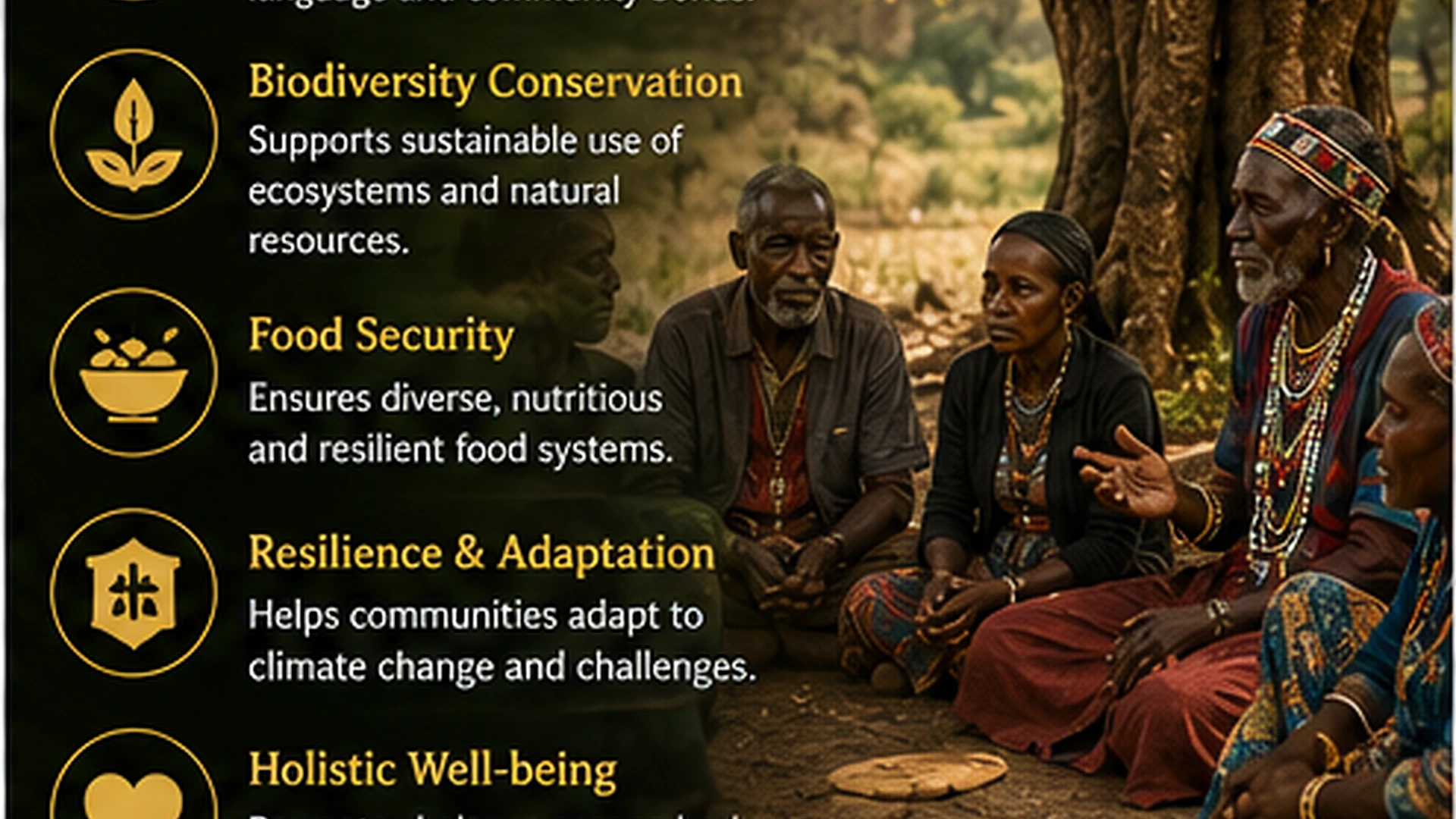
Knowledge connects people to ancestors, territories, responsibilities and shared memory. Place names can record migration routes or historical events. Crop varieties can be linked to ceremonies and family histories. Craft techniques can express community aesthetics and status. Losing knowledge therefore involves more than losing information; it can weaken identity and social continuity.
They support biodiversity and environmental stewardship
Indigenous and local knowledge systems represent a major body of human understanding about biodiversity and ecosystems. Community rules may regulate harvesting, protect breeding seasons, maintain sacred forests, manage fire or preserve crop and livestock diversity. The Convention on Biological Diversity calls on states to respect, preserve and maintain relevant knowledge, promote wider application with the approval and involvement of knowledge holders, and encourage equitable benefit-sharing.[6]
They strengthen food security and resilience
FAO emphasizes that Indigenous Peoples’ food and knowledge systems have developed through long adaptation to environments including forests, mountains, drylands, farms, coasts and islands. Fisheries, pastoralism, gathering, hunting and cultivation may be combined to create diverse food bases. Diversity can spread risk when one crop, grazing area or seasonal resource fails.[7]
They contribute to climate adaptation
Local observations can provide detailed information about microclimates, water, species behavior and seasonal change. Their greatest value is often at the scale where people make daily decisions. National forecasts may predict regional rainfall, while local knowledge may identify which valley retains water, which pasture recovers first or which tree flowers before a particular seasonal shift.
They preserve ethical and social institutions
Knowledge systems can include rules about reciprocity, land access, conflict resolution, obligations to elders and duties toward future generations. These institutions may be as important as the technical practice. A water-harvesting structure can fail if the communal labor and access rules that maintain it are ignored.
They expand the possibilities for research and innovation
Indigenous knowledge can guide research questions, monitoring and locally relevant design. This does not mean that communities should provide knowledge freely to researchers or businesses. Innovation must be built on consent, attribution, community authority and fair benefits. The WIPO Treaty adopted in May 2024 created a patent-disclosure requirement for inventions based on genetic resources or associated traditional knowledge, representing a major development at the interface of intellectual property and community knowledge.[8]
Indigenous Knowledge and Scientific Knowledge
The two are sometimes described as opposites, but this framing is too simple. Both can involve observation, classification, testing, debate and revision. They may differ in scale, goals, authority, documentation, methods of validation and relationships to ethics or spirituality.
| Dimension | Indigenous knowledge systems | Scientific knowledge systems |
|---|---|---|
| Authority | Community experience, recognized knowledge holders, customary institutions and relationships to territory. | Professional training, research institutions, peer communities and explicit methods. |
| Transmission | Oral teaching, practice, apprenticeship, story, ceremony, language, art and written records. | Formal education, publications, datasets, protocols and professional training. |
| Scale | Often highly detailed at local or regional scales. | May seek generalizable explanations across places and scales. |
| Validation | Repeated use, collective memory, practical outcomes, customary evaluation and specialist judgement. | Experimental or observational methods, statistical analysis, replication, peer review and critique. |
| Values | Frequently explicit about obligations, reciprocity, spirituality and relationships among beings. | Often aims to separate description from values, although institutions and research choices still involve ethics. |
| Ownership | May be collective, restricted, sacred, family-held or governed by customary law. | Often published openly, but data and inventions may be institutionally or privately owned. |
Respectful knowledge cooperation does not require translating everything into scientific terms. Some questions can be investigated together; other knowledge may remain restricted or be meaningful within a spiritual and ethical framework that science is not designed to validate. Co-production works best when communities shape the questions, methods, interpretation, ownership and benefits from the beginning.
Common Misunderstandings
“Indigenous knowledge is frozen in the past”
False. Knowledge systems change through experimentation, trade, migration, environmental change and interaction with schools, governments and technology.
“All Indigenous knowledge is naturally sustainable”
This is an idealization. Communities, like all societies, face conflict, scarcity and changing incentives. Sustainable outcomes often depend on secure land rights, functioning institutions and the ability to enforce rules.
“If knowledge is useful, it should be freely shared”
Usefulness does not cancel ownership or responsibility. Some knowledge is confidential, sacred or commercially sensitive. Public documentation can expose communities to appropriation or allow third parties to claim rights.
“Scientific validation is the only way knowledge becomes real”
Scientific evaluation is important for claims involving safety, efficacy or general prediction. It is not the sole measure of historical meaning, identity, customary law or spiritual value. Communities also have their own processes of testing, contesting and authorizing knowledge.
“One elder can speak for the entire community”
Authority varies. Researchers must ask who holds the knowledge, who may disclose it, who is affected, and what collective process is required before recording or publication.
Threats to Indigenous Knowledge Systems
Loss of land, water access and mobility, which removes the environments where knowledge is practiced.
Language decline and education systems that stigmatize Indigenous languages or treat local knowledge as inferior.
Climate change, biodiversity loss and pollution, which alter the species and seasonal patterns on which knowledge depends.
Migration and economic pressure that reduce time for apprenticeship and intergenerational learning.
Religious or political suppression of cultural practices and community institutions.
Commercial appropriation, biopiracy and intellectual-property claims made without consent or benefit-sharing.
Digitization that makes restricted knowledge searchable, copyable or trainable by automated systems without community control.
Over-romanticization, which can turn living knowledge into tourist performance while ignoring present-day rights.
Rights, Consent and Ethical Protection
The United Nations Declaration on the Rights of Indigenous Peoples recognizes the right of Indigenous Peoples to maintain, control, protect and develop their cultural heritage, traditional knowledge and traditional cultural expressions. It also links these rights to sciences, technologies, genetic resources, seeds, medicines, oral traditions, designs, sports and performing arts.[9]
The Nagoya Protocol requires attention to customary laws, community protocols, prior informed consent or approval and involvement, mutually agreed terms and fair benefit-sharing when traditional knowledge associated with genetic resources is accessed and used.[10] These principles matter for universities, museums, filmmakers, pharmaceutical companies, tourism businesses and digital archives—not only for patent lawyers.
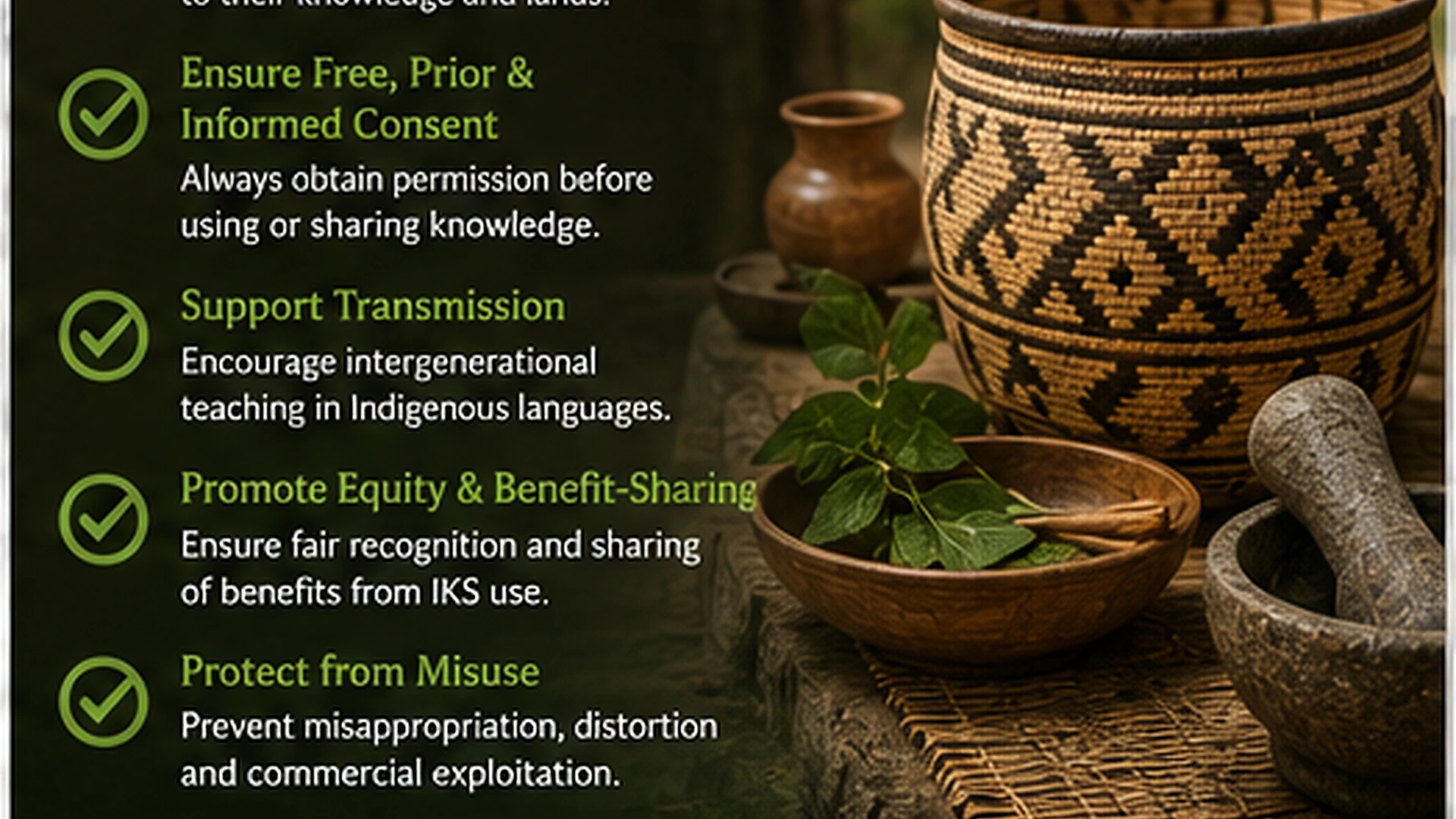
Principles for responsible research and publication
Begin with community priorities rather than a researcher’s assumption about what should be documented.
Identify legitimate knowledge holders and collective decision-making processes.
Use free, prior and informed consent as an ongoing process, not a single signature.
Agree on what may be public, restricted, delayed, anonymized or not recorded at all.
Recognize customary law, gendered responsibilities and sacred boundaries.
Use co-authorship, attribution and community review where appropriate.
Establish fair benefit-sharing for commercial, academic or educational use.
Store recordings and data under access controls chosen with the community.
Allow correction, withdrawal and repatriation where feasible.
Do not publish exact locations of vulnerable species, sacred places or restricted resources.
How Indigenous Knowledge Can Be Preserved Respectfully
Strengthen living transmission
The strongest preservation happens when knowledge remains useful and practiced. Supporting land access, livelihoods, apprenticeships, community schools, language use, seed exchange and cultural institutions is often more effective than creating an external archive.
Support Indigenous languages
Teaching, publishing and broadcasting in Indigenous languages helps maintain the categories and relationships carried by those languages. Youth-led media can support transmission when communities control the platform and decide what should remain private.
Build community-controlled archives
Documentation can assist language revitalization and historical continuity, but access must be designed carefully. WIPO warns that recording traditional knowledge can create both benefits and intellectual-property risks.[11] Communities may need tiered access, customary permissions, local copies, deletion rights and rules preventing commercial reuse.
Create respectful education partnerships
Schools can invite community knowledge holders, use local languages and connect lessons to place without turning sacred knowledge into classroom content. Payment, attribution and authority should be clear. Students should learn that Indigenous knowledge is contemporary and intellectually rigorous, not a decorative cultural week topic.
Protect rights and share benefits
Legal measures can recognize collective rights, community protocols and indigenous knowledge-based innovation. South Africa’s Protection, Promotion, Development and Management of Indigenous Knowledge Act provides for community rights, access conditions, recognition of prior learning and indigenous knowledge-based innovation. The National Indigenous Knowledge Systems Office supports implementation, registration, licensing and benefit-sharing functions.[12]
What Indigenous Knowledge Systems Can Teach Modern Institutions
The lesson is not to copy individual techniques without context. It is to recognize that durable knowledge often comes from long attention, collective memory, local accountability and relationships between ecological and social systems. Governments can improve climate services by including local observers. Conservation programs can strengthen outcomes by recognizing customary governance. Universities can improve research by treating communities as intellectual partners. Health researchers can distinguish promising leads from unsafe claims while protecting the rights of knowledge holders.
The most respectful approach is neither romantic rejection of science nor dismissal of Indigenous knowledge. It is careful cooperation in which different methods remain visible, communities retain authority over their knowledge, and decisions are shaped by evidence, ethics and lived experience.
Key Takeaways
Indigenous knowledge systems are living, integrated and evolving—not frozen collections of folklore.
They may include ecological, agricultural, medical, linguistic, spiritual, technical and legal knowledge.
Knowledge is place-based and culturally specific; examples should always name the relevant community and context.
Indigenous and scientific knowledge can cooperate, but neither should be reduced to the other.
Not all knowledge is public, and not all inherited practices are automatically safe or scientifically verified.
Land rights, language, livelihoods and intergenerational teaching are central to preservation.
Consent, customary law, attribution and fair benefit-sharing are essential when knowledge is documented or commercialized.
People Also Ask
What is an Indigenous knowledge system?
It is a dynamic body of knowledge, practices, skills and beliefs developed and governed by a community through long relationships with its environment, language, livelihoods and institutions.
What are examples of Indigenous knowledge?
Examples include seasonal weather forecasting, seed selection, pastoral mobility, plant knowledge, navigation, water management, architecture, customary law, oral history and community conservation rules.
Why are Indigenous knowledge systems important?
They support cultural identity, biodiversity, food security, climate resilience, education, local governance and community continuity.
Is Indigenous knowledge the same as traditional knowledge?
The terms overlap, but they are not identical. Indigenous knowledge is linked to Indigenous Peoples, territories and rights, while traditional knowledge is a broader international-policy term for community knowledge transmitted across generations.
Can Indigenous knowledge be scientifically tested?
Some ecological, agricultural or health claims can be investigated scientifically. Other knowledge concerns identity, ethics, law or spirituality and is not reducible to a laboratory test.
Who owns Indigenous knowledge?
Ownership and authority may be collective, family-held, specialist or governed by customary law. Outsiders should not assume that public access means unrestricted permission to use or commercialize it.
Frequently Asked Questions
Are Indigenous knowledge systems only oral?
No. They may be oral, written, visual, embodied, practical, digital or encoded in landscapes, art, language and ceremony.
Does “traditional” mean unchanged?
No. Communities innovate and adapt. Continuity can exist alongside new tools, crops, technologies and research partnerships.
Is all Indigenous knowledge environmentally sustainable?
No universal claim is justified. Sustainable outcomes depend on context, institutions, land rights, population pressure and changing conditions.
Can anyone document Indigenous knowledge?
Documentation should follow community authority, informed consent, access rules, attribution, data governance and benefit-sharing.
What is biocultural diversity?
It refers to the connections between biological diversity, cultural diversity and the knowledge, languages and practices that link people with ecosystems.
How does language loss affect knowledge?
Language loss can erase local classifications, place names, moral concepts and teaching methods that are difficult to translate fully.
What is free, prior and informed consent?
It is a rights-based process in which communities receive understandable information and decide freely before an activity begins, with continued participation and the ability to set conditions.
What is benefit-sharing?
It means that communities receive fair agreed benefits from the use of their knowledge or genetic resources. Benefits may be monetary or non-monetary, such as training, co-authorship, infrastructure or community access to results.
Can traditional medicine be included in health systems?
It can be recognized and studied, but safety, dosage, quality, practitioner competence and evidence must be addressed. Cultural respect does not require making unsupported medical claims.
How can schools include Indigenous knowledge?
Schools can work with authorized knowledge holders, teach in local languages, connect learning to place, pay contributors and protect restricted content.
Why is land important to knowledge preservation?
Knowledge is produced through access to species, routes, water, soils and sacred or historical places. Displacement can break the practices that sustain it.
What is knowledge co-production?
It is a collaborative process in which communities and other researchers jointly shape questions, methods, interpretation, ownership and use of results.
Conclusion
Indigenous knowledge systems are among humanity’s most diverse ways of understanding and living within the world. They combine observation, memory, skill, law, language, spirituality and responsibility. Their value is visible in pastoral climate forecasting, farmer-managed seed systems, ecological stewardship, healing knowledge, navigation, architecture and community governance.
Respect begins by refusing two extremes: dismissing Indigenous knowledge as superstition and romanticizing it as perfect ancient wisdom. A better approach recognizes living communities as knowledge producers with the right to decide what is shared, how it is interpreted and who benefits. Preserving Indigenous knowledge therefore means supporting languages, territories, livelihoods, institutions, consent and intergenerational learning—not merely copying information into an archive.
Final Summary
| Final Summary Indigenous knowledge systems are dynamic, culturally specific and community-governed ways of knowing. They can support resilience, identity, biodiversity, food systems and local decision-making. Their responsible use requires context, evidence, consent, customary authority, careful documentation and fair benefit-sharing. |
|---|
Research Sources and Further Reading
1. UNESCO / IPBES Technical Support Unit — “IPBES definition of Indigenous and local knowledge”
2. World Intellectual Property Organization — “Customary Law and Intellectual Property”
3. UNESCO LINKS — “Knowing our Changing Climate in Africa”
4. Food and Agriculture Organization — “What Are Seed Systems?”
5. UNESCO — “Indigenous Languages: Knowledge and Hope”
6. Convention on Biological Diversity — Article 8(j): Traditional Knowledge, Innovations and Practices
7. Food and Agriculture Organization — Indigenous Peoples’ Food and Knowledge Systems
8. World Intellectual Property Organization — Treaty on Intellectual Property, Genetic Resources and Associated Traditional Knowledge
9. United Nations — Declaration on the Rights of Indigenous Peoples, Article 31
10. Convention on Biological Diversity — Nagoya Protocol, Article 12
11. World Intellectual Property Organization — Documentation of Traditional Knowledge and Traditional Cultural Expressions
12. South African Government — Protection, Promotion, Development and Management of Indigenous Knowledge Act 6 of 2019
13. UNESCO LINKS — Africa: Pastoralists and Climate Adaptation
14. UNESCO — Local, Indigenous and Scientific Knowledge for Biodiversity
15. WIPO — Traditional Knowledge: Definition and Intellectual Property Issues
5. Internal-Linking Plan
| Target article | Suggested anchor text | Placement rationale |
|---|---|---|
| Understanding African Spiritual Traditions: A Historical Introduction | African spiritual traditions | Use in the cultural-context section to distinguish Indigenous knowledge from one universal African religion. |
| African Symbols of Protection: Meanings and Cultural Context | African protection symbols | Link from the discussion of symbolic knowledge and cultural specificity. |
| Sacred Groves in African Traditions | sacred groves and community conservation | Link from biodiversity and land-stewardship sections. |
| Traditional African Herbal Knowledge: History and Ethics | traditional plant knowledge | Link from ethnobotany; emphasize no medical guarantees. |
| Ankole Cattle: Cultural History and Pastoral Knowledge | Ankole cattle and Bahima pastoral knowledge | Link from livestock and rangeland section. |
| African Oral Traditions: Storytelling, Memory and Identity | African oral traditions | Link from language and oral-history sections. |
| Indigenous Weather Forecasting in Africa | Indigenous weather forecasting | Link from UNESCO pastoral climate case study. |
| Farmer-Managed Seed Systems in Africa | farmer-managed seed systems | Link from agriculture and food security section. |
6. Supporting Article Recommendations
1. Indigenous Weather Forecasting in Africa: Pastoral Knowledge and Climate Science
2. Farmer-Managed Seed Systems in Africa: Diversity, Food Security and Community Rights
3. Traditional Ecological Knowledge: Meaning, Examples and Conservation Ethics
4. African Oral Traditions: How Knowledge Is Preserved Through Language and Story
5. Indigenous Knowledge and Scientific Knowledge: Differences and Cooperation
6. Free, Prior and Informed Consent: A Guide for Cultural and Research Projects
7. Traditional Knowledge and Intellectual Property: Consent, Patents and Benefit-Sharing
8. Sacred Groves and Community Conservation in Africa
9. Pastoral Knowledge in Uganda: Karamoja, Bahima and Ankole Cattle
10. How to Document Community Knowledge Without Exposing Restricted Practices
Article Information
- Publisher
- Ancestral Temple
- Editor
- Ancestral Temple
- Last updated
- Jul 26, 2026
- Last reviewed
- Jul 26, 2026
- Content version
- d0a9188e60
This educational article should be read as cultural and spiritual information, not as medical, legal, financial, or emergency advice.
Helpful Related Guidance
Explore This Topic
Related Topic Cluster
Dreams & Symbolism
About the Author
 Ancestral Temple
Spiritual guide and practitioner with decades of experience in ancestral wisdom, rituals, and divine guidance.
Related Posts
View All








Leave a Comment
We'd love to hear your thoughts.