
Job and Promotion Rituals: Spiritual Beliefs About Career Opportunities
Pillar Article

Quick Summary
Seeking employment or waiting for a promotion can create hope, anxiety and uncertainty. A job affects income, identity, family responsibilities, social status and the ability to pl...
Seeking employment or waiting for a promotion can create hope, anxiety and uncertainty. A job affects income, identity, family responsibilities, social status and the ability to plan for the future. It is therefore unsurprising that many communities surround work, education and professional transitions with prayer, blessings, sacred visits, offerings, divination or family support.
The phrase job and promotion ritual is modern and broad. It does not name one universal ceremony. A Catholic prayer through Saint Joseph the Worker, a Yoruba practice concerning personal destiny, Hindu worship associated with learning, a Chinese visit connected with examination success and a Japanese shrine practice for business development belong to different religious histories.
These traditions can offer courage, reflection and community support. They cannot guarantee that an employer will select one applicant, award a promotion or increase a salary. Recruitment and advancement should still be based on relevant qualifications, skills, experience and fair procedures.
Quick Answer
A job or promotion ritual is a culturally specific prayer, blessing, sacred visit, offering or reflective practice connected with employment, examinations, interviews or career advancement. Such practices may strengthen hope, identity and preparation, but they cannot guarantee hiring or promotion. Practical skills, honest applications, workplace performance and fair, non-discriminatory decisions remain essential.
What Is a Job or Promotion Ritual?
A job ritual is any structured spiritual, religious, family or personal practice associated with finding work or entering a new professional stage. It may happen before submitting an application, attending an interview, sitting an examination, starting employment, requesting promotion or taking on leadership responsibilities.
Possible forms include:
prayer for guidance or dignified work;
a blessing by relatives or a religious leader;
visiting a shrine, church, temple or sacred place;
giving thanks after receiving an opportunity;
presenting offerings according to an established tradition;
consulting divination within a community that recognizes it;
dedicating tools, books or a workplace;
fasting, meditation or a personal period of reflection;
writing professional goals and ethical commitments.
These actions do not all have the same theology. A private reflection written by a modern job seeker should not be represented as an ancient African, Hindu, Chinese or Indigenous ritual.
Why Career Transitions Become Spiritual Matters
Work affects dignity and belonging
Employment is more than a pay cheque. It can shape daily routine, self-respect, family stability and participation in society. Catholic social teaching, for example, presents work as connected with human dignity and responsibility rather than profit alone. Pope Francis has described work as a human vocation and called for employment that is fairly paid and dignified. ([Source: Vatican, “Work Is the Vocation of Man”])
Selection is uncertain
Applicants may prepare carefully and still have limited control over a hiring panel, competition, economic conditions or internal politics. Ritual can create a structured response to uncertainty: people pause, pray, seek counsel and identify what remains within their control.
Promotion changes social status
A promotion may bring authority over colleagues, greater pay, public recognition and new ethical duties. Some traditions therefore focus less on “winning” a title and more on wisdom, character and responsible leadership.
Education and examinations shape careers
In societies where examinations determine entry into universities, professions or government service, religious practices can grow around learning and assessment. The Chinese worship of Wenchang is one historical example, while Hindu devotion to Saraswati concerns learning, knowledge, music and the arts.
Ritual, Prayer, Divination and Career Preparation
| Practice | Main function | Possible career connection | Important limit |
|---|---|---|---|
| Prayer | Communication with the divine | Guidance, courage, dignified work or gratitude | Does not compel an employer |
| Blessing | Spoken or ceremonial goodwill | Beginning a job, interview or leadership role | Is not proof of guaranteed success |
| Divination | Interpretation within a recognized religious system | Clarifying direction or obligations | Should not replace informed decisions or become a coercive service |
| Shrine or temple visit | Devotion at a sacred place | Examinations, work, business or personal direction | Meanings vary by site and tradition |
| Offering | Gift presented in worship | Thanksgiving, petition or relationship | Is not a payment purchasing a job |
| Personal reflection | Goal-setting and emotional preparation | Interview readiness or ethical leadership | Should not be misrepresented as an inherited ceremony |
| Skills development | Education and practical training | Improves employability and readiness for promotion | Requires time, feedback and evidence of competence |
African Spiritual Beliefs About Work and Destiny
There is no single African ritual for getting a job or promotion. African Indigenous religions are diverse, living systems with specific languages, authorities and histories. Harvard Divinity School scholarship emphasizes that ritual can organize life events, ethical orientation and communal well-being, but this does not mean every life problem has one shared African ceremony. ([Source: Harvard Divinity Bulletin, “Rethinking the Study of African Indigenous Religions”])
In some communities, people may consult elders, diviners or family religious specialists when making significant decisions. The concern may involve personal destiny, social obligations, unresolved conflict or whether a path is suitable—not simply a mechanical request to “attract a job.”
Modern African job seekers may also be Christian, Muslim, Hindu, secular or members of several overlapping cultural communities. A family blessing before an interview can be meaningful without being labelled an ancient ritual.
Yoruba Orí, Personal Destiny and Direction
In Yoruba thought, orí means “head” and can also refer to the inner head, personal destiny or deepest self. A museum-documented ìbọrí represents a person's orí inú and is housed within an Ilé-orí, or house for the head. The owner cultivates a relationship with this inner self under the guidance of an Ifá priest. ([Source: Metropolitan Museum of Art, Ilé-orí with ìbọrí])
This tradition is relevant to career questions because it frames success through destiny, character, decision-making and alignment with one's life path. It should not be simplified into a ritual that automatically produces employment.
The museum record also makes clear that the Ilé-orí is a specific sacred object with established ritual guidance. A modern social-media “orí career altar” assembled from random cowries and candles should not be described as authentic Yoruba practice without community authority.
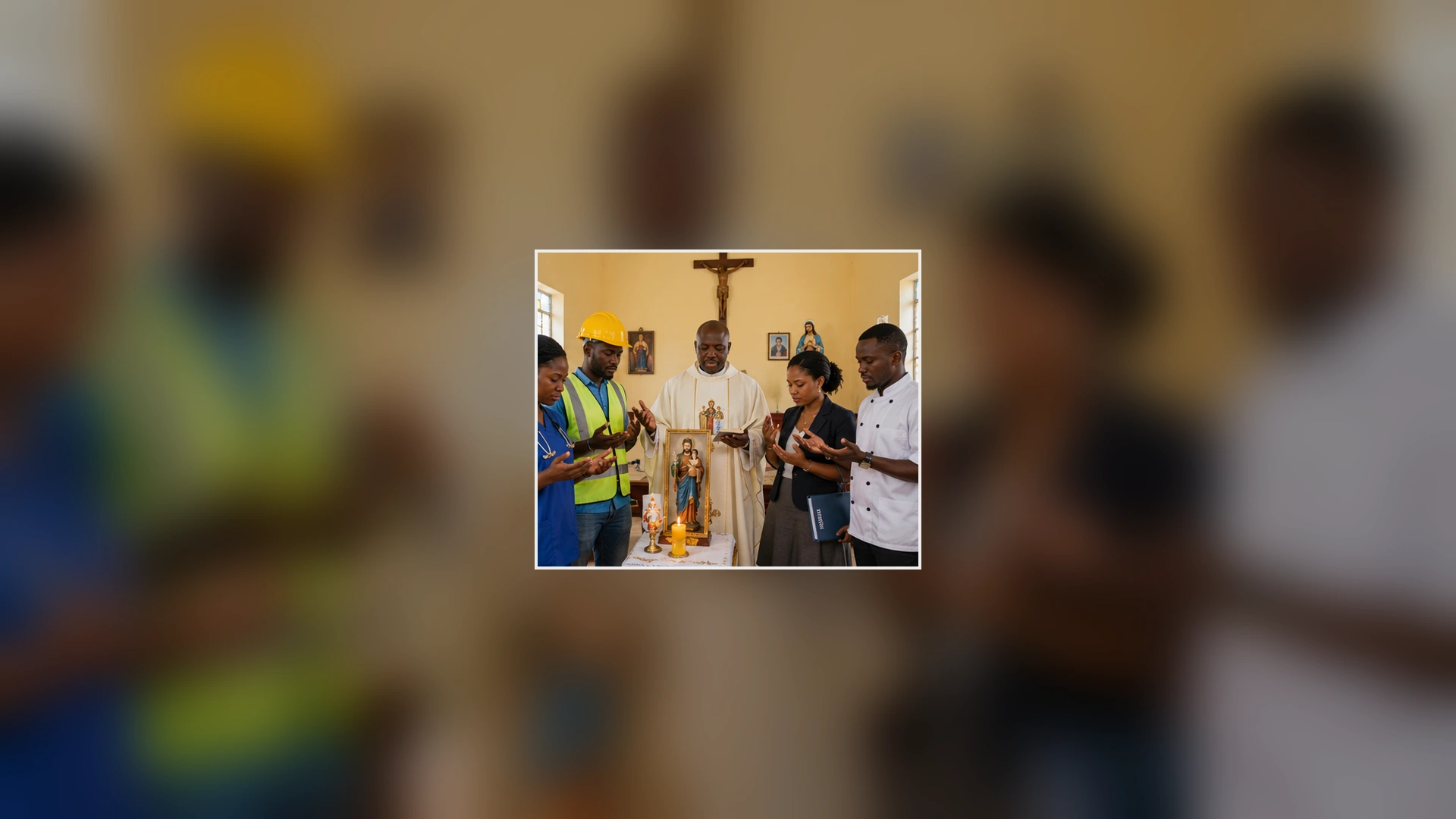
Christian Prayer, Saint Joseph and Dignified Work
Christian approaches differ among Catholic, Orthodox, Anglican, Protestant and Pentecostal communities. Many Christians pray directly for employment, wisdom and protection at work. Some ask family members or clergy to pray before an interview or bless a workplace after hiring.
In Catholic devotion, Saint Joseph the Worker is associated with honest labour, family responsibility and the dignity of work. Vatican teaching recalls Joseph as a carpenter and presents work as a way people develop their gifts and serve society. The Catholic Church has also explicitly encouraged prayer through Saint Joseph for people seeking employment and for more dignified work. ([Sources: Vatican, Patris Corde; Apostolic Penitentiary decree for the Year of Saint Joseph])
This is not a promise that one candidate will defeat another. Catholic sources place employment prayer within concern for all workers, fair pay, labour rights and families affected by unemployment. The moral focus is dignified work, not status at any cost.
A Christian praying for promotion might therefore ask for wisdom, fair recognition and the ability to lead responsibly. Praying for a colleague to fail, spreading rumours or treating faith as leverage over a supervisor would contradict the ethical purpose of the prayer.
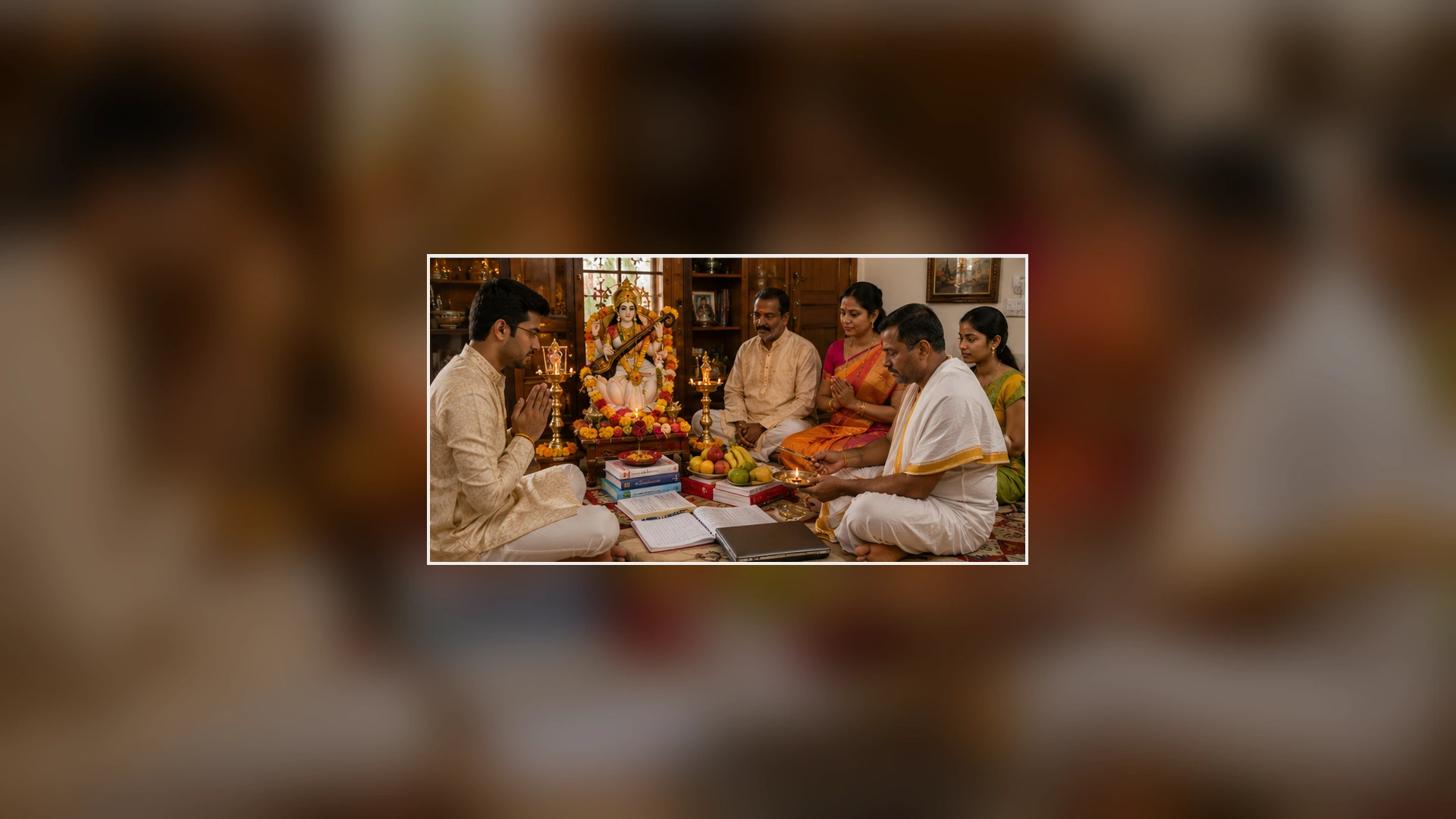
Hindu Traditions of Learning, Skill and Professional Beginnings
Hindu traditions are diverse, and there is no universal “promotion puja.” Families and professionals may worship according to regional, family and temple practice when beginning education, sitting examinations, opening a workplace or taking on new responsibilities.
Saraswati is widely identified as a goddess of learning, knowledge, music and the arts. Museum images show her with a book, rosary and vina, attributes associated with knowledge and disciplined learning. ([Sources: Metropolitan Museum of Art and British Museum collections on Saraswati])
For a student, graduate or professional, Saraswati worship may be connected with study, communication, creative skill or examination preparation. It is misleading to reduce the goddess to a tool that makes recruiters overlook qualifications.
Puja is a central Hindu form of devotion that may be performed in a temple or home. The exact prayers, offerings and authority depend on the community and priest. ([Source: Smithsonian National Museum of Asian Art, “Puja: Expressions of Hindu Devotion”])
In some regions, tools, books, instruments and work equipment are honoured during festivals associated with Saraswati, Ayudha Puja or Vishwakarma. These traditions can express gratitude for knowledge and skilled labour. They are not one standardized career-promotion system.
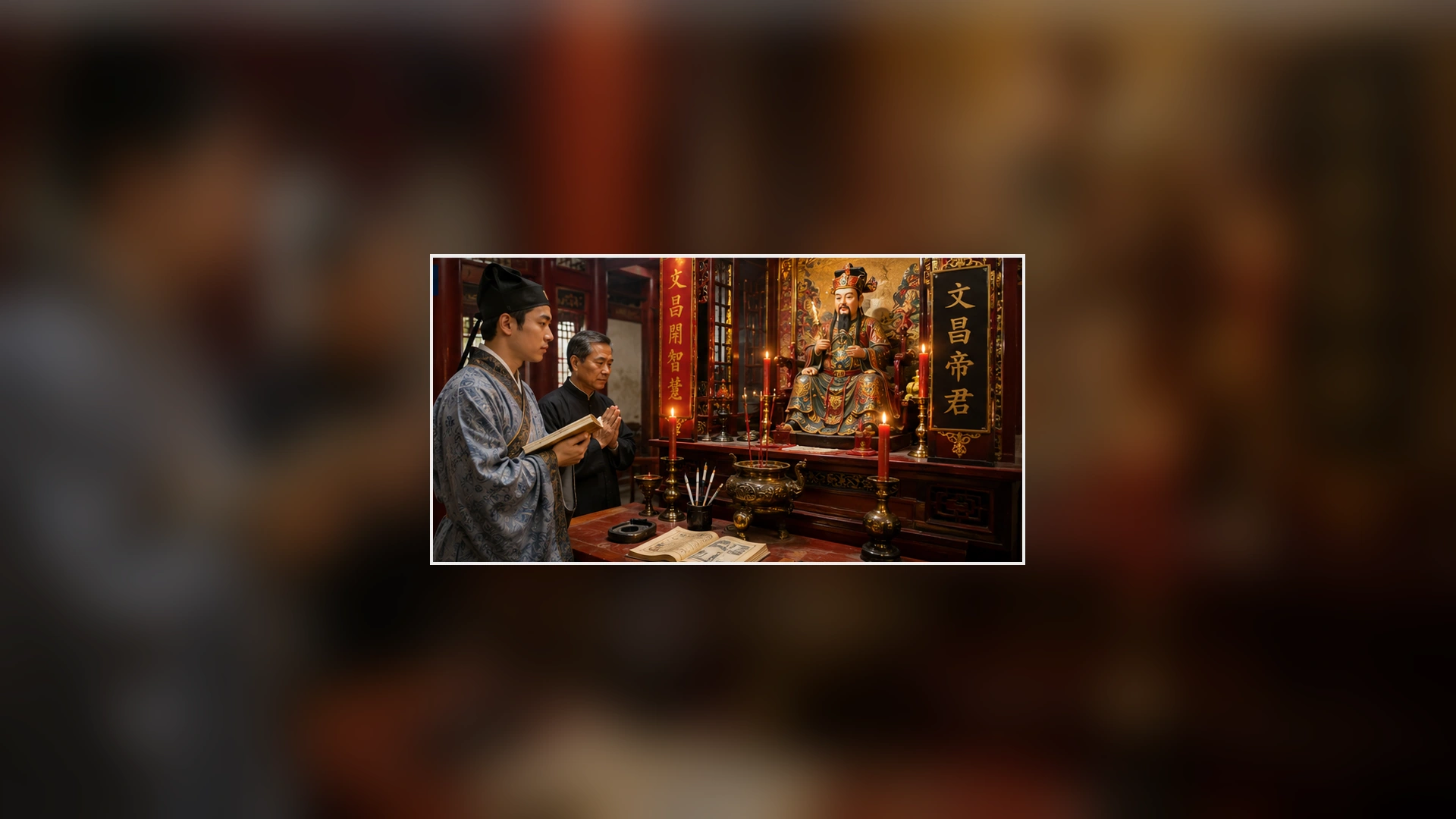
Wenchang and Chinese Examination Traditions
Wenchang Dijun is a Chinese deity historically worshipped by literati seeking success in the civil-service examinations. British Museum interpretation notes that success in those examinations could lead to power, status, security and income, which helps explain the strong connection between religious devotion, learning and official careers. ([Source: British Museum, figure of Wenchang])
This tradition concerns an examination system with a particular history. It should not be described as a universal Chinese ritual for obtaining any modern corporate promotion.
Modern students and families may visit temples, present offerings or carry auspicious objects associated with study and examination hopes. Practices vary across mainland China, Taiwan, Hong Kong and diaspora communities. A respectful article should distinguish Wenchang from unrelated wealth deities and avoid fake calligraphy or invented prayers.
Japanese Shrine and Temple Practices for Development
Japanese sacred sites may be associated with specific hopes such as academic success, business development, safety or health. The Japan Tourism Agency describes prayer strips at Saigandenji Temple in which different colours represent themes including prosperity in business and passing examinations. ([Source: Japan Tourism Agency, Saigandenji Temple])
At Sumiyoshi Taisha in Osaka, Hattatsu Mairi is a monthly shrine-visiting practice connected with business development. Its meaning includes wordplay between “first dragon” and “growth,” and it developed among merchants. This is better understood as a business-prosperity tradition than a personal employee-promotion ritual. ([Source: Japan Tourism Agency, Hattatsu Mairi])
These examples show why the exact sacred site matters. One shrine may be associated with examinations, another with commerce and another with safe travel. Visitors should follow the site's instructions rather than transfer one practice to a different tradition.

Promotion Rituals and Workplace Ethics
A promotion differs from a job application because the employee already participates in the organization. Performance records, relationships, internal policies, leadership potential, available positions and bias may all affect the decision.
A personal ritual before requesting promotion might help someone reflect on questions such as:
What results can I document?
Which responsibilities have I already taken on?
What new skills does the higher role require?
Have I communicated my interest clearly?
Can I lead people fairly?
What feedback have I avoided?
Would a promotion serve only status, or also useful work?
The International Labour Organization states that recruitment, placement, training and advancement should be based on qualifications, skills and experience. It also emphasizes equality of opportunity and freedom from discrimination throughout employment, including promotion. ([Source: ILO Helpdesk on non-discrimination and equality])
This principle matters when spiritual beliefs enter the workplace. A manager should not promote someone because they share a religion, attended the same ritual or paid a spiritual practitioner. Employees should not be pressured to participate in religious ceremonies to be considered loyal or promotable.
Can Rituals Guarantee a Job or Promotion?
No reliable evidence shows that a prayer, candle, shrine visit, charm or offering can guarantee an employer's decision. Career outcomes involve education, labour demand, organizational budgets, competition, health, social networks, discrimination, performance and chance.
Rituals may still have meaningful human effects. They can:
reduce anxiety by creating a deliberate pause;
remind someone of values and long-term purpose;
connect a job seeker with family or community support;
encourage disciplined preparation;
help a person accept uncertainty;
mark gratitude after receiving work.
The key distinction is between supportive meaning and causal guarantee.
Warning Signs of a Job or Promotion Scam
Job seekers are vulnerable to people who promise access, influence or secret methods. The United States Federal Trade Commission warns that fake recruiters may contact people through unexpected messages, offer vague remote work, request personal information or eventually demand money. The FTC's current guidance is direct: never pay to get paid or to obtain a job. ([Sources: FTC job-scam guidance and 2026 fake job-offer alerts])
Be cautious when someone:
guarantees a job or promotion after payment;
claims they can spiritually control a hiring manager;
demands repeated fees because “negative energy” remains;
asks for bank passwords, identification documents or verification codes;
says a secret ritual will bypass interviews or qualifications;
promises a high salary for minimal work;
contacts you unexpectedly through WhatsApp, Telegram or text with no verifiable company details;
sends a cheque and asks you to return part of the money;
requests cryptocurrency to unlock earnings or job tasks;
threatens curses, dismissal or disaster if you stop paying.
A religious leader or cultural practitioner may charge transparently for time, travel or materials. Ethical practice requires clear fees, voluntary participation and no guaranteed hiring outcome.
Modern Career Candles, Manifestation and Affirmations
Modern spiritual content may recommend candles, written intentions, vision boards, crystals, oils or affirmations for career success. Some practices come from identifiable religious or esoteric traditions; others are recent internet combinations.
Writing a career intention can help clarify a goal. Rehearsing an affirmation may improve confidence. A vision board can remind someone of training milestones. These psychological or organizational functions should not be confused with proof that the universe must deliver a specific position.
A personal practice is most honest when described as personal rather than falsely labelled ancient, African, Indigenous, Hindu or Chinese.
A Respectful Personal Career Dedication
The following is a modern, non-denominational reflection—not a traditional ritual from any named culture:
1. Clean and organize the place where you prepare applications.
2. Place your résumé, qualifications and a notebook in front of you.
3. Name the kind of work you are seeking and why it matters.
4. Acknowledge the people whose teaching or support helped you.
5. State three values you will uphold at work.
6. Identify one skill gap and a realistic action to address it.
7. Review the application for accuracy.
8. Sit quietly, pray according to your faith or take several calm breaths.
9. Submit the application and record the follow-up date.
10. Continue applying rather than treating one opportunity as guaranteed.
This practice combines reflection with action. It should not be marketed as an inherited ceremony or a guaranteed spiritual service.
Prayer Before a Job Interview
A prayer can be simple and consistent with the person's own faith. A broadly worded example is:
May I speak truthfully, listen carefully and present my abilities with confidence. Grant me wisdom to recognize whether this work is right for me, strength to accept the outcome and respect for everyone seeking the opportunity.
This wording avoids asking for unfair control over interviewers or harm to other candidates.
Practical Preparation for Employment
Spiritual support works best alongside concrete preparation:
1. Tailor the résumé to the actual role.
2. Use truthful qualifications and dates.
3. Study the employer through official sources.
4. Prepare examples showing results, judgment and teamwork.
5. Practise concise answers aloud.
6. Confirm the interview location, time and technology.
7. Prepare questions about responsibilities and expectations.
8. Verify the recruiter's identity and email domain.
9. Never pay to receive a legitimate job.
10. Follow up professionally after the interview.
Practical Preparation for Promotion
For an internal promotion:
request the job description or promotion criteria;
document measurable achievements;
ask for feedback before the decision cycle;
seek relevant training or stretch assignments;
identify mentors without demanding favoritism;
discuss career goals with the manager;
understand salary ranges and responsibilities;
keep evidence of unequal or discriminatory treatment;
apply through the formal process;
prepare for either outcome.
Fair career advancement should be transparent and based on relevant merit, qualifications, skills and experience. ([Source: International Labour Organization])
When the Answer Is No
Rejection or a delayed promotion can be painful, but it is not proof of spiritual failure. The vacancy may have been cancelled, an internal candidate may have had more experience or discrimination may have affected the process.
A constructive response may include requesting feedback, updating skills, applying elsewhere, documenting unfair treatment or using formal appeal procedures where available.
The ILO notes that discrimination may affect hiring, training, performance assessment and promotion. People should not be told that prayer alone will solve structural unfairness. ([Source: ILO questions and answers on employment discrimination])
Cultural and Ethical Boundaries
Do not invent an African job ritual
Do not combine Yoruba cowries, Buganda clothing, candles and random herbs into a fictional “African promotion ceremony.” Identify the specific community and public evidence.
Do not reduce deities or saints to career tools
Saint Joseph, Saraswati and Wenchang belong to religious histories broader than individual ambition.
Do not publish restricted instructions
Museum descriptions of Ilé-orí do not authorize outsiders to reproduce private Ifá practice.
Do not manipulate employers or colleagues
A ritual intended to control, frighten or injure another person is ethically different from prayer for courage and fairness.
Do not force employees to participate
Workplace religious activities should be voluntary and should not influence promotion decisions.
Do not blame unemployed people
Unemployment can result from economic conditions, conflict, disability, discrimination, caregiving responsibilities or a shortage of suitable work. It is not evidence of weak faith.
Common Misunderstandings
“Every culture has a ritual that guarantees employment”
False. Communities may pray or seek guidance, but no universal guaranteed method exists.
“Orí means a fixed career that cannot change”
Oversimplified. Yoruba ideas of inner destiny involve a complex relationship among personal character, guidance, action and spiritual understanding.
“Saraswati is a goddess of job placement”
False. Saraswati is associated with knowledge, learning, music and the arts.
“Wenchang guarantees a modern promotion”
False. Wenchang's documented historical association is strongly connected with learning and civil-service examinations.
“A promotion proves spiritual favour”
No. Promotions can reflect performance, opportunity, relationships, bias or organizational decisions.
“Paying more makes a ritual stronger”
Escalating payment demands and guaranteed outcomes are warning signs of exploitation.
Key Takeaways
Job and promotion rituals are culturally specific spiritual or reflective practices.
They may accompany applications, interviews, examinations, new employment or leadership transitions.
No single African job ritual exists.
Yoruba orí concerns personal destiny and the deepest self, not automatic employment.
Saint Joseph the Worker is associated with dignified labour and prayer for workers and job seekers.
Saraswati is associated with learning, knowledge, music and the arts.
Wenchang was historically worshipped for success in civil-service examinations.
Japanese shrine and temple practices may focus on examinations or business development depending on the site.
Ritual cannot guarantee hiring or promotion.
Fair advancement should depend on qualifications, skills, experience and non-discriminatory procedures.
Never pay a recruiter or spiritual practitioner for a guaranteed job.
Prayer and reflection are most responsible when paired with truthful applications and practical preparation.
People Also Ask
What is a job or promotion ritual?
A culturally specific prayer, blessing, sacred visit, offering or reflective practice connected with employment, examinations, interviews or advancement. It cannot guarantee an employer's decision.
Is there a spiritual ritual for getting a job?
Many faiths include prayer or blessing for work, but no universal ritual guarantees employment. Use practices authorized by your own community and continue practical job-search steps.
What prayer can I say before an interview?
Pray for honesty, calmness, wisdom and the ability to explain your skills clearly. Avoid prayers that ask for unfair control over interviewers or harm to other candidates.
Who is Saint Joseph the Worker?
Saint Joseph is honoured in Catholic tradition as a worker and guardian of the Holy Family. Devotion often emphasizes dignified labour and care for people seeking work.
What does orí mean in Yoruba belief?
Orí can refer to the physical head and the inner head or personal destiny. Its religious meaning is complex and should be learned through reliable Yoruba sources and recognized authorities.
Why is Saraswati associated with careers?
Saraswati is associated with learning, knowledge, communication, music and the arts. People may seek her blessing while studying or preparing for examinations, but she is not merely a job deity.
Who is Wenchang?
Wenchang is a Chinese deity historically associated with literature and success in the civil-service examinations.
Can a ritual guarantee a promotion?
No. Promotion depends on organizational needs, skills, performance, experience, fair procedures and other factors.
Frequently Asked Questions
Can a workplace be blessed after I get a new job?
Yes, depending on your faith and the employer's permission. Participation by colleagues should remain voluntary.
Can I carry a religious object to an interview?
You may carry an object meaningful to your faith where lawful and appropriate. It should not replace preparation or violate security rules.
Is divination appropriate for career decisions?
Some communities recognize divination as part of religious guidance. It should be approached through legitimate community authorities and should not replace contracts, qualifications or professional advice.
Can I make a career altar?
You can create a personal reflection space, but do not falsely present it as an authentic tradition from a culture you do not belong to.
What should I do if a spiritual adviser guarantees a job?
Do not rely on the guarantee. Ask for written fees and terms, avoid sharing financial credentials and leave if the person demands escalating payments or threatens you.
What if I was denied promotion unfairly?
Document the criteria, feedback and relevant events. Use internal grievance, union, labour or legal channels available in your jurisdiction.
Should I tell an interviewer about my ritual?
Only if you genuinely wish to and the information is relevant. You are not required to disclose private spiritual practice in most ordinary interviews.
Can a manager hold a compulsory promotion prayer?
Compulsory religious participation can violate employee rights and create unfair pressure. Workplace spiritual events should be voluntary and separate from advancement decisions.
Conclusion
Job and promotion rituals reveal how people respond to uncertainty around work, status and responsibility. Yoruba ideas of orí, Christian prayer through Saint Joseph, Hindu devotion connected with learning, Chinese Wenchang traditions and Japanese sacred-site practices each belong to distinct cultural histories.
Their value lies in meaning, courage, reflection and community—not guaranteed control over hiring managers. The most responsible approach joins spiritual practice with accurate applications, continuous learning, fair promotion systems and protection from scams.
Final Summary
A career ritual may help someone prepare emotionally and spiritually for employment or advancement. It cannot replace skills, evidence of performance or equal opportunity.
Respectful study identifies the specific tradition, protects private knowledge and rejects guaranteed-result claims. Employers, meanwhile, should base promotion on qualifications, skills, experience and fair procedures rather than shared religion or ritual participation.
Article Information
- Publisher
- Ancestral Temple
- Editor
- Ancestral Temple
- Last updated
- Jul 30, 2026
- Last reviewed
- Jul 30, 2026
- Content version
- a70b6ace86
This educational article should be read as cultural and spiritual information, not as medical, legal, financial, or emergency advice.
Helpful Related Guidance
Explore This Topic
Related Topic Cluster
Job And Promotion Rituals
Complete Guide Debt-Relief Prayers and Rituals: Spiritual Support, Discipline and Cultural BeliefsAbout the Author
 Ancestral Temple
Spiritual guide and practitioner with decades of experience in ancestral wisdom, rituals, and divine guidance.
Related Posts
View All










Leave a Comment
We'd love to hear your thoughts.