
Pilgrimage Explained: Meaning, History and Spiritual Importance
Quick Summary
Pilgrimage is an intentional journey toward a place, route, event, person, object or landscape that a community regards as sacred or spiritually significant. The traveler is called...
Pilgrimage is an intentional journey toward a place, route, event, person, object or landscape that a community regards as sacred or spiritually significant. The traveler is called a pilgrim, but the purpose of the journey may differ greatly. A pilgrimage can be a religious obligation, an act of devotion, a promise fulfilled, a search for forgiveness, a remembrance of ancestors, a return to a historical homeland, or a way of renewing identity and responsibility.
Pilgrimage appears in many religions and cultures, but it is not one universal ritual. Hajj in Islam, Kumbh Mela in Hindu traditions, Buddhist journeys to Bodh Gaya, Christian travel to Lalibela or Santiago de Compostela, Yoruba participation in the Osun-Osogbo festival, and African diaspora homecomings to places connected with the transatlantic slave trade belong to distinct histories and systems of belief. Similar actions—walking, bathing, praying, fasting, carrying offerings or visiting a shrine—do not make their meanings identical.
The importance of pilgrimage lies in the relationship between movement and meaning. A sacred journey may separate a person from ordinary routines, bring pilgrims into temporary community, connect religious teachings with physical landscapes, and return the traveler home with renewed commitments. These effects are described within religious and cultural traditions; they should not be presented as guaranteed supernatural, medical or psychological outcomes.
Quick Answer
A pilgrimage is a purposeful journey to a sacred place, route or event. People undertake pilgrimages for worship, religious duty, repentance, thanksgiving, healing hope, ancestral remembrance, identity or community. Its spiritual importance comes from disciplined movement, sacred geography, shared practice and the meaning given to the journey by a particular tradition.
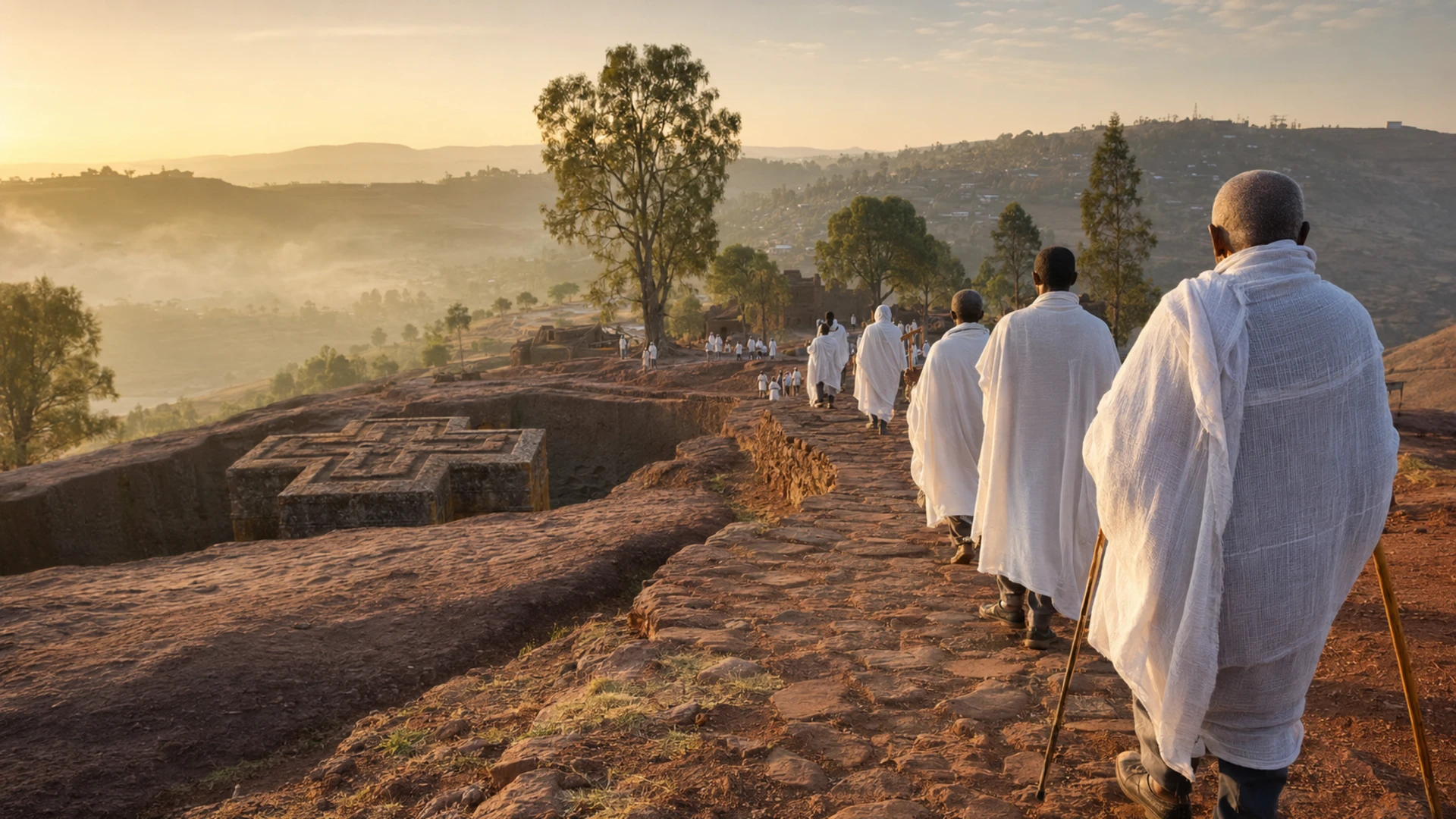
Specific culture or historical context: Ethiopian Orthodox Christian pilgrimage at Lalibela, a medieval Christian sacred centre that remains active today.
People shown: Black Ethiopian men and women of varied adult ages; no duplicated faces; no crowd crush.
Location: Lalibela, Amhara Region, Ethiopia.
Clothing: Historically and culturally appropriate white netela or gabi-style shawls over modest clothing; simple footwear.
Architecture: Accurate rock-hewn church setting and stone pathways; no invented domes or fantasy monuments.
Objects: Prayer staffs, small hand crosses only where culturally appropriate; no random charms.
Lighting: Soft golden dawn with natural mist and long shadows.
Composition: 16:9 landscape; pilgrims on the right and centre; open visual space on the left for a website title; clear depth from foreground path to church landscape.
SEO-friendly filename: pilgrimage-meaning-history-spiritual-importance-lalibela.webp
Image title: Ethiopian Orthodox Pilgrimage to Lalibela
Alt text: Ethiopian Orthodox pilgrims in white shawls walking toward the rock-hewn churches of Lalibela at dawn
Caption: Pilgrimage connects movement, sacred landscape, worship and inherited memory in culturally specific ways.
Recommended placement: Immediately after the Quick Answer.
Article section supported: Definition and spiritual meaning of pilgrimage.
Important elements to avoid: Staged ritual, fantasy light beams, mixed African clothing, tourist selfies, text, logos, inaccurate churches, distorted hands or intrusive close-ups of prayer.
What Is a Pilgrimage?
A pilgrimage is more than travel to a famous religious site. Three elements usually distinguish it from an ordinary trip:
1. Intention: The traveler understands the journey as spiritually, morally, culturally or ancestrally meaningful.
2. Recognized destination or route: A community identifies the place, path, gathering or sequence of sites as significant.
3. Practice and responsibility: The pilgrim may pray, fast, walk, bathe, keep vigil, make an offering, attend worship, remember the dead, follow rules or return with new obligations.
Distance alone does not define pilgrimage. A person may cross continents, walk to a nearby shrine, follow a city procession, circle a sacred site, or revisit a family homeland. Some traditions emphasize the destination; others regard the route itself as sacred. Some require a specific sequence of actions. Others allow flexible forms of participation.
Scholars often describe pilgrimage as movement toward a sacred centre, but current research warns against forcing all pilgrimages into one model. [1][2] Communities disagree about who may participate, what counts as completion, whether hardship is necessary, and how tourism relates to devotion. A reliable explanation therefore begins with the tradition’s own language, custodians and institutions.
Pilgrimage in Simple Words
Pilgrimage means traveling for a sacred or deeply meaningful purpose.
A tourist may visit a holy place because it is beautiful or historically important. A pilgrim approaches the same place through devotion, obligation, remembrance or personal commitment. One person can also be both pilgrim and tourist; the categories can overlap.
What Makes a Journey Sacred?
A journey becomes sacred because people attach spiritual authority, inherited memory and recognized practices to it. The sacredness may come from:
A revelation, miracle or sacred event associated with the place.
The life, death, burial or teaching of a religious founder, saint, martyr or ancestor.
A deity, spirit, river, mountain, forest, spring or other feature of sacred geography.
A religious command or inherited obligation.
A community’s origin story, migration, suffering, survival or covenant.
Repeated ceremonies that connect generations to the same route.
The presence of a shrine, temple, church, mosque, grave, relic, sacred image or ritual object.
Sacredness is not simply a private feeling. Personal experience matters, but pilgrimage traditions are usually sustained through collective memory, religious law, oral teaching, architecture, calendars, custodianship and community practice.
The Spiritual Importance of Pilgrimage
Devotion and Worship
Many pilgrims travel to honour God, a deity, a saint, an ancestor or a sacred event. The physical journey becomes an expression of prayer. Time, money, bodily effort and attention are offered through the act of going.
Religious Obligation
Some pilgrimages are required under particular conditions. Hajj, for example, is one of the pillars of Islam and is expected once in a lifetime from Muslims who are physically and financially able. The meaning of an obligatory pilgrimage differs from a voluntary visit made for private devotion.
Repentance and Moral Renewal
Pilgrimage may create space for confession, reflection, restitution or recommitment. Leaving ordinary routines can help a pilgrim examine conduct and return with practical responsibilities. The journey does not automatically erase wrongdoing; traditions may require apology, repayment, changed behavior or reconciliation.
Thanksgiving and Fulfilment of a Vow
A person or family may promise to visit a shrine, join a procession or make an offering after a prayer, recovery, safe birth, successful harvest or escape from danger. Such journeys should be explained as living beliefs rather than scientific proof that the pilgrimage caused the outcome.
Hope, Comfort and Healing Belief
Pilgrims may seek spiritual strength, emotional comfort or healing. Sacred places can provide community support and a language for suffering. However, pilgrimage should not replace medical care, and no article should promise that a journey will cure illness, infertility, mental distress or disability.
Ancestral Memory and Identity
An ancestral pilgrimage may involve visiting graves, former homelands, royal tombs, sacred forests, historical ports, family compounds or places linked with migration and displacement. The journey can renew identity, grief, responsibility and belonging. Its meaning depends on the community and the traveler’s relationship to the site.
Community and Solidarity
Pilgrimage gathers people who may differ in age, class, occupation, language or nationality. Shared food, lodging, song, prayer and difficulty can create intense temporary fellowship. Anthropologists Victor and Edith Turner used the term communitas for forms of direct social connection that can appear when ordinary status differences are temporarily reduced. Later scholars have shown that pilgrimage communities can still contain inequality, conflict and institutional control. [1][2]
Relationship With Land
Pilgrimage turns geography into a moral and spiritual relationship. A river may be approached as sacred, a mountain as a place of revelation, a road as the path of ancestors, or a forest as the dwelling of remembered generations. Environmental damage can therefore threaten both physical heritage and living religious practice.
A Short History of Pilgrimage
Pilgrimage is older than any single world religion. Archaeological and written evidence shows that people in ancient societies traveled to temples, healing sanctuaries, oracles, festivals, tombs and sacred landscapes. Because evidence is incomplete, historians should avoid claiming one universal beginning.
Ancient Sacred Travel
In the ancient Mediterranean, people traveled to regional sanctuaries and Panhellenic festivals. Greek religious life included sacred sites connected with particular deities, and major festivals drew participants from across the Greek-speaking world. [17] Journeys combined worship with athletic contests, trade, diplomacy and social exchange.
South Asia developed extensive networks of tirthas, often translated as pilgrimage places or “crossing places.” [18] The Sanskrit term suggests a ford or passage where contact with sacred power is understood to be especially possible. Rivers, temples, mountains, cities and teachers may all be described through this language, depending on the tradition.
Makkah was a place of pilgrimage before Islam. [8] Islamic Hajj later established a specific religious framework connected with the Kaaba and the teachings and practices of Islam. This continuity of location does not mean pre-Islamic and Islamic pilgrimage are the same religion.
Pilgrimage in Late Antiquity and Medieval Christianity
By the fourth century CE, pilgrimage had become a recognized expression of Christian devotion. [3] Christians traveled to Jerusalem, Bethlehem, Sinai, Rome and places connected with martyrs, saints and relics. Churches, hospices, roads and religious art developed partly to serve these journeys.
During the Middle Ages, routes to Santiago de Compostela connected religious centres, towns and hospitality institutions across Europe. UNESCO describes the routes as important channels of religious and cultural exchange. [4] Pilgrimage also shaped art, architecture, trade, storytelling and ideas of hospitality.
Buddhist Pilgrimage Networks
Buddhist pilgrimage developed around places associated with the Buddha’s life and enlightenment. Bodh Gaya, where Buddhist tradition locates the Buddha’s enlightenment, remains one of the world’s most important Buddhist pilgrimage centres. [7] Pilgrims may meditate, circumambulate, make offerings, chant and visit related sacred sites.
As Buddhism spread across Asia, local pilgrimage systems developed around mountains, monasteries, stupas, relics, teachers and sacred landscapes. These traditions differ among Theravada, Mahayana, Vajrayana and regional communities.
African Pilgrimage Histories
Africa’s pilgrimage histories include Indigenous sacred landscapes, Christian routes, Islamic Hajj networks, Sufi gatherings, royal and ancestral sites, martyr commemorations and diaspora homecomings. No single model represents the continent.
Ethiopian Christian pilgrimage developed around centres such as Lalibela, whose rock-hewn churches have served as a place of devotion for centuries. [9] Muslim travelers from West, East and North Africa formed routes to Makkah, creating scholarly, commercial and family connections across the Sahara, Nile Valley, Red Sea and Indian Ocean worlds. Indigenous sacred sites such as Osun-Osogbo, Mijikenda kaya forests and ancestral rock-art landscapes continue to carry community-specific meanings.
Modern Pilgrimage
Railways, steamships, aircraft, roads, passports, digital registration and mobile communication have changed how pilgrims travel. Some routes have become accessible to more people, while borders, cost, conflict, disability and visa systems continue to exclude others.
Modern pilgrimage also overlaps with tourism, heritage conservation, political identity and commercial markets. The existence of hotels, transport, food vendors or souvenirs does not automatically make pilgrimage inauthentic. The central question is whether commerce supports or displaces worship, local authority and community well-being.
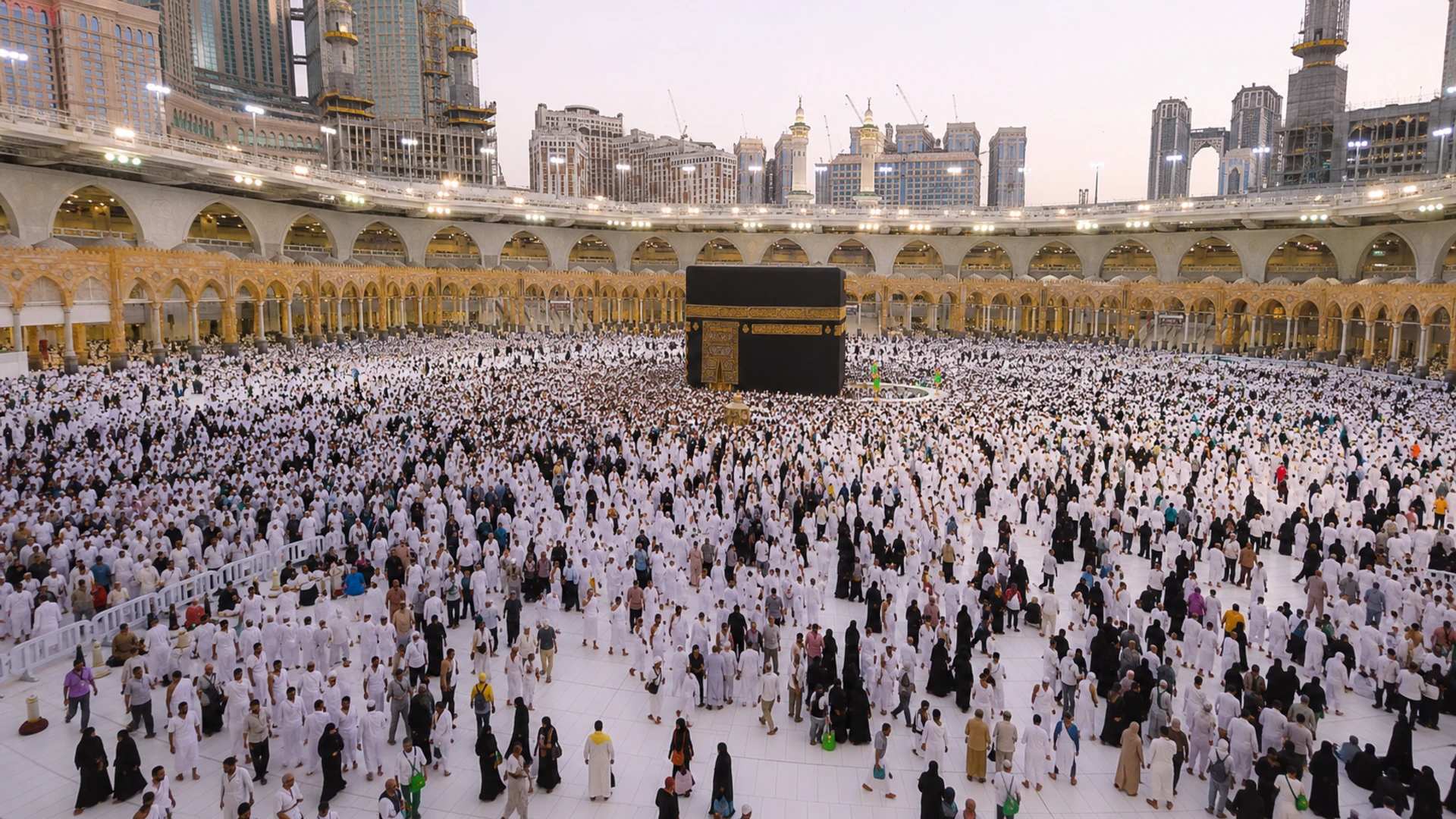
Specific culture or historical context: Christian pilgrimage in medieval northern Spain, approximately the 12th–13th centuries.
People shown: A small mixed group of European adult pilgrims; no modern backpacks or tourism gear.
Location: Northern Spain on a historically plausible Camino landscape.
Clothing: Wool cloaks, tunics, simple hats, leather footwear and staffs appropriate to the period; scallop symbols used sparingly and accurately.
Architecture: Romanesque stone church, bridge and rural settlement; no Gothic fantasy skyline.
Objects: Walking staffs, cloth bundles, water vessels; no weapons as focal objects.
Lighting: Cool morning light with natural cloud cover.
Composition: Wide landscape with the road leading diagonally into the distance; people occupy less than one-third of the frame.
SEO-friendly filename: medieval-camino-pilgrimage-history.webp
Image title: Medieval Pilgrims on the Camino de Santiago
Alt text: Medieval Christian pilgrims walking toward a Romanesque church on the Camino de Santiago
Caption: Historic pilgrimage routes supported religious travel, hospitality, cultural exchange and the growth of towns and sacred architecture.
Recommended placement: After “A Short History of Pilgrimage.”
Article section supported: History and development of pilgrimage.
Important elements to avoid: Modern clothing, fantasy castles, oversized scallop symbols, crusader imagery, inaccurate armor, embedded text or romanticized suffering.
How Pilgrimage Usually Works
Pilgrimage traditions differ, but many include four broad stages.
1. Preparation
Preparation may involve prayer, teaching, fasting, confession, blessing, special clothing, financial planning, medical checks, permits, settling family responsibilities or learning the route’s rules. Some traditions require formal eligibility or authorized leadership.
2. Separation and Journey
The pilgrim leaves ordinary routines and enters a period of movement. Walking can be central, but many legitimate pilgrimages involve buses, trains, aircraft, boats or adapted transport. The spiritual value should not be measured only by physical pain.
3. Sacred Acts at the Destination
At the destination, pilgrims may attend worship, circle a shrine, bathe, stand in prayer, touch or view a sacred object, visit a tomb, make an offering, keep vigil, listen to teaching, sing, fast or join a procession. Outsiders should not reproduce these actions without understanding their authority and meaning.
4. Return and Reintegration
The return home is often part of the pilgrimage. A pilgrim may bring testimony, renewed commitments, blessed objects, memories or responsibilities. The journey’s value may be judged by changes in conduct, service, generosity or faith rather than by the number of photographs taken.
Major Pilgrimage Traditions and Examples
Hajj in Islam
Hajj is the annual pilgrimage to Makkah and the surrounding sacred sites. It is the fifth pillar of Islam [8] and brings Muslims from many nations into a shared sequence of rites. Pilgrims enter the state of ihram, perform tawaf around the Kaaba, travel through prescribed locations, stand at Arafat and complete other acts defined by Islamic teaching.
The pilgrimage expresses submission to God, repentance, equality, discipline and connection to the global Muslim community. The simple pilgrimage garments worn by many participants make status differences less visible, although practical inequalities in travel, accommodation and access remain.
Hajj should be described through reliable Islamic and official sources. Current permits, health requirements and travel rules can change, so historical explanation should not be used as operational guidance.
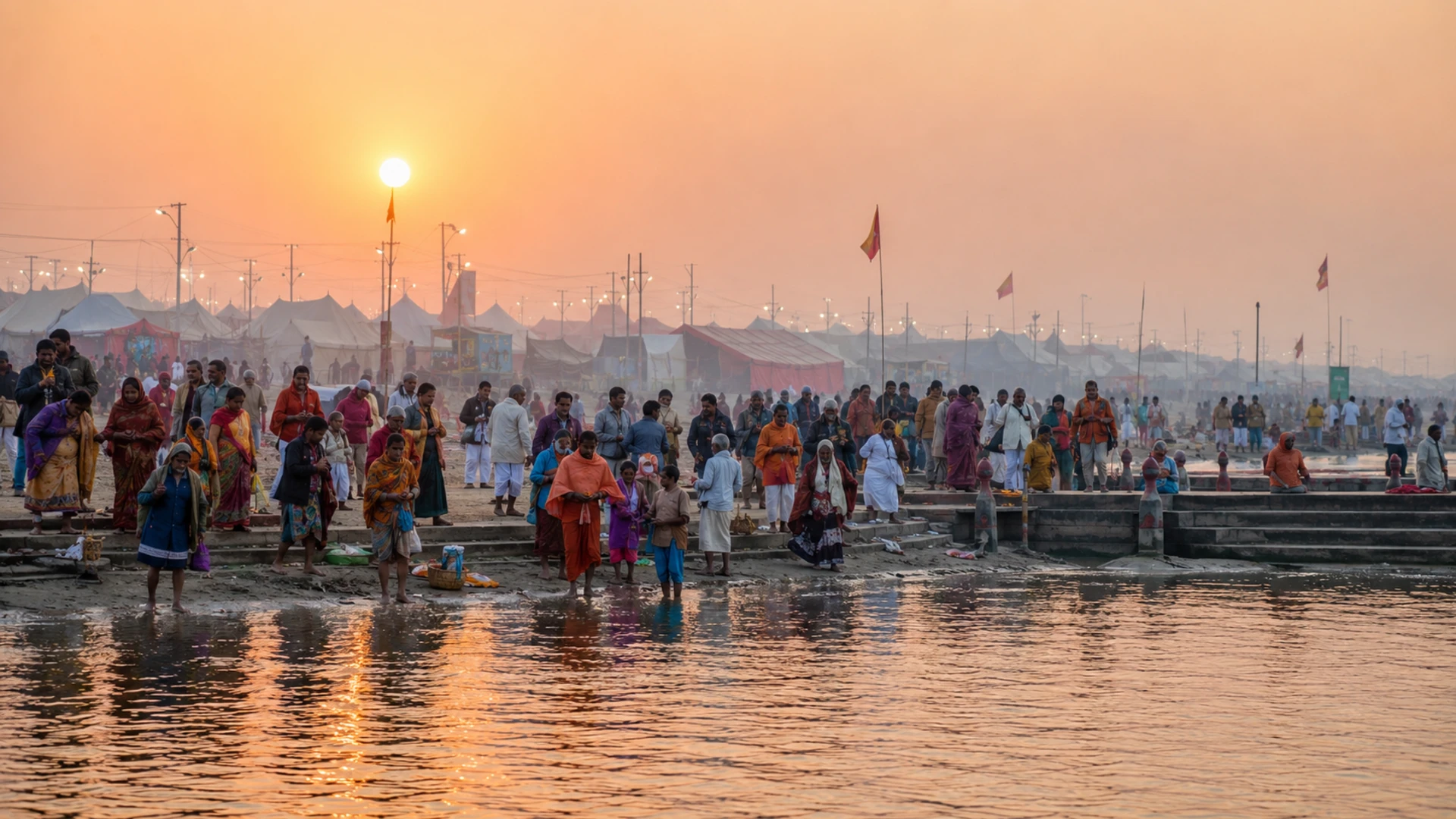
Specific culture or historical context: Contemporary Hajj in Makkah, Saudi Arabia.
People shown: A diverse multinational Muslim crowd; men in ihram and women in modest clothing; faces not individually emphasized.
Location: Masjid al-Haram, Makkah.
Clothing: Accurate ihram garments and modest contemporary clothing.
Architecture: Accurate modern mosque environment; no altered sacred structures.
Objects: No invented banners, logos or text.
Lighting: Neutral daylight or soft evening light with realistic exposure.
Composition: Wide overhead or elevated perspective showing movement and collective scale; no close-up intrusion.
SEO-friendly filename: hajj-sacred-pilgrimage-makkah.webp
Image title: Hajj Pilgrimage in Makkah
Alt text: Muslim pilgrims moving around the Kaaba during Hajj in Makkah
Caption: Hajj is an Islamic religious obligation for those who meet the required conditions and follows a defined sequence of sacred rites.
Recommended placement: Within the Hajj section.
Article section supported: Religious obligation, community and sacred practice.
Important elements to avoid: Incorrect ritual sequence, exposed or immodest clothing, political signage, sensational crowd imagery, impossible architecture, text or watermarks.
Hindu Pilgrimage and Kumbh Mela
Hindu pilgrimage traditions are diverse. The concept of tirtha-yatra joins journey with the idea of a sacred crossing place. Pilgrims may travel to rivers, temples, mountains, cities or places associated with deities, teachers and sacred narratives.
Kumbh Mela is a major pilgrimage gathering held at four river locations in India according to calendrical cycles. UNESCO describes ritual bathing in a sacred river as central to the gathering. [6] The event also includes worship, teaching, processions, ascetic communities, temporary settlements, hospitality and extensive public organization.
It is inaccurate to present Kumbh Mela as only a spectacular crowd or mass bath. Its meaning belongs to Hindu sacred geography, religious authority and living practice. Photography should respect privacy, particularly around bathing and personal devotion.
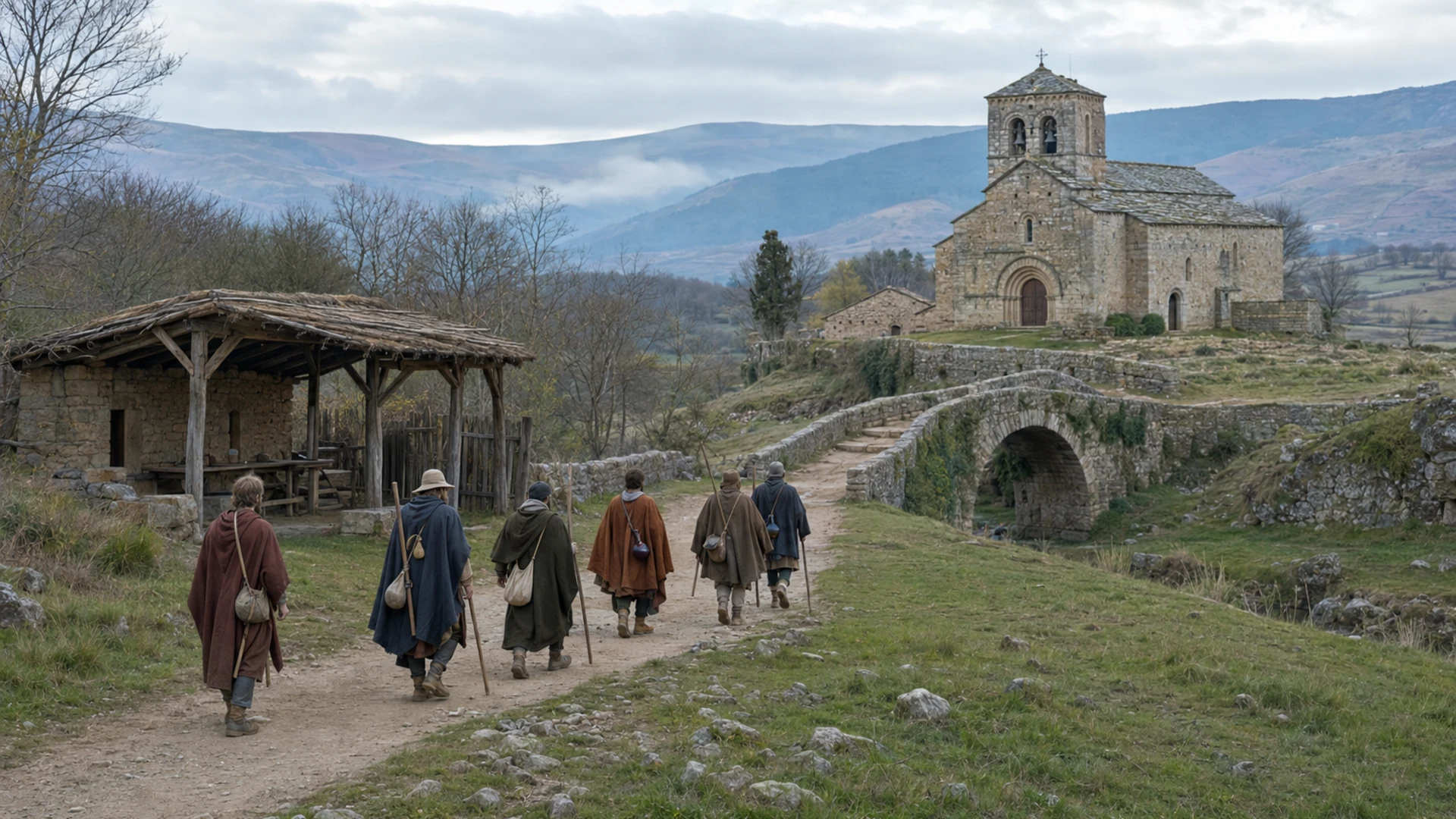
Specific culture or historical context: Contemporary Hindu Kumbh Mela in India.
People shown: Indian families, elders and adult pilgrims; no voyeuristic close-ups of bathing.
Location: A broad sacred river confluence setting associated with Kumbh Mela.
Clothing: Modest traditional and contemporary Indian clothing appropriate to the gathering.
Architecture: Temporary pilgrimage settlement, river steps and service structures rather than permanent fantasy temples.
Objects: Small brass or clay vessels, cloth bundles and prayer items used respectfully.
Lighting: Soft sunrise reflected on water with realistic haze.
Composition: River occupies the lower third, pilgrims in the middle, temporary city fading into the background.
SEO-friendly filename: kumbh-mela-sacred-river-pilgrimage.webp
Image title: Kumbh Mela Sacred River Pilgrimage
Alt text: Hindu pilgrims gathering beside a sacred river at Kumbh Mela in India
Caption: Kumbh Mela combines sacred geography, ritual bathing, teaching, hospitality and large-scale community organization.
Recommended placement: Within the Hindu pilgrimage section.
Article section supported: Sacred pilgrimage, water and community.
Important elements to avoid: Nudity, intrusive bathing images, exoticized ascetics, mixed religious symbols, impossible crowd density, text, logos or invented ceremonies.
Buddhist Pilgrimage to Bodh Gaya
Bodh Gaya in India is revered as the place where Buddhist tradition locates the Buddha’s enlightenment. The Mahabodhi Temple Complex remains a major destination for Buddhists from many countries. [7]
Pilgrims may meditate beneath or near the Bodhi Tree, circumambulate, chant, bow, study, make offerings and visit sites associated with the Buddha’s life. The forms differ among Buddhist communities, and visitors should avoid assuming that one posture, robe or chant represents all Buddhism.
Buddhist pilgrimage can emphasize remembrance, merit, teaching, mindfulness and the physical encounter with places connected to foundational events. It also demonstrates how one sacred site can belong to a global religious community while remaining embedded in a local Indian social and environmental setting.
Christian Pilgrimage: Jerusalem, Santiago, Lalibela and Namugongo
Christian pilgrimage developed around places connected with Jesus, biblical history, apostles, saints, martyrs, relics and reported apparitions. There is no single Christian requirement or interpretation shared by all denominations.
Jerusalem and Bethlehem became important destinations in late antiquity. Santiago de Compostela grew into a major medieval pilgrimage centre. Lalibela became a distinctive Ethiopian Christian sacred city and remains a living place of prayer. Namugongo in Uganda draws pilgrims who commemorate the Uganda Martyrs, with many traveling long distances before the annual observances.
Christian pilgrims may seek prayer, repentance, thanksgiving, remembrance or solidarity. Visitors should distinguish worship from heritage tourism and respect denominational differences.
Sacred Sites and Pilgrimage Routes in Japan
UNESCO’s Sacred Sites and Pilgrimage Routes in the Kii Mountain Range connect Yoshino and Omine, Kumano Sanzan and Koyasan. [5] The landscape reflects a long interaction of Shinto and Buddhist traditions.
Here the forest, mountain, waterfall, shrine, temple and path form one sacred environment. The route is not empty space between destinations. Walking, purification, hospitality and encounter with the landscape can be part of the religious experience.
Modern hikers may follow portions of these routes for cultural or recreational reasons. Respectful visitors should not claim spiritual status, copy restricted practices or treat sacred buildings as scenery without observing local rules.
Pilgrimage in African Traditions
Africa contains thousands of communities and many religious histories. Pilgrimage on the continent includes Islamic, Christian, Indigenous, Sufi, royal, ancestral and blended traditions. It is wrong to speak of one “African pilgrimage ritual.”
Lalibela in Ethiopia
The rock-hewn churches of Lalibela have been a Christian pilgrimage centre since the medieval period. UNESCO describes the city as a substitute for Jerusalem in Ethiopian Christian sacred geography. [9] Pilgrims gather for major liturgical celebrations, pray within the carved church complex and participate in a living religious tradition.
Osun-Osogbo in Nigeria
The Osun-Osogbo Sacred Grove is a Yoruba sacred landscape associated with Osun and the history of Osogbo. [10] The annual festival includes movement from the town toward the grove and river, linking civic authority, priestly institutions, sacred water, memory and community renewal.
This is not a generic African river ritual. Its meaning belongs to Yoruba religious and civic institutions. Environmental threats to the river and grove also threaten the practice.
Sacred Mijikenda Kaya Forests in Kenya
The kaya forests of coastal Kenya contain former fortified settlements regarded as ancestral homes and sacred places by Mijikenda communities. [11] Councils of elders maintain cultural authority, and access to particular places or knowledge may be restricted.
A journey to a kaya may involve remembrance, community responsibility and ancestral connection, but practices differ among the nine Mijikenda peoples. Outsiders should use recognized guides and never invent a ceremony based on general descriptions.
Nyero Rock Art in Uganda
The Nyero rock-art sites are associated in local belief with ancestral presence and long-distance visits for offerings in times of need. [12] Archaeological interpretation and living community belief are not identical forms of evidence, so both should be described carefully.
Nyero is especially important for AncestralTemple.com because it shows that sacred travel in East Africa can involve rock shelters, ancestral memory and local custodianship rather than a monumental temple or global pilgrimage route.
What Is an Ancestral Pilgrimage?
An ancestral pilgrimage is a meaningful journey to a place connected with forebears, lineage, homeland, burial, migration, enslavement, exile or cultural origin. It may be religious, historical, familial or a combination of these.
Possible destinations include:
Family graves or royal tombs.
Former homesteads and ancestral villages.
Sacred forests, caves, rivers or mountains associated with a lineage.
Shrines maintained by recognized custodians.
Ports, forts and memorial landscapes connected with forced migration.
National or community ceremonies of remembrance.
Places where displaced descendants seek cultural reconnection.
The phrase must be used carefully. A person’s genetic ancestry does not automatically grant access to every sacred practice in a region. Community membership, family relationships, language, custodianship and consent remain important.
African Diaspora Homecoming
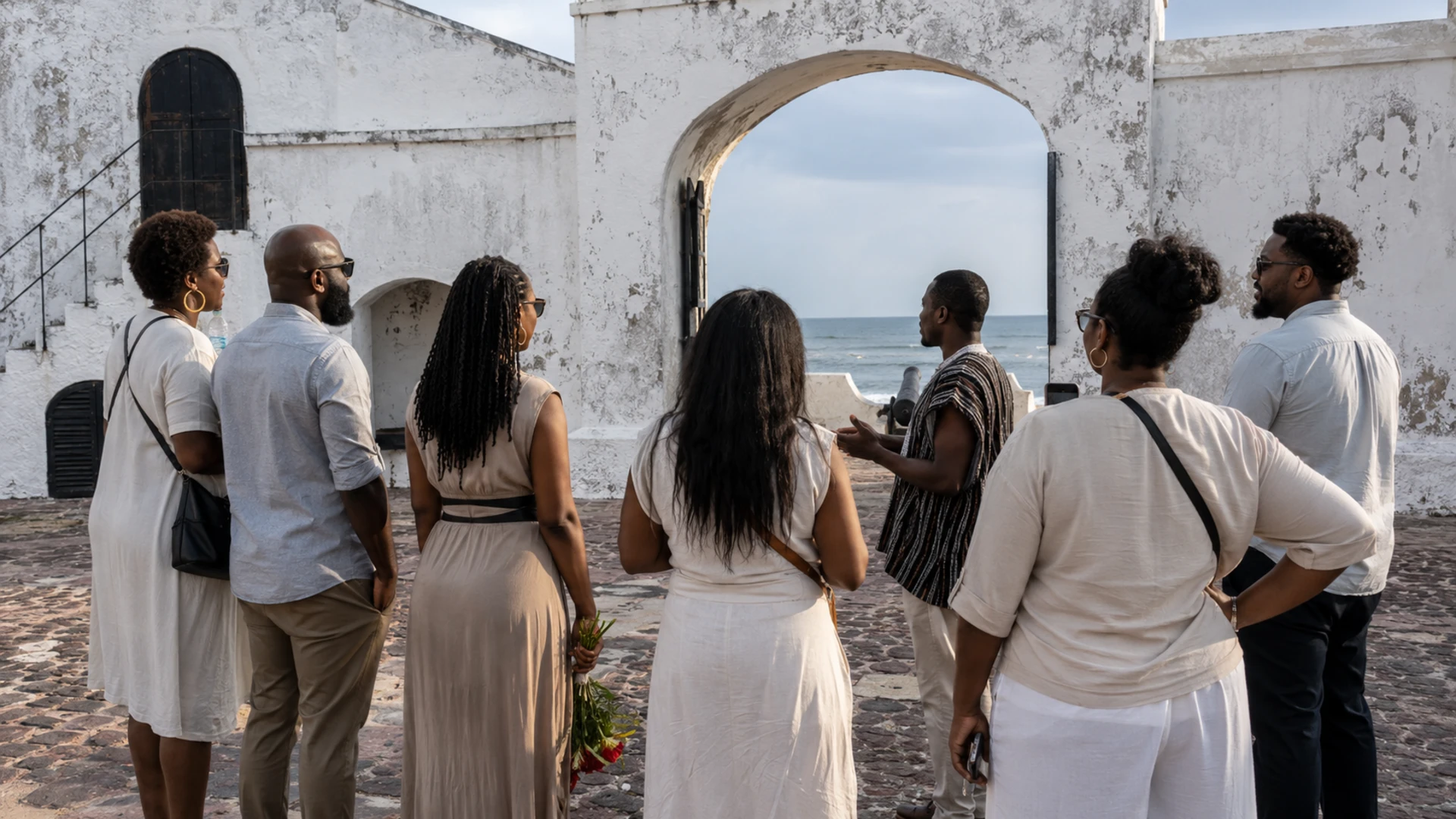
Travel by people of African descent to Ghana, Senegal, Benin and other parts of West Africa is sometimes described as roots tourism, diaspora tourism or pilgrimage tourism. Cape Coast Castle and Elmina Castle have become powerful places of memory for visitors confronting the history of the transatlantic slave trade.
Research in Ghana shows that some diaspora visitors reject the label “tourist” because they understand the journey as a sacred homecoming. [14][15] At the same time, local residents, guides, governments and visitors may interpret the sites differently. A respectful article should acknowledge these emotional and political differences rather than describing a simple return to one known ancestral village.
Watt Town in Jamaica offers another example of ancestral pilgrimage. UNESCO describes groups traveling to a sacred site with gifts to honour ancestors and seek ancestral identity. [13] This practice belongs to a specific Jamaican community and should not be generalized to all African diaspora traditions.
Specific culture or historical context: African diaspora roots pilgrimage and remembrance connected with the transatlantic slave trade in Ghana.
People shown: Black visitors from the African diaspora and one Ghanaian guide; adults only; varied natural hairstyles and body types.
Location: Cape Coast Castle, Ghana.
Clothing: Respectful contemporary travel clothing in neutral tones; no invented ceremonial dress.
Architecture: Accurate whitewashed historic castle courtyard and passage; no fantasy dungeon imagery.
Objects: A small bouquet or memorial flowers held by one visitor; no chains used as props.
Lighting: Soft late-afternoon coastal light with restrained contrast.
Composition: Visitors in the foreground from behind or three-quarter view, architecture framing the sea beyond; emotional but not melodramatic.
SEO-friendly filename: ancestral-pilgrimage-african-diaspora-ghana.webp
Image title: Ancestral Pilgrimage and Diaspora Homecoming in Ghana
Alt text: Black diaspora visitors reflecting with a Ghanaian guide at Cape Coast Castle
Caption: For some descendants of displaced Africans, visiting places connected with enslavement is understood as remembrance, mourning and homecoming rather than ordinary tourism.
Recommended placement: After “African Diaspora Homecoming.”
Article section supported: Ancestral pilgrimage and roots travel.
Important elements to avoid: Chains as costumes, staged suffering, crying stereotypes, invented rituals, tourist smiles, mixed historical periods, logos, text or exploitation of trauma.
Sacred Pilgrimage and Sacred Geography
A sacred pilgrimage is not a separate world religion. It is a descriptive phrase for a pilgrimage whose purpose, route or destination is understood as holy or spiritually set apart.
Sacred geography explains how meaning becomes attached to land. A community may identify a centre, boundary, direction, sequence of stops or relationship among several places. For example:
Hajj joins Makkah with Mina, Arafat and Muzdalifah through a prescribed sequence.
The Camino is a network of roads leading toward Santiago de Compostela.
The Kii routes connect shrines, temples, forests, mountains and waterfalls.
Kumbh Mela connects festival time with sacred rivers and calendrical knowledge.
Osun-Osogbo links town, palace, grove, river and shrines.
An ancestral pilgrimage may connect family memory with a grave, former settlement or place of forced departure.
Sacred geography is not transferable by visual imitation. Building a similar structure elsewhere, copying clothing or repeating a movement does not recreate the authority of the original place.
Pilgrimage, Liminality and Communitas
Anthropological studies often use liminality to describe the threshold condition created when people leave ordinary roles but have not yet returned. [1][2] Pilgrims may wear simplified clothing, follow common rules, sleep in shared accommodation or depend on strangers.
Communitas describes the strong feeling of fellowship that can arise under these conditions. The concept is useful, but it is not a law. Pilgrimage can also reproduce inequality through wealth, nationality, gender, caste, disability, race, religious rank or access to permits.
A balanced explanation therefore recognizes both transformation and structure. Pilgrimage may create extraordinary solidarity while remaining organized by institutions, rules, leaders, markets and political authorities.
Pilgrimage and Tourism: What Is the Difference?
| Pilgrimage | Tourism |
|---|---|
| Primarily motivated by devotion, obligation, remembrance or sacred meaning | Primarily motivated by leisure, learning, recreation or cultural interest |
| May follow religious rules, vows, routes or calendars | Usually follows personal schedules and visitor services |
| The journey itself may be spiritually important | The destination or experience may be the main goal |
| May involve prayer, worship, offerings, fasting or ritual acts | May involve sightseeing, photography and interpretation |
| Often includes responsibility to a community or tradition | Usually emphasizes individual experience and consumer choice |
The distinction is not absolute. A pilgrim may use hotels, guides and transport. A tourist may experience deep spiritual reflection. Problems arise when visitors demand access to restricted ceremonies, photograph private devotion, damage sacred landscapes or treat local people as performers.
Does Pilgrimage Guarantee Transformation?
No. A pilgrimage may be meaningful, but no journey guarantees moral change, healing, reconciliation or spiritual authority.
A person can complete a famous route and return unchanged. Another may experience profound renewal during a short local journey. Traditions often judge the pilgrimage through conduct after return: greater honesty, service, humility, prayer, generosity or responsibility.
The idea of transformation should therefore be presented as a hoped-for or interpreted outcome, not a measurable promise.
Common Misunderstandings About Pilgrimage
“All Pilgrimages Are Basically the Same”
False. Similar movement does not erase differences in theology, history, language, authority and ritual.
“A Pilgrimage Must Be on Foot”
False. Walking is central in many traditions, but recognized participation may include other transport or accessibility arrangements.
“Greater Pain Means Greater Spiritual Value”
Not necessarily. Discipline and sacrifice can matter, but preventable injury, dehydration, exposure or medical neglect should not be romanticized.
“Sacred Water or Soil Is Safe to Consume”
Not automatically. A place can be sacred while its water remains biologically unsafe. Pilgrims should follow current health guidance and community rules.
“Ancestral Pilgrimage Gives Automatic Cultural Authority”
False. Visiting a homeland or heritage site can be deeply meaningful, but it does not automatically make someone an elder, priest, healer, custodian or initiated member.
“Pilgrimage Is a Relic of the Past”
False. Pilgrimage remains active and changes with transportation, digital media, migration, conservation and modern religious life.
Health, Safety and Accessibility
Pilgrimage can involve heat, altitude, cold, crowds, fasting, long walking, limited sanitation and unfamiliar food. Responsible preparation may include:
Medical advice appropriate to the person’s condition.
Required vaccinations, permits and official registration.
Hydration, safe food and sun protection.
Suitable footwear and gradual physical preparation.
Emergency contacts and travel insurance where appropriate.
Accessible transport, rest and assistance for disabled or older pilgrims.
Respect for crowd-control instructions and local authorities.
Spiritual intention does not remove physical risk. Communities and organizers increasingly adapt routes and services so that participation is not measured only by endurance.
Pilgrimage, Environment and Heritage Protection
Large gatherings can strain water, waste systems, historic buildings, forests and local housing. Popular routes may experience erosion, litter, traffic, commercialization and pressure on residents.
Pilgrims and visitors can reduce harm by:
Staying on recognized routes.
Carrying out waste and following sanitation rules.
Avoiding removal of stones, plants, water, soil or offerings.
Supporting community-led accommodation and local businesses.
Respecting limits on photography and access.
Following conservation guidance at fragile monuments and sacred landscapes.
Avoiding geotagging of restricted or vulnerable sacred locations.
Conservation should not turn a living pilgrimage site into a museum that excludes worshippers. Strong management protects both material heritage and the communities whose practices give the place meaning.
How to Approach a Pilgrimage Tradition Respectfully
1. Name the exact religion, community, route and place.
2. Learn from recognized religious authorities, heritage bodies, custodians and scholars.
3. Ask before photographing prayer, bathing, grief, offerings or ceremonies.
4. Do not copy restricted clothing, ritual words, sacred objects or initiatory practices.
5. Follow current health, visa, permit and safety rules.
6. Pay fairly for local services and avoid exploiting free hospitality.
7. Respect environmental limits and sacred boundaries.
8. Distinguish belief from scientific evidence.
9. Do not promise guaranteed healing, fertility, protection, wealth or forgiveness.
10. Allow communities to define how their living traditions should be represented.
Key Takeaways
Pilgrimage is a purposeful journey to a sacred place, route, event or memory.
Its meaning may include worship, obligation, repentance, thanksgiving, hope, identity, ancestry or community.
Pilgrimage has ancient roots but no single point of origin.
Routes and landscapes can be as important as destinations.
Hajj, Kumbh Mela, Bodh Gaya, Lalibela, Santiago, Kii, Osun-Osogbo and ancestral homecomings belong to distinct traditions.
An ancestral pilgrimage can support remembrance and belonging but does not erase community boundaries.
Pilgrimage may create fellowship and transformation, but these outcomes are not guaranteed.
Responsible pilgrimage protects health, local authority, sacred privacy, heritage and the environment.
People Also Ask
What is pilgrimage in simple words?
Pilgrimage is traveling to a sacred or deeply meaningful place for worship, duty, remembrance, thanksgiving, repentance or spiritual renewal.
Why do people go on pilgrimage?
People go for different reasons, including religious obligation, devotion, fulfilment of a vow, healing hope, ancestral remembrance, identity, mourning, gratitude and community.
What is the origin of pilgrimage?
Pilgrimage has no single known origin. Ancient societies in several regions traveled to sanctuaries, sacred landscapes, festivals, temples, oracles and tombs long before modern world religions developed their present forms.
What is a sacred pilgrimage?
A sacred pilgrimage is a journey whose destination, route or purpose is considered holy within a particular religion or culture.
What is an ancestral pilgrimage?
An ancestral pilgrimage is a journey to a place connected with forebears, family history, homeland, burial, migration, enslavement, exile or cultural origin.
What are examples of pilgrimage?
Examples include Hajj to Makkah, Hindu pilgrimage at Kumbh Mela, Buddhist pilgrimage to Bodh Gaya, Christian routes to Santiago or Lalibela, Japanese routes in the Kii Mountains, and African diaspora homecomings to Ghanaian memory sites.
Is pilgrimage only religious?
Not always. Some journeys are primarily ancestral, memorial, ethical or cultural, although they may still use sacred language. The meaning depends on the traveler and the community connected to the destination.
Is pilgrimage the same as tourism?
No, but they can overlap. Pilgrimage is primarily shaped by sacred intention, obligation or remembrance, while tourism usually emphasizes leisure, education or recreation.
Frequently Asked Questions
How long does a pilgrimage take?
It may last a few hours, several days, months or repeated stages over several years. Duration does not by itself determine authenticity.
Must a pilgrim complete the entire route?
Rules differ. Some traditions require a defined sequence, while others recognize partial, adapted or repeated participation. The relevant community’s guidance is decisive.
Can children participate?
Many pilgrimages include families, but age, safety, religious status and physical demands vary. Guardians should follow official and community guidance.
Can disabled people go on pilgrimage?
Yes, many traditions and organizers provide adapted routes, assistance and transport. Accessibility should not be treated as spiritually inferior.
Can pilgrimage help someone heal emotionally?
It may provide reflection, social support and meaning, but results vary. It is not a guaranteed treatment and should not replace professional mental-health care when needed.
Is it respectful to collect water, stones or soil?
Only when the tradition and site rules clearly permit it. Removing materials can be environmentally harmful or culturally restricted.
Can a non-believer visit a pilgrimage site?
Many sites welcome respectful visitors, while others restrict entry or specific ceremonies. Visitors should follow local rules and avoid claiming religious participation they have not undertaken.
Can a person create a private pilgrimage?
A person can make a personally meaningful journey, but personal intention does not automatically create a recognized community tradition or grant access to restricted sacred practices.
Conclusion
Pilgrimage turns movement into a relationship with the sacred. A road becomes a remembered path. A river becomes a place of encounter. A church, mosque, shrine, grove, mountain, grave or historical site becomes a point where memory, faith and responsibility meet.
Its history stretches across ancient sanctuaries, medieval roads, African sacred landscapes, Islamic Hajj routes, South Asian river gatherings, Buddhist holy places and modern diaspora homecomings. Yet the value of comparison is not to claim that every pilgrimage is secretly the same. It is to understand how different communities use journey, place and disciplined practice to express what they hold sacred.
The spiritual importance of pilgrimage is therefore both personal and communal. Pilgrims may seek renewal, but they travel through traditions shaped by generations of custodians, residents, teachers, ancestors and fellow travelers. Respect begins by naming those traditions accurately, protecting their places and refusing to turn living belief into a universal promise.
Final Summary
Pilgrimage is an intentional sacred journey shaped by purpose, place, practice and community. It can express worship, duty, repentance, gratitude, hope, ancestral remembrance or identity. Its forms range from Hajj and Kumbh Mela to Lalibela, Bodh Gaya, Santiago, the Kii routes, Osun-Osogbo and African diaspora homecoming. Pilgrimage may inspire transformation, but it does not guarantee healing or spiritual authority. Responsible participation respects culture, health, accessibility, heritage and the environment.
Research Sources and Further Reading
1. St Andrews Encyclopaedia of Theology. “Pilgrimage.” Overview of Christian pilgrimage and anthropological approaches.
2. Simon Coleman. *Powers of Pilgrimage: Religion in a World of Movement*. New York University Press, 2022.
3. The Metropolitan Museum of Art. “Pilgrimage in Medieval Europe.”
4. UNESCO World Heritage Centre. “Routes of Santiago de Compostela: Camino Francés and Routes of Northern Spain.”
5. UNESCO World Heritage Centre. “Sacred Sites and Pilgrimage Routes in the Kii Mountain Range.”
6. UNESCO Intangible Cultural Heritage. “Kumbh Mela.”
7. UNESCO World Heritage Centre. “Mahabodhi Temple Complex at Bodh Gaya.”
8. Saudipedia. “Hajj”; British Museum. “Hajj: Pilgrimage to Mecca.”
9. UNESCO World Heritage Centre. “Rock-Hewn Churches, Lalibela.”
10. UNESCO World Heritage Centre. “Osun-Osogbo Sacred Grove.”
11. UNESCO World Heritage Centre. “Sacred Mijikenda Kaya Forests.”
12. British Museum African Rock Art. “Nyero.”
13. UNESCO Intangible Cultural Heritage. “Pilgrimage to Watt Town.”
14. Ann Reed. *Pilgrimage Tourism of Diaspora Africans to Ghana*. Routledge, 2015; Indiana University dissertation repository.
15. Bayo Holsey. “Diaspora Tourism.” *Oxford Research Encyclopedia of African History*, 2024.
16. AncestralTemple.com. “Pilgrimage Traditions: Sacred Journeys, Meaning, and Living Heritage.” Existing page recommended for consolidation and refresh.
17. The Metropolitan Museum of Art. “Greek Gods and Religious Practices.”
18. James Lochtefeld. “Pilgrimage.” *Oxford Bibliographies in Hinduism*.
5. Recommended Internal Links
| Anchor text | Target URL | Best placement | Purpose |
|---|---|---|---|
| sacred forests in African traditions | https://ancestraltemple.com/blog/sacred-forests-african-traditions | Mijikenda and Osun sections | Strengthen the sacred-landscape and African heritage cluster |
| spiritual cleansing across cultures | https://ancestraltemple.com/blog/what-is-spiritual-cleansing-cultural-overview | Kumbh Mela or preparation sections | Explain that purification meanings differ among traditions |
| spiritual symbols shared worldwide | https://ancestraltemple.com/blog/spiritual-symbols-shared-worldwide | Sacred geography or common misunderstandings | Support cultural comparison without claiming universal meanings |
| sacred fire in history | https://ancestraltemple.com/blog/sacred-fire-in-history | Historical development or related traditions | Connect pilgrimage with offerings, sacred elements and ritual continuity |
| water ceremonies around the world | https://ancestraltemple.com/blog/water-ceremonies-around-the-world | Kumbh Mela and sacred geography | Deepen coverage of sacred water without duplicating the pilgrimage article |
6. Glossary
| Term | Definition |
|---|---|
| Pilgrim | A person undertaking a journey understood as sacred, devotional, obligatory, ancestral or spiritually meaningful. |
| Pilgrimage | An intentional journey to a sacred place, route, event, person, object or memory. |
| Sacred geography | A cultural or religious system that gives spiritual meaning to particular landscapes, routes, directions and places. |
| Shrine | A place or structure associated with a sacred being, event, relic, ancestor or object of devotion. |
| Hajj | The Islamic pilgrimage to Makkah, one of the five pillars of Islam for those who meet the required conditions. |
| Ihram | A state of consecration entered for Hajj or Umrah, also associated with prescribed clothing and conduct. |
| Tirtha | A Sanskrit term meaning a ford or crossing place and, in religious usage, a sacred place or means of spiritual passage. |
| Tirtha-yatra | A Hindu journey to a sacred crossing place, commonly translated as pilgrimage. |
| Communitas | An anthropological term for intense fellowship or direct social connection that may arise among people in a liminal setting. |
| Liminality | A threshold condition between ordinary social states, often used to analyze ritual and pilgrimage. |
| Vow | A solemn promise that may include an obligation to complete a journey, offering or devotional act. |
| Procession | Organized ceremonial movement, often along a recognized route. |
| Ancestral pilgrimage | A journey connected with forebears, lineage, homeland, burial, migration, enslavement, exile or cultural origin. |
| Diaspora tourism | Travel by dispersed populations or their descendants to places connected with a homeland, history or identity. |
| Roots tourism | Travel motivated by family, ethnic, genealogical or ancestral connection. |
| Heritage tourism | Travel to places valued for historical, cultural, architectural or memorial importance. |
| Sacred landscape | A wider environment whose landforms, buildings, paths, stories and practices carry connected spiritual significance. |
| Custodian | A person, lineage, institution or community with recognized responsibility for safeguarding a sacred place or tradition. |
7. Related Articles
Existing Articles to Link
1. Sacred Forests in African Traditions: Meaning, Heritage, and Conservation
2. What Is Spiritual Cleansing? A Cultural Overview
3. Spiritual Symbols Shared Worldwide: Meaning, History, and Cultural Differences
4. Sacred Fire in History
5. Water Ceremonies Around the World
Future Supporting Articles
6. Ancestral Pilgrimage: Diaspora Homecoming, Memory and Ethics
7. Sacred Geography: Why Rivers, Mountains, Forests and Roads Become Holy
8. Pilgrimage and Tourism: Differences, Overlap and Respectful Travel
9. African Pilgrimage Traditions: Namugongo, Lalibela, Touba and Osogbo
10. Preparing for a Pilgrimage: Spiritual, Physical and Cultural Responsibilities
Article Information
- Publisher
- Ancestral Temple
- Editor
- Ancestral Temple
- Last updated
- Jul 26, 2026
- Last reviewed
- Jul 26, 2026
- Content version
- 68c2c63a8d
This educational article should be read as cultural and spiritual information, not as medical, legal, financial, or emergency advice.
Helpful Related Guidance
Explore This Topic
Related Topic Cluster
Dreams & Symbolism
About the Author
 Ancestral Temple
Spiritual guide and practitioner with decades of experience in ancestral wisdom, rituals, and divine guidance.
Related Posts
View All






Leave a Comment
We'd love to hear your thoughts.