
Frankincense Meaning: History, Symbolism and Traditional Uses
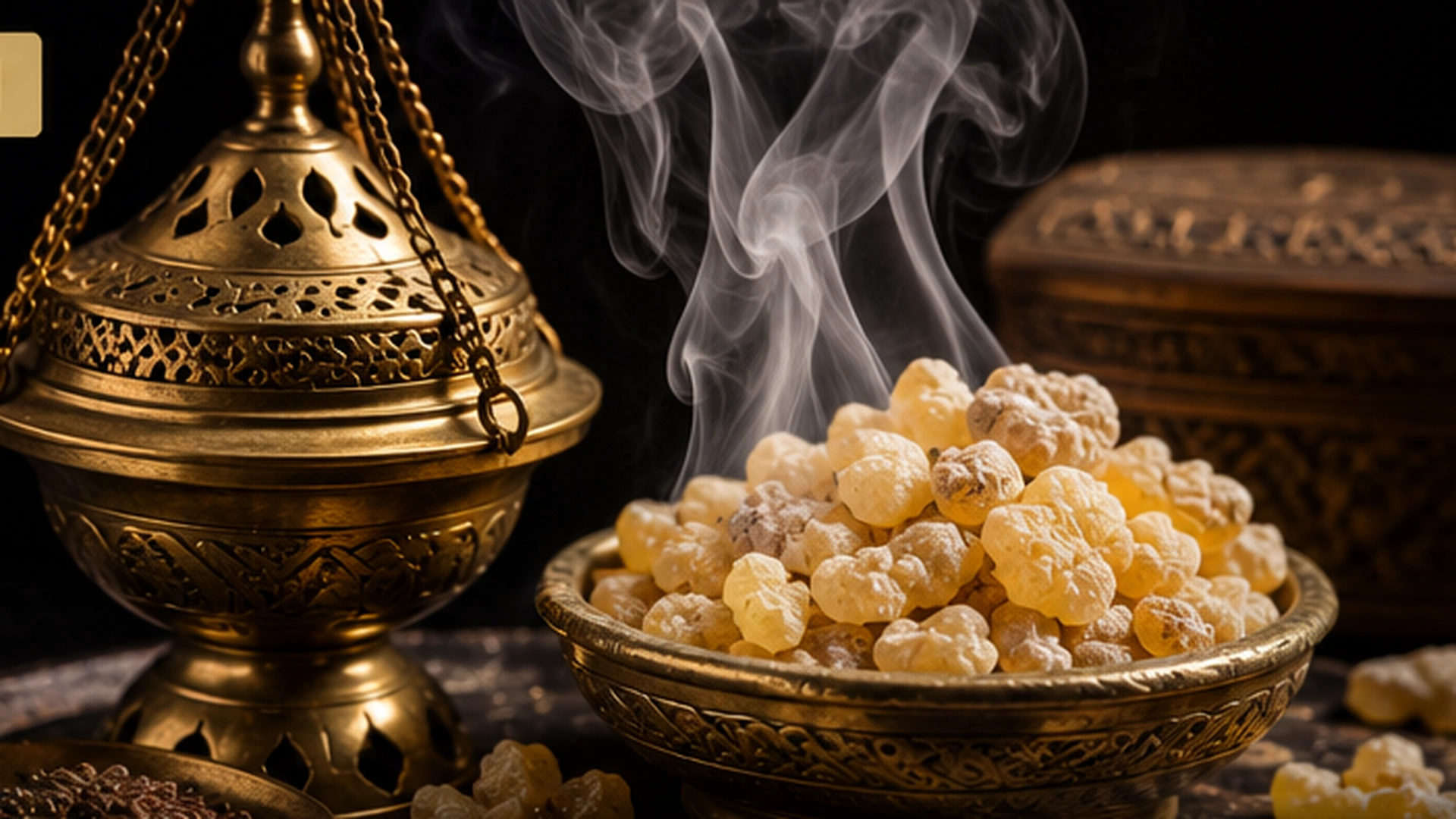
Quick Summary
Frankincense is the aromatic resin of several trees in the genus Boswellia. For thousands of years, communities in southern Arabia, the Horn of Africa, the Mediterranean world, Ind...
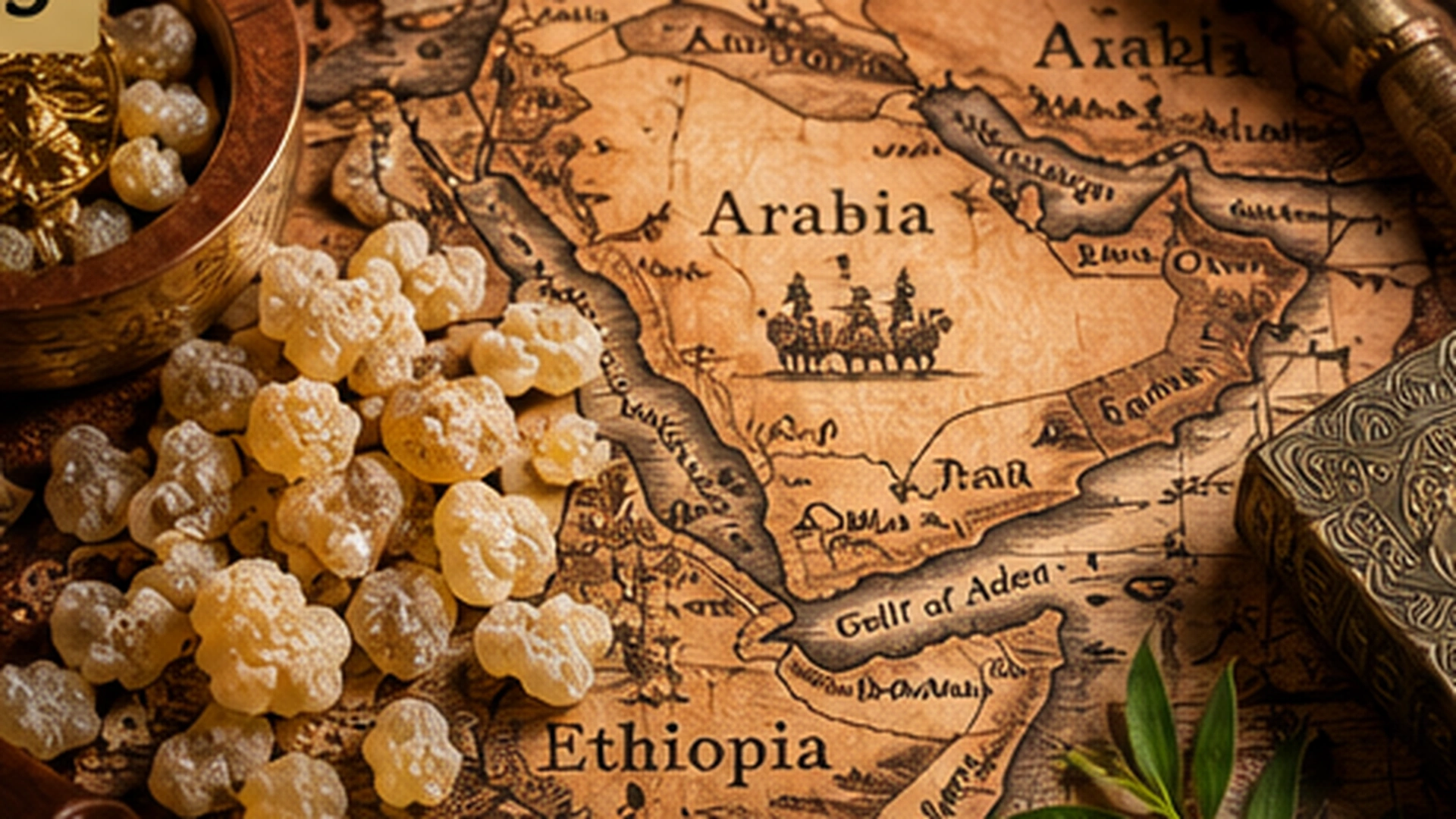
Frankincense is the aromatic resin of several trees in the genus Boswellia. For thousands of years, communities in southern Arabia, the Horn of Africa, the Mediterranean world, India, and later many Christian societies valued it as incense, perfume material, medicine, trade wealth, and a sign of honor. Its fragrant smoke made it especially suitable for ritual spaces, but frankincense has never had one universal meaning.
Depending on the culture and period, frankincense can symbolize sacred offering, purification, prayer, divine presence, royal generosity, hospitality, remembrance, healing, or commercial prosperity. These meanings belong to particular religious texts, ceremonies, household customs, and trading histories. They should not be turned into a single claim that frankincense automatically protects, heals, attracts wealth, or produces spiritual results.
Quick Answer
Frankincense commonly symbolizes sacred offering, prayer, purification, honor, hospitality, remembrance, and costly devotion. It is a fragrant oleo-gum-resin harvested from Boswellia trees. Historically it was burned in temples, churches, homes, and funerary settings; used in perfumes and medicines; and traded across Arabia, Africa, the Mediterranean, and Asia. Its exact meaning changes by tradition and context.
What Is Frankincense?
Frankincense, also called olibanum, is a hardened aromatic exudate obtained from Boswellia trees in the Burseraceae family. The word is often traced to Old French *franc encens*, commonly interpreted as “pure” or “high-quality incense.” It does not refer to one single species. Different Boswellia species produce resins with different aromas, colors, chemical profiles, traditional names, and commercial histories.[1]
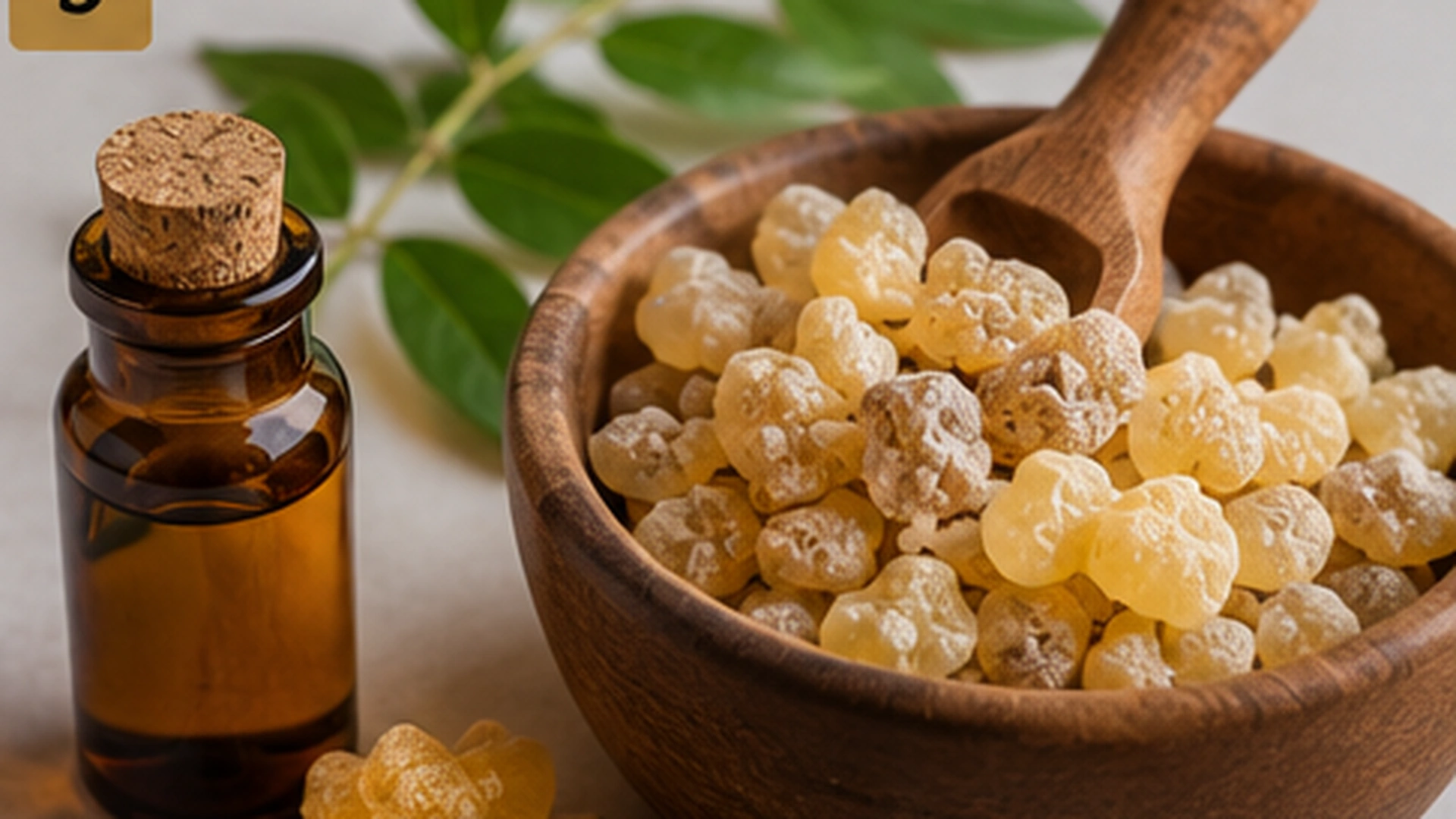
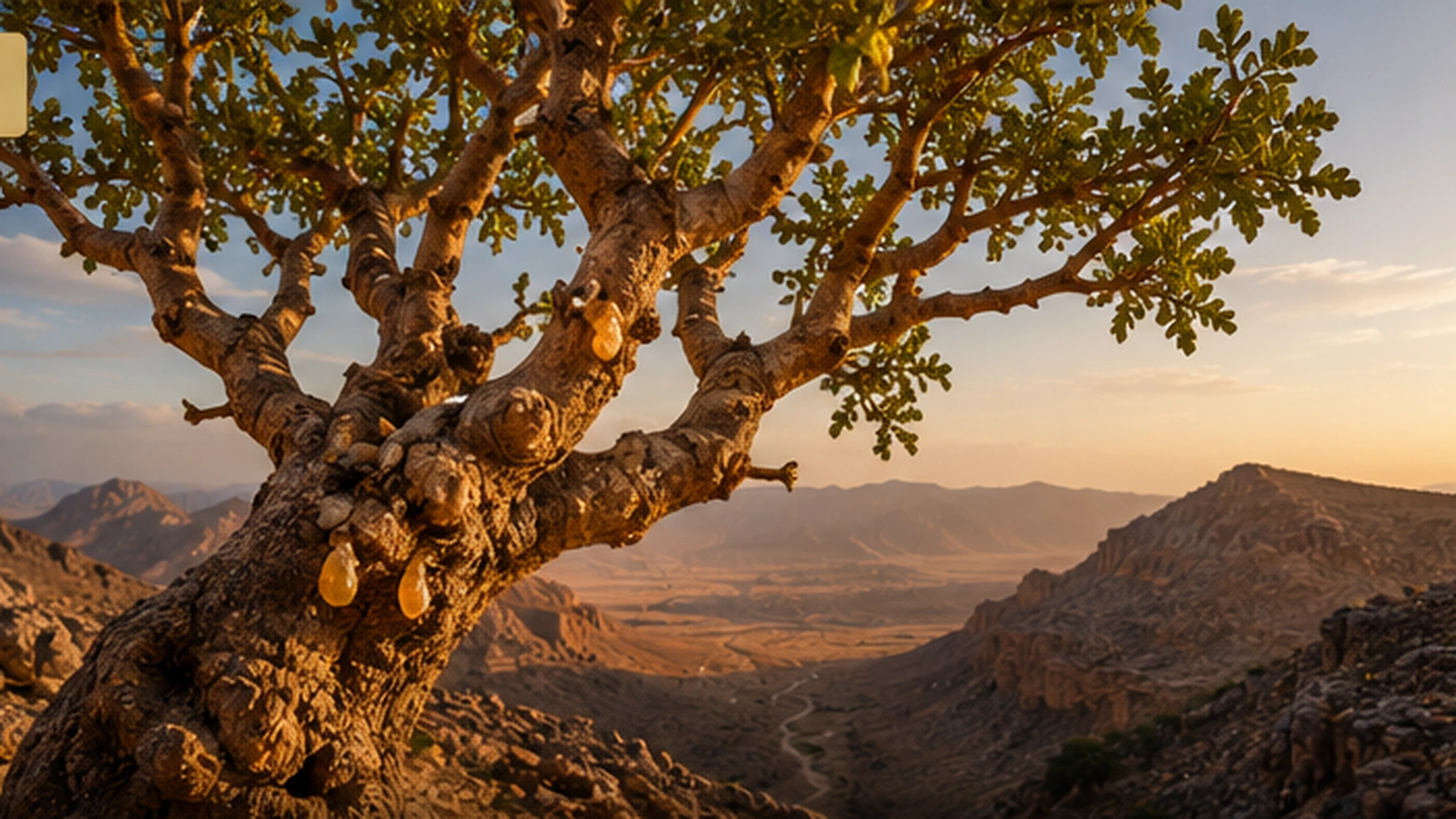
The resin is technically an oleo-gum-resin: a natural mixture containing resinous compounds, gum, and volatile oils. When a small area of bark is carefully opened, the tree releases a milky exudate. It hardens in the air into irregular droplets traditionally called “tears.” These may be collected, cleaned, dried, and sorted by size, color, scent, and purity.
The most internationally recognized species include Boswellia sacra, associated with southern Oman, Yemen, northern Somalia, and parts of Ethiopia; Boswellia papyrifera, important in Ethiopia, Eritrea, and Sudan; Boswellia frereana, especially associated with northern Somalia; and Boswellia serrata, the source of Indian frankincense used in Ayurveda. The names “frankincense” and “Boswellia” therefore overlap, but they are not perfectly interchangeable: Boswellia is the plant genus, while frankincense is the resin product.[1][7]
| Species or term | Main association | Important distinction |
|---|---|---|
| Boswellia sacra | Southern Arabia and parts of the Horn of Africa | A major source of high-value incense resin; strongly associated with Dhofar, Oman |
| Boswellia papyrifera | Ethiopia, Eritrea, Sudan and nearby drylands | Important African non-wood forest product and export resin |
| Boswellia frereana | Northern Somalia | Produces maidi-type resin, also traditionally chewed in some markets |
| Boswellia serrata | India | Known as Indian frankincense; used in Ayurvedic medicine as Sallaki or Salai guggul |
| Olibanum | Historical and commercial term | Often used as another name for frankincense, especially in trade and pharmacy |
How Frankincense Is Harvested
Frankincense is not a fruit picked from a branch. It is the tree’s response to a controlled wound. Harvesters make shallow incisions or scrape small areas of bark, then return after the exudate has hardened. Several collections may occur during a season, depending on species, weather, local knowledge, land access, and market practice.
Skilled harvesting requires restraint. Cuts that are too deep, too numerous, or repeated without enough recovery time can weaken a tree. Grazing, low seed production, fire, land-use pressure, and poor regeneration can add further stress. Kew notes regeneration concerns for Boswellia sacra in Oman, while research and conservation discussions across producing regions emphasize that species, land tenure, and harvesting systems differ.[1]
The resin’s familiar “tears” are therefore the end of a longer relationship among tree biology, seasonal timing, inherited harvesting knowledge, labor, trade, and landscape management. Treating frankincense merely as a scented commodity hides the expertise of producing communities.
Specific culture or historical context: Contemporary frankincense harvesting in Dhofar, Oman, connected with the UNESCO Land of Frankincense landscape.
People shown: One adult Omani harvester shown respectfully and naturally, not posed as an exotic spectacle.
Location: Wadi Dawkah, Dhofar Governorate, Oman.
Clothing: Practical light-colored Omani field clothing and head covering suitable for heat; no ceremonial costume.
Architecture: No buildings; rocky wadi and scattered Boswellia trees.
Objects: Small harvesting tool, woven collection basket, visible resin tears on bark.
Lighting: Warm early-morning sunlight with crisp desert shadows and natural haze.
Composition: Wide 16:9 environmental portrait; tree fills most of frame, harvester occupies less than one quarter; clear negative space for web cropping.
SEO-friendly filename: frankincense-meaning-history-symbolism-traditional-uses.webp
Image title: Frankincense Harvest in Wadi Dawkah, Oman
Alt text: An Omani frankincense harvester collecting pale resin tears from a Boswellia sacra tree in Wadi Dawkah
Caption: Frankincense is harvested as hardened aromatic resin from Boswellia trees, including Boswellia sacra in southern Oman.
Recommended placement: After the definition and harvesting explanation.
Article section supported: What Frankincense Is and How It Is Harvested
Important elements to avoid: No fantasy glow, oversized resin, deep destructive cuts, invented ritual, camels added for decoration, text, logos, watermarks, or mixed regional clothing.
What Does Frankincense Symbolize?
Frankincense symbolism is strongly shaped by what smoke does in a room. It rises, spreads, changes the atmosphere, and leaves a fragrance after the visible smoke has disappeared. Those qualities have encouraged symbolic associations with prayer, invisible presence, transformation, memory, and the movement between ordinary and sacred space.
| Symbolic theme | Why frankincense may express it | Cultural caution |
|---|---|---|
| Sacred offering | A costly fragrant substance is deliberately given or burned | The recipient and theology differ across traditions |
| Prayer | Rising smoke can visually accompany spoken or silent prayer | This meaning is especially important in some Jewish and Christian readings, not a universal rule |
| Purification | Fragrance and fumigation change the sensory character of a place | Ritual purification is a religious concept, not proof that smoke sterilizes a room |
| Honor and kingship | Rare imported resin could mark status, generosity, or royal worship | Political meaning depends on the historical setting |
| Hospitality | Perfuming guests, clothing, and rooms can communicate welcome | Practices vary by household, region, class, and occasion |
| Remembrance and funerary care | Persistent fragrance accompanies mourning or treatment of the dead | Frankincense was not used identically in every funerary tradition |
| Healing | Resin entered traditional medical systems | Traditional use must be separated from modern clinical proof |
Sacred Offering and Costly Devotion
In many ancient settings, aromatic resin was valuable because it had to be harvested in limited ecological zones and transported long distances. Burning it consumed a costly substance without leaving a reusable object. That made incense an effective offering: value was transformed into fragrance and smoke.
The meaning was not simply “good smell.” An offering could express obligation, thanksgiving, devotion, political loyalty, temple economy, or the status of the giver. In ancient South Arabia, inscribed incense burners were dedicated to deities, showing that fragrant substances were integrated into organized religious institutions.[5]
Purification and the Creation of Sacred Space
Frankincense is often described as purifying. Historically, this may refer to ritual purification, the removal of unpleasant smells, fumigation, or the preparation of a room for worship and hospitality. Those functions should not be confused with a scientific guarantee that burning resin removes pathogens or toxins. Combustion also creates particulate pollution, especially in poorly ventilated rooms.[9][15]
Prayer, Presence, and Watchfulness
In traditions that interpret rising incense as an image of prayer, the smoke makes an invisible act visible. Fragrance can also mark divine honor or the perceived presence of holiness. These are theological interpretations. They are meaningful within faith communities but are not laboratory claims about supernatural causation.
Hospitality, Clothing, and Personal Fragrance
In parts of the Arabian Peninsula and wider Middle East, aromatic smoke may be used to perfume rooms, garments, hair, or guests. Frankincense can appear alongside other incense materials and blended fragrances such as bakhoor. Smithsonian documentation of Arab perfume culture emphasizes that scent can carry family memory, regional identity, hospitality, and social refinement.[14]
Frankincense and the Ancient Incense Trade
Frankincense became one of the best-known luxury products of the ancient world because high-quality resin came from relatively restricted environments, while demand extended far beyond those landscapes. UNESCO’s Land of Frankincense in Oman brings together Wadi Dawkah, the caravan oasis of Shisr/Wubar, and the ports of Khor Rori and Al-Baleed. Together they illustrate production and distribution networks that linked the Dhofar hinterland with the Indian Ocean and long-distance caravan trade.[2]
Another UNESCO property, the Incense Route in the Negev, records the northern end of routes that moved frankincense and myrrh from southern Arabia toward Mediterranean markets. The system depended on fortified towns, water management, caravan stations, taxation, and merchants who also carried spices, textiles, precious materials, and ideas.[3]
From roughly the first millennium BCE into late antiquity, southern Arabian kingdoms including Qataban, Saba, and Himyar gained wealth and influence through control of incense-producing regions and routes. The Smithsonian’s National Museum of Asian Art describes more than a thousand years in which these kingdoms prospered through trade in frankincense and myrrh.[4]
This history explains why frankincense came to signify wealth and royal generosity. Its symbolism was partly economic: a fragrant offering demonstrated access to distant landscapes, skilled labor, caravan networks, and political power.
Specific culture or historical context: Ancient South Arabian kingdoms such as Qataban or Saba; incense trade and religious dedication.
People shown: No people; optional gloved conservator hand at the edge for scale.
Location: Ancient Arabian art gallery or conservation studio.
Clothing: Neutral conservation glove only if a hand appears.
Architecture: Minimal museum background with neutral stone or dark wall.
Objects: Limestone incense burner, conservation mount, small resin sample tray.
Lighting: Raking side light that reveals carving, pigment traces, wear, and stone texture.
Composition: Three-quarter close view, 16:9, burner centered slightly off-axis with empty background around it.
SEO-friendly filename: ancient-south-arabian-frankincense-burner.webp
Image title: Ancient South Arabian Frankincense Burner
Alt text: Carved limestone incense burner from ancient South Arabia displayed under museum lighting
Caption: Incense burners from ancient South Arabia show how aromatic resins were integrated into religious, funerary, domestic, and commercial life.
Recommended placement: After the ancient trade and South Arabian history section.
Article section supported: Frankincense and the Ancient Incense Trade
Important elements to avoid: No fake readable translation, no modern Arabic script added to ancient inscription, no burning flame inside a museum artifact, no fantasy palace, no collage.
Ancient Egypt, Arabia, and the Mediterranean World
Ancient Egyptian religious and funerary practice used aromatic substances for temple rites, bodily care, perfume, and treatment of the dead. Identifying every ancient resin precisely is difficult because historical names do not always map neatly onto modern botanical species. Museum records and botanical histories nevertheless show that frankincense became associated with Egyptian incense, anointing, wound care, and elite ritual.[1][5]
Greek and Roman writers knew Arabian incense through trade. By the classical period, Mediterranean demand helped sustain routes through Arabia and the Red Sea. Frankincense could be burned in temples and homes, incorporated into funerary ceremonies, and used in perfumes and medicines. Its value was reinforced by distance: consumers often knew the resin through merchants and stories rather than direct knowledge of Boswellia landscapes.
The trade was not a simple one-way road from “Arabia” to “Rome.” Ports and caravan centers connected southern Arabia with the Horn of Africa, Egypt, the Levant, the Persian Gulf, India, and eventually East Asia. The resin moved through multilingual, multi-religious, and politically changing networks.[6][13]
Frankincense in Jewish and Christian Traditions
Frankincense in the Hebrew Bible
Biblical texts place frankincense within offerings and sacred incense. Exodus 30 describes a compound incense for sanctuary use, while Leviticus repeatedly associates frankincense with grain offerings. In these texts, frankincense signifies consecrated offering, fragrance before God, and regulated ritual—not casual household magic.[16]
The regulations also show that sacred materials could be restricted by context. A substance used in worship was not automatically available for any personal purpose. Modern readers should therefore avoid extracting one verse and turning frankincense into a universal recipe for protection, money, or manifestation.
The Gift of the Magi
Matthew 2:11 names gold, frankincense, and myrrh among the gifts offered to Jesus. Christian interpretation has often connected frankincense with worship, divinity, priesthood, or the honor due to a king. These symbolic readings developed within Christian theology; the biblical passage itself lists the gift without giving a full symbolic explanation.[16]
Because frankincense was costly and associated with worship, the gift communicates honor and significance. Its appearance in the Nativity story also strengthened the resin’s later connection with Christmas.
Incense in Christian Liturgy
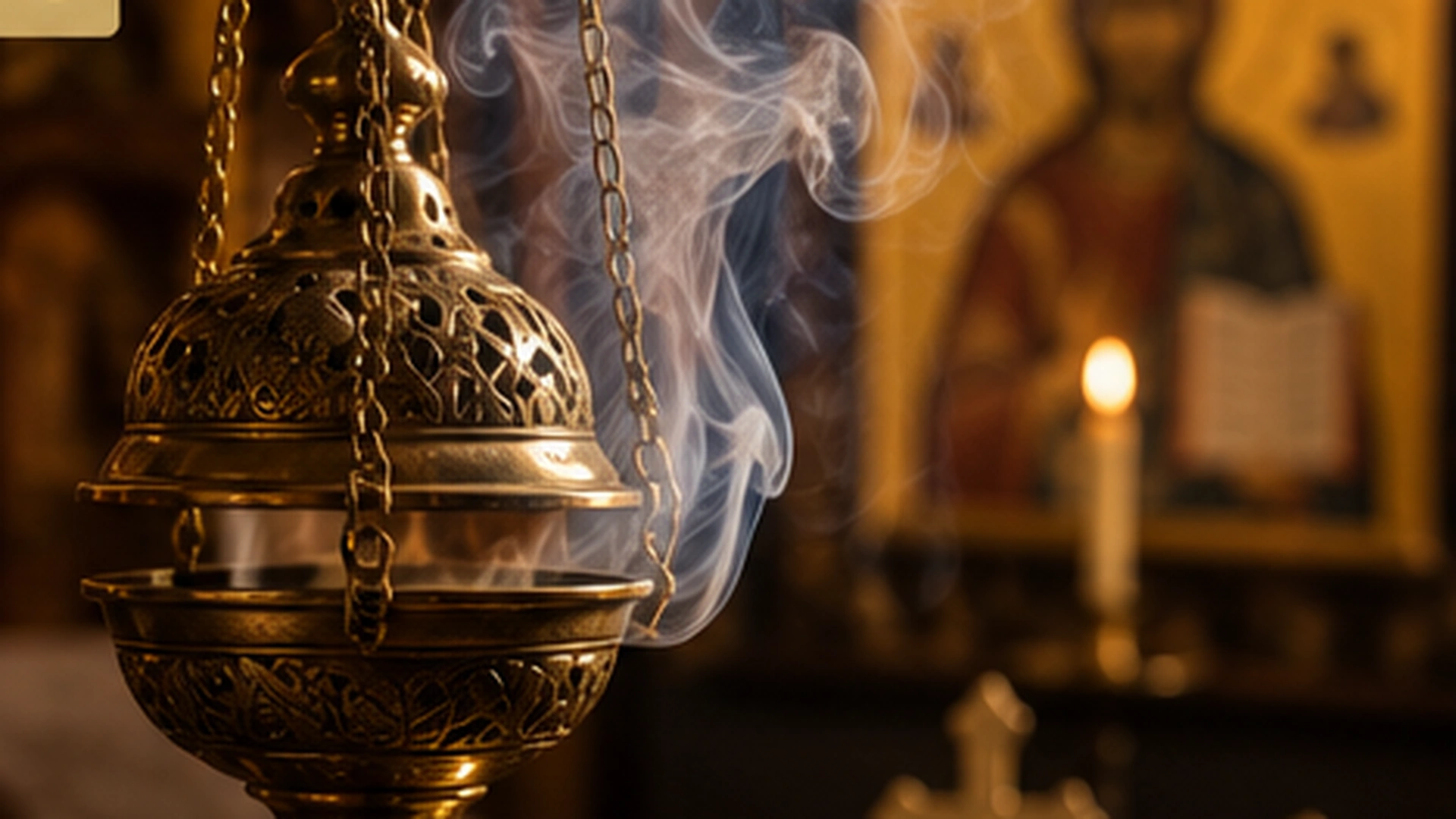
Frankincense remains important in several Christian traditions, including Eastern Orthodox, Oriental Orthodox, Roman Catholic, and some Anglican contexts. It may accompany processions, altars, sacred images, scripture, funerals, and prayer. The exact theology and ritual instructions differ by church.
In Ethiopian Orthodox worship, incense participates in a larger liturgical world of chant, sacred architecture, movement, fasting, scripture, and community life. It should not be isolated and marketed as an exotic “African cleansing ritual.”
Specific culture or historical context: Ethiopian Orthodox Tewahedo Christian liturgical use of incense as prayer, honor, and sacred atmosphere.
People shown: One Ethiopian deacon in the foreground and a few distant worshippers; no close-up of private devotion.
Location: An Ethiopian Orthodox church in Addis Ababa or a historically appropriate stone church interior.
Clothing: Accurate white liturgical garment and shawl for the deacon; contemporary modest clothing for distant worshippers.
Architecture: Authentic Ethiopian Orthodox interior, painted or carved details, no Gothic European architecture.
Objects: Metal censer on chains, small charcoal fire hidden inside, prayer staffs only if contextually accurate.
Lighting: Natural morning beams with restrained incense smoke and warm interior tones.
Composition: 16:9 documentary view; deacon at one side, censer movement visible, architecture and light create depth.
SEO-friendly filename: ethiopian-orthodox-frankincense-liturgy.webp
Image title: Frankincense in Ethiopian Orthodox Worship
Alt text: Ethiopian Orthodox deacon carrying a censer as incense smoke rises inside a church
Caption: In several Christian traditions, fragrant incense accompanies public worship and may symbolize prayer, reverence, and the sanctification of space.
Recommended placement: After the Jewish and Christian symbolism section.
Article section supported: Frankincense in Jewish and Christian Traditions
Important elements to avoid: No invented vestments, no Catholic mitres, no sensational smoke, no private rites, no staged trance, no text or logos.
Frankincense in the Horn of Africa
The Horn of Africa is not merely a supplier to someone else’s history. Ethiopia, Eritrea, Somalia, and neighboring regions have their own Boswellia species, harvesting knowledge, trading institutions, household uses, and religious traditions. FAO identifies Boswellia papyrifera as an important multipurpose tree and non-wood forest product in eastern and northeastern Africa.[7]
Northern Somalia is especially associated with Boswellia frereana and Boswellia sacra or closely related commercial types. Resin grades may be burned as incense, distilled for fragrance, exported for industry, or chewed in the case of some frereana products. The work includes identifying trees, managing access, tapping, collecting, transporting, cleaning, grading, and negotiating prices.
Descriptions of “African frankincense” must name the community and species whenever possible. Boswellia papyrifera systems in Ethiopia or Eritrea are not identical to frereana production in northern Somalia, and neither should be described as an unchanged ancient custom.
Frankincense trade also raises questions of labor, price transparency, tree health, land tenure, and benefit sharing. Ethical purchasing requires more than a label reading “wild harvested.” Buyers should ask about species identification, origin, harvesting limits, traceability, and whether producers receive meaningful value.
Specific culture or historical context: Northern Somali frankincense production and trade; community livelihood and quality grading.
People shown: Two Black Somali adults working naturally, one woman and one man if culturally appropriate to the setting; no staged ceremony.
Location: A cooperative warehouse in Bosaso or another northern Somali trading center, represented generically and respectfully.
Clothing: Contemporary modest Somali work clothing; woman in a practical headscarf, man in a clean shirt and trousers or macawiis appropriate to work.
Architecture: Simple ventilated warehouse with concrete floor, shaded windows, and storage shelves.
Objects: Woven sorting trays, sacks of resin, metal scale, wooden boxes, pale and amber resin grades.
Lighting: Soft daylight entering through high windows, accurate natural skin tones, no theatrical smoke.
Composition: Wide 16:9 workplace scene with trays forming leading lines; workers shown at mid-distance.
SEO-friendly filename: somali-frankincense-resin-sorting-trade.webp
Image title: Somali Frankincense Sorting and Trade
Alt text: Somali workers sorting frankincense resin tears on woven trays in a cooperative warehouse
Caption: Frankincense from Boswellia species remains an important non-wood forest product and source of income in parts of the Horn of Africa.
Recommended placement: After the Horn of Africa section.
Article section supported: Frankincense in the Horn of Africa
Important elements to avoid: No generalized tribal styling, no unrelated Maasai clothing, no poverty tourism, no armed people, no ceremonial staging, no labels inside image.
Frankincense in Oman and Southern Arabia Today
In Dhofar, frankincense remains connected with landscape, family knowledge, market identity, hospitality, tourism, and national heritage. Wadi Dawkah still contains Boswellia sacra trees, while archaeological parks at Khor Rori, Al-Baleed, and Shisr interpret the historical trade.[2]
Resin may be burned in homes, sold in markets, incorporated into perfume, offered to guests, or used in local remedies. Yet “Omani frankincense” is not one single grade or practice. Color, purity, harvest season, tree location, storage, and merchant classification can all affect how resin is valued.
Modern heritage presentation can support conservation and livelihoods, but it can also simplify complex histories for tourism. The strongest interpretation recognizes that the Land of Frankincense includes living trees and contemporary communities as well as ancient ruins.
Traditional Uses of Frankincense
1. Burning Resin as Incense
The most widespread traditional use is placing resin on hot charcoal or another heat source so that it releases fragrant smoke. This occurs in public worship, domestic devotion, funerals, festivals, hospitality, and ordinary household scenting. Methods differ: some traditions use censers on chains, others use stationary burners, ceramic bowls, stone vessels, or metal mabkhara-type burners.
2. Perfumery and Scenting Clothes
Frankincense contributes citrus, pine, balsamic, woody, and mineral notes depending on species and processing. The resin, smoke, tincture, or distilled oil may enter perfumes, soaps, cosmetics, and blended incense. In Arab perfume cultures, fragrancing garments and rooms can be a social practice as much as a private preference.[14]
3. Chewing and Oral Use
Some frankincense products, particularly Boswellia frereana resin known in trade as maidi, have been chewed like gum. Other communities have chewed small amounts for breath, mouth care, or digestive traditions. Such uses depend on correct species, preparation, cleanliness, and local knowledge. Resin sold for burning may contain dust, fragrance additives, or contaminants and should not automatically be eaten.
4. Fumigation and Household Practice
Smoke has been used to scent rooms, clothing, vessels, and stored materials and to discourage insects. Fumigation can have practical and ritual meanings at the same time. However, “traditional” does not mean risk-free: smoke contains fine particles and gases, so ventilation and limited exposure matter.[15]
5. Traditional Medicine
Boswellia resins have been used in Arabian, African, Indian, and other medical traditions for digestive, respiratory, inflammatory, skin, oral, and wound-related complaints. The preparation may be burned, chewed, infused, powdered, compounded, or extracted. These uses should be documented as traditional practice rather than automatically described as clinically proven treatment.[7][10]
Boswellia Serrata in Ayurveda
Indian frankincense comes primarily from Boswellia serrata, known as Sallaki or Salai guggul in Ayurvedic contexts. Indian government Ayurveda resources list it among medicinal plants used for arthritis and inflammatory conditions, while pharmacological research has focused on boswellic acids and standardized extracts.[11][12]
The traditional resin and a modern standardized capsule are not the same intervention. Products differ in species, extraction method, boswellic-acid content, dose, contaminants, and accompanying ingredients. Results from one proprietary extract cannot automatically be applied to raw resin, essential oil, incense smoke, or every supplement.
What Does Science Say About Frankincense Benefits?
The strongest modern clinical interest concerns oral extracts of Boswellia serrata, especially for osteoarthritis symptoms. The U.S. National Center for Complementary and Integrative Health states that several studies suggest possible reductions in osteoarthritis pain and inflammation, but most studies are small or low quality and there is not enough high-quality evidence to establish usefulness for any health condition.[9]
A 2024 systematic review and meta-analysis found that Boswellia extracts may improve knee osteoarthritis symptoms in some subgroup comparisons, but the overall evidence was heterogeneous and the authors called for more high-quality trials.[10] Earlier reviews likewise described the evidence as encouraging rather than conclusive.[11]
Claims that frankincense cures cancer, eliminates infection, treats asthma by itself, balances hormones, or guarantees emotional healing go beyond current evidence. Laboratory studies of compounds are not the same as successful treatment in humans. People using medicines, pregnant or breastfeeding people, and anyone considering Boswellia for a medical condition should discuss it with a qualified health professional.[9]
Specific culture or historical context: Indian Ayurveda and the use of Boswellia serrata, known as Sallaki or Salai guggul, in traditional formulations.
People shown: One Indian Ayurvedic practitioner or pharmacognosy researcher, shown professionally.
Location: A university Ayurveda pharmacy or licensed traditional-medicine dispensary in India.
Clothing: Contemporary professional kurta or laboratory coat, clean and non-ceremonial.
Architecture: Orderly dispensary with wooden shelving and modern work surface.
Objects: Boswellia serrata resin, botanical branch specimen, mortar and pestle, glass jars without readable commercial labels.
Lighting: Bright natural window light with neutral clinical fill.
Composition: Mid-range 16:9 editorial photograph; practitioner and resin sample share focus; shelves softly blurred.
SEO-friendly filename: boswellia-serrata-ayurveda-traditional-use.webp
Image title: Boswellia Serrata in Ayurvedic Practice
Alt text: Indian Ayurvedic practitioner examining Boswellia serrata resin in a traditional medicine dispensary
Caption: Boswellia serrata has a distinct history in Ayurveda, while modern clinical evidence for specific health uses remains limited and product-dependent.
Recommended placement: After the traditional medicine and scientific evidence section.
Article section supported: Traditional Medicine, Ayurveda, and Scientific Evidence
Important elements to avoid: No miracle-healing imagery, no glowing aura, no piles of unrelated spices, no fake Sanskrit text, no medical guarantee, no branded supplement bottles.
Frankincense Essential Oil Is Not the Same as Resin
Commercial “frankincense oil” is usually produced by steam distilling resin. It contains volatile aromatic compounds, while many boswellic acids studied in oral extracts are large, nonvolatile molecules and are not major components of distilled essential oil. Therefore, evidence about Boswellia extracts cannot be transferred directly to aromatherapy oil.
Essential oils are concentrated. They may irritate skin, trigger fragrance sensitivity, or be unsafe if swallowed. Dilution, patch testing, product quality, and professional guidance matter. The historical use of resin smoke does not prove that every bottled oil is safe for every route of use.
Frankincense and Myrrh: What Is the Difference?
| Feature | Frankincense | Myrrh |
|---|---|---|
| Plant source | Boswellia species | Commiphora species |
| Typical aroma | Often citrus, pine, balsamic, resinous, or mineral | Often darker, bitter, earthy, medicinal, or smoky |
| Historical uses | Incense, worship, perfume, medicine, hospitality | Perfume, medicine, anointing, funerary treatment, incense in some settings |
| Biblical association | Offerings, sanctuary incense, gift of the Magi | Anointing, perfume, burial associations, gift of the Magi |
| Important caution | Species and product forms vary | Not simply a darker grade of frankincense; it comes from another genus |
Frankincense and myrrh were frequently traded together, but they are botanically and sensorially distinct. Their pairing in biblical and Christmas traditions has encouraged people to treat them as symbolic opposites. Historical evidence is more complex: both moved through overlapping trade networks and could be used in perfumes, medicines, ritual, and funerary care.
Is Burning Frankincense Safe?
Burning a small amount of resin occasionally in a well-ventilated space is different from prolonged exposure in a closed room. All combustion produces particles and gases. Research on incense smoke associates frequent or occupational exposure with respiratory symptoms and poorer indoor air quality, although products and exposure conditions vary.[15]
Ventilate the room: Open windows or use effective airflow rather than allowing dense smoke to accumulate.
Use a small amount: More smoke does not create more spiritual value or better fragrance.
Protect children, pets, and people with asthma: Avoid exposing sensitive lungs to concentrated smoke.
Use a stable heatproof burner: Charcoal and resin can become extremely hot and create a fire hazard.
Do not eat incense-grade resin automatically: Confirm species, purity, and intended use.
Avoid unsupported medical substitution: Frankincense should not replace prescribed care.
How to Buy Frankincense Responsibly
A responsible purchase begins with traceability rather than color alone. Marketing terms such as “royal,” “sacred,” “green,” or “wild” may describe a merchant’s grade, but they do not guarantee species identity, sustainability, or producer benefit.
Ask for the Boswellia species, not only the word frankincense.
Ask for the country and region of origin, recognizing that political labels may not reflect local identity.
Look for information about harvesting frequency, tree recovery, and regeneration.
Prefer suppliers who can explain producer relationships and price transparency.
Avoid products that promise guaranteed protection, wealth, fertility, healing, or supernatural power.
For ingestion or supplements, choose products with quality testing, ingredient disclosure, and professional guidance.
Frankincense Grades, Color, and Aroma
Frankincense markets often classify resin by color, tear size, cleanliness, species, place of harvest, and intended use. Pale green, white, amber, honey-colored, and brown pieces may all be genuine. A large clear tear can command a higher price in one market, while a smaller aromatic grade may be preferred for distillation or household burning in another. There is no single international rule that makes one color spiritually stronger or medically superior.
Aroma also changes with temperature. Gently warming resin can reveal bright citrus, pine, eucalyptus-like, floral, mineral, or sweet balsamic notes. Very hot charcoal may produce a sharper burned smell and more smoke. Species identity matters: Boswellia frereana, papyrifera, sacra, and serrata should not be expected to smell or behave exactly alike. Storage, age, dust, bark fragments, and added perfume can further alter the experience.
For ordinary incense use, buyers can look for clean resin with a clear natural scent and minimal debris. For perfumery, medicine, or ingestion, sensory inspection is not enough. Botanical authentication, contaminant testing, and a reliable supply chain are more important than romantic grade names.
Modern Spiritual and Wellness Interpretations
Contemporary meditation, yoga, wellness, and neo-spiritual communities often describe frankincense as “grounding,” “high vibration,” “protective,” or able to open spiritual awareness. These descriptions may express personal experience, modern ritual language, or the emotional effect of scent and memory. They are not ancient meanings shared by every producing community, and they are not scientific measurements.
A person may legitimately use frankincense to mark a quiet moment, remember an ancestor, begin prayer, or create a reflective atmosphere. The ethical problem appears when personal symbolism is presented as an authentic universal teaching from “Africa,” “the Bible,” “the Arabs,” or “ancient people.” Responsible modern practice should say where an interpretation comes from and whether it is historical, religious, familial, commercial, or newly created.
Scent can influence mood through learned association, expectation, and the close relationship between smell and memory. Feeling calmer when smelling frankincense does not prove that the resin removes negative energy or treats anxiety. People can value a sensory or devotional practice without converting it into a guaranteed medical or supernatural claim.
Common Misunderstandings About Frankincense
“Frankincense Has One Spiritual Meaning Everywhere”
It does not. A temple offering in ancient South Arabia, a grain offering in Leviticus, incense in an Ethiopian church, a Dhofari hospitality practice, and an Ayurvedic Boswellia preparation belong to different cultural systems.
“All Frankincense Comes From Oman”
Oman is historically important, especially Dhofar, but major Boswellia landscapes and industries also exist in Somalia, Ethiopia, Eritrea, Sudan, India, Yemen, and neighboring regions.
“Green Resin Is Always the Best”
Color can reflect species, harvest, storage, light, grading, and merchant preference. It is not a universal quality scale. Aroma and intended use matter more than a single visual trait.
“Traditional Medicine Means Scientifically Proven”
Traditional use is evidence of cultural knowledge and historical practice. Clinical proof requires controlled human research on a defined product, dose, and condition. Both forms of knowledge deserve accurate description, but they answer different questions.
“Smoke Cleans the Air”
Fragrance can make a room smell fresh, and some components may have antimicrobial activity in laboratory settings. Burning incense still produces particulate matter and should not be treated as an air-purification technology.
Key Takeaways
Frankincense is aromatic resin from several Boswellia species, not one single plant product.
Its meanings include sacred offering, prayer, purification, honor, hospitality, remembrance, and healing tradition.
The ancient incense trade linked southern Arabia and the Horn of Africa with the Mediterranean, India, and wider Asia.
Jewish and Christian texts gave frankincense lasting associations with consecrated offering and worship.
Boswellia serrata has a distinct Ayurvedic history; modern extract research should not be confused with incense smoke or essential oil.
Medical evidence remains limited and product-specific, while exaggerated cure claims are unsupported.
Sustainable harvesting and fair producer relationships are part of frankincense’s modern meaning.
People Also Ask
What does frankincense symbolize?
Frankincense can symbolize sacred offering, prayer, purification, honor, hospitality, remembrance, and healing tradition. The meaning depends on the culture, religion, and historical setting.
What is frankincense made from?
It is hardened oleo-gum-resin collected from Boswellia trees. Different species in Arabia, Africa, and India produce different kinds of frankincense.
Why was frankincense so valuable?
It grew in limited ecological regions, required skilled harvesting, and traveled through long trade networks. Its fragrance and ritual importance made it a luxury commodity.
What does frankincense mean in the Bible?
Biblical texts connect it with sacred offerings and sanctuary incense. In Matthew, it is one of the gifts offered to Jesus, later interpreted in Christian tradition as a sign of worship and divinity.
How was frankincense traditionally used?
It was burned as incense, used in perfume and household scenting, included in religious and funerary ceremonies, chewed in some communities, and prepared in traditional medicines.
Is frankincense the same as Boswellia?
Boswellia is the tree genus. Frankincense is the aromatic resin harvested from several Boswellia species.
What is the difference between frankincense and myrrh?
Frankincense comes from Boswellia trees; myrrh comes from Commiphora trees. They differ botanically, chemically, aromatically, and in some traditional uses.
Can frankincense be used as medicine?
Boswellia resins have traditional medical uses, and some standardized extracts have been studied, especially for osteoarthritis. Evidence is not strong enough to support broad cure claims.
Is it safe to burn frankincense indoors?
Occasional small amounts in a well-ventilated room reduce exposure, but all incense smoke contains particles. People with asthma or respiratory sensitivity should be especially cautious.
Where does frankincense come from?
Important sources include Oman, Yemen, Somalia, Ethiopia, Eritrea, Sudan, India, and nearby regions, depending on the Boswellia species.
Frequently Asked Questions
Is frankincense edible?
Some properly identified and prepared resins have been chewed or used in traditional remedies. Incense-grade products should not be eaten unless the species, purity, and intended use are confirmed.
What is olibanum?
Olibanum is a historical and commercial name commonly used for frankincense resin.
Does frankincense protect a home?
Some religious and cultural traditions use it in protective or purifying contexts. There is no scientific evidence that burning resin guarantees supernatural protection.
Can frankincense cure cancer?
No reliable evidence shows that frankincense cures cancer. Laboratory research and small clinical studies do not justify replacing oncology treatment.
Why is frankincense associated with Christmas?
The Gospel of Matthew lists frankincense among the gifts offered to Jesus, and Christian tradition later gave the gift theological meaning.
How long does frankincense resin last?
Dry resin can remain aromatic for years when stored in a sealed container away from heat, moisture, and direct sunlight, though scent gradually changes.
Is frankincense endangered?
Conservation status varies by species and region. Some populations face poor regeneration, overharvesting, grazing, fire, and land-use pressure, so traceable sourcing matters.
What does frankincense smell like?
The scent varies by species and grade but may be citrus-like, piney, balsamic, woody, mineral, peppery, or slightly sweet.
Conclusion
Frankincense is more than a pleasant smoke or a Christmas reference. It is a tree product shaped by dryland ecology, skilled harvesting, African and Arabian livelihoods, ancient trade, sacred texts, household customs, perfume traditions, and medical systems.
Its deepest meaning is not one universal promise. Frankincense can signify offering, prayer, purification, honor, hospitality, memory, medicine, or wealth because different communities made it meaningful in different ways. Responsible interpretation names those communities, distinguishes belief from evidence, respects living religious practice, and remembers the people and trees behind every resin tear.
Research Sources and Further Reading
[1] Royal Botanic Gardens, Kew. Boswellia sacra Flück. - Plants of the World Online and species profile. https://powo.science.kew.org/taxon/urn:lsid:ipni.org:names:127065-1/general-information
[2] UNESCO World Heritage Centre. Land of Frankincense, Oman. https://whc.unesco.org/en/list/1010/
[3] UNESCO World Heritage Centre. Incense Route - Desert Cities in the Negev. https://whc.unesco.org/en/list/1107
[4] Smithsonian National Museum of Asian Art. Caravan Kingdoms: Yemen and the Ancient Incense Trade. https://asia.si.edu/whats-on/exhibitions/caravan-kingdoms-yemen-and-the-ancient-incense-trade/
[5] British Museum. Ancient South Arabian limestone incense-burner, collection record. https://www.britishmuseum.org/collection/object/W_1915-0710-5
[6] The Metropolitan Museum of Art. Trade between Arabia and the Empires of Rome and Asia. https://www.metmuseum.org/essays/trade-between-arabia-and-the-empires-of-rome-and-asia
[7] Food and Agriculture Organization of the United Nations. Introducing Boswellia papyrifera and its non-timber forest product, frankincense. https://www.fao.org/4/xii/0845-a1.htm
[8] Food and Agriculture Organization of the United Nations. Olibanum, myrrh and opopanax resins and oils. https://www.fao.org/4/v5350e/v5350e.pdf
[9] National Center for Complementary and Integrative Health. Boswellia: Usefulness and Safety. https://www.nccih.nih.gov/health/boswellia
[10] Dalmonte, Andreani, Rudelli, and Isani. Efficacy of extracts of oleogum resin of Boswellia in knee osteoarthritis: systematic review and meta-analysis. https://pubmed.ncbi.nlm.nih.gov/39314013/
[11] Moussaieff and Mechoulam. Boswellia resin: from religious ceremonies to medical uses. https://pubmed.ncbi.nlm.nih.gov/19814859/
[12] Central Council for Research in Ayurvedic Sciences, Ministry of AYUSH. Ayurveda: The Science of Life dossier - Sallaki (Boswellia serrata). https://ccras.nic.in/wp-content/uploads/2024/07/AYURVEDA_The_Science_of_LifeDossier.pdf
[13] Smithsonian National Museum of Asian Art. Ancient Incense Trade. https://asia-archive.si.edu/exhibition/ancient-incense-trade/
[14] Smithsonian Institution. A Family of Fragrance: Scents and Memory in Arab Perfume. https://www.si.edu/object/family-fragrance-scents-and-memory-arab-perfume:posts_604a3cb4664ac282f06466300f3f1116
[15] Al Khathlan et al.. Incense smoke exposure and respiratory symptoms among adults in Saudi Arabia. https://pubmed.ncbi.nlm.nih.gov/33826757/
[16] Primary religious texts. Exodus 30; Leviticus 2 and related offering passages; Matthew 2:11. Standard Bible editions and original-language scholarship
5. Supporting Content and Internal-Link Opportunities
| Recommended supporting article | SEO and topical purpose |
|---|---|
| Boswellia Trees: Species, Habitats, and Frankincense Resins | Build botanical authority and help readers distinguish sacra, papyrifera, frereana, and serrata. |
| Frankincense and Myrrh: Differences in History, Scent, and Symbolism | Target the high-interest comparison without duplicating this article. |
| The Ancient Incense Route: Arabia, Africa, and the Mediterranean | Deepen archaeology, trade, caravan cities, ports, and political economy. |
| Frankincense in the Bible: Offerings, Incense, and the Gift of the Magi | Capture biblical intent while keeping theological interpretation careful. |
| Omani Frankincense: Dhofar, Wadi Dawkah, and Living Heritage | Create a place-specific heritage cluster connected to UNESCO sites. |
| Somali Frankincense: Boswellia Frereana, Trade, and Livelihoods | Give the Horn of Africa its own culturally specific page. |
| Boswellia Serrata in Ayurveda: Traditional Use and Modern Evidence | Separate Indian medicine and health-search intent from incense symbolism. |
| How to Burn Resin Incense Safely | Answer practical safety and equipment questions with ventilation guidance. |
| Sacred Resins Across Cultures: Frankincense, Myrrh, Copal, and Benzoin | Build a broader resin-symbolism topical hub while respecting distinct traditions. |
Suggested Internal Anchor Text
meaning of sacred resins
Boswellia trees and frankincense species
ancient incense trade routes
frankincense in biblical tradition
traditional medicine and cultural evidence
how to burn resin incense safely
Omani frankincense heritage
Horn of Africa resin trade
Article Information
- Publisher
- Ancestral Temple
- Editor
- Ancestral Temple
- Last updated
- Jul 26, 2026
- Last reviewed
- Jul 26, 2026
- Content version
- 1043ac5d16
This educational article should be read as cultural and spiritual information, not as medical, legal, financial, or emergency advice.
Helpful Related Guidance
Explore This Topic
Related Topic Cluster
Dreams & Symbolism
About the Author
 Ancestral Temple
Spiritual guide and practitioner with decades of experience in ancestral wisdom, rituals, and divine guidance.
Related Posts
View All






Leave a Comment
We'd love to hear your thoughts.