
SAFE PREGNANCY ANDCHILDBIRTH BLESSINGS: Rituals, Prayers and Family Traditions
Pillar Article
Quick Summary
Safe Pregnancy and Childbirth Blessings: Rituals, Prayers and Family Traditions Pregnancy and childbirth are biological events, family transitions and, for many people, sacred pass...
Safe Pregnancy and Childbirth Blessings: Rituals, Prayers and Family Traditions
Pregnancy and childbirth are biological events, family transitions and, for many people, sacred passages. Across cultures, relatives and religious communities mark this period with prayers, blessing rites, songs, meals, protective objects, gifts, naming customs and promises of practical help. These traditions can give parents courage, connect a baby with family history and turn private anxiety into shared responsibility.
Yet the phrase “safe pregnancy blessing” can be misunderstood. No ritual can guarantee that complications will not occur. In 2023, about 260,000 women died during or after pregnancy and childbirth, and most deaths were preventable with timely, high-quality care.[1] A responsible blessing therefore stands beside antenatal visits, skilled childbirth care, an emergency plan and postnatal follow-up—not in their place.
There is also no single worldwide ceremony. A Catholic blessing before childbirth, a Japanese anzan kigan prayer, a South Indian pregnancy celebration, a Diné Blessing Way and an informal Ugandan family prayer belong to different histories and systems of authority. Their meanings should not be blended into one invented ritual.
What Are Pregnancy and Childbirth Blessings?
A pregnancy or childbirth blessing is a culturally recognized way of placing the expectant parent, unborn child or new family within a circle of prayer, care and moral responsibility. In some traditions, an authorized religious leader leads a formal rite. In others, older relatives sing, offer food, tie a cloth, give jewelry, speak ancestral names or gather to advise the parent. Modern families may hold a baby shower, prayer meeting or “mother blessing” that combines spiritual reflection with practical preparation.
The word blessing can refer to several different actions: asking God or the sacred for protection; speaking good wishes; dedicating a parent and child to a faith community; recognizing a transition in social status; or mobilizing relatives to provide transport, meals, money, childcare and emotional support. These functions often overlap.
Why Families Create Blessings Around Birth
Pregnancy involves uncertainty, and ritual gives fear a shared language.
A gathering publicly confirms that the pregnant parent should not face labour or early parenthood alone.
Prayers and songs connect the baby with family, ancestors, faith and place.
Gifts and meals redistribute resources toward the household preparing for a child.
Elders transmit knowledge about birth, recovery, breastfeeding, newborn care and family responsibilities.
A formal event may repair strained relationships or encourage the partner and relatives to take responsibility.
A qualitative systematic review of women’s experiences found that social and spiritual support during pregnancy often came from mothers, grandmothers, sisters, in-laws and partners. Prayer was described as one way families reduced fear and expressed hope.[2] The same review also showed that cultural advice can include restrictions or beliefs that are not medically supported. Supportive traditions and risky instructions must therefore be evaluated separately.
Blessing Is Not the Same as Clinical Safety
WHO recommends regular contact with skilled health personnel during pregnancy and identifies eight antenatal contacts as a model for a positive pregnancy experience.[3] During labour, respectful care includes clear communication, privacy, informed decision-making and the option of a chosen companion.[4] After birth, women and newborns need monitoring and support because serious complications can appear in the first days and weeks.[5]
| Seek urgent medical care Immediate assessment is important for vaginal bleeding, severe abdominal pain, persistent severe headache, blurred vision, sudden swelling, reduced or stopped fetal movement, seizures, chest pain, breathing difficulty, fever, very heavy bleeding after birth, or thoughts of harming oneself or the baby.[6][7] A prayer meeting, herbal bath or home ceremony must never delay emergency care. |
|---|
Christian Blessings Before Childbirth
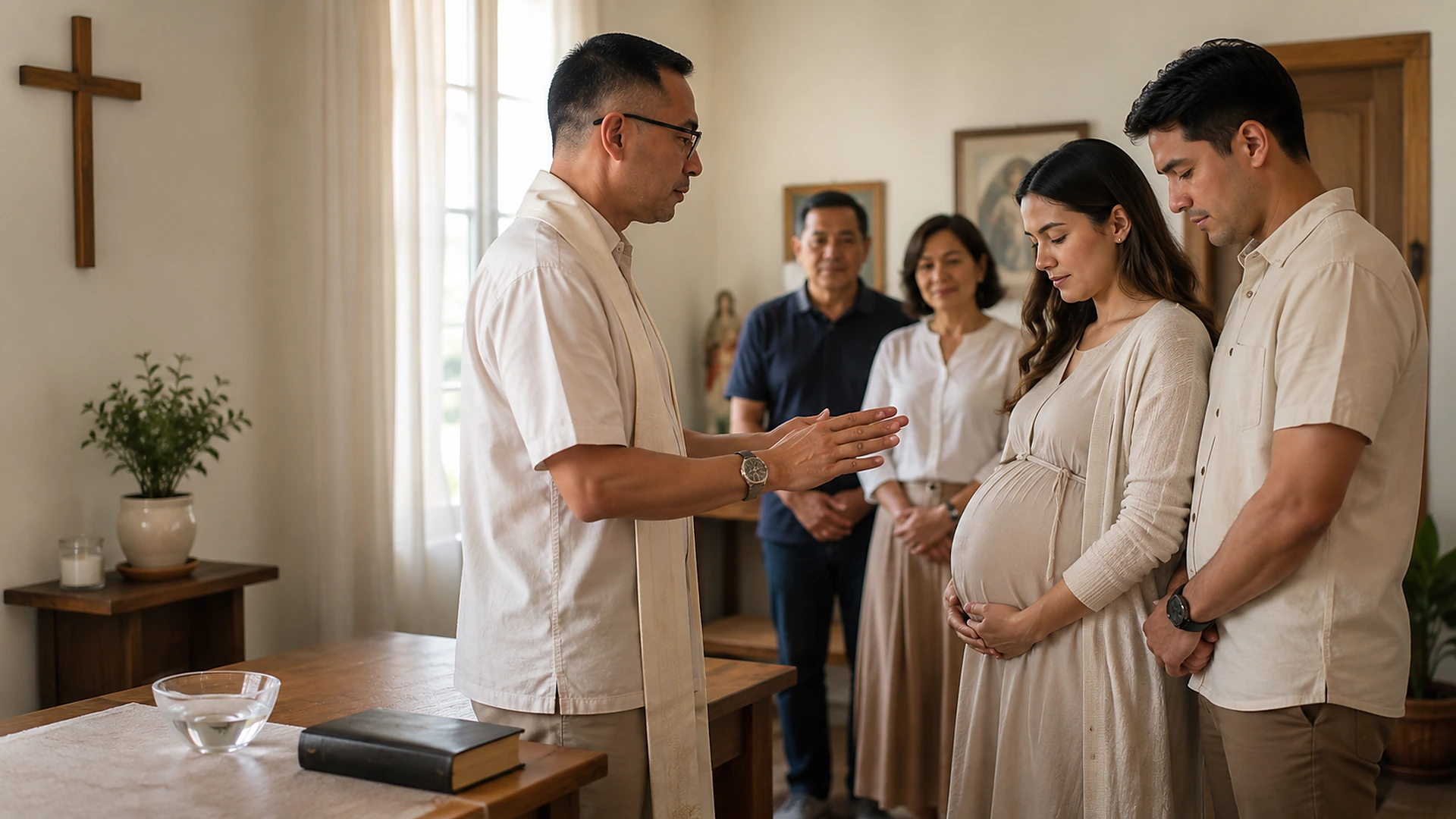
Christian families pray for pregnancy and birth in many different ways. Catholic, Orthodox, Anglican, Protestant, Pentecostal and African independent churches do not all use the same rite. Some families ask a priest, pastor, deacon or lay leader to pray at home; others include the parent in congregational intercessions or hold a private family devotion.
The Catholic Order for the Blessing of Parents Before Childbirth may be celebrated at any time during pregnancy. It includes Scripture, prayers for anxious parents and a request that the child be brought safely into the world. The rite may be led by clergy or, using the appropriate form, by a layperson or family member.[8] The Church also provides a separate blessing for a child in the womb.[9] These are acts of faith and pastoral support, not substitutes for medical care.
Japanese Anzan Kigan and the Obi Iwai Tradition
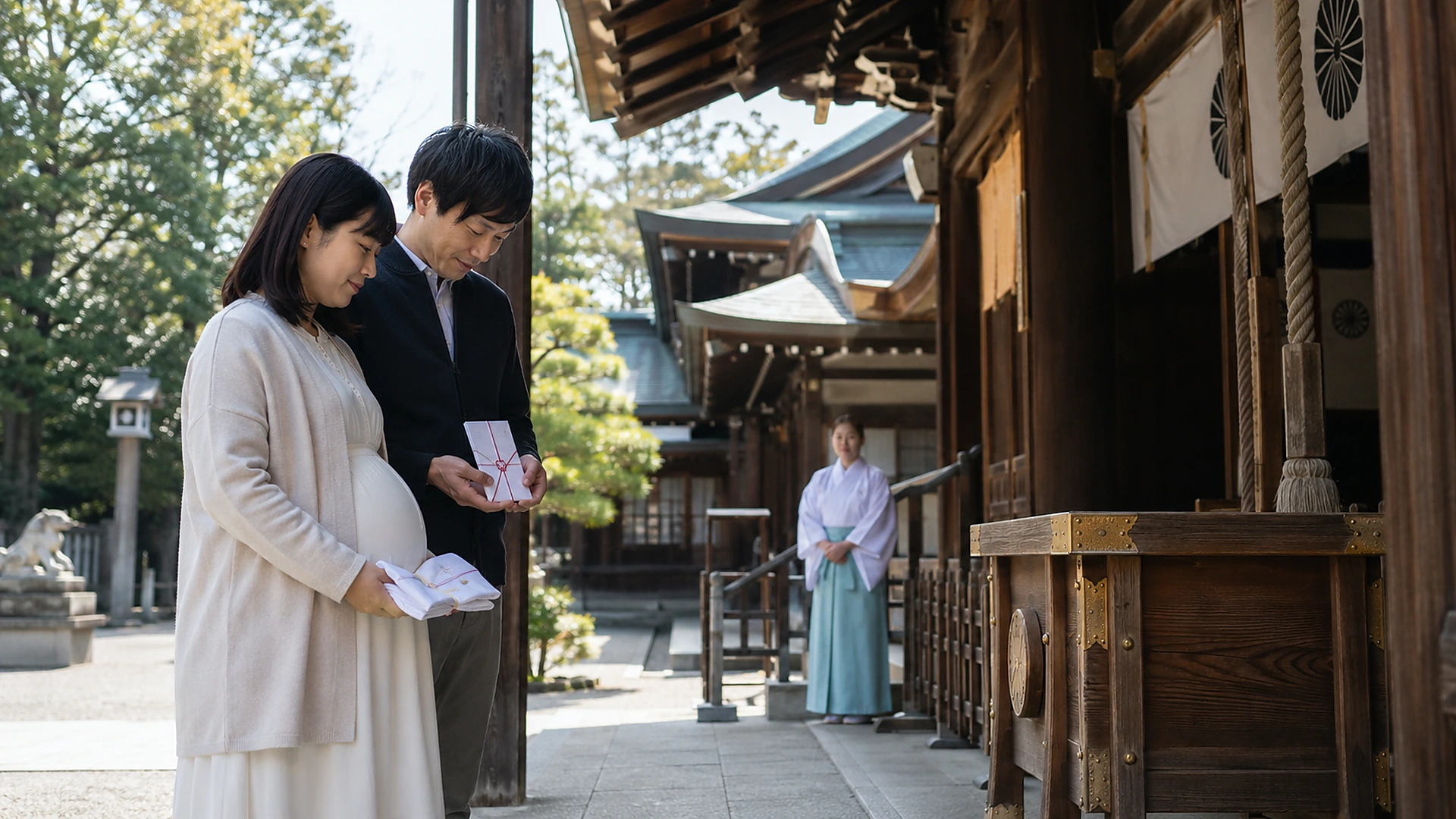
In Japan, anzan kigan refers to prayer for a safe birth. Shinto shrines may offer a formal prayer for the health of the pregnant parent and child. Jinja Honcho, the national association of Shinto shrines, explains that many families visit a shrine around the fifth month of pregnancy, often on an “Inu no Hi” or Day of the Dog, and celebrate obi iwai by wrapping a maternity sash or abdominal belt. The dog is associated in popular tradition with relatively easy birth and many offspring.[10]
Shrines differ in their procedures. Some bless a sash brought by the family; others provide amulets, prayer plaques or talismans. The objects carry religious and familial meaning within Shinto practice, but wearing a belt or amulet does not medically predict how labour will proceed. The cultural value lies in gratitude, hope, continuity and shared preparation.
South Asian Pregnancy Ceremonies and Family Care
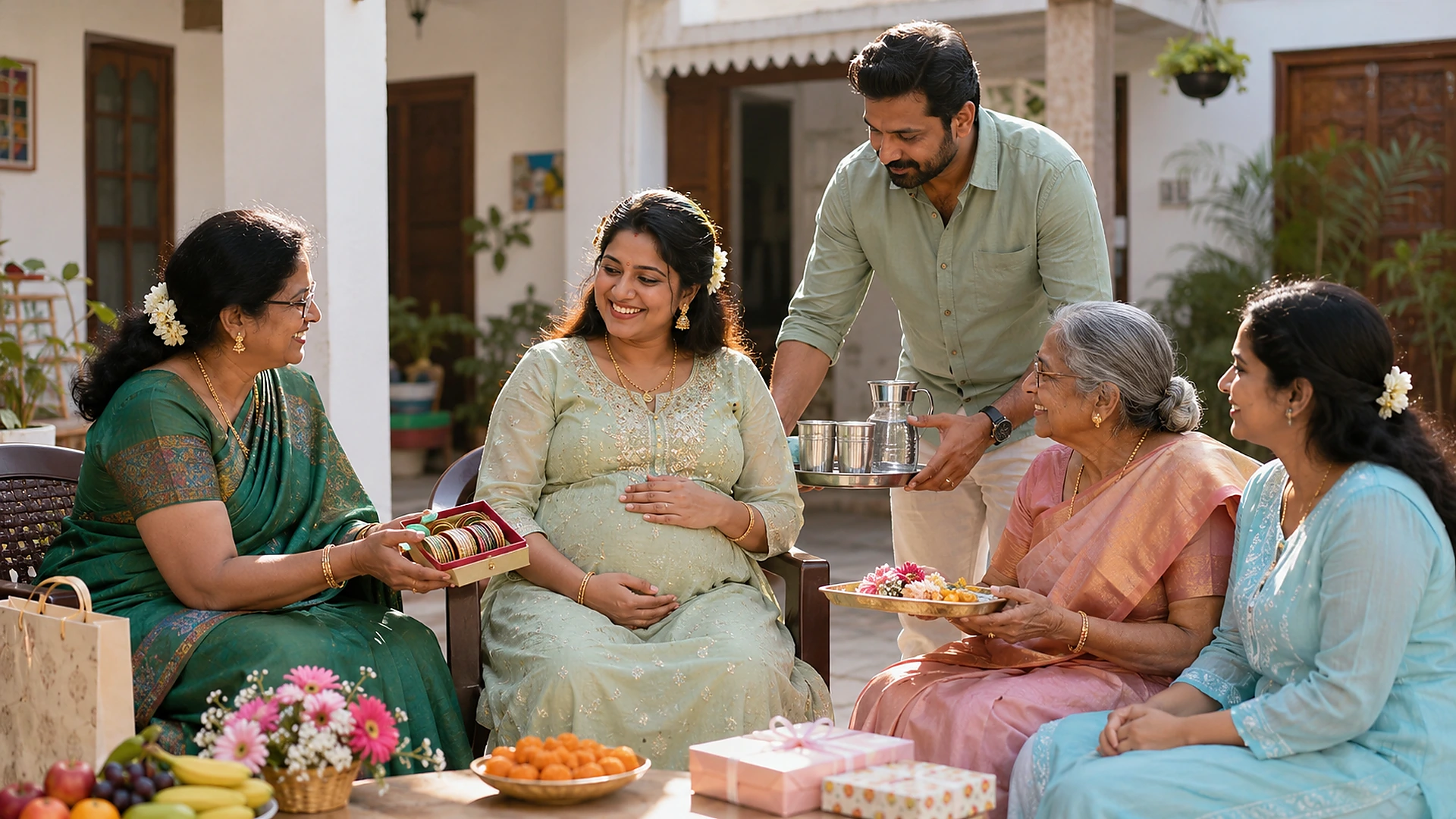
Across South Asia, pregnancy celebrations vary by language, religion, caste, region and family. Commonly used names include godh bharai in parts of North India, valaikappu and seemantham in Tamil communities, and dohale jevan in parts of Maharashtra. These names should not be treated as interchangeable versions of one fixed ceremony.
A gathering may include blessings from older women, bangles, flowers, songs, gifts, favorite foods and prayers for the parent and baby. Historical gazetteers from Maharashtra describe seventh-month pregnancy feasts in which the pregnant woman’s food preferences were honored and relatives gathered around her.[11] Some older sources also record sex-prediction customs or rituals aimed at producing a male child. Those elements reflect historical gender bias and should not be romanticized or revived.
The most constructive modern interpretation is family care: making sure the pregnant person eats well, rests, has transport to appointments, understands the birth plan and knows who will help after delivery. Religious mantras or puja may be meaningful to a family, but ingredients, fasting and physical practices should be discussed with a qualified maternity provider when health is affected.
Pregnancy, Birth and Family Support in Uganda
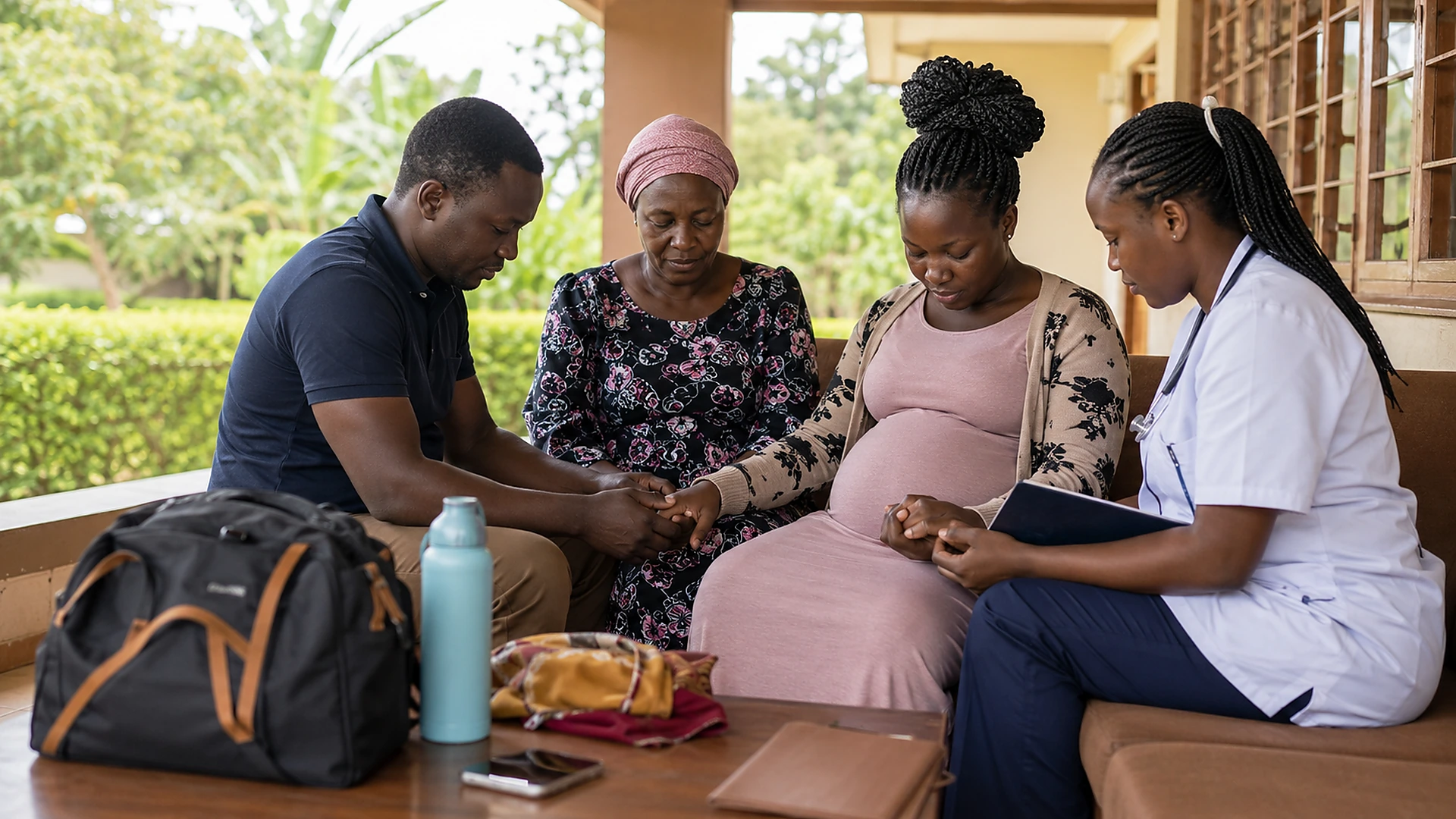
Uganda contains many cultural and religious communities, so there is no single Ugandan childbirth ritual. Families may pray in churches or mosques, seek blessings from elders, sing, prepare special foods, consult grandmothers or organize practical help. In many households, older women are important sources of advice about pregnancy, labour and newborn care.
Research in villages in southwestern Uganda documented a wide range of pregnancy, birth and newborn customs. Some practices expressed care, identity and family responsibility; others were potentially harmful and required health education from Village Health Teams.[12] This is why cultural respect should not mean accepting every practice without question. A custom that delays referral, places substances on the cord, restricts necessary food or exposes the newborn to infection should be changed while preserving supportive family involvement.
A safe Ugandan family blessing can be simple: relatives gather, pray according to their faith, confirm who will accompany the mother to the facility, arrange transport and emergency money, identify a blood donor if locally advised, organize meals and commit to postnatal visits. The practical promises are part of the blessing.
Prayer in Muslim Families
Muslim families may make du‘a for the health of the mother and child, recite Qur’anic passages, give charity and ask relatives or religious leaders to pray. Practices vary widely by school, region and family. There is no single universal pregnancy ceremony required of all Muslims. The prayer should be understood as worship, hope and trust in God—not as a guarantee that clinical risks will disappear.
After birth, Muslim families may welcome the baby through practices such as the call to prayer, naming, charity or aqiqah, depending on the family’s interpretation and circumstances. These post-birth acts should be carried out without interfering with immediate newborn care, warmth, feeding, infection prevention or medical assessment.
Diné Blessing Way and the Modern “Mother Blessing”
Many modern pregnancy gatherings are advertised as “Blessingways,” but Hózhóójí, often translated as the Blessing Way, is a central Diné ceremonial tradition. It may be performed for an expectant mother, but it belongs to a much larger system of Diné songs, prayers, ethics and cultural authority.[13] It is not simply a decorative baby shower theme.
Non-Diné families can hold a “mother blessing,” prayer circle or prenatal support gathering without copying the Diné name, sacred songs, sandpainting, ceremonial objects or restricted protocols. The safest approach is to describe the event honestly: a family blessing, prenatal support circle or faith-based gathering.
The Role of a Birth Companion
One of the most practical expressions of blessing is continuous support during labour. A chosen companion may be a partner, relative, friend, doula or another trusted person. WHO reports that labour companions can provide emotional reassurance, practical comfort, advocacy and better communication with health workers; continuous support is associated with improved experiences and some improved outcomes.[14]
The companion should be chosen by the pregnant person, understand the facility’s rules and respect privacy. Their role is not to overrule the mother, obstruct emergency treatment or impose family beliefs. A supportive companion listens, helps communicate preferences and knows when to call the clinical team.
Safe Blessings During Labour
Use quiet prayer, familiar music or spoken reassurance only if the labouring person wants it.
Keep candles, incense, smoke, oils and loose powders out of clinical spaces unless the facility explicitly permits them.
Do not give herbs, drinks or foods during labour without checking with the maternity team.
Do not apply substances to the abdomen, vagina, cord or newborn skin unless medically approved.
Respect urgent decisions when clinicians identify bleeding, fetal distress, infection, obstructed labour or another complication.
Protect the parent from pressure to perform, speak, forgive, host visitors or appear spiritually strong.
Postnatal Blessings and Newborn Welcome Traditions
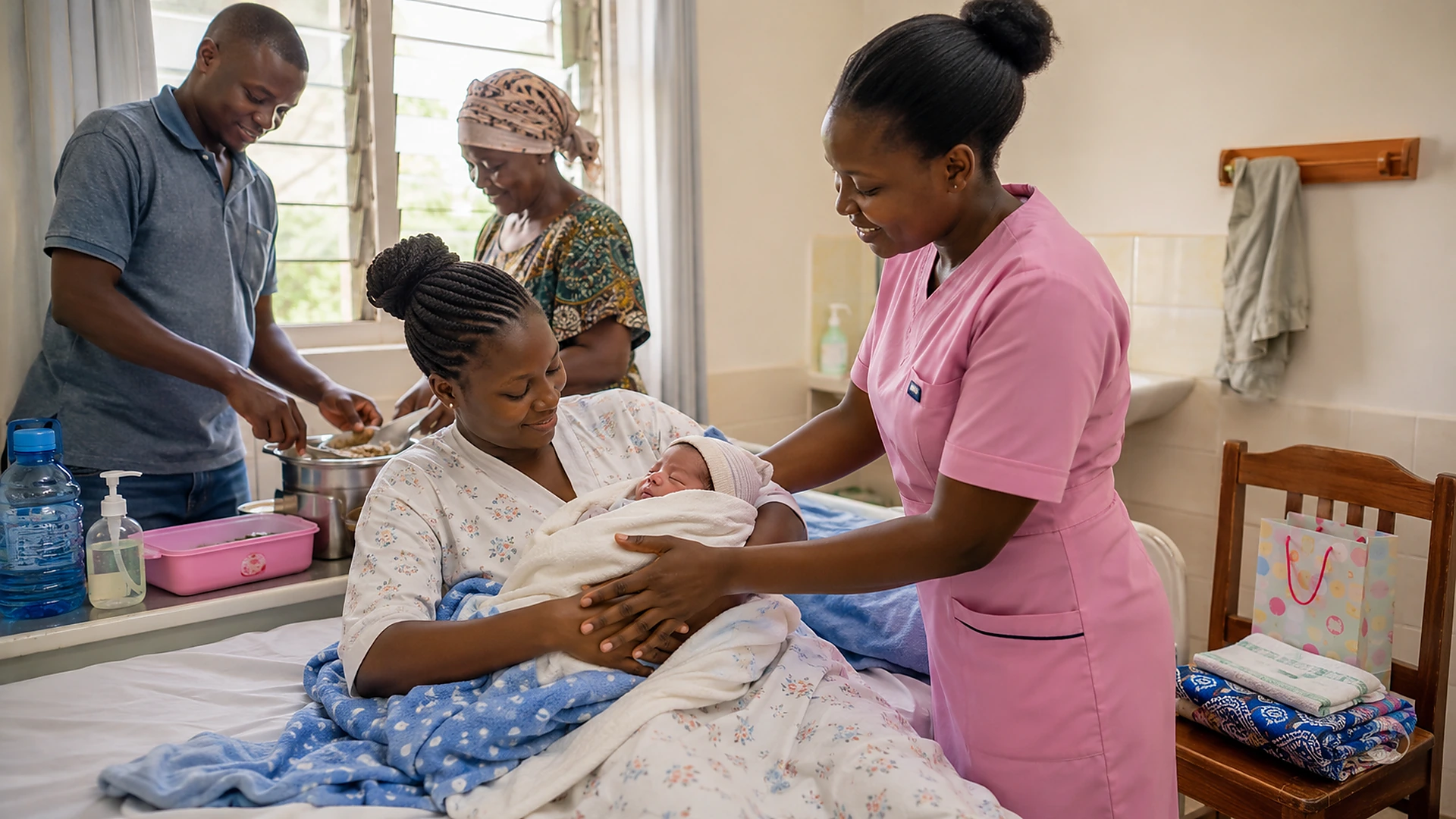
After birth, families often shift from praying for safe delivery to welcoming the newborn. Naming, singing, thanksgiving, introductions to elders, gifts, meals and religious dedication can establish identity and belonging. Ghanaian outdooring and naming traditions, for example, formally introduce a newborn to family and community and connect names with heritage and circumstances of birth. Details vary among Akan and Fante communities and should be described locally rather than as one national ritual.
A postnatal celebration should be scheduled around the health of the parent and baby. WHO emphasizes immediate warmth, assessment of breathing, skin-to-skin contact, early feeding support, infection prevention and timely response to danger signs.[15] Visitors should wash their hands, avoid attending when ill and respect feeding, sleep and recovery. The blessing should reduce the family’s burden, not create a performance deadline.
When a Traditional Practice Becomes Unsafe
A practice needs modification or refusal when it increases physical risk, delays care, removes consent or assigns blame. Warning examples include:
encouraging the parent to avoid antenatal care or deliver without skilled assistance because a blessing has already been performed;
giving unverified herbs, alcohol, concentrated essential oils or unknown mixtures during pregnancy or labour;
pressing or manipulating the abdomen without qualified clinical training;
placing ash, herbs, saliva, dung, oil or powder on the umbilical cord;
restricting nutritious food or water without medical reason;
delaying treatment because a complication is blamed on spirits, jealousy or failure to pray correctly;
forcing a survivor of abuse to reconcile with a partner or family member during a pregnancy ceremony;
claiming that miscarriage, stillbirth, disability or premature birth proves that the parent lacked faith.
How to Plan a Safe Pregnancy Blessing
Ask the pregnant person what they want. Participation, guest list, prayer language and physical touch must be voluntary.
Choose an honest name for the event. Use “family blessing,” “prayer gathering,” “prenatal support circle” or the correct name of a tradition the family actually belongs to.
Keep the gathering physically comfortable. Provide seating, shade, water, safe food and easy bathroom access.
Avoid fasting, smoke, strong scents, unknown herbs and prolonged standing.
Include practical commitments. Assign transport, appointment support, childcare, meals, emergency contacts and postpartum help.
Respect privacy. Do not post ultrasound images, health information or ceremony photos without permission.
Make room for mixed emotions. Pregnancy after loss, infertility treatment, high-risk diagnosis or family conflict may make celebration complicated.
Confirm the medical plan. Know the birth facility, transport route, emergency numbers and who will accompany the parent.
Close with support rather than promises. Say “we will stand with you” instead of “nothing bad can happen.”
A Non-Denominational Family Blessing
May this parent be surrounded by calm, skill, honest information and loving support. May this child be welcomed with dignity and care. Give the family wisdom to seek help quickly, courage during uncertainty and patience in the days after birth. May every person gathered here turn these words into action through transport, meals, listening, protection, respectful medical care and steady presence.
Families may adapt this wording to their own faith. It intentionally avoids promising a particular outcome or blaming anyone if complications occur.
What a Family Can Promise Instead of “Guaranteed Safety”
| Avoid promising | Promise instead |
|---|---|
| “The ritual will prevent every complication.” | “We will help you reach skilled care and respond quickly if anything changes.” |
| “You will have a painless or natural birth.” | “We will respect your informed choices, including pain relief and medical intervention.” |
| “The baby will definitely be healthy.” | “We will welcome and support this family through whatever happens.” |
| “Faith means you should not be afraid.” | “Fear is understandable, and you do not have to face it alone.” |
| “Family elders know better than clinicians.” | “Family knowledge and professional care can work together when safety and consent come first.” |
People Also Ask
What is a pregnancy blessing?
It is a prayer, ceremony or family gathering that expresses hope, support and welcome for a pregnant parent and baby. Its form depends on the family’s religion and culture.
Can prayer guarantee a safe delivery?
No. Prayer may provide comfort and spiritual meaning, but it cannot guarantee a medical outcome or replace antenatal, skilled childbirth and emergency care.
What can families do for a safe pregnancy?
Help the pregnant person attend appointments, eat well, follow medical advice, arrange transport, identify a birth companion, learn warning signs and plan postnatal support.
Is a mother blessing the same as a Navajo Blessingway?
No. The Diné Blessing Way is a specific sacred tradition. Non-Diné families should use terms such as mother blessing or prenatal support circle and avoid copying restricted ceremonies.
Can a blessing be held in hospital?
Possibly, if the patient wants it and the facility allows it. Keep it quiet, short, hygienic and free of smoke, flames, unapproved substances or crowding.
When should the family seek emergency care?
Urgent assessment is needed for bleeding, severe pain, seizures, breathing difficulty, severe headache or vision changes, reduced fetal movement, fever, very heavy postpartum bleeding or other serious symptoms.
Frequently Asked Questions
What should be included in a safe-delivery prayer?
A prayer can ask for courage, wise care, compassionate health workers, timely help and family unity. Avoid language that guarantees outcomes or blames the parent.
Can pregnant women use herbs during a blessing?
Do not ingest or apply herbs, oils or traditional medicines without checking with a qualified maternity professional. “Natural” does not automatically mean safe in pregnancy.
Is it safe to burn incense during pregnancy?
Smoke and strong fragrances can worsen nausea, asthma or headaches. Use a well-ventilated setting or choose a smoke-free alternative, especially in clinics and hospitals.
Can a partner lead the blessing?
Yes, in an informal family setting, if the pregnant person wants that. Formal religious rites may have rules about who may lead them.
What is a blessing for parents before childbirth?
In Catholic practice, it is an official rite using Scripture and prayers for expectant parents. Other Christian communities have their own forms of prayer and pastoral support.
What is anzan kigan?
It is a Japanese prayer for safe childbirth, commonly offered at Shinto shrines. Families may also observe obi iwai with a maternity sash around the fifth month.
What is godh bharai or valaikappu?
These are names used for pregnancy celebrations in different South Asian communities. Customs vary and can include blessings, bangles, songs, food and gifts.
Should a newborn be given honey, water or herbal mixtures during a ceremony?
No substance should be given to a newborn unless recommended by qualified health personnel. Early feeding and newborn care should follow current medical guidance.
Can relatives visit immediately after birth?
Only when the parent wants visitors and the baby’s condition allows. Visitors should be healthy, wash hands and avoid disrupting rest, feeding and clinical care.
How can families support someone after a difficult birth?
Provide meals, transport, childcare, listening and help with appointments. Do not pressure the person to feel grateful, host visitors or retell traumatic details.
What if pregnancy ends in miscarriage or stillbirth?
Use compassionate, non-blaming support. Some faiths provide specific prayers for loss. Families should follow the parents’ wishes and connect them with medical and grief support.
Can spiritual care and hospital care coexist?
Yes. Respectful maternity care should consider a woman’s personal and sociocultural beliefs when they do not compromise safety, consent, privacy or necessary treatment.
Conclusion
Pregnancy and childbirth blessings matter because they transform concern into relationship. A prayer, song, sash, meal or family gathering can tell an expectant parent: you are seen, your child is welcomed and you will not carry this responsibility alone. The most meaningful blessing is completed by action—respectful antenatal care, a skilled birth team, emergency planning, a trusted companion, safe newborn care and patient support after delivery.
Cultural traditions do not need to disappear in order for birth to become safer. They need to be practiced with consent, accurate context and a clear willingness to change anything that causes harm or delays care. Faith can offer hope; family can offer presence; health systems must offer competent and respectful care.
Article Information
- Publisher
- Ancestral Temple
- Editor
- Ancestral Temple
- Last updated
- Jul 30, 2026
- Last reviewed
- Jul 30, 2026
- Content version
- 510159b543
This educational article should be read as cultural and spiritual information, not as medical, legal, financial, or emergency advice.
Helpful Related Guidance
Explore This Topic
Related Topic Cluster
Safe Pregnancy Andchildbirth Blessings
Complete Guide Debt-Relief Prayers and Rituals: Spiritual Support, Discipline and Cultural BeliefsAbout the Author
 Ancestral Temple
Spiritual guide and practitioner with decades of experience in ancestral wisdom, rituals, and divine guidance.
Related Posts
View All






Leave a Comment
We'd love to hear your thoughts.