
Exam Success Prayers and Rituals: Traditional Practices for Focus and Confidence
Pillar Article
Quick Summary
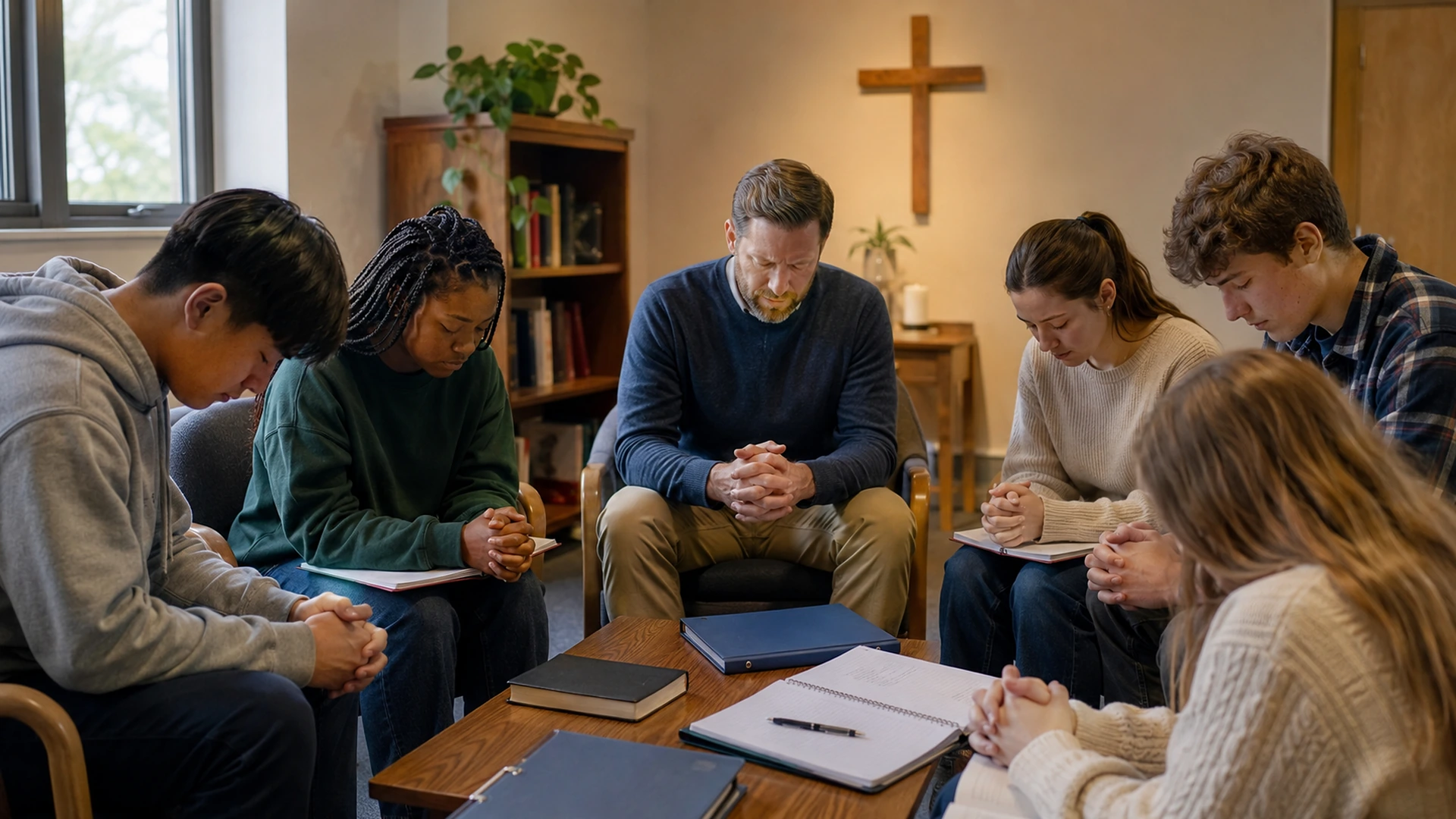
Examinations bring together effort, uncertainty, memory, family expectations and hope. In many religious and cultural traditions, students respond by praying, receiving a blessing,...
Examinations bring together effort, uncertainty, memory, family expectations and hope. In many religious and cultural traditions, students respond by praying, receiving a blessing, visiting a shrine, placing books before a sacred image or following a familiar pre-exam routine. These practices can express humility, discipline, belonging and confidence. They do not replace learning, sleep, honest work or professional help for severe anxiety.
Quick Answer
Exam success prayers and rituals are practices students use to ask for wisdom, calm, memory, courage or divine support before academic tests. Examples include Christian prayers for students, the Qur’anic prayer “My Lord, increase me in knowledge,” devotion to Saraswati as a deity of learning, and prayers to Tenjin at Japanese Tenmangu shrines. Their value is spiritual, cultural and emotional—not a guaranteed way to change grades. Preparation, retrieval practice, spaced study, adequate sleep, ethical conduct and support for test anxiety remain essential.
| Important boundary A prayer or ritual may help a student feel supported and organized, but it cannot substitute for studying or guarantee a pass. No ethical practitioner should promise marks, leak exam questions, encourage cheating, blame failure on curses or demand escalating payments to “remove a blockage.” |
|---|
| Practice | Possible meaning | Practical partner |
|---|---|---|
| Spoken prayer or blessing | Wisdom, courage, peace, humility, trust | A realistic study plan and honest preparation |
| Sacred verse or devotional reading | Orientation toward knowledge and moral purpose | Active recall and understanding, not memorizing without comprehension |
| Shrine, church, mosque or temple visit | Community support and religious identity | Respect site rules and keep enough time for rest and study |
| Amulet, votive plaque or blessed object | Reminder of prayer, commitment or tradition | Do not treat the object as a substitute for learning |
| Personal pre-exam routine | Predictability, calm and focused attention | Pack materials, breathe slowly, review key points and arrive early |
What Do Exam Success Prayers and Rituals Mean?
An exam-success prayer is a request for help in facing an academic challenge. Depending on the tradition, a student may ask God for wisdom, pray to a deity associated with learning, receive an elder’s blessing, visit a sacred place or silently repeat words that connect study with responsibility. A ritual is the structured action surrounding that intention: washing before prayer, arranging books, lighting a permitted lamp, writing a hope on a votive plaque, reciting a verse, sharing a family meal or following a consistent routine before entering the examination room.
The phrase “exam success” can be misleading if it suggests that ritual mechanically produces a grade. In most responsible religious settings, prayer is joined with effort. The United States Conference of Catholic Bishops’ prayer for students asks that they devote themselves to their studies. Dazaifu Tenmangu’s official description of academic prayers likewise emphasizes Sugawara Michizane’s sustained effort and the hope that students can express the results of their work. [1][4]
Success also has more than one meaning. It may mean passing, but it can also mean remaining calm enough to think, remembering what was learned, acting honestly, accepting a result without shame, discovering weaknesses and continuing one’s education with resilience.
Why Students Turn to Prayer and Ritual
Exams involve limited control. A student can prepare carefully and still face difficult questions, illness, noise, time pressure or anxiety. Prayer gives uncertainty a language. It allows a student to name fear, ask for help and place the exam within a larger moral or spiritual horizon.
Ritual can also create structure. A repeated sequence—clean the desk, silence the phone, pray briefly, review a checklist, begin one timed practice paper—can mark the transition from worry to action. A preregistered laboratory study found that a repeated ritual reduced participants’ neural response to performance errors, but it did not improve task performance. That distinction is useful: ritual may change how failure feels without creating knowledge that was never studied. [11]
Family and community support matter as well. A blessing from a parent, elder, teacher or religious leader can remind students that their worth is larger than one examination. This can be especially important where exam results affect scholarships, employment opportunities or family hopes.
Christian Prayers for Students and Examinations
Christian approaches vary by denomination, language and community. Students may pray privately, receive a blessing after worship, ask a church group to pray for them or use a written prayer for wisdom and perseverance. The USCCB’s “Prayer for Students” asks that students be filled with wisdom and blessings and devote themselves to their studies. [1]
The ethical meaning is not that prayer forces God to award a particular grade. Christian teaching commonly connects prayer with truthfulness, discipline, stewardship of ability and care for one’s neighbour. Cheating contradicts those values even when a student is under pressure.
A simple Christian pre-study practice might include a short prayer, naming the task for the session, studying without distractions and ending with gratitude for what was understood. Students should use prayers from their own church or tradition rather than presenting one denomination’s wording as universal Christianity.
Muslim Du‘a for Knowledge, Calm and Trust
A widely cited Qur’anic prayer says, “My Lord, increase me in knowledge” (Qur’an 20:114). [2] Students may recite this verse, make personal du‘a, begin study with the name of God and ask for understanding, beneficial knowledge, ease and integrity.
Islamic practice does not reduce effort to passivity. Trust in God is commonly paired with responsible action. For an examination, that means learning the material, respecting teachers, using lawful methods, sleeping adequately, attending on time and refusing dishonesty.
There is no need to invent a numerically fixed “exam spell” or circulate an unsourced formula that promises a guaranteed mark. Students seeking religious guidance should consult a trusted imam, teacher or established source within their community, especially when a social-media claim presents a new ritual as obligatory.
Saraswati, Vidyarambham and Traditions of Learning
In Hindu traditions, Saraswati is associated with knowledge, wisdom, education, music and the arts. Museum collections show her with books or manuscripts, a vina, a lotus and a swan or hamsa, although iconography and worship vary by region and period. [3]
In Kerala, Navaratri and Vijayadashami include practices connected with learning. Kerala Tourism describes books being placed in worship spaces during the final days of Navaratri and Vidyarambham, an initiation in which children begin writing letters with guidance from an elder. [5] This is primarily a beginning-of-learning tradition, not a universal last-minute exam method, but it illustrates how education can be framed as sacred responsibility.
Students may participate in Saraswati Puja through family, school or temple custom. Outsiders should not copy fragments from images or combine them with unrelated practices. The respectful approach is to learn from a knowledgeable community and avoid claiming that one ritual is performed identically across India, Nepal, Bangladesh, Sri Lanka or diaspora communities.
Tenjin and Exam Prayers at Japanese Tenmangu Shrines
Sugawara Michizane, a scholar and court official who died in 903, is enshrined as Tenjin, the deity of learning, culture and the arts. Dazaifu Tenmangu, built at his burial site, describes itself as a sanctuary for learning and notes that students visit to pray for success in examinations and educational goals. [4]
Visitors may offer prayer, receive an omamori, write on an ema votive plaque or participate in a formal blessing. Dazaifu Tenmangu’s official guidance explains the bowing and clapping sequence used at the shrine and offers a special October prayer period for academic success. [4]
These objects and actions belong to Shinto practice and the Tenjin tradition. An ema is not a generic manifestation board, and an omamori should not be opened or marketed as a guaranteed grade-producing device. The shrine’s own account keeps scholarship and effort central to Michizane’s example.
Family Blessings and Ancestral Encouragement
In many families, exam preparation includes a parent’s prayer, an elder’s blessing, a shared meal, the memory of relatives who valued education or a promise to use learning responsibly. These practices can be deeply meaningful without being formal ancestral ritual.
African communities do not share one exam ceremony. Some families pray through Christian or Muslim traditions; others may also speak of lineage, elders or ancestors in culturally specific ways. A responsible article should not invent a pan-African “ancestor exam ritual.” It should name the community and public source when describing a formal practice.
A safe family blessing can remain simple: acknowledge the student’s work, ask for clarity and courage, affirm that love does not depend on one score and agree on practical support such as transport, meals, quiet study time and emergency contacts.
What Prayer and Ritual Can—and Cannot—Do
Prayer can help a student express hope, reduce loneliness, remember values and enter an exam with a calmer intention. A familiar routine may reduce uncertainty and interrupt repetitive worry. These are meaningful effects even when they do not directly change the questions or the marking scheme.
Scientific research has not established that a prayer, amulet, offering or blessing creates knowledge, guarantees recall or alters an independently marked result. The most responsible position is complementary: spiritual practice may support the person who is doing the learning, while study and health behaviours build the knowledge and attention needed for performance.
A student who fails after praying has not proved that the prayer was wrong, faith was weak or a curse was stronger. Exam results are influenced by preparation, prior teaching, language, disability, health, anxiety, family circumstances, assessment quality and chance variation in the questions.
Evidence-Based Practices for Focus and Confidence
Spiritual confidence works best when it rests on prepared competence. The practices below have stronger evidence for learning or anxiety management than passive rereading and last-minute panic.
Use Retrieval Practice
Close the book and try to produce the answer from memory. Use practice questions, flashcards, blank-page recall or teach the concept aloud. Retrieval practice improves long-term retention more reliably than repeated exposure alone, especially when students check errors and return to missed material. [6]
Space Study Across Days
Shorter sessions distributed over time are generally more effective than one massed session. A classroom meta-analysis found a moderate advantage for distributed practice, and a 2026 medical-education meta-analysis found a significant benefit for spaced repetition across more than twenty-one thousand learners. [7][8]
Protect Sleep
Sleep supports memory consolidation, attention and emotional regulation. A meta-analysis of sleep restriction found that limiting sleep to roughly three to six and a half hours negatively affected memory formation, while broader reviews link sleep with academic learning and performance. [9] An all-night study session may create more waking time but reduce the brain’s ability to encode and retrieve what was studied.
Use Slow Breathing as a Brief Regulation Tool
Breathing exercises are not a substitute for treatment, but systematic reviews report reductions in anxiety and stress across many adult studies, with stronger results when practices are learned properly and repeated rather than attempted as a frantic one-minute rescue. [10] A simple option is to inhale gently, exhale slightly longer and repeat for several minutes without forcing the breath.
Treat Severe Test Anxiety as a Real Problem
A meta-analysis of forty-four randomized trials involving university students found that interventions reduced test anxiety and produced a smaller improvement in academic performance, although reporting quality and publication bias limited confidence. Behavioural approaches had the strongest support, with cognitive-behavioural and study-skills approaches also promising. [12] Students whose anxiety causes panic, vomiting, persistent insomnia, avoidance or inability to sit the exam should speak with a school counsellor, clinician or qualified mental-health professional.
| Instead of | Try | Why it helps |
|---|---|---|
| Reading the same page repeatedly | Answer a question without looking, then check | Builds retrieval strength and reveals gaps |
| One exhausting final-night session | Several shorter sessions over multiple days | Uses distributed practice and reduces overload |
| Sacrificing most of the night | Stop at a planned time and protect sleep | Supports memory, attention and emotional control |
| Praying while avoiding the syllabus | Pray briefly, then begin a defined study task | Connects intention with action |
| Telling yourself “I must not feel nervous” | Notice anxiety, breathe slowly and follow the next step | Reduces secondary anxiety about being anxious |
A Respectful Seven-Step Exam Routine
A personal routine can be meaningful without borrowing a sacred practice from another religion. Adapt the following sequence to your own beliefs, health needs and school rules.
The evening before: pack identification, pens, permitted equipment, water and directions. Set two alarms and choose a realistic stopping time for study.
Review by retrieval: answer a short set of high-priority questions from memory. Do not try to relearn the entire course at midnight.
Use your own prayer or intention: ask for wisdom, calm, honesty and the ability to use what you have learned. Keep it brief enough that it does not become avoidance.
Sleep and eat appropriately: protect rest and choose familiar food that supports you. Do not begin extreme fasting, stimulants, untested herbs or supplements for the exam.
Arrive with time to settle: follow school instructions, locate the room and avoid conversations that increase panic.
Before the paper starts: place both feet on the floor, exhale slowly, read directions and begin with a question you can organize clearly.
After the exam: avoid compulsive answer comparison. Record one lesson for future preparation and allow the result to remain uncertain without purchasing “emergency spiritual work.”
A Seven-Day Preparation Plan That Joins Meaning With Method
Students often search for a powerful final-night prayer because the remaining time feels short. A more reliable approach is to give each day a clear purpose and use prayer or reflection as the opening and closing boundary of the work. The example below is not a sacred ritual. It is a practical framework that can be adapted to a student’s own religion, timetable and health needs.
| Day | Study action | Prayer or reflection | Health and logistics |
|---|---|---|---|
| Seven days before | List topics and complete a short diagnostic quiz without notes. | Ask for honesty about strengths and gaps. | Confirm exam date, venue, identification and accommodation arrangements. |
| Six days before | Study the weakest major topic, then retrieve key ideas from memory. | Dedicate the effort to learning rather than fear. | Take a normal meal and finish at a planned time. |
| Five days before | Mix practice from two topics instead of studying one block only. | Pray for patience with mistakes and willingness to correct them. | Include light movement or exercise if medically appropriate. |
| Four days before | Complete a timed section under realistic conditions. | Ask for courage to face uncertainty without cheating. | Review permitted equipment and travel plans. |
| Three days before | Teach difficult material aloud or answer flashcards with explanations. | Express gratitude for teachers, family or access to education. | Protect sleep and reduce late-night phone use. |
| Two days before | Complete another practice paper and analyse errors by category. | Ask for clarity and disciplined attention. | Prepare clothing, stationery and backup materials. |
| One day before | Use brief retrieval of high-priority facts; stop heavy studying on time. | Use a short familiar prayer, blessing or intention. | Eat familiar food, set alarms and sleep. |
The value of the plan is not perfection. A student who starts late can still select the highest-value tasks, ask for support and avoid making the situation worse through panic. The purpose of prayer in this framework is to orient the person toward truth, humility and perseverance. The purpose of the study actions is to build retrievable knowledge.
How Parents, Elders and Teachers Can Support Students
Adults can turn a blessing into practical protection. A parent who prays for success can also reduce household noise, help arrange transport, provide a meal, confirm the exam timetable and remind the student that one result does not remove their dignity. An elder can speak about perseverance without comparing the student harshly with siblings or cousins. A teacher can identify the most important remaining topics and explain how the paper is structured.
Support becomes harmful when it relies on humiliation, threats, public prophecy or financial pressure. Statements such as “our family will be disgraced if you fail,” “God showed me the exact grade you must receive,” or “we paid for a ritual, so you cannot disappoint us” increase emotional burden. A healthier blessing recognizes effort, allows uncertainty and promises continued care.
Adults should also watch for signs that ordinary nervousness has become a health concern. Persistent panic attacks, inability to eat or sleep, repeated vomiting, self-harm thoughts, complete avoidance of school or reliance on substances require more than motivational words. The student may need counselling, healthcare, disability support or changes in the examination environment.
Reasonable accommodations are not unfair advantages. Extra time, a quieter room, assistive technology, rest breaks or accessible formats may be necessary for students with documented disabilities or health conditions. Families should begin the application process early and use the institution’s official procedures. Prayer should never be used to pressure a student to refuse support that makes assessment more equitable.
During the Exam: Focus on the Next Honest Action
Once the paper begins, the most useful ritual is procedural. Read the instructions, scan the sections, allocate time and start. If the mind goes blank, stop for several seconds and exhale slowly. Write down any related fact, formula, date or outline that returns. A partial structure can cue further memory.
Do not treat one difficult question as a spiritual sign that the whole exam is lost. Mark it, move to a manageable item and return later. Avoid looking repeatedly at other students or interpreting their speed as evidence of your failure. People work in different orders, and visible confidence does not reveal accuracy.
A brief inward prayer may be appropriate if school rules and personal belief allow it, but it should not consume valuable time or become a compulsion that must be repeated until it feels “perfect.” The goal is to return attention to the next honest action.
After the Exam and When Results Arrive
Post-exam rituals can be as important as pre-exam ones. Some students immediately compare every answer, search online for unofficial marking schemes and replay mistakes until they cannot sleep. A healthier closing practice is to record what helped, note any issue that should be reported and then leave the paper behind until verified information is available.
When results arrive, gratitude and celebration are appropriate, but success should not be used to shame others or prove spiritual superiority. A disappointing result also requires honesty rather than superstition. Review the marking, speak with teachers, identify whether the problem was knowledge, timing, anxiety or misunderstanding, and learn about resits, appeals or alternative pathways.
Spiritual communities can help students interpret results without fatalism. Passing is not proof that every ritual claim is true, and failing is not proof that the student is cursed or abandoned. Both outcomes can become occasions for learning, responsibility and renewed direction.
Common Objects and Symbols in Exam Traditions
Ethical and Safety Boundaries
No prayer or ritual justifies cheating, leaked questions, impersonation, plagiarism or bribery.
Do not promise a guaranteed grade, admission, scholarship or professional licence.
Do not tell students that failure proves a curse, weak faith or ancestral anger.
Do not demand escalating payments for repeated “cleansing,” “unlocking” or emergency rituals.
Do not encourage sleep deprivation, extreme fasting, unsafe smoke, self-harm, ingesting unknown herbs or stopping prescribed medication.
Respect minors: parents and practitioners must not frighten children with threats of spirits, punishment or family disgrace.
Respect religious boundaries: use prayers and rituals from your own community or with informed guidance; do not copy restricted practices from photographs.
Support disability accommodations, tutoring, counselling and healthcare when needed. Spiritual guidance should complement—not obstruct—qualified support.
Common Misunderstandings
| Claim | Responsible answer |
|---|---|
| “The right prayer guarantees a pass.” | Prayer may support courage and meaning; it does not guarantee an externally marked result. |
| “A ritual works even if I do not study.” | A calming routine cannot create knowledge that was never learned. |
| “Every religion has the same exam ritual.” | Traditions differ in theology, authority, language, objects and purpose. |
| “An amulet is stronger if it is secret or expensive.” | Price and secrecy do not prove authenticity or effectiveness. |
| “Anxiety means I am unprepared.” | Some prepared students still experience severe test anxiety and may benefit from professional support. |
| “One exam decides my entire future.” | Exams can matter greatly, but education and career paths usually contain multiple routes, attempts and forms of growth. |
People Also Ask
What prayer can I say before an exam?
Use a prayer from your own faith or a simple request for wisdom, calm, honest effort and clear memory. Keep it connected to preparation rather than treating it as a guarantee.
What is a Muslim du‘a for knowledge?
Qur’an 20:114 includes the prayer, “My Lord, increase me in knowledge.” Students may also make personal du‘a in their own words. [2]
Is there a Christian prayer for students?
Yes. The USCCB publishes a prayer asking that students receive wisdom and devote themselves to their studies. [1]
Why do students pray at Tenmangu shrines?
Tenmangu shrines honour Sugawara Michizane as Tenjin, the deity of learning. Students visit to pray for academic progress and exam success. [4]
Does Saraswati Puja help with exams?
For devotees, Saraswati worship can express reverence for knowledge and learning. It is a religious practice, not scientific proof of a guaranteed score.
What should I do if I panic during exams?
Pause, exhale slowly, read one instruction at a time and begin with a manageable item. For recurring or severe panic, seek counselling or clinical support.
Is it wrong to use an exam-success amulet?
That depends on your religious tradition and school rules. Use it as a meaningful reminder, not as a substitute for study or an excuse for dishonesty.
Frequently Asked Questions
1. Can parents pray for a student’s exam success?
Yes. A supportive blessing can ask for calm, wisdom and perseverance. It should not communicate that love depends on the result.
2. How long should a pre-exam ritual take?
Usually a few minutes is enough. If it delays studying, sleep or arrival, it is no longer serving preparation.
3. Should I study immediately after praying?
That is often a useful pattern: set an intention, define the task and begin. The action prevents prayer from becoming procrastination.
4. Can breathing improve my grade?
Breathing can help regulate stress, but it does not directly create subject knowledge. Its purpose is to help you access what you prepared.
5. Are “lucky pens” harmful?
A familiar permitted pen can be comforting, but bring backups and do not believe the exam is lost if the object is missing.
6. What if my religion does not use exam rituals?
You do not need one. A practical routine, supportive words, sleep and honest preparation are enough.
7. Can I combine prayers from several religions?
Combining sacred practices without understanding can be disrespectful. Use your own tradition or seek informed guidance rather than assembling a generic spiritual formula.
8. When should I seek help for exam anxiety?
Seek help when anxiety repeatedly disrupts sleep, causes panic or illness, prevents attendance, leads to self-harm thoughts or seriously interferes with daily functioning.
Key Takeaways
Exam prayers and rituals can express faith, hope, belonging and moral intention.
Christian, Muslim, Hindu and Shinto learning traditions should be described in their own terms, not blended into one universal practice.
Prayer and ritual do not guarantee marks or replace studying.
Retrieval practice, spaced study and adequate sleep directly support learning and memory.
Slow breathing and structured routines may help manage stress, while severe test anxiety deserves qualified support.
Ethical preparation excludes cheating, coercion, unsafe substances, fear-based claims and exploitative payments.
A student’s dignity and future are larger than one examination result.
Conclusion
Exam success prayers and rituals matter because examinations are not only intellectual events. They are moments of uncertainty, identity, family hope and moral choice. Religious traditions offer different ways to ask for wisdom, courage and blessing. Personal routines can also create calm and signal that it is time to begin.
The clearest ethical principle is partnership between meaning and action. Pray, receive a blessing or follow a respectful tradition if it belongs to you—but also retrieve information from memory, space study across days, protect sleep, use honest methods and seek help when anxiety becomes overwhelming. The strongest confidence is not the belief that nothing can go wrong. It is the knowledge that you prepared responsibly and can meet the result with dignity.
| Article information and safety note This article is educational and discusses religious, cultural and psychological interpretations. It is not a promise of exam results and does not replace tutoring, disability accommodations, healthcare, mental-health care or school guidance. Students in immediate distress or at risk of self-harm should contact local emergency or crisis support. |
|---|
Article body word count (approximate): 3,504 words.
Article Information
- Publisher
- Ancestral Temple
- Editor
- Ancestral Temple
- Last updated
- Jul 30, 2026
- Last reviewed
- Jul 30, 2026
- Content version
- 9750dfc51a
This educational article should be read as cultural and spiritual information, not as medical, legal, financial, or emergency advice.
Helpful Related Guidance
About the Author
 Ancestral Temple
Spiritual guide and practitioner with decades of experience in ancestral wisdom, rituals, and divine guidance.
Related Posts
View All












Comments
We'd love to hear your thoughts.