
Travel Protection Rituals: Blessings, Prayers and Symbols for Safe Journeys
Pillar Article
Quick Summary
Travel has always involved uncertainty. Before paved roads, weather forecasts, navigation apps and emergency services, a journey could expose people to storms, illness, difficult t...
Travel has always involved uncertainty. Before paved roads, weather forecasts, navigation apps and emergency services, a journey could expose people to storms, illness, difficult terrain, robbery, separation from family and unfamiliar social worlds. Communities therefore developed prayers, blessings, protective objects and departure customs that helped travellers face danger with faith, discipline and social support.
A travel protection ritual is a culturally recognized action performed before or during a journey to ask for safety, guidance, peace or a successful return. It may involve prayer, a blessing from a religious leader or elder, a sacred text, an amulet, a vehicle blessing, an offering, a farewell meal or a promise to travel responsibly. Its meaning depends on the specific religion, community, historical period and authority involved.
These practices should not be presented as guaranteed methods of preventing accidents, illness or crime. For practitioners, they may express trust in God or the sacred, strengthen courage, connect a traveller with family and community, and mark the ethical responsibilities of leaving home. They work alongside—not instead of—seat belts, helmets, medical preparation, reliable transport, weather checks, travel documents and emergency planning.
Quick Answer
Travel protection rituals are prayers, blessings, symbols or community practices used to seek guidance and safety before or during a journey. Examples include the Islamic travel supplication, the Jewish Tefillat HaDerech, Christian blessings for travellers, Japanese safe-travel omamori and historically documented African amulets. Their meanings are religious and cultural, not scientific guarantees, and they should accompany practical preparation.
What Is a Travel Protection Ritual?
The phrase covers several different kinds of practice. Some are formal religious rites led by clergy or trained custodians. Others are personal prayers learned within a family. Some involve portable objects, while others focus on spoken words, a meal, a blessing gesture or a visit to a shrine.
A useful definition is:
A travel protection ritual is a culturally governed practice that marks departure, asks for guidance or safety, and connects the traveller with spiritual, moral or communal responsibilities.
The word protection does not mean every tradition makes the same claim. In a monotheistic prayer, protection may be requested from God. In a shrine tradition, an amulet may represent a relationship with a sacred institution. In a historical amuletic system, written passages or prepared materials may have been understood as protective. In a secular family setting, a departure ritual may simply focus attention, care and preparedness.
Researchers and readers should therefore avoid reducing all these practices to “good luck.” That phrase can erase theology, authority, history and community meaning.
Why Journeys Became Important Ritual Moments
Departure changes a person’s relationship to home. The traveller moves beyond familiar routines and may depend on strangers, vehicles, weather, roads, borders and hospitality. This threshold quality makes the beginning of a journey similar to other life transitions: birth, marriage, initiation, migration and death.
Travel rituals often address five human concerns.
1. Uncertainty and danger
Historic journeys could last weeks or months. Even modern travel involves road crashes, lost documents, illness, theft, delays and environmental hazards. A prayer or blessing gives language to vulnerability.
2. Separation from family and community
Farewell customs remind the traveller that departure does not sever social obligations. Relatives may pray, share food, provide advice or ask for communication after arrival.
3. Moral conduct on the road
Many religious travel prayers are not merely requests for physical safety. They encourage humility, patience, remembrance, honest dealings and concern for fellow travellers.
4. Direction and successful return
The desired outcome is often broader than arriving quickly. Traditions may ask for a peaceful road, good judgment, protection from wrongdoing, fulfilment of the journey’s purpose and safe return.
5. Meaningful transition
A ritual separates ordinary home life from the state of being “on the road.” It can slow the departure process, focus attention and help people acknowledge both hope and risk.
Common Forms of Travel Protection
Travel traditions vary, but several forms appear repeatedly.
| Form | Typical purpose | Important caution |
|---|---|---|
| Spoken prayer | Requests guidance, peace or divine care | Wording and authority vary by religion |
| Blessing by clergy or elders | Places the traveller or vehicle within communal prayer | Not every elder or minister performs every rite |
| Written sacred passage | Carried, recited or placed in an object | Do not copy restricted texts or open sealed objects |
| Medal, amulet or charm | Material reminder of devotion or protection | Meaning comes from a specific tradition, not appearance alone |
| Vehicle blessing | Prays for drivers, passengers and responsible use | Never replaces maintenance, licensing or safe driving |
| Farewell meal or gift | Strengthens relationships and hospitality | Avoid inventing “traditional” meanings |
| Shrine or temple visit | Seeks blessing from an established institution | Follow local rules and community guidance |
| Personal reflective routine | Encourages calm, planning and gratitude | Do not falsely label a new routine as ancient tradition |
Islamic Prayers for Travel
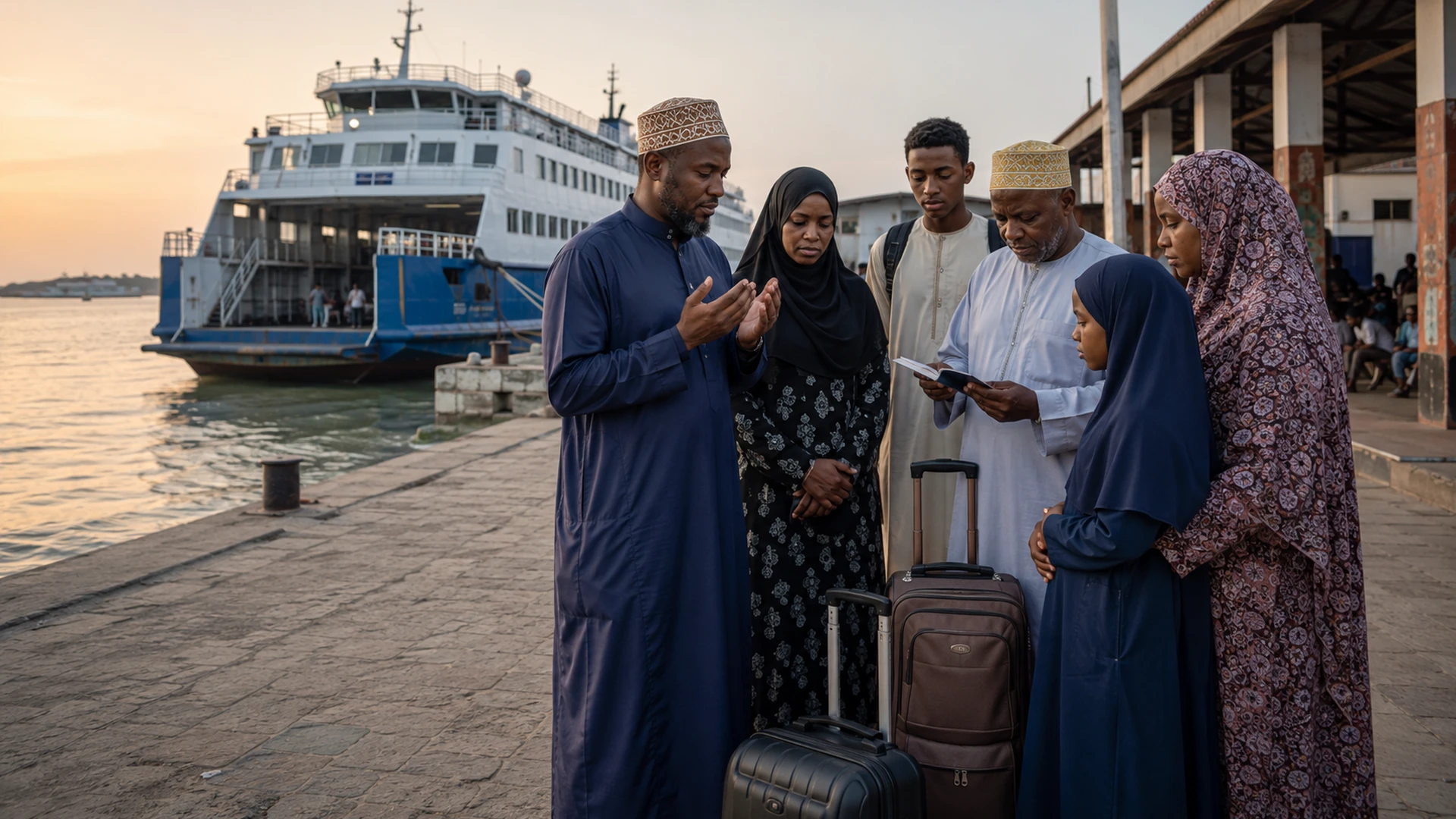
Islamic travel practice includes Qur’anic remembrance, prophetic supplications and practical rules for conduct during a journey. A commonly cited foundation appears in Qur’an 43:13–14, which instructs believers, when settled upon a means of transport, to remember God’s favour and acknowledge their ultimate return to Him.[1]
The passage is not a promise that a vehicle cannot crash. Its emphasis is gratitude, humility and awareness of dependence. Contemporary Muslim travellers may recite a travel supplication when beginning a journey, ask for ease and righteousness, and remember family members left behind. Practices vary by legal school, language, family and circumstance.
The spiritual theme is tawakkul, or reliance upon God, joined with responsible action. Islamic teaching does not require a traveller to ignore danger. Preparing documents, choosing safe transport, informing relatives, carrying needed medicine and following road rules can be understood as part of responsible conduct.
Written protection and Islamic amuletic traditions
The Islamic world also contains diverse histories of amulets and talismans. The Metropolitan Museum of Art documents objects containing Qur’anic passages, divine names or devotional writings that owners understood as protection from danger.[2] A Somali silver necklace known as hirizi or xirsi, for example, could hold written passages prepared by a religious specialist and function as both devotional jewellery and a protective object.[3]
Muslim opinions about amulets are not uniform. Some communities accept certain written forms, while others reject them as theologically inappropriate. An article should therefore never say that “Muslims wear travel charms” as though this were universal Islamic practice.
Tefillat HaDerech: The Jewish Traveller’s Prayer
Jewish tradition includes Tefillat HaDerech, commonly translated as the Traveller’s Prayer. Its early formulation is discussed in the Babylonian Talmud, Berakhot 29b–30a. The prayer asks to be led in peace, supported in peace, rescued from enemies and danger, blessed in one’s work and received with grace.[4]
The text is notable for combining safety with ethical and communal concerns. Later discussion emphasizes phrasing the prayer in the plural—asking for “us,” not only “me.” This places the individual journey within the welfare of the wider community.
Exact practice depends on Jewish legal interpretation and custom. Questions may include when a journey begins, what distance qualifies, whether the prayer is recited once or repeated and how it is incorporated into air or road travel. Those details should be learned from an appropriate rabbi or trusted community source rather than from a generic “travel ritual” recipe.
Tefillat HaDerech is a strong example of why travel protection practices are more than lucky phrases. It is a structured prayer within a legal, textual and communal tradition.
Christian Blessings, Prayers and St. Christopher
Christian traditions contain prayers for travellers, pilgrims, drivers, sailors and people facing dangerous routes. The Orthodox Church in America publishes a prayer asking Christ to accompany travellers by grace, drawing on biblical journeys to Egypt and Emmaus.[5] Orthodox liturgical petitions also regularly remember travellers alongside the sick, suffering and captive.
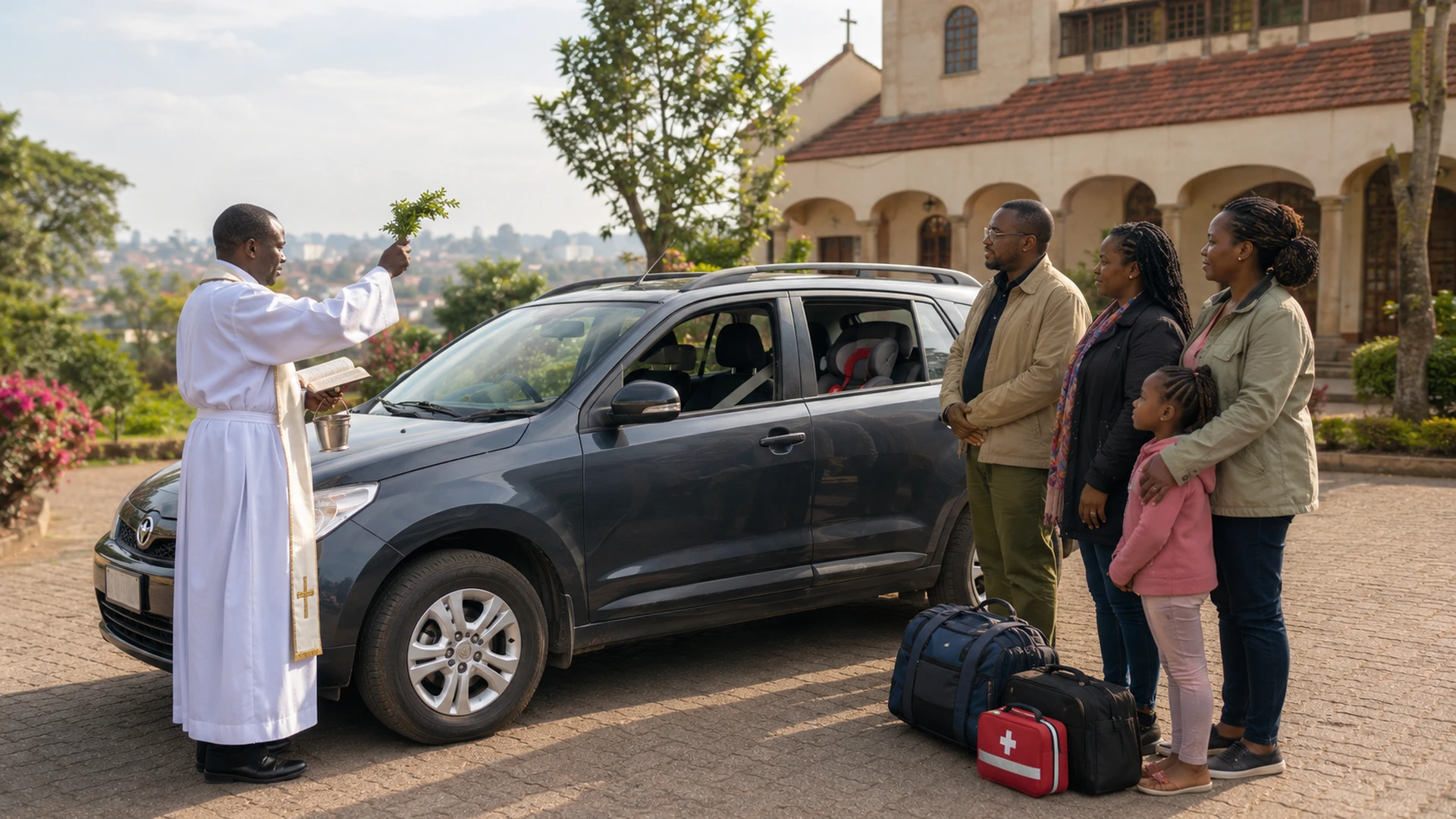
In Catholic practice, blessings are sacramentals—sacred signs and prayers that dispose people to receive grace and sanctify different circumstances of life.[6] The Catholic *Book of Blessings* includes an order for blessing travellers, and church authorities also provide blessings for pilgrims and means of transportation. The focus is not on making a vehicle invulnerable. A responsible blessing places the driver, passengers and purpose of travel before God and should reinforce prudent conduct.
St. Christopher medals
Saint Christopher became widely honoured as a protector of travellers. Medieval and later images show him carrying the Christ Child across dangerous water. The Metropolitan Museum of Art records small late-fifteenth-century pendants that may have been carried by pilgrims and other travellers seeking protection on their journeys.[7]
A St. Christopher medal is therefore not merely decorative. For many Christians it represents intercession, service, courage and trust. Yet Christian denominations differ in their theology of saints and devotional objects. It would be inaccurate to present the medal as a universal Christian practice.
Japanese Safe-Travel Omamori
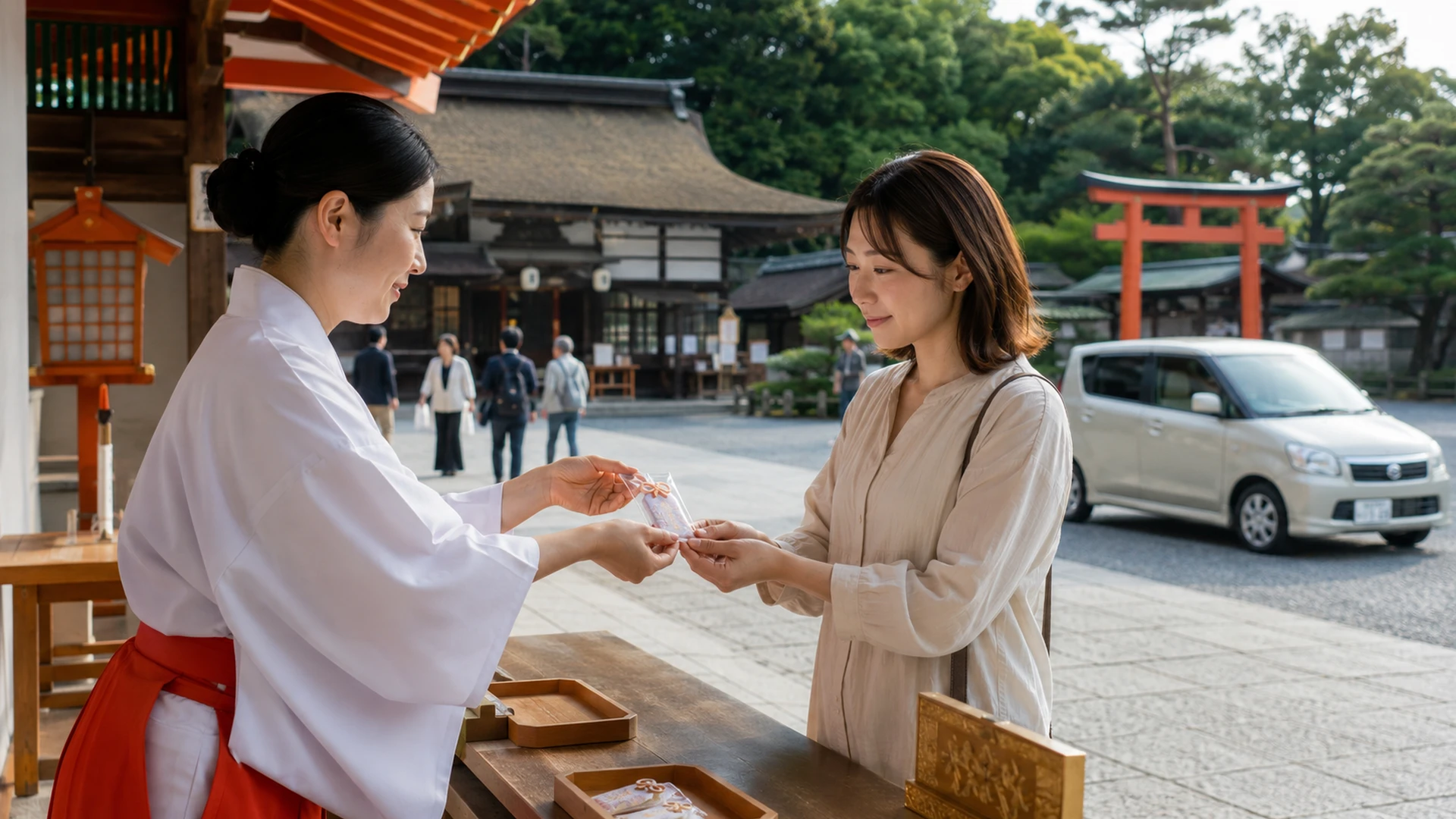
In Japan, shrines and temples distribute portable amulets called omamori for specific concerns such as health, study, childbirth, traffic safety or safe travel. British Museum collections include brocade-covered omamori whose stated function is safe travel. Some examples were designed to hang in vehicles and included bells, cords or small plaques.[8]
An omamori is connected to a particular shrine or temple. Its meaning does not come from the pouch’s colour alone. The British Museum notes that the pouch commonly contains stamped paper or a prayer and is usually kept sealed. Opening it may be considered improper or unlucky within the practice.[9]
Modern safe-travel omamori may be given to children, drivers or relatives. Some are associated more specifically with kōtsū anzen, traffic safety. Visitors should purchase them through the relevant shrine or temple, respect instructions and avoid opening, copying or reselling them as generic exotic charms.
Hindu Prayers for Auspicious Beginnings
Hindu traditions are highly diverse, but many devotees honour Ganesha at the beginning of an undertaking. The Smithsonian’s National Museum of Asian Art describes Ganesha as the remover of obstacles and deity of new beginnings.[10] A traveller may therefore pray to Ganesha before departure, keep a devotional image in a vehicle or include the journey within a family puja.
This does not mean there is one universal “Hindu safe-travel ritual.” Customs differ by region, lineage, temple, household and purpose. A new vehicle may be blessed in one community, while another family may simply pray at home or visit a temple. The meaning may concern auspicious beginning, gratitude, ethical conduct or removal of obstacles rather than a promise of immunity from harm.
Online articles should avoid presenting coconut breaking, lemon placement, specific mantras or dashboard images as mandatory Hindu rules. Some actions are local, some require religious guidance and some are commercial adaptations.
African Histories of Portable Protection
Africa cannot be treated as one religious system. The continent contains thousands of communities, multiple world religions and many local traditions. Historical evidence nevertheless shows that travellers and other people facing danger sometimes carried portable protective objects.
Medieval Christian Nubia
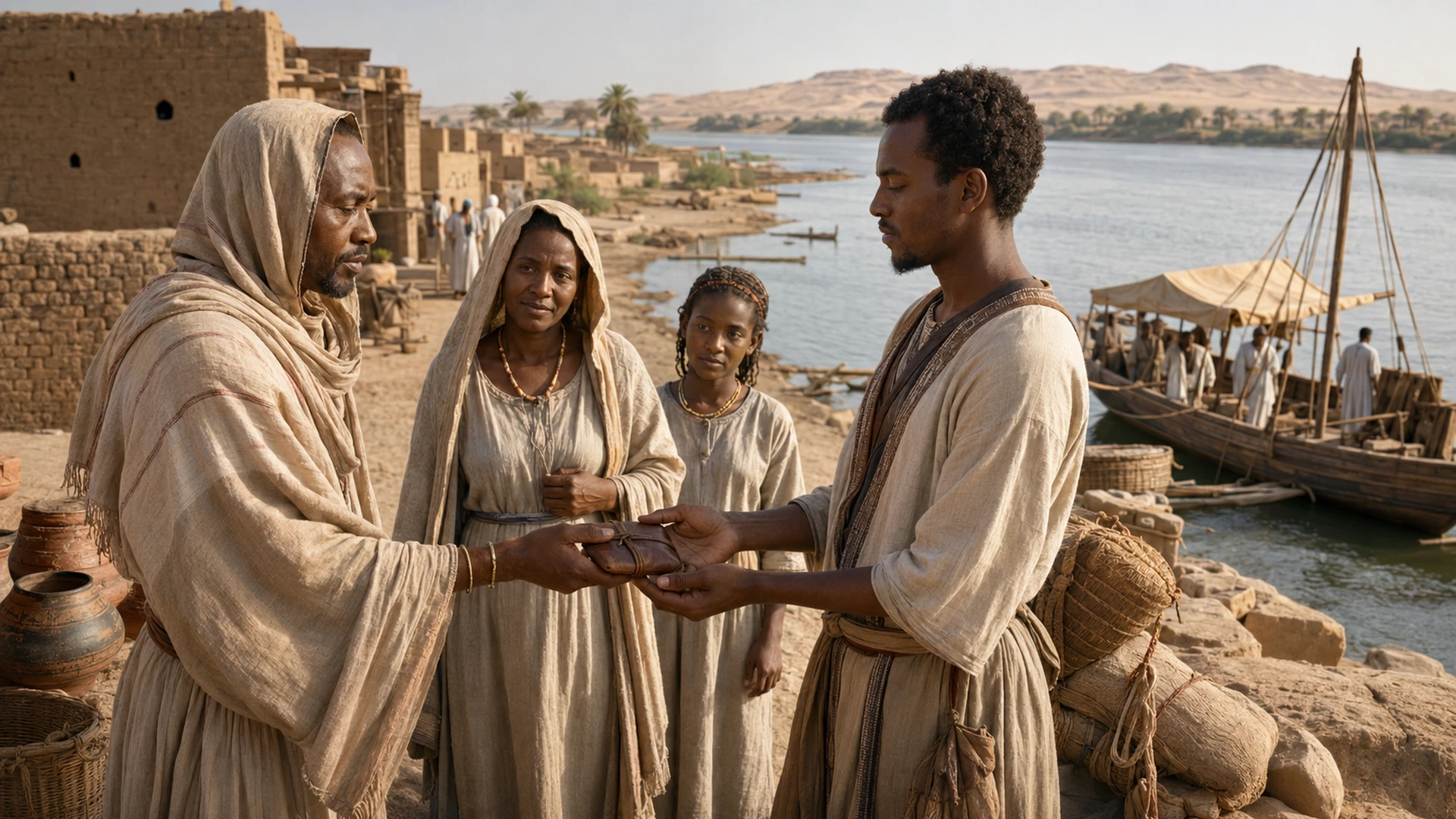
A British Museum educational reconstruction of late-twelfth-century Kulubnarti in present-day Sudan describes leather or cloth amulets containing folded sacred texts. Such objects could be worn on the body or sewn into clothing and were understood to protect against dangers. The same account notes the use of names or symbols associated with archangels such as Michael and Raphael.[11]
This is evidence for a particular medieval Nubian Christian context. It should not be converted into a modern do-it-yourself “African travel charm.”
Somali hirizi
Silver hirizi or xirsi necklaces have been used in Somali and wider Islamic settings as devotional and protective containers. The texts inside could be prepared for an owner’s particular concerns. Their form also carried family wealth and artistic value.[3] Religious interpretation varies, and the contents should not be invented or opened casually.
Akan court amulets
The Metropolitan Museum of Art documents triangular amulets represented in Akan gold weights. The original amulets could contain folded Qur’anic texts encased in leather and were worn by rulers for protection, particularly during war.[12] This history reflects interaction among Akan courts, Muslim specialists and long-distance trade. It is not evidence that all Ghanaian travellers used the same object.
Sakalava and Merina ody
Among communities in Madagascar, objects called ody have been made for protection and good fortune through specialists whose knowledge relates to particular clients and dangers.[13] These objects belong to specific systems of authority. They are not decorative “African talismans” that outsiders can reproduce by copying shapes or materials.

What Do Travel Symbols Mean?
A travel symbol can work in several ways.
A reminder of relationship
A medal, pouch or prayer card may remind a traveller of family, religious community, ancestors or divine presence. Its value may be relational rather than mechanical.
A portable sacred connection
A prompt for conduct
Seeing a symbol in a vehicle may remind a driver to pray, remain patient, avoid alcohol, slow down or care for passengers. This practical moral function is often overlooked.
A marker of identity
A travel object may identify the bearer as Jewish, Muslim, Christian, Hindu, Shinto or a member of a particular local tradition. It can express belonging during migration or pilgrimage.
A material expression of hope
Ritual Protection Is Not a Safety Guarantee
A responsible cultural article must say this clearly: no prayer, amulet, blessing, oil, medal or symbol can scientifically guarantee that a traveller will avoid accidents, illness, crime or delay.
This does not make the practice meaningless. Religious practices operate within faith, theology, ethics and community. Problems arise when a seller claims that an object makes seat belts unnecessary, prevents every crash, guarantees visa approval or removes the need for medical care.
The World Health Organization reports that correct helmet use greatly reduces death and brain-injury risk, while seat belts reduce the risk of death for vehicle occupants.[14] The CDC advises travellers to check destination health risks, prepare medication and documents, use safe transportation, wear restraints and leave emergency information with someone at home.[15]
A spiritually meaningful departure should strengthen, not weaken, responsible preparation.
A Practical Safe-Journey Checklist
Before leaving:
1. Check passports, visas, permits, tickets and insurance.
2. Share the itinerary and emergency contacts with a trusted person.
3. Research destination-specific health, weather and security risks.
4. Pack prescribed medicine, a basic first-aid kit and essential documents.
5. Inspect the vehicle or choose a reputable transport provider.
6. Use seat belts, child restraints and certified helmets.
7. Avoid driving while tired, intoxicated or distracted.
8. Plan rest stops and avoid unnecessary night travel where roads are unsafe.
9. Keep digital and physical copies of important documents.
10. Learn how to contact medical services, police, your accommodation and relevant consular support.
A family prayer, blessing or personal ritual can be placed before or after this checklist. The two approaches need not compete.
How to Participate Respectfully
Ask who has authority
A shrine attendant, priest, imam, rabbi, elder, diviner or family head may have a defined role. Do not assume any respected older person can perform any ceremony.
Do not copy restricted words or objects
Sealed amulets, sacred texts and specialist preparations may not be intended for public inspection. Avoid opening, photographing or reproducing them without permission.
Name the exact tradition
Write “a contemporary Swahili Muslim family in Zanzibar” rather than “Africans pray before travel.” Write “Japanese safe-travel omamori from a particular shrine” rather than “Asian protection charms.”
Avoid buying sacred objects as costumes
An object sold to practitioners for devotion should not be turned into a party accessory, fashion prop or fabricated spiritual product.
Do not promise outcomes
Use phrases such as “practitioners may understand,” “the prayer asks for,” or “the object is associated with.” Avoid “this will protect you from every accident.”
Respect personal privacy
Travel prayers may be private. A person should not be pressured to perform for a camera or explain beliefs they consider intimate.
Can You Create a Personal Travel Ritual?
A person can create a private departure routine without claiming that it is an ancient cultural tradition. A respectful personal practice might include:
pausing for prayer or silent reflection;
expressing gratitude for the journey;
asking forgiveness or resolving conflict before leaving;
contacting family;
checking documents and safety equipment;
stating an intention to drive patiently and help others;
carrying a meaningful family photograph or non-sacred keepsake;
sending an arrival message.
The key is honest naming. Call it a “personal pre-travel routine,” not a “traditional African protection ritual” unless it genuinely comes from a named community and has been transmitted appropriately.
Common Misunderstandings
“All cultures use charms for safe travel”
Many cultures have travel prayers or protective objects, but not everyone uses them. Some religious communities oppose amulets entirely.
“A symbol works because of its shape”
The same shape may have different meanings in different settings. Context, words, consecration, authority and community interpretation matter.
“Spiritual protection means nothing bad can happen”
Most mature traditions recognize human vulnerability. Prayer may ask for care while accepting that danger still exists.
“Old rituals can be reconstructed from photographs”
A museum object does not provide complete instructions. Its original language, specialist knowledge and social rules may be missing.
“An online seller can personalize any tradition”
Commercial claims often remove sacred objects from community authority. Expensive products and dramatic promises are not evidence of authenticity.
People Also Ask
What is a prayer for safe travel?
A safe-travel prayer asks for guidance, peace, protection from danger and a successful return. Examples include the Jewish Tefillat HaDerech, Islamic travel supplications and Christian prayers for travellers. Exact wording and practice depend on the tradition.
What is the meaning of a travel blessing?
A travel blessing places a journey within spiritual and communal care. It may ask for divine guidance, wise decisions, peaceful roads and protection for drivers, passengers and people encountered along the way.
What symbols are associated with safe journeys?
Examples include St. Christopher medals in some Christian traditions, safe-travel omamori in Japan, written prayer amulets in several historical Islamic and African contexts, and devotional images associated with auspicious beginnings in Hindu households.
Are travel protection rituals scientifically proven?
No ritual or sacred object is scientifically proven to prevent every accident or illness. Their importance is religious, cultural, emotional and ethical. Practical precautions remain necessary.
Can I use a ritual from another culture?
You may respectfully learn about another tradition, attend public ceremonies when invited and obtain objects through authorized institutions. Do not copy restricted rites, open sealed objects or claim a borrowed practice as your own heritage.
Frequently Asked Questions
Do travel blessings work?
Their meaning depends on faith. Practitioners may experience comfort, courage, community connection and a stronger sense of responsibility. They do not provide a scientific guarantee of physical safety.
Is it wrong to carry a protection symbol?
That depends on the person’s religion and the symbol’s origin. Some traditions encourage devotional objects; others discourage or reject amulets. Seek guidance within the relevant community.
What is the Islamic prayer before travel?
Muslim travellers often recite Qur’anic words of gratitude and a prophetic supplication asking for righteousness, ease and care for family. Wording and practice should be learned from a trusted Islamic source.
When is Tefillat HaDerech recited?
Jewish law discusses the prayer in relation to setting out on a journey. Details vary by interpretation, distance and travel conditions, so a rabbi or reliable Jewish legal source should guide practice.
Why is St. Christopher linked with travellers?
A Christian legend describes Christopher carrying the Christ Child across dangerous water. His image became associated with protection for pilgrims and other travellers.
What is a Japanese travel omamori?
It is a sealed amulet obtained from a shrine or temple for safe travel or traffic safety. It should be handled according to the institution’s guidance and normally should not be opened.
Are African travel charms all the same?
No. Nubian text amulets, Somali hirizi, Akan protective objects and Malagasy ody come from different histories, languages and systems of authority.
Can a vehicle be blessed?
Several religious traditions include prayers for vehicles or travellers. A blessing should accompany maintenance, licensing, sobriety, seat belts, helmets and responsible driving.
Is a farewell meal a protection ritual?
In some communities, food strengthens relationships and marks departure. It should only be described as a traditional protection ritual when evidence from that specific community supports the claim.
What should I avoid when researching travel rituals?
Avoid universal claims, secret-ritual instructions, guaranteed outcomes, copied sacred text, stereotyped images and mixing unrelated cultures.
Key Takeaways
Travel protection rituals respond to uncertainty, separation and the hope of safe return.
Prayers, blessings and symbols have different meanings in different traditions.
Islamic, Jewish, Christian, Hindu, Japanese and African examples should not be blended into one generic ritual.
Portable objects gain meaning through community, institution, text and authority.
Spiritual practice does not replace road safety, medical preparation or emergency planning.
Respectful study names the exact culture, protects private knowledge and avoids promises.
A personal travel routine can be meaningful when it is honestly described as personal rather than ancient tradition.
Conclusion
Travel protection rituals reveal how communities understand vulnerability. A journey is never only movement from one place to another. It can involve leaving family, entering unfamiliar territory, depending on machines and strangers, and confronting forces beyond individual control.
Across traditions, prayers and symbols give travellers a language for humility, courage, responsibility and hope. The Jewish Traveller’s Prayer asks to be led in peace. Islamic supplications frame departure through gratitude and reliance upon God. Christian blessings place travellers and vehicles within prayer. Japanese omamori connect safe travel with a shrine or temple. Hindu devotion may honour auspicious beginnings and the removal of obstacles. African historical examples show diverse forms of sacred text, specialist knowledge and portable protection.
Their value should be described with care. They are not interchangeable, and they do not cancel physical risk. The most responsible approach joins spiritual meaning with practical action: pray if it is your tradition, receive a blessing where appropriate, respect sacred symbols—and wear the seat belt, check the vehicle, carry medicine and tell someone where you are going.
Final Summary
A travel protection ritual is a culturally specific prayer, blessing, symbol or departure practice used to seek guidance and safe passage. Its deepest meaning often lies in relationship—with God, community, family, ancestors, sacred institutions and ethical responsibility. Respectful participation requires accurate cultural naming, proper authority, no guaranteed claims and full commitment to real-world travel safety.
Article Information
- Publisher
- Ancestral Temple
- Editor
- Ancestral Temple
- Last updated
- Jul 30, 2026
- Last reviewed
- Jul 30, 2026
- Content version
- 167be78f9b
This educational article should be read as cultural and spiritual information, not as medical, legal, financial, or emergency advice.
Helpful Related Guidance
About the Author
 Ancestral Temple
Spiritual guide and practitioner with decades of experience in ancestral wisdom, rituals, and divine guidance.
Related Posts
View All











Comments
We'd love to hear your thoughts.