
HOME PROTECTION RITUALS: Traditional Symbols, Blessings and Spiritual Beliefs
Pillar Article
Quick Summary
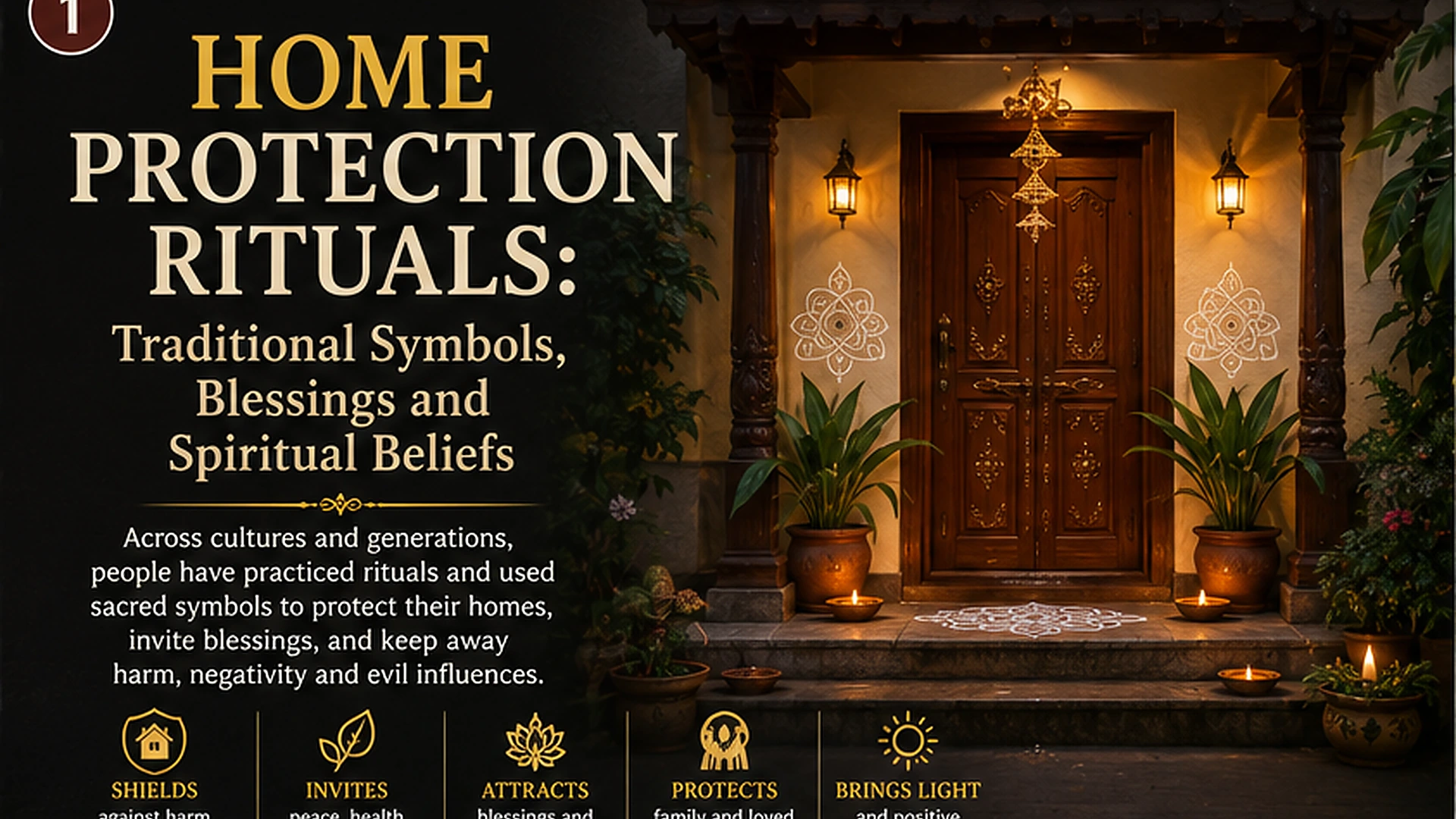
Home protection rituals are culturally specific practices intended to bless a dwelling, guard its boundaries, invite peace, or reduce the perceived influence of danger and misfortu...
Home protection rituals are culturally specific practices intended to bless a dwelling, guard its boundaries, invite peace, or reduce the perceived influence of danger and misfortune. They may include prayers, sacred texts, doorway objects, guardian images, threshold drawings, lamps, incense, water, seasonal cleaning or family ceremonies performed when entering a new home.
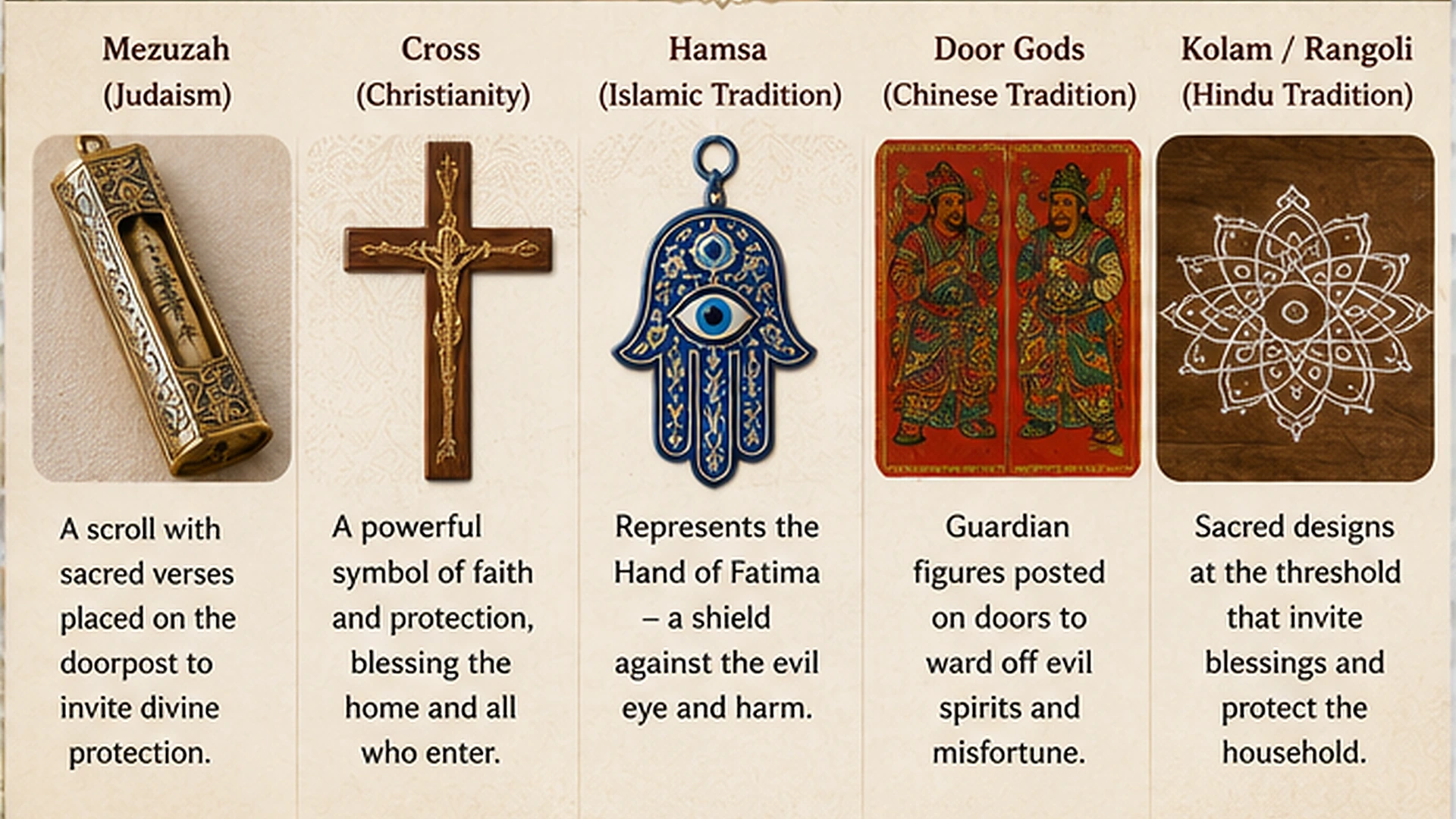
There is no single universal ritual for protecting a house. A Jewish mezuzah, a Catholic house blessing, an Ethiopian healing scroll, a Tamil kolam, a Moroccan khamsa and a Chinese door-god print belong to different religious and historical systems. They may all concern protection, but their meanings, authorized users and methods are not interchangeable.
Household protection has also never been only symbolic. Communities repaired roofs, secured doors, managed fire, maintained food stores, formed neighborhood ties and taught children how to respond to emergencies. Spiritual beliefs often existed beside practical stewardship rather than replacing it.
Quick Answer
Home protection rituals are prayers, symbols, blessings and household customs believed to safeguard a dwelling or create sacred, peaceful space. Common forms include sacred words at doorways, blessing water, guardian images, threshold drawings and seasonal cleaning. Their meanings are culturally specific, and none is scientifically proven to prevent crime, fire, illness or supernatural harm.
What Are Home Protection Rituals?
A home protection ritual is any repeated religious, spiritual or customary action through which a household asks for safety, peace, divine care, ancestral support or freedom from harmful influences. Some rites formally dedicate a newly built house. Others renew protection each year, mark a move, respond to illness, or accompany a major change such as marriage, birth or the arrival of a new family member.
The word ritual does not always mean an elaborate ceremony. Affixing a sacred text to a doorpost, lighting a lamp during a festival, tracing a design at dawn or saying a family prayer can all be ritual acts because they follow inherited patterns and carry shared meaning. In many traditions, the household itself becomes a place where religious identity is practiced daily rather than only in a temple, church, synagogue, mosque or shrine.
It is also important to distinguish protection from control. Traditional practices usually express dependence on God, deities, ancestors, saints, sacred law or community ethics. They do not necessarily claim that a person can command an invisible force. Modern commercial pages often flatten these differences into “protection spells,” but that language may misrepresent living religions.
Why Doors, Thresholds, Windows and Hearths Matter
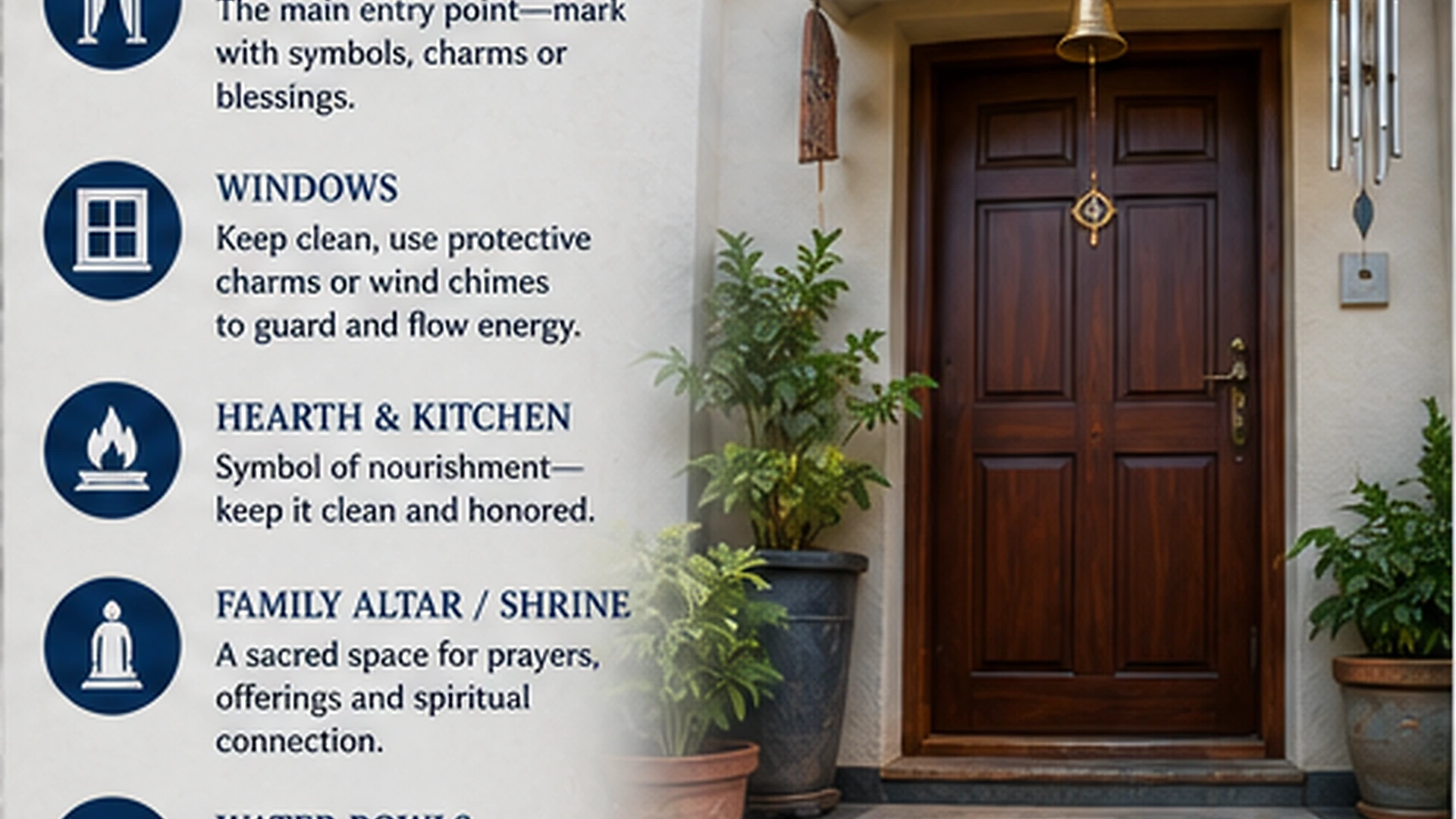
Entrances are natural places for protective customs because they separate inside from outside. A door controls who may enter. A threshold marks the movement from public space into family space. Windows admit light and air but can also be imagined as openings through which danger may pass. Fireplaces and hearths historically brought warmth and food, while also creating a physical risk of fire.
For this reason, protective words and marks often appear near doorposts, gates, windows, chimneys and fireplaces. The location may matter as much as the symbol. A sacred object placed at an entrance can remind residents how to behave, signal the household’s religious identity, welcome approved visitors and symbolically reject harmful forces.
The recurring importance of thresholds does not prove that all traditions share one origin. Human beings everywhere live in built spaces with boundaries, so different societies can independently develop doorway customs. Similar placement should not be mistaken for identical theology.
Common Forms of Household Protection Belief
| Form | Traditional purpose | Examples |
|---|---|---|
| Prayer and blessing | Spoken or sung requests for divine peace, safety and right conduct | Christian house blessings; family prayers; supplications in many faiths |
| Sacred text | Words believed to carry covenant, revelation, prayer or protective authority | Mezuzah scrolls; Qur’anic amulets; Ethiopian healing scrolls |
| Doorway or threshold symbol | Marks a boundary and expresses welcome, vigilance or exclusion of harm | Kolam; door gods; apotropaic marks; crosses or inscriptions |
| Guardian image or object | Represents a deity, saint, ancestor, warrior or protective presence | Chinese door gods; domestic icons; protective amulets |
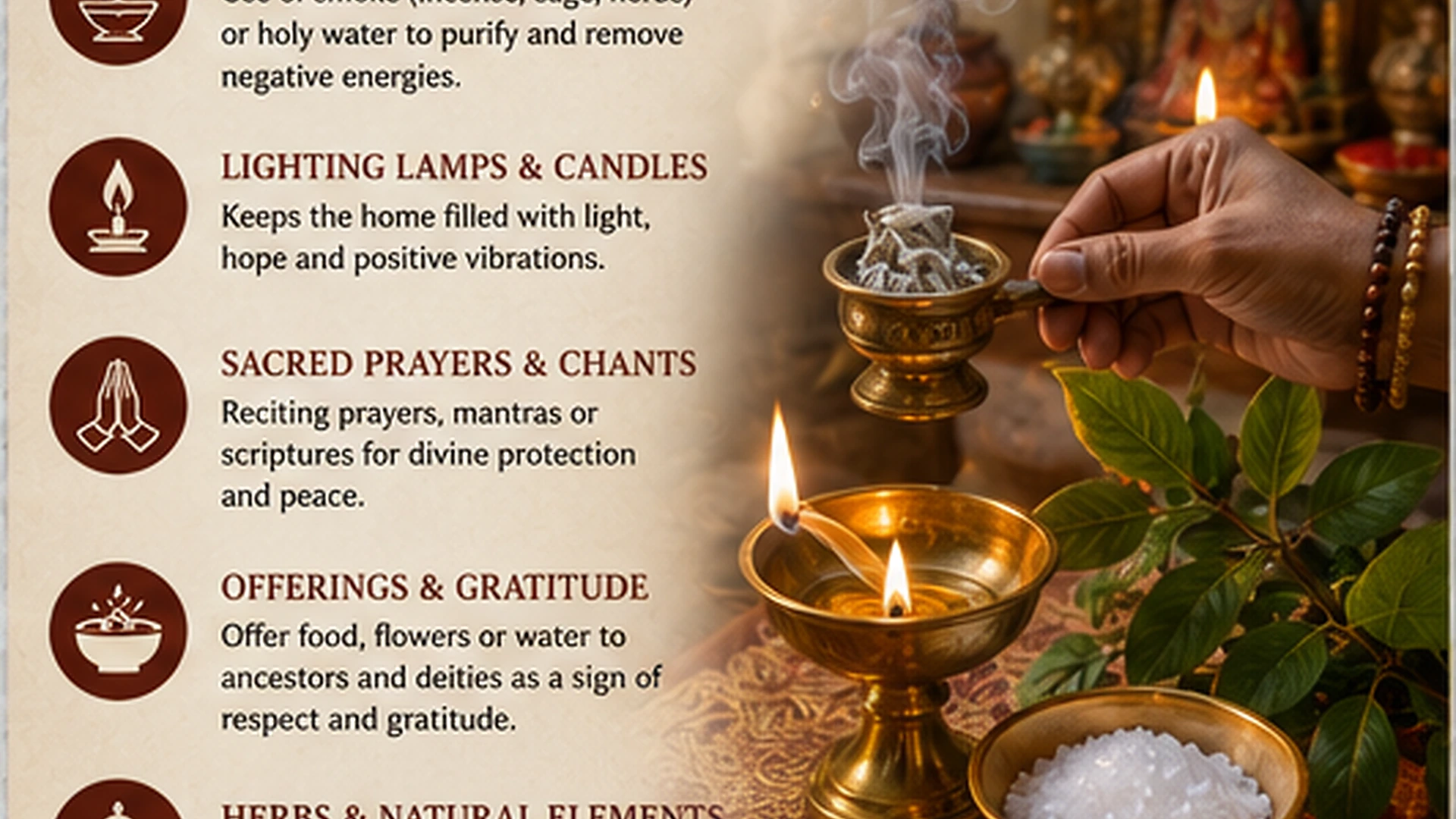
| Water, light, smoke or fragrance | Purification, blessing, illumination, prayer or renewal | Holy water; festival lamps; incense; myrrh or frankincense in some traditions |
| Seasonal cleaning and renewal | Removes disorder and prepares the household for a new cycle | Deepavali cleaning; Lunar New Year sweeping and decoration |
| Hospitality and ethical duty | Protection is linked to peace, generosity, justice and right relationships | Household prayers, shared meals, care for guests and neighbors |
Ancient Egyptian Door and Protection Amulets
Ancient Egyptian religion used a wide range of amulets associated with life, health, rebirth and protection. The Metropolitan Museum of Art identifies a small gold object from the Late Period as a “door amulet,” showing that protection could be linked to an architectural boundary as well as to the body.[1] Another form, the sa amulet, represents the hieroglyph for “protection” and was understood to extend protection to its wearer in life or death.[2]
The surviving objects do not provide a simple modern recipe for protecting a house. Archaeological context, placement and ritual use are often incomplete. It is safer to say that ancient Egyptians developed a rich material language of protection and sometimes connected protective objects with doors, buildings, bodies and burials.
Modern copies of Egyptian symbols are frequently sold as universal charms. That use is a contemporary interpretation, not proof that every eye, knot or hieroglyph carried the same meaning in every ancient period.
The Jewish Mezuzah: Doorpost, Covenant and Household Identity
Traditional Jews affix a mezuzah to the doorframes of qualifying rooms in the home. The central object is not the decorative case but a parchment scroll bearing passages from Deuteronomy, including the Shema. The Jewish Museum explains that Moroccan Jewish households sometimes protected the scroll beneath embroidered textile or silver covers rather than using the cases common in Ashkenazi practice.[3]
The mezuzah fulfills a biblical command to place sacred words on the doorposts of the house. It marks the dwelling as a Jewish home and repeatedly reminds those entering or leaving of covenant, divine unity and religious responsibility. Some Jewish traditions also speak of the mezuzah as connected with God’s watchful protection, but it should not be reduced to a generic lucky charm.
Respectful treatment matters. A mezuzah scroll is prepared according to religious rules and should not be copied, opened or discarded carelessly. Decorative objects that imitate the external case but contain no valid scroll may have artistic or personal meaning, yet they are not the same as a religiously valid mezuzah.
Christian House Blessings, Crosses and Domestic Prayer
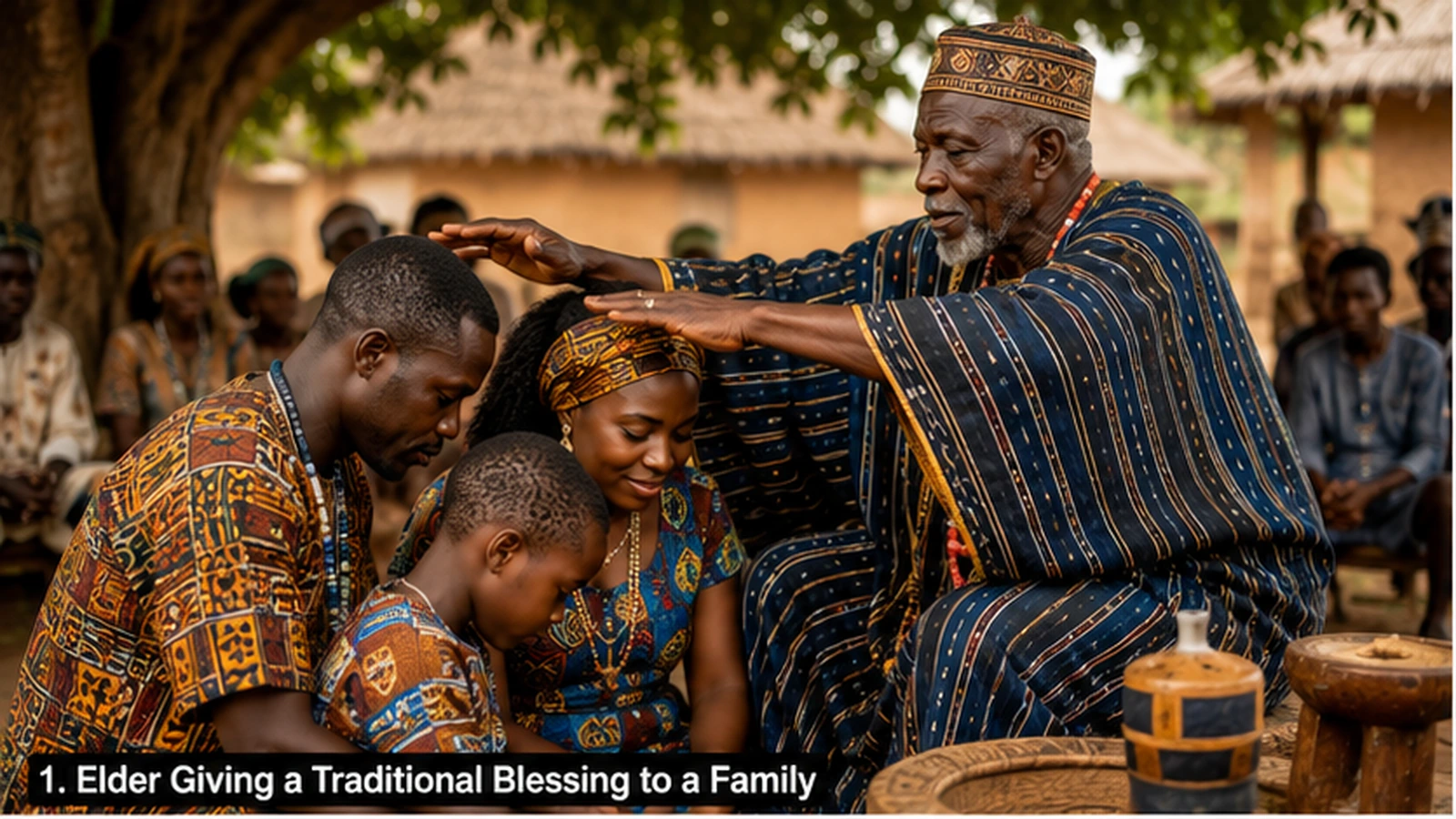
Christian traditions bless homes through prayer, Scripture, the sign of the cross and, in some churches, holy water, incense or sacred images. Practices vary among Catholic, Orthodox, Anglican, Protestant and African independent churches. A formal blessing may take place when a family moves into a home, during Epiphany, after hardship, or as part of parish pastoral care.
The United States Conference of Catholic Bishops publishes a blessing of the home and household for Epiphany. The rite includes Scripture, intercessions, the Lord’s Prayer and a request that the house and its inhabitants be filled with Christ’s light and concern for others.[4] The same body explains that Catholic blessings consist of prayer, Scripture and sometimes a ritual sign; many household blessings can be led by baptized laypeople, while others are reserved to ordained ministers.[5]
A Christian home blessing is therefore not simply an attempt to drive away danger. It can dedicate the household to peace, hospitality, generosity, family prayer and care for vulnerable people. Crosses, icons and Bible passages in a home may serve as objects of devotion and reminders of faith rather than mechanical devices that work independently of belief and conduct.
In Eastern Christian traditions, domestic icons may form a prayer corner. In many African Christian households, crosses, Bible texts, prayer meetings and pastoral blessings are incorporated into local family life. These practices should be described by denomination and community rather than called one “African house ritual.”
Islamic Prayer, Sacred Writing and Protective Objects
Muslim households may seek protection through prayer, Qur’anic recitation, remembrance of God, ethical conduct and hospitality. Historical Islamic art also includes amulets and talismanic objects bearing Qur’anic passages, divine names, prayers, numbers and geometric designs. The Metropolitan Museum of Art describes these objects as part of a broad Islamic talismanic tradition, while emphasizing that their forms and beliefs varied widely.[6]
There has never been one unanimous Muslim position on amulets. Some scholars and communities accept the use of Qur’anic words in a devotional or protective context; others reject objects thought to operate magically or independently of God. A culturally responsible article should therefore say “some communities” rather than presenting amulets as a requirement of Islam.
The khamsa or hand motif appears across North Africa and the Mediterranean. A nineteenth- or twentieth-century Moroccan silver ornament in The Met’s collection is described as an abstracted khamsa worn by Amazigh women to protect against the evil eye.[7] The hand symbol has been used by Muslim, Jewish and other communities, and its names and interpretations differ. It should not be assigned one universal religious meaning.
In West Africa, Qur’anic writing has also been folded into leather or metal cases prepared by religious specialists. Some examples were worn on the body; others could be kept near valued possessions or used in specific circumstances. Private texts should not be opened, reproduced or marketed as generic “African protection spells.”
Ethiopian Healing Scrolls and Household Protection
In the northern Ethiopian highlands, customized parchment healing scrolls combined prayers with images of saints, angels, eyes, stars and interlaced talismanic forms. They were prepared by däbtäras, religious scholars who could also practice traditional healing, for named individuals experiencing illness or spiritual danger.
The Metropolitan Museum of Art explains that portable scrolls were rolled and worn in leather cases, while longer examples could be hung from a house post or wall so that their images confronted harmful spirits. The same source notes that the Ethiopian Orthodox Church did not uniformly endorse magical interpretations, even though Christian prayers and figures appeared on the scrolls.[8]
This tradition therefore cannot be reduced to “put a scroll in your house.” The scroll was personalized, prepared within a specialist system and connected with prayers, healing beliefs and a particular owner. Images and formulas may also be restricted or culturally sensitive.
Tamil Kolam: Threshold Art, Welcome and Protection
Kolam are intricate designs traditionally drawn at household thresholds in Tamil Nadu and other Tamil communities. They are often made at dawn with rice flour or powder after the ground has been cleaned. Designs may be geometric, floral or animal-inspired, and the knowledge is commonly transmitted through families.
UNESCO documentation of the Tamil Nadu practice describes kolam as threshold drawings connected with blessing, protection and prosperity. The nomination record also notes beliefs that labyrinthine designs can obstruct harmful spirits while inviting divine favor, particularly the blessings associated with Lakshmi.[9] These explanations reflect documented belief, not a scientific claim about what a design can physically prevent.
Kolam also has social, aesthetic, mathematical and ecological dimensions. Rice flour can feed insects and small creatures; the daily act can create discipline and beauty; and the entrance becomes a public expression of household care. Meanings differ by family, region, occasion and design.
During Deepavali, homes and public spaces are cleaned, decorated and illuminated. UNESCO’s 2025 inscription describes the festival as a time for lamps, prayers for prosperity and new beginnings, gift exchange and intergenerational teaching.[10] Kolam and Deepavali should not be treated as one fixed ritual, but both illustrate how cleaning, light and doorway decoration can prepare a household for renewal.
Chinese Door Gods and Lunar New Year Renewal
Chinese door gods are guardian figures displayed on doors, especially during Lunar New Year. Different regions and periods have used different figures, including military heroes and deities associated with protection, good fortune, rank or longevity. The figures are commonly shown as a pair facing one another across the entrance.
The Metropolitan Museum of Art describes early twentieth-century New Year prints of the warriors Ma Chao and Ma Dai as images traditionally placed on doors and believed to ward off evil from the household.[11] The Smithsonian’s National Museum of Asian Art also records family memories of door-guardian prints, sweeping away lingering negativity and using noise, red decorations and family rites during Lunar New Year.[12]
The prints do not function in isolation from the festival. Their meaning is connected with cleaning, replacing old images, family reunion, ancestor respect, food, gift exchange and hopes for a favorable new year. The custom is not identical in every Chinese community, and door-god images should not be treated as generic Asian decoration.
Apotropaic or “Witches’ Marks” in Historic European Buildings
Historic buildings in England and elsewhere in Europe sometimes contain carved or burned marks interpreted as apotropaic—meaning intended to avert evil. Historic England reports that these marks are often found near entrances, windows and fireplaces and were common when belief in witchcraft and harmful spirits was widespread, especially from the sixteenth to early nineteenth centuries.[13]
Common forms include hexafoils or “daisy wheels,” pentangles, intersecting circles, Marian initials and deliberate burn marks. Some were thought to trap or confuse harmful forces; others invoked Christian protection. However, interpretation is not always certain. A circle may be a carpenter’s exercise, an ownership mark or decoration rather than a protective symbol.
These markings should not be copied onto a historic property without permission. They are archaeological evidence embedded in a building, and conservation specialists may need to document them before repairs, cleaning or repainting.
Household Shrines, Icons and Protective Deities
Many religions create sacred space inside the home through a shrine, prayer corner or carefully placed image. A household shrine can hold lamps, flowers, icons, sacred books, ancestor photographs or offerings. The purpose may be daily devotion, gratitude, remembrance or protection rather than a one-time emergency ritual.
In Hindu homes, domestic images allow worshippers to encounter a chosen deity outside the temple. The Metropolitan Museum of Art notes that inexpensive devotional prints helped sacred images enter household shrines widely from the nineteenth century onward. Images of fierce deities such as Kali may be understood by devotees as nurturing guardians and destroyers of harmful forces rather than simply frightening figures.[14]
The meaning of a guardian image depends on theology and practice. Displaying an image without prayer, knowledge or relationship to the tradition is not the same as participating in that religious system. Sacred images should not be sensationalized as occult décor.
Salt, Herbs, Water, Incense, Lamps and Sound
Many modern discussions of home protection list salt, herbs, smoke, bells, candles and water as if each substance had one global meaning. Historically, the same material can serve very different purposes. Water may cleanse, bless, cool or mark renewal. A lamp may honor a deity, symbolize divine light, welcome guests or simply illuminate a gathering. Incense may carry prayer, perfume a room or mark sacred time.
Myrrh, frankincense, rosemary, basil, rue and other plants appear in specific regional and religious practices, but a plant used in one community should not automatically be assigned the same meaning elsewhere. Some herbs are toxic to people or pets, essential oils can irritate skin and lungs, and burning smoke indoors can worsen respiratory conditions.
Open flames and charcoal require ventilation, stable holders, distance from fabrics and constant supervision. Symbolic use never removes ordinary fire risk. Battery-operated lamps can sometimes preserve a visual tradition when open flame is unsafe, although religious communities may differ on whether substitution is appropriate.
What a Public House Blessing Often Includes
There is no universal house-blessing ceremony, but public traditions often share a recognizable sequence. The outline below is descriptive rather than a replacement for guidance from a priest, rabbi, imam, elder, ritual specialist or authorized community teacher.
1. Preparation of the dwelling through cleaning, repair and the safe removal of hazards.
2. Gathering of household members, relatives, neighbors or a religious leader.
3. A statement of intention, thanksgiving or dedication of the home.
4. Reading or recitation of sacred words, prayers, songs or blessings.
5. Movement through important spaces such as the entrance, kitchen, sleeping areas or family gathering room.
6. Use of an authorized sign such as holy water, incense, a lamp, a cross, sacred text or threshold design.
7. Prayer for the people who live there, guests, neighbors and those in need.
8. A shared meal, hospitality or act of generosity that establishes the home as a place of peace.
A rite can be meaningful without including every step. In some traditions, only an ordained or initiated person may perform certain blessings. In others, parents or household members lead the prayer. Readers should avoid combining elements from unrelated traditions into a new ceremony and presenting it as ancient or authentically African.
New Homes, Existing Homes and Seasonal Renewal
A new-home blessing often marks a transition: moving, marriage, rebuilding after disaster, migration or the establishment of an independent household. The focus may be gratitude, remembrance of those who helped, protection during uncertainty and a promise to use the home responsibly.
An existing home may be blessed after illness, conflict, bereavement or a long absence. Seasonal practices renew the household at predictable times, such as Epiphany, Deepavali or Lunar New Year. Repetition matters because the purpose is not merely to “charge” an object once; it is to maintain relationships, values and memory.
Some families also practice informal protection through daily prayer, greetings at the doorway, respect for elders, cleanliness, hospitality and keeping conflict from dominating the household. These social practices may be as important to the tradition as any visible symbol.
Do Home Protection Rituals Work?
Religious communities may understand protection as divine care, spiritual order, peace of mind or moral guidance. Participants can experience comfort, identity, family unity and a sense of continuity through ritual. These effects are real as human experiences, but they are not the same as scientific proof that a symbol prevents burglary, fire, infection, structural damage or supernatural attack.
There is no reliable scientific evidence that an amulet, doorway mark, sacred image, candle, herb or blessing physically guarantees household safety. A ritual should never be used to delay medical care, ignore threats of violence, remain in a structurally unsafe building or avoid contacting emergency services.
Practical protection includes secure doors and windows, safe electrical wiring, smoke alarms, fire extinguishers where appropriate, safe food and water, emergency contacts, insurance when available, and a family evacuation plan. The American Red Cross emphasizes working smoke alarms and a practiced fire-escape plan as essential measures that can save lives.[15]
| Risk | Practical safeguard | Responsible relationship to ritual |
|---|---|---|
| Fire | Working smoke alarms, safe wiring, supervised flames, escape plan | A blessing or lamp may support meaning but cannot detect smoke or stop a fire. |
| Crime | Locks, lighting, trusted neighbors, secure storage, local authorities | A symbol may express vigilance but does not replace physical security. |
| Illness | Qualified medical care, sanitation, ventilation and safe water | Prayer may provide support but should not replace treatment. |
| Flood, storm or earthquake | Local alerts, evacuation plans, structural preparation | Ritual cannot override environmental hazards. |
| Family violence | Safety planning, trusted services, legal protection and emergency help | Spiritual advice should never pressure someone to remain in danger. |
| Digital or financial loss | Strong passwords, records, insurance, fraud awareness | Household amulets do not secure accounts or contracts. |
How to Approach Home Protection Traditions Respectfully
1. Name the culture, religion, region and historical period instead of calling an object simply “ancient” or “African.”
2. Learn whether the practice is public, family-based, specialist, sacred or restricted.
3. Seek guidance from an appropriate religious leader, elder, artisan or community institution when participation matters.
4. Do not open sacred scrolls, copy private amulet texts or expose restricted ritual knowledge for entertainment.
5. Avoid buying artifacts that may be stolen, illegally exported, removed from graves or separated from community ownership.
6. Use candles, incense, smoke, herbs and oils safely around children, pets and people with respiratory conditions.
7. Do not claim guaranteed protection, healing or removal of supernatural danger.
8. Combine spiritual practice with practical home safety and professional help when needed.
Common Misunderstandings
“All home protection symbols mean the same thing.”
An eye, hand, cross, knot, star or guardian figure can have very different meanings. Shape alone does not establish a shared origin or function.
“Any old mark in a house is a witch mark.”
Historic marks may be protective, devotional, practical, decorative or accidental. Context and specialist assessment are necessary.
“A sacred object works even when copied without context.”
Many objects depend on authorized text, preparation, prayer, placement or community recognition. A mass-produced imitation may not carry the same religious status.
“Spiritual protection replaces locks, alarms and medical care.”
This is unsafe. Symbolic or religious practice can coexist with practical prevention, but it should not be used as a substitute.
“The strongest ritual is the one with the most smoke, candles or objects.”
Intensity does not prove authenticity. Excessive smoke and open flame can create danger, and collecting unrelated sacred objects can become disrespectful.
“African home protection is one tradition.”
Africa contains thousands of communities and multiple religious histories. Moroccan khamsa ornaments, Ethiopian scrolls, West African Qur’anic amulets and Christian house blessings must be explained separately.
Key Takeaways
Home protection rituals include blessings, sacred texts, threshold designs, guardian images and seasonal renewal customs.
Doors, windows and hearths recur because they are physical and symbolic boundaries.
Mezuzahs, khamsa ornaments, Ethiopian healing scrolls, kolam and Chinese door gods belong to distinct traditions.
House blessings often emphasize peace, hospitality, gratitude and ethical household life as much as defense from harm.
Historical interpretation can be uncertain, especially with apotropaic marks in buildings.
No ritual is scientifically proven to replace locks, smoke alarms, medical care or emergency planning.
Respect requires cultural specificity, consent, safe materials and honesty about belief claims.
People Also Ask
What is a home protection ritual?
It is a culturally specific prayer, blessing, symbol or household custom intended to create sacred space, invite peace or guard a dwelling from perceived harm.
Why are protection symbols placed at doors?
The doorway is the boundary between public and private space. Many traditions place sacred words, marks or guardian images there because entry represents both welcome and risk.
What is the purpose of a house blessing?
A house blessing may dedicate a home to God, pray for the inhabitants, establish hospitality, mark a move or renew family life after hardship.
Does a mezuzah protect a Jewish home?
A mezuzah fulfills a biblical command and identifies a Jewish household. Some Jewish teachings connect it with divine protection, but it is not simply a decorative charm.
What are Chinese door gods?
They are paired guardian figures displayed on doors, especially around Lunar New Year, and traditionally believed to ward off harmful forces and welcome favorable conditions.
What are witches’ marks?
They are historic marks found near entrances, windows and fireplaces that are often interpreted as apotropaic, although some examples may have practical or decorative explanations.
Do house protection rituals stop crime or fire?
No ritual has been scientifically shown to replace locks, alarms, smoke detectors, safe wiring, emergency plans or professional help.
Frequently Asked Questions
Are home protection rituals the same as house cleansing?
Not always. Cleansing focuses on removing impurity, disorder or unwanted influence, while protection focuses on guarding or blessing the household. Some traditions combine both.
Can anyone perform a house blessing?
It depends on the tradition. Some blessings may be led by family members; others require an ordained minister, initiated specialist or authorized elder.
Is salt a universal protection symbol?
No. Salt has protective, purifying, preserving or covenant meanings in some traditions, but its use and interpretation vary widely.
Can I combine a mezuzah, khamsa, cross and door-god print?
Placing unrelated sacred objects together may ignore their religious meanings. Learn the context and avoid presenting a personal mixture as an authentic ancient tradition.
Are Ethiopian healing scrolls Christian objects?
They draw heavily on Christian prayers and imagery, but they belong to a specialized healing tradition that has not always been uniformly endorsed by Ethiopian Orthodox authorities.
Is kolam only decorative?
Kolam is visually beautiful, but it can also express prayer, hospitality, prosperity, household discipline and beliefs about the threshold.
Were apotropaic marks used only by witches?
No. The modern name “witches’ marks” can be misleading. Many were made by ordinary Christian communities who hoped to avert witchcraft, fire or harmful spirits.
Can incense purify indoor air?
Fragrance and ritual meaning should not be confused with air purification. Smoke adds particles to indoor air and can irritate lungs.
What should I do if I find an old symbol in my house?
Photograph it without scraping or repainting, record its location and consult a local heritage or building-conservation specialist.
Can prayer help after a frightening event at home?
Prayer and community support can provide comfort, but threats, violence, structural damage and health emergencies also require practical and professional help.
Is a new-home blessing a protection guarantee?
No. It is a religious or cultural act of dedication, gratitude and hope, not a guarantee against accidents or loss.
How can I study these traditions without appropriating them?
Use community and museum sources, name the tradition accurately, avoid restricted instructions, credit knowledge holders and do not commercialize sacred objects carelessly.
Conclusion
Home protection rituals reveal how deeply people connect safety with meaning. A dwelling is more than walls and a roof: it is where families remember, pray, work, welcome guests, raise children and face uncertainty. Sacred words at a doorway, a family blessing, a threshold drawing or a guardian image can make those responsibilities visible.
The traditions explored here should not be collapsed into one magical system. Their value lies partly in their differences. The mezuzah expresses Jewish covenant; a Catholic blessing dedicates household life to Christ; Ethiopian scrolls belong to a specialized healing tradition; kolam joins threshold art with hospitality and blessing; Chinese door gods participate in Lunar New Year renewal; and European apotropaic marks preserve evidence of older fears and hopes.
Responsible study respects those distinctions and keeps belief claims honest. Spiritual practice may support courage, identity and community, but a safe home also requires practical care: secure entrances, working smoke alarms, healthy living conditions, emergency planning and help from qualified professionals when danger is real.
Final Summary
Home protection rituals are culturally specific practices involving prayer, sacred texts, symbols, guardian images and household renewal. They often focus on thresholds because doors and windows represent the boundary between inside and outside. Their spiritual meanings can be important to believers, but they do not replace evidence-based safety measures or justify borrowing sacred traditions without context.
Article Information
- Publisher
- Ancestral Temple
- Editor
- Ancestral Temple
- Last updated
- Jul 30, 2026
- Last reviewed
- Jul 30, 2026
- Content version
- 518325e6a9
This educational article should be read as cultural and spiritual information, not as medical, legal, financial, or emergency advice.
Helpful Related Guidance
About the Author
 Ancestral Temple
Spiritual guide and practitioner with decades of experience in ancestral wisdom, rituals, and divine guidance.
Related Posts
View All







Comments
We'd love to hear your thoughts.