
WEALTH PROTECTION RITUALS: Traditional Beliefs About Safeguarding Prosperity
Pillar Article
Quick Summary
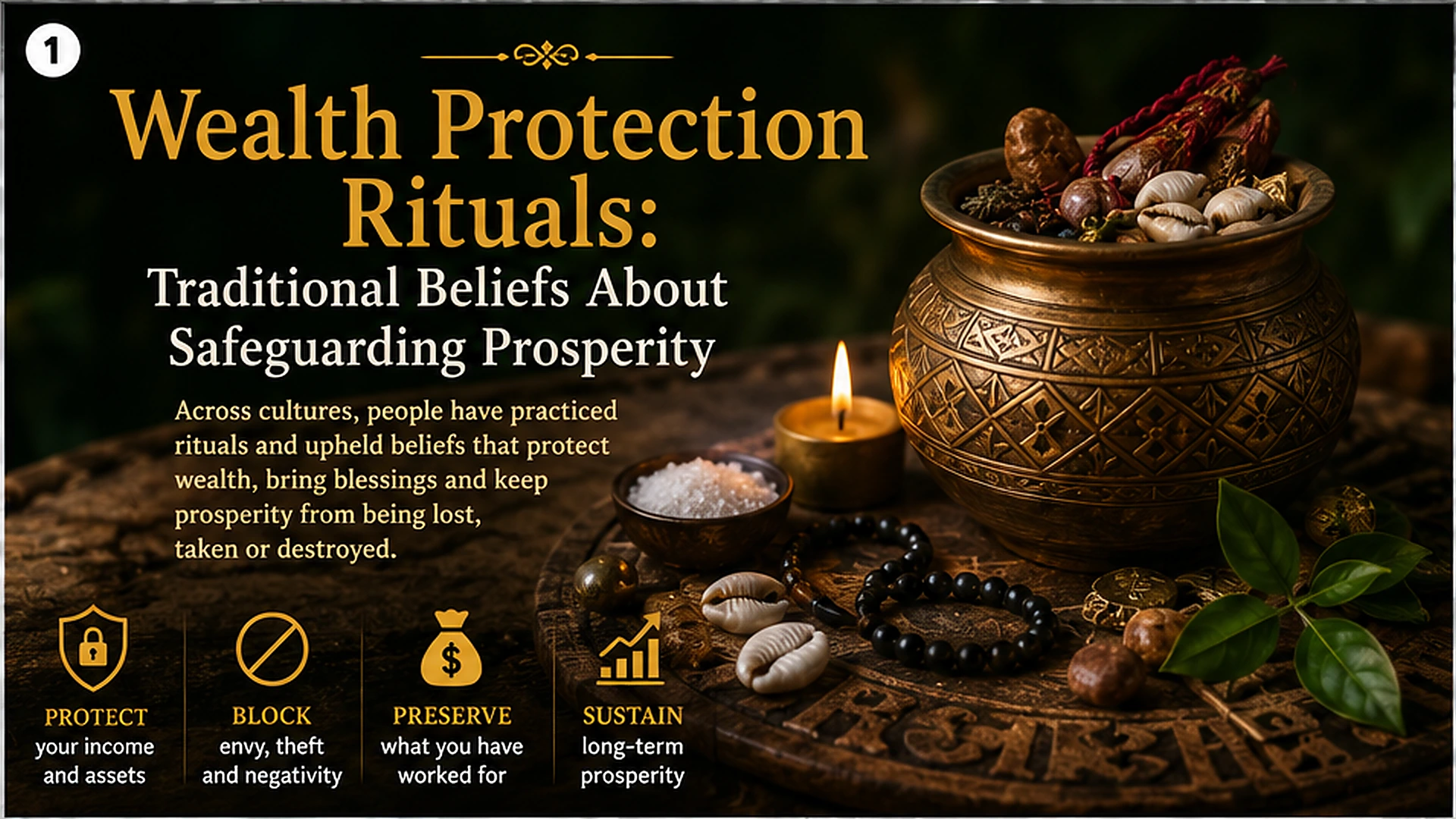
Wealth protection rituals are traditional practices intended to preserve prosperity, reduce loss and keep valuable resources within a household, lineage, business, court or communi...
Wealth protection rituals are traditional practices intended to preserve prosperity, reduce loss and keep valuable resources within a household, lineage, business, court or community. Depending on the culture, they may involve prayer, blessing, sacred writing, protective jewelry, specially valued containers, household cleaning, seasonal observance, offerings, moral restrictions or ceremonies connected to inheritance and leadership.
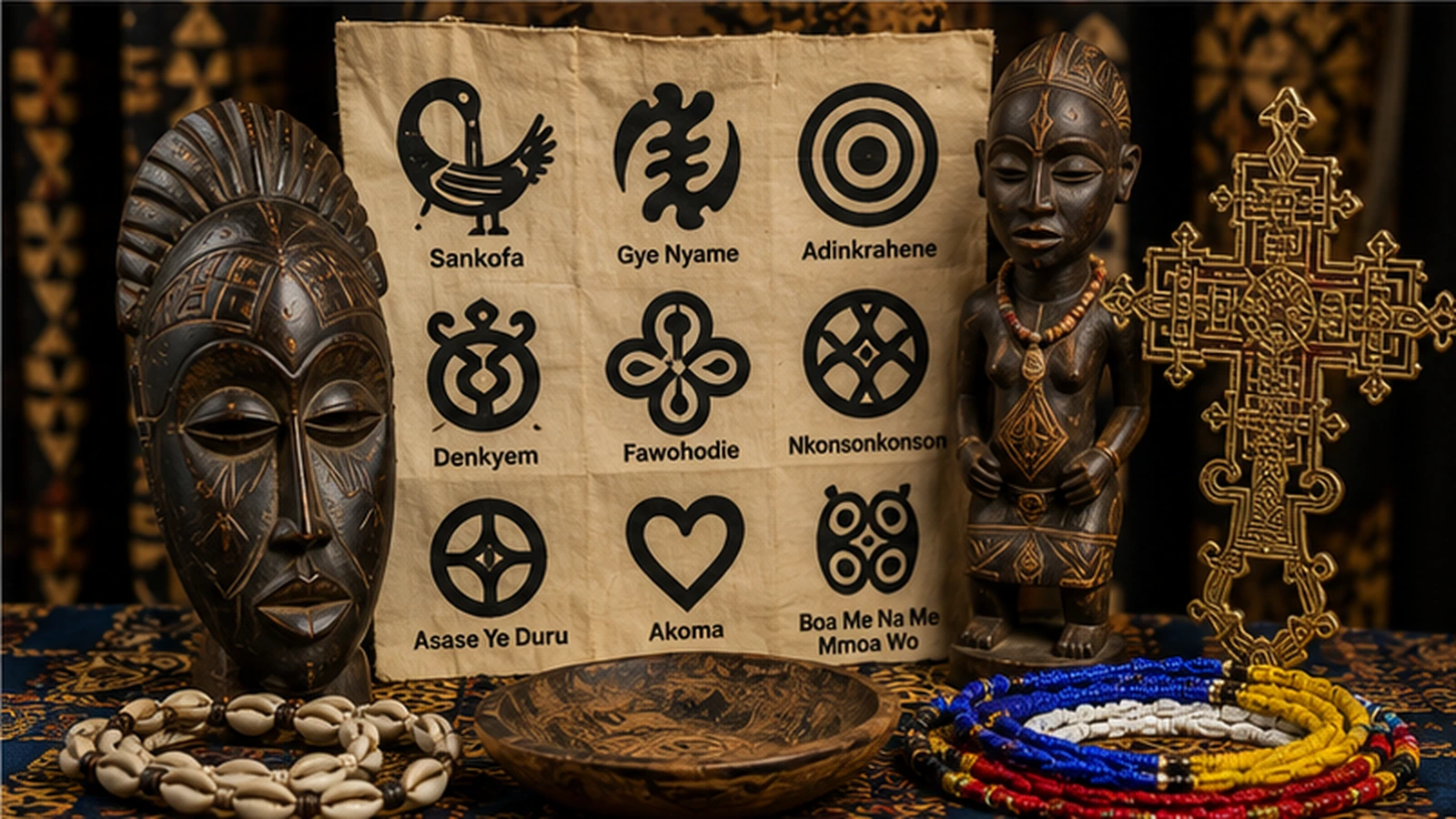
The phrase does not describe one universal ritual. An Akan courtly vessel used to hold gold dust, a West African Qur’anic amulet, a Tamil threshold design and a Chinese New Year image belong to different religions, histories and social settings. They may all relate to prosperity, but their meanings are not interchangeable.
Traditional wealth protection also rarely stood apart from practical action. People locked valuables in containers, measured gold carefully, maintained granaries, managed livestock, recorded debts, diversified trade relationships and taught heirs how to handle property. Symbolic protection and material stewardship often worked side by side.
Quick Answer
Wealth protection rituals are culturally specific practices believed to safeguard money, harvests, livestock, businesses, inheritance or social status from loss and misfortune. They can include prayers, sacred containers, written amulets, household cleaning, seasonal festivals and ethical duties. They are expressions of belief and identity—not scientifically proven guarantees against financial loss.
What Are Wealth Protection Rituals?
A wealth protection ritual is any culturally recognized action intended to preserve prosperity rather than simply obtain more of it. The protected “wealth” may be gold, cash, land, cattle, seed, jewelry, tools, commercial stock, family heirlooms, reputation, political authority or the ability of a household to continue supporting future generations.
In many traditions, prosperity is relational. A person may be considered wealthy because they can feed dependents, honor ancestors, support religious institutions, help relatives, employ others or maintain social obligations. Safeguarding prosperity can therefore mean protecting relationships and moral legitimacy as much as guarding physical property.
Ritual language often appears where uncertainty is high. Harvests fail, animals become sick, trade journeys are risky, leaders face rivals, and valuable goods attract theft or envy. A protective practice offers a framework for naming these dangers, seeking divine or ancestral support and reinforcing disciplined behavior.
Wealth Protection Is Not the Same as Wealth Attraction
| Question | Wealth protection | Wealth attraction |
|---|---|---|
| Main aim | Preserve what already exists and prevent damaging loss. | Increase resources, customers, opportunities or income. |
| Typical concerns | Theft, conflict, crop failure, debt, envy, inheritance disputes, business disruption. | New trade, employment, sales, favorable opportunities, fertility of land or herd. |
| Common symbolic forms | Protective prayer, amulet, sealed container, boundary custom, blessing over assets. | Invitation, offering, opening ceremony, abundance symbol, new-year observance. |
| Practical partner | Safe storage, accounting, insurance, maintenance, succession planning. | Marketing, investment, training, networking, production and negotiation. |
| Evidence limit | No ritual guarantees preservation. | No ritual guarantees income or opportunity. |
Why Traditional Communities Sought to Protect Prosperity
Before modern banks, insurance systems and electronic records, wealth could be materially vulnerable. Gold dust could be mismeasured, livestock stolen, grain spoiled, trade goods lost during travel and inheritance challenged after a death. Social and spiritual explanations were often added to these visible risks.
Protection practices served several overlapping purposes:
They marked valuable property as socially or spiritually significant.
They reminded owners that wealth carried responsibilities.
They reinforced trust in trade through standardized measures and recognized objects.
They placed family property within a lineage, court or religious framework.
They addressed fear of envy, misfortune, illness, conflict or unseen harm.
They created memorable moments for transferring authority and responsibility to heirs.
Akan Kuduo: Gold, Personal Value and the Protection of Life Force
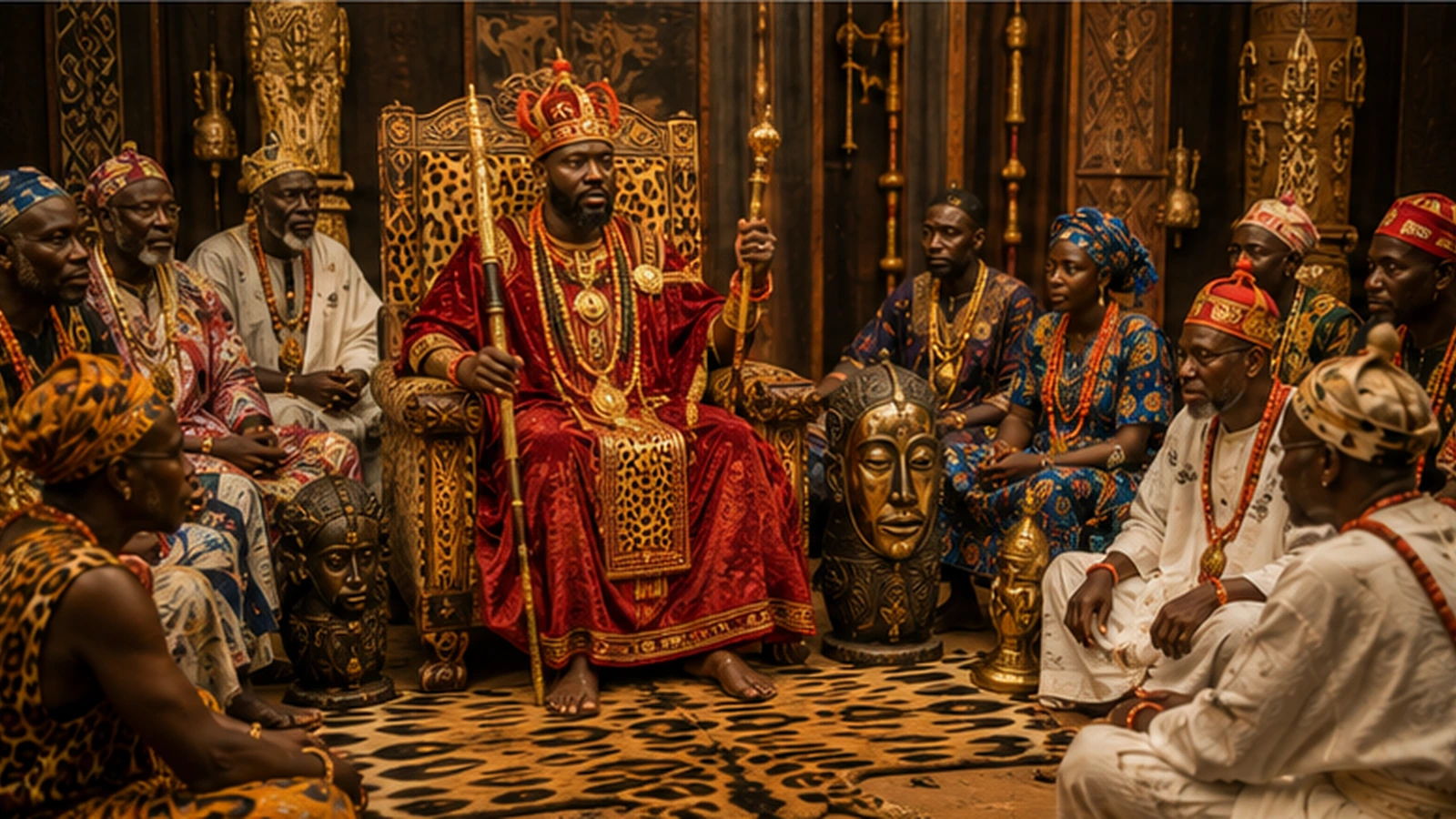
Among Akan peoples, especially within Asante courtly culture, ornate cast-brass vessels known as kuduo were owned by kings and courtiers. The Metropolitan Museum of Art documents that these vessels held gold dust, nuggets and other personally significant possessions. They were also understood as receptacles connected with the owner’s kra, or life force, and appeared in ceremonies intended to honor and protect that person.[1]
A kuduo therefore joined practical storage with spiritual and social meaning. It was not merely a money box, and it was not a universal Akan object used identically by everyone. Its courtly ownership, iconography and ceremonial role reflected rank, personal identity and the importance of gold within Akan political and economic life.
At death, a kuduo could be left with personal possessions and offerings at the burial site. This practice placed accumulated value within a larger story of personhood, memory and continuity. The intention was not simply to keep wealth circulating in ordinary commerce; it acknowledged that valuables could remain tied to the life and status of their owner.
Akan Gold Weights: Accuracy, Proverbs and Economic Order
Akan merchants and rulers developed brass gold weights, known as abrammuo or mrammuo, to standardize measures of gold dust. The weights helped regulate exchange and reduce disputes in a region where gold supported extensive trade networks. Many later examples carried figurative imagery associated with proverbs, leadership and practical wisdom.[2]
These weights demonstrate that safeguarding prosperity was also procedural. Accurate measurement, recognized standards and social rules protected both buyer and seller. A proverb embodied in a weight could remind traders about caution, power, cooperation or consequence. Material wealth was protected through moral instruction and commercial discipline, not only through supernatural claims.
Some gold weights depict amulets or ceremonial objects. Their imagery should be interpreted case by case. A miniature amulet weight is not itself proof that every merchant performed the same rite, but it does document the visibility of protective objects within Akan courtly and trading life.
Written Protection in West and East African Islamic Traditions
Across several Muslim African communities, sacred writing has been carried in leather, cloth, silver or gold containers. Paper and cloth amulets called hatumere in parts of West Africa could contain Qur’anic Arabic, prayers, numerical arrangements or other writings prepared by specialists. Smithsonian documentation notes that such objects were used in hopes of protection and good fortune.[3]
At Akan courts, triangular leather amulets containing folded Qur’anic texts could be worn by rulers for protection, especially in dangerous circumstances. Their presence also reflects the long commercial and intellectual connections between Akan states and Muslim scholars and traders.[4]
In Somalia and neighboring Islamic regions, amulet containers known as hirizi, hirz or xirsi were worn as devotional and protective objects. The container could hold passages from the Qur’an or writings prepared for the concerns of a particular owner. The National Museum of African Art notes that the Somali term hersi can be translated as “protection.”[5]
These traditions are diverse, and Muslim scholars have not always agreed about all amuletic practices. Some accept Qur’anic prayer while rejecting magical squares or claims of independent power in an object. A responsible article should therefore describe documented practice without suggesting that all Muslims share one view.

Household Thresholds, Cleaning and the Invitation of Prosperity
Many prosperity customs begin at the household boundary. Doors, thresholds and courtyards separate private life from the uncertainties outside. Cleaning, decorating or blessing an entrance can symbolically remove disorder while preparing the home to receive guests, divine favor and a new cycle of activity.
During Deepavali, communities across India clean and decorate homes and public spaces, light lamps, exchange gifts and offer prayers for prosperity and new beginnings. UNESCO’s 2025 inscription description emphasizes that the festival is diverse, community-based and transmitted through family participation rather than one fixed national ritual.[6]
In Tamil Nadu, kolam designs are drawn at household thresholds, traditionally with rice powder. UNESCO documentation of the practice describes the drawings as invitations to blessing, especially associated with Lakshmi, while also noting their ecological connection because the rice powder can feed small creatures.[7] The meaning of a kolam is therefore not reducible to “money magic”; it joins hospitality, order, skill, devotion and household responsibility.
Cleaning before a prosperity observance also has a practical dimension. Removing spoiled goods, repairing lamps, organizing accounts and preparing spaces for visitors can improve household management. Symbolic renewal and practical maintenance reinforce each other.
Chinese New Year Images and Household Prosperity
Chinese New Year prints, or nianhua, have long included deities and auspicious figures connected with fortune, official success, longevity and household protection. Museum collections preserve images of the God of Wealth and paired door gods of fortune, emolument and longevity.[8]
Such images were displayed within a larger seasonal practice that could include cleaning, debt settlement, gift exchange, family reunion and prayers for a favorable year. The print did not operate as a financial instrument; it expressed a wish that the household’s work, health, relationships and resources would flourish together.
Chinese auspicious designs also use rebuses—visual puns connecting animals, plants and objects with words for prosperity, longevity or success. The meaning depends on language, historical convention and social setting. Copying an isolated motif without that context can flatten a sophisticated visual tradition into generic decoration.

What Was Prosperity Believed to Need Protection From?
| Perceived threat | Traditional interpretation | Practical counterpart |
|---|---|---|
| Theft or physical loss | Valuables may require spiritual guarding or sacred ownership marks. | Locks, secure containers, trusted witnesses, inventory records. |
| Envy and the harmful gaze | Visible success may attract resentment or unseen harm. | Discretion, social reciprocity, conflict management. |
| Trade disputes | Dishonest measures or broken promises threaten prosperity. | Standard weights, contracts, reputation and accounting. |
| Crop or livestock failure | Prosperity depends on forces beyond individual control. | Diversification, storage, veterinary care and environmental knowledge. |
| Inheritance conflict | Wealth can divide families after a death. | Wills, succession planning, recognized custodians and mediation. |
| Moral misuse of wealth | Greed or neglect of duty can make prosperity unstable. | Giving, fair wages, family support, taxes and community responsibility. |
| Political instability | War or rivalry can threaten courtly and commercial wealth. | Alliances, secure storage, evacuation plans and distributed assets. |
Sacred Objects Were Often Containers of Responsibility
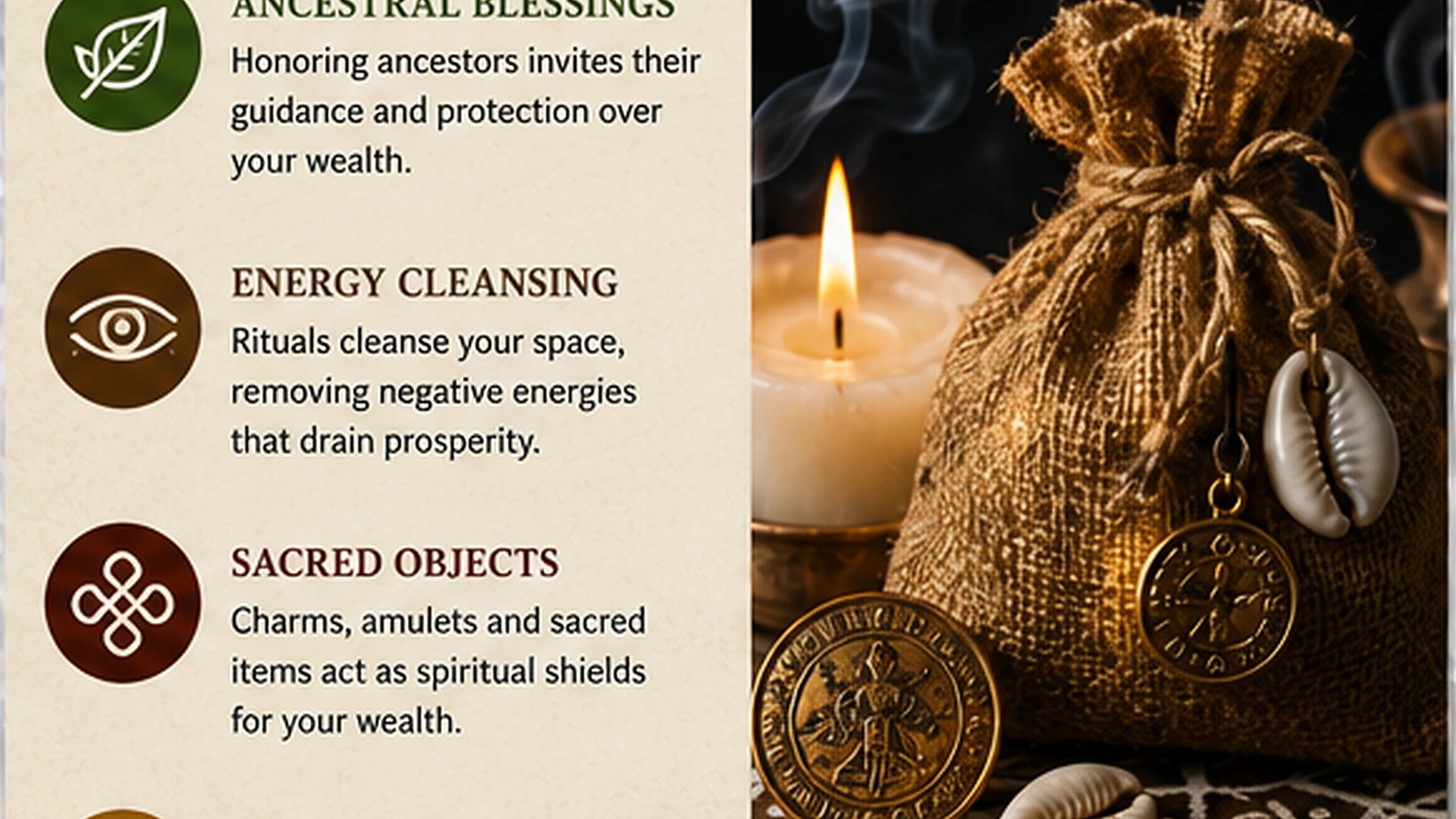
Many protective objects do more than “block bad energy.” A vessel can define who has authority over valuables. An amulet can record a relationship with a religious specialist. A gold weight can establish fair measurement. A threshold design can remind residents to begin the day with order and hospitality. A festival lamp can connect private prosperity with public generosity.
This is why context matters. Removing the object from its social role may leave only an attractive surface. The container, inscription or image was meaningful because people knew who made it, when it should be used, what obligations it carried and which community recognized its authority.
Ethics, Generosity and the Stability of Wealth
In many religious and cultural systems, prosperity is considered safer when it circulates responsibly. Gifts, hospitality, almsgiving, support for elders, care for dependents and contributions to communal celebrations can all strengthen the relationships on which households depend.
This does not mean generosity mechanically produces money. It means that wealth is socially embedded. A business owner who treats workers unfairly may lose trust; a household that ignores kinship obligations may face conflict; a leader who hoards resources may lose legitimacy. Moral teachings transform “wealth protection” from fear of loss into responsible stewardship.
Deepavali’s emphasis on family gathering, sharing food, exchanging gifts and renewing hope illustrates this wider understanding. Prosperity is not only private accumulation; it is experienced through community bonds and the ability to participate in social life.[6]
How to Study Wealth Protection Traditions Responsibly
Identify the exact community, religion, place and historical period.
Distinguish a public cultural practice from restricted specialist knowledge.
Do not combine Akan, Yoruba, Islamic, Hindu, Chinese or other traditions into one invented ritual.
Separate a museum object’s documented use from modern online interpretations.
Avoid claiming that a symbol guarantees money, customers, inheritance or investment success.
Credit cultural custodians, craftspeople, scholars and institutions.
Do not open, reproduce or publish private amulet texts without permission.
Pair symbolic study with practical financial safeguards.
Can Wealth Protection Rituals Prevent Financial Loss?
There is no reliable scientific evidence that a ritual, amulet, prayer, symbol or offering can directly prevent theft, market decline, debt, fraud, business failure or investment loss. Financial outcomes depend on income, expenses, contracts, regulation, market conditions, risk, decision-making and chance.
Rituals can still have psychological and social effects. They may help people focus attention, mark commitments, reduce anxiety, strengthen family identity or encourage disciplined habits. Those effects should not be confused with proof of supernatural financial protection.
A responsible modern approach can honor belief while using practical tools:
Secure storage and access controls.
Written budgets and accurate accounts.
Insurance appropriate to the asset and location.
Diversified savings and investments.
Fraud checks and professional legal advice.
Clear succession and inheritance documents.
Maintenance of property, tools, livestock and stock.
Emergency reserves and realistic risk planning.
Common Misunderstandings
“All African prosperity rituals are the same.”
Africa contains thousands of communities, languages and religious traditions. Akan gold culture, Somali Islamic amulets and southern African household customs must not be merged into one fictional system.
“Every prosperity symbol is a protective charm.”
Some objects measure wealth, identify rank, express a proverb, decorate a household or commemorate a festival. Their association with prosperity does not automatically make them magical protection devices.
“Old means unchanged.”
Traditions evolve. Materials, religious interpretations, legal conditions and household economies change. Contemporary practitioners may understand an inherited object differently from people two hundred years ago.
“A ritual can replace planning.”
Historical communities used practical measures alongside spiritual ones. Modern readers should do the same. Financial protection requires lawful, evidence-based safeguards.
“Buying a copied object transfers its power.”
Many objects gained meaning through authorized makers, sacred writing, lineage ownership, ritual preparation or recognized social use. A mass-produced copy may be decorative but does not automatically reproduce the original cultural function.
People Also Ask
What is a wealth protection ritual?
It is a culturally recognized practice intended to preserve prosperity or reduce loss. It may involve prayer, blessing, amulets, sacred containers, seasonal customs or ethical duties. No single definition applies to every culture.
How did traditional societies protect wealth?
They used practical methods such as secure containers, standardized weights, witnesses, granaries and inheritance rules, sometimes combined with prayers, sacred objects or ceremonies.
What is an Akan kuduo?
A kuduo is an ornate cast-brass vessel associated with Akan courtly culture. It could hold gold dust and other valuables and also carry meanings connected with the owner’s kra, status and well-being.
Were Qur’anic amulets used for good fortune?
In parts of West and East Africa, written prayers or Qur’anic passages were enclosed in leather, cloth or metal cases and used for devotion, protection or good fortune. Muslim views on such practices vary.
Why are homes cleaned before prosperity festivals?
Cleaning can symbolize the removal of disorder and preparation for a new cycle. It also has practical value by organizing the home, repairing objects and preparing for guests and communal observance.
Do wealth protection rituals work?
There is no scientific proof that rituals prevent financial loss. They may support focus, identity and disciplined habits, but practical safeguards remain essential.
Frequently Asked Questions
Is wealth protection the same as money attraction?
No. Protection focuses on preserving existing resources and reducing loss. Attraction focuses on obtaining new opportunities, income or customers.
Are wealth protection rituals always religious?
No. Some are explicitly religious; others are courtly, household, seasonal, ancestral or social practices. Practical customs may carry symbolic meaning without requiring formal worship.
What kinds of wealth were traditionally protected?
Gold, grain, cattle, land, tools, jewelry, trade goods, family heirlooms, political authority, reputation and the capacity to support dependents.
Can an amulet protect a business?
People may believe an amulet offers protection, but it cannot guarantee business success. Contracts, security, accounting, insurance and lawful planning are necessary.
Are Akan gold weights magical?
Gold weights primarily standardized the measurement of gold dust. Their forms could express proverbs, authority and cultural values. Individual examples may depict protective objects, but the entire system should not be described as magic.
Can anyone reproduce a traditional amulet?
Physical copies can be made, but culturally meaningful objects may depend on authorized specialists, sacred writing, private knowledge or community recognition. Reproduction can also raise ethical and religious concerns.
Why is envy mentioned in wealth protection traditions?
Visible prosperity can create social tension. Many societies interpret envy as psychologically, socially or spiritually dangerous. Practical responses include discretion, generosity, fairness and conflict management.
Do prosperity festivals only focus on money?
Usually not. They can involve family unity, harvest, health, hope, generosity, moral renewal and community identity as well as material well-being.
Is it respectful to display wealth symbols from another culture?
Respect depends on context. Learn the specific meaning, avoid restricted sacred objects, credit the culture and do not claim powers or uses that the community does not recognize.
Should private amulet texts be opened or photographed?
Not without the owner’s or community’s permission. Some contents are personal, secret or religiously sensitive.
What is the safest modern interpretation of wealth protection?
Treat symbolic practices as cultural or personal expressions, then rely on secure storage, records, insurance, diversification, legal advice and responsible stewardship.
Can a blessing help someone feel more secure?
A blessing may offer emotional reassurance, social support or a sense of purpose. That psychological benefit is different from proof that financial loss has been supernaturally prevented.
Key Takeaways
Wealth protection rituals are culturally specific, not universal.
Traditional prosperity could include gold, land, livestock, harvest, status, inheritance and social support.
Akan kuduo vessels joined valuable storage with meanings of personhood and well-being.
Gold weights protected economic order through standardized measurement and proverbs.
Written amulets in several Muslim African traditions were associated with protection, devotion or good fortune.
Deepavali, kolam and Chinese New Year images show how households prepare for prosperity through seasonal renewal.
Symbolic practices often worked alongside practical storage, accounting and social rules.
No ritual or object scientifically guarantees financial security.
Conclusion
Traditional beliefs about safeguarding prosperity reveal that wealth has rarely been understood as money alone. It can represent continuity, responsibility, life force, divine favor, family stability, political legitimacy and the ability to support others. This is why protective practices may focus on a container, a threshold, a prayer, a carefully measured trade or a public act of generosity.
The most responsible way to study these traditions is to keep their differences visible. Akan kuduo vessels, West African Islamic amulets, Deepavali household preparation and Chinese New Year prints come from distinct histories. Each deserves its own cultural context.
Modern readers can honor the symbolic importance of prosperity while recognizing clear limits. Rituals may support reflection and identity, but financial protection still depends on secure systems, careful planning, fair relationships and realistic risk management.
Final Summary
Wealth protection rituals are traditional efforts to preserve prosperity and guard against loss. Documented examples include Akan vessels for valuables, standardized gold weights, written amulets, household threshold customs and seasonal prosperity festivals. Their meanings are cultural and religious rather than scientifically proven. Responsible practice combines respect for tradition with practical stewardship.
Article Information
- Publisher
- Ancestral Temple
- Editor
- Ancestral Temple
- Last updated
- Jul 30, 2026
- Last reviewed
- Jul 30, 2026
- Content version
- 468b4bd7a5
This educational article should be read as cultural and spiritual information, not as medical, legal, financial, or emergency advice.
Helpful Related Guidance
About the Author
 Ancestral Temple
Spiritual guide and practitioner with decades of experience in ancestral wisdom, rituals, and divine guidance.
Related Posts
View All










Comments
We'd love to hear your thoughts.