
Family Protection Rituals: Blessings, Symbols and Ancestral Traditions
Pillar Article
Quick Summary
Families in many societies use blessings, prayers, symbols, names, household objects, memorial practices and community ceremonies to express a desire for safety and well-being. The...
Families in many societies use blessings, prayers, symbols, names, household objects, memorial practices and community ceremonies to express a desire for safety and well-being. These practices are often described as family protection rituals, but the phrase covers very different religious and cultural systems. A Jewish mezuzah, a Japanese ofuda, a Chinese door-god print, a Christian house blessing and a Ugandan naming ceremony do not mean the same thing and should not be blended into one universal ritual formula.
Protection itself can mean more than preventing invisible danger. It may include peace within the household, safe childbirth, healthy development, moral guidance, responsible leadership, social belonging, secure boundaries, remembrance of ancestors, practical preparation for crisis or the hope that a home will remain a place of hospitality rather than harm. UNESCO notes that social practices and rituals can reaffirm identity, mark life transitions and connect communities with shared memory. [1]
This article explains family protection rituals as cultural and spiritual practices. It distinguishes documented history from belief, symbolism from measurable safety, and public traditions from restricted knowledge. No ritual, object or blessing can guarantee protection from illness, violence, accidents, crime or misfortune.
| Quick Answer Family protection rituals are culturally specific practices through which families ask for blessing, express care, mark boundaries, remember ancestors or strengthen social responsibility. They may include spoken prayers, naming rites, doorway symbols, household plaques, protective objects, grave or ancestor remembrance and practical commitments to care. Their meaning comes from the community, faith, history and relationships surrounding them—not from a universal formula. They should never replace medical care, safeguarding, legal help, fire safety, secure housing or other practical protection. |
|---|
Family Protection Rituals at a Glance
| Form | Possible purpose | Important caution |
|---|---|---|
| Spoken blessing or prayer | Requests peace, safety, guidance or divine care | Meaning depends on the religion or family tradition |
| Naming or life-stage rite | Connects a child or adult with family, clan and community | Do not invent or copy restricted ceremony |
| Doorway or threshold symbol | Marks the boundary between household and outside world | A mezuzah, door-god print and ofuda are not interchangeable |
| Portable or household object | Carries memory, identity or a prayer for protection | Avoid treating museum objects as instructions |
| Ancestral remembrance | Connects descendants with names, stories, land and moral responsibility | Not every culture treats ancestors as active protectors |
| Practical family commitment | Emergency planning, safe housing, child safeguarding and mutual care | Ritual should reinforce—not replace—real safety measures |
What Are Family Protection Rituals?
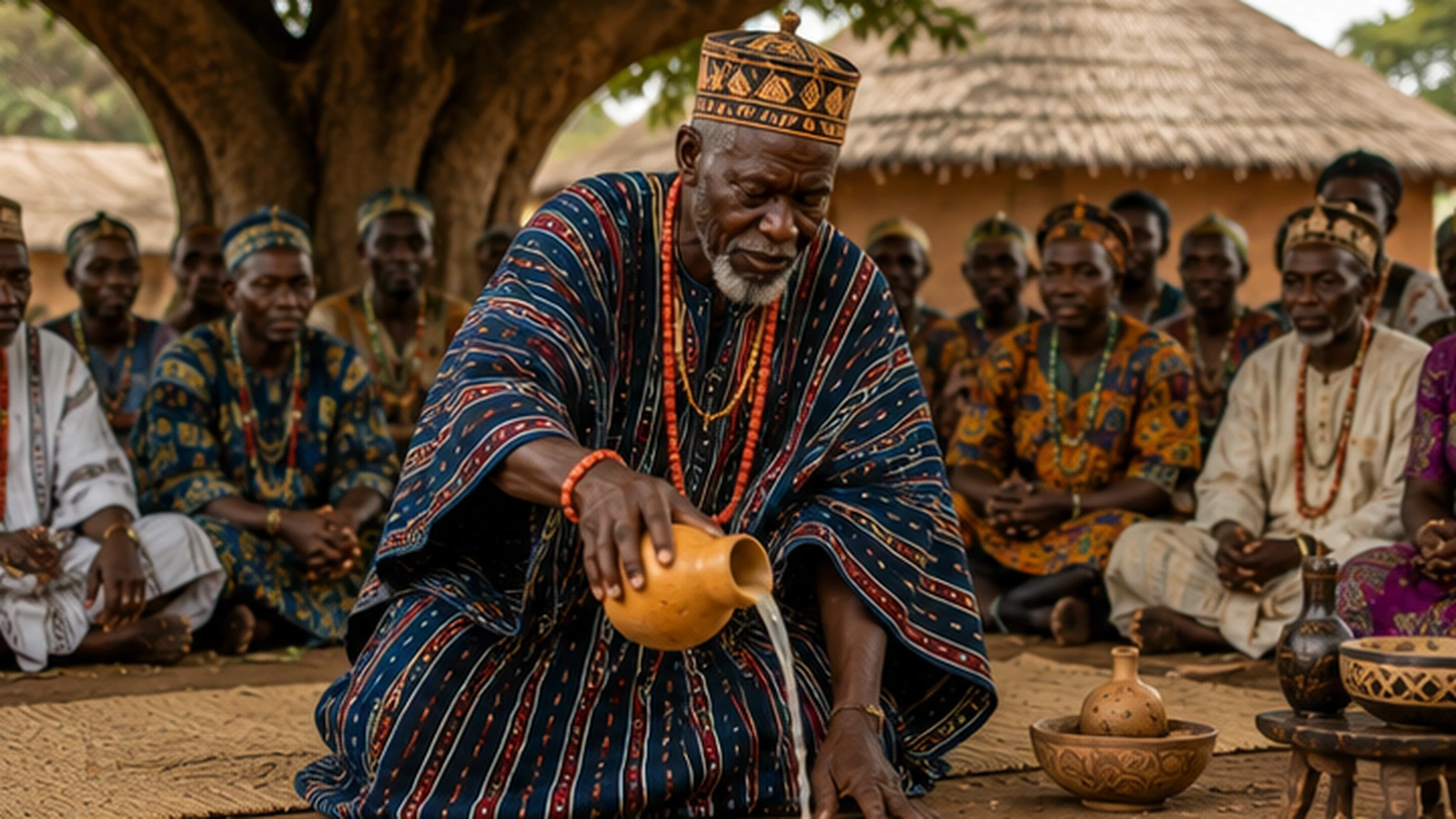
Family protection rituals are structured practices through which relatives, religious communities or cultural authorities express a desire for safety, peace, continuity and well-being. The word “ritual” can describe a formal liturgy led by clergy, a naming ceremony presided over by a clan elder, a household object placed at a doorway, an annual visit to a grave, a parent’s blessing over a child or a simple family gathering that renews responsibilities.
The practice becomes meaningful through context. Who has authority to perform it? Which words, materials or objects are used? Is it public, domestic, initiated or restricted? Does it address divine protection, ancestral relationship, social harmony, family memory or practical safety? Without those questions, a list of “protection rituals” becomes a misleading mixture of unrelated traditions.
UNESCO describes social practices and rituals as activities that structure community life, reaffirm identity and connect people with shared history and memory. [1] That definition helps explain why a protection practice can have real social importance even when its supernatural claims cannot be scientifically tested.
What Does “Protection” Mean?
Protection can refer to physical safety, but many traditions use the word more broadly. A blessing may ask for peace in the home. A naming rite may protect belonging and identity. A doorway image may mark a religious boundary. A family memorial may preserve moral continuity. A communal ceremony may restore trust after conflict. A practical household observance may combine prayer with checking locks, smoke alarms, emergency numbers and the needs of children or older relatives.
Historical African protection ceremonies, for example, have addressed childbirth, fertility, rainfall, social order, leadership, sacred boundaries, dispute resolution and community welfare—not only invisible attack. The existing AncestralTemple cornerstone article on historical African protection ceremonies should remain the regional page for those examples, while this article focuses on the family and household level. [10]
A useful distinction is between symbolic protection and measurable risk reduction. A spoken blessing can provide comfort, unity and a sense of responsibility. It does not physically prevent every illness, accident, fire or act of violence. Families need both meaning and practical safeguards.
Why Families Use Blessings and Protective Traditions
Families use protective traditions because uncertainty is part of life. Birth, childhood, marriage, migration, illness, travel, conflict, bereavement and moving into a new home can all create vulnerability. A ritual gives people a recognized way to pause, gather witnesses, express hope, ask for help and define responsibilities.
The ritual may also distribute care. A naming ceremony introduces a child to relatives who now recognize obligations. A house blessing brings family and neighbours together. A memorial meal teaches younger relatives the names and stories of those who came before. A threshold symbol tells visitors that the household belongs to a particular religious or cultural community.
These practices can therefore provide social protection through belonging, memory, accountability and support. That does not prove the independent supernatural power of an object. It shows how symbols and ceremonies can organize real relationships.
Common Forms of Family Protection Rituals
Although traditions differ, several broad forms appear repeatedly. These categories are comparative tools, not evidence that all cultures share one hidden system.
Spoken Blessings and Prayers
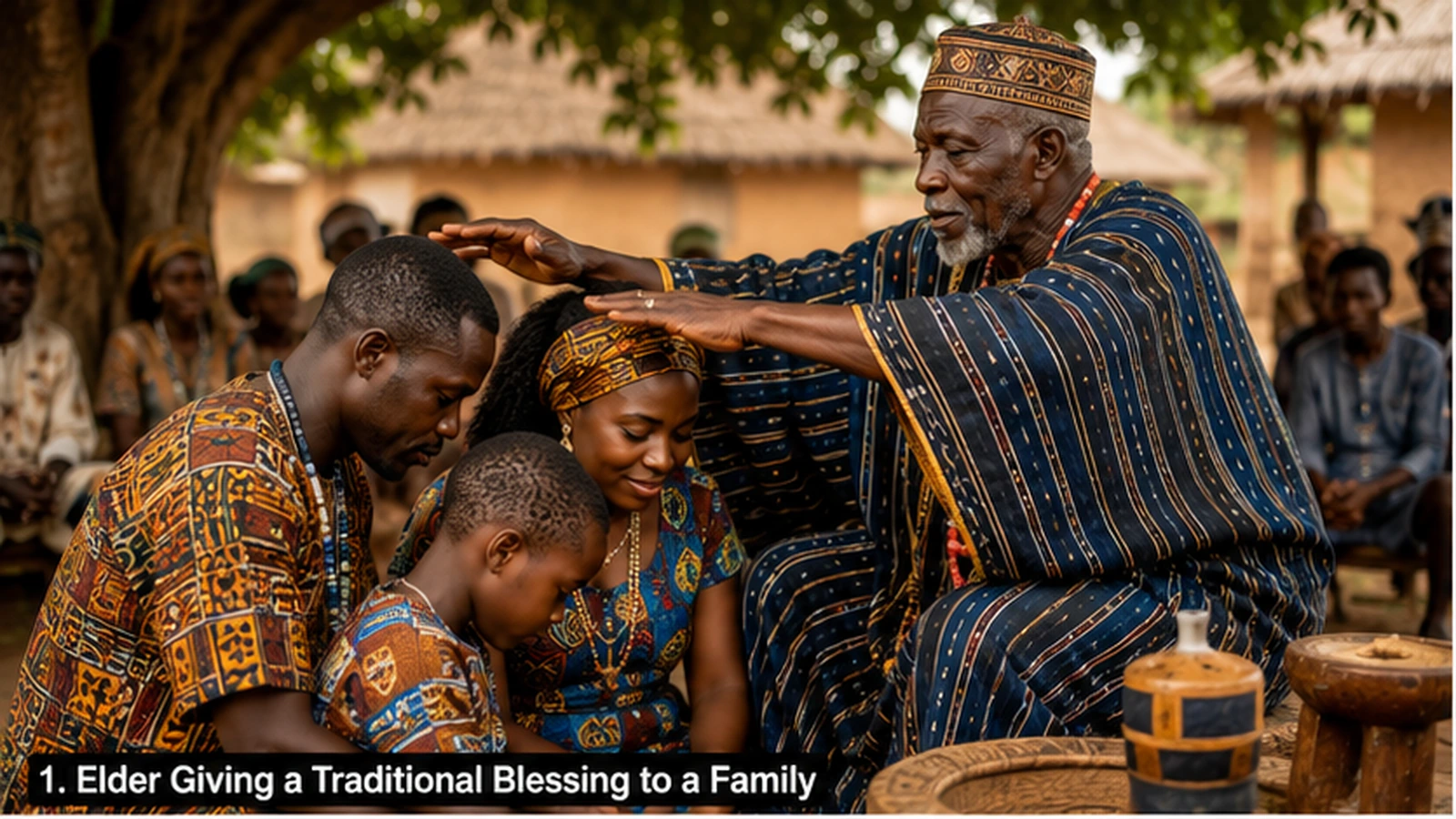
A blessing may be spoken by a parent, elder, clergy member or the whole household. It can ask for peace, health, wisdom, safe travel, protection during childbirth or courage in crisis. In Catholic practice, the United States Conference of Catholic Bishops publishes family prayers and a blessing of the home and household on Epiphany. The rite asks that those who live in the house be filled with light and concern for others, and it concludes with a prayer that the household be kept from harm. [8] The words belong to a Christian theology; they should not be presented as a generic spell.
Names, Birth and Life-Stage Ceremonies
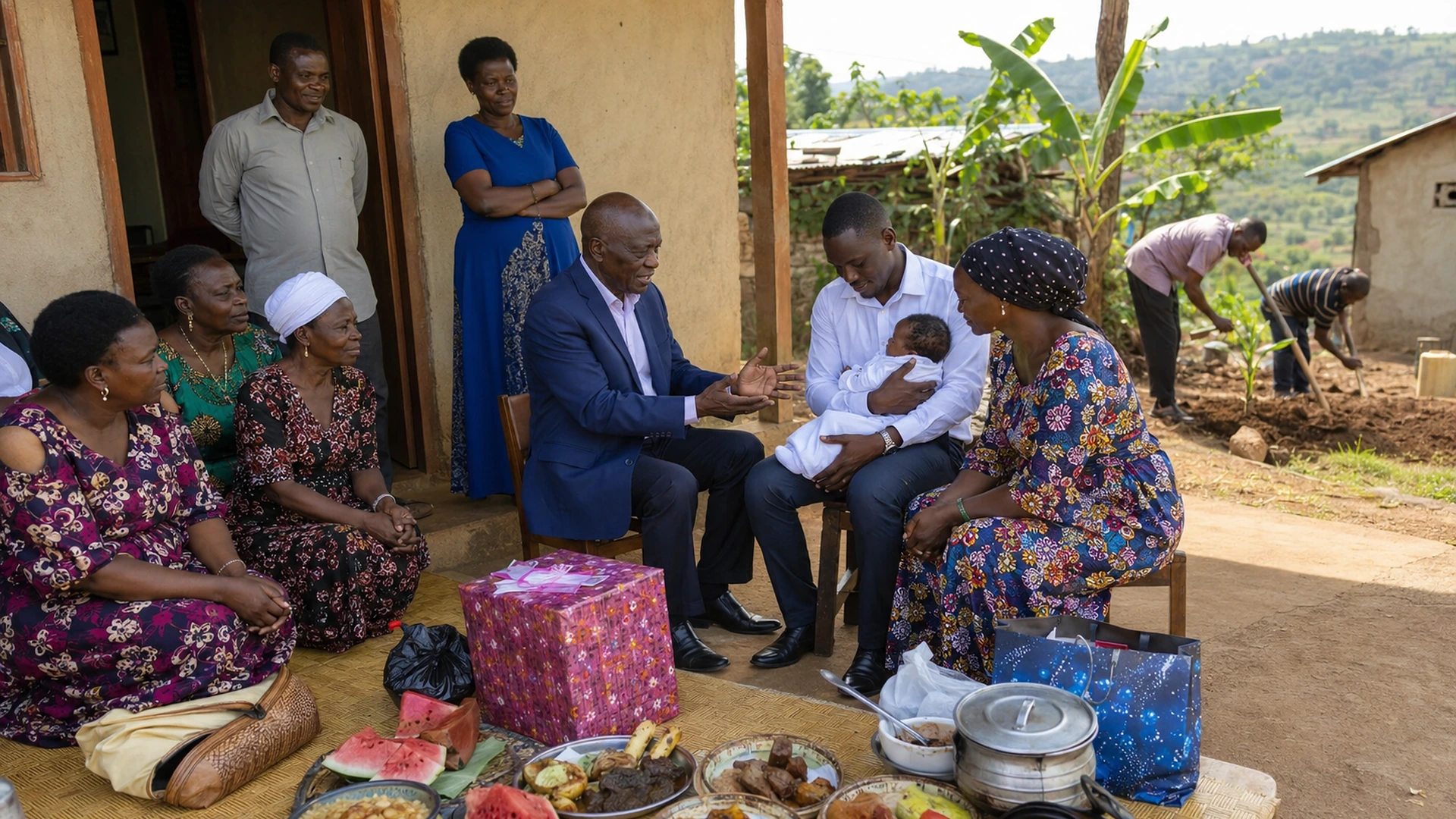
Names can link a child with ancestors, clan, faith and social obligations. In western Uganda, the Empaako tradition gives a child one of twelve shared names in addition to family and given names. UNESCO explains that using the name affirms social ties, expresses affection and respect, can defuse anger and promotes identity and unity. The naming ceremony is held in the home, led by a clan head, followed by a shared meal, gifts and tree planting. [2] The protective value here is strongly social: the child is placed within a web of recognized relationships.
Doorways and Thresholds
The entrance to a home is a natural place for protective meaning because it marks who and what may enter. Threshold customs include prayers, inscriptions, images, plaques and architectural signs. Their meaning is specific to the community that uses them.
Household and Portable Objects
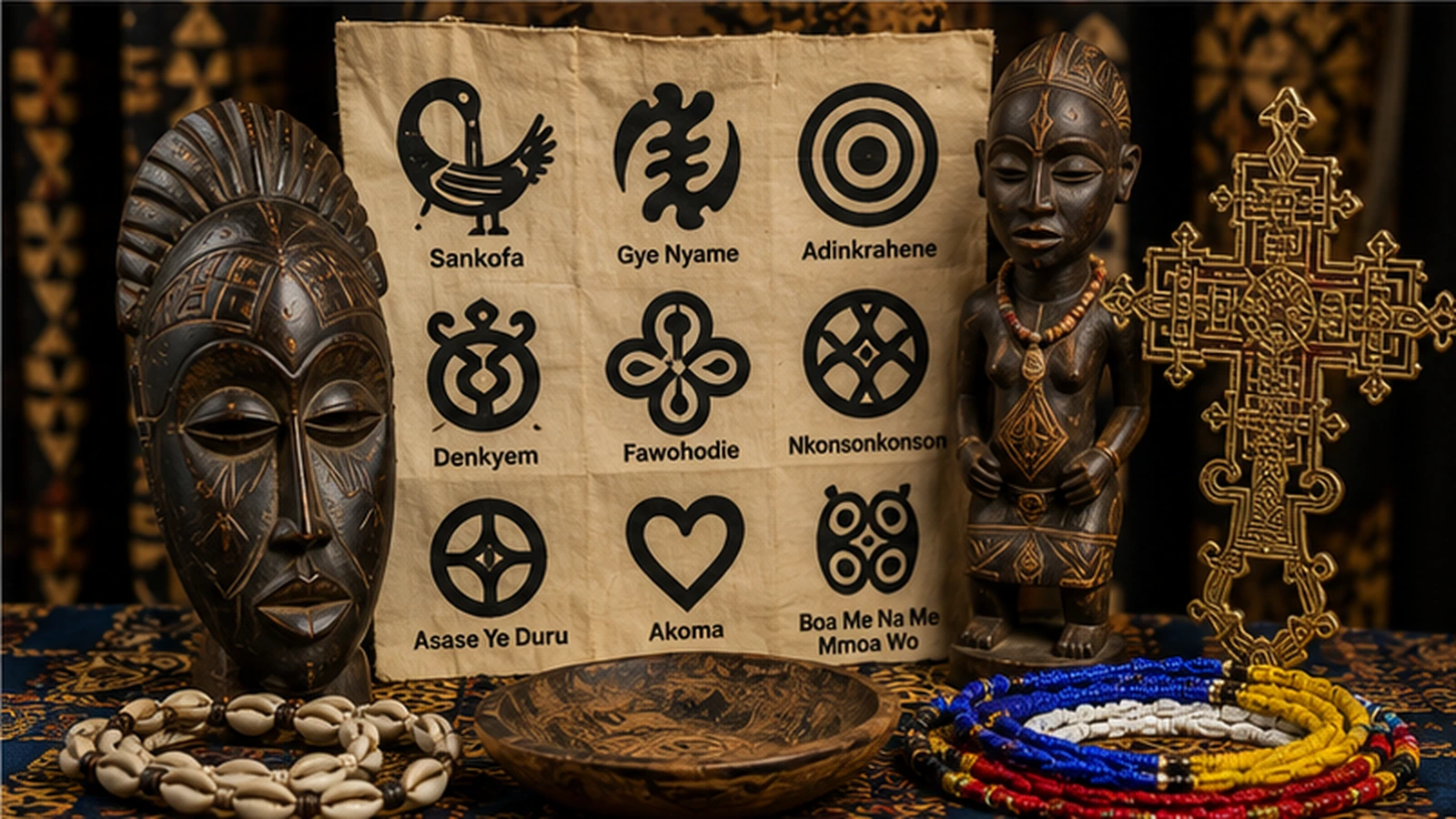
Amulets, plaques, icons, textiles, jewellery and inherited objects may carry prayers, identity or memory. Some are worn; others are placed in a home. Museum objects can document historical beliefs, but they should not automatically be copied or commercialized as modern ritual kits.
Ancestral Remembrance
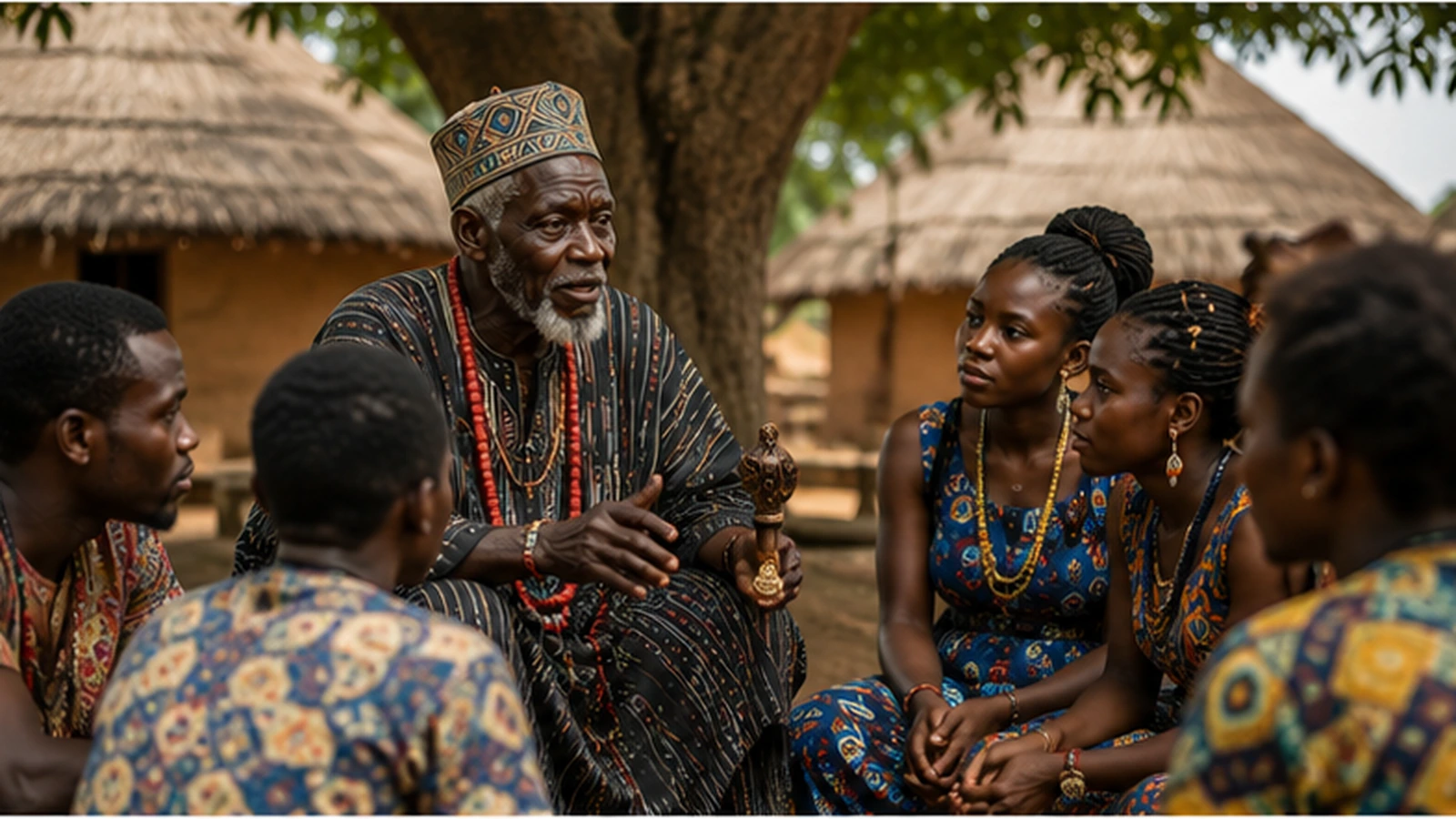
Some families understand ancestors as continuing members of the lineage who protect or guide descendants. Others remember ancestors without believing they intervene. Ancestor reverence can preserve names, land relationships, moral lessons and family obligations. It is not one universal African belief and is not always the same as worship.
Cleaning, Dedication and New Beginnings
Moving into a home, welcoming a child or beginning a new year may involve cleaning, prayer, water, food, flowers or a shared meal. Cleaning can be practical and symbolic at the same time. It should not be framed as proof that every hardship is caused by spiritual contamination.
Cultural Examples: Similar Purposes, Different Traditions
Empaako Naming in Western Uganda
Empaako is practised by Batooro, Banyoro, Batuku, Batagwenda and Banyabindi communities. UNESCO identifies the practice as a naming system and a form of social affirmation. Addressing someone by their Empaako can communicate affection, honour, respect and belonging. The ceremony also brings relatives together through formal naming, food, gifts and tree planting. [2]
It would be inaccurate to advertise Empaako as a universal Ugandan protection spell. Its importance lies in the specific languages, kinship structures and community authority that sustain it. Its strongest protective function is social continuity: a person is recognized, named and connected.
Buganda Royal Ancestors and Collective Well-Being
The Kasubi Tombs are a royal burial landscape and living spiritual centre connected with the Kabakas of Buganda. During the UNESCO-supported reconstruction launch after the 2010 fire, a traditional custodian conducted a welcome and cleansing ritual, requested permission from the spirits of the kings and shared coffee beans as a symbol of bonding, friendship, togetherness and well-being. [3]
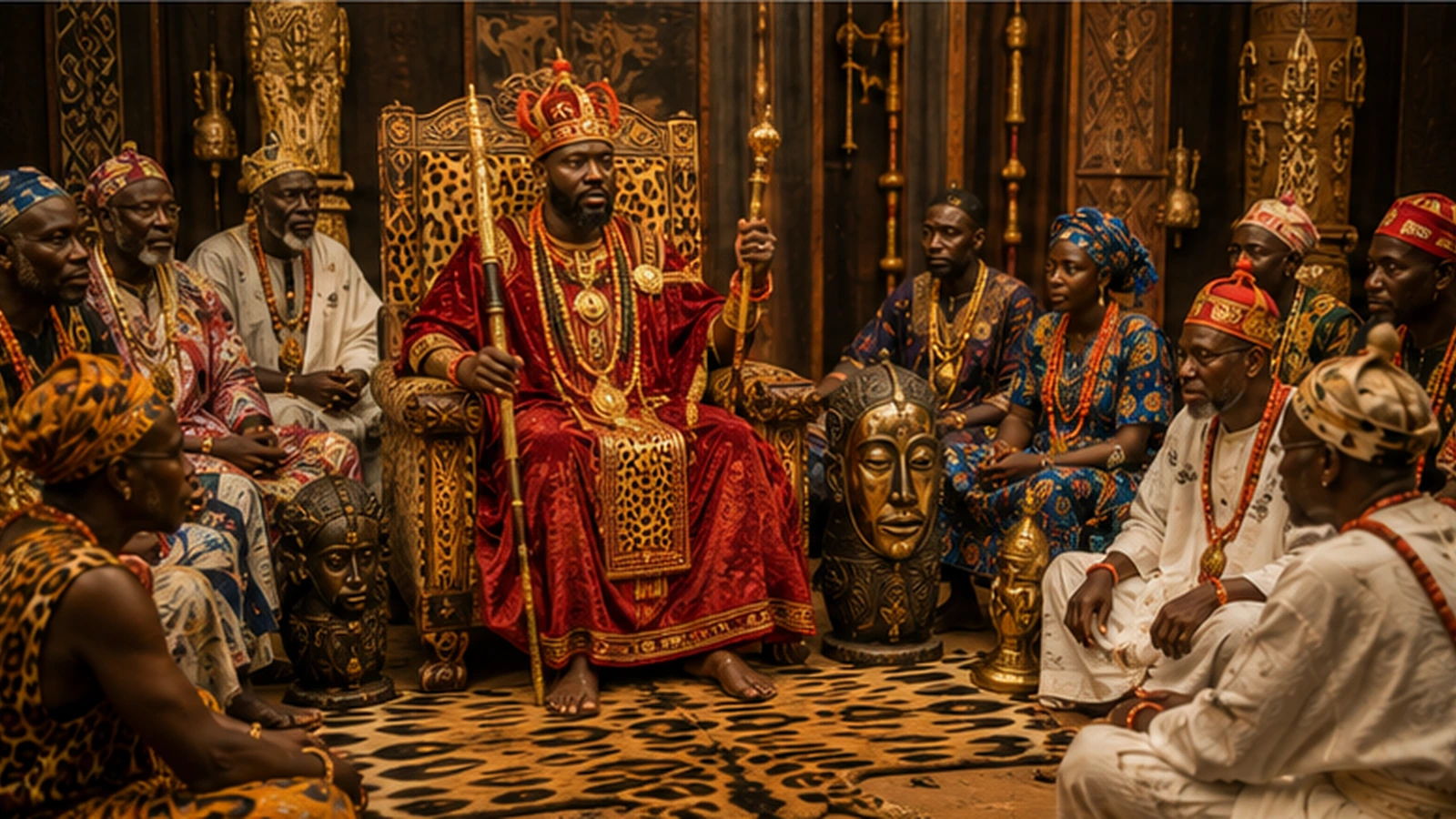
This public description demonstrates how ancestral authority, sacred permission and communal welfare can meet at a protected heritage site. It is not a household ritual template. The ceremony belongs to Buganda custodians and the royal site, and its restricted elements should not be reproduced by outsiders.
Christian Blessings for Homes and Families
Christian traditions include prayers for families, children, homes, travel, sickness and major life events. Catholic family prayers ask for peace, grace and protection, while Epiphany house blessings connect the household with the story of Christ entering human homes. [8] Orthodox Christian communities also bless homes, often with holy water after Theophany, as a renewal of the household’s life of faith. These practices are prayers addressed to God, not claims that water or an object independently controls danger.
The Jewish Mezuzah at the Doorway
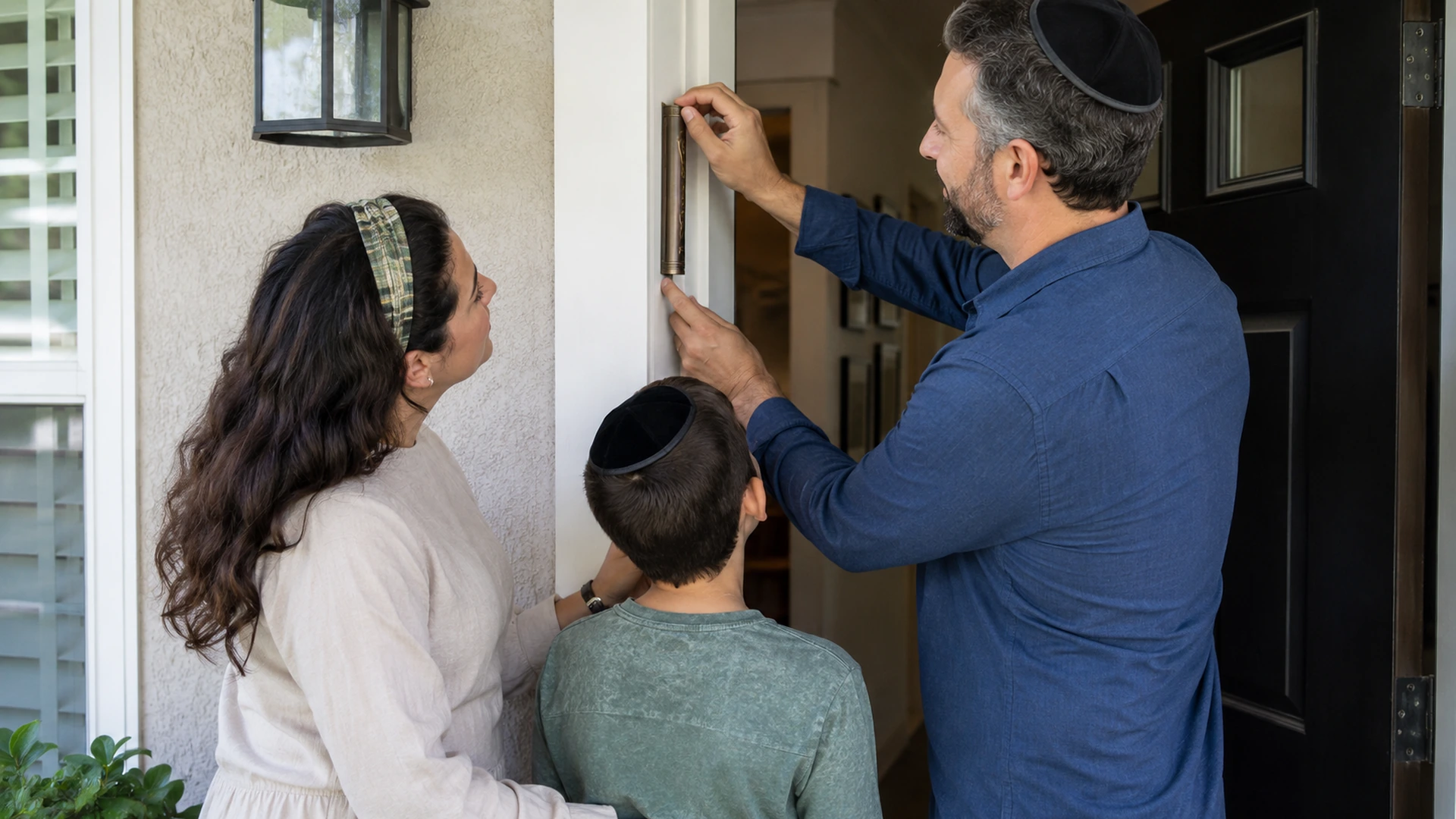
A mezuzah is a case containing a sacred scroll fixed to a doorway in Jewish practice. The British Museum records examples from Jerusalem and Syria designed to be fastened to the right side of a door. [6] The practice is grounded in Jewish scripture and religious obligation. It marks the home with sacred words, identity and memory.
Popular descriptions sometimes reduce the mezuzah to a “Jewish protection charm.” That phrasing is incomplete. Some believers may speak of divine protection, but the object’s meaning is inseparable from the commandment, the text, the household and Jewish religious life.
Chinese Door Gods and New Year Threshold Images
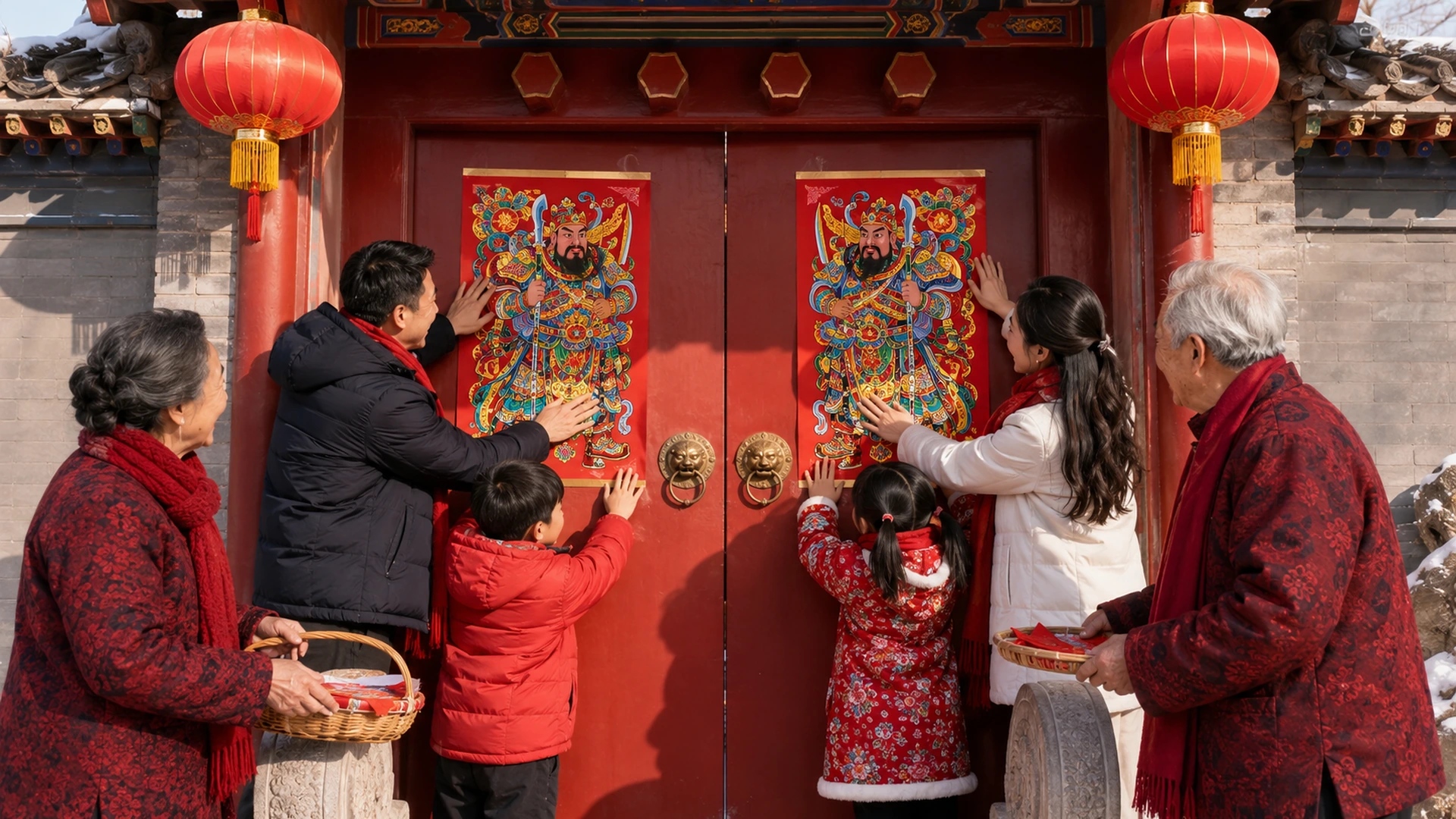
Chinese New Year prints often transform the doorway into a protective visual boundary. The Metropolitan Museum of Art describes early twentieth-century prints of the warriors Ma Chao and Ma Dai that were traditionally placed on doors during Lunar New Year and believed to ward off evil. [5] Other paired door-god prints include auspicious children, officials or military guardians.
These images belong to Chinese popular religion, visual culture and New Year custom. A modern decorative print removed from that context may still be art, but it should not be marketed as a guaranteed household defence or mixed with unrelated doorway symbols as if they were interchangeable.
Japanese Ofuda and Omamori
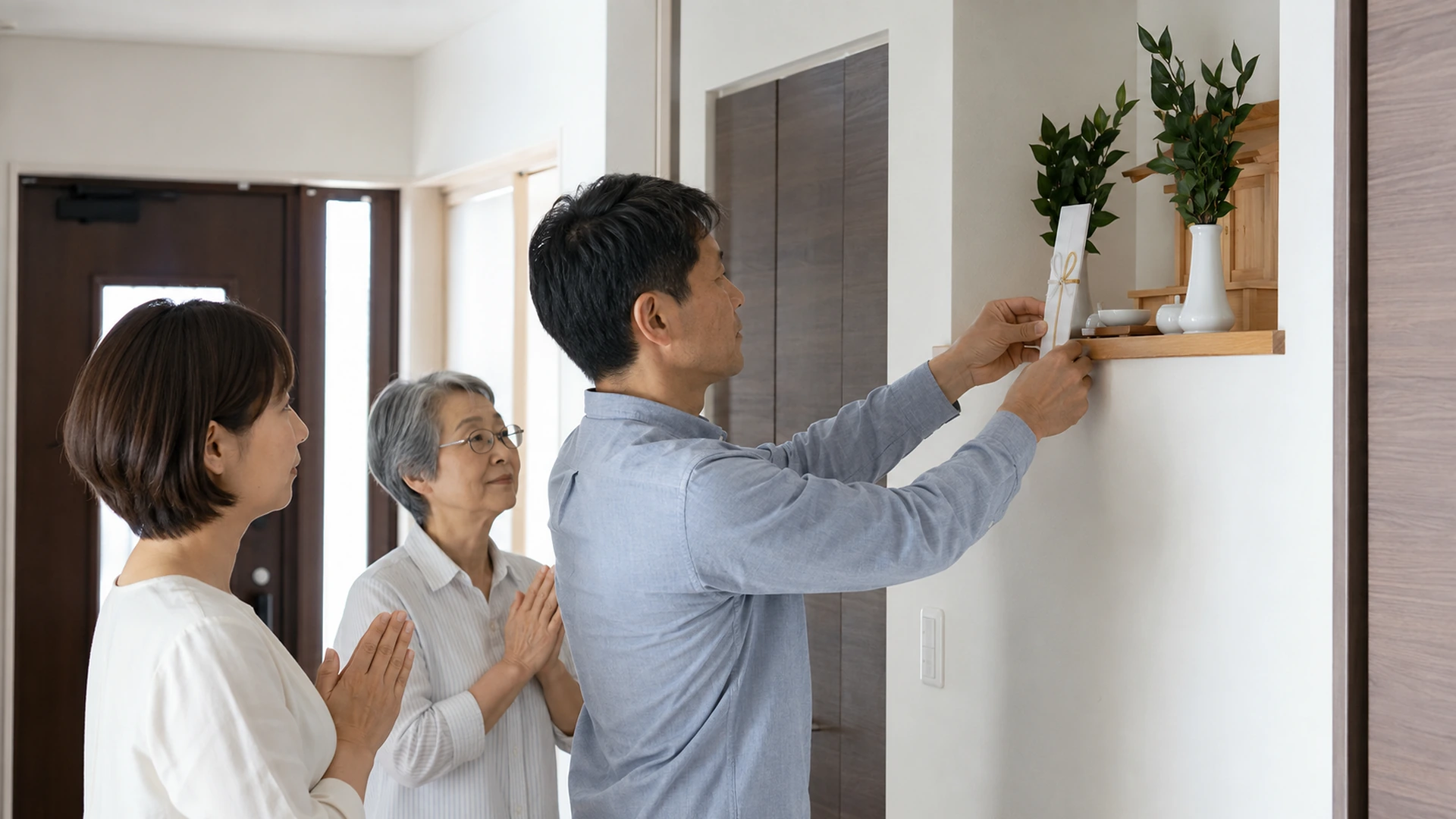
In Japan, ofuda are paper or wooden plaques associated with a shrine or temple and placed in the home, often near an entrance or on a household altar. British Museum examples document ofuda intended to avert disasters, protect mother and child, or support the safety of the family. [7] Omamori are smaller amulets usually carried by a person, while ofuda are commonly installed in a designated household place.
These objects should remain wrapped or enclosed according to the practice surrounding them. Opening, copying or inventing sacred text for visual effect can be disrespectful. Their meaning also depends on the shrine, temple, deity, prayer and household relationship involved.
Historical Luluwa Figures and Family Protection
The Metropolitan Museum of Art documents nineteenth- and twentieth-century Luluwa figures from the Democratic Republic of the Congo that referred to ancestral spirits associated with protection, good fortune and beauty. Some small figures were worn during pregnancy, while standing figures could be placed near a baby after birth. [4]
This is historical museum documentation, not permission to reproduce the figures as generic “African baby protection dolls.” Their form, use and authority belonged to Luluwa cultural and ritual contexts. The example is valuable because it shows how ancestors, maternity, beauty and protection could be joined in one particular tradition without representing Africa as a single system.
Protective Symbols: Meaning Comes From Context
Some images and objects recur because families everywhere have doorways, children, journeys, homes, food, fire, water and memories. Recurrence does not create a universal dictionary. The same form can hold different meanings in different communities.
| Symbol or form | Possible meanings | Context note |
|---|---|---|
| Door or threshold | Boundary, welcome, controlled entry, household identity | Mezuzah, Chinese door-god print, ofuda near an entrance |
| Circle or enclosure | Wholeness, boundary, continuity, containment | Meaning varies; do not assume every circle is protective |
| Light or flame | Divine presence, remembrance, guidance, vigilance | Candles and lamps also create fire risk |
| Water | Blessing, purification, renewal, life | Holy water and washing practices belong to specific religions |
| Tree | Continuity, growth, rootedness, family memory | Empaako ceremony includes tree planting |
| Name | Identity, belonging, lineage, recognition | Empaako and many religious naming traditions |
| Ancestor image or heirloom | Memory, lineage authority, continuity | Not always a ritual object or active spiritual presence |
| Guardian figure | Defence, authority, warning, boundary | Door gods and some historical ancestral figures |
Ancestral Traditions and Family Protection
Ancestral protection can mean several different things. In one family, an ancestor is remembered as a moral example whose story encourages courage and responsibility. In another tradition, ancestors may be understood as spiritual members of the lineage who witness promises, guard descendants or receive offerings. In a royal context, deceased rulers may remain connected with land, legitimacy and sacred authority.
The phrase should therefore be qualified. Which ancestors? Recognized by whom? Through what lineage or office? What public evidence exists? Is the practice still living, historical, adapted, contested or restricted? These questions prevent vague claims such as “all African families call on ancestors for protection.”
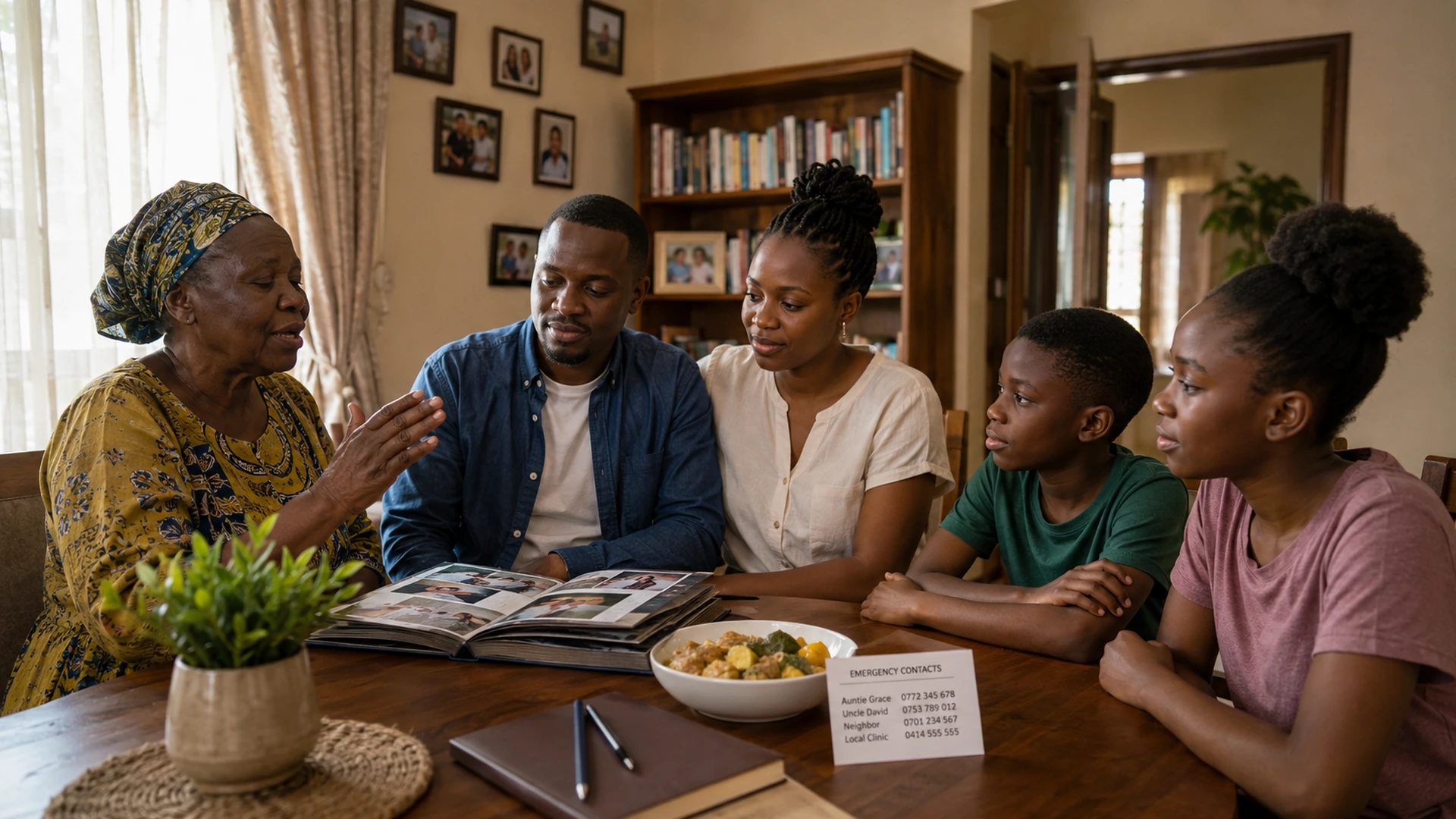
A responsible family-history practice can honour ancestors without borrowing a ritual. Families can record names, interview elders, preserve photographs, care for graves where appropriate, tell migration stories and identify values they want to continue. This is memory work. It should not be presented as guaranteed communication with the dead.
Do Family Protection Rituals Work?
The answer depends on what “work” means. A ritual can bring relatives together, reduce isolation, clarify responsibilities, create a sense of continuity, organize mutual aid and help people express fear or hope. Those are real social and psychological functions.
Science has not established that a blessing, amulet, doorway symbol or ancestral offering creates a measurable supernatural barrier against illness, violence, accidents, crime or natural disaster. A family should not interpret misfortune as proof that someone performed a ritual incorrectly or that a victim lacked faith.
The safest position is complementary: cultural and spiritual practices may support meaning, but practical protection remains essential. Medical symptoms require qualified healthcare. Threats and abuse require safeguarding and legal support. Fire hazards require alarms, safe wiring and evacuation planning. Children require supervision, vaccination according to medical advice, secure transport and freedom from harmful ritual treatment.
Ethical and Safety Boundaries
Do not promise guaranteed protection, healing, fertility, wealth, legal success or control over another person.
Do not blame a victim of violence, illness or accident for lacking spiritual protection.
Do not delay medical, mental-health, legal, emergency or safeguarding help.
Do not burn herbs, candles or incense where smoke, allergy, asthma or fire risk makes them unsafe.
Do not ingest plants, powders, oils or ritual substances unless they are verified food-safe and used according to reliable guidance.
Do not involve children in painful, frightening, humiliating or non-consensual acts.
Do not expose sacred texts, human remains, restricted objects or private ceremonies for content or commercial sale.
Do not mix unrelated traditions into an invented “ancient family protection ritual.”
Do not treat museum descriptions as instructions for copying ritual objects.
Respect the authority of living communities to correct descriptions, restrict access and adapt their practices.
A Respectful Personal Family Blessing Practice
The following is not an inherited ritual and should not be attributed to any culture. It is a simple personal family reflection that combines gratitude with practical safety. Families may adapt the language to their own faith or leave it non-religious.
Choose a calm time when everyone can participate voluntarily. Do not use the gathering to pressure a relative into agreement.
Name what the family is grateful for: people, home, health, food, community, ancestors or previous generations.
Remember one family story or value that deserves to continue, such as generosity, courage, honesty or care for children.
Review one practical protection measure: emergency contacts, smoke alarms, safe transport, medication, digital security, child pickup plans or support for an older relative.
Offer a brief prayer, blessing or statement of shared intention in language that belongs to your household.
Share a meal or ordinary act of care. Protection is strengthened when people know who will help, listen and act.
A possible non-denominational statement is: “May this home be a place of safety, truth and welcome. May we protect one another through wise choices, honest communication and practical care. May we remember those who helped us and become trustworthy ancestors for those who follow.”
Common Misunderstandings
| Claim | Responsible answer |
|---|---|
| “All family protection rituals are the same.” | No. Similar purposes do not erase differences in theology, authority, language and history. |
| “An object protects by itself.” | Many traditions locate meaning in prayer, commandment, community relationship or authorized preparation—not in an isolated object. |
| “African protection means fighting witchcraft.” | African traditions are diverse and protection may concern childbirth, rainfall, justice, leadership, social harmony or sacred boundaries. |
| “A family without rituals is unprotected.” | Practical care, law, medicine, safe housing and supportive relationships remain essential. |
| “If something bad happens, the ritual failed.” | Misfortune is not proof of spiritual failure, impurity or blame. |
| “Public heritage information means anyone may copy the ceremony.” | No. Public description does not remove community ownership or restrictions. |
Related Reading on AncestralTemple.com
The History of Blessing Ceremonies Across Cultures — broad historical pillar for blessing practices.
Historical African Protection Ceremonies — African community, political and sacred-site contexts.
Spiritual Symbols Shared Worldwide — how symbols gain meaning without becoming universal.
Herbs Associated with Blessings — culturally specific plant traditions and safety.
The Meaning of Ancestor Reverence in African Cultures — Africa-specific ancestral memory, morality and identity.
Protective Necklaces — focused history of wearable protective objects.
People Also Ask
What are family protection rituals?
They are culturally specific blessings, prayers, symbols, household objects, naming rites, memorial practices or community ceremonies intended to support safety, peace, identity and well-being.
What symbols are used to protect a home?
Examples include mezuzahs, Chinese door-god prints and Japanese ofuda, but each belongs to a different tradition and should not be treated as interchangeable.
How are ancestors connected with family protection?
Some traditions understand ancestors as protectors or witnesses; others emphasize memory, moral example, lineage and responsibility without claiming spiritual intervention.
Do protection rituals really work?
They can strengthen belonging, comfort and shared responsibility. Science has not established that they create guaranteed supernatural protection from physical danger.
Can I make my own family protection ritual?
You can create a personal family blessing or safety reflection, provided it is not falsely presented as an inherited cultural tradition and does not replace practical protection.
What is the safest way to use candles or herbs?
Avoid smoke and flame where there is asthma, allergy, poor ventilation, children, pets or fire risk. Never ingest unknown substances.
Frequently Asked Questions
1. Is a home blessing the same as spiritual cleansing?
Not necessarily. A blessing asks for divine care, peace or well-being. Cleansing may symbolize preparation, purification or a new beginning. Traditions define these actions differently.
2. Is a mezuzah a protection amulet?
A mezuzah is a Jewish doorway practice containing sacred text and grounded in religious commandment. Describing it only as an amulet misses its scriptural and communal meaning.
3. What is the difference between ofuda and omamori?
Ofuda are commonly installed in a home or designated sacred place; omamori are smaller amulets usually carried. Uses vary by shrine, temple and purpose.
4. Are Chinese door gods still used?
Yes, door-god imagery remains part of New Year visual culture in some households and communities, although practice and belief vary.
5. Can ancestors protect children?
Some traditions hold that ancestors protect descendants. This is a cultural or religious belief, not a scientific guarantee. Child safety still requires healthcare, supervision and safeguarding.
6. Should I buy an “African family protection object” online?
Be cautious. The label may erase the object’s specific community, authority and history. Avoid restricted, looted or falsely described items and do not assume possession reproduces ritual meaning.
7. Can family protection rituals cause harm?
Yes, when they involve fire, smoke, toxic substances, fear, financial exploitation, delayed healthcare, coercion, child abuse or victim-blaming.
8. What should a family do after a blessing?
Translate intention into action: repair hazards, communicate emergency plans, check on vulnerable relatives, resolve conflict and maintain supportive routines.
Key Takeaways
Family protection rituals include blessings, naming rites, threshold symbols, household objects, ancestral remembrance and practical commitments to care.
Similar purposes do not make traditions interchangeable.
Empaako naming protects belonging and social ties through a specific western Ugandan system.
Mezuzahs, Chinese door gods and Japanese ofuda belong to distinct religious and cultural contexts.
Ancestral protection may refer to spiritual guardianship, moral memory, lineage continuity or royal authority, depending on the tradition.
Ritual can support meaning and community, but it cannot guarantee freedom from illness, violence, accidents or disaster.
Respectful practice requires consent, cultural specificity, practical safety and protection of restricted knowledge.
Conclusion
Family protection rituals reveal how households turn care into visible action. A blessing gives words to hope. A name places a child within relationships. A doorway symbol marks identity and boundary. An ancestral story connects present choices with previous generations. A shared meal reminds relatives that protection is a responsibility, not merely a wish.
The most respectful comparative approach does not search for one secret ritual behind every culture. It asks who created the practice, what authority sustains it, which parts are public, and what form of protection the community actually means. It also keeps spiritual meaning beside practical responsibility. A family is safer when prayer is joined with truthful communication, healthcare, secure housing, child protection, emergency planning and mutual aid.
Article Information
- Publisher
- Ancestral Temple
- Editor
- Ancestral Temple
- Last updated
- Jul 30, 2026
- Last reviewed
- Jul 30, 2026
- Content version
- 8d0558e785
This educational article should be read as cultural and spiritual information, not as medical, legal, financial, or emergency advice.
Helpful Related Guidance
About the Author
 Ancestral Temple
Spiritual guide and practitioner with decades of experience in ancestral wisdom, rituals, and divine guidance.
Related Posts
View All






Comments
We'd love to hear your thoughts.